185 résultats
1785220037Venezia (Venedig) Stamperia Baglioni 1785. VIII, 112 S. (unbeschnitten) Titelkupfer 8° Pappband d. Zt *Einband, Vor-u. Nachsatz etwas eingerissen, fleckig u. gebräunt *die ersten Bll. stockfleckig u. gebräunt *Name auf Vorsatz* seltene italienische Ausgabe* Locke, John (Locke, Gio).
179419568Boston: Printed by Manning & Loring 1794. First American edition. A bit chipped at the head of the spine slightly rubbed; some light foxing and some browning throughout; front free endpaper excised; a very good copy. 12mo original tree calf red morocco label gilt lettering 250 pages. The first American publication of any portion of Locke's Essay. Small ink stamp for Dr. Brown's Library to the title page; small ink 19th century ownership signature to the front paste-down. With a number of somewhat later seemingly inconsequential light pencil marginal notations to a number of leaves and to the endpapers. Evans 27227. Printed by Manning & Loring, unknown books
1787060708London: T. Carnan St. Paul's Church-Yard Thomas Carnan. 1787. Reprint . Hardcover. Very Good Plus. 12mo. LONDON : 1787. First published in 1756. Hardback. Red cloth; printed paper label to spine. Old ink marks and marginal markings and half a page of notes. A very rare little book. Text complete. Internally tight and clean. VERY GOOD. xii 238 pages. 2pp adverts. Referenced by: Opie collection of children's literature ; 008:080. Referenced by: ESTC T53412 & 3. Referenced by: Roscoe J266 4 & 9. FULL TITLE: Letters on the most common : as well as important occasions in life by Cicero Pliny Voiture Balzac St. Evremond Locke Lord Lansdowne Lord Oxford Lord Peterborough Lord Bolingbroke Sir William Temple Sir W. Trumbull Dryden Atterbury Garth Addison Steele Pope Gay Swift Berkley Rowe and other writers of distinguished merit; with many original letters and cards by the editor: Who has also prefixed A Dissertation on the Epistolary Style; With proper Directions for addressing Persons of Rank and Eminence. For the use of young gentlemen and ladies. 12mo. Will be well-packed for posting/shipping London: T. Carnan St. Paul's Church-Yard Thomas Carnan. VERY SCARCE. <br/> <br/> T. Carnan, St. Paul's Church-Yard [ Thomas Carnan. ] hardcover
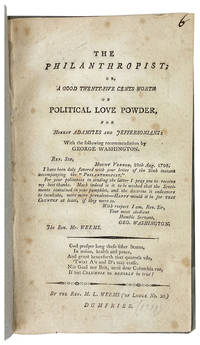
179911478Dumfries VA: n.p. 1799. Very Good. Dumfries VA: s.i. 1799. Octavo; recent grey card wrappers; 230 pp. Touch of spotting to title page; overall very good. <br /> <br /> Scarce pamphlet from Parson Weems the source of many apocryphal anecdotes about George Washington such as the tale of the cherry tree and the author of the first biography of George Washington in 1800. Here Weems attempts to reconcile feuding Federalists and Republicans and prints Washington's favorable recommendation on the title page. Printed on the second leaf is a dedicatory letter addressed to Washington. <br /> <br /> Evans 36697; Sabin 102492. [n.p.] unknown
1791356<p>Amsterdanm aux depens de la Compagnie 1791. hardcover keeping the original covers</p> Amsterdanm aux depens de la Compagnie hardcover
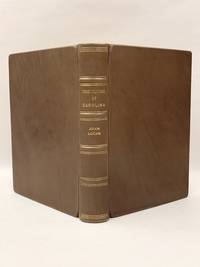
172049627London: Printed by J Bettenham for R Francklin 1720. First Edition. Full calf. Very good. 362p index errata. old stain through some of the middle portion otherwise a very good copy rebound in modern calf with new end papers and fly leaves gilt title. Cherub cartouche on the title page. "Contains the Fundamental Constitutions of Carolina" Sabin 41726 <br/><br/> Printed by J Bettenham for R Francklin unknown
1739BOOKS099458ILondon: R. Francklin. Very good copy. 1739. 2nd ed. 1/4 leather. 4to 119 pp. Edited by Pierre Desmaizeaux under the direction of Anthony Collins. The second edition. Probably rebound in the 19th century; spine darkened and chipped at the top; front board rubbed; contents very good. . R. Francklin hardcover
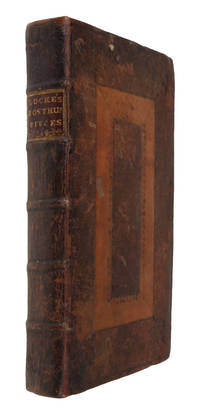
172041467London J. Bettenham 1720. 8vo. Nice contemporary English Cambridge-style full calf binding with five raised bands and gilt title-label to spine. Neat minor repair to extremities. A bit of overall wear but a nice and tight copy. Internally nice and clean with only some occasional soiling that is very light. Engraved title-vignette 36 - i.e. title-page dedication XXIV i.e. "The Character of Mr. Locke" by Peter Coste 2 - i.e. contents 362 18 - i.e. index 4 - i.e. errata advertisements pp. one plate "The Solar System". <br/><br/><em>First edition of this important collection of hitherto unpublished works by Locke containing the first printing of his unique work on Natural philosophy "The Elements of Natural Philosophy" as well as first printings of other important works. Assisted by Anthony Collins in 1720 the journalist Pierre Desmaizeaux brought out a new collection of Works and pieces by John Locke that had not previously been published. This collection "A Collection of Several Pieces" came to play a great role in the Locke scholarship not least in recent times and not least because it contains the first printing of his "Elements of Natural Philosophy"The "Elements of Natural Philosophy" constitutes Locke's main work in natural philosophy and it is a work that pas puzzled Locke scholars and readers ever since its appearance. The work seems to need some further explanation; at a firsthand glance it doesn't look very much like Locke - the greatest of the English philosophers who has so frequently been accused of not understanding the exact sciences and who even encouraged the youth not to learn these but to educate themselves in superficial and useful party-conversation. Thus numerous attempts have been made to establish the influence that resulted in this educational work of natural science. The two dominating answers to the question of influence are now: Newton and Descartes. It now seems to be fairly commonly recognized that Newton a personal friend of Locke even contributed directly to the work. "When Locke himself at the end of his life came to compose a treatise on natural philosophy for a pupil we have reason to believe that he obtained the advice and help of the most brilliant scientist of the century his close friend Isaac Newton. As we shall see this unique educational work itself "The Elements of Natural Philosophy" belies the myth of Locke the scientific smatterer." Axtell Locke Newton and the Elements of Natural Philosophy p. 244. However Descartes influence also seems to be obvious; "The influence of the "Principles" by Descartes is also obvious in Locke's posthumously published "Elements of Natural Philosophy". There is a striking similarity in the order of exposition although there are also considerable differences: Locke carefully eschewed Descartes' "a priori" metahpysics of nature. We find him rather emphasizing the essential role of experience. For example Locke introduced Newtonian universal gravitation as follows:. Thus according to Locke empirical support was necessary to establish the law of nature. Although the exposition looks quite similar to Descartes' "Principles" the "Elements" in fact contain several anti-Cartesian remarks in favour of the experimental philosophy." Aoki Descartes and Locke on the Nature of Matter. In: Hutton and Schuurmann edt. Studies on Locke p. 77."Elements of Natural Philosophy" was printed in no less than nine times during the 1th century and appeared in both Russian and French during the 18th century as well.The present "Collection of several Pieces" furthermore included a collection of letters from Locke to Anthony Collins "Remarks upon some of Mr. Norris's Books." "Some Thoughts concerning Reading and Study for a Gentleman." and "Rules of a society." all printed here for the first time as well as an English translation of Coste's Eulogy "The Character of Mr. Locke" originally published in French in 1705 and reprints of "The fundamental Constitutions of Carolina" and "A Letter from a person of Quality."."Remarks upon some of Mr. Norris's books." is the third of Locke's replies to Norris. "Some thoughts concerning reading and study for a gentleman" constitutes Locke's reply to Samuel Bold's question on behalf of a parishioner on how to create a course of reading and study. "Rules of a Society" constitutes the rules that Locke set up for a small group of friends who met once a week to discuss "useful Knowledge" and to promote "Truth and Christian Charity". Throughout his life Locke created several of these "societies" one of which led to his "An Essay Concerning Human Understanding" another one being "The College" in London after the Revolution. </em> hardcover
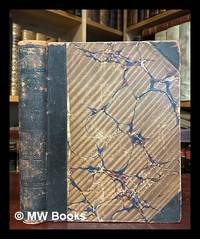
1766442990London : Printed for T. Osborne 1766. 5th edition. Hardcover. Very good copies in marbled boards backed in gilt-blocked full calf. Spine and boards dust-toned bumped and rubbed as with age. Somewhat nicked pages. Stretched hinges with loose pages. Scattered foxing. Physical description; xii 360 p. ; 27 cm. Subjects; Bible ; Indexes ; Early works to 1800. Bible ; Index ; Ouvrages avant 1800. John Locke critical studies. Common-place-book. London : Printed for T. Osborne hardcover
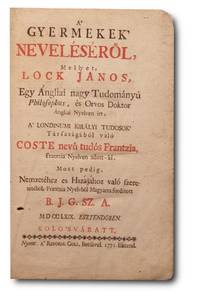
17712918Kolozsvar Cluj: Reform Coll 1771. First Hungarian edition. In contemporary half leather. With old owner's name inscriptions worn in good condition. First Hungarian edition. In contemporary half leather. 4 308 2 p. Some Thoughts Concerning Education is a 1693 treatise on the education of gentlemen written by the English philosopher John Locke. For over a century it was the most important philosophical work on education in England. It was translated into almost all of the major written European languages during the eighteenth century and nearly every European writer on education after Locke including Jean-Jacques Rousseau acknowledged its influence. Reform Coll unknown
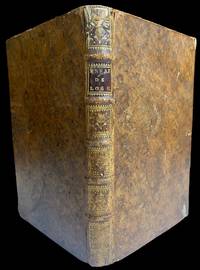
17384556Geneve / Geneva: Chez Pellissari & Comp. 1738. New edition / First edition Thus. This work is an abridgement of John Locke's "Essay Concerning Human Understanding" not to be confused with Hume's "Enquiry". Originally published in English in 1689 the first French edition of the essay was published in 1700 and this was the first abridgement of it. One of the first works of empiricism in philosophy. Contemporary full leather binding with gilt decorated spine and gilt titles to a leather label. The binding is in good condition but with chipping to the head of the spine and some cracking to the rear edge of the spine. Rubbing to the corners of the boards. Marbled end papers. Titles printed in red and black. Internally mainly clean and tidy with just a touch of marking / darkening to the pages. There are manuscript annotations to the first two pages of the abridgement in contemporary ink. In the rest of the work there are a few emphasis lines only. Overall a very nice copy of an uncommon work. XII 280 iv. pages. 200 by 120mm 7¾ by 4¾ inches. . Nouvelle édition / Première édition. Cet ouvrage est un abrégé de l'"Essai sur l'entendement humain" de John Locke à ne pas confondre avec l'"Enquête" de Hume. Publié à l'origine en anglais en 1689 la première édition française de l'essai parut en 1700 et c'est le premier abrégé qui en est tiré. L'un des premiers ouvrages d'empirisme en philosophie. Reliure contemporaine en plein cuir avec dos décoré et titres dorés sur une étiquette en cuir. La reliure est en bon état mais la tête du dos est ébréchée et le bord arrière du dos est fissuré. Les coins des planches sont frottés. Papiers de fin marbrés. Titres imprimés en rouge et noir. A l'intérieur l'ouvrage est propre et bien rangé avec juste un peu de marques et de noircissement sur les pages. Les deux premières pages de l'abrégé portent des annotations manuscrites à l'encre de l'époque. Dans le reste de l'ouvrage il n'y a que quelques lignes d'emphase. Dans l'ensemble un très bel exemplaire d'un ouvrage peu courant. XII 280 iv. pages. 200 par 120mm. Chez Pellissari & Comp. hardcover
179451002Boston: Manning & Loring 1794. Hardcover. 16mo. Full calf with gilt spine rules and gilt-lettered burgundy calf spine label. viii 250pp. Good. Binding edgeworn and scuffed with tiny chips at spine head and spine lettering rubbed; text block tight but moderately and irregularly age toned with endpapers and preliminary leaves more so; front endpaper rough and a bit chipped at outer edge; contemporary ownership signature at head of title page and at bottom a small convent inkstamp. Decent copy of the first American edition of the best-known and groundbreaking 1690 work on grasping human knowledge by the Enlightenment thinker nicknamed the "father of liberalism" 1632-1704 as condensed with Locke's approval by British cleric John Wynne 1665-1743. This abridgment was first published in London in 1696 proving popular and going through many more editions throughout the 18th century. Not until 1794 did the U.S. see its first edition. Front pastedown bears early bookplate ca. 1800 of Rice Jones and below it a 1947 gift inscription to the convent whose inkstamp appears at bottom of title page. Manning & Loring hardcover
17942305841Boston: Manning & Loring 1794. First American Edition. Full-Leather. Fair/No Jacket. First American edition Evans 27227 ESTC W23203. Front board loose boards rubbed spine label absent. 1794 Full-Leather. viii 250 pp. 12mo. Contemporary calf. First published in 1689 this is a foundational work in the influential British school of empiricism of which Locke was among the leading proponents. Empirical philosophy argued that knowledge stemmed from subjective experience a posteriori rather than the operation of objective reason a priori. As such this work contains commentary on how the formation of ideas relates to sensation and perception. This abridgment is the only 18th century American edition of Locke's work which was not published in a complete U.S. edition until 1803. Manning & Loring hardcover
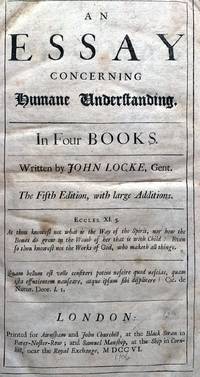
17061371344London: printed for Awnsham and John Churchill 1706. Fifth Edition. Hardcover. Folio 40 284345-422425-464467-604 pages. In Good condition. Bound in contemporary calf boards later rebacking with plain plain leather spine. Moderate rubbing and wear to boards. Water-staining along lower half of entire volume causing discoloration and waviness. Later pencil ownership to the front pastedown ink ownership to the front free endpaper both with later stamped manicule facing the writing. i1 lacking lower half of leaf First Leaf of index unsigned i2 lacking lower third. Lacking the unsigned second and third leaves of the index. Shelved above Case 3. The fifth edition and the first posthumous edition. Locke continued to revise this work publishing four editions during his life and leaving notes for a fifth. ESTC: T33271. 1371344. Shelved Dupont Bookstore. printed for Awnsham and John Churchill hardcover
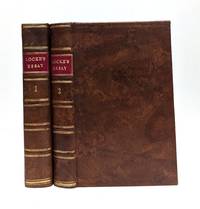
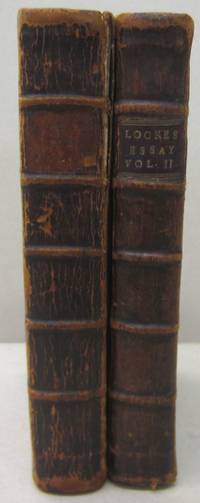
1753232002London 1753. Hardcover. Very Good. 2 Volumes originally published in 1689. In Four Books. Vol. 1- 372 pages containes Book I and Book II; drawing of Locke on frontispiece. Vol.2 - 340 pages contains Book III and Book IV. Previous owner's name-plate on front paste-down endpaper. Full brown leather spine was restored. Both volumes are solid and tight and a few pages show some marks. VG/VG. <br/> <br/> hardcover
176871725London: H. Woodfall A. Millar et al. 1768. 8vo. Vol 1: 32 372 pp. Vol 2: 16 340 28 - index pp. Full contemporary speckled calf. Red title-labels with gilt lettering and ruling to spine. Top edge stained black. Small loss to base of front joint of Volume 1. Wear to surface of spines edges and spine ends. Corners bumped. Binding firm and boards solid and intact. Laid paper. Internally generally clean with the odd bit of light foxing. Locke's 'Essay concerning human understanding' is one of the primary texts of empiricism in modern philosophy its thesis being to reject the rationalist philosophers' notion of innate ideas and set forth new grounds for ideas based in experience. These volumes cover Locke's refutation of rationalist thinking his theory of ideas theory of personal identity language and knowledge. This work was influential to Enlightenment thinkers such as George Berkeley and David Hume. . Very Good. Speckled Calf. 1768. H. Woodfall, A. Millar, et al. 1768 unknown
17352346391Edinburgh: Mundell & Son; and J. Mundell 1735. Eleventh Edition. Full-Leather. Good/No Jacket. 1735 eleventh edition. Three volumes bound in two. Large discolored area on rear board of second volume a few spots on boards otherwise evidence of repair along joints of both spines corners a bit rubbed a few pages lightly foxed ink names on title page of each volume C.J. Forbes Florence; Tho. Storer. xxxii 372; xvi 340 27 pp. 8vo. Contemporary full calf black and red morocco spine labels five raised spine bands gilt titles and rules with decorations in compartments speckled edges and marbled endpapers. First published in 1689 this is a foundational work in the influential British school of empiricism of which Locke was among the leading proponents. Empirical philosophy argued that knowledge stemmed from subjective experience a posteriori rather than the operation of objective reason a priori. As such this work contains commentary on how the formation of ideas relates to sensation and perception. This edition includes an extensive index. Mundell & Son; and J. Mundell hardcover
1726151156London: Printed by T. W. for A. Churchill; And Edm. Parker 1726. Vol. I states Ninth edition with large additions. Hardcover. Good. 2 vols.: iii 26 372; 16 340 25 p. 20 cm. Frontispiece engraving. Full leather with blank impressing. Spine labels missing cracks to spine corners and edges worn. Bookplates on front pastedowns for William Wilson Surgeon in Greenock. Vol. I bookplate is loosening and front free endpaper has rough edge. Rear endpapers are also roughened and rear pastedown is lifting up.Tear in spine head of vol. II and front pastedown of vol. II loosening. Paper is unusually bright and clean with only a few minor marks. <br/><br/>English philosopher and physician John Locke is widely regarded as one of the most influential of Enlightenment thinkers and sometimes as "father of liberalism." This is an early printing of his great treatise on human knowledge and understanding that first appeared in 1689. Printed by T. W. for A. Churchill; And Edm. Parker hardcover
1753mon0000145146London S. Birt et al. 1753. Hardcover. Acceptable. in x in x in. Volume 2 only book is missing front cover printed in 1753 rest of book is good condition London, S. Birt et al. hardcover
1753652421Printed for S. Birt et al. 1753. Fourth Edition. Leather Binding. Near Fine. 2 volumes. Beautifully rebound in period style in full brown calf spines with raised bands red morocco labels and gilt rules some leaves have marginal staining - binding is fine. The Fourteenth edition. Printed for S. Birt, et al. unknown
17412350909London: Printed for C. Hitch in Pater-noster-Row; J. Pemberton in Fleetstreet; J. Beecroft in Lombard-Street; and S. Symon in Cornhill 1741. Twelfth Edition. Full-Leather. Very Good/No Jacket. Twelfth edition. Spines a bit faded corners rubbed with minor loss bookplate removal marks on front endpaper of each volume minor pencil marginalia. 1741 Full-Leather. iv 26 372; xiv 340 27 pp. 8vo. Contemporary full calf red morocco spine labels five raised spine bands gilt titles and rules with decorations in compartments. First published in 1689 this is a foundational work in the influential British school of empiricism of which Locke was among the leading proponents. Empirical philosophy argued that knowledge stemmed from subjective experience a posteriori rather than the operation of objective reason a priori. As such this work contains commentary on how the formation of ideas relates to sensation and perception. This edition includes an extensive index. Printed for C. Hitch in Pater-noster-Row; J. Pemberton in Fleetstreet; J. Beecroft in Lombard-Street; and S. Symon in Cornhill hardcover
1726060949London: T.W. for A. Churchill & C. Hitch in Pater-Noster Row. 1726. Reprint . Hardcover. Very Good. 8vo. Engraved Portrait Frontispiece. LONDON : 1726 1741. Two Volumes Complete; not a matching set. Hardbacks. Engraved portrait frontispiece to the first volume. Contemporary full dark-brown calf-leather not matching but similar. Raised bands; dark-red Morocco labels. Bright tight and clean. Neat owner name and bookplate. No internal markings. Hinges cracking slightly. Minor wear; strong and sound. VERY GOOD. i xxxii 372 340 xxviii pages. Index to vol 2. Scarce. 8vo. PLEASE NOTE: If wanting to buy just one volume to match one you already have; we are happy to sell separately; please ask. Extra postage needed for both vols if ordering outside the UK. Will be well-packed for posting/shipping. London: T.W. for A. Churchill & C. Hitch in Pater-Noster Row. SCARCE. <br/> <br/> T.W. for A. Churchill & C. Hitch in Pater-Noster Row. hardcover
1706149827London: Printed for Awnsham and John Churchill at the Ship in Cornhill near the Royal Exchange 1706. Fifth edition with large Additions. Full dark brown speckled calf with with panelled onlay of tan calf decoratively edged with blind rolls and decorations red calf spine compartment titled in gilt plain endpapers. Inked name to front pastedown and with handsome engraved portrait of John Locke adhered to front pastedown inked notations to lower margin of title page overall a clean wide-margined and handsomely restored copy. Restoration by Glenn Fukunaga. Large quarto. xliv 604pp. Pp. 259-262 mis-paginated 260 261 255 263 but with catchwords correct and no text lacking. Pagination 285-344 lacking but once again catchwords indicate not text lacking. 14" x 9.25. A foundational work of Enlightenment philosophy Locke’s Essay first published 1690 reshaped the intellectual landscape of Europe and the Americas by rejecting innate ideas and grounding all human knowledge in sensory experience. With his doctrine of the mind as a tabula rasa Locke challenged traditional metaphysics laying the groundwork for empiricism and influencing thinkers from Hume to Jefferson. His nuanced treatment of personal identity language and the limits of human understanding offered a blueprint for liberal political thought and the modern scientific method. First editions and early issues are cornerstones of any serious collection of philosophy or political theory prized both for their historical impact and enduring relevance to debates on human reason. Printed for Awnsham and John Churchill, at the Ship in Cornhill, near the Royal Exchange unknown
172670120London: T. W. for A. Churchill 1726. Ninth Edition with large additions. Full Leather. Good - minus. Four books bound as a two volume set. 20 x 12.5 cm. Octavos. 3 ii-xxvii 372pp 16 340 27 index. Portrait frontispiece in volume one. Bound in full leather. Several previous owner's names Robert Denovan and 18th century notations. Chipping to the top of the first few pages including to the portrait though Locke himself is not effected. Front fixed endpaper of volume 1 mostly gone. Rubbing to the edges of the board. Front hinge of volume 1 is weak. Spine label of volume 1 missing vol 2 has a red spine label. Tear and wear to back cover of vol 1. ESTC T63946. T. W. for A. Churchill unknown
170617416London: Printed for Awnsham and John Churchill 1706. FIFTH EDITION. Index bound after Contents and before text. Contemporary full-paneled calf panels blind-stamped on front and rear boards edges partially rubbed with corners reinforced rebacked; interior excellent. Fifth edition containing expansions of all four books. This edition includes the final textual changes by Locke though it was published posthumously. It was also the last edition printed in folio format. Locke’s 1632-1704 famous work of empirical philosophy deals with the fundamental issues of how we think perceive and express ourselves through language logic and religion. All later editions were based upon this 1706 printing. Printed for Awnsham and John Churchill unknown