4 918 résultats
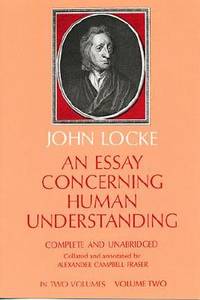
37639Mineola New York U.S.A.: Dover. As New. 1959. Paperback. 0486205312 . FREE UPGRADE to Courier/Priority Shipping Upon Request IN STOCK AND IMMEDIATELY AVAILABLE FOR SHIPMENT - AS NEW THE TEXT BLOCK IS PRISTINE CLEAN UNMARKED AND IN EXCELLENT CONDITION - -- with a bonus offer-- . Dover paperback
1975DADAX0198243863Clarendon Press 1975-05-22. 1. hardcover. New. 5.50x2.00x8.50. Buy with confidence. Excellent Customer Service & Return policy. Clarendon Press hardcover
1753766861753. LOCKE John. AN ESSAY CONCERNING HUMAN UNDERSTANDING. In Four Books. London S. Birt et al. 1753. Octavo. Two volumes. xxx372; xiv34028pp. Fourteenth edition complete in two volumes. Engraved frontispiece portrait by Vertue after Kneller detached and torn at edges. Portions of flyleaves torn off; a few pages toned but on the whole clean within. Early speckled calf raised bands to spine. Scuffed and worn at extremities; small losses to spine ends. unknown
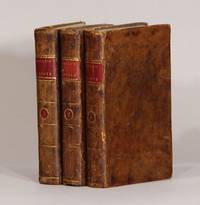
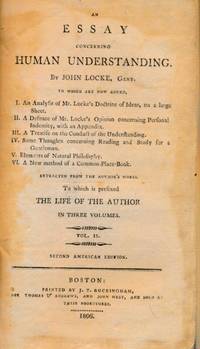
180615175Brattleboro VT: printed by William Fessenden for Thomas and Andrews 1806. Second American edition 3 volumes 12mo full contemporary calf red morocco labels and numbering pieces; slight cracking and rubbing along the joints otherwise very good and sound. Volume 2 bears imprint Boston: printed by J. T. Buckingham for Thomas and Andrews. Odd mix of Shaw & Shoemaker 10742a and 10743 in a uniform contemporary binding. printed by William Fessenden, for Thomas and Andrews unknown
000257Cummings & Hillard. Londons 1813. Orig. leather. Boards scuffedrubbed and moderately scuffed small dampstain. 8vo. 2 vol. Original brown leather bboards rebound to brown morocco spine red labels. A good early 19th century copy. Cummings & Hillard. Londons 1813. hardcover
000258London 1793. 19th edition. full calf. Excellent - bindings lightly rubbed contents clean and bright. 8vo. 2 vol. Full marbled calf black labels with gold lettering and trim with the folded analysis table in volume I. London, 1793. unknown
17155003694London: A & J Churchill 1715. Hardcover. Good-. 12mo. Wear to extremities.Some shrinkage to spine at bands. Some surface loss to spine titles and rear board. Rust marks to rear feps from floral items. <br/> <br/> A & J Churchill hardcover
182525124London: Thomas Tegg 1825. Twenty-Fifth edition. Hardcover. g. Quarto. XVI 568pp. Uncut. Original paper covered boards. Engraved frontispiece portrait of the author. An "Essay Concerning Human Understanding" is one of John Locke's two most famous works the other being his "Second Treatise on Civil Government". First appearing in 1690 the essay concerns the foundation of human knowledge and understanding. He describes the mind at birth as a blank slate tabula rasa although he did not use those actual words filled later through experience. The essay was one of the principal sources of empiricism in modern philosophy and influenced many enlightenment philosophers such as David Hume and Bishop Berkeley. Book II of the Essay sets out Locke's theory of ideas including his distinction between passively acquired simple ideas such as "red" "sweet" "round" etc. and actively built complex ideas such as numbers causes and effects abstract ideas ideas of substances identity and diversity. Locke also distinguishes between the truly existing primary qualities of bodies like shape motion and the arrangement of minute particles and the secondary qualities that are "powers to produce various sensations in us" such as "red" and "sweet." These secondary qualities Locke claims are dependent on the primary qualities. He also offers a theory of personal identity offering a largely psychological criterion. Book III is concerned with language and Book IV with knowledge including intuition mathematics moral philosophy natural philosophy "science" faith and opinion. This work contains a large folding chart being an analysis of Mr Locke's doctrine of ideas in his essay on human understanding. Some age wear on binding with spine missing and age-toning on covers. Previous owner's signature on free front endpaper. Sporadic foxing on endpapers and very first pages. Binding in overall poor interior in near fine condition. Thomas Tegg hardcover
1806g3813Boston: Thomas & Andrews; John West. G : in Good condition. Cover heavily rubbed. Pages darkened. Previous owner inscription to fep. 1806. Second American Edition. Brown hardback leather cover. 180mm x 110mm 7" x 4". xvi 368pp. Volume 2 only from a set of three volumes. . Thomas & Andrews; John West hardcover
181820951RGNew York: E. Duyckinck 1818. 320 pp. Original full-leather covers w/ gilt title on red leather spine label. Binding worn and scuffed. Old tape repair at top of spine. Approx. 1" loss on spine below spine label. Previous owner's name on front blank endpaper and along top edge of "Life of the Author" page. Moderate foxing and toning throughout. Dampstain to first several leaves. Hard Cover. Fair to Good/No Dust Jacket. 8vo - over 7¾" - 9¾" tall. E. Duyckinck Hardcover
1860573PA1Hayes & Zell Philadelphia: 1860. 1860 524 p. Marginal stains and worm hole. Contemporary full roan binding. Nice Civil War era ownership: "David S. Peffer / Bought for his Son Theodore Jerome Peffer in Hanover / York County Pennsylvani a / Wednesday May the 27th 1863." Interesting to note that this book which greatly influenced the founders of the American Republic was issued on the eve of the Civil War - and was given to a soldier on the eve of the Battles of Hanover and GETTYSBURG. PRICE JUST REDUCED! Language: eng. Full Leather. Hardcover. Very Good. Hayes & Zell, Philadelphia: 1860. hardcover
180615175Brattleboro VT: printed by William Fessenden for Thomas and Andrews 1806. Second American edition 3 volumes 12mo full contemporary calf red morocco labels and numbering pieces; slight cracking and rubbing along the joints otherwise very good and sound. Volume 2 bears imprint Boston: printed by J.T. Buckingham for Thomas and Andrews. Odd mix of Shaw & Shoemaker 10742a and 10743. <br/><br/> printed by William Fessenden, for Thomas and Andrews unknown books
197110947911971. XXXIX; 341 S.; 19 cm. Originalleinen mit Schutzumschlag.
7254London: Printed for C. Hitch; J. Pemberton; J. Beecroft 1741. Later printing. Full Calf. Very Good. 2 vols. 2iv26372;1634028pp. Index. Copper engraved frontispiece portrait. Cont. calf a bit rubbed hinges starting but holding nicely. Gilt decorated spine minor chips at extremities red morocco labels. Old bookplates on front pastedowns. Printed for C. Hitch; J. Pemberton; J. Beecroft unknown books
182433859New York: Seaman 1824. Two vols. bound in one: 436; 3784pp. Large folding chart as frontis to volume one. Bd together in contemp full calf label on upper spine worn. Shaw 16930 Seaman unknown books
180365066Boston: Printed by David Carlisle for Thomas & Andrews Joseph Nancrede William P. & Lemuel Blake West & Greenleaf James White & Co. John West and Caleb Bingham 1803. First American from the twentieth London edition. The first American complete edition an abridged version having been published in Boston in 1794. Folding table at front. 3 vols. 12mo. Contemporary tree sheep red morocco labels. Rubbed spine of first volume worn upper joints cracking some chipping of spines browning and offsetting of text signatures of Chileah B. Merrick. Brown cloth open-end case. A good copy of this cornerstone of American policy. First American from the twentieth London edition. The first American complete edition an abridged version having been published in Boston in 1794. Folding table at front. 3 vols. 12mo. In 18th century America as it was the age of reason and Enlightenment the colonists needed the justification or rationalization of their disagreement and resultant actions with England citing their immutable rights as Englishmen and quoting the basic English institutions. As the "philosopher of the Enlightenment" Locke's theories and writings were seized upon by the colonists especially with Locke's "doctrine of natural rights" his theories on "life liberty and property" religious toleration and proper representation in government. His writings gave the colonist a firm foundation upon which to base many of their statements. To Locke goes much of the credit for many of the ideas forming the Virginia Declaration of Rights drafted by George Mason. Many of the other states used that constitution as a basis for their own. Locke's advocacy of a "laissez faire" economic policy was shared by Jefferson who agreed with the idea that the "government is best which governs least" Cohen "American Thought" p. 132. The conclusion reached in the "Essay" "that though knowledge must necessarily fall short of complete comprehension it can at least be 'sufficient'; enough to convince us that we are not at the mercy of pure chance and can of some extent control our own destiny" summarizes American intent and beliefs. Attig "John Locke" pp. 40-41; Boring "History of Experimental Psychology." pp. 170 ff; PMM 164 for the 1690 first edition; Roback "A History of Psychology and Psychiatry" pp. 33 ff; Shaw and Shoemaker 4533; Library Company of Philadelphia "First American Editions" 6 which quotes Franklin as describing is as "the best Book of Logick in the World" Not in Yolton Printed by David Carlisle for Thomas & Andrews, Joseph Nancrede, William P. & Lemuel Blake, West & Greenleaf, James White & Co., unknown books
180365067Boston: Printed by David Carlisle for Thomas & Andrews Joseph Nancrede William P. & Lemuel Blake West & Greenleaf James White & Co. John West and Caleb Bingham 1803. First American from the twentieth London edition. This is the first complete American edition an abridged version having been published in 1794. Folding table. 3 vols. 12mo. Contemporary half sheep over marbled boards. Worn volume 2 rebacked some browning and staining of text tear on title of first volume signatures of Frederick Hobbs Jr. and Frederick H. Allen on endpapers but interior sound. In a cloth and marbled paper open-end box. First American from the twentieth London edition. This is the first complete American edition an abridged version having been published in 1794. Folding table. 3 vols. 12mo. In 18th century America as it was the age of reason and Enlightenment the colonists needed the justification or rationalization of their disagreement and resultant actions with England citing their immutable rights as Englishmen and quoting the basic English institutions. As the "philosopher of the Enlightenment" Locke's theories and writings were seized upon by the colonists especially with Locke's "doctrine of natural rights" his theories on "life liberty and property" religious toleration and proper representation in government. His writings gave the colonist a firm foundation upon which to base many of their statements. To Locke goes much of the credit for many of the ideas forming the Virginia Declaration of Rights drafted by George Mason. Many of the other states used that constitution as a basis for their own. Locke's advocacy of a "laissez faire" economic policy was shared by Jefferson who agreed with the idea that the "government is best which governs least." Cohen "American Thought" p. 132. The conclusion reached in the "Essay" "that though knowledge must necessarily fall short of complete comprehension it can at least be 'sufficient'; enough to convince us that we are not at the mercy of pure chance and can of some extent control our own destiny" summarizes American intent and beliefs. Attig " John Locke" pp. 40-41; Boring "History of Experimental Psychology." pp. 170 ff; PMM 164 for first edition; Roback "A History of Psychology and Psychiatry" pp. 33 ff; Shaw and Shoemaker 4533; Library Company of Philadelphia "First American Editions" 6 which quotes Franklin as describing is as "the best Book of Logick in the World Printed by David Carlisle for Thomas & Andrews, Joseph Nancrede, William P. & Lemuel Blake, West & Greenleaf, James White & Co., unknown books
182443907London: Printed for C. and J. Rivington; Longman and Co &c 1824. 24th edition. Large folding table. 510; 459 pp. 2 vols. 8vo. Bound in three quarter Contemporary. calf and marbled boards. Spine labels chipped one label missing; extremities rubbed. Very good. 24th edition. Large folding table. 510; 459 pp. 2 vols. 8vo. Fine octavo set of this cornerstone first published in 1696. This edition includes some new additions and extracts from Locke's works including a large folding sheet with an analysis of Locke's philosophy of 'ideas'; a Defense of Mr. Locke's Conception of Personal identity; a Treatise on the Conduct on the Understanding; Some Thoughts Concerning Reading and Study for a Gentleman; Elements of Natural Philosophy; and A New Method of a Common-Place Book. Printed for C. and J. Rivington; Longman and Co &c unknown books
18943772Oxford: The Clarendon Press 1894. Hard Cover. Near Fine. Octavo. First Oxford edition in TWO VOLUMES. 535 495pp. With the bookplate of the world renowned Sanskrit scholar and humanitarian Daniel Henry Holmes Ingalls. Annotated by him in very neat pencil annotations on several pages in both volumes. Bound in original blue cloth spines gilt. A very clean handsome set. <br/><br/> The Clarendon Press hardcover books
16901752London: by Eliz. Holt for Thomas Basset 1690. First edition. Elizabeth Holt imprint the first issue according to Yolton 61A; PMM 164; Pforzheimer 599. Current scholarship is mixed as to priority between this and the Basset imprint. Folio pages: 313 x 190 mm collates complete: A4; a2; B-Ccc4; 198 leaves misnumbered at 76 77 287 296 and 303. With the two emendations in Locke's hand on leaves A3 and A4. Yolton 61A. <br/><br/>Bound in full contemporary calf rebacked and recornered with the original spine laid down. Title page with a small previous owner's name removed and professionally repaired but with some staining around the area. Second leaf with some offsetting in the same place. Two other leaves Ccc2 and Ccc3 with upper margins restored no text affected just touching top rule. Otherwise an excellent set internally. Page block tight with well-margined crisp leaves generally unblemished and unmarked.<br/><br/>A monolith in the landscape of philosophical treatises Locke was the first "to attempt to estimate critically the certainty and the adequacy of human knowledge when confronted with God and the universe" and concludes that man has a means of controlling his own destiny and is thus not the pure victim of chance PMM 164. He advanced the concept of people born "tabula rasa" and filled through their lives by experiences. This concept formed the basis for the empiricist camp in modern philosophy later expanded by Hume and Berkeley. "An Essay" was placed on the Catholic Index in 1700 for its controversial content where it remains to this day Height.<br/><br/>From the collection of Michael Ernest Sadler father of the famous collector and bibliographer Michael Sadleir. Grolier One Hundred Books famous in English Literature 36. by Eliz. Holt, for Thomas Basset unknown books
1695LV2328London:: Awnsham and John Churchill and Samuel Manship 1695. 1695. Third edition. Folio. a2 b6 a-c4 B-3F4 3G-3I2. Pagination: 40 407 1 12 pp. Frontispiece engraved portrait of Locke by Sylvester Brounower and P. Vanderbanck; faint dampstain or rippling to bottom margin. Modern blue cloth over marbled boards red morocco title-label I1 large tear repaired old owner’s inscription penned over on top of title page J.B.S. Very good. THIRD EDITION; first printed in 1689. Jean Yolton notes that N. Petter Nidditch estimates this edition to be printed in 800 copies. John Locke 1632-1704 philosopher and fellow of the Royal Society was the secretary and close associate of Ashby the first Earl of Shaftsbury and Lord Chancellor. This "Essay" established him as the leading philosopher of his day and together with letters upon religious toleration provided the basis for Whig political thought for the next century and paved the way for the later philosophies of Bentham and the radicals. // Considered the father of English empiricism Locke "was the first to take up the challenge of Bacon and to attempt to estimate critically the certainty and the adequacy of human knowledge when confronted with God and the universe. In the past similar enquiries had been vitiated by the human propensity to extend them beyond the range of human understanding and to invent causes for what it cannot explain. Therefore Locke’s first task was to ascertain ‘the original certainty and extent of human knowledge’ and excluding ‘the physical consideration of the mind to show how far it can comprehend the universe’. His conclusion is that though knowledge must necessarily fall short of complete comprehension it can at least be ‘sufficient’; enough to convince us that we are not at the mercy of pure chance and to some extent control our own destiny." - Printing of the Mind of Man. 164. REFERENCES: Wing L2741; Jean Yolton John Locke: A Descriptive Bibliography Thoemmes Press 1997 63; Alston 7:79; Attig 230; Christophersen 27; ESTC r020221. See also: Grolier 100 English 36; Grolier Club Catalogue of original and early editions of some of the poetical and prose works of English writers from Wither to Prior 527; Pforzheimer 600. Awnsham and John Churchill and Samuel Manship, 1695. hardcover books
1706Embry 149827Printed for Awnsham and John Churchill at the Ship in Cornhill near the Royal Exchange London: 1706. "Fifth edition with large Additions." Inked name to front pastedown and with handsome engraved portrait of John Locke adhered to front pastedown inked notations to lower margin of title page overall a clean wide-margined and handsomely restored copy. Restoration by Glenn Fukunaga. Full dark brown speckled calf with with onlay panel of light calf decoratively edged with blind rolls. Pages 259-262 mis-paginated 260 261 255 263 but with catchwords correct and no text lacking. Pagination 285-344 lacking but once again catchwords indicate not text lacking. Printed for Awnsham and John Churchill, at the Ship in Cornhill, near the Royal Exchange, London: 1706. "Fifth edition w unknown books
169439044London: Pr. for Awnsham & John Churchil and Samuel Manship 1694. Folio 32.8 cm 12.875". 40 407 13 12 index pp. portrait lacking; some pagination erratic. <br><br>Second edition "with large additions" of Lockes great work one of the formative influences on empiricism and philosophical thought in general in which Locke "was the first to take up the challenge of Bacon and to attempt to estimate critically the certainty and the adequacy of human knowledge when confronted with God and the universe" according to Printing and the Mind of Man.<br>Â Â Â Â Provenance: Front pastedown with inked inscription of J.H. Randall Jr. dated 1957; back pastedown with small label of bookseller William Salloch one formerly affixed Salloch label and one original Salloch invoice now laid in. Most recently in the library of Robert Sadoff M.D. sans indicia. <br>Â Â Â Â <br>Â Â Â Â Wing rev. ed. L2740; ESTC R21459; Printing & the Mind of Man 164 for the first edition of 1690. Contemporary mottled calf covers framed and panelled in blind with blind-tooled corner fleurons spine with gilt-stamped red leather title-label; leather much rubbed overall with small portion of back joint unsubtly refurbished some time ago. Front hinge inside cracked with sewing holding; lacking the portrait only. Pages cockled and a few leaves with lower outer portions waterstained; two leaves each with small hole affecting a handful of letters. Pr. for Awnsham & John Churchil and Samuel Manship hardcover books
1694044491London: Awnsham and John Churchill and Samuel Manship 1694. Second Edition. Hardcover Full Leather. Good Condition. Full contemporary paneled calf worn rebacked and with small repairs to the corners new endpapers added. Lacking the portrait and with an old repair in the gutter of the title a little yellowed and the first few pages adhered slightly in the inner margin. A touch of marginal browning early on but generally a clean bright well margined copy. The first concentrated attempt to define the limits of human knowledge and the human capacity for comprehension - Hume and Kant built more ornate structures on these same ideas but the foundation was all Locke's. "Philosophy without Dogma" PMM 164 for the first edition of 1690. xl 407 blank 11 blank. Size: Folio. Quantity Available: 1. Shipped Weight: 2-3 kilos. Category: Philosophy; Antiquarian & Rare. Inventory No: 044491. Awnsham and John Churchill and Samuel Manship hardcover books
0483051144.Ghardcover. Good. Access codes and supplements are not guaranteed with used items. May be an ex-library book. hardcover