7 970 résultats
THPU-62465Hardcover. NEW. US Standard Edition. We will ship same day or next day with trackable delivery method. Expedited Shipping Available. We don't entertain INTERNATIONAL orders ATM. 30-day money-back guarantee. hardcover
195363434Pantheon Books New York 1953. First English Language Edition. Hardcover. Very Good Condition/No Dust Jacket. Size: 8vo 7 3/4 - 9 3/4". xxviii 342pp. Binding firm. Slight foxing front/rear pages but body of book mostly clean and unfoxed. Edges foxed and browned. Covers slightly worn. Bollingen Series XXXI. Quantity Available: 1. Shipped Weight: Under 1 kilogram. Category: Psychology & Psychiatry; Modern; Pictures of this item not already displayed here available upon request. Inventory No: 63434. . Pantheon Books hardcover
2024BIBLB0091087392024. Leather Bound. New. Size: 14.60 x 22.86 cms Presenting an Exquisite Leather-Bound Edition expertly crafted by the prestigious organization Rare Biblio with Original Natural Leather that gracefully adorns the spine and corners. The allure continues with Golden Leaf Printing that adds a touch of elegance while Hand Embossing on the rounded spine lends an artistic flair. This masterpiece has been meticulously reprinted in 2024 utilizing the invaluable guidance of the original edition published many years ago in 1917. The contents of this book are presented in classic black and white. Its durability is ensured through a meticulous sewing binding technique enhancing its longevity. Imprinted on top-tier quality paper. A team of professionals has expertly processed each page delicately preserving its content without alteration. Due to the vintage nature of these books every page has been manually restored for legibility. However in certain instances occasional blurriness missing segments or faint black spots might persist. We sincerely hope for your understanding of the challenges we faced with these books. Recognizing their significance for readers seeking insight into our historical treasure we've diligently restored and reissued them. Our intention is to offer this valuable resource once again. We eagerly await your feedback hoping that you'll find it appealing and will generously share your thoughts and recommendations. Lang: - English Pages:- 624. If it is a multi-volume set then it is only a single volume. Product Disclaimer: Kindly be informed that owing to the inherent nature of leather as a natural material minor discolorations or textural variations may be perceptible. Explore the FOLIO EDITION 12x19 Inches: Available Upon Request. hardcover
2025Gyan-9789374938980Gyan Publishing House 2025. Paperback. New. 13.34 x 21.59 x 4.368. English Gyan Publishing House paperback
2025Gyan-9789374931318Gyan Publishing House 2025. Hardcover. New. 14.34 x 22.59 x 6.24. English Gyan Publishing House hardcover
2025Gyan-9789374938980Gyan Publishing House 2025. Paperback. New. 13.34 x 21.59 x 4.368. English Gyan Publishing House paperback
2025Gyan-9789374931318Gyan Publishing House 2025. Hardcover. New. 14.34 x 22.59 x 6.24. English Gyan Publishing House hardcover
2025BIBHB0091087392025. Hardcover. New. About The Book: Psychology of the Unconscious by C. G. Jung translated by Beatrice M. Hinkle explores the development of human consciousness through symbols dreams and myths. Jung examines how libido or psychic energy drives transformation and creativity beyond sexual instincts as Freud proposed. The book introduces key Jungian concepts such as archetypes the collective unconscious and individuation�the process of integrating the conscious and unconscious self. It marks a turning point from Freud�s psychoanalysis to Jung�s analytical psychology. About The Author: Carl Gustav Jung 1875�1961 a Swiss psychologist founded Analytical Psychology introducing concepts like collective unconscious archetypes and personality structures influenced by philosophy religion and Indian culture. About The Author: Beatrice Moses Hinkle 1874�1953 an American feminist and psychoanalyst introduced Jung�s ideas to the English-speaking world rejecting Freud�s gender views and advocating women�s psychological independence. The Title 'Psychology of the unconscious: A study of the transformations and symbolisms of the libido written/authored/edited by C. G. Jung Beatrice M. Hinkle' published in the year 2025. The ISBN 9789374931318 is assigned to the Hardcover version of this title. This book has total of pp. 624 Pages. The publisher of this title is Gyan Publishing House. This Book is in English. The subject of this book is Myths. Size of the book is 14.34 x 22.59 cms Vol: hardcover
10626-9374931311Paperback. New. Book Condition is in New Paperback Original Edition. Shipped Same Day. We do not ship APO and FPO. Will be dispatched fast. Please send me an email if you have any questions. 100% Satisfaction. paperback
THPU-62264Hardcover. NEW. US Standard Edition. We will ship same day or next day with trackable delivery method. Expedited Shipping Available. We don't entertain INTERNATIONAL orders ATM. 30-day money-back guarantee. hardcover
THPU-67304Hardcover. NEW. US Standard Edition. We will ship same day or next day with trackable delivery method. Expedited Shipping Available. We don't entertain INTERNATIONAL orders ATM. 30-day money-back guarantee. hardcover
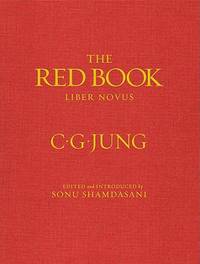
20090393065677W. W. Norton & Company 2009. New/New. <p><strong>Author:</strong> C. G. Jung Sonu Shamdasani Mark Kyburz John Peck</p><p><strong>Publisher:</strong> W. W. Norton & Company</p><p><strong>ISBN:</strong> 9780393065671</p><p><strong>Release Date:</strong> 2009</p><p><strong>Languages:</strong> en</p><p><strong>Binding:</strong> Hardcover</p><p><strong>Number Of Pages:</strong> 404</p><p><strong>Details:</strong> The most influential unpublished work in the history of psychology. When Carl Jung embarked on an extended self-exploration he called his “confrontation with the unconscious†the heart of it was The Red Book a large illuminated volume he created between 1914 and 1930. Here he developed his principle theories—of the archetypes the collective unconscious and the process of individuation—that transformed psychotherapy from a practice concerned with treatment of the sick into a means for higher development of the personality. While Jung considered The Red Book to be his most important work only a handful of people have ever seen it. Now in a complete facsimile and translation it is available to scholars and the general public. It is an astonishing example of calligraphy and art on a par with The Book of Kells and the illuminated manuscripts of William Blake. This publication of The Red Book is a watershed that will cast new light on the making of modern psychology. 212 color illustrations. From The Washington Post From The Washington Post's Book World/washingtonpost.com Reviewed by by Michael Dirda Starting in 1912 Carl Gustav Jung 1875-1961 a specialist in the treatment of schizophrenia began to experience strange dreams and frightening visions. Once when returning home on a train the 38-year-old Swiss psychologist hallucinated that everywhere he looked he could see nothing but ""rivers of blood."" In one enigmatic dream a bird-girl hauntingly announced ""Only in the first hour of the night can I become human while the male dove is busy with the twelve dead""; in another he encountered a wise old man with wings holding four keys. After a while Jung began to carry on conversations with the winged ""Philemon"" during his daytime walks. Was he going mad After World War I broke out in 1914 Jung decided with relief that his disturbed imagination had actually been sensing the coming conflict. He also concluded that he had entered what we would now call a midlife crisis a period in which he was being compelled to reexamine his life and explore his deepest self. To do this he recorded some of his dreams and visions in what were later called his ""Black Books"" which have been available for some while. But he also began a remarkable visionary text illustrated with his own bizarre paintings: ""The Red Book"" or ""Liber Novus."" This he composed during a state of ""active imagination"" -- that is of reverie or waking dream. As he said he wanted to see what would happen when he ""switched off consciousness."" To the modern reader the result recalls an allegorical-mythological amalgam of Nietzsche's ""Also Sprach Zarathustra"" Blake's illuminated poems Renaissance Neoplatonic dialogue Eastern scripture Dante's ""Inferno"" Yeats's ""A Vision"" and even the biblical book of Revelation. Jung's pictures sometimes resemble simplified versions of Georgia O'Keeffe's flower paintings and sometimes the symbol-laden images in treatises about alchemy a subject that Jung was soon to study intently. Throughout one finds illuminated capitals interlaced roundels that call to mind stained-glass windows stars half moons swords crosses dying animals. Jung also drew circular patterns that he later recognized as versions of the mystical shape called the mandala. ""The Red Book"" was never published during the psychologist's lifetime though a few friends and disciples were allowed to examine it. Apparently Jung felt it was not only too personal and quirky for publication but also that he had already mined the text for the insights set forth in his later writings. As editor Sonu Shamdasani stresses ""The overall theme of the book is how Jung regains his soul and overcomes the contemporary malaise of spiritual alienation. This is ultimately achieved through enabling the rebirth of a new image of God in his soul and developing a new worldview in the form of a psychological and theological cosmogony."" After Jung's death ""The Red Book"" was safely locked away in a bank deposit box. But as happens Jung's heirs and disciples have now decided to bring out this facsimile edition with English translation as well as mount an exhibition about ""The Red Book"" at the Rubin Museum of Art in New York through January. The resulting volume is certainly one of the most distinctive gift books of the upcoming holiday season. With a rich crimson dust jacket thick cream-colored paper and calligraphied pages this huge tome is the size of a lectern Bible and looks like the kind of spell book a wizard might consult. During the initial period covered by ""The Red Book"" -- mainly 1913 through the 1920s -- Jung broke permanently with the founder of psychoanalysis Sigmund Freud and resigned from his teaching position at the University of Zurich. When Jung emerged from this period of crisis he brought with him the first inklings of his most important contributions to psychology -- positing the existence of a collective unconscious common to all human beings. This primordial ocean within us affects our lives through various universal ""archetypes"" -- forces or situations that represent our inmost needs desires and fears. To the most common archetypes Jung assigned names: anima and animus the wise old man the shadow. The anima for instance represents the feminine side of a man his idealized woman his fatal type. The shadow embodies everyone's dark side the impulses we suppress the immoral and evil aspects of our personality. The good Dr. Jekyll's ""shadow"" was the wicked Mr. Hyde. Gradually Jung also shifted the focus of psychoanalytic therapy. Early on he had speculated that our libidinal energies are either outer-directed or inner-directed i.e. people are primarily extroverts or introverts. But this was just a beginning. Where Freud emphasized early childhood and sexuality in his explanation of human neuroses and Alfred Adler focused on the drive to be superior to others Jung soon directed his clinical attention to the second half of life and to the process he called individuation. According to editor Shamdasani ""The Red Book"" presents ""the prototype of Jung's conception of the individuation process."" In Jung's view a successful life was all about balance wholeness. If our lives erred too much in one direction our unconscious would compensate for the inequality. Thus in the film ""The Blue Angel"" the ultra-rationalist professor played by Emil Jannings readily succumbs to naughty Lola the showgirl played by Marlene Dietrich. Above all in midlife a person is called upon to achieve an authentic and balanced self one that acknowledges every aspect of his or her character. By the age of 40 or 50 one has established a career and nurtured a family and it is time to turn from the external public life to the needs of the inner man or woman. The process of individuation is essentially the psychological harmonizing of all aspects of the self. When successful the result is an inner concord the achievement of a personal serenity that prepares us to accept aging and death. Symbolically Jung said the outline of our lives may be glimpsed in the so-called ""hero's journey"" -- birth in obscurity various ordeals confrontation with and defeat of a dragon or similar monster return home happy marriage sacrificial death. This now famous mythic pattern was later elaborated by such Jung-inspired scholars as Otto Rank ""The Myth of the Birth of the Hero"" Lord Raglan ""The Hero"" and Joseph Campbell ""The Hero With a Thousand Faces"". As it happens one must be something of a hero to actually read all of ""The Red Book."" At times Jung sounds spiritually anguished: ""I am weary my soul my wandering has lasted too long my search for myself outside of myself."" At other times his writing resembles the directions in some fantasy video game: ""I am standing in a high hall. Before me I see a green curtain between two columns. The curtain parts easily. . . . In the rear wall I see a door right and left. . . . I choose the right."" At still other times there are philosophical and religious dialogues of self and soul or conversations with various mythic characters like Philemon. In short this is a volume that will be treasured by the confirmed Jungian or by admirers of beautifully made books or by those with a taste for philosophical allegory. Anyone merely interested in Jung's ideas would do better to start with one of the several anthologies of his writings now available. The one compiled by Anthony Storr is particularly good as is Storr's concise ""Modern Masters"" guide to the psychologist's thought. bookworld@washpost.com <br>Copyright 2009 The Washington Post. All Rights Reserved.</p> W. W. Norton & Company hardcover
1928124442Dodd Mead 1928. hardcover. Good. 1928 Dodd Mead hardcover no jacket. Small loss to spine label front board label intact. Light pencil to text.F36 Please email for photos. Dodd Mead hardcover
1990Q-0691018944Princeton University Press 1990-01-01. Paperback. New. In shrink wrap. Looks like an interesting title! Princeton University Press paperback
mon0004136642Pantheon Books 1/1/1954 12:00:00 AM. hardcover. Very Good. 1.6000 8.0000 5.4000. Pantheon Books hardcover
19782110502150200698Jinbunshoin 1978. Soft Cover. Fine. Volume: 1 Jinbunshoin paperback
1973Q-0691017867Princeton University Press 1973-05-01. Paperback. New. In shrink wrap. Looks like an interesting title! Princeton University Press paperback
1970Q-0691097623Princeton University Press 1970-08-01. Hardcover. New. New. In shrink wrap. Looks like an interesting title! Princeton University Press hardcover
1984Q-3530407348Walter-Verlag 1984-01-01. Paperback. New. In shrink wrap. Looks like an interesting title! Walter-Verlag paperback
1979097799Princeton New jersey: Princeton University Press. Covers dust soiled and lightly spotted light foxing to end papers and page edges owner name else very good. Dust jacket edge worn flap creased multiple small chips and tears small marks and light scuffing now in protective Brodart cover. . Very Good-. Hardcover. 2nd Edition Corrected. 1979. Princeton University Press hardcover
MC00C-00183Franz Deuticke. Collectible - Acceptable. Leipzig; Wein: Franz Deuticke 1910. 2 Volume Set: Band II Halfte I & II. Sm 4to paperback. Original orange printed wrappers with black lettering. 746pp. German. Fair set. Moderate chipping to both volumes. Owner's name stamp on front covers of both volumes. Covers of halfte 1 detached. Most pages of halfte 1 unopened. In protective mylar covers. In polypropylene bag. From the collection of John Gach 1946-2009 a bibliophile and a nationally known bookseller who specialized in rare books devoted to the human sciences. Psychoanalysis Periodicals Books in German Inquire if you need further information. Franz Deuticke paperback
Q-0385093497Doubleday Anchor 1958-05-13. Unbound. New. In shrink wrap. Looks like an interesting title! Doubleday Anchor unknown
1976Q-0691018138Princeton University Press 1976-10-20. paperback. New. In shrink wrap. Looks like an interesting title! Princeton University Press paperback
1975Q-0691097720Princeton University Press 1975-01-01. Hardcover. New. New. In shrink wrap. Looks like an interesting title! Princeton University Press hardcover
1975109916Princeton University Press 1975-01-01. 2nd ed. Hardcover. Very Good. 9x6x1. 1977 4th printing hardcover in jacket tight and unmarked. Please email for photos. Princeton University Press hardcover