7 971 résultats
3530407348.Gpaperback. Good. Access codes and supplements are not guaranteed with used items. May be an ex-library book. paperback
A9780415278348Hardback. New. This remarkable work is Jung's vigorous defence of his reputation following accusations after the Second World War that he was a Nazi sympathiser and supported their racial ideology. hardcover
19691035458662Signet Book 1969. First Edition THUS. Mass Market Paperback. Good. Pages can have notes/highlighting. Spine may show signs of wear. ~ ThriftBooks: Read More Spend Less.First Signer paperback edition first printing. Wear and creasing to covers is consistent with age and use. Binding is tight and secure. All pages are intact and free of all marks or highlights. Book is wrapped in a poly bag for further preservation. Secure packaging for safe delivery.Dust jacket quality is not guaranteed. Signet Book paperback
A9780415278362Hardback. New. Written in the 1950s at the height of popular fascination with UFO's this is the great psychologists brilliantly prescient meditation on the phenomenon that gripped the world. hardcover
1959mon0002915896New York: Harcourt Brace and Co 1959. Hardcover. Very Good. . Scarce. First American edition. Dust jacket shows minor wear and rubbing pages are clean. New York: Harcourt, Brace and Co hardcover
1969G045103757XI5N00Signet Book 1969. Mass Market Paperback. Acceptable. Readable copy. Pages may have considerable notes/highlighting. ~ ThriftBooks: Read More Spend Less.Dust jacket quality is not guaranteed. Signet Book paperback
1974FB9417 /L22<p>Paperback. White cover with black title. We provide an in-depth photographic presentation of this item to stimulate your feeling and touch. More traditional book descriptions are immediately available</p><p>Now an increasingly rare book with an enhanced popularity. The concept of the archetype is crucial to Jung's radical interpretation of the human mind. Jung believed that every person partakes of a universal or collective unconscious that persists through generations. The origins of the concept can be traced to his very first publication in 1902 and it remained central to his thought throughout his life. As well as explaining the theoretical background behind the idea in Four Archetypes Jung describes the four archetypes that he considers fundamental to the psychological make-up of every individual: mother rebirth spirit and trickster. Exploring their role in myth fairytale and scripture Jung engages the reader in discoveries that challenge and enlighten the ways we perceive ourselves and others. Review: Other reviewers have made general statements about the four archetypes - Mother Rebirth Spirit Trickster - covered in this volume of C.G. Jung's work. For the purpose of this review and as a way of conveying the richness of Jung's archetypes I will focus on one specific aspect of the Rebirth archetype: Enlargement of Personality. Jung begins this section with the sentence "The personality is seldom in the beginning what it will be later on." Thus a kind of metamorphosis is at the very core of our being. This is clear when we reflect on the various stages of childhood and adolescence most specifically when we think about the transformation in males from boyhood to manhood and a female's transformation from girlhood into womanhood. Cultural anthropologists have written extensively on the rituals surrounding this life-transforming event within traditional societies. Here is Jung's next sentence "For this reason the possibility of enlarging it personality exists at least during the first half of life." Why the first half of life Simple biology. The most obvious example is the enlargement of personality a baby makes in the first few years from being an infant to being a walking talking toddler. And so biology propels the toddler thru the phases of childhood and adolescence right up until the time when the person becomes an adult. But what about the second half of life where the enlargements are less biological and more psychic and subtle Here are Jung's words on the topic "Therefore if some great idea takes hold of us from outside we must understand that it takes hold of us only because something in us responds to it and goes out to meet it." Ultimately the key to enlargement as an adult is our responding our own internal movement to what we encounter in our world. This internal movement is underscored when Jung writes "Richness of mind consists in mental receptivity not in the accumulation of possessions." I am reminded of one of my spiritual teachers who said "Don't plateau." which is a warning against being complacent being unwilling to go out to meet the great ideas the great ongoing challenges we as adults are given in our lives. Keeping on this topic a man who has spent many years as a Jungian-trained counselor told me that when the soul cries out for enlargement and one does not heed this internal call there is a change a shift but the shifting and changing can manifest physically. Perhaps this is why we have an epidemic of obesity in the United States: a large portion of the population will not rise to the challenge to enlarge spiritually and thus the body responds by enlarging physically. Nietzsche speaks again and again on how the arts creativity and the spiritual path pose challenges to the individual soul. If an artist is truly an artist one will expand and enlarge one's personality continually redefining oneself a series of rebirths one after another. Of course one need not be a Picasso or Mondrian; rather one is called to be an artist of one's own life. And what of those people who lives are smug and self-satisfied refusing to transform Here are Jung's words "He who is truly and hopelessly little will always drag the revelation of the greater down to the level of his littleness . . . " And when one finally sees one's own life in need of transformation Perhaps this lies behind the mid-life crisis so common in the modern world. Again I have focused on but one aspect of the Rebirth archetype. The others are: Diminution of personality Change of internal structure Identification with a group Magical procedures Technical transformation Natural transformation individuation. I've made a few modest comments to convey the richness of what one can find in C.G. Jung and how we can apply his ideas and insights to our own lives and the lives of others. 'Jung believed that the unconscious is not merely the hiding place of demons but the province of angels and ministers of grace which he called the 'archetypes' symbols of all the inner forces that work toward unity health fullness of life and purposeful conscious development.' - Lewis Mumford The New Yorker 'His idea of the archetype involves profound attitudes towards man's existence and intimate values through which very many people have found a new significance in their lives.' - R.F. Hobson Journal of Analytical Psychology Carl Gustav Jung 1875-1961. Founded the analytical school of psychology and developed a radical new theory of the unconscious. </p><p>NOTE: This is an original book from the library gathered by the famous Cambridge Don computer scientist food and wine connoisseur Jack Arnold LANG. Note: Jack founded the Michelin Guide 'Midsummer House'- Cambridge's paramount restaurant. This dining experience is hidden amongst the grassy pastures and grazing cattle of Midsummer Common and perched on the banks of the River Cam.</p><p>In 2008 Jack was one of the co-founders of the Raspberry Pi Foundation alongside other members of the Department and acted as the Foundation's Chair. The project's original goals were modest: to build and distribute low-cost computers for prospective applicants to our Computer Science degree. Initially the project was a "success disaster" as Jack would say as demand far outstripped the low-scale manufacturing plans. Ultimately the Raspberry Pi became the UK's most successful computer with more than 60 million sold to date. Jack was drawn to the educational possibilities of the Raspberry Pi its potential uses in emerging economies and the way it could support self-directed learning.</p> Routledge. paperback
1985366295Princeton: Princeton University Press 1985. hardcover. very good/very good. 8vo. pp.368.Previous owners stamped details on FEP and top edge of pages Princeton University Press hardcover
18297597-nnew. unknown
2011__3843601224Patmos-Verlag 2011. Perfect Paperback. New. German language. 8.78x5.94x0.83 inches. Patmos-Verlag paperback
19801-B17301Routledge Kegan & Paul 1980. Hardcover. Very Good/no jacket. Green cloth boards Routledge Kegan & Paul hardcover
1979366311Princeton: Princeton University Press 1979. hardcover. very good/torn. 8vo. pp.735 previous owners details stamped on to FEP and top edge of pages Princeton University Press hardcover
G3530407801I4N10Walter. Unknown. Very Good. Former library book; May have limited writing in cover pages. Pages are unmarked. ~ ThriftBooks: Read More Spend Less.Dust jacket quality is not guaranteed. Walter unknown
MC00C-00291Franz Deuticke. Collectible - Acceptable. Leipzig; Wien: Franz Deuticke 1913. Volume 5 Part 1. Sm 4to hardcover. 454pp. German. Good book. No dust jacket. Corners bumped. Moderate pencil underlining. Psychoanalysis Books in German Inquire if you need further information. Franz Deuticke hardcover
R11OS-00498Franz Deuticke. Used - Acceptable. Acceptable condition. Volume 3. German edition. Reading copy only. Backstrip missing. Small bookplate on front pastedown. Page 847 through the rear board detached. Psychoanalysis Psychopathology Books in German Franz Deuticke unknown
R11OS-00497Franz Deuticke. Used - Acceptable. Acceptable condition. Former Library book. Volume 5. German edition. Front joint cracked. Psychoanalysis Psychopathology Books in German Franz Deuticke unknown
2011x-069115418XPrinceton University Press 2011. Hardcover. New. translation edition. 144 pages. 9.00x6.00x0.75 inches. Princeton University Press hardcover
B9780415138437Paperback / softback. New. Jungian analyst Joan Chodorow brings together a key selection of Jung's writings on active imagination. In her introduction she clearly explains Jung's methods of achieving self-knowledge and individuation. paperback
A9780415138437Paperback / softback. New. Jungian analyst Joan Chodorow brings together a key selection of Jung's writings on active imagination. In her introduction she clearly explains Jung's methods of achieving self-knowledge and individuation. paperback
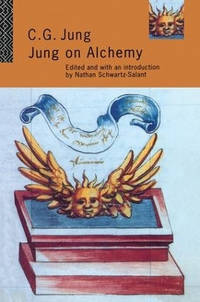
B9780415089692Paperback / softback. New. Jung was one of the first modern thinkers to realize the importance of alchemical symbolism to men and women today. This volume presents a selection of Jung's writing on alchemy a concise introduction to its principles and the importance of alchemy in the context of Jung's psychology. paperback
A9781138148888Hardback. New. Jung realized that the fantastic images of alchemy - fire-breathing dragons hermaphrodites lions giving birth to the sun - are not so far from our daily lives. He made sense of such seemingly incomprehensible symbols and showed how in fact such images represent a usually unseen level that has immense power over how we feel think and imagine our existence. Nathan Schwartz-Salant a leading Jungian analyst with a special interest in alchemy has brought together a key selection of Jung's writings on alchemy. His lucid introduction provides a clear account of the basics of alchemy and explains to the reader Jung's ideas on alchemical studies. Jung on Alchemy provides an excellent introduction to one of Jung's most exciting yet most challenging fields of study. hardcover
ria9781138230736_inpPaperback. New. New Book; Fast Shipping from UK; Not signed; Not First Edition; Jung on Astrology brings together Jung's collected thoughts on astrology in a single volume for the first time significantly adding to our understanding of Jung's work. paperback
29375736-nnew. unknown
29375736like new. unknown
A9781138230736Paperback / softback. New. paperback