Antiquariat.de

650 résultats
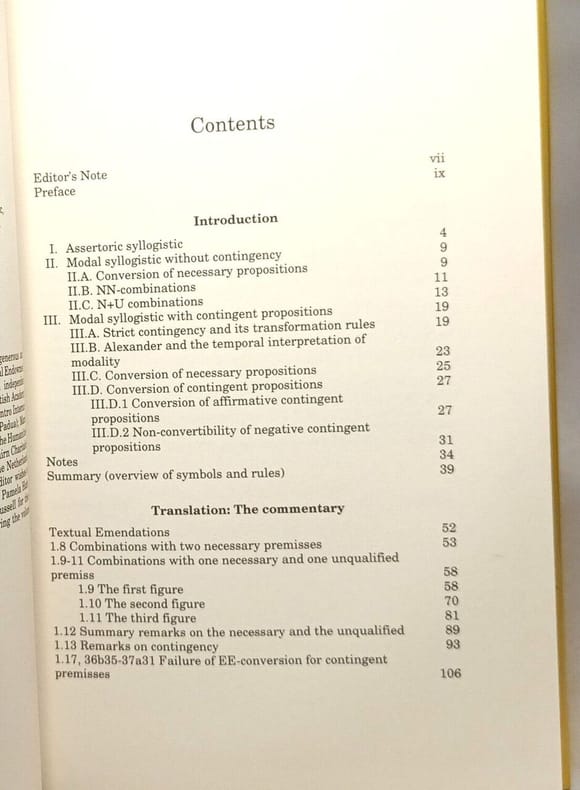
19962059618Atlanta: Scholars Press 1996. 221, (14) Seiten. Gr. 8° (23 x 15 cm). Orig.-Broschur. [Softcover / Paperback].
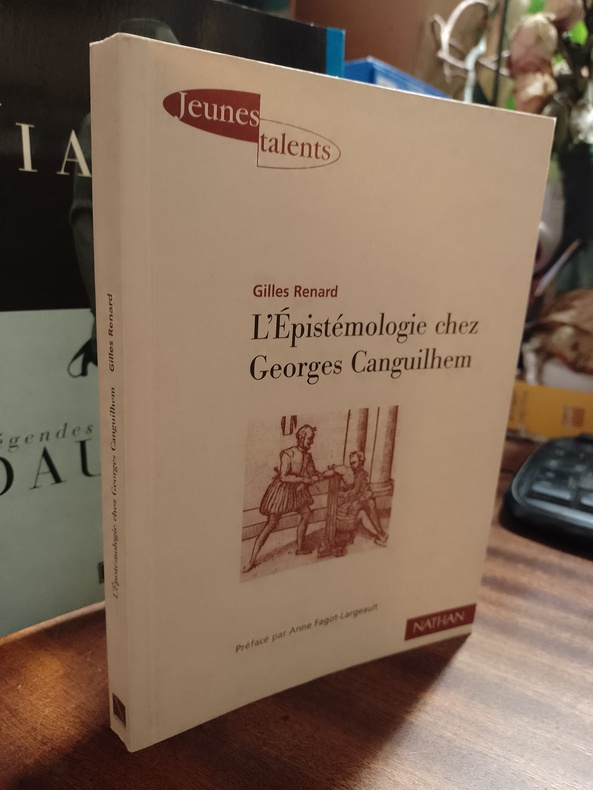
1996PHILOSOP46460325Paris, Nathan, "Jeunes talents", 1996, 15 x 21, 174 pages cousues sous couverture souple illustrée. Préfacé par Anne Fagot-Largeault.
199913239Paris, Centre international de synthèse / Albin Michel, 1999 1 volume 15,5 x 23,4cm Broché 227p., 6 feuillets. Bon état.
199418621Paris, Centre international de synthèse / Albin Michel, 1994 1 volume 15,5 x 23,4cm Broché. 314p. 3 feuillets. Très bon état.
200014377Paris, Centre international de synthèse / Albin Michel, 2000 1 volume 15,4 x 23,5cm Broché. 213p., 5 feuillets. Très bon état.
199814251Paris, Centre international de synthèse / Albin Michel, 1998 1 volume 15,5 x 23,5cm Broché. 169p. Très bon état.
198011471Paris CNRS 1980 Un volume in-4 broché, couverture noire illustrée, 317 pages. Pliures à la couverture néanmoins bon état.
1999202006893Paris, Grasset, 1999 ; in-8, 474 pp., broché.
197011406Paris Albert Blanchard 1970 Un volume in-12 broché, couverture beige, 116 pages. Couverture défraîchie néanmoins bon état, envoi d'Henri Corbière en première page.
1946100148160ESPASA-CALPE S.A 1946 in12. 1946. Broché. Traité philosophique d'Antoine-Augustin Cournot explorant l'articulation et l'enchaînement des idées fondamentales dans les sciences et l'histoire développant une épistémologie fondée sur la reconnaissance d'un hasard objectif et une interprétation probabiliste de l'histoire
19716048802Oxford, Clarendon Pr 1971. 8°. X, 276 pp. Original Leinwand. Stempel verso Titel. Kleines Signaturschild auf Rücken. Sonst ordentlich.
19379003Paris Alcan 1937 In-8 172 pp, Préface de J. Nicolétis. Exemplaire non coupé, intérieur frais ; dos légèrement passé et rfotté.
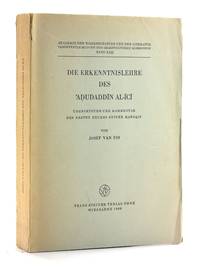
1966506724Franz Steiner Verlag 1966. Paperback. VERY GOOD. From the personal library of noted scholar of Islamic and Jewish philosophy Joel Kraemer with his stamp to half-title. xv 510 pp. foldout chart. 8vo sewn binding in printed wraps deckled edges. Flimsy wrappers a bit worn as expected very clean and sharp otherwise. 'Professor van Ess to whose many significant researches all those interested in the history and development of Islamic theology have come to be more and more indebted here presents us with a book which must surely stand as the most thorough and intensive single study yet to have appeared in the subject of the Kalam. The translation is based on the text of the Mawag found in the Cairo 1325/1907 edition of Gurgani's Sarh with some fair number of corrections and emendations based on a Berlin manuscript. The translated text is divided into short topical sections each of which is furnished with a brief indication of the author's apparent sources Fakhruddin Rizi and many others and is followed by a detailed historical resume of the matters raised in the individual section. Van Ess' work however is much more than the common garden variety translation cum commentario for the commentary which constitutes the great bulk of this lengthy book wanders wide and deep meandering through a great variety of topics as they are brought up directly or by implication in al-Ici's text. The book forms thus not a unified study of a single subject-i.e. not a single-minded exposition of Al-Ici's philosophical outlook and its immediate background — but rather a lengthy collection of 'notes' brief studies discussions discursions and digressions that follow the text's own tendeney to recapitulate many of the classical Kalam's disputed questions. Individual parts of the commentary stand as elaborate footnotes or appear as abbreviated articles on separate subjects some of them quite significant apart from any connection direct or tangential that they may have with the Mawqif fi I-muqaddimat. One may note for example the long excursus pp. 257-64 into the problem of uncovering the origins of the oft quoted Sumaniya whose doctrines he relates definitively I think-with those of the Indian 'lokayata' pp. 264 f. or the insightful discussion pp. 278-80 of the role of Hasan as-Sabbah and the Shi'a in the reluctant introduction of the Aristotelian logic into the orthodox kalam. Noteworthy also is the discussion pp. 212-18 of the kalam notion of al-ada as a kind of recognition of physical or natural 'laws' validated as it were statistically out of the universal experience of our common world or pp. 326 ft. of the almost existentialist notion of anxiety van Ess does not make the analogy in which the Mu'tazila try to ground their conception of the 'obligation to speculation' wugub an-nazar. The book is 'ausgezeichnet deutsch'-compact in style ponderous almost overpowering by its thoroughness. In every case the author seems to have construed his writing so as to include in parentheses the citation of every conceivably pertinent medieval text and modern study. Control over all this is happily afforded by seventy four pages of indices to which are added THE MOST EXTENSIVE BIBLIOGRAPHY OF THE KALAM YET PUBLISHED. Most importantly however although the commentary is almost entirely historical one finds none of the haphazard heaping of citations and uncertain groping after superficially conceived historical parallels and origins that have marred many an attempt to investigate the real structure and significance of the kalam and uncover its historical roots. Quite on the contrary a remarkable wealth of information has been brought to bear on many of the real historical and philosophical problems of the kalam confidently and with consistent insight and it is this that gives real value to and will assure the lasting importance of this study.' R. M. FRANK review in Journal of American Oriental Society. Franz Steiner Verlag paperback
1992RO90143539Presses Universitaires de France Edition originale Première édiiton Décembre 1992. 1992. In-12. Broché. Bon état, Couv. convenable, Dos satisfaisant, Intérieur frais. 128 pages illustrées de quelques dessins en noir et blanc. . . . Classification Dewey : 120-Epistémologie, causalité, genre humain
1963RO30313617Seghers. 1963. In-16. Broché. Etat d'usage, Couv. légèrement passée, Dos abîmé, Intérieur acceptable. 190 pages.. . . . Classification Dewey : 120-Epistémologie, causalité, genre humain
1960R150221438GALLIMARD. 06-1960. In-8. Broché. Bon état, Couv. convenable, Dos satisfaisant, Intérieur frais. 287 pages- 1 annotation à l'encre en page de titre et de faux titre- 1 petite déchirure en tranche en pied du 1er plat, sans manque. . . . Classification Dewey : 120-Epistémologie, causalité, genre humain
1998148202Oxford, UK: Blackwell Publishers 1998. XIII, (1), 445 Seiten. Gr. 8° (22,5-25 cm). Orig.-Broschur. [Softcover / Paperback].
1999100134088BRISTOL CLASSICAL PR 1999 256 pages in8. 1999. Cartonné jaquette. 256 pages.
1974R160060548SEUIL. 1974. In-12. Broché. Etat d'usage, Couv. légèrement passée, Dos satisfaisant, Intérieur frais. 188 pages; couverture rempliée.. . . . Classification Dewey : 120-Epistémologie, causalité, genre humain
1974RO80153797DU SEUIL. 1974. In-12. Broché. Bon état, Couv. convenable, Dos satisfaisant, Intérieur frais. 188 pages. Quelques traits en marges et passages soulignés dans le texte, au crayon à papier. Jaquette légèrement usée.. Avec Jaquette. . . Classification Dewey : 120-Epistémologie, causalité, genre humain
196756411967 Aubier Montaigne, Paris, 1967. Un volume in-8 broché, 365 pages. Rares soulignages au stylo, néanmoins bon état, exemplaire du Service de Presse, envoi de l'auteur.
19677061Paris Aubier-Montaigne 1967 Un volume in-8 broché, couverture blanche et orange, 365 pages. Bon état.
1987va1177Point hors ligne Dos carré collé 1987 In-8 (13,9 x 22 cm), dos carré collé, 234 pages ; pliures et traces sur les plats, par ailleurs intérieur frais, état moyen. Livraison a domicile (La Poste) ou en Mondial Relay sur simple demande.
194211412Paris Flammarion 1942 Un volume in-8 pleine toile noire, titre doré, 417 pages. Rousseurs.
1924RO80065488STOCK. 1924. In-18. Broché. Etat passable, Couv. défraîchie, Dos abîmé, Intérieur acceptable. 128 pages. Quelques illustrations en noir et blanc, dans le texte. Quelques manques sur le dos fendu. Manque le 1er plat de couverture.. . . . Classification Dewey : 120-Epistémologie, causalité, genre humain