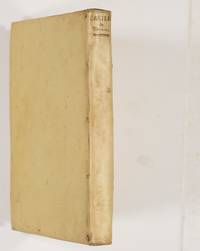
SILHON (Jean de)Livre Rare Book

92 résultats
1661367501661 In-4, plein veau brun de l'époque, dos à 5 nerfs orné de compartiments entièrement garnis d'une résille dorée aux petits fers, roulette dorée en tête et pied, tranches rouges, (1) f., (42), 637, (1) p., bandeaux et culs de lampes gravés et historiés. Paris, Imprimerie Royale, 1661.
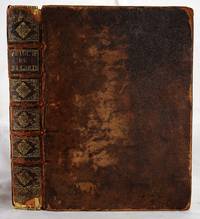
166841596Reliure d'époque veau brun granité. Dos à nerfs orné, manques de cuir à caisson en tête et en pied. Médaillon central de l'académie royale des sciences, belles-lettres et arts de Bordeaux avec la devise «Crescam et Lucebo» encerclant un croissant de lune, fleur de lys et palmes académiques intercalées dans la devise (fer postérieur à l'édition, l'académie n'ayant vu le jour qu'en 1712). Petits manques en bordures des plats. Roulette dorée sur coupes. Tranches rouges.Nombreuses illustrations et dessins géométriques gravés dans le texte.
16811901220009Paris: Theodore Girard 1681. 4th. Hardcover. Good. Quarto. Quatrieme edition Bound in contemporary calf. 6 gilt stamped spine compartments raised bands. Spine hinges cracked. Minor chipping to head / tail of spine. Collated complete. Includes 21 plates and an additional engraved title. Very light scattered foxing. 477 p. BM French 412. Paris: Theodore Girard hardcover
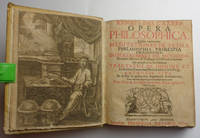
1692009238<p>Francofurti ad Moenum: Fridrici Knochii 1692-97. . quibus continentur Meditationes de prima philosophia Principia philosophiae Dissertationes de methodo dioptrice meteora & Tractatus de passionibus animae His accessit nova hac editione Tractatus de homine et formatione foetus cum notis Ludovici de la Forge authoris Vita et in fine de quibusdam argumentis annotationes una cum indice operis hujus universali adjiciuntur . Francofurti ad Moenum Fridirici Knochii. - - Un volume in 8vo grande 175x20 cm titolo generale in nero e rosso antiporta incisa con ritratto di Cartesio seduto al tavolo con mappamondi scheletro e meteorologia agitata uno strappetto. Contiene ognuno con proprio frontespizio: - Renati Des-Cartes Principia philosophiae. Editio novissima auctior & emendatior 32- 168 pagine Frontespizio con data 1692. – Renati Des Cartes Specimina philosophiae: seu Disseratio de methodo rectè regendae rationis & veritatis in scientiis investigandae: Dioptrice et Meteora. Ex Gallico translata & ab auctore perlecta variiisque in locis emendata 16- 200 pagine. - Passiones animae per Renatum Des Cartes: Gallice ab ipso conscriptae nunc autem in externorum gratiam Latina ciuitate donatae. 24- 74- 6 pagine. -Manca rispetto a quanto annunciato nel frontespizio il Tractatus de Homine et de formatione foetus.-- Segue invece un frontespizio di OPERA PHILOSOPHICA OMNIA in tres tomos distributa data 1697 poi 26 pp con Nota dell'editore la Vita di Cartesio Vitae Renati Des.Cartes brevis descriptio e l'Index generalis. Poi senza numerazione le BREVES ANNOTATIONES AD CONTROVERSA QUAEDAM PHILOSOPHIAE RENATI DES CARTES 72 pp- Seguono 5 tavole di figure applicate ft. Che si riferiscono al trattato Dioptrice et Meteora le figure 1 e 7 sono ripetute sia nel testo sia nelle tavole in fine. Bruniture diffuse e insistenti in quasi tutte le parti del libro per le caratteristiche purtroppo della carta olandese. Legatura coeva in piena pergamena con titolo manoscritto al dorso qualche abrasione al piatto posteriore. - Volume ricomposto e "censurato" con l'omissione del Tractatus de Homine e la sua sostituzione con le Breves Adnotationes in polemica con Cartesio. Ma resta anche per questo una notevole testimonianza dell'influenza delle idee cartesiane della loro diffusione e delle reazioni che suscitarono alla fine del 600. Di queste raccolte di opere di Cartesio ne furono pubblicate numerose e con composizioni diverse tra il 1644 e il 1897 da parte di Elsevier di Blaeu e di Knoch.</p> Fridrici Knochii
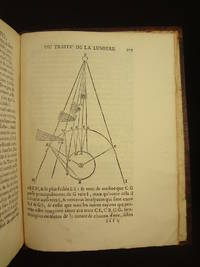
1677628Paris: Angot 1677. Hardcover. Fair. Misc. Well-illustrated 1677 second French edition reviewed and corrected from the first René Descartes L'Homme The Man et la Formation du Foetus Formation of the Fetus; and added to this edition Le Monde ou Traité de la Lumiere The World or Treatise on the Light. This copy with the provenance of a noted scientist. A lot to unpack here; might I suggest that you review the Wikipedia articles on the Descartes works ""Treatise on Man"" and ""The World"". In extreme short and therefore a poor description there are three works of Descartes here which blended science and philosophy. The treatise on The Man and The Fetus he didn't feel confident to publish after Galileo's condemnation so they are here published only for the second time corrected from the first edition and they are not finished as Descartes didn't every prepare them for publication. They delve into Descartes theories on the body it's mechanisms and how the psychosomatic affects it. About 50 corresponding illustrations hard to count as some pages may be two plates. The third work again a poor brief description The World was added to this second edition. ""Descartes espoused mechanical philosophy a form of natural philosophy popular in the 17th century. He thought everything physical in the universe to be made of tiny corpuscles of matter. Corpuscularianism is closely related to atomism. The World presents a corpuscularian cosmology in which swirling vortices explain among other phenomena the creation of the Solar System and the circular motion of planets around the Sun. The World rests on the heliocentric view first explicated in Western Europe by Copernicus. Descartes delayed the book's release upon news of the Roman Inquisition's conviction of Galileo for ""suspicion of heresy"" and sentencing to house arrest. Descartes discussed his work on the book and his decision not to release it in letters with another philosopher Marin Mersenne."" About the Provenance - Bookplate of the scientist Herbert Mclean Evans who is credited with discovering Vitamin E. Bibliographic Details - OCLC numbers 1323309050 71707841 457690626; held at the BNF Bibliotheek Universiteit van Amseterdam Koninklijke Bibliotheek New York Public Library and Universidad de Navarra Physical Attributes - Measures approx. 25.5 x 19 x 4 cm. Signed in 4. Leather binding. Spine with five raised bands; five compartments richly decorated in gilt with central floret medallion and corner leafing florets one compartment with ""LHOMME DE DESCART"" in gilt. Rebacked; older repair. Edges sprinkled. Illustrated. I count 49 plates in ""The Man"" and 32 plates in ""The World"". All pages checked by gatherings all present. Pages - xxxii prefatory leaves 511 8 pages table 1 page royal privilege Collation - a4e4i4 o4 u4 aa4 ee4 ii4 A-Z4 Aa-Zz4 Aaa-Ttt4 Condition - See pictures. Binding has been rebacked but it was long ago; still with wear to corners edges rubs to boards etc. Some cracking along joints. Some loss to gilt of spine. A few tiny wormholes entering the leather. Chip at very base of spine that will likely fall off and expose bottom endband. Still nice that they retained the earlier binding and the book is holding together well. Lots of bibliographic notes on endpapers and ex libris ticket and Rome bookseller; a few holes at gutter of free front endpaper. Toning and some fox spots throughout. Occasional moisture mark thumb page edge chip dog-eared ear candle ember mark etc. Title page deckled at bottom edge; wide margins it seems. Top corner of first five leaves repaired old no text affected. Several tiny wormholes in bottom margin. N2 with several dark stains not mold; ink maybe. Worm track at bottom margin sometimes tissue repaired. Several annotations rear endpaper. Despite notes a solid and honest book cared for once repaired long ago with wide margins. Angot
1664002480Ex Officina Hackiana 1664 Title: De Homine Figuris et La Tinitate Donatus a Florentio Schuyl Inclytæ Urbis Sylvæ-Ducis Senatore & ibidem Philosophiæ Professore. Author: Renatus Des Cartes Publisher: Ex Officina Hackiana Place: Lugduni Batavorum Leiden Publication date: 1664 Description: 1664. Second edition only two years after the first appeared in the same city contemporary with the final definitive edition. Latin text. 38 121 Pp. 10 plates 2 folded and 1 with 2 movable overlays showing the interior regions of the heart. Profusely adorned with numerous splendid anatomical illustrations engraved in copper and wood many in half or full page. Woodcut title-page device; head and tailpieces. Small 4to. Full contemporary red morocco with gilt stamped title and design over spine and boards red marble endpapers. Provenance: Ex-Libris label of M. Gonzalez-Ulloa of Mexico book plate. Notes: As is known Descartes labored on the work since 1630 but decided not to publish it privy to knowledge of Galileos conviction in 1633. In acknowledgement of Harveys important discovery Descartes did not believe that blood circulation was caused by heartbeats but considered the human body as a machine directed by a rational principle located in the pineal gland. Considered the first attempt to embrace all animal physiology the De Homine . is actually a kind of physiological supplement to the Discours de la Methode published in 1637 a source of inspiration for many scholars. This book was the first attempt to cover the whole field of animal physiological appendix to his Discourse on method. Garrison-Morton. Work of fundamental importance among the most eminent products of human ingenuity. Good example Garrison-Morton 574. Wellcome Catalogue. II 453. Measures: 8.25 H x 6.5 D x 1 W inches. 2nd Edition. Hardcover. Very Good/No Jacket. Ex Officina Hackiana hardcover
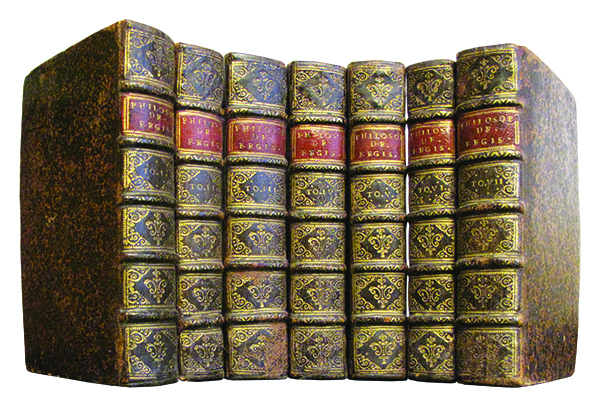
1691367581691 7 volumes in-12, plein veau granité de l'époque, dos à nerfs filetés or, ornés de compartiments dorés au petit fer, pièces de titre de maroquin bordeaux, roulette sur les coupes, tranches mouchetées, bandeaux et culs-de-lampe, nombreuses figures in-texte et planches hors-texte, dont dépliantes. Lyon, Anisson, Posuel & Rigaud, 1691.
16842108230405xbvkÀ Rotterdam, chez Reinier Leers, M.DC.LXXXIV. (1684). Singleside printed Titlesheet with smaller alllegoric woodblock illustration, 335 (5) pages, 1 blank sheet. - French full-leather binding of the period over 5 raised bands with richly gilt spine and gilt-titled original red-leather spinelabel; 8vo.(ca. 16 x 9 x 2 cm).
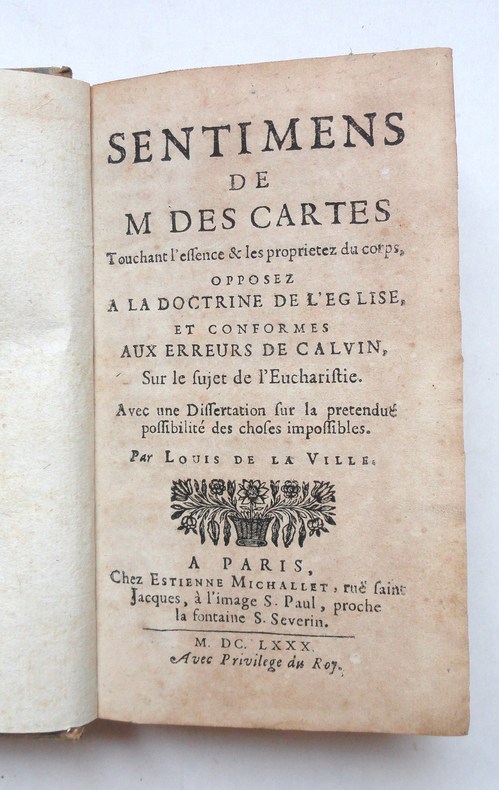
1680ZNC-213A Paris, Chez Estienne Michallet, 1680, in-12°, 13 feuillets non chiffrés (page de titre, Epistre, Avertissement et Table des chapitres)-317 pages-2 feuillets non chiffrés (fautes survenues dans l'impression, Approbation et Privilège du Roi), cartonnage recouvert de papier à la cuve.
166621731666 un volume, reliure de l'époque plein veau brun raciné (binding full calfskin) in-quarto, dos à nerfs (spine with raised bands) décoré or (gilt decoration) filets or (gilt line) et filets à froid (blind-stamping line decoration) - entre-nerfs - compartiments à fleuron au fer plein (floweret with full blocking stamp) - titre frappé or (gilt title) - filets or, trés léger manque aux coiffes, léger manque de dorure à un fleuron d'entre deux nerfs (blurred gilding), trois trés légers petits trous (manque de cuir en surface sur 3 millimètres carrés) sur les plats, plats trés légèrement frottés (cover lightly rubbed ), roulettes sur les coupes (fillets on the cuts) avec légers manques de dorure (blurred gilding), toutes tranches jaspées (all marbled edges) rouges (red edges), orné d'un portrait en frontispice (frontispiece portrait) gravé sur Bois (engraving-wood) en noir par Patigny + 2 gravures in-texte gravées sur Bois (engraving-wood) en noir (pages 327 et 329) et orné de bandeaux - lettrines et de culs-de-lampe (illuminated of headpieces and dropped initials and of tailpieces) gravés sur Bois (engraving-wood) en noir, pièces liminaires + 453 pages et privilège, 1666 Paris Michel Bobin et Nicolas Le Gras Editeur,
1666P1-3P-2Paris, Chez Théodore Girard, 1666. In-4 (240x180mm), (56)-453-(3)pp., relié plein veau, dos à nerfs orné, reliure de l’époque, avec un frontispice gravé par Patigny. Édition originale rare. Médecin et philosophe, né à Saumur, Louis de la Forge était l’ami et le disciple de Descartes. Cet ouvrage constitue l’essentiel de son œuvre ; La Forge insiste sur le lien qui unit la pensée de son maître avec Saint Augustin et les platoniciens. Bon exemplaire, coins usés, coiffes et charnières faibles, léger travail de vers n’affectant pas le texte.
1676109521676 un volume, reliure plein veau brun raciné (binding full calfskin) in-douze (duodecimo), dos à nerfs (spine with raised bands) décoré or (gilt decoration) filets or (gilt line) et filets à froid (blind-stamping line decoration) - entre-nerfs - compartiments or à fleuron fleurette (floweret) - titre frappé or (gilt title) - pièce de titre sur fond marron foncé (label of title) avec filet or (label of title with gilt line), roulettes sur les coupes (fillets on the cuts) manque de dorure (blurred gilding) - tranches jaspées (marbled edges), rouges (reds edges), gouttière rognée (fore-edge smooth) , sans illustration (no illustration) excepté une petite vignette en bas de la page de titre (engraved title page) + fronts-de-chapitre bandeaux (headpiece) + lettrines (dropped initial) + culs-de-lampe (tailpiece), (11) feuillets + 359 pages avec Approbation & Privilège du Roi Roy, 1676 Lyon Anisson et Posuel Editeurs,
166840662DB2 Bände. Amsterdam, Daniel Elzevier, 1668. Kl.-4°. 4 n.n. Bl., 383 S.; 4 n.n. Bl. 404 S. Mit ca. 180 Holzschnittillustrationen im Text. Lederbände der Zeit mit Rückenvergoldung.
16777609BBAmsterdam, Daniel Elsevier, 1677. Kl.-4°. (38) Bl., Titel in Rot und Schwarz mit dem Minerva-Druckerzeichen, 239 S. Mit 53 Holzschnitten (teilw. wiederholt). Späterer Pappband.
16676759Paris, Charles Angot, 1667, 3 tomes in-4 veau brun dos-à-nerfs très décoré et doré titre doré roulette sur les coupes tranche rouge (reliure de l'époque) ; (24) pp. y compris le titre, 540 pp., 47 figures. Lettres de Mr Descartes, où sont expliquées plusieurs belles difficultez touchant ses autres ouvrages. Nouvelle édition reveue et corrigée. Tome second. Paris, Charles Angot, 1666 ; (16), 564, (4) pp. et près d'une centaine de figures ou croquis. Lettres de Mr Descartes. Où il répond à plusieurs difficultez que luy ont esté proposées sur la Dioptrique, la Géométrie, et sur plusieurs autres sujets. Tome Troisième et dernier. Paris, Charles Angot, 1667 ; (24), 646 pp. et près de 180 figures ou croquis.
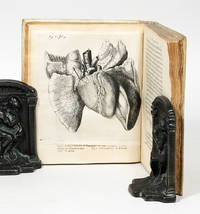
166276611Lugduni Batavorum [Leyde], Apud Franciscum Moyardum & Petrum Leffen, 1662, in-4, [36], 121 (i.e.123), [1] pp, 10 pl. [Signatures : a-d4 ; e2 ; A-P4 ; Q2], Basane granité havane, dos à nerfs orné, tranches jaspées de rouge. Reliure de l?époque, Édition originale, parue posthume, de cet ouvrage dans lequel Descartes expose sa célèbre théorie de « l'animal machine », ainsi qu'une théorie mécanique du mouvement involontaire, parfois considérée comme le germe de la conception du réflexe conditionné. Il reconnaît ici l'importance de la découverte de Harvey mais ne croit pas que la circulation du sang ait pour cause les pulsations cardiaques. Descartes en avait achevé la rédaction, en français, en 1633. La même année, Galilée était condamné pour la publication de son Dialogue sur les deux grands systèmes du monde ; le philosophe français, craignant que sa vision matérialiste-mécaniste ne soit également considérée comme hérétique, se ravisa et ne fit pas publier ce traité de son vivant. L'ouvrage parait finalement en 1662 à Leyde, traduit du français par Florent Schuyl (1619-1669) à partir d'une copie manuscrite considérée comme insuffisante. L'édition fait l'objet, la même année, de deux tirages simultanés, issus l'un de l'imprimerie de Peter Leffen, l'autre de celle Francis Moyard : notre exemplaire fait partie de ceux imprimés par Moyard, reconnaissables au fait que le nom de ce dernier apparait avant celui de son confrère, et surtout à sa marque typographique représentant Apollon jouant de la lyre sous le laurier. Le livre est orné de nombreuses gravures sur bois et sur cuivre dans le texte, ainsi que de dix très belles planches en taille-douce, certaines dépliantes ; l'une d'entre elles, représentant le coeur, comporte six parties mobiles montrant l'intérieur de l'organe. La partie mobile sur la planche du cerveau manque comme toujours. Bel exemplaire. Reliure restaurée avec soin. Guibert, p. 197. Norman 627. Tchemerzine, II, 798. Osler 931. Couverture rigide
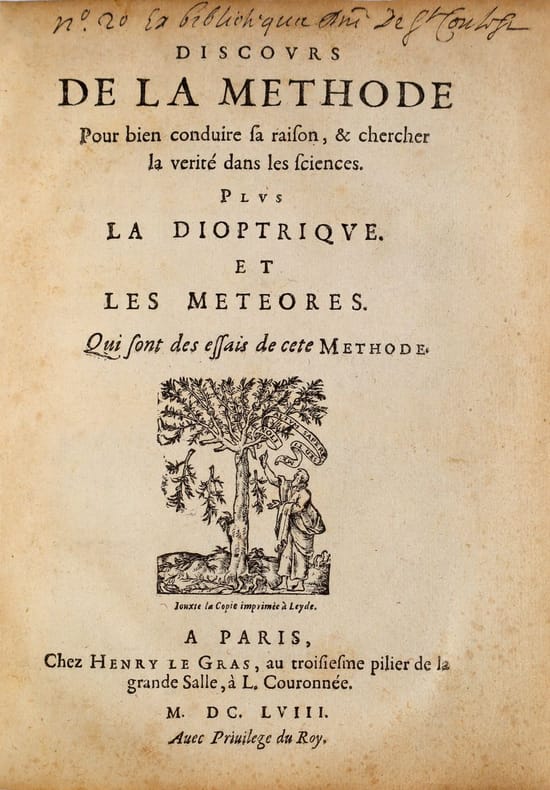
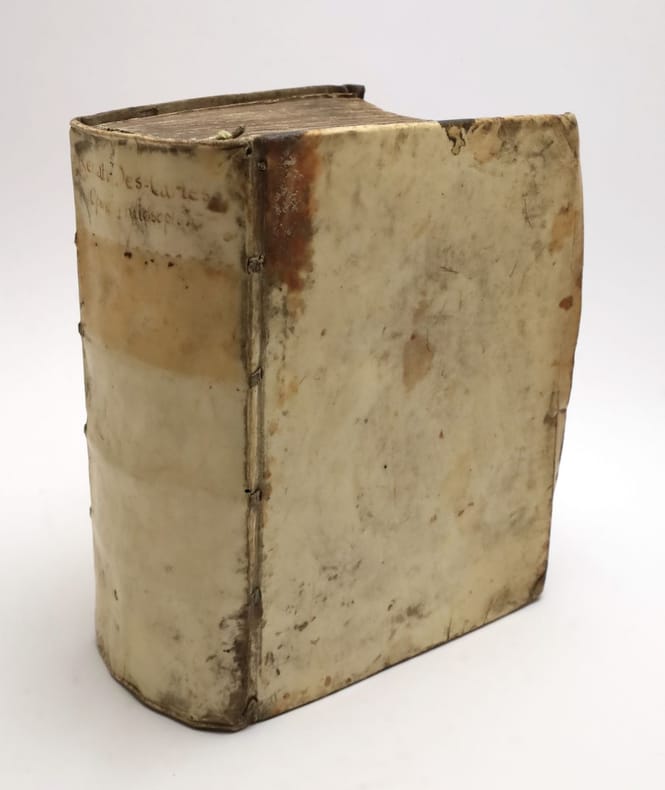
1658102765Paris, Henry Le Gras, 1658, in-4, 78-[2]-294-[26] pp, Vélin rigide de l'époque, à petits recouvrements, Deuxième édition du célébrissime Discours de la méthode, identique et aussi rare que la première édition de 1637. Le texte est illustré de belles et nombreuses figures gravées sur bois, dont plusieurs sont répétées. Le privilège pour l'impression de cette édition fut partagé entre les libraires Henry Le Gras et Th. Girard; ce dernier fit paraître la sienne quelques mois avant (1657). "Pendant que je voulois ainsi penser que tout estoit faux, il falloit necessairement que moy qui le pensoit susse quelque chose : Et remarquant que cette vérité, je pense, donc je suis, estoit si ferme & si assurée, que toutes les extravagantes suppositions des sceptiques n'estoient pas capables de l'esbranler je jugeay que je pouvois la recevoir sans scrupule pour le premier principe de la philosophie que je cherchois"(p. 33). C'est dans ce texte fondamental que s'expose la pensée de Descartes. Le philosophe y délivre intimement les étapes de sa grande réflexion : le doute, l'excellence des mathématiques, les règles mêmes de sa méthode, la nécessité d'une morale provisoire ? car la vie ne s'interrompt pas pendant la quête de la vérité ? "le point archimédique du je pense donc je suis", la preuve de l'existence de Dieu, et enfin, à partir de ces fondements, "l'extension au monde entier des lumières de sa raison" (En français dans le texte, n° 90). Cachet de cire sur le premier contreplat. Ex-libris manuscrit ancien en tête de la page de titre. Bon exemplaire, malgré de menus défauts : vélin un peu sali, une petite déchirure sans perte, une infime lacune angulaire et une fine auréole marginale sur quelques feuillets. Guibert p. 17, n° 3. Couverture rigide
1651100459Amsterdam et Paris, Thomas Jolly, 1651, in-12, [46]-286 pp, Basane marbrée havane, dos long orné de frises et fleurons dorés, tranches rouges, Nouvelle édition du dernier ouvrage de René Descartes publié de son vivant, ici publié à titre posthume car l'auteur décède en février 1650. Il y expose notamment le concept qui sera connu sous le nom de dualisme cartésien : esprit fonctionne indépendamment du corps. L'ouvrage contient également la première explication scientifique du réflexe du clin d'oeil. Reliure défraîchie, titre dérelié, pâles mouillures marginales sans atteinte au texte, quelques taches. Couverture rigide
165094237Amstellodami, Apud Ludovicum Elzevirium, 1650, in-4, 4 tomes en 1 volume, pagination mutliple, Vélin rigide de l'époque, titre manuscrit en tête du dos, Éditions issues de l'officine de Louis III Elzevier d'Amsterdam, à qui Descartes (1596-1650) confia, à partir de 1642, l'impression de tous ses ouvrages. Ces quatre tomes, qui forment la collection de ses oeuvres philosophiques, ont paru l'année de sa mort. Ils sont souvent réunis en un seul volume, comme c'est le cas ici; ils s'accompagnent alors d'un titre général portant : Opera philosophica. Editio secunda (Willems n° 1106). L'ouvrage a été mis à l'Index par décret du 20 novembre 1663 (Bujanda, Index librorum prohibitorum, p. 281). 1? Meditationes de prima philosophica... Tertia editio... , 1650. [14]-191-164-88 pp. Première édition elzvirienne publiée dans le format in-4. Trois parties : les Meditationes (1650), l'Appendix (qui a sa page de titre propre, à la date de 1649), et L'Epistola ad... Gilbertum Voetium. Guibert p. 229-230. Willems n° 1107. 2? Principa philosophiae. [40]-302 pp. Figures gravées sur bois dans le texte, plusieurs répétées. Réimpression de l'édition originale de 1644, augmentée de la traduction latine de la Lettre de l'autheur à celuy qui a traduit le livre; Epistola authoris ad Principiorum philosophiae interpretem gallicum (p. [9] et suiv). Guibert p. 121-122. Willems n° 1106. 3? Specimina philosophiae. [16]-316 pp. Figures gravées sur bois dans le texte, certaines répétées. Réimpression de l'édition originale de 1644; cet ouvrage renferme la traduction latine du Discours de la méthode, par Estienne de Courcelle, avec révisions de Descartes, la Dioptrique et les Météores. Guibert p. 105-106. Willems n° 1106. 4? Passiones animae. [24]-98-[5] pp. Seconde édition de la traduction latine des Passions de l'âme. Guibert p. 158-159. Willems n° 1106. Ex-libris manuscrit ancien accompagné d'un schéma circulaire sur la première garde blanche : "Th. Montanus D. Med."; probablement Thomas Montanus (ou Thomas Van den Berghe,1617-1685) médecin à Bruges. Autres ex-libris manuscrits anciens au verso, l'un étant biffé (date de 1660). Cachets anciens sur les pages de titre. Bon exemplaire. Trace ancienne d'une pièce de titre au dos, salissures du vélin. Mouillures claires, réparation en tête d'une page. Couverture rigide
16855141046Amstelodami, Ex Typographia Blaviana (Amsterdam: Blaeu) 1685. (42), 222; (2) weiße, (16), 248; (24), 92, (4) Seiten. Mit gestochenem Portrait und zahlreichen, teils ganzseitigen Textholzschnitten. 4° (21 x 17 cm). Pergamentband der Zeit mit durchgezogenen Bünden, handschriftlichem Rückentitel (berieben) und gesprenkeltem Schnitt.
165880311658 Amstelodami: Apud Johannem Janssonium Juniorem, 1658. Trois parties, complet en un vol. in-4: 5 ff. n. chiff. [titre, Epistola, Paefatio, Contenta], 226 pp. [Meditatio I-VI, Objectiones et Responsiones I-VI, Notae...], 199 pp. [Appendix (daté de 1657), Contienens obiectiones quintas & septimas], 108 pp. [Epistola ad Gisbertum Voetium] Sixième édition latine des Méditations métaphysiques de Descartes, mais troisième édition en trois parties, avec l'appendice et les remarques, après les deux éditions elzéviriennes de 1650 et 1654. Les méditations occupent les pages 1 à 54, les objections et leurs réponses vont de la page 54 à 198. Les notes occupesnt les pages 201 à 226. (Guibert, Bibliographie Descartes, 1976, pp. 53-55). Reliure aux armes en basane mouchetée. Dos à cinq nerfs avec pièce de titre de basane lavallière et caissons ornés de fleurons à froid. Plats frappés aux armes de Louis-Joseph de Montmorency-Laval (1724-1808), évêque dOrléans dès 1754, grand aumônier de France entre 1786 et 1789, puis enfin crée cardinal le 30mars1789par le papePieVI. Sceaux en cire rouge aux armes du grand aumônier sur le contreplat. Dos habilement restauré, notamment aux mors et aux coiffes. Bel exemplaire de cet incontournable de la philosophie occidentale.
165491261654 Amstelodami, apud Ludovicum Ezevirium, 1654. Un volume, in-4° (14,5 x 18,5 cm), 1 f. + page de titre + [10 pp.] de préface + 191 pages. Relié avec : «Appendix continens obiectiones quintas & septimas in Renati Des-Cartes Meditationes De Prima Philosophia, cum eiusdem ad illas Responsionibus & duabus Epistolis, Una ad Patrem Dinet Societatis Iesu Praepositum Provincialem per Franciam, Altera ad celeberrimum Virum D. Gisbertum Voetium.». À Amstelodami, chez Ludovicum Elzevirum, 1654. Un volume, in-4°, 164 pages. Relié avec : «Epistola Renati Des Cartes ad celeberrimum virum D. Gisbertum Voetium. In qua examinantur duo libri, nuper pro VoetioUltrajecti simul editi, unus de Confraternitate Mariana, alter de Philosophia Cartesiana», in-4°, 88 pages.Seconde édition elzévirienne de ce format, la première est apparu en 1650 (Willems, 1174 et 1008). Reliure ancienne en plein basane mouchetée brun, dos lisse (renouvelé), pièce de titre verte, tranches mouchetées de bleu. Petit travail de vers au plat supérieur, petite déchirure à longle supérieur de la page 1 sans manque de texte, autrement ouvrage en très bon état.
1670152930London: Printed and are to be sold by Moses Pitt 1670. Reconciling Descartes with biblical creation First edition in English of Cordemoy's Copie d'une lettre ecrite à un sçavant Réligieux de la Compagnie de Jésus 1668 which attempts to reconcile Cartesian philosophy with the Christian creation story as outlined in Genesis. The latter part of the edition with separate title page and continuous pagination is a translation of "Systema generale philosophica" written by François Bayle and Henri Grangeron this marking its only publication. "Géraud de Cordemoy 1626-1684 was one of the more important Cartesian philosophers during the decades immediately following the death of Descartes. While he is in some respects a very orthodox Cartesian Cordemoy was the only Cartesian to embrace atomism and one of the first to argue for occasionalism" Stanford Encyclopedia of Philosophy. The original of the Systeme General is apparent lost: "Despite a painstaking and exhaustive search we have been unable to locate either a French or a Latin version much less a manuscript prior or for that matter posterior to the English translation" Patricia Easton and Tom Lennon The Cartesian Empiricism of Francois Bayle 1992. The treatise has an interesting section on meteors which the author takes to be all types of non-terrestrial natural phenomena and has an advanced understanding of rainbows: "A Rain-bow is nothing else but many drops of rain which receiving the Rayes of the Sun break them many different ways and which after they have thus broken them return them to our eyes" p. 104. Bayle 1622-1709 is best known for his Tractatus de apoplexia 1677; the present essay would seem to be his first extant printed work. Small octavo 135 x 87 mm. Nineteenth-century half sheep red sheep label marbled sides and endpapers top edge gilt. Complete with terminal advertisement leaves. Front free endpaper with split along head of joint and peripheral chips title page chipped around edges a few other leaves slightly frayed general browning; a good copy. ESTC R7465; Wing C6281. unknown
16622203Leydon: Peter Leffen & Francis Moyard 1662. First edition. contemporary vellum. Very Good. FIRST EDITION OF THE FIRST TEXTBOOK OF PHYSIOLOGY. "René Descartes's Treatise of man De homine 1662; Traité de l'homme 1664 was never intended to stand as a work on its own. It was one part of a much larger work Le monde The world. Although this was finished around 1633 Descartes did not publish it himself because he was alarmed by the Italian Inquisition's condemnation of Galileo Galilei that year. Some time after Descartes's death in 1650 his French manuscript copies of which had circulated among his friends and correspondents was edited and published. The first version was a Latin translation De homine by Florentius Schuyl in 1662 the second the now better known 'original' French version Traité de l'homme edited by Descartes's self-appointed literary executor Claude Clerselier in 1664. In the seventeenth century the 1662 Latin version was probably much more widely read than the French text" Donaldson J R Coll Physicians Edinb 2009; 39:375-6. Heirs of Hippocrates 295. Garrison-Morton 574. With 10 engraved plates; with 2 lift-up flaps on plate depicting the heart but without flap on plate of the brain as usual; numerous full-page and text engravings and woodcuts. Inscribed on title to Mart. Christian Sweerts "ex dono Autoris". The "author" in this case is most likely the translator Schuyl. De homine figuris et latinitate donatus a Florentio Schuyl. Leyden: Peter Leffen & Francis Moyard 1662. Small quarto contemporary vellum with leather spine label. Evidence of old label at base of spine. Remnants of old stamp on title occasional very light browning to margins. A beautiful copy. Peter Leffen & Francis Moyard unknown
1662176381662. Lugduni Batavorum: Apud Petrum Leffen & Franciscum Moyardum 1662 4° 36 121 pp. 123 111/112 repeated 1 p. Nota 56 woodcut and engraved text-illustrations 10 engraved plates contemporary vellum; complete fine copy. First Edition! Complete with all 56 woodcut and engraved text-illustrations many of which are full-page and the 10 full-page engraved plates several folded one of which is the heart-plate with the 6 moveable parts the Cardiac-flaps. This edition was posthumously published and translation by Florentius Schuy. A seminal work René Descartes 1596-1650 'Treatise on man' is known as the first European textbook of physiology and the first purely mechanistic account of bodily functions. "In the Treatise of man Descartes did not describe man but a kind of conceptual models of man namely creatures created by God which consist of two ingredients a body and a soul. "These men will be composed as we are of a soul and a body. First I must describe the body on its own; then the soul again on its own; and finally I must show how these two natures would have to be joined and united in order to constitute men who resemble us"." SEP. "This highly influential work was the first to present a coherent description of bodily responses in neurophysiological terms that are still to a wide extent accepted today. In his attempt to solve the central question around which almost all philosophical thought had revolved since the time of Aristotle what the relation between the soul and the body actually is Descartes came to create a milestone work of physiology which changed the entire trajectory of modern physiological conceptions. "Without Descartes the seventeenth-century mechanization of physiological conceptions would have been inconceivable." He believed that the relationship between the soul and the body was mediated by the brain and the nervous system and his seminal attempts to explain neural mechanisms drew a great deal on the engineering developments of his time. He developed a hydro-mechanical theory of how the soul controlled the contraction of muscle through the intermediary of the pineal and the cerebral ventricles and he produced an explanation of how it received through the nerves from the periphery signals that gave rise to sensation. Descartes' theories quickly spread throughout Europe and the work in which he had developed them his "De Homine" became extremely influential. "Descartes was one of the first to embrace Harvey's doctrine of the circulation and the book opens with an account of the cardiovascular system illustrated by a plate of the heart with movable flaps. From a mechanistic survey of general physiology Descartes moves to the nervous system which he treats in great detail. Particularly important is his discussion of the eye drawing on Kepler for the optical part and the physiology of perception. 'The impact of the Cartesian physiological program once it was publicly known was enormous. In two ways -philosophically and physiologically -Descartes transformed long-standing beliefs about animals and men. Philosophically of course his notions of mind-body dualism and animal automatism had extremely important implications that were not lost on Henry More Malebranche Spinoza and Leibniz along with many others in the seventeenth century . But physiologically too Descartes' conceptions had an impact that in many ways was even more impressive than the philosophical influence because it affected the actual course of contemporary science'. DSB. Descartes was prepared to publish this book in 1633 but decided to withhold it when he learned of Galileo's condemnation by the Church. As a result the first edition was not published until 1662. This first Latin translation De homine by Florentius Schuyl in 1662 was probably much more widely read than the two years later published French edition. Guibert Nr. 1. Edition Originale. Grolier Medicine 31; Garrison-Morton 574; Wellcome II p. 453; Krivatsy 3120; Norman 627 hardcover