René DESCARTESLivre Rare Book
René DescartesLivre Rare Book
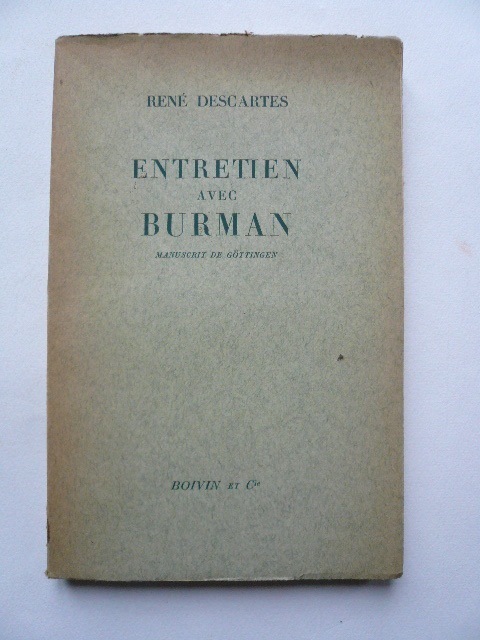
Entretien avec Burman. Manuscrit de Göttingen
193777953Paris, Boivin et Cie, 1937, in-8, broché, 144 p. Bon état. Non coupé.
Librairie Christian Chaboud · Bruxelles, Belgique15,00 €
2 323 résultats
95016-JB024Boivin et Co 1937
2973Boivin & Cie paris 1937
193777953Paris, Boivin et Cie, 1937, in-8, broché, 144 p. Bon état. Non coupé.
In-4°; pp. (12), 588, (4) e in antiporta ritratto dell’autore inciso all’acquaforte nel 1716 da Donato Creti. Opera filosofica circa l’anima sensitiva e l’anima conoscitiva, che prende le mosse dal trattato del 1672 del gesuita matematico e fisico Ignace-Gaston Pardies. Sbaragli si inserisce nella controversia circa l’anima degli animali, che fu affrontata anche nel sistema meccanicistico cartesiano (il quale in verità per gli animali parlava di res cogitans, e non di anima). L’opera è strutturata in tre disputationes: An Bruta sint instar Automatum conformata, An auctoritates Sacrae scripturae sit in physicis attendenda et quantum sit illi tribuendum, An animae brutorum educantur de potentia materiae. Legatura in piena pergamena con titolo in oro al dorso. Blake p. 403. Giovanni Girolamo Sbaraglia. (Bologna 1641 - ivi 1710) si laureò in Filosofia e Medicina a Bologna, e vi insegnò Logica e Medicina Teorica. bologna filosofia philosophy controversy souls beasts anima cartesio medicina anatomia anatomy pardies descartes automata gassendi
194410137New York: Brentano's 1944. Later printing of this edition Very Good plus in cream wrappers with moderate tanning to spine. Brentano's unknown books
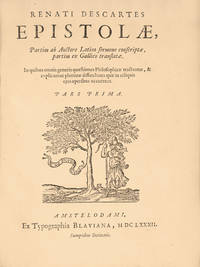
63880Amsterdam, Blaviana, 1682-1683, 3 VOLUMES petit in 4 reliés en plein veau, dos ornés de fers dorés, tranches rouges (reliures de l'époque), (coiffes usées, mors fendus), bon état interieur, T.1 (4), 383pp., T.2 : (2), 404pp., (2), T.3 : (8), 427pp., nombreuses figures dans le texte
8513"Francofurti, Friderici Knochii, 1692. Trois parties en un fort volume in-4, Tome 1: frontispice, (4)-340 pp et (4) pp. d'index.; Tome 2, (2)-351 pp. et (5) pp. d'index; T. 3, (14)-374pp.; de nombreuses vignettes sur bois dans le texte; plein vélin ivoire couverture rigide, titre manuscrit au dos (reliure de l'époque). Quelques rousseurs éparses. "
166840662DB2 Bände. Amsterdam, Daniel Elzevier, 1668. Kl.-4°. 4 n.n. Bl., 383 S.; 4 n.n. Bl. 404 S. Mit ca. 180 Holzschnittillustrationen im Text. Lederbände der Zeit mit Rückenvergoldung.
LCS-18486Bel exemplaire conservé dans son vélin hollandais de l'époque. Amsterdam, Blaeu, 1682-1683. 3 parties en 3 volumes in-4, I/ (1) f.bl., (4) ff., 383 pp., (1) f.bl.; II/ (1) f.bl., (2) ff., 404 pp., (2) ff., (1) f.bl.; III/ (1) f.bl., (8) ff., 427 pp., (1) f.bl., pte. brulure pp. 249 et 413 avec atteinte à 2 lettres. Plein vélin hollandais, fleuron à froid au centre des plats, double filet à froid autour des plats, dos lisses, tranches jaspées. Reliure de l'époque de l'éditeur Blaeu. 201 x 154 mm.
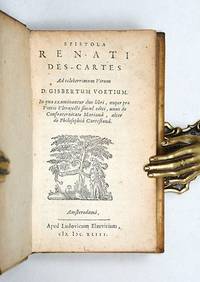
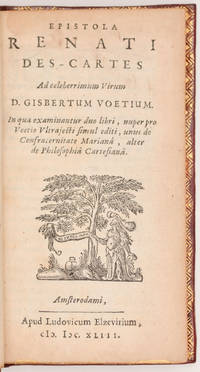
1643156918Amsterdam: L. Elzevir 1643. Descartes's most significant contribution to the Querelle d'Utrecht First edition of one of Descartes's rarest works his famous open letter to the Dutch Calvinist Gisbert Voetius 1589-1676 who as rector of the University of Utrecht engineered a condemnation of Cartesianism and accused Descartes of actively encouraging atheism. The so-called "Querelle d' Utrecht" was a fierce public argument between Descartes and Voetius which lasted from 1639 until Descartes's death in 1650. Descartes's Letter was written as a response to two works by Voetius and his colleagues: the Confraternitas Mariana 1642 and the Admiranda Methodus 1643. Both attacked Descartes's philosophy and the latter - attributed to Martin Schoock 1614-1669 a supporter of Voetius - charged Descartes with rejecting the traditional proofs for the existence of God. It also implied that he deserved the same treatment as heretics such as Lucilio Vanini the Italian free-thinking philosopher who was executed in 1619 for atheism and blasphemy. In his Letter Descartes defended his philosophy at length and argued for the autonomy of human reason and religious tolerance. "As to moral philosophy the Letter to Voetius contains much of interest not only because it contains extensive discussions of the passions but also because much more than the Passions de l'âme it establishes a link between virtue and knowledge between morality and method" Verbeek. A Dutch translation was issued simultaneously Amsterdam: Van Baerdt 1643 and the original Latin was reprinted several times by the Elzevirs in the quarto editions of the Meditationes. Duodecimo 124 x 70 mm. Woodcut printer's device on title page tailpieces initials.q Contemporary vellum spine hand-lettered gilt single fillet border and fleur-de-lys cornerpieces on covers gilt gauffered edges. Small gilt bookplate on front pastedown with ink shelf marks of Tibulle Desbarreaux-Bernard 1798-1880 a Toulousian doctor author and noted collector of incunables and Elzevir imprints in particular. Vellum a little splayed spine and top edge of book block darkened; contents browned heavier to margins with very occasional spots. Overall a very good unsophisticated copy presenting handsomely in contemporary vellum. Guibert 75 1 "très rare"; Willems 998. Theo Verbeek "Descartes's Letter to Voetius" Church History and Religious Culture vol. 100 2020. hardcover
16431820Amsterodami Amsterdam: Apud Ludovicum Elzevirium Elzevier 1643. First edition. In later red maroquin. Gilt panels spine and inner edges. Marbled endpapers. Gilt edges. Woodcut device on the title page. Woodcut initials and tailpieces. 19th-century presentation inscription and possessor’s inscription on flyleaf. In fine condition. First edition. In later red maroquin. Gilt panels spine and inner edges. Marbled endpapers. Gilt edges. Woodcut device on the title page. Woodcut initials and tailpieces. 12 282 p. <p><br /> The scarce first edition of this fundamental text for the history of philosophy and human thought in which Descartes defends the autonomy of reason and doubt.<br /> <p><p><br /> Ad celeberrimum is Descartes’ offensive open letter published in May 1643 a response to Gisbertus Voetius’ two earlier books attacking Descartes Confraternitas Mariana 1642; Admiranda Methodus 1643 and a reaction to the condemnation of Cartesianism by the University of Utrecht of which Voetius was Rector. In the text Descartes calls for criticism by reasoning and not by authority argues for the primacy of education over learning and for the importance and autonomy of reason Hoon Woo 2013. <br /> <p><p><br /> Scarce WorldCat locates only 6 copies worldwide.<br /> <p><p><br /> Literature: Cottingham J.; et al.: The Philosophical Writings of Descartes. Volume 3: The Correspondence. Cambridge: Cambridge University Press 1985.; Hoon Woo B.: The Understanding of Gisbertus Voetius and René Descartes on the Relationship of Faith and Reason and Theology and Philosophy. In: Westminster Theological Journal 75 no. 1 2013. pp. 45–63. <br /> <p>. Apud Ludovicum Elzevirium [Elzevier] unknown
166840662DB1668. 2 Bände. Amsterdam Daniel Elzevier 1668. Kl.-4°. 4 n.n. Bl. 383 S.; 4 n.n. Bl. 404 S. Mit ca. 180 Holzschnittillustrationen im Text. Lederbände der Zeit mit Rückenvergoldung. Willems 1393. - Erste lateinische Ausgabe aus dem Nachlass herausgegeben. Descartes beschreibt gesammelte Experimente die er als Lehrer während seines fast 20-jährigen Aufenthaltes in Holland verfasste. - Einbände stark beschabt. Rückenvergoldung oxydiert. unknown
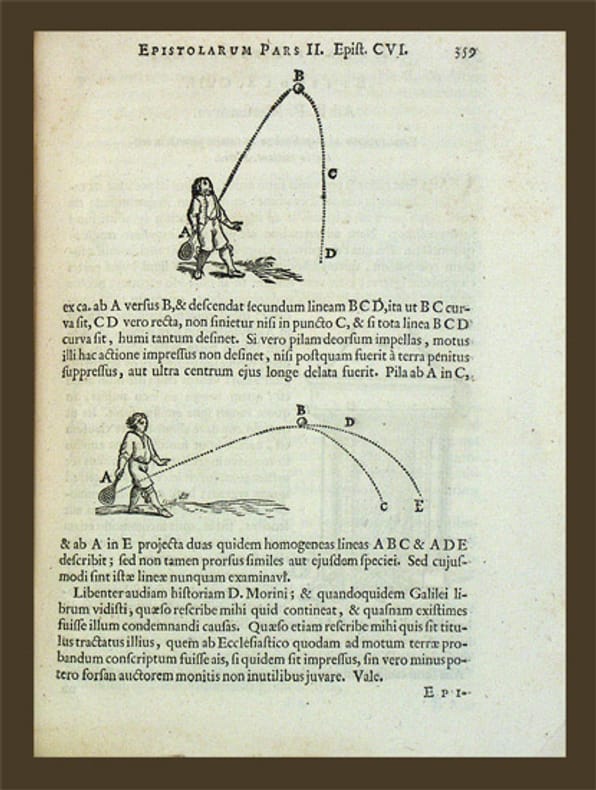
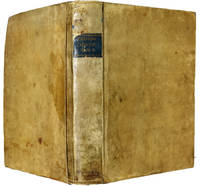
1682006874Amsterdam: Apud Danielem Elzevirium 1682. First Edition. Full Vellum. Near Fine. First Latin edition of the first part second issue of the second part. 8vo. First volume: 19.5 by 15 cm. 8 383 pp. Second volume: 21 by 16 cm. 4 404 4 pp. Many diagrams and small woodcut drawings throughout. Letters include ones addressed to Hobbes Fermat de Roberval Henry More and Mersenne. Descartes comments of Galileo's Dialogo on p. 276 part II. Vellum of first volume with a blindstamped centerpiece and other ruled/geometric decoration. Also raised bands. Second volume has smoother plainer vellum and simple spine with exposed cords by joints. Both volumes with handwritten/inked title on spine. Both volumes have some light soiling on vellum. Second volume with small red ink blotch upper front board. Both volumes' endpapers now loose exposing vellum flaps which also now lifted. Apud Danielem Elzevirium unknown
1668006874Amsterdam: Apud Danielem Elzevirium 1668 1682. First Edition. Full Vellum. Near Fine. 8vo. First volume: 19.5 by 15 cm. 8 383 pp. Second volume: 21 by 16 cm. 4 404 4 pp. Many diagrams and small drawings throughout. Vellum of first volume with a blindstamped centerpiece and other ruled/geometric decoration. Also raised bands. Second volume has smoother plainer vellum and simple spine with exposed cords by joints. Both volumes with handwritten/inked title on spine. Both volumes have some light soiling on vellum. Second volume with small red ink blotch upper front board. Both volumes' endpapers now loose exposing vellum flaps which also now lifted. <br /> Apud Danielem Elzevirium hardcover books
ABAA-75TH-VBF-23<p>Amsterdam Blaeu 1682-1683.</p><p>3 parts in 3 volumes 4to I/ 1 bl.l. 4 ll 383 pp 1 bl.l.; II/ 1 bl.l. 2 ll 404 pp. 2 ll. 1 bl.l.; III/ 1 bl.l. 8 ll. 427 pp. 1 bl.l. small burnhole pp. 249 and 413 with damage to 2 letters.</p><p>Full Dutch vellum blindstamped fleuron in the center of the covers double blindstamped fillet around the covers flat spines speckled edges. <em>Contemporary binding by the editor Blaeu.</em></p><p>201 x 154 mm.</p><p><strong>First complete edition of Descartes' Letters to princess Elisabeth and Mersenne.</strong> The 3rd volume contains the continuation of Descartes' Latin correspondence and appears here for the first time.</p><p>Tchemerzine II 786.</p><p><strong>For several years from 1642 to the end of 1649 i.e. during the period of his life from the "Meditations Metaphysiques" to his death in Stockholm Rene Descartes 1596-1650 corresponded assiduously with princess Elisabeth daughter of Frederic V elector palatine and king of Bohemia.</strong></p><p><em>"Princess Elisabeth a highly cultured woman with a special interest in mathematics had read the 'Méditations métaphysiques' with great interest and admiration. Through a French émigré and friend of Descartes Palotti she had penetrated further into the thinking of the man she soon considered her master.</em></p><p><em>And in her very first letter May 1643 she asked the philosopher to explain a point in his "Meditations" that she didn't quite grasp: how it could be that "the soul can determine the spirits animals of the body to do voluntary actions being only a thinking substance" and therefore unexpanded. Descartes explains why this point may have remained obscure in his exposition. This discussion which is the most interesting in the whole "Correspondence" occupies all the letters of 1643. In the years that followed the problems that arose with the publication of Descartes' works he sent them to his friend and dedicated his "Passions de l'amour" to her were of all kinds: about the "Principles of Philosophy" about books he advised her to read or on which she asked his opinion about new scientific developments the princess asked for clarification and discussed certain points of physics mathematics morals and metaphysics that she had not grasped or that seemed questionable. "My admiration increases every time I reread the objections made to you how it is possible that people who have spent so many years meditating and studying could not understand things so simple and clear that most in disputing the true and the false seem not to know how they should be discerned and that the sieur Gassendus Gassendi who is in the greatest repute for his learning has made after the Englishman Hobbes objections less reasonable than all the others. "</em></p><p><strong>This correspondence is of very great interest; for in connection with the questions of his interlocutor Descartes was led to take up a certain number of problems and to give a clearer and more complete account of them than in his works</strong>;<em> but above all it is the only direct document that lets us get to know him intimately and in him the man and not just the philosopher. "We learn that he had planned to write a 'Traité de l'érudition' Treatise on Erudition; we gain interesting details about the life all secluded and devoted to study and above all meditation he led in Holland and about the few months he spent at the court of Christine of Sweden."</em></p><p><strong>Descartes also wrote to Mersenne</strong> improvising answers to countless questions with extraordinary ease.</p><p>"The 3 volumes of this correspondence are illustrated with numerous figures and geometric woodcuts". Guibert <em>Bibliographie des Œuvres de René Descartes</em> p. 94.</p><p><strong>A fine copy preserved in its contemporary Dutch vellum binding.</strong></p><p><strong>FR</strong></p><p>Amsterdam Blaeu 1682-1683.</p><p>3 parties en 3 volumes in-4 I/ 1 f.bl. 4 ff. 383 pp. 1 f.bl. ; II/ 1 f.bl. 2 ff. 404 pp. 2 ff. 1 f.bl. ; III/ 1 f.bl. 8 ff. 427 pp. 1 f.bl. pte. brulure pp. 249 et 413 avec atteinte à 2 lettres.</p><p>Plein vélin hollandais fleuron à froid au centre des plats double filet à froid autour des plats dos lisses tranches jaspées. <em>Reliure de l'époque de l'éditeur Blaeu</em>.</p><p>201 x 154 mm.</p><p><strong>Première édition originale complète des Lettres de Descartes à la princesse Élisabeth et à Mersenne.</strong>Le 3ème volume contient la suite de la correspondance latine de Descartes et paraît ici pour la première fois.</p><p>Tchemerzine II 786.</p><p><strong>Pendant plusieurs années de 1642 à la fin de 1649 c'est-à-dire pendant la période de sa vie qui va des " Méditations métaphysiques " à sa mort à Stockholm René Descartes 1596-1650 échangea une correspondance assidue avec la princesse Élisabeth fille de Frédéric V électeur palatin et roi de Bohême.</strong></p><p><em>" Celle-ci femme fort cultivée et spécialement versée dans les sciences mathématiques avait lu avec beaucoup d'intérêt et une vive admiration les 'Méditations métaphysiques'. Par un émigré français ami de Descartes Palotti elle avait pénétré plus avant dans la pensée de celui qu'elle considéra bientôt comme son maître.</em></p><p><em>Et dès sa première lettre mai 1643 elle demande au philosophe quelques explications sur un point de ses " Méditations " qu'elle ne saisit pas bien : comment peut-il se faire que " l'âme puisse déterminer les esprits animaux du corps pour faire les actions volontaires n'étant qu'une substance pensante " donc inétendue. Descartes explique pourquoi ce point a pu demeurer obscur dans son exposé. Cette discussion qui est la plus intéressante de toute la " Correspondance " occupe toutes les lettres de l'année 1643. Au cours des années suivantes les problèmes qui se poseront à l'occasion de la parution des œuvres de Descartes celui-ci les faisait parvenir à son amie et lui dédia ses " Passions de l'amour " sont de tous ordres : à propos des " Principes de la Philosophie " à propos des livres qu'il lui conseille de lire ou sur lesquels elle lui demande son avis à propos des nouveautés scientifiques la princesse se fait éclaircir et discute certains points de physique de mathématiques de morale et de métaphysique qu'elle n'a point saisis ou qui lui semblent contestables. " Mon admiration s'augmente toutes les fois que je relis les objections qu'on vous a faites comment il est possible que des personnes qui ont employé tant d'années à la méditation et à l'étude ne sauraient comprendre des choses si simples et si claires que la plupart en disputant du vrai et du faux semblent ne pas connaître comment il les faut discerner et que le sieur Gassendus Gassendi qui est en la plus grande réputation pour son savoir a fait après l'Anglais Hobbes des objections moins raisonnables que tous les autres. "</em></p><p><strong>Cette correspondance présente un très grand intérêt ; car à propos des questions de son interlocutrice Descartes se trouve amené à reprendre un certain nombre de problèmes et à en donner un exposé plus clair et plus complet que dans ses œuvres </strong>; <em>mais surtout c'est le seul document direct qui nous le fasse connaître dans son intimité et en lui l'homme et non plus seulement le philosophe. " Nous y apprenons qu'il avait projeté d'écrire un " Traité de l'érudition " ; nous y gagnons d'intéressants détails sur la vie toute retirée et consacrée à l'étude et surtout à la méditation qu'il mena en Hollande et sur les quelques mois qu'il passa à la cour de Christine de Suède.</em> "</p><p><strong>Descartes écrit aussi à Mersenne</strong><strong> </strong>improvisant des réponses à d'innombrables questions avec une facilité extraordinaire.</p><p>" Les 3 volumes de cette correspondance sont illustrés de nombreuses figures et dessins géométriques sur bois ". Guibert <em>Bibliographie des Œuvres de René Descartes</em> p. 94.</p><p><strong>Bel exemplaire conservé dans son vélin hollandais de l'époque. </strong></p> hardcover
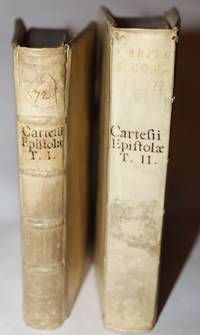
35575Amsterdam. Daniel Elzevier. 1668. 1st Edition. Hardcover. 4to 19.5cm first Latin edition viii383p. title page vignette numerous woodcut text illustrations index black leather label contemporary full vellum yapped front edges some light foxing binding is somewhat dust soiled about usual for vellum very good to fine ds1. ~ Volume one of three volume set. The spine title reads : Cartesii. Epistol. Tom. I." A Latin edition of Descartes' "Letters" whereby the fundamentals of Cartesian doctrines are laid out. Amsterdam. Daniel Elzevier. 1668 hardcover
A CURA DI Fulvio Tessitore GUIDA MICROMEGAS 1990 368 PP. FONDO DI MAGAZZINO: VOLUME IN PERFETTO STATO, PARI AL NUOVO. Parole e frasi comuni allievi allora alsaziano amici Archivisti avevamo avrebbe Berlino Bethmann Biedermeier Bismarck bisogno Boyen c'era casa chiamata città colleghi Costituzione Dahlem Delbruck destino dinanzi divenire docente dovetti ebbi elettorale erano eravamo Erich Marcks Facoltà fece Federico Federico il Grande figlio fondo Friburgo Germania germanistica ginnasio giorno giovane Goethe guerra mondiale Harz Hintze Historische Zeitschrift Hohenfinow idee infatti insieme interesse interiore intorno Karlsruhe Kiihlmann Koser Krauske Lamprecht lavoro lezioni lotta maggiore Max Lehmann Max Weber Meinecke membri mente moglie momento mondo Naumann nuovo oggi parlare parole particolare passato patria personale piccolo politica popolo poteva problema professore profonda proprio Prussia Prussia orientale Ranke ricordo rivoluzione di novembre Salzwedel sarebbe Scharnhorst Scheveningen scienza secolo XIX sembrava semestre seminario sentire sera sociale Spahn spesso spirito spirituale stava storia storico Strasburgo studentesca studenti studi studioso Sybel tardi tedesca tratto Treitschke Troeltsch
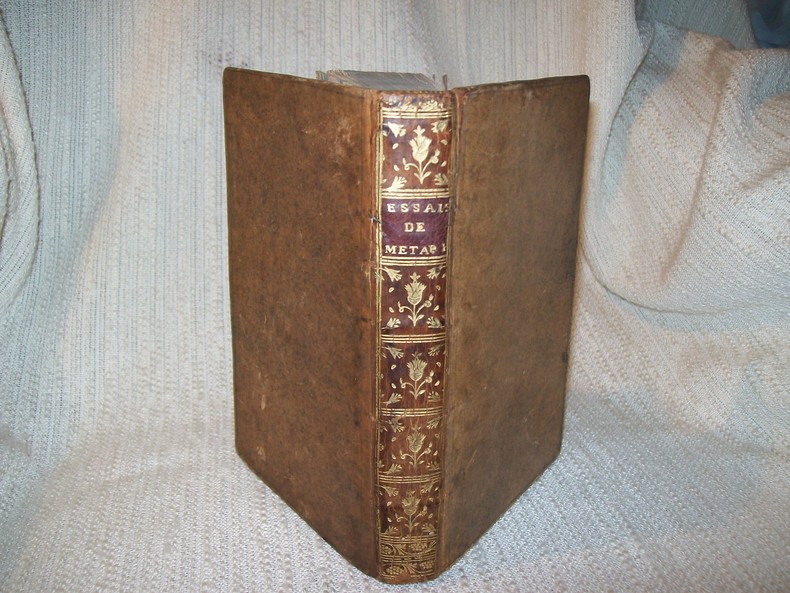
1756GITg216A paris chez desaint et Saillant 1756. In-12 398pp 1 feuillet non chiffré table. basane havane, dos lisse orné de filets et fleurettes finement dorés, pièce de titre grenat, tranches marbrées, reliure de l'époque. Petite galerie et discret trou de vers sans gravité, en marge de quelques feuillets. Bel exemplaire complet, reliure de l'époque solide, en très bon état et décorative. Enrichi de 2 feuillets manuscrits de l'époque, présentant des extraits avec commentaire personnel du lecteur, de l'ouvrage de métaphysique de M Viel, Chanoine d'Auxerre.
177027955A Paris, chez L. Etienne Ganeau, 1770. Un vol. au format in-12 (168 x 98 mm) de 1 f. bl., vii pp., 2 ff. n.fol., 501 pp. et 2 ff. bl. Reliure de l'époque de plein veau glacé et marbré blond, triple filet gras et maigres dorés encadrant les plats, dos à nerfs orné de filets gras à froid, caissons d'encadrement dorés, jeu de petits filets obliques dorés sur les nerfs, filets en pointillés dorés, fleurons dorés, semis de pointillés dorés, pièce de titre de maroquin havane, titre doré, palette dorée en tête et queue, filet doré sur les coupes, tranches rouges.
1853F80478Paris, Auguste Vaton 1853 262pp., 1e et seule édition, 23cm., br.orig., peu de rousseurs, bon état, [la date de publication mentionnée sur la page de titre est "1853", bien que la couv.orig. mentionne "1854"], F80478
1993F66671Oxford, Oxford University Press 1993 xvii + 342pp., 24cm., previous owner's name on first page, softcover, VG
19651153974Presses Universitaires e France., 1965. 180 S.,
193626337Paris: Boivin & Cie 1936. Very Good. Paris: Boivin & Cie 1936. First Edition. Octavo; publisher's cream printed card wrappers; 234pp. Minor shelf wear and moderate soil to wrappers textblock uniformly toned and brittle later 1977 ownership inscription inside upper cover else Very Good and sound. Boivin & Cie unknown
262pp., 1e et seule édition, 23cm., br.orig., peu de rousseurs, bon état, [la date de publication mentionnée sur la page de titre est "1853", bien que la couv.orig. mentionne "1854"], F80478