2 342 résultats
16839Tours, Mame, 1870, in-8 demi-chagrin rouge, dos à faux-nerfs richement orné, lettres et caissons dorés, fer doré du lycée de Dijon sur le 1er plat, XIII + 349 pp. Etiquette de prix scolaire en garde. Cachets. Couverture en bon état mais un peu défraichie et blanchie, intérieur en bon état d'usage: rousseurs éparses.
1274095123.Gpaperback. Good. Access codes and supplements are not guaranteed with used items. May be an ex-library book. paperback
19522111902152905705Sogen-sha 1952. Soft Cover. Fine. Size: paperback Sogen-sha paperback
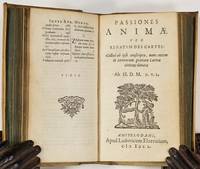
165019746Amsterdam: Apud Ludovicum Elzevirium 1650. FIRST LATIN EDITION. First Latin edition printed in French the year before. This the last book authored by Descartes and written for Queen Christina of Sweden discusses psychology ethics and the relationship between mind and body. “Descartes believed the soul to be a definite entity giving rise to thoughts feelings and acts of volition. He was one of the first to regard the brain as an an organ integrating the functions of mind and body†G&M.<br /> <br /> Descartes made an essential distinction between the soul as the divinely-endowed seat of consciousness will and rational thought and the body as a machine or automaton subject to the laws of physics and only indirectly controlled by the soul through the nerves. Using this dualistic model he was able to make the important distinction between voluntary and involuntary actions. <br /> <br /> “Cartesian physiology and philosophy had a powerful influence on the thinking of such men as Robert Hooke Giovanni Borelli Jan Swammerdam and Thomas Willis. Descartes’ theories helped to explain in understandable mechanistic terms the more puzzling problems of human physiology during a time when scientific research was expanding rapidly†Heirs. <br /> <br /> DSB IV pp. 55 - 65; Garrison & Morton 4965 Fr. ed.; Heirs of Hippocrates 467; Norman 625 Fr. ed.; Wellcome II p. 453. Apud Ludovicum Elzevirium unknown
1648601631650-1648. Amstelodami : Elzevirus 1650 12° 56 242 14 pp.; vorgebunden: Lugd. Batavorum : Hackius 1648 12° 16 232 16 pp. Kupfertitel; gebunden im Pergamenteinband mit hs. Rückentitel; feines Expl. First Latin Edition of Descartes' Important Work on the Workings of the Body and Soul Including Significant Contributions on Ethics and Psychology. The first Latin editions were published by Elzivier in 1650 in both 12mo and quarto formats - most likely simultaneously although the 12mo version is typically given priority. This Latin translation of the original French edition of Les passions de l'ame 1649 was done by Samuel and Henri des Marets. The Latin edition of Descartes' last work Les passions de l'ame 1649 was written in Egmond-Binnen his last Dutch residence for Queen Christina of Sweden and first published in the original French the previous year. It discusses psychology ethics and the relationship between mind and body; Descartes believed that the soul was a definite entity giving rise to senses thoughts feelings affections and acts of volition and he was one of the first to regard the brain as an organ which integrated the function of mind and body. "Cartesian physiology and philosophy had a powerful influence on the thinking of such men as Robert Hooke Giovanni Borelli Jan Swammerdam and Thomas Willis. Descartes' theories helped to explain in understandable mechanistic terms the more puzzling problems of human physiology during a time when scientific research was expanding rapidly. " Heirs of Hippocrates no. 291 "Finally he brought physiological psychology within the compass of his system in 'Les passions de l'aime' in 1649. This system aimed to be as complete as Aristotle's which it was designed to replace. It was not by chance that it dealt in the same order with many of the same phenomena such as the rainbow as well as with others more recently investigated such as magnetism." DSB Guibert Nr.7 BACON Francis : Historia Naturalis & Experimentis de Ventis &c. Third but second Leiden Edition is according to Gibson the second of two known variants. Contains a.o. the following chapters: Historia Naturalis & Experimentalis de Ventis; Historia Naturalis et Experimentalis de Forma Calidi; De Motus Sive Virtutis Activae variis Speciebus; Historia vitae et mortis. Bacon's natural history of winds and a treatise on the aging process and death forming the first 2 books of the third part of his Instauratio magna his projected systematization of scientific knowledge. "Important as collecting all the facts and theories then known on the subject and especially as the first to point out the deflexion of winds caused by the earth's rotation" Sotheran for 1st English ed. Gibson 110b Willems 1277. unknown
1120671116.Gpaperback. Good. Access codes and supplements are not guaranteed with used items. May be an ex-library book. paperback
1166996492.Gpaperback. Good. Access codes and supplements are not guaranteed with used items. May be an ex-library book. paperback
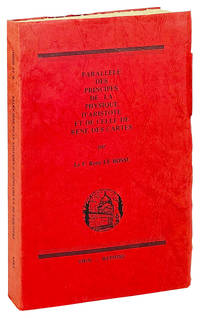
198125014Paris: Librairie Philosophique J. Vrin 1981. Very Good. Paris: Librairie Philosophique J. Vrin 1981. Facsimile reprint of the 1674 edition. Octavo; publisher's red printed card wrappers yapp edges; 10319pp. Light shelf wear spine a shade sunned contemporary ownership signature inside upper cover else Very Good and sound. Librairie Philosophique J. Vrin unknown
1271882485.Gpaperback. Good. Access codes and supplements are not guaranteed with used items. May be an ex-library book. paperback
2012027336Paris Gallimard / Bibliothèque de la Pléiade (n° 40) 2012 Un volume in-12° (105 x 175mm), 1423 pp. Reliure en pleine peau rouge de l'éditeur, dos lisse orné du nom de l'auteur, titre et filets dorés, rhodoïd, signet, étui décoré de l'éditeur. Textes présentés par A. Bridoux.
RO40007903Charpentier. non daté. In-12. Broché. A relier, Couv. convenable, Dos abîmé, Papier jauni. 618 pages.. . . . Classification Dewey : 100-PHILOSOPHIE ET DISCIPLINES CONNEXES
1355777127.Ghardcover. Good. Access codes and supplements are not guaranteed with used items. May be an ex-library book. hardcover
EDIZIONE CRITICA A CURA DI FABRIZIO LOMONACO PRESENTAZIONE DI FULVIO TESSITORE ANASTATICA DELL'EDIZIONE F. MOSCA NAPOLI 1713 LIGUORI 2005 RISPETTIVAMENTE LXIV-506 E 507-937 PP. FONDO DI MAGAZZINO: LIEVI IMPERFEZIONI AI MARGINI DELLE SOVRACCOPERTE (SU ENTRAMBI I VOLUMI), PER IL RESTO PERFETTI E INTONSI. Presentata da Fulvio Tessitore, la ristampa anastatica delle Origines Juris Civilis del filosofo e giurista calabrese Gianvincenzo Gravina è curata da Fabrizio Lomonaco, professore di Storia della Storiografia filosofica nell'Università degli di Napoli Federico II. L'esemplare riproposto è tratto dalla prima e completa edizione napoletana del 1713, successiva all'edizione lipsiense del 1708; nella due "Appendici" sono riprodotti la recensione-"compendio" (in italiano) delle Origines e l'elogio dell'Autore nel "Giornale de' Letterati d'Italia" del 1711 e del 1718. L'iniziativa prosegue il lavoro della "Fondazione Pietro Piovani per gli studi vichiani" svolto a sussidio della nuova edizione delle opere di Vico. Non a caso, infatti, l'Introduzione (a cura di F. Lomonaco) indica le connessioni con la cultura "previchiana" da un lato, e con Vico stesso dall'altro. Tuttavia, non si propone un pensatore "previchiano" per opposizione o per attardato giusnaturalismo, e neppure un filosofo preparatore delle Scienze Nuove. Gravina è studiato in quanto portatore di una risposta diversa da quella di Vico a problemi non diversi: dalla polemica contro il dualismo cartesiano e la prevalenza della mens alla critica del razionalilsmo giusnaturalistico, dall'esigenza di fondare logicamente e sistemare storicamente l'ordine della humanitas, scosso dalla prepotenza hobbesiana, alla fondazione di una scientia humanitatis che, per Gravina, deve garantire l'animi tranquillitas, ripensando il nesso ciceroniano di honestas e utilitas. Ed è qui che la via di Vico diverge, incalzato dalla consapevole necessità di fondare la historia come scienza della vita, animata, fino ad essere inquieta, dagli incommoda e anfractuosa vitae, dalle affectiones, in cui si esprime tutta la forza degli uomini. Perciò, anche il comune platonismo neoplatonico, egualmente letto dalla prospettiva dell'intimismo della coscienza agostiniana, conduce Gravina e Vico a conclusioni diverse che sono, per il primo, il "sistema" della recta ratio iuris su cui si regge la "ragione universale della tranquillità pubblica" e, per il secondo, la definizione, tutta moderna, della storicità del diritto come sistema delle utilità in vista della "teologia civile ragionata", in cui l'umanità consegue la congiunzione di pietas e sapientia in nesso indissolubile e, però, mai certo o assolutizzato.

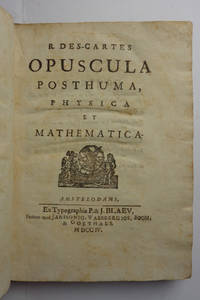
1704009237<p>Amstelodami: Blaeu 1704. Un volume in 4to piccolo 16x22 cm di 12 90 i.e. 70 2 51 3 20 6 79 1 23 3 18 2 pp. Nel primo trattato la numerazione passa da p. 35 a 56 senza perdita di testo. Numerose figure xilografiche nel testo. Contiene come elencato sul verso del frontespizio i trattati.: Mundus sive dissertatio de lumine e De mechanica tractatus di René Descartes; Elucidationes physicae in Cartesii musicam di Nicolas-Joseph Poisson; Regulae ad directionem ingenii di Descartes; Primae cogitationes circa generationem animalium ed Excerpta ex mss. R. Des-Cartes. Bell'esemplare a larghi margini con poche fioriture Brunite solo le carte di risguardia. Piena pergamena coeva titolo manoscritto al dorso.</p> Blaeu
2000mon0003847312Bompiani 1/1/2009 12:00:00 AM. hardcover. Very Good. 1.9685 8.4252 6.1417. Bompiani hardcover
Pavia presso i collettori coi tipi di Gio. Giacomo Capelli, 1818. (mm. 150). Due volumi. Brossura muta dell’epoca con tassello al dorso. pp. 146, 285(1); 364 (malnumerate 664). Antiporta col ritratto dell'autore, al primo volume. In barbe. Non comune prima traduzione italiana.
Mm 110x185 Collana Biblioteca. Brossura editoriale con bandelle, pagine LI-312 con alcune figure in nero, piatti un po' usurati, firma alla sguardia. Contenuto: Discorso Sul metodo, Meditazioni Metafisicìhe, Il Mondo , L'uomo. A cura di Gianfranco Cantelli. Opera in buone condizioni. SPEDIZIONE IN 24 ORE DALLA CONFERMA DELL'ORDINE.
20272Amstelodami, Blaviana, 1692. 155 X 200 mm. relié cartonnage d'attente. Edition comprenant 3 parties, comportant 1 portrait gravé en frontispice et des figures in et hors texte. 20 ff. n. ch., 222 pp.; 8 ff. n. ch., 248 pp.; 12 ff. n. ch., 92 pp., 2 ff. d'index; 7 ff. n. ch., 191 pp.; 164 pp.; 88 pp. Notre exemplaire a été retiré de sa reliure et revêtu d'un cartonnage d'attente. Reliure défraîchie.
168511556Amstelodami, Ex typographia Blaviana, 1685. 3 pièces reliées en 1 vol. in-4, vélin rigide (reliure de l'époque).
8514Amstelodami, apud Danielem Elsevirium, 1678-1677. Six parties en un fort volume in-4, plein vélin ivoire, couverture rigide, titre manuscrit au dos (reliure de l'époque). Quelques rousseurs éparses et légères brunissures.
16855141046Amstelodami, Ex Typographia Blaviana (Amsterdam: Blaeu) 1685. (42), 222; (2) weiße, (16), 248; (24), 92, (4) Seiten. Mit gestochenem Portrait und zahlreichen, teils ganzseitigen Textholzschnitten. 4° (21 x 17 cm). Pergamentband der Zeit mit durchgezogenen Bünden, handschriftlichem Rückentitel (berieben) und gesprenkeltem Schnitt.
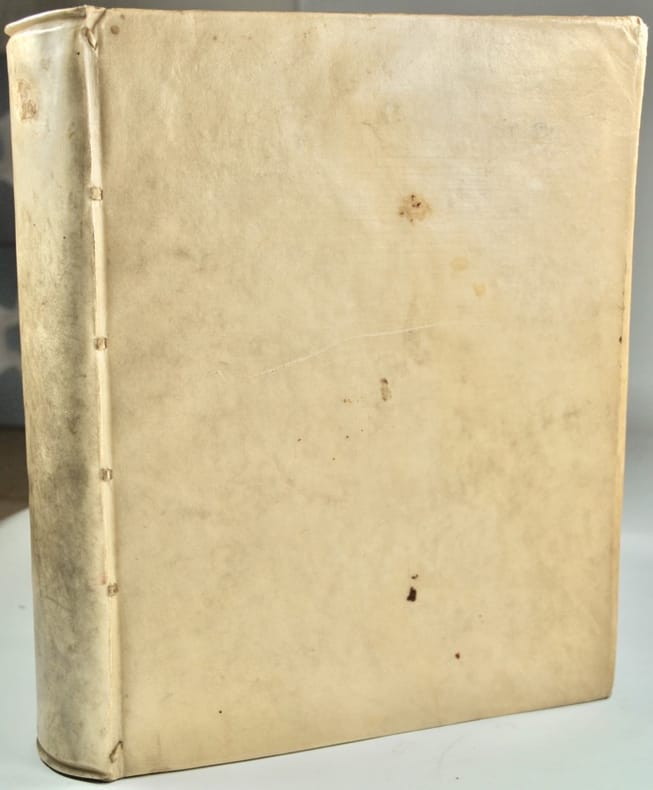
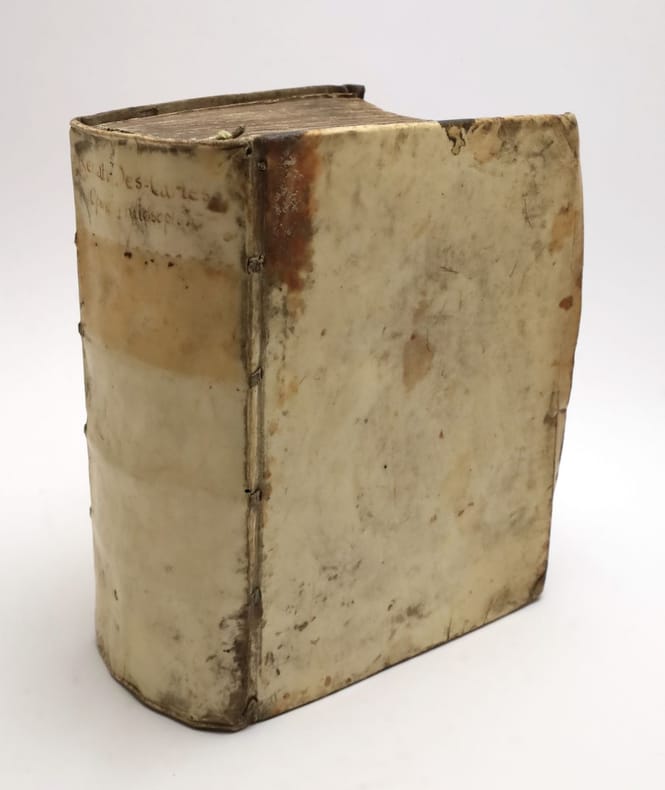
165094237Amstellodami, Apud Ludovicum Elzevirium, 1650, in-4, 4 tomes en 1 volume, pagination mutliple, Vélin rigide de l'époque, titre manuscrit en tête du dos, Éditions issues de l'officine de Louis III Elzevier d'Amsterdam, à qui Descartes (1596-1650) confia, à partir de 1642, l'impression de tous ses ouvrages. Ces quatre tomes, qui forment la collection de ses oeuvres philosophiques, ont paru l'année de sa mort. Ils sont souvent réunis en un seul volume, comme c'est le cas ici; ils s'accompagnent alors d'un titre général portant : Opera philosophica. Editio secunda (Willems n° 1106). L'ouvrage a été mis à l'Index par décret du 20 novembre 1663 (Bujanda, Index librorum prohibitorum, p. 281). 1? Meditationes de prima philosophica... Tertia editio... , 1650. [14]-191-164-88 pp. Première édition elzvirienne publiée dans le format in-4. Trois parties : les Meditationes (1650), l'Appendix (qui a sa page de titre propre, à la date de 1649), et L'Epistola ad... Gilbertum Voetium. Guibert p. 229-230. Willems n° 1107. 2? Principa philosophiae. [40]-302 pp. Figures gravées sur bois dans le texte, plusieurs répétées. Réimpression de l'édition originale de 1644, augmentée de la traduction latine de la Lettre de l'autheur à celuy qui a traduit le livre; Epistola authoris ad Principiorum philosophiae interpretem gallicum (p. [9] et suiv). Guibert p. 121-122. Willems n° 1106. 3? Specimina philosophiae. [16]-316 pp. Figures gravées sur bois dans le texte, certaines répétées. Réimpression de l'édition originale de 1644; cet ouvrage renferme la traduction latine du Discours de la méthode, par Estienne de Courcelle, avec révisions de Descartes, la Dioptrique et les Météores. Guibert p. 105-106. Willems n° 1106. 4? Passiones animae. [24]-98-[5] pp. Seconde édition de la traduction latine des Passions de l'âme. Guibert p. 158-159. Willems n° 1106. Ex-libris manuscrit ancien accompagné d'un schéma circulaire sur la première garde blanche : "Th. Montanus D. Med."; probablement Thomas Montanus (ou Thomas Van den Berghe,1617-1685) médecin à Bruges. Autres ex-libris manuscrits anciens au verso, l'un étant biffé (date de 1660). Cachets anciens sur les pages de titre. Bon exemplaire. Trace ancienne d'une pièce de titre au dos, salissures du vélin. Mouillures claires, réparation en tête d'une page. Couverture rigide
16726345Amsterdam: Daniel Elzevir 1672. Fine/According to Guibert the general title page "Opera philosophica" with its table of contents listing four works was slapped onto blocks of the three works included here in anticipation of finishing the Meditations which in fact was not printed until six years later in 1678 Willems #1545. Some volumes were bound with the 1670 printing of the Meditations but when that ran out examples such as the one offered here continued to go to market until 1678 when the companion printing of Meditations finally appeared. Quarto 20 cm. Three parts in one volume of four--see below. Each part with separate title page. Principia philosophiae xxxvi 222; Specimina philosophiae xvi 248; Passiones animae xxiv 92 4; all preceded by general title with contents on verso and engraved portrait frontispiece. Numerous figures in text. Bound in contemporary speckled calf rebacked. Armorial bookplate. References: Willems 1469; Guibert p. 231. Daniel Elzevir unknown books
22071Amstelodami, Apud Danielem Elzevirium [Amsterdam, Daniel Elzevier], 1664. Petit in-4, [40]-222-[18]-248-[24]-92-[4] pp., basane mouchetée havane, dos à nerfs orné de caissons dorés, tranches mouchetées (reliure défraîchie mais solide, quelques taches et rousseurs).
1656918Amsterdam: Elzevier 1656. vellum. Very good. DESCARTES René Opera philosophica Amsterdam: L. & D. Elzevier 1656. 3 parts in 1 volume: 2 blank leaves TP 1 leaf Typographus with portrait on verso TP Principia 3 leaves = dedication 14 leaves = introduction & index 1 - 222 TP Specimina philosophiae 7 leaves = index 1 - 248 TP Passiones animae 11 leaves Praefatiuncula 1 - 92 2 leaves index 3 blank leaves Quarto. Third Latin Edition. <br /> <br />This Edition Tertia includes numerous woodcut figures with an engraved portrait of Descartes by Franciscus van Schooten. <br /> <br />OPERA PHILOSOPHICA EDITIO TERTIA contains three major works: <br /> <br />Principia Philosophiæ. Principles of Philosophy 1650 focuses on metaphysics and natural philosophy. <br /> <br />Specimina Philosophiæ: seu Dissertatio de Methodo Rectè regendæ rationis & veritatis in scientiis investigandæ: Dioptrice et Meteora. The Proofs of Philosophy: The Discourse on the Method of Properly conducting the reason & seeking for truth in the sciences: Dioptics and Meteors 1650 outlines the process of Cartesian doubt as a method for proper philosophical and scientific investigation. <br /> <br />Passiones Animæ. The Passions of the Soul 1650 addresses the interaction between the mind and the body. <br /> <br />CONDITION: Very good or better in original full vellum. Spine with soiling and remnants of labels library. Covers lightly soiled with yapped edges. Pages crisp and clean and free of markings. <br /> <br/><br/> Elzevier hardcover