Descartes, Norman Kemp SmithBiblio.com
1 037 résultats
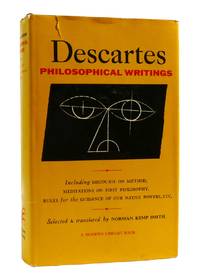
1958192739New York: Modern Library 1958. Modern Library Edition. Hardcover. Near Fine in a Very Good dust jacket. Modern Library hardcover
2004Q-0760762414Barnes & Noble Collector's Library 2004-01-01. Hardcover. New. New. In shrink wrap. Looks like an interesting title! Barnes & Noble Collector's Library hardcover
1018011277.Ghardcover. Good. Access codes and supplements are not guaranteed with used items. May be an ex-library book. hardcover
197816113New York University Press. As New. 1978. Hardcover. 0814709990 . FREE UPGRADE to Courier/Priority Shipping Upon Request - IN STOCK AND IMMEDIATELY AVAILABLE FOR SHIPMENT - AS NEW THE TEXT BLOCK IS PRISTINE CLEAN UNMARKED AND IN EXCELLENT CONDITION - -- with a bonus offer-- . New York University Press hardcover
albcbaa3092b25f3244Series: The Philosophy of M. Praxis 2012. 128 Please contact us for details on condition of available copies of the book.�SKUalbcbaa3092b25f3244. unknown
alb898428397238d2d8M. LENAND 2024 328s. Please contact us for details on condition of available copies of the book.�SKUalb898428397238d2d8. unknown
alb63efd5562846a5d7Series: Classics of Natural Science. Per M-L. GTTI 1934. Treatise on Light. A description of the human body and a treatise on the formation of an animal. Please contact us for details on condition of available copies of the book.�SKUalb63efd5562846a5d7. unknown
albbb55def7aab67f51Series: Philosophical Technologies. 5th edition. M. Academic Project 2009. 322 Please contact us for details on condition of available copies of the book.�SKUalbbb55def7aab67f51. unknown
albe4357e4c1435d364M. Eksmo. 2009. 560s. Please contact us for details on condition of available copies of the book.�SKUalbe4357e4c1435d364. unknown
195043963231338538Moscow: State Publishing House of Political Literature Gospolitizdat 1950. Hardcover. Good. Ð ÐµÐ½Ñ Ð”ÐµÐºÐ°Ñ€Ñ‚. Избранные произведениÑ. / Пер. Ñ Ñ„Ñ€Ð°Ð½Ñ†. и латин. под ред. и Ñо вÑтупит. ÑÑ‚. Ð’. Ð’. Соколова. МоÑква : ГоÑударÑтвенное издательÑтво политичеÑкой литературы ГоÑполитиздат 1950. 711 Ñ. : портр. Твёрдый издательÑкий переплёт обычный формат. Юбилейное издание. . René Descartes. Selected Works Izbrannye proizvedeniya. / Trans. from French and Latin edited with an introduction by V. V. Sokolov. Moscow : State Publishing House of Political Literature Gospolitizdat 1950. 711 pp. : portrait. Publisher’s hardcover standard format. Jubilee edition. This 1950 volume is a landmark of Soviet philosophical publishing released by Gospolitizdat to commemorate the 300th anniversary of the death of René Descartes 1596–1650. In the context of the mid-20th century this edition served as the definitive scholarly collection of the French thinker's legacy balancing his revolutionary contributions to rationalism and mathematics with the ideological requirements of the era. The collection includes Descartes' most influential works notably Rules for the Direction of the Mind Discourse on the Method Meditations on First Philosophy and The Principles of Philosophy. These texts trace the development of the "Cartesian" method—the systematic doubt intended to reach the bedrock of certainty famously summarized in the dictum Cogito ergo sum "I think therefore I am". The edition is particularly praised for its artistic and typographic execution. The design by N. Sidelnikov featuring elegant title pages and initial letters reflects the formal dignity of a jubilee publication. A standout feature is the woodcut engraving portrait of Descartes by A. Pavlov which prefaces the text. Beyond the primary texts the volume includes a comprehensive introductory article by the noted philosopher V. V. Sokolov who provides a historical-materialist perspective on Descartes’ dualism and his role in the transition from scholasticism to modern science. For collectors and scholars this 1950 edition remains a classic of the "Stalinist" academic style—physically robust meticulously edited and visually distinguished. State Publishing House of Political Literature (Gospolitizdat) hardcover
BN200236GALLIMARD. Descartes : Oeuvres et lettres Bibliothaeque de la Plbeiade Band 40 <br/><br/>Descartes : Oeuvres et lettres Bibliothaeque de la Plbeiade Band 40 René Descartes GALLIMARD unknown
61-00261Bobbs-Merrill Company. Paperback. Good. Good condition with minimal wear. Bobbs-Merrill Company paperback
6415086Cambridge University Press CUP pp. 272 Index. Papeback. New. Cambridge University Press CUP unknown
19692080502106906020Not Available 1969. Soft Cover. Fine. The book is in fine condition. Not Available paperback
2004150819New York: Barnes & Noble Collector's Library 2004. Barnes and Noble; Second Printing. Hardcover. Fine in a Fine dust jacket. Gilded text block edges.; 6.0 X 4.0 X 0.8 inches; 323 pages. Barnes & Noble Collector's Library hardcover
6528077Cambridge University Press CUP pp. 248 . Papeback. New. Cambridge University Press CUP unknown
0198246714.Gpaperback. Good. Access codes and supplements are not guaranteed with used items. May be an ex-library book. paperback
1939106342Rene Kieffer Editeur 1939. Softcover. Fine/No jacket. J. Touchet. #416/1000cc. In wraps and unbound signatures. Illustrated and colored by J. Touchet. In a mismatched cover and slipcase. Rene Kieffer Editeur unknown
1940210659Paris: Chez Rene Kieffer 1940. Soft cover. VG/VG-. Touchet J. FRENCH text. Limited Edition; #820/1000. 106 pages in very good clean condition. Unbound with 8 page little booklets laid in. Delightful colour cartoon-like illustrations throughout. Plain white card covers. Blue/red DJ with illustrations and black titles. Light wear on corners and edges. The paper book is laid in brown stiff boards with gilt titles and illustration on the spine. The boards are a little bowed and show light wear. The book is also in a brown slipcase which is a little wrinkled and warped. VG/VG- <br/> <br/> Chez Rene Kieffer paperback
3787340777.Ghardcover. Good. Access codes and supplements are not guaranteed with used items. May be an ex-library book. hardcover
ria9783787340774_inpHardcover. New. New Book; Fast Shipping from UK; Not signed; Not First Edition; N/A hardcover
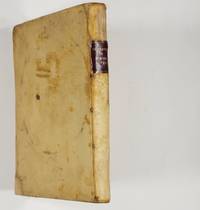
1662176381662. Lugduni Batavorum: Apud Petrum Leffen & Franciscum Moyardum 1662 4° 36 121 pp. 123 111/112 repeated 1 p. Nota 56 woodcut and engraved text-illustrations 10 engraved plates contemporary vellum; complete fine copy. First Edition! Complete with all 56 woodcut and engraved text-illustrations many of which are full-page and the 10 full-page engraved plates several folded one of which is the heart-plate with the 6 moveable parts the Cardiac-flaps. This edition was posthumously published and translation by Florentius Schuy. A seminal work René Descartes 1596-1650 'Treatise on man' is known as the first European textbook of physiology and the first purely mechanistic account of bodily functions. "In the Treatise of man Descartes did not describe man but a kind of conceptual models of man namely creatures created by God which consist of two ingredients a body and a soul. "These men will be composed as we are of a soul and a body. First I must describe the body on its own; then the soul again on its own; and finally I must show how these two natures would have to be joined and united in order to constitute men who resemble us"." SEP. "This highly influential work was the first to present a coherent description of bodily responses in neurophysiological terms that are still to a wide extent accepted today. In his attempt to solve the central question around which almost all philosophical thought had revolved since the time of Aristotle what the relation between the soul and the body actually is Descartes came to create a milestone work of physiology which changed the entire trajectory of modern physiological conceptions. "Without Descartes the seventeenth-century mechanization of physiological conceptions would have been inconceivable." He believed that the relationship between the soul and the body was mediated by the brain and the nervous system and his seminal attempts to explain neural mechanisms drew a great deal on the engineering developments of his time. He developed a hydro-mechanical theory of how the soul controlled the contraction of muscle through the intermediary of the pineal and the cerebral ventricles and he produced an explanation of how it received through the nerves from the periphery signals that gave rise to sensation. Descartes' theories quickly spread throughout Europe and the work in which he had developed them his "De Homine" became extremely influential. "Descartes was one of the first to embrace Harvey's doctrine of the circulation and the book opens with an account of the cardiovascular system illustrated by a plate of the heart with movable flaps. From a mechanistic survey of general physiology Descartes moves to the nervous system which he treats in great detail. Particularly important is his discussion of the eye drawing on Kepler for the optical part and the physiology of perception. 'The impact of the Cartesian physiological program once it was publicly known was enormous. In two ways -philosophically and physiologically -Descartes transformed long-standing beliefs about animals and men. Philosophically of course his notions of mind-body dualism and animal automatism had extremely important implications that were not lost on Henry More Malebranche Spinoza and Leibniz along with many others in the seventeenth century . But physiologically too Descartes' conceptions had an impact that in many ways was even more impressive than the philosophical influence because it affected the actual course of contemporary science'. DSB. Descartes was prepared to publish this book in 1633 but decided to withhold it when he learned of Galileo's condemnation by the Church. As a result the first edition was not published until 1662. This first Latin translation De homine by Florentius Schuyl in 1662 was probably much more widely read than the two years later published French edition. Guibert Nr. 1. Edition Originale. Grolier Medicine 31; Garrison-Morton 574; Wellcome II p. 453; Krivatsy 3120; Norman 627 hardcover
1662679671662. Lugduni Batavorum: Apud Franciscum Moyardum & Petrum Leffen 1662 4° 36 121 pp. 123 111/112 repeated 1 p. Nota 56 woodcut and engraved text-illustrations 10 engraved plates contemporary vellum; complete fine copy. First Edition! Complete with all 56 woodcut and engraved text-illustrations many of which are full-page and the 10 full-page engraved plates several folded one of which is the heart-plate with the 2 moveable parts the Cardiac-flaps and one for flab for the brain Fig. 54. This edition was posthumously published and translation by Florentius Schuy. A seminal work René Descartes 1596-1650 'Treatise on man' is known as the first European textbook of physiology and the first purely mechanistic account of bodily functions. "In the Treatise of man Descartes did not describe man but a kind of conceptual models of man namely creatures created by God which consist of two ingredients a body and a soul. "These men will be composed as we are of a soul and a body. First I must describe the body on its own; then the soul again on its own; and finally I must show how these two natures would have to be joined and united in order to constitute men who resemble us"." SEP. "This highly influential work was the first to present a coherent description of bodily responses in neurophysiological terms that are still to a wide extent accepted today. In his attempt to solve the central question around which almost all philosophical thought had revolved since the time of Aristotle what the relation between the soul and the body actually is Descartes came to create a milestone work of physiology which changed the entire trajectory of modern physiological conceptions. "Without Descartes the seventeenth-century mechanization of physiological conceptions would have been inconceivable." He believed that the relationship between the soul and the body was mediated by the brain and the nervous system and his seminal attempts to explain neural mechanisms drew a great deal on the engineering developments of his time. He developed a hydro-mechanical theory of how the soul controlled the contraction of muscle through the intermediary of the pineal and the cerebral ventricles and he produced an explanation of how it received through the nerves from the periphery signals that gave rise to sensation. Descartes' theories quickly spread throughout Europe and the work in which he had developed them his "De Homine" became extremely influential. "Descartes was one of the first to embrace Harvey's doctrine of the circulation and the book opens with an account of the cardiovascular system illustrated by a plate of the heart with movable flaps. From a mechanistic survey of general physiology Descartes moves to the nervous system which he treats in great detail. Particularly important is his discussion of the eye drawing on Kepler for the optical part and the physiology of perception. 'The impact of the Cartesian physiological program once it was publicly known was enormous. In two ways -philosophically and physiologically -Descartes transformed long-standing beliefs about animals and men. Philosophically of course his notions of mind-body dualism and animal automatism had extremely important implications that were not lost on Henry More Malebranche Spinoza and Leibniz along with many others in the seventeenth century . But physiologically too Descartes' conceptions had an impact that in many ways was even more impressive than the philosophical influence because it affected the actual course of contemporary science'. DSB. Descartes was prepared to publish this book in 1633 but decided to withhold it when he learned of Galileo's condemnation by the Church. As a result the first edition was not published until 1662. This first Latin translation De homine by Florentius Schuyl in 1662 was probably much more widely read than the two years later published French edition. Guibert mentions two states of the the title-page: the first with the imprint "Apud Leffen & Franciscum Moyardum and a woodcut printer's device of a phoenix rising from the flames motto "ex morte immortalia"; and the second with the names of the publishers reversed and a device showing an angel under a laurel tree "motto insigne maxime laurus". He does not establish any priority of issue. Guibert Nr. 2. Edition Originale. Grolier Medicine 31; Garrison-Morton 574; Wellcome II p. 453; Krivatsy 3120; Norman 627 hardcover
166252487Lugduni Batavorum Leyden Apud Petrum Leffen & Franciscum Moyardum 1662. 4to. Contemporary full calf with gilt title-laebl to spine. 36 121 1 pp. 10 plates. Complete with all 56 woodcut and engraved text-illustrations many of which are full-page and the 10 full-page engraved plates several folded one of which is the heart-plate with the 6 moveable parts the Cardiac-flaps of which only the smallest is missing. One folded plate cropped at fore-margin. <br/><br/><em>First edition of Descartes' seminal treatise on man the first European textbook of physiology constituting an epochal work of modern thought defining the mechanism of man as it does. "In the Treatise of man Descartes did not describe man but a kind of conceptual models of man namely creatures created by God which consist of two ingredients a body and a soul. "These men will be composed as we are of a soul and a body. First I must describe the body on its own; then the soul again on its own; and finally I must show how these two natures would have to be joined and united in order to constitute men who resemble us"." SEP. This highly influential work was the first to present a coherent description of bodily responses in neurophysiological terms that are still to a wide extent accepted today. In his attempt to solve the central question around which almost all philosophical thought had revolved since the time of Aristotle what the relation between the soul and the body actually is Descartes came to create a milestone work of physiology which changed the entire trajectory of modern physiological conceptions. "Without Descartes the seventeenth-century mechanization of physiological conceptions would have been inconceivable." DSB. He believed that the relationship between the soul and the body was mediated by the brain and the nervous system and his seminal attempts to explain neural mechanisms drew a great deal on the engineering developments of his time eg. the hydraulic automata that had been installed at the Versailles. He developed a hydro-mechanical theory of how the soul controlled the contraction of muscle through the intermediary of the pineal and the cerebral ventricles and he produced an explanation of how it received through the nerves from the periphery signals that gave rise to sensation. Descartes' theories quickly spread throughout Europe and the work in which he had developed them his "De Homine" became extremely influential. This posthumously published work was actually written in the 1630's but after the condemnation of Galilei in 1633 Descartes did not dare publish it; "although it thus had to await posthumous publication in the 1660's his writing of the Traité de l'homme proved extremely important in the further maturation of Descartes's physiological conceptions." D.S.B. p.62. "Some time after Descartes's death in 1650 his French manuscript copies of which had circulated among his friends and correspondents was edited and published. The first version was a Latin translation De homine by Florentius Schuyl in 1662 the second the now better known 'original' French version Traité de l'homme edited by Descartes's self-appointed literary executor Claude Clerselier in 1664. In the seventeenth century the 1662 Latin version was probably much more widely read than the French text. There were problems for the editors of both versions. Firstly there were differences between the manuscripts: Clerselier in Paris claimed that his version was Descartes's own that the others were 'corrupt' and that Schuyl had been 'misled' by them. However a more important difficulty was raised because it was clear that the text was intended to be illustrated - Descartes refers to figures and to features within these labelled by letters. But no set of figures accompanied the manuscripts. Both editors have left quite detailed accounts in their long prefaces - little treatises in themselves. Here I consider only Schuyl the editor of the Latin De homine. Schuyl 1619-69 was a professor of philosophy in the town of 's-Hertogenbosch in the Netherlands the country in which Descartes was living during the writing of Le monde. Two of the author's friends had copies of the manuscript that they supplied to Schuyl and with one of these were included two sketches of illustrations apparently in Descartes's own hand. These Schuyl included. One of them represents the medial and lateral rectus muscles in the orbit which deflect the eye nasally and temporally. The other figures Schuyl had to have made and since he mentions no one else one supposes that he designed them himself." IML Donaldson J R Coll Physicians Edinb 2009; 39:375-6.Wellcome II:453; Osler 931; Garrison and Morton 574. Waller only has a later edition. </em> unknown
1664002480Ex Officina Hackiana 1664 Title: De Homine Figuris et La Tinitate Donatus a Florentio Schuyl Inclytæ Urbis Sylvæ-Ducis Senatore & ibidem Philosophiæ Professore. Author: Renatus Des Cartes Publisher: Ex Officina Hackiana Place: Lugduni Batavorum Leiden Publication date: 1664 Description: 1664. Second edition only two years after the first appeared in the same city contemporary with the final definitive edition. Latin text. 38 121 Pp. 10 plates 2 folded and 1 with 2 movable overlays showing the interior regions of the heart. Profusely adorned with numerous splendid anatomical illustrations engraved in copper and wood many in half or full page. Woodcut title-page device; head and tailpieces. Small 4to. Full contemporary red morocco with gilt stamped title and design over spine and boards red marble endpapers. Provenance: Ex-Libris label of M. Gonzalez-Ulloa of Mexico book plate. Notes: As is known Descartes labored on the work since 1630 but decided not to publish it privy to knowledge of Galileos conviction in 1633. In acknowledgement of Harveys important discovery Descartes did not believe that blood circulation was caused by heartbeats but considered the human body as a machine directed by a rational principle located in the pineal gland. Considered the first attempt to embrace all animal physiology the De Homine . is actually a kind of physiological supplement to the Discours de la Methode published in 1637 a source of inspiration for many scholars. This book was the first attempt to cover the whole field of animal physiological appendix to his Discourse on method. Garrison-Morton. Work of fundamental importance among the most eminent products of human ingenuity. Good example Garrison-Morton 574. Wellcome Catalogue. II 453. Measures: 8.25 H x 6.5 D x 1 W inches. 2nd Edition. Hardcover. Very Good/No Jacket. Ex Officina Hackiana hardcover