Kierkegaard, SorenBiblio.com
2 061 résultats
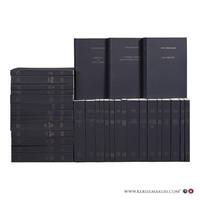
200483617Simmerath: Grevenberg Verlag Dr. Ruff & Co. OHG 2004. Uniform navy-blue paperback volumes text in German complete set of 32 volumes Abt. 138 incl. Tagebücher Bände IV and Registerband; individual volumes range from approx. viiixxxii preliminary pages plus 148570 text pages each; paperback Broschiert; very good/ fine condition see picture. Complete set of 32 paperback volumes Grevenberg Verlag Simmerath. Titles and ISBNs per volume: Abt.1 Entweder/Oder I ISBN 3936762112 Abt.2/3 Entweder/Oder II ISBN 3936762120 Abt.4 Furcht und Zittern ISBN 3936762139 Abt.5/6 Die Wiederholung / Drei erbauliche Reden 1843 ISBN 3936762147 Abt.7/9 Erbauliche Reden 1843/44 ISBN 3936762155 Abt.10 Philosophische Brocken / De omnibus dubitandum est ISBN 3936762163 Abt.11/12 Der Begriff Angst / Vorworte ISBN 3936762171 Abt.13/14 Erbauliche Reden 1844/1845 ISBN 393676218X Abt.15 Stadien auf des Lebens Weg ISBN 3936762198 Abt.16 Abschliessende unwissenschaftliche Nachschrift Bd.I ISBN 3936762201 Abt.16 Abschliessende unwissenschaftliche Nachschrift Bd.II ISBN 393676221X Abt.17 Eine literarische Anzeige ISBN 3936762228 Abt.18 Erbauliche Reden in verschiedenem Geist ISBN 3936762236 Abt.19 Der Liebe Tun ISBN 3936762244 Abt.20 Christliche Reden 1848 ISBN 3936762252 Abt.21/23 Kleine Schriften 1848/49 ISBN 3936762260 Abt.24/25 Die Krankheit zum Tode / Der Hohepriester der Zöllner die Sünderin ISBN 3936762279 Abt.26 Einübung im Christentum ISBN 3936762287 Abt.27/29 Erbauliche Reden 1850/51 / Zur Selbstprüfung ISBN 3936762295 Abt.30 Erstlingsschriften ISBN 3936762309 Abt.31 Über den Begriff der Ironie ISBN 3936762317 Abt.32 Der Corsarenstreit ISBN 3936762325 Abt.33 Die Schriften über sich selbst ISBN 3936762333 Abt.34 Der Augenblick ISBN 3936762341 Abt.35 Briefe ISBN 393676235X Abt.36 Das Buch über Adler ISBN 3936762368 Abt.37 Registerband ISBN 3936762376 Tagebücher Bd.I ISBN 3936762384 Tagebücher Bd.II ISBN 3936762392 Tagebücher Bd.III ISBN 3936762406 Tagebücher Bd.IV ISBN 3936762414 Tagebücher Bd.V ISBN 3936762422. Grevenberg Verlag Dr. Ruff & Co. OHG paperback
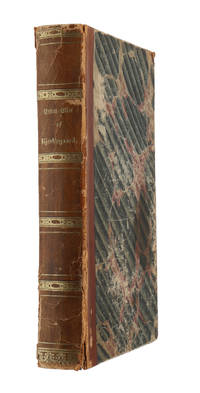
K., 1847. 8vo. Contemporary half calf with richly gilt spine. Upper capital worn and torn. Corners worn. Brownspotted and with a damp stain to upper corner. (IV), 155 64 140 pp.
1944024369Princeton New Jersey U.S.A.: Princeton University Press. Complete in 2 volumes. Original blue cloth. First Edition in English. Printing and the Mind of Man 314: he is now generally considered to be . . . one of the most important Christian philosophers. This book is a cornerstone of what has come to be called existentialism. Small faint spot on front cover of Vol. 1 Near Fine. No Dust Jackets. . Near Fine. Hardcover. 1st Edition. 1944. Princeton University Press hardcover
Kbh., 1847. Noget brunplettet ekspl. i helbd. af nyere immiteret læder m. rygtitelfelter af rød og grøn immiteret læder. 224, 203 pp.
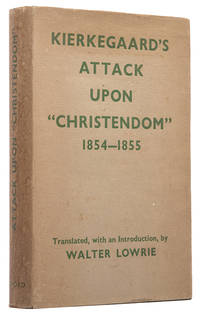
113715London Geoffrey Cumberlege Oxford University Press 1946. . First UK edition first impression; 8vo 22 x 15 cm; ownership inscription in pen to front free endpaper recto; publisher's green cloth spine lettered in gilt original brown typographic dust-jacket lettered in green price-clipped slight spotting to top-edge spine a little darkened very good; xviii 303 1pp.<br /> The first edition in English of these twenty-one satirical articles by Kierkegaard attacking the established Church: collectively his last published work before his death in November 1855.<br /><br />With the death of his father's friend Jacob Mynster the Bishop of Zealand earlier in the year Kierkegaard finally felt able to 'speak willingly' against organised religion which he considered to have a deleterious influence on the individual's relationship to God. These articles self-styled sermons originally published in the Danish weekly Faedrelandet and as series of pamphlets titled Øjeblikket mark his attempt to awaken his fellow believers to this eventuality: 'to bring Christianity the thought of Christianity into the midst of life's reality and into conflict with its various interests' p.2.<br /> London, Geoffrey Cumberlege, Oxford University Press, 1946. hardcover
1844470071Copenhagen: Reitzel Forlag 1844. Hardcover. Very Good. First edition. 12mo. 111pp. Rebound retaining original blue wrappers endpapers and printed spine label in paper-covered boards. Half-title lacking. Pages but otherwise fresh and clean very good. An early title by Soren Kierkegaard written under the pseudonym of Nicolaus Notabene. Himmelstrup 70. Reitzel Forlag hardcover
19462313<p>2nd Printing. Complete in two volumes 387 and 304 pp. respectively. Letterpress on commercial stock in dark green cloth-covered boards and printed dust jackets. 8vo. Very good in Good unclipped dust jackets. Jackets with minor edgewear and light chipping with small bits of loss mostly to heads of spines and top and bottom fore corners. 2313</p><p><em>A nice set of this first English-language edition of Kierkegaard's proto-existential work. One of his last to make it into English translation about a century after its first publication.</em></p> Princeton University Press
1846902Kjøbenhavn: C. A. Reitzel 1846. First Edition. original boards. Very good. One of Keirkegaards Intensest and Most Brilliant Pieces of Writing <br />En literair Anmeldelse A Literary Review. C. A. Reitzel Kjøbenhavn 1846. TP 3 = Forord 5-114 Octavo. First Edition <br />Himmelstrup 100. <br /> <br />This book begins with a review of Two Ages the last novel by Thomasine Gyllembourg who was the mother of Johan Ludvig Heiberg one of Kierkegaards regular targets for ridicule. The second part of this work has been translated as The Present Age and represents one of Keirkegaards intensest and most brilliant pieces of writing and the transitional work between the Authorship and Kierkegaards later religio-political works. Wronoski p. 20 <br /> <br />CONDITION: Very good in original blue cardboard covers with spine label still intact. Chpping along spine edges and wear to boards. Light brownspotting/foxing internally and very small inked initials to top corner of title page else a very good or better copy all in original condition. <br/><br/>PHOTOS AVAILABLE UPON REQUEST C. A. Reitzel hardcover
18497421<p>49. KIERKEGAARD SOREN. Sygdommen til Doden En christelig psychologisk Udvikling til Opbyggelse og Opvaekkelse Af Anti-Climacus. The Sickness Unto Death. 8vo. Contemporary ½-leather-backed black boards gold lettering on spine. Copenhagen <strong>1849. First Edition.</strong> <br /><br />This treatise on despair is one of Kierkegaard's most important works. According to Kierkegaard an individual is "in despair" if he does not align himself with God or God's plan for the self. In this way he loses his self. <br /><br />Kierkegaard defines humanity as the tension between the "finite and infinite" and the "possible and the necessary." While humans are inherently reflective and self-conscious beings to become a true self one must not only be conscious of the self but also be conscious of being created by a higher being God. When one either denies this self or the self's creator one is in despair. <br /><br />Edges of spine worn and scuffed ink signature on title page; o/w a very nice copy.</p> hardcover
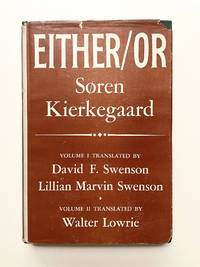
194452511060005Princeton University Press Princeton New Jersey U.S.A 1944. First American Edition. Hardcover. Very Good. Hardcovers. No DJ's. 2 VOLUME SET. FIRST AMERICAN EDITION. Pages clean and unmarked. Covers original blue cloth boards show very minor shelf wear. Bindings tight hinges strong. Previous owner's name stamp on front blank end papers and on both title pages. Volume 1 translated by David F.Swenson & Lillian Marvin Swenson 387 pgs. Volume 2 translated by Walter Lowrie 304 pgs.; 100% Satisfaction Guaranteed! Ships same or next business day! Princeton University Press, Princeton, New Jersey, U.S.A hardcover
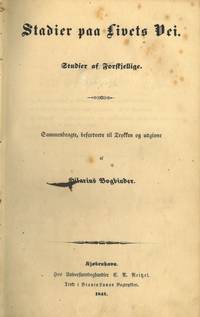
184559538Kjøbenhavn. 1845. 8vo. Samtidig skinnryggbind med marmorerte dekler. VIII 383 s. Hos Universitetsboghandler C. A. Reitzel Dansk. <br/><br/><em>Ryggen noe slitt. Materien gulnet og pleytet. Ex libris. </em> unknown
184963142Kjøbenhavn, Reitzel, 1849. 8vo. In contemporary half calf. Spine with wear and scratches. Back hinge partly split. Previous owner's name ""P. O. Bugge / 1852"". First and last leaves slightly browned, otherwise internally nice and clean. XIV, (2), 320" (4), 250 pp + final blank.
184963142Kjøbenhavn Reitzel 1849. 8vo. In contemporary half calf. Spine with wear and scratches. Back hinge partly split. Previous owner's name "P. O. Bugge / 1852". First and last leaves slightly browned otherwise internally nice and clean. XIV 2 320; 4 250 pp final blank. <br/><br/><em>Second edition of Kierkegaard’s Either-Or his magnum opus widely regarded as a foundational work of existentialism and among the most celebrated writings of the greatest Scandinavian philosopher. Kierkegaard is “now generally considered to be however eccentric one of the most important Christian philosophers†PMM 314. Kierkegaard's monumental magnum opus seminally influenced later as well as contemporary philosophy and ranks as one of the most important works of philosophy of modern times. Either-Or is the earliest of Kierkegaard’s major works and the work with which he begins his pseudonymous authorship. Kierkegaard’s pseudonymity is an entire subject unto its own. The various cover names he uses play a significant role in his way of communicating and are essential to the understanding of his philosophical and religious messages. And it all properly begins here with his groundbreaking magnum opus. Conjuring up two distinctive figures with diverging beliefs and modes of life – the aesthetic “A†of Part One and the ethical B note that this is the first “pseudonym†that Kierkegaard uses in his earliest articles – no. I above/Judge Vilhelm of Part Two Kierkegaard presents us with the most basic reflections on the search for a meaningful existence seen from two completely different philosophical views. This masterpiece of duality explores the foundational conflict between the ethical and the aesthetical providing us along the way with the now so famous contemplations on music Mozart drama boredom pleasures virtues and probably most famously seduction and rejection – The Seducer’s Diary. It is primarily Judge Vilhelm from Part Two of Either-Or that has bestowed upon Kierkegaard the reputation as the Father of Existentialism. His emphasis on taking ownership of oneself and the importance of making choices has made him the first personification of Existentialism and the idea that one does not passively develop into the self that he or she should be or ought to become. Kierkegaard went to great lengths to ensure that the public would not know the identity of the author was of Either-Or. He even had the draft of the work done by several hands so that employees at the printer’s would also be deceived. Despite his efforts however it did not take long for the public to guess that Kierkegaard had written this astounding work. But Kierkegaard himself kept up the façade and did not accept authorship until several years later. Nothing Kierkegaard did was left to chance which his carefully chosen pseudonyms also reflect. This also spills over in his presentation-inscriptions which follow as strict a pattern as the pseudonyms themselves – he never signed himself the author if his Christian name was not listed as the author on the title-page. And seeing that he had not accepted authorship of Either-Or and is not mentioned by name anywhere on the title-page also not as the editor nor publisher as with the other pseudonymous works he was not able to give away copies of his magnum opus which is why no presentation-copy of the first edition exists. The appearance of the second edition of this monumental work was naturally carefully planned. Either-Or first appeared in 1843 and due to the great demand for the work which had originally only been printed in ca 525 copies it had quickly been sold out; but Kierkegaard refused to have it reprinted. In 1849 finally he decided to let it appear again in a textually unchanged version. When the second edition appeared recte second issue Kierkegaard had meanwhile owned up to the authorship of Either-Or. He had done so in 1846 in his Concluding Unscientific Postscript to The Philosophical Fragments own translation: “For the sake of manners and etiquette I hereby acknowledge what can hardly in reality be of interest to anybody to know that I am as one says the author of Either-Or Victor Eremita Copenhagen in February 1843.â€. Now finally Kierkegaard could give away his magnum opus! In his Papers from 1849 Kierkegaard states own translation: “The poets here at home each received a copy of Either-Or. I thought it my duty; and now I was able to do it; because now one cannot reasonably claim that a conspiracy is made concerning the book. -because the book is now old and its crisis over. Of course they were given the copy from Victor Eremita.†Pap. X1A 402. Naturally because “as little as I in Either-Or is the Seductor or the Assessor as little am I the publisher Victor Eremita exactly as little; he is a poetically-real subjective thinker as he is also found in “in vino veritas.†“ the postscript to the Postscript 1846 Either-Or is now not only the title of Kierkegaard’s most famous and widely read work it is also a phrase that summarizes much of the thinking for which he is best known and a cornerstone of what we now characterize as Existentialism. The first edition caused a sensation. The second issue termed “edition†although it is textually unaltered is not only the first edition of the work to appear after Kierkegaard had acknowledged authorship of it and thus also confirmed being one and the same with his most famous pseudonym it is also the first of Kierkegaard’s works to appear in a second edition or issue. The second edition of the work is thus also of the utmost importance and is one of the only important second editions of any of Kierkegaard’s works. PMM: 314 Himmelstrup 21 </em> unknown
184713912Indb. i et lidt senere beskedent hshirtbd. Bortset fra skjold øverst på de første 60 sider rent ekspl. <br/><br/><em>Originaludgave. Himmelstrup 101. </em> unknown
184713912Indb. i et lidt senere beskedent hshirtbd. Bortset fra skjold øverst på de første 60 sider, rent ekspl.
Indb. i et lidt senere beskedent hshirtbd. Bortset fra skjold øverst på de første 60 sider, rent ekspl.
184846401678Kjobenhavn, C.A. Reitzel, 1848 ; in-8, cartonnage demi-basane fauve muette du XIXe siècle. 103 pp., 74 pp., 96 pp., 77 pp. (Dans la 1ere partie la pagination passe de 22 à 27)ÉDITION ORIGINALE des Discours chrétiens “Prélude à l’attaque directe que Kierkegaard lancera dans ses dernières années contre le Christianisme officiel et la soi-disant société chrétienne, où les chrétiens se comptent par millions, se comptent même au nombre des naissances mais pour lesquels le Christ est devenu une image douce et molle” Le sens du pur christianisme consiste essentiellement, selon l’auteur, à voir dans le Christ un “paradoxe absolu” ou plus simplement un “scandale”. Dict; des Oeuvres. Himmelstrup n°110. Pâle mouillure sur le 1er cahier.
184946401673Kjobenhavn, Gyldendal, 1849 ; in-12, broché, couv. beige imprimée 85 pp., 1 f. blancÉDITION ORIGINALE de Deux petits traités éthico-religieux. - Himmelstrup n°116.Exemplaire broché, entièrement non rogné. Les plats de la couverture sont détachés.
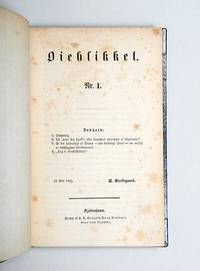
1855152263Copenhagen: C. A. Reitzel 1855. A complete run of Kierkegaard's journal The Moment. "Kierkegaard set up a magazine called The Moment to which he was the only contributor and every issue was more or less devoted to complaining that his fellow 'Christians' were inauthentic hypocritical and corrupt" Carlisle p. 13. 9 parts in 1 vol. octavo 196 x 124 mm. Recent blue quarter cloth blue marbled sides. Contemporary ownership signature on earlier blank. Unmarked library label to spine else binding fine; foxing to contents. A very good copy. Himmelstrup 180; McGill p. 53. Clare Carlisle Kierkegaard: A Guide for the Perplexed 2006. hardcover
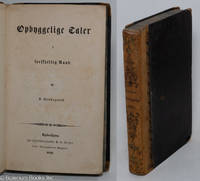
1847297737København: C. A. Reitzel 1847. Hardcover. 140p. 5x8 inch quarter cloth boards fore edges are marbled; gilt lettering and decoration on leather spine is mostly faded board corners are rounded and exposed touch of soil on front board minor toning on endpapers from glue fore-edge decoration is mildly dimmed head and tail of spine are somewhat shelfworn and slightly exposed in good condition. Text in Danish. C. A. Reitzel hardcover
1859WRCLIT24446Copenhagen: Reitzels Forlag 1859. 21141pp. Contemporary quarter calf and boards small nick at fore-edge of lower board lower joint cracked at toe otherwise a very good copy. First edition of this work of substantial import in the author's canon first written in 1848 contemporary with Kierkegaard's preparation of the second edition of ENTEN=ELLER but withheld from publication then and first issued posthumously. Its intent was to counter the suggestion that Kierkegaard as a literary artist had lapsed and turned to religion only in his later years. In this work he explains that his entire body of publications both aesthetic and religious is part of an intentional and balanced attempt to present concurrently published texts of both types simultaneously approaching the same issues from two different points of view. As such this essay is one of the most significant of Kierkegaard's analytic works. The NUC locates 5 copies. HIMMELSTRUP 292. Reitzels Forlag hardcover books
184713913K. 1847. Senere blåt blankt omsl. Svagt gennemgående skjold. Lettere brunplettet indimellem. IV15564140pp. <br/><br/><em>Originaludgave. Himmelstrup 101. </em> unknown
184713913K., 1847. Senere blåt blankt omsl. Svagt gennemgående skjold. Lettere brunplettet indimellem. (IV)+155+64+140pp.
K., 1847. Senere blåt blankt omsl. Svagt gennemgående skjold. Lettere brunplettet indimellem. (IV)+155+64+140pp.
189440965AB1894. Kjobenhavn George C. Gron 1894. 20.7cm x 13.2cm. XVIII 414 pages. Frontispiece portrait of Søren Kierkegaard. Original Hardcover Halfleather with gilt lettering on spine in protective Mylar. Very good condition with only minor signs of wear. Minor traces of foxing to endpapers. Text itself in excellent condition. Published in two volumes in 1843 Either/Or original Danish title: Enten - Eller is an influential book written by the Danish philosopher Søren Kierkegaard exploring the aesthetic and ethical "phases" or "stages" of existence. Either/Or was Kierkegaard's first published book; it was released under the pseudonym Victor Eremita Latin for "the victorious hermit". Either/Or portrays two life views one consciously hedonistic the other based on ethical duty and responsibility. Each life view is written and represented by a fictional pseudonymous author with the prose of the work reflecting and depending on the life view being discussed. For example the aesthetic life view is written in short essay form with poetic imagery and allusions discussing aesthetic topics such as music seduction drama and beauty. The ethical life view is written as two long letters with a more argumentative and restrained prose discussing moral responsibility critical reflection and marriage. The views of the book are not neatly summarized but are expressed as lived experiences embodied by the pseudonymous authors. The book's central concern is the primal question asked by Aristotle "How should we live" His motto comes from Plutarch "The deceived is wiser than one not deceived. The aesthetic is the personal subjective realm of existence where an individual lives and extracts pleasure from life only for his or her own sake. In this realm one has the possibility of the highest as well as the lowest. The ethical on the other hand is the civic realm of existence where one's value and identity are judged and at times superseded by the objective world. In simple terms one can choose either to remain oblivious to all that goes on in the world or to become involved. More specifically the ethic realm starts with a conscious effort to choose one's life with a choice to choose. Either way however an individual can go too far in these realms and lose sight of his or her true self. Only faith can rescue the individual from these two opposing realms. Either/Or concludes with a brief sermon hinting at the nature of the religious sphere of existence which Kierkegaard spent most of his publishing career expounding upon. Ultimately Kierkegaard's challenge is for the reader to "discover a second face hidden behind the one you see" in him/herself first and then in others: "The Middle Ages are altogether impregnated with the idea of representation partly conscious partly unconscious; the total is represented by the single individual yet in such a way that it is only a single aspect which is determined as totality and which now appears in a single individual who is because of this both more and less than an individual. By the side of this individual there stands another individual who likewise totally represents another aspect of lifes content such as the knight and the scholastic the ecclesiastic and the layman." Either/Or Part I p. 86-87 Swenson. Wikipedia hardcover