2 061 résultats
1996Q-0691011060Princeton University Press 1996-04-29. Hardcover. New. New. In shrink wrap. Looks like an interesting title! Princeton University Press hardcover
1998Q-0691058946Princeton University Press 1998-07-01. Paperback. New. In shrink wrap. Looks like an interesting title! Princeton University Press paperback
0691058946.Gpaperback. Good. Access codes and supplements are not guaranteed with used items. May be an ex-library book. paperback
1998x-0691058946Princeton Univ Pr 1998. Paperback. New. reprint edition. 380 pages. 9.50x6.50x1.00 inches. Princeton Univ Pr paperback
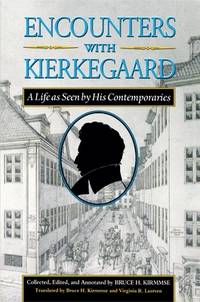
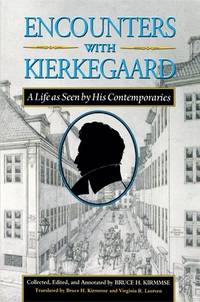
A9780691058948Paperback / softback. New. A collection of known eyewitness account of the great Danish thinker Soren Kierkegaard 1813-1855. It contains accounts ranging from the writings of Meir Aron Goldschmidt editor of "The Corsair" to the recollections of Kierkegaard's fiancee. paperback
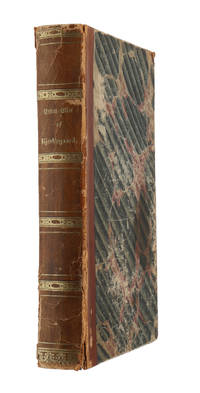
189440965AB1894. Kjobenhavn George C. Gron 1894. 20.7cm x 13.2cm. XVIII 414 pages. Frontispiece portrait of Søren Kierkegaard. Original Hardcover Halfleather with gilt lettering on spine in protective Mylar. Very good condition with only minor signs of wear. Minor traces of foxing to endpapers. Text itself in excellent condition. Published in two volumes in 1843 Either/Or original Danish title: Enten - Eller is an influential book written by the Danish philosopher Søren Kierkegaard exploring the aesthetic and ethical "phases" or "stages" of existence. Either/Or was Kierkegaard's first published book; it was released under the pseudonym Victor Eremita Latin for "the victorious hermit". Either/Or portrays two life views one consciously hedonistic the other based on ethical duty and responsibility. Each life view is written and represented by a fictional pseudonymous author with the prose of the work reflecting and depending on the life view being discussed. For example the aesthetic life view is written in short essay form with poetic imagery and allusions discussing aesthetic topics such as music seduction drama and beauty. The ethical life view is written as two long letters with a more argumentative and restrained prose discussing moral responsibility critical reflection and marriage. The views of the book are not neatly summarized but are expressed as lived experiences embodied by the pseudonymous authors. The book's central concern is the primal question asked by Aristotle "How should we live" His motto comes from Plutarch "The deceived is wiser than one not deceived. The aesthetic is the personal subjective realm of existence where an individual lives and extracts pleasure from life only for his or her own sake. In this realm one has the possibility of the highest as well as the lowest. The ethical on the other hand is the civic realm of existence where one's value and identity are judged and at times superseded by the objective world. In simple terms one can choose either to remain oblivious to all that goes on in the world or to become involved. More specifically the ethic realm starts with a conscious effort to choose one's life with a choice to choose. Either way however an individual can go too far in these realms and lose sight of his or her true self. Only faith can rescue the individual from these two opposing realms. Either/Or concludes with a brief sermon hinting at the nature of the religious sphere of existence which Kierkegaard spent most of his publishing career expounding upon. Ultimately Kierkegaard's challenge is for the reader to "discover a second face hidden behind the one you see" in him/herself first and then in others: "The Middle Ages are altogether impregnated with the idea of representation partly conscious partly unconscious; the total is represented by the single individual yet in such a way that it is only a single aspect which is determined as totality and which now appears in a single individual who is because of this both more and less than an individual. By the side of this individual there stands another individual who likewise totally represents another aspect of lifes content such as the knight and the scholastic the ecclesiastic and the layman." Either/Or Part I p. 86-87 Swenson. Wikipedia hardcover
2022132501300085Legare Street Press 2022. Paperback. New. 6x0x9. Paperback. 2 Volume Set. An unused unmarked and unblemished copy.; 100% Satisfaction Guaranteed! Ships same or next business day! Legare Street Press paperback
45156981like new. unknown
45574017like new. unknown
1015609422.Ghardcover. Good. Access codes and supplements are not guaranteed with used items. May be an ex-library book. hardcover
1015472249.Ghardcover. Good. Access codes and supplements are not guaranteed with used items. May be an ex-library book. hardcover
1015480977.Gpaperback. Good. Access codes and supplements are not guaranteed with used items. May be an ex-library book. paperback
1849WRCLIT44914Copenhagen: Reitzel Forlag 1849. Two volumes bound in one. xiv2320;4250pp. Large octavo. Contemporary three-quarter morocco and marbled boards. Bound without first half-title spine a bit sunned boards and fore-tips a bit rubbed early ink name else a very good crisp clean copy. Second edition of Kierkegaard's first major philosophical work. The first edition appeared in 1843 published at his own expense in an edition consisting of only 525 copies. HIMMELSTRUP 21. PRINTING & THE MIND OF MAN 314. Reitzel Forlag hardcover books
184963142Kjøbenhavn Reitzel 1849. 8vo. In contemporary half calf. Spine with wear and scratches. Back hinge partly split. Previous owner's name "P. O. Bugge / 1852". First and last leaves slightly browned otherwise internally nice and clean. XIV 2 320; 4 250 pp final blank. <br/><br/><em>Second edition of Kierkegaard’s Either-Or his magnum opus widely regarded as a foundational work of existentialism and among the most celebrated writings of the greatest Scandinavian philosopher. Kierkegaard is “now generally considered to be however eccentric one of the most important Christian philosophers†PMM 314. Kierkegaard's monumental magnum opus seminally influenced later as well as contemporary philosophy and ranks as one of the most important works of philosophy of modern times. Either-Or is the earliest of Kierkegaard’s major works and the work with which he begins his pseudonymous authorship. Kierkegaard’s pseudonymity is an entire subject unto its own. The various cover names he uses play a significant role in his way of communicating and are essential to the understanding of his philosophical and religious messages. And it all properly begins here with his groundbreaking magnum opus. Conjuring up two distinctive figures with diverging beliefs and modes of life – the aesthetic “A†of Part One and the ethical B note that this is the first “pseudonym†that Kierkegaard uses in his earliest articles – no. I above/Judge Vilhelm of Part Two Kierkegaard presents us with the most basic reflections on the search for a meaningful existence seen from two completely different philosophical views. This masterpiece of duality explores the foundational conflict between the ethical and the aesthetical providing us along the way with the now so famous contemplations on music Mozart drama boredom pleasures virtues and probably most famously seduction and rejection – The Seducer’s Diary. It is primarily Judge Vilhelm from Part Two of Either-Or that has bestowed upon Kierkegaard the reputation as the Father of Existentialism. His emphasis on taking ownership of oneself and the importance of making choices has made him the first personification of Existentialism and the idea that one does not passively develop into the self that he or she should be or ought to become. Kierkegaard went to great lengths to ensure that the public would not know the identity of the author was of Either-Or. He even had the draft of the work done by several hands so that employees at the printer’s would also be deceived. Despite his efforts however it did not take long for the public to guess that Kierkegaard had written this astounding work. But Kierkegaard himself kept up the façade and did not accept authorship until several years later. Nothing Kierkegaard did was left to chance which his carefully chosen pseudonyms also reflect. This also spills over in his presentation-inscriptions which follow as strict a pattern as the pseudonyms themselves – he never signed himself the author if his Christian name was not listed as the author on the title-page. And seeing that he had not accepted authorship of Either-Or and is not mentioned by name anywhere on the title-page also not as the editor nor publisher as with the other pseudonymous works he was not able to give away copies of his magnum opus which is why no presentation-copy of the first edition exists. The appearance of the second edition of this monumental work was naturally carefully planned. Either-Or first appeared in 1843 and due to the great demand for the work which had originally only been printed in ca 525 copies it had quickly been sold out; but Kierkegaard refused to have it reprinted. In 1849 finally he decided to let it appear again in a textually unchanged version. When the second edition appeared recte second issue Kierkegaard had meanwhile owned up to the authorship of Either-Or. He had done so in 1846 in his Concluding Unscientific Postscript to The Philosophical Fragments own translation: “For the sake of manners and etiquette I hereby acknowledge what can hardly in reality be of interest to anybody to know that I am as one says the author of Either-Or Victor Eremita Copenhagen in February 1843.â€. Now finally Kierkegaard could give away his magnum opus! In his Papers from 1849 Kierkegaard states own translation: “The poets here at home each received a copy of Either-Or. I thought it my duty; and now I was able to do it; because now one cannot reasonably claim that a conspiracy is made concerning the book. -because the book is now old and its crisis over. Of course they were given the copy from Victor Eremita.†Pap. X1A 402. Naturally because “as little as I in Either-Or is the Seductor or the Assessor as little am I the publisher Victor Eremita exactly as little; he is a poetically-real subjective thinker as he is also found in “in vino veritas.†“ the postscript to the Postscript 1846 Either-Or is now not only the title of Kierkegaard’s most famous and widely read work it is also a phrase that summarizes much of the thinking for which he is best known and a cornerstone of what we now characterize as Existentialism. The first edition caused a sensation. The second issue termed “edition†although it is textually unaltered is not only the first edition of the work to appear after Kierkegaard had acknowledged authorship of it and thus also confirmed being one and the same with his most famous pseudonym it is also the first of Kierkegaard’s works to appear in a second edition or issue. The second edition of the work is thus also of the utmost importance and is one of the only important second editions of any of Kierkegaard’s works. PMM: 314 Himmelstrup 21 </em> unknown
184963142Kjøbenhavn, Reitzel, 1849. 8vo. In contemporary half calf. Spine with wear and scratches. Back hinge partly split. Previous owner's name ""P. O. Bugge / 1852"". First and last leaves slightly browned, otherwise internally nice and clean. XIV, (2), 320" (4), 250 pp + final blank.
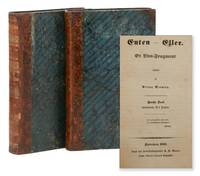
1843140946922Copenhagen: C. A. Reitzel 1843. First Edition. Very Good. First edition of Soren Kierkegaard's best-known work Either/Or. Octavo. Two volumes bound in contemporary half-calf over marbled boards; bound without the half-titles. Text in Danish. Very Good rubbing and wear to bindings neatly rebacked with old spines preserved. Former owner names to preliminary blacks and owner's rubber stamp to title pages. Contents tanned sporadically foxed and occasionally lightly stained. A lovely set. <p>Either/Or Danish philosopher Søren Aabye Kierkegaard's groundbreaking first published work. Only 525 copies of this edition were published in 1843 under an editorial pseudonym "Victor Emerita" at the author's own expense. It was mostly written during his stay in Berlin where he took notes on Schelling's Philosophy of Revelation. It includes essays of literary and music criticism and a set of romantic-like-aphorisms as part of his larger theme of examining the reflective and philosophical structure of faith. He is widely considered to be the first existentialist philosopher. "As a thinker Kierkegaard had to wait for the twentieth century to find his audience; he is now generally considered to be however eccentric one of the most important Christian philosophers" write Carter and Muir in Printing and the Mind of Man. C. A. Reitzel unknown
19782-8845903648Adelphi 1978. Paperback. New. Italian language. 6.93x4.02x1.26 inches. Adelphi paperback
19892-8845906647Enten-Eller 1989. Paperback. New. Italian language. 6.93x4.17x1.18 inches. Enten-Eller paperback
1843140939870Copenhagen Denmark: C.A. Reitzel 1843. First Edition. Very Good. First edition. iii-xx 2 470; viii 368 pp. Two volumes bound in quarter calf with raised bands gilt tooling and marbled paper boards plain endpapers. Lacking half-title of first volume but second volume's is present. Text in Danish. Very Good with slightly sunned spines former owner's name on titles tears to half-title and title in second volume have been skillfully repaired light marginal dampstaining to top centre of both volumes occasional light foxing. A pleasant set with bright gilt. Either/Or Danish philosopher Søren Aabye Kierkegaard's groundbreaking first published work. Only 525 copies of this edition were published in 1843 under an editorial pseudonym "Victor Emerita" at the author's own expense. It was mostly written during his stay in Berlin where he took notes on Schelling's Philosophy of Revelation. It includes essays of literary and music criticism and a set of romantic-like-aphorisms as part of his larger theme of examining the reflective and philosophical structure of faith. He is widely considered to be the first existentialist philosopher. "As a thinker Kierkegaard had to wait for the twentieth century to find his audience; he is now generally considered to be however eccentric one of the most important Christian philosophers" write Carter and Muir in Printing and the Mind of Man. C.A. Reitzel unknown books
1982RO60018123Gyldendals Bogklub. 1982. In-8. Relié toilé. Bon état, Couv. convenable, Dos satisfaisant, Intérieur frais. 437 pages.. . . . Classification Dewey : 490-Autres langues
7535630like new. unknown
19001237396Dresden und Leipzig; Fr. Richter's Verlag; C. Ludwig Ungelenk, o.J. (um 1900). XI; 606 Seiten; Buchschmuck; illustr. Vorsätze; 21 cm; klammergeh., goldgepr. Orig.-Leinenband.
79102Jena Eugen Diederichs Verlag 1911. Leinen gebunden; graue goldgeprägte Einbände Farbkopfschnitt Lesebändchen / 2 Bände / Anz. Seiten: 397 329 / 152 x 21 cm / Zustand: sehr gut geringe Gebrauchsspuren; Einbände leicht berieben Papier gebräunt. = Gesammelte Werke Band 1 und 2; mit einem Nachwort von Christoph Schrempf. Übersetzt von Wolfgang Pfleiderer und Christoph Schrempf Jena, Eugen Diederichs Verlag, 1911 unknown
3423301341.Gpaperback. Good. Access codes and supplements are not guaranteed with used items. May be an ex-library book. paperback