Ernest HemingwayBiblio.com
5 520 résultats
19175196Illinois: The Publishing Board of Oak Park and River Forest Township Highschool 1917. Ernest Hemingway's Senior Yearbook. Housed in a red with custom cloth slipcase. Measures approximately 9.25" x 6.25" with 159 numbered pages. <br /> <br /> The yearbook is in very good condition. Moderate surface wear and creasing the the extremites. Minor scattered staining to the textblock. Hemingway's senior picture is located on page 23 and at the Class Day Speakers page. A short story written by Hemingway is located on pages 57-65. Slipcase is in very good condition. Minor surface wear and staining and with moderate sun-fading to the spine. <br /> <br /> Please view the many other rare titles available for purchase at our store. We are always interested in purchasing individual or collections of fine books.<br /> <br /> Inventory #L4-10. The Publishing Board of Oak Park and River Forest Township Highschool unknown
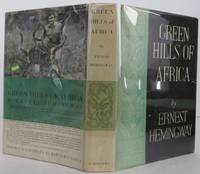
1929140938711New York: Charles Scribner's Sons 1929. Signed Limited First Edition. Near Fine. Signed limited first edition. One of 510 numbered copies signed by Ernest Hemingway this being #60. Bound in publisher's white parchment over pale green paper-covered boards; lacking the slipcase. Near Fine with light foxing and darkening to vellum with small tear at the foot of the spine. Light uneven sunning to boards and patch of wear to top edge of upper board. A beautiful copy. Hanneman 8B. Charles Scribner's Sons unknown books
195610633London: Jonathan Cape 1956. Eighth Impression. Cloth. Very good/very good. Death in the Afternoon by Ernest Hemingway inscribed by the author and Spanish bullfighter Antonio Ordóñez. Octavo 358pp 1. Maroon cloth title stamped in gilt on spine. Stated "eighth impression 1956" on copyright page with the first edition published in 1932. Some foxing to outer edge of text block faint toning to endpapers not affecting text or illustrations. Bookseller's label on front pastedown endpaper. In publisher's later state dust jacket retail price on both flaps light wear to edges some toning to verso but bright and vibrant colors. Housed in custom black leather clamshell lined in red linen title in gilt on spine. Signed by Ordóñez and dated 1959. Signed by Hemingway on the front free endpaper: "To Col. and Mrs. Wm. C. Burry best luck always Ernest Hemingway." Antonio Ordóñez the famous Spanish bullfighter was a lifelong friend of Ernest Hemingway whom he called Father Ernesto. Hemingway wrote an account of Ordóñez's fight with matador Luis Miguel Dominguin called The Dangerous Summer. The father of Antonio Ordóñez Cayetano Ordóñez was nicknamed Niño de la Palma and served as the inspiration for Pedro Romero in Hemingway's The Sun Also Rises. Provenance: RR Auction of Boston September 2020. Jonathan Cape unknown books
194015667JNew York: Scribners 1940. Second printing. Signed presentation copy from Ernest Hemingway to his close childhood friend Bill Smith. Inscribed in black fountain pen ink using Hemingway’s boyhood nickname: “To Bill with much affection Wemedgeâ€. Bill and his sister Katy later married to John Dos Passos summered near the Hemingway home on Horton Bay Michigan. Ernest and Bill knew each other for many years as children before becoming close friends: “It took an old pal of mine Carl Edgar†Smith recalled “and most of the summer to put Ernest and me on really good terms.†In less than a few weeks the three were out at the Point fishing from the dock day and night. Smith in short order acquired a full quota of the nicknames that Hemingway invented for friends.while Hemingway for inexplicable reasons preferred to be called Wemedge.†See James R. Mellow - Hemingway: A Life Without Consequences pages 37-38 Hemingway who entertained fantasies that Katy Smith was secretly attracted to him would later create a fictional erotic relationship between the two in the “Nick Adams†stories. Adams’s nickname in the largely autobiographical series is Wemedge. Laid into the book is an original small photograph of Hemingway and Bill Smith fishing off the Key West in the 1930s which was reproduced in the 1992 Mellow biography of Hemingway. Front hinge expertly repaired else a very good copy with a little general cloth in a bright dust jacket with with a short 1 inch scratch on the spine light wear and two short tears to the rear panel. An exceptional Hemingway association copy enclosed in a morocco leather and cloth clamshell box. Scribners hardcover books
19625531<p><strong>First translation of the novel into Russian. Extremely rare. Not in Libman. </strong>These books were not intended for distribution in bookstores or libraries.</p><p>Ernest Hemingway was in favor with Russian authorities until this novel appeared in 1940. The novel was banned because some prototypes of the characters were executed in Russia and another reason was the Spanish Communist leader Dolores Ibárruri. She never appreciated this novel and was living in Moscow at that time.<br />The first translation of the novel into Russian was finalized in 1941 yet it faced a ban. Hemingway sought the assistance of his Russian acquaintance the poet Konstantin Simonov to explore the possibility of revising the text or omitting certain elements to facilitate its publication in Russian. Unfortunately these efforts did not yield success. However Simonov later revised the translation for the first official Russian edition of the novel composing the foreword. This translation was eventually published in 1968 as volume 3 of Hemingway's '<em>Collection of Works'</em> albeit with some content subjected to censorship.<br />This particular edition represents the unabridged translation free from any omissions and were released as part of a specialized series intended for Soviet authorities. Distributed according to a predetermined list each book in the series was marked with a unique number on its cover corresponding to the numbers specified in the list. After being read each copy had to be returned. These books were not accessible to the average Soviet citizen; they could not be found in bookstores or libraries.</p><p>We couldn't trace any copy in OCLC or in Russian main libraries.</p> Izdatel’stvo inostrannoj literatury hardcover
194082232New York:: Charles Scribner's Sons 1940. First edition; one of about 1100 copies according to Hanneman. . publisher's cloth in dust jacket. Browning to the front endsheet and front flap of the dust jacket from a formerly laid-in clipping; one small bump to upper right corner of the front board; else a fine copy in a very fresh sharp jacket with a few spots of browning. Far better than any copy of this scarce Hemingway title that we have seen in terms of condition. . 8vo. Charles Scribner's Sons, hardcover
181369486New York and Paris June 18 - August 13 1935. The cloth of one of the checkbooks has small areas of damage; otherwise fine. Various sizes. Hemingway did not keep a running balance but his recording of expenditures is thorough and fascinating. The amounts paid for traveling expenses cash withdrawn salaries groceries subscriptions telegrams insurance loans and support and deposits from Scribner's Esquire Pauline's trust fund and others are recorded in the New York checkbooks. The French checkbook records payments for antelope licences and a bear permit Bumby's trip to Chicago liquor wages and loans etc. hardcover
193095977Chicago: The Walden Book Shop 1930. Rare letter excerpt boldly signed by Ernest Hemingway. Published by the Walden Book Shop in 1930 the introduction begins "The following notes are excerpts from a Hemingway letter in answer to questions concerning editions and numbers of copies." It goes on to provide a long italicized quote from the letter in which Hemingway describes the printings of his early books from Three Stories and Ten Poems through the forthcoming Men Without Women 1927. The quote reads in part: ".The books have been Three Stories and Ten Poems Contact Press 1953-350 copies out of print In Our Times Three Mountains Press 1924 150 I think.They claim to be issuing a new edition. Then Scribners published The Torrents of Spring in the spring of 1926 in an unrestrained edition and The Sun Also Rises came out in the same year with I believe an attempt made to print and sell as many as possible.I own one copy of Three Stories and Ten Poems and would be very happy if it became valuable in order that I might have something to leave to my children." Signed by Hemingway in he lower right corner of the pamphlet. In fine condition. Double matted and framed with a portrait of Hemingway. The entire piece measures 26 inches by 17 inches. An exceptional example. American journalist and novelist Ernest Hemingway's legacy to American literature lies in his economical and understated writing style which he termed the "iceberg theory" and writers who came after him either attempted to emulate or avoid. After his reputation was established with the publication of The Sun Also Rises Hemingway essentially became the spokesperson for the post-World War I generation. His influence on 20th century fiction is unparalleled and his adventurous lifestyle and public image brought him admiration from later generations. Hemingway published seven novels throughout his career and was awarded the Pulitzer Prize for Fiction in 1953 and the Nobel Prize in literature in 1954. The Walden Book Shop unknown books
192716028ENew York: Scribners 1927. First Edition First Issue. Former ownership inscription dated 1927. Very good plus copy with some minor wear to the cloth at the foreedges and at the spine not affecting the lettering in a very good dust jacket with some slight dust soiling a 1 1/2†tear to the bottom edge of the front panel near the spine fold and a few very small nick and tiny tears. Scribners hardcover books
192716028ENew York: Scribners 1927. First Edition First Issue. Former ownership inscription dated 1927 on the dedcation page. Very good plus copy with some minor wear to the cloth at the foreedges and at the spine not affecting the lettering in a very good dust jacket with some slight dust soiling a 1 1/2†tear to the bottom edge of the front panel near the spine fold and a few very small nick and tiny tears. Scribners hardcover
1926119154New York: Charles Scribner's Sons 1926. First edition of Hemingway's first novel one of 1250 printed. Octavo original cloth. Fine in a near fine dust jacket with light wear to the extremities. Housed in a custom half morocco clamshell box. Ernest Hemingway's first novel and third published book was preceded by Three Stories and Ten Poems and the collection of stories In Our Time. "Hemingway was planning a carefully engineered campaign for breaking his contract with Boni and Liveright and maneuvering to place his novel The Sun Also Rises with Scribner's. The vehicle was. the satirical novel The Torrents of Spring which was clearly calculated to cause problems with his publisher since it was a deliberate parody of Sherwood Anderson Boni and Liveright's best-selling author. Boni and Liveright had the option on his next three books one of which had to be a novel. If however they turned down the book that Hemingway submitted next he was free of his obligations to the publisher and could go elsewhere." Hemingway wrote Ezra Pound that he "had written 'a funny book'. It was a satire on America he claimed 'Probably unprintable but funny as hell. Wrote it to destroy Sherwood Anderson and various others. It's first really adult thing have done. Jesus Christ it is funny. It is a regular novel only it shows up all the fakes of Anderson Gertrude Stein Sinclair Lewis Willa Cather Hergo Joseph Hergesheimer and all the rest of the pretentious faking bastards. I don't see how Sherwood will ever be able to write again" Mellow Hemingway. Charles Scribner's Sons hardcover books
1926112442New York: Charles Scribner's Sons 1926. First edition of Hemingway's first novel one of 1250 printed. Octavo original cloth. Fine in a near fine dust jacket with light wear to the crown. An exceptional example. Ernest Hemingway's first novel and third published book was preceded by Three Stories and Ten Poems and the collection of stories In Our Time. "Hemingway was planning a carefully engineered campaign for breaking his contract with Boni and Liveright and maneuvering to place his novel The Sun Also Rises with Scribner's. The vehicle was. the satirical novel The Torrents of Spring which was clearly calculated to cause problems with his publisher since it was a deliberate parody of Sherwood Anderson Boni and Liveright's best-selling author. Boni and Liveright had the option on his next three books one of which had to be a novel. If however they turned down the book that Hemingway submitted next he was free of his obligations to the publisher and could go elsewhere." Hemingway wrote Ezra Pound that he "had written 'a funny book'. It was a satire on America he claimed 'Probably unprintable but funny as hell. Wrote it to destroy Sherwood Anderson and various others. It's first really adult thing have done. Jesus Christ it is funny. It is a regular novel only it shows up all the fakes of Anderson Gertrude Stein Sinclair Lewis Willa Cather Hergo Joseph Hergesheimer and all the rest of the pretentious faking bastards. I don't see how Sherwood will ever be able to write again" Mellow Hemingway. Charles Scribner's Sons hardcover books
1926112442New York: Charles Scribner’s Sons 1926. First edition of Hemingway's first novel one of 1250 printed. Octavo original cloth. Fine in a near fine dust jacket with light wear to the crown. An exceptional example. Ernest Hemingway’s first novel and third published book was preceded by Three Stories and Ten Poems and the collection of stories In Our Time. “Hemingway was planning a carefully engineered campaign for breaking his contract with Boni and Liveright and maneuvering to place his novel The Sun Also Rises with Scribner’s. The vehicle was… the satirical novel The Torrents of Spring which was clearly calculated to cause problems with his publisher since it was a deliberate parody of Sherwood Anderson Boni and Liveright’s best-selling author. Boni and Liveright had the option on his next three books one of which had to be a novel. If however they turned down the book that Hemingway submitted next he was free of his obligations to the publisher and could go elsewhere.†Hemingway wrote Ezra Pound that he “had written ‘a funny book’… It was a satire on America he claimed ‘Probably unprintable but funny as hell… Wrote it to destroy Sherwood Anderson and various others… It’s first really adult thing have done. Jesus Christ it is funny… It is a regular novel only it shows up all the fakes of Anderson Gertrude Stein Sinclair Lewis Willa Cather Hergo Joseph Hergesheimer and all the rest of the pretentious faking bastards… I don’t see how Sherwood will ever be able to write again†Mellow Hemingway. Charles Scribner’s Sons hardcover
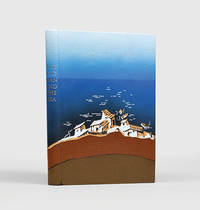
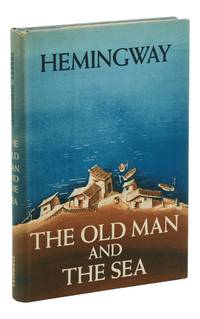
1952181189New York: Charles Scribner's 1952. Now is no time to think of what you do not have. Think of what you can do with what there is First edition. A fantastic example of the Chelsea Bindery's work. Hemingway's final work of fiction and among his best-known works The Old Man and the Sea was awarded the Pulitzer Prize for Fiction in 1953 and was cited by the Nobel committee in their award of Hemingway's Nobel Prize in Literature in 1954. Octavo 199 x 135 mm. Finely bound by the Chelsea Bindery in blue morocco with wraparound onlay depicting the fishing village copied from the dust jacket titles to spine in silver twin rule to turn-ins in silver blue endpapers silver edges. Housed in a blue cloth flat-back box lettered in silver by the Chelsea Bindery. A fine copy. hardcover
19261300First Edition/First Printing with the original first issue dust jacket with 9 titles on the back panel the Scribner's seal on the copyright page and $1.50 flap price. Near Fine in a Near Fine dust jacket. Housed in a beautiful custom clamshell box. A stunning copy of Hemingway's first novel published in the same year as "The Sun Also Rises"; this novella length work originated as a satire of Sherwood Anderson's "Dark Laughter" which Hemingway thought was sub par; Hemingway's original publisher Boni & Liveright rejected Torrents most likely because the book parodied it's most popular author; F. Scott Fitzgerald was instrumental in getting Max Perkins at Scribner's to take on Hemingway and thought Torrents was a masterpiece he and Hemingway were good friends at the time. Scribner's agreed to publish the novel along with future works; only 1250 copies of the book were originally published. This near fine copy is square and tight with only some light soiling to both top corners and the bottom of the front board a minor crimp to the bottom spine end a few pinpoint spots to the boards and some minor spotting to the paste downs free papers and the first dozen or so pages; the rear free end paper has a vertical crease that appears to be a printing error. Housed in a near fine dust jacket that is clean and exceptionally bright with none of the usual foxing and fading normally seen with this title. LIght soiling is present to panels and some light rubbing to the ends and edges else fine. Some indiscernible professional repair has been performed to a small area of both top and bottom edges and the top spine end. Overall a pristine copy of this very difficult to find book that should be on any Hemingway collector's bucket list; protected in a mylar cover. Scribner's hardcover
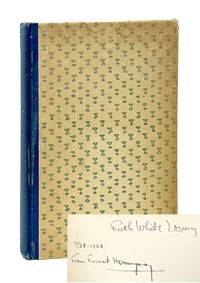
1927EH316New York: Alfred A. Knopf 1927 Second American edition first edition published in 1920. Presentation copy signed by Hemingway on front free endpaper with "Hemingway" in Hemingway's hand; the first part of the inscription "7/28 - 1928" / From Ernest" is in another hand likely the recipient Hemingway's cousin Ruth White Lowry whose ownership inscription tops the same page. Blue cloth-backed patterned cream boards printed in blue and green; lacking the original dust jacket. About very good with light rubbing to front spine joint titles on spine almost completely faded some light staining to upper edges of boards with some pages mildly affected toning to edges and corners rubbed to boards. Overall an excellent association copy. From the personal library of Hemingway's cousin Ruth White Lowry. bib Poems is T. S. Eliot's second volume of poetry published three years after his debut volume Prufrock and Other Observations 1917. Poems contains new work such as "Gerontion" "The Hippopotamus" "Whispers of Immortality" and "Sweeney Among the Nightingales" as well as poems from Prufrock including "The Love Song of J. Alfred Prufrock" "Portrait of a Lady" and "La Figlia Che Pianga." T. S. Eliot 1888 - 1965 is recognized as perhaps the greatest modernist poet whose groundbreaking works "The Love Song of J. Alfred Prufrock" The Waste Land 1922 and Four Quartets 1936 - 1942 had a seismic impact on the literary landscape. Eliot was also extremely influential as a literary critic having changed the lens through which poetry was viewed and understood with essays like "Tradition and the Individual Talent" 1919. In 1948 he was awarded the Nobel Prize in Literature. Ernest Hemingway never met T. S. Eliot yet he returned to the poet continually throughout his career both to mock and draw literary inspiration from him. Both writers were "discovered" and mentored by Ezra Pound who had a remarkably discerning eye for literary greatness Pound also helped nurture the talents of James Joyce Robert Frost and H.D. In 1922 Pound brought Eliot's The Waste Land to Hemingway's attention and provided him with special insight into the poem's autobiographical foundations. While Hemingway respected Eliot's ability as a poet he often disparaged Eliot as a person mocking him for his effete character. His ambivalent feelings toward Eliot can be summed in a line from a 1950 letter he wrote to his friend Harvey Breit "Eliot's a damned good poet and a fair critic; but he can kiss my ass as a man and he never hit a ball out of the infield in his life." the latter remark was a reference to Yogi Berra who like Eliot was from St. Louis. It has been theorized that Hemingway's short story "Mr. and Mrs. Elliot" was a jab at T. S. Eliot and his wife deriding their sexual relationship. In the essay "Ernest Hemingway and T. S. Eliot: A Tangled Relationship" 2012 J. M. Flora explores Hemingway's complex feelings towards Eliot noting thinly veiled critiques that Hemingway made about Eliot in some of his works including Death in the Afternoon 1932 and A Moveable Feast 1964 while pointing out the clear influence of Eliot's poetry particularly The Waste Land 1922 in sections of The Sun Also Rises 1926 Green Hills of Africa 1935 Across the River and Into the Trees 1950 and Hemingway's short story "Hills Like White Elephants" 1927. Flora writes "Hemingway became adept at mocking the poet. Regardless he continued to read to ponder and to remember Eliot's poetry and his criticism. Hemingway became Eliot's irreverent disciple." This copy of Poems was dated July 28 1928 by Ruth White Lowry one month after Ernest and Pauline's second child Patrick was born at the Lowry home outside Kansas City. The couple stayed at Ernest's Aunt Arabell's home in Mission Hills leading up to the birth before moving to Ruth's and her husband Malcolm's home because of tension between Ernest and Arabell. Around the time that this copy was dated Hemingway was likely at the Folly Ranch in Sheridan Wyoming working intensely on A Farewell to Arms. . Signed. Second American Edition. Hard Cover. Very Good. New York: Alfred A. Knopf hardcover
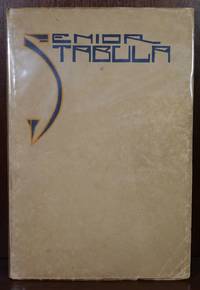
19161706022Tabula 1916. 1st Edition. Soft cover. Near Fine. First appearance of one of Hemingway's earliest stories published while he was still a student in high school. Some of Hemingways earliest writings appeared in Tabula the literary magazine of Hemingways high school in Oak Park Illinois. Near fine in original wrappers. Volume 23 number 1 of the magazine. Extraordinarily rare. Housed in a fine stiff folder. Tabula unknown books
194135111Finca Vigia San Francisco de Paula Cuba 1941. One page with 5-line postscript in blue ink on sheet of personal stationery. 1 vols. 8vo. Old folds overall very good with accompanying envelope addressed in Hemingway's hand. One page with 5-line postscript in blue ink on sheet of personal stationery. 1 vols. 8vo. The Hemingways on a Diet. George Brown owned a gym in New York City where Hemingway worked out when he was in the town and he and George Brown became fast friends Brown serving as his trainer and boxing coach as well as supplier of sporting goods ticket agent and general factotum to Hemingway Martha and later Mary while they were in Cuba.<br/>A relaxed and contented Hemingway writes to his friend Brown basking in the financial success of FOR WHOM THE BELL TOLLS newly married to Martha Gellhorn happy with his recently purchased home in Cuba: "Thank you ever so much for the things. They all came through the customs okay and Martha's shoes have made a big improvement in her tennis. She beat me 6-3 for a dollar and today I think I can get her on the court for two dollars. We'll see what happens. She is down to 127 and I'm stuck at around 215 and can't get under it probably because of no big fish to boil the fat off the inside. It's been very quiet since you left and no more shouts of 'Brown's deuce' and other rare methods of counting at tennis . I'll try and get in good shape before we come to New York so oil up your bicycle. Don't try to come off the ropes holding with that right hand because I've thought up something terrible to have happen . Martha sends her love."<br/>Beneath in ink Hemingway can't resist reporting his scores at shooting: "won a couple of matches at pigeons. 15 x 15. 17 x 17. And won $175 in combination singles and doubles shoot 19 x 20". unknown books
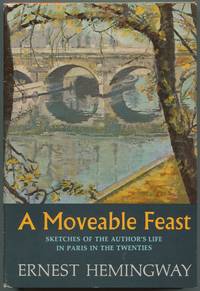
1964533230New York: Charles Scribner's Sons 1964. Hardcover. Very Good/Near Fine. First edition. Foxing on the foredge and first and last few pages and a little scattered foxing throughout the text thus very good in price-clipped near fine dust jacket. Vignettes inspired by the author's profound nostalgia for the halcyon days of his early career while living in Europe and particularly Paris with his first wife Hadley Richardson. This copy is Signed on the title page by Hadley using her name from her second and final marriage to noted journalist Paul Mowrer: "Hadley R. Mowrer."<br /> <br /> After their divorce when Hemingway left Hadley for Pauline Pfeiffer Hadley assiduously avoided connections to her past with Hemingway. This is a profoundly nostalgic object indicative of Hemingway’s heyday. We originally purchased this copy in the 1980s from the person who convinced Hadley to sign the book sold it into a distinguished private collection and have just recently reacquired it. We've never seen another copy of this book signed by Hadley either before or since and think it is likely unique. Further detailed provenance on request. Charles Scribner's Sons hardcover
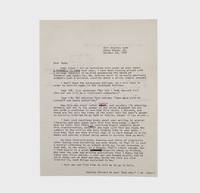
1959374887Cuba 1959. 10 lines in ink on the bottom of the letter to Hemingway with the mailing envelope. 4to. Generally fine address on envelope struck through for forwarding. 10 lines in ink on the bottom of the letter to Hemingway with the mailing envelope. 4to. Nobel Laureate Ernest Heminway answers a young reader's long query about the indeterminate sex of the unborn child in A Farewell to Arms and P.S. concernign a phrase that appeared at the end of George Plimpton's interview of Hemingway for the Paris Review.<br /> Hemingway applies Occam's Razor and gets right to it: "Dear Frank Not knowing sex of child they referred to it either way as you supposed. Thanks for the letter. Don't know of any good 2nd-hand shit detectors being on the market lately but your own seems to be working OK. Bets luck Papa". unknown
19352405422Charles Scribner's Sons 1935. first. hardcover. very good/very good. First edition first printing with date and "A" on copyright page. Book very good fading to spine and to edges of covers former owner's name and date to top of front paste-down. Dust jacket very good tanning to spine some wear. Housed in fold-out custom case. Charles Scribner's Sons unknown
19161706022Tabula 1916. 1st Edition. Soft cover. Near Fine. First appearance of one of Hemingway's earliest stories published while he was still a student in high school. Some of Hemingways earliest writings appeared in Tabula the literary magazine of Hemingways high school in Oak Park Illinois. Near fine in original wrappers. Volume 23 number 1 of the magazine. Extraordinarily rare. Housed in a fine stiff folder. Tabula unknown
193868622New York:: Charles Scribner's Sons 1938. First edition. publisher's cloth in dust jacket. Slightest of tanning to endsheets from binder's adhesive; some minor effacement of gold on spine; else a very sharp copy in a price-clipped jacket which has a small area of rubbing at the top of the front panel but is otherwise unchipped and unfaded. The jacket in this condition is very uncommon. 8vo. Charles Scribner's Sons, hardcover
1952140949365New York: Charles Scribner's Sons 1952. First Edition. Near Fine/Near Fine. First edition first printing with "A" and publisher's colophon on the copyright page. i 140 pp. Bound in publisher's sky blue cloth with spine lettered in silver and Hemingway's signature blindstamped to front board. Near Fine with light wear and toning to extremities. Bookplate small glue smear and evidence of label removal to front endsheet. In a Near Fine unclipped first state dust jacket with brown type on flaps and blue-brown author portrait on rear panel. Light toning trivial edgewear very soft vertical creases to front and rear panels and soft diagonal crease to rear flap. Hanneman 24A.<br /> <br /> <p>An exceptionally lovely copy of Hemingway's novella which won the 1953 Pulitzer Prize and the 1954 Nobel Prize in Literature. William Faulkner famously opened his single-paragraph review with: "His best. Time may show it to be the best single piece of any of us I mean his and my contemporaries. Charles Scribner's Sons unknown
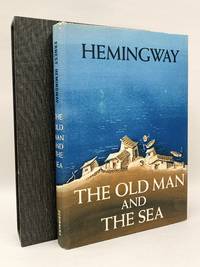
195249104New York: Charles Scribner's Sons 1952. First Edition. Hardcover. Fine/fine. 140p octavo. A very fine bright copy in like dust jacket. A common book but increasingly uncommon in excellent condition. Enclosed in gray cloth custom slipcase. <br/><br/> Charles Scribner's Sons hardcover