Heine WilliamABAA
389 résultats
1856WRCAM54032New York: Eliphalet M. Brown Jr. 1856. Six lithographs with integral descriptions and titles to the six plates all within an elaborate decorative border including vignettte scenes and portraits of places and people encountered on the expedition six lithographic plates printed in colors and finished by hand by J. Sarony & Co. 4 Boell & Lewis 1 and Boell & Michelin 1 all after Heine. Title leaf not present as usual. Elephant folio. Individually matted and framed. One print with repaired closed tears slightly affecting image. Occasional faint marginal foxing and dust soiling. Very good. Magnificent and very rare example of Heine's elephant folio-sized lithographic record of six lithographs illustrating the opening of Japan under Commodore Matthew Perry. In scale scope and quality of execution this is arguably the finest lithographic work ever produced in the United States and is among the rarest of all American color plate books. <br> <br> William Heine was the official artist on Commodore Matthew C. Perry's expedition to Japan in 1853-54. On returning to the United States he produced several series of prints commemorating the trip the first the greatest and the rarest of which is the present group consisting of a titlepage and six plates. These were overseen by the expedition's daguerreotypist Eliphalet Brown who was also an excellent artist and lithographer - he designed and drew the spectacular titlepage. The total number of sets of printed is not known but it is recorded that Brown gave 100 sets to Commodore Perry for distribution to members of the expedition. The number of sets sold to the public has not been established but was undoubtedly small. One of the reasons for the rarity of the complete set is that the plates were printed over two years by three publishers. Individual prints are occasionally encountered particularly the four printed in 1855 by Sarony of New York but the two other plates are much scarcer and were accomplished by different lithographers Boell & Lewis and Boell & Michelin. <br> <br> A secondary reason for the rarity of this set is the initial cost. It was significantly more expensive than Heine's GRAPHIC SCENES OF THE JAPAN EXPEDITION a much smaller folio published in the same year as the final plate: the popularity of this smaller set ensured that only very few of the magnificent larger sets were ever sold. The set consists of the following prints: <br> <br> 1 "Passing the Rubicon. Lieut. S. Bent in the 'Mississippi's' First Cutter Forcing his way through a Fleet of Japanese Boats while Surveying the Bay of Yedo Japan July 11th 1853." Printed by Sarony & Co dated 1855. <br> <br> 2 "First Landing of Americans in Japan. Under Commodore M.C. Perry at Gore-Hama July 14th 1853." Printed by Sarony & Co dated 1855. This print is the most dramatic of the series showing the first landing of Perry on Japanese soil. Through a flotilla of American landing barges with the ships' complement of Marines drawn up on the beach Perry proceeds to meet a Japanese delegation while Japanese troops ring in the Americans. In the foreground are two Japanese official launches and two Japanese officials stand in the right foreground. Perry's steamboats can be seen lying under steam in the left corner. <br> <br> 3 "Landing of Commodore Perry Officers & Men of the Squadron to Meet the Imperial Commissioners at Yoku-Hama Japan March 8th 1854." Printed by Sarony & Co dated 1855. <br> <br> 4 "Landing of Commodore Perry Officers & Men of the Squadron to Meet the Imperial Commissioners at Simoda Japan June 8 1854." Printed by Sarony & Co dated 1855. <br> <br> 5"Return of Commodore Perry Officers & Men of the Squadron from an Official Visit to the Prince Regent at Shui Capitol of Lew Chew June 6th 1853." Printed by Boell & Lewis dated 1855. <br> <br> 6 "Exercise of Troops in Temple Grounds Simoda Japan in Presence of the Imperial Commissioners June 8th 1854." Printed by Boell & Michelin dated 1856. <br> <br> This set of the Heine prints belonged to Major Robert Smith John Rodgers son of Commodore John Rodgers of War of 1812 fame and hung in his fine mansion on a hilltop outside of Havre de Grace Maryland. PETERS AMERICA ON STONE pp.98 352-53. Samuel Eliot Morison "OLD BRUIN": COMMODORE MATTHEW CALBRAITH PERRY 1794-1858 Boston 1967 p.463. Eliphalet M. Brown Jr. unknown books
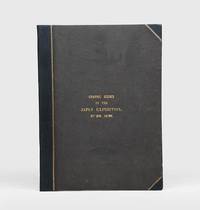
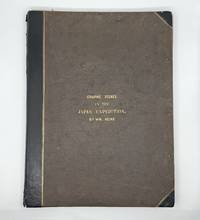
1856170801New York: G. P. Putnam & Company 1856. Heine brought a gentle panoramic romantic realism First edition superior issue the "extra fine edition on Bristol boards in portfolio". Only one other copy of this issue still with the publisher's portfolio and the atlas in the original wrappers has appeared in commerce in the past four decades. Wilhelm Heine 1827-1885 was appointed as the Perry Expedition's official artist aged only 25. Sketching and painting in watercolour he "brought a gentle panoramic romantic realism to both the selection and execution of his subjects. His landscapes were invariably scenic. Where people were concerned he preferred them in substantial numbers. He rarely lingered on the 'exotic' did not dwell much as happened later on various social 'types' and did not seek out the sensational" MIT Visualizing Cultures. Heine's informative personal account of the expedition was published in Leipzig in 1856. The three-volume official narrative 1856-58 employed 63 of his artworks. In Bennet's view however the plates in Graphic Scenes are "many times finer". The nine views include one of "Macao from Penna Hill" two drawn in Canton and six of Loochoo Yokohama and Shimoda. The superior issue retailed at $12. When complete this is often found with the text rebound or with the text and plates housed in a later portfolio. The closest comparator sold at Sotheby's New York in April 2012 which included the letterpress in the original cloth-backed wrappers and a red half morocco portfolio. Putnam & Co. also sold an ordinary issue with tinted plates only for $6. Folio 520 x 380 mm 10 lithographed plates printed area c. 200 x 300 mm by Sarony & Co.: 8 printed on India paper and mounted on card as issued including tinted uncoloured lithographed portrait of Commodore Perry after a daguerreotype by Haas and 7 hand-coloured tinted lithographs after paintings by Heine; 2 chromolithographs printed direct on card. Together with letterpress text volume ff. 12 original cream wrappers blue cloth backstrip decorative lithographed front cover. Housed in publisher's black half roan portfolio grey cloth sides front cover lettered and ruled in gilt yellow paper lining. All housed in modern tan cloth solander box. Plates with rich colour tones card mounts lightly foxed and creased in margins concomitant wear on verso; corners of front wrapper a little creased letterpress lightly foxed; portfolio with old staining and spill marks front board and extremities consolidated and recoloured in places: a very good copy with well-preserved plates. Bennett A Practical Guide to American Nineteenth Century Color Plate Books p. 53; McGrath American Colorplate Books 123; Rogala 367. hardcover
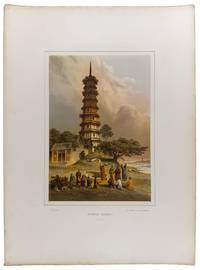
185634436New York: G.P. Putnam & Company 1856. Folio. 20 x 14 inches. 12 ff. letterpress text. 10 lithographic prints one tinted portrait of Perry on india paper mounted from a daguerreotype by P. Haas nine hand-coloured views by Heine two of these chromolithographed seven printed in two colours on india paper mounted all printed by Sarony & Co. all mounted on thick card with smooth glossy backings. Text in the original yellow pictorial wrappers expertly rebacked to style with purple cloth the plates loose as issued with the text within a half purple morocco and period purple cloth portfolio yellow pastedowns and flaps cloth ties. All within a black morocco backed box.<br/> <br/>An important work recording Commodore Perry's expedition to Japan: the very rare deluxe hand coloured issue on card.<br/> <br/>William Heine was the official artist on Commodore Matthew C. Perry's expedition to Japan in 1853-54. On returning to the United States he produced several series of prints commemorating the trip. A group of six elephant-folio prints appeared in 1855 and the following year the present volume was issued in a smaller format with different images and with explanatory text. Both projects employed the New York lithographic firm of Sarony among the best lithographers in the United States at that time. "As artistic productions the pictures speak for themselves . none superior to them have been executed in the United States and they have no cause to shun comparison with some of the best productions of Europe" Introduction. Copies were produced tinted though with some plates with several colors on regular paper and a very rare deluxe hand-coloured issue on card like the present example. The plates are numbered and titled as follows 1. portrait of Perry; 2. Macao from Penha Hill; 3. Whampoa Pagoda; 4. Old China Street Canton; 5. Kung-kwa at On-na Lew-Chew; 6. Mia or road side chapel at Yokuhama; 7. Temple of Ben-teng in the harbor of Simoda; 8. Street and bridge at Simoda; 9. Temple of the Ha-tshu Man-ya-tshu-ro at Simoda; 10. Grave yard at Simoda Dio Zenge. Bennett describes the plates as "many times finer than those in the regular account of the Perry expedition." His remarks on the work's great rarity are confirmed by its absence from both of Cordier's Japanese bibliographies. Two distinct issues of Heine's work were published: a regular issue with hand coloured plates on thick card; and the deluxe issue like the present with more elaborate hand coloring and on thick cards with glossy paper backings. The deluxe issue is considerably more rare than the regular issue.<br/> <br/>Bennett p.53; McGrath American Color Plate Books 123. G.P. Putnam & Company unknown books
1856371181New York: Putnam 1856. First edition deluxe colored issue on card. 12 leaves of letterpress text. Ten lithographic prints on proof paper tipped onto bristol board with glossy backs one tinted portrait of Perry from a daguerreotype by P. Hass nine views by Heine printed in colors and finished by hand all printed by Sarony & Co. Large folio. Original half black morocco and cloth covered boards lettered in gilt on the upper cover restoration to the spine with minor areas of loss. Minor foxing and wear to the plates. Very good. In a cloth folding box. First edition deluxe colored issue on card. 12 leaves of letterpress text. Ten lithographic prints on proof paper tipped onto bristol board with glossy backs one tinted portrait of Perry from a daguerreotype by P. Hass nine views by Heine printed in colors and finished by hand all printed by Sarony & Co. Large folio. The very rare deluxe colored issue on card of this important work recording Commodore Perry's expedition to Japan. Evidence of the rarity of this album is given by Bennett writing in 1947: "Obviously several copies must have been preserved but the one described seems to be the only one yet offered for public sale." <br /> <br /> William Heine was the official artist of Commodore Matthew C. Perry's expedition to Japan in 1853-54. On returning to the United States he produced several series of prints commemorating the trip. A group of six elephant folio prints appeared in 1855 and the following year the present volume was issued with different images and with explanatory text. Both projects employed the New York lithographic firm of Sarony probably the best lithographers in the United States at that time. "As artistic productions the pictures speak for themselves . none superior to them have been executed in the United States and they have no cause to shun comparison with some of the best productions of Europe" Introduction. <br /> <br /> Copies were produced on regular paper with tinted lithographs and in a deluxe form as in the present copy mounted on bristol board and beautifully with the plates finished by hand. The plates are numbered and titled as follow: 1. portrait of Perry; 2. "Macao from Penha Hill"; 3. "Whampoa Pagoda"; 4. "Old China Street Canton"; 5. "Kung-kwa at On-na Lew-Chew"; 6. "Mia or road side chapel at Yokohama"; 7. "Temple of Ben-teng in the harbor of Simoda"; 8. "Street and bridge at Simoda"; 9. "Temple of the Ha-tshu Man-ya-tshu-ro at Simoda"; 10. "Grave yard at Simoda Dio Zenge."<br /> <br /> Bennett describes the plates as "many times finer than those in the regular account of the Perry expedition." His remarks on the work's great rarity are confirmed by its absence from both the Abbey catalogue and Cordier's Japanese bibliography. Bennett p.53; McGrath p.123 Putnam unknown
185642565New York: G.P. Putnam & Company 1856. Folio. 20 3/16 x 14 3/16 inches. Deluxe coloured issue on card. 12 leaves of letterpress text. 10 lithographic prints on proof paper tipped onto bristol boards with glossy backs. Plates include 1 tinted portrait of Perry from a daguerreotype by P. Hass and 9 views by Heine 2 chromolithographs printed in colour and finished by hand and 7 lithographed printed with two tints with additional hand-colouring all printed by Sarony & Co. Publisher's original wrappers text leaves and plates loose within the original half roan and brown cloth portfolio with title in gilt on upper board. Within a modern half morocco clamshell box<br/> <br/> An important work recording Commodore Perry's expedition to Japan: the very rare deluxe hand coloured issue on card.<br/> <br/> William Heine was the official artist on Commodore Matthew C. Perry's expedition to Japan in 1853-54. On returning to the United States he produced several series of prints commemorating the trip. A group of six elephant-folio prints appeared in 1855 and the following year the present volume was issued in a smaller format with different images and with explanatory text. Both projects employed the New York lithographic firm of Sarony among the best lithographers in the United States at that time. "As artistic productions the pictures speak for themselves . none superior to them have been executed in the United States and they have no cause to shun comparison with some of the best productions of Europe" Introduction. Copies were produced tinted though with some plates with several colours on regular paper and a very rare deluxe hand-coloured issue on card like the present example. The plates are numbered and titled as follows 1. portrait of Perry; 2. Macao from Penha Hill; 3. Whampoa Pagoda; 4. Old China Street Canton; 5. Kung-kwa at On-na Lew-Chew; 6. Mia or road side chapel at Yokuhama; 7. Temple of Ben-teng in the harbor of Simoda; 8. Street and bridge at Simoda; 9. Temple of the Ha-tshu Man-ya-tshu-ro at Simoda; 10. Grave yard at Simoda Dio Zenge. Bennett describes the plates as "many times finer than those in the regular account of the Perry expedition." His remarks on the work's great rarity are confirmed by its absence from both of Cordier's Japanese bibliographies. Two distinct issues of Heine's work were published: a regular issue with hand-coloured plates on thick card; and the deluxe issue like the present with more elaborate hand-colouring and on thick cards with glossy paper backings. The deluxe issue is considerably more rare than the regular issue.<br/> <br/> Bennett p.53; McGrath American Color Plate Books 123. G.P. Putnam & Company unknown
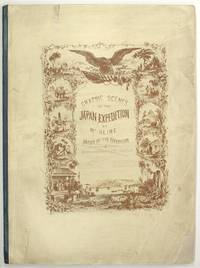
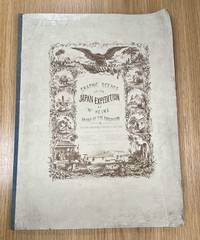
185646791New York: G. P. Putnam & Co 1856. Large folio approx. 20½ x 15" consisting of a title page and introduction leaf and 10 leaves of descriptive text to accompany each of the 10 plates of which one is a lithograph portrait of Commodore Perry from a daguerreotype by P. Haas 2 chromolithographs 7 lithographs printed in 2 colors on India paper and mounted as issued original pictorial wrappers with the title enclosed by 8 vignette scenes and an American eagle at the top the wrappers backed in blue cloth; the whole in the publisher's quarter green morocco lettered in gilt on upper cover; some soiling of the front wrapper and title page a little spotted but over all very good or better. Heine 1827-1885 was the official artist on Perry's expedition to Japan in 1853-54. The sketches he produced of the places he visited and the people he encountered there together with the daguerreotypes taken by his colleague Eliphalet Brown Jr. formed the basis of the official iconograhy of the American expedition to Japan which remains an important record of the country as it was before the foreigners arrived in force. Upon his return to New York in 1855 he published several books: a collection of prints entitled Graphic Scenes of the Japan Expedition; and the 400 sketches which were included in Perry's official report as well as his memoirs Reiss um die Welt nach Japan Leipzig 1856. Bennett p. 53: "The plates are very beautiful Japanese scenes and places of special interest many times finer than the plates in the three-volume regular account of the Perry Expedition." McGrath American Color Plate Books 123. <br/><br/> G. P. Putnam & Co hardcover books
185620647New York: GP Putnam & Company 1856. Folio. 20 1/4 x 14 1/2 inches. 12 ff. letterpress text. 10 lithographic prints one tinted portrait of Perry from a daguerreotype by P. Haas nine hand finished views by Heine two of these chromolithographed seven printed in two colours on india paper mounted all printed by Sarony & Co. 20th-century maroon half morocco over paper-covered boards titled in gilt on spine original wrappers bound in<br/> <br/>An important work recording Commodore Perry's expedition to Japan.<br/> <br/>William Heine was the official artist on Commodore Matthew C. Perry's expedition to Japan in 1853-54. On returning to the United States he produced several series of prints commemorating the trip. A group of six elephant-folio prints appeared in 1855 and the following year the present volume was issued in a smaller format with different images and with explanatory text. Both projects employed the New York lithographic firm of Sarony among the best lithographers in the United States at that time. "As artistic productions the pictures speak for themselves . none superior to them have been executed in the United States and they have no cause to shun comparison with some of the best productions of Europe" Introduction. Copies were produced tinted on regular paper as in the present copy and hand-coloured. The plates are numbered and titled as follows 1. portrait of Perry; 2. Macao from Penha Hill; 3. Whampoa Pagoda; 4. Old China Street Canton; 5. Kung-kwa at On-na Lew-Chew; 6. Mia or road side chapel at Yokuhama; 7. Temple of Ben-teng in the harbor of Simoda; 8. Street and bridge at Simoda; 9. Temple of the Ha-tshu Man-ya-tshu-ro at Simoda; 10. Grave yard at Simoda Dio Zenge. Bennett describes the plates as "many times finer than those in the regular account of the Perry expedition." His remarks on the work's great rarity are confirmed by its absence from both of Cordier's Japanese bibliographies.<br/> <br/>Bennett p.53; McGrath American Color Plate Books 123. GP Putnam & Company unknown books
185646791New York: G. P. Putnam & Co 1856. Large folio approx. 20½ x 15" consisting of a title page and introduction leaf and 10 leaves of descriptive text to accompany each of the 10 plates of which one is a lithograph portrait of Commodore Perry from a daguerreotype by P. Haas 2 chromolithographs 7 lithographs printed in 2 colors on India paper and mounted as issued original pictorial wrappers with the title enclosed by 8 vignette scenes and an American eagle at the top the wrappers backed in blue cloth; the whole in the publisher's quarter green morocco lettered in gilt on upper cover; some soiling of the front wrapper and title page a little spotted but over all very good or better. Heine 1827-1885 was the official artist on Perry's expedition to Japan in 1853-54. The sketches he produced of the places he visited and the people he encountered there together with the daguerreotypes taken by his colleague Eliphalet Brown Jr. formed the basis of the official iconography of the American expedition to Japan which remains an important record of the country as it was before the foreigners arrived in force. Upon his return to New York in 1855 he published several books: a collection of prints entitled Graphic Scenes of the Japan Expedition; and the 400 sketches which were included in Perry's official report as well as his memoirs Reiss um die Welt nach Japan Leipzig 1856. Bennett p. 53: "The plates are very beautiful Japanese scenes and places of special interest many times finer than the plates in the three-volume regular account of the Perry Expedition." McGrath American Color Plate Books 123. G. P. Putnam & Co unknown
185625141New York: GP Putnam & Company 1856. Folio. 20 1/4 x 14 1/4 inches. 12 ff. letterpress text. 10 lithographic prints one tinted portrait of Perry on india paper mounted from a daguerreotype by P. Haas nine hand finished views by Heine two of these chromolithographed seven printed in two colours on india paper mounted all printed by Sarony & Co. Expertly bound to style in half purple morocco over period purple cloth covered boards.<br/> <br/>An important work recording Commodore Perry's expedition to Japan.<br/> <br/>William Heine was the official artist on Commodore Matthew C. Perry's expedition to Japan in 1853-54. On returning to the United States he produced several series of prints commemorating the trip. A group of six elephant-folio prints appeared in 1855 and the following year the present volume was issued in a smaller format with different images and with explanatory text. Both projects employed the New York lithographic firm of Sarony among the best lithographers in the United States at that time. "As artistic productions the pictures speak for themselves . none superior to them have been executed in the United States and they have no cause to shun comparison with some of the best productions of Europe" Introduction. Copies were produced tinted though with some plates with several colors on regular paper as in the present copy and a deluxe hand-coloured issue on card. The plates are numbered and titled as follows 1. portrait of Perry; 2. Macao from Penha Hill; 3. Whampoa Pagoda; 4. Old China Street Canton; 5. Kung-kwa at On-na Lew-Chew; 6. Mia or road side chapel at Yokuhama; 7. Temple of Ben-teng in the harbor of Simoda; 8. Street and bridge at Simoda; 9. Temple of the Ha-tshu Man-ya-tshu-ro at Simoda; 10. Grave yard at Simoda Dio Zenge. Bennett describes the plates as "many times finer than those in the regular account of the Perry expedition." His remarks on the work's great rarity are confirmed by its absence from both of Cordier's Japanese bibliographies.<br/> <br/>Bennett p.53; McGrath American Color Plate Books 123. GP Putnam & Company unknown books
185634662New York: G.P. Putnam & Company 1856. Folio. 20 1/4 x 14 1/4 inches. 12 leaves of letterpress text. 10 lithographic prints including one tinted portrait of Perry on india paper mounted on thick paper from a daguerreotype by P. Haas and nine views by Heine two chromolithographed seven printed in two tints on india paper mounted all printed by Sarony & Co. Small stab holes in the margins where the text and plates were previously stitched. Publisher's original wrappers text leaves and plates loose within the original portfolio leather renewed to style with title in gilt on upper board. Within a modern half morocco clamshell box<br/> <br/> An important work recording Commodore Perry's expedition to Japan.<br/> <br/> William Heine was the official artist on Commodore Matthew C. Perry's expedition to Japan in 1853-54. On returning to the United States he produced several series of prints commemorating the trip. A group of six elephant-folio prints appeared in 1855 and the following year the present volume was issued in a smaller format with different images and with explanatory text. Both projects employed the New York lithographic firm of Sarony among the best lithographers in the United States at that time. "As artistic productions the pictures speak for themselves . none superior to them have been executed in the United States and they have no cause to shun comparison with some of the best productions of Europe" Introduction. Copies were produced tinted though with some plates with several colors on regular paper as in the present copy and a deluxe hand-coloured issue on card. The plates are numbered and titled as follows 1. portrait of Perry; 2. Macao from Penha Hill; 3. Whampoa Pagoda; 4. Old China Street Canton; 5. Kung-kwa at On-na Lew-Chew; 6. Mia or roadside chapel at Yokuhama; 7. Temple of Ben-teng in the harbor of Simoda; 8. Street and bridge at Simoda; 9. Temple of the Ha-tshu Man-ya-tshu-ro at Simoda; 10. Grave yard at Simoda Dio Zenge. Bennett describes the plates as "many times finer than those in the regular quarto account of the Perry expedition." His remarks on the work's rarity are confirmed by its absence from both of Cordier's Japanese bibliographies.<br/> <br/> Bennett p. 53; McGrath American Color Plate Books 123. G.P. Putnam & Company unknown
185625141New York: GP Putnam & Company 1856. Folio. 20 1/4 x 14 1/4 inches. 12 leaves of letterpress text. 10 lithographic prints including one tinted portrait of Perry on india paper mounted on thick paper from a daguerreotype by P. Haas and nine views by Heine two chromolithographed seven printed in two tints on india paper mounted all printed by Sarony & Co. Expertly bound to style in half purple morocco over period purple cloth covered boards.<br/> <br/> An important work recording Commodore Perry's expedition to Japan.<br/> <br/> William Heine was the official artist on Commodore Matthew C. Perry's expedition to Japan in 1853-54. On returning to the United States he produced several series of prints commemorating the trip. A group of six elephant-folio prints appeared in 1855 and the following year the present volume was issued in a smaller format with different images and with explanatory text. Both projects employed the New York lithographic firm of Sarony among the best lithographers in the United States at that time. "As artistic productions the pictures speak for themselves . none superior to them have been executed in the United States and they have no cause to shun comparison with some of the best productions of Europe" Introduction. Copies were produced tinted though with some plates with several colors on regular paper as in the present copy and a deluxe hand-coloured issue on card. The plates are numbered and titled as follows 1. portrait of Perry; 2. Macao from Penha Hill; 3. Whampoa Pagoda; 4. Old China Street Canton; 5. Kung-kwa at On-na Lew-Chew; 6. Mia or road side chapel at Yokuhama; 7. Temple of Ben-teng in the harbor of Simoda; 8. Street and bridge at Simoda; 9. Temple of the Ha-tshu Man-ya-tshu-ro at Simoda; 10. Grave yard at Simoda Dio Zenge. Bennett describes the plates as "many times finer than those in the regular quarto account of the Perry expedition." His remarks on the work's rarity are confirmed by its absence from both of Cordier's Japanese bibliographies.<br/> <br/> Bennett p.53; McGrath American Color Plate Books 123. GP Putnam & Company unknown
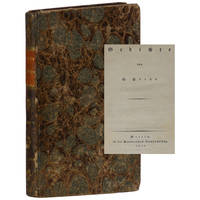
1822362546Berlin: Maurerschen Buchhandlung 1822. First Edition. Very good. Heine's first book a collection of poems published by a Berlin bookstore in December 1821 but dated on the title page 1822. A scarce book by one of the most important 19th century German poets.<br /> <br /> viii 170 1 pages. Collating as: i title ii blank iii-iv Zueignung v-viii Inhalt 1-35 Traumbilder 36 blank 37-64 Minnelieder 65-103 Romanzen 104 blank 105-142 Sonette und vermischte Gedichte 143-170 Uebersetzungen aus Lord Byrons Werken 170 printer's imprint: Berlin gedruckt bei G. Hayn 171 Berichtigung. First edition first printing. A very good or better copy in contemporary marbled paper-covered boards. With a red-paper label on the spine which is divided into compartments with four ornaments stamped in gilt. Label edge chipped just touching the H in Heine. Minor wear to the corners. Previous owner's name on the first blank. A bit musty. Maurerschen Buchhandlung unknown
1856999999999999G.P. Putnam & Co 1856. First Edition. Softcover. Good. G.P. Putnam & Company; NY 1856. Letterpress text. 10 lithographic prints one tinted portrait of Perry on india paper mounted from a daguerreotype by P. Haas nine hand-coloured views by Heine two of these chromolithographed seven printed in two colours on india paper all printed by Sarony & Co. Good only All plates and text pages present. Moisture staining to top of block affecting almost all of the platesworse in front less so in rear Not affecting image in any. Heavy wear to original heavier stock wrapsThis being the $6.00 edition NOT the pricer $12.00 ed with the mounted palates/clamshell box. Tear and creasing to rear cover. 4toFolio. 20 x 14 inches. 12 ff. We pack securely and ship daily with delivery confirmation on every book. The picture on the listing page is of the actual book for sale. Additional Scans are available for any item please inquire. G.P. Putnam & Co, paperback
182728000Hamburg 1827. Cont. black hcalf w. gilt back. Back somewhat worn w. mended crack to upper front-hinge. In nice recent slipcase w. black morocco-edges. A bit brownspotted the first two leaves a bit heavier. W. the half-title but without the dedication-leaves ususally missing. <br/><br/><em>The not common first edition of Heine's major work. Goedeke: VIII 555:26. </em> unknown
182728000Hamburg, 1827. Cont. black hcalf w. gilt back. Back somewhat worn w. mended crack to upper front-hinge. In nice recent slipcase w. black morocco-edges. A bit brownspotted, the first two leaves a bit heavier. W. the half-title, but without the dedication-leaves, ususally missing.
18311BislAi0006Leipzig Germany/Deutschland: Tempel-Verlag 1831. Book. Very Good. Decorative Canvas Hardcover. Siebenter Band/Volume 7. 8vo or 8° Medium Octavo: 7¾" x 9¾" tall. 418 pp. 7. Band/Vol. 7 only! Text in German. Solidly bound copy with moderate external wear crisp pages and clean text. No dust jacket. Tempel-Verlag Hardcover
18341BislAi0005Leipzig Germany/Deutschland: Tempel-Verlag 1834. Book. Very Good. Decorative Canvas Hardcover. 8vo or 8° Medium Octavo: 7¾" x 9¾" tall. 429 pp. 6. Band/Vol. 6 only! Text in German. An excellent copy! Over-sized and/or over weight book; extra postage required. Please note that large and/or heavy items may incur an additional shipping charge. Solidly bound copy with moderate external wear crisp pages and clean text. No dust jacket. Tempel-Verlag Hardcover
1827007940Hamburg: Hoffmann und Campe 1827. First Edition First Issue. Half Red Morocco. Marbled Boards. Cloth clamshell box. Near Fine. Heine's second published book his first collection of verse which was soon censored making the first issue a relative rarity. In later issues some of the poems were altered to suit the censors. 12mo. 17 by 10.5 cm. 372 1 pp. Original wraps bound in. With half title and the four dedication pages -- two to Friedrich Merkel one to Salomon Heine and one to Friederike Varnhagen von Ense. Also with the advertisement page at the end. There is no preface. This copy has the bookplate of Ludwig Rosenberger mounted onto the FEP. Rosenberger 1904-1987 built one of the most significant collections of Judaica which he donated to the University of Chicago. Overall a beautiful copy. With a clamshell box that has a rounded spine with solidity and thickness. Light scattered foxing but most leaves are clean. Foxing is mostly on the early and the final few leaves with it most conspicuous on the title page. Also a few light fox marks on the fore-edge. Moderate wear to the box. Hoffmann und Campe unknown
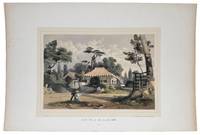
185642599New York: G.P. Putnam & Company 1856. Tinted lithograph on proof paper tipped onto a bristol board with glossy back as issued with additional hand colouring. A quietly revealing image from Heine's Graphic Scenes of the Japan Expedition: the American encounter with the Ryukyu Islands in Japan where diplomacy observation and coastal movement preceded the better-known landings in Japan.<br/> <br/> This plate is one of the more understated images in Graphic Scenes of the Japan Expedition and that restraint is part of its appeal. Lew Chew was the period Western name for the Ryukyu Islands and On-Na corresponds to Onna on Okinawa. The scene shows a kung-kwa or village rest house set back behind a low wall and gate its tiled roof partly screened by trees. Heine gives the building a strong sense of place: the whitewashed wall shaded yard garden growth and open path all suggest a local administrative or stopping-place outside the more formal diplomatic centres of Naha and Shuri. In the foreground one figure sits with a portfolio or sketchbook while another stands nearby. Ryukyuan figures appear closer to the building absorbed into the architecture and enclosure of the scene. The print therefore records more than a picturesque stop on the route to Japan turning a coastal village structure into evidence of landscape architecture custom and access. Within the Perry visual record Kung-Kwa at On-Na is valuable precisely because it shifts attention from treaty ceremony to the quieter geography of the voyage. It places Okinawa within the wider American itinerary through the China Seas the Ryukyus and Japan and preserves a carefully observed view of a Ryukyuan public building at the moment when the islands were being drawn into the diplomatic and commercial mapping of the Pacific. Wilhelm Heine was the official artist on Commodore Matthew C. Perry's expedition to Japan in 1853-54. On returning to the United States he produced several series of prints commemorating the trip. A group of six elephant-folio prints appeared in 1855 and the following year a second volume was issued in a smaller format with different images and with explanatory text. Both projects employed the New York lithographic firm of Sarony among the best lithographers in the United States at that time.<br/> <br/> Bennett p.53; McGrath American Color Plate Books 123. G.P. Putnam & Company unknown
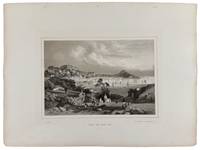
185642582New York: G.P. Putnam & Company 1856. Tinted lithograph mounted on support sheet with printed letters as issued with small stab holes where previously bound. A mid nineteenth century view of Macao China from Penha Hill published as the first topographical scene in Heine's Graphic Scenes of the Japan Expedition showing the city's harbour churches fortified heights and waterfront at a moment when Macao's older role in the China trade was being overtaken by Hong Kong.<br/> <br/> Heine's view looks down from Penha Hill across Macao's semi-circular harbour with the town rising in terraces from the waterfront toward its churches gardens and fortified heights. The composition places Macao's maritime and religious identity in a single prospect: small vessels fill the inner harbour larger ships lie farther out and the built town gathers around the shoreline beneath prominent ecclesiastical and defensive structures. In the foreground porters carrying shoulder poles and a seated group of robed women animate the hillside road giving the view a local and social immediacy beyond its topographical function. Macao had developed from the sixteenth century as the principal Portuguese settlement on the South China coast occupying a narrow peninsula near the entrance to the Pearl River system and serving as a crucial intermediary point in trade between China Japan India and Europe. Its urban form is clearly legible in Heine's image. The waterfront known as the Praia curves around the harbour below the elevated town while Penha Hill provides the high vantage from which Macao appears as an amphitheatre of houses churches gardens and forts descending toward the water. By the time Heine's view was published Macao's commercial standing had changed substantially. Hong Kong occupied by Britain in 1841 and rapidly developed as a free port drew away much of the foreign trade that had once passed through Macao. Heine's print records the older Portuguese city in this altered commercial landscape: still picturesque densely built and socially important as a resort and residence for foreign merchants connected with Canton but no longer the dominant European entrepôt on the China coast. Seen from Penha Hill Heine's Macao appears as a harbour city where Portuguese civic and religious landmarks Chinese geography and nineteenth-century treaty-port commerce meet in a single prospect. Wilhelm Heine was the official artist on Commodore Matthew C. Perry's expedition to Japan in 1853-54. On returning to the United States he produced several series of prints commemorating the trip. A group of six elephant-folio prints appeared in 1855 and the following year a second volume was issued in a smaller format with different images and with explanatory text. Both projects employed the New York lithographic firm of Sarony among the best lithographers in the United States at that time.<br/> <br/> Bennett p.53; McGrath American Color Plate Books 123. G.P. Putnam & Company unknown
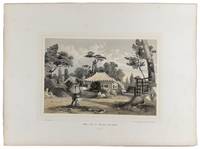
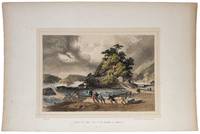
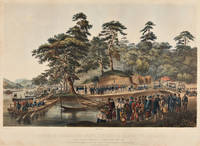
185642598New York: G.P. Putnam & Company 1856. Tinted lithograph on proof paper tipped onto a bristol board with glossy back as issued with additional hand colouring. A fine plate of Shimoda harbour in Japan showing the Benten temple on a rocky tree-covered rise above the water from Graphic Scenes of the Japan Expedition.<br/> <br/> Shimoda or "Simoda" in the period spelling used here had particular importance for Perry's expedition. Under the Treaty of Kanagawa signed on 31 March 1854 it was one of the two ports opened to American vessels for supplies and refuelling. Heine records the harbour as a coastal landscape of daily movement local religious architecture and practical maritime activity. In the foreground Japanese boatmen haul a long narrow boat through the surf while a second boat lies angled on the beach at right. Beyond them the temple rises from a small rocky promontory half hidden among trees and reached by a stepped landing and gate with low mountains and a heavy cloud filled sky in the distance. The titles "Ben-Teng" refers to Benten or Benzaiten a deity often associated with water and shoreline shrines. This gives the image a specificity beyond its topographical interest: Heine presents Shimoda through a recognisable local sacred site placed directly within the harbour that had become newly significant in American and Japanese relations. The composition balances picturesque scenery ethnographic observation and the physical geography of a newly opened treaty port giving equal weight to topography and local life. Wilhelm Heine was the official artist on Commodore Matthew C. Perry's expedition to Japan in 1853-54. On returning to the United States he produced several series of prints commemorating the trip. A group of six elephant-folio prints appeared in 1855 and the following year a second volume was issued in a smaller format with different images and with explanatory text. Both projects employed the New York lithographic firm of Sarony among the best lithographers in the United States at that time.<br/> <br/> Bennett p.53; McGrath American Color Plate Books 123. G.P. Putnam & Company unknown
190061932Leipzig und Wien: Bibliograpisches Institut 1900. 29 vols. 8vo. Uniformly bound in contemporary half brown morocco with red leather title labels. Very fine. 29 vols. 8vo. Bibliograpisches Institut unknown
185853684Leipzig Hermann Costenoble 1858-59. Lex8vo. 3 uniform contemp. hcalf. Spines gilt with gilt lettering. Corners a bit bumped. 3 tinted frontispieces. XX330;VIII392;VIII424 pp. 1 facsimile 21 plates some tinted and 12 maps 10 large and folded finely strenghtened on verso. Clean and fine. <br/><br/><em>First edition. - Sabin 31241. </em> unknown
185853684Leipzig, Hermann Costenoble, 1858-59. Lex8vo. 3 uniform contemp. hcalf. Spines gilt with gilt lettering. Corners a bit bumped. 3 tinted frontispieces. XX,330VIII,392VIII,424 pp., 1 facsimile, 21 plates (some tinted) and 12 maps (10 large and folded, finely strenghtened on verso). Clean and fine.
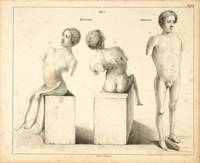
1840181791840. Stuttgart F.H. Köhler 1840 4° 6 78 pp. 1 Blatt "Druckfehler" mit 7 von F. Federer lith. Tafeln mit 34 Abb. minimal gebräunt etwas fleckig sehr gutes Exemplar Halbleinenband im Stil der Zeit; ExBibExpl des Rockefeller Inst. First edition of the "First description of acute anterior poliomyelitis which Jakob von Heine 1799-1879 separated from other forms of paralysis; he described the deformities arising from the disease. He also called attention to congenital spastic paraplegia which following Little's classical description was termed "Little's disease". Garrison & Morton Vorrede: "Die Lehre von der Lähmung der unteren Extremitäten ist ungeachtet mancher darüber erschienener zum Theil sehr schätzbarer Abhandlungen und einer grossen Zahl bekannt gemachter Fälle noch sehr lückenhaft und daran gewiss nicht nur die Schwierigkeit und seltene Gelegenheit Rückgratshöhlen zu öffnen sondern auch vorzugsweise die sich widersprechenden Resultate der Leichenöffnungen der an Rückenmarkskrankheiten Verstorbenen Schuld. Unter diesen Umständen dürfte es vielleicht nicht ganz ohne Interesse seyn wenn ich mir erlaube in folgenden Blättern eine Reihe von während 11 Jahren in meiner Heilanstalt gemachten Beobachtungen über eine Art von Paralyse der unteren Gliedmassen zusammen zu stellen und zu versuchen ob sich hiebei nicht Andeutungen über diese sowohl in ihrer primären als secundären Natur noch wenig bekannte Krankheit ableiten lassen. Erhält indessen die Wissenschaft selbst durch diese kleine Arbeit auch keinen grossen Gewinn so bleibt mir jeden Falls das angenehme Bewusstseyn das herbe Schicksal einer Anzahl unglücklicher Wesen erleichtert zu haben Wesen welche oft kaum der Mutter Schoos entsprossen und sich bereits eines hoffnungsvollen Gedeihens erfreuend durch ein unglückliches Geschick wieder in ihr erstes hülfloses Daseyn zurückgeworfen wurden." Cannstadt im Juni 1840 Der Verfasser. Garrison & Morton No.4664; Fishbein No. 8 unknown