9 613 résultats
196285378Harry N. Abrams Inc. As New. 1962. Hardcover. FREE UPGRADE to Courier/Priority Shipping Upon Request - IN STOCK AND IMMEDIATELY AVAILABLE FOR SHIPMENT - AS NEW THE TEXT BLOCK IS PRISTINE CLEAN UNMARKED AND IN EXCELLENT CONDITION - - 328 pages 210 illustrations. -- with a bonus offer-- . Harry N. Abrams, Inc. hardcover
5394Les œuvres diverses - Nouvelle édition – Revue, corrigée, & augmentée de plusieurs morceaux qui n’avoient point encore paru – Neuchatel, sn, 1764 à 1779 - 10 vol. T1 à 10 – Page de titre noire et rouge sauf T6, 7,8 et 10 - T1, 1764 – iv, 421 pp, 1 frontispice ; T2, 1764 – 447 pp; T3, 1764 – 384 pp; T4, 1764 – 406 pp + 1 f. n. ch.; T5, 1764 – 288 pp, cxliij; T6, 1765 – 2 ff.n.ch,xlviij, 384 pp; T7, 1768 – 480 pp; T8, 1765 – 2 ff. n. ch., 440 pp – Erreur de typographie à la page 438 : 43 aulieu de 438; T9, 1764 - 3 ff. n. ch., 395 pp, 2 ff. n. ch. – Erreur de typographie p. de titre : Tome sixième au lieu de neuvième – Relié à la suite Rousseau juge de Jean Jacques- A Lichfield, Jackson, 1780 – 5 ff. n. ch., 1 f. blc, 150 pp, 1 f. n. ch. – E.O.; T10, 1779 – 1 f. n. ch., iv, 1 f. n. ch., 360 pp – Relié à la suite Relation ou notice des derniers jours de mons. Jean Jacques Rousseau; circonstances de sa mort; et quels sont les ouvrages posthumes, qu’on peut attendre, de lui : par mons. Le Begue de Presle, avec une addition relative au même sujet par J.H. de Magellan – A Londres, chez B. White, J. Johnson, P. Elmsy, W. Brown, 1780 – 48 pp – E.O.La nouvelle Héloise, ou lettres de deux amans, Habitans d’une petite ville au pied des Alpes – Nouvelle édition, revue, corrigée & augmentée de figures en taille douce, & une table des matières – 2nde édition - Neuchatel/Paris, Duchesne, 1764 – 4 vol. T11 à 14 - T1, 1 f. n. ch., front., 408 pp, 2 grav.; T2, 2 ff. n. ch., 405 pp, 4 grav.; T3, 2 ff. n. ch., 432 pp, 3 grav.; T4, 2 ff. n. ch., 378 pp + 32 pp supplément à la Nouvelle Héloise, 3 grav. (mque 1 serpente)Emile, ou de l'éducation La Haye (Paris), J.Néaulme, 1762 - 4 vol. T 15 à 18 page de titre noire et rouge L'édition de Paris est certainement la première; elle se vendait 18 livres avant l'arrêt du Parlement, et on la trouvait chère; mais quand vinrent les persécutions, malgré les nombreuses réimpressions de l'ouvrage, il fut si recherché, qu'on croyait le payer bon marché en en donnant 40 ou 50 livres... o. (mémoires de Favart. tome 11, p. 10.) – 5 figures par Eisen 1 front. + 4 gravures – Ici manque gravure T1 - T1, 1 f. n. ch., frontispice, viii, 1 f. n. ch., 466 pp, 3 ff, n. ch.; T2, 2 ff. n. ch., 407 pp, 1 grav. ;T3, 2 ff. n. ch., 384 pp, 1 grav. ; T4, 2 ff. n. ch., 455 pp, 1 grav., 1 supplément 112 pp – Erreur de typographie à la p. 112 : 211 au lieu de 112Les confessions, suivies des Rêveries du promeneur solitaire - Genève, 1782 - 2 vol. T19 à 20 - Édition originale complète de la première partie des Confessions T1, 1782 – 2 ff. n. ch., 471 pp, Confessions Livre I à IV; T2, 1782 – 2 ff. n. ch., 279 pp, Confessions Livre VI à et 300 pp Promenades I à XEsprit et maximes, T21 - Neuchatel et en Europe, chez les libraires associés, 1764 – 464 ppLettres de la montagne, T22 - Amsterdam, Marc Michel Rey, 1764 – 2 vol. Reliés en un, 5 ff. n. ch., 334 pp, 1 ff. n . ch., 226 pp (sans les cartons) Erreur de pagination vol. 1, p 214 marquée 114
175841098A Amsterdam, chez Marc Michel Rey, 1758. In-8 de XVIII-264-(8) pp., basane marbrée, dos lisse orné, pièce de titre en maroquin rouge, tranches rouges (reliure de l'époque).
19928683Paris, Mairie de Paris, Bibliothèque Historique de la Ville de Paris, 1992. 3 fascicules in-8, 18-(2 bl.) pp. pour la préface de V. del Litto ; (2)-16-(2 bl.) pp. pour le fac-similé ; 8 pp. pour les notes. Tirage à 250 exemplaires numérotés dont 70 hors commerce (n° 18). Envoi du relieur à Jean Dérens, directeur de la Bibliothèque historique de la Ville de Paris et ex-dono de Jean Dérens sur la couverture du premier fascicule. Reliure en box noir recouvert de bandes verticales en peau de reptile, couvertures conservées, étui en demi-box noir à coins, minimes griffures au dos de l'étui, superbe reliure de Florent Rousseau datant de 1993.
176283787Jean Néaulme | à La Haye 1762 | 12 x 20 cm | 4 volumes reliés
176487730Chez Duchesne | à Paris 1764 | 12.50 x 19.70 cm | 4 volumes reliés
1788003379A Paris, chez Mérigot père, Gattey, Guyot et à Ermenonville, chez Murray in-8 (233 x 150 mm), 68 pp + 2 pages de musique gravées. demi-veau gris foncé, dos à cinq nerfs finement orné (relié vers 1840). vingt-quatre fines gravures en premier tirage, à la manière noire (la gravure n° 14 manque). Charmant ouvrage, décrivant cet endroit qu'appréciait particulièrement Jean-Jacques Rousseau et oû il a été enterré en 1778. La chanson (paroles et musique) qui figure à la fin du volume a pour titre "Chanson du Berger de la Grotte verte" est du marquis de Girardin. (quelques frottements et piqûres)
176813931768 Paris, Chez la Veuve Duchêne, Libraire rue Saint-Jacques, 1768. Fort in-4 relié, plein veau fauve, dos à nerfs et caissons, 550 pp. Édition originale complète de ses 13 planches hors-texte. Mors et coiffes restaurés, sinon bel exemplaire en reliure d'époque. Rare.
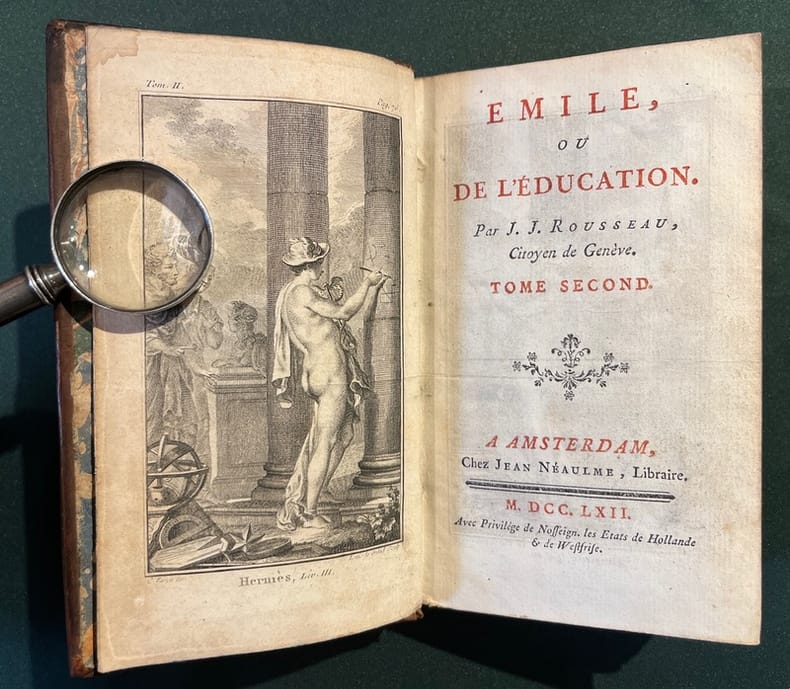
18935Amsterdam, Jean Néaulme [Paris, Duchesne], 1762. 4 vol. in-12, veau écaille glacé, dos lisses ornés de fleurons dorés, pièces de titre et de tomaison en maroquin tête-de-nègre, filet doré sur les coupes, roulette dorée intérieure, tranches marbrées. Reliure de l'époque, deux coiffes absentes, coins émoussés. Néanmoins, agréable exemplaire. 5 fig. h.-t. par Eisen gravées en taille-douce par Le Grand, de Longueil et Pasquier, (1) f., viij pp., (1) f., 466 pp., (1) f. blanc; (2) ff., 407 pp., (2) ff., 357 pp., pp. 361 à 384, (2) ff., (2) ff., 455 pp., (2) ff. Le feuillet blanc correspondant aux pp. 359 à 360 du tome III est absent comme souvent.
47920Marc Michel Rey.1761.3 vols in-12 demi-reliés.1002 p.+ 31 p,et errata pour La Préface de la NouvelleHéloïse.Aucune figure.5 parties. Etat moyen.Demi-reliures à coins usagées .Dos à 5 nerfs craquelés.Pièces de titre et tomaison très vieillies.Tranches marbrées.Intérieur avec quelques rousseurs peu gênantes.
1823000274Paris Janet et Cotelle 1823
ORD-9398Avec des éclaicissements et des notes historiques par P. R. Auguis. Paris. Dalibon. 1824-1825. 27 volumes auxquels on joint: Histoire de la vie et des ouvrages de J.-J. Rousseau par V. D. Musset-Pathay, nouvelle édition. Paris. Dupont. 1827. Ensemble 28 volumes, in-8 (13,5 x 22,3cm), dos à 5 nerfs et coins chagrin rouge cerise, têtes dorées, rousseurs éparses parfois un peu gênantes. Exemplaire exceptionnel enrichi de 396 gravures h.-t, certaines avant la lettre, destinées à d'autres éditions la plupart antérieures à celle-ci. On y rencontre Marillier, Moreau le Jeune, Le Barbier, Cochin, Monnet, Johannot, Girardet, Gravelot et bien sûr les 40 gravures de Deveria qui figurent normalement dans cette édition. Nombreux portraits. Belle reliure ancienne un peu postérieure d'un bel effet décoratif.
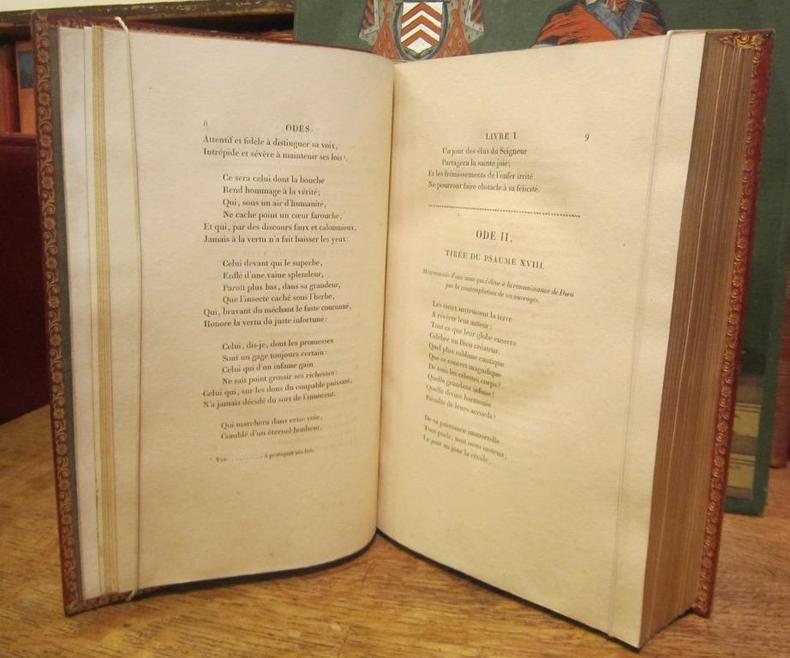
00046London: 1781. In a Contemporary Morocco Binding Attributed To Derôme Le Jeune<br/><br/>DEROME Nicholas Denis aka Le Jeune binder; attributed to. ROUSSEAU Jean Baptiste. Œuvres de Rousseau. Nouvelle édition. London: 1781.<br/><br/>Two twelvemo volumes 4 5/8 x 2 13/16 inches; 118 x 72 mm. 4 252; 4 276 pp. Engraved frontispiece portrait by Delvaux in Volume I. <br/><br/>Contents: Volume I "Odes sacrées" "Odes Liv. II-IV" and "Cantates allégoriques." Volume II "Epitres Liv. I-II" "Allégories Liv. I-II" "Epigrammes Liv. I-IV" and "Poésies diverses."<br/><br/>Contemporary full red morocco attributed to Derôme Le Jeune unsigned but with dentelles à l'oiseau characteristic of Derôme to volume two. Covers with gilt triple fillet border smooth spines decoratively tooled in gilt in panels with two olive green morocco gilt lettering labels board edges with single gilt fillet gilt dentelles à l'oiseau all edges gilt bright blue endpapers. The absolute bare minimum of rubbing to extremities. A wonderful copy.<br/><br/>"Derôme was born on October 1 1731 became a master binder on March 31 1761 and was elected one of the Gardes en Charge of the Community of the Master Binders and Guilders of the City and University of Paris on May 10 1773 at the same time as François Gaudreau binder to the dauphine. He died around the year 1788 i.e. 1790. the designs used by Derôme on his bindings are extremely graceful and rival those of Padeloup to which they have a strong resemblance. It is be true that he purchased the material and stamps of this binder at the sale of his effects after his death it explains to some extent the great similarity of the ornamentation employed by the two artists. Derôme executed many mosaic bindings but his great renown has been gained by his dentelles especially those in which he introduced a little bird with outstretched wings and which are in consequence termed dentelles à l'oiseau" Fletcher W.I. Bookbinding in France.<br/><br/>Marius Michel in La Reliure Française says that Derôme sought and found in the industries of his time the elements for new decoration and crowned his efforts with the dentelles to which he has given his name and which are distinguished from preceding ones by not being made up of the same tools in repetition but in combination thus affording more variety.<br/><br/>"Jean-Baptiste Rousseau April 6 1671- March 17 1741 was a French poet. He was born in Paris the son of a shoemaker and was well educated. As a young man he gained favour with Boileau who encouraged him to write. Rousseau began with the theatre for which he had no aptitude. A one-act comedy Le Café failed in 1694 and he was not much happier with a more ambitious play Le Flatteur 1696 or with the opera Venus et Adonis 1697. In 1700 he tried another comedy Le Capricieux which had the same fate. He then went with Tallard as an attaché to London and in days when literature still led to high position seemed likely to achieve success.<br/><br/>"His misfortunes began with a club squabble at the Café Laurent which was much frequented by literary men and where he indulged in lampoons on his companions. A shower of libellous and sometimes obscene verses was written by or attributed to him and at last he was turned out of the café. At the same time his poems as yet printed only singly or in manuscript acquired him a great reputation due to the dearth of genuine lyrical poetry between Jean Racine and André de Chénier. In 1701 he was made a member of the Académie des inscriptions; he was offered though he had not accepted profitable places in the revenue department; he had become a favourite of the libertine but influential côterie of the Temple; and in 1710 he presented himself as a candidate for the Académie française.<br/><br/>"Verses more offensive than ever were handed round and gossip maintained that Rousseau was their author. Legal proceedings of various kinds followed and Rousseau ascribed the lampoon to Joseph Saunin. In 1712 Rousseau was prosecuted for defamation of character and on his non-appearance in court was condemned to perpetual exile. He spent the rest of his life in foreign countries except for a clandestine visit to Paris in 1738; he refused to accept the permission to return which was offered him in 1716 because it was not accompanied by complete rehabilitation.<br/><br/>"Prince Eugène and then other persons of distinction took him under their protection during his exile and at Soleure he printed the first edition of his poetical works. He met Voltaire in Brussels in 1722. Voltaire's Le Pour et le contre is said to have shocked Rousseau who expressed his sentiments freely. At any rate the latter had thenceforward no fiercer enemy than Voltaire. His death elicited from Jean-Jacques Lefranc marquis de Pompignan an ode that was perhaps better than anything of Rousseau's own work. That work may be roughly divided into two sections. One consists of formal and partly sacred odes and cantatas of the stiffest character of which perhaps the Ode a la fortune is the most famous; the other of brief epigrams sometimes licentious and always or almost always ill-natured"http://en.wikipedia.org/wiki/Jean-Baptiste_Rousseau. London: , 1781 unknown books
00046London: 1781. In a Contemporary Morocco Binding Attributed To Derôme Le Jeune<br /> <br /> ROUSSEAU Jean Baptiste. DEROME Nicholas Denis aka Le Jeune binder; attributed to. Œuvres de Rousseau. Nouvelle édition. London: 1781.<br /> <br /> Two twelvemo volumes 4 5/8 x 2 13/16 inches; 118 x 72 mm. 4 252; 4 276 pp. Engraved frontispiece portrait by Delvaux in Volume I. <br /> <br /> Contents: Volume I "Odes sacrées" "Odes Liv. II-IV" and "Cantates allégoriques." Volume II "Epitres Liv. I-II" "Allégories Liv. I-II" "Epigrammes Liv. I-IV" and "Poésies diverses."<br /> <br /> Contemporary full red morocco attributed to Derôme Le Jeune unsigned but with dentelles à l'oiseau characteristic of Derôme to volume two. Covers with gilt triple fillet border smooth spines decoratively tooled in gilt in panels with two olive green morocco gilt lettering labels board edges with single gilt fillet gilt dentelles à l'oiseau all edges gilt bright blue endpapers. The absolute bare minimum of rubbing to extremities. A wonderful example.<br /> <br /> "Derôme was born on October 1 1731 became a master binder on March 31 1761 and was elected one of the Gardes en Charge of the Community of the Master Binders and Guilders of the City and University of Paris on May 10 1773 at the same time as François Gaudreau binder to the dauphine. He died around the year 1788 i.e. 1790. the designs used by Derôme on his bindings are extremely graceful and rival those of Padeloup to which they have a strong resemblance. It is be true that he purchased the material and stamps of this binder at the sale of his effects after his death it explains to some extent the great similarity of the ornamentation employed by the two artists. Derôme executed many mosaic bindings but his great renown has been gained by his dentelles especially those in which he introduced a little bird with outstretched wings and which are in consequence termed dentelles à l'oiseau" Fletcher W.I. Bookbinding in France.<br /> <br /> Marius Michel in La Reliure Française says that Derôme sought and found in the industries of his time the elements for new decoration and crowned his efforts with the dentelles to which he has given his name and which are distinguished from preceding ones by not being made up of the same tools in repetition but in combination thus affording more variety.<br /> <br /> "Jean-Baptiste Rousseau April 6 1671- March 17 1741 was a French poet. He was born in Paris the son of a shoemaker and was well educated. As a young man he gained favour with Boileau who encouraged him to write. Rousseau began with the theatre for which he had no aptitude. A one-act comedy Le Café failed in 1694 and he was not much happier with a more ambitious play Le Flatteur 1696 or with the opera Venus et Adonis 1697. In 1700 he tried another comedy Le Capricieux which had the same fate. He then went with Tallard as an attaché to London and in days when literature still led to high position seemed likely to achieve success.<br /> <br /> "His misfortunes began with a club squabble at the Café Laurent which was much frequented by literary men and where he indulged in lampoons on his companions. A shower of libellous and sometimes obscene verses was written by or attributed to him and at last he was turned out of the café. At the same time his poems as yet printed only singly or in manuscript acquired him a great reputation due to the dearth of genuine lyrical poetry between Jean Racine and André de Chénier. In 1701 he was made a member of the Académie des inscriptions; he was offered though he had not accepted profitable places in the revenue department; he had become a favourite of the libertine but influential côterie of the Temple; and in 1710 he presented himself as a candidate for the Académie française.<br /> <br /> "Verses more offensive than ever were handed round and gossip maintained that Rousseau was their author. Legal proceedings of various kinds followed and Rousseau ascribed the lampoon to Joseph Saunin. In 1712 Rousseau was prosecuted for defamation of character and on his non-appearance in court was condemned to perpetual exile. He spent the rest of his life in foreign countries except for a clandestine visit to Paris in 1738; he refused to accept the permission to return which was offered him in 1716 because it was not accompanied by complete rehabilitation.<br /> <br /> "Prince Eugène and then other persons of distinction took him under their protection during his exile and at Soleure he printed the first edition of his poetical works. He met Voltaire in Brussels in 1722. Voltaire's Le Pour et le contre is said to have shocked Rousseau who expressed his sentiments freely. At any rate the latter had thenceforward no fiercer enemy than Voltaire. His death elicited from Jean-Jacques Lefranc marquis de Pompignan an ode that was perhaps better than anything of Rousseau's own work. That work may be roughly divided into two sections. One consists of formal and partly sacred odes and cantatas of the stiffest character of which perhaps the Ode a la fortune is the most famous; the other of brief epigrams sometimes licentious and always or almost always ill-natured"http://en.wikipedia.org/wiki/Jean-Baptiste_Rousseau. London: , 1781 unknown
176220434A Amsterdam [Paris], chez Jean Néaulme [N. B. Duchesne], 1762. 4 volumes in-12 de [2]-viii-[2]-466; [2]-407-[1]; [2]-384; [4]-455-[5] pages. Plein veau brun moucheté, dos lisses ornés de filets et fleurons dorés, pièces de titre et tomaison bordeaux et beige, tranches marbrées bleues.
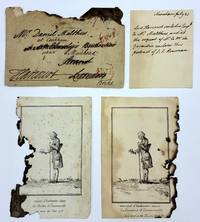
17791748Original manuscript / ink drawing. c.1779-1788. Pen and ink portrait of Jean Jacques Rousseau in the garden at Ermenonville titled beneath "venant d'herboriser dans les Jardins d'Ermenonville au mois de Juin 1778" along with a printed version of the image signed Mayer Georg Friedrich Meyer engraved by J. M. Moreau in 1779. Each 15 x 10cm. Accompanied by an ink manuscript letter 10.5 x 8cm headed "Nuneham July 21" presenting the images: "Lord Harcourt sends his compts. to Mr. Malthus and at the request of Mr. le Mqs. de Girardin encloses this portrait of J: J: Rousseau". Contained within the original postal cover addressed to Mr. Daniel Malthus redirected from his London address to Cookham signed at the foot by Harcourt under the parliamentary privilege franking system with additional "free" handstamps to the front panel and further postal markings to the reverse the specific types of postal markings on the cover indicate a date range of 1779-1788. The ink portrait engraved portrait and postal cover all have historical burn marks and associated loss as well as toning and light foxing; the letter remains in good order. A fascinating and intimate gift linking several late eighteenth-century intellectuals all connected to the French philosopher Jean Jacques Rousseau in the form of two portraits of the philosopher one ink one engraved sent from Rousseau's last pupil René de Girardin Marquis of Vauvray 1735-1808 via the radically-inclined politician and gardener George Harcourt 2nd Earl Harcourt 1736-1809 to the father of the famous economist Thomas Malthus Daniel Malthus 1730-1800 himself a friend of Rousseau.</p><p>The present portrait depicts Rousseau in the final weeks of his life 'botanizing' in the garden at Ermenonville the first French landscape garden created by his pupil René de Girardin who here sends the portrait. Ermenonville was itself inspired by Rousseau's ideas created by Girardin as an illustration of his philosophical and social beliefs regarding the place of man in nature. Within the garden Girardin began construction of a house for Rousseau modelled after the "Élysée" of Julie in Rousseau's novel <em>La Nouvelle Héloïse</em>. Rousseau himself visited the garden in May 1778 staying in a small thatched cottage where he remained until his death in July that year. Girardin subsequently made a tomb for Rousseau at Ermenonville which became a destination of pilgrimage for his admirers until his body was re-interred at the Pantheon in Paris in October 1794. Following Rousseau's death Girardin and two other of his friends of prepared a complete edition of his works using the manuscripts of some of his most important writings including <em>Les Confessions </em>and <em>Les Rêveries du promeneur solitaire</em> which he had left behind at Ermenonville. This new edition was published in Geneva between 1780 and 1782 and contributed greatly to the spread of Rousseau's ideas throughout France and beyond in the years leading up to the French Revolution.</p><p>The original drawing of Rousseau at Ermenonville was executed by the German artist Georg Friedrich Meyer 1733-1779 who also resided with Girardin at Eremenonville during his final years and where he became well acquainted with Rousseau. Other similar versions of this drawing by Meyer exist one being in the collection of the Fine Art Museum of San Francisco and it is unclear as to whether the present pen and ink drawing is an original work by Meyer or a contemporary copy of the engraving - either way its origin from the hands of Girardin himself provide it with sufficient interest. </p><p>The present two portraits subsequently made their way to the politician George Harcourt 2nd Earl Harcourt previously Viscount Nuneham a supporter of John Wilkes friend of Catherine Macaulay opponent of the war against the American colonies and pioneering garden designer. Here he apparently acted as an intermediary in this distinguished friendship circle sending the pictures on to Daniel Malthus - enlightened gentlemen friend of David Hume and Rousseau and father to Thomas Malthus.</p><p>Daniel Malthus had first become acquainted with Rousseau when he visited him at Môtiers in May 1764. He later invited Rousseau and his wife Thérèse to stay at his estate "The Rookery" near Dorking Surrey during the couple's visit to England in 1766 with Malthus hoping to find them a place to settle nearby. They visited the Malthus home for a day with Hume about three weeks after Thomas's birth but ultimately settled in Derbyshire for the remainder of their visit. Daniel and several family members subsequently went north to visit Rousseau joining him on botanical expeditions - a shared passion. Rousseau and Malthus maintained a lifelong correspondence and botanical exchange with the pair enthusiastically swapping English and French literature botanical specimens and philosophical musings. Later in life Rousseau would divide his personal herbarium among his friends sending parts of it to Daniel who also ultimately purchased his botanical library.</p><p>Daniel Malthus was - like Girardin - a dedicated Rousseauist using like many enlightened families of the period Rousseau's <em>Émile</em> as a guide to the education of his children; as he described in a letter to Rousseau of 1768 his children botanized in their local area went on nature walks carried out farm work and conducted their own little experiments. Indeed in his last known letter to Rousseau he declared "if I am ever known it will be as the friend of Rousseau". He would however ultimately be best known by his progeny Thomas who would go on to famously argue against the writings of the thinkers who proclaimed humanity's perfectibility preferred by his father including Rousseau William Godwin and the Marquis de Condorcet. Regardless of this Daniel keenly supported his adult son's endeavours with Thomas's earlier unorthodox education itself also having played a key role in shaping his knowledge of natural law and mathematics. MacDonald J. Marc "Malthus and the Philanthropists 1764–1859: The Cultural Circulation of Political Economy Botany and Natural Knowledge" Social Sciences 2017 61 4. [Original manuscript / ink drawing]. unknown
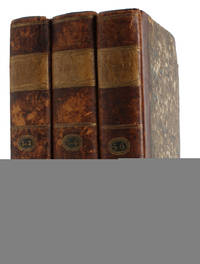
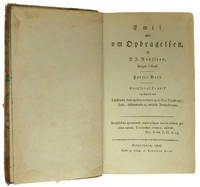
179660926Kjøbenhavn Copenhagen Sebastian Popp 1796 - 99. 8vo. Bound in three uniform contemporary half calf bindings with gilt title- and tome-labels to spines. Spines with some wear but overall nice and tight. Internally very nice and clean. Printed on good paper. Contemporary owner's inscription to front free end-papers. XXX 2 336 pp. 8 346 pp. 2 368 pp. 372 pp. XXVI 352 pp. 324 pp. <br/><br/><em>Rare first edition of the first Danish translation of Rousseau's monumental work Emilius or an Essay on Education being one of the absolutely most important and influential works on education. Virtually no work has had as great an impact on paedagogics as this one. Being one of the most influential thinkers of the 18th century Rousseau is considered one of the indirect causes of the French Revolution. In Rousseau one certainly finds one of the most influential spokesmen for 18th century thought and it is primarily the thoughts of him and Voltaire that are put into action with the Revolution. Not only in France can the effects of his philosophy and thoughts on upbringing and education be clearly seen; -his ideas were of decisive character to the generation of artists writers poets philosophers etc. in the beginning to middle of the 19th century which seminally affects Danish thought as it is in this period that our most important and famous cultural personas are being influenced e.g. H.C. Andersen and Søren Kierkegaard; thus this first Danish translation is of great importance and interest. In Danish literature there is talk about the Rousseauan spirit and it is in this spirit that the entire literary production of H.C. Andersen can be viewed -directly or indirectly. Rousseau's three main thoughts in Émile - on the childlike on the natural and on simple religious faith - fits like a glove on the main messages and morals of H.C. Andersen's works.Søren Kierkegaard is known to have owned a copy of Rousseau's Émile in French as well as a copy of this first Danish translation see "Auktionsprotokol over Søren Kierkegaards Bogsamling" no. 941-43. As opposed to H.C.A. though the philosophy and educational program of Rousseau does not correspond with the Christianity of Kierkegaard who however quotes and comments on Rousseau and his writings on several occasions in his diaries.In Émile Rousseau poses an entirely new approach to education and the upbringing of children. His thoughts were exceedingly controversial the work was burnt by the executioner immediately after its first appearance and Rousseau had to flee the country due to a warrant for his arrest. There is no need to say that these new thoughts were also widely influential on Danish thought and this especially after the appearance of the Danish translation 34-37 years after the French original. Not only Kierkegaard and H.C.A. were influenced by this great thinker so were the likes of Ingemann one of our greatest poets."The first and last of these i.e. Héloise and Émile with their sentimental expression of deism gave much offence and Rousseau like Voltaire was forced to flee to Prussia. Restless and locally unpopular he fled again to England where he had a great welcome. Hume who had offered him asylum looked after him patiently." PMM 207 Printing and the Mind of Man. Bibliotheca Danica IV:1004. </em> unknown
179629682Kbh. Copenhagen Sebastian Popp 1796 - 99. 8vo. Bound in six cont. uniform hcalfs w. gilt title- and tome-labels on backs backs w. gilt lines. Backs and corners w. traces of use but a fine and clean copy on good paper skrivepapir. XXX 336; 8 346; 368; 372; 352; XXVI 324 pp. <br/><br/><em>Rare first edition of the first Danish translation of Rousseau's monumental work Emilius or an Essay on Education being one of the absolutely most important and influential works on education. Virtually no work has had as great an impact on paedagogics as this one. Being one of the most influential thinkers of the 18th century Rousseau is considered one of the indirect causes of the French Revolution. In Rousseau one certainly finds one of the most influential spokesmen for 18th century thought and it is primarily the thoughts of him and Voltaire that are put into action with the Revolution. Not only in France can the effects of his philosophy and thoughts on upbringing and education be clearly seen; -his ideas were of decisive character to the generation of artists writers poets philosophers etc. in the beginning to middle of the 19th century which seminally affects Danish thought as it is in this period that our most important and famous cultural personas are being influenced e.g. H.C. Andersen and Søren Kierkegaard; thus this first Danish translation is of great importance and interest. In Danish literature there is talk about the Rousseauan spirit and it is in this spirit that the entire literary production of H.C. Andersen can be viewed -directly or indirectly. Rousseau's three main thoughts in Émile - on the childlike on the natural and on simple religious faith - fits like a glove on the main messages and morals of H.C. Andersen's works.Søren Kierkegaard is known to have owned a copy of Rousseau's Émile in French as well as a copy of this first Danish translation see "Auktionsprotokol over Søren Kierkegaards Bogsamling" no. 941-43. As opposed to H.C.A. though the philosophy and educational program of Rousseau does not correspond with the Christianity of Kierkegaard who however quotes and comments on R. and his writings on several occasions in his diaries.In Émile Rousseau poses an entirely new approach to education and the upbringing of children. His thoughts were exceedingly controversial the work was burnt by the executioner immediately after its first appearance and Rousseau had to flee the country due to a warrant for his arrest. There is no need to say that these new thoughts were also widely influential on Danish thought and this especially after the appearance of the Danish translation 34-37 years after the French original. Not only Kierkegaard and H.C.A. were influenced by this great thinker so were the likes of Ingemann one of our greatest poets."The first and last of these i.e. Héloise and Émile with their sentimental expression of deism gave much offence and Rousseau like Voltaire was forced to flee to Prussia. Restless and locally unpopular he fled again to England where he had a great welcome. Hume who had offered him asylum looked after him patiently." PMM 207 Printing and the Mind of Man. Bibliotheca Danica IV:1004. </em> unknown
1995Atlantic-9780415134378Routledge 1995. Hardcover. New. Routledge hardcover
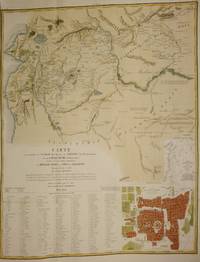
1825M7501Paris: Societe de Geographie 1825. Outer folds reinforced otherwise in very good condition. Notes: This detailed map of present-day Syria and the southernmost tip of Turkey contains a massive key in the lower left a large city plan of Aleppo Hhaleb in the lower right and a general map of the region just above the map of Aleppo. Size : 817x646 mm 32.17x25.43 Inches Coloring: Hand Colored Category: Maps Asia Middle East Jordan Syria Lebanon; Societe de Geographie unknown
17552186Amsterdam: Marc Michel Rey 1755. Hardcover. Good. Very early printing of this important masterpiece matches most conditions for a true First Edition but there is no frontispiece it may have been removed in rebinding: three canceled pages; misspelled author's name 'Jaques' appears on title page and at end of dedication; vignettes on title and dedication pages; hand-correction on p11 accent on conforme; ends with Errata/Avis page; no engraving at p258; on bottom edge of p159 'L5' is mismarked 'K5'; page LXV numbered correctly; cancels and hand-corrected accent lead us to believe this is not one of the 'counterfeit' or pirated facsimile editions. 8vo in very old full-leather binding which may be contemporary; 18th-century marbled endpapers all edges gilt dentilles triple gilt rule on boards and raised bands on spine; original blue silk ribbon very fragile; gilt sunflowers in panels on spine; title label has just the letters that would fit so it reads 'Discour/de/Roussea.' Good boards rubbed worn and scraped; edges worn to boards; spine ends chipped bumped and worn; lower left-hand corner of spine tail heavily chipped or eaten away; corners heavily worn to boards and splayed; joints torn; three inch tear to top half of front joint; chip to top third of rear joint; large chip to bottom of rear joint; gilt dulled; old owner's name on title page; pages foxing at its worst on the errata page; pages stiff from rippling; LXX and 262pp with an Avertissement and Question between Dedication Preface and first page and then two pages the Errata and Avis at end. <br/> <br/> Marc Michel Rey hardcover
2657Kbh. Copenhagen: Sebastian Popp 1796-1799. Hardcover. Very Good. Octavo. 6 volumes. I: ii XXX ii 336pp.; II: viii 346pp.; III: 368pp.; IV: 372 iipp.; V: 352pp.; VI: XXVI 3-324pp. First edition of the first Danish translation. Contemporary calf over marbled boards. Bibliotheca Danica I:1004. A very good copy. <br/> <br/> Kbh. [Copenhagen]: Sebastian Popp, 1796-1799. hardcover
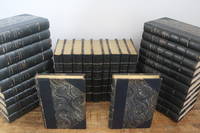
1824B288<p>Complete set in 30 volumes three quarter dark blue nearly black leather binding plus marbled boards and endpapers gilt top edges and raised spines. 1824-1825. Black and white illustrations by Deveria throughout; plates in two states: engraved as what looks to be a sketch or a preliminary version see provided image. <strong>G</strong><strong>ood no dust jackets.</strong> <br /><br />Condition: Light wear to edges corners and raised spines; sunning to fore-edges of some volumes; light rubbing to some of the marbled boards. Some of the leather exterior joints show wear but all of the joints and hinges are quite strong some volumes feel unread. Foxing and offsetting throughout all of the volumes. Gilt top edges are bright and clean; titling on spine is still very readable and attractive. Text in French. <br /><br />Additional pictures are available upon request.<br /><br /><em>This item will require signature upon delivery and it may be shipped in multiple packages.<br /><br /></em>Contents: <br /><br />Tome 1a. "Discours I." pages 1 - 272 1825 <br />Tome 1b. "Discours II." pages 273 - 566. 1825 <br />Tome 2. "Lettre a D'Alembert." 441 pp. 1824<br />Tome 3. "Emile I." 426 pp. Illus. in b&w. 1824<br />Tome 4. "Emile II." 353 pp. Illus. in b&w. 1824 <br />Tome 5. "Emile III." 378 pp. Illus. in b&w. 1824<br />Tome 6. "Contrat Social." 502 pp. 1824.<br />Tome 7. "Lettre a C. De Beaumont / Lettres de la Montagne." 534 pp. 1824<br />Tome 8. "Nouvelle Heloise I." 524 pp. Illus. in b&w. 1824<br />Tome 9. "Nouvelle Heloise II." 380 pp. Illus. in b&w. 1824<br />Tome 10. "Nouvelle Heloise III." 435 pp. Illus. in b&w. 1824<br />Tome 11. "Botanique Theatre." 429 pp. 1825<br />Tome 12. "Melanges." 448 pp. Illus. in b&w. 1824<br />Tome 13. "Dictionnaire de Musique I." 453 pp. 1825<br />Tome 14. "Dictionnaire de Musique II." 461 pp. 1825<br />Tome 15. "Ecrits sur la Musique." 489 pp. Illus. in b&w. plus fold-out map and brief musical transcriptions. 1825.<br />Tome 16. "Partition du Devin du Village." 265 pp. Musical score and poetry. 1825<br />Tome 17. "Confessions I." 475 pp. Illus. in b&w. 1824<br />Tome 18. "Confessions II." 384 pp. Illus. in b&w. 1824<br />Tome 19. "Confessions III." 378 pp. Illus. in b&w. 1824<br />Tome 20. "Dialogues I." 436 pp. 1825<br />Tome 21. "Dialogues II." 357 pp. 1825<br />Tome 22. "Correspondance I." 436 pp. 1824<br />Tome 23. "Correspondance II." 424 pp. 1825<br />Tome 24. "Correspondance III." 492 pp. 1825<br />Tome 25. "Correspondance IV." 443 pp. 1825 <br />Tome 26. "Correspondance V." 428 pp. 1825<br />Tome 27. "Correspondance VI." 405 pp. 1825<br />Tome 28. "Oeuvres Inedites I." 503 pp. 1825<br />Tome 29. "Oeuvres Inedites II." 483 pp. 1825</p> Chez Dalibon, Libraire hardcover
176136972London: Printed for R. Griffiths at the Dunciad and T. Becket and P. A. De Hondt at Tully's Head in the Strand 1761. 1st Edition in English Black. EPISTOLARY FICTION p. 155. Not listed in Grimm's TRANSLATIONS Of FOREIGN NOVELS. Period full calf with gilt decorated spines. Maroon leather title label in second compartment; black leather volume label in third compartment. Bindings as to be expected show some wear with a leather chip from the spine crown of Vol I and heel of Vol III. Faint vertical stress lines to spines. One protruding bifolium from Vol I. Withal a pleasing all-original VG set. 4 xiv xli 1 blank 291 1 blank; 4 285 3; 2 295 1 blank; 2 252 pp. Dialogue with separate dated title leaf. Printer's device to t.p. 12mo. 17 cm x 10 cm. <br/><br/>Rousseau a "Genevan philosopher writer and composer of 18th-century Romanticism of French expression. His political philosophy influenced the French Revolution as well as the overall development of modern political sociological and educational thought." Rousseau's epistolary novel Julie ou la nouvelle Héloïse was first published 1761 … and this the first translation into English was published in the very same year. "The novel's subtitle points to the history of 'Héloïse d’Argenteuil and Peter Abelard' a medieval story of passion and Christian renunciation. The novel was put on the Index Librorum Prohibitorum. Although Rousseau wrote it as a novel a philosophical theory about authenticity permeates through it as he explores autonomy and authenticity as moral values. A common interpretation is that Rousseau valued the ethics of authenticity over rational moral principles as he illlustrates the principle that one should do what is imposed upon him by society only insofar as it would seem congruent with one's 'secret principles' and feelings being constituent of one's core identity. Thus unauthentic behavior would pave the way to self-destruction." Wiki. The novel was extremely popular in its day touted by some as the top 'best seller' of the century. According to Black the novel saw 14 English editions by 1800. Today the first edition somewhat uncommon on the market. Printed for R. Griffiths at the Dunciad, and T. Becket and P. A. De Hondt, at Tully's Head, in the Strand hardcover books