17 688 résultats
1861761421861. RICHARDSON David. Richardson's Virginia & North Carolina Almanac for the Year of Our Lord 1862 . Calculated by David Richardson of Louisa County Va. Richmond VA: A. Morris 1861. 1st ed. 35 pp. Orig. printed self-wrappers. Disbound housed in custom cloth-backed folding box. Early owner's signature on front wrapper very old waterstaining else a very good copy. P&W 5780 locates 5 copies. Haynes S15136. Thornton 14497. unknown
1863761431863. RICHARDSON David. Richardson's Virginia & North Carolina Almanac for the Year of Our Lord 1864 . Calculated by David Richardson of Louisa County Va. Richmond VA: Chas. H. Wynne Steam Book and Job Printing House 1863. 1st ed. 35 pp. Orig. printed self-wrappers. Disbound housed in custom cloth-backed folding box. Scattered foxing and toning else a very good copy. P&W 5794. Haynes S15136. Thornton 14497. unknown
1864761441864. RICHARDSON David. Richardson's Virginia & North Carolina Almanac for the Year of Our Lord 1865 . Calculated by David Richardson of Louisa County Va. Richmond VA: Chas. H. Wynne Steam Book and Job Printing House 1864. 1st ed. 35 pp. Orig. printed self-wrappers housed in custom cloth-backed folding box. Disbound. Scattered foxing and toning marginal annotation else a very good copy. P&W 5801. Haynes S15136. Thornton 14497. unknown
1858302Boston: Higgins Bradley & Dayton 1858. 8vo. 200 x 120 mm. 8 x 5 inches. xxv 9-345 pp. plus 17 pp. directory of leather companies; same collation as Sabin and the copy at the University of Delaware. Original brown cloth title in gilt on spine; cloth boards discolored otherwise a sound and attractive copy. First and only edition. Encyclopedic work on the leather and shoe trade that includes detailed historical information of the manufacture of boots and shoes. Richardson text also acts as a guide or manual to techniques of the trade and offer opinions on the machinery required for fine finished products. He includes information on both English and French styles of shoes and provides patterns for manufacture. Reviewed at the time by G. S. Hillard and called "an interesting and instructive book." Sabin 71096. Allibone Critical Dictionary of English Literature II p. 1801. 302. Higgins, Bradley & Dayton unknown
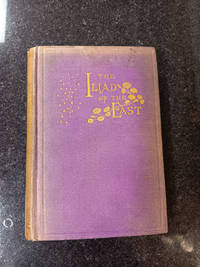
187018228<p>Macmillan 1870. Hardcover. Good. 1st printing with purple cloth bound boards with gilt lettering and decorations on the front cover; a leather panel with gilt lettering is on the spine; this may be a rebound edition; there is fading to the top half inch of the front cover; ex-library book with associated stamps and markings</p> Macmillan hardcover
1888008673New York: G. P. Putnam's Sons 1888. SCARCE in complete two volume set. Published 1888 Vol. I. The Development of American Thought.-- 1889 Vol. II. American Poetry and Fiction. Handsomely bound in contemporary half red morocco over marbled boards gilt lettering back marbled end papers tops gilt. Near Fine a few small rubs to morocco at spines. Richardson's influential full-scale analysis of the history of American literature his most important work. . Early Printing. Half Morocco. Near Fine. 8vo - over 7¾" - 9¾" tall. G. P. Putnam's Sons Hardcover books
185381247London: Chapman & Hall 1853. 1st Edition. Hardcover. Good. 2 vols. folding map xxviii 343 viii 359p. Brown cloth. 20cm. Ex lib. Boston College. Library markings include internal stampings bookplates etc. as well as a library stamp on page edge and a large black rectangular mark toward bottom of both backstrips beneath which are remnants of an old label. Head of backstrip chipped on Vol. II. Contents sound and clean. Edited from Richardson's journals by Bayle St. John. <br/><br/> Chapman & Hall hardcover books
1858302Boston: Higgins Bradley & Dayton 1858. 8vo. 200 x 120 mm. 8 x 5 inches. xxv 9-345 pp. plus 17 pp. directory of leather companies; same collation as Sabin and the copy at the University of Delaware. Original brown cloth title in gilt on spine; cloth boards discolored otherwise a sound and attractive copy. First and only edition. Encyclopedic work on the leather and shoe trade that includes detailed historical information of the manufacture of boots and shoes. Richardson text also acts as a guide or manual to techniques of the trade and offer opinions on the machinery required for fine finished products. He includes information on both English and French styles of shoes and provides patterns for manufacture. Reviewed at the time by G. S. Hillard and called "an interesting and instructive book." Sabin 71096. Allibone Critical Dictionary of English Literature II p. 1801. 302. Higgins, Bradley & Dayton unknown books
1990RSELCOL00crLabyrinthos 1990. Very Good. Seler Eduard. Collected Works in Mesoamerican Linguistics and Archeology. 4 of 5 volumes. Thompson editor J. Eric S.; Richardson editor Francis B. Culver City California: Labyrinthos 1990. Indexed. Illustrated. 4to. 4 green clothbound volumes. Book condition: Very good. Each volume has gently rubbed and bumped edges as well as the former owners' names in ink on their front free endsheet. Includes volumes I II III and V missing Volume IV. Volumes II III and V contain inlaid interim indexes. Each volume is filled with black-and-white illustrations and photographs of Mesoamerican artwork maps and archeological sites. Labyrinthos hardcover
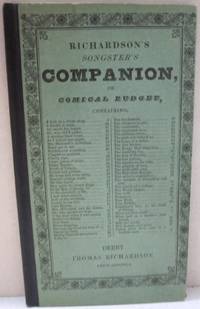
184153879Derby: Thomas Richardson 1841. Hardcover. Near Fine. 18 x 10.5 cm. 12mo. 5 - 26 pages. Original stiff green boards. Fold-out hand colored woodcut "The Steam Arm" - T. Richardson Derby frontispiece. Previous owner's bookplate inside front cover. Book and plate are remarkably well preserved. Very uncommon. Thomas Richardson hardcover
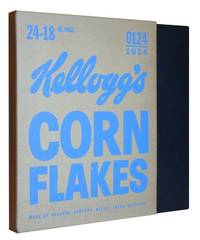
Alibris.0031666Hysteric Glamour. Hard cover. Fine in very good dust jacket. The book sleeve is scratched. 120 p. Includes illustrations. The book measures 10 x 14-1/2 x 1/2 inches. . A Conceptual fashion photography book: the center spread is of 4 photographs divided by grid lines with letters a through d and numbers 1 through 30. The rest of the book consists of enlarged sections of each grid. There is no text other than listing the contributors. The covers repeat the grid without the photographs. A reflective paper sleeve is included embossed with "Hysteric Glamour" which has a fun-house mirror effect when removed from the book. No nudity unlike most of Richardson's works. No stated date of publication. Hysteric Glamour hardcover
1876elala208Darlington: Bailey & London: Simpkin Marshall & Co. 1876. 1876. oblong folio. ff. 21title & descriptive text the latter printed on verso only. 21 humourous lithographed plates. original cloth-backed printed wrs. rubbed & soiled some thumb-soiling in margins minor pinhole worming in last third of text. First Edition. 1st Edition. Hardcover. Darlington: Bailey & London: Simpkin, Marshall, & Co., 1876. Hardcover
2023SKU0596163McGraw Hill 2023-09-01. hardcover. Good. 0x0x0. Textbook May Have Highlights Notes and/or Underlining BOOK ONLY-NO ACCESS CODE NO CD Ships with Tracking McGraw Hill hardcover
1764FB367 (1 to 6) /4C<p>Leather binding with black and red title plates.</p><p>Volumes I. to VII. but <strong>volume III. is missing.</strong></p><p><strong>A noteworthy collection.</strong> <strong><em>Clarissa; or The History of a Young Lady: Comprehending the Most Important Concerns of Private Life. And Particularly Shewing the Distresses that May Attend the Misconduct Both of Parents and Children In Relation to Marriage</em></strong> is an epistolary novel by English writer Samuel Richardson published in 1748. It tells the tragic story of a young woman Clarissa Harlowe whose quest for virtue is continually thwarted by her family. The Harlowes are a recently wealthy family whose preoccupation with increasing their standing in society leads to obsessive control of their daughter Clarissa. It is considered one of the longest novels in the English language based on estimated word count. It is generally regarded as Richardson's masterpiece. In 2015 the BBC ranked <em>Clarissa</em> 14th on its list of the 100 greatest British novels. In 2013 <em>The Guardian</em> included <em>Clarissa</em> among the 100 best novels written in English.</p><p><strong>PLOT SUMMARY </strong> Robert Lovelace a wealthy "libertine" and heir to a substantial estate begins to court Arabella Clarissa's older sister. However she rejects him because she felt slighted by his more ardent interest in her parents approval than in her. Lovelace quickly moves on from Arabella to Clarissa much to the displeasure of Arabella and their brother James. Clarissa insists that she dislikes Lovelace but Arabella grows jealous of Lovelace's interest in the younger girl. James also dislikes Lovelace greatly because of a duel which had occurred between the two of them. These feelings combine with resentment that their grandfather had left Clarissa a piece of land and lead the siblings to be aggressive to Clarissa. The entire Harlowe family is in favour of her marrying Roger Solmes however Clarissa finds Solmes to be unpleasant company and does not wish to marry him either. This makes her family suspicious of her supposed dislike of Lovelace and they begin to disbelieve her. The Harlowes begin restricting Clarissa's contact with the outside world by forbidding her to see Lovelace. Eventually they forbid her to either leave her room or send letters to her friend Anna Howe until Clarissa apologises and agrees to marry Solmes. Trapped and desperate to regain her freedom Clarissa continues to communicate with Anna secretly and begins a correspondence with Lovelace while trying to convince her parents not to force her to marry Solmes. Neither Clarissa nor her parents will concede. They see her protests as stubborn disobedience and communication between parents and daughter breaks down. Lovelace convinces Clarissa to elope with him to avoid the conflict with her parents. Joseph Leman a servant of the Harlowes shouts and makes noise so it may seem like the family has awoken and discovered that Clarissa and Lovelace are about to run away. Frightened of the possible aftermath Clarissa leaves with Lovelace but becomes his prisoner for many months. Her family now will not listen to or forgive Clarissa because of this perceived betrayal despite her continued attempts to reconcile with them. She is kept at many lodgings including unknowingly a brothel where the women are disguised as high-class ladies by Lovelace so as to deceive Clarissa. Despite all of this she continues to refuse Lovelace longing to live by herself in peace. Lovelace is too cynical to believe that virtuous women exist and he is desperately trying to seduce Clarissa despite declaring that he loves her. Although he puts her under increasing pressure to submit Clarissa does not waver. Under the pretence of saving her from a fire Lovelace at last gains entry to Clarissa's bedroom but she thwarts his attempted assault with vigorous resistance. She promises under threat of rape to forgive and marry him. However she considers this promise made under duress as void; soon after she makes her first successful escape from Lovelace concealing herself in lodgings in Hampstead. Enraged by Clarissa's flight Lovelace vows to seek revenge. He hunts her down to the lodgings where she is hiding and rents all the rooms around her effectively trapping her. He hires people to impersonate respectable family members of his in order to gain her trust. During this time he intercepts a letter to Clarissa from Anna Howe warning her of true extent of his deception and roguery. He commits forgery to put an end to the communication between them. Eventually he persuades Clarissa to accompany his imposter-relatives out in a carriage and thus carries her back to the disguised brothel. There with the assistance of the prostitutes and brothel madam he first drugs and then rapes her. After the rape Clarissa suffers a loss of sanity for several days presumably brought on by her extreme distress as well as the dose of opiates administered to her. This temporary insanity is represented in her "mad letters" by the use of scattered typography. When Clarissa recovers her senses Lovelace soon realises that he has failed to "subdue" or corrupt her; instead she is utterly repulsed by him repeatedly refusing his offers of marriage despite her precarious situation as a fallen woman. She accuses him of deceiving and unlawfully detaining her and insists that he set her free. He continues to claim that the impersonators really were his family members and that his crime was simply one of desperate passion. He tries to convince her to marry him alternating between threats and professions of love. She steadfastly resists and attempts several more escapes. Lovelace is forced to concede that Clarissa's virtue remains untarnished but he begins to convince himself that the "trial" was not properly conducted. Since Clarissa was drugged at the time she could consent nor refuse. He decides to orchestrate a second rape but without drugs. Pretending to be angered by the discovery that she has bribed a servant to help her escape Lovelace begins to menace Clarissa intending to escalate the confrontation to physical violence but she majestically condemns his premeditated villainy and threatens to kill herself with a penknife should he proceed. Utterly confounded by her righteous indignation and terrified by her willingness to die for her virtue Lovelace retreats. More intent than ever to make Clarissa his wife Lovelace is called away to attend his dying uncle from whom he is expecting to inherit an Earldom. He orders the prostitutes to keep Clarissa confined but well-treated until he returns. Clarissa escapes however. The brothel madam is able to have her jailed for a few days for unpaid bills and Clarissa finds sanctuary with a shopkeeper and his wife when she is released. Corresponding with Lovelace's real family she discovers for herself the true extent of his deception. She lives in constant fear of again being found by him who continues to send her marriage offers through his disreputable friend John Belford as well as through his own family members. Clarissa is determined not to accept. She becomes dangerously ill from the stress rarely eating convinced that she will die soon. Her illness and probable anorexia progress. She and Belford become correspondents she appointing him executor of her will as she puts all of her affairs in order to the alarm of the people around her. Belford is amazed at the way Clarissa handles her death and laments what Lovelace has done. In one of the many letters sent to Lovelace he writes "if the divine Clarissa asks me to slit thy throat Lovelace I shall do it in an instance." Eventually surrounded by strangers and her cousin Col. Morden Clarissa dies in the full consciousness of her virtue and trusting in a better life after death. Belford manages Clarissa's will and ensures that all her articles and money go into the hands of the individuals she desires should receive them. Lovelace departs for Europe and continues to correspond with Belford. Lovelace learns that Col. Morden has suggested he might seek Lovelace and demand satisfaction on behalf of his cousin. He responds that he is not able to accept threats against himself and arranges an encounter with Col. Morden. They meet in Munich and arrange a duel. Morden is slightly injured in the duel but Lovelace dies of his injuries the following day. Before dying he says "let this expiate!" Clarissa's relatives finally realise they have been wrong but it comes too late. They discover Clarissa has already died. The story ends with an account of the fate of the other characters.</p><p><strong>Samuel Richardson</strong> baptised 19 August 1689 – 4 July 1761 was an English writer and printer best known for three epistolary novels: <em>Pamela; or Virtue Rewarded</em> 1740 <em>Clarissa: Or the History of a Young Lady</em> 1748 and <em>The History of Sir Charles Grandison</em> 1753. He printed almost 500 works in his life including journals and magazines working periodically with the London bookseller Andrew Millar. Richardson had been apprenticed to a printer whose daughter he eventually married. He lost her along with five sons but remarried and had four daughters who reached adulthood but no male heirs to continue the print shop. As it ran down he wrote his first novel at the age of 51 and immediately joined the admired writers of his day. Leading figures he knew included Samuel Johnson and Sarah Fielding the physicians Behmenist and George Cheyne and the theologian and writer William Law whose books he printed. At Law's request Richardson printed some poems by John Byrom. In literature he rivalled Henry Fielding; the two responded to each other's literary styles.</p> J Rivington.
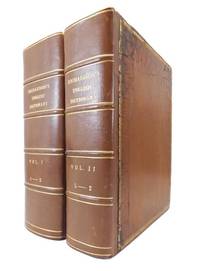
25065London: William Pickering 1839. English Dictionary EARLY PRINTING. Complete in two volumes. Quarto 29 x 24cm pp.8 72 1184 4; pp.8 1185-2223 5. Contemporary lightly-diced brown calf boards with gilt rule recently re-backed to-style in tan calf with raised bands and gilt titles. All edges speckled red; textured orange-patterned endpapers. Spotting and a few minor water stains to blanks and light spotting to margins throughout. Heavy wear to original boards with repairs to corners. Restored to an attractive practical condition. Very good. An etymological dictionary first published between 1835 and 1837 and the first major advance from Johnson's efforts in the mid eighteenth century. London: William Pickering, 1839 unknown
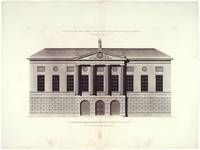
180820789891808. Printed By T. Bensley . For The Author 1808. Three aquatint plates 522 x 692 mm. sheet size and 522 x 360 mm. sheet size showing The Shire Hall Stafford designed by John Harvey -c. 1835. Colvin notes that he 'was probably the pupil and certainly the assistant of Samuel Wyatt'. The Shire Hall was Harvey's first major commission and was jointly designed with Wyatt.Elevation 367 x 550 mm. to the plate mark plan of the basement 439 x 265 mm. to the plate mark plan of the principal story 439 x 265 mm. to the plate mark. unknown
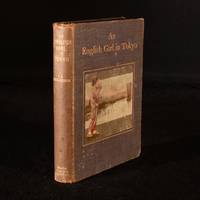
1913983Y12London: Heath Cranton and Ouseley Ltd 1913. First edition. Cloth. Good. 7.5" by 5.5". Not Stated . A scarce illustrated novel set in Tokyo during the Russo-Japanese War inspired by the author's own service as a nurse in Japanese hospitals. The first edition of this scarce volume.Undated dated from a copy held at the British Library. In the publisher's original cloth binding with a coloured illustration tipped-in to the front board.This novel centres a girl named Violet Courtley who stays in Tokyo to visit her brother one of the Secretaries at the British Embassy. The environments people and customs are likely inspired by the experiences of the author Teresa Eden Richardson. As well as an author she was a distinguished nurse who earned the Japanese Red Cross Order among other awards. The Red Cross Society of Japan is described throughout this novel referencing the author's own time in Japanese Hospitals during the Russo-Japanese War. Illustrated with a tipped-in colour frontispiece and six monochrome plates. In the publisher's original cloth binding with a coloured illustration tipped-in to the front board. Externally with rubbing to the extremities and fading to the spine. Spots and marks to the boards. Bookplate of one Cliff Parfit to the front pastedown. Internally firmly bound. Pages are bright and generally clean with offsetting to the title page and endpapers. With the odd spot. Good Heath Cranton and Ouseley, Ltd hardcover
ANAIS-0847832775Gagosian / Rizzoli. hardcover. Good. 9.5X6.5X1.5. Buy with confidence. Excellent Customer Service & Return policy. Gagosian / Rizzoli hardcover
2022Discovery-9783031117770Springer 2022. Paperback. New. Springer paperback
2009x-3642006450Springer Verlag 2009. Hardcover. New. 1st edition. 360 pages. 9.53x6.30x1.18 inches. Springer Verlag hardcover
180128522London Murray and Highley 1801. Small 4to. A little later hcalf gilt titlelabel renewed. Back gilt with faint discolouring. Endpapers renewed. XII212 pp. <br/><br/><em>Scarce second edition. - Lowndes IV:2088 calls it "A work of merit". - Schnurrer. Bibliotheca Arabica No 115. </em> unknown
180128522London, Murray and Highley, 1801. Small 4to. A little later hcalf, gilt titlelabel renewed. Back gilt with faint discolouring. Endpapers renewed. XII,212 pp.
176369841763 A Amsterdam [i.e. Paris], s. éd, 1763. 8 tomes rel. en 4 vol. in-12: 10 x 17 cm. I/ 2 ff., xii-175 pp., 2 ff., 208 pp.; II/ 2 ff., 196 pp., 2 ff., 180 pp.; III/ 2 ff., 196 pp., 2 ff., 229 pp.; IV/ 2 ff., 192 pp., 2 ff., 254 pp. Nouvelle impression de la traduction de lAbbé Prévost de l'anglais de Samuel Richardson après l'originale de 1755 (Barbier, II, 2ed., 1823: no. 12802). Reliures de l'époque en basane imitant le veau moucheté. Dos à nerfs avec pièces de titre en maroquin rouge, pièces de tomaison en maroquin noir et caissons à fers dorés. Tranches rouges. Papier parfois insolé mais propre. Dos frottés par endroits, not. aux pièces de titre. Charmant ensemble.
1969123a9582New York: Greenwood Press 1969. Book. Good. Hardcover. Facsimile Reprint. 8vo - over 7¾" - 9¾" tall. Volume I - 413 pages plus fold-out map. Volume II - 426 pages. Includes appendix on the physical geography of North America. Both volumes clean bright and unmarked with lightest wear. Possibly unread. Excellent copy. Greenwood Press Hardcover