Vieira Pereira, Hugo JuarezBiblio.com

20 673 résultats
6209123716.Gpaperback. Good. Access codes and supplements are not guaranteed with used items. May be an ex-library book. paperback
6209007112.Gpaperback. Good. Access codes and supplements are not guaranteed with used items. May be an ex-library book. paperback
6209007120.Gpaperback. Good. Access codes and supplements are not guaranteed with used items. May be an ex-library book. paperback
6209007058.Gpaperback. Good. Access codes and supplements are not guaranteed with used items. May be an ex-library book. paperback
6209007074.Gpaperback. Good. Access codes and supplements are not guaranteed with used items. May be an ex-library book. paperback
6209110916.Gpaperback. Good. Access codes and supplements are not guaranteed with used items. May be an ex-library book. paperback
6209007066.Gpaperback. Good. Access codes and supplements are not guaranteed with used items. May be an ex-library book. paperback
20182-6139672414Novas Edições Acadêmicas 2018. Paperback. New. 60 pages. 8.66x5.91x0.14 inches. Novas Edições Acadêmicas paperback
200689579Paris Musees. New. 2006. Paperback. 2879008867 . FREE UPGRADE to Courier/Priority Shipping Upon Request - IN STOCK AND IMMEDIATELY AVAILABLE FOR SHIPMENT - Flawless copy brand new pristine never opened -- Text in French. 136 pp. ; 151 ills. -- with a bonus offer-- . Paris Musees paperback
0365619426.Gpaperback. Good. Access codes and supplements are not guaranteed with used items. May be an ex-library book. paperback
43552ALBOR LIBROS. new. ALBOR LIBROS unknown
1015904041.Ghardcover. Good. Access codes and supplements are not guaranteed with used items. May be an ex-library book. hardcover
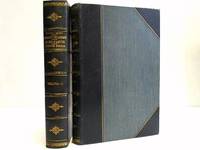
2L5988L'Imprimerie Nationale Paris 1908/1911. 591/ 594 Seiten Titel mit gestochenem Verlagssignet; einige Abbildungen im Text Halbleder auf je 5 Schmuckbünden mit goldgeprägtem Rückenschmuck. -Oeuvres completes de Victor Hugo No. 2 et 7. Enthalten: Theatre No. 2. Marion de Lorne. Le Roi s'Amuse. Lucrece Borgia. Roman No. 7. Les travailleurs de la mer/ Beide Bände mit der 3 nummeriert. Eins von 5 Exemplaren auf Japan-Papier gedruckt/ Wohl erhalten- unknown
1017089787.Ghardcover. Good. Access codes and supplements are not guaranteed with used items. May be an ex-library book. hardcover
B9781019419045Hardback. New. hardcover
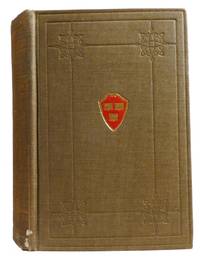
1917332402New York: P. F. Collier & Son Company 1917. De Luxe Edition. Hardcover. Very Good in boards. Gilded top text block edge. Shelfwear on panel corners and spine crown and heel. Toning on spine. White out marks on spine heel.; From Set No. 742.; Harvard Classics Shelf of Fiction. P. F. Collier & Son Company hardcover
ria9798462797576_inpPaperback. New. New Book; Fast Shipping from UK; Not signed; Not First Edition; The Man Who Laughs is a novel by Victor Hugo originally published in April 1869 under the French title L'Homme qui rit.The Man Who Laughs is a romantic masterpiece of a man whose face has been disfigured into a laughing mask in childho paperback
B9798462797576Paperback / softback. New. paperback
0484592777.Ghardcover. Good. Access codes and supplements are not guaranteed with used items. May be an ex-library book. hardcover
0332855090.Ghardcover. Good. Access codes and supplements are not guaranteed with used items. May be an ex-library book. hardcover
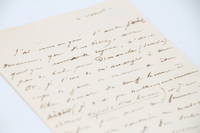
183087775Paris 1830. Fine. Paris s. d. ca 1830 12 x 18.50 cm 1 page Autograph letter signed by Victor Hugo to his friend H. de Cambier 20 lines written in black ink on a bifolium autograph address on the verso of the final leaf. Splendid and likely unpublished letter from Victor Hugo inviting his correspondent to the famed Romantic 'Cénacle' gatherings at the Bibliothèque de l'Arsenal a veritable literary institution in the 1830's. ""This Saturday the 6th I noticed the other evening Sir that you expressed with some regret not having a ball to attend on Sunday tomorrow. Now I have managed to arrange my guard duty so as to be free tomorrow from nine o'clock to midnight alas I could not obtain more than six hours and I am taking advantage of it to take my wife to a small masquerade party at Nodier's. If you would like to come with us we would be delighted and Nodier too. To do so you would need to be at my home at nine o'clock the hour I myself will return. Answer me this morning and believe in all my friendship. Vr Hugo."" ""In the drawing room of the Arsenal library where he had been head librarian since 1824 Charles Nodier hosted every Sunday evening the entire Romantic literary and artistic elite during the final years of the Restoration and the early years of the July Monarchy. In addition to Hugo one of the most regular attendees and later Musset Dumas and Balzac the salon gathered ""representatives of all the book professions from conception to illustration publication and criticism . in a friendly and convivial atmosphere"" Marta Sukiennicka. Hugo invites his correspondent to a masked ball held on one of those celebrated Sundays. Far from being a mere social occasion the 'Cénacle of the Arsenal' salon was one of the most vibrant centers of the Romantic movement. Having succeeded in excusing himself from his National Guard duties he was a sub-lieutenant in 1830 Hugo had likely arranged for a replacement to take his watch that evening; even the most illustrious of writers were not exempt from such military service. A few years later Balzac dodged his National Guard shifts and was imprisoned twice in 1836 and 1839. unknown
185670986Hauteville House Hauteville House 1856. Fine. Hauteville House Hauteville House 11 et 13 mai 1856 14 x 21.50 cm une feuille Autograph letter signed by Victor Hugo dated 13 May 1856 following an unpublished letter from Madame Victor Hugo to Madame David d'Angers dated 11 May. 4 pages on a folded sheet with watermark ""Barbet Smith Street Guernesey"". Published in Correspondance de Victor Hugo Paris year 1856 p. 246 In this letter imbued with the apparitions and specters that haunt the recently published Contemplations Victor Hugo addresses the widow of his great friend the sculptor David d'Angers fervent republican and artist particularly admired by the Romantics. In the midst of a mystical crisis Hugo speaks to the shadow of the sculptor to whom he dedicated sublime poems in Les feuilles d'automne as well as Les rayons et les ombres and requests from his widow his favorite portrait a marble bust once sculpted by David d'Angers. After the expulsion of the exiles from the island of Jersey Victor Hugo purchased Hauteville House thanks to the success of Contemplations and sadly learned of the death of a dear friend. He writes to the sculptor's widow on the same sheet as his wife Adèle also connected with the family of David d'Angers creator of a medallion in her likeness: ""You are the widow of our great David d'Angers and you are his worthy widow as you were his worthy wife"". The renowned sculptor had already formed bonds at Nodier's first romantic salon at the Arsenal and visited Hugo almost daily in the late 1820s in the Bonapartist and good-natured atmosphere of rue Notre-Dame des Champs in the company of the Devéria brothers Sainte-Beuve Balzac Nanteuil and Delacroix. In 1828 the writer had happily posed in David d'Angers' studio on rue de Fleurus for a medallion then a bust which had been followed by two sublime poems celebrating the sculptor's talent in Les Feuilles d'Automne and Les rayons et les ombres. Of all his numerous portraits he cherished above all others his marble bust signed David d'Angers and does not hesitate to request it from his widow: ""Before long perhaps madame my family will ask you to return this bust which is my figure which is little but which is a masterpiece by David which is everything. It is him even more than me and that is why we want to have it among us"". From these posing sessions with the sculptor arose fruitful aesthetic and political conversations where their common aversion to the death penalty was affirmed. They witnessed the chaining of galley slaves who were joining Toulon from Paris described by Hugo in two chapters of Dernier jour d'un condamné. A victim of exile like Hugo David d'Angers had returned to Paris before joining the world of the dead: ""My exile is like neighbor to his tomb and I see distinctly his great soul outside this world as I see his great life in the stern history of our time"". The ""great life"" of David d'Angers was devoted to shaping the effigies of illustrious men through a subtle balance of resemblance and idealization. The sculptor finally takes his place in Victor Hugo's personal pantheon he who had adorned the pediment of the true Pantheon of great men where the writer rests today: ""David is today a figure of memory a renown of marble an inhabitant of the pedestal after having been its craftsman. Today death has consecrated the man and the sculptor is statue. The shadow he casts upon you madame gives your life the form of glory"". It was indeed in the shadow of great men that Hugo lived his exile in Jersey far from the tumult of the capital and in the silence punctuated by sea spray striking the windowpanes. Hugo had plunged into the occult and spoke to the departed: ""David is one of the shadows to whom I speak most often shadow myself"" he declares recalling the final poem of Contemplations ""Ce que dit la bouche d'ombre"" dictated to the poet through the spiritualist process of ""turning tables"". Then at the height of their popularity the tables were practice unknown
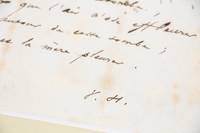
1840878291840. Fine. ""Spare still the mother vainly weepingO'er baby lost not long a-sleeping."" s.d. 21 janvier 1840 21.20 x 26.70 cm un feuillet sous cadre Autograph poem by Victor Hugo signed V. H. four stanzas written black ink on a leaf. Blind stamp of the city of Bath in the lower left-hand corner. Some folds small traces of foxing along the folds a few pale stains to the lower right margin not affecting the text. A few very small dark spots in the lower right margin one affecting a single letter of the word retombe. Original manuscript and earlier version of Victor Hugo's poem published as Écrit sur le tombeau d'un petit enfant au bord de la mer Baby's seaside grave in Les Rayons et les Ombres XXXVIII Paris Delloye 1840. Hugo wrote this magnificent eulogy in memory of his great friend Auguste Vacquerie's young nephew who died at the age of four years and ten months. The poet had promised a poetic epitaph and personally addressed this manuscript to Vacquerie: Take these verses if you still want them for the tomb of this dear little one Letter to Vacquerie January 21 1840. As Joseph Petrus Christiaan de Boer pointed out There is no sorrow Hugo understood and expressed more delicately than the immense grief that fills the hearts of parents upon the death of a child Victor Hugo et l'enfant 1933 p. 48-49. This poem is the first of a sublime macabre series composed on the occasion of the numerous tragedies suffered by the families of both Victor Hugo and his friend Auguste Vacquerie. The most famous will be Demain dès l'aube. written after the untimely death of Hugo's beloved daughter Léopoldine who drowned alongside Auguste Vacquerie's brother Charles on September 4 1843 shortly after their marriage. Hugo wrote these verses for Charles-Emile Lefèvre the young child of Vacquerie's sister who had succumbed to sudden illness on November 6 1839. On January 21 1840 Hugo sent this manuscript to Vacquerie which includes a variation from the final version published by Delloye on May 16 of the same year: « Vieux lierre frais gazon herbe roseaux corolles ; Église où l'esprit voit le Dieu qu'il rêve ailleurs ; mouches qui murmurez d'ineffables paroles A l'oreille du pâtre assoupi dans les fleurs ; Vents flots hymne orageux chur sans fin voix sans nombre ; Bois qui faites songer le passant sérieux ; fruits qui tombez de l'arbre impénétrable et sombre ; Étoiles qui tombez du ciel mystérieux ; oiseaux aux cris joyeux vague aux rumeurs ' plaintes' in the published version profondes ; froid lézard des vieux murs dans les pierres tapi ; plaines qui répandez vos souffles sur les ondes ; Mer où la perle éclot terre où germe l'épi ; Nature d'où tout sort nature où tout retombe feuilles nids doux rameaux que l'air n'ose effleurer Ne faites pas de bruit autour de cette tombe ; Laissez l'enfant dormir et la mère pleurer. » ' Brown ivy old green herbage new; Soft seaweed stealing up the shingle; An ancient chapel where a crew Ere sailing in the prayer commingle. A far-off forest's darkling frown Which makes the prudent start and tremble Whilst rotten nuts are rattling down And clouds in demon hordes assemble. Land birds which twit the mews that scream Round walls where lolls the languid lizard; Brine-bubbling brooks where fishes stream Past caves fit for an ocean wizard. Alow aloft no lullall life But far aside its whirls are keeping As wishfully to let its strife Spare still the mother vainly weeping O'er baby lost not long a-sleeping.' tr. Nelson Rich Tyerman Hugo sent the manuscript with a touching letter: Here at last my poet is what I have kept you waiting for so stupidly long. . Take these verses if you still want them for the tomb of this dear little one . For my part I do not feel that I have repaid my debt to this angel with so little. I have begun something longer for him that I will one day lay at the feet of his poor mo unknown
1890291980Jules rouff et cie 1890. Etat Correct circa 1890 bords frottés couvertures et tranches ternies intérieur jauni rousseurs dans les plats intérieurs. in12. 1890. Relié. 12 romans en 22 volumes: Toute la Lyre 3 vol. Le Rhin 3 vol. Victor Hugo raconté 3 vol. Pendant l'exil 2 vol. les jumeaux Le pape Amy Robsart Avant l'exil 2 vol. Depuis l'exil Alpes et Pyrénées Bug-jargal Les burgraves Jules rouff et cie unknown
20151-3956976681Literaricon 2015. Paperback. New. 392 pages. German language. 8.27x5.83x0.89 inches. Literaricon paperback