KAFKA, FranzBiblio.com
3 069 résultats
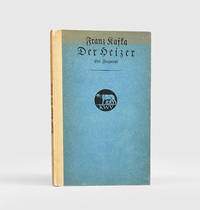
1913191336Leipzig: Kurt Wolff 1913. The story born from his abandoned initial novel First edition of The Stoker the only part of his first novel published during Kafka's lifetime. Believing that "of the entire book only the first chapter stems from an inner truth" Letters p. 218 the author abandoned the novel and issued its introduction here as a separate story. The complete work was edited posthumously by Max Brod as Amerika 1927. Inspired by Dickens the story is unusually optimistic for the period in which Kafka also wrote The Metamorphosis and The Judgment. Octavo. Frontispiece illustrating New York harbour. Text in German. Original japon-backed blue boards spine and front cover lettered in black publisher's device on front cover top edge blue. Pencilled ownership inscription on front free endpaper. Spine and head of front cover toned couple of marks to binding spot of wear to one corner. A very good copy. Franz Kafka Letters to Felice 1973. hardcover
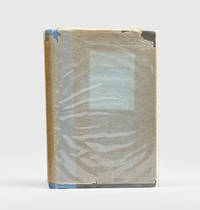
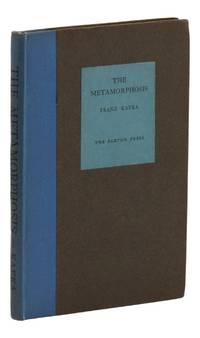
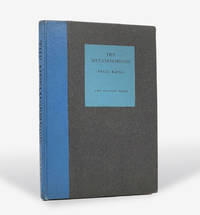
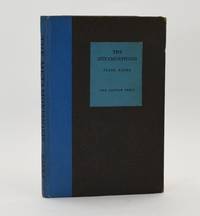
1937189715London: The Parton Press 1937. With the glassine jacket First edition in English of Kafka's famous story in which the protagonist finds himself transformed into an "ungeheuren Ungeziefer" translated here as "some monstrous kind of vermin". Lloyd's translation went quickly out of print in Britain selling similarly poorly to the original publication in German Die Verwandlung 1915. The public's unfamiliarity with the strange world of the Kafkaesque proved a difficult obstacle for the author and his early translators to overcome. In the same year as this publication Willa and Edwin Muir produced the first English translation of The Trial following their version of The Castle 1930 which had been financially unsuccessful. Lloyd's Metamorphosis briefly reappeared when the Vanguard Press published it in America in 1946 before vanishing into the shadow of the Muir translation. It was Lloyd who gave the work its enduring name in English. The Muirs initially used the title "The Transformation" and later reverted back to Lloyd's "The Metamorphosis". Octavo. Original blue quarter cloth spine lettered in black brown board sides with blue paper label on front lettered in black. With original glassine jacket and contemporary bookseller's acetate. Contemporary ownership inscription of literary critic Boris Ford 1917-1998. Spine cocked extremities a little rubbed and bumped; chips to glassine: a very good copy. Flores p. 20. Valentine Cunningham British Writers of the Thirties 1993. hardcover
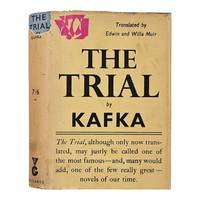
1937262 - 867 - 633<p><em>First printing in the English language in the exceptionally rare dust jacket</em></p><p><strong>Publisher and Year: </strong>London: Victor Gollancz Ltd. 1937</p><p><strong>Edition:</strong> First British edition first printing. Translated by Edwin and Willa Muir this was the novel's first introduction to the English-speaking world. This first British edition preceded the American edition New York: Knopf 1937 by a little more than three months June versus October respectively. Gollancz managed to sell only about a thousand copies of The Trial and therefore decided never to produce another of Kafka's works. The American publisher evidently fared much better with those first printing copies appearing much more frequently on the market today and with subsequent reprints by the same publishing house all the way through the 1950s. The British jacket is exceptionally scarce; we can trace just five appearances of copies in jacket at auction.</p><p><strong>Condition and Description: </strong>Octavo blue cloth lettered in black 285 pp. A sharp copy of the book with clean cloth and tight binding. Mild fading to the spine and edges. Some spotting to the edges of the text block. No writing or underlining. Clean pages with only very occasional and minor imperfections including some modest foxing to the preliminary leaves representative examples shown. The original dust jacket is chipped toned stained and has closed tears repaired on the verso with archival tape as shown in the final four pictures.</p><p><em>"…without having done anything wrong he was arrested one fine morning."</em></p><p><strong>References:</strong></p><p>1. The Yorkshire Post 23 June 1937. The British edition of The Trial listed with a publication date of 28 June</p><p>2. The New York Times 30 Sep 1937. The American edition of The Trial listed with a publication date of 18 October</p><p>Inventory ID: 262 - 867 - 633</p> Victor Gollancz Ltd. hardcover
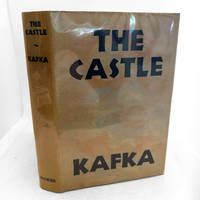
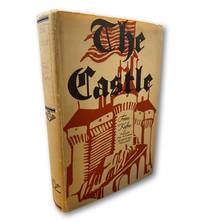
193088212London: Martin Secker 1930. First edition. Hardcover. 1930 First edition in English. 8vo. Original blue cloth lettered in gilt. Dust-jacket priced 7s6d. This stands as the first English translation of any of Kafka's works appearing some seven years before English editions of either <em>The Trial</em> or <em>The Metamorphosis</em> which makes it considerably the rarer book.<br /><br /><em>The Castle</em> was first published in German in 1926. It is the longest and last of Franz Kafka's novels 1883-1924 begun in the final two years of his life and left unfinished at his death. The novel works a quiet transformation on the medieval grail narrative substituting the quest for the grail with its protagonist's dreamlike struggle against a remote and impenetrable bureaucracy - the kind Kafka had encountered at first hand in the unsettled years following the collapse of the Habsburg monarchy. What Kafka intended the novel to mean has never been satisfactorily resolved; this first English edition inclines toward the text's religious symbolism with the repeated and frustrated attempts to reach the castle read by some critics as an allegory of the search for salvation rather than emphasising the partially autobiographical strand that led Kafka to begin the book in the first person.<br /><br />The translation is made from the first German edition incorporating the posthumous revisions of Kafka's friend and literary executor Max Brod who prepared the manuscript for publication.<br /><br />The book was banned in Germany between 1933 and 1945 under the National Socialist regime. Slight sunning to cloth spine ends corresponding to previous loss to jacket; dust-jacket with superb professional restoration to head and foot of spine and fore-corner tips spine slightly dulled but otherwise bright. Very good Martin Secker hardcover
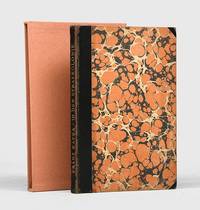
1919149938Leipzig: Kurt Wolff 1919. In the deluxe binding First edition first impression in the deluxe binding. One of 1000 copies of Kafka's short story set in an unnamed penal colony which he wrote in October 1914. The "relatively long time span between composition and first publication is due in part to Kafka's dissatisfaction with the original conclusion of the story" however "Kafka revised the end of the text in November 1918" Gray et al. p. 134. In November 1916 Kafka presented a version of the text "at a public reading - something to which Kafka rarely agreed - at the Goltz Gallery in Munich" ibid. p. 134. The work was first translated into English by Eugene Jolas in 1941; published in the Partisan Review as In the Penal Colony. Octavo. Text in German. Printed in blue and black. Contemporary dark brown half roan spine lettered in gilt marbled boards cream endpapers white silk page marker top edge gilt others uncut. Housed in a custom slipcase. Light wear to extremities the binding otherwise sound internally clean and fresh; a very good copy. Dietz 50. Richard T. Gray et al. A Franz Kafka Encyclopedia Greenwood Press 2005. hardcover
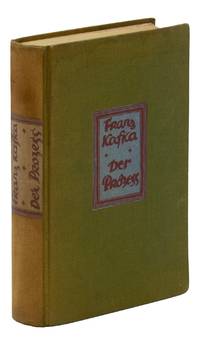
1925140948670Berlin: Verlag Die Schmiede 1925. First Edition. Very Good. First edition first printing with text in the original German. Bound in publisher's green cloth with paper title labels lettered in dark maroon at spine and front board. Very Good with lean to binding fading spine light dampstain to cloth at top edges. Foxing and light offseting at endsheets with woodcut mounted by former owner at front free endpaper and light pencil sketch at rear endpaper. The scarce German language edition of Kafka's never completed work--a posthumously published novel about a man arrested on undefined charges with no hope of redemption or acquittal. Flores p. 6. Verlag Die Schmiede unknown
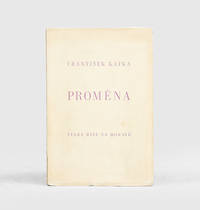
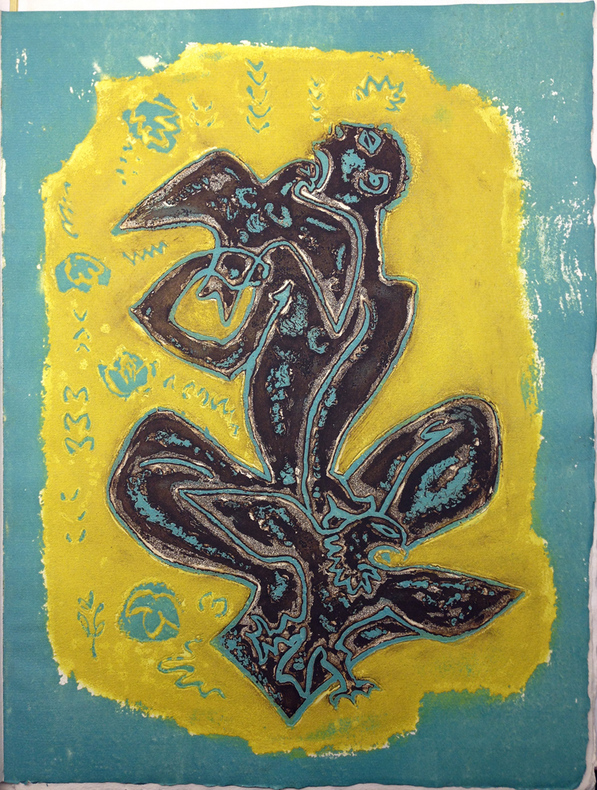
19581720Chez Seghers, Paris, 1948. 1 volume petit in-8 (195 x 125 mm) broché, couverture imprimée en noir et rouge rempliée. Édition originale. 4 POINTES-SÈCHES ORIGINALES D' OTTO WOLS HORS-TEXTE. UN DES RARISSIMES EXEMPLAIRES SUR CHINE comportant les 4 pointes sèches de Wols. Celui-ci justifié HC 1/5 (15 ex + 5 HC). Bel exemplaire malgré de claires rousseurs sur les tranches, inhérentes au papier Chine. Note historique : Wols (Alfred Otto Wolfgang Schulze) est un artiste plasticien allemand, né le 27 mai 1913 à Berlin, mort le 1er septembre 1951 à Paris. Photographe, peintre et graphiste, proche du surréalisme, Wols est considéré comme un pionnier et un représentant important du tachisme et de l'Art informel en Europe. Il a vécu en France après avoir fui le régime hitlérien.
1937140948644London: The Parton Press 1937. First English Edition. Near Fine. First English language edition first printing. vi 74 pp. Bound in publisher's charcoal-colored paper boards over blue cloth spine lettered in black and blue printed title label to upper board. Near Fine with lean to binding slight toning to spine light wear. Former owner's name on front free endpaper small spot of abrasion to top edge of front gutter. A nicer than commonly found copy of Kafka's masterpiece translated by English folklorist and key figure of the post-WWII British folk music revival A. L. Lloyd. Lloyd's translation swiftly went out of print amidst abysmal sales much like the first German edition Die Verwandlung. Flores p. 20. The Parton Press unknown
198423499New York: At the Wild Carrot Letterpress for the Limited Editions Club 1984. Unique Inscribed copy of this Limited Edition of 1500 hand-numbered copies signed by the artist José Luis Cuevas. THIS COPY WITH ADDITIONAL INSCRIPTION AND ORIGINAL PEN AND INK DRAWING BY THE ARTIST. With etchings on tissue-guarded plates and drawings by José Luis Cuevas created specifically for this publication. Large 8vo hand-cased at the Gray Parrot bindery in quarter gray-brown calf over textured paper-covered boards the spine lettered in gilt within a blank embossed frame in the original slipcase. xii 61 1. Internally a pristine copy the binding also fine but for a light touch of sun and one small abrasion to the calf of the spine the slipcase still very nice with only minor age evidence. UNIQUE INSCRIBED COPY WITH AN ORIGINAL DRAWING BY JOSÉ LUIS CUEVAS. The famous Mexican Surrealist has inscribed this copy “La Vida de un hobre . with a bold signature and a very large pen and ink drawing filling much of the front blank page. The book itself is a fine production printed on mold-made paper specially produced for this edition by Cartiere Enrico Magnani. It was designed by Ben Shiff set in American Monotype and the etchings were printed at the Water Street Press. In all Kafka’s surreal fable is given a very contemporary and highly artistic twist making this one of the most original and striking productions for the club for quite some time. At the Wild Carrot Letterpress for the Limited Editions Club hardcover
1916191218Leipzig: Kurt Wolff 1916. This is the only way to write. with such complete opening of body and soul First edition in book form of The Judgement one of the author's best stories in his own estimation. Kafka recalled of the piece written in a single night in 1912 "the story evolved as a true birth covered with filth and slime". It was printed in Max Brod's periodical Arkadia: Ein Jahrbuch für Dichtkunst in 1913. Octavo pp. 32. Text in German. Original black wrappers wire-stitched as issued blue paper label on front wrapper printed in black. Light creases to wrappers near-fine. unknown
193721211731937. London: The Favil Press for The Parton Press. 1937 8vo. Publisher's blue buckram-backed boards with black paper sides blue printed label to upper board; pp. vi 1 blank 74; twentieth-century collector's bookplate to front pastedown; a very good copy.First complete English translation of Kafka's Die Verwandlung The Metamorphosis printed by the publisher of Dylan Thomas's first book and translated by the influential folklorist Bert Lloyd. The translator the London-born folk singer ethnomusicologist and broadcaster Albert Lancaster Lloyd also known as Bert Lloyd 1908-1982 is perhaps best remembered for his instrumental role in popularising British folk music in the 1950s and 1960s; in 1959 he was the co-editor of The Penguin Book of English Folk Songs with Ralph Vaughan Williams. At the age of sixteen he went to Australia to work as a shepherd and farmhand returning to England in the early 1930s where he worked briefly at the Foyles Foreign Books Department spent a great deal of time in the British Museum's reading room befriended Dylan Thomas and Jack Lindsay joined the Communist Party and produced a translation of poems by Lorca. It is perhaps through Thomas that he became connected with David Archer of the Parton Press and bookshop in Red Lion Square in London; the Parton Press had published in collaboration with the Sunday Referee Dylan Thomas's first book 18 Poems 1934 here advertised on the half-title verso. Nabokov owned a copy of the present translation the 1946 Vanguard Press edition his copy now at the New York Public Library featuring copious drawings annotations and amendments to Lloyd's translation which he annotated in preparation for his lectures on Die Verwandlung at Cornell. Hemmerle p. 22. hardcover
1930212379Alfred A. Knopf 1930. First English translation edition first printing. Publisher's grey cloth stamped in black and blue top edge stain grey. The final pages have been left unopened awaiting their first ever reader. Bookplate of book collector R.J. Dickinson very faint foxing and fading to boards internally bright clean and tight. Near fine in near fine price-clipped and very lightly edge worn dust jacket with slight darkening to extremities and toned spine in mylar cover. An especially nice copy of this philosophical classic. Translated by Edwin and Willa Muir. With an introduction by Edwin Muir this is the first English translation of The Castle published simultaneously with the British edition Flores 15. <br /> <br /> Published posthumously in 1926 The Castle was never actually finished by Kafka. Despite having directed his good friend Max Brod to destroy all of his unpublished works upon his death The Castle found its way to the printers and onward as one of the most important and humanizing existential works of the twentieth century. Alfred A. Knopf unknown
1929188167Stara Rise: Josef Florian 1929. The insect itself must not be illustrated by a drawing. It cannot be shown at all not even from a distance First edition in Czech the first illustrated edition and the first translation of Metamorphosis into any language. This is an out of series copy on white paper from a total edition of 600 copies. This was published in three issues: 50 "A" copies on Holland 150 "B" copies on buff paper and 400 "C" copies on white paper as here. The German artist Otto Coester 1902-1990 was a member of a close circle of Kafka's admirers and may have known Kafka personally. Some scholars have therefore posited that he "had some inside knowledge of Kafka's vision" and the scholar Richard Lawson regarded Coester's illustrations of the insect as the most authentic Gallagher p. 134. During his lifetime Kafka was anxious to never see the insect depicted. He wrote to his publisher upon learning that his Die Verwandlung 1915 was to have an illustrated dust jacket "the insect itself must not be illustrated by a drawing. It cannot be shown at all not even from a distance" 25 October 1915. A separate portfolio edition was published the same year in an edition of 120 copies with different illustrations. The book edition was published as the 99th volume in Dobrého Díla in July 1929. Octavo. Illustrations in the text by Otto Coester. Original wrappers spine and front lettered in purple. Rubbed short split to lower front spine contents clean. A very good copy. David Gallagher Metamorphosis: Transformations of the Body and the Influence of Ovid's Metamorphoses on Germanic Literature of the Nineteenth and Twentieth Centuries 2009. unknown
194621209791946. London: The Parton Press. 1937. 8vo. Publisher's blue buckram-backed boards with black paper sides blue printed label to upper board; pp. vi 1 blank 74; a little spotting to fore-edges else a very good copy.First complete English translation of Kafka's Die Verwandlung The Metamorphosis printed by the publisher of Dylan Thomas's first book and translated by the influential folklorist Bert Lloyd. The translator the London-born folk singer ethnomusicologist and broadcaster Albert Lancaster Lloyd also known as Bert Lloyd 1908-1982 is perhaps best remembered for his instrumental role in popularising British folk music in the 1950s and 1960s; in 1959 he was the co-editor of The Penguin Book of English Folk Songs with Ralph Vaughan Williams. At the age of sixteen he went to Australia to work as a shepherd and farmhand returning to England in the early 1930s where he worked briefly at the Foyles Foreign Books Department spent a great deal of time in the British Museum's reading room befriended Dylan Thomas and Jack Lindsay joined the Communist Party and produced a translation of poems by Lorca. It is perhaps through Thomas that he became connected with David Archer of the Parton Press and bookshop in Red Lion Square in London; the Parton Press had published in collaboration with the Sunday Referee Dylan Thomas's first book 18 Poems 1934 here advertised on the half-title verso. Nabokov owned a copy of the present translation the 1946 Vanguard Press edition his copy now at the New York Public Library featuring copious drawings annotations and amendments to Lloyd's translation which he annotated in preparation for his lectures on Die Verwandlung at Cornell. Hemmerle p. 22. hardcover
11356Collection complète, du n° 1 (mai 1940) au n° 13 (été 1948). Sont joints treize avis de parutions pour divers volumes des éditions de l'Arbalète (Arthur Rimbaud, Franz Kafka, Henri Michaux, Jean Genet, Antonin Artaud, Henri Pichette). Ensemble en très bon état. /// Les 7 premiers numéros sont rares ; le premier, " rédigé par des soldats ", fut censément tiré à une centaine d'exemplaires et il est d'une très grande rareté. A partir du n° 9, le tirage atteint 2.000 exemplaires. /// Ecrits de Jean Wahl, Antonin Artaud, Jean Genet, Georges Hugnet, Michel Leiris, Raymond Queneau, Louis-René des Forêts, Olivier Larronde, Ernest Hemingway, Guy du Montcel, Gustave Thibon, Pierre Boutang, Paul Eluard, Rainer Maria Rilke, William Blake (poèmes traduits par René Tavernier), Klabund (poème traduit par Camille Bryen), Jean Tardieu, Martin Heidegger, Louis Aragon, Federico García Lorca, Henri Michaux, Marc Beigbeder, Marc Barbezat, Fernand Lot, Robert Ganzo, Arthur Rimbaud (poèmes présentés par Pascal Pia), C.- F. Ramuz, D. H. Lawrence, Franz Kafka, Albert Camus (" L'Espoir et l'absurde dans l'uvre de Franz Kafka "), Jean-Paul Sartre, Mouloudji, André Rouveyre, Boris Vian. Le n° 9 est entièrement consacré à la littérature américaine.
1930140938490New York: Alfred A. Knopf 1930. First American Edition. Very Good/Very Good. First American edition first printing. Bound in publisher's light grey cloth stamped in black. Very Good with light toning to spine and top edges light foxing. Pages toned and lightly musty. In a Very Good price-clipped dust jacket with light edge wear toned at the spine and top edge. A lovely copy. Alfred A. Knopf unknown books
193096542New York: Alfred A. Knopf 1930. First edition in English of Kafka's classic work. Octavo original cloth. Near fine in a near fine price-clipped dust jacket. Translated by Edwin and Willa Muir. With an introduction by Edwin Muir. A superior example scarce in this condition. The limits of Kafka's messianic vision correspond to the great skepticism with which he regarded the possibility of transcending the human predicament . . . At precisely the point when K. draws closest to his own salvation and to the salvation that he could offer the rest of the world he is also farthest away from it. At precisely the moment when his spirit is called K. is asleep" W. G. Sebald. It is the basis for the 1968 film directed by Rudolf Noelte and starring Maximilian Schell Cordula Trantow Trudik Daniel and Helmut Qualtinger and the 1997 film by Austrian director Michael Haneke. Alfred A. Knopf hardcover books
1925122327Berlin: Verlag Die Schmiede 1925. True first edition of Kafka's classic work. Octavo bound in full morocco gilt titles and tooling to the spine raised bands gilt tooling to the front and rear panels marbled endpapers all edges gilt. In fine condition. First editions are rare. Kafka's Der Prozess The Trial according to Albert Camus takes us "to the limits of human thought. Indeed everything in this work is in the true sense essential. It states the problem of the absurd in its entirety." Published posthumously in German in 1925 by Kafka's friend and executor Max Brod the book "has passed into far more than classical literary status. In more than one hundred languages the epithet 'kafkaesque' attaches to the central images to the constants of inhumanity and absurdity in our times. In this diffusion of the kafkaesque into so many recesses of our private and public existence The Trial plays a commanding role" George Steiner. In 1999 it was listed in Le Monde's 100 Books of the Century and as number two of the Best German Novels of the Twentieth Century. Verlag Die Schmiede hardcover books
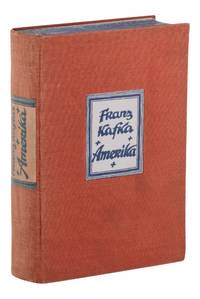
1927140948937Munich: Kurt Wolff Verlag 1927. First Edition. Near Fine. First edition first printing. 392 pp. text in German. Bound in publisher's orange cloth with white title labels printed in blue to spine and front board blue topstain. Near Fine with sunned spine light rubbing and fading to cloth and topstain and minor staining to textblock edges. Contents toned erased pencil inscription to back pastedown. A lovely copy of Kafka's unfinished first novel published posthumously. Kurt Wolff Verlag unknown
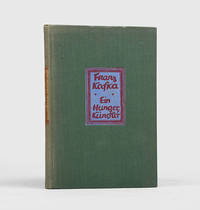
1924170848Berlin: Verlag die Schmiede 1924. His final short story collection First edition scarce cloth issue of this collection of four short stories the last to be finished by the author published a few months after his death. There was also an issue in patterned paper boards. The stories are marked by Kafka's illness. His friend Robert Klopstock remembered the author in his last days: "When he finished the correction which must have been a considerable not only mental effort but a kind of shocking spiritual re-encounter for him the tears rolled down his face for a long time". In addition to the title piece the collection includes includes "Ersted Lied" "Eine kleine Frau" and "Josefine die Sängerin oder Das Volk der Mäuse". The binding was designed by the German-American artist George Salter who devised similar bindings for Kafka's other posthumous publications. Octavo. Original green cloth blue paper labels to spine and front cover printed in dark red top edge yellow. Bookplate of Gymnastik-Landheim Neuhaus am Schliersee to front pastedown their ink stamp to title page. Spine sunned a few small bumps to extremities faint marks to covers and endpapers contents clean. A very good copy. Flores p. 6. hardcover
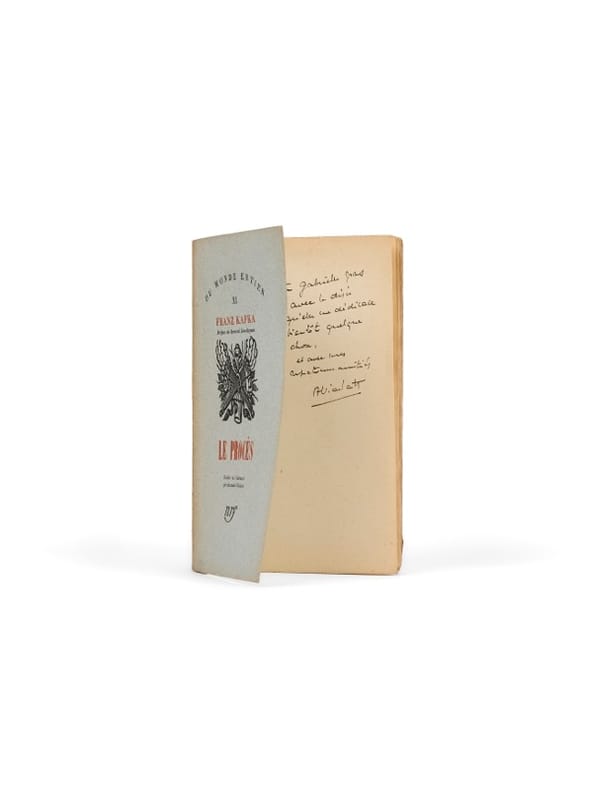
32055Paris Gallimard coll. « Du monde entier » 29 août 1933. 1 vol. 120 x 190 mm de 283 p. 1 et 1 f. Broché non coupé sous emboîtage Ateliers Laurenchet. . Édition originale de la traduction d'Alexandre Vialatte. Préface de Bernard Groethuysen. Un des 148 premiers exemplaires sur alfa celui-ci un des 18 exemplaires hors commerce exemplaire n. Envoi signé du traducteur : « à Gabrielle Gras avec le désir qu'elle me dédicace bientôt quelque chose et avec mes respectueuses amitiés. A.Vialatte ». . « Très cher Max ma dernière requête : Tout ce que je laisse derrière moi doit être brûlé sans être lu » : Franz Kafka meurt le 11 juin 1924 au sanatorium de Kierling l'actuelle Klosterneuburg près de Vienne. Moins d'un an après Max Brod publie contre les dernières volontés expresses de son ami le texte du Procès. Le sacrilège est aujourd'hui oublié ou pardonné dit-on et tout admirateur de l'oeuvre de Kafka le remercie secrètement du parjure. La traduction française paraîtra sept mois après l'arrivée au pouvoir d'Hitler. Belle provenance que celle de Gabrielle Gras célèbre libraire niçoise qui tenait la fameuse Librairie Paradis au 12 rue de France. Elle est la compagne puis l'épouse en 1957 de Pierre Abraham : frère de l'écrivain Jean-Richard Bloch il publia en 1929 aux éditions Rieder un essai sur Balzac et en 1930 un essai sur Proust ; il traduisit également Brecht en français. Résistant et figure des Lettres à Nice pendant la guerre il y dirigera un service de renseignements communiquant avec Londres et Alger. Il sera promu par le général de Gaulle commandant en septembre 1943 et lieutenant-colonel de l'armée de l'air en mars 1945. Voici ce qu'en dit Elsa Triolet : « À Nice même Pierre Abraham et Gabrielle Gras avaient été amenés à tenir rue de France une librairie vivante comme un journal clandestin les passants y amenant des nouvelles de Paris et d'ailleurs. Les Abragras comme je les appelais habitaient du côté du Paillon un vrai appartement ; nous y allions dîner parfois ». Les exemplaire de tête avec envoi du Procès sont rares. On n'en connaît que cinq autres : Gaston Gallimard Jean Pauhlan Bernard Groethuysen Henri Pourrat et à son épouse Hélène Vialatte. Dos passé sinon bon exemplaire dans un coffret des ateliers Laurenchet. Paris, Gallimard, coll. « Du monde entier », (29 août) 1933. 1 vol. (120 x 190 mm) de 283 p., [1] et 1 f. Broché, non coupà unknown
193332055Grand papier et envoi signé de Vialatte Paris, Gallimard, coll. « Du monde entier », (29 août) 1933. 1 vol. (120 x 190 mm) de 283 p., [1] et 1 f. Broché, non coupé, sous emboîtage (Ateliers Laurenchet). Édition originale de la traduction d'Alexandre Vialatte. Préface de Bernard Groethuysen. Un des 148 premiers exemplaires sur alfa, celui-ci un des 18 exemplaires hors commerce (exemplaire n). Envoi signé du traducteur : «à Gabrielle Gras, avec le désir qu'elle me dédicace bientôt quelque chose, et avec mes respectueuses amitiés. A.Vialatte».
19561284Les Bibliophiles de l’Union Française, Paris 1956. 1 volume in-folio en feuilles sous couverture illustrée de 2 gravures à pleine-page, chemise-étui décoré de l'éditeur. Edition originale illustrée de 18 EAUX-FORTES ORIGINALES EN COULEURS ET RELIEFS D'ANDRÉ MASSON dont 10 à peine-page et 8 ornant les titres des poèmes. Tirage : 116 exemplaires, tous sur Auvergne du Moulin Richard de Bas, numérotés et nominatifs signés au crayon brun par l'éditeur, l'auteur et l'artiste. Troisième ouvrage édité par les Bibliophiles de l'Union Française. Poésies/proverbes populaires Malgaches "Les hain-teny ont leur secret, ce sont des poèmes doubles, dont le sens caché, et le seul efficace, relève d'une logique proverbiale, stricte et sévère (…) Quant au sens apparent, il traite d'amour. Jean Paulhan (1884-1968) vécut à Madagascar de janvier 1908 à novembre 1910. Il y occupa les fonctions de professeur de lettres au collège de Tananarive. Ses thèmes d’étude ne seront ni ceux des fonctionnaires ni ceux des missionnaires. Jean Paulhan aima la Grande Ile où le brouillard « marche lentement », le peuple dont il recueillit et traduisit les hain-teny. Trop secret ou impénétrable pour notre culture occidentale ? Le fait étrange est que contrairement au pantoum malais, ou au haïku japonais, le mot hain-teny n'est pas aujourd'hui retenu dans les dictionnaires de langue française…
10833Collection complète, du n° 1 (été 1924) au n° 29 (printemps 1932). Nous joignons l'Index des années 1924-1928, paru sous forme de tiré-à-part joint au n° 22 (Hiver 1929). TOUS LES NUMEROS FONT PARTIE DU TIRAGE SUR VELIN PUR FIL LAFUMA (2e papier dont le nombre d'exemplaires est compris entre 150 et 300) et sont tous en bon ou très bon état. // Le n° 1 porte la mention manuscrite " Exemplaire sur Lafuma ", apposée par Auguste Morel qui a également signé cet exemplaire de ses initiales ; ce détail fait de cet exemplaire une belle pièce joycienne puisque dans ce premier numéro de " Commerce " paraît la première traduction en français d'un extrait d'ULYSSE de Joyce - traduction justement due au même Auguste Morel et à Valery Larbaud. // Rare et belle collection sur grand papier.
192420345Munich: Kurt Wolff Verlag 1924. First editions. Hardcover. Orig. green cloth spine Art Deco decorated cloth with blue spine label printed in gilt. Fine. 189 69 86 pages respectively. 19.5 x 13.5 cm. The first two works published in a Limited edition one of 1000 copies. Only a few of Kafka's works were published during his lifetime: Ein Landarzt A Country Doctor is one He prepared Ein Hungerkünstler A Hunger Artist for print but it was not published until after his death thanks to Max Brod Kafka's friend and literary executor who ignored Kafka's request to destroy his unpublished work. Text in German. Bright clean and very fresh copy. Kurt Wolff Verlag hardcover books