KAFKA, FranzBiblio.com
1 557 résultats
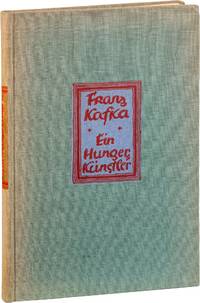
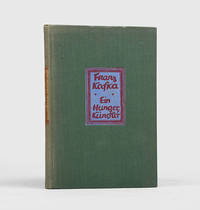
1924170848Berlin: Verlag die Schmiede 1924. His final short story collection First edition scarce cloth issue of this collection of four short stories the last to be finished by the author published a few months after his death. There was also an issue in patterned paper boards. The stories are marked by Kafka's illness. His friend Robert Klopstock remembered the author in his last days: "When he finished the correction which must have been a considerable not only mental effort but a kind of shocking spiritual re-encounter for him the tears rolled down his face for a long time". In addition to the title piece the collection includes includes "Ersted Lied" "Eine kleine Frau" and "Josefine die Sängerin oder Das Volk der Mäuse". The binding was designed by the German-American artist George Salter who devised similar bindings for Kafka's other posthumous publications. Octavo. Original green cloth blue paper labels to spine and front cover printed in dark red top edge yellow. Bookplate of Gymnastik-Landheim Neuhaus am Schliersee to front pastedown their ink stamp to title page. Spine sunned a few small bumps to extremities faint marks to covers and endpapers contents clean. A very good copy. Flores p. 6. hardcover
19241145Berlin: Verlag die Schmiede 1924. First Edition. in German The last collection of short stories to be finished before Kafka’s death though it was published posthumously. Original green cloth it was also published in paper boards spine and extremities faded front hinge starting but holding strong near fine. The title story was published 2 years earlier in Die Neue Rundschau magazine the other three appeared for the first time in this book. The four stories comprising Kafka's final collection "Ein Hungerkünstler" are a culmination of his literary preoccupations with artistic alienation and the futility of human endeavor. Reading these stories it is easy to see how they form a cohesive thematic quartet despite their disparate subjects each examining the relationship between the exceptional individual and an indifferent community. In "Josefine die Sängerin oder Das Volk der Mäuse" perhaps the most enigmatic of the four tales Kafka constructs a complex allegory of artistic exceptionalism through the figure of Josephine a mouse whose singing—which the narrator suggests may be nothing more than ordinary squeaking—commands unusual attention from her mouse community. The narrative's persistent ambiguity regarding the actual quality of Josephine's art creates a tension between the performer's self-perception and the community's response foregrounding questions about the social function of art. Unlike the hunger artist whose talent is measurable through his capacity to endure prolonged fasting Josephine's artistry remains fundamentally unverifiable existing primarily through collective acknowledgment rather than objective criteria. This unstable ontological status of the artistic performance destabilizes conventional hierarchies between artist and audience suggesting that artistic value emerges not from inherent qualities but from the complex social negotiations between performer and community. The story's final movement documenting Josephine's disappearance and rapid forgetting by her community offers Kafka's most poignant commentary on artistic legacy—the once-celebrated performer vanishes "like a legend dissolving into the ordinary" leaving no trace of her supposedly transformative art. Verlag die Schmiede unknown
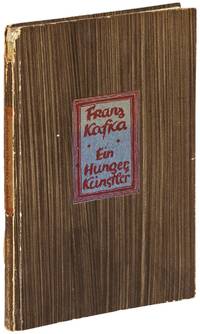
1924617386Berlin: Verlag die Schmiede 1924. Hardcover. Very Good. First edition patterned pastepaper boards issue also issued in cloth. Small octavo. 85 1pp. Tiny owner name and early date on front pastedown 3/4" chip lacking at the crown of the narrow spine small splits at the joints the hinges holding a very good copy. Kafka's last collection of short stories published posthumously. The title story "Ein Hungerkünstler" "A Hunger Artist" was published two years earlier in a magazine Die Neue Rundschau the other three stories appeared for the first time in this book: "Erstes Leid" "First Sorrow" "Eine Kleine Frau" "A Little Woman" and "Josefine die Sängerin oder Das Volk der Mäuse" "Josephine the Singer or the Mouse Folk". This issue published in fragile thin card boards seems to have survived far less often that the sturdier cloth issue. Verlag die Schmiede hardcover
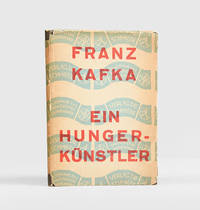
1924188798Berlin: Verlag die Schmiede 1924. His parting literary endeavour First edition boards issue in the dust jacket. Kafka worked on his final story collection during his last days. "When he finished the proofs - working on them must have been a tremendous psychological effort and a shattering intellectual reencounter with himself - tears rolled down his cheeks for a long time" cited in Unseld p. 273. Also issued in cloth the collection comprises the title story along with "Ersted Lied" "Eine kleine Frau" and "Josefine die Sängerin oder Das Volk der Mäuse". The cover art is by the influential German-American book artist George Salter 1897-1967. Among his other cover designs were Kafka's Der Prozess 1925 William Faulkner's Absalom Absalom! 1936 and Ayn Rand's Atlas Shrugged 1957. Loosely inserted is the publisher's promotional bookmark for their Novels of the 20th Century series. Octavo. Text in German. Original patterned boards blue paper label lettered in red on spine and front cover top edge blue. With dust jacket by George Salter. Ends and corners rubbed splash marks to top edge contents clean; jacket slightly chipped with loss to ends of unlettered spine discreet repairs to folds toning and faint damp stains issued without printed price: a very good copy in like jacket. Joachim Unseld Franz Kafka: A Writer's Life 1994. hardcover
192432166Berlin: Die Schmiede 1924. First edition. Publisher's brown striped boards printed cover and spine labels design by Georg Salter. A fine copy in the rare and fragile dust jacket with only minimal wear. Published shortly after Kafka's death in June 1924 it is the last book for which he corrected proofs. Dietz 66. Die Schmiede unknown
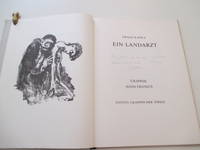
198419469AB1984. Vienna Edition Graphischer Zirkel 1984. 395 : 29 cm. 29 pages 1 leaf 5 original graphics by Hans Fronius. Illustrated Original-half-cloth. One of 250 copies.- On the title-page dedication from the artist for his son dated 1986 and signed Papa'. Imprint signed by the artist. - Twentieth book-publication of the edition Graphischer Zirkel Wien. - Rethi L 186 - 191. hardcover
3752370092.Ghardcover. Good. Access codes and supplements are not guaranteed with used items. May be an ex-library book. hardcover
375231575X.Gpaperback. Good. Access codes and supplements are not guaranteed with used items. May be an ex-library book. paperback
3849548031.Ghardcover. Good. Access codes and supplements are not guaranteed with used items. May be an ex-library book. hardcover
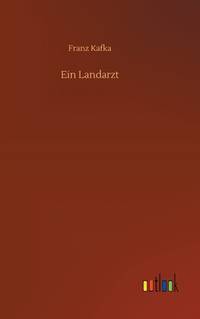
192420345Munich: Kurt Wolff Verlag 1924. First editions. Hardcover. Orig. green cloth spine Art Deco decorated cloth with blue spine label printed in gilt. Fine. 189 69 86 pages respectively. 19.5 x 13.5 cm. The first two works published in a Limited edition one of 1000 copies. Only a few of Kafka's works were published during his lifetime: Ein Landarzt A Country Doctor is one He prepared Ein Hungerkünstler A Hunger Artist for print but it was not published until after his death thanks to Max Brod Kafka's friend and literary executor who ignored Kafka's request to destroy his unpublished work. Text in German. Bright clean and very fresh copy. Kurt Wolff Verlag hardcover
29205876-nnew. unknown
12018739-nnew. unknown
1272559785.Gpaperback. Good. Access codes and supplements are not guaranteed with used items. May be an ex-library book. paperback
0267049374.Ghardcover. Good. Access codes and supplements are not guaranteed with used items. May be an ex-library book. hardcover
0483560499.Gpaperback. Good. Access codes and supplements are not guaranteed with used items. May be an ex-library book. paperback
1523677155.Gpaperback. Good. Access codes and supplements are not guaranteed with used items. May be an ex-library book. paperback
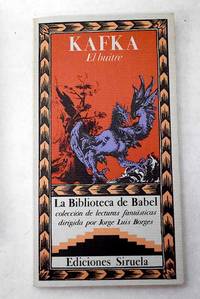
19883690309Madrid.: Siruela. 1988. Paperback. Cubierta deslucida. Good. 23 cm. 114 p. Encuadernación en tapa blanda de editorial ilustrada. Kafka Franz 1883-1924. Selección y prólogo de Jorge Luis Borges ; traducción Jorge Luis Borges. et al. . La Biblioteca de Babel. volumen coleccion 17. Ed. anterior: 1985. Borges Jorge Luis. 1899-1986 . Cubierta deslucida. ISBN: 848587630x 9788485876303 null 830-34"19" null 830-32"19" Siruela. paperback
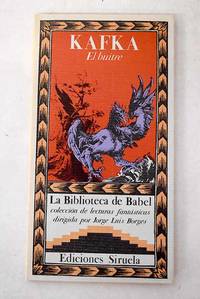
19883727722Madrid.: Siruela. 1988. Paperback. Cubierta deslucida. Firma del anterior propietario. Good. 23 cm. 114 p. Encuadernación en tapa blanda de editorial ilustrada. Kafka Franz 1883-1924. Selección y prólogo de Jorge Luis Borges ; traducción Jorge Luis Borges. et al. . La Biblioteca de Babel. volumen coleccion 17. Ed. anterior: 1985. Borges Jorge Luis. 1899-1986 . Cubierta deslucida. Firma del anterior propietario. ISBN: 848587630x 9788485876303 null 830-34"19" null 830-32"19" Siruela. paperback
8437616093.Gpaperback. Good. Access codes and supplements are not guaranteed with used items. May be an ex-library book. paperback
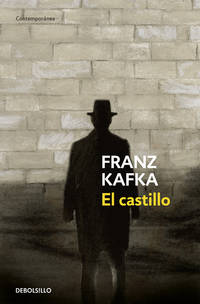
849759326X.Gmass_market. Good. Access codes and supplements are not guaranteed with used items. May be an ex-library book. unknown
2004SONG849759326XDEBOLSILLO 2004-01-23. 001. mass_market. Used: Good. 4.92x0.75x7.48. Buy with confidence. Excellent Customer Service & Return policy. DEBOLSILLO unknown
2004DADAX849759326XDEBOLSILLO 2004-01-23. 001. mass_market. New. 4.92x0.75x7.48. Buy with confidence. Excellent Customer Service & Return policy. DEBOLSILLO unknown
843761807X.Gpaperback. Good. Access codes and supplements are not guaranteed with used items. May be an ex-library book. paperback
20049788477022985-2025Valdemar 2004. Hardcover. New/New. <p><strong>Author:</strong> Franz Kafka José Rafael Hernández Arias</p><p><strong>Publisher:</strong> Valdemar</p><p><strong>Binding:</strong> Hardcover</p><p><strong>ISBN:</strong> 9788477022985</p><p><strong>Release Date:</strong> 2004</p><p><strong>Number Of Pages:</strong> 400</p><p><strong>Details:</strong> Una mañana cualquiera Josef K. joven empleado de un banco se despierta en la pensión donde reside con la extraña visita de unos hombres que le comunican que está detenido -aunque por el momento seguirá libre-. Le informan de que se ha iniciado un proceso contra él y le aseguran que conocerá los cargos a su debido tiempo. Así comienza una de las más memorables y enigmáticas pesadillas jamás escritas. Para el protagonista Josef K. el proceso laberíntico en el que inesperadamente se ve inmerso supone una toma de conciencia de sí mismo un despertar que le obliga a reflexionar sobre su propia existencia sobre la pérdida de la inocencia y la aparición de la muerte. La lectura de El proceso produce cierto «horror vacui» pues nos sumerge en una existencia absurda en el filo de la navaja entre la vida y la nada. Max Brod amigo editor y albacea literario de Kafka tras su muerte conoció la existencia de la obra en 1914 pues Kafka según su costumbre le leyó algunos pasajes. Desde un primer momento quedó fascinado por la fuerza de la historia por lo que insistió como en otras ocasiones en que se publicara contra la habitual reticencia de su autor. Tras la prematura muerte por tuberculosis de Kafka en 1924 y a pesar de que el autor había manifestado en una nota su deseo de que todos sus escritos fuesen destruidos sin ser leídos Max Brod decidió publicar El proceso años después. La presente edición recoge el texto íntegro y la ordenación de Kafka sin los expurgos y arbitrariedades de las primeras ediciones de Max Brod.</p> Valdemar hardcover
20049788477022985-2025Valdemar 2004. Hardcover. New/New. <p><strong>Author:</strong> Franz Kafka José Rafael Hernández Arias</p><p><strong>Publisher:</strong> Valdemar</p><p><strong>Binding:</strong> Hardcover</p><p><strong>ISBN:</strong> 9788477022985</p><p><strong>Release Date:</strong> 2004</p><p><strong>Number Of Pages:</strong> 400</p><p><strong>Details:</strong> Una mañana cualquiera Josef K. joven empleado de un banco se despierta en la pensión donde reside con la extraña visita de unos hombres que le comunican que está detenido -aunque por el momento seguirá libre-. Le informan de que se ha iniciado un proceso contra él y le aseguran que conocerá los cargos a su debido tiempo. Así comienza una de las más memorables y enigmáticas pesadillas jamás escritas. Para el protagonista Josef K. el proceso laberíntico en el que inesperadamente se ve inmerso supone una toma de conciencia de sí mismo un despertar que le obliga a reflexionar sobre su propia existencia sobre la pérdida de la inocencia y la aparición de la muerte. La lectura de El proceso produce cierto «horror vacui» pues nos sumerge en una existencia absurda en el filo de la navaja entre la vida y la nada. Max Brod amigo editor y albacea literario de Kafka tras su muerte conoció la existencia de la obra en 1914 pues Kafka según su costumbre le leyó algunos pasajes. Desde un primer momento quedó fascinado por la fuerza de la historia por lo que insistió como en otras ocasiones en que se publicara contra la habitual reticencia de su autor. Tras la prematura muerte por tuberculosis de Kafka en 1924 y a pesar de que el autor había manifestado en una nota su deseo de que todos sus escritos fuesen destruidos sin ser leídos Max Brod decidió publicar El proceso años después. La presente edición recoge el texto íntegro y la ordenación de Kafka sin los expurgos y arbitrariedades de las primeras ediciones de Max Brod.</p> Valdemar hardcover