250 résultats
188970523E. Plon Nourrit Et Cie. Very Good. 1889. Hardcover. FREE UPGRADE to Courier/Priority Shipping Upon Request - IN STOCK AND IMMEDIATELY AVAILABLE FOR SHIPMENT - Text pristine & unmarked - Text in French. Vii 162pp. Profusely illustrated with black & multi-color text illustrations & 10 heliogravure plates by Jean-Francois Raffaelli. Text by 22 well-known contributors including Edmund de Goncourt Alphonse Daudet Emile Zola Guy de Maupassant Octave Mirabeau J. K. Huymans Stephen Mallarme Albert Wolff Henri Greville Jean Richepin Paul Bonnetain Roger Marx and others. -- with a bonus offer-- . E. Plon, Nourrit Et Cie hardcover
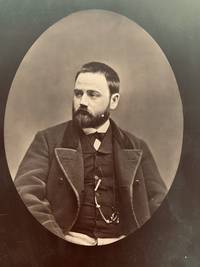
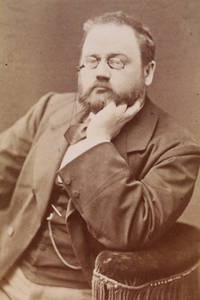
187072935Paris: Ernest Ladrey 1870. Fine. Ernest Ladrey Paris 1870 6.50 x 10.50 cm une photographie Very rare original albumen photograph in carte-de-visite format mounted on yellow cardboard with red border. Manuscript annotation on verso. The address at Passage des Princes on the back of the photograph indicates that the photograph was taken before 1875. Handsome copy of this photograph of the writer with his lorgnette and beard. Ernest Ladrey unknown
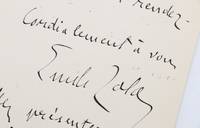
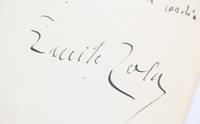
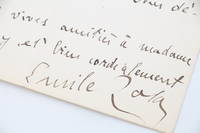
189084423Paris 1890. Fine. Paris 20 Février 1890 13.50 x 20.50 cm une page Autograph letter dated and signed by Emile Zola 12 lines in black ink addressed to librettist Louis Gallet concerning the operatic adaptation by Alfred Bruneau of the novel ""Le rêve"". Folds inherent to postal dispatch. Emile Zola was to meet jointly with Alfred Bruneau who had adapted the novel ""Le rêve"" for the opera and Louis Gallet the librettist of this adaptation. ""Je vous attends demain matin. pour causer des trois derniers tableaux. J'écris également à Bruneau pour lui donner rendez-vous"" ""I await you tomorrow morning. to discuss the last three tableaux. I am also writing to Bruneau to arrange a meeting with him"" and shows himself very satisfied with this prospect: ""Tout va bien."" ""All goes well."" unknown
189386093Paris 1893. Fine. An appointment with Gilles de La Tourette Paris 15 octobre 1893 13.50 x 20.50 cm une page 1/4 sur un bifeuillet Autograph letter dated and signed by Emile Zola addressed to his friend the physician Maurice de Fleury dated in his hand October 15 1893. 1 page 1/4 19 lines in black ink on a double sheet. Horinzontal and vertical folds due to mailing. Stain on verso not affecting the text. A most unusual invitation from the master of Naturalism who wishes to organize a luncheon with two eminent specialists in nervous diseases: ""Vous êtes bien aimable de m'inviter à déjeuner. Mais cela va vous faire perdre du temps et à moi aussi . pourquoi ne prendriez-vous pas un rendez-vous pour deux heures et demie par exemple avec M. Gille de la Tourette soit jeudi soit vendredi. Nous irions chez lui simplement ."" ""You are very kind to invite me to lunch. But this will make you lose time and me as well . why wouldn't you make an appointment for two-thirty for example with M. Gille de la Tourette either Thursday or Friday. We would go to his place simply ."" Zola relied on the expertise and scientific knowledge of Maurice de Fleury a student of Charcot to nourish his writing work on the Rougon-Macquart. De Fleury particularly shared publications from his library relating to heredity a subject at the heart of Zola's great social series of novels - most particularly the generational transmission of nervous diseases fits of violence and alcoholism. Maurice de Fleury is also famous for having made ten years after this letter a medico-psychological study of Zola himself through the prism of his working habits: ""De dix heures à midi Zola rédige encore - moins facilement et moins bien que pendant l'heure initiale - et c'est fini pour toute la journée il ne sera plus bon qu'à écrire des lettres. C'est là la puissance du plus puissant cerveau dans le domaine littéraire à la fin du siècle. Avec ce tout petit traintrain modeste trois heures par jour en deux séances cet homme dont l'attention est modique . trouve moyen de nous donner tous les dix mois un de ces livres où ne manquent ni la solidité de la charpente . ni rien de ce qui constitue la force créatrice le génie pour dire le mot"" ""From ten o'clock to noon Zola still writes - less easily and less well than during the initial hour - and it's finished for the whole day he will only be good for writing letters. This is the power of the most powerful brain in the literary domain at the end of the century. With this very modest little routine three hours a day in two sessions this man whose attention is modest . manages to give us every ten months one of those books which lack neither the solidity of the framework . nor anything that constitutes creative force genius to say the word"". ""Maurice de Fleury maintained close relations with Émile Zola and Joris-Karl Huysmans with whom he corresponded in the years 1880-1890. Fervent admirer of the author of the Rougon-Macquart Fleury advised Zola for ""Le Docteur Pascal"" 1893 and confided his admiration in an article in Le Figaro in 1896. Very 'fashionable' among the 'intellectuals' according to Victor Segalen the young physician also appears in the list of symbolist authors - alongside Paul Adam Henri de Régnier and Gustave Kahn - in an essay by André Barre in 1911"" Lola Kheyar Stibler Autograph letter dated and signed by Emile Zola addressed to his friend the physician Maurice de Fleury dated in his hand October 15 1893. 1 page 1/4 19 lines in black ink on a double sheet. Transverse folds inherent to mailing. unknown
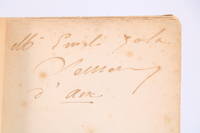
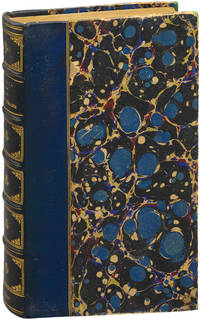
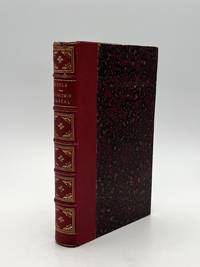
188395884Paris: G. Charpentier 1883. Rare first edition of Zola's novel exploring human weakness and desire written at the height of his career. Octavo bound in three quarters morocco over marbled boards gilt titles and tooling to the spine marbled endpapers top edge gilt. Association copy inscribed by the author on the half-title page "a Edouard Noel mon de'voue confrere Emile Zola." The recipient Edouard Noel was a lawyer writer and playwright and secretary general of the Opera-Comique between 1880 and 1891. In 1894 he was made Knight of the Legion of Honor for his action as captain during the campaign 1870-1871. In very good condition. Rare and desirable signed and inscribed by Zola. The most prominent French novelist of late 19th century French novelist and critic Emile Zola became the best-known practitioner of the literary school of naturalism and an important contributor to the development of theatrical naturalism. Also a major figure in the liberalization of France Zola was nominated for the first and second Nobel Prize in Literature in 1901 and 1902. Written at the height of Zola's career Le Capitaine Burle follows the downfall of a disciplined French military officer who becomes involved in a scandal to support his mistress. G. Charpentier hardcover books
1892008454Paris 1892 Letter. Very fine. No Binding. Signed by Authors. ZOLA Emile 1840-1902. Autographed letter signed. One page. 8x5 inches. In French. 10 lines. With original addressed and postmarked envelope. Two minor creases to letter where folded. Both items beautifully and professionally matted and framed along with a color lithographed portrait of the author the whole measuring 23x25½ inches. English translation taped to verso. Very fine. Paris: January 16 1892. . unknown
188395884Paris: G. Charpentier 1883. Rare first edition of Zola's novel exploring human weakness and desire written at the height of his career. Octavo bound in three quarters morocco over marbled boards gilt titles and tooling to the spine marbled endpapers top edge gilt. Association copy inscribed by the author on the half-title page "a Edouard Noel mon de'voue confrere Emile Zola." The recipient Edouard Noel was a lawyer writer and playwright and secretary general of the Opéra-Comique between 1880 and 1891. In 1894 he was made Knight of the Legion of Honor for his action as captain during the campaign 1870-1871. In very good condition. Rare and desirable signed and inscribed by Zola. The most prominent French novelist of late 19th century French novelist and critic Emile Zola became the best-known practitioner of the literary school of naturalism and an important contributor to the development of theatrical naturalism. Also a major figure in the liberalization of France Zola was nominated for the first and second Nobel Prize in Literature in 1901 and 1902. Written at the height of Zola's career Le Capitaine Burle follows the downfall of a disciplined French military officer who becomes involved in a scandal to support his mistress. G. Charpentier hardcover
189186092Paris 1891. Fine. Paris 22 octobre 1891 13.30 x 20.50 cm une page sur un bifeuillet Autograph letter dated and signed by Emile Zola addressed to his friend the physician Maurice de Fleury dated in his hand October 22 1891. 16 lines in black ink on one page. ""Mon cher de Fleury je crois bien que j'ai trouvé quelque chose pour le supplément du Figaro. Venez donc causer entre cinq et dix heures . Si vous étiez au Théâtre libre samedi soir je songe que nous pourrions en causer dans un entr'acte ce qui vous éviterait de vous déranger ."" ""My dear de Fleury I do believe I have found something for the Figaro supplement. Do come to chat between five and ten o'clock . If you were at the Théâtre Libre Saturday evening I think we could discuss it during an intermission which would save you the trouble of making a special trip ."". Fleury indeed held the medical column at Le Figaro - it is perhaps following this letter and their ""conversations"" that Fleury writes these lines in the supplement of October 31 1891: ""toute l'école naturaliste ayant fait de la médecine les médecins logiquement ont fait de la littérature"" ""the entire naturalist school having practiced medicine doctors logically have practiced literature"". Zola relied on the expertise and scientific knowledge of Maurice de Fleury a student of Charcot to nourish his writing work on the Rougon-Macquart. De Fleury particularly shared publications from his library relating to heredity a subject at the heart of Zola's great social fresco - most particularly the generational transmission of nervous diseases fits of violence and alcoholism. Maurice de Fleury is also famous for having made ten years after this letter a medico-psychological study of Zola himself through the prism of his working habits: ""De dix heures à midi Zola rédige encore - moins facilement et moins bien que pendant l'heure initiale - et c'est fini pour toute la journée il ne sera plus bon qu'à écrire des lettres. C'est là la puissance du plus puissant cerveau dans le domaine littéraire à la fin du siècle. Avec ce tout petit traintrain modeste trois heures par jour en deux séances cet homme dont l'attention est modique . trouve moyen de nous donner tous les dix mois un de ces livres où ne manquent ni la solidité de la charpente . ni rien de ce qui constitue la force créatrice le génie pour dire le mot"" ""From ten o'clock to noon Zola still writes - less easily and less well than during the initial hour - and it's finished for the whole day he will only be good for writing letters. This is the power of the most powerful brain in the literary domain at the end of the century. With this very modest little routine three hours a day in two sessions this man whose attention is modest . manages to give us every ten months one of those books which lack neither the solidity of the framework . nor anything that constitutes creative force genius to say the word"". ""Maurice de Fleury entretient des relations étroites avec Émile Zola et Joris-Karl Huysmans avec lesquels il correspond dans les années 1880-1890. Fervent admirateur de l'auteur des Rougon-Macquart Fleury conseille Zola pour Le Docteur Pascal 1893 et confie son admiration dans un article du Figaro en 1896. Très « à la mode » parmi les « intellectuels » selon le mot de Victor Segalen le jeune médecin figure également dans la liste des auteurs symbolistes - aux côtés de Paul Adam Henri de Régnier et Gustave Kahn - dans un essai d'André Barre en 1911"" ""Maurice de Fleury maintains close relations with Émile Zola and Joris-Karl Huysmans with whom he corresponds in the years 1880-1890. Fervent admirer of the author of the Rougon-Macquart Fleury advises Zola for Le Docteur Pascal 1893 and confides his admiration in an article in Le Figaro in 1896. Very 'fashionable' among the 'intellectuals' according to Victor Segalen the young physician also appears in the list of symbolist authors - unknown
188283518Paris: Charpentier & Cie 1882. Fine. Charpentier & Cie Paris 1882 11 x 17.50 cm broché First edition one of 250 numbered copies on Holland paper the only deluxe copies after a few rare copies on China paper. First cover skillfully restored printed library stamp with numbering on the half-title page. Copy as issued. Charpentier & Cie unknown
187590869Paris: Ernest Leroux 1875. Fine. Ernest Leroux Paris 1875 1879 12.2 x 11.8 cm Broché Second edition the dedication to Pierre Laffitte is dated 1879. A study of madness from a positivist perspective based on the work of Auguste Comte. The dedicatee Pierre Laffitte was the editor of the review ""Le Positivisme"". Spine cracked with small losses occasional foxing and a horizontal crease at the foot of the upper cover small marginal tears on the cover firts cover reattached. With a fine signed presentation inscription from Emile François Eugène Sémérie to Émile Zola on the half-title: ""A Mr. Émile Zola. Sémérie d'Aix"" the final word underlined. The close connections between positivism and naturalism the literary doctrine developed in the 1860s1880s are well known: positivist philosophy the observation of reality and the primacy of experience influenced naturalist writers in their concern to depict reality with strict objectivity. Zola made an essential contribution to the movement with his study ""Roman expérimental"" 1880. Ernest Leroux unknown
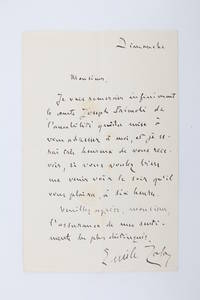
189480728s. l. Rome Rome 1894. Fine. s. l. Rome Rome Dimanche 4 novembre 1894 13.20 x 20.50 cm une page sur un double feuillet et une enveloppe Autograph letter signed by Emile Zola addressed to Ugo Ojetti. One page written in black ink on the first page of a double sheet. Folding inherent to postal transmission. Envelope included. This letter was addressed by the father of naturalism to journalist Ugo Ojetti when he had just arrived in Rome: ""Monsieur je vais remercier infiniment le comte Joseph Primoli de l'amabilité qu'il a mise à vous adresser à moi et je serai très heureux de vous recevoir si vous voulez bien me venir voir le soir qu'il vous plaira à six heures."" ""Sir I wish to thank Count Joseph Primoli infinitely for the kindness he has shown in directing you to me and I shall be very happy to receive you if you would be so good as to come and see me any evening that suits you at six o'clock."" Having arrived a few days earlier in the eternal city to conduct research for Rome Emile Zola hoped to meet Count Joseph Primoli there. The latter was unfortunately in Paris but he sent him this young journalist from La Tribuna who would serve as his guide but also as secretary. The two men clearly got along well and Zola even authorized Ojetti to adapt an opera libretto from his famous Nana. The project would unfortunately never come to fruition. Joseph Napoléon Count Primoli 1851-1927 was the great-great-nephew of Napoleon Bonaparte. Very close to the imperial family under the Second Empire he subsequently remained faithful to the salon of his beloved aunt Princess Mathilde in her private mansion on rue de Berri. His refined and witty conversation worked wonders there and he met as a passionate bibliophile some of the greatest writers of his time: Gustave Flaubert Théophile Gautier the Goncourts and Guy de Maupassant. unknown
1886803R45Paris: Librairie L. Conquet 1886. Leather. Near Fine. 8.5" by 5.5". None. A lovely illustrated limited edition of Emile Zola's short story collection in the original French language and bound in delightful leather. 'Contes de Ninon' was amongst Zola's earlier works a collection of short stories which first appeared in 1864 to which 'Nouveaux Contes a Ninon' was a sequel. First published in 1870 this collection includes works such as 'Le Grand Michu' 'Les Fraises' 'Lili' 'Le Forgeron' 'Le Chomage' and 'Le Jeune' amongst countless others. Illustrated with a frontispiece to volume I and thirty illustrations throughout by Ed. Rudaux.Limited edition of five hundred copies this being one of the 350 on Marais vellum and out of series. Presentation copy exemplaire offert hence out of series. Signed by the publisher to the limitation page. With the original wraps bound in. Written by Emile Zola a French novelist and writer known for his role in the political liberalization of France. He was nominated for Novel Prizes in Literature in both 1901 and 1902 the first two years of the prize.Bound by G. Rykers. Rel.Containing the ownership bookplate of E. L. B. with a delightful cockerel. In the original French language. In a half crushed morocco binding. Externally lovely with just the slightest general wear. Ownership bookplate to the front pastedown of each volume. Internally firmly bound. Pages are just slightly spotted to the first and final leaves but otherwise bright and clean. Near Fine Librairie L. Conquet hardcover
1892feb1187461892. Used. For more details please contact me unknown
1889046694Paris: E. Plon Nourrit etc. 1889. First Edition. Hardcover Half Leather. Near Fine Condition. Jean-Francois Raffaelli. Half green morocco over marbled boards spine a bit sunned original wrappers bound in. Black and white and hand colored illustrations throughout and 10 heliogravure by Raffaelli - number 29 of 40 on Japan and with an additional folding etching a version of the frontis signed in pencil by Raffaelli tipped in before the frontis. A lovely production. Size: Quarto 4to. Illustrator: Jean-Francois Raffaelli. Quantity Available: 1. Shipped Weight: Under 1 kilo. Category: Literature & Literary; Inventory No: 046694. E. Plon, Nourrit etc. hardcover
1889046694Paris: E. Plon Nourrit etc. 1889. First Edition. Hardcover Half Leather. Near Fine Condition. Jean-Francois Raffaelli. Half green morocco over marbled boards spine a bit sunned original wrappers bound in. Black and white and hand colored illustrations throughout and 10 heliogravure by Raffaelli - number 29 of 40 on Japan and with an additional folding etching a version of the frontis signed in pencil by Raffaelli tipped in before the frontis. A lovely production. Size: Quarto 4to. Illustrator: Jean-Francois Raffaelli. Quantity Available: 1. Shipped Weight: Under 1 kilo. Category: Literature & Literary; Inventory No: 046694. E. Plon, Nourrit etc. hardcover books
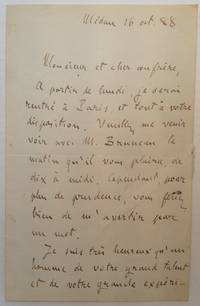
1888215987Median 1888. unbound. 2 full pages 8.5 x 5.25 inches Median France October 16 1888. In this letter Zola invites a colleague for a visit and conversation in part: ".Je suis tres heureux qu'un homme de votre grand talent et de votre grande experience veuille bein se charger d'un travail qu ne sera pas commode je le crains. " Slight creasing and natural folds; still very good condition.<br/><br/> unknown books
1897BB062<br /><b>ZOLA</b> Emile:<br /><br /><i><b>Nouvelle Campagne 1896</b></i><br /><br />Paris: Bibliothèque-Charpentier 1897.<br /><br />8vo v 296pp 1 index; blue contemporary French quarter-calf with Campbell Clarke's initials at the foot of the spine marbled sides original printed.<br /><br />First edition.<br /><br />Presentation copy from Zola to Sir Campbell Clarke inscribed "<i>á Campbell Clarke/son dévoué confrère/Emile Zola</i>." <i> With the bookplate of Sir Campbell Clarke </i>inside front cover.<br />A collection of articles mostly from <i>Le Figaro</i>. The work is scarce inscribed and it is pleasing that this example was given to a fellow journalist and man of letters; the recipient of this copy Sir Campbell Clarke was a British journalist and author well known and regarded in France and an Officer of the French Legion of Honor.<br /> Bibliothèque-Charpentier hardcover books
1888215987Median 1888. unbound. 2 full pages 8.5 x 5.25 inches Median France October 16 1888. In this letter Zola invites a colleague for a visit and conversation in part: ".Je suis tres heureux qu'un homme de votre grand talent et de votre grande experience veuille bein se charger d'un travail qu ne sera pas commode je le crains. " Slight creasing and natural folds; still very good condition.<br/> <br/> unknown
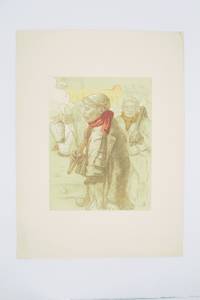
189874340Paris: Imprimerie Champenoispour CH. MassonH. Piazza 1898. Fine. Imprimerie Champenois pour CH. Masson H. Piazza Paris Février 1898 31 x 27 cm une feuille et une serpente Rare original colour lithograph executed by Albert-Émile Artigue for L'Estampe Moderne series no. 10 published in February 1898. One of 50 deluxe proofs printed on Japon with wide margins artist's signature within the stone publisher's blindstamp depicting a child's profile in the lower margin numbered stamp of the deluxe issue on the verso; the print is preceded by a captioned tissue guard with the artist's name the title and an excerpt from the work; with additional plain tissue guard. Lithograph inspired by an excerpt from Emile Zola's novel La Faute de l'abbé Mouret reproduced on the tissue guard of the print. A magnificent French monthly publication issued between May 1897 and April 1899 L'Estampe Moderne comprises original chromolithographs which unlike other periodicals such as Les Maîtres de l'Affiche and as specified on the tissue guards were created expressly for the journal by each artist. In all 100 prints were published encompassing the major artistic movements of the late 19th century: Symbolism Art Nouveau the Pre-Raphaelites Orientalism and the Belle Époque. Each issue of four plates was printed in 2000 copies sold at 3.50 francs and 100 on Japon paper offered at 10 francs. Henri Piazza also planned an exclusive printing of the utmost luxury: 50 copies on Japon with wide margins and 50 in black on China paper at the considerable price of 30 francs. This large-format print is superbly printed on the most prestigious of papers: Japon. Thick silky satin-finished and pearly it elevates each sheet into a work of art in its own right. Its exceptional capacity for ink absorption and affinity with colour make it the ideal medium for these splendid lithographs. The interest of French collectors in artistic posters intensified at the beginning of the 1890s. Octave Uzanne to describe this craze coined the term affichomanie. The poster originally popular and pasted up on the streets of the capital then became an art object its ephemeral support transformed into something precious and destined for preservation. Piazza resolved to remove the poster from its advertising purpose and elevate it to the rank of a work of art in its own right on a par with the deluxe illustrated book. In this way he assembled a prestigious collection of entirely original works by the most prominent European artists of the time: Georges de Feure Eugène Grasset Henri Detouche Emile Berchmans Louis Rhead Gaston de Latenay Lucien Lévy-Dhurmer Gustave-Max Stevens Charles Doudelet Hans Christiansen Henri Fantin-Latour Steinlen Ibels Engels Willette Henri Meunier Evenepoël Bellery-Desfontaines Charles Léandre etc. A handsome copy. Imprimerie Champenoispour CH. MassonH. Piazza unknown
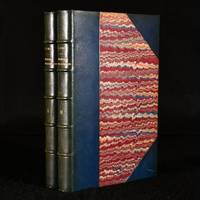
1886000593London: VIZETELLY & CO. Good with no dust jacket. 1886. Half-Leather. Set of three 3 matching illustrated editions with fine bindings assumed originally from a larger set. Book One - Nana 1887 a 'new edition' translated without abridgment from the 127th French edition. Book Two - His Masterpiece 1887 a 'new edition' with a portrait of the author etched by Bocourt. Book 3 - Germinal 1886 translated without abridgment from the 60th French edition and illustrated with sixteen page engravings from designs by J. Ferat. Ox-blood half leather with 5-band spine with gilt title treatment. Marbelized end papers. Overall in very good shape save for some moderate dingage and rubbing and splitting at the front covers and the upper spines. Nana the worst rating good overall. Super shelf presence and three of Zola's best reads of the Rougon-Macquart series.; 12mo - over 6¾" - 7¾" tall; LITERATURE DRAMA PROSE FRENCH FRANCE ZOLA EMILE ZOLA NATURALISM NATURAL . VIZETELLY & CO. hardcover
1890156435Paris: G Charpentier 1890. First French Edition and correct first. Basis for the 1938 film directed by Jean Renoir and for the 1954 film noir "Human Desire" directed by Fritz Lang starring Glenn Ford Gloria Grahame and Broderick Crawford.<br /> <br /> Fine in original yellow wrappers. Quarter-bound in blue leather with raised bands gilt rule and design and blue marbled boards and endpapers. Boards are lightly worn along the outer edges else a bright copy of an uncommon title. G Charpentier unknown
188071646Paris: Goupil & Cie 1880. Fine. Goupil & Cie Paris 1880 24 x 33 cm une feuille Photoglyptie from the Galerie contemporaine. Portrait of Zola at the age of 35-40 years. Mounted sheet on which a 19x24cm photoglyptie has been laid down. Caption at bottom of mount: Galerie Contemporaine 126 boulevard de Magenta. Phot. Goupil et Cie. Cliché Carjat 10 rue Notre-Dame de Lorette. One tiny white spot in the beard. Very fine condition. Similar to a carbon print in its warm and deep tones photoglyptie is a complex photomechanical process for photographic reproduction which was used by publishers for about 20 years from 1875 to 1895. Seeking an ideal and aesthetic image of famous men the plates were always retouched and repainted to smooth out an unsightly wrinkle or too obvious defect to polish the hair etc. Thus photography and printmaking converge in a new form of representation. The Galerie Contemporaine became a publishing house that sold images of contemporary men; these images were assembled in 8 folio volumes by Paul de Lacroix but continued to be sold separately at the headquarters of the Galerie Contemporaine. Goupil & Cie unknown
189874855Paris: Imprimerie Champenoispour CH. MassonH. Piazza 1898. Fine. Imprimerie Champenois pour CH. Masson H. Piazza Paris Juin 1898 24.50 x 32 cm une feuille et une serpente Rare original color lithograph executed by Jules-Gustave Besson for L'Estampe Moderne series number 14 published in June 1898. One of 50 deluxe proofs printed on Japan paper with wide margins artist's signature in the plate publisher's blind stamp depicting a child's profile in lower margin numbered luxury edition stamp on verso; engraving preceded by a tissue guard captioned with the artist's name title and text. Lithograph inspired by an extract from Germinal by Emile Zola reproduced on the print's tissue guard. Magnificent French monthly publication edited between May 1897 and April 1899 L'Estampe moderne consists of original chromolithographs which unlike other periodicals such as Les Maîtres de l'Affiche and as stipulated on the tissue guards were created specifically by each artist for the review. Thus 100 prints appeared in total covering the major artistic movements of the late 19th century: Symbolism Art Nouveau Pre-Raphaelites Orientalists and Belle Époque. Each delivery of four prints was issued in 2000 copies sold for 3.50F and 100 on Japan paper offered at 10F. Henri Piazza also planned a confidential deluxe printing: 50 copies on Japan paper with wide margins and 50 in black on China paper at the considerable price of 30F. This print of handsome format is superbly printed on the most prestigious of papers: Japan. Thick silky satiny and lustrous it contributes to making each page a work in its own right. Its ink absorption quality and affinity with colors also make it the ideal support for these very beautiful lithographs. French collectors' interest in artistic posters intensified at the beginning of the 1890s. Octave Uzanne to describe this fever invented the term ""poster mania"". The poster originally popular and plastered in the streets of the capital then became an art object and its ephemeral support became precious and destined for preservation. Piazza decided to remove the poster from its advertising vocation and elevate it to the rank of a complete work of art on the same level as the deluxe illustrated book. He thus composed a prestigious collection of entirely original works by the most prominent European artists of the moment: Georges de Feure Eugène Grasset Henri Detouche Emile Berchmans Louis Rhead Gaston de Latenay Lucien Lévy-Dhurmer Gustave-Max Stevens Charles Doudelet Hans Christiansen Henri Fantin-Latour Steinlen Ibels Engels Willette Henri Meunier Evenepoël Bellery-Desfontaines Charles Léandre etc. Handsome copy. Imprimerie Champenoispour CH. MassonH. Piazza unknown
186685365Paris: Achille Faure 1866. Fine. Achille Faure Paris 1866 11 x 18 cm relié The rare first edition of this early novel by the author overshadowed by the Rougon-Macquart series but which prefigures naturalism and whose story is based on a news item. The novel is followed by Esquisses parisiennes a collection of 4 short stories. The second edition would not appear until 1889 with Charpentier. Contemporary half-brown shagreen binding. Smooth spine decorated with black fillets. Signs of rubbing and corners slightly bumped. Achille Faure unknown
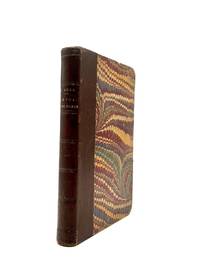
189387311Paris: G. Charpentier & E. Fasquelle 1893. Fine. G. Charpentier & E. Fasquelle Paris 1893 11 x 18 cm relié First edition on ordinary paper. Genealogical tree of the Rougon-Macquart on a folding sheet. Contemporary half-shagreen binding in red. Spine with false raised bands decorated with compartments ornamented with 5 fleurons. Rubbing to headcap with a minor cut. One raised band also rubbed. Paper very fresh. G. Charpentier & E. Fasquelle hardcover