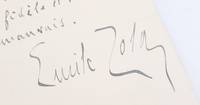
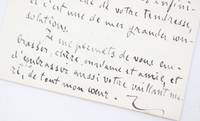
ZOLA, EmileLivre Rare Book
6 472 résultats
LCS-13847L’ensemble unique de la correspondance manuscrite, en grande partie inédite, d’Antoine Guillemet à Émile Zola, écrite entre 1867 et 1901. 1867-1901. 121 lettres manuscrites autographes, la plupart en cahiers de 4 pages, soit 334 pages au total. Écrites à l’encre marron ou noir.
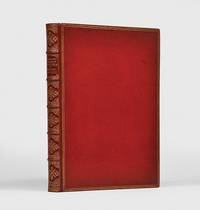
1893154344Paris Médan Monte Carlo and England: 1893-1902. A unique collection of letters by one of the landmark French writers of the 19th century An important group of letters from Émile Zola to his translator and friend Ernest Vizetelly son of Henry Vizetelly who was the first translator of his works. Over almost ten years and across a hundred handwritten pages Zola discusses the publications and translations of his works the reception and specificities of the English public his visit to London for the congress of specialists in 1893 his London exile at the publication of J'Accuse and the trial that followed. Zola sends his manuscripts to Vizetelly who takes on the role of agent seeing to contracts both with newspapers for the publication of serials and for the publication of translations. Though Zola repeatedly says that he is not concerned with money he nonetheless has his contract requirements. He trusts his friend entirely for his business in England but when American publishers are interested in the translations of his works negotiations seem tense at times: "As for the American affair I will tell you that the house Macmillan hurt me by his attitude at the time to Fécondité and I don't see why I will continue to interact with people of such a mind." He finally chose Doubleday noting that he received "1990 fr. 60 cent. for my part of copyright on your translation of Fécondité that the Doubleday house has just published in New York". He is also concerned about the reception of his works in England. On Docteur Pascal: "I'm going to get into Docteur Pascal which has nothing to do with Lourdes. It's an intimate passionate novel. It is to be the last volume of the Rougon-Macquart series. You can try to place the English translation in London. It will not offend the modesty of your compatriots." A little later he even authorizes his translator to modify "the passages which would seem worrying to you." He reiterates this authorization regarding the translation of Travail: "Travail will not frighten English modesty. It is at most if in a single scene a little lively you will have to extinguish the colors of the painting." He also assures his friend that Lourdes which Vizetelly cannot sell to a newspaper is not a "work of Catholic discussion" and that "the book can be put in the hands of young girls." England despite a little mockery is also important to Zola. He discovered it at the journalists' conference to which he was invited in 1893. He seemed rather anxious about the reception that the English press could give him: "I would like to know the importance of this congress and whether it will offer a great interest. You know my situation in London: I am still very much discussed almost denied and it seems to me that. the words I could say there would erase a lot of the misunderstanding." Zola's doubts would finally be unfounded and he returned from London delighted with the reception he received there and with the charm and immensity of the city. At the end of the collection are 39 original photographs taken by Zola at the time of his visit to London in 1893 or during his exile. Most of them bear indications of the places photographed on the back. Following the publication of J'Accuse and the trial which forced him into exile Zola chooses London. He discreetly mentions the piece which appeared in l'Aurore explaining to Vizetelly the delay in the publication of Paris on January 25 1898: "Tell Mr. Chatto that we will not put" Paris "on sale on February 10. It would be a great fault in the midst of the current hustle and bustle." He finally left France in July of the same year. The support of his now "dear colleague and friend" is essential in this difficult period: "My dear colleague and friend thank you for your good wishes on the anniversary of my birth. I am very touched in the sad emotion where I am. You write me good and just things that go straight to my heart. And I thank you on this day for the dedication and the discreet attentions that you have not ceased to have for me since the day I set foot in this land of exile." The correspondence continues until Zola's death in early autumn 1902. Folio 328 x 242 mm. 103 pages with letters photographs and documents mounted in the vol.; in French. Together 61 pieces including 51 signed letters one of them signed as Beauchamp 5 initialled letters 3 business cards autographed and siged one unsigned letter and a response to a questionnaire. All the letters relate to the publication of L'Argent Lourdes Rome Dr. Pascal La Débâcle and his trip to England to the Congress of Journalists in 1893. Also 39 photographs of views of England taken by Zola during his exile there in 1899. Some letters bear on the back of the annotations of Vizetelly. Red morocco by Riviere & Son spine richly gilt between raised bands dark blue endpapers gilt inner dentelles and edges. Housed in a dark blue quarter morocco solander box by the Chelsea Bindery. Published in Émile Zola Correspondance VII X Presses de l'Université de Montreal 1978-1995. Vizetelly's letters to Zola were also published in: Mon cher Maître Lettres d'Ernest Vizetelly à Emile Zola Les Presses de University of Montreal 2002. Transcript and translation of correspondence available upon request. hardcover
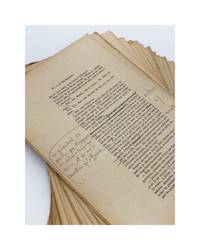
1890Zola7<p><strong>ZOLA Emile 1840-1902</strong></p><p>Corrected proofs for his novel <em>The Beast within</em><br />Paris January 1890 45 proofs printed on recto<br />Very good overall condition except some slightly frayed margin on the first folios some browning</p><p><strong>A precious complete set of proofs for the original edition of his masterpiece <em>La Bête humaine</em> the seventeenth volume in the <em>Les Rougon-Macquart</em> series.</strong></p><p><strong><u>At the heart of the writer's creative process:</u></strong><strong> a total of 45 proof sheets with extensive autograph corrections in Zola's own hand.</strong></p><p><strong><u>One of the very rare Zolian relics still in private hands</u></strong></p><p><strong><em><u>La Bête humaine</u></em></strong><strong><u> in the Making</u></strong><br />The proof sheets in this set bear witness to the author's progress in writing his masterpiece. Émile Zola undertook a meticulous rereading of every line refining the style striking through passages and making corrections to achieve greater accuracy in tone and rhythm. As such the set is extensively annotated with the exception of proof sheets no. 35 to 38. The most substantial corrections appear on sheets no. 2 to 13 and no. 40 which correspond to Chapters I to IV and XI. Special attention was also paid to typography further evidence of the naturalist writer's thorough and exacting rereading.<br />Georges Charpentier added penciled notes on twenty-nine of the proof sheets along with two annotations instructing Zola to henceforth adhere to the paginated layout.</p><p><u>These proofs represent an intermediate stage between the manuscript and the published text as evidenced by certain excerpts:</u><br />– " Roubaud près de sa femme écoutait en fixant également sur elle des yeux vacillants. Il y eut une minute de mortelle angoisse " become " Près de sa femme Roubaud écoutait en fixant également sur elle ses gros yeux pâles " then in the final version " Près de sa femme Roubaud écoutait en fixant sur elle ses gros yeux vifs ".<br />– " Seulement ce matin-là Roubaud dut reprendre haleine comme si sa respiration lui manquait à la suite d'un saisissement inutile. Il hésitait il chercha avant de se rappeler ce que lui avait dit son collègue " become " Seulement ce matin-là Roubaud hésitant dut chercher avant de se rappeler ce que lui avait dit son collègue ".</p><p>Folio #40 includes an important addition of seventeen lines in which the author plays with the lyrical register. Love and death invite each other:<br /><em>" – Dis mon chéri pourquoi donc ai-je peur Sais-tu toi quelque chose qui me menace </em><br /><em>– Non non sois tranquille rien ne te menace. </em><br /><em>– C'est que tout mon corps tremble par moments. Il y a derrière moi un continuel danger que je ne vois pas mais que je sens bien… Pourquoi donc ai-je peur </em><br /><em>– Non non n'aie pas peur… Je t'aime je ne laisserai jamais personne te faire du mal… Vois comme cela est bon d'être ainsi l'un dans l'autre ! </em><br /><em>Il y eut un silence délicieux. " </em></p><p><strong><u>The novel<br /></u></strong><em>La Bête humaine</em> the seventeenth volume in the <em>Rougon-Macquart</em> saga was written between May 1889 and January 1890 and released in bookstores by Georges Charpentier during the first week of March 1890 following its serialization in the weekly magazine <em>La Vie populaire</em> from November 14 1889 to March 2 1890. Like <em>Germinal</em> 1885 it focuses on a facet of the industrial and working-class world of the late 19th century.<strong><br /></strong>In this judicial novel the main characters are murderers. Émile Zola wove together several real-life criminal cases likely including the infamous crimes of "Jack the Ripper" creating a bleak violent and monstrous tableau in which killings occur for motives as varied as greed jealousy or even hereditary madness. Through this narrative—and his exploration of remorse—Zola situates his work within contemporary debates on the moral and social meaning of crime. His writing was nourished by readings of <em>Crime and Punishment</em> by Dostoevsky in a French translation published in 1885 and criminological studies by Cesare Lombroso Prosper Lucas and Gabriel Tarde.<br />He also takes the opportunity to satirize a judiciary subservient to political power through the character of Judge Denizet. The judicial error he commits underscores the limits of justice as administered by men and the inherent fallibility of any rational method.<br />Readers were struck by the confrontation between tradition and modernity by the stunning fusion of primal instinct and technological advancement. The locomotive is endowed with human traits becoming a character in its own right—ultimately transformed into a tragic "blind and deaf beast loosed amid death."<br />Finally this lyrical element is enriched by a fantastical dimension as Henri Mitterrand explains: <em>" La Bête humaine</em> endures through its fantastical elements the intensity of its leitmotifs and rhythms and the perfection of certain passages—such as the final ones—where the extravagance of the action and the baroque modernity of the setting come together in astonishing harmony. <em>" </em></p><p><u>Literary relics of Émile Zola are extremely rare in private hands</u>. In accordance with the novelist's wishes his wife Alexandrine Zola entrusted nearly all of his manuscript materials to the nation in 1904. As a result the invaluable dossiers and a large portion of the corrected proofs for <em>Les Rougon-Macquart</em> and <em>Les Trois Villes</em> are now held by the Bibliothèque nationale de France BnF.</p><p>This set of proofs was unknown to Henri Mitterand when he prepared his edition of <em>La Bête humaine</em> for the Bibliothèque de la Pléiade Paris Gallimard NRF 1966; reissued in 2021.</p> Charpentier
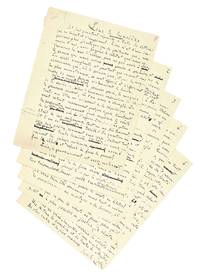
1898Zol1<p><strong>DREYFUS AFFAIR ZOLA Emile 1840-1902</strong></p><p>Unpublished autograph manuscript signed " <em>Emile Zola</em> "<br />Grosvenor Hotel London 19 July 1898 5 pages in-4 on ligned paper<br />Fold marks small hole at the folding junction on 5th folio without affecting the text<br /><br /></p><p><strong><u>Unpublished manuscript on the Dreyfus Affair</u></strong><br /><strong>Written six months after his open letter "J'accuse…!" and directly in its continuity this momentous manuscript testifies to the writer's tireless commitment to the cause of Captain Alfred Dreyfus</strong></p><p><em><br />" La vérité aveuglante est pourtant que ce sont nos adversaires qui dès le premier jour et pas les moyens les plus monstrueux se sont efforcés et s'efforcent encore de nous fermer violemment la bouche. </em>… <strong><em>De toute ma lettre au président de la République </em></strong>" J'accuse…! "<em> <strong>on avait extrait savamment quelques lignes limitant les poursuite uniquement pour empêcher la vérité de se faire jour sur l'affaire Dreyfus</strong>. Le plan était de me condamner tout en me bâillonnant. et l'on se souvient du terrible : 'La question ne sera pas posée' revenant sans cesse sabrant tout éteignant toute lumière.</em> …<strong><em> Enterrer l'affaire tout l'ardent désir est là</em></strong><em> il n'y a rien d'autre au fond de l'effroyable campagne qu'on mène contre nous </em>…<em> nous n'avons d'autre idée que de la faire vivre jusqu'à ce que la vérité et la justice triomphent </em>…<em> Les choses vont trop bien l'abcès mûrit nous avons tout intérêt à attendre qu'il crève. <strong>Comment ! Esterhazy est sous les verrous et l'on s'imagine que nous ne sommes pas curieux de savoir avant toute chose quelle partie de vérité va éclater! Je veux bien être condamné mais tout de même la complaisance au martyre a des bornes</strong></em> …<em> On aura beau jusque-là travestir nos actes prodiguer les mensonges et les ignobles injures nos amis savent que <strong>nous resterons les soldats impassibles du vrai incapables d'une reculade capables de tous les sacrifices</strong> et de toutes les attentes les plus rudes et les plus anxieuses. Emile Zola "</em></p><p><br />"Pour la Lumière" is an unpublished article by Émile Zola written in July 1898 six months after "J'accuse…!" in the midst of the Dreyfus affair. This is the only article on the Affair that Zola wrote during his exile. Intended to appear on the front page of <em>L'Aurore</em> it was never published as it was most likely censored by Georges Clemenceau who was editor of the newspaper. The latter used the present manuscript to publish "Pour la Preuve" on the front page of <em>L'Aurore</em> of July 20 1898. When reading both texts "Pour la Preuve" appears much more watered down than "Pour la Lumière" and largely expurgated in places. All the power of "Zolien" prose thus disappears in the guise of a bland and tasteless article.</p><p>The manuscript dates from the very beginning of the writer's London exile. On July 18 1898 Zola's conviction following the publication of "J'accuse…!" on January 13 of the same year was confirmed by the court of Versailles. On the orders of Georges Clemenceau and his lawyer Fernand Labori Zola left the France for London the same day even before the end of the trial.<br />The circumstances surrounding the writing of "Pour la lumière" are fairly well known from various sources: Zola's correspondence the diary that the writer kept during his exile published later under the title of "Pages d'exil" and a note that Bernard Lazare left on these events. The five pages of the article were written during the end of the day on July 19 1898 in a small room on the top floor of the Grosvenor Hotel in which the writer felt imprisoned: "the window was barred by the openwork frieze that crowns the whole immense building: a foretaste of the prison" he reported in his "Pages d'exil".<br />"Pour la Lumière" was to offer an answer to all those who accused the writer of fleeing justice while retrospective of his trial since his "coup d'éclat" of January 13 tipping point in the Dreyfus affair.</p><p>The manuscript which has remained unpublished to this day opens for Zola an exile that will last almost a year. No text of him concerning the Affair was published until June 1899 marking his return to his homeland.</p>
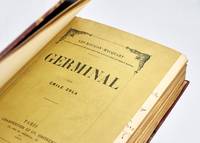
188582388Paris: Charpentier 1885. Fine. Charpentier Paris 1885 11.50 x 18.50 cm relié Charpentier Paris 1885 115x185cm bound. First edition. One of 150 numbered copies on hollande the only deluxe issue after 10 on papier japon. Half red morocco binding gilt date on spine marbled paper covers and endpapers. Original wrappers including the spine preserved. Set in an early 20th century binding signed by Alfred Farez. Our copy includes a two-page autograph letter dated and signed by Émile Zola to Octave Mirbeau. The author thanks him for the benevolent article he recently wrote about Germinal while defending himself from being considered as the leader of Naturalism: But why do you say that I lead naturalism I don't lead anything at all. I work in my own corner letting the world go where it pleases. A beautiful and rare copy perfectly established with a superb autograph letter signed about Germinal and Émile Zola's position within the École Naturaliste. Charpentier unknown
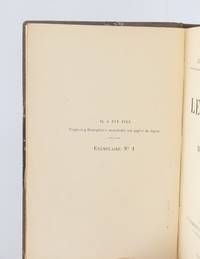
188888481Paris: Charpentier 1888. Fine. Charpentier Paris 1888 13 x 19.5 cm Relié First edition this one the no. 1 of 25 numbered copies on Japon most limited deluxe issue. Bound in grey half morocco smooth spine marbled paper boards mould-made endpapers original wrappers preserved pastedown bookplate top edge gilt contemporary binding signed by L. Pouillet. A rare and handsome copy in an attractive contemporary binding.  Charpentier hardcover
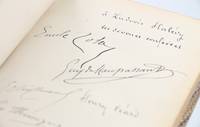
188087614Paris: Charpentier 1880. Fine. The Manifesto of Naturalism Charpentier Paris 1880 12 x 19 cm relié First edition. Half blue morocco shagreen smooth spine gilt date at foot of spine marbled paper boards contemporary binding. Exceptionally inscribed by Emile Zola to the playwright and opera librettist Ludovic Halévy with the autograph signatures of Guy de Maupassant Joris-Karl Huysmans Léon Hennique Paul Alexis and Henri Céard on the first flyleaf. Provenances: from the libraries of Ludovic Halévy and Marcel Lecomte with their bookplates on front pastedown. Our copy also includes on a flyleaf an autograph note by Ludovic Halévy: ""See a letter by Guy de Maupassant at the end of the volume. L.H. Inscribed by the six authors of the volume. Ludovic Halévy."" Voir une lettre de Guy de Maupassant à la fin du volume. L.H. Envoi autographe des six auteurs du volume. Ludovic Halévy. The reproduction of the famous letter sent by Guy de Maupassant to Halévy in 1880 is pasted onto six additional leaves at the end of the volume. It bears Halévy's penned note at the beginning and end of the letter: ""Cette lettre est de 1880 / 1880."" Cette lettre est de 1880 / 1880. A fine and rare uncut copy of this manifesto of Naturalism signed and inscribed by Emile Zola with the signatures of the other five authors to their librettist colleague. Halévy notably co-wrote the libretto of Georges Bizet's Carmen. Charpentier hardcover
188582388Charpentier | Paris 1885 | 11.50 x 18.50 cm | relié
188087614Charpentier | Paris 1880 | 12 x 19 cm | relié
1867670281 brochure in-8, E. Dentu, Paris, 1867, 48 pp. avec 2 planches hors texte (portrait et eau-forte de Maneet d'après Olympia)
188888481Charpentier | Paris 1888 | 13 x 19.5 cm | Relié
188053303Paris: Charpentier 1880. Fine. Charpentier Paris 1880 12 x 19 cm relié First edition an ordinary paper copy. Contemporary green half shagreen marbled paper boards spine with five raised bands and gilt flowers speckled edges. With the autograph signatures of every author of the ""Médan group"" involved in the writing of this famous collection of short stories: Guy de Maupassant Emile Zola Joris-Karl Huysmans Léon Hennique Paul Alexis and Henri Céard on the first endpaper. A very good and rare copy in a strictly contemporary binding. This true manifesto of Naturalism that constitutes Les Soirées de Médan is composed of six short stories: ""L'Attaque du moulin"" by Émile Zola ""Sac au dos"" by J.-K. Huysmans ""La Saignée"" by Henry Céard ""L'Affaire du grand 7"" by Léon Hennique ""Après la bataille"" by Paul Alexis and of course ""Boule de Suif"" by Guy de Maupassant qualified as a masterpiece by Gustave Flaubert. Charpentier hardcover
188053303Charpentier | Paris 1880 | 12 x 19 cm | relié
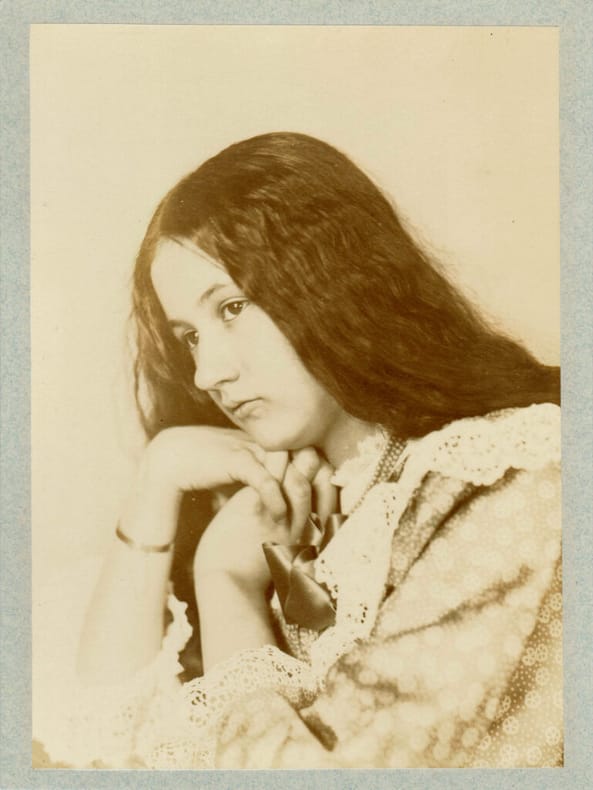
LCS-3437Superbe ensemble de 3 photographies originales prises par Zola à la fin de sa vie, représentant sa fille Denise alors âgée de 11 à 13 ans. Entre 1897 et 1902. 3 photographies originales, tirages argentiques d’époque. 230 x 167 mm.
188582309Sous étui bordé. Reliure plein maroquin rouge. Dos à nerfs. Toutes tranches dorées. Couverture conservée. Non rogné. Reliure signée DAVID.
188584976Reliure maroquin janséniste carmin. Dos à nerfs. Doublures de maroquin vermillon encadrées d?un filet doré, garde de jacquard de soie saumon et bisque à décor quadrillé. Touches tranches dorées. Non rogné. Couvertures conservées et doublées. Reliure signée Maylander.
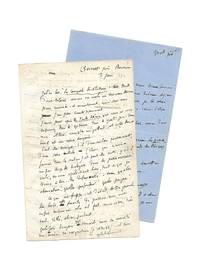
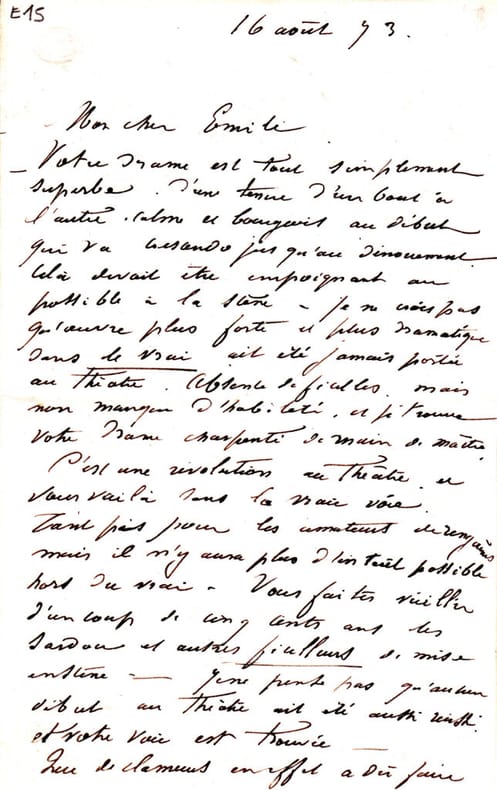
1874Flo16<p><strong>ZOLA FLAUBERT Gustave 1821-1880</strong></p><p>Autograph letter signed " Gve Flaubert " to Émile Zola<br />N.p.n.d Croisset 26th May 1874 1 p. in-8° on blue laid paper<br />Tear on fold old trace of previous mounting</p><p>And</p><p>Autograph letter signed " Gve Flaubert " to Émile Zola<br />Croisset près Rouen 3rd June Croisset 3 juin 1874 4 pp. in-8° on laid paper<br />Three words underlines by Alexandrine Zola old trace of previous mounting</p><p><strong>Set of two letters on <em>La Conquête de Plassans</em> forming undoubtedly Flaubert's most detailed critique of a novel by his friend Zola</strong></p><p>First letter</p><p><em>" Mardi soir.</em><br /><strong><em>C'est très fort ! mon brave homme ! Je l'ai lu tout d'une haleine & j'en suis étourdi.</em></strong><br /><em>Dans 8 jours je le relirai lentement ! p</em>ou<em>r voir si j'ai raison d'être enthousiasmé.</em><br /><em>J'ai reçu un g</em>ran<em>d choc comme d'une machine électrique.</em><br /><em>Vous ne serez pas poursuivi. <strong>La poésie vous sauvera</strong>. Mais je comprends les terreurs du jeune Charpentier.</em><br /><em>à dimanche une longue bavette sur votre truculent bouquin.</em><br /><em>tout à vous</em><br /><em>Gve Flaubert</em><br /><em>Je trouve Barbané très médiocre de fond & de forme" quoi qu'on dise ". Celui-là par exemple je ne le relirai pas. Je le sais. "</em></p><p>Second letter</p><p><em>" <strong>Je l'ai lue " La Conquête de Plassans " lue tout d'une haleine comme on avale un bon verre de vin puis ruminée – & maintenant mon cher ami j'en peux causer sciemment.</strong></em><br /><strong><em>J'avais peur après Le Ventre de Paris que vous ne vous enfonciez dans le système dans le parti pris. Mais non ! Allons vous êtes un gaillard ! et votre dernier livre est un crâne bouquin !</em></strong><br /><em>Peut-être manque-t-il d'un milieu proéminent d'une scène centrale chose qui n'arrive jamais dans la nature et peut-être aussi y a-t-il un peu trop de dialogues dans les parties accessoires ! Voilà en vous épluchant bien tout ce que je trouve à dire – de défavorable – mais quelle observation ! quelle profondeur ! quelle poigne !</em><br /><em>Ce qui me frappe c'est d'abord le ton général du livre la cette férocité de passion sous une surface bonhomme. Cela est fort mon vieux très fort râblé & bien portant.</em><br /><strong><em>Quel joli bourgeois que ce Mouret avec sa curiosité son avarice sa résignation p. 183-184 et son aplatissement ! L'abbé Faujas est sinistre et grand – un vrai directeur ! Comme il manie bien la femme comme il s'empare bien habilement de celle-là en la prenant par la charité puis en la brutalisant !</em></strong><br /><em>Quant à elle Marthe je ne saurais vous dire combien elle me semble réussie & l'art que je trouve au développement de son caractère ou plutôt de sa maladie. J'ai parti surtout remarqué les pages 194 215 et 227 261 264 267. – <strong>Son état hystérique son aveu final p. 350 & sq. est une merveille. Comme le ménage se dissout bien ! Comme elle se détache de tout et en même temps son moi son fond. Il y a là une science de dissolution profonde.</strong></em><br /><em>J'oublie de vous parler des Trouche – qui sont adorables comme canailles – & de l'abbé Bourette</em> Bourrette<em> exquis avec sa peur & sa sensibilité.<br />La vie de province les jardins qui se regardent le ménage Paloque les Rastoil & les parties de raquette parfait parfait.<br /><strong>Vous avez des détails excellents des phrases des mots qui sont des bonheurs</strong> page 17 " … la tonsure comme une cicatrice " 181 " j'aimerais mieux qu'il allât voir les femmes " 89 " Mouret avait bourré le poêle " etc.<br />Et le Cercle de la jeunesse ! Voilà une invention vraie.<br />J'ai noté en marge bien d'autres endroits.<br />– Les détails physiques qu'Olympe donne sur son frère – la fraise<br />– La mère de l'abbé prête à devenir sa maquerelle 152 – et son coffre ! 338.<br />– <strong>L'âpreté du prêtre qui repousse les mouchoirs de sa pauvre amante parce que cela sent " une odeur de femme "</strong>.<br />– " Au fond des sacristies le nom de Mr Delangre… " et toute la phrase qui est un bijou.<br /><strong>Mais ce qui écrase tout – ce qui couronne l'œuvre c'est la fin !</strong> Je ne connais rien de plus empoignant que ce dénouement. La visite de Marthe chez son oncle – le retour de Mouret & l'inspection qu'il fait de sa maison ! La peur vous prend comme à la lecture d'un conte fantastique & vous arrivez à cet effet-là par l'excès de la réalité par l'intensité du vrai ! Le lecteur sent que la tête lui tourne comme à Mouret lui-même.<br />L'insensibilité des bourgeois qui contemplent l'incendie assis sur des fauteuils est charmante. & vous finissez par un trait sublime : l'apparition de la soutane de l'abbé Serge au chevet de sa mère mourante comme une consolation ou comme un châtiment !<br />Une chicane cependant. Le lecteur qui n'a pas de mémoire ne sait pas quel instinct pousse à agir comme ils font Me Rougon et l'oncle Macquart. Deux paragraphes d'explications eussent été suffisants. N'importe ça y est et je vous remercie du plaisir que<br />vous m'avez fait.<br />Dormez sur vos deux oreilles c'est une œuvre<br /><strong>Mettez de côté p</strong></em>ou<strong><em>r moi toutes les bêtises qu'elle inspirera. Ce genre de documents m'intéresse.</em></strong><em><br />Je vous serre la main très fort & suis<br />vous n'en doutez pas<br />vôtre<br />Gve Flaubert "</em></p><p>The fourth volume of <em>Rougon-Maquart</em> <em>La Conquête de Plassans</em> was published in the spring of 1874 by Charpentier and tells the story of Father Faujas a Bonapartist priest ready to do anything to reconquer the city of Plassans fallen into the hands of the legitimists royalists. In this violent attack on the clergy Zola depicts a Church complicit in political power manipulative using the naive piety of the faithful especially women through practices where faith is in fact only a veil masking other ambitions.</p><p>Flaubert first emits a brief hot reaction after a first reading having left him "dizzy". He says he is "shocked" and rightly so because he will a week later give himself to a criticism this time without reservation going so far as to quote passages on the recently published novel of his friend Zola.<br />It should be noted that it is not without some apprehension that Flaubert undertakes the reading of this fourth volume of <em>Rougon-Macquart</em> having succeeded the much maligned <em>Ventre de Paris</em>. He does not hide it this last novel had displeased him because according to him being too deeply in the naturalist doctrine the "system the bias" through the small Parisian people.<br /><em>La Conquête de Plassans</em> offers a different romantic formula.<br />We also notice that Flaubert revels in the way the bourgeoisie is portrayed the same provincial bourgeoisie he himself had mocked in his previous works : <em>Madame Bovary</em> and <em>L'Éducation sentimentale</em>.<br />Finally emphasizing the Abbot's hold on the Mouret couple and more particularly on Marthe whose decline will sink into madness Flaubert appreciates with what scientific precision and coldness Zola describes the ravages of the imbalance that strikes the two characters.</p><p><u>Bibliography:</u><br />Gustave Flaubert <em>Correspondance</em> éd. Jean Bruneau Pléiade t. IV p. 801 first letter<br />Gustave Flaubert <em>Correspondance</em> éd. Jean Bruneau Pléiade t. IV pp. 805-806 second letter<br />Flaubert <em>Correspondance</em> éd. René Descharmes Le Centenaire t. III pp. 541-543 second letter</p><p><u>Provenance:</u><br />Émile Zola's personal collection<br />Then Alexandrine Zola by descent<br />Then famille Le Blond-Zola by descent</p>
189886837Weybridge 1898. Fine. In the midst of universal cowardice you wouldn't believe how moved I am to feel a few faithful people around me Weybridge 19 août 1898 13.50 x 20.50 cm quatre pages sur un bifeuillet Autograph letter signed by Emile Zola to Octave Mirbeau dated August 19 1898. Four pages in black ink on a bifolium written to Octave Mirbeau. Usual trace of horizontal fold. Published in Zola's uvres complètes t. XLIX ed. F. Bernouard 1927 p. 808. Exceptional testament of friendship and self-sacrifice from Emile Zola in exile after being sentenced to the maximum penalty for writing ""J'accuse!"" the most famous article proclaming Captain Dreyfus's innocence. After his historic article in L'Aurore Zola was sentenced a first time by a jury on February 23 1898 to one year's imprisonment and a fine of three thousand francs. The verdict was overturned and the case was referred back to the Versailles court of justice which upheld only three of the eight hundred lines in ""J'accuse!"" as a charge. Unwilling to accept such a stifling of the proceedings Zola's defense decided to default and the conviction was upheld. After his eventful exit from the courthouse Clémenceau and his lawyer Labori advised him to leave the country before the judgment could become enforceable. Zola left on the last train that evening with only a shirt hastily rolled up in newspaper as luggage. A month after his departure the writer writes this superb reply to a letter from his loyal supporter Octave Mirbeau who had written to him a few days earlier: ""We think only of you; there isn't a minute of our existence that you don't fill entirely"" August 14 1898. Settled in the London suburb of Weybridge he angrily receives the ""echoes of Paris"" and is enraged to see Esterhazy the true culprit of the Dreyfus Affair once again cleared - this time by civil courts. ""My dear friend Thank you for your kind letter . In the midst of universal cowardice you wouldn't believe how moved I am to feel a few faithful people around me. My existence here has become possible since I've been able to get back to work. Work has always comforted me saved me. But my poor hands are still trembling with a shiver that cannot end. You wouldn't believe the outrage I feel at the echoes from France that reach me. In the evening when daylight falls I think it's the end of the world. You think I should go back and make myself a prisoner without returning to Versailles. That would be too good to have the peace of prison and I don't think it's possible. I didn't set out to go back like that; our attitude would be neither logical nor beautiful. Rather I think I'm in indefinite exile unless I run the abominable risk of a new trial. Besides we won't be able to make up our minds until October. And by then who knows Although I'm counting on a miracle in which I have little faith. So let us be brave my friend and let our work be done! If I can keep working things won't be too bad yet. . I shake your hand my good friend the faithful and rare friend of bad days"". Poignant manuscript confession from Zola forced into exile. Death would strike him in the midst of his glory days without him ever knowing the outcome of the affair he had devoted so many years of struggle. unknown
1898867501898. Fine. ""The nervous and passionate man that I am is not made for exile for resignation and silence"" 15 décembre 1898 13.50 x 20.50 cm quatre pages sur un bifeuillet Autograph letter initialed by Emile Zola dated in his hand April 10 1898. Four pages in black ink on a bifolium addressed to Octave Mirbeau's wife. Horizontal fold mark inherent to mailing very rare and discrete foxing on the first leaf. A particularity of this exile correspondence Zola chose to omit his signature in his letters - or as here to initial only protecting himself from censorship or police investigations. Published in his Complete Works vol. XXV ed. F. Bernouard 1927 p. 820. Heart-wrenching letter by Zola written in complete exile the most unknown retreat the most absolute silence. The justiciar writer is secluded in England forced to leave Paris after being condemned to the maximum penalty for having written ""J'accuse!"" during these cruel hours. After his historic cry from the heart in l'Aurore Zola was condemned a first time by the Seine jury on February 23 1898 to one year in prison and three thousand francs fine. The judgment was annulled on appeal and the case was referred to the Versailles assizes which retained only three lines out of the eight hundred that ""J'accuse!"" contains as the charge. To not accept such a stifling of the debates Zola's defense decided to default and the condemnation was confirmed. The very evening of his tumultuous exit from the Palace of Justice Clémenceau and his lawyer Labori advised him to leave the country before the judgment could become executable. The writer struggles to bear this voluntary exile so contrary to his character and opens his heart in this missive he addresses to Mirbeau's wife who was for him unconditional support alongside her husband. He does not hide the feeling of guilt that gnaws at him and exposes his strategy: ""Dear Madam and friend what a good and comforting letter you wrote to me! I confess that I needed this cordial somewhat for the nervous and passionate man that I am is not made for exile for resignation and silence. You perfectly guessed that my torture is to be sheltered in too much peace and security while others are fighting. And you know that my resolution was taken to say nothing to anyone and to return one fine morning. Now here you are writing to me and you are not the only one everyone writes to me that I must stay where I am under penalty of unleashing the worst catastrophes. I don't believe it I confess I remain convinced that my project was brave even useful and that we would have been victorious once more. But faced with unanimous opinion I must bow. As I write to Labori this is the greatest sacrifice I have yet made to the cause for one cannot imagine all that I suffer here morally intellectually in the powerlessness to act in which I find myself. And I do not speak of my poor heart torn from all that it loved. As for leaving this country I will not even attempt it. All my suffering would be renewed. I have reflected on it at length all good reasons are that I stay where I am even if the affair must last months more. It seems to me that this is better for it would only be lacking that I go amuse myself in the sun while others are fighting. You already guess the articles of the vile press France sold to Italy for the thirty pieces of silver of Judas. Tell your husband how much I love and admire him. There he is thrown into action too and he behaves superbly in it. Thanks also to both of you for the affection with which you surround my dear wife devoting yourselves to our interests ensuring that she is not alone in Paris in the midst of battle. I am infinitely touched by your tenderness and it is one of my great consolations. I take the liberty of embracing you dear madam and friend and of also embracing your valiant husband with all my heart."" While his own camp forces him into exile events unfold in Fran unknown
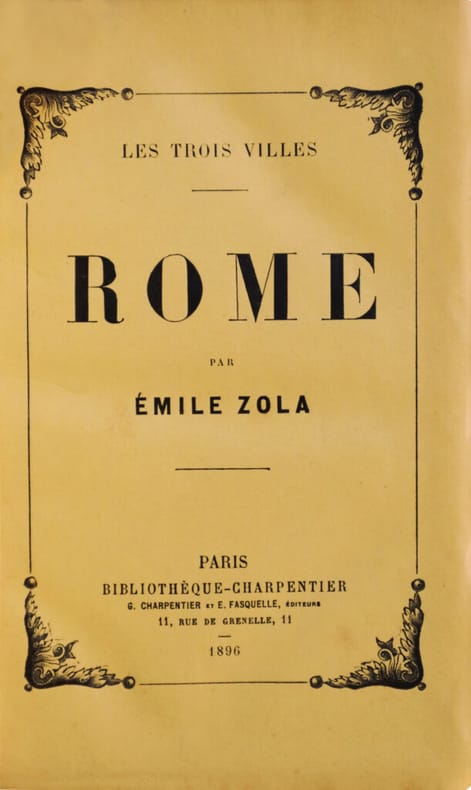
LCS-18613Exceptionnel exemplaire sur papier de Chine couleur jonquille, inconnu des bibliographes. Paris, Bibliothèque-Charpentier, 1896. In-8: (2) ff. dont le faux-titre portant une note de G. Charpentier et E. Fasquelle, 751 pp., (1) p. Plein maroquin janséniste havane, dos à cinq nerfs, roulette sur les coupes, large dentelle intérieure, tête dorée, tranches dorées sur témoins, couvertures jaunes conservées. Reliure de l’époque signée par Charles Meunier. 188 x 116 mm.
188785004Reliure demi-maroquin carmin à coins. Dos lisse à décor d?encadrement de filets et de fleurons, date dorée au talon. Tête dorée. Exemplaire à grands témoins. Ex-libris sur contreplat. Infimes frottements d?usage. Reliure signée Pouillet.
189886837[Weybridge] 19 août 1898 | 13.50 x 20.50 cm | quatre pages sur un bifeuillet
18988675015 décembre 1898 | 13.50 x 20.50 cm | quatre pages sur un bifeuillet
187789251877 ÉDITION ORIGINALE rare et très recherchée. À Paris, G. Charpentier Éditeur, 1877. 1 volume, in-12° (12 x 17.5 cm), III + [1bl] + 569 + [1bl] pages. Achevé dimprimer à Corbeil, Typographie et Stéréotypie de Crété, 1876. Reliure en demi-percaline à grand coins bleu roi, dos lisse avec pièce de titre en maroquin vert et lettres dorés, date et une décoration florale. Beau papier-marbré sur les contre-plats, deuxième et troisième de couverture. Ouvrage enrichi dune rare dédicace autographe de lauteur à Léon Gambetta (1838-1882), important homme dÉtat français de la Troisième République. Deux petites taches de rousseur sur la page de titre et le faux-titre, une petite tache de huile de lampe en bas des pages 300-330, autrement ouvrage en très bon état.
189087244Sous étui bordé. Reliure postérieure plein maroquin bleu nuit. Dos lisse avec date au talon. Couverture conservée. Reliure signée DEVAUCHELLE.