Emile ZOLABiblio.com
3 001 résultats
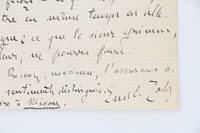
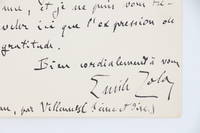
190187263Paris 1901. Fine. ""I have finished my crushing task and I am going to rest a little because I am exhausted"" Paris 4 Mars 1901 13.50 x 20.50 cm deux pages sur un bifeuillet Autograph letter signed by Emile Zola addressed to Octave Mirbeau dated in his hand March 4 1901. Two pages in black ink on a bifolium. Horizontal fold mark inherent to postal delivery. Published in his Correspondence vol. X p. 242. Precious letter from Zola to his great supporter Octave Mirbeau who had paid his fine at the end of his second trial for ""J'accuse!"". Now amnestied the writer attempts - in vain - to recover the sum to reimburse him. After his historic cry from the heart in l'Aurore Zola was first condemned by the Seine jury on February 23 1898 to one year in prison and a three thousand franc fine. The judgment was overturned on appeal and the case was referred to the Versailles assizes which retained only three lines out of the eight hundred that make up ""J'accuse!"" as grounds for accusation. To avoid accepting such a stifling of the debates Zola's defense decided to default and the conviction was confirmed on July 18 - Zola left that very evening for London to avoid prison. The tribunal also demanded 7555 francs from him which Mirbeau spontaneously decided to pay from his own funds. It was also Octave Mirbeau who prevented the seizure of Zola's furniture by obtaining from Joseph Reinach the 40000 francs in damages that Zola had been condemned to pay to the three pseudo-experts in handwriting that he had ""defamed"" in J'accuse!. Following the amnesty law that ended judicial proceedings for ""all criminal or delictual acts connected to the Dreyfus affair"" Zola was acquitted but was not reimbursed. This letter attests to the writer's desire to compensate Mirbeau for his act of generosity: ""Labori his lawyer will attempt an approach to try to recover the seven thousand and some francs that you paid on my behalf for the Versailles affair. He simply wishes to have a letter from you in order to show it and thus be authorized to speak in your name. You certainly do not have down there the receipt that was issued to you. Perhaps you remember its terms. In any case if we must wait we will wait for nothing is urgent after all. The important thing today is only to test the ground to see if they will return the money to us"". However the prosecutor's office refused his request. Furious Zola wrote two days later a letter to Labori asking him to give up claiming the slightest cent - he published it in L'Aurore under the title ""Let them keep the money"": ""they torture the text of the law and the State too keeps the money. If the prosecutor's office persists in this interpretation it will be yet another monstrosity in the unworthy way they have refused me all justice . I do not want to be complicit by accepting anything whatsoever from their amnesty ."". According to Pierre Michel these unsuccessful recovery attempts of which this letter bears witness ""incited Zola to adopt an attitude that emphasizes even more his disinterestedness and that of his 'friend' who is not named in the L'Aurore article probably at Mirbeau's request."" Dreyfus's pardon and the amnesty of his supporters did not satisfy the writer but nevertheless marked the end of long years of struggle: ""I have finished my crushing task and I am going to rest a little because I am exhausted"". Struck down in full glory the following year he would not be able to witness Captain Dreyfus's rehabilitation. Beautiful lines from Zola to Mirbeau who gave him the means to continue his fight for justice. unknown
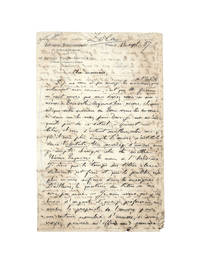
188379106Bénodet 1883. Fine. Bénodet 10 septembre 1883 13.20 x 20.30 cm 2 pages sur un double feuillet Signed autograph letter by Emile Zola - apparently unpublished - addressed to an unknown correspondent written in black ink on a double sheet. Folds inherent to mailing. Interesting letter relating the translation of Emile Zola's works and the legal disputes inherent to their clandestine distribution. This missive is visibly addressed to a correspondent considered for the German translation of La Joie de vivre: ""I would ask you to give me the promptest possible response regarding the translation of La Joie de vivre; for I am already receiving proposals from Germany and I would like to know where I stand."" In this autumn of 1883 Zola - though vacationing in Brittany - is very occupied with managing the translation of his works which he handles directly with publishers. We see here the determination with which he conducts negotiations: ""I repeat that I will only accept a fixed sum paid in advance. It is simpler and without possible surprises."" But things are not simple and Zola whose works already enjoy great success must fight against the clandestine publication of his novels. Completely overlooked by biographers the disputes with Hungarian publisher Gustav Grimm are nonetheless a leitmotif of Zolian correspondence: ""Monsieur Grimm of Budapest is a simple thief who has my novels translated as they are published in French newspapers without any authorization. Already the Neue Freie Presse of Vienna has sued him in my name. But it appears we have no treaty with Hungary. I await the signing of a treaty which they say is imminent."" Indeed Grimm had already published without Zola's authorization German translations of two novels: Nana 1881 and Pot-Bouille Der häusliche Herd 1882. These illegal publications discouraged German publishers Curt Busch and George Kuhr who very interested in distributing the novel to German-speaking readers declared forfeit. Gustav Grimm who finally agreed to respect commercial treaties won the battle and published the very first German translation of La Joie de vivre in 1889 under the title Die Lebensfreude. The man whom Zola here calls a ""simple thief"" would finally obtain authorization to distribute the German translation of the entirety of the twenty volumes of the Rougon-Macquart between 1892 and 1899. Interesting letter revealing the editorial mechanisms of the Rougon-Macquart and testifying to the ardor with which Zola conducted negotiations inherent to the translation of his great hereditary fresco. unknown
188279109Médan 1882. Fine. Médan 16 novembre 1882 13.60 x 21.40 cm 2 pages sur un double feuillet - enveloppe jointe Autograph letter signed by Emile Zola - apparently unpublished - addressed to Léon Carbonnaux written in black ink on a double sheet. Folds inherent to mailing. Envelope included. Important testimony to the colossal documentation work and the capital role of Emile Zola's informants in depicting his immense natural and social fresco. This letter was sent to Léon Carbonnaux department head at Bon Marché who transmitted precious information to Emile Zola for the creation of the eleventh volume of the Rougon-Macquart series: Au Bonheur des Dames. Only two letters from Léon Carbonnaux to Emile Zola are known: they can be consulted in the digitization of the preparatory file for Bonheur des Dames made available online by the Bibliothèque nationale de France. However we know thanks to this same file which contains a long section entitled ""Notes Carbonnaux"" that this department head at Bon Marché provided a significant amount of information to Zola particularly about employee customs and their remuneration. The two men undoubtedly met when Emile Zola eager for information about the functioning of department stores conducted field research in February and March 1882. ""J'ai pris l'inventaire comme cadre à un de mes chapitres. D'ailleurs je n'ai spécialement besoin que du travail dans le rayon des confections et dans le rayon des soieries. Il est inutile de me renseigner sur les autres rayons."" ""I have taken the inventory as the framework for one of my chapters. Moreover I specifically only need the work in the ready-to-wear department and in the silk department. It is unnecessary to inform me about the other departments."" Thanks to this important letter we understand that it was Léon Carbonnaux who provided the essential information to Emile Zola for writing his very beautiful eleventh chapter devoted to the inventory: ""Vous avez eu l'obligeance de me donner certains détails sur l'inventaire. Vous m'avez dit qu'on choisissait le premier dimanche d'août qu'on fermait les portes et que tous les employés s'y mettaient. On vide toutes les cases n'est-ce pas on jette les marchandises sur les comptoirs ou à terre et l'inventaire n'est terminé que lorsqu'il n'y a plus absolument rien en place."" ""You were kind enough to give me certain details about the inventory. You told me that the first Sunday in August was chosen that the doors were closed and all the employees set to work. All the compartments are emptied aren't they The merchandise is thrown onto the counters or on the ground and the inventory is only finished when there is absolutely nothing left in place.""The final version of Bonheur des Dames contains all the precious information provided by the department head of Bon Marché: ""Le premier dimanche d'août on faisait l'inventaire qui devait être terminé le soir même. Dès le matin comme un jour de semaine tous les employés étaient à leur poste et la besogne avait commencé les portes closes dans les magasins vides de clientes. . Neuf heures sonnaient. . Dans le magasin inondé de soleil par les grandes baies ouvertes le personnel enfermé venait de commencer l'inventaire. On avait retiré les boutons des portes des gens s'arrêtaient sur le trottoir regardant par les glaces étonnés de cette fermeture lorsqu'on distinguait à l'intérieur une activité extraordinaire. C'était d'un bout à l'autre des galeries du haut en bas des étages un piétinement d'employés des bras en l'air des paquets volant par-dessus les têtes ; et cela au milieu d'une tempête de cris de chiffres lancés dont la confusion montait et se brisait en un tapage assourdissant. Chacun des trente-neuf rayons faisait sa besogne à part sans s'inquiéter des rayons voisins. D'ailleurs on attaquait à peine les casiers il n'y avait encore par terre que quelques pièces d'étoffe. La machine devait s'échauffer si l'on voulait finir le soir même. unknown
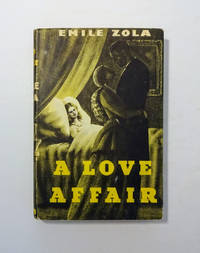
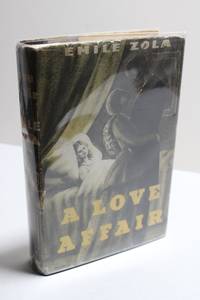
19578286<p>Nice condition vintage copy of "A Love Affair" by EMILE ZOLA with its original dust jacket. 1957; The Citadel Press; New York. The dust jacket is un-clipped with the original price intact on the front flap. The jacket comes with a clear protective sleeve - not shown. From the dust jacket: "This fine novel reveals an unfamiliar side of Zola's art but one no less likely to appeal to his new and already large following of readers in English. It is a simple poignant story of frustrated love and renunciation and a penetrating glimpse into the terrors of childish jealousy. Paris forms the background to the story the Paris landscape seen through the windows of Helene's room drawn at all hours and in all seasons in a series of unforgettable word-pictures. But Zola's mastery of atmosphere and description need no comment; what is most remarkable about this novel is his precise and sympathetic comprehension of the intricacies of the human heart."<br /><br />Condition:<br />Clean covers and spine. Sharp cover corners. Tight binding with no cracks and no loose pages. Both covers are firmly attached. Nice interior - the pages are clean and appear unread with only some very light age-toning. There are a couple tiny stain/foxing marks on the long edge of the text block. Overall the book is in Near Fine condition. The dust jacket is un-clipped with the original price intact on the front flap; the back cover has light soiling and a light brown-ish stain near the right edge; tiny tears at the top and bottom edges of the spine and at the flap corners.overall the jacket is in Very Good condition. The dust jacket comes with a clear protective sleeve - not shown.</p> The Citadel Press hardcover
19571025Elek 1957. 1st UK thus. Hardback. Very good/Good. Introduced and translated by Jean Stewart. In a break from the bleak social realism that had preceded this is more of a psychological study that Zola himself found a little too trivial at times. Nonetheless it is held up as one of the classics of French literature. Included is a contemporary newspaper review by well-known English author Angus Wilson. There is some foxing to page and block edges; it opens a little loosely. The jacket has some loss to spine bottom and lower edge. Rear a little grubby. But not price clipped and largely intact in good presentable condition. Elek unknown
0266724264.Ghardcover. Good. Access codes and supplements are not guaranteed with used items. May be an ex-library book. hardcover
1527683095.Gpaperback. Good. Access codes and supplements are not guaranteed with used items. May be an ex-library book. paperback
1895FM19810Philadelphia: J. B. Lippincott Company 1895. Translated with a preface by Ernest Alfred Vizetelly and illustrated with ninety-four wood engravings.; Blue ribbed cloth with gilt titles; A very good copy; 386 pages. Size: 5.5"x8.25". Hardcover. Illus. by E. Thevenot. J. B. Lippincott Company Hardcover
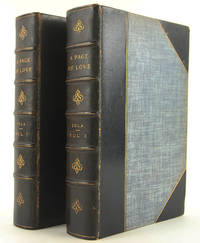
1897EE-0832-13778George Barrie and Son 1897. hardcover. Very Good. 0x0x0. 1897 limited edition Copy 519 of 1000 'Printed only for subscribers' G. Barrie & Son Philadelphia Pennsylvania two 6 x 8 3/4 inches tall half leather bound volumes blue cloth over brown leather spine and tips five raised bands and gilt decorations and lettering to spines top page edges gilt fore and bottom page edges untrimmed marbled endpapers printed on Japanese vellum paper illustrated with 11 etchings by Albert Duvivier with captioned tissue guards 319 361 pp. 680 pages total. Slight soiling rubbing and edgewear to covers most noticeable to tips and along joints but the bindings are quite solid. Very mild age toning with a couple of instances of slight marginal soiling. Light dampstaining to lower edges of blank rear endpapers of Volume 1. Otherwise a very good set - clean and unmarked - in a fine binding with great shelf appeal. Note that this is a heavy and oversized set so additional postage will be required for international or priority orders. ~EE~ 5.0P A magnificently bound limited edition set of the widely praised 1897 English translation by T. F. Rogerson of Une page d'amour A Page of Love the eighth novel in the 20-novel 'Rougon-Macquart' series by French novelist Emile Zola 1840-1902 set among the petite bourgeoisie in Second Empire suburban Paris The Rougon-Macquart series illustrates Zola's theory of naturalism. Zola brought to the novel 'a force unprecedented in legally published French fiction' Hollier 775. George Barrie and Son hardcover
0267329806.Ghardcover. Good. Access codes and supplements are not guaranteed with used items. May be an ex-library book. hardcover
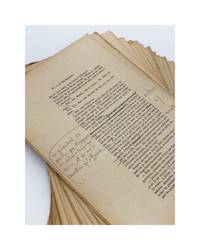
1890Zola7<p><strong>ZOLA Emile 1840-1902</strong></p><p>Corrected proofs for his novel <em>The Beast within</em><br />Paris January 1890 45 proofs printed on recto<br />Very good overall condition except some slightly frayed margin on the first folios some browning</p><p><strong>A precious complete set of proofs for the original edition of his masterpiece <em>La Bête humaine</em> the seventeenth volume in the <em>Les Rougon-Macquart</em> series.</strong></p><p><strong><u>At the heart of the writer's creative process:</u></strong><strong> a total of 45 proof sheets with extensive autograph corrections in Zola's own hand.</strong></p><p><strong><u>One of the very rare Zolian relics still in private hands</u></strong></p><p><strong><em><u>La Bête humaine</u></em></strong><strong><u> in the Making</u></strong><br />The proof sheets in this set bear witness to the author's progress in writing his masterpiece. Émile Zola undertook a meticulous rereading of every line refining the style striking through passages and making corrections to achieve greater accuracy in tone and rhythm. As such the set is extensively annotated with the exception of proof sheets no. 35 to 38. The most substantial corrections appear on sheets no. 2 to 13 and no. 40 which correspond to Chapters I to IV and XI. Special attention was also paid to typography further evidence of the naturalist writer's thorough and exacting rereading.<br />Georges Charpentier added penciled notes on twenty-nine of the proof sheets along with two annotations instructing Zola to henceforth adhere to the paginated layout.</p><p><u>These proofs represent an intermediate stage between the manuscript and the published text as evidenced by certain excerpts:</u><br />– " Roubaud près de sa femme écoutait en fixant également sur elle des yeux vacillants. Il y eut une minute de mortelle angoisse " become " Près de sa femme Roubaud écoutait en fixant également sur elle ses gros yeux pâles " then in the final version " Près de sa femme Roubaud écoutait en fixant sur elle ses gros yeux vifs ".<br />– " Seulement ce matin-là Roubaud dut reprendre haleine comme si sa respiration lui manquait à la suite d'un saisissement inutile. Il hésitait il chercha avant de se rappeler ce que lui avait dit son collègue " become " Seulement ce matin-là Roubaud hésitant dut chercher avant de se rappeler ce que lui avait dit son collègue ".</p><p>Folio #40 includes an important addition of seventeen lines in which the author plays with the lyrical register. Love and death invite each other:<br /><em>" – Dis mon chéri pourquoi donc ai-je peur Sais-tu toi quelque chose qui me menace </em><br /><em>– Non non sois tranquille rien ne te menace. </em><br /><em>– C'est que tout mon corps tremble par moments. Il y a derrière moi un continuel danger que je ne vois pas mais que je sens bien… Pourquoi donc ai-je peur </em><br /><em>– Non non n'aie pas peur… Je t'aime je ne laisserai jamais personne te faire du mal… Vois comme cela est bon d'être ainsi l'un dans l'autre ! </em><br /><em>Il y eut un silence délicieux. " </em></p><p><strong><u>The novel<br /></u></strong><em>La Bête humaine</em> the seventeenth volume in the <em>Rougon-Macquart</em> saga was written between May 1889 and January 1890 and released in bookstores by Georges Charpentier during the first week of March 1890 following its serialization in the weekly magazine <em>La Vie populaire</em> from November 14 1889 to March 2 1890. Like <em>Germinal</em> 1885 it focuses on a facet of the industrial and working-class world of the late 19th century.<strong><br /></strong>In this judicial novel the main characters are murderers. Émile Zola wove together several real-life criminal cases likely including the infamous crimes of "Jack the Ripper" creating a bleak violent and monstrous tableau in which killings occur for motives as varied as greed jealousy or even hereditary madness. Through this narrative—and his exploration of remorse—Zola situates his work within contemporary debates on the moral and social meaning of crime. His writing was nourished by readings of <em>Crime and Punishment</em> by Dostoevsky in a French translation published in 1885 and criminological studies by Cesare Lombroso Prosper Lucas and Gabriel Tarde.<br />He also takes the opportunity to satirize a judiciary subservient to political power through the character of Judge Denizet. The judicial error he commits underscores the limits of justice as administered by men and the inherent fallibility of any rational method.<br />Readers were struck by the confrontation between tradition and modernity by the stunning fusion of primal instinct and technological advancement. The locomotive is endowed with human traits becoming a character in its own right—ultimately transformed into a tragic "blind and deaf beast loosed amid death."<br />Finally this lyrical element is enriched by a fantastical dimension as Henri Mitterrand explains: <em>" La Bête humaine</em> endures through its fantastical elements the intensity of its leitmotifs and rhythms and the perfection of certain passages—such as the final ones—where the extravagance of the action and the baroque modernity of the setting come together in astonishing harmony. <em>" </em></p><p><u>Literary relics of Émile Zola are extremely rare in private hands</u>. In accordance with the novelist's wishes his wife Alexandrine Zola entrusted nearly all of his manuscript materials to the nation in 1904. As a result the invaluable dossiers and a large portion of the corrected proofs for <em>Les Rougon-Macquart</em> and <em>Les Trois Villes</em> are now held by the Bibliothèque nationale de France BnF.</p><p>This set of proofs was unknown to Henri Mitterand when he prepared his edition of <em>La Bête humaine</em> for the Bibliothèque de la Pléiade Paris Gallimard NRF 1966; reissued in 2021.</p> Charpentier
19570106459<p>Elek Books: 1957. First UK edition. Translated from the French by Brian Rhys. Hardcover with unclipped dust cover. Dust cover intact but wear to its extremities. Some marks to cover- now protected by a lightweight mylar cover. Previous owners name to FFEP. Binding tight and text clean.</p> Elek Books hardcover
Zola11<p><strong>ZOLA Émile 1840-1902</strong></p><p>Autograph letter signed " Emile Zola " to Albert Lacroix<br />Paris 13 September 1867 2 pp. in-8° in black ink letterhead of the <em>Librairie Internationale</em><br />" Zola " annotation from period and in black ink from another hand small gaps in the lower margin affecting a letter slits in the folds discreet repairs with Japan paper</p><p><strong>A remarkable letter from the very young Zola a few weeks before the launch of <em>Thérèse Raquin</em> the first novel that made him famous to the general public – Expressing a pressing financial need the writer nevertheless cherishes high ambitions for the success of his work</strong></p><p><strong><u>It is in this very same letter that Zola first announces the final title of the book</u></strong></p><p><em>" Cher Monsieur<br />Si je ne vous ai pas envoyé les numéros de <u>L'Artiste</u></em>¹ <em>qui contiennent mon roman c'est que M. Guérin</em> employé de la <em>Librairie Internationale</em> <em>m'avait assuré que vous deviez avoir ces numéros à Bruxelles. Aujourd'hui encore il me dit que votre maison de Paris vous les enverra si vous ne les avez pas. Donc je ne m'inquiète pas de ce détail. <strong>Quant au titre il sera d'autant meilleur selon moi qu'il sera plus simple. L'œuvre s'intitule dans <u>L'Artiste</u> : <u>Un Mariage d'amour</u> mais je compte changer cela et mettre : <u>Thérèse Raquin</u> le nom de l'héroïne. Je crois que le temps des titres abracadabrants est fini et que le public n'a plus aucune confiance dans les enseignes. D'ailleurs la question du titre n'en sera pas une</strong>. Je vous avoue que j'ai besoin d'argent et que je préférerai vous vendre la propriété de l'œuvre pour un certain nombre d'années si vous croyez pouvoir m'offrir une somme raisonnable. Dans le cas où vous ne voudriez pas acheter l'œuvre je vous demanderais le douze pour cent sur le prix fort payable le jour de la mise en vente. Je tiens surtout à éviter les ennuis qui se sont produits au sujet de <u>La Confession de Claude</u></em> son deuxième ouvrage publié également chez Lacroix deux ans auparavant<em>. Il est préférable que la question argent soit réglée sur-le-champ entre nous sans avoir besoin de recourir plus tard à des inventaires.<br />Veuillez chez Monsieur me donner une réponse définitive au plus tôt. <strong>Je tiens à ce que ce livre paraisse en octobre</strong>. Prenez connaissance de l'œuvre laissez-moi choisir un titre bien simple</em>²<em> et faites-moi à votre tour vos conditions. Dites-moi combien vous me donneriez pour la propriété de l'œuvre pendant un nombre fixé d'années. L'affaire peut être conclue en quelques jours et c'est ce que je désire.<br /><strong>En deux mots voici le sujet du roman : Camille et Thérèse deux jeunes époux introduisent Laurent dans leur intérieur. Laurent devient l'amant de Thérèse et tous deux poussés par la passion noient Camille pour se marier et goûter les joies d'une union légitime. Le roman est l'étude de cette union accomplie dans le meurtre ; les deux amants en arrivent à l'épouvante à la haine à la folie et ils rêvent l'un et l'autre de se débarrasser d'un complice. Au dénouement ils se suicident. L'œuvre est très dramatique très poignante et je compte sur un succès d'horreur.</strong><br />Une prompte réponse je vous prie.<br />Votre dévoué<br />Émile Zola "</em></p><p>1- Illustrated weekly magazine from 1831 to 1904 renowned for having published prints and quality writers. The novel originally titled <em>Un Mariage d'amour</em> had previously been serialized in the magazine.</p><p>2- On November 9 1867 A. Lacroix and Verboeckhoven booksellers-publishers informed Zola that they had given the proof to print the title and cover of <em>Thérèse Raquin</em> adding: "We have suppressed the word <em>study</em> which was in our opinion of the worst effect on the cover and which on the other hand could have harmed the volume in the sense that it might make people believe that your volume was an arid and too serious work and thereby alienate a whole class of readers. In any case this subtitle seemed useless to us; Isn't that your opinion too "</p><p>The young Zola then 27 years old already gives us a glimpse of the confidence that would later be known for that of a writer who was quite certain of his work. He nevertheless remained in need which he explains here to Lacroix the latter being known among other things for having been the first publisher of <em>Les Misérables</em>.</p><p><u>" I think the time for crazy headlines is over… "</u><br />What is implied by Zola's choice to call the book <em>Thérèse Raquin</em> tends to erase the stage of serialization in <em>L'Artiste</em>. The writer flatters the publisher and therefore defines the "second birth" of the novel. This sense of the title which Zola was already refining at this time would later become one of his great talents giving decisive importance to this significant beginning.</p><p><u>" The work is very dramatic very poignant and I'm counting on a horror success "</u><br />By summarizing the story at the end of the letter Zola shows us that he is always very scrupulous in adapting to the recipient's preferences. He insists on the plot the dramatic scope the psychological dimension and finally the stylistic innovations. He makes hypotyposis his trademark at key moments. At that time Zola was the only standard-bearer of naturalism a literary movement that succeeded realism which he had exposed three years earlier in his famous missive to Anthony Valabrègue by means of the famous metaphor of the "trois écrans". Zola's reading effects are therefore data that can be easily converted into terms of editorial success.</p><p>Thérèse Raquin was severely judged by the critics notably by Louis Ulbach who published in <em>Le Figaro</em> a violent article entitled "La littérature putrid". However it was a success and Zola became known to the general public. His career as a novelist was definitively launched…</p><p><u>Bibliography:<br /></u><em>Correspondance</em> t. I éd. du CNRS Les Presses de l'université de Montréal p. 522-523 n°199</p>
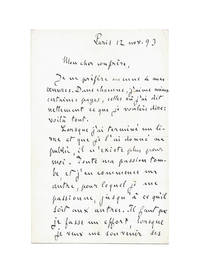
1893ZOLA3<p><strong>ZOLA Emile 1840-1902</strong></p><p>Autograph letter signed " Emile Zola " to a colleague Paris 12th November 1893 1 p. 1/2 in-8 Usual fold marks some tiny spots</p><p><strong>A very moving letter almost entirely unpublished written at the end of the <em>Rougon-Macquart</em> saga – Zola explains that he no longer owns his books once published and evokes with a superb metaphor what they represent years later. The writer expresses with relevance and sensitivity the distance he feels from his books once all published. This letter offers a more general reflection on the author's relationship to his work.</strong></p><p><em>" Mon cher confrère <strong>Je ne préfère aucune de mes œuvres</strong>. Dans chacune j'aime mieux certaines pages celles où j'ai dit nettement ce que je voulais dire : voilà tout. <strong>Lorsque j'ai terminé un livre et que je l'ai donné au public il n'existe plus pour moi. Toute ma passion tombe</strong> et j'en commence un autre pour lequel je me passionne jusqu'à ce qu'il soit aux autres. Il faut que je fasse un effort lorsque je veux me souvenir des romans hélas ! trop nombreux que j'ai écrits. <strong>Ce sont comme des tombes de parents et d'amis autrefois bien chers sur lesquelles il me serait trop triste d'aller m'attendrir</strong>. Cordialement à vous. Emile Zola "</em></p><p>The Rougon-Macquart saga came to an end with the publication by Charpentier of <em>Docteur Pascal</em> in the spring of 1893. Among the most famous of the saga are <em>Germinal</em> <em>Nana</em> and <em>L'Assommoir</em>. A total of twenty novels were written and published between 1870 and 1893.</p><p>Zola is probably responding here to a fellow journalist wishing to make an article on the whole saga and what it represents in the eyes of the novelist.</p><p>A summary of the letter and the quotation of a sentence are published in Volume VIII of the correspondence from an extract from the catalogue: <em>"They are like graves of relatives and friends …" – </em>This comparison illustrates the sadness that emanates from the moving statement and what Zola's works represent for Zola himself. Personification of books or metonymy designating the characters to whom the author gave life the "<em>tombs</em>" of course refer to death.</p><p><u>References:</u> Extr. cat. libr. Charavay n° 6599 Corr. t. VIII Presses de l'Université de Montréal / Editions du CNRS 1991</p>
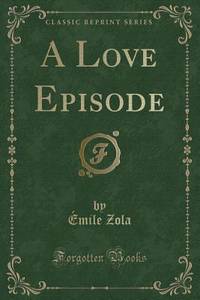
ria9783732617654_inpHardcover. New. New Book; Fast Shipping from UK; Not signed; Not First Edition; Reproduction of the original. hardcover
ria9783732617647_inpPaperback. New. New Book; Fast Shipping from UK; Not signed; Not First Edition; Reproduction of the original. paperback
B9783732617647Paperback. New. paperback
B9783732617654Hardback. New. hardcover
1330112946.Gpaperback. Good. Access codes and supplements are not guaranteed with used items. May be an ex-library book. paperback
1528050649.Ghardcover. Good. Access codes and supplements are not guaranteed with used items. May be an ex-library book. hardcover
19662090202118102745Iwanami Shoten Iwanami Bunko 1966. Soft Cover. Fine. The book is in fine condition. Iwanami Shoten Iwanami Bunko paperback
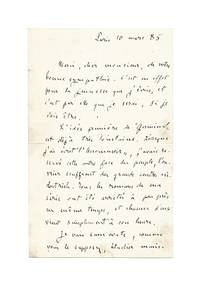
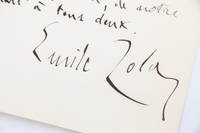
1885Zola14<p><strong>ZOLA Émile 1840-1902</strong></p><p>Autograph letter signed " Emile Zola " to Joseph Canqueteau<br />Paris 10th March 1885 2 p. in-8°<br />Small tears on folds some browning see scans</p><p><strong>An important letter written juste a week after the release of <em>Germinal</em> and drawing up a panorama of some of the most emblematic works of the <em>Rougon-Macquart</em> saga</strong></p><p><strong><u>From the</u></strong><u> <strong>B. & R. Broca</strong> <strong>collection</strong></u></p><p><em>" Merci cher monsieur de votre bonne sympathie. <strong>C'est en effet pour la jeunesse que j'écris et c'est par elle que je serai si je dois être. </strong></em><br /><strong><em>L'idée première de "Germinal" est déjà très lointaine. Lorsque j'ai écrit "l'Assommoir" j'avais réservé cette autre face du peuple l'ouvrier souffrant des grands centres industriels.</em></strong><em> Tous les romans de ma série ont été arrêtés à peu près en même temps et chacun d'eux vient simplement à son heure. </em><br /><strong><em>Je vais sans doute comme vous le supposez étudier maintenant le monde des artistes en reprenant mon Claude Lantier</em></strong> <em>L'Œuvre</em><em>. Mais le roman militaire celui où je compte mettre Sedan</em> <em>La Débâcle</em><em> est loin encore car il ne viendra guère que dans six ou sept ans : il est l'avant dernier de la série. </em><br /><em>Bien cordialement à vous<br />Emile Zola "</em></p><p>We know that even before writing the first of the twenty novels in his series Zola had drawn up as early as 1868 a family tree of his characters then a chronology of his novels. Initially planned in ten volumes the writer revised his ambitions upwards. There will be a total of twenty novels written between 1870 and 1893. This letter thus allows us to take the measure of the almost millimetric organization that the writer imposes on himself to the point of predicting with some precision "in six or seven years" the release of <em>La</em> <em>Débacle</em>. The penultimate volume of the series was indeed published in 1892.</p><p>A bohemian artist already present in <em>Le Ventre de Paris</em> but whose role is only minor Claude Lantier older brother of Etienne the hero of <em>Germinal</em> becomes the main protagonist in <em>L'Oeuvre</em>. A cursed painter whose features recall those of Paul Cézanne his fate is disastrous like that of his mother Gervaise Macquart in<em> L'Assommoir</em>. This fourteenth novel in the series was published by Charpentier the following year in 1886.</p><p>We know the letter that Joseph Canqueteau about to give a lecture on Les Rougon-Macquart addressed to Zola to ask him for some information who was right in his predictions: "We are here a meeting of young people who like you I assure you and know how to defend you on occasion. You have youth on your side dear master and that is a hard addition. We greatly appreciate the honor you have bestowed upon us by accepting the title of honorary member of our young conference. What a powerful book <em>Germinal</em> is! … I should be obliged to you dear master to tell me exactly at what time you had the idea of this vast social study Won't military life and artistic life be the subject of two future works ".</p><p><u>Provenance:</u><br />Collection B. & R. Broca</p><p><u>Bibliography:<br /></u><em>Correspondance</em> t. V éd. du CNRS p. 241-242 n°185</p>
0656583576.Gpaperback. Good. Access codes and supplements are not guaranteed with used items. May be an ex-library book. paperback
B9781168123695New. unknown
0259043397.Gpaperback. Good. Access codes and supplements are not guaranteed with used items. May be an ex-library book. paperback