Zola, Emile (1840-1902)Biblio.com
250 résultats
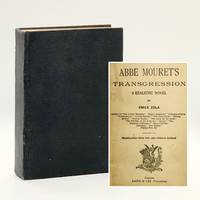
18903521Chicago: Laird & Lee Publishers 1890. Translated from the 52nd French Edition. Hardcover. pp. 283 6. 12mo. measuring 7.25" x 5". Plain black pebbled cloth over boards. Black-and-white illustrated frontispiece depicting a scene from the novel. Remarkably well-preserved in consideration of its age the extremities show only a very light touch of edgewear to the tips pages lightly age-toned but remain entirely without blemish. Overall very good. Scarce in commerce our offering being the only extant copy at time of cataloguing of this iteration. <br/><br/>Originally published in French as "La Faute de l'Abbé Mouret" in 1875 our offering is a particularly early American printing of this the fifth volume in Zola's twenty-volume series commonly known as "Les Rougon-Macquart" or "Histoire naturelle et sociale d'une famille sous le Second Empire". This English translation was most likely based upon Vizetelly & Co.'s 1886 printing the translator remains unknown See OCLC Ciration #1536033. Laird & Lee Publishers hardcover
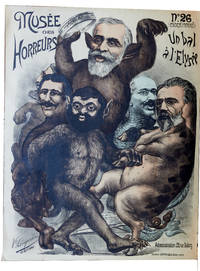
190080343Paris: Imprimerie Lenepveu 1900. Fine. Imprimerie Lenepveu Paris s. d. mai 1900 49.80 x 65.20 cm une affiche Musée des horreurs Original colour lithographed poster n° 26 exceptionnel Un bal à l'Elysée Imprimerie Lenepveu Paris May 1900 498 x 652 cm one poster Original colour lithographed poster depicting Émile Loubet as a bear holding a tambourine marked Panama Émile Zola as a pig Dreyfus as a hydra Joseph Reinach as a monkey the rabbi Kadoc Kahn as a donkey and Georges Picquart as a dromedary. This imposing poster featuring several people already caricatured in the previous issues is a direct reference to the Panama Scandal. This large-scale corruption affair which saw the resignation of Émile Loubet then Minister of Finance is re-referred to here because of the Judaism of some of is protagonists. It is Drumont through his magazine La Libre Parole who revealed the Panama Scandal denouncing the alleged alliance between the secular Republic and the Jewish high bank and thus contributing to the strengthening of the stereotype of the Jew eager for money: The deputy Joseph Reinach cousin and son-in-law of the baron Jacques de Reinach compromised in the scandal focuses the hatred of the polemicist. A republican close to the business world a free thinker Reinach is undoubtedly with Alphonse de Rothschild the man most attacked by the anti-Semites of the time. His wealth the vast networks of influence available to him his early involvement with Gambetta the memory of his campaigns against Boulangism and his equivocal role in the Panama affair make him the man to slaughter in order to return France to the French. Grégoire Kauffmann Rothschild & Cie. La bourgeoisie juive vue par Édouard Drumont in Archives Juives 2009 As for Émile Zola his novel L'Argent published in 1891 denounces the misappropriation of this financial scandal but his support for Alfred Dreyfus earned him his place in this nightmarish animal circle. Circulated between October 1899 and December 1900 in a France set ablaze by the Dreyfus Affair these immense colour portraits are the work of Victor Lenepveu who announced the publication of 150 and then 200 drawings before finally producing only around fifty. Despite the 1881 law on the freedom of press allowing the dissemination of a politically subversive image the publication of this nightmarish pantheon was interrupted by order of the Ministry of the Interior. The fragility of the paper and the imposing size of these very violent posters as well as their almost immediate seizure by the police contributed to the disappearance of these caricatures which strongly left a mark on public opinion. These horreurs were widely promoted by anti-Semitic newspapers that announced a fantasised print of 300000 copies thus insinuating the success of anti-Semitic ideas in the population. On 1st October 1899 L'Intransigeant announced the publication of the Musée des horreurs in its columns: Un dessinateur de beaucoup d'esprit au coup de crayon d'un comique intense M. V. Lenepveu a eu l'heureuse idée d'inaugurer une série de portraits des vendus les plus célèbres de la tourbe dreyfusarde. Le titre de cette série « Musée des Horreurs » est suffisamment suggestif et indique bien ce qu'il promet. . C'est la maison Hayard qui mettra en vente à partir d'aujourd'hui le numéro 1 de cette désopilante série. An artist of great spirit with an intense comical pencil stroke M. V. Lenepveu had the happy idea of inaugurating a series of portraits of the most famous sellouts of the Dreyfusard rabble. The title of this series Musée des Horreurs is sufficiently suggestive and is a good indicator of what it promises. . It is Maison Hayard that will put up for sale from today issue number 1 of this hilarious series. First a peddler then a bookseller-publisher Napoléon Hayard known as Léon Hayard specialised in the marketing of anti-Dreyfusard and anti-Semitic ephemera and advertisem Imprimerie Lenepveu unknown
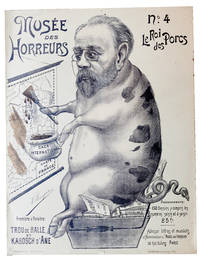
189980330Paris: Imprimerie Lenepveu 1899. Fine. Imprimerie Lenepveu Paris s. d. novembre 1899 49.80 x 65.20 cm une affiche Musée des horreurs Original colour lithographed poster n° 4 Le Roi des Porcs Imprimerie Lenepveu Paris November 1898 498 x 652 cm one poster Original colour lithographed poster depicting Émile Zola in the shape of a pig sitting on a tub containing his fictional works and smearing international poop on the map of France. Transverse folds some tiny tears two small holes above Zola's head without affecting the image. The representation of Émile Zola as a pig does not date back to Lenepveu as Guillaume Doizy highlights in his article dedicated to pig caricatures Le porc dans la caricature politique 1870-1914: une polysémie contradictoire in Sociétés & Représentations n°27 2009: For the end of the 19th century we also think of the many caricatures of which Zola was the victim and which associate excrement symbols of naturalism with pigs. Dozens of images could be mentioned. In the 1880s Sapeck imagined the naturalist naked a vine leaf hiding his genitals a veiled reference to the supposed pornography of his writings sitting astride a pig feeding on his excrement a long-lasting symbol called to stigmatise the new literary school. In a caricature dated 1898 Alfred Le Petit shows a Zola-pig defecating on the tricolore flag. Barely a month after the publication of his famous J'accuse the writer defending the Dreyfusard cause is accused of defiling France and especially its Army by defending the traitor Dreyfus and Prussia considered the eternal enemy. The pig is dirty but above all it dirties defiles by the effect of its harmful will. The same year Caran d'Ache portrayed the weapons of the Dreyfusard press as a big pig sprawled in muck and covered with mud. . In his series Le Musée des horreurs the very right-handed Lenepveu violently attacks Zola. The writer is depicted as a piglet sitting on a box of waste containing his own works the fruit of his defecations prominently including La Terre and Nana. He soils a map of France with his international poop contained in a chamber pot that he spreads with a small brush. The artist is of course aiming at the Dreyfus defender through his famous J'accuse and Jewish cosmopolitanism smearing France with his support for treason. The soiling-pig association seems obvious and primordial. As for Napoleon III the pig's dirt reinforced here by the visible excrement stigmatises the target's political choices. Lenepveu defines Zola's ideas as works of unworthiness intestinal and dripping products. Although this is not the first porcine representation of Émile Zola the one that features prominently in Lenepveu's Musée is undeniably by its realism the most violent. Circulated between October 1899 and December 1900 in a France set ablaze by the Dreyfus Affair these immense colour portraits are the work of Victor Lenepveu who announced the publication of 150 and then 200 drawings before finally producing only around fifty. Despite the 1881 law on the freedom of press allowing the dissemination of a politically subversive image the publication of this nightmarish pantheon was interrupted by order of the Ministry of the Interior. The fragility of the paper and the imposing size of these very violent posters as well as their almost immediate seizure by the police contributed to the disappearance of these caricatures which strongly left a mark on public opinion. These horreurs were widely promoted by anti-Semitic newspapers that announced a fantasised print of 300000 copies thus insinuating the success of anti-Semitic ideas in the population. On 1st October 1899 L'Intransigeant announced the publication of the Musée des horreurs in its columns: Un dessinateur de beaucoup d'esprit au coup de crayon d'un comique intense M. V. Lenepveu a eu l'heureuse idée d'inaugurer une série de portraits des vendus les plus célèbres de la tourbe Imprimerie Lenepveu unknown
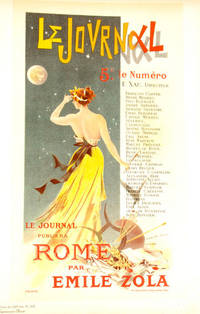
189913736Paris: L'Imprimerie Chaix 1899. First edition. Print. Fine. A young woman dressed in the classical style looks at the moon with her back to the viewer. Image size varies on paper 11 1/4 x 15 1/2" with the blind stamp in the lower right corner. <br /> <br /> Maitres de l'Affiche Masters of the Poster was an outstanding publication publishing in a small format the best of poster art from the Belle Epoque. They are lithographs printed by Imprimerie Chaix in Paris between 1895-1900. L'Imprimerie Chaix unknown
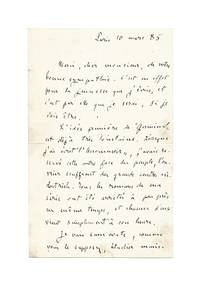
1885Zola14<p><strong>ZOLA Émile 1840-1902</strong></p><p>Autograph letter signed " Emile Zola " to Joseph Canqueteau<br />Paris 10th March 1885 2 p. in-8°<br />Small tears on folds some browning see scans</p><p><strong>An important letter written juste a week after the release of <em>Germinal</em> and drawing up a panorama of some of the most emblematic works of the <em>Rougon-Macquart</em> saga</strong></p><p><strong><u>From the</u></strong><u> <strong>B. & R. Broca</strong> <strong>collection</strong></u></p><p><em>" Merci cher monsieur de votre bonne sympathie. <strong>C'est en effet pour la jeunesse que j'écris et c'est par elle que je serai si je dois être. </strong></em><br /><strong><em>L'idée première de "Germinal" est déjà très lointaine. Lorsque j'ai écrit "l'Assommoir" j'avais réservé cette autre face du peuple l'ouvrier souffrant des grands centres industriels.</em></strong><em> Tous les romans de ma série ont été arrêtés à peu près en même temps et chacun d'eux vient simplement à son heure. </em><br /><strong><em>Je vais sans doute comme vous le supposez étudier maintenant le monde des artistes en reprenant mon Claude Lantier</em></strong> <em>L'Œuvre</em><em>. Mais le roman militaire celui où je compte mettre Sedan</em> <em>La Débâcle</em><em> est loin encore car il ne viendra guère que dans six ou sept ans : il est l'avant dernier de la série. </em><br /><em>Bien cordialement à vous<br />Emile Zola "</em></p><p>We know that even before writing the first of the twenty novels in his series Zola had drawn up as early as 1868 a family tree of his characters then a chronology of his novels. Initially planned in ten volumes the writer revised his ambitions upwards. There will be a total of twenty novels written between 1870 and 1893. This letter thus allows us to take the measure of the almost millimetric organization that the writer imposes on himself to the point of predicting with some precision "in six or seven years" the release of <em>La</em> <em>Débacle</em>. The penultimate volume of the series was indeed published in 1892.</p><p>A bohemian artist already present in <em>Le Ventre de Paris</em> but whose role is only minor Claude Lantier older brother of Etienne the hero of <em>Germinal</em> becomes the main protagonist in <em>L'Oeuvre</em>. A cursed painter whose features recall those of Paul Cézanne his fate is disastrous like that of his mother Gervaise Macquart in<em> L'Assommoir</em>. This fourteenth novel in the series was published by Charpentier the following year in 1886.</p><p>We know the letter that Joseph Canqueteau about to give a lecture on Les Rougon-Macquart addressed to Zola to ask him for some information who was right in his predictions: "We are here a meeting of young people who like you I assure you and know how to defend you on occasion. You have youth on your side dear master and that is a hard addition. We greatly appreciate the honor you have bestowed upon us by accepting the title of honorary member of our young conference. What a powerful book <em>Germinal</em> is! … I should be obliged to you dear master to tell me exactly at what time you had the idea of this vast social study Won't military life and artistic life be the subject of two future works ".</p><p><u>Provenance:</u><br />Collection B. & R. Broca</p><p><u>Bibliography:<br /></u><em>Correspondance</em> t. V éd. du CNRS p. 241-242 n°185</p>
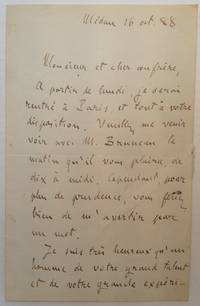
1888215987Median 1888. unbound. 2 full pages 8.5 x 5.25 inches Median France October 16 1888. In this letter Zola invites a colleague for a visit and conversation in part: ".Je suis tres heureux qu'un homme de votre grand talent et de votre grande experience veuille bein se charger d'un travail qu ne sera pas commode je le crains. " Slight creasing and natural folds; still very good condition.<br/> <br/> unknown
1899feb12956Librariei H. Steinberg 1899. Used. 1899; Romanian Edition of Capitanul Burle - Jacques Damour.; For more details please contact me Librariei H. Steinberg unknown
1883513870Petite bibliothèque Charpentier 1883. Bon Etat. in16. 1883. Relié. 438 pages. Avec deux dessins de Jeanniot Gravé en fac simile par DUJARDIN Petite reliure mi-cuir dos a nerfs fleurons bordure légèrement usée. texte comme neuf Petite bibliothèque Charpentier unknown
1883009806Paris: Charpentier et Cie. 1883. Book. Near Fine. Hardcover. First Edition. 32mo - over 4" - 5" tall. 4 3/8" x 3 3/8". "Petit Bibliotheque Charpentier avec deux dessins de Jeanniot grave´s en fac-simile´ par Dujardin". Finely bound in contemporary full polished calf five raised bands with gilt lettering marbled end papers all edges gilt. Near Fine spine and front cover sunned light toning prior owner name at title page Uncommon OCLC lists 4 holdings. Charpentier et Cie. Hardcover
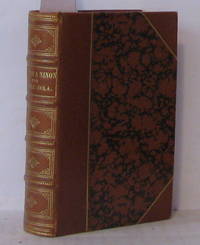
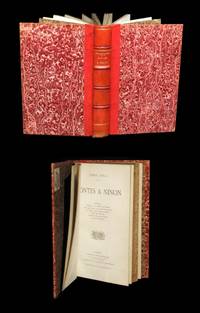
1878294581878. Paris Librairie internationale J. Hetzel et A. Lacroix s.d. 1864. Un vol. au format in-12 188 x 123 mm de 2 ff. n.fol. 320 pp. et 1 f. bl. Reliure de l'ÂŽpoque de demi-basane glacÂŽe incarnat dos ˆ nerfs ornÂŽ de filets gras en noir doubles filets dorÂŽs filet gras dorÂŽ et quadruple filet maigre dorÂŽ en queue titre dorÂŽ tranches jaspÂŽes. Edition originale dont il n'est pas fait mention d'un tirage sur grand papier du premier ouvrage de Zola. Il est ici revÂtu d'une agrÂŽable reliure du temps. "Les voici donc mon amie ces libres rÂŽcits de notre jeune ‰ge que je tÕai contÂŽs dans les campagnes de ma chÂre Provence et que tu ÂŽcoutais dÕune oreille attentive en suivant vaguement du regard les grandes lignes bleues des collines lointaines." Ainsi commencent ces fameux contes dÂŽdiÂŽs ˆ l'amie d'enfance. Et si ce texte qui sert finalement de prÂŽface est vraiment poÂŽtique avec le style que nous lui connaissons les autres ne le sont pas moins. Les longues descriptions poÂŽtiques qui ÂŽmaillent ces rÂŽcits sont autant de pures merveilles. AssociÂŽes aux diffÂŽrentes divinitÂŽs de la forÂt dans un pur dÂŽcor champÂtre elles transcendent le texte dans les deux premiers contes Simplice ; Le Carnet de danse. On remarque dÂŽjˆ l'ÂŽrudition du jeune auteur mentionnant George Sand Balzac ou Michelet dans Les Voleurs et l'‰ne ou faisant rÂŽfÂŽrence ˆ l'astronomie l'Histoire et autres matiÂres savantes dansAventures du grand Sidoine et du petit MÂŽdÂŽric. On voit poindre ÂŽgalement le Zola dÂŽfenseur de la veuve et de l'orphelin le Zola pourfendant les idÂŽes reÂues fustigeant les idiots se moquant des Âtres purs innocents SÃur-des-pauvres''. Vicaire VII Manuel de l'amateur de livres du XIXÂme 1195 - ThiÂme Bibliographie de la littÂŽrature franÂaise p. 441 - Carteret II Le TrÂŽsor du bibliophile romantique et moderne p. 488. Coiffe de queue ÂŽlimÂŽe. Rares et claires rousseurs dans le corps d'ouvrage ; quoique davantage marquÂŽes aux derniers feuillets. Nonobstant belle condition. b42961 unknown
186452158Paris: J. Hetzel & A. Lacroix 1864. Fine. J. Hetzel & A. Lacroix Paris 1864 11 x 18 cm relié The first edition of the author's first book. Contemporary half red shagreen over marbled paper boards spine in five compartments with gilt fillets and triple gilt frames marbled endpapers and pastedowns collector's blindstamp to head of one endpaper speckled edges. Handsome rare autograph inscription to this text from Emile Zola to a monsieur Boucher. Faint dampstain to the first 70 pages a little light foxing. There are very few inscribed copies of this text. J. Hetzel & A. Lacroix hardcover
186428266Paris: J. Hetzelet A. Lacroix 1864. Fine. J. Hetzel et A. Lacroix Paris s. d. 1864 12 x 18 cm relié First edition of which there were no large paper copies. Contemporary half red shagreen spine slightly faded in five compartments with triple blindruled fillets. A few spots but otherwise a very good and rare copy of the first work by Emile Zola in a very satisfactory contemporary binding. Rare and sought-after. J. Hetzelet A. Lacroix unknown
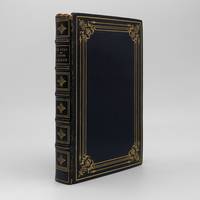
1864374820Paris: J. Hetzel et A. Lacroix 1864. First edition of the author's first book. 4 320 pp. 1 vols. 8vo. Full blue morocco gilt marbled endpapers t.e.g. by Taffin with the original yellow printed wrappers bound in. Very good head rubbed slight toning to a few leaves. With loosely inserted calling card of the author. First edition of the author's first book. 4 320 pp. 1 vols. 8vo. Zola's first book INSCRIBED on the half-title to the distinguished literary critic and author Jules Levallois 1829 - 1903: "à M. Jules Levallois "temoignage du devouement et de la sympathie de l'auteur a testimony of the author's devotion and sympathy Emile Zola." Zola was 24 years old when Contes à Ninon was published.<br /> <br /> The calling card ca. 1890 is engraved "Emile Zola / rue de Bruxelles 21 bis" and inscribed in pen by Zola "Avec mes remerciements et l'expression de ma sympathie with my thanks and the expression of my sympathy." Carteret II p. 488 J. Hetzel et A. Lacroix unknown
1893154344Paris Médan Monte Carlo and England: 1893-1902. A unique collection of letters by one of the landmark French writers of the 19th century An important group of letters from Émile Zola to his translator and friend Ernest Vizetelly son of Henry Vizetelly who was the first translator of his works. Over almost ten years and across a hundred handwritten pages Zola discusses the publications and translations of his works the reception and specificities of the English public his visit to London for the congress of specialists in 1893 his London exile at the publication of J'Accuse and the trial that followed. Zola sends his manuscripts to Vizetelly who takes on the role of agent seeing to contracts both with newspapers for the publication of serials and for the publication of translations. Though Zola repeatedly says that he is not concerned with money he nonetheless has his contract requirements. He trusts his friend entirely for his business in England but when American publishers are interested in the translations of his works negotiations seem tense at times: "As for the American affair I will tell you that the house Macmillan hurt me by his attitude at the time to Fécondité and I don't see why I will continue to interact with people of such a mind." He finally chose Doubleday noting that he received "1990 fr. 60 cent. for my part of copyright on your translation of Fécondité that the Doubleday house has just published in New York". He is also concerned about the reception of his works in England. On Docteur Pascal: "I'm going to get into Docteur Pascal which has nothing to do with Lourdes. It's an intimate passionate novel. It is to be the last volume of the Rougon-Macquart series. You can try to place the English translation in London. It will not offend the modesty of your compatriots." A little later he even authorizes his translator to modify "the passages which would seem worrying to you." He reiterates this authorization regarding the translation of Travail: "Travail will not frighten English modesty. It is at most if in a single scene a little lively you will have to extinguish the colors of the painting." He also assures his friend that Lourdes which Vizetelly cannot sell to a newspaper is not a "work of Catholic discussion" and that "the book can be put in the hands of young girls." England despite a little mockery is also important to Zola. He discovered it at the journalists' conference to which he was invited in 1893. He seemed rather anxious about the reception that the English press could give him: "I would like to know the importance of this congress and whether it will offer a great interest. You know my situation in London: I am still very much discussed almost denied and it seems to me that. the words I could say there would erase a lot of the misunderstanding." Zola's doubts would finally be unfounded and he returned from London delighted with the reception he received there and with the charm and immensity of the city. At the end of the collection are 39 original photographs taken by Zola at the time of his visit to London in 1893 or during his exile. Most of them bear indications of the places photographed on the back. Following the publication of J'Accuse and the trial which forced him into exile Zola chooses London. He discreetly mentions the piece which appeared in l'Aurore explaining to Vizetelly the delay in the publication of Paris on January 25 1898: "Tell Mr. Chatto that we will not put" Paris "on sale on February 10. It would be a great fault in the midst of the current hustle and bustle." He finally left France in July of the same year. The support of his now "dear colleague and friend" is essential in this difficult period: "My dear colleague and friend thank you for your good wishes on the anniversary of my birth. I am very touched in the sad emotion where I am. You write me good and just things that go straight to my heart. And I thank you on this day for the dedication and the discreet attentions that you have not ceased to have for me since the day I set foot in this land of exile." The correspondence continues until Zola's death in early autumn 1902. Folio 328 x 242 mm. 103 pages with letters photographs and documents mounted in the vol.; in French. Together 61 pieces including 51 signed letters one of them signed as Beauchamp 5 initialled letters 3 business cards autographed and siged one unsigned letter and a response to a questionnaire. All the letters relate to the publication of L'Argent Lourdes Rome Dr. Pascal La Débâcle and his trip to England to the Congress of Journalists in 1893. Also 39 photographs of views of England taken by Zola during his exile there in 1899. Some letters bear on the back of the annotations of Vizetelly. Red morocco by Riviere & Son spine richly gilt between raised bands dark blue endpapers gilt inner dentelles and edges. Housed in a dark blue quarter morocco solander box by the Chelsea Bindery. Published in Émile Zola Correspondance VII X Presses de l'Université de Montreal 1978-1995. Vizetelly's letters to Zola were also published in: Mon cher Maître Lettres d'Ernest Vizetelly à Emile Zola Les Presses de University of Montreal 2002. Transcript and translation of correspondence available upon request. hardcover
189312881BB1893. 10. Auflage Stuttgart Deutsche Verlags-Anstalt 1893 8° 332 S. roter original Halbleder-Einband mit Marmorbezugspapier und goldener Rückenbeschriftung Rücken mit vier Bünden florale Musterpapiervorsätze Rundumfarbschnitt eindrucksvolles Exlibris auf Vorsatzseite das Leder an den Kanten stellenweise beschabt sonst sehr schönes sauberes Exemplar. Originaltitel: "La Débâcle'' 1892 ist der zu Lebzeiten des Autors meistgelesene Band des Rougon-Macquart-Zyklus. In dem Antikriegsroman geht es um den Zusammenbruch des Zweiten Kaiserreichs der vorliegende dritte Teil beschreibt den Sturz der Pariser Commune. Abholung im Ladengeschäft in Frankfurt am Main Nordend ggü. Musterschule möglich. Das spart die Portokosten. Pickup at the store in Frankfurt am Main Nordend close to Musterschule is possible. It saves the shipping costs. unknown
189312882BB1893. 10. Auflage Stuttgart Deutsche Verlags-Anstalt 1893 8° 287 S. roter original Halbleder-Einband mit Marmorbezugspapier und goldener Rückenbeschriftung Rücken mit vier Bünden florale Musterpapiervorsätze Rundumfarbschnitt eindrucksvolles Exlibris auf Vorsatzseite das Leder an den Kanten stellenweise beschabt sonst sehr schönes sauberes Exemplar. Originaltitel: "La Débâcle'' 1892 ist der zu Lebzeiten des Autors meistgelesene Band des Rougon-Macquart-Zyklus. In dem Antikriegsroman geht es um den Zusammenbruch des Zweiten Kaiserreichs der vorliegende zweite Teil beschreibt die Schlacht bei Sedan. Abholung im Ladengeschäft in Frankfurt am Main Nordend ggü. Musterschule möglich. Das spart die Portokosten. Pickup at the store in Frankfurt am Main Nordend close to Musterschule is possible. It saves the shipping costs. unknown
1894201425Deutsche Verlags-Anstalt, 1894. 297 Seiten und 287 Seiten und 332 Seiten gebundene Ausgabe
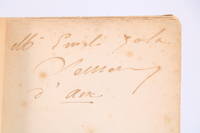
187590869Paris: Ernest Leroux 1875. Fine. Ernest Leroux Paris 1875 1879 12.2 x 11.8 cm Broché Second edition the dedication to Pierre Laffitte is dated 1879. A study of madness from a positivist perspective based on the work of Auguste Comte. The dedicatee Pierre Laffitte was the editor of the review ""Le Positivisme"". Spine cracked with small losses occasional foxing and a horizontal crease at the foot of the upper cover small marginal tears on the cover firts cover reattached. With a fine signed presentation inscription from Emile François Eugène Sémérie to Émile Zola on the half-title: ""A Mr. Émile Zola. Sémérie d'Aix"" the final word underlined. The close connections between positivism and naturalism the literary doctrine developed in the 1860s1880s are well known: positivist philosophy the observation of reality and the primacy of experience influenced naturalist writers in their concern to depict reality with strict objectivity. Zola made an essential contribution to the movement with his study ""Roman expérimental"" 1880. Ernest Leroux unknown
18963116619Leipzig: Eduard Besold 1896. 31 Seiten. Gr. 8° (22,5-25 cm). Orig.-Broschur. [Softcover / Paperback].
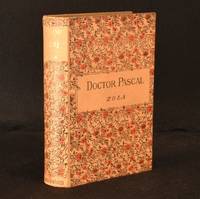
18931010H30London: Chatto & Windus 1893 . Cloth. Very Good Indeed. 7.5" by 5". None. First English edition of Zola"s Doctor Pascal the scientific and philosophical finale to the Rougon-Macquart series. In the publisher's original decorative cloth binding. First English edition translated from the French by Ernest A. Vizetelly. The original Le Docteur Pascal was first published in 1893 as the final novel in Zola"s Rougon-Macquart series.A scientific and philosophical novel centred on Doctor Pascal Rougon who studies heredity within his own family tracing patterns of illness and degeneration across generations. Illustrated with a portrait frontispiece of Zola. 32 pages of publisher's advertisements to rear. Emile Zola 1840-1902 was a French novelist journalist playwright and leading figure of French Naturalism who sought to apply scientific principles to fiction. Zola was nominated for the first and second Nobel Prizes in Literature in 1901 and 1902. In the publisher's original decorative cloth binding. Externally very smart. Slight discolouration to spine and extremities. The odd faint handling mark to rear board. Slight crease to cloth of rear board. Very minor shelf wear to extremities. Internally firmly bound. Pages bright and clean if slightly age toned. One or two spots to fore edge. Very Good Indeed Chatto & Windus hardcover
18937773London: Chatto and Windus 1893. First edition in English. This copy without portrait. Small 8vo bound in later three-quarter maroon morocco and cloth gilt lettered spine. xviii 354. Some rubbing to the extremities old library marks. Chatto and Windus hardcover
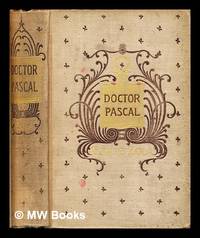
1893293077New York : Cassell 1893. First Edition. Hardcover. Very good copy in the original gilt-blocked decorative cloth. Spine bands and panel edges slightly dust-toned and rubbed as with age. Remains particularly well-preserved overall. Physical description: xviii 471 pages ; 8º. Subjects: French literature ; Fiction. New York : Cassell hardcover