6 560 résultats
9368CAHIERS DU COMMUNISME, n° 10, octobre 1952. In-8, broché.
1994SPN-952Valenciennes : Presses Universitaires de Valenciennes / Société Internationale de Poïétique, 1994. Revue 26x21cm, 184 pages en noir.
189874340Paris: Imprimerie Champenoispour CH. MassonH. Piazza 1898. Fine. Imprimerie Champenois pour CH. Masson H. Piazza Paris Février 1898 31 x 27 cm une feuille et une serpente Rare original colour lithograph executed by Albert-Émile Artigue for L'Estampe Moderne series no. 10 published in February 1898. One of 50 deluxe proofs printed on Japon with wide margins artist's signature within the stone publisher's blindstamp depicting a child's profile in the lower margin numbered stamp of the deluxe issue on the verso; the print is preceded by a captioned tissue guard with the artist's name the title and an excerpt from the work; with additional plain tissue guard. Lithograph inspired by an excerpt from Emile Zola's novel La Faute de l'abbé Mouret reproduced on the tissue guard of the print. A magnificent French monthly publication issued between May 1897 and April 1899 L'Estampe Moderne comprises original chromolithographs which unlike other periodicals such as Les Maîtres de l'Affiche and as specified on the tissue guards were created expressly for the journal by each artist. In all 100 prints were published encompassing the major artistic movements of the late 19th century: Symbolism Art Nouveau the Pre-Raphaelites Orientalism and the Belle Époque. Each issue of four plates was printed in 2000 copies sold at 3.50 francs and 100 on Japon paper offered at 10 francs. Henri Piazza also planned an exclusive printing of the utmost luxury: 50 copies on Japon with wide margins and 50 in black on China paper at the considerable price of 30 francs. This large-format print is superbly printed on the most prestigious of papers: Japon. Thick silky satin-finished and pearly it elevates each sheet into a work of art in its own right. Its exceptional capacity for ink absorption and affinity with colour make it the ideal medium for these splendid lithographs. The interest of French collectors in artistic posters intensified at the beginning of the 1890s. Octave Uzanne to describe this craze coined the term affichomanie. The poster originally popular and pasted up on the streets of the capital then became an art object its ephemeral support transformed into something precious and destined for preservation. Piazza resolved to remove the poster from its advertising purpose and elevate it to the rank of a work of art in its own right on a par with the deluxe illustrated book. In this way he assembled a prestigious collection of entirely original works by the most prominent European artists of the time: Georges de Feure Eugène Grasset Henri Detouche Emile Berchmans Louis Rhead Gaston de Latenay Lucien Lévy-Dhurmer Gustave-Max Stevens Charles Doudelet Hans Christiansen Henri Fantin-Latour Steinlen Ibels Engels Willette Henri Meunier Evenepoël Bellery-Desfontaines Charles Léandre etc. A handsome copy. Imprimerie Champenoispour CH. MassonH. Piazza unknown
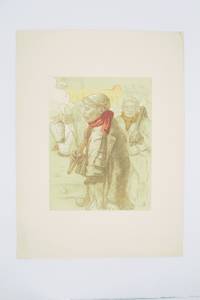
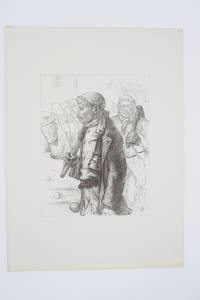
189874855Paris: Imprimerie Champenoispour CH. MassonH. Piazza 1898. Fine. Imprimerie Champenois pour CH. Masson H. Piazza Paris Juin 1898 24.50 x 32 cm une feuille et une serpente Rare original color lithograph executed by Jules-Gustave Besson for L'Estampe Moderne series number 14 published in June 1898. One of 50 deluxe proofs printed on Japan paper with wide margins artist's signature in the plate publisher's blind stamp depicting a child's profile in lower margin numbered luxury edition stamp on verso; engraving preceded by a tissue guard captioned with the artist's name title and text. Lithograph inspired by an extract from Germinal by Emile Zola reproduced on the print's tissue guard. Magnificent French monthly publication edited between May 1897 and April 1899 L'Estampe moderne consists of original chromolithographs which unlike other periodicals such as Les Maîtres de l'Affiche and as stipulated on the tissue guards were created specifically by each artist for the review. Thus 100 prints appeared in total covering the major artistic movements of the late 19th century: Symbolism Art Nouveau Pre-Raphaelites Orientalists and Belle Époque. Each delivery of four prints was issued in 2000 copies sold for 3.50F and 100 on Japan paper offered at 10F. Henri Piazza also planned a confidential deluxe printing: 50 copies on Japan paper with wide margins and 50 in black on China paper at the considerable price of 30F. This print of handsome format is superbly printed on the most prestigious of papers: Japan. Thick silky satiny and lustrous it contributes to making each page a work in its own right. Its ink absorption quality and affinity with colors also make it the ideal support for these very beautiful lithographs. French collectors' interest in artistic posters intensified at the beginning of the 1890s. Octave Uzanne to describe this fever invented the term ""poster mania"". The poster originally popular and plastered in the streets of the capital then became an art object and its ephemeral support became precious and destined for preservation. Piazza decided to remove the poster from its advertising vocation and elevate it to the rank of a complete work of art on the same level as the deluxe illustrated book. He thus composed a prestigious collection of entirely original works by the most prominent European artists of the moment: Georges de Feure Eugène Grasset Henri Detouche Emile Berchmans Louis Rhead Gaston de Latenay Lucien Lévy-Dhurmer Gustave-Max Stevens Charles Doudelet Hans Christiansen Henri Fantin-Latour Steinlen Ibels Engels Willette Henri Meunier Evenepoël Bellery-Desfontaines Charles Léandre etc. Handsome copy. Imprimerie Champenoispour CH. MassonH. Piazza unknown
189874856Paris: Imprimerie Champenoispour CH. MassonH. Piazza 1898. Fine. Imprimerie Champenois pour CH. Masson H. Piazza Paris Juin 1898 24.50 x 32 cm une feuille Rare original lithograph executed by Jules-Gustave Besson for L'Estampe Moderne series number 14 published in June 1898. One of 50 deluxe proofs printed on China paper with large margins artist's signature in the plate publisher's dry stamp showing a child's profile in the lower margin mounted on a sheet of laid paper with the numbered stamp of the deluxe edition on verso some foxing. Lithograph inspired by an extract from Germinal by Emile Zola. Magnificent French monthly publication edited between May 1897 and April 1899 L'Estampe moderne consists of unpublished chromolithographs which unlike other magazines such as Les Maîtres de l'Affiche and as stipulated on the tissue guards were created specially by each artist for the magazine. Thus 100 prints appeared in total covering the major artistic movements of the late 19th century: Symbolism Art Nouveau Pre-Raphaelites Orientalists and Belle Époque. Each delivery of four prints was printed in 2000 copies sold at 3.50F and 100 on Japan paper offered at 10F. Henri Piazza also planned a confidential very deluxe printing: 50 copies on Japan paper with large margins and 50 in black on China paper at the considerable price of 30F. This print of handsome format is superbly printed on one of the most prestigious papers: China. ""Despite all its qualities China paper too insubstantial owes its reputation not to its own beauty but indeed to its particular affinities with printing ink. Its texture smooth and soft together is more apt than any other to receive a beautiful printing. This property makes China paper sought after for printing engravings."" Anatole France. The interest of French collectors in artistic posters intensified at the beginning of the 1890s. Octave Uzanne to qualify this fever invented the term ""affichomanie."" The poster originally popular and posted in the streets of the capital then became an art object and its ephemeral medium became precious and devoted to conservation. Piazza decided to remove the poster from its advertising vocation and elevate it to the rank of a complete work of art on the same level as the deluxe illustrated book. He thus composed a prestigious collection of entirely original works by the most prominent European artists of the moment: Georges de Feure Eugène Grasset Henri Detouche Emile Berchmans Louis Rhead Gaston de Latenay Lucien Lévy-Dhurmer Gustave-Max Stevens Charles Doudelet Hans Christiansen Henri Fantin-Latour Steinlen Ibels Engels Willette Henri Meunier Evenepoël Bellery-Desfontaines Charles Léandre etc. Handsome copy. Imprimerie Champenoispour CH. MassonH. Piazza unknown
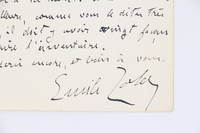
188279111Médan 1882. Fine. Médan 1er décembre 1882 13.60 x 21.40 cm 2 pages sur un double feuillet - enveloppe jointe Autograph letter signed by Emile Zola - apparently unpublished - written in black ink on a double sheet and addressed to Léon Carbonnaux department head at Bon Marché. Folds inherent to mailing. Envelope included. Only two letters from Léon Carbonnaux to Emile Zola are known: they can be consulted in the digitized preparatory file for Au bonheur des dames made available online by the Bibliothèque nationale de France. However we know from this same file which contains a long section entitled ""Notes Carbonnaux"" that this department head at Bon Marché provided Zola with a significant amount of information particularly about employee customs their remuneration and especially inventory techniques. The two men probably met when Emile Zola eager for information about the workings of department stores conducted field research in February and March 1882. Very important unpublished letter shedding new light on the pre-original publication of Au bonheur des dames. In his biography of Emile Zola Henri Mitterrand writes: ""Even before the novel was completed Zola gave an extract to Panurge in November; and on November 23 1882 Gil Blas announced its imminent publication in its columns."" Our letter discussing precisely this alleged pre-publication in Panurge attests that it was simply a joke and thus contradicts Henri Mitterrand: ""But your letter surprises and saddens me somewhat. How could you have been taken in by Panurge's stupid joke Did you not notice that the entire issue is a 'farce' Not one of the articles is authentic they are parodies and very poorly done ones at that."" Indeed reading the said extract cannot fool the assiduous reader of Zola despite the introduction that the journalists wrote: ""After Nana and Pot-Bouille those epics of elegant vice and bourgeois vice M. Emile Zola wanted to create one of honesty: Au bonheur des Dames which will appear shortly is a reassuring painting of innocence and virtue; the greatest success is assured for this new work whose characters move in the setting of a large novelty store; Parisian high commerce will not long await its observer and painter. We thank Emile Zola for having kindly cut out especially for Panurge a few pages from his still unpublished work and we are proud to give the public first an extract from this work of such high morality and such powerful interest."" Panurge no. 4 of October 22 1882 The sentences of this false Zolian text are exaggeratedly long and Panurge took the liberty of endowing the novel with a male main character Denis Mouret an amalgam of Denise the true heroine of the book to appear and Octave Mouret. One can think that it is a text composed from elements of Pot-Bouille the previous volume of Rougon Macquart where Octave - future owner of Bonheur des Dames - exercised the function of clerk before his meteoric social rise: ""For already more than two months he had been attached to the 'silks and furs' department; he arrived in the morning at seven o'clock to return home his day finished only at nine o'clock in the evening when all of Paris buzzed strangely with a feverish animation of pleasure and enjoyment and on his way back he followed gawking the great crowded boulevards where blazed the cafés full of girls and where on the asphalt at theater doors the crowd jostled with here and there in the vague rumor of trampling and pressing the roguish intonation of the cries of program vendors and ticket sellers."" Panurge In his letter of November 30 1882 Léon Carbonnaux - reading the extract from Panurge - had reproached Zola for his errors: ""Nowhere except at the Fabriques de France near Les Halles does one arrive at 7 a.m. It's at the earliest 7:30 but more often 8 a.m. and even then. There is no silk and fur counter at the Louvre. . It is so easy for you to be accurate that errors of this kind especially if t unknown
R260169003J. HETZEL ET A. LACROIX. NON DATE. In-12. Relié demi-cuir. Etat d'usage, Coins frottés, Dos fané, Intérieur acceptable. 320 pages. Dos de cuir marron à 5 nerfs, titres et fleurons dorés. Papier marron et rouge sur les plats. Mors partiellment fendus. Léger manque au niveau de la coiffe en tête. Humidité sur quelques pages.. . . . Classification Dewey : 840-Littératures des langues romanes. Littérature française
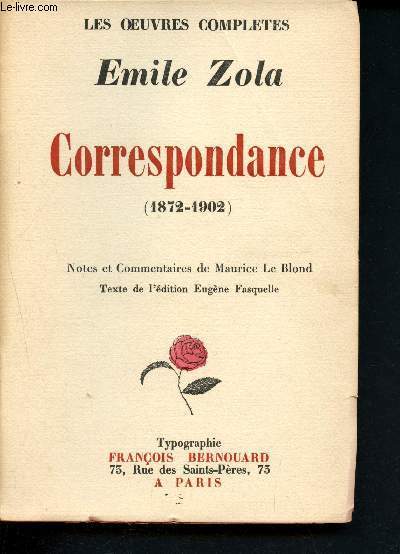
1929R200107730François Bernouard. 1929. In-8. Broché. Bon état, Couv. convenable, Dos satisfaisant, Intérieur frais. Paginé de 424 à 906.. . . . Classification Dewey : 94.41-Editions numérotées (gros tirage)
79544Paris, Denoël, 1978. 17 x 22, 109 pp., quelques illustrations en couleurs, broché, couverture à larges rabats, très bon état.
1929R200107733François Bernouard. 1929. In-8. Broché. Bon état, Couv. convenable, Dos satisfaisant, Intérieur frais. 314 pages.. . . . Classification Dewey : 840.08-XIX ème siècle
20334263like new. unknown
1304085015.Gpaperback. Good. Access codes and supplements are not guaranteed with used items. May be an ex-library book. paperback
1989RO20241221Complexe. 1989. In-12. Broché. Etat d'usage, Couv. convenable, Dos satisfaisant, Intérieur frais. 204 pages. Tranche en-tête tachée. . . . Classification Dewey : 840.08-XIX ème siècle
1907R200087795EUGENE FASQUELLE. 1907. In-12. Relié plein cuir. Bon état, 1er plat abîmé, Dos abîmé, Papier jauni. 751 pages. Rousseurs. Tranche de tête dorée. Epidermure au dos - Titre; auteur et filets dorés au dos.2 PHOTOS DISPONIBLES.. . . . Classification Dewey : 840.08-XIX ème siècle
1928R200107549François Bernouard. 1928. In-8. Broché. Bon état, Couv. convenable, Dos satisfaisant, Intérieur frais. 313 pages.. . . . Classification Dewey : 840.08-XIX ème siècle
1920R240157521Bibliothèque-Charpentier. 1920. In-12. Relié. Etat d'usage, 2ème plat abîmé, Dos satisfaisant, Papier jauni. 345 + 405 pages. Plats et contreplats jaspés. Dos cuir à 4 nerfs, 2 pièces de titre, titre, auteur, filets et motifs dorés. Annotation au crayon de papier en page de garde du tome 1. Tranches en tête dorées.. . . . Classification Dewey : 840.08-XIX ème siècle
1973RO30356696Presse d'Offset-Aubin. 1973. In-8. Relié. Bon état, Coins frottés, Dos satisfaisant, Papier jauni. 440 pages. Rares rousseurs.. . . . Classification Dewey : 840-Littératures des langues romanes. Littérature française
1959RO40017612Fasquelle. 1959. In-12. Broché. Bon état, Couv. convenable, Dos satisfaisant, Non coupé. 499 pages. Manque en tête sur le second plat et les quelques dernières pages sans incidence sur la lecture.. . . . Classification Dewey : 840.08-XIX ème siècle
1979RO20220149G. Charpentier et Cie. 1979. In-8. Cartonnage d'éditeurs. Bon état, Couv. convenable, Dos satisfaisant, Intérieur frais. 472 pages.Plats et dos illustrés en couleurs.. . . . Classification Dewey : 840.08-XIX ème siècle
1992R320000985PML EDITIONS - PROFRANCE/MAXI-LIVRES. 1992. In-8. Cartonné. Bon état, Couv. convenable, Dos satisfaisant, Intérieur frais. 624 pages - couverture illustrée couleur.. . . . Classification Dewey : 840-Littératures des langues romanes. Littérature française
1946ROD0115071JACQUES VAUTRAIN. 1946. In-8. Relié cuir dos-coins. Bon état, Couv. convenable, Dos à nerfs, Intérieur acceptable. 2 TOMES : 1+2 : (XXI+250)+205 pages. Dos à 4 nerfs. Quelques planches en noir et blanc dans texte.. . . . Classification Dewey : 840.091-XX ème siècle
64064Lausanne, La Guilde du Livre, 1954. 15 x 22, 387 pp., reliure d'édition pleine toile, très bon état.
96515Paris, Revue Europe/Les Editeurs Français Réunis, 1969. 13 x 22, 282 pp., broché, bon état.
1969LFA-126722001Une plaquette de 38 pages, format 135 x 185 mm, brochée, publiée en 1969, Fasquelle Editeurs, bon état, rare
19571231471957 Fasquelle Editeurs, Paris, Édition du Cinquantenaire - 1957- In-12, broché - 39 pages - Reproduction en fac-similé de la lettre de Zola avec avant-propos d'Eugène Fasquelle.