34 256 résultats
1925TJ004781925-1933 Volumes 65-82. Volumes 81 & 82 in issues, remainder bound in cloth. A set of 18 volumes of this very interesting journal published by the famous Royal Geographical Society in London. Each volume contains numerous plates, photographs and folded maps.
76805aafgr. in-8vo, 98 S. + 7 w. Bl., Titelseite mit gemaltem blumenumranktem Fensterrahmen (Farbstift, gez. v. Else Varentrapp aus Braunschweig), folgende Seite mit einer Federzeichnung (schöne Ansicht der Stadt Braunschweig) wohl von der gleichen Zeichnerin, guter Zustand, Ledereinbd. mit kolorierten barocken Puten- und Blumenmotiven geprägten Deckeln (Buchbinderei Carl Stein, Braunschweig), Farben verblasst, stark berieben, Rücken repariert, festes Exemplar.
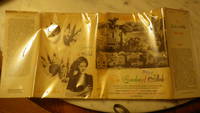
197029510HBDJ 1970 1ST EDITION SECOND Printing STATED. NEARFINE/NF SIGNED & Inscribed . NOT an Ex-Library copy. Tight square binding. Hinges solid. NO underlining notes hilighting or bookplate. The unclipped dust jacket now protected by a removeable Brodart mylar cover Pages bright & clean. Bright Green cloth Titled in blue Gilt on Spine CVR 258 pgs INDEX LIGHT Rub & Wear DJ Spine Sunned Second printing. SIGNED and inscribed by the author. Minor shelf and handling wear overall a clean solid copy with minimal signs of use. Boards betray fading and nicks and other signs of wear and imperfection commensurate with age. Binding is tight and structurally sound. Pages absent any extraneous marks. New mylar added to ensure future enjoyment. Guests include ALLA NAZIMOVA Dorothy Parker Errol Flynn Greta Garbo Humphrey Bogart Ernest Hemingway Scott Fitzgerald Jean Harlow Rudolph Valentino ETC inside story of a playground and a hideaway for Hollywood elite in the golden era. This was dreamt and brought to reality by the 1920s screen goddess Alla Nazimova. observes that in its 32 years of its existence the Garden witnessed despair drunkenness marriages & divorces sex & orgies fights suicides robberies and murders. Well known nightclubs such as; Mocambo Crown Publishers, Inc. hardcover
1845105347Paris, Au bureau de la Maison Rustique, 1837 1845 8 volumes. In-4 relié demi-basane d’époque, dos lisse, décors uniformes. 25,4 cm sur 15,5. Tranches marbrées. Ex-libris. 576-576-576-584-592-615-592-612 pp. Illustrés de vignettes en noir dans le texte. Reliures frottées, deux derniers volumes colorés par le soleil. Brunissures importantes.
1791AQ33495London: Printed for the Company of Stationers And sold by Robert Horsfield 1791. 48pp. Title and calendar in red and black. Not in ESTC. Bound with: The Ladies' Diary: of Woman's Almanack For the Year of our Lord 1792. London. Printed for the Company of Stationers And sold by Robert Horsfield 1792. 48pp. Title and calendar in red and black. ESTC N3191. And: The Ladies' Diary: of Woman's Almanack For the Year of our Lord 1793. London. Printed for the Company of Stationers And sold by Robert Horsfield 1793. 48pp. Title and calendar in red and black. ESTC T58295. And: The Ladies' Diary: of Woman's Almanack For the Year of our Lord 1794. London. Printed for the Company of Stationers And sold by Robert Horsfield 1794. 48pp. Title and calendar in red and black. ESTC T58296. And: The Ladies' Diary: of Woman's Almanack For the Year of our Lord 1795. London. Printed for the Company of Stationers And sold by Robert Horsfield 1795. 48pp. Title and calendar in red and black. ESTC N3192. 8vo. Contemporary parchment-backed powder-blue paper boards. Rubbed and marked. Text-block dampstained at foot. William St Clair's copy with his distinctive pencilled ownership inscription to recto of FFEP. Five sequential late eighteenth-century editions of the immensely popular almanac The Ladies' Diary. First published by John Tipper in 1708 and including household receipts in cookery and medicine alongside the traditional astronomical and chronological almanac fare the popular success of the mathematical puzzles included at the end of the first edition influenced the future direction of the publication. The subsequent editors included several influential mathematicians such as Thomas Simpson 1710-1761 and Charles Hutton 1737-1823. William St Clair 1937-2021 British scholar and senior civil servant notable as the author of The Godwins and the Shelleys The Biography of a Family 1989 and The Reading Nation in the Romantic Period 2004. . Printed for the Company of Stationers, And sold by Robert Horsfield hardcover
178126991Paris: Chez Mr. Bailleux 1781. 5 volumes. Folio. Full contemporary mottled brown paper with red morocco title label with "Mme. Pictet. Pictet" gilt and secondary manuscript label to upper. Engraved. <br/><br/>Series title: "Journal d'ariettes italiennes des plus célèbres compositeurs avec les paroles italiennes et françoises la basse sous le chant e toutes les parties séparées pour la facilité de l'éxécution. "<br/><br/>- Score for Basso continuo Voice and Violino primo. 6 issues bound in 1 nos. XLIX-LIV. 6 pp. each several with blank sixth page. Text in French and Italian. Includes the following 6 pieces 1 per issue each with a printed note about who sang it and where:<br/>- Issue XLIX: Giovanni Paesiello 1740-1816. "Quell' amante che non è." "Rondeau chanté par Mme. Todi au Concert de Mrs. les Amateurs."<br/>- L: Pietro Alessandro Guglielmi 1728-1804. "Chi signor una parola." "Air Chanté par Madame Todi au Concert de Mrs. les Amateurs."<br/>- LI: Paesiello. "Care donne sventurate." "Duo de la Frascatana." <br/>- LII: Pasquale Anfossi 1727-1797. "Non fugge il buon guerriera."<br/>- LIII: Guglielmi. "Fanciulina tenerina." Air Chanté par Madame Todi au Concert de Messieurs les Amateurs."<br/>- LIV: Ferdinando Bertoni 1725-1813. "Scioglio cara un dolce riso."<br/><br/>- Score for 2 oboes. 17 issues bound in 1 nos. XLIX LII LIV LVI-LVIII 60-64 66-70 72. Each with 1 2 or 3 pp. of music. Includes several of the aforementioned pieces as well as others by Paesiello Guglielmi Antonio Sacchini 1730-1786 Carlo Monza ca. 1735-1801 Gennaro Astarita ca. 1745-1805 Joseph Schuster 1748-1812 Domenico Cimarosa 1749-1801 Niccolo Piccinni 1728-1800 Giuseppe Sarti 1729-1802 Matteo Rauzzini 1754-1791 Giuseppe Colla 1731-1806 Giuseppe 1743-1798 or Tomasso Giordani ca. 1730-1806 and Luigi Gatti 1740-1817. Manuscript label "Arriettes Flauto. " indicates that two flutes may have performed from the present copy.<br/><br/>- Violino primo. 12 issues bound in 1 nos. XLIX-60. Each with 1-3 pp. of music followed by 1 of 2 different catalogs by Bailleux the second in Johansson facs. 8. Includes the aforementioned pieces and composers with an additional piece no. 59 by Paesiello. <br/><br/>- Violino secondo. 12 issues bound in 1 nos. XLIX-60. Each with 1-3 pp. of music. Includes the aforementioned pieces and composers. <br/><br/>- Alto. 12 issues bound in 1 nos. XLIX-60. Each with 1-3 pp. of music. Includes the aforementioned pieces and composers.<br/><br/>Spine partially or completely lacking; tender at gutter. Moderate to heavy foxing and minor to moderate dampstaining to some leaves; several leaves folded; occasional light soiling; occasional tears to blank margins not affecting music. BUC p. 774. RISM BII p. 205. <br/><br/>Bailleux published 393 bimonthly issues of the Journal d'ariettes italiennes between 1779 and 1795. Chez Mr. Bailleux unknown books
176835235Philadelphia: Printed by William Goddard 1768. Newspaper. Good. Newspaper. Disbound single issue. Approx. 11.5" X 9.25". Pages 209-216. Stitching removed. Pages are all detached with edge tears and chips on the left edge. Paper is lightly toned. A couple of small worm holes on the left margins. Fair or better condition. <br /> <br /> Front page article contains a reactionary response to the publication of the Farmer's Letter's in William Goddard's newspaper. The writer "A Barbadian" requests "without further preface.to publish after the manner of the Farmer the following extracts from the answers to his address." On page 212 is a letter signed by a "Son of Liberty" who writes "How happy are you Sir and how much to be envied to be thus by nature as well as the influences of freedom armed and supported - For this surely "is the Crisis The Very Crises" when your animating soul is called forth to action not merely to display the wordy weapons of war but to grid your armour and lead on thousands and tens of thousands to defend their invaluable rights and privileges." Page 214 is an address to the Pennsylvania State-House regarding restrictive British policy regarding trade and taxes. Advertisements for land job advertisements Irish linens and more located in back. Fair condition. From History dot Delaware dot Gov:<br /> <br /> Dickinson’s most famous contribution as the “Penman†and for the colonial cause was the publication of a series of letters signed “A FARMER.†The letters were published over a period of ten weeks in late 1767 and early 1768 with the first letter appearing in the Pennsylvania Chronicle on December 2 1767. In the letters Dickinson argued amongst other things that the Townshend Acts were illegal because they were intended to raise revenue a power held only by the colonial assemblies. His arguments were a collection of ideas that were written in a clear and concise manner which the general population could understand. Collectively the letters were called “Letters from a Farmer in Pennsylvania to the Inhabitants of the British Colonies.†The letters were shortly thereafter published in pamphlet form and reprinted in almost all of the colonial newspapers. They were read widely across the colonies and in Britain and France. This quickly made John Dickinson famous. After reading the “Letters†Voltaire the French philosopher compared Dickinson to Cicero an honored Roman statesman orator and philosopher. At the Boston town meeting in March of 1768 Samuel Adams and others spoke of the author by saying “that the thanks of the town be given to the ingenious author of a course of letters… signed ‘A FARMER’ wherein the rights of the American subjects are clearly stated and fully vindicated: …members of a committee are to prepare and publish a letter of thanks.†As a direct result of the popularity of Dickinson’s letters there were calls and petitions for the boycotting of imported goods throughout the colonies. The eventual result of the unity amongst the colonies against a common enemy was the First Continental Congress. When the Congress was called however Dickinson quickly realized that much progress needed to be made towards the solutions that he wrote about in his letters.<br /> <br /> From History dot com:<br /> The Sons of Liberty were a grassroots group of instigators and provocateurs in colonial America who used an extreme form of civil disobedience—threats and in some cases actual violence—to intimidate loyalists and outrage the British government. The goal of the radicals was to push moderate colonial leaders into a confrontation with the British Crown. The Sons marked one of their early victories in December 1765. The Stamp Act—the first tax imposed directly on American colonists by the British government—had only been in effect for a month when a group of Boston merchants and craftsmen sent a letter to Andrew Oliver the newly-appointed official collector of stamps. The group informed Oliver that he was to show up the next day at noon at the Liberty Tree in the city’s South End to publicly resign. Printed by William Goddard unknown
1800WRCAM23054Providence: Printed and published by John Carter. 1800. 4pp. printed on folded sheet within heavy black border. Expertly silked reinforced at joining of sheets. Wear at old folds with some loss of text some spotting pencil signature. Else good. This is one of the many newspapers to elaborately announce the death of Washington with each page printed within a heavy black border. Much of the paper is devoted to mourning events. Printed and published by John Carter... unknown books
1784WRCAM43207Boston 1784. 4pp. Folio. Silked on both sides. Light wear and minor loss at folds. Lightly soiled. Very good. The entirety of the first page of this issue is devoted to the formation of the Society of the Cincinnati providing a description of the Society along with its rules and purpose. Also the proclamation of Congress ratifying the peace treaty with Great Britain officially putting an end to the war. unknown books
1780WRCAM43200Boston 1780. 4pp. Folio. Silked on both sides. Minor loss and wear at old fold. Lightly soiled. Very good. Revolutionary-era newspaper containing among other news items a resolution of Congress concerning the finances and monetary state of the country as well as several tidbits on the campaign in South Carolina. Also an ad on the first page for the sale of "an exceeding active Negro boy aged fifteen. Also a likely Negro girl aged seventeen" who are "to be sold very cheap for no other reason than for want of employ." Also an attack on James Rivington the New York printer for his publications. unknown books
1783WRCAM43191Boston 1783. 4pp. Folio. Silked on both sides. Minor losses at old folds affecting a few words of text. Some light soiling and wear. Very good. A representative issue of this newspaper with a lengthy article relating news from the English Parliament in which the treaty of peace with America is discussed. THE INDEPENDENT LEDGER. was established June 15 1778 by Edward Draper and John W. Folsom; it was published until Oct. 16 1786. unknown books
186295814Tallahassee: Printed by Dyke & Carlisle 1862. Rare first edition documenting the acts and resolutions passed by the General Assembly of Florida in the first year of the American Civil War. Octavo disbound. In very good condition. Scarce and desirable. Among the 34 United States of America in February 1861 seven Southern slave states individually declared their secession from the country to form the Confederate States of America causing the outbreak of the most studied and written about episode in United States History: the American Civil War. The Confederacy grew to include eleven states all of them slave-holding. After the secession of South Carolina on December 20 1860 the "cotton states" of Mississippi Florida Alabama Georgia Louisiana and Texas followed suit seceding in January and February 1861 Printed by Dyke & Carlisle unknown
186295814Tallahassee: Printed by Dyke & Carlisle 1862. Rare first edition documenting the acts and resolutions passed by the General Assembly of Florida in the first year of the American Civil War. Octavo disbound. In very good condition. Scarce and desirable. Among the 34 United States of America in February 1861 seven Southern slave states individually declared their secession from the country to form the Confederate States of America causing the outbreak of the most studied and written about episode in United States History: the American Civil War. The Confederacy grew to include eleven states all of them slave-holding. After the secession of South Carolina on December 20 1860 the "cotton states" of Mississippi Florida Alabama Georgia Louisiana and Texas followed suit seceding in January and February 1861 Printed by Dyke & Carlisle unknown books
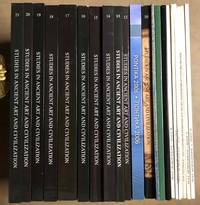
M6171aRare complete set of 23 volumes. Uniwersytet Jagiellonski Krakow 1991-2019. First edition. In-8. Original softcover as new. Note: volume 3 is: Krzysztof M. Cialowicz Les palettes Egyptiennes aux motifs zoomorphes et sans décoration. Etudes de l'art prédynastique. Volume 11 is: Pontika 2006. Recent Research in Northern Black Sea Coast Greek Colonies. Proceedings of the International Conference Krakow 18th March 2006 edited by Ewdoksia Papuci-Wladyka. Language: English - French/Français - German/Deutsch. This set ships from Europe shipping costs will be updated accordingly BPF. Relevant subjects: Egypt: Journals Egypt. unknown
M12672Set of 25 issues in 13 volumes with issues 1-22 bound in red half-leather while nr. 23 25 & 26 are in their original softcover. The Sudan Archaeological Research Society & Archaeopress Publishing Ltd London 1997-2022. First edition. In-4. From the library of Egyptologist Charles Cornell Van Siclen III VSX. Language: English. This set ships from the USA shipping costs will be updated accordingly TXR. Relevant subjects: Egypt: Journals Egypt. unknown
19227174CBRio de Janeiro, O Malho, 1922?1923. Folio. Mit farb. Illustrationen. Halblederbände. + Wichtig: Für unsere Kunden in der EU erfolgt der Versand alle 14 Tage verzollt ab Deutschland / Postbank-Konto in Deutschland vorhanden +, A|B 2 Bände.
In-8 gr., brossura editoriale (etichetta al dorso; macchie e tracce d’uso), pp. (2), da p. 179 a p. 240,(2), con 1 tav. in b.n. f.t. che riproduce l’opera di F. Casorati, “Nudo di donna”. Di questa ricercata e importante rivista dl carattere letterario, offriamo il n. 7-8 (del 1923). Contiene: Emilio Cecchi, "In una galleria di statue" - G. Ungaretti, "Le stagioni / Alla noia" - C. Linati, "Studi per “Malacarne”" - F. Burzio, "Lisetta - Carmen" - C. Sbarbaro, "Delli ammaestramenti a Polidoro - tomo unico, libro vigesimo primo" - G. Debenedetti, "Boine (I)" - Chiose: A. Baldini, (G. Titta Rosa) - Giuseppe Raimondi: Stagioni seguite da Orfeo all’Inferno e altre favole - Paolo Buzzi: Poema dei quarantanni. Ben conservato.
In-8 gr., brossura editoriale (etichetta al dorso; macchie e tracce d’uso), pp. (4),32,(4). Di questa ricercata e importante rivista dl carattere letterario, offriamo il n. 1 - 15 Maggio 1922. Contiene: Giacomo Debenedetti, "Constatazioni" - C. Linati, "Luce a picco. Il paradiso della tristezza" - Mario Gromo, "Sigfrido" - Sergio Solmi, "Tre elegie" - U. Saba, "Canzonetta 3" - E. Buonaiuti, "Cristianesimo e arte" - Max Ascoli, "Postilla" - Chiose: F. Flora, Dal romanticismo al futurismo (A. Momigliano) - Ringraziamento (d.g.). Testo ben conservato.
19165418CBLeipzig., E.A. Seemann, 1916 - 1918. 4°. 27. Jg.: IV, 332 S.; 28. Jg.:IV, 286 S.; 29. Jg.; 126 S. Original Leinenbände mit geprägtem Deckel und Rücken in schwarz und gold. + Wichtig: Für unsere Kunden in der EU erfolgt der Versand alle 14 Tage verzollt ab Deutschland / Postbank-Konto in Deutschland vorhanden + 3 Bände. - Sieben-, acht- und neunundzwanzgister Jahrgang. Neue Folge. berieben. In gutem Zustand.
Prima edizione. Minimi difetti marginali ma bell’esemplare di questo fragile fascicolo. Rarissimo volume 1945 dell’annuario Mondadori, qui diretto da Krimer nella parentesi RSI dell’editore milanese. Raffinati contributi, tra i quali una doppia pagina dedicata in mortem a Marinetti: commovente articolo commemorativo di Daquanno e di spalla l’«Aeropoema degli aviatori giapponesi» (già uscito in Gazzetta del popolo 31 mag. 1944) ornato da una bella tavola non firmata (Bazzi? Krimer?). Doppia pagina listata a lutto anche per Giovanni Gentile, con pubblicazione di una sua lettera inedita; lungo articolo di F. Ercole su documenti dal Vittoriale di D’Annunzio; il racconto «Scandalo d’infanzia» di Comisso; tre poesie inedite di De Pisis da un progettato poema «Gli Angeli», poi inedito; «Destino dell’architettura» di Agnoldomenico Pica, con diversi progetti razionalisti; «L’anno mille» di Telesio Interlandi; «Appunti per una canzone d’Africa» di Krimer; e numerosi altri interventi.
Collezione completa. Ottimo esemplare. 7 volumi dal n. 1 (aprile 1967) al n. 7 (marzo 1969). Tutto il pubblicato della rivista voluta da Breton ma che uscì dopo la sua morte.
Tutto il pubblicato, entrambi i numeri. Ottimi esemplari (dorsi leggermente bruniti e lieve fioritura alla brossura del primo volume). Scrive Maffei che la redazione mista, composta da critici affermati e artisti che si muovevano sul fronte avanguardistico coevo, «cerca di annullare ogni discrimine disciplinare». Vi si trovano rappresentati artisti come Giovanni Anselmo, Luciano Fabro, Jannis Kounellis, Mario Merz, Giulio Paolini e Michelangelo Pistoletto. G. Maffei, Libri e documenti. Arte povera 1966-1980, Corraini, 2007, p. 277. 2 voll.
Prima serie completa nn. 1-9 e 11 (il 10 mai pubblicato). Fascicoli in ottimo stato di conservazione, da segnalare solo minima fioritura al primo numero. IL 4 febbraio 1920 appare il numero I,1 del «Bollettino ufficiale» del Comando di Fiume d’Italia, con lo scopo principale di fare informazione e controinformazione: diffondere ai sostenitori e «agli avversari di buona fede» gli atti del Comando, e contrastare la campagna di denigrazione messa in campo dai nemici della causa fiumana. Il bollettino, che inizialmente appare con cadenza poco meno che quotidiana e via via si attesta tra il settimanale e il decadale, diventa uno strumento essenziale per registrare nel dettaglio le vicende dell’occupazione. Il suo successo fu tale che, nel maggio 1920, si provvide a stamparne una «prima serie» che ripercorre gli atti salienti del 1919: ne escono 10 fascicoli (l’ultimo erroneamente numerato «11») con l’indicazione di «prima serie» tra parentesi a seguire il numero, datati dal 12 settembre (marcia di Ronchi) al 25 ottobre. Salaris, Alla festa della rivoluzione (Bologna 2002); L’Arengario S.B., La città inquieta e diversa (2019), nn. 45-48, 60, 67; Guabello, Raccolta dannunziana, n. XXXXXX-; Gerra, L’impresa di Fiume, XXXXXX
Prima edizione ufficiale della «Carta del Carnaro». Ottimo esemplare, normalmente brunito. «La Reggenza Itaiana del Carnaro» rappresentò la costituzione dello stato libero di Fiume italiana, documento-simbolo di quella sorprendente avventura rivoluzionaria cominciata il 12 settembre 1919 con la marcia dei legionari da Ronchi (oggi appunto Ronchi dei legionari, Gorizia) e conclusasi nel «Natale di sangue» del 1920. I bibliografi ritengono che essa sia stata stampata per la prima volta in una rarissima placchetta in sole 110 copie fuori commercio, con data 27 agosto 1920 (effettiva promulgazione dell’ordinamento) e con due refusi nel testo laddove negli articoli 18 e 35 compariva ancora il termine «repubblica», altrove sistematicamente sostituito con reggenza. In questa prima edizione ufficiale, a cui è dedicato invece il trentunesimo «Bollettino ufficiale del Comando di Fiume d’Italia», l’errore è per la prima volta sanato. -- La carta fu elaborata in gran parte da Alceste De Ambris, dal gennaio 1920 capo di gabinetto del comandante di Fiume d’Italia (sotto la sua guida si intensificarono le attività più avanzate in termini di propaganda rivoluzionaria), il quale consegnò la bozza il 18 marzo 1920, come «Costituzione della Repubblica italiana del Carnaro». Il 12 agosto, al Teatro Fenice di Fiume D’Annunzio pronuncia il discorso «Domando alla città di vita un atto di vita», nel quale si riferisce del lavoro sulla carta e della prossima scadenza fissata al 12 settembre per la promulgazione dello «Stato libero del Carnaro» — «la nostra nuova vita». Da questo momento fino al 27 agosto si colloca l’intenso lavoro di revisione e integrazione: «L’editing dannunziano consiste nella trasposizione dello scritto in prosa d’arte, con il sistematico uso, per indicare istituti e varie magistrature, di termini arcaici tratti dal linguaggio degli antichi statuti comunali e corporativi, e nella sostituzione della parola repubblica con reggenza. Da poeta, D’Annunzio trova perfino una giustificazione estetica, dicendo che “reggenza italiana del Carnaro” è un endecasillabo: “Il ritmo ha sempre ragione”» (Salaris, p. 86)
Edizione originale. Tutto il pubblicato dal maggio 1944 all’agosto del 1945 (numeri 1, 2 - 3, 4, 5 - 6) dei «Nuovi quaderni di Giustizia e Libertà» nell’edizione stampata a Milano da “La Fiaccola”. Esemplari in ottimo stato, presenti solo leggere tracce del tempo alle brossure. Tutto il pubblicato del 1944 e del 1945 (dal numero 1 del maggio-giugno 1944 al numero 5 - 6 del gennaio-agosto 1945) dei “Nuovi quaderni di Giustizia e Libertà” nella serie stampata dalla casa editrice milanese “La Fiaccola”. Fondata dai membri del Partito d’Azione Mario Dal Pra, Fermo Sobri e Italo Romanelli, “La Fiaccola” - che richiamava nel nome il simbolo di «Giustizia e Libertà» - si occupò di stampare e diffondere i “Nuovi quaderni”, inizialmente realizzati nella storica tipografia clandestina dell’antifascismo piemontese “L’Alpina”. Riprendendo l’eredità dei primi quaderni di Giustizia e Libertà - quelli voluti da un gruppo di esuli antifascisti guidati da Carlo Rosselli ed Emilio Lussu e stampati a Parigi tra il 1932 e il 1935 - questa nuova serie si propose, a partire dal maggio del 1944, come spazio di discussione alta dei problemi e delle soluzioni legati non soltanto all’ancora opprimente tempo presente, ma anche a quello futuro. Come si legge nelle toccanti pagine introduttive del primo numero infatti: «Le condizioni di lavoro dei superstiti redattori e dei giovani che ad essi si sono associati sono notevolmente più difficili, più pericolose di quelle esistenti dieci o dodici anni fa. La loro maggiore forza è data dalla speranza che ci si trovi ormai avviati verso la sconfitta del nostro nemico più immediato: il fascismo e il nazismo. Ma la sconfitta del nemico non significa ancora necessariamente - e guai a farsi illusioni su questo punto - la vittoria della causa nostra [...]. Bisogna insomma avere il coraggio di dare delle soluzioni che implichino una rottura non solo col fascismo, non solo coi Savoia, non solo col grande capitale parassita, ma con tutto il modo di pensare dell’epoca che finisce».