Katz, Shmuel (Signed)Biblio.com

13 728 résultats
1995215j2286New York: Barricade Books Inc. 1995. First English Edition. Hardcover. 1569800421 . Signed and inscribed by author upon half-title of each volume. Stated first printing. Complete in two volumes. "The stirring and passionate story of the man who was both the best beloved and most maligned Jewish leader of our era. Jabotinsky 1880-1940 was the idol of two generations of Jewish youth whom he drew out of the passivity of the ghetto and taught to stand up for themselves. Barred from Palestine by the British he spent the last ten years of his life in exile and fighting to the last he died penniless in New York on the eve of the Holocaust. Katz spent seven years writing this book drawing upon Jabotinsky's personal papers a vast variety of memoirs and most importantly on government archives in Britain France and Poland to produce this scholarly work that reads like a novel." - dust jacket. "Shmuel 'Mooki' Katz 1914-2008 was a Zionist activist member of the high command of Irgun and a member of the first Knesset." - Wikipedia. 10 890 8 2 893-1855 p. Includes footnotes bibliography list of sources and index. Black and white photographic plates. Clean and unmarked with light wear. Unclipped dust jackets now in glossy new archival-grade protection. Slipcase not included. A quality signed example. ; 8vo; Signed by Author . Barricade Books Inc. hardcover
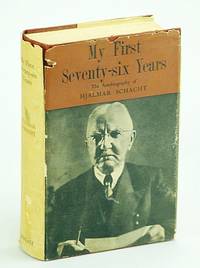
1955863H2073London: Allan Wingate. Good in Fair dust jacket. 1955. First Engish Edition. Hardcover. vi 2 552 pages. Index. Black and white photographic plates. "One of the most important autobiographies of the post-war period for there can be few personalities still alive who have been so intimately connected with the march of world events for so many years. His first great triumph was to rescue the German Mark from the inflation of 1921. As the Nazi avalanche swelled Hitler persuaded him to occupy the Presidential chair at the Reichsbank. but Schacht soon saw that the Fuhrer was driving relentlessly towards war. A quarrel resulted and he left the Government remaining under a cloud until he was arrested towards the close of the regime." - dust jacket. Schact was later aquitted of war crimes at Nuremberg. Average wear to unmarked book. Above-average wear and soiling to dust jacket which is now preserved in archival-grade Brodart. KEHR & LANGMAID 1217 ALDCROFT & RODGER p.83.; 8vo - over 7¾" - 9¾" tall; My First Seventy-six Years: The Autobiography of Hjalmar Schacht Biography Nazi Germany Nuremberg Trials Reichsbank Central Banker German Democratic Party Weimer Republic Hyperinflation Bankers Montagu Norman Mark Inflation . Allan Wingate hardcover
18074109z1807. Hardcover. Good. Hardcover/pub. 1807/Gd. condition/211 pages - The text is in French. TI84109z hardcover
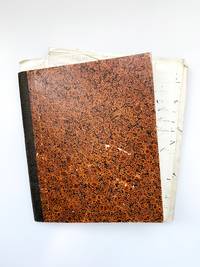
18550010028Yale University Olivet College. Good with no dust jacket. 1855. Hardcover. On offer is a terrific collection of early writings from John Haskell Hewitt a leading early American classical scholar. This 1855 journal is a series of reflections on sermons and lectures that Hewitt attended as a student at Yale University: "The theme was the duties of life in relation to divine providence. The speaker divided the subject into 3 general heads. 1st What is understood by Providence. Secondly Duty of Consenting to that Providence. Thirdly Duty of Submitting to that Providence" pp. 18-19. "There are in every science certain rudiments of first principles on which all others depend and from which others proceed. In every concern it is well to keep in view the rudiments. In the Legislature the Constitution is looked to in Navigation the compass. The same is true in Religion. There are certain fundamental principles in this which must be regards" pp. 28-29. His loose-leaf notes date at least until the late 1870s. Some are on the letterhead of Olivet College showing him as Acting President which date then to 1877 at the earliest when he was so appointed. They cover a wide range of subjects. Many appear to be notes for talks or lectures. "A History as has been shown is philosophy teaching by example . First Colonial Congress in NY Oct 7 1765 9 Colonies 28 delegates Agreed on Declaration of Rights." One group of notes has a page dedicated to each of several American states many referring to the early history of the relevant state especially vis-a-vis independence. Hewitt was born in 1835. He entered Yale University in 1855 the year this journal was kept. After his graduation Hewitt stayed at Yale serving as a librarian there. In 1865 he accepted a teaching position in Olivet College in Michigan. In 1882 the president of Williams College in Massachusetts and a friend of Hewitts from Yale Franklin Carter offered Hewitt a prestigious professorship in ancient languages. Hewitt accepted serving Williams College in various capacities for the rest of his life. He became Professor Emeritus in 1909. He passed away in 1920 at the age of 85. This small notebook measures 6.25 inches by 7.5 inches and contains 50 pages. It is about 90 percent complete. The cover is in good condition as are the binding and pages. The handwriting is legible. Accompanying this notebook is a collection of some 108 pages of loose-leaf notes. For an historian this is an outstanding look into the thinking and writing of a man recognized as a leading scholar in 19th century America. For alumni of these great institutions this would be an excellent addition to or anchor for a collection of memorabilia. ; Manuscripts; 6.25" x 7.5"; 50 pages; John haskell hewitt; yale university; yale; history of yale; olivet college; williams college; american scholar; americana; handwritten; manuscript; document; letter; autograph; writer; hand written; documents; signed; letters; manuscripts; diary; diaries; journals; personal history; social history; historical; holograph; writers; autographs; personal; memoir; memorial; antiquité contrat; vélin; document; manuscrit; papier antike; brief; pergament; dokument; manuskript; papier oggetto d'antiquariato; atto; velina; documento; manoscritto; carta antigüedad; hecho; vitela; documento; manuscrito; papel . hardcover
19193958258Bloch Publishing Company 1919. This is an ex-library book and may have the usual library/used-book markings inside.This book has hardback covers. In fair condition suitable as a study copy. No dust jacket. Please note the Image in this listing is a stock photo and may not match the covers of the actual item200grams ISBN: Bloch Publishing Company hardcover
1897000896MELBOURNE AUSTRALIA AUS. Good. 1897. On offer is a fascinating very readable account of a sea voyage from England to Australia in beginning in September 1897. The very charming author is Oswald G. Geach who was born in Lostwithiel Cornwall in 1875. Following in his father's footsteps an 1881 census lists him as Headmaster Oswald became an art teacher/master and traveled to Australia to take up a teaching position in time becoming Senior Master at Boxhill College Melbourne. Mr. Geach writes in a most pleasant and insightful manner and includes his observations on Las Palmas in the Canary Islands crossing the Equator Cape Town in South Africa and many of the author's fellow passengers. This diary offers a many faceted look of the world at the turn of the 19th century as Mr. Geach confides in his diary all the many foibles and traits of his many ship board companions and never fails to provide anecdotes of interest and sometimes fitful signs of the times: many references especially after docking in Cape Town refer to those with dark skins in many impolite ways. Our writer always reveals his youthful and artistic personality but with an uncommon maturity for a such a young man by way of his writings. Sadly found in the diary and included with the diary is a printed sheet entitled 'Oswald G. Geach An Appreciation' which appears to be the eulogy for the short lived Mr. Geach whose funeral was in 1910 or 1911. A life cut short and from the note filled with some unspecified long term illness Mr. Geach was as early as 1909 becoming known back in England for his paintings some of which became part of the Walker Gallery during the Liverpool Winter Exhibition. A graduate of the Westminster Training College for Wesleyan Teachers but later emigrated to Australia hoping the weather would help improve his health. Quarter leather binding over marbled boards. The spine cap is almost completely worn away with only a few sections of leather remaining. Boards are worn to edges cup ring to front cover. Binding is loose but covers and all pages are still attached. Internally the 8.25 x 10.25 inch book's 96 handwritten pages are in excellent condition. Hand decorated page preceding title page hand decorated title and contents pages. Clean text with no markings or foxing. Overall condition is G.; Manuscript; 4to - over 9¾" - 12" tall; WESLEYAN METHODISM METHODIST LIVERPOOL LIVERPUDLIAN AUSTRALIA LOSTWITHIEL CORNWALL ART MELBOURNE BOXHILL COLLEGE CANARY ISLAND LAS PALMAS TRAVEL CAPE TOWN HANDWRITTEN MANUSCRIPT DOCUMENT LETTER AUTOGRAPH DIARY JOURNAL LOG KEEPSAKE WRITER HAND WRITTEN DOCUMENTS SIGNED LETTERS MANUSCRIPTS HISTORICAL HOLOGRAPH WRITERS DIARIES JOURNALS LOGS AUTOGRAPHS PERSONAL MEMOIR MEMORIAL PERSONAL HISTORY AMERICANA ASTRONOMY ASTRONOMER NAVY NAVAL MARITIME MONTSOURIS HANDWRITTEN MANUSCRIPT DOCUMENT LETTER AUTOGRAPH WRITER HAND WRITTEN DOCUMENTS SIGNED LETTERS MANUSCRIPTS HISTORICAL HOLOGRAPH WRITERS AUTOGRAPHS PERSONAL PERSONAL HISTORY MEMOIR MEMORIAL Antiquite CONTRAT VÉLIN MANUSCRIT PAPIER ANTIKE BRIEF PERGAMENT DOKUMENT . hardcover
19960001041Providence Rhode Island RI. Very Good. 1996. On offer are the riveting 1996-1998 handwritten diaries 2 of a self-destructive drug taking mentally ill and maybe deaf woman we believe to be 19 or 20 years old. She lives in Providence Rhode Island. At one point she signs her name but we will not reveal what we believe it to be as these books are less than 15 years old. These books are an unbelievable probing in-depth look into the mind of a profoundly disturbed woman who is very bright well read well written but extraordinarily troubled. She lays it all out in these journals. Here are some snippets: "April 13th at dad's doing illegal things; spoke to Dr. F_____ gave me 60 paxils; got a note too for blowing off class I should make a copy; still confused to exit my life or go on. It's 50/50; May 16th In Butter woman's partial program; was on 4th on suicide watch. Tried to OD on Paxil 2x; Missed finals. Life really does suck; Memorial Day I made two straight men kiss each other. Matt/Tom had a 3some. No sex. Ran around naked tripin on life. Hung out a window. 4 stories. Should I let the hands go; June 5th I think I need to go back in the hospital. I have too many overdue library books $114 worth and 2 more." Other entries point to getting help from a therapist Sue and the likely hood she has multiple personalities is detailed. She seems to name one Melissa and another named Malice. Later Dr. F______ believes she needs a shrink and Sue cannot give her what she needs. Shockingly she tells another story: 'Hung out with my sister Chriss last night got high watched a movie enjoyed myself. I proud of her not many people give her credit for her accomplishments. She was a deadhead jailed for 2nd degree manslaughter abused physically/mentally by our mother and her divorce. Now she has 3 beautiful kids awesome dead head husband ' In another shocking entry: Dave - he's a shady character. He has a psychotic sense to him. He says I am twisted and evil and he is god's messenger. Why is it important for him to be in the book Why does he love to play. The games that I crave he is craving. He wants to eat my death .He is sick. I am just crazy.' 'I found my old dissecting kit can't help but want to cut myself .Saw Sue. I switched during the session. I don't think she noticed.' Later in the second book our writer reveals she understands very well about her other personalities and then in another shocker after all the others she reveals that only one of her personalities is deaf! She goes on to revel that her bosses are impressed with how she handles work all the while she is hearing voices. She even begins to call her inner personalities 'the kids' and she writes in her diary that she wishes one of the others would clean the room and pay the bills because she is sick of it. As the second book progresses her mental state declines. She moves near Boston and suggests that if Melissa finds out she will be pissed. She burns some pages with a cigarette it appears she has torn out some later pages but near the end the writing gets more chaotic and then stops with the last paragraph referring to going to wrapped in blanket with fearlessness and a teddy bear for a pillow and then to sleep. Sadly we think this was her end. Journal 1 is about 100 pages and nearly full. Journal 2 is about 120 pages and about 70% full. VG.; Manuscript; 8vo - over 7¾" - 9¾" tall; MENTAL ILLNESS PSYCHIATRY OBSESSIVE COMPULSIVE DISORDER CUTTING SELF MUTILATION GENDER STUDIES WOMEN'S STUDIES GENDER MULTIPLE PERSONALITY DISORDER SUICIDE MANUSCRIPT DOCUMENT LETTER AUTOGRAPH KEEPSAKE WRITER HAND WRITTEN DOCUMENTS SIGNED LETTERS MANUSCRIPTS HISTORICAL HOLOGRAPH WRITERS AUTOGRAPHS PERSONAL MEMOIR MEMORIAL PERSONAL HISTORY AMERICANA ALS ARCHIVE DIARY DIARIES CIVIL WAR ERA WAR BETWEEN THE STATES ANTIQUITÉ CONTRAT VÉLIN MANUSCRIT PAPIER ANTIKE BRIEF PERGAMENT DOKUMENT GENEALOGY CONCORD NEW HAMPSHIRE antiquité contrat vélin document manuscrit papier Antike Brief Pergament Dokument Manuskript Papier oggetto d'antiquariato atto velina documento manoscritto carta antigüedad hecho vitela documento manuscrito . unknown
19120012227Lyons France. Good with no dust jacket. 1912. Cloth. On offer is a superb manuscript discussion on French textiles and weaving written in the late 19th century. The author of the volume is unknown. There is a stamp on the inside front cover: FAB que de REGISTRES; 29 rue Tupin LYONS. There are also a few names written on a small torn page at the front of the book. From the introduction: in translation : Studies of the Main Textiles The Silk Definition: We give the name of silk to the filamentous material secreted by certain of the family of Saturnine and Tsychides of Bombay and used to the construction of a kind of nest without which the caterpillar locks itself to become a chrysolid. The book then goes into discussions about the various aspects of the silk cocoon the silk itself and weaving. This book contains numerous diagrams of weaving patterns. The illustrations are essentially the patterns for the punch cards to create intricate woven textiles. All illustrations are accompanied by detailed explanations. The book is half written in beautiful calligraphy in black ink and the other half are more casual notes in pencil accompanied by in-depth drawings. Some examples of headings from the manuscript in translation are: Banele from India Velvet Cut Velvet Gauze Unwinding the Cocoons Spinning Defects Packaging Wool Ironed Plush Double Taffeta Background and so many more. HISTORY OF SILK IN LYON: Lyon was the heart of the French and European silk industry. From the 15th and 16th centuries silk was traded in the great fairs held in the city. In 1540 the French king Francois I granted Lyon a total monopoly on raw silk imports into France. By the 18th century silk production was the pillar of Lyons economy with some 28000 people employed in the silk industry in 1788. In 1801 the Jacquard loom was invented which only spurred growth in the industry. Fabric dyeing techniques helped drive the development of the chemical industry which was firmly established by the mid-1800s. By 1870 the silk industry accounted for 75% of Lyons total industrial activity with about 100000 looms in operation. The fascinating thing is that the Jacquard loom so integral to the silk weaving industry is really a forerunner to todays computers. The Jacquard loom was developed in 180 by Joseph-Marie Jacquard. Jacquards loom utilized interchangeable punch cards that controlled the weaving of the cloth so that any desired pattern could be obtained automatically. These punched cards were adopted by the noted English inventor Charles Babbage as an input-output medium for his proposed analytical engine and were used by the American statistician Herman Hollerith to feed data to his census machine. They were also used as a means of inputting data into digital computers but were eventually replaced by electronic devices. Today silk makers have turned to other fibers or shifted to highly specialized skills such as restoration of historic fabrics or supplying haute-couture designers. The Museum of Textiles preserves the history and heritage of Lyons silk industry. It preserves the epic history of silk . In fact there is now a direct train service between China and Lyon running along the old Silk Road. For a historian especially one focused on textiles or the silk trade of Europe this is an outstanding piece of history. For aficionados of haute couture this is an excellent resource to have on a bookshelf. This handwritten notebook has a hard fiber-board type cover which is in very good condition. The document measures 11.25x7.5 inches and contains 184 pages. It is 99% complete. The pages are mostly in good condition and the binding is intact. A few pages have come loose and a few more have had a portion excised. The handwriting is neat and legible. Throughout the document are hand drawn illustrations of a variety of weaving patterns some in black and white others coloured. French language. Overall G. ; Manuscripts; 8vo 8" - 9" tall; 184 pages . hardcover
0011131Willard Ohio. Good with no dust jacket. Softcover. On offer are two diaries covering two years in the life of a farmer in Willard Ohio named William Newton Keesy 1867-1942. William married Carrie Niekirk 1867-1928 in 1892 and they had two children Parke and Wilma. He farmed near the small Ohio town of Willard. He also served as commissioner in Huron. Following the death of his wife William moved in with his daughter Wilma and her family. Sadly the 1940 census completed two years before his death shows him living in a boarding house. When he kept these diaries at age 61-62 William Kessy lived an ordinary life looking after his wife who was very ill and would die before the end of 1928 and participating regularly in community organizations. Again from context it appears that in addition to farming he worked servicing pumps at gas stations and service weigh scales. His entries are succinct and convey a sense of the rhythm of life in small-town Ohio at that time. The following excerpts will give a flavour of these two diaries. The diaries also contain a fair amount of ephemera such as medical bills invoices etc. R and cloudy. I went to Willard and tested Standard Oil Co Bulk and Service Station Feb 15 1928. I made a thing to put coal oil barrel on and in P. M. Went over to see Herbert he is sick has been since Monday. Wilma came and her and Carrie went to W. M. A. At Dawson. I went down to in eve a little while Apr 6 1928. Hung screen door and painted in A. M. In P. M. Hoed potatoes. All kids were here in eve had ice cream. We set out tomato and cabbage plants. I went down to Clarks and got them July 4 1928. By late summer Carrie was beginning to have health problems and there are a number of references to doctor appointments a receipt from the Cleveland Clinic and a detailed list that William kept of Carries medical bills at the back of the diary. Through the autumn Carries health continued to fail but life continued for William and his adult children. Some excerpts: I went to Willard then to cemetery and over to Charleys then home then got a message from Mabel and went to Willard and in eve to Willard to a Republican meeting. Frances Riddle went with me. Carrie and Mary went over to Wilmas for dinner Oct 8 1928. Got things ready to go to Columbus in the morning to Sealer Convention. In PM I went to Delphi and Willard. Eva came out first before dinner and is going to stay until I get home from Columbus Dec 3 1928. At home all day. Carrie has been bad. Doctor was out in eve. Bob and Wilma was out in eve Dec 12 1928. Fair. Carried died this evening at 7 oclock. Parke and I cut up beef and Dora put it down Dec 28 1928. His family troubles were not over but continue in his 1929 diary. On Jan 2 1929 he notes that his 10 month old granddaughter is sick. She had contracted measles and a bronchial infection and did not recover: Stayed at Bob last night. Merle died at 5: 20 this morning Jan 30 1929. Little Merle Aileen was buried today aside of Carrie. Now she has her. Dear lord keep me so I can go to them Feb 1 1929. Despite the tragedy of 1928 and 1929 William perseveres. He spends a lot of time with Wilma and her husband Bob and Parke. He also continues with his daily tasks as was necessary at the time. Some excerpts: Frank and I cleaned the chicken coop then I went to Attica and brought Eva and Minnie out and Dora and Wilma came over and they divided up Carries wearing apparel and then took them home Feb 18 1929. I went to Norwalk by way of Younges and home to Willard and got car greased and shaved and hair cut and got oil changed and car greased. Bob and I got all of my things last evening May 3 1929. At election then out to Parks and to Grange in eve Nov 5 1929. Got ready for Christmas. Parks were down in eve. I got 2 pairs of socks and a tie from Parkes and a desk light from Bob and Wilma Dec 24 1929. For a social historian these diaries provide a real look at one aspect of life in small town America in the early part of the 20th Century. He keeps detailed cash account listings at the back of both diaries and the ephemera helps shed light on economic information from the time. There are numerous references to family friends and neighbours for this to be a good resource for genealogists. The 1928 diary measures 5.5x3.4 inches is 183 pages and 100% complete. Overall Good. The 1929 diary measures 6x3.4 inches is 183 pages and 100% complete. Overall Good. Williams handwriting is particularly legible for a male diarist. ; Manuscripts; 24mo 5" - 6" tall; 183 pages; Signed by Author . paperback
1912000775bBOULDER COLORADO CHICAGO ILLINOIS EUGENE OREGON. Very Good. 1912. On offer is the original handwritten manuscript diary of a young woman named of Retta Craighead sometimes identified in the press as Craghead. The diary covers her life during the years of 1912 to 1929 from the time she was about 16 or 17 until she was 33 or 34. One hundred pages of entries in this 7" x 9" book make for a detailed telling of this fascinating woman's life and along with the handwritten entries Retta has peppered the pages with newspaper clippings revealing that Retta is socially active and in a family whose every bridge game soiree slumber party at Neva Brandyberry's fundraiser and ribbon-cutting ceremony is printed in the local Boulder newspaper. Even when she travels to a friend's home in another state the doings are press fodder. But from happy-go-lucky teenager she enters womanhood disappointed and angry. She will not be returning to her beloved friends at school her Father insists she tells us. No warning and she is instead doomed to be a teacher which she detests. This diary has so many levels. The reader learns that the girl becomes a woman and a 'femme fatale' at that; Retta is engaged two times but never seems to get married to any of the young men she talks about. There is also a hint of a scandalous affair with a married man. Then all of a sudden in 1921 she says she's been married now 4 years but says there are things she wishes she could say but doesn't. Towards the end of the diary we do not find any mention of Hugh the man she married save for his leaving. Sadly her heart gets broken many times but she never leaves out her heartfelt feelings and always expresses her deepest emotions. This is a rare peek into the heart and soul of a young Colorado woman during the Gilded Era this is a diary heartache and heartbreak. The other wonderful facet of this intriguing diary is that our diarist is an exceptional writer and besides using the diary as a confidant and catalogue of her emotional life we see Retta write super passages about the city of Chicago which is a city much in her life of those years. Additionally as our author is from Boulder Colorado and the details about her life there are also quite simply super. Lastly she spends time attending school in Eugene at the University of Oregon although her entries while in Eugene are brief. She does not write daily and some times Retta skips a month and in the later years she skips a few years but she jams the pages full with detail. Blithely when she does miss and then starts anew she calls it "A New Leaf." Here are snippets: 1912 'February 23rd Left school at 4 and had dinner at Mrs. P.'s then got my dress and met Ruth and went to Friday Musical club meeting. Then came home and took my dress and showed it to Agnes. Then had an early supper. Then hurried trying to get roses made for my hair then finally got dressed and Clint took me to the Sophomore German dance and O dear had the grandest time. It was awfully crowed. Got home about 2. Had such a time on the car it was so awfully crowded." A newspaper clipping places the party at Sternberg Hall. 1913 "June 25th I have not been keeping this diary but tomorrow I'm going to Chicago. I'm 20 years old and engaged to be married. Father has bought us a new car and we sure do enjoy it. Billy came over home from Lupton but we are so busy packing. Bill came up and took me to town and then had dinner. Then Ethel and I went to town and met him and we went and bot the tickets. Billy and I went to the house and to got the car and then he took me to Helen Lowter's reception. Billy and I took a long ride out in the country .she then goes on to say I forgot to record the farewell scene so I will proceed to do it on this page. After said ride with dad and mama Billy and I strolled out on the second terrace to the summer house and sat down. Heaving a sigh that tore off 7 shingles. Then a heart rendering silence. At last Billy very sadly announced that he'd try to have the shingles on ere I return. There being nothing else to say we fell on each others neck and wept tears of brimey sorrow and parted. Billy promised to write every three hours." "June 26th We left Boulder at 6:45. Mother and father took us to the station. Billy stayed in Boulder so we 3 went to Brighton to catch the Chicago Train ." "June 27th Still very hot but arrived in Chicago at 4:30 and got up to Y.W. C.A. without much trouble. Registered and had supper then a bath and then to bed." "June 29th Breakfast at 8 and then I laid down on the bed and slept until 11. We intended to go to church. Then we dressed for dinner. After dinner wrote a letter then we met a woman who goes with us so we went to Jackson Park and saw sail boats and people swimming in Michigan Lake. There is a lagoon and the prettiest bridges across it. Not kept very well. We did not go thru the Field's building a building Fields bot after the World's Fair 20 years a go and just parts of the displays in Chicago to his museum. We had ice cream in the Ill building. They are not pretty. Came back to the Y.W ." "July 1st Got up and had to hurry so fast to get to breakfast then Mrs. Hood and I went to the business part of the city and shopped all morning. Came back to Y.W. for luncheon then at 2:30 went down and crossed the Van Buren Viaduct and over to the Olympian games. They are nothing more than just plain track meets. Then came back to Y.W. Saw suffrage parade practiced a while then dinner and then wrote home letters and went to P.O. for a walk. Came back and sat in the hall window and saw the boats on the lake. They are so pretty." She then talks about enrolling at Chicago Music College. "July 5th Went on the Christopher Columbus to Milwaukee. Left Chicago at 9:45. The boat was rather crowed but Oh! so grand on the water which was blue green and all different shades. It was so pretty. Got to Milwaukee at 3 p.m. Then we went to Palm Garden and had dinner. They were so slow we just had time to get back to the boat which left at 5 p.m. Coming back the sunset was so pretty. The sun looked like a big ball of fire and made such a pretty sunset and so many pretty clouds. The boat had lunch and café' rooms and we could see land on one side but on the other side just water and beautiful waves. My first boat trip I shall never forget it." "July 8th Practiced all morning .Went to go to dinner to "King Joy Lo" A fountain in the center of the first floor with gold fish and clear water. The tables were inlaid with ivory with a dark material. We ate on the first balcony tables just for two. Had chop suey. There was music through the entire evening and Japanese men as managers and waiters. They just seemed to bring things out of the wall. I couldn't figure out where the kitchen was. Then from there we went to the ______hotel. Oh it was grand. They had the ladies waiting room on the 2nd floor and lounge chairs and everything in soft velvety red. I sat down at the writing desk and wrote some cards. Then we went to the P.O. and from there to a Hippodrome it was quite funny we laughed " At this point in the diary she gives an extensive description 2 ½ pages long of her trip to Wabash County; Evanston Wilmette and Kenilworth. She mentions North Western University the Home of Francis Willard and so much more. There is also a Garrick Theatre Program pasted to the pages. "July 24th Practiced all morning and read in the afternoon then went to the city. Then after dinner we went to Groves then we walked down to the lake. Oh! so beautiful. There is something so inspiring about the water and as it came in the waves rushed and made such a little rumbling sound so dear. I love it; don't believe I'd ever tire of the lake. Then we went back to the house and they served us refreshments. Then Dr. and Jessie brought us home. We passed P_____ Palmer house a big millionaire's home. Also a different part of the famous Sheridan road and right close to the lake. Oh it was such a beautiful clear day in the morning. I looked over the lake for the longest time. The pretty green and blue shades and way off there is a lighthouse and the lighthouses can't be seen most days. In the evening when we were coming home we passed apartment houses that rent for $100." She also goes into the Blackstone hotel and describes that and has pasted an envelope from the hotel to the pages of her diary. There is mention of the Field's & Company store The Tiffany room Moody's Church etc. She takes a trip to Niagara Falls and Toronto and describes that trip also in detail. Finally towards the end of her stay in Chicago she takes another trip to Decatur to visit and stay with a friend. "August 5th Getting ready for the party. It was a grand success. Then went to the picture show with the bunch." There are several newspaper clipping attached to this page that talk all about the party on this day one of them says; "It was a very congenial circle of eighteen girl friends whom Miss Neva Brandyberry invited to her home yesterday afternoon to meet her friend Miss Retta Craighead of Boulder Colo. The girls brought their sewing and while some busied themselves with their needles others played and sang. The time passed all too swiftly until 6 o'clock when a two course luncheon was provided. Ferns and the pungent nasturtium were used in the room decorations." "August 18th Got up early and packed my suit case and dressed then went downstairs and Gerladine was quite sick. The Dr. came while I was eating and said "Scarlet Fever" and for me to skip if I didn't want to be put in quarantine but Mr. Pax never took me to the train at 8 and was so lonesome. Got to Wolscott at 11 and went to hotel and ate dinner. Got to Chicago at 5 and went to Y.W.C.A." "August 21st Got up at 5 dressed and at 6 took a car to Union station. Bought my ticket then Harry came and we had breakfast and I left for Portland at 7. Such a dirty time. Got there at 11 and cousin Molly met me and we arrived at her home at 1. Oh hungry as a bear. We had fried chicken then after dinner I slept awhile. She has a Negro mammy and Oh! I how funny and strange I felt when the negros came around me. We sat out on the ground after supper then at 9 some relatives came and that made it a little bit more exciting." She mentions that she is very worried that she has Scarlet fever. She was pretty good writing most days during this year but the entries stop on September 6th and with that the next page goes on to say; "A NEW LEAF 1915 February 2nd I am now in Eugene Oregon going to the university." She talks of being pledged into the sorority dances studies etc. "Well this June and all April and May have been such wonderful months. Prentiss asked me if I'd marry him and yes Oh! such a wonderful night and such a wonderful man. June 5th Sunday I went to church with Mrs. Brown and Catherine Riddle. We met Prentiss coming from town. He called right after lunch and we went up to Henderson Park and there in a quiet shady place he put on a diamond ring. Got back to the house about 4 and told the girls and Oh! such fun. Oh! so romantic. Each one kissed me. Oh! I love the girls so dear ." 1916 "ANOTHER NEW LEAF Sept. 1st Came to Canon City Colorado to teach school Music and English. Went home for Thanksgiving and Christmas." "February 7th The most disappointment I have ever had in my life. Father just refused to let me go back to school. Have cried all night. I am just sick. Never wanted anything so much in all my life before. Edith went back and Prentiss graduates. Oh! I just know I'll never get over this. Oh! I want to go so much think of all the good times. Moved to the Miller Hotel and it is a little lovelier then at Mr. Warners. But oh if I could only go I despise teaching. I hate. I thought surely father would say yes ." "March 6th Oh I just hate life. If I could just be and I believe I'd be happy. Oh! I hate teaching and school. I want to go back to Eugene for commencement. I just know I just can't and Oh! I just hate this old world. It is so cruel. These last months have been just almost been unbearable. It just wish I could die. Was never so unhappy in my life ." "April 19th A letter from Prentiss and I received the blow that would kill at first but as the hours wore on I began to think I could stand it. He wrote rudely and bold that I do not love you and a lot of other cruel things. I intend to return the ring. Oh it seemed as tho my heart would break away. I immediately wrote and told Stewart I didn't care for him and never would." There is a newspaper clipping around this time in the diary of the marriage between Prentiss Brown and Ida Mae Humphrey. Looks like the two had a "quiet wedding" in Corvallis. The clipping states that it was a "surprise to everyone." Retta then talks about climbing up Flag Staff going to Rockvale Glacier climbing etc. She seems so unhappy for quite some time and still wishes to go back to Eugene and mentions Berkley. She skips her entries from May-December and just has brief sporadic entries for the year 1917. There is also several pages full of newspaper clipping having to do with Retta and her family general news about the outings they took. This is when years are skipped and the next year represented is 1921. "April 29th Went to grand opera in Denver. Had a most wonderful time. Thrilled most to pieces. Loghengrin. Risa Rosa the leading lady. It was wonderful. Caught the last car home." "May 10th Married 4 years. H. Hugh gave me a dozen rose buds. To bed early. Hugh went some where else. Dear little book I wish I dared write a few things here but no. My heart is heavy often times. That's all." "July 5th A big celebration in Boulder and it was raining so hard in camp we broke camp and come down about noon. After dinner and a good bath we went to a movie. H. Mollie Linette and Clint " "Dear little book such a busy summer so happy and yet sad. H. has gone and guess left July 18th." 1922 "April 16th Things are in such a horrid mess. Easter night a heavy heart and sad. Hugh is gone been gone since July." "September 13th School. Still cold. Went home and started for the country to get Jenkins and John. We played thru the cucumber fields then he took me to dinner then to a movie. He is awfully nice and I wish he were worth millions and millions. He is so honest and good and I hope he isn't so sick. He is lots of fun to play with and I could almost love him but I won't I won't. My dear old pal but oh! where are we going. I love him." "October 12th Went to the library tried to fight out my big battle and I know I'm a fool not to give it up but love is queer and I believe I'd be bigger to stay here than to runaway. Walk along way and tried to fight it out. I care but why should I the world's big but one." "November 1st This is a hectic fall. I just can't seem to get a hold on myself. I'm so unhappy but know it is the best. I am glad that I'm big enough to give up the man I really love and have loved all this time. It is wrong to love him I wonder how long I'll have to fight it out. It can't last always. The mornings are not so bad but the evenings and nights seem so hard to be brave. It is harder then last fall." Speculation: is she in love with a married man There are sporadic entries for 1923 and then all of a sudden Retta picks back up in 1929. The last eight pages are devoted to a trip they take to the East coast visiting Newport Providence Cliff Beach staying at the Breakers Hotel Rye Beach etc. Also towards the end of the diary she spends a lot of time driving into Denver to take unspecified "treatments". It seems like a lot has been quoted but it's only the tip of the iceberg. The cover on this diary is very rough but the pages are all attached to the binding and look clean. A superb diary.; Manuscript; 8vo - over 7¾" - 9¾" tall; HANDWRITTEN MANUSCRIPT DOCUMENT LETTER AUTOGRAPH KEEPSAKE WRITER HAND WRITTEN DOCUMENTS SIGNED LETTERS MANUSCRIPTS HISTORICAL HOLOGRAPH WRITERS AUTOGRAPHS PERSONAL MEMOIR MEMORIAL PERSONAL HISTORY AMERICANA ARCHIVE NEW YORK DIARY DIARIES NEW YORK WESTERN NEW YORK ANTIQUITÉ CONTRAT VÉLIN MANUSCRIT PAPIER ANTIKE BRIEF PERGAMENT DOKUMENT PRE SUFFRAGE WOMEN'S STUDIES FEMINISM GENEALOGY antiquité contrat vélin document manuscrit papier Antike Brief Pergament Dokument Manuskript Papier oggetto d'antiquariato atto velina documento manoscritto carta antigüedad hecho vitela documento manuscrito Papel . unknown
0011067Hartford Connecticut CT: MIT Graduate Patent Lawyer Hartford Washington. Good with no dust jacket. N.D. Hardcover. On offer is the well-kept 1906 diary of bright 23-year-old Amasa Maynard Holcombe 1882-1971 who is coming of age as he works socializes and dates in the interval between his graduation from MIT class of 1904 and his return to law school. In the years after this diary was written he would attend George Washington Universitys law school class of 1910 become a patent lawyer serve as a Major in the US Army in WWI marry and remarry repeatedly and become a pillar of the community as a member of many respected organizations. At this diarys writing Holcombe was working as the assistant to the treasurer at Pope Manufacturing Company in Hartford Connecticut. He was also dating by the end of the year hes getting serious about Miss Ella Knapp working on his motorcycle attending auto club meetings and socializing up a storm. When he does comment on his work it is clear to see that he is sharp as a pin and focused on his future success. SEE FULL BIO NOTES AT THE END OF THE LISTING. Some excerpts from this excellent diary follow. Amasa M. Holcombe is such a solid diarist that these excerpts only scratch the surface of his year. Typical of a gentleman in his early 20s Holcombe writes much more about his social encounters than his work life but the diary as a whole provides many insights into his career and the broad New England landscape. Cold Fine. Office routine. Saw Mr. Jenkins about patent application Recd letter from Geo. Fayban. Went to Waterbury to costume party in Friendly League Hall. Made up as Bro. Jonathan. Put up at the Connecticut. Recd celluloid scale from Clarence E. Whitney Jan 25. Office routine. Sent mother $15.00. Put $20.00 in the bank. Bought tie socks etc. Took Miss Woods to the bowling club at Y. M. C. A. 136-103. She invited me to play bridge some evening Feb 23. "Office routine. Ground new exhaust valve into motor. Ordered new summer suit at Gemmel Burnhams. Called at Mr. Jenkins office with two applications. Met Stevens on the street. Went over to Ella Knapps and had a little food. Had lunch downtown. Bought pair of tan low shoes. Recs whist invitation from Hattie Legett. Accepted" May 3. Cold. Cloudy. Office till 9: 30. Went to the Hartford Club to a meeting of the Mechanical Branch of the A. L. A. M. Subject - tires. Lunched there. Visited the Hartford Rubber Works and Henry Southers laboratory with the crowd. Had my first ride in a Pope-Hartford Mod. 7. Went over to Ella Knapps. Sent Elsie five dollars June 8. Showers in PM. Went to Svelles camp on motorcycle arriving at 12: 20. Left Htfd 10: 05. Had dinner and played 3rd base in game against the Albers. They won 8-7. Hard and fast game. Made two runs. Went swimming with the boys. Went canoeing with Marie. Teresa Clara and Miss Baker were out also Dan. Sprinkled a little. Hot night July 22. Office routine. Took out commission as Notary Public. The Toledo racing care came up for repairs. Looked it over. Pretty well smashed up. Mr. Russell called to talk insurance. Recd letter from BG Wilson. Went over to Ella Knapps. Took a walk. Wrote postals Sept 25. Holcombes diary provides a detailed precise description of what it was to be motorcycle-riding popular and successful white man in 1906 America. This diary is an absolute treat for social scientists and New England collectors. His diary is simply replete with names and places which makes it a goldmine for genealogical researchers. BIO NOTES: Amasa Maynard Holcombe 1882- was born in Winchester Massachusetts to Frank Gibbons and Inez Norman Maynard. He completed a BSc at Massachusetts Institute of Technology class of 1904. Immediately after graduation he worked in machine design at Farrell Foundry & Machine Co in Waterbury Connecticut and as assistant to the treasurer at Pope Manufacturing. Holcombe returned to school in 1908 attending George Washington University to earn his law degree class of 1910. While in school in Washington he worked as an assistant examiner at the US Patent Office. Holcombe was called to the DC bar in 1910 and the Missouri bar in 1913. He became a respected patent lawyer working with many prestigious firms around the US and becoming partner. Later in his career Holcombe worked as the Director of Kistner Lock & Appliance Co and as Special Assistant to the Attorney General 1920-1924 and as a consultant in the Department of Justice 1946-1950. His personal life was almost as interesting as his career. In 1909 Amasa married Eleanor Pearl Marshall 1885-1932. Together they had two children Priscilla and Marshall. After Eleanors untimely passing Amasa remarried Violet Strong Gillett in 1934. They divorced in 1946 and Holcombe married his third wife Martha Ellcott Ramey in 1952. Holcombe was known to have been a member of the following clubs societies and associations: American Bar Association American Patent Law Association Patent Institute of Canada Association International Protection Industrial Property American section American Society Military Engineers Washington Society Engineers American Ordnance Association American Society of Mechanical Engineers Washington Board Trade Sons of the American Revolution Clubs: Rotary University Washington. Measuring 4.75 inches by 3.0 inches the diary contains 365 pages plus memoranda. It is 100% complete. The diary is in good condition. The covers are intact with little evidence of wear. The spine and binding are in good condition as are the pages. The handwriting is exceedingly neat and legible. Overall Good.; Manuscripts; 32mo 4" - 5" tall; 365 pages; Signed by Author . MIT Graduate, Patent Lawyer, Hartford, Washington hardcover
18850001035BOSTON MASSACHUSETTS NEW YORK BANGOR MAINE. Very Good. 1885. On offer is a fascinating piece of 1885 handwritten manuscript Americana being a diary by a young man who appears to be the son of a ship owner of increasing commerce and a detailed look at a serious high wheel bicyclist. The diary begins in New York on January 1st when he apparently arrived with the Bark Haydn Brown of Boston which his father had part ownership. He writes about the Bark going into dry-dock being towed to 31st pier in New York and loading oil. He most of his time New York and particularly Brooklyn and attends theatre opera and other events. Watches "100's thousands skating on the ice" at Central Park. From New York he sails on the Fall River Line steamer Providence and arrives in Newport Rhode Island then takes boat for Boston his home. He appears to be grooming himself to be an educated gentleman and athlete. He takes lessons in German from the Berlitz School dancing lessons classes at Tuft's and plays polo. In April he begins work as a court reporter. Our author is keen on keeping fit and begins working out at a gymnasium. In June he goes to work at the W&N RR Co. in Worcester Mass. He also gets involved with going to sports events racing. He begins to intersect shorthand characters in his entries. In August our writer gets into high wheel bicycling. He buys a Royal Mail 58 inch bicycle for $140 another clue to his financial status given the cost of the high wheel is approximately 6 months of the average worker's pay at the time and starts riding all over the Boston area noting some remarkable times. To the Point of Pines in Saugus Chestnut Hill Allston. He rides to Dedham and then all the way to Attleboro. He goes up to Searsport Maine and rides around there as well as going to the skating rink. He and a friend took their high wheel bikes on board the steamer Cambridge bound for Belfast but she ran aground so they rode the rest of the way to Belfast. Watches a baseball game between "The Duffers" and "Muffore Comics". Returned home of the steamer Penobscot. In September at auction his father buys shares in the Bark Abbie Carver of Boston. Our boy seems to spend all his time riding his bicycle over considerable distances. In one entry Sept 17th he records riding: " .Lewis & I started for Waltham at 2:25. Got there at 3:15. Rode back after a little business of ¾ of an hour to City of Waverly Belmont Arlington Cambridge. Turned back & went to Allston and from there in Milton Brighton rode home making Gym at 5:30. Making 28 miles in 2 h 15 minutes". At the end of Sept. He leaves Boston for New York to take charge of teaching at the Gymnasium at Sing Sing. He returns to Boston in mid October via Fall River steamer Pilgrim. He evidently is on a career of being a Gym teacher and he talks about teaching "the apparatus". He goes to other cities in this capacity: Norwalk Conn. and Bangor Maine where he sets up the apparatus and heads up classes. He also meets Congressmen and other higher social strata persons. He ends his daily entries at Bangor where he is employed at the Gymnasium and the last entries most interestingly are written in shorthand. In addition he keeps a detailed record his expenses for the year. At the top of the list is his high wheel bicycle in which he gives detailed description. Also he kept a detailed record of his bicycle rides by date distance and length. This pocket diary lacks its covers but otherwise G overall and measures 4 ¾ almost 3 inches. Written in pencil and quite legible. ; Manuscript; 24mo - over 5" - 5¾" tall; HIGHWHEEL BICYCLES HIGH WHEEL PENNY FARTHING HI WHEEL CYCLING VELOCIPEDE TUFTS UNIVERSITY HANDWRITTEN MANUSCRIPT DOCUMENT LETTER AUTOGRAPH DIARY JOURNAL LOG KEEPSAKE WRITER HAND WRITTEN DOCUMENTS SIGNED LETTERS MANUSCRIPTS HISTORICAL HOLOGRAPH WRITERS DIARIES JOURNALS LOGS AUTOGRAPHS PERSONAL MEMOIR MEMORIAL PERSONAL HISTORY CANADIANA TRAVEL GERMANY ANTIQUITÉ CONTRAT VÉLIN MANUSCRIT PAPIER ANTIKE BRIEF PERGAMENT DOKUMENT . unknown
0011132Erin New York: Farming Life in Rural New York Retiring Farmer. Good with no dust jacket. Softcover. On offer is an archive of three diaries covering the years 1909 1910 and 1920 that very clearly describe life of an aging farmer in rural New York at the turn of the 20th century. The author of these diaries is Charles G. Jackson 1859-1943. Jackson was born in 1859 in Schuyler County New York and farmed near the village of Erin New York in the Southern Tier region of the state. He passed away inCorning New York. He was married to Hattie Harriet who predeceased him in 1928 at the age of 70 years. They had one child a son named John Raymond who is often referred to in the diaries as R. Jackson is 50 years old when he writes the first of these three diaries and 61 when he writes the final diary. His entries are succinct showing him to be a factual and to the point person yet they paint a clear picture of life on a farm at that time. It was a life of hard physical labour. Some excerpts give the flavour of this collection: Nice day. Hat went to Elmira on train. I sorted apples this p. M. Jan 20 1909. Fine day filled ice house only about 5 in of ice done a good job had plenty of help Mar 8 1909. I finished drilling side hill about 3: 30 dry & dusty a hard job July 9 1909. Cut B wheat all day. Binder does not tie good had O Elstum come down at nite to fix it Sept 17 1909. Finished plowing for corn the am PM I helped shingle a while then raked up some stone fine weather has been a warm month Nov 30 1909. Finished plowing hill at 4 pm began to plow garden ground is very dry tho had no rain this spring Apr 1 1910. J Jacobson helped me draw hay put about 6 loads in stack 1 load in barn this day hot July 15 1910. I plowed all day. Cold wind and snow squalls in PM. I wore my big Ulster and leggings to plow in Nov 3 1910. Ten years later at the age of 61 he still has a hard physically demanding life. Excerpts follow: Snows some and blows a little. A little warmer. Took 1ó hours to shovel out creek for water Feb 28 1920. Fine day. Thrashed 135 bu B wheat 8 ac acres 140 bu oats 5 ac 40 bu wheat 5 ac 35 bu barley 1 ac Oct 19 1920. For a historian or researcher this is an excellent collection of diaries. Succinct though the entries can be taken as a whole they vividly portray in detail life on a family farm in rural New York a century ago. Jackson makes many references to neighbours and this makes these diaries valuable to a genealogist as this is a stable population in this part of the state with long roots in the area. Altogether this is a fine collection. All three diaries 1909 1910 1920 measure 5x3 inches and contain 183 pages. All are 100% complete. The cover binding and pages are all in good condition. Handwriting is legible and our author wrote in pencil. Overall G. ; Manuscripts; 24mo 5" - 6" tall; 549 pages; Signed by Author . Farming Life in Rural New York, Retiring Farmer paperback
18890002132FAIRHAVEN MASSACHUSETTS. Good. 1889. On offer is an interesting original 1889 manuscript diary handwritten by the amazing Dr. Zacharia Willis Kemp a sensational diarist whose writings 14 diaries from the Depression era through to World War II had been previously available for sale; this 1889 diary being a recent find. Kemp was born on April 12 1855 in Otisfield ME. His parents are recorded as Charles E. Kemp and Sybil J. Wardwell Kemp with the origin of the family line dating back to 1380 in England. He married Miss Mary L. Boynton on December 24 1885 and she was the daughter of Gardner B. and Sarah G. Boynton of Norway Me. Mary's father was a prosperous tanner of that town and a Civil War veteran. The Kemp's had eight children with the oldest being Ida born on 1886 and she is noted in this biography including other particulars about the family's life. Dr. Kemp was elected principal of a High School in Fairhaven Mass. He was a Republican in politics belonged to the Masonic Order in which he was a past master and to the Odd Fellows in which he was a past grand; he was also a member of the New Hampshire Peace Society. Both Dr. Kemp and his wife were people of culture and refinement who took an interest in the moral and material development of their community and it is reflected in the writings of his diary. Here is a snippet: Warm Friday May 10 1889 Sultry May went to Launton today at 1'oclock with the New Bedford Coral Asso. to give a concert with the Volunteer Assoc. Ida attended little Dorathy Sliddard's birth-day party this P.M. It is very sultry and we have had the first shower of the season tonight not a very severe one." 5 x 8 inches overall G.; Manuscript; 12mo - over 6¾" - 7¾" tall; KEYWORDS: HISTORY OF ODDFELLOWS ZACHARIA WILLIS KEMP NEW ENGLAND REPUBLICAN EASTERN STAR OLD FELLOWS IOOF I.O.O.F. SANDBORN ACADEMY NEW HAMPSHIRE KINGSTON GENEALOGY JOURNALISM JOURNALIST MARY L. BOYNTON FAIRHAVEN MASSACHUSETTS AMERICANA HANDWRITTEN MANUSCRIPT AUTOGRAPHED AUTHORS DOCUMENT LETTER AUTOGRAPH KEEPSAKE WRITER HAND WRITTEN DOCUMENTS SIGNED LETTERS MANUSCRIPTS HISTORICAL HOLOGRAPH WRITERS AUTOGRAPHS PERSONAL MEMOIR MEMORIAL PERSONAL HISTORY ARCHIVE DIARY DIARIES JOURNAL LOG PRIMARY SOURCE FIRST HAND ACCOUNT SOCIAL HISTORY PERSONAL STORIES LIVING HISTORY ANTIQUITÉ CONTRAT VÉLIN DOCUMENT MANUSCRIT PAPIER ANTIKE BRIEF PERGAMENT DOKUMENT MANUSKRIPT PAPIER OGGETTO D'ANTIQUARIATO ATTO VELINA DOCUMENTO MANOSCRITTO CARTA ANTIGÜEDAD HECHO VITELA DOCUMENTO MANUSCRITO PAPEL . unknown
18820001933ENGLAND TO CHRISTCHURCH NEW ZEALAND CEYLON BOMBAY. Good. 1882. On offer is a super original manuscript travel diary detailing the England to New Zealand trip of Mr. E. Moore. Beginning January 1st 1882 Mr. Moore who is on his way to manage a bank writes in a fine hand rarely if ever missing a day spends 4 months at sea until reaching Australia and then to his final destination of Christchurch when he finally writes: Tuesday June 13th that he 'took charge of Branch today.' While some entries are brief recaps of the day at sea or the weather Mr. Moore does a superb job relating all he sees and does in the bigger ports or more interesting and exotic sights like Peking Ceylon Alexandria Venice Turin Bombay. Ceylon for example has 8 days of the 7 1/4" x 4 1/2" page almost overfilled in tiny legible writing. Historians and collectors of 19th Century travel will understand that this was not a 'Grand Tour' diary per se as much as an exciting exotic voyage of this young Englishman to a new life on the other side of the world. The book is in rough shape binding wise and some loose pages but all accounted for and the interior is better overall. G.; Manuscript; 12mo - over 6¾" - 7¾" tall; KEYWORDS: HISTORY OF TRAVEL ENGLAND TO NEW ZEALAND 19TH CENTURY E. MOORE CHELTENHAM PEKING CEYLON ALEXANDRIA VENICE TURIN BOMBAY AUSTRALIA HANDWRITTEN MANUSCRIPT DOCUMENT LETTER AUTOGRAPH DIARY JOURNAL LOG KEEPSAKE WRITER HAND WRITTEN DOCUMENTS SIGNED LETTERS MANUSCRIPTS HISTORICAL HOLOGRAPH WRITERS DIARIES JOURNALS LOGS AUTOGRAPHS PERSONAL MEMOIR MEMORIAL PERSONAL HISTORY AMERICANA ANTIQUITÉ CONTRAT VÉLIN DOCUMENT MANUSCRIT PAPIER ANTIKE BRIEF PERGAMENT DOKUMENT MANUSKRIPT PAPIER OGGETTO D'ANTIQUARIATO ATTO VELINA DOCUMENTO MANOSCRITTO CARTA ANTIGÜEDAD HECHO VITELA DOCUMENTO MANUSCRITO PAPEL . unknown
18690001361PROCTORSVILLE VERMONT VT. Good. 1869. On offer is the original 1869 manuscript diary in Eugenia A. Goodrich of Proctorsville Vermont. Researchers and collectors of Vermont ephemera will be hard pressed to find a more detailed retelling of local history and genealogy as this young woman does a super job keeping a careful record of the events in her life her family and the doings of her small village along the Black River in central Vermont. That said we find life is hard and brutal sometimes. It a cold region and a cold year and she and the family are frequently snowbound. Genie her nickname records the events as dear Ella grows weaker and then dies. February is a bad month with several deaths of friends and family. Genie sews for local ladies. She records the active visiting that people did in the days before automobiles and telephones except when the roads are filled with snow. Things look up in April when the sugaring starts. One day her brother boils off "done off" 57 pounds of sugar. She records murders and fatal accidents in nearby towns and writes about fear in the village that the reservoir will break and they'll all be drowned. She writes about one beau: "he is splendid" but others annoy her. The Fourth of July is "Glorious"; it's quite an honor when President Grant visits Proctorsville in August. There's a bad flood in October that takes out all the local bridges across the river and carries away Mr. Atherton's house. There's a smallpox scare in the village. Proctorsville celebrates Christmas and Genie writes about a merry Christmas at home; her brother receives a box of collars. This is a fine view of life in New England just after the Civil War. Here are some general notes and snippets: Jan. 1 1869: It has snowed all day and Genie is all alone and feeling lonely as she faces the New Year. She notes that this time last year brother Johnnie was with her so full of life and now he is gone to a better world. Genie lives in a village near Cavendish on the Black River in central Vermont. It's cold there's lots of snow. She sews for herself and for others in the village. There are lots of visits back and forth. On Monday Jan. 18 she writes about Mr. Oliver Perry visiting and taking her to Chester about 10 miles away. Then she writes "He is splendid." On Tuesday Jan. 19 she writes about a shocking murder in nearby 20 miles Claremont New Hampshire. A man was murdered by his nephew. "Murders are so common one doesn't know when they are safe these days" she writes. No doubt this refers to the murder of George Woodell by William Kenney on the night on Jan. 18 as reported by the Boston Post. Genie and her mother take turns caring for Ella. Genie notes on Tuesday Feb. 2 that Ella has failed very fast within a few days. Feb. 3 others come to visit Ella. Genie doesn't think she will live till morning. Feb. 4 Ella is about the same. Genie thought Ella was near death several times but she hangs on. Friday Fed. 5 Dear Ella left us this p.m. at twenty minutes to four to join that angel choir in our heavenly home. Dear Ella we mill thee but hope some day to meet you when our life's work is over. Saturday Feb. 6 spent all day at Mrs. Spaulding's helping to prepare for the funeral. It's Joseph's birthday today-he's 17. I would like to go see him tonight. Sunday Feb. 7 very cold. Joseph carried me up to help Viccie make a wreath. Uncle Wheeler Spaulding died this morning. Quite unexpected. Another life is ended and another home made lonely by the "Grim Monster" death! Monday Feb. 8 Ella's funeral today. Genie will stay at Mr. Spaulding's tonight. Tuesday Feb. 9 Uncle Wheeler's funeral today. Also Mr. Gibson's. Monday Feb. 15 we learned that Hale Spaulding was dead. He dies last night. Wed. Feb. 17 Miss Damon the Woman preacher preached at Hale's funeral. P.H.O. was here this morning. Genie received an invitation for a sleigh ride but had to decline. Sunday Feb. 21 Mother and Russell went to church all day but I didn't go. We heard today that was a woman in Andover VT murdered yesterday. 15 mi. south. Feb. 24 the murder was all a hoax. Thursday April 1. Joseph and the hired man commenced to make sugar today. Tuesday April 6. We done off 57 pounds of sugar today. Thursday Apr. 15. Saw a most remarkable display of Aurora Borealis this evening the like of which I have never seen before. Its rays illuminated the whole heavens converging with wonderful brilliancy. Sunday Apr. 18. Didn't go to church-bad travelling. Done off more sugar may be the last this spring. Wed. Apr. 21. Considerable excitement downtown. They are afraid the reservoir is giving out and they will be drowned. We hear that George sanders and Katie Mitchell were married. A "baby wedding" we should call it-both are so young. Sun. Apr. 25. Rev. J.S. Little preached his farewell sermon today at Proctorsville. Wed. Apr. 28. Mother quilting a bedspread. Saturday June 26. This would have been sister Hattie's birthday she'd be 20. Sunday June 27. I got all fixed up expecting a Bo beau but nary a one came only that hateful Adams fellow. Humph. Wish he knew enough to stay at home some of the time. Tuesday June 29. Mr. Elijah Bemis was killed this morning at Springfield and his wife was seriously injured. They were thrown from a carriage. Wed. June 30. Did not go strawberrying because Albert played me false. Thursday July 1. I went out and picked enough strawberries for one cake. Mother went strawberrying over in Parkers. I tried to sew some but did not accomplish much. "Albert bothers me so." Sunday July 4. Well this has been the Glorious fourth and is the ninety-third anniversary of the Declaration of Independence in this broad free land. I have celebrated it in a becoming manner. We stayed at Mr. Whitney's until after dinner then we came down to Warrens and called there a while and then came home. Sat. July 10. Little brother Johnnie would have been twelve years old today. Sat. Aug. 28. President Grant was at Proctorsville this afternoon. Quite an honor for our little town. Monday Oct. 4. It has been a continual pouring of rain all day. Cavendish never see such a __ before. The damages are immense. The bridges are all gone and the roads are washed so they are impassable. I went down to see the ruins. It looks rather rough along the Black river. We hear that Mr. Atherton's house is washed away. Tue. Oct. 5. The water in the river has fell considerably but not so we can cross it yet. Thurs. Nov. 30. Great excitement about the smallpox of which there are several cases in town. Friday Dec. 24. This evening all hands have been down for Proctorsville's Christmas eve. "Old Santa Clause" was generous this year. He put a present on the tree for me. Sat. Dec. 25. I spent a Merrie Christmas at home. This evening they have had exiting times at Farrsville. Quite a skirmish Merry merry Christmas indeed I should think. Joseph had a present of a box of collars and much much more. BIO NOTES: Courtesy of the Cavendish Historical Society Eugenia A. Goodrich was born in Cavendish 16 April 1846 daughter of Joseph D. and Lucy M. Paine Goodrich. Genie lived her whole live in the community of Proctorsville a village in the western part of the town. She also lived through the utmost tragedies that can ever be afflicted into the life of one little girl. During the first typhoid epidemic in Cavendish in 1851 her baby sister Hannah was taken. But even worse during the typhoid fever epidemic that struck Cavendish during the fall and winter of 1863 Genie lost her beloved father her twenty-year old sister Cassandra and her fifteen old sister Harriet. This left her poor grieving mother a widow at the age of 42 with three surviving children. Lucy did what she could but she was not strong and as time went on her heart grew weak. It was through her piety and humble work in the Baptist Church that she was adopted as a charity but she never asked for charity. Rev. Swett Brown was a pillar in the community and made sure that Lucy did not want for protection food and shelter with attentive neighborly love. Lucy Paine Goodrich was a gracious loving intelligent woman. Her life was a tragedy just as her daughter Genie's was. Lucy died of heart disease at her home in Cavendish 14 Oct. 1878 age 57. Her surviving son Joseph P. Goodrich lived with his wife Lizzie Oriette Kingston Goodrich and their children on a small farm in the Gassetts section of Chester a town south of Cavendish. Eugenia Lucy's daughter was married in Cavendish at the Baptist Church by Rev. Swett Farnsworth Brown 4 April 1872 to Albert Butler Adams. Albert was a Civil War veteran of Cavendish who enlisted at Cavendish 5 Aug. 1864 in the 2nd Battery Light Artillery as a private. He was discharged 28 July 1865. They lived in Cavendish District #8 on their own farm. Albert had a pension as he came home from war a very sick man. Genie died of consumption 15 June 1873 age 27. This was only three months and twelve days after giving birth to her only child Albert. Albert died of a scrofula illness 24 July 1878 at the young age of 34 years. They were buried in Cavendish. The book proper is a standard 19th century diary with astronomical items postage rates moon phases time of sunset and rise for each day etc.4"x2"x1" page a day small leather-bound book has a worn cover lining loose but overall G.; 64mo - up to 3" tall; KEYWORDS: HISTORY OF CAVENDISH EUGENIA A. GOODRICH NORTH HAVERHILL NEW HAMPSHIRE AMERICANA POST CIVIL WAR RECONSTRUCTION ERA PROCTORSVILLE VERMONT LUDLOW WOMENS STUDIES GENDER STUDIES RURAL LIFE HARDSHIPS EPIDEMICS INFLUENZA SMALLPOX FEVERS SUGARING MAPLE SYRUP HANDWRITTEN MANUSCRIPT DOCUMENT LETTER AUTOGRAPH DIARY JOURNAL LOG KEEPSAKE WRITER HAND WRITTEN DOCUMENTS SIGNED LETTERS MANUSCRIPTS HISTORICAL HOLOGRAPH WRITERS DIARIES JOURNALS LOGS AUTOGRAPHS PERSONAL MEMOIR MEMORIAL PERSONAL HISTORY AMERICANA Als antiquité contrat vélin document manuscrit papier Antike Brief Pergament Dokument Manuskript Papier oggetto d'antiquariato atto velina documento manoscritto carta antigüedad hecho vitela documento manuscrito Papel . hardcover
19190012208Ithica New York. Good with no dust jacket. 1919. Softcover. On offer is the engaging diary of a post WWI student at Cornell University. The author of this diary is believed to be Frederick William Abendschein 1894-1975 though this cannot be confirmed. There are contextual clues that loosely identify our author as either Abendschein or someone close to him. The clues include references to his sister Edith by name and by date of her wedding and his brother-in-law Frank Elliott Wood as well as mentions of the familys last name. There are other pieces of complementary information within the journal such as a reference to a War Risk Insurance Policy dated 1917 #3081. Abendschein served in WWI from May 1918 through February 1919. The diary records our authors first year at Cornell University and in many ways reads as a love letter to the institution. Our author is so happy to be a student at Cornell despite the typical freshman challenges he faces. He recounts the usual types of experiences a new student might have including figuring out campus his classes and fraternity life. He begins his diary at the beginning of the school year and concludes it in the summer with only a few brief entries later in 1920. The following excerpts will give a flavour of the diary: After two years of waiting with apparent endless hard luck Im on the way at last. Its one grand and glorious feeling. Edith Mother Elliott and I had supper then on the way Sept 28 1919. The end of my first day at Cornell. Some day! After many trials and reverses registration was finally completed. Just one damn thing after another Sept 29 1919. Had quite a pleasant day on the hill well some with marked improvement in trig. Procured my text book after some little difficulty. Went to the Theta Xi house tonight and while it doesn't present the same appearance as Chi Psi the house and fellows are a great bunch. Enjoyed every minute of it. Met people who knew some in R. And lunch at Ithica Oct 13 1919. Spent the afternoon and reading. Went to library in the evening to get some dope for my Eng theme. Came home and studied Feb 19 1920. Very busy day. Came down the Hill at 5 and went to work on Chem. Worked until 10. Then bed Apr 12 1920. The Descript was a bear. Feel sure I buster higher than a bit. Went to Forge in the afternoon. Very tired Did some English and went to bed May 4 1920. All in today and didnt go up the Hill until the afternoon. Took Peggy for a walk and had a mighty nice time. Worked all evening. Received a wedding announcement from Louise Anchaus June 4 1920. For a social historian this small diary offers an excellent look into the life of a college student who was likely fresh out of the U. S. Army and immediately following WWI. It offers an interesting look into one aspect of the generation that would eventually be referred to as the Lost Generation. This diary is a 7-ring binder measuring 7.0x4.5 inches. The covers are a pebbled leatherette with the word Diary embossed on the front in gold. The diary is set up as a students diary with pages beginning in September. There are two days per page for a total of approximately 194 pages including some information pages. The covers and pages are in good condition and the handwriting is legible. It is approximately 65% complete. Overall Good. ; Manuscripts; 8vo 8" - 9" tall . paperback
0012264Colchester Laurens Delaware County New York Rural New York. Fair with no dust jacket. Hardcover. On offer is a fascinating piece of Delaware County New York history held in one ledger book. The book contains the unique combination of a 1916 ledger kept by the staff of an auto mechanic garage in Colchester New York and the 1917-1918 personal diary of a young Colchester man who may have worked at the shop for a time. The book was used as a mechanic shop ledger between January 24 and July 30 1916. We believe the shop may have been owned by H. M. Barnhart. The ledger contains a ton of names from Delaware County along with notes on the services each person purchased from the shop the cost of gas oil labour car parts rides to and from their destinations and more. A large note at the bottom of the page following entries from June 29 reads: Gorse Gray left today June 29 1916 for Cleveland Ohio. There are then another 1.5 pages of mechanic shop ledger entries ending July 30 1916. The book then jumps to Sept 13 1917 and in Gorse Grays hand is written: Bought car 13 day of Sept 1917. The ledger book then continues as Grays detailed daily diary until December 31 1918. Gorse Simmons Gray 1892-1964 born in Downsville Delaware County New York to Charles and Mary Woodard Gray. Theirs was a farming family and along with his siblings Gorse was actively involved in farming operations. He married Anna Boyd 1900-1980 on Christmas Day 1918. Together they had six children five of whom lived to adulthood. Gorse became a machinist and woodworker. He was also elected to Laurens New York town office on the Republican ticket as collector town clerk and highway superintendent. A mystery of this ledger book is how it came into Gorse Grays possession. While the Gray family are listed as frequent customers at the shop particularly the patriarch Charles Gray and his farmhand Edwin J. Foote our diarist Gorse was still working in his family farming business in 1916 and did not become a mechanic until after he was married in 1918 so it is unclear how he ended up with the business ledger to use as his personal diary. Since he ultimately became a mechanic he may have been apprenticing at the shop in 1916. Grays diary provides insight into life in Delaware County in the early 20th century. In the course of his daily life and tasks Gray discusses Walton Delhi Shavertown Union Grove Ilion Clapton Pepacton Hobart and other nearby towns. He is working on his family farm and discusses the minutiae of that lifestyle as well as discussing the comings and goings of his siblings and other locals. He is dating Anna Boyd 1800-1880. Anna was a teacher who would later become a columnist for the Oneonta Star. As a whole this book is an absolute goldmine of information on the citizens and lifestyle in Delaware County. Some excerpts give the flavour of both the ledger and Grays diary: Geo Hoyt - 5 gallon gas 1.30 1 Gal T. Oil .50 . Archie Campbell - Bushings 0.55 . Ed. Smith 5 Gal Gas Paid 1.30 Gray and Foote 2 Gas Gal. .52 Chas Warren Vulcanising .30 C. E. Gray 1 Gal. Gas 0.26 April 24-26 1916. Took Mama Lydia Edna to Kingston used about 10 gal gas 2.80 Oct 18 1917. Very warm boiled sap all day and did not run much. Lee and I went down town I called on Anna a while she is much better. I went up to barber shop till Lee came played pool we got stuck coming home had to get a horse to pull us out was 12 when we got in March 21 1918. Nice day. Sap did not run much. I drilled all day. Took off some. Dad and Mother went to town. I got a letter from Anna going to assist tonight. We heard that the Kaiser has been captured March 25 1918. Washed car AM. WEnt down and got Anna. We went up back of School house for walk. She stayed to supper. Went down to go to Church but was late so we went for a walk. Lee went down to Church. We came home after. Lee came from Church April 7 1918. Worked at Jim Rutherford car most of day. Lee and I went down town. I saw Anna. Lee took Dr. Holmes up to Pepacton Sept 1 1918. Worked at corn & Threshing. Went down and got Anna. Les Edna and Papa went up to a Liberty Loan. I wrote Sam a letter Oct 11 1918. Stayed all night at Boyds got up about 8. Commenced to get read about 10 the wedding was about noon we had a good dinner we left for Laurens and arrived here about 8PM They were just read to have supper Edna had a Xmas tree Dec 25 1918. The account book is a ledger-style volume measuring approximately 11.25x5.25 inches. The covers are intact but show signs of wear. The binding is stitched and taped and is in good condition as are the pages. The handwriting is legible. Overall Fair. ; Manuscripts; 8vo 8" - 9" tall; Signed by Author . hardcover
18450002116London England. Good. 1845. On offer is a sensational original manuscript relic of Victorian times being the 1845 - 1855 handwritten diary and journal of a British officer as he settles in to retirement in London something he has wished for and who details his life and times with family and friends in great detail. Lt. Col H. Mitchell as stated on a front cover sticker 'Diary of Lt. Col. H. Mitchell 1845-1855' appears to be an old India hand keeping up with the gossip writing letters to Government meeting boats with friends and acquaintances returning from India. This intelligent and observant man a Senior Officer with a hint of the rogue allows the reader to see the elements of his life: family politics friends relations all the while there is a back drop of tensions; from the first pages about finances gone wrong especially with the Bank of Australia and how the impact of world politics would also affect his pocket book and also his seemingly unending interest in India. He also copies some verse and there is a most interesting letter copy to the Earl of Ripond regarding India. Here are some snippets: "Jan 1846 How little I have written in 1845! It has not been a fertile year of events it is true beyond the birth of our daughter. The one we are entering upon with I fear be more eventful for it can hardly fail deeply to affect my money affairs either for good or for ill. I find my incomes amount to 1200 pounds; were misfortunes to befall them I may be reduced to 500 pounds! Were the bank of Australia to recover its prosperity .and should we be forced into a war with America and it seems difficult to see how the Oregon question can be settled without war so overbearing are the pretensions and the conduct of the Americans my income may be reduced to less than 500 pounds without the house!" He notes in one of the last entries how the Queen saw fit to raise his rank to Colonel and while mostly ceremonial he was quite pleased. The 9½ x 7¾ inch half calf marbled boards contains 59 pages of narrative is overall G.; Manuscript; 8vo - over 7¾" - 9¾" tall; KEYWORDS: HISTORY OFLT. COL. H. MITCHELL 19TH CENTURY VICTORIAN ERA VICTORIAN GENTLEMAN LONDON ENGLAND INDIA EAST INDIA COMPANY THE AUSTRALIAN BANK BANK OF AUSTRALIA BRITAIN BRITANNICA UNITED KINGDOM COLONIAL INDIA HANDWRITTEN MANUSCRIPT AUTOGRAPHED AUTHORS DOCUMENT LETTER AUTOGRAPH KEEPSAKE WRITER HAND WRITTEN DOCUMENTS SIGNED LETTERS MANUSCRIPTS HISTORICAL HOLOGRAPH WRITERS AUTOGRAPHS PERSONAL MEMOIR MEMORIAL PERSONAL HISTORY ARCHIVE DIARY DIARIES JOURNAL LOG PRIMARY SOURCE FIRST HAND ACCOUNT SOCIAL HISTORY PERSONAL STORIES LIVING HISTORY ANTIQUITÉ CONTRAT VÉLIN DOCUMENT MANUSCRIT PAPIER ANTIKE BRIEF PERGAMENT DOKUMENT MANUSKRIPT PAPIER OGGETTO D'ANTIQUARIATO ATTO VELINA DOCUMENTO MANOSCRITTO CARTA ANTIGÜEDAD HECHO VITELA DOCUMENTO MANUSCRITO PAPEL . hardcover
19130007022AMHERST MASSACHUSETTS. Good. 1913. On offer is a very detailed diary of a woman living in Massachusetts in the early 20th century. Leatherbound this diary measures 4.75 inches by 3.75 inches. It has 365 pages and is 100% complete. The light tan-coloured cover is in very good condition and the handwriting is quite legible. Maud Arnold Bridges was born in 1878 and married William Lawson Bridges. They lived in Amherst MA where they raised their family. Her husband William worked in a creamery/ice house. Maud had been ill following unspecified injuries sustained from saving the life of a child according to a news clipping in the diary. She is 35 years old when she writes this diary. She passed away in 1918 at the age of 40.The diary is packed with the small everyday details of a woman running her busy household. From context it also appears that she and her husband take in boarders which adds to her busy days. It is replete with references to family and friends and the many tasks that fill her hours. . Swept the bedroom thoroughly and did a lot of general work. D washed the diningroom windows for me. Carried Lillian a piece of squash. She came in here for few minutes. Rec'd paper from Mrs. Maltz. Went up to sew with D. Got a lot done in my dressing sack. Just as pretty as it can be. Felt very much better today and accomplished a lot . Feb 21 Cloudy very windy Horrid day. I washed and did quite a little general work. Will feels some better but coughs badly. Wrote to Blanche. Received lovely Easter cards from Jessie and her Ma and from Blanche and one from Mildred and Eva. Went in to call on Lillian's cousin Mrs. Jones - very pleasant but nothing brilliant and about as homely as Lillian not quite such a mouth. Wrote to Jessie Mar 24 Such a treat to see the sun. Will got our back room in order again and we got our things back in our room. Worked all day getting settled. Lillian and John came in twice after church hinting and expecting an invitation to dinner which they didn't get. After dinner Will and I read and it seemed so good to have it quiet again . May 25 And so it goes -her diary is filled with daily chores and interactions with people. She mentions excursions in the Amherst and to nearby places such as Northampton Springfield and Holyoke MA. Her days are simply jammed with housekeeping tasks baking sewing etc. She records births sicknesses and deaths within her circle as well as a constant back and forth with visitors. Her focus is home family and friends. There are no references to events in the larger world such as Woodrow Wilson's becoming the 28th President of the United States or the 50th anniversary of the Battle of Gettysburg which attracted thousands of veterans. This is an excellent glimpse into the working of an ordinary American urban home in early 20th century America. It provides a very clear and detailed picture of the life of a married woman at that time and would be of interest to students of women's studies or urban history.; Manuscript; 32mo - over 4" - 5" tall; KEYWORDS: HISTORY OF MAUD ARNOLD BRIDGES; WILLIAM LAWSON BRIDGES; AMHERST MASSACHUSETTS; GENDER STUDIES WOMENS STUDIES NEW ENGLAND AMERICANA HANDWRITTEN MANUSCRIPT DOCUMENT LETTER AUTOGRAPH WRITER HAND WRITTEN DOCUMENTS SIGNED LETTERS MANUSCRIPTS DIARY DIARIES JOURNALS PERSONAL HISTORY SOCIAL HISTORY HISTORICAL HOLOGRAPH WRITERS AUTOGRAPHS PERSONAL MEMOIR MEMORIAL ANTIQUITÉ CONTRAT VÉLIN DOCUMENT MANUSCRIT PAPIER ANTIKE BRIEF PERGAMENT DOKUMENT MANUSKRIPT PAPIER OGGETTO D'ANTIQUARIATO ATTO VELINA DOCUMENTO MANOSCRITTO CARTA ANTIGÜEDAD HECHO VITELA DOCUMENTO MANUSCRITO PAPEL . hardcover
19430001255BLACKPOOL LANCASTER ENGLAND UK. Good. 1943. On offer are two 2 original manuscript World War II RCAF diaries handwritten by T.J.F. Cross of the RCAF 423 Squadron. These diaries are uncommon in a number of ways: T.J.F. Cross was both an Airman as well as a Flight Mechanic; his Squadron flew in coastal patrols of the British Channel in the famed Sunderland Flying Boats whose responsibilities were numerous: missions in search of crews in the water searching for U-Boat submarines or dropping bombs etc. etc. The son of Cross once stated: "Dad was an Airman not a Pilot. He flew shore patrol in the British Channel in Sunderlands Flying Boats .the son knew of a miraculous event he experienced when their Sunderland went down in the stormy Channel. They jettisoned their Load of depth Charges and then the Pilot was able to take-off from the turbulent Sea by riding the Plane along a wave until they were airborne. When they landed they found that the wings had been twisted by the force of the water such that they said that the Plane should not have been able to Fly!" That particular Mission is noted in the 1942 Diary on Wednesday September 23rd 1942." Here are snippets: 1942 RAF Blackpool Lanchester: January 7th: Worked on kite all day. "A" cracked up on take-off this morning. Couldn't get up flying speed so pilot retracted undercarriage and came down on belly. January 17th: "L" crashed in sea. Squadron Leader Keddy Canadian pilot lost. Only two men of crew of six of "L" picked up. February 25th: Paraded at 7:30am. Went to school in the afternoon. Learned stress and strain and draughting. April 16th: Started in third week of metal repairs today. Making patch repair on tubular Hurricane fuselage. August 4th: Jack and I were interviewed by C.O. about flight engineer. I'm trying to get flight rigger. September 5th: We launched "D" at 4:00pm. Johnny Wharton pilot Lofty Ryder rigger and myself stayed on board until 7:30pm. September 17th: Up at 0330 hrs. Took off at 0600 on air sea rescue. Four men from a Hudson that crashed about 300 miles out in the Atlantic. Looked for them for over six hours but couldn't find them. Landed at Oban again at 5:30pm. September 23rd: Rain. On board at 9-30. Took off at 11-25. Met convoy in North Atlantic. A little excitement over a box in sea. We forced landed on sea at 7-10. Two port engines quit. Rough sea and I was sick. Took off at 8:00pm. In Oban 9-30. "B" pretty badly battered. September 24th: Went to Dungallon at 1000 hrs. Investigation about "B". Went aboard and cleaned up in afternoon. Flight Commander inspected the damage. September 30th: Took my logbook to Dungallon. We're flying "B" to South Hampton. Took off at 1430. Flew down west coast. No guns in turrets. I done mid upper turret watch. Flap motor burned up. Landed at Pembroke Doch Wales. November 14th: Up at 0400 hrs. Off at 0605 hrs. We're on anti-sub patrol and looking for dingy. I done two watched in mid-upper and one in front. Mistook whale for sub bags of panic. Fired at whale. I fired U.G.O. in front turret. Landed at Pembroke Doch at 1655. November 16th: On board at 0900 hrs. Took off at 1040 hrs. We saw two subs and heavy cruiser they were all ours. November 21st: Cloudy. Went on board at 1000 hrs. Took off at 1110 hrs. We went after a life boat with about fourteen people in it. Contacted them o.k. We directed a destroyer to them and it picked them up at 2000 hrs. "D" attacked by Junkers 88. Came out o.k. November 23rd: On anti-submarine patrol 600 miles out in Atlantic and straight back. Didn't see a thing. November 27th: On anti-sub patrol but bad weather. So just straight out and back. Done three turret watches two in front and one in mid-upper. Fired U.G.O. at flame float. November 30th: On convoy escort. Took off at 0345 hrs. Sighted convoy o.k. 65 ships southbound. I sighted a water spout and thought it was a sub. I fired mid-upper guns at white caps. I cleared four stoppages. December 29th: Cold windy snow. Take off at 0445 hrs. We were out 2 hrs. approximately 300 miles. When starboard inner started to miss and backfire so we came back. Only out 4 hrs. 1943 Blackpool Lanchester: January 11th: Took off at 1350 on air test. We flew to Donegal Bay and dropped four depth charges. Very rough today. New 2nd pilot on board so ropey landing. One civilian drowned at "P" when barge turned over. January 13th: Up at 0400 hrs. Take off at 0600. On anti-sub sweep. "F" running swell. Saw barrage balloon about four hours out. Must be attached to some ship that was sunk. Done four hours in front turret. All kinds of weather today sun rain sleet and snow. We were 150 miles south of Iceland. January 27th: Called at 0600 hrs. Take off at 0745 hrs. Got airborne when port outer engine quit. Linkage of throttle control came off. Managed to get back alright but nearly crashed into island. February 27th: Reported to Flight Commander. I'm still flying with F/O Howell. March 3rd: Reported to work in rigger's shop. Went out to "F" and got my mae west and helmet. Turned all my flying kit into stores. Went out to "H" she's got a hole in her keel. Helped Corp. Norton and F/O Whitbeck put plastercine on hull. March 15th: Went to work at 1330 and worked on "F" all afternoon. 201 Squadron pranged a sub yesterday. March 19th: Our "E" pranged a sub today and a boat of 228 Sqdn. attacked one. March 20th: My old kite "F" attacked two subs today and our "H" sighted another. April 15th: Down to crew room at 0900 hrs. Went out and done d.i. on "J" and "G". "G" supposed to swing compass but didn't. Out to "J" at 1400 hrs. Take off at 1410 on local bombing. Dropped about 40 bombs. Hewitt of 201 Squadron committed suicide over Donegal Bay by jumping out of aircraft. May 6th: Took off at 1450. Weather clear. We're on anti-sub patrol around the Queen Mary. She was escorted by one cruiser one carrier and three destroyers. She was really moving going in a westerly direction at about 15 knots. July 22nd: Went to early tea because our "J" for Jesus shot up by Focke Wolf Condor over Bay of Biscay. Worked til 2130 getting her up slip. Tail gunner Sgt. Sullivan got slivers and shrapnel in his face and Second Pilot hurt in shoulder and leg. Kite has common shell holes in hull wings cockpit and float. Leaking pretty bad. I got piece of shell out of bilge. F/Lt. Musgrave Captain. They sure were lucky to get out alive. October 20th: Arrived in London 1330 hrs. Had dinner at Beaver Club and then went to Lou's. Air raid "alert" at 0100 hrs. tonight. "All clear" went 1:30am. Bombs dropped somewhere on London. November 12th: Our "D" crashed while landing in a flare path last night. One man trapped inside when she sank. Three drowned and one was F/O Hill. Another man died in hospital from skull fracture. Fl./Lt. Lee Skipper o.k. November 13th: "J" went down with engine trouble 2 hrs. from base just outside Donegal Bay. Kites from here on search but no signs of survivors. December 27th: 26000 ton German battleship "Scharnehorst" sunk off coast of Norway by our battleships. We've been after her a long while too." Included is the Airman's Pay Book with entries from 1943. Overall G.; Manuscript; 12mo - over 6¾" - 7¾" tall; CANADIANA RCAF RAF ROYAL CANADIAN AIR FORCE SUNDERLAND FLYING BOATS WWII WORLD WAR II HANDWRITTEN MANUSCRIPT DOCUMENT LETTER AUTOGRAPH DIARY JOURNAL LOG KEEPSAKE WRITER HAND WRITTEN DOCUMENTS SIGNED LETTERS MANUSCRIPTS HISTORICAL HOLOGRAPH WRITERS DIARIES JOURNALS LOGS AUTOGRAPHS PERSONAL MEMOIR MEMORIAL PERSONAL HISTORYantiquité contrat vélin document manuscrit papier Antike Brief Pergament Dokument Manuskript Papier oggetto d'antiquariato atto velina documento manoscritto carta antigüedad hecho vitela documento manuscrito Papel . unknown
18960008072NEW BRUNSWICK CANADA. Good. 1896. On offer is a unique and valuable informal log of a sailing ship from the age of the great clipper ships. This small paperback volume measures 8 inches by 5.25 inches. It contains 84 pages and is 65% complete. The body of the journal has separated from the cover but both are none-the-less in good condition. The handwriting is clear and legible. Siddartha is a commercial sailing ship sailing between Cape Tormentine New Brunswick Canada and Manchester UK. She departs August 19th 1896 and the journal ends on September 12th 1896 while she is still at sea. Siddartha is a barque which means she carries three or more masts. The sails are square rigged except for the aft-most or mizzen mast which is rigged fore and aft. Ships rigged in this manner required less crew and were generally faster than schooners and similar fully square-rigged vessels. The author is unknown. However context suggests that he is a passenger as both 1st and 2nd mates are referred to and crew would not have this leisure time. He seems well-acquainted with the Captain. Unlike a ship's officer he does not stand regular watches and spends much time either drawing or working on a ship model. However the author displays a comfortable familiarity with sailing and sailing ships. He is obviously literate and his writing is very good. The journal details a passage made by Siddartha between Canada and the UK. Casual research has not turned up much information on the vessel. The earliest reference to her indicates that she was in service at least as early as 1882. The last mention of her notes that she was abandoned off the Azores in 1899 and was reported as a floating derelict. The journal gives an excellent account of life on a commercial sailing ship.: "Sailed Wednesday AM Aug 19/96. Towed out by the tug William Aitken of Charlottetown . Breeze light. After casting off from tug set all sail and steered a straight-course for Pictou Isld. Light shower about 11 A.M. Dinner. Breakfast. Went on deck found sun shining brightly and the ship sailing along with all sail set before a stiff breeze from the North . Rolling slightly. Sighted Cape George about 8:00. The wind being smooth the Captain decided to run through the Straits of Canso. Ships course has been changed and we are heading a little to the east of Cape George. Sighted the Cape Breton shore about 9:00. Passed a steamer steering a course for the Island probably for Charlottetown from Halifax. Could not make out her name. Talk with the Captain. He says that late last night after I left the deck that the wind again failed and we dropped away under the Amet Island ." Aug 20 "Lat 40.10 Long 57.27 Course South by South Distance Run 140 miles" Aug 22. He notes passing fishing boats: ". 2nd Mate Kelly says we passed through a fleet of 14 fishing schooners last night. This morning there are 10 or 12 in sight and we can see the men out in their dory's fishing their trawls. The 1st Mate Mr. Hair rigged up a line and caught 2 nice sized cod fish . "Aug 23. Throughout their crossing he notes other ships that come within view including a small schooner a four-masted passenger liner and a Norwegian ship named 'Neptun'. As they approach the English Channel traffic picks up and he notes many other vessels - 19 in one day. As they pass the Skerries they pick up their pilot for the run to Liverpool. The voyage ends at the canal docks in Liverpool as the authors is preparing to take a canal boat to Manchester. This is an excellent example of a routine passage for a sailing ship across the Atlantic. A naval historian would find confirmation of the many details in the day-to-day operations of a large civilian passenger ship. A writer interested in this naval time period would find the daily routines rich in detail. From changing weather patterns to repairs made underway the notes are a quiet understated depiction of life on board.; Manuscript; 8vo - over 7¾" - 9¾" tall; KEYWORDS: HISTORY OF SIDDARTHA; BARQUE; SAILING VESSELS OF THE 19TH CENTURY; OCEAN GOING TRADE COMMERCE MARINE NAUTICAL ATLANTIC OCEAN GRAND BANKS; CAPE GEORGE CAPE TORMENTINE NEW BRUNSWICK CANADA NOVA SCOTIA STRAITS OF CANSO LIVERPOOL UK ENGLAND BARQUES OCEAN TRAVEL SEA VOYAGES NAVAL HISTORY SAILS SAILBOATS BOAT CANADIANA HANDWRITTEN MANUSCRIPT DOCUMENT LETTER AUTOGRAPH WRITER HAND WRITTEN DOCUMENTS SIGNED LETTERS MANUSCRIPTS DIARY DIARIES JOURNALS PERSONAL HISTORY SOCIAL HISTORY HISTORICAL HOLOGRAPH WRITERS AUTOGRAPHS PERSONAL MEMOIR MEMORIAL ANTIQUITÉ CONTRAT VÉLIN DOCUMENT MANUSCRIT PAPIER ANTIKE BRIEF PERGAMENT DOKUMENT MANUSKRIPT PAPIER OGGETTO D'ANTIQUARIATO ATTO VELINA DOCUMENTO MANOSCRITTO CARTA ANTIGÜEDAD HECHO VITELA DOCUMENTO MANUSCRITO PAPEL . paperback
0012231Nebraska France. Good with no dust jacket. Softcover. On offer is a superb diary of a 27-year-old farmer from Nebraska serving in Europe during WWI as the war came to its end. The author of the diary is Walter John Smith 1891-1950 of Holdrege Nebraska. He worked his entire adult life at his own farm where he died at age 58. Smith married Judith Anderson in June of 1920. Together they had two children Marilyn and Martha. Smith was registered for the army draft in August of 1917 and called up in October 1917. During the First World War Corporal Walter John Smith was attached to the 314th Supply Train 89th Division. The 89th Infantry Division was formed in Aug 1917. After training at Camp Funston it was shipped overseas where the Division saw action at St. Mihiel and participated in the Meuse-Argonne Offensive. Following WWI it was reconstituted as a Reserve army unit until being reactivated in WWII. In WWII the Division nicknamed the Rolling W served in north west Europe taking part in the drive into Germany. The 89th liberated Ohrdruf a sub-camp of the notorious Buchenwald concentration camp. Following WWII the 89th was reactivated as a reserve unit a role it continues to fill today. Smiths diary covers the period June 1918 to June 1919. He begins writing on June 4 1918. He is leaving his training camp to head to Europe and he writes Camp Funston. Left at 11: 30 A. M. . On June 28th he shipped out writing Aboard the Lapland. Left port at 9: 30 17 ships left at same time. Everything gone lovely so far June 28 1918. Prior to being requisitioned as a troopship SS Lapland was a passenger liner. She was the ship that brought the surviving members of the Titanics crew back to England after the U. S. Investigations into the sinking were completed. Once in France his entries describe his daily work and movements: Got our cars ready in morning. Started out 1 oclock. Traveled 65 miles. Roads are real dusty. Landed at Navgon July 22 1918. Started from Navgon 6. Drove 200 miles. Landed at Ville France 7: 30. Stayed all nite July 23 1918. Started from Ville France 7: 30. Arrived Dijon 3: 30. Stationed at camp all nite July 24 1918. Fixed a place for our pup tents in the morning. Fixed my truck in afternoon. Ready to go out at 7 oclock. Brought Bat from 355 back ten miles from trenches Aug 23 1918. The big drive started at 1 A. M. . Reported to 355 Hospital Got a load of flour and oats and moved to the front. Drove all night Sept 12/13 1918. Note: This entry refers to the Battle of St. MiheilLeft for 7 A. M. Got a load of soldiers brought to Bouillonville Seen Oscar Swanson Back at railhead to Bouillonville with load of blankets Sept 23 1918. Didnt do anything all day. Had my truck fixed. Peace signed 11 oclock" Nov 11 1918. On May 21 1919 he shipped out for home. His last entry reads: Got my discharge one oclock. On the train leaving for home. Finish June 12 1919. Interestingly at the back of the diary there are an additional four pages of diary content two of which cover December 12 and 15 of 1918. Two are undated. These pages are very long entries that must have needed the extra space. There are also a few pages of names and addresses that he kept from his time overseas. For a historian this is an excellent first-hand account of day-to-day life in a unit supporting troops in the trenches. It is rich in detail mentioning other soldiers by name places where he was posted or stayed and work that he was doing. It paints a very clear picture of life behind the lines. The diary measures 5.5 inches by 3.25 inches and contains 95 pages. It is 95% complete. The cloth cover is in good condition. The spine is undamaged but the binding had cracked along the inside cover. The pages and binding are in good condition and the handwriting is legible. ; Manuscripts; 8vo 8" - 9" tall; 95 pages; Signed by Author . paperback
1886003136Boston: Roberts Brothers 1886. Hardcover. Very Good. 30 4 p.: hand-painted water color floral illustrations on 13 pages; 29 cm. Original wide cream calf spine with gilt-stamped cover title; light green paper over remainder of boards with gilt-stamped floral decoration running along leather-paper border. White moire endpapers. Lacking original slipcase. This is no. 47 of a limited edition of 100 copies each numbered and signed by the artist Alice Stewart. There are two or more binding variants. The illustrations vary in each of the 100 copies of this beautiful book. In Very Good Condition: edges are rubbed; binding lightly soiled; front free endpaper detached but present lacking lower gutter corner; first blank leaf following front endpapers also detached but present; a few small spots of light discoloration as is typical of this book; otherwise clean and bright. Roberts Brothers hardcover
0011014Austria Germany: Royal Artillery Britain Austria. Very Good. N.D. Full-Leather. On offer is a very interesting pocket notebook carried by a British Army officer during WWII. The author of this notebook is Major H. A. Hansen. Hansen served in the Royal Artillery during WWII. Following the war Hansen was part of the British contingent serving on the Allied Commission for Austria which assumed control over Austria following the defeat of Germany in 1945. Specifically Hansen served in the Economic Division. Although our informal research has not been able to discover any additional biographical information there is an apparent home address from Liverpool UK. This is a fascinating notebook. It is his jottings of information that he felt was important to note as he carried out his duties in Austria after the fall of Hitler's Germany. One long section deals with an overview of the country itself and major economic sectors. For example: "Clothing : 1938 a self-supporting i. E. 'making up" industries especially in knit wear which was of high grade quality and there was quite considerable of this style of goods. Mostly restricted in Vienna to pre-1938 men under Jewish control. Latest evidence factories still in existence under Nazi control. Present products not known. Chemicals : Chemical industry controlled almost exclusively by I. G. Farbenindustrial Development an issue of great complexity. Pharmaceutical branch will be of great importance. Domestic supplies of will be inadequate. Majority of chemical works vicinity of Vienna Moosbierbaum in Oberdonau and in Steimach." Another section contains a list of fuels and natural resources available. He includes a list of German abbreviations their full meaning and a translation. He talks about the objectives of their mission: "Objectives : Basic objective to ensure controlled development of Austrian mineral resources. : a to the extent necessary to maintain an industrial activity at level approved by Allied High Command b to the further extent necessary to supply fuel and raw materials for essential Austrian needs and to the additional extent necessary to provide such supplies ass shall be approved for international transfer or international requisitions". For a historian of WWII and the immediate reconstruction period following the war this is an outstanding primary source document. It is one thing to read the dry reports and records of such administrations but it is another thing entirely to see the private notes of someone who was intimately involved. This notebook is a small ring binder measuring 6.25 inches by 4.0 inches. It contains 108 pages held by a 6-ring binder clip. The notebook is 75% complete. It is in very good condition. While the leather cover shows some signs of wear its in completely intact. The binding and pages are in good condition and the handwriting is legible. ; Manuscripts; 8vo 8" - 9" tall; 108 pages; Keywords: handwritten manuscript document letter autograph writer hand written documents signed letters manuscripts historical holograph writers autographs personal memoir memorial antiquité contrat vélin document manuscrit papier antike brief pergament dokument manuskript papier oggetto d'antiquariato atto velina documento manoscritto carta antigüedad hecho vitela documento manuscrito papel post war Germany World War Two WW2 British Royal Artillery Austria soldier notes front lines British Army; Signed by Author . Royal Artillery, Britain, Austria hardcover