Johnson, John H (Editor)Biblio.com
13 728 résultats
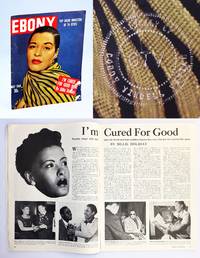
1949417j1549Chicago Illinois: Ebony. Good. 1949. First Edition. Single Issue Magazine. Iconic Billie Holiday cover issue with seven-page photo-illustrated article documenting her struggle to return to normal life after her incarceration for possession of narcotics in 1947. "Billie Holiday 1915-1959 was inducted into the Grammy Hall of Fame and the National Rhythm & Blues Hall of Fame. In 2000 she was also inducted into the Rock & Roll Hall of Fame their website stating that 'Billie Holiday changed jazz forever'. She was named one of the 50 Great Voices by NPR and was ranked fourth on the Rolling Stone list of '200 Greatest Singers of All Time' 2023. Several films about her life have been released." - Wikipedia. "With few exceptions every major pop singer in the US during her generation has been touched in some way by her genius. It is Billie Holiday who was and still remains the greatest single musical influence on me. Lady Day is unquestionably the most important influence on American popular singing in the last twenty years." - Frank Sinatra in Ebony 1958. From the personal collection of Presidential Medal of Freedom recipient C.T. Vivian whose blind stamp appears at bottom of front cover. "Vivian 1924-2020 was an American minister author and close friend and lieutenant of Martin Luther King Jr. during the civil rights movement. On the March 2007 anniversary of the 1965 Selma to Montgomery marches Barack Obama refered to him in the words of MLK Jr. as 'the greatest preacher to ever live.'" - Wikipedia. Bits of peeling from lower right corner of front cover otherwise complete unmarked and intact with average wear. A truly extraordinary Billie Holiday memento.; Cover Photo; Folio . Ebony unknown
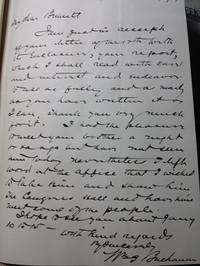
19020002348Good. 1902. On offer is a sensational original scrapbook and group of ephemera related to both the 1901 Pan-American minor focus and 1904 Louisiana Purchase major focus Expositions of the publicity superintendent and man responsible for the public faces of the Fairs being a scrapbook of his incoming correspondence including several typed and signed letters from William Buchanan the Director General of Pan-American Exposition handwritten notes news and magazine clippings photos there is a wonderful F.P. Stevens aerial photo of 1904 fairgrounds looking east documents and other ephemera tucked and tipped in regarding the Fairs making for an original unique behind the scenes look. Compiled and created by Mark Bennitt sometimes Bennett a highly successful writer who became involved with both the 1901 Pan-American and 1904 Louisiana Purchase Expositions as the Publicity Superintendent. While the book goes a very long way in detailing the Fairs it is obviously Mr. Bennitt's personal scrapbook and it is apparent from the outset that Mr. Bennitt was a brilliant hire for those responsible for the Fairs' success as witnessed by the clippings related to his hiring and personal background as befits a man of success and proud of his ongoing accomplishments but that stated Mark was a master of his craft and the book tells the story of the machinations to making the Fairs and the man who made them publicity successes. Of particular interest will be that the book provides a mirror view of the Fairs as seen by the outside public while for the historian also providing a look at the Fairs from the inside. We note: Near the back are some dozen pages of later writings of Bennitt's sojourn up the West coast in 1906. The rear cover is off but present the front holding for now one or two pieces of ephemera have come off the pages but overall the scrapbook is G.; Manuscript; Folio - over 12" - 15" tall; KEYWORDS: HISTORY OF MARK BENNITT BENNETT EARLY PUBLICIST PUBLICITY ADVERTISING MARKETING PROMOTION 1901 PAN-AMERICAN EXPOSITION 1904 LOUISIANA PURCHASE EXPOSITIONS INTERNATIONAL FAIRS WORLDS FAIRS INTERNATIONAL EXPOSITIONS MISSOURI LOUISIANA BEHIND THE SCENES AMERICANA HANDWRITTEN MANUSCRIPT AUTOGRAPHED AUTHORS DOCUMENT LETTER AUTOGRAPH KEEPSAKE WRITER HAND WRITTEN DOCUMENTS SIGNED LETTERS MANUSCRIPTS HISTORICAL HOLOGRAPH WRITERS AUTOGRAPHS PERSONAL MEMOIR MEMORIAL PERSONAL HISTORY ARCHIVE DIARY DIARIES JOURNAL LOG PRIMARY SOURCE FIRST HAND ACCOUNT SOCIAL HISTORY PERSONAL STORIES LIVING HISTORY ANTIQUITÉ CONTRAT VÉLIN DOCUMENT MANUSCRIT PAPIER ANTIKE BRIEF PERGAMENT DOKUMENT MANUSKRIPT PAPIER OGGETTO D'ANTIQUARIATO ATTO VELINA DOCUMENTO MANOSCRITTO CARTA ANTIGÜEDAD HECHO VITELA DOCUMENTO MANUSCRITO PAPELBIOGRAPHY BIOGRAPHICAL AUTOBIOGRAPHICAL AUTOBIOGRAPHY PERSONAL NARRATIVES . unknown
18650009032BANTON VERMONT VA BUENOS AIRES ARGENTINA. Good. 1865. On offer is a fascinating and unusual diary written by Salon C. Currier of Banton Vermont written towards the end of the Civil War. Currier is an American who travels from Vermont to Argentina to become a cowboy of sorts. Instead of cattle in the United States he herds sheep in Argentina. He documents his entire experience from his first experiences aboard the steamship heading to the new country to his days of work in Argentina. All is documented in great detail. There is also a very strong sense from portions of his diary that Currier did not leave the United States fully voluntarily that he is most probably fleeing something from his past though he never states what that is. The inside cover of the diary reads Book Bought of Miron Joslyn Nov. 30th 1864. The last night in Boston. Bound for Buenos Aires South America. The diary begins The diary begins Dec 3 1864. These entries are located in the Memoranda section of the diary after the main diary entries and are short and concise. They begin with Currier getting onboard the steamboat: Dec. 3 1864. Went onboard the ship tonight at 4 OClock. Eat supper at 5 OClock. The steamboat is called the "Saint Dominique" and is commanded by Capt. D Gerrior. It takes him almost two months to reach Argentina. Sunday January 1 1865. We were within 8 degrees of the Equator it would be impossible to count the number of showers we had through the day besides a gail and a hard one to.I think that this is a beginning a new year under difficulties. We could not stay on deck nor in the cabin it was a lonesome day at 4 o'clock a norther calm I guess we shall have to spend the winter here. And quite different from Vermont you may tell rested very well The Chinese say Bad Beginning makes a good ending they say. He has some sort of run in with the Capt. and holds him in contempt for the entire journey. He states. I will have words with the Capt. as soon as we land in South America.; January 10 1865. There was a heavy swell today the old ship rolled so I did not sleep one night. This is the hottest day we have seen. There was a great excitement onboard. We had a pie for supper it made me dream of home. I wish some of the folks of Banton were here to experience the living we have. I found only four hairs in my pie.It was splendid I never hated a man quite so bad as I do the Capt. I think he will get some of my mind when we land. Currier spends much of the time on the boat very wistful about Vermont and his abrupt departure from Banton. At the end of January he arrives in Buenos Aires. Jan 25 1865. I stayed at Miss Brodleys Boarding House in the city of Buenos Aires South America and rested the best ill have since I left Boston. I have been traveling over the city some have been up to the depot and seen the cars.They look odd and strange to me I have run over the city until I am tired all out. It is hot enough to roast eggs in the sun. Today I have seen all of the city I want at present I want a change now. They are about 100 years behind the times in my notion. How I wish I could speak Spanish I should be perfectly happy. When he arrives in Buenos Aires he is met by a gentleman Mr. Mellion who is some sort of middleman or fixer for a Sheep herding operation. Jan 30 1865. Well this is my birthday & I wish I could spend it in my native state. We road out a little ways & it has made me awful lone you may bet it was a hard horse to ride. I wish I was 10 years younger than I am but that cannot be. I hope that when the day comes gain I shall feel better comfort than I am today. If I live to see it & I hope I shall not have to see more than two of them in this country. It is not very warm today rather pleasant of the two. Mr. Mellion came today & he looked comical & rough. One can hardly keep from laughing in his face. After preparing and resting in the city he is prepared for his profession and the adventure continues. He sets out with other North Americans by horseback and they ride to a fairly remote part of Argentina. Along the way he buys his own horse with gold and they ride many miles camp in old battle fields filled with cannon balls. Feb 31865. I bought a horse this morning for 12 dollars in gold the first one I ever owned. he is a good one to ride him out to the camp we are going to is a rather pretty place. I had a nice ride and made the acquaintance of Mr. Frank Danver he is a smart looking fellow I like him very well what I have seen of him. My horse has got a very easy gallop for me I hope he will be a good one. His first few months in Argentina are very difficult for Currier. A typical entry reads something like this: Feb 24 1865. I got up as soon as there was any day light & started with the sheep without any breakfast & my jaw was lame I could not eat much all day. So I started not in the best of spirits that I ever was. We got the sheep down to the river at sunrise & then we had trouble getting them across the river. We worked hard until noon before we got across with all the help we could get. We stopped at a natives house at 1 oclock to get some meat to eat it was strong and tough. I drank water that the folks at home would not wash their hands in it was so nasty. This was the longest day in my life I have ever seen.; March 6 1865. We work on the well today and putting on the finishing touch it is awful hot today. I carried my dirty clothes to the wash woman today for the first time since I left home and they were dirty to. I am so sick and through with this life that is so.I wish i was in tiger places about now and going home. Money is of no merit. At one point he and his companions even have their horses stolen: March 19 1865. Well we cant find the horses that aint the worst of it for I guess they are gone for good. But such is life that is one of the customs of the county to have horses stolen from you. It is clouding up and its going to rain. The bricks have arrived for the house & I am glad. We had some potatoes for the first time in camp and they were good.You may bet after living so long without them. I wish I was in Benton so i could go to church for that is a privilege i have not had since I left home. He often writes about loneliness and missing a young lady. He also gets word of some major events of the civil war and comments on the death of President Lincoln: There has been two English gentleman here today and they were warmly received. They brought us news that Charleston S.C. was taken by the North. Our feelings can hardly be imagined than described. We gave three loud cheers for the Union. Such news as this set me to thinking about going home rather than looking after sheep. He fills the page with his thoughts on Argentina his inability to speak Spanish cultural misunderstandings and much more. Eventually he settles into a rhythm and life becomes easier for him it seems. June 14 1865. This is another fine day in So. America. The flock has been very quiet all day and I am very thankful for it. I comment a letter for home today. It does not seem as if I could wait another week before I can have a letter. I was over to Mr. Melliions place today he has comment on his after so long a time. We had a great time tonight trying to catch the cow. I thought we never should ge her but we did after a long time and got some milk for supper and it paid us well for our trouble. Such is life.; Nov 10 1865. This is a little cooler morning than usual. Olsen is a looking after the flock and horses today and he says he shall have a man as soon as possible. I thought one day would bring him to getting someone soon For I am not going to look after sheep for a living out here for I can do better. Finally near the end of the year Currier prepares to go back home. Dec 201865. Well I called on the American Consul this morning Mr.Helper - and found him to be a very pleasant man to meet with. I had a good visit with him and met two gentlemen just out from the States and they are very pleasant to meet and asked me to their rooms to give a good description of camp life but they do not seem to like it much and seem to be anxious to get home. I am the happiest mortal on earth they have seen. Finally he leaves back for America on December 31st. We commence sailing at 4 oclock this morning homeward bound and at the same time bidding good bye to the old year. What changes have been made in this world to many a mortals life and soul during that short space of time. It seems like a dream to look back upon ones life. How I wish I could be home tomorrow to wish them all a Happy New Year but I hope to be soon at least. I have been reading all day on deck we have been sailing 6- 8 knots an hour and it makes us all pleasant to say the least. There are over 350 pages of writing in the diary. Currier writes in pencil and often in small script but the book is often very legible. There are frequent spelling mistakes on most pages but they are not hard to look past. The cover is black and worn and has a large tear.; Manuscript; 8vo - over 7¾" - 9¾" tall; KEYWORDS:HISTORY OF SALON C. CURRIER BANTON VERMONT BOSTON MASSACHUSETTS BUENOS AIRES ARGENTINA AMERICAN GAUCHO COWBOY AMERICAN IN SOUTH AMERICA ON THE LAMB LAYING LOW STEAMBOAT SAINT DOMINIQUE CAPTAIN D. GERRIOR CIVIL WAR ERA 19TH CENTURY EXPATRIATE SHEEP HERDING AMERICAN ABROAD RURAL ARGENTINA 1865 IN ARGENTINA POST-COLONIAL SOUTH AMERICA AMERICANA HANDWRITTEN MANUSCRIPT DOCUMENT LETTER AUTOGRAPH WRITER HAND WRITTEN DOCUMENTS SIGNED LETTERS MANUSCRIPTS HISTORICAL HOLOGRAPH WRITERS AUTOGRAPHS PERSONAL MEMOIR MEMORIAL ANTIQUITÉ CONTRAT VÉLIN DOCUMENT MANUSCRIT PAPIER ANTIKE BRIEF PERGAMENT DOKUMENT MANUSKRIPT PAPIER OGGETTO DANTIQUARIATO ATTO VELINA DOCUMENTO MANOSCRITTO CARTA ANTIGÜEDAD HECHO VITELA DOCUMENTO MANUSCRITO PAPEL . hardcover
19320008040NEW YORK NY AT SEA ABOARD SHIP. Fine. 1932. On offer is superb handwritten account of a 1932 world cruise. The writer a woman sailed from New York Jan 9th 1932 aboard RMS Franconia an ocean liner operated by the Cunard Line. The Log Book measures approximately 8 1/2 inches by 6 inches. It is 2-hold punched and bound with string. The Log Book's first 6 pages are filled with autographs and contact information of people from the United States England and Germany The next section is a pre-printed information section with pages showing itinerary currency exchange rates in effect at the time nautical terms and general information. The third section consists of 46 double-sided pages of handwritten comments. The entries consist of general society with comments about fellow passengers and extensive observations about the various ports of call but elevating the diary are a number of historic moments captured by the writer and while entries are undated the year becomes evident with the momentous times the they follow given the itinerary of the ship's cruise plan. The handwriting is clear and legible. We know the writer was a woman from this entry: ". at dinner I wore my black lace dress. "p 2 "Most of the cruise people were still out on the Grand Corniche and we did not see them until the next day. Some of the younger set put on lovely evening dresses and went back to the Monte Carlo Cabaret and night clubs of Monaco." p 1 "The National Museum was especially interesting owing to the comparatively recent excavations where some beautiful pieces of statuary had been found on some of the islands and even in the sea" Athens p 3-4 "We visited all the different temples tombs gates and gymnasiums scheduled the outstanding high spots being the Acropolis and Hill. Mr. L took is to the Byzantine Church which he said was perfect in its architecture . We sailed at 7 o'clock that night after another cold fifteen minutes ride on Phaleran Bay to our ship. We are to arrive at Haifa tomorrow. "p 4 "We did little shopping in Bombay buying two star sapphires a small rug . " p 10. Included in the Log Book is a printed passenger manifest for this cruise including the names of the key Cunard staff on board. Other excerpts will detail the significant historic moments when her their trip made port in Shanghai: 1932- Off the Coast of Italy I saw Vesuvius with it's plumy vail turned to gold by the mourning sun. I had never seen it''s full outline before it was most beautiful & to the West was the big yellow moon just going off duty from it's night vigil. There was a large Chinese boat on our right and as I turned an English fraighter on our left. 1932 Haifa - Jerusalem We are to arrive at Haifa tomorrow & travel by special train for Jerusalem where we are to spend two days in & around the Holy City tonight there is a clear sky but the sea is a little rough. 1932- Egypt Long after leaving Cairo we came into a very dismal country & soon into the desert. On our right in the distance was the Egyptian mountains this was all very interesting to us. Suez is small with quite a few modern houses. Our train passed through the very center of the town. Last Saturday night we were scheduled to have a fancy dress ball but for some reason it was post postponed for some reason until Wed night. They paraded twice through the social hall and I think the prizes were fairly given. The first ladies prize went to Gloria Baker who they say is only 11 years old. She took the part of Cleopatra dressed in a beautiful Egyptian costume of white & silver. She is quite grad looking & is the daughter of the second Miss Alfred Cousins Vanderbilt. 1932- India The Hindus cremate their dead in this way this place looked like a vacant lot in some out of the way alley with huge wood yard cut with rather small pieces were kept for cemetery purposes. There was a small lot were the earth had been turned up in many places for children under ten years old were buried and the sod was turned over until they were mixed thoroughly. We drove to quite an imposing burial place up high with beautiful doors of stone & a glorious white" tombs of silence " a body with a white covering shoulders of six men was being carried up the steps we had to wait until they had disappeared when we reached the top just across from us was the tombs where vultures were sitting massed together like a squirming black pall noisily chattering just as human beings over a voluptuous satisfying meal. In less than 15 mins that body had passed us had been devoured. 1932 - Singapore We entered the causeway to Singapore arriving at 12:55 at the famous Raffles Hotel where we sat at table with Madam & where we had a million dollar cocktail- which was not so good. I bought a very pretty jade ring set in silver for $ 1.25 We had to pass the customs officers at the end of the Causeway on our way to where Balorne at the wharf. 1932 - Siam We saw the Kings palace & in part of it the King who comes to America for his We saw the Royal white elephant of his father & also a white monkey. Mr & Mrs Higgen's were standing together when our auto companion came up and asked us to come & see an opium place for incurables. We found all or many of the cursed people invading this den that was at the end of a long building barn like. We saw rows of pipes and near each man was a glass tube & other things. We didn't understand them. 1932 - Saigon At Saigon I was able on account of the little French I knew to get our car immediately we get our seats on a splendid boat in the center are reclining chairs where most of us went to sleep. They say drinking on the Ankor boat was heavy. Mrs H also took a mighty drought of whisky & soda. 1932 - Off the coast of Shanghai China Our boat was to sail promptly at 5 pm for Shanghai I think - on account of the war - we were as much excited at reaching Shanghai as when we were to land at Bombay. Before dark April 5th we came into the yellow sea. We encountered wind rain & lighting we had a rolling sea & a number in the waiting room thought they would have to retire with mal de mers while in here there was a big noise & some show of excitement. It seems the sea had burst in a the gangway D deck starboard some said dining room stewards looked odd in their dinner clothes - their trousers rolled up in their bone feet mopping up a great quantity of water. 1932- Shanghai The wide Yangtze rises so wide in places you cannot see land. But here it was full of all kinds of war ships of foreign countries many waving our handkerchiefs & hats at our own stars & stripes on a big grey monster. We passed. We passed destroyed sections where some said bombs were dropped from Japanese airplanes the term was shot into from vessels the native boats & shipping craft were very picturesque. Many of us felt we were in the midst of war. Especially when we got into our automobiles & drove by barricades of sandbags piled up 4 or 5 high & barbed wire fences & entrapments. For a social historian this is an excellent window into a long-gone world - a world where people unaffected by the global depression had the money and the time to enjoy a leisurely cruise and indulge themselves. In seven short years as the world descended into world war RMS Franconia would be requisitioned by the Royal Navy and refitted as a troopship.; Manuscript; 8vo - over 7¾" - 9¾" tall; KEYWORDS: HISTORY OF 20TH CENTURY 1930s GREAT DEPRESSION CRUISE SHIPS CRUISE LINES RMS FRANCONIA; LOG BOOK; PRE WORLD WAR II CIRCUMNAVIGATION CUNARD LINE; CARNIVAL CORPORATION PLC TRAVEL DIARIES OCEAN TRAVEL AROUND THE WORLD CRUISE LUXURY CRUISES IN 1930s DIARY HANDWRITTEN MANUSCRIPT DOCUMENT LETTER AUTOGRAPH WRITER HAND WRITTEN DOCUMENTS SIGNED LETTERS MANUSCRIPTS DIARY DIARIES JOURNALS PERSONAL HISTORY SOCIAL HISTORY HISTORICAL HOLOGRAPH WRITERS AUTOGRAPHS PERSONAL MEMOIR MEMORIAL ANTIQUITÉ CONTRAT VÉLIN DOCUMENT MANUSCRIT PAPIER ANTIKE BRIEF PERGAMENT DOKUMENT MANUSKRIPT PAPIER OGGETTO D'ANTIQUARIATO ATTO VELINA DOCUMENTO MANOSCRITTO CARTA ANTIGÜEDAD HECHO VITELA DOCUMENTO MANUSCRITO PAPEL . hardcover
18910001312JACKSONVILLE FLORIDA FL BROOKLYN NEW YORK NY. Good. 1891. On offer is a sensational archive of twelve 12 original manuscript diaries all handwritten by Maria Diven second wife of General Alexander Samuel Diven who married Maria his junior by 25 years in 1876 after the death of his first wife Amanda Beers who died in 1875. The diaries represent the years of their lives in 1891 1892 1896 1897 1900 1902 1906 1907 1911 1910 1912 and 1917. Save for the last year when her health declines and there are entries in only the first third of the year she writes rather densely throughout. In the early years they were living at their home called Hazzard's Bluff on River Point Road just across the river from Jacksonville Florida. In later years they are based in Brooklyn. Their Florida estate was built in an area well known for the many wealthy Northerners that settled their after the civil war. Collectors and historians of the area and the era will no doubt find a treasure trove of details of what life was like living as a very wealthy and prominent family along the St. John's River. The family seems to travel around by yacht and launches a lot and in the company of other prominent Generals and Colonels. There are lavish parties trips on the yacht trips to their Elmira New York home plenty of socials sitting on the piazza and much much more. This is a large wealthy family with much on the go all described in great detail. At the turn of the century we find the family based in Brooklyn for most of the year then head to Orange County in the fall. They also take a longish trip in the West and the mountains visiting and every other conceivable activity and adventure. This is a look with a breathtaking vista of breadth and depth by an articulate intelligent woman of means and position. BIO NOTES: Alexander Samuel Diven soldier politician businessman popular Board of Director for the New York & Eire Railroad had a distinguished military career along with other outstanding accomplishments. He was the grandson of John Means and Elizabeth Clark and great grandson of Robert Means and Jane Irving sister of General Irving of the Continental Army. Online sources say he was born in 1809 but in these diaries his wife says he celebrated his 74th birthday in 1893 which makes his birth year 1819. Also from another source: 'There's a big house with columns at 4915 River Point Road. It's not brick though it's wood but you may have thought it was painted brick. In 1850 the first circular steam sawmill in Florida was built at the mouth of Pottsburg Creek. After the Civil War in 1876 the old Empire Mill site was sold to Alexander S. Diven a general in the Union Army and Congressman from New York. Apparently he was just one of many Northerners who settled along the southern bank of the St. Johns River after the War. The house was built around 1877 and the property contained 34 acres at that time. The timbers used to construct the house are huge some 10" by 12". They were taken from the log pond next to where the old mill had been. The foundation and chimney are made from bricks that were made at the claypit one-quarter mile from the homesite. General Diven started a grove of 700 orange trees on this site with their own irrigation system. This grove continued until 1952 and the last of these trees was killed by the Christmas Freeze of 1983. I don't know if you were in Jacksonville then BJ but it snowed and school was out for days due to power outages and icy streets. Major Joseph Durkee another Union officer was County Sheriff State Senator and railroad executive. His son Dr. Jay Durkee bought this home in 1909 from General Diven's son. in 1952 Major Durkee's grandson developed the adjacent 90 acres into a subdivision and named it "Empire Point" after the area where his old family home still stands.' Lastly this information: Amanda Malvina Beers b. 22 Oct 1810 m. 16 July 1834 at Angelica New York Alexander Samuel Diven b. 15 Feb 1809 Dix Schuyler County New York. Resided Elmira New York. Amanda d. 18 Aug 1875 63y 9m 27d Elmira City Death Record buried Woodlawn Cemetery Elmira. Some of the diaries are in great shape some in poor shape but all pages seem to be accounted for. Overall G.; 48mo - over 3" - 4" tall; KEYWORDS: HISTORY OF BROOKLYN JACKSONVILLE FLORIDA HAZZARDS BLUFF ELMIRA NEW YORK AMERICANA CIVIL WAR CIVIL WAR ERA PRE SUFFRAGE UNION ARMY GRAND ARMY OF THE REPUBLIC GENDER STUDIES WOMENS STUDIES HANDWRITTEN MANUSCRIPT DOCUMENT LETTER AUTOGRAPH DIARY JOURNAL LOG KEEPSAKE WRITER HAND WRITTEN DOCUMENTS SIGNED LETTERS MANUSCRIPTS HISTORICAL HOLOGRAPH WRITERS DIARIES JOURNALS LOGS AUTOGRAPHS PERSONAL MEMOIR MEMORIAL PERSONAL HISTORY AMERICANA antiquité contrat vélin document manuscrit papier Antike Brief Pergament Dokument Manuskript Papier oggetto d'antiquariato atto velina documento manoscritto carta antigüedad hecho vitela documento manuscrito Papel ; Signed by Autograph . unknown
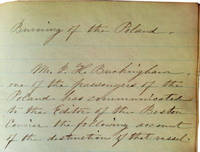
1840000234025 MILES SOUTH OF NANTUCKET SHOALS. Good. 1840. On offer is a sensational original 38 page manuscript account dated Boston 1840 of the ill-fated voyage of the packet ship 'Poland' which caught fire on May 16 en route from New York to Le Havre in France her passengers being rescued two days later by Captain J.B. Ingersoll with the Clifton. The narrator and survivor was Mr. J.H. Buckingham a descendent of Thomas Tinker one of the Pilgrim Fathers on the Mayflower his father being Hon. Joseph Tinker Buckingham 1771-1861 politician journalist and founder of the Boston Courier in 1824. J.H. Buckingham is also associated with the Boston Courier for many years serving his father's enterprise as editor publisher and reporter. Before this voyage he had just resigned as publisher of the Boston Courier in 1939 but would return as a reporter shortly thereafter. In July 1847 he made a stage-coach trip to Chicago and throughout Illinois as a delegate to the River and Harbor Convention and as a reporter for his father's paper accompanying none other than later President Abraham Lincoln. The actual writer appears to be Elizabeth Elise Russell Tyson daughter of George Tyson a railroad official and former merchant in the China trade and Sarah Anthony Tyson. She lived with her family at 314 Dartmouth Street in Boston and in 1915 married attorney and fox hunting aficionado George D. Vaughan. The detailed account of Poland's final voyage interrupted and ended by a lightning induced fire about 25 miles south of Nantucket Shoals leaves little to the imagination as Buckingham describes all: the beginning of the journey the devastating storm and subsequent fire to the cotton and flour in the cargo hold measures taken by crew and passengers for survival the struggles and the collaborative efforts the slowly passing and uncertain hours are recounted in detail until the final rescue. Luckily for historians and researchers the witness to these events was one of the few who remained on the vessel after most were placed on longboats. Not knowing if he would survive at all his observations are recalled in a calm stoic manner his recollections vivid and clear. We quote from the Sydney Gazette: "No language" says the writer of narrative. "can tell of the sufferings of that night which was far more dreadful than the previous night." After a variety of the most agonizing apprehensions and sufferings during which the mothers who had been compelled to hold their youngest children in their arms were well nigh exhausted the ship was put before the wind in the hope of falling in with some sail and as the vessel leaked the men were put to the pump and the water first pumped up was hot. At two o'clock on the afternoon of Monday a sail was discovered from the mast-head. It proved to be the Clifton Captain J. B. Ingersoll bound from Liverpool to New York with two hundred and fifty steerage passengers. The transfer of the crew and passengers of the Poland to the Clifton was effected. At the time the last boat's load left the former her decks had become too hot to stand upon and as she rolled in the sea the water ran from her reeking sides as from hot iron. On board the Clifton every attention was paid to these who had escaped such extreme danger and in due time they were landed safely in New York." Overall G. HISTORICAL NOTES: On 11 May 1840 she left New York with a total of 63 persons on board 24 being cabin passengers. On the 16th she was struck by lightning a disastrous event which resulted in a fire being sparked onboard creating a desperate situation which just in time ended in a rescue. On the 18th the Boston built 'Clifton' commanded by Captain J. B. Ingersoll bound from Liverpool to New York with two hundred and fifty steerage passengers came upon the Poland with her passengers sequestered to the vessel's bow. She took all persons onboard along with any salvageable provisions until the Captain deemed it unsafe to continue. At the time of the last load being removed Poland's decks had become too hot to stand upon. The deeply grateful group watched the Poland burned into the sea knowing that they had so narrowly escaped the same end. The loss of property to the Poland was estimated at $150000. The captain crew and all passengers were saved - within only hours of the ship's sinking. ; Manuscript; 8vo - over 7¾" - 9¾" tall; KEYWORDS: HISTORY OF ELISE R. TYSON BURNING OF THE POLAND LIGHTNING STRIKE AT SEA ATLANTIC COTTON TRADE DISASTER SURVIVOR ACCOUNT AMERICAN PACKET SHIP POLAND SHIPWRECK BOSTON MASSACHUSETTS CAPTAIN J.B. INGERSOLL SHIP CLIFTON J.H. BUCKINGHAM THOMAS TINKER PILGRIM FATHERS MAYFLOWER HON. JOSEPH TINKER BUCKINGHAM BOSTON COURIER ELIZABETH ELISE RUSSELL TYSON GEORGE TYSON GEORGE D. VAUGHAN MARINE NAUTICAL MERCHANT SHIP DANGER AT SEA ATLANTIC COTTON ROUTE AMERICANA HANDWRITTEN MANUSCRIPT AUTOGRAPHED AUTHORS DOCUMENT LETTER AUTOGRAPH KEEPSAKE WRITER HAND WRITTEN DOCUMENTS SIGNED LETTERS MANUSCRIPTS HISTORICAL HOLOGRAPH WRITERS AUTOGRAPHS PERSONAL MEMOIR MEMORIAL PERSONAL HISTORY ARCHIVE DIARY DIARIES JOURNAL LOG PRIMARY SOURCE FIRST HAND ACCOUNT SOCIAL HISTORY PERSONAL STORIES LIVING HISTORY ANTIQUITÉ CONTRAT VÉLIN DOCUMENT MANUSCRIT PAPIER ANTIKE BRIEF PERGAMENT DOKUMENT MANUSKRIPT PAPIER OGGETTO D'ANTIQUARIATO ATTO VELINA DOCUMENTO MANOSCRITTO CARTA ANTIGÜEDAD HECHO VITELA DOCUMENTO MANUSCRITO PAPELBIOGRAPHY BIOGRAPHICAL AUTOBIOGRAPHICAL AUTOBIOGRAPHY PERSONAL NARRATIVES . unknown
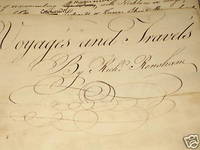
1796000897NNNMANCHESTER LANCASHIRE UK AFRICA EGYPT. Poor. 1796. On offer is the original handwritten manuscript "Voyages and Travels of Richard Renshaw" of the British Army's heralded Royal Regiment of Artillery Renshaw of the 4th Battalion. Some parts of this manuscript were later published as 'VOYAGE TO THE CAPE OF GOOD HOPE' in 1804. Renshaw retells in detail and with a keen observer's eye the story of his service for Great Britain. He is an educated man who writes insightful and sometimes rollicking accounts of his and the group's adventures. He describes everything he sees through Africa and into Egypt as part of Admiral Nelson's fleet and the ill-fated elderly Scot Lieutenant-General Sir Ralph Abercromby being part of "war reserved for the British nation to annihilate their Napoleon and the French ambitious designs their fleet was attacked defeated and destroyed in Aboukir " An absolutely incredible first hand account of this robust man's life. Whether dodging buffaloes doing a bit of amateur archaeology grave robbing! in Egypt and he does not hesitate to tell all in this very beaten up and we believe incomplete journal. We also suggest that Richard is writing the diary after the fact as he writes of the near past with near total recall and then seems to catch up to himself in around 1801. Here are snippets from the preface and other short quotes: "Voyages and Travels of Richard Renshaw Preface. As the following voyages and travels are now made public I think it is proper to lay before the reader a short acct of my life previous to my leaving England. I was born in ManChester in the County of Lancaster and chiefly educated there. My parents in the early part of my life were in affluent circumstances but in consequence of misfortunes in trade in he order of Divine providence they were visited with the bitter cup of adversity my mother being _____ of delicate feelings . Her constitution was not and terminated in her death. My Father knowing I had a natural inclination for the army taking frequent opportunities to lay before me the shocking numbers in the papers of those slain in previous engagements . I left my fathers house November 1795. I never had the happiness of seeing him after . Without seriously weighing the circumstance of so important a nature I enlisted in the 4th Battalion of the Royal Regiment of Artillery the consequence of this step was in the following pages will inform the reader. I embarked aboard the Crescent Frigate at Spithead on the 28th of February 1796 & sailed in company with the Sceptre sixty four and some few transports the 1st of March the wind being tolerable fair During my time in Africa we trained a Regiment of Hottentots I was attacked by a buffalo but owing to a small lake I escaped from him .On the 17th of August we disembarked the Island of Rhoda and joined Major General Baird On the 12th of December 1801 we marched on Alexandria . During my stay in Alexandria the plague was raging in an astonishing manner " Renshaw has made numerous deletions and corrections to the narrative manuscript for future publication. NOTE: Curiously there is one handwritten note upside down on a blank page titled "Cure for Love" which informs in a rather shaky aged hand a sad unhappy verse. The covers are detached but present the text block in pieces though the narrative is complete from beginning but there are most likely a page or two missing from the end given the way it stops. There is no loss given the narrative begins in 1796 and continues through 1802 over 150 pp or so. The author wrote on the recto pages and saved the verso for later notes clarifications etc. of which there are many. Truly a one of a kind historical diary of an important period of British Empire's glory.; English; 8vo - over 7¾" - 9¾" tall; KEYWORDS: HISTORY OF Cape Town South Africa Aboukir Bay Battle of the Nile 4th Battalion of the Royal Regiment of Artillery MILITARY MILITARIA BRITISH ARMY NAVY NAVAL SCOTLAND IRELAND AFRICA EGYPT NAPOLEONIC WARS NAPOLEON ADMIRAL NELSON ABERCROMBY ABERCROMBIE MANUSCRIPT DOCUMENT LETTER AUTOGRAPH DIARY JOURNAL LOG KEEPSAKE WRITER HAND WRITTEN DOCUMENTS SIGNED LETTERS MANUSCRIPTS HISTORICAL HOLOGRAPH WRITERS DIARIES JOURNALS LOGS AUTOGRAPHS PERSONAL MEMOIR MEMORIAL PERSONAL HISTORY antiquité contrat vélin document manuscrit papier Antike Brief Pergament Dokument Manuskript Papier oggetto d'antiquariato atto velina documento manoscritto carta antigüedad hecho vitela documento manuscrito Papel . unknown
19690001557PEOPLE'S REPUBLIC OF CHINA. Good. 1969. On offer is a super original late 1960s manuscript relic of Mao Zedong's Cultural Revolution and the cruel manipulation of the people as the politics of the times changed to the socialist agenda of the Great Proletarian Cultural Revolution. This document attests to the forced recanting of many former managers as evidenced by this document being a 38 page manuscript confession handwritten by a director of a local bureau during the revolution. This bureau or cadre manager like many others in China were called upon forcefully much of the time to expose and confess their so called crimes of anti-socialist revolution activity in the bureau they had worked in. This was unfortunately all too common during the Revolution and sometimes the results were fatal. This 19cm x 26cm 38 page document is comprised of papers held by paper clip with some small rusting to the clip and one page has a tape repair to the back. Overall G. HISTORICAL NOTE: As one online source succinctly sums up the times: "People's Republic of China from 1966 through 1976. Set into motion by Mao Zedong then Chairman of the Communist Party of China its stated goal was to enforce socialism in the country by removing capitalist traditional and cultural elements from Chinese society and impose Maoist orthodoxy within the Party. The most important yet naturally unstated reason for the revolution was the return of Mao Zedong to a position of political power after he lost most of his political influence after his failed Great leap forward."; Chinese Language; 4to - over 9¾" - 12" tall; KEYWORDS: HISTORY OF GREAT PROLETARIAN CULTURAL REVOLUTION CULTURAL REVOLUTION CONFESSIONS RECENT ANTI SOCIALIST ACTIVITIES ANTI CAPITALISM MAO ZEDONG MAO TSE TUNG GREAT LEAP FORWARD MAOIST SOCIALISM COMMUNISM COMMUNIST CHINE CHINESE SINO POLITICS JIANG QING GRASSROOTS SOCIALISM PROPAGANDA POST FIVE YEAR PLAN 5 YEAR PLAN GANG OF 4 GANG OF FOUR LIN BIAO BEIJING PENG LUO LU AND YANG ZHONGFA 267 INDOCTRINATION RED CHINA CHAIRMAN MAO MARXISM-LENINISM MAOISM LIN YURONG HANDWRITTEN MANUSCRIPT AMERICANA DOCUMENT LETTER AUTOGRAPH DIARY JOURNAL LOG KEEPSAKE WRITER HAND WRITTEN DOCUMENTS SIGNED LETTERS MANUSCRIPTS HISTORICAL HOLOGRAPH WRITERS DIARIES JOURNALS LOGS AUTOGRAPHS PERSONAL MEMOIR MEMORIAL PERSONAL HISTORY antiquité contrat vélin document manuscrit papier Antike Brief Pergament Dokument Manuskript Papier oggetto d'antiquariato atto velina documento manoscritto carta antigüedad hecho vitela documento manuscrito Liu ShaoQi . unknown
19100010311Maine Usa. Fair with no dust jacket. 1910-1914. Hardcover. On offer is the five-year diary of Dora J. Bradbury Pinkham 1891-1941 of Fort Kent Maine. Dora kept this diary while completing her undergraduate degree at Mount Holyoke College graduated 1913 and her Masters degree at Columbia University graduated 1914. Less than a decade after graduation she made political history and became a pioneer for women in politics in the state of Maine see BIO NOTES following the diary description. Doras entries throughout her post-secondary education show her to be devoted to Christ her music sport and expanding her mind. She attends lectures outside of school hours on a range of topics studies incessantly is an available friend and daughter and makes space for her passions for music and sport when possible. She seizes opportunities such as joining the college debate team. It is no wonder she made a political splash a few years later and changed the landscape of Main politics for generations of women to come. Everything Dora writes in her college years offers a window into the woman the Sun Journal would describe in 1923 when she entered the Maine legislature the following way: She has a cheery smile a laughing kind of voice can see a joke and is decidedly human in every way. At the tender age of 18 Dora was already keeping an eye on politics: A Democratic landslide. First Dem. Governor elected in 30 yrs when this Plaisteds father was governor Sept 13 1910 Dora is referring to the election of Governor Frederick William Plaisted whose father had been governor from 1881-1883. Election day - College vote. Wilson 43 Roosevelt 180 Taft 160 the results of the real election. Wilsons landslide! Took Jennie Lewis to the Senior-Freshman reception. Good time Nov 5 1912. She does a nice job describing student life at Mount Holyoke College. Her time there was focused on academics music rehearsals she played the banjo of all things and was in glee club and performances hockey and Christianity: Rev E. Paddock spoke in chapel on as your day is so shall your strength be. Hate to think I won't see him again for a year or maybe more. English Exam in A. M. .Not so bad. Studied Math in P. M. In little room D. H. Botany in eve. Postcard from Sadie Jan 31 1910. Mountain Day Miss Bridges invited all her advisees to breakfast the Holyoke ranges 23 peaks miles Took us over 3 Home at 4: 30 Oct 12 1910. Structure paper back. Favorable criticism for which I was wisely prepared by Miss Lester. Good understanding . Discrimination and rigor of thought . Mission committee meeting at nine. Was able to play hockey today Oct 13 1911. Dora completed her Masters of Arts at Columbia in only one year and she seems to be too busy to keep a diary for much of it. As her career at Columbia ends and her professional life begins she is sure to record it: Went to work! Everybody very nice to me. Lots of nice oldish men there wildly interesting young woman next to me Miss Miladolfsky. Went to work on lowly wages got so I could turn the crank quite some. Requires too much thought! May 11 1914. Studied an hour and a half and did exam all over now! Doing proof-reading in the office - very tiring May 21 1914 This diary is a gem. Through it we learn the roots of a brave bold and unique woman who chose to enter politics as a Republican in the early 20th century. Learning about the ambitious hardworking engaged young woman Dora was allows us a window into who she became. This diary is also a precious piece of history for those interested in the earlier days of Mount Holyoke College and Columbia University. DORA JULIA BRADBURY PINKHAM BIO NOTES: Dora J. Bradbury Pinkham was born in New Limerick Maine and raised in Fort Kent. She married Niles Pinkham a lumber industry executive in 1917. Following graduation she briefly taught at Madawaska Training School. A long-time member of the Republican State Committee she ran for state legislature and in 1922 she defeated two-term Democrat William J. Audiber. Pinkham was the first woman to win election to the Maines legislature. Remarkably Pinkham was not only a Republican but also a Yankee Protestant while her district was known to be overwhelmingly Democratic Franco American and Catholic Potholm 2011 p. 115. While she was a one-term member of the legislature she made an impact passing five of six bills she sponsored in the Maine House of Representatives. In 1926 her political star rose higher when she became one of the first two women ever elected to the Maine senate. Following her two terms in the Senate Pinkham served as special secretary to Maine Governor William Tudor Gardiner. She was very active in her community and the state serving as the local Chairman for the Red Cross. There is much information available on Dora Pinkham but this article from the Sun Journal helps the reader to know who Dora was as a person as well as a politician: https: //www.sunjournal.com/2023/01/22/when-dora-pinkham-took-office-as-maines-fir st-woman-lawmaker-a-century-ago-the-journal-predicted-a-lot-more-by-2023/ The diary measures 7.75 inches by 5.0 inches and contains 365 pages. The covers have separated from the spine. The pages are in good condition. Dora writes regularly in 1910 through 1912 her entries becoming more scarce in 1913 and she only writes in May of 2014. The diary is about 65% complete. The handwriting is legible. Overall Fair. ; 12mo 7" - 7½" tall; 365 pages; Signed by Author . hardcover
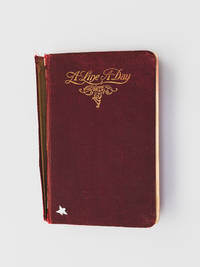
19180002124THAMES NEW ZEALAND SALT LAKE CITY UTAH. Good. 1918. On offer is the super original 1918 manuscript diary and travel journal handwritten by a young 25 year old Mormon missionary named James Milton Olsen b. January 20 1893 who after three years of Christian outreach and preaching the Gospel of Mormon in Thames New Zealand to the Maoris the indigenous people of New Zealand returns to America. The son of Utah rancher George Theodore Olsen and Catherine Maria Edwards Olsen. He married Hazel Acord on March 5th 1919. Beginning April 15 1918 James' is at the end of his 3 year mission and heading back to the United States. The 43 page narrative begins with Elder Olsen in New Zealand spending his last weeks attending meetings saying goodbyes and packing for his trip home. He spends much of the time with the President of the New Zealand Missions Elder James N. Lambert. BIO NOTES: President Lambert: "Elder James N. Lambert former president of the New Zealand mission returned July 3rd 1920 after nearly 51 months of missionary work in that far-off land. While there he published in the Maori language the second edition of the Book of Mormon 3000 copies." 1920 Improvement Era official magazine of The Church of Jesus Christ of Latter-day Saints. Goodbyes said Elder Olsen boards a train for Auckland spends a few days there and then boards the SS Niagara for the trip home. Here are some snippets: "On board ship were the Premiers of Australia The Rt. Hon. Mr. Massy of New Zealand and to this Mr. Massy I had a letter of introduction. Then there were other big men such as Sir Joseph Ward one Prime Minister of N.Z. the Sect of the Navy of Australia and several French Generals. So we had a Whakahihi crowd." Sir Walter Massy-Greene major politician and entrepreneur; Joseph Ward 17th Prime Minister of New Zealand; George L. Macandie Australia's Secretary of the Navy. "April 17th 1918 .At 12 o'clock we ate dinner with Billman's and at 1 o'clock I had my photo taken with Howard Johnson. At 2 o'clock we called in at Parne Thorn's pawn shop and had a good conversation then caught the train and rode 12 miles to Omahu. Arriving there we walked 2 or 3 miles and met all the natives and latter all the elders rode in from Kerikeri. In the evening they gave us a lovely dinner and at 7 o'clock began the meeting. Elder Russon and I were called on to speak to give our farewell talk. Elder Mow interpreted for me. After we had finished the Maoris talked to us telling their sincere love for the Elder's and biding us goodbye. We went to bed late." "April 18th 1918. It was raining all day so we remained at Omahu until 4 o'clock. We played the phonograph read the Improvement Era and jumped until we were very stiff and sore. In the afternoon train time I had to bid them all goodbye. I rubbed noses with nearly 15 natives and I bid good luck to Elders Mow and Moody. We were driven to the train in a two wheeled cart by a native .I cleaned up and wrote up my diary preparing to meet Elder Wright who is supposed to arrive today by the 1 o'clock boat. His is taking my place. At one o'clock we walked to the boat and waiting until 1:30 for it to arrive at the wharf. Elder Wright came. We all strolled back to Sister Johnston's home. I gave him possession of the bed which I had been sleeping in for two years also the wardrobe which I had been in possession of. In the afternoon we visited the chapel. He found it to be much smaller than the one in Auckland. In fact it used to be the mayor's barn." "April 20 1918. I slept with Howard Johnston didn't get up until 7:30. Washed and wrote diary. Elder Wright and I caught the 9:30 train and took two boys to Kerikeri where I baptized them. The water was very cold so early in the morning but managed and the boys fared all right. There were several elders so it was a nice service. After that I went around to all the natives and rubbed noses with them all biding them farewell. One old lady gave me a kit Clara Watene's mother. We bought several pictures of the last conference from Bro. Spencer of Auckland then caught the train and rode back to Thames .In the evening Pres. Lambert came from Auckland. We were all happy to see him. He always brings a happy spirit. We ate dinner at Sister Johnston's. At 7:30 we held a good open air service. I did not assist in singing as my throat was too bad. I stood on the corner however. Elder's Mow Wright and the president talked ." "April 23rd 1918. I ate breakfast at Payne's then came home and destroyed all my letters with the exception of a very few. I also tied strings around all my books and prepared them for packing. In the afternoon Elder's Wright Stalling and I visited the hospital where I bid goodbye to Mrs. Rutallia whom I had been visiting for 2 years. The poor soul had lain there for over 14 years. From the hospital we went to the police station. Elder Moody was with us. I bid him goodbye also. He had been a very good companion and helpmate ." "April 24 1918. I ate breakfast at Royal's then came to the house and began packing up. If ever I had to plan it was then to get all my belongings in my suit cases and trunk then I had to give away many things. But finally everything was packed. I had one trunk weighing 200 lbs. 2 suitcases one hand bag and a roll of blankets ." He attends a social and then for the final time he meets many of his good friends and bids them goodbye and many of them give him gifts which he lists. Then he says "After the social it was with difficulty that I bid most of them goodbye." "April 25th 1918. Went to Monteque's Lemmee's and others bidding them goodbye then went to the station where several of the saints and friends were there to see me off. It was hard to say farewell as one never can tell when friends will meet again especially those of a foreign country. It was hardest of all to say goodbye to Bro. Payne as he had been my heartiest supporter. Elder Russon and I left at 9:30 Sister Payne Johnston and Wasene rode with us as far as Parekura then we bid them farewell. We rode on to Auckland getting there at 5 o'clock P.M. We had a cater take our things to headquarters costing us 2 shillings each. In the evening after a lovely supper we went in company with President and the Auckland Elders and the President's daughter Phyllis to a cottage meeting at Mrs. Trae Farland's. Four of us were called on to speak." "April 26th 1918. Went with the president and a number of elders to the American council's officer and obtained my permit to leave New Zealand. My companions Elder Gallacher and Pearson could not get theirs until later. After this I bought three towels costing me 5 S. then the president Elder Patrick and I tried to find the home of Sister Johnston a saint who does not know where to stay with us or join the reorganized church. We were unable to find her. Coming back to headquarters I wrote two letters one to Mr. Johnston of Thames and Toki Watene of Kopu. Then wrote up in my diary. In the afternoon President Lambert gave me two letters one to my father and one to Mr. Hardy a life insurance man recommending me to that business. After taking with the president Jack Monteque came to the mission home and he and I went downtown. We had a shave in Frank Monteque's shop ." "April 30th 1918. I packed my trunk and visited. I went to Mrs. Elizabeth Johnston's and while there I met two Elders of the Josephite Elders. They had been given our mission a very bad name. They are very prejudice against us. Their main subjects are blood atonement polygamy true succession to the President. They argued with me 4 hours. I held my own. In the afternoon I received letters and telegrams from the following ." He then lists many names "May 2nd 1918. He is sailing on the steamship "Niagara" We took our trunk and suit cases to the boat as we expected it to leave any moment. The custom officer examined a few of our things then we were able to take them on board. At noon I ate dinner at headquarters then at half-past 12 Elder Patrick and I visited the Hanby's. They treated us very kindly. They gave me several photos. In the afternoon I received my release a diploma which I had worked for for nearly 3 years. I was happy to get it " He again bids everyone goodbye but the boat was running late so they bid more people goodbye including Miss Hanby who was at the gate. He says "She was the last girl I said goodbye to in New Zealand. She is certainly one of the best girls I ever met in my life." "We went back to the ship and finally went to bed. The next morning we were out in the mid ocean. The passengers were all lovely. On board ship were the Premiers of Australia The Rt. Hon. Mr. Massy of New Zealand and to this Mr. Massy I had a letter of introduction. Then there were other big men such as Sir Joseph Ward one Prime Minister of N.Z. the Sect of the Navy of Australia and several French Generals. So we had a Whakahihi crowd. Our cabin was no. 124 and 72' 2" square. In there was a fan electric lights 3 beds a dresser a wardrobe a wash basin and cloths racks." "May 4th 1918. Was not feeling too well so remained in bed a few hours. Missed two meals. I played a game of tennis with two ladies and wireless operator. He was a splendid friend taking us over the boat and informing us to every move and movement. Saturday evening we sang and held a dance. We were even asked to join several times but didn't have the nerve to try." Then to Sura and off for a little while and have lemonade in the hotel. "May 6th 1918. If you will remember 3 years ago I mentioned in my diary that we went to bed on Tuesday and got up on Thursday losing a day. Tonight it is making up that day. We go to bed Monday night and get up on Monday morning. Had hotcakes for breakfast also egg omelet. Began reading "The Light of Western Skies" by Zane Grey. We played deck quotes and other games. Met the Sec. to Mr. Ward one prime minister of New Zealand. We held a concert at night." "May 7th 1918. It was very warm. Several persons were curious over our being "Mormons." We conversed with several over religion. I had my laundry done up. We couldn't get fresh water as it had been mixed by mistake with the salt water .The boat games were very interesting. There were many of the women who smoked. Some thought it strange that we wouldn't gamble ." "May 12th 1918. Hawaii We were in American waters at 8 o'clock. It was a happy day for us to see American flags flying all over. Our boat flew an American flag. The doctor came on board and examined all of us. There our passports were ____. Then at 2 o'clock we went ashore. I was one of the first off. We rented a motor car for 3 hours and rode over the island. It was one of the most beautiful places I had ever seen. We went to what is known as the Ecquarium Aquarium where you see several kinds of fish. They are of every color known. All kinds' sizes and colors. We also rode to Diamond Point Mountain. We rode to Waikiki Beach where we saw surf riding. After riding we visited the "Mormon Church." We met the secretary his wife and three elders. They were not very sociable. We ate a big dinner down town .At 5 o'clock we went back on the ship. There were hundreds of people to see us off. Many of the natives were selling flowers .The boat pulled out of Honolulu at 5:30. We went to bed early. Two new Elders came on board returning home." BACKGROUND NOTES: One online source: "Most Maoris had been converted to Protestant and Roman Catholic Christianity by the 1850s; but because they believed they had been cheated in land deals by the whites whom they called pakehas the Maoris made war on the pakehas. These wars lasted from the late 1850s until the 1870s. When the wars ended the time seemed to be right to take the restored gospel to this outstanding part of the Polynesian race. When William Bromley was called as New Zealand mission president in 1881 President Joseph F. Smith told him that the time was right to take the gospel to the Maoris. The first successes among them came in 1883 but once the Maoris and the Mormons got together Maori converts flocked into the Church. By the end of 1884 the missionaries had firmly established the restored gospel among the Maori people. The next several years were very satisfying to most of the elders and sister missionaries several couples were sent to New Zealand beginning in 1885. In August 1885 there were 16 Maori and 4 pakeha branches of the Church and this number continued to grow steadily for the next 15 years. At the close of 1887 there were 2573 Latter-day Saints and by the turn of the century there were nearly four thousand members of the Church in New Zealand. Most of the Maori tribes including large numbers in the north around Whangarei and the Bay of Islands had been introduced to the gospel. In 1901 there were 79 branches. Clearly since the early years in Hawaii the Church had not enjoyed so much success with a Polynesian people." The 5¼" x 8½" diary is written in a unique once rich looking red leather gilt stamped flip top style book that has a worn and torn red leather cover detached but accounted for with his name stamped in gold lettering. The book is hand numbered beginning at 313 to 358. We note that like all LDS Church diaries each page has a carbon copy. What is unusual and unique is that most other Mormon missionary diaries had carbons with one copy given to the church. It appears Elder Olsen kept his copies. Overall G.; Manuscript; 8vo - over 7¾" - 9¾" tall; KEYWORDS: HISTORY OF ELDER JAMES MILTON OLSEN NEW ZEALAND MISSIONARY UTAH MORMON CHURCH CHRISTIAN OUTREACH CONVERSION OF NATIVE PEOPLES ABORIGINALS AND RELIGION RELIGIOUS CONVERSION CHRISTIAN OUTREACH THEOLOGICAL MISSIONARY MISSIONARIES CHRISTIAN CHRISTIANITY MAORIS WWI WW1 POST WORLD WAR I THE CHURCH OF JESUS CHRIST OF LATTER-DAY SAINTS LDS CHURCH NEW ZEALAND MISSIONS ELDER JAMES N. LAMBERT PAKEHAS KIWI ANZAC PROSELYTIZING JOSEPHITE ELDERS AMERICANA HANDWRITTEN MANUSCRIPT AUTOGRAPHED AUTHORS DOCUMENT LETTER AUTOGRAPH KEEPSAKE WRITER HAND WRITTEN DOCUMENTS SIGNED LETTERS MANUSCRIPTS HISTORICAL HOLOGRAPH WRITERS AUTOGRAPHS PERSONAL MEMOIR MEMORIAL PERSONAL HISTORY ARCHIVE DIARY DIARIES JOURNAL LOG PRIMARY SOURCE FIRST HAND ACCOUNT SOCIAL HISTORY PERSONAL STORIES LIVING HISTORY ANTIQUITÉ CONTRAT VÉLIN DOCUMENT MANUSCRIT PAPIER ANTIKE BRIEF PERGAMENT DOKUMENT MANUSKRIPT PAPIER OGGETTO D'ANTIQUARIATO ATTO VELINA DOCUMENTO MANOSCRITTO CARTA ANTIGÜEDAD HECHO VITELA DOCUMENTO MANUSCRITO PAPEL . hardcover
18300001523MIDDLETOWNE NEW JERSEY MONMOUTH CTY NEW YORK CITY. Good. 1830. On offer is a fascinating massive archive of letters notes diaries and some ephemera of particular interest to researchers historians and collectors of mid 19th century New York City and New Jersey and religion of the day. The archive is made up of two 2 main components: 1 approximately 50 diaries and notebooks and 2 approximately 69 letters of inter-family correspondence dated from the 1830s through to the late 1870s they are mostly by and between three people; James Hoagland of Jersey City New Jersey; Lavinia Murray of NYC and her brother George C. Murray of Middletowne New Jersey. Lavinia is the main recipient receiving letters though some are in her hand from her brother George her cousin and one day husband James Hoagland her mother and father and some cousins and friends. The diaries are unusual and unique as the author George Crawford the books are unsigned but the handwriting is assuredly the same as George's letters to Lavinia kept 'double' books; one set of books are diary like entries describing his life and times travel and business dealings but also a real picture of New York City of the era as George was in love with the city and he seemed to have a number of real estate holdings perhaps he moved a lot that he wrote from many different addresses. He would delight in describing the color of the sun as it came up over a particular street or intersection. George also must have had a touch of obsessive compulsive behaviour as is evident in his writings. He is incredibly detailed and a keen observer. The other side of the diaries is his obsession with religion. He keeps a diary of his devotions the many different Churches he goes to the sermons and lectures heard the speakers . He expostulates in essay form and writes detailed descriptions of the sermons and sometimes point form notes. We have never seen anything quite like the breadth and depth of this man's writings. The books themselves are mostly coverless or perhaps handmade mostly 8 x 5.5 inches with a few smaller and a couple larger. Some are about 25 - 27 pages some a few pages and the odd one or two are triple thick but there are approximately 1000 pages from 1851 to 1881. Historians and researchers will find a treasure trove of Christian activity thought and devotion regarding New York City in this group. This archive was once held by Milton Wyatt of NYC a long time ephemera dealer in Greenwich Village NYC and was purchased from his estate. HISTORICAL NOTES from several online sources: 1 Murray George Crawford Ideal Citizen Legislator. The late George Crawford Murray of Middletown Monmouth County New Jersey was one of those men whose lives and characters are of inestimable value as exemplars of what worthy lives should be. His ambition was ever along the worthiest lines and his whole life was devoted to the highest and best ideals. His nature was of singular sweetness openness and sincerity. He had a profound knowledge of human nature and was ever thoughtful for the welfare of his fellow beings. His family which was of Scotch descent was resident in New Jersey from about the middle of the eighteenth century. 2 Lavinia Murray born December 17th 1818 died 1876 married August 26th 1847 James M. Hoagland a merchant of New York City whom she survived; resided in Jersey City and New York City; no issue. 3 James M. Hoagland Birth 13 Sep 1818 Father Nathan Hoagland 1778-1848 Mother Elizabeth Bird 1782-1847 Spouses 1 Lavinia Murray Birth about 1820. Overall G.; 8vo - over 7¾" - 9¾" tall; KEYWORDS: HISTORY OF GEORGE CRAWFORD MURRAY LAVINIA MURRAY JAMES M. HOAGLAND MIDDLETOWN MONMOUTH COUNTY NEW JERSEY MILTON WYATT CHRISTIANITY RELIGION ECCLESIASTICAL ECUMENICAL EPISCOPALIAN BAPTIST EPHEMERA HANDWRITTEN MANUSCRIPT DOCUMENT LETTER AUTOGRAPH DIARY JOURNAL LOG KEEPSAKE WRITER HAND WRITTEN DOCUMENTS SIGNED LETTERS MANUSCRIPTS HISTORICAL HOLOGRAPH WRITERS DIARIES JOURNALS LOGS AUTOGRAPHS PERSONAL MEMOIR MEMORIAL PERSONAL HISTORY TRAVEL 19TH CENTURY antiquité contrat vélin document manuscrit papier Antike Brief Pergament Dokument Manuskript Papier oggetto d'antiquariato atto velina documento manoscritto carta antigüedad hecho vitela documento manuscrito Papel . unknown
19440001459AUW NURNBURG GERMANY BALTIMORE MARYLAND MD. Good. 1944. Softcover. On offer is a riveting simply sensational original manuscript relic of World War II being a US Army Prisoner of War diary kept by Lieutenant David M. Woerner of Company A of the 81st Engineer Battalion. Lt. Woerner originally from Baltimore Maryland was initially captured on December 16 1944 in Auw Germany quickly escaped only to be recaptured on December 19 1944. He spent 136 days in captivity in the final chaotic days of the War in Europe. The diary is a gripping 71 page account of his initial imprisonment at Offizierlager XIII-B at the Kriegsgefangen in Hammelburg Germany and his forced march with his German captors to Nuremburg. It is a chilling first-hand account of German brutality deadly air raids terrible neglect and deprivation grisly scenes and casual breathtaking murder. He describes the conditions at the camp at Bad Orb notations for those KIA killed in action the wounded and those who escaped. The entries run from December 16 1944 to May 3 1945 with some undated entries at the end containing some not-so-kind words about the German civilians. Historians and researchers of prisoners of the German Army conditions for POWs will find a very intimate very detailed record of prisoner's horrible circumstances and the brutality of their keepers plus a great deal about the Serbian contingent that assisted the Nazis. Here are snippets: "Assigned to the detail of maintaining the 422 supply route. Our headquarters is near the Siegfried Line. German Artillery registered on my jeep at the first crossroad. We fought like wild-cats. Not an ordinary fight. It was for keeps. He or I. I wrenched his rifle to the ground and finished him with his own helmet. One by one the boys crawled through the blood and snow to safety - all but Schonova. I dragged him. AUW was butchered the next day. We were surrounded. We are always cold dirty and hungry and everyone is irritable. A cigarette butt could cause a riot. Among the real unselfish gentlemen are Col. Matthews Col. Nagle and Chaplain Neal. Others whined like babies. There was never any medical attention from the Germans. Illness often meant curtains. On one occasion a German beat Lt. Edwards with a spike bayonet at interrogation. We inform the Germans we are receiving 300 grams below a starvation diet The Red Cross representative says our diet is sufficient. At 10:22 A.M. a German guard shot and killed Lt. Werks outside of our barracks. It was a case of deliberate murder. A "kind" old lady and daughter warned me in GARS to be careful of the S.S. troops. All Germany fears them and I thought it fine of these nice people to warn us of their activities. Yet a picture of the old lady's son found by a tank crewman revealed an S.S. trooper." Some general soiling and chipping to the paper cover but overall G.; 7 x 5 OBLONG; KEYWORDS: POW PRISONERS OF WAR SIEGFRIED LINE OFFIZIERLAGER XIII-B KRIEGSGEFANGEN WOERNER AUW 81ST ENGINEER BATTALION SIGNED PERSONAL MEMOIR WORLD WAR II WW II HANDWRITTEN AMERICANA AEF AUTOGRAPH AUTOGRAPHS SIGNED LETTERS DOCUMENT DOCUMENTS MANUSCRIPT MANUSCRIPTS WRITERS WRITER AUTHOR HOLOGRAPH PERSONAL AUTHOR SELF PUBLISHED CONCENTRATION CAMPS ESCAPE ATTEMPTS STALAG GERMANY POLAND FORCED LABOR ANTIQUITÉ CONTRAT VÉLIN DOCUMENT MANUSCRIT PAPIER ANTIKE BRIEF PERGAMENT DOKUMENT MANUSKRIPT PAPIER OGGETTO D'ANTIQUARIATO ATTO VELINA DOCUMENTO MANOSCRITTO CARTA ANTIGÜEDAD HECHO VITELA DOCUMENTO MANUSCRITO PAPEL HANDSCHRIFT HANDGESCHRIEBEN MANUSKRIPT SÜTTERLIN VON HAND GESCHRIEBEN HANDSCHRIFTLICH UNIKAT EINZELSTÜCK DOKUMENT SCHRIFTSTÜCK KURRENT KURRENTSCHRIFT DEUTSCHE SCHREIBSCHRIFT OSTPREUßEN KALININGRAD ADEL . paperback
1888000093Hamilton Ontario/Montreal Quebec. Very Good. 1888. Remarkable archive of 58 handwritten manuscript diaries covering 1888 - 1944 1922 includes a travel diary authored by Private James R. Adams of the famed red-coated 13th Battalion of Infantry Hamilton Ontario Canada. Beginning in 1888 age 25 James does more than detail his adult life on paper he actually writes a history of the Canadian textile industry and the Ontario Cotton Mills Company a name that changed a number of times and eventually to the Canadian Colored Cotton Mills company a Hamilton based company that gained fame on a number of fronts. Biographic notes on the company at the end of the listing. The first diary begins with only the odd financial and business note. It actually takes James a couple of years 3 or 4 before he begins to use the diaries more fully beyond business appointments prices of commodities contacts made and the odd news item. As he ages he does more and writes more but he does not make it easy as he uses shorthand frequently. Most of what you learn about James is obliquely but what James does amazingly is capture the history of the textile industry in Canada. There are copious notes throughout that we are sure that for someone with knowledge of the industry terms and sizes and such could dig out a mass of historical information through this lot. We also noted that even in the 19th century diaries James worked with large numbers. He had an important job and we assume he was successful enough that he was sent to help open up the Montreal office in 1894 as evidenced by the change to his address the particulars area. Beyond the business writings there are his personal finances and family matters. In one diary we found a genealogy area but all intials and we only realized the value of the notes by the description 'Mater' and 'Pater'. A fascinating voyage of discovery awaits the new owner of this sensational historic record of one man's life and business career. BIOGRAPHICAL NOTES: The Ontario Cotton Mills Company was established in 1881 in Hamilton Ontario by a group of men including William Hendrie Sr. Edward and Charles Gurney and C.B. Snow. The name was changed the same year to the Ontario Cotton Manufacturing Company O.C.M. and production began in 1882. The factory covered almost the entire block bounded by James Simcoe MacNab and Ferrie Streets except for a hotel on the west side of the property. The company manufactured such cotton products as denims shoe linings flour bags and carpet yarns under the brand name "Kingcot". By 1886 the mill's 400 employees mostly women and girls were producing 2.5 million yards - over 14000 miles - of cloth per year. However two years later the company "met with a financial reverse" according to the Hamilton Spectator and was purchased by a Hamilton syndicate of businessmen comprising mostly the same businessmen who established the O.C.M. in 1881. In 1892 it was reorganized again as the Ontario Cottons O.C. subsidiary of the Canadian Colored Cotton Mills Company Limited C.C.C. headquartered in Montreal Quebec. C.C.C. controlled about a dozen mills throughout the Dominion including three in Cornwall Ontario and three in New Brunswick. The company was also noted in 1898 as being the first company in Hamilton to switch from steam power to hydroelectric power.; Manuscript; HAMILTON HANDWRITTEN MANUSCRIPT DOCUMENT LETTER AUTOGRAPH DIARY JOURNAL LOG KEEPSAKE WRITER HAND WRITTEN DOCUMENTS SIGNED LETTERS MANUSCRIPTS HISTORICAL HOLOGRAPH WRITERS DIARIES JOURNALS LOGS AUTOGRAPHS PERSONAL MEMOIR MEMORIAL PERSONAL HISTORY CANADIANA Canada Fenians Royal Blackwatch World War I Word War II WWI WWII Clothing Industry Spinning Yarn Looms Montreal Hamilton Textile Textiles Quebec Ontario Canada . hardcover
19750001646BAO DING CHINA PRC. Very Good. 1975. On offer is an exceptional historically significant manuscript relic of Mao Zedong's Cultural Revolution being a diary handwritten by Xi Tao Fang started during his enlistment in the People's Liberation Army from 1975 to 1978. Xi Tao records and details his life in the military camp impressions of the army and the strong encouragement by others: from his recruitment officer to the guards that he should "learn from Comrade Lei Feng" a person characterized and praised by Mao as selfless and modest who was devoted to the Communist Party. The slogan was often used in nationwide propaganda. The People's Liberation Army decided to grant him a probationary membership to the Communist Party. After three years he agreed to become discharged and return to the place where he grew up named Bao Ding and was assigned to work at the local petroleum plant. He comments on the positive impacts of the years in the army-strenuous requirements both physical and psychological that have prepared him well for this position. Due to his exceptional performance at this position he became formally recognized as a member of the Communist Party. In all there more than 200 pages 10cm x 15cm and complete. Overall VG. ; Chinese Language; 24mo - over 5" - 5¾" tall; KEYWORDS: HISTORY OF XI TAO FANG GREAT PROLETARIAN CULTURAL REVOLUTION CULTURAL REVOLUTION CONFESSIONS RECENT ANTI SOCIALIST ACTIVITIES ANTI CAPITALISM MAO ZEDONG MAO TSE TUNG GREAT LEAP FORWARD MAOIST SOCIALISM COMMUNISM MOVEMENT OF SUPPRESSING COUNTER-REVOLUTIONARIES MIAO ZI YU COMMUNIST CHINE CHINESE SINO POLITICS JIANG QING GRASSROOTS SOCIALISM PROPAGANDA POST FIVE YEAR PLAN 5 YEAR PLAN GANG OF 4 GANG OF FOUR LIN BIAO BEIJING PENG LUO LU AND YANG ZHONGFA 267 INDOCTRINATION RED CHINA CHAIRMAN MAO MARXISM-LENINISM CHINA MAOISM LIN YURONG HANDWRITTEN MANUSCRIPT DOCUMENT LETTER AUTOGRAPH DIARY JOURNAL LOG KEEPSAKE WRITER HAND WRITTEN DOCUMENTS SIGNED LETTERS MANUSCRIPTS HISTORICAL HOLOGRAPH WRITERS DIARIES JOURNALS LOGS AUTOGRAPHS PERSONAL MEMOIR MEMORIAL PERSONAL HISTORY antiquité contrat vélin document manuscrit papier Antike Brief Pergament Dokument Manuskript Papier oggetto d'antiquariato atto velina documento manoscritto carta antigüedad hecho vitela documento manuscrito . unknown
19440009006Hurtgen Forest Germany Belgium Western Front. Good. 1944. On offer is an exceptional and fascinating handwritten diary of Anthony Pasternak a private in the 387th Anti-Aircraft Artillery Battalion Battery A recording action in one of the deadliest and lengthiest battles of World War Two the "Battle of Hurtgen Forest". Hurtgen Forest was a series of fierce battles that were fought from September 19 1944 to February 10 1945 between American and German forces on the Western Front. It was the longest battle on German ground during WWII and went down in history as the longest single battle the U.S. Army has ever fought. Pasternak's anti-aircraft battalion was attached to the 47th Armored Field Artillery Battalion for the duration of the war. This diary presents an extraordinary account of what it was like to be a soldier on the ground during this pivotal and bloody battle. The diary begins with 16 pages of names and addresses of friends from the war friends at home those he met in England and in Paris. There is also an address for his "Special Girl" and "Sweetheart" Stella Dobazynski who also lived on Medill Avenue in Chicago and whom he seems to have married since there is a note "Anthony Pasternak and Stephanie Dobzynski - married in Chicago January 8 1946." There is also one address entitled "My sweetheart! Miss Stella Dobazynski". After the addresses end the diary entries begin. The first entry is a quick summary of the points up to the battle: "Left U.S.A. Feb. 9 1944. Arrived in England on February the 25th 1944; Left England July 23rd 1944; Arrived in France July 25 1944; Went into action August the 1st 1944; Lost two M-7s. August the 10th 1944; Left France Sept. 9 1944; Arrived in Belgium September the 9th 1944;" After this quick list the diary entries expand in length and detail. "September the 9th 1944 - Time 9:30A.M. Went Through Gay Paree! August 30th 1944. Better known as Paris! Ha! Whee! What a time we boys had Cognac! - Wine and Beautiful Women! Ha! Went through Luxemburg September the 10th 1944. Luxemburg is right on the border line of Germany. Fired our first round into Germany Sep. 13. 1944 Time - 5:15 P.M. We are exactly 3 miles away from German soil." For a couple months Pasternak's company is not in battle. He does not specify why. On the fourth page of the diary Pasternak finally enters battle: "November the 2nd 1944. Finally have entered Germany Boy! What a reception those Jerry's gave us. Dog fights and what not. Whee!"; "Nov. 30. 1944. Well here we are in Hurtgen Germany. Believe me it's plenty hot over here we happen to be The Front Line Artillery and the Jerry's are sure throwing plenty of artillery at us. Boy's out here in fact it's to close for comfort. Ha!"; "Dec. 2. 1944. Well! Here we are still in the Hurtgen Forest saw one of our P47's shot down today. The pilot bailed out in enemy territory." Pasternak keeps an intriguing attitude to the war he is fighting in possibly a way to deal with horror of it all. If the death and destruction around him is affecting him he does not put it in writing. "Dec. 3. 1944. I and two other fellows helped bury a dead Jerry about 20 Jerry planes came over today and really strafed our positions. Our Ack Ack Boy's got 7 of the Jerry planes. These Jerry planes have been strafeing us for at least 30 minutes if not more. There sure are plenty of Dead Jerry's here in this Hurtgen Forest also a few dead American." He also mentions shooting down two British planes by accident. The dog fights in the sky are of particular interest to Pasternak: "Dec. 18. 1944. Boy! Talk about planes flying around here today. Whee! All kinds American P47's P51's P38's British Spitfires Hurricane's and Typhoon's. Sure have seen some good dog fights out here today.One of those Jerry plane's went down in Flame's." On December 23 after 23 days of "some good fighting" Pasternak leaves back to Belgium. "Dec. 25. 1944. Christmas Day back in Belgium once again! Went to church today the mass was in French also had plenty of turkey for Christmas also have seen a lot of good dog fights out here." This part of his diary covers 11 pages each numbered at the top. There are a few additional pages with handwritten entries of money owed him from card games etc. Anthony Pasternak has written his name and address on the first page "Tony Pasternak 2313 Medill Ave. Chicago Illinois". There is the address of Joe Pasternak c/o M-G-M Studio's Culver City California who was a big producer of movies in Hollywood at that time and who quite possibly may have been a relative of Tony. This diary is somewhat delicate. A number of the pages from the address section are loose but still present. The handwriting is in all capitals and exceedingly easy to comprehend.; Manuscript; 12mo - over 6¾" - 7¾" tall; KEYWORDS: HISTORY OF ANTHONY PASTERNAK BATTLE OF HURTGEN FOREST WESTERN FRONT OF WORLD WAR TWO AMERICAN INVASION OF EUROPE LONGEST BATTLE IN U.S. HISTORY 387TH ANTI-AIRCRAFT ARTILLERY BATTALION 47TH ARMORED FIELD ARTILLERY BATTALION U.S. FIRST ARMY OPERATION QUEEN US SOLDIERS IN WORLD WAR II EUROPEAN THEATER SCHLACHT IM HÜRTGENWALD OMAR BRADLEY COURTNEY HODGES WALTER MODEL AMERICANA HANDWRITTEN MANUSCRIPT DOCUMENT LETTER AUTOGRAPH WRITER HAND WRITTEN DOCUMENTS SIGNED LETTERS MANUSCRIPTS HISTORICAL HOLOGRAPH WRITERS AUTOGRAPHS PERSONAL MEMOIR MEMORIAL AMERICANA ANTIQUITÉ CONTRAT VÉLIN DOCUMENT MANUSCRIT PAPIER ANTIKE BRIEF PERGAMENT DOKUMENT MANUSKRIPT PAPIER OGGETTO D'ANTIQUARIATO ATTO VELINA DOCUMENTO MANOSCRITTO CARTA ANTIGÜEDAD HECHO VITELA DOCUMENTO MANUSCRITO PAPEL . unknown
19190001525USS MCDOUGAL USS CHANDLER. Good. 1919. On offer is the original post-World War I era manuscript 5-year diary of the much noted and decorated United States Navy Captain Francis Cogswell Commander of the USS McDOUGAL in the early part of the narrative and then on September 25 1919 he assumed command of the USS CHANDLER. He remained Commander of the USS Chandler until November 28 1922. Then in 1923 the last year of these diaries he and his wife bought a house in Dehlgreen VA. A detailed biography follows. It should also be noted that he was married to Foreign Service Agent and CIA operative Grace Phillips Cogswell whose diaries we list separately. In his entries he writes with incredible detail of his voyages and experiences while going around the American coast and docking in places like New York Boston Norwalk VA New Orleans LA Newport RI Key West FL etc. But most of his time was spent on voyages abroad to destinations such as Hong Kong Singapore Venice Italy Constantinople Egypt Cairo Bombay Paris England Saigon Scotland Manila and others. Further writings range from the mundane to shocking details of his life in command of hundreds of men. One reads of mechanical problems and incidents that occur damage to the ship places they anchor radio messages from other ships that he intercepts including a ship whose frame broke and was being flooded a report of a huge iceberg crew inspections having "full dressed ship" for the birthday of the crown prince of Italy locations where the crew gets liberty and the trouble they get into while on shore gambling fights robbing people forcing themselves into a women's bathing place shooting an English woman in her foot while at the beach etc what he does when he takes leave and goes ashore the gambling he does exploring an old Spanish fort going to see Roman ruins and the pyramids in Cairo seeing trenches and tanks in Paris important people he spends time with and those he dines with etc often going on board other ships to dine with other Captains and Admirals having tea at Mrs. Fletchers in Venice whom he notes was a "horrible artist" seeing sharks a large 60 foot whale that comes along side the ship that a crew member shoots at with a rifle which he writes did not seem to disturb the whale much the USS Green having a boiler accident that kills two men the crew having parties a French girl who tries to drown herself. Having "man overboard drills" firing "exercise torpedoes" and one circles and hits their ship diving to retrieve torpedoes crew members shooting each other "accidently" marrying a couple in Peking attending many parties a crew member getting killed by lightning a crew member trying to commit suicide and almost dying by cutting his wrist. Receiving "Legion of Honor" and attending other medal ceremonies attending a majors wedding flying ships flag half mast colors for two men killed in storeroom on USS Huron eleven crew members jumping ship Captain Curtis requesting that the men refrain from urinating on his naval base. Having seven Christmas trees decorated for the crew members and the gifts that he receives including a silver coffee set and a gold cigarette case his recollections of being shipwrecked in the pacific. He writes of taking on board 32 Russian refugees and his fear that the rough seas would cause a woman to have her child. He writes: "They are disinfecting Russians from Eastern Victor. Szecin & __ French stood in with 5000 Rushies. Typhus on first one. Conditions horrible. Much yap about quarantine. No food. - Red Cross arrived. Thank god!" "One case of small pox on S.S. Siam in __ with 460 including a 5 day old baby that hasn't been washed or had any milk yet only sugar and water." Francis Cogswell also spends a lot time with Captain Hellweg. In one entry he tells how Captain Hellweg while abroad was taking an auto ride with a woman and killed a small boy. And he writes of the death of crew member "Skinner" after falling into coma. An inquest was held after an autopsy could not determine the cause of his death. He was the son of Major Geo. C. Skinner of St. Louis MO. Then there's the surprising entries in which he tells of Lt. Harris catching Lt. Sullivan committing sodomy with Callard in the emergency cabin. They dock in New Orleans a couple of days later with them as "prisoners" but the Naval Station refuses to take prisoners. Two days later Sullivan "sawed off his irons" during the night and escaped! Collectors and researchers of naval and marine history and life will be hard pressed to find a more interesting World War I era diary. BIOGRAPHY: CAPTAIN FRANCIS COGSWELL U.S.N. was the son of Rear Admiral James Kelsey Cogswell U.S.N. a Spanish - American war hero. He was born at Portsmouth New Hampshire August 19 1887. Captain Cogswell was appointed to the United States Naval Academy in 1903 and graduated in 1908. His record is replete with distinguished service and honors. Cogswell was awarded the Navy Cross for service during World War I when he commanded the destroyers USS FANNING and USS MCDOUGAL. Cogswell's Navy Cross citation reads: "The Navy Cross is awarded to Lieutenant Commander Francis Cogswell U.S. Navy for distinguished service in the line of his profession as commanding officer of the U.S.S. Fanning and the U.S.S. McDougal engaged in the important exacting and hazardous duty of patrolling the waters infested with enemy submarines and mines in escorting and protecting vitally important convoys of troops and supplies through these waters and in offensive and defensive action vigorously and unremittingly prosecuted against all forms of enemy naval activity." Captain Cogswell also had received the following medals and decorations: Officer of the Order of Leopold II by King of Belgium Chevalier of the Legion of Honor by France for participating in the rescue of survivors of the French cruiser Duppetit-Thouars Mexican Service Medal USS Florida 1914 and Victory Medal destroyer class World War I. From 1919 to 1922 he commanded the USS CHANDLER a Clemson - class destroyer in the United States Navy. She was the only ship named for William Eaton Chandler who served as Secretary of the Navy from 1882 to 1886. In 1935 he commanded the USS OGLALA the flagship of a flotilla of minesweepers assisting the US Coast and Geodetic Survey in charting the Aleutian Islands. Cogswell was Naval attaché in Paris France in the late 1930s. In 1930 Francis Cogswell and Grace Cogswell were living at Indian Head Charles Co Maryland with nephew Robert Phillips age 16 born New York parents born New York a cook and a servant. Arriving June 20 1932 Grace P Cogswell sailed with Francis Cogswell on the Pennsylvania to New York NY. Her US address was 37 Catherine St Newport RI. Grace Cogswell worked for the US Foreign Service and later the CIA receiving a letter of congratulations from CIA Director Allen W. Dulles upon her retirement in 1954. From Feb 14 - 19 1955 Grace Cogswell sailed first class on the Queen of Bermuda from Bermuda via Nassau Bahamas to New York NY. He died on September 22 1939 in the Naval Hospital at Bremerton Washington of coronary thrombosis at the age of 52 years. His wife Mrs. Grace Philips Cogswell to whom he was married in New York on November 25 1916 was at his bedside. He was buried in SECTION 6 SITE 8709 at Arlington National Cemetery. A ship was named after Captain Francis Cogswell and his father James Kelsey Cogswell the USS COGSWELL DD-651. CONDITION: Captain Francis Cogswells diary has no loose or missing pages. The cover is chipped and worn and the spine has clear heavy tape over it. Inside of the diary are a few newspaper clippings that he attached to a page with a paper clip.; 12mo - over 6¾" - 7¾" tall; KEYWORDS: NAVAL NAVY MARINE NAUTICAL HISTORY OF FRANCIS COGSWELL USS MCDOUGAL USS CHANDLER NAVAL USN UNITED STATES NAVY WORLD WAR I WWI CIA OSS pOST WORLD WAR I WWI THE GREAT WAR WORLD WAR I HANDWRITTEN HAND WRITTEN AUTOGRAPH AUTOGRAPHS SIGNED LETTERS DOCUMENT DOCUMENTS MANUSCRIPT MANUSCRIPTS WRITERS WRITER AUTHOR HOLOGRAPH PERSONAL AMERICANA ANTIQUITÉ CONTRAT VÉLIN MANUSCRIT PAPIER ANTIKE BRIEF PERGAMENT DOKUMENT LETTER AUTOGRAPH DIARY JOURNAL LOG KEEPSAKE WRITER HAND WRITTEN DOCUMENTS SIGNED LETTERS MANUSCRIPTS HISTORICAL HOLOGRAPH WRITERS DIARIES JOURNALS LOGS AUTOGRAPHS PERSONAL MEMOIR MEMORIAL PERSONAL HISTORY . unknown
18640002339WITH THE 2ND NEW HAMPSHIRE REGIMENT. Good. 1864. On offer is a superb original historically significant manuscript diary and relic of the Civil War handwritten by noted Chaplain John Wesley Adams born in Townsend Massachusetts in 1832 the seventh generation ancestor of the Presidents Adams. On December 5 1863 Mr. Adams was commissioned chaplain of General Gilman Marston's original command "The Fighting Second". Devoting himself to social and moral welfare of his comrades Adams was renowned for the care of his men. Side by side he participated in the battles at Bermuda Hundred Point of Rocks the second engagement at Fair Oaks Swift Creek Proctor's Creek Drury's Bluff Cold Harbor Siege of Petersburg and entering Richmond under General Devens the day of his surrender. Mr. Adams preached before his regiment on the death of Abraham Lincoln Adams was discharged in 1865 in a testimonial on parchment. Joining the NH Conference Adams was successful with over a dozen notable pastorates. In 1876 he was chosen a delegate to the General Conference in Baltimore serving four years as secretary of his conference. The 42 page coverless diary is comprised of folio sized sheets are in 3 text blocks held by string and are titled as detailed 'excerpts' from the diaries of the renowned pastor. Retrospectively done but very very soon after the dates of the original writings Chaplain Adams provides a factual retelling of his vast service and in fact the writings include for example in one case a riveting word for word passages with a soldier condemned to die for desertion only to exalt in a reprieve to then be shot the next day. Overall G.; Manuscript; Folio - over 12" - 15" tall; KEYWORDS: HISTORY OF CHAPLAIN JOHN WESLEY ADAMS BATTLEFIELD DIARY CIVIL WAR BROTHER AGAINST BROTHER TOWNSEND MASSACHUSETTS GENERAL CONFERENCE IN BALTIMORE THE 2ND NEW HAMPSHIRE VOLUNTEERS GENERAL GILMAN MARSTON THE FIGHTING SECOND BATTLES AT BERMUDA HUNDRED POINT OF ROCKS SECOND ENGAGEMENT AT FAIR OAKS SWIFT CREEK PROCTOR'S CREEK DRURY'S BLUFF COLD HARBOR SIEGE OF PETERSBURG RICHMOND UNDER GENERAL DEVENS ABRAHAM LINCOLN HARRIET PATIENCE DAME AMERICANA HANDWRITTEN MANUSCRIPT AUTOGRAPHED AUTHORS DOCUMENT LETTER AUTOGRAPH KEEPSAKE WRITER HAND WRITTEN DOCUMENTS SIGNED LETTERS MANUSCRIPTS HISTORICAL HOLOGRAPH WRITERS AUTOGRAPHS PERSONAL MEMOIR MEMORIAL PERSONAL HISTORY ARCHIVE DIARY DIARIES JOURNAL LOG PRIMARY SOURCE FIRST HAND ACCOUNT SOCIAL HISTORY PERSONAL STORIES LIVING HISTORY ANTIQUITÉ CONTRAT VÉLIN DOCUMENT MANUSCRIT PAPIER ANTIKE BRIEF PERGAMENT DOKUMENT MANUSKRIPT PAPIER OGGETTO D'ANTIQUARIATO ATTO VELINA DOCUMENTO MANOSCRITTO CARTA ANTIGÜEDAD HECHO VITELA DOCUMENTO MANUSCRITO PAPELBIOGRAPHY BIOGRAPHICAL AUTOBIOGRAPHICAL AUTOBIOGRAPHY PERSONAL NARRATIVES . unknown
18840002431ASEA ABOARD HMS DREADNOUGHT and PORTS OF CALL. Good. 1884. On offer is a super pair 2 of original manuscript diaries handwritten by J.W. Sykes of Greenwich Park while on service with the British Royal Navy Mediterranean Fleet 1884 to 1889 aboard the HMS DREADNOUGHT. Our writer has a unique perspective of life both aboard ship and ashore being the steward of the ship's senior officer Commander Bourke Captain THE HONOURABLE Maurice Archibald Bourke C.M.G. Royal Navy 22 December 1853 - 16 September 1900 was an officer in the Royal Navy and Captain of the ill-fated HMS Victoria. Sykes at times is a shadow for the Commander as his Steward think Preserved Killick of the Aubrey-Maturin fiction series by Patrick O'Brian traveling in the highest circles of command greeting Admirals Nobles and Royals even serving at their dinners and parties and as a part of the ship's management team he is aware of all that happens with the ship. Even his initial comments on the state of the ship he counts even the number of cutlasses and pistols in the ship's inventory as if her were Purser. He notes almost everything: ships met guests aboard ship movement of the Commander and other note worthies. His own movements those that travel with him all manner of activities from the mundanities of service to the bone chilling three words every fighting seaman knows 'Cleared for action' there are entries of shore parties for supplies watering and coaling the Ship evolutions of practice at manning the boats etc. to a record of the Ship and the Fleet's movements ports observations weather repairs visiting dignitaries and Royalty Naval commanders and social activities; records of drinking parties and balls thrown by the Captain and cricket matches etc etc. The first diary begins June 25th 1884. Sykes joined the noted and 'popular' H.M.S. Dreadnought at Portsmouth dockyard in October after various preparations/trials the ship sailed for the Mediterranean in November visiting Gibraltar Malta Greece Italy and Smyrna Cadiz Corfu Athens Salonika Venice San Remo Adalia just to name a few includes daily entries through to the 8th October 1888. The first 23.5cm x 19.5cm x 2cm book is rather worn; spine is absent the flexible covers worn slightly chipped and rubbed. The diary is ruled throughout. The endpapers and leaf edges are foxed throughout. All but the last 10 leaves are filled with the last leaf torn. Due to the missing spine the contents are beginning to strain/crack in places. The second diary begins October 17th 1884 at Portsmouth has entries through to the 4th December 1890 and also has a number duplicate entries and data regarding The Dreadnought. There is a large loose photograph of the Dreadnought and a tipped in photograph of HMS Surprise. Many more ports noted especially interesting are the Petersburg Moscow Russian entries. This hardback book 33.3cm x 21.2cm x 2.1cm bound in half leather and cloth is rather worn and the corners and edges are bumped chipped and frayed. The spine is heavily chipped with loss and peeling and the headbands are missing. Internally the contents are cracked throughout and thus the endpapers are loosening and the first leaf is detached. The leaves with the photographs laid down are wrinkled to edges. The one which remains bound has diary entries to verso. All but the last 14 leaves are filled. The leaves themselves are in good condition. Overall G. HISTORICAL NOTES: WIKIPEDIA: HMS Dreadnought was an ironclad turret ship built for the Royal Navy during the 1870s. Construction was halted less than a year after it began and she was redesigned to improve her stability and buoyancy. Upon completion in 1879 the ship was placed in reserve until she was commissioned in 1884 for service with the Mediterranean Fleet. The ship was then immediately placed in reserve until 1884 when she was commissioned for service with the Mediterranean Fleet. Dreadnought was fitted with ten 1-inch 25 mm Nordenfelt guns on the hurricane deck when she was commissioned. The ship sailed for the Mediterranean Sea on 14 October and remained there for the next decade. The future King George V served aboard in 1886-88. She returned to British waters in September 1894 and began a refit at Chatham Dockyard that included the replacement of her Nordenfelt guns with six quick-firing QF 6-pounder 2.2 in 57 mm and ten QF 3-pounder 1.5 in 37 mm Hotchkiss guns. Dreadnought became a coast guard ship at Bantry Bay Ireland in March 1895. Two years later in March 1897 she was relieved of that duty and became a depot ship in July at Devonport. The ship was reboilered and had more QF guns installed in 1898. Dreadnought was reclassified as a second-class battleship in 1900 and took part in British fleet manoeuvres in that year and the following one. In June 1902 she was refitted at Chatham to serve as a tender to HMS Defiance torpedo school ship at Devonport and later as a depot ship. She was taken out of service and transferred to the Kyles of Bute in 1905. The ship was sold to T. Wards for scrap for £23000 on 14 July 1908 and was broken up by February 1909.; Manuscript; 4to - over 9¾" - 12" tall; KEYWORDS: HISTORY OF J.W. SYKES GREENWICH PARK BRITISH ROYAL NAVY MEDITERRANEAN FLEET CAPTAIN'S STEWARD MAURICE ARCHIBALD BOURKE PRESERVED KILLICK AUBREY-MATURIN PATRICK O'BRIAN HMS DREADNOUGHT HMS VICTORIA MARINE MARITME SEAFARING WAR AT SEA BATTLESHIPS DESTROYERS STEAMERS STEAMSHIPS NAVAL NAUTICAL MEDITERRANEAN NAVAL BRITISH ROYAL NAVY RN ABLE BODIED SEAMEN GREAT BRITAIN HANDWRITTEN MANUSCRIPT AUTOGRAPHED AUTHORS DOCUMENT LETTER AUTOGRAPH KEEPSAKE WRITER HAND WRITTEN DOCUMENTS SIGNED LETTERS MANUSCRIPTS HISTORICAL HOLOGRAPH WRITERS AUTOGRAPHS PERSONAL MEMOIR MEMORIAL PERSONAL HISTORY ARCHIVE DIARY DIARIES JOURNAL LOG PRIMARY SOURCE FIRST HAND ACCOUNT SOCIAL HISTORY PERSONAL STORIES LIVING HISTORY ANTIQUITÉ CONTRAT VÉLIN DOCUMENT MANUSCRIT PAPIER ANTIKE BRIEF PERGAMENT DOKUMENT MANUSKRIPT PAPIER OGGETTO D'ANTIQUARIATO ATTO VELINA DOCUMENTO MANOSCRITTO CARTA ANTIGÜEDAD HECHO VITELA DOCUMENTO MANUSCRITO PAPELBIOGRAPHY BIOGRAPHICAL AUTOBIOGRAPHICAL AUTOBIOGRAPHY PERSONAL NARRATIVES . hardcover
19160002177BUDAPEST HUNGARY EASTERN EUROPE. Good. 1916. On offer is a fascinating significant 1916 manuscript relic of World War I being the personal diary of Louis Goeth Dreyfus Jr. 1889-1973 an American diplomat in Budapest during the time of World War I when the city was central to and at one of the most critical junctures of history. While the book is not inscribed or signed we note the author's identity is revealed on September 22nd: "Rainy morning. Didn't go to office until 11 A.M. Mr. Coffin shows me a telegram from the Dep't saying Mr. Dreyfus be spared for a month to take charge at Sofia during Consul General Murphy's absence for illness. Mr. Coffin again showed his selfish instincts by so far as possible injuring my chances of going. He replied that he cannot spare Dreyfus until Oct. tenth." The 285 page book has handwritten entries dated from January 1st through October 11th 1916 at the peak of the first World War and as the denouement of the Austro Hungarian empire was approaching our author from his singularly unique perspective noted and described his daily life especially at the consulate detailing the status of the wartime situation in Austria-Hungary with it's neighbors close and far his meeting and dining with other Consuls learning to speak Hungarian playing tennis and billiards and looking at pretty women. Only 27 and well into the beginnings of a rich and successful career his entries show a savvy observer in Dreyfus from a unique perspective notes the status of the war progress or stalemates and many tart observations on Kitchener Sir Edward Grey and others. He is sometimes critical of William Coffin the Consul General. He travels to Vienna and various places in Hungary occasionally with Coffin but often with Donald M. Ingram the Vice Consul and usually his constant companion. Dreyfus contemplated leaving the diplomatic corps but was appointed Consul Class VIII on 16 July 1916. Here is a snippet from beginning which exemplifies this young man's well written narrative: "For several years back mother has been urging me keep a diary to record the interesting events of every day. I must now admit that such an outline of my activities in Peru and especially at Quibdo in the Jungle of Colombia and at Berlin where I was in charge of the Consulate General at the outbreak of the European war would in later years afford very pleasant reading. It is true that there are many occurrences in my work which are of such a nature that for political reasons it is necessary to leave them unrecorded. For example the Ancona matter has at last been adjusted by the satisfactory reply of the Government at Vienna published on December 31st. The excitement and uncertainty to which we have been subjected the instructions of the Government in the matter and many other details could not be entered in my diary unless it were best kept in the office safe." The 6½ x 4¼ inch diary ends October 11th when Dreyfus leaves for Sofia Bulgaria. The black cloth 'Naplo Agenda' diary with Hungarian language monthly names pencil still attached is overall VG. BIO NOTES: Louis Goeth Dreyfus Jr.was born in Santa Barbara California on 23 November 1889. U.S. Consul in Budapest 1914; U.S. Vice Consul in Budapest 1916; Paris 1919; Palermo 1920-21; Dresden1925; U.S. Consul General in Copenhagen 1932; U.S. Minister to Iran 1939-44; Afghanistan 1940-42; Iceland 1944-46; Sweden 1946-47; U.S. Ambassador to Afghanistan 1949-51. Episcopalian. He was author of Market for cotton yarns in Germany 1925 and Buenavista beautiful residential park Santa Barbara California 1930. He made a bequest to Yale University to fund fellowships for Yale graduate and undergraduate students who are children and grandchildren of U.S. Foreign Service Officers.; Manuscript; 16mo - over 5¾" - 6¾" tall; KEYWORDS: HISTORY OF LOUIS GOETH DREYFUS JR. AMERICAN DIPLOMAT BUDAPEST HUNGARIAN HUNGARY ANCONA AUSTRO-HUNGARIAN EMPIRE AUSTRIA-HUNGARY BUDA-PESTH BUDAPESTH YALE UNIVERSITY YALIE YALE ALUMNUS U.S. FOREIGN SERVICE WORLD WAR I WW1 WWI THE WAR TO END ALL WARS CENTRAL EUROPE ACTIVE SERVICE AMERICANA HANDWRITTEN MANUSCRIPT AUTOGRAPHED AUTHORS DOCUMENT LETTER AUTOGRAPH KEEPSAKE WRITER HAND WRITTEN DOCUMENTS SIGNED LETTERS MANUSCRIPTS HISTORICAL HOLOGRAPH WRITERS AUTOGRAPHS PERSONAL MEMOIR MEMORIAL PERSONAL HISTORY ARCHIVE DIARY DIARIES JOURNAL LOG PRIMARY SOURCE FIRST HAND ACCOUNT SOCIAL HISTORY PERSONAL STORIES LIVING HISTORY ANTIQUITÉ CONTRAT VÉLIN DOCUMENT MANUSCRIT PAPIER ANTIKE BRIEF PERGAMENT DOKUMENT MANUSKRIPT PAPIER OGGETTO D'ANTIQUARIATO ATTO VELINA DOCUMENTO MANOSCRITTO CARTA ANTIGÜEDAD HECHO VITELA DOCUMENTO MANUSCRITO PAPELBIOGRAPHY BIOGRAPHICAL AUTOBIOGRAPHICAL AUTOBIOGRAPHY PERSONAL NARRATIVES . hardcover
19360008193HAIFA ISRAEL. Good. 1936. On offer is a notebook and diary In Hebrew authored by Ruth Aschner a daughter of German refugees who came to Israel in mid-1930s. The notebook measures 81' x 62' contains 138 pages and is 90% complete. The pages are slightly yellowed and there are some scribbles on the cover and some pages but otherwise the condition is good and the handwriting is very legible. On the 41st page there is text: "General notebook of Ruth Aschner Carmel Mountain Ben-Zion Neighborhood Aschner House" followed by a record dated 1937 with rules of a ball game rules. Though cursory search did not reveal much information it is clear from the context that the family came to Mandatory Palestine in mid-1930s at the time Ruth was writing her diary she was between 11 -14 years old her father worked at "Migdal" most likely Migdal insurance company - Ruth writes about his trips to Jerusalem on business and in one of the entries writes that someone broke into his car and stole his work documents "acts" "everything collected during the months of work in MIgdal". The first 80 pages are school notes including conjugation tables reading and grammar rules with explanations in German writing practice in Hebrew riddles and jokes lists of books a list of about 140 pictures from Degel cigarette packs Kedem tobacco company a list of students with their birthdays and more. The most interesting part is 46 pages titled "Private Diary belonging to Ruth Aschner from September 1940 to the end of May 1941". The entries vary in length there are usually 3 to 5 entries on each page but there are some that take more than one page. It could be a typical description of everyday life of a school girl but almost every entry includes details reflecting the most tragic and turbulent time in the 20th century history. She writes about Italian bombings of Haifa SS Patria disaster Yugoslavia Coup d'Etat death of Greek Prime Minister Metaxas. The very first entry starts with description of a bombing: "In the afternoon the Rozens came to visit us suddenly there was an attack the siren did not work all the bombs fell into the sea. Then we went to a dressmaker that is making a dress and a school skirt for me. Yehudit Ben-Zion and her family moved to another apartment not close." Sept. 6 1940. Italian bombings of Mandatory Palestine during WW2 were targeting ports and refineries in Palestine primarily Haifa and Tel-Aviv. Haifa was hit many times since June 1940 the bombings continued until June 1941 and so does her diary - along with describing bombings sirens hiding in shelter she writes about weather school trips scout activities music lessons entertainment: "In the afternoon I have a music lesson. In the morning Yehudit came here . For dinner I made salad - tomatoes with salt onion oil and vinegar. At 2.30 p.m. there was an attack again we ran to the bomb shelter the bombs fell near the "refinery" the siren was late as usually. At 7.10 there was an attack I was at Dalia's .The news are not clear. ". Sept. 8 1940; "In the morning at 8.45 the siren sounded - we ran to the shelter I was still in pajamas.I helped mother later I will go to the shoemaker.there have been 5 attacks already and in all of them tanks were burning. Together with those that I mentioned there were 8. At 2.10 the siren sounded again and we ran to the shelter . did not hear anything.then I was in the middle of dishwashing. Then there was another attack at 2.30 we did not hear anything ran to the shelter then after all-clear signal we went up. In the evening I will go to the dressmaker to try clothes on. Two letters came today one from England one from America. At 5 in the evening there was another attack and we ran to the shelter again. It makes you crazy - 4 times during the day.terrible. . Dad Harry and Paula will go to the cinema to see "Verdi" in the evening ." Sept.9 1940. On that day there were no casualties in Haifa but 147 people were killed in Tel-Aviv about which she writes 3 days later: "On 9.9 there was a bombing in Tel-Aviv about 120 people were killed 100 of them Jewish. Jews were destroyed and injured at their homes. Enemy airplanes were flying low after the event the siren sounded." In November another tragic event happens this time in Haifa: "Several days ago there arrived a ship with refugees from Germany and occupied countries she has been in the port for a week already and the English do not allow them to get off . There are some people we know like Epstein and other.". In November three ships with over 3600 Jewish refugees arrived in Haifa but the British refused their entry and the passengers were transferred to another ship SS Patria. Yishuv leaders organized a general strike but it had little effect: "19.11 40: today there is a strike at 12:00 until midnight because they do not want to allow people to get off from the ship ." On November 25 overloaded SS Patria sank because of the explosion: "25.11. Disaster happened.The ship Patria sank. Do not know why it happened. They say that it exploded but it is only rumours. People did not drown but 30 were injured and transported to Hadassah. The others are sitting in the port without clothes so we organized into groups and stations and collected clothes and blankets for the refugees." Unfortunately she was wrong - over two hundred and seventy people drowned 172 were injured. As it became known many years later the explosion was organized by Haganah members as an attempt to prevent the ship from leaving the port but they miscalculated the size of explosion. She also writes about political news from Europe there is a part titled "politics" in some of her entries - usually it is a newspaper clipping accompanied by her comments: "I think that instead of writing what I think is right it would be better to take pieces from newspaper in newspapers they know politics better than I do". The clippings include an article about death of Greek Prime-minister Ioannis Metaxas a headline about certificates issued to Jewish refugees and an article about Belgrade Coup D'Etat of March 27 1941 that replaced pro-Nazi government with young King Peter II opposing to Nazi Germany: "Big revolution in Yugoslavia. Regent Paul left the young King Peter 17.5 years old came to power against Hitler and the old Prime-minister was arrested because he wanted to support Hitler Peter is a "terribly" nice boy he immediately became loved I like him very much. 17 year old boy and the king very very unusual." Apr. 3 1941. She writes about events important for the Jewish community in Palestine like a few lines about Henrietta Szold birthday and about the death of Dov Hoz Labor Zionist leader in a car accident. Her diary is a great evidence of what life for Jewish refugees was like in pre-state Israel. She mentions many movies and performances they saw: "I went with the parents now to "Matate" - "Lights in darkness" and will come back in the evening." "Matate" was a satirical theatre established in 1928. There are several detailed descriptions of her trips with Tzofim Jewish scouts to Tiberias Hurshat Ha'arbaim Kibbutz Yagur and Druz village Isfiya as well as of small family trips to Jerusalem. She writes about her friends and family birthdays and even gives the recipe of a chocolate fish she made for her father. This is an excellent document of life in Mandatory Palestine during the first years of the Second World War. It contains references to many historical events as seen by a young girl and provides valuable information for local historians and genealogists including names of local residents Aschner family and friends students and teachers from Ruth's school and Tzofim movement many with their birthdays. It also contains information about cultural events in the city and school program and activities.; Manuscript; 8vo - over 7¾" - 9¾" tall; KEYWORDS: HISTORY OF; 1940s; 20TH CENTURY; WW2 SECOND WORLD WAR; ITALIAN BOMBINGS OF HAIFA; HAIFA REFINERY BOMBINGS; LIFE OF JEWISH IMMIGRANTS IN PRE-STATE ISRAEL; MANDATORY PALESTINE; ISRAEL; PRE-STATE ISRAEL; JEWISH REFUGEES IN MANDATORY PALESTINE; REFUGEES FROM NAZI GERMANY; HEBREW SCHOOLS IN MANDATORY PALESTINE; "MATATE" SATIRICAL THEATRE; READING PATTERNS OF JEWISH YOUTHS IN PRE-STATE ISRAEL; PATRIA DISASTER; HURSHAT HA'ARBAIM; BEN-ZION NEIGHBORHOOD HAIFA; SCHOOL TRIPS IN MANDATORY PALESTINE; ISFIYA; MOUNT CARMEL; YAGUR; YUGOSLAV COUP D'ETAT KING PETER II OF YUGOSLAVIA; IOANNIS METAXAS; HAR CARMEL WATER TOWER; CARMEL MOUNTAIN; TZOFIM; HEBREW SCOUTS MOVEMENT; JEWISH YOUTH MOVEMENT; MIGDAL COMPANY; DOV HOZ; JEWISH YOUTH IN MANDATORY PALESTINE; IMMIGRATION TO PRE-STATE ISRAEL; FIFTH ALIYAH; FIFTH WAVE OF IMMIGRATION TO ISRAEL; YISHUV; HANDWRITTEN MANUSCRIPT DOCUMENT LETTER AUTOGRAPH WRITER HAND WRITTEN DOCUMENTS SIGNED LETTERS MANUSCRIPTS DIARY DIARIES JOURNALS PERSONAL HISTORY SOCIAL HISTORY HISTORICAL HOLOGRAPH WRITERS AUTOGRAPHS PERSONAL MEMOIR MEMORIAL ANTIQUITÉ CONTRAT VÉLIN DOCUMENT MANUSCRIT PAPIER ANTIKE BRIEF PERGAMENT DOKUMENT MANUSKRIPT PAPIER OGGETTO D'ANTIQUARIATO ATTO VELINA DOCUMENTO MANOSCRITTO CARTA ANTIGÜEDAD HECHO VITELA DOCUMENTO MANUSCRITO PAPEL . hardcover
19430008175ENGLAND - MEDITERRANEAN. Fair. 1943. On offer is a most unique and rare collection of notebooks detailing the adventures of an RAF squadron in WWII. The collection consists of 6 notebooks containing a total of about 300 pages. It is 100% complete. The notebooks measure 8 inches by 5 inches. They are flip-top design and several of them have damage to the spines. Many pages are loose but all are present. The handwriting is legible. The author of the journals is unknown. Entitled The Fortunes And Misfortunes Of No. 284 Squadron the volumes follow the squadron from shortly after it was stood up in May 1943 until it was stood down in Sept 1945 and then the demobilization process ending in May 194 when he was discharged. 284 Squadron was an Air Search & Rescue squadron formed at Gravesend on 7 May 1943 from various detachments of other ASR squadrons. 284 was then transferred to the Mediterranean. Leaving in June it arrived at Hal Far in Malta in July and immediately began operations with its Walrus amphibious planes. In August. the aircraft moved to Sicily. In September the squadron relocated to Southern Italy although it continued to operate around Sicily until November. It also covered the seas around Sardinia Tunisia and the southern coast of France. Vickers Warwicks a much larger plane were added to the squadron in March 1944 The following September the Walruses were transferred to No 293 Squadron but 284 received Hurricanes in their place. The squadron disbanded in Corsica on 21 September 1945. The squadron reformed on 15 October 1956 at Nicosia in Cyprus. The squadron was disbanded in 1959 when it was re-numbered No 103 Squadron. He keeps a daily record of what is happening in the squadron noting weather administrative and personal details and actions against the enemy. ". this afternoon just before tea time Jerry was out. The guns blazed away and he cleared off dropping nothing. " Dec 2 1943; "A horrible day until just before tea time when it cleared up. We had given up all hope of the Hudsons arriving but they lobbed in just after tea and we take off tomorrow at approx. Nine. ." Mar 13 1944. The Lockheed Hudson was an American-built light bomber and coastal reconnaissance aircraft built for the Royal Air Force. ". Received another batch of mail including a marvellous letter from my darling. . Saw a Beau crash on landing The Bristol Beaufighter was a heavily armed night fighter and anti-shipping strike aircraft . just before tea and without any warning all the guns blazed away including a destroyer in the harbour. A Jerry was now in the clouds. The din was terrific and there was no time to reach our so we stayed indoors and watched guns on all sides blazing away. It was all over in a few minutes and Jerry made off without dropping anything." Nov 25 1943. His last entry is May 18 1946: "Great day. Through the demob machine and finished by 12 o'clock . Across to Waterloo and caught the 6 pm to home. Arrived home at 10:15 pm when the person I love but was waiting at the station for me. My wife." May 18 1946. For a historian this is a fabulous collection. It follows not only the career of an RAF pilot but also his squadron through the most intense years of the war. It is rich in details. A military historian would find this an excellent corroboration of the movement of other units. It paints a picture of both a constant operational tempo and the day-to-day experiences of this young Englishman at war. A reader will see both the war unfolding on his pages and the very human experiences he went through.; Manuscript; 8vo - over 7¾" - 9¾" tall; KEYWORDS: HISTORY OF 20TH CENTURY; 1940S; WW2; SECOND WORLD WAR; 284 SQUADRON; RAF; AIR SEARCH AND RESCUE; WALRUS AMPHIBIOUS PLANE; VICKERS WARWICK; BRISTOL BEAUFIGHTER; HURRICANE; MILITARY HISTORY; BRITISH AIR FORCE IN THE WW2; AMPHIBIOUS PLANES IN THE WW2; MILITARY UNITS AND FORMATIONS ESTABLISHED IN 1943; ROYAL AIR FORCE AIRCRAFT SQUADRONS; MEDITERRANEAN THEATER OF WAR; ITALIAN CAMPAIGN WW2; BRITISH AIRCRAFT DURING WW2; AVIATION HISTORY; TWIN-ENGINED AIRCRAFTS IN THE WW2; SINGLE-ENGINED AIRCRAFT IN THE WW2; BRITAIN IN THE WW2; MALTA AND RAF; AIR-SEA RESCUE SERVICE IN THE SECOND WORLD WAR; HANDWRITTEN MANUSCRIPT DOCUMENT LETTER AUTOGRAPH WRITER HAND WRITTEN DOCUMENTS SIGNED LETTERS MANUSCRIPTS DIARY DIARIES JOURNALS PERSONAL HISTORY SOCIAL HISTORY HISTORICAL HOLOGRAPH WRITERS AUTOGRAPHS PERSONAL MEMOIR MEMORIAL ANTIQUITÉ CONTRAT VÉLIN DOCUMENT MANUSCRIT PAPIER ANTIKE BRIEF PERGAMENT DOKUMENT MANUSKRIPT PAPIER OGGETTO D'ANTIQUARIATO ATTO VELINA DOCUMENTO MANOSCRITTO CARTA ANTIGÜEDAD HECHO VITELA DOCUMENTO MANUSCRITO PAPEL . unknown
18750002215BUENOS AYRES AIRES SOUTH AMERICA 1875. On offer here is a fascinating original journal of Hugh Guion Macdonell who was British Charge d'Affaires to the Argentine Republic in the 1870s. The journal while not very long contains significant handwritten personal accounts; the yellow fever plague of 1871 and a notorious major diplomatic incident the 1873 Virginius Affair between the Spanish British and Americans during the 10 years war. In fact the rear cover is a title page from a U.S Dept of State publication regarding the Affair. In all there are a total of 15 pages of narrative and letter copies and six pages of press clippings for the most part regarding the 1871 yellow fever outbreak in the Argentine. Macdonell begins recounting his career: how in 1850 he was quartered at Williamstown Cape of Good Hope in charge of a draft of discharged men when he sustained a wound trying to rescue another man. In 1861 he was sent to Herzegovina and Bosnia to make a report; in 1869 he was appointed secretary of legation in Buenos Ayres also travelling to Uruguay "where civil war was devastating the country". "English vessels were arbitrarily seized and British property destroyed - there being no telegraph with Britain I had to act on my own responsibility.having been appealed to by British residents and the contending parties to mediate". This was apparently only partially successful though he did obtain compensation for destroyed property and the release of vessels. He then states: "In 1871 a most devastating yellow fever epidemic broke out" which is then detailed in five pages of letters from Macdonell printed in a contemporary newspaper. There then follow eleven pages of handwritten copies of letters to and from Macdonell. Here are some snippets: "B. Ayres Aug 1 1871 - Sir we feel it incumbent upon us after the sad ordeal through which this city has passed to express to you our high appreciation of your noble and determined conduct during the late visitation of yellow fever. In that distressing period when the mortality rose to such a height that the piles of coffins encumbered the graveyards waiting their turn for interment; when panic had seized every individual when friend deserted friend relative relatives - all who could fled the deserted city of the dead. Through all this like a good soldier you remained firm at your post". He writes that in November 1871 he obtained from the government of Montevideo payment of a debt contracted between that government and the British in 1834. The settlement of this claim apparently led to the breaking of all relations between the Montevideo government and the British government. In 1873 he was then involved in events leading up to the Virginius affair a diplomatic dispute that occurred from October 1873 to February 1875 between the United States Great Britain and Spain then in control of Cuba during the ten years war. In 1873 a British Yacht the Deerhound was seized by the Spanish who accused it of carrying insurgents - Macdonell was central from the British side in the diplomatic settlement. Similarly in late 1873 the Virginius an American ship carrying Cuban insurrectionists was seized by the Spanish and the Spanish began executing those on board as pirates. This is touched upon and Macdonnel seems to have had some involvment in the settlement. There are copies of letters from Lord Granville Lord Hammond and Earl Derby to Macdonell regarding this series of incidents. The 8 x 5.5 inch journal with blue paper covers marked 'Personal HGMacdonell' is overall G. BIO NOTES: from one online source: Rt. Hon. Sir Hugh Guion Macdonell; M #510393 b. 1832 d. 25 January 1904; Rt. Hon. Sir Hugh Guion Macdonell was born in 1832. He was the son of Lt.-Col. Hugh Macdonell and Anne Hughes. He married Anne Lamb daughter of Edward Lamb in July 1870. He died on 25 January 1904 without issue. He was educated at Royal Military College Sandhurst Berkshire England. He gained the rank of 2nd Lieutenant between 1848 and 1853 in the service of the Rifle Brigade. He was with the Diplomatic Service in 1853. He held the office of Ambassador to Brazil in 1885.1 He held the office of Ambassador to Denmark in 1888. He was invested as a Knight Grand Cross Order of St. Michael and St. George G.C.M.G. in 1899. He was invested as a Privy Counsellor P.C. in 1902. . Good. 8vo - over 7¾" - 9¾" tall. Manuscript. unknown
18680008179New England. Good. 1868. On offer is an absolutely outstanding collection of diaries from one family that span 33 years. These diaries paint a warm and intimate look at the life of a very fine woman and here family. In addition there are 2 account books that cover a 12 year period. The dates sizes completion and general condition of the volumes are as follows: Diary 1868 measures 6'x3' has 60 pages is 100% complete and in good condition; Diary 1869 measures 4.75 x 3.0 has 60 pages is 100% complete and in fair condition covers are missing; Diary 1870 measures 4.75 x 3.0 has 60 pages is 100% complete and in good condition; Diary 1882 measures 5.0' x 3.0' has 365 pages is 100% complete and in good condition except a tear in the front cover; Diary 1892 measures 4.75' x 3.0' has 91 pages 100% complete and in good condition; Diary 1902 - 4.0' x 2.5' 365 pages 20% complete and in good condition except worn and damaged cover in one corner; Diary 1884 - 4.0' x 3.0' 60 pages 90% complete and n good condition; Diary 1888 - 6.0' x 3.0' 60 pages 20% complete in good condition; Diary 1876 - 4.75' x 3.0' 60 pages 50% complete in very good condition; Accounts book 1899 - 1905 - 5.0' x 3.0' 60 pages 90% complete in good condition; Accounts book 1911-1916 is 5.0' x 3.0' 88 pages 90% complete in good condition. The first six diaries belong to Caroline Lucinda Tappan Carr. She was born in 1819 in Bradford NH and passed away in 1898 at the age of 79. Her father was Weare Tappan a noted Merrimack County resident a lawyer and anti-slavery lecturer whose house served a home for fugitive slaves. She was the second of 7 children and was quite close to her siblings throughout her life. Her elder brother was Mason Weare Tappan 1817-1886 a New Hampshire state representative a U.S. Congressman from 1855 to 1861 a colonel during the American Civil War and the New Hampshire Attorney General. She was married to Daniel Carr from Newbury Massachusetts. These diaries were written when she was 49 50 51 63 65 and 82. Over these 33 years the reader gets a remarkable picture of this woman's life and the environment in which she lived. Caroline Carr is a literate and educated woman. She enjoys reading and participating in literary events such as attending plays. This is reflected in her diaries as they are well-written and expressive. Life in post civil war New England is not easy. Her diaries record the deaths of many friends and family members and her entries reflect the pain those caused her. She remained very very close to her daughter Kate and son Frank and their spouses after they were married. She was active in her community and took part in many activities. Among the various groups she was associated with were the Masonic Order most likely through her husband and the Temperance Movement. The following excerpts are taken from entries over a number of years: 'Splendid morning! - Abby Morse and Frank to dinner - Sue Sanborn came at night everyone had a good time played backgammon Bob went out to join the Good Templars" Jan 7 1868; "Squally Lorrie went to Manchester to see Mary. Staid with Pa nearly all day talked of dead mother. Oh how we missed her! Big sleigh ride from Willsboro - Evening we danced at the Hall. James Presly called to bid us goodbye" Feb 6 1868; "Snowstorm. Went out to Helen's. Kate went out to help trim the Hall for the Ball. Evening - made for the lodge. Kate went to rehearsal. I made regalia for G.T. Staid down with Pa all night". Feb 17 1868; "Rain. Tired enough of it! Cannot help having the Blues! Have lost sight entirely of my 'Castles in Spirit" ." Mar 20 1868; "Rain. Glad to be in my chamber all day with Kate - read aloud!! "Currents and Counter Currents in Medical Science" by O.W. Holmes Kate and Dr C played chess July 24 1868. Dr. C is Dr. Charles Augustus Carlton whom her daughter Kate would later marrying. The year ended with a melancholy sigh and a hopeful note: "Last day of the year! So many sad days to remember. Some dear friends gone that we mourn for daily. But some good friends that we have found that I trust will always remain . " Dec 31 1868; "121/2 o'clock Kate and I have watched the old year out and the new one in. Wished each other a Happy New Year. Reach one chapter Matt 6 and went to bed" Jan 1 1869; "Splendid day! Such a sunshine! Frank came over after me with Dr. & Kate. So glad to see them! Evening - went up to the party with Mr. & Mrs. Fowler for a short time." Feb 12 1869. She might refer to a prominent New Hampshire lawyer Asa Fowler and his wife. "Snow in big drifts yet. So terrible staying in the house. Great time with hair combs - fun enough with Kate evening played chess" Apr 14 1869; "Never saw such beautiful weather. All went to ride. Dr. And Mrs. Thurston called - but I felt sad - had a good cry after they were gone" Jan 21 1870; "High winds. I did not sleep well last night. I had a long cry over my letter from Kate and Dr. I cannot bear the idea of his going away". Mar 2 1870; "Went out to Helen's to help dear Charlie pack up his things. It was sad because I tried not to cry but my heart ached so!" Apr 30 1870. 'Charlie' could refer to her young brother. "Beautiful day. Mrs. Donnelly washing. I am so tired trotting round! No end to the care. Not much time to read or sew. - all housework - I hate it!" Oct 24 1870; "Beautiful morning All ready to start for home with Kate and Baby. Arrived at the dear old home about 5 o'clock. Found Grandpa Nellie and Mason with his span of greys at the depot ready to take us up. Everything seems so pleasant and everybody so glad to see us. Baby has been so happy" Apr 12 1882; "Kate and darling Frankie came today. Oh how happy I am to see them". July 28 1882. Frankie was her grandson and only grandchild. He grew up to become a doctor like his father. "Very cold. The Dr. took us all up to Boston to the Theatre - "Domby & Son" a play based on the Charles Dickens novel Dombey & Son" to celebrate his 51 st birthday. We had a good time all together. I wish we could have many more". Feb 27 1892. Her last diary reflects her age 83. ". I enjoy reading. My eyes trouble me. I wish I could read all the time as I go out so little very slippery and many are breaking their bones. I am afraid I will be laid up for life" Jan 11 1902. "Am quite alone this morning and feel like writing what is in my mind. What is my greatest desire that Helen her daughter in law will be ever kind to George Blaisdell Blaisdell is most likely Helen's sister's husband If his health fails and he cannot support his family let him go down to the home farm and live for I know that would have been his Grandfather's wish. I think what money I have will pay my board and bills as according to the course of nature I cannot be here but a short time longer ." June 12 1902. These 5 diaries are a remarkable record of this woman's life. They are very well-written. The next diary in the collection belonged to her daughter-in-law Helen Frances Carr for the year 1884. Her diary is a record of the daily events in her life. She spends her days cleaning sewing and cooking. She certainly visits around with family and close friends. As one would expect in many entries she references the same family members and friends that her mother-in-law Caroline mentions in her diaries: "Another rainy day knitting and sewing Mrs Ropes called went out for walk ." Feb 12 1884; "Celebrating all day with firecrackers . Georgie came up and spent the day. In evening fireworks down in the little square with lots of people to see them. A good time. Rained in the night." July 4 1884; "A cool beautiful day. George gone to church. Mother rode up to the Howlett place with father to see the cattle. Uncle and I took a drive in town. Called at our house. Also Aunt Mary's" July 20 1884; "Frank commenced work in the store. I suppose he dreads it but I am glad he gets the chance to earn a little" Aug 4 1884. The next diary in the collection is Frank Carr's journal of 1888. Considering that he gave both his wife Helen and his mother Caroline their diaries as gifts over the years his diary is rather sparse. The entries are exclusively business entries - records of stock taken sales made and accounts: "Note against Frank M Tappan for $36.75 Check 71882 payable to Daniel Carr ." Jan 29 1888; "Christmas trade over and I finished up my work at the store for Will tonight. Had a large and very successful Christmas sale" Dec 28 1888. In addition he has a very detailed list of cash expenses. The last diary in the collection belongs to John Harriman Collins. It records events in his life during 1876. John Harriman Collins was the father of Helen Frances Collins the wife of Frank Tappan Carr. Collins was born in Warner NH in 1815 and passed away in 1900 at the age of 85.He was 61 when he kept this diary. Collins is a farmer and his days are filled with the hard work involved in running his farm: "Cold and windy I went to Bradford to cary pig to F.M Tappan's. Weight of pig 223 1/2 lbs at 10 cts per lb $22.35 by order from Gillinghan the butcher" Jan 4 1876; "Weather pleasant I went the village to carry EP refers to his wife Esther P to the School Examination. Come home and mended my Buffalow Buffalow refers to the buffalo coat a heavy winter garment made from the hide of a bison and split some wood" Feb 18 1876; "Rain and pleasant thawing very fast water rising I boiled sap in the forenoon a man came along going to North Sutton wanted me to carry him across the deep water water up to the bottom of the waggon water up to the barn still rising" Apr 15 1876. In the back of his diary he keeps a ledger recording cash transactions and expenditures. The remaining 2 volumes are account books. Spanning 17 years they detail hundreds and hundreds of dollars of income and expenses - from taxes $21.53 for 1902 to groceries $7.61. He also records the account balances for many people the stare presumably did business with. He invested his money and there are numerous entries for purchases of share certificates. Taken as a whole these diaries offer a fascinating glimpse into the life of a family and through them their community. They are very well-written and convey real warmth and feeling. Collins diary gives a very detailed description of the many daily tasks involved in operating a farm at this time. The entire collection is a treasure trove for a historian. It is an excellent resource for a genealogist as so many people are referenced by their full names. As the diaries cover over 30 years many relationships can be charted. With diaries from several family members the relationship connections are woven throughout. It is valuable for examining the role of women in the latter part of the 19th century as it follows the life and experiences of the women who wrote them and the women they knew. The financial data gives an excellent picture of the cost of items over a 17 year period. This is an excellent collection.; Manuscript; 32mo - over 4" - 5" tall; KEYWORDS: HISTORY OF; 19TH CENTURY; 20TH CENTURY; UNITED STATES; NEW ENGLAND; NEW HAMPSHIRE; MERRIMACK COUNTY; CAROLINE TAPPAN CARR; FRANK TAPPAN CARR JOHN HARRIMAN COLLINS; HELEN FRANCES CARR BRADFORD NH; HOPKINTON NH; MERRIMACK COUNTY GENEALOGY; SOCIAL LIFE IN THE LATE 19TH CENTURY; AMERICAN WOMEN IN THE MID- AND LATE 19TH CENTURY; NEW ENGLAND 19TH CENTURY LAWYERS; NEW ENGLAND FAMILIES IN THE 19TH CENTURY; FARMERS IN 19TH CENTURY NEW ENGLAND; FARMING OPERATIONS IN 1880S; ROLE OF WOMEN IN THE LATE 19TH CENTURY; AMERICANA HANDWRITTEN MANUSCRIPT DOCUMENT LETTER AUTOGRAPH WRITER HAND WRITTEN DOCUMENTS SIGNED LETTERS MANUSCRIPTS DIARY DIARIES JOURNALS PERSONAL HISTORY SOCIAL HISTORY HISTORICAL HOLOGRAPH WRITERS AUTOGRAPHS PERSONAL MEMOIR MEMORIAL ANTIQUITÉ CONTRAT VÉLIN DOCUMENT MANUSCRIT PAPIER ANTIKE BRIEF PERGAMENT DOKUMENT MANUSKRIPT PAPIER OGGETTO D'ANTIQUARIATO ATTO VELINA DOCUMENTO MANOSCRITTO CARTA ANTIGÜEDAD HECHO VITELA DOCUMENTO MANUSCRITO PAPEL . unknown
1936NNN1351bGREECE HELLAS 1936. On offer is the unique original 1936 Greek manuscript diary handwritten by a young man we believe named Falagitis an EON member we believe who provides his personal history of the times immediately prior to the notorious '4th of August' Revolution. Over 48 pages of Greek cursive densely written the coverless 6 x 7.5 inch journal- we provide a partial casual translation of the start - begins simply enough: "18 June Sunday even though we are supposed to go the church with the young people I did not go as I was sleepy after the church finished its ceremony then I woke up at the afternoon. At the afternoon Athena came and after we sat for a while we went for a walk towards the station. However we decided it was too early for a walk thus we decided to go to aunt Maria and around evening we left went to the station came home ate and made cheesebread me Teta and Athena then we went again to the aunt. Then we went to the uncle Nigopon to join our walk in the beginning we were alone then he came and with his company we went to the bakery story where he treated us. After we sat enough among many people who sat in all the centrers around the city we left for home with Teta while the uncle left with Athina." In a tight cursive hand the writer details life at the time. Some passages appear more quickly written; certainly a detailed translation is required. Collectors and historians will appreciate this document as a unique relic of a critical political event in pre-World War II Greece. Later than Hitler's manipulations in the early 1930s the August 4th Revolution was a parallel political movement of the Greek Nationalistic Right and not dissimilar than Hitler or Mussolini in Italy. But as with most clones this government's issue was weaker and lasted only 4 years. We believe this diary is evidential to the importance the Regime put indoctrinating the youth of the culture to the nationalistic debate. From an online source we learn with regard to: "The role of youth: the EON brought together youths of all economic and social strata into one single body. Boys' education emphasized discipline and physical training while girls were taught to become supportive wives and caring mothers to breed a stronger healthier new generation. The EON published a fortnight magazine called Neolaia Greek for "Youth" which had much influence both in schools and in higher education. One online source provides background: The 4th of August Regime commonly known as the Metaxas Regime which was an authoritarian regime under the leadership of General Ioannis Metaxas that ruled Greece from 1936 to 1941. There is some debate over how the regime relates to other authoritarian regimes of the era: those of Franco's Spain Italian Fascism and German Nazism. Richard Clogg argues that while the regime had "superficial trappings of Fascism" and Metaxas "did not disguise his admiration for Nazism and Fascism" it is "more correctly categorised as paternalist-authoritarian rather than fascist". Overall G. Unbound. Good. 8vo - over 7¾" - 9¾" tall. Paperback
19140001169HMS AGINCOURT THE NORTH SEA. Very Good. 1914. On offer is a superb relic of World War I and British naval history being a manuscript diary kept by the Commander of the Royal Navy's famed dreadnought the 'HMS Agincourt' at the beginning of WWI during her assignment as part of the British Grand Fleet in the North Sea engaging the German Kaiserliche Marine's High Seas Fleet. This diary begins July 29th with a call to mobilize and then there is the immediate outbreak of the war in August 1914 through to December 1914 very neatly written in ink with one photograph some sketches cruising orders and newspaper cuttings. This important historical first hand account was handwritten by George Napier Tomlin RN Rear Admiral 1875 - 1947 gives first hand content and detailed insight into the workings of the British Grand Fleet and documents the confusion that existed in the immediate days after the war broke out on August 5th 1914. Tomlin's original assignment as he notes on the 30th is aboard the HMS Majestic. Tomlin writes regarding the appointment as one: 'which I look upon as an insult. If there is to be a fight I want to be in a fighting ship & not in one recovered from a scrap heap'. Excitingly his assignment changes and he is one of the first aboard a newly 'commandeered' Turkish ship renamed Agincourt. Collectors and historians of the First World War will also delight knowing that diaries unlike letters were not censored. The British had concentrated their Fleet at Scapa Flow in the Orkney Islands and 'HMS Agincourt' was sailing back and forth to the Bight of Heligoland to engage the Kaiser's Fleet. Much can be learned about life aboard a British warship as the journal is replete with details about navigational positions fleet details officers' names and positions courts martial administered etc. Much anxiety existed about German submarines and mines and Tomlin's drawings elaborate on mines in the North Sea as well as the British Fortification with wire nets of the Harbour of Buncrana Ireland. Frequent reference is made to the C in C Commander in Charge Jellicoe who had his headquarters on the 'HMS Iron Duke'. The diary also shows the concerns about Zeppelins and mentions their appearance. Visits aboard the 'HMS Agincourt' by 1st Lord Winston Churchill were recorded on September 17 while the ship was anchored at Loch Ewe in Scotland. Finally Tomlin mentions the sinking of various British and German ships among them the German U-18 and the German Battle Cruiser 'SMS Scharnhorst' by British Ships off the Falkland Islands where the famous German Admiral Graf Spee met his fate. Political Background: In 1904 in response to the build-up of the German Kaiserliche Marine's High Seas Fleet it was decided that a northern base was needed to control the entrances to the North Sea. Originally Rosyth was considered for the base and then Invergordon at Cromarty Firth but construction in both places was delayed leaving them largely unfortified by the time of the First World War. Scapa Flow was used many times for exercises in the years leading up to the war. When the time came for the fleet to move to a northern station Scapa Flow was chosen for the main base of the British Grand Fleet even though it was also unfortified. John Rushworth Jellicoe admiral of the Grand Fleet was constantly nervous about potential submarine or destroyer attacks on Scapa Flow and the base was reinforced with minefields artillery and concrete barriers starting in 1914. These fears were borne out when German U-boats twice attacked British ships in Scapa Flow though the attacks themselves did no damage. The first by U-18 took place in November 1914; but the sub was rammed by a trawler searching for submarines while it was trying to enter Scapa Flow causing the submarine to flee and then sink. 12mo 100 pages. VG.; Manuscript; 16mo - over 5¾" - 6¾" tall; DREADNOUGHT JUTLAND ROYAL NAVY ADMIRALTY TOMLIN HMS AGINCOURT KAISER HELIGOLAND ORKNEY NORTH SEA NAVAL MARINE BATTLESHIPS WWI WW I WORLD WAR I HANDWRITTEN MANUSCRIPT DOCUMENT LETTER AUTOGRAPH KEEPSAKE WRITER HAND WRITTEN DOCUMENTS SIGNED LETTERS MANUSCRIPTS HISTORICAL HOLOGRAPH WRITERS AUTOGRAPHS PERSONAL MEMOIR MEMORIAL PERSONAL HISTORY ARCHIVE DIARY DIARIES antiquité contrat vélin document manuscrit papier Antike Brief Pergament Dokument Manuskript Papier oggetto d'antiquariato atto velina documento manoscritto carta antigüedad hecho vitela documento manuscrito Papel . unknown