13 728 résultats
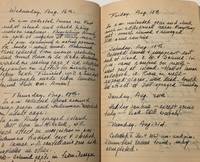
19110008136NEW ORLEANS WASHINGTON DC NEW YORK USA. Very Good. 1911. On offer is a rare and absolutely outstanding train log detailing a nearly 10000 mile journey around the United States. The log book measures 11 inches by 8 inches and contains 60 typewritten pages. The heavy paper cover has a small tear but otherwise the journal is in excellent condition. E.M. Martin is the author of the California Conductor's Excursion or A Trip of 9800 Miles. The journal was written immediately following this 1911 odyssey. In 1911 between May 2nd and June 6th 110 railroad conductors from California boarded a California Conductors Special and embarked on an epic journey around the United States. The conductors were travelling with their wives and were members of El Capitan division No 115 of the Order of Railway Conductors ORC a labour union representing train conductors in the United States their destination was ORC National Convention held in Jacksonville in May 1911. In that month they would pass through 27 states and 2 foreign countries covering some 9800 miles. The Special consisted of an Observation Car a Dining Car 4 Sleeping Cars and 1 Baggage Car. Altogether they would travel on tracks owned by 17 different railroad companies. Some of the entries are quite terse: "Los Angeles May 6 Arrived here 7:30 A.M. and made a 25 min stop. Seven of us took an automobile ride through the principal parts of the city." Other entries are much more extensive such those for New Orleans Washington D.C. and New York City. "New Orleans May 6 Arrived here 8:30 A.M. . A crowd of us hired a sightseeing auto and saw the principal points of interest. The longest street also the principal street is called Canal St. It is four miles long. The highest part of the city is three feet below the level of the sea. We saw the Post Office building the cornerstone of which Henry Clay laid Liberty Monument and the Old St. Louis Hotel. . Don Pedro Emperor of Brazil was once its guest. Henry Clay was banqueted here on one occasion at a cost of $20000. Ex President McKinley was banqueted here on his first visit to New Orleans while Governor or Ohio. . While the Hotel was used as the State Capital Gen Phil Sheridan during the troublesome period of reconstruction drove out the Legislature in session at the point of the bayonet. ."; "Washington May 11 . we had no time to lose as the reception at the White House was from five to six. From the reception hall we were ushered out upon the lawn in single file in the President's private grounds where we were presented to the President and Mrs. Taft who stood upon the lawn waiting to welcome us. One of the guards served Mrs. Taft and she drank with us. . After luncheon the waiters passed cigars to the men . While being served the President sat upon a lawn seat talking ." He describes in detail the rooms they visited in the White House as well as other places of interest in the city. They spent several days in New York City and toured extensively. Martin has a sharp eye for detail as this example illustrates: ". One of the main parlours is trimmed in dark Spanish Oak with tapestry panels. The ceiling is decorated with beautiful paintings. In the Louis XVI Dining Room the wainscoting and pilasters are of Circassian walnut enclosing panels of golden silk tapestry." His descriptions in many cases conjure up images of old sepia-coloured photographs: "El Paso May 4th. Here in El Paso we saw for the first time a street car water wagon. We saw the big smelter and the old adobe houses where the Mexicans lived. Between two and three thousand 'insurrectos' were camped just across the river. The hillsides sand gulches were lined with their camps which were very poor. Red Mexican blankets were seen all over the hillsides. Some of the men were bathing in the river; others were washing their clothes. They all seemed very poorly clad. .". Thousands of Mexicans flew to El Paso and the United States following the Mexican Revolution in 1910 which started with insurrection of several states in northern Mexico. It started the first large wave of Mexican immigration into the United States. "Detroit May 24th. . Visited Garhartts Glove and Overall Factory. Here we saw them cut fifty-four pair of overalls at one time with an electric cutter. The head cutter gets from $25 to $35 per week. Workers at the machines get $10 a week. They work by the piece. ." The journey finished back in San Francisco at 7:00 A.M. on June 6th. This is a rare and superb look at life communities all around the United States at one moment in time. Historians and geographers will find in it a goldmine of information and observations. Martin is a very good writer and a keen observer. This Journal can serve as an excellent benchmark for any number of comparisons whether historical geographic the Salton Sea for example economic or social. Whether large industrial cities or small communities across the south or up the Atlantic seaboard Martin lets his reader have a window seat on this epic journey around America.; Manuscript; 4to - over 9¾" - 12" tall; KEYWORDS: HISTORY OF EARLY 20TH CENTURY TRAVEL RAILROADIANA 1910s PROGRESSIVE ERA; UNITED STATES CALIFORNIA; CALIFORNIA CONDUCTORS EXCURSION 1911; E.M. MARTIN; ORDER OF RAILWAY CONDUCTORS OF AMERICA ORC; EL CAPITAN DIVISION NO. 115 ORDER OF RAILWAY CONDUCTORS NATIONAL ORC CONVENTION IN JACKSONVILLE; LABOUR UNION OF TRAIN CONDUCTORS AMERICAN RAILWAY UNIONs RAIL TRANSPORT IN THE UNITED STATES; RAILROADS OF AMERICA; PRESIDENT WILLIAM TAFT; TRAIN TRIPS; AROUND THE UNITED STATES; CALIFORNIA RAIL TOUR; TRAVEL JOURNAL; AMERICA BY TRAIN IN THE EARLY 20TH CENTURY CALIFORNIA CONDUCTORS SPECIAL; TRAINS OF THE EARLY 20TH CENTURY MEXICAN REVOLUTION REFUGEES MEXICAN REFUGEES IN EL PASO WHITE HOUSE IN THE EARLY 20th CENTURY AMERICANA HANDWRITTEN MANUSCRIPT DOCUMENT LETTER AUTOGRAPH WRITER HAND WRITTEN DOCUMENTS SIGNED LETTERS MANUSCRIPTS DIARY DIARIES JOURNALS PERSONAL HISTORY SOCIAL HISTORY HISTORICAL HOLOGRAPH WRITERS AUTOGRAPHS PERSONAL MEMOIR MEMORIAL ANTIQUITÉ CONTRAT VÉLIN DOCUMENT MANUSCRIT PAPIER ANTIKE BRIEF PERGAMENT DOKUMENT MANUSKRIPT PAPIER OGGETTO D'ANTIQUARIATO ATTO VELINA DOCUMENTO MANOSCRITTO CARTA ANTIGÜEDAD HECHO VITELA DOCUMENTO MANUSCRITO PAPEL . hardcover
18450001065Providence Rhode Island RI. Good. 1845. On offer is a remarkable historic handwritten manuscript relic of Rhode Island's involvement in the Mexican War and regional commerce being the journal and ledger of George W. Guild who was a soldier in the Mexican War a merchant and a Justice of the Peace in Providence Rhode Island. This 266 page hand numbered book was used from 1845 - 1850 as a ledger for Mr. Guild's prosperous business. He tended to do most of his invoices notes sales and orders on the right side of the open book. The left side was saved for other notes relating to store operations. It is here on these mostly blank pages than George Guild wrote his Mexican War travels and adventures very soon upon his return from service. There are about a dozen pages of written narrative detailing travel vessels conditions battles brothers-in-arms etc and then more pages of point form notes possible chapter headings etc. It seems without doubt that Guild is documenting his immediate memories with an intent to later flesh out for either a book or memoir. A noted dated 1850 in the book confirms this as Guild makes mention of the cost of publishing 100 copies of a 100 page book at a cost of $1.00 per book. Students of the time period will know that when Congress declared war against Mexico on May 13 1846 volunteers in large numbers enlisted to fight against her. About this period the movement of General Taylor or "Old Rough and Ready" as his men called him from Corpus Christi to the relief of Fort Brown on the Rio Grande River was the theme of general conversation throughout the state. Meetings were called by the commanders of the various military companies after the battles of "Palo Alto" and "Resaca-de-la-Palma" for the purpose of offering their services to the government. The act passed by Congress to increase the strength of the army by adding ten additional regiments to be enlisted for the war defined the "quota" of Rhode Island to be one company of infantry. Now there were four companies in process of organization at this time but only one could be mustered into service. In January 1847 the Legislature of Rhode Island made an appropriation of $2500.00 for volunteers for the Mexican War. To Captain Joseph S. Pitman and Lieutenant John S. Slocum was assigned the duty of preparing the company intended for the field. The Second-Lieutenancy was subsequently filled by the appointment of John Glackin of Woonsocket R. I. George W. Guild was appointed First Sergeant. Frequent changes were made in the "non-commissioned" officers as their various qualifications developed. The following is the "roster" after entering the valley of Mexico. His narrative is first hand and well expressed. This was a fascinating time in Rhode Island history and this rare journal is a unique first hand original relic of that time. Overall G. ; 24mo - over 5" - 5¾" tall; MEXICAN-AMERICAN WAR TEXAS REVOLUTION MEXICAN WAR MEXICO VOLUNTEERS RHODE ISLAND HANDWRITTEN MANUSCRIPT DOCUMENT LETTER AUTOGRAPH DIARY JOURNAL LOG KEEPSAKE WRITER HAND WRITTEN DOCUMENTS SIGNED LETTERS MANUSCRIPTS HISTORICAL HOLOGRAPH WRITERS DIARIES JOURNALS LOGS AUTOGRAPHS PERSONAL MEMOIR MEMORIAL PERSONAL HISTORY AMERICANA ECONOMY COMMERCE MERCHANTILE; Signed by Autograph . unknown
19010002413ABOARD THE USTS ENTERPRISE. Good. 1901. On offer is a super group of four 4 folio manuscript logbooks 2 and exercise books 2 handwritten and compiled by Navy cadet Herman T. Parker who served aboard the United States Naval training ship USTS Enterprise between 1901 - 1902. Beginning under the command of Edward Merritt Hughes from June 1 1901 to Oct 12 1901 and then commanded by Edward David Taussig June 14 1902. Uniquely the group of four presents the historian and researcher of Naval education an opportunity to view the education alongside the performance as the official USTS Enterprise logs are filled with the standard data all sailors have recorded since the Age of Sail: weather winds nautical or ship observations position and status. There are any number of fascinating entries: the Prince and Princess of Norway boarding the Enterprise an encounter with the Russian Fleet a review by the Czar of Russia's Royal Yacht a German royal yacht in review and boarding ships; a number of exchanges with the British German and French Navy. There are many cases were the Enterprise encounters Fleets of the Russian Navy. Another interesting entry: "Port watch -went on liberty at 9 commanding officer made official calls on U.S. consul charge d'affaires Vice Admiral De Loviui Command of Port Vice Admiral Avalon Admiralty Molars." The cross-Atlantic includes ports in Scotland Copenhagen Denmark Saint Petersburg Russia Kiel Germany Antwerp Belgium Gravesend England Gibraltar Funchal Madeira before going back to Boston Massachusetts. The trip and education of a lifetime for this young man who by the end of the voyage would be an 'old salt'. The folio sized books have about 200 pages in total with writing. The books show some signs of ageing but overall G.; Manuscript; Folio - over 12" - 15" tall; KEYWORDS: HISTORY OF HERMAN T. PARKER 1ST EDITION ILLUSTRATED SIGNED HANDWRITTEN JOURNAL LOGBOOK DIARY LEDGER US NAVY RUSSIAN NAVY UNITED STATES NAVAL TRAINING SHIP USTS ENTERPRISE GERMANY GERMAN NAVY TRAVEL JOURNAL RUSSIAN NAVY NAVAL MANEUVERS ROYAL YACHTS MARINE MARINERS SAILORS MIDSHIPMEN NAUTICAL HANDWRITTEN HANDWRITTEN MANUSCRIPT AUTOGRAPHED AUTHORS DOCUMENT LETTER AUTOGRAPH KEEPSAKE WRITER HAND WRITTEN DOCUMENTS SIGNED LETTERS MANUSCRIPTS HISTORICAL HOLOGRAPH WRITERS AUTOGRAPHS PERSONAL MEMOIR MEMORIAL PERSONAL HISTORY ARCHIVE DIARY DIARIES JOURNAL LOG PRIMARY SOURCE FIRST HAND ACCOUNT SOCIAL HISTORY PERSONAL STORIES LIVING HISTORY ANTIQUITÉ CONTRAT VÉLIN DOCUMENT MANUSCRIT PAPIER ANTIKE BRIEF PERGAMENT DOKUMENT MANUSKRIPT PAPIER OGGETTO D'ANTIQUARIATO ATTO VELINA DOCUMENTO MANOSCRITTO CARTA ANTIGÜEDAD HECHO VITELA DOCUMENTO MANUSCRITO PAPELBIOGRAPHY BIOGRAPHICAL AUTOBIOGRAPHICAL AUTOBIOGRAPHY PERSONAL NARRATIVES . unknown
19070002567MONTANA OTTUMWA IOWA SHERIDAN COUNTY DAKOTA. Very Good. 1907. On offer is an original significant historic record of late 1800s and early 1900s pioneer and western life being the original handwritten manuscript diary of a fascinating and eclectic Montana pioneer whose many job titles included lawman judge Civil War veteran teacher miner and newspaper editor Samuel Dow Bollinger 1848 - 1917. The 3½ x 6 inch 40 page book begins in 1907 though much is retrospective with annual entries through 1917. The last two entries of 1917 seem to indicate he was ill and likely died about that time. The first page or so gives history of his parents who had come from Pennsylvania writing entries covering his birth through the rest of his life and a very interesting life and one uniquely reflective of the times in which he lived. In the early 1860s he worked for a couple newspapers in Ottumwa; The Courier and The Mercury from 1866 - 1869 Bollinger and he also served with the US Army in the Dakota Territory. After the army Bollinger headed to Missouri marries his first wife and then in 1880 he moves to Montana where he joins the Odd Fellows Lodge at Virginia City. He did some freighting work for the railroad became justice of the peace at Sheridan County. He details several accounts of criminals that he encountered. Later he became an itinerant teacher at several different locations. In 1889 he founded and published a newspaper at Pueblo Colorado called "The Pueblo Democrat" - he adds that his partner W.G. Jackson who "beat him out of his interest and then let the paper die" runs for Supt. of Schools in 1890; in 1894 he is in Cripple Creek doing some mining and also working with a newspaper and publishing the "Daily Crusher"- then back to Missouri and then back to Montana in 1898 as Justice of the Peace again in 1904 at Sheridan County and the in 1913 he goes to Arkansas where it appears his life ended. Here are some snippets: Inside front cover: After I'm dead send the book to Emolyn Bowman or Mrs S.M. Hatfield Samuel Dow Bollinger Fifth Son of Simon P Bollinger and Ruth Bollinger Davis Born at Ottawa Iowa Oct 22 1848; Earliest recollection 1852 cut off sister Mary's Finger. 1852-1862 Helped father at carpentering and furniture making educated at public schools and private college in Ottawa. 1862-66 Worked at printing "Mercury" and "Currier "offices in Oltuwna. Walked to Dallas Co Iowa 125 miles and spent summer with uncle George Hills returned in fall and had first R.R. ride for Pella to Ottuma 60 miles. 1866 Drove an Ox train from Ottawa to Hamburg 1869 Worked passage on boat from New Orleans to La Grange MO than walked to Kirksville MO. 1866 Went to Hawsburg Iowa 200 miles in company with mother and sister Susan and her husband Ehias P Day worked on first issue of "Fremont Co Times" Published by Eaton Brothers. Went to Caldwell co Mo thence to Ottawa on foot. 1866-69 Served three years in US Army CO E 10th infantry at 71 Wadsworth now in N Dakota. 1870 Broke prairie with four yoke of oxen in Adams Co Missouri built frontier shop at Shars Mill and thought school at Ball Knob district 1871 Married to Mary M Vanlaningham 1872 Bought 40 arches of brush land taught school and cleared land until 78. 1881 Man killed by lighting near Sheridan found corpse in a box just as he been pecked up took him out washed and shaved him got clothes and coffin at county expense and buried him decently. 1882 Settled in Sheridan built frontier store and shop Esther came back from MO after burying a baby boy that was born during her visit of ten months. 1882 -1885 Served several terms as Justice of the Peace at Sheridan Montana disarmed John Mitchell a murderer and committed him to jail. Defied a masked mob from Laramie who came for the prisoner in the night in face of threats of personal violence turned over the man who shot Mitchell the leader of the mob eventually sent to prison. From the Great Falls Genealogical society: MITCHELL John Laurin MT shot Daniel Kane Mitchell was killed soon after he reached Sheridan MT March 12 1885. 1888 -Bad Man of the plains rode into the post office in Stuart issued warrant constables afraid Arrested him myself and committed him to Los Amias jail for 90 days broke up gang.' Overall G.; Manuscript; 12mo - over 6¾" - 7¾" tall; KEYWORDS: HISTORY OF SAMUEL DOW BOLLINGER MONTANA PIONEER LAWMAN WILD WEST VETERAN TEACHER MINER NEWSPAPER EDITOR OTTUMWA IOWA SHERIDAN COUNTY DAKOTA TERRITORY PUEBLO COLORADO THE PUEBLO DEMOCRAT MONTANA TERRITORY WESTERN LAWMEN GENEALOGY AMERICANA HANDWRITTEN MANUSCRIPT DOCUMENT LETTER AUTOGRAPH WRITER HAND WRITTEN DOCUMENTS SIGNED LETTERS MANUSCRIPTS HISTORICAL HOLOGRAPH WRITERS AUTOGRAPHS PERSONAL MEMOIR MEMORIAL AMERICANA ANTIQUITÉ CONTRAT VÉLIN DOCUMENT MANUSCRIT PAPIER ANTIKE BRIEF PERGAMENT DOKUMENT MANUSKRIPT PAPIER OGGETTO D'ANTIQUARIATO ATTO VELINA DOCUMENTO MANOSCRITTO CARTA ANTIGÜEDAD HECHO VITELA DOCUMENTO MANUSCRITO PAPEL . hardcover
19350001270AROUND THE WORLD. Very Good. 1935. Full-Leather. On offer is the super beautifully printed diary specifically for the British Medical Association World Tour of 1935. This official diary was owned by Sir William Willcox as evidenced by the personal letters and other related ephemera in the book's pouch. The book contains the itinerary for every day of the tour with information and maps relating to places visited as well as all the travel and dining arrangements and travel tips given in detail. Space meant for the purpose and other blank spaces are used by the author many many pages of handwritten entries relating to the voyage the crew the other doctors and medical related observations and traded words of wisdom from other practitioners. Here are some biographical notes based on an online review of a biography of Sir William: The Detective-Physician: the Life and Work of Sir William Willcox by PHILIP H.A. WILLCOX London Heinemann Medical Books 1970 pp. xiv 332 illus. £3.50. In this book Dr. Philip Willcox has described the life and work of his father Sir William Willcox K.C.I.E. C.B. C.M.G. M.D. F.R.C.P. who was physician to St. Mary's Hospital from 1907 to 1935 and an expert forensic adviser to the Home Office from 1904 to 1941. It is much more than a work of filial piety. It describes a brilliant career she like of which is no longer to be seen in the modern world. As Dr. Willcox writesin his introduction: 'Here was the case of a man who without outside influence or financial support in his youth at first earned his living as a schoolmaster paid for his own medical education at St. Mary's Hospital at a time when there were no state sponsored scholarships qualified as a doctor became a Home Office pathologist and analyst consultant physician and lecturer in several subjects at his medical school.' Before the first world war Sir William Willcox gave evidence in twenty-five trialsfor murder or manslaughter including those of Crippen Steinie Morrison and Seddon. After the war he gave evidence in other famous trials and throughout the whole of these periods he was on the consultant staff of St. Mary's Hospital treating patients and teaching students and also running a large private practice in the West End of London. His retirement from the staff of St. Mary's was marked by a packed and emotional final ward-round about which the Dean the late Lord Moran wrote: 'What everybody thinks was shown by the turnout. I have never seen anything like it.'Sir William Willcox was born at Melton Mowbray in 1870 and throughout his life he indulged in the hobbies of a country squire: hunting hacking and shooting. In the sunset of his life I myself remember shooting with him when he was on a visit to my parents in Buckinghamshire. Sir William Wilcox first took a degree in chemistry and then taught chemistry for four years in a private school becoming a Fellow of the Institute of Chemistry. Clearly these years laid the foundation of his great knowledge of toxicology. He did not begin to study medicine until the age of twenty-five and he qualified with brilliant Honours in the London M.B. at the age of thirty. Soon Willcox joined the distinguished line of Home Office pathologists-Sir Thomas Stevenson Pepper Luff Webster-and in his turn he trained Spilsbury and Roche Lynch. It is interesting to record that all of Willcox's distinguished honours from the State were won on war service in World War I. He served with the Gallipoli expedition and in Mesopotamia where he made a great contribution to the recovery of the British Army from the early disasters of the campaign. Everyone who is immunised with TAB vaccine as I myself am each year should remember that this was pioneered by Willcox and Sir Robert Archibald. In 1918 General Sir Alfred Keogh the great Director-General of Army Medical Services in World War I who was honoured with the Grand Cross of the Order of the Bath a very singular honour for a medical man wrote to Willcox and cast his mind forward to the post-war period: 'To you and to me the great interest is of course the question of the national health its relation to national efficiency to housing to poverty and the relation of industrialism thereto. I have some-but not very stronghopes that the medical profession will come to realise that its part in these great questions is bigger than they have been in the habit of imagining. But we have to get away from the ideas that are so prevalent if not voiced that we are merely technical advisers and cannot like other professions produce leaders of men. I see little signthat "Public Health" is really recognised to be that which it is. All the talk is of sick benefit clubs halfcrowns for the practitioner and so on. The great things are forgotten.' Sir William Willcox was one of the first to be concerned about the problem of barbiturate addiction and in 1926 while engaged on this topic we find him writing: 'The BMA representatives are very obstinate and very difficult to deal with.' Plus Ca change plw c'est la meme chose. Sir William Wilcox lived in considerable style in Welbeck Street in the house where he had his private consulting rooms. He kept horses and rode every morning in Rotten Row. I remember a very senior general practitioner in the country just after World War II bemoaning the decline in standards of dress. He remarked that consultants now come to consultations in the country in small fast cars and wearing tweed jackets whereas Sir William Willcox used to be driven down from London by his chauffeur in a Rolls Royce car and wore a morning coat and top hat and 'the patients were very pleased to pay a guinea a mile for that'. Dr. Willcox has rightly eschewed any temptation to sensationalize the narrative of his father's great work in forensic medicine and in dealing with drug addiction. The facts stand on their own and the life and work of Sir William Willcox make fascinating reading. Unfortunately the book is somewhat marred by a considerable number of printing errors for example 'tetronal' is wrongly spelt on page 255 and Norman Kerr's name is wrongly spelt twice on page 284. What has happened to the proofreaders that all publishers used to employ But this small imperfection does not diminish the great interest of this biography and Dr. Willcox is to be warmly congratulated on it. E. GREY-TURNER. Unpaginated but very thick leather bound 13 x 21 cm and overall VG.; Manuscript; 8.25 x 5.25 OBLONG; POLICE ENFORCEMENT EXPERT TESTIMONY TRAVEL WORLD TOURS AROUND THE WORLD TRAVEL DOCTORS FORENSICS MEDICAL MEDICINE HANDWRITTEN MANUSCRIPT DOCUMENT LETTER AUTOGRAPH WRITER HAND WRITTEN DOCUMENTS SIGNED LETTERS MANUSCRIPTS HISTORICAL HOLOGRAPH WRITERS AUTOGRAPHS PERSONAL PERSONAL HISTORY MEMOIR MEMORIAL DIARY JOURNAL DIARIES JOURNALS LOG LOGS KEEPSAKE Travel Steamships Steamers Trains Railroad . hardcover
18810008188HOLYOKE MASSACHUSETTS. Good. 1881. On offer is a rare manuscript from late 19th century Massachusetts. This municipal record book details the matters pertaining to a vital municipal Board in America's first planned industrial city. Measuring 10.5 inches by 8 inches it contains 143 pages and is 100% complete. The cover binding and pages are in good condition. The handwriting is legible. There are also several pages of notes and correspondence tucked inside. Located on the Connecticut River Holyoke MA was one of the first planned industrial communities in the United States. The city features rectilinear street grids which was a novelty in New England. In 1847 merchant investors began construction of dam and canal system along the Connecticut River. With this construction came an elaborate complex of mills and worker's housing which evolved into the city of today. As an interesting side note volleyball was invented here and Holyoke is home to the Volleyball Hall of Fame. To say that water and water management were important matters to the citizens of Holyoke would be an understatement. Its very existence its jobs and its prosperity were totally reliant on it. This gives an inkling into the importance of its Board of Water Commissioners. Hence this original ledger of the Holyoke Board of Water Commissioners is a vital piece of municipal history. Holyoke was home to numerous paper mills giving rise to its longtime nickname as the "Paper City." Among the many water-powered paper companies and mills referenced here include the Albion Paper Co. Union Paper Mfg. Co. Parsons Paper Co. Hampden Glazed Paper Co. Newton Paper Co. Excelsior Paper Co. etc. In 1888 Holyoke's paper industry spurred the foundation of the American Pad & Paper Company which is still one of the largest suppliers of office products in the world. Timothy Merrick the Town Clerk maintained this journal. The journal's entries chronicle all matters pertaining to the city's busy water board. At the time the board was active in extensive affairs ranging from dealings with companies such as the Connecticut River Railroad and Holyoke's many paper mills to bodies of water throughout the city. "Voted and approved 19 bills including payroll for Frely amounting to $575.44" p. 3; "On motion voted to allow Jolly Brothers to make connection with the City pipe and to use water the work to be done at their own expense buy under the supervision of the Supt. of the Works" p. 7; "Voted that the Registrar notify George D. Robinson Atty for P. Dolan that a hearing on his claim for damages for diverting Tannery Brook be held over Dec 19th at 2:30 p.m." p. 22; "Voted to loan to V.J. O'Donnell $1800 of mortgage on house on Price St." p. 23; "Voted to rebate to Parsons Paper Co on July $56.48 on August $14.03. Also to G Burnett $20.00 on Nov." p 46. The names of numerous Holyoke residents businesses landmarks street addresses intersections etc. can be found throughout journal. Also many other Holyoke based companies from other industries can be found throughout the pages of this early volume such as the Jolly Brothers custom iron and steel forgings Daniel O'Connell Farr Alpaca textile mill Tuttle Rubber Co. Valley Pipe Co. Crafts & Fraser Store etc. Various local charitable and religious organizations are mentioned such as the Sisters of Charity at Mount Saint Vincent. This is a very important historical document as this Board was for practical purposes the most important government body in the city. Political scientists and historians would find this a treasure trove. It is a perfect view of local government in action. Its detailed recording of actions taken and events responded to provide a rich history of the city and a fascinating view of how it worked in the late 19th century. It is an excellent resource for genealogists as it provides complete name details and other identifying information such as addresses.; Manuscript; 4to - over 9¾" - 12" tall; KEYWORDS: 1881 HOLYOKE MASS HISTORY OF; 19TH CENTURY; 1880s; HOLYOKE MA; HAMPDEN COUNTY; MASSACHUSETTS; NEW ENGLAND; UNITED STATES; PAPER CITY; VOLLEYBALL HALL OF FAME; HOLYOKE BOARD OF WATER COMMISSIONERS; TIMOTHY MERRICK; AMERICAN PAD AND PAPER COMPANY; INDUSTRIAL NEW ENGLAND; URBAN HISTORY; WATER MANAGEMENT IN THE 19TH CENTURY; HOLYOKE BUSINESSES; INDUSTRIES IN 19TH CENTURY HOLYOKE; GENEALOGY OF THE HAMPDEN COUNTY; ECONOMIC HISTORY OF HOLYOKE; ECONOMIC HISTORY OF HOLYOKE; MUNICIPAL BOARD OF HOLYOKE; HOLYOKE CITY HALL; CITY CLERKS OF HOLYOKE; LOCAL GOVERNMENT OF 19TH CENTURY HOLYOKE; AMERICANA HANDWRITTEN MANUSCRIPT DOCUMENT LETTER AUTOGRAPH WRITER HAND WRITTEN DOCUMENTS SIGNED LETTERS MANUSCRIPTS DIARY DIARIES JOURNALS PERSONAL HISTORY SOCIAL HISTORY HISTORICAL HOLOGRAPH WRITERS AUTOGRAPHS PERSONAL MEMOIR MEMORIAL ANTIQUITÉ CONTRAT VÉLIN DOCUMENT MANUSCRIT PAPIER ANTIKE BRIEF PERGAMENT DOKUMENT MANUSKRIPT PAPIER OGGETTO D'ANTIQUARIATO ATTO VELINA DOCUMENTO MANOSCRITTO CARTA ANTIGÜEDAD HECHO VITELA DOCUMENTO MANUSCRITO PAPEL . unknown
19170001524BROOKLYN TO CONSTANTINOPLE TO PARIS. Good. 1917. On offer are two 2 absolutely super original World War I and post-War manuscript diaries handwritten by American Foreign Service agent and Central Intelligence Agency operative Grace Phillips Cogswell. A woman of many talents and accomplishments living a life one usually reads about in fiction. The diaries date from 1917 - 1926 No.1 1917-1920 800 entries; No.2 1923-1926 475 entries covering the World War I years and then while she was working for the O.S.S. and American CIA Central Intelligence Agency. It should also be noted that she was married to the famed naval commander Captain Francis Cogswell whose diary we list separately. She traveled abroad extensively and writes of being in many different countries / cities including Venice Constantinople Rome Edinburgh Paris and many many more. From the mundane daily activities to super expamples of her sparkling personality and keen eyed observations. Here are some snippets: "Annapolis - Dined at The McNairs disgraced myself by eating too much. F. teasing me Brklyn - Fleet due today minus destroyers. Went to Governors Island and watched the fleet come in. Mr. Blairs to watch land parade with Miss Hunt. Brklyn - celebrated today with a parade and welcome home cards in every window and all sorts of parties for Soldiers Francis home from Lisbon brought me much laces and embroideries for my birthday. Regent Palace. Got military permit. Met Ambassador Davis. Saw the King drive out of the Palace Grounds on his way to the memorial services of the Princess of Denmark at Winchester . Chandler sailed at 1 p.m. Mrs Chandler and I left on 5:40 train for Paris London - Went to headquarters with Capt. Hellweg and Bones. Sat in Comdr. Brooks office and waited for dope. Met Mrs. Schuyler. Mr. Copehard and Brooke had our money changed for us at Guarantee Trust Co. took Capt. Hellweg and Brooke to lunch at Ritz Edwinburgh - Went aboard to sew on F's blouse. Mrs. Chandler came down for tea. Capt. Hellweg aboard most of time as his dog Spottie lives on board. In route Rome. Changed at Modane and had all my clothes stripped off by a horny handed female she had the time of her life. Found 3 gold pieces of 5 ea. and was wild when the French official let me thru with them. Magnificent scenery Mts. and scroll painted houses. Rome. Hotel Flora saw bones of monks made into fanciful designs in vault of church. Constantinople Pera Palace - Mrs. Day birthday. Mrs Wetherby gave large dinner Embassy crowd at Russian Club. Most remarkable violinist I've ever heard there food perfect. Danced at Pera Palace later with Ital. officer and will never be the same after trying to dance with him Lunch at Harvid Beys house in Asia Minor. Met the Princess his wife who is a daughter of last Sultan and niece of present __ . She did not appear at lunch but rec'd the ladies upstairs afterwards. Remarkably carved easle birds supporting mirror. She gave me a rose heavy course rug pred. cream color Constantinople - We are to lunch on the Scorpion with Capt. McCulloulgh and go for climb up mountain. Mr. Smith assoc. press man came with us . Venice - Mrs. J___ wife of Ambassador of Rome called at 10:30 and we took her to the Ital. ship Scills to see the war orphans . Comdr. Bryant told me that Francis is a hero. When a Calif. plane nose dived into the ocean near them they swung out of column at a snappy speed and picked it up it having turned bottom up and the aviators crawled around and sat on the keel. F. was afraid it would sink and wanted to back down to it but the Capt. voted for a boat to be lowered which picked them off. The W. VA. crew cheered the ___ cheered Francis so Mr. Bryant said. Think he stretched that a bit." BIOGRAPHY: GRACE PHILLIPS COGSWELL b. June 7 1887 d. Dec. 21 1971 was born Grace Woodman Phillips the daughter of Lee Phillips and Clara Cushing. She married Lieutenant Henry Burnet Post b. June 15 1885 d. Feb 9 1914 San Diego CA on 25 Jan 1907 at St Paul's Methodist Episcopal Church New York NY. Henry Burnet Post was the son of Henry Albertson Van Zo Post b. May 16 1832 New York - d. January 1914 and Caroline Burnet McLean b. July 14 1843 Cincinnati Ohio. In 1900 Henry A V Post was a Banker and they were living at 140 W 77th St New York NY. Henry Burnet Post was in the US Army Air Force and died in an aircraft accident in 1914 aged 28 after establishing an American altitude record of 12120 feet. Henry Post Army Airfield at Fort Sill Oklahoma is named in his honour. Grace Phillips married for the second time in New York NY on November 25 1916 to Francis Cogswell. She served in the U.S. Foreign Service and later in the Central Intelligence Agency O.S.S./CIA 1917 - 1926. From her 1919 US passport application she was living in Brooklyn NY and Francis Cogswell was residing on board the USS Chandler. In the 1920 census she is living with her parents at 508 3rd St Brooklyn NY. From Oct. 4 - 10 1922 she sailed on the SS President Cleveland from Honolulu to San Francisco CA and her US address was San Diego CA. From her 1925 US passport application Grace P Cogswell was living in New York NY and Francis Cogswell was residing with the US Pacific Fleet. From 1-10 Sep 1925 Grace Cogswell sailed from Auckland New Zealand to Honolulu on the Aorangi. Grace P Cogswell died Dec. 21 1971 and is buried at SECTION 6 SITE 8709 next to Francis Cogswell in Arlington National Cemetery. Overall VG.; 16mo - over 5¾" - 6¾" tall; KEYWORDS: GRACE PHILLIPS COGSWELL WORLD WAR I WWI WW2 CIA OSS CENTRAL INTELLIGENCE AGENCY SPYCRAFT DIPLOMACY DIPLOMATIC CORP HISTORY OF OSS SUFFRAGE WOMEN'S STUDIES GENDER STUDIES ESPIONAGE OFFICE OF STRATEGIC STUDIES WOMEN SPIES POST WORLD WAR I WWI THE GREAT WAR WORLD WAR I HANDWRITTEN HAND WRITTEN AUTOGRAPH AUTOGRAPHS SIGNED LETTERS DOCUMENT DOCUMENTS MANUSCRIPT MANUSCRIPTS WRITERS WRITER AUTHOR HOLOGRAPH PERSONAL AMERICANA ANTIQUITÉ CONTRAT VÉLIN MANUSCRIT PAPIER ANTIKE BRIEF PERGAMENT DOKUMENTLETTER AUTOGRAPH DIARY JOURNAL LOG KEEPSAKE WRITER HAND WRITTEN DOCUMENTS SIGNED LETTERS MANUSCRIPTS HISTORICAL HOLOGRAPH WRITERS DIARIES JOURNALS LOGS AUTOGRAPHS PERSONAL MEMOIR MEMORIAL PERSONAL HISTORY . hardcover
1990815a2005Riverside New Jersey U.S.A.: Prima Publishing. Very Good in Very Good dust jacket. 1990. First Printing. Hardcover. 1559580372 . Signed and inscribed by Oscar Peterson upon front free endpaper. "For the millions who know and love the music of Oscar Peterson here's the definitive biography by his friend and former Down Beat editor Gene Lees." - dust jacket. "Oscar Peterson 1925-2007 was a Canadian jazz pianist and composer. As a virtuoso who is considered to be one of the greatest jazz pianists of all time Peterson released more than 200 recordings won eight Grammy Awards as well as a lifetime achievement award from the Recording Academy" - Wikipedia. 294 p. Black and white photographic plates. Clean and bright with negligible wear. Occasional underlining in blue ink. Dust jacket now in glossy new archival-grade protection. A lovely signed example.; 8vo - over 7¾" - 9¾" tall; MUSICIANS PIANISTS BIOGRAPHY AUTOBIOGRAPHY COMPOSERS Signed and Inscribed By Oscar Peterson Jazz Pianists Canada Canadian Performers; Signed by Authors . Prima Publishing hardcover
1990422j2028London: Ebury Press. Very Good in Very Good dust jacket. 1990. First Edition. Hardcover. 0852238584 . Signed without inscription by Jean Shrimpton upon title page. "Jean Shrimpton was the look of the sixties. The most famous model in the world. Her gamine face adorned the cover of every fashion magazine both in Britain and America. But despite being one of the most photographed women of the twentieth century she brought her modelling career to an abrupt end at the age of thirty. Now for the first time she describes the childhood that destined her for stardom and how aged seventeen her discovery led to fame and fortune. Courageous and honest Jean Shrimpton's autobiography is an enthralling testament to both the pleasures and the pain of being one of the most beautiful women in the world." - dust jacket. 191 pages. Index. Black and white photographic plates. Clean bright tight and unmarked. Light wear to complete dust jacket now in glossy new archival-grade protection. A rare and marvelous signed example of this incredible life story. ; 8vo; Signed by Author . Ebury Press hardcover
19380011043Italy Costa Rica Libya Newfoundland: Società Italia Flotte Reuniti Italia Società Anonima Di Navigazione. Very Good with no dust jacket. 1938. Hardcover. On offer is an outstanding collection of three engineering log books of vessels sunk in World War Two WWII. The log books are those of three ships of the Italian merchant navy MN Cellina MN Fella and MN Rialto. In addition to the main or Deck Log maintained by the ship's Master a separate log was maintained by the Chief Engineer for the recording of all vital information about the ship's engines mechanical systems pressures operating temperatures etc. It may also contain technical drawings and specifications. The Chief Engineer had overall responsibility for the Engineering Department and reported directly to the Master or Captain. In 1938 the Italian merchant fleet numbered 1050 vessels grossing 3180000 tons. By comparison the British merchant fleet numbered 9050 ships grossing 20 150000 tons. In 1932 due to the depression and widespread unemployment of Italian ships the major Italian shipping companies were combined into one state-controlled syndicate under the name Società Italia Flotte Reuniti. By 1937 this syndicate had made rapid recovery and repaid the Government bonds which had supported it. It was then changed into a Limited Company under the name Italia Società Anonima di Navigazione. These three ships - Cellina Fella and Rialto were part of this syndicate. The ships plied the world's major shipping routes including the Mediterranean Atlantic and Pacific. In 1940 most Italian ships were requisitioned for military service and by 1945 few were left afloat. Among the losses were these three ships. M. N. CELLINA was built in 1926. She was seized as a prize by Britain at Gibralter in 1940. She was renamed EMPIRE SAILOR and sailed as part of the British Merchant Navy. In 1942 she was torpedoed and sunk off Cape Race Newfoundland with a loss of 22 lives. M. N. FELLA was built in 1926. In 1940 she was interned at Costa Rica. In 1941 to avoid her capture she was burnt by her crew. M. N. RIALTO was built in 1926. In 1941 she was torpedoed and sunk by British aircraft off the coast of Libya. Each of these log books contains detailed descriptions of the engineering aspects of the relevant ship. They are written in Italian. For the most part the pages are typed resulting in excellent readability. In addition to the notes there are engineering drawings of various components blueprints and performance graphs. They also contain photographs of each ship. The CELLINA's log book details her voyage in 1935 from Trieste Italy to Vancouver Canada The FELLA's log book contains a number of newspaper clippings including some full-page articles all of various aspects of the shipping business. Interestingly there are two pages of notes written in English regarding spare equipment These are an excellent reference pieces. Easily translated they give an authoritative picture of the engineering features of each of these ships. A naval historian would find these useful in filling in gaps in knowledge of these ships as their records were mostly lost when the ships themselves were lost. A naval architect or engineer would find these to be and excellent reference work as to how the engineering and mechanical systems were built and maintained in ships at this time. All three log books measure 11 inches x 8.5 inches. They are 148 pages plus inserts and can be considered 50% complete since entries are on one side of each page only. Covers bindings and pages are Good in all three log books. ; 8vo 8" - 9" tall; 444 pages; Keywords: handwritten manuscript document letter autograph writer hand written documents signed letters manuscripts historical holograph writers autographs personal memoir memorial antiquité contrat vélin document manuscrit papier antike brief pergament dokument manuskript papier oggetto d'antiquariato atto velina documento manoscritto carta antigüedad hecho vitela documento manuscrito papel MN Cellina; MN Fella; MN Rialto; Empire Sailor; Società Italia Flotte Reuniti; Italian Merchant Marine; Merchant Ships Lost in WWII; Battle of the Atlantic; convoy system World War Two Naval Ships Second World War European Ships War Ships Battles Lost at Sea . Società Italia Flotte Reuniti, Italia Società Anonima Di Navigazione, hardcover
19090001023GIBRALTAR TANGIERS FEZ MOROCCO. Very Good. 1909. On offer is a simply sensational seventeen 17 page handwritten original journal detailing a British Legation mission of some importance to meet with the Sultan of Morocco in 1909. This 100 year old coverless folio sized journal is an account of a political mission most likely from April 19 1909 to December 1909. Historians and collectors of the World War I era and the history running up to the 'Great War' and of North Africa will acknowledge this was a critical period of Moroccan history when European countries were trying to influence Morocco. One online source claims: "The first years of the 20th century witnessed a rush of diplomatic maneuvering through which the European powers and France in particular furthered their interests in North Africa. Disputes over Moroccan sovereignty were links in the chain of events that led to World War I." In a strong neat hand our author Corporal Stanley R.A.M.C. Medical Orderly reports just such a mission and he begins with a list of all the members of the mission; the Minister the Hon. R. Lister a Doctor Major C.E.P. Fowler Military Attache Colonel Count Albert Edward Wilfred Gleichen who appears to have published Journal of our Mission to Fez 1909 By the Military Attaché London: Harrison & Sons 1909 and a number of other WWI related books that may very well have come from this manuscript or his own parallel journal wives secretaries attaches valets/grooms etc. This is an absolutely stunning record of the trip with the commentary beginning on Gibraltar then on to Tangiers and then Fez. Along the way Stanley notes many mishaps of early exotic travel; wild camel attack causing multiple injuries and a broken leg insurgent attacks shootings deserters storms visiting royalty . Living in tents and traveling across deserts this is very well written by an intelligent keen observer and in many ways typical British soldier and citizen who has a great handle on the written language of the day. Some of the super commentary includes Corp. Stanley's description of a presentation of gifts to the Sultan wherein the Minister gifted the Sultan a beautiful gold Bulldog statue. In return the Sultan gifts a moth eaten camel blanket a rogue stallion that was returned due to its wildness and further embarrassed the company by not giving the traditional gift of a curved silver knife to all members. The Corporal's disdain for the event drips from the page. This is fascinating relic of British colonial times and the global politics pre World War I. VG.; Manuscript; Folio - over 12" - 15" tall; MOROCCO MAROC BERBERS MOORS TANGIERS FEZ PRE WORLD WAR I WORLD WAR ONE AFRICA NORTH AFRICA HANDWRITTEN MANUSCRIPT DOCUMENT LETTER AUTOGRAPH DIARY JOURNAL LOG KEEPSAKE WRITER HAND WRITTEN DOCUMENTS SIGNED LETTERS MANUSCRIPTS HISTORICAL HOLOGRAPH WRITERS DIARIES JOURNALS LOGS AUTOGRAPHS PERSONAL MEMOIR MEMORIAL PERSONAL HISTORY BRITAIN BRITISH BRITISH EMPIRE RAF World War I WW I TRAVEL GERMANY ANTIQUITÉ CONTRAT VÉLIN MANUSCRIT PAPIER ANTIKE BRIEF PERGAMENT DOKUMENT ROYAL ARMY MEDICAL CORPS RAMC BRITTANICA Alaouite Rattigan Gleichen Travel British Empire King George . unknown
18890001470USS IROQUOIS PACIFIC STATION. Very Good. 1889. On offer is a super 19th Century relic of United States Naval and marine history being the original manuscript 18 month "Cruise Journal / L.A. Kaiser / U.S. Navy Class of '89". Kaiser does a wonderful job and is a keen observer. Entries run from Captain's comments day to day activities sailing sightings seamanship special detail work going to 'quarters' and remarkable events and observations in this log dated July 1 1889 to December 31 1890. Fresh from the Naval Academy the future captain and Governor of Guam Louis A. Kaiser begins the last leg of his naval education aboard the historic USS Iroquois. In 131 well written pages we learn that Kaiser was aboard the U.S.S. Iroquois from Mare Island to Honolulu then onto Samoa and back. From 1882 to 1892 with the Pacific Squadron Iroquois patrolled to South America Hawaii Australia and Pacific islands protecting American interests and commerce. She took part in naval action in Panama in the spring of 1885 helping to land Marines to protect American commerce during the revolution. After 10 years of service on the Pacific Station Iroquois arrived at Mare Island on 24 April 1892 and was decommissioned there 12 May 1892. BIO NOTES: Louis A. Kaiser Wikipedia Louis A. Kaiser 1870-August 12 1939 was a Captain in the United States Navy as well as briefly acting-Governor of Guam. He was a pioneer in the Navy on the use of wireless telegraphy prior to World War I. Early career Kaiser was born in Kirkwood Illinois. He graduated from the United States Naval Academy in 1889 and was commissioned an Ensign in 1891. His first assignment was the USS Chicago. In 1894 he was transferred to the USS Detroit and again onto the USS Michigan two years later. In 1896 he was also reassigned to the USS Concord. In the Spanish-American War he continued to serve on the Concord and he fought in the Battle of Manila Bay. In December 1898 he was promoted to Lieutenant junior grade. In 1899 he was briefly made acting-Governor of Guam in preparation for the arrival of Governor Richard Phillips Leary. In 1900 he was transferred to the USS Solace then again to a post in Newport Virginia. In 1904 he was transferred again to the Bureau of Equipment. In this role Kaiser was a pioneer in early wireless transmissions and conducted many of the early tests of wireless telegraphy. In 1905 he demonstrated a 1100 mile range while testing it aboard the USS Brooklyn. In July 1905 he was promoted to a full lieutenant commander and invited to speak on these innovations to the Washington Society of Engineers in Washington DC. In 1910 he was transferred to the Bureau of Steam Engineering. In 1912 he was given his first command the cruiser USS Montgomery. The following year he was given command of the USS Tennessee before being promoted to a full commander. He served in the Boston Naval Yard and Naval War College in Newport Rhode Island in 1915 before returning to the command of the battleship USS New Jersey and receiving a promotion to captain. In the 1920s Kaiser was assigned to the hydrographic office in Galveston Texas. In 1923 he was briefly the acting-commandant of the 8th Naval District before being assigned to the New York hydrographic office. He retired April 1 1925. He died in 1939 and is buried in Arlington National Cemetery. In period half sheep leather binding. Laid in are Naval Academy assignments and a manuscript map. VG; Manuscript; 4to - over 9¾" - 12" tall; KEYWORDS: USS IROQUOIS US NAVAL ACADEMY MARE ISLAND NAVIGATION NAVIGATORS OFFICERS SCHOOL ACADEMY NAVAL MARINE BATTLESHIPS GOVERNOR OF GUAM BUREAU OF STEAM ENGINEERING HONOLULU SAMOA HAWAII BOSTON NAVAL YARD NAVAL WAR COLLEGE HANDWRITTEN MANUSCRIPT DOCUMENT LETTER AUTOGRAPH KEEPSAKE WRITER HAND WRITTEN DOCUMENTS SIGNED LETTERS MANUSCRIPTS HISTORICAL HOLOGRAPH WRITERS AUTOGRAPHS PERSONAL MEMOIR MEMORIAL PERSONAL HISTORY ARCHIVE DIARY DIARIES antiquité contrat vélin document manuscrit papier Antike Brief Pergament Dokument Manuskript Papier oggetto d'antiquariato atto velina documento manoscritto carta antigüedad hecho vitela documento manuscrito Papel . hardcover
19310002175ICELAND NORWAY SPITSBERGEN ARCTIC CIRCLE. Good. 1931. On offer is a super original 1931 diary photo journal and manuscript relic of a trip to the Arctic Circle via Iceland and Spitzbergen handwritten in French by l'abbe and Professor P. Roure. Father P. Roure was a priest in Igney in Lorrainne and a professor at the private Catholic college 'Institut Saint Joseph' in Épinal France. Wonderfully executed in French the Professor details his trip over 156 hand numbered pages with 30 black and white photos mounted with corners. Beginning July 14th through to August 25th the author and his party leave Hamburg to Paris to Cherbourg dallying around the coast of Great Britain they then travel by way of the Hamburg-American Line's 'Resolute' commanded by the celebrated and renowned Captain Fritz Kruse going north passing the Faroe Islands to Iceland for five days and over two dozen pages including a super description of Reykjavík then a small city of 24000 the intrepid party leaves Iceland. Keenly observant we learn of a sighting of a whale pod the Vatna Glacier the Vestmannaeyjar the volcanic region of Thingvellir the Almannagjá gorge spectacular and famous geysers including the 30 foot Gryla at Gufudalur Steam Valley and the geothermal Efri-Reykir field. A seasoned observer Roure does a superb job annotating and referencing the photos to the narrative and he leaves few details out of his voyage: the intricacies of reading a compass by compensating for polar magnetic declination; the distant mountain peaks and jagged ice of enormous proportion evocative of voyages of discovery: Adams Glacier Wagon Way and Gully Gullybreen Glaciers in Magdalenefjorden are compared and photographed. Announcing their arrival 'Cercle Polaire 66º 33' the Polar Circle 66º 33'' he notes a sudden drop in temperature increase in fog cover and the very late daylight through the cabin window. The expedition held a soiree that evening. At a calmer time in glacial waters an inspection of the luxury steamship becomes opportune with a super passage on the equipment. On July 30th they arrive at Magdalena Bay Spitsbergen. The day ends with the spectacle of the Midnight Sun: "31 Juillet. 5h. Nous sommes à la frontière du monde polaire; la mer libre est coupée nettement par une immense barrière de glace." 31 July. 5 o'clock. We are at the frontier of the polar world; the sea cut clean with an immense ice barrier. They travel to a northernmost point of 529 miles from the North Pole along a near endless ice wall The Professor is overcome by Kings Bay Kongsfjorden Cross Bay Haakon promontory Moller Bay the Mont du Prince Olav and scattered imposing icebergs. Returning to Kongsfjorden they visit the coal-mining village Ny-Ålesund located on its southern shore one of only four permanent settlements on Spitsbergen to this day. Roure finds himself reminiscing about Roald Amundsen who flew on the airship Norge from Ny-Ålesund to Alaska in 1926 with Umberto Nobile and also having departed from there on his fatal flight only 3 years prior to the writer's arrival. They pass Bear Island in the Barents Sea which was at the time owned by a federal Norwegian mining company and festivities begin onboard. In total more than two dozen pages are devoted to their time in Spitsbergen. The approximately 8¾ x 6¾ inch red cloth over paper boards inscribed and labelled on the front cloth splitting at bottom of spine overall G.; French Manuscript; 8vo - over 7¾" - 9¾" tall; KEYWORDS: HISTORY OF PROFESSOR P. ROURE ARCTIC SPITSBERGEN ICELAND CAPTAIN FRITZ KRUSE NORWAY NORSE NORWEGIAN TRAVEL EXPEDITION EXPLORATION ARCTIC CIRCLE HAMBURG-AMERICAN LINE RESOLUTE VATNAJÖKULL VATNA GLACIER VESTMANNAEYJAR WESTMAN ISLANDS THINGVELLIR ALMANNAGJÁ GRYLA GUFUDALUR STEAM VALLEY EFRI-REYKIR IGNEY INSTITUT SAINT JOSEPH ÉPINAL SPITZBERGEN FRANCE SPITZBERGEN SCANDINAVIA POLAR TRAVEL TO THE ARCTIC KINGS BAY KONGSFJORDEN CROSS BAY HAAKON PROMONTORY MOLLER BAY THE MONT DU PRINCE OLAV ICEBERGS NY-ÅLESUND ROALD AMUNDSEN NORGE UMBERTO NOBILE HANDWRITTEN MANUSCRIPT AUTOGRAPHED AUTHORS DOCUMENT LETTER AUTOGRAPH KEEPSAKE WRITER HAND WRITTEN DOCUMENTS SIGNED LETTERS MANUSCRIPTS HISTORICAL HOLOGRAPH WRITERS AUTOGRAPHS PERSONAL MEMOIR MEMORIAL PERSONAL HISTORY ARCHIVE DIARY DIARIES JOURNAL LOG PRIMARY SOURCE FIRST HAND ACCOUNT SOCIAL HISTORY PERSONAL STORIES LIVING HISTORY ANTIQUITÉ CONTRAT VÉLIN DOCUMENT MANUSCRIT PAPIER ANTIKE BRIEF PERGAMENT DOKUMENT MANUSKRIPT PAPIER OGGETTO D'ANTIQUARIATO ATTO VELINA DOCUMENTO MANOSCRITTO CARTA ANTIGÜEDAD HECHO VITELA DOCUMENTO MANUSCRITO PAPELBIOGRAPHY BIOGRAPHICAL AUTOBIOGRAPHICAL AUTOBIOGRAPHY PERSONAL NARRATIVES . hardcover
19080008190RUSSIA. Fair with no dust jacket. 1908. Unbound. On offer is a wonderful description of an American girl visiting Tsarist Russia in the years before the revolution. The author of this travel journal is Olive Whipple Peabody 1886-1969 the adopted daughter of the American lawyer and philanthropist Philip G. Peabody 1857-1934. To learn about Philip & Olive please see BIO NOTES at the conclusion of the listing. In this journal Olive describes a trip she took with her adoptive father Philip in 1908. This amazingly detailed diary is exceptional with its fascinating details of all that she saw and did in St. Petersburg and Moscow. The journal opens with them in Sweden: "Dad and I returned from Kristiania this morning. Our train left Kristiania at 6 o'clock last night and we rode without any change of cars until 7: 50 this morning when we entered the large Central Station of Stockholm ." May 17They spent several days visiting historical sites in Stockholm before sailing for Finland and Russia. They arrived in St. Petersburg on May 21st: "All the Russian churches and many of the people have a sort of unclean odor. Found St. Isaac's Cathedral more impressive than the Kazan Cathedral. This Cathedral stands in the Nevsky Prospekt - the long main street of St. Petersburg. It has an arched colonnade of 136 pillars in imitation of St. Peter's at Rome". May 22"A guide took us about St. Isaac's Cathedral and showed us the valuable stones set in the gold icons until we really believed that the wealth of Russia is in the Cathedrals. I visited twice The Memorial Church built on the exact spot where Alexander II was murdered. The stones in the pavement are left just as they were The Cathedral of Peter & Paul is an oblong building 210 feet in length and 98 in breadth. All the sovereigns of Russia since the foundation of St. Petersburg lie buried in the Cathedral except Peter II. The bodies are deposited under the floor of the church and the marble tombs above marking the sites of the graves." May 22"We asked admissions to the Winter Palace and we were sent on from one man in charge to another then another & so on till at least we were shown into a little room where we sat down on benches and waited. We did not know how long we would have to wait before someone came. No one spoke English or French. We decided to go on to another Cathedral for we had only the afternoon before we left for Moscow. We went to the bazaars but really most of them were closed for some sort of a holiday. Lots of things were very expensive. Dry goods priced in the windows of the shops were terribly high. A very large good natured cat sat in the door way of every shop. Candy and fruit were very expensive. Car fares cheap - hotels poor & expensive - cab fares moderate." May 23"Passports are compulsory in Russia. Anywhere & everywhere you go a passport is demanded. At every Russian hotel it is taken by the manager then given to the police official of the hotel. The next day it is returned to us after there has been a most careful examination. Even my age is required. We have been delighted to get permission in London of the Russian consul to enter Russia! To remain in St Petersburg and permission to remain in Moscow. Then permission to leave the country. Police officials attend to all this and a charge is made each time. Often times you need a passport even to enter a public building". May 23"We left the Hotel de France at 6 o'clock yesterday and drove to the Nicholas R. R. Station. The cab was so small we could barely get in with our luggage. My suit case had to ride outside in the pouring rain. At the station only two small settees near the door to accommodate the hundreds of people who would wait for trains. I managed to get a seat on one bench. The moment anyone moved 20 people were after that seat. Dad was standing in line 40 minutes for our tickets. Our train to Moscow was the largest one I ever saw. We walked nearly a quarter of a mile before we came to our places. Dad had to ride in a men's compartment in the car behind mine. I was put in with 3 women & a child; all Russian; all very nice. Extra fees are charged on this train for speed as it goes between St. Petersburg & Moscow in 12 hours instead of 24 hours. Also there is extra charge for use of a berth. The ride was uninteresting. We passed woods and meadows pastures and little hills. We entered Moscow station at 8: 45 this morning just on time. A very ordinary station for so many travelers" May 24; "We had good rooms in the Hotel Bazar-Slav Hotel Slaviansky Bazar; room numbers 104 & 105 - with electric lights red plush furniture & hard wood floor - no carpet but one or two rugs. The first place we visited was the Kremlin about a 10 minute walk from the hotel. The life of a Russian soldier is very hard. They must be ready any moment to go where ever ordered. Their pay is only a few cents a day. At one time they were allowed to write one letter a month free of postage but when later they were obliged to pay that postage they often had to go two months without sending a letter. They look very forlorn & dirty". May 26"We passed The Great Riding School on our way to an electric car stopping place - as we had come out of the Kremlin through the Trinity Gate. This remarkable building was built in 1817 and is one of the largest rooms in the world unsupported by pillars or props of any kind. The place was well lighted and we thought it a good opportunity to look in. The room was full of automobiles and the wealthy people of the city were evidently spending the evening at an automobile show ." May 27"I have visited the Iberian Chapel several times. It is very small and the inside is bad air. The chapel which is illuminated by silver lamps with wax candles is always beset by worshippers whose donations amount to a very large sum. The Iberian Mother is often taken out to ride in a splendid coach drawn by 6 horses with priests and servants. It goes to the houses of the sick to weddings and to new houses etc. For this honor large sums are paid sometimes the fee received amounts to 100 Rs. $58.00. While it is absent from the chapel another copy is put in its place. On visiting Moscow the Emperor always dismounts and prays at this chapel before entering the Kremlin. It is generally surrounded by nuns and other beggars". May 27. Unfortunately her diary ends here. Olive has lightly affixed 17 Real Photo Post Cards RPCC to the pages; several are written on with detailed descriptions. There are also two small pressed flowers tucked between the pages; original florets from 1908. The amount of detail in this journal is outstanding. Olive is a keen observer and writes well. This is an excellent source document for a Russia historian as it paints a vivid picture of life under the Tsars. The photo post cards that she has pasted into her journal bring her descriptions to life especially the street scenes. This is an excellent picture of a world that was soon to spiral into a very dark place for many years to come. Condition: Measuring 8.25 inches by 6.25 inches this journal has 35 pages and is 100% complete. The front and back covers are missing and the spine has been broken. All of the pages are intact. The handwriting is quite legible. BIO NOTESOlive Whipple Peabody Beardwood 1886-1969 born Hamilton Essex County Massachusetts USA. She married James Beardwood 1884-1968 of Lancashire England in 1920. They had one child Jamie W. Beardwood 1930-2003. She was the adopted daughter of Philip G. Peabody. Philip G Peabody 1857-1934 was a noted American financier and philanthropist who lived in Boston in the early years of the 20th century. He was the son of a Justice of the NY Supreme Court of the United States and was himself an attorney by profession. He also was involved with several social campaigns of his day. In particular he was active in the anti-vivisectionist movement and a supporter of a major project of the nascent NAACP. Peabody had adopted Olive in 1904 when she was 18 years old. Their friendship was somewhat unusual. They had met on a local train when she was 14. He was an avid world traveller and in his lifetime he crossed the Atlantic an astounding 145 times and visited 43 different countries. He told her stories of his adventures and a friendship ensued. Over the years he gave her gifts and money took her places and showed her the world he lived in. ; Manuscripts; 8vo - over 7¾" - 9¾" tall; 35 pages; KEYWORDS: HISTORY OF; 1900s; EARLY 20TH CENTURY; RUSSIA; OLIVE WHIPPLE PEABODY; PHILIP G PEABODY; NAACP; TSARIST RUSSIA; TSAR NICHOLAS II; ST. PETERSBURG; MOSCOW; AMERICANS IN RUSSIAN EMPIRE; AMERICAN TRAVELERS IN THE EARLY 20TH CENTURY; PREREVOLUTIONARY RUSSIA; TRAVEL JOURNALS; SWEDEN; STOCKHOLM; TRAIN TRIPS IN PREREVOLUTIONARY RUSSIA; RUSSIAN HOTELS IN 1900s; THE MANEZH RIDING SCHOOL; RUSSIAN CAPITAL IN 1900s; LANDMARKS OF EARLY 20TH CENTURY RUSSIA; IBERIAN MOTHER; RUSSIAN CHURCHES; REAL PHOTO POST CARDS RPCC; SLAVIANSKY BAZAR; STREET SCENES OF MOSCOW AND ST. PETERSBURGH; URBAN LIFE IN PREREVOLUTIONARY RUSSIA; SOCIAL CONDITIONS IN TSARIST RUSSIA; RUSSIAN ECONOMY IN 1900s AMERICANA HANDWRITTEN MANUSCRIPT DOCUMENT LETTER AUTOGRAPH WRITER HAND WRITTEN DOCUMENTS SIGNED LETTERS MANUSCRIPTS DIARY DIARIES JOURNALS PERSONAL HISTORY SOCIAL HISTORY HISTORICAL HOLOGRAPH WRITERS AUTOGRAPHS PERSONAL MEMOIR MEMORIAL ANTIQUITÉ CONTRAT VÉLIN DOCUMENT MANUSCRIT PAPIER ANTIKE BRIEF PERGAMENT DOKUMENT MANUSKRIPT PAPIER OGGETTO D'ANTIQUARIATO ATTO VELINA DOCUMENTO MANOSCRITTO CARTA ANTIGÜEDAD HECHO VITELA DOCUMENTO MANUSCRITO PAPEL; Signed by Author . unknown
1994337j0530USA: HarperCollins. Very Good in Good dust jacket. 1994. First Edition. Hardcover. 0060176350 . Signed without inscription by author upon half-title page. "The truth about the death of Robert Maxwell and the story behind the near assassination of George Bush Sr. are just two of the revelations contained in this headline-making account of one man's journey into the dark heart of the Mossad. Never has there been so detailed a look at the hidden agenda of extremists within a major intelligence agency - nor one so worrisome in its implications. Ostrovsky a former Mossad agent gained international celebrity in 1990 when the state of Israel attempted to ban his first account of Mossad misdeeds By Way of Deception. Few who watched that book soar to the top of the New York Times bestseller list anticipated that an even more shocking story remained to be written." - dust jacket. pp. xiv 315. Footnotes. Index. Black and white photographic plates. Clean and unmarked with light wear. Dust jacket now preserved in glossy new archival-grade Brodart. A special copy.; Sm 4to; Signed by Author . HarperCollins hardcover
19090001445CEYLON SRI LANKA MALAYA MALAYSIA SUMATRA JAVA. Good. 1909. On offer is an original sensational October 14th 1909 through April 2nd 1910 manuscript diary detailing a six month visit to Ceylon Sri Lanka Malaya Malaysia Sumatra Java Singapore and Calcutta India. Of great significance are detailed reports on twenty-nine tea rubber and sugar plantations handwritten by the author Alfred William Lafone b. 1853 wherein he writes on 68 pp of the 85 pp folio notebook. The first sixteen pages consist of a businesslike diary of the trip starting at Charing Cross Station London on 14 October 1909 and ending with Lafone's return 'home' on 2 April 1910 to be 'met by Father' i.e. the one-time Conservative MP for Bermondsey Alfred Lafone 1821-1911 of Hanworth Park Hounslow. It would appear that the younger Lafone has been sent out to report on plantations with a view to the purchase of one by his father. He writes on May 25th 1910: 'Handed cable from home by Huttenbacks "If Title Good labour sufficient 500 yearly 1000 if required on good properties."' Lafone records his travels from place to place by boat train motor car and on horseback. He notes down the names of fellow travellers for example on 14 November 1909: 'Mr & Mrs Tate of Tate and Lyle also on board. Also Douglas Osborne tin miner who put me down for the Club. Davie Bishop of Singapore Davison who stopped at E & Ott with me. Josselyn.' He swims plays tennis and golf at the course of the Grand Hotel Newra Elya Nuwara Eliya and at Penang. At a tobacco factory at Paya Djamboe he sees 'the Chinese stapling & sorting the leaf'. The references to India and Singapore are brief and the main body of the item is devoted to the plantations. Each of the thirty estates has its own entry the whole covering forty-nine pages. Those visited are as follows. In Ceylon: Troy Estate Ceylon Proprietary Co.; Sunnycroft Sunnygama Tea & Rubber Cos.; Kiribatgalla; Ambadeniya; Edinborough sic Tea Estate; Culloden Rubber Estate; R. P. K. Kalubara district. In Malaya: Caledonia Penang Sugar Co.; Prye rubber sugar coconut; Batukawan; Straits Bertams; Jebong Perak; Linggi Plantations Bukit Nanas Estate; Sungei Buloh; Ledbury Co. Estate Sione; Batu Caves; Consolidated Malay; Lallang Estate; Mallacca Estates. In Sumatra: Simpang Sumatra Rubber Estate; Mr. Pinckneys Estate private rubber only; Lang Kat Sumatra Rubber Co.; Deli Sumatra Laut Tador; Tandjong Kassau. In Malaya again: United Serdang; United Langkat Tobacco Co.; Late British Deli & Langkat; Sealing Rubber Estates Tebbi Tingi. In Java: Tjiseroe Estate. In India: Bokel Estate tea. With each entry Lafone notes the proprietor of the estate its manager and location as well as salient facts such as altitude acreage drainage nature and price of labour rainfall altitude tapping. Each entry has a final paragraph summing up his view. Of the Late British Deli & Langkat: 'Placing an Englishman in charge when all the assistants were Dutch was a mistake'. Of the Batu Kawan: 'The policy to follow on this Estate is to either plant cocoa nuts only This is a safe or sound investment. The alternative is to reconstruct the factory & utilise say 2000 acres for cane & the rest for cocoanuts but no rubber the following added in pencil To put it briefly this is a wretched estate - signed A. W. Lafone 23/11/09'. Following an account with brief chronology and statistics of the way in which on the Bokel Tea Estate India the 'old tea is being abandoned & new tea being put out at rate of about 25 acres per acre': 'The mistake in the past has been to take everything out of the garden & put nothing into it. There should be at least 10% renewals or additional clearances every year'. The entry for the Linggi Plantations contains a diagram headed '1/4 of tree' showing the process of tapping. The last three pages carry names and addresses. A few entries in another hand; perhaps Lafone's son 32 x 20 cm. 36 lines to the page. Text clear and complete. Internally tight and sound on lightly spotted and aged paper. Worn marbled boards and enpapers with loss and splitting to red leather spine. Overall ; Folio - over 12" - 15" tall; KEYWORDS: RUBBER PLANTATIONS EARLY HISTORY OF RUBBER TEA PLANTATIONS FARMING ASIA SUB CONTINENT ALFRED LAFONE TRAVEL HANDWRITTEN MANUSCRIPT DOCUMENT LETTER AUTOGRAPH DIARY JOURNAL LOG KEEPSAKE WRITER HAND WRITTEN DOCUMENTS SIGNED LETTERS MANUSCRIPTS HISTORICAL HOLOGRAPH WRITERS DIARIES JOURNALS LOGS AUTOGRAPHS PERSONAL MEMOIR MEMORIAL PERSONAL HISTORY TRAVEL 20TH CENTURY antiquité contrat vélin document manuscrit papier Antike Brief Pergament Dokument Manuskript Papier oggetto d'antiquariato atto velina documento manoscritto carta antigüedad hecho vitela documento manuscrito Papel Ceylon Sri Lanka Malaya Malaysia Sumatra Java Singapore Calcutta India . hardcover
18740007019WEST AMESBURY MASSACHUSETTS NORTH VALLEY CALIFORNI. Fair. 1874. On offer is an outstanding journal of an adventurous voyage in the 1870s. Measuring 8.25 inches by 6.25 inches it contains 46 pages. It is about 76% complete. The handwriting is clear and legible. The spine of the hardbound book has broken and the covers are loosely attached but all pages are intact and in good condition. Albion Sanborn was a 35 year old married man living in West Amesbury MA in the later 1860s/early 1870s. He decides to leave his wife Maria and their child to go to California to seek his fortune and then return home at some unspecified time in the future. Casual research has not produced any further biographical information. He makes his way to New York City where on March 14th 1874 he boards the Pacific Mail Steamship Company's SS Henry Chauncey. The Chauncey had an interesting history. She was launched October 1864 for the Pacific Mail Steamship Company and entered the New York to Aspinwall service on November 1 1865 and remained on this route until 1869. She burned at sea on August 16 1871 off the Carolina Coast while on passage from New York to Kingston Jamaica and Aspinwall with no loss of life. The hull was rebuilt and she continued on this route until she was eventually scrapped in 1877. He writes in detail about the ships journey through the Panama Canal mentioning conditions in the various ports of call en route. Such as what it's like in such places as Kingston Jamaica Tobago Islands Panama Aspinwall Colon Panama and Punta Arenes Costa Rica among other destinations. "The island of Jamaica seems to be all mountains and pretty high ones at that. It seems quite nice. . After the vessel had been made fast a young man by the name of Robinson and myself went on shore and hired a carriage of the one-horse persuasion to give us a ride around town and and show us the sights. . By the way we feel the heat here to our hearts content. It seems like five or six fourths of July boiled down into one. . Mar 21 . I should say that the principal business of the place Aspinwall was selling rum whisky and other spirituous liquors. And gambling. In the evening there are tables along the sidewalks for the purpose of gambling. What the game is called I don't know. But one thing I noticed was that most of all who were foolish enough to risk their money in it lost it. . Mar 24 He writes about people both on board and in villages along their route. He speaks often about the Sabbath Day and he is a church-goer. There are many ladies on board and many men that look pale and sick going to seek a more healthy climate . Mar 15 The consumption of dress goods among the native women cannot be very alarming and it is a very common thing to see children without any covering at all which must save an immense amount of wear and tear. . Mar 25 When he arrives in California he describes landmarks towns and people that he encounters. He writes briefly about the mines and prospectors. The boom years of the California Gold Rush had passed but growth in the state continued to be strong. Sanborn disembarked in San Francisco on April 25th. After several days he leaves for North Valley CA. Without any reference to how he found work his entry for May 4th states: Went to shop and worked some in the forenoon. . May 4 The remaining entries mostly concern his working in 'the shop' and include references to people he meets and gets to know as well as social activities. He refers several times to letters he receives from his wife Maria. His journal ends simply on June 14 with an entry about attending church. Following the journal section there is a 6 page section entitled Quotations. In it he has copied a number of passages from various sources that obviously had meaning for him. This is an excellent first-hand account of a journey that had been taken by tens of thousands of Americans who went west to seek their fortune. In its own way it too is a goldmine - of direct observations impressions and reflections of someone who was there to record his part of the experience. Historians would find this a solid piece of primary-source information as would geographers. For social historians this is an excellent window into one of the most dynamic population movements in 19th century America.; Manuscript; 8vo - over 7¾" - 9¾" tall; KEYWORDS: HISTORY OF ALBION SANBORN; PACIFIC MAIL STEAMSHIP COMPANY; SS HENRY CHAUNCEY; CALIFORNIA GOLD RUSH; SAN FRANCISCO; ASPINWALL; PANAMA CANAL NORTH FIELD CA WESTBURY MASSACHUSETTS MARIA SANBORN GOLD MINING PANNING FOR GOLD AMERICANA HANDWRITTEN MANUSCRIPT DOCUMENT LETTER AUTOGRAPH WRITER HAND WRITTEN DOCUMENTS SIGNED LETTERS MANUSCRIPTS DIARY DIARIES JOURNALS PERSONAL HISTORY SOCIAL HISTORY HISTORICAL HOLOGRAPH WRITERS AUTOGRAPHS PERSONAL MEMOIR MEMORIAL ANTIQUITÉ CONTRAT VÉLIN DOCUMENT MANUSCRIT PAPIER ANTIKE BRIEF PERGAMENT DOKUMENT MANUSKRIPT PAPIER OGGETTO D'ANTIQUARIATO ATTO VELINA DOCUMENTO MANOSCRITTO CARTA ANTIGÜEDAD HECHO VITELA DOCUMENTO MANUSCRITO PAPEL . hardcover
19280009075AROUND THE WORLD ASIA EUROPE SOUTH AMERICA. Good. 1928. On offer is an exceptional thoroughly fascinating and definitely unique scrapbook by a long time seaman navy officer and author by the name of Arthur Gordon. It cannot be understated how interesting this document of travel in the late 1920s is. It is in such excellent condition and absolutely filled with interesting photographs postcards from numerous contents and ephemera that lend a tremendous amount of meaning and significance to the documents around it. The scrapbook dates from 1928-1929 right after he graduated from college at NYU. There are probably close to 200 photographs and postcards in this book. Gordon and a friend traveled around the globe for six months via steamship seeking out adventure and this book is the grand culmination of their globe trotting. Many of the photographs post cards and ephemera have captions that explain them and often describe the spots visited along with short paragraphs about the journey. The ephemera in the book are also rare and very interesting. Alongside the photos and post cards Gordon added numerous hotel stickers luggage tags from ports visited identification cards from the ship and even a Certificate of Vaccination that certifies that Mr. Arthur Gordon was vaccinated against Smallpox on Nov. 25 1928 and signed by the Doctor. However the two most interesting items of ephemera are probably 1 an original handout from Dollar Steamship line mentioning 100 tins of Opium still hidden on board this ship and offering a reward of 5 dollars a tin to those with information and 2 a very well preserved broadside that warns the passengers to be on the lookout As there is an organization at this port for the purpose of placing Russian Stowaways on board.The cover page of the book reads: Round the World. November December January February March and April 1928-1929. Hawaii. Japan. China. Singapore. Ceylon. Egypt. Genoa. Capri. Naples. Venice. Rio de Janeiro. Santos. Montevideo. Buenos Aires. On the next page there is a paragraph that sets up the book: After our return from the Amazon Howie went to Harvard Business School Dick began asking himself what was best to do with a year off I returned to my writing. On the night of November 12th 1928 Dick called from Boston to ask if I could leave for Singapore at four oclock the next afternoon. At four oclock the next afternoon we left for Singapore the first stage of the journey being by way of the Overland Express to Frisco. We already had passports and could get what visas we needed in San Francisco. Also I could buy what clothes I needed and suitcases to carry them in. A little later he writes My status was purely social: I was to help Duke enjoy himself until the ways split then was to continue on my own which would be nothing new. All photos and post cards are in fantastic condition and can be removed with no damage. In addition there are five loose photos in the album of Arthur Gordon who apparently posed as a nude model at some point in his life. These photos are quite intriguing because along with the photos is a photo of a sculpture created by Armenian-American artist Haig Patigian a very well known personality in the art world at the time. He was an active member of Bohemian Club serving two terms as club president. He designed the Owl Shrine a 40-foot high hollow concrete and steel structure which was built in the 1920s to have the appearance of a natural rock outcropping which happened to resemble an owl. Patigian has signed this photo to Arthur and it seems like the two might have been friends. I also discovered two of the nude photos of Arthur posing for a fairly well know German photographers studio by the name of Bruno Wiehr of Dresden. I was quite surprised to find this information but I suppose it makes sense considering Arthur Gordon was also an aspiring author. He most likely spent considerable time in artist circles throughout his life and this is how he ended up modeling. Needless to say the photos have some value on their own. This is a truly exceptional travel scrapbook in excellent condition and immensely interesting. The wow factor is exceptional. Background: Arthur Gordon had a long career at sea. He joined the Navy in WW I and was a recruiter during the war. He would later serve aboard the USS Oceanographer for four years on the US Coast Survey. During WW II he would write the book "The Years of Peril". Besides serving in WWI and WWII he traveled extensively as a Merchant Marine Officer and was employed in the tourist industry. After WWI Gordon made two trips around the world and into the Amazon. Gordon also attended Bard College and NYU finally earning a Master's degree. In 1949 he was teaching classes in writing fiction. He was listed as a Navy Commander in the reserves in 1949 as well. At that time his full time employment was as a Freelance Writer. He published short stories in Argosy and Maclean's Magazine sometimes using the pen name "Arthur Shirt".NOTE: WE LIST HIS EARLIER 1919 JOURNAL SEPERATELY. SELLER ID OOO2557.; Manuscript; Folio - over 12" - 15" tall; KEYWORDS: HISTORY OF ARTHUR GORDON HAIG PATIGAN ROUND THE WORLD TRAVEL ROARING TWENTIES INTERWAR PERIOD TRAVEL HOTEL STICKERS GLOBETROTTING SCRAPBOOK DOLLAR STEAMSHIP LINE S.S. PRESIDENT MONROE MARINE NAUTICAL MARITIME NUDE PHOTOGRAPHY ASPIRING WRITER PHOTOGRAPHS OF NATURE HAWAII JAPAN ASIA ITALY SOUTH AMERICA ART AND TRAVEL PRE-GREAT DEPRESSION TRAVEL REMEMBRANCES OF TRAVEL CULTURAL EXPLORATION HISTORY OF TRAVEL AMERICANA HANDWRITTEN MANUSCRIPT DOCUMENT LETTER AUTOGRAPH WRITER HAND WRITTEN DOCUMENTS SIGNED LETTERS MANUSCRIPTS HISTORICAL HOLOGRAPH WRITERS AUTOGRAPHS PERSONAL MEMOIR MEMORIAL ANTIQUITÉ CONTRAT VÉLIN DOCUMENT MANUSCRIT PAPIER ANTIKE BRIEF PERGAMENT DOKUMENT MANUSKRIPT PAPIER OGGETTO DANTIQUARIATO ATTO VELINA DOCUMENTO MANUSCRITTO CARTA ANTIGÜEDAD HECHO VITELA DOCUMENTO MANUSCRITO PAPEL . hardcover
18990009160LONDON ENGLAND to KUCHING SARAWAK BORNEO. Good. 1899. On offer is a fascinating diary of an English gentleman by the name of Ben D. Beeley from England who at the very end of the 19th Century travels from London to Borneo to function as a missionary to the local population there. The 1899 New Year begins with a short entry by Beeley: I commenced the New Year in all Saints Church. O Lord help me to serve Thee with true devotion in my life as a missionary in Borneo. In February He sails aboard steamship from London heading to Singapore. The day before he says his goodbyes: The saddest day in my life he remarks. I left home this morning at 9 a.m. How awful to say good-bye to the dear ones at home Dear Father and Darling mother and dear old Gal. M God help them and bless and comfort them.I took my dear little Lottie for a long walk. How happy I was in her company. How sad to leave her but I am happy since I know she loves me truly and faithfully. I have asked her not to wait for me and she promises she will not. Never can I forget the farewell at All Saints Church. All the girls cried. Jeff embraced me. And those dear men how they did cheer!! My god take away pride from me. He leaves on the steamer Kawachi Maru. The beginning of his journey is less than pleasant filled with headaches terrible sea sickness and rough seas. The days get better as they go on and Beeley notes his activities everyday on the boat. For example: Awoke feeling much better. Had a better breakfast. Spent the morning on Deck. Talk to one of the Miss Vincents. Bible Reading on Luke xvii 1 -10 . Very rough in evening and much spray. He writes everyday of the journey to Singapore. From England the steamer travels across the Mediterranean through the Suez Canal. Beeley doesnt like Port Said much: I was 4 or 5 times in the day grossly insulted in the street. The whole tone of the place is awful. There is work there for 100 missionaries and there is only one! The ship reaches Singapore and is therefore only a day before it goes on to Borneo. Beeley is stationed in Kuching Sarawak as a missionary. His first impressions in early April are very positive and shortly after arriving he get to work: I took Perrys boys for scripture from 10 to 10:45. It was a great treat to hear how well they answered. They were all Dyaks and Chinese. My first bit of mission work. He comes off as an intensely curious person and writes often about the customs and religion of the people around him: Chinese ancestor worship is very extraordinary.a procession headed by 2 men carrying 2.coloured baskets next to a scarlet banner followed by a dead goat on a stretcher and a young dead pig both these have fruit in their mouths.; The Malays have curious customs of piling up pillows one on the top of the others; The Chinese and Malay made an awful row. They believe a dragon was swelling the moon. and they tried to scare him. He also starts to notice some of the ethnic strife: This morning 5 Dyaks were executed for the murder of some Chinese. The murder took place about five years ago but the murders have only just been found out. We had some Cricket at the fort. It was good fun. The Dyaks thoroughly enjoyed it. There was a boy in an inch of water on the pitch. I never expected to play cricket in the east in such a quagmire. While in Kuching Beeley spends considerable time with one of the White Rajahs of Sarawak Charles of Sarawak Charles Johnson/Brooke. The Rajahs were a dynastic monarchy of the English Brooke family who founded and ruled the Kingdom of Sarawak from 1841 - 1947. He receives an invitation for dinner from the Rajah at Astana his palace in Kuching. When Beeley sets off to the field to preach he encounters many obstacles including awful weather tribes of headhunters and dangerous animals. At one village he notices human heads hanging from posts outside of their homes. Saribas people are very nice & all want me to stay with them. There were 2 human heads hanging up the house opposite our beds.He has near disastrous river trip & almost drowns on several occasions. He also hunts & in one case shoots a 7 foot crocodile outside of his hut. His journey to the more rural and isolated parts of the country is exceptionally fascinating to read. Despite becoming a Deacon in September Beeley is assigned to a seemingly abandoned missionary station where everything is rundown and has to live in the ruins of a house. He suffers bouts of dysentery and mentions many of his fellow missionaries are depressed and want to leave Sarawak. He writes 'This Diocese is in a bad state. Men are all dissatisfied. Gomes Perry in fact nearly all want to leave. What will be the end I do not know! Shortly afterward he becomes horribly ill and spends almost two months in a delirious state. He writes often of struggles with his faith I hope I shall not be alone in any mission station I am so weak & I am afraid of myself.; O God help me in the great responsibility of guiding this mission station. Give me strength and help. I do feel the responsibility of this mission I hope all will go well. and his own personal salvation. As well as his struggles to actually comprehend the Dyak language and culture and to speak back to them. At the end of the year Beeley writes a fantastic retrospective passage: The end of 1899. A wonderful year to me. The beginning of a new life how many things have happened !! Some for good some almost bringing about my downfall. God thou knowest- all my love thee feeble and weak though it be. Am I better or worse for the past year The past is gone from us forever. It is gathered and it belongs to us no more. No single work can ever be unspoken no single step retraced. In February I had heart rendering farewells to leave home & my dear family & her whom I love. In April i landed in Sarawak & commenced my work. In July I had fierce trials by temptation. In August I was prostrate on a bed with sickness. In September I was ordained Deacon. In December left alone in the heart of Sarawak. Yet O God I was in thy hands & I know thou will keep me safe. The book is in good condition. The cover and spine have some aesthetic wear and discoloration but are still structurally good. The binding is still tight. The pages inside show little foxing or rips and tears. The handwriting is clear and legible throughout in black and blue ink and occasionally pencil. Some of the ink has faded a bit and there are a couple dozen pages where the ink has bled through to the other side. This does slightly affect the ease at which the content can be read for these pages but the bleeding through is minimal and the words can still be made out with slightly more effort. OVERALL: G; Manuscript; 8vo - over 7¾" - 9¾" tall; KEYWORDS: HISTORY OF BEN D. BEELEY LONDON ENGLAND UNITED KINGDOM PORT SAID SUEZ CANAL SINGAPORE KUCHING SARAWAK BORNEO CHRISTIAN OUTREACH PROSELYTIZING MALAYSIA SOUTHEAST ASIA ANGLICAN MISSIONARY MISSIONARY WORK IN ASIA TURN OF THE 20TH CENTURY CHRISTIANITY IN ASIA MALAY PEOPLE DYAK PEOPLE CHARLES BROOKE RAJAH OF SARAWAK WHITE RAJAHS KAWACHI MARU AMERICANA HANDWRITTEN MANUSCRIPT DOCUMENT LETTER AUTOGRAPH DIARY DIARIES PERSONAL HISTORY FIRST PERSON ACCOUNT WRITER HAND WRITTEN DOCUMENTS SIGNED LETTERS MANUSCRIPTS HISTORICAL HOLOGRAPH KEEPSAKE WRITERS AUTOGRAPHS PERSONAL MEMOIR MEMORIAL ARCHIVE DIARY DIARIES JOURNAL LOG ANTIQUITÉ CONTRAT VÉLIN DOCUMENT MANUSCRIT PAPIER ANTIKE BRIEF PERGAMENT DOKUMENT MANUSKRIPT PAPIER OGGETTO D'ANTIQUARIATO ATTO VELINA DOCUMENTO MANUSCRITTO CARTA ANTIGÜEDAD HECHO VITELA DOCUMENTO MANUSCRITO PAPEL . unknown
18470008168NORWICH CONNECTICUT INTRA CONTINENTAL USA. Good. 1847. On offer is a rare handmade travel journal dating from early 19th century America. The paper volume is composed of 16 pages hand stitched inside a heavier paper cover. The small volume is in good condition and all pages are intact. There is some discolouration due to age but it does not affect the handwriting. The volume measures 6.5 inches by 4.25 inches and is approximately 50% complete. The journal is written in 1847 by a woman named Betsy Allen. Her home is recorded as Norwich which could refer to Norwich CT as her journey begins by travelling to New York City. Allen travelled in a great loop from New York City up the Hudson River and into the Erie Canal. She passed through Buffalo and sailed on to Cleveland OH. From Cleveland she travelled south by canal boat to Ellsworth OH arriving on July 22th. She stayed in Ellsworth until Oct 19th. Daily entries often take the form of a single line or comment: "Left Norwich landing for New York sailed all day slow and sure come to New York" July 7; "7 o'clock came to Rochester" July 16; ". went into Capt Allen's boat Buffalo early in morning" July 19; "50¢ sail out for Cleveland" July 20; On Oct 19th she left Ellsworth in the company of her father and 5 other women and began a remarkable trip back to the east coast via the Ohio and Pennsylvania canal systems. This canal route was a complex transportation system that included canals dams locks tow paths aqueducts and viaducts. Construction of this network began in the early 1820's and continued for the next several decades. She travelled through places like Petersburgh Bridgewater and Lowry. Eventually she reached Pittsburgh. From Pittsburgh she followed the canal through places like Johnstown and Holidaysburgh crossing over the Juniata River by means of a rope ferry. She crossed the Susquehanna River by an aqueduct eventually arriving at Philadelphia after passing through Harrisburg. At Philadelphia she boarded a steam ship for New York City and then Norwich on Oct 27th. She offers more details in her comments during this portion of her trip: "Left Ellsworth for home. Got a cup of coffee and dinner at Mr. Speers in Petersburgh . put up early at Mr.Wells four miles from Bridgewater fare not very good" Oct 19; ". passed through 16 locks in the forenoon. Nothing particular this afternoon only the passage through the tunnel this is a piece of art." Oct 21; ". crossed the Juniata while eating by means of a rope ferry" Oct 23. This is an absolutely fascinating journey and her description spare at times provides an excellent catalogue of the canals and locks that she traversed. It is all the more remarkable because this is a woman making the trip and she obviously came from a family with the means to afford such a trip. By 1900 the canals essentially ceased to operate as railroads took over as the preferred way to move people and goods. However the canals played a vital role in opening up the interior to move settlers west and bring raw materials and crops east to the growing cities of New York and Philadelphia. For a historian this is an excellent first-hand account of travel around the entire system.; Manuscript; 16mo - over 5¾" - 6¾" tall; KEYWORDS: HISTORY OF; UNITED STATES; MID-19TH CENTURY; 1840s; BETSY ALLEN; ERIE CANAL PENNSYLVANIA CANAL; OHIO AND ERIE CANAL; DELAWARE CANAL NORWICH TRAVEL IN THE MID-19TH CENTURY AMERICA; HUDSON RIVER; AMERICAN CANAL BOATS; NORTH AMERICAN CANAL AGE; AMERICAN WATERWAYS IN THE EARLY 19TH CENTURY; NEW YORK STATE CANAL SYSTEM; TRAVELING WOMEN IN THE 19TH CENTURY AMERICA; WOMEN'S STUDIES; TRAVEL DIARIES; AMERICANA HANDWRITTEN MANUSCRIPT DOCUMENT LETTER AUTOGRAPH WRITER HAND WRITTEN DOCUMENTS SIGNED LETTERS MANUSCRIPTS DIARY DIARIES JOURNALS PERSONAL HISTORY SOCIAL HISTORY HISTORICAL HOLOGRAPH WRITERS AUTOGRAPHS PERSONAL MEMOIR MEMORIAL ANTIQUITÉ CONTRAT VÉLIN DOCUMENT MANUSCRIT PAPIER ANTIKE BRIEF PERGAMENT DOKUMENT MANUSKRIPT PAPIER OGGETTO D'ANTIQUARIATO ATTO VELINA DOCUMENTO MANOSCRITTO CARTA ANTIGÜEDAD HECHO VITELA DOCUMENTO MANUSCRITO PAPEL . unknown
18620002220ASEA ABOARD THE ELLEN STUART. Good. 1862. On offer is a super very intriguing original 1862 - 1863 journal handwritten on board the noted clipper ship 'Ellen Stuart' part of the fleet owned and operated by storied merchant Peter Stuart. The ship was a formidable presence on the oceans between England Africa and Southeast Asia during the 1850s. The log written by a mariner likely a first or second officer perhaps James Dalton precisely describing the set of sails and changes to the set weather position working or setting 'the people' to task or 'the people employed holystoning the deck flying fish coming aboard to 'the monkey jumping for pumpkin' making for a technical mariner's dream of a log with a real HM Navy feel in a real life merchant clipper that would please any Forester or Patrick O'Brien fan. While the year is not clearly identified we believe this Liverpool to Calcutta India voyage is dated from Tuesday August 5th 1862 to Saturday May 17th 1863 and while the author is unidentified we believe that an 18 year old fragile letter tucked into the log holds the key. The letter is dated Stanford Terrace Academy December 11th 1845 Ashton Ashton-under-Lyne near Manchester and is a very first 'Dear Parents' letter on the boy's started at the Academy. The letter is signed 'James Dalton'. We believe the letter was kept by the man who was the boy that wrote that letter for sentimental reasons. Or could it be the father of James Dalton who held the letter whilst he travelled the globe again for sentimental reasons We can only speculate. The captain throws a champagne dinner for one of the officers birthday and then a tale of his personal goods being stolen a near unusual crime aboard ship the searching of another seaman's chest and finding more of the writer's possessions an admission of guilt but even more unusual no record of the fate or punishment of the sailor the cat hove overboard by a sailor who saw its mouth foaming a sailor found dead in his Guernsey frock and much much more in this 39 page 10 x 11.5 inch well written account of a super voyage to the Asian subcontinent. Overall G.; Manuscript; 4to - over 9¾" - 12" tall; KEYWORDS: HISTORY OF JAMES DALTON CLIPPER SHIP ELLEN STUART PETER STUART CLIPPERS SAILING VESSELS MARINE MARINERS SAILING OCEAN GOING COMMERCE LIVERPOOL ENGLAND TO CALCUTTA INDIA NAVAL NAUTICAL MARINE STANFORD TERRACE ACADEMY AGE OF SAIL O'BRIEN FORESTER AUBREY HORNBLOWERHANDWRITTEN MANUSCRIPT AUTOGRAPHED AUTHORS DOCUMENT LETTER AUTOGRAPH KEEPSAKE WRITER HAND WRITTEN DOCUMENTS SIGNED LETTERS MANUSCRIPTS HISTORICAL HOLOGRAPH WRITERS AUTOGRAPHS PERSONAL MEMOIR MEMORIAL PERSONAL HISTORY ARCHIVE DIARY DIARIES JOURNAL LOG PRIMARY SOURCE FIRST HAND ACCOUNT SOCIAL HISTORY PERSONAL STORIES LIVING HISTORY ANTIQUITÉ CONTRAT VÉLIN DOCUMENT MANUSCRIT PAPIER ANTIKE BRIEF PERGAMENT DOKUMENT MANUSKRIPT PAPIER OGGETTO D'ANTIQUARIATO ATTO VELINA DOCUMENTO MANOSCRITTO CARTA ANTIGÜEDAD HECHO VITELA DOCUMENTO MANUSCRITO PAPELBIOGRAPHY BIOGRAPHICAL AUTOBIOGRAPHICAL AUTOBIOGRAPHY PERSONAL NARRATIVES . unknown
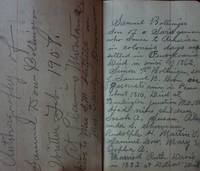
19440002375MIOS WOENDI AMSTERDAM ISLAND SOUTH PACIFIC. Very Good. 1944. On offer is an original very unusual very different kind of manuscript relic of World War II and America's war in the South Pacific being a log book for "Malaria Control Team 28" handwritten by we believe Lieutenant JG G.H. Penn detailing his mission primarily at M.T.B. Base 21 on Mios Woendi Island from 3 July 1944 to 10 August 1944 and at Advance Base 3 on Amsterdam Island from August 1944 to 21st February 1945. Lt. Penn we can safely assume was a scientist within the field of Malaria control and mosquito life given that we found some post War references to his published contributions on the subjects. The log is a fascinating blend of scientific data detailing efforts by US armed forces to systematically test for identify treat and eliminate tropical diseases including malaria primarily on the Pacific Islands of Mios Woendi and Amsterdam Island and diary narrative bordering on forensics and detective work such as hunting through garbage dumps and disposals 'heads' etc. for maggots and larval specimens lab work and much more with the back drop of the War at a very intense time; constant raids and attacks by Japanese aircraft and kamikaze pilots dealing with casualties from the USS Orestes after it was hit by a kamikaze and much more in the 64 full hand-written pages. Historians and researchers of the American war effort in the South Pacific will all too well recognize the utter importance of malarial control at the time given the debilitating effects that the disease could wreak on unprotected soldiers and marines. This unique journal makes for an irreplaceable record of that effort from the hands of a man that studiously and determinedly worked to eradicate the threat as his part of the war effort. Overall VG.; Manuscript; 12mo - over 6¾" - 7¾" tall; KEYWORDS: HISTORY OF LIEUTENANT JG G.H. PENN MALARIA CONTROL TEAM 28 M.T.B. BASE 21 MIOS WOENDI ISLAND SOUTH PACIFIC PACIFIC THEATER WWII WW2 WORLD WAR 2 WORLD WAR II THE WAR AGAINST JAPAN AMSTERDAM ISLAND GUAM PHILIPPINES TROPICAL DISEASES TROPICAL TREATMENTS TROPICAL MEDICINES DOCTORS BIOLOGY INSECT BORNE DISEASES MOSQUITO MOSQUITOES AMERICANA HANDWRITTEN HANDWRITTEN MANUSCRIPT AUTOGRAPHED AUTHORS DOCUMENT LETTER AUTOGRAPH KEEPSAKE WRITER HAND WRITTEN DOCUMENTS SIGNED LETTERS MANUSCRIPTS HISTORICAL HOLOGRAPH WRITERS AUTOGRAPHS PERSONAL MEMOIR MEMORIAL PERSONAL HISTORY ARCHIVE DIARY DIARIES JOURNAL LOG PRIMARY SOURCE FIRST HAND ACCOUNT SOCIAL HISTORY PERSONAL STORIES LIVING HISTORY ANTIQUITÉ CONTRAT VÉLIN DOCUMENT MANUSCRIT PAPIER ANTIKE BRIEF PERGAMENT DOKUMENT MANUSKRIPT PAPIER OGGETTO D'ANTIQUARIATO ATTO VELINA DOCUMENTO MANOSCRITTO CARTA ANTIGÜEDAD HECHO VITELA DOCUMENTO MANUSCRITO PAPELBIOGRAPHY BIOGRAPHICAL AUTOBIOGRAPHICAL AUTOBIOGRAPHY PERSONAL NARRATIVES . unknown
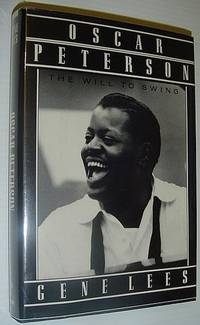
19550002329ASEA ABOARD THE USS GLACIER. Good. 1955. On offer is a super pair of significant original manuscript journals handwritten by Lieutenant P.Y. Matthews Jr. a United States Navy Chief Engineer of the noted USS Glacier detailing the Chief's voyage and participation in Operation Deep Freeze I making for a very detailed account in two volumes beginning in the Antarctic upon arrival December 15 1955 until departure April 1 1956. Written as a group of letters titled 'Dear Jan' it appears from entries in the journal that Jan was perhaps a niece the narrative makes for an intimate sharing of observations and impressions of all the Chief sees. The Chief is as each and every entry attests a personable enthusiastic participant in the voyage who well realizes the significance of the trip. I his own words: 'DEAR JAN The stirring saga of the USS GLACIER the world's most powerful ice breaker and its first polar voyage through six of the seven seas including ice breaking in Antarctica for Operation Deep Freeze I.' We note he writes of sitting down with Admiral Byrd too! Adding great depth are a small number of hand drawn maps diagrams and pictures. Volume 1 is rather half full with 80 or so pages of writings as he only uses the facing pages but Volume 2 contains only a few pages of text the rest is blank as the expedition had ended. Also includes a newspaper clipping about Matthews stating that he had taken much color film footage of Antarctica and Little America. Tucked in is a copy of a document stating that Matthews was in the first landing party on Princess Astrid Coast the original was placed in a cairn there. Overall G.; Manuscript; 8vo - over 7¾" - 9¾" tall; KEYWORDS: HISTORY OF LIEUTENANT P.Y. MATTHEWS JR. US NAVY CHIEF ENGINEER USN UNITED STATES NAVY USS GLACIER OPERATION DEEP FREEZE ANTARCTICA EXPLORATION PRINCESS ASTRID COAST LITTLE AMERICA NAVAL HISTORY NAUTICAL MARINE MARINERS EXPLORERS EXOTIC TRAVEL EXTREME TRAVEL ICEBERGS ADMIRAL BYRD AMERICANA HANDWRITTEN MANUSCRIPT AUTOGRAPHED AUTHORS DOCUMENT LETTER AUTOGRAPH KEEPSAKE WRITER HAND WRITTEN DOCUMENTS SIGNED LETTERS MANUSCRIPTS HISTORICAL HOLOGRAPH WRITERS AUTOGRAPHS PERSONAL MEMOIR MEMORIAL PERSONAL HISTORY ARCHIVE DIARY DIARIES JOURNAL LOG PRIMARY SOURCE FIRST HAND ACCOUNT SOCIAL HISTORY PERSONAL STORIES LIVING HISTORY ANTIQUITÉ CONTRAT VÉLIN DOCUMENT MANUSCRIT PAPIER ANTIKE BRIEF PERGAMENT DOKUMENT MANUSKRIPT PAPIER OGGETTO D'ANTIQUARIATO ATTO VELINA DOCUMENTO MANOSCRITTO CARTA ANTIGÜEDAD HECHO VITELA DOCUMENTO MANUSCRITO PAPELBIOGRAPHY BIOGRAPHICAL AUTOBIOGRAPHICAL AUTOBIOGRAPHY PERSONAL NARRATIVES . unknown
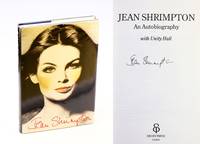
19450007033SOUTH PACIFIC PHILIPPINES JAPAN. Good. 1945. On offer is a rare first-hand record of a naval officer's presence at two significant WWII battles. Labelled "War Diary I and II these volumes are official United States Navy War Diaries from WWII. They are in excellent condition. They each measure 8 inches by 5 inches and contain 196 pages. The covers bindings and pages are all in good condition. The first diary is 100% complete and the second diary is about 11% complete. They also contain wartime Japanese currency and other ephemera. A war diary is a regularly updated official record kept by military units of their activities during wartime. The purpose of these diaries is to both record information which can later be used by the military to improve its training and tactics as well as to generate a detailed record of units' activities for future use by historians. The author of the diaries is Byron F Doenges. Doenges was born in 1922 in Fort Wayne IN. In WWII he enlisted in the U.S. Navy and was commissioned as a Lieutenant in the US Navy Reserve. He was assigned to USS LST 1033. Landing Ship Tank LST or tank landing ship were ocean-going ships built during World War II to support amphibious operations by carrying tanks vehicles cargo and landing troops directly onto shore. LST-1033 was assigned to the Asiatic-Pacific theatre and participated in the assault and occupation of Iwo Jima in February 1945 and the assault and occupation of Okinawa from April through June 1945. Following the war she performed occupation duty in the Far East and saw service in China until mid-July. She was re-designated LSTH-1033 on 15 September 1945. The ship was decommissioned on 1 August 1946 and struck from the Navy list on 28 August that same year. LST- 1033 earned two battle stars for World War II service. After his war service Doenges remained in the USNR rising to the rank of Lt Commander before retiring in 1946. Following his war service he earned an MBA and a PhD. He taught and worked in several universities before entering public service in 1965. He served as economic adviser to the Governor of Oregon before moving to Washington to join the U.S. Arms Control and Disarmament Agency. He served in the agency as Deputy Assistant Director chief of economics and special studies division and finally as senior economic adviser. Doenges passed away in 2006 at the age of 83. His War Diaries documents the ship's journey and participation in the assault on Iwo Jima and Okinawa. And damage assessment of Nagasaki after the atomic bomb had been dropped the repatriation of Japanese soldiers and the transport of Chinese Nationalist troops. The diaries end with his orders to return to the United States. At 0837 underway from Pearl Harbor Hawaii to Eniwetok Marshall Islands operating in Task Unit S1.42.2 via Route Mary. 1300 formed sixty ship convoy with Commander Phil Neikum riding DD LITTLE in command. This ship is in third column from right second ship in column. This convoy is one of 3 similar convoys which is to merge with similar convoys which are to merge at Saipan Marianas to form Task Force 51 for the eventual capture of Iwo Jima . Jan 23 1945 At 0300 sighted salvo flashes and star shells originated by navy fleet units which were bombarding and shelling Iwo Jima volcanoes. 0500 formed cruising disposition # 5 made of 28 LST'S of tractor groups Able and Baker; this ship 14th ship in left hand column. All ships steaming in preparation to line up in single column 5500 yards to seaward of southern beaches of Iwo Jima. 0620 Suribaichi Yama came into view ; the weather was perfect with clear atmosphere At 0741 formed Task Unit 53.3.3 as we came into position before Green Beach #1 .All marines and amphitracks left ship by 0754. . At 0825 aft port pontoon launched to be used as casualty evacuation barge At 0930 this vessel reached its station as casualty ship 4300 yards to seaward Green Beach # 1 Iwo Jima. All while heavy shelling and bombardments by flash units continued while dive-bombers continued strafing and bombing attacks on enemy positions. At 0937 first casualties transported to ship via LCVP's and LCM's from beaches. . Feb 19 1945 Manoeuvring in casualty wound station position 4300 yards to seaward of Green Beach Iwo Jima volcanoes. Casualties close to come aboard after sundown; during daylight hours however when boats can get into beach many casualties were transported to ship. During the night of the 20th approximately ninety Marines remained on tank deck because no boats available or because the APA's would not take them. This is a sad condition because this ship does not have the real hospital facilities an APA has and hence many wounds may have been infected due to delay. The terrific fighting and heavy casualties were in evidence continually. Fleet units and carrier-based aircraft continued to bombard island. 1555 and 1907 enemy aircraft reported in vicinity however none were visible. Feb 20 1945 Anchored as before in Kerawa- Kaikyo Kerawa Retto Okinawa Gunto. 0310 Flash Red alert yellow; heavy enemy air attacks reported at Okinawa Shiwa. 0312 to 0635 exercised at general quarters. No enemy planes or anti aircraft fire sighted in this area. Smoke coverage of this ship was very poor. 0836 to 0851 exercise at general quarters 1047 first casualties arrived wounded from USS Nevada. 1221 underway to shift berths. 1248 anchored in berth K-90 Kerawa- Kaikyo- Kreama Retto Okinawa Gunto. . 1520 & at 1522 the Control became Yellow. Many enemy aircraft reported in vicinity.1630 USS LST 447 preceding from Okinawa to Kerawa Retto and just ready to enter channel was suicided upon by a low flying enemy fighter The ship was hit amidships and a terrific explosion was observed for we were just a little more than a mile north of the beleaguered ship. All ships in vicinity opened fire. At 1640 all hands were seen abandoning the 447. Also at 1640 tea more enemy fighters approached port beam from west side of Fukashi Shima. Again all batteries opened up on attackers one suiciding into SS Logon Victory an ammunition ship and the other demolished by five inch shell hit before it accomplished its mission of diving into another ship. Two friendly F4F's took off the Tulagi CVE 72 at 1645 one was shot down apparently dumping on the other side of the island.1715 first survivors and casualties arrived from LST 447 and the SS Logan Victory; this ships small boat aiding in the rescue work. April 6 1945 Anchored as before. During the mourning ship's officers and army officers aboard went ashore to inspect the Atomic bomb damage at Nagasaki. American troops in force have not yet landed in their area. Got underway for Sasebo Kyushu Japan at 1308 in accordance with CTG 55.7 dispatch dated 200150. . Sept 20 1945 The first of March found LST 1033 skirting the coast of China enroute from Hong Kong to Chaingtao with a load of 832 Chinese troops of the new 1st Nationalist army ship arrived in Chanigtao on March 6 and unloaded immediately. Trip was uneventful. Communist and Nationalist troops were fighting a pitched battle a few miles away while unloading was taking place. Learned that the Chinese first army was completely American equipped however the troops on the whole were very unsanitary. .March 1 1946 . The ship sailed to Shanghai in company with LST's 1046 935 and 96. On 7 March and arrived at the Chinese metropolis on 10 March. However ship did not get into Whangpoo anchorage until 13 March on 15 March ship was notified that she was to load up with 2000 tons of UNRRA food supplies and sail for Hawkow. 1000 miles into the interior to deliver food to starving Chinese.The 1033 was the first LST ever ordered to make a run up the Yangtze River. March 1 to Mar 31 1946 The ephemera includes a 50 Japanese Sen banknote 0.50 Yen. They are part of the withdrawn Japanese Yen banknotes series. The Bank of Japan started issuing these 0.5 Japanese Yen banknotes in 1938. They were withdrawn from circulation in 1945. Also included is a copy of the discharge request on an officer aboard LST 1033 and a draft of Doenges own request for release. This is a thoroughly outstanding documentary record of an American ship and officer in the chaotic last months of WWII and the early days of the Chinese revolution. For a historian is serves multiple purposes. It documents the activities of this ship; it cross-references the names and locations of other ships and officers assisting in filling in the historical record and it speaks to the reach and range of the U.S. Navy and the foreign policy behind its actions. It is truly an eyewitness to history. ; Manuscript; 8vo - over 7¾" - 9¾" tall; KEYWORDS: HISTORY OF BYRON F. DOENGES; LANDING SHIP TANK; LST 1033; IWO JIMA; OKINAWA; NAGASAKI; SHANGHAI; YANGTZE RIVER; U.S. ARMS CONTROL AND DISARMAMENT AGENCY; JAPANESE SEN WAR IN THE PACIFIC SOUTH PACIFIC FORT WAYNE INDIANA USN UNITED STATES NAVY WWII WW2 WORLD WAR TWO AMERICANA HANDWRITTEN MANUSCRIPT DOCUMENT LETTER AUTOGRAPH WRITER HAND WRITTEN DOCUMENTS SIGNED LETTERS MANUSCRIPTS DIARY DIARIES JOURNALS PERSONAL HISTORY SOCIAL HISTORY HISTORICAL HOLOGRAPH WRITERS AUTOGRAPHS PERSONAL MEMOIR MEMORIAL ANTIQUITÉ CONTRAT VÉLIN DOCUMENT MANUSCRIT PAPIER ANTIKE BRIEF PERGAMENT DOKUMENT MANUSKRIPT PAPIER OGGETTO D'ANTIQUARIATO ATTO VELINA DOCUMENTO MANOSCRITTO CARTA ANTIGÜEDAD HECHO VITELA DOCUMENTO MANUSCRITO PAPEL . unknown
19420002558Good. 1942. On offer is a fascinating original 1942 Newfoundland WWII 280 page manuscript diary handwritten from the unique perspective of an Army lawyer Robert Sheldrick who was stationed in Newfoundland where he was responsible for lands and buildings leased or occupied by the Canadian army. An excellent diarist and keen observer detailing his duties and much of what happens around him his service work afforded him many uncommon insights which he shares with his journal. Readers will also be surprised by the complexity of the issues he faces and the work involved. Here are some snippets: 'proposed site for joint services cemeteries for protestant and R.C. personnel near the T.C.A. Building at Torbay had not been approved because coming down to the runway over a cemetery was considered to be well calculated to promote depression among pilots.' October 19 1942 'Advised P.E.I.H. by telephone to strike off strength six men lost in the S.S. Caribou as 'missing believed drowned' on the date of the disaster' referencing the heinous Nazi attack by submarine of a civilian Newfoundland Railway passenger ferry killing 137 many women and children. The significant event and the large scale loss of life is considered one of the most brutal events to occur in Canada and Newfoundland. The largish book a Students MSS Book proper is 269 pages 20 pages tucked in so some soiling. Overall G.; Manuscript; 8vo - over 7¾" - 9¾" tall; KEYWORDS: HISTORY OF NEWFOUNDLAND ROBERT SHELDRICK WWII T.C.A. BUILDING TORBAY S.S. CARIBOU NEWFOUNDLAND RAILWAY PASSENGER FERRY KILLING WW2 WORLD WAR II WORLD WAR 2 CANADIANA LABRADOR PRE CONFEDERATION NEWFOUNDLAND SERVING IN NEWFOUNDLAND CANADIAN ARMY CANADIAN ARMED FORCES HANDWRITTEN MANUSCRIPT DOCUMENT LETTER AUTOGRAPH WRITER HAND WRITTEN DOCUMENTS SIGNED LETTERS MANUSCRIPTS HISTORICAL HOLOGRAPH WRITERS AUTOGRAPHS PERSONAL MEMOIR MEMORIAL AMERICANA ANTIQUITÉ CONTRAT VÉLIN DOCUMENT MANUSCRIT PAPIER ANTIKE BRIEF PERGAMENT DOKUMENT MANUSKRIPT PAPIER OGGETTO D'ANTIQUARIATO ATTO VELINA DOCUMENTO MANOSCRITTO CARTA ANTIGÜEDAD HECHO VITELA DOCUMENTO MANUSCRITO PAPEL . unknown