13 728 résultats
18450001972MEDINA NEW YORK WAYNE COUNTY. Fair. 1845. On offer is a fascinating pre Civil War 1845 with notes to 1869 manuscript diary handwritten by Nancy Maston who is a resident in or near Medina New York in Wayne County. She was born on September 20th 1796 thusly 48 years old at the outset of the diary. We note that Nancy when she turns 67 years old in 1863 that she considers herself "quite an old woman but somewhat smart yet." She has a son Henry and a husband Ephraim. Her mother is noted on Sept. 20 1862 to be remembered to have died some time before at 85 years of age and Nancy misses her very much. Nancy describes on December 25 1858 when the journal entries begin "Wilcox Mill burnt down in Medina - formerly the old tannery - lost everything no insurance has wife daughter and son." Ephraim and Henry were present at the scene. A Civil War Draft is mentioned on Feb. 24 1865 as "an exciting day - an awful war when will it come to an end" Also the death of a friend from an April 16 1869 entry where the "girls" and Henry have gone to attend the funeral of Isaac Heist - died of typhoid fever and congestion of the brain." Apart from the above entries life seems pretty good and even keeled: ordinary entries of visits with people back and forth i.e. R. Douglass 9/10 Sept 1847 13th Sept same year Littell and Aunt Lydia and 15th of that month with Dr. Hill - note here that her writing deteriorates for some reason in 1847. Visits with people also 1855 and 1853. Normal life comprises of men/family folk riding the sleigh for visits and "chop wood for stove". Nancy is also religious and "laments people have lost respect for the gospel" - also calling Sunday the Sabbath. She attended the funeral of a "coloured woman" at the Methodist Church. While she writes sporadically there are about 50 pages of entries and a number of ephemeral pieces tucked in including a World War I Registration Certificate dated Sep 12 1918 for Edgar Abraham Gould in Buffalo NY. The 4" x 6" is rather worn and there is some scattered internal foxing but overall Fair.; Manuscript; 32mo - over 4" - 5" tall; KEYWORDS: HISTORY OF NANCY MASTON MEDINA NEW YORK WAYNE COUNTY WILCOX MILL PRE CIVIL WAR ANTE BELLUM GENDER STUDIES WOMEN'S STUDIES AMERICANAHANDWRITTEN MANUSCRIPT AUTOGRAPHED AUTHORS MANUSCRIPT DOCUMENT LETTER AUTOGRAPH KEEPSAKE WRITER HAND WRITTEN DOCUMENTS SIGNED LETTERS MANUSCRIPTS HISTORICAL HOLOGRAPH WRITERS AUTOGRAPHS PERSONAL MEMOIR MEMORIAL PERSONAL HISTORY ARCHIVE DIARY DIARIES antiquité contrat vélin document manuscrit papier Antike Brief Pergament Dokument Manuskript Papier oggetto d'antiquariato atto velina documento manoscritto carta antigüedad hecho vitela documento manuscrito Papel . unknown
18460001734CASTLETON VERMONT ELIZABETHTOWN NEW JERSEY NJ. Poor. 1846. On offer is a very interesting original 1846 - 1849 manuscript diary handwritten by James Ross a hardworking young teacher turned medical student. James at some point moved to Castleton Vermont in Rutland County and worked in the area while teaching school. He then goes on to study medicine with a local doctor and eventually moves to Elizabethtown New Jersey 69 Canal Street where he matriculates at New York City College. His daily life is on every page of this small leather bound journal that he easily carried in his pocket and took it everywhere with him it seems. We learn in Castleton that he taught school "had 12 scholars today a good day" worked in a small drug store and studied medicine with Dr. Eliakin Paul. James mentions the name Woodward several times and casual research informs us that Mr. Woodward owned the first drug store in town working from his home. Eventually the drug store was erected on the corner east of the Methodist Church where they did a large business furnishing medicines to physicians in the vicinity also to graduates of the medical college. The store also sold surgical instruments as James Ross mentions in this diary. James keeps meticulous notations as to the price of numerous items he would purchase monies paid to him for books money borrowed from his brother or relative; Reuben Ross Jr.; where and with who he lived in a boarding house; where he "staid overnight"; the names of his friends and of his diversions. He mentions Dr. Nichols Dr. Parker and his lectures Dr. Paul Dr. Page Dr. Clark Gillman Barker Mott lectures etc. His daily notes include the 4th of July fire works in Vermont were the best he had ever seen; goes to visit the Woodruff family at Connecticut Farms and rode there with Mr. Fortought; Woodruffs all well went to a prayer meeting at the old schoolhouse and saw some old friends; apparently James was originally from Connecticut. Got back home to VT went to work all day delivered some medicine to A. Hotch; some elixir and then went to hear Dr. Bostwick speak. James went to the hospital to see soldiers that were sick and being treated with lead wash and liniment. Went to Hope Chapel to listen to Mr. Buckingham and Mr. Chapin talk about capital punishment and came away "fully convinced capital punishment should be established. "Went to a camp meeting in Fairhaven where he attended a lecture with "nearly 30 students together." Went to Chatham Theatre and to the museum where he saw a giant boy etc. He purchases new clothes had his boots renailed sheared sheep for his father went hunting and killed a pheasant and attended the Methodist church in town. Heard a lot of swearing at a political meeting in Sept. where "men were caucusing in every direction." Went to the fair in Rutland Vermont etc. Went to town clerk and took the oath for surveying closed on a few deeds. Certainly a very busy young man with a lot of "irons in the fire"; teaching working studying medicine and having somewhat of a social life as he writes of numerous friends. James has written a few names and addresses in this journal to include: H. Fisher 122 Pearl Street NY J. Vaness corner of Jackson and Johnson Street Brooklyn P. S. Denmore and Ed Price 107 Fulton ST. Doctor Oatman 111 Eldridge St. Nelson Eddy 89 Pearl ST. NY etc. Now he writes about the list of books he will need for medical school and there are quite a few. He took the Sommerville Railroad and then onto a boat to get to New York. He went to Brooklyn to visit the Navy Yard and eventually on to Elizabethtown NJ where he now settles in to live and attend medical college in NYC. James mentions 77 Fulton Street in New York and O.O. Wickham's class. Condition of the small 2 1/2 x 4 inch leather bound 178 pages book is rather poor with several pages are loose and the interior pages are attempting to come loose from the spine yet still holding; the outside leather case had a snap cover at one time however the snap is missing. Leather shows wear and scuffing. Overall Poor.; Manuscript; 64mo - up to 3" tall; KEYWORDS: HISTORY OF JAMES ROSS CASTLETON PHYSICIAN VERMONT RUTLAND COUNTY ELIZABETHTOWN NEW JERSEY DR. ELIAKIN PAUL TEACHING EDUCATION MEDICINE MEDICAL DOCTORING AMERICANA HANDWRITTEN 19TH CENTURY HANDWRITTEN MANUSCRIPT DOCUMENT LETTER AUTOGRAPH DIARY JOURNAL LOG KEEPSAKE WRITER HAND WRITTEN DOCUMENTS SIGNED LETTERS MANUSCRIPTS HISTORICAL HOLOGRAPH WRITERS DIARIES JOURNALS LOGS AUTOGRAPHS PERSONAL MEMOIR MEMORIAL PERSONAL HISTORY AMERICANA ANTIQUITÉ CONTRAT VÉLIN DOCUMENT MANUSCRIT PAPIER ANTIKE BRIEF PERGAMENT DOKUMENT MANUSKRIPT PAPIER OGGETTO D'ANTIQUARIATO ATTO VELINA DOCUMENTO MANOSCRITTO CARTA ANTIGÜEDAD HECHO VITELA DOCUMENTO MANUSCRITO PAPEL . hardcover
18460009064MT WASHINGTON NEW HAMPSHIRE NH CRAWFORD NOTCH. Good. 1846. On offer is an 1846 letter containing 4 pages of writing detailing the incredible account of a journey the unnamed author took up to Mt. Washington in New Hampshire. It is addressed to a Miss S. R. Cragin of Westminster East Vt. In addition to this account the author of the letter talks about the Willey House or cottage which was and still is standing at the time. The tragedy that befell the house and the family inside it in 1826 was an flood and landslide that killed the family of 9 and destroyed everything around it but the cottage itself. The letter begins Bethlehem Aug. 7 1846. My Dear Friend I received your kind letter yesterday and was very glad to find you kept your promise on hand tho you delayed so long to fulfill it .I have spent my time very pleasantly this summer so far since I regained my usual state of health which is about six or seven weeks ago and I have performed one great feat for so much of an invalid as I am. Would you believe it I have been to the top of Mt. Washington the highest point of land in the US this side of Mississippi River you know. She continues my brothers John and Charles with their wives came here the last of June on their way to the mountains and after their visit here we concluded to go with them to the Notch about 17 miles and spend a day as to viewing the wondrous works of the Great Architect of nature. The Notch she speaks of is most probably Crawford Notch. .I could not give you any adequate description of the awful grandeur of the place if I would nor of the emotions of the bosom while passing there other than that they were those of bordering upon the terrific. The mountains appear to have been sent asunder from the top to the foundation and separated just far enough to make a road through and for a small stream to run which soon became the Saco River. In looking up those giddy heights almost directly over head and into the fearful chasms below one feels like holding their breath in astonishment and exclaiming how came they so No answer comes back but from the mountains themselves eloquent in their stillness the hand that made us is divine. The author then describes coming upon the Willey House that place of melancholy interest to those who have read the story of that ill fated family. You recollect a family of nine were destroyed twenty years ago this summer but an avalanche from the mountain.One can near fully realize the terrific scene by standing on the spot and have someone conversant with the affairs of late the particulars then by re-enacting the account. The author and her party then return to the tavern to rest. They ascend the next day. We presented a most curious spectacle that long cavalcade; making our way directly up that steep mountain. I thought of Bonaparte's army crossing the Alps.But we all got safely up to the pinnacle and seated ourselves by a cool spring by the side of the great rock and retired then looked about saw what we could among other things a great snowbank as big as the garden then made the best of our way down. She concludes the journey by saying I never felt more my insignificance than when standing alone upon that mountain; and yet I could not but feel that one in mortal soul was of more main account with Him who made them both than all these stupendous works of his hands. After the journey ends the letter commences with the usual pleasantries remembrances and news between friends: Remember me to your mother and sisters. How does little Frances and her sister Mrs. Halton likewise. Have they opened their tavern yet .We had a sudden death in our neighborhood this morning. A man who was well Saturday night as usual was a corpse this morning at 6 oclock. His death was caused by eating cherries. Much of the last bit of the letter is written along the edges of the pages and can be a bit more difficult to decipher as the script is smaller and denser. However the handwriting is clean and the script can be worked out with just a bit more effort than takes to read the main portion of the letter. The letter is in fairly rough shape and has tears on many of the creases. It is still intact and the entire thing can still be read if care and caution are taken. Each page measures about 7 1/2 x 10. Historical notes: The Willey House was built in 1793 or 1798 some say 1820 as a public house in Crawford Notch about 23 miles northwest of the village of North Conway NH in the White Mountains. In 1825 it became the homestead of Samuel Willey Jr. and his family. They operated it as an inn to accommodate travelers passing through the mountains on the notch road. In August 1826 a violent storm occurred and the Saco River began to rise in front of the house. The family apparently left the house to escape the flood only to be buried in a huge landslide. Mr. and Mrs. Willey their five children and two hired men all perished but their house was left untouched. It was protected by a rock ledge on the hillside above it that split the major slide into two streams that flowed around the house. After the tragedy at the Willey House the White Mountains became a popular subject for hundreds of artists in the nineteenth century. The landscape scenes painted by artists became known as White Mountain Art. The house was later occupied and in 1844 the house and its stable were repaired and a seventy by forty foot hotel was built adjacent to it. The old house was a favorite tavern in the region and visitors were charged a small fee to be escorted through rooms of the house. The remnant of the rock which protected the house during the tragedy was still behind the house and the track of the slide could be ascended through a scattered forest of birch trees; Manuscript; Folio - over 12" - 15" tall; KEYWORDS: HISTORY OF S. R. CRAGIN WESTMINSTER VERMONT MOUNT WASHINGTON MT. WASHINGTON NEW HAMPSHIRE CRAWFORD NOTCH PRESIDENTIAL MOUNTAIN RANGE WILLEY HOUSE TRAGEDY WHITE MOUNTAINS TOURISM IN THE 19TH CENTURY HIKING IN AMERICA AMERICANA HANDWRITTEN MANUSCRIPT DOCUMENT LETTER AUTOGRAPH WRITER HAND WRITTEN DOCUMENTS SIGNED LETTERS MANUSCRIPTS HISTORICAL HOLOGRAPH WRITERS AUTOGRAPHS PERSONAL MEMOIR MEMORIAL ANTIQUITÉ CONTRAT VÉLIN DOCUMENT MANUSCRIT PAPIER ANTIKE BRIEF PERGAMENT DOKUMENT MANUSKRIPT PAPIER OGGETTO DANTIQUARIATO ATTO VELINA DOCUMENTO MANUSCRITTO CARTA ANTIGÜEDAD HECHO VITELA DOCUMENTO MANUSCRITO PAPEL . unknown
18470001851DUMFRIES ONTARIO GALT GUELP BRANTFORD UPPER CANADA. Good. 1847. On offer is a super pre-Confederation manuscript relic of south western Upper Canada economy finance business and enterprise being an 1847 through to 1921 farm ledger handwritten by Thomas Taylor Turnbull a farmer in Dumfries Ontario Canada. The Ledger spans a long time period with entries beginning in 1847 and ending in 1921. The fep is hand stamped 'Lesslie Brothers Toronto' and within the circle of the stamp in tiny precise handwriting the book is dated '1847 Thomas Taylor Turnbull Dumfries'. Turnbull records his expenditures purchases repairs all the names of his workers who owes him and who he owes. The ledger is much more than a simple record of his farm business it reveals his lifestyle dozens of names employees work records names of people he pays for products and services and how he measures his monetary work life in shillings cords and bushels what he grew where he sold his goods his mortgage payments how he works on plastering the exterior of the school house and pays school taxes and donates to the church. He dies in 1902 and there is a page that refers to this through the Transfer of the farm to John in 1904. There is also an unusual record of how Turnbull and his wife's bodies and monument were moved in the cemetery in Komoka Ontario in 1921. There are numerous entries 1903 -1921 by his son Robert they are very interesting to compare with the early entries 1847 - 1890. The later entries mention brand names of products bought milk tickets electric film development Hamilton Spectator newspaper Presbyterian church railroad fare street car tickets etc one can immediately imagine the time shift from rural farm life to the more urban life simply be reading what was purchased. A receipt for the purchase of a phonograph in London Ontario may indicate a move to a city by Robert R.B. Turnbull. There are a few ephemeral pieces tucked in including a super broadside 'flyer' detailing a grocer's sale. In total there are 92 pages relating to 1847 - 1890 and then 24 pages 1890 -1921 for a total of 116 pages. Save for rubbing and general ageing the 8½" x 10" book is G.; Manuscript; 4to - over 9¾" - 12" tall; KEYWORDS: HISTORY OF GALT WATERLOO ONTARIO CANADA THOMAS TAYLOR TURNBULL DUMFRIES BRANT COUNTY ECONOMY FINANCE BUSINESS ENTERPRISE CANADIANA PRE- CONFEDERATION LEDGER FARMING RURAL ECONOMY HANDWRITTEN MANUSCRIPT AUTOGRAPHED AUTHORS AMERICANA MANUSCRIPT DOCUMENT LETTER AUTOGRAPH KEEPSAKE WRITER HAND WRITTEN DOCUMENTS SIGNED LETTERS MANUSCRIPTS HISTORICAL HOLOGRAPH WRITERS AUTOGRAPHS PERSONAL MEMOIR MEMORIAL PERSONAL HISTORY ARCHIVE DIARY DIARIES antiquité contrat vélin document manuscrit papier Antike Brief Pergament Dokument Manuskript Papier oggetto d'antiquariato atto velina documento manoscritto carta antigüedad hecho vitela documento manuscrito Papel . unknown
18470008168NORWICH CONNECTICUT INTRA CONTINENTAL USA. Good. 1847. On offer is a rare handmade travel journal dating from early 19th century America. The paper volume is composed of 16 pages hand stitched inside a heavier paper cover. The small volume is in good condition and all pages are intact. There is some discolouration due to age but it does not affect the handwriting. The volume measures 6.5 inches by 4.25 inches and is approximately 50% complete. The journal is written in 1847 by a woman named Betsy Allen. Her home is recorded as Norwich which could refer to Norwich CT as her journey begins by travelling to New York City. Allen travelled in a great loop from New York City up the Hudson River and into the Erie Canal. She passed through Buffalo and sailed on to Cleveland OH. From Cleveland she travelled south by canal boat to Ellsworth OH arriving on July 22th. She stayed in Ellsworth until Oct 19th. Daily entries often take the form of a single line or comment: "Left Norwich landing for New York sailed all day slow and sure come to New York" July 7; "7 o'clock came to Rochester" July 16; ". went into Capt Allen's boat Buffalo early in morning" July 19; "50¢ sail out for Cleveland" July 20; On Oct 19th she left Ellsworth in the company of her father and 5 other women and began a remarkable trip back to the east coast via the Ohio and Pennsylvania canal systems. This canal route was a complex transportation system that included canals dams locks tow paths aqueducts and viaducts. Construction of this network began in the early 1820's and continued for the next several decades. She travelled through places like Petersburgh Bridgewater and Lowry. Eventually she reached Pittsburgh. From Pittsburgh she followed the canal through places like Johnstown and Holidaysburgh crossing over the Juniata River by means of a rope ferry. She crossed the Susquehanna River by an aqueduct eventually arriving at Philadelphia after passing through Harrisburg. At Philadelphia she boarded a steam ship for New York City and then Norwich on Oct 27th. She offers more details in her comments during this portion of her trip: "Left Ellsworth for home. Got a cup of coffee and dinner at Mr. Speers in Petersburgh . put up early at Mr.Wells four miles from Bridgewater fare not very good" Oct 19; ". passed through 16 locks in the forenoon. Nothing particular this afternoon only the passage through the tunnel this is a piece of art." Oct 21; ". crossed the Juniata while eating by means of a rope ferry" Oct 23. This is an absolutely fascinating journey and her description spare at times provides an excellent catalogue of the canals and locks that she traversed. It is all the more remarkable because this is a woman making the trip and she obviously came from a family with the means to afford such a trip. By 1900 the canals essentially ceased to operate as railroads took over as the preferred way to move people and goods. However the canals played a vital role in opening up the interior to move settlers west and bring raw materials and crops east to the growing cities of New York and Philadelphia. For a historian this is an excellent first-hand account of travel around the entire system.; Manuscript; 16mo - over 5¾" - 6¾" tall; KEYWORDS: HISTORY OF; UNITED STATES; MID-19TH CENTURY; 1840s; BETSY ALLEN; ERIE CANAL PENNSYLVANIA CANAL; OHIO AND ERIE CANAL; DELAWARE CANAL NORWICH TRAVEL IN THE MID-19TH CENTURY AMERICA; HUDSON RIVER; AMERICAN CANAL BOATS; NORTH AMERICAN CANAL AGE; AMERICAN WATERWAYS IN THE EARLY 19TH CENTURY; NEW YORK STATE CANAL SYSTEM; TRAVELING WOMEN IN THE 19TH CENTURY AMERICA; WOMEN'S STUDIES; TRAVEL DIARIES; AMERICANA HANDWRITTEN MANUSCRIPT DOCUMENT LETTER AUTOGRAPH WRITER HAND WRITTEN DOCUMENTS SIGNED LETTERS MANUSCRIPTS DIARY DIARIES JOURNALS PERSONAL HISTORY SOCIAL HISTORY HISTORICAL HOLOGRAPH WRITERS AUTOGRAPHS PERSONAL MEMOIR MEMORIAL ANTIQUITÉ CONTRAT VÉLIN DOCUMENT MANUSCRIT PAPIER ANTIKE BRIEF PERGAMENT DOKUMENT MANUSKRIPT PAPIER OGGETTO D'ANTIQUARIATO ATTO VELINA DOCUMENTO MANOSCRITTO CARTA ANTIGÜEDAD HECHO VITELA DOCUMENTO MANUSCRITO PAPEL . unknown
18480008081GLOUCESTER MASSACHUSETTS. Good. 1848. On offer is a captivating small notebook with entries dating in 1847 and 1848. It appears to have been written by E.A. Spofford as this name appears several times in the booklet. The Spofford family was prominent in the early history of Essex County and Gloucester MA. It contains notes doodles and music scores. Measuring 7 in by 4 in this little paper volume is in good shape. Although the entries are few they record that Spofford was a fisherman likely working out of Gloucester MA. "This day commencing with a fair wind but very light; run up to the Seal Is. Line and hove to for mackerel and found none and from there we run West until night and then it come on night with rain. Squally and we heaving to under two reefs for And so ends this day and night" Sept 25 1848 " this day commencing with a fresh breeze from the North and we run from Thatchers Island 15 or 20 miles and hove to and then bore away and run into Gloucester so ends this day" Sept 26 1848 "this day commencing with a fine breeze from the SWsouth west we stood off to Middle Bank so ends this twenty four hours." Sept 27 1848. There are several verses or poems on some pages and 7 pages of music score 5 identified. This is a fascinating little booklet that gives a tantalizing peek into the life of a mid-19th century Gloucester fisherman. A lovely little historical gem for a historian or someone researching the early fishing industry of Gloucester MA a very important US fishing port on the Atlantic coast.; Manuscript; 12mo - over 6¾" - 7¾" tall; KEYWORDS: HISTORY OF 19TH CENTURY NINETEENTH CENTURY 1840S UNITED STATES NEW ENGLAND MASSACHUSETTS ESSEX COUNTY CAPE ANN E. A. SPOFFORD GLOUCESTER MA FISHING INDUSTRY IN GLOUCESTER GLOUCESTER HARBOR MA MARITIME COMMERCE FISHERIES NINETEENTH CENTURY INDUSTRIES NORTH AMERICAN SEA PORTS FISHING PORTS MASSACHUSETTS FISHERMEN MARINERS CAPE ANN SEAFARING SEAMEN OLDEST FISHING PORT IN AMERICA NORTHWEST ATLANTIC FISHERIES NEW ENGLAND MARITIME HISTORY NEW ENGLAND FISHING SPOFFORD FAMILY AMERICANA HANDWRITTEN MANUSCRIPT DOCUMENT LETTER AUTOGRAPH WRITER HAND WRITTEN DOCUMENTS SIGNED LETTERS MANUSCRIPTS DIARY DIARIES JOURNALS PERSONAL HISTORY SOCIAL HISTORY HISTORICAL HOLOGRAPH WRITERS AUTOGRAPHS PERSONAL MEMOIR MEMORIAL ANTIQUITÉ CONTRAT VÉLIN DOCUMENT MANUSCRIT PAPIER ANTIKE BRIEF PERGAMENT DOKUMENT MANUSKRIPT PAPIER OGGETTO D'ANTIQUARIATO ATTO VELINA DOCUMENTO MANOSCRITTO CARTA ANTIGÜEDAD HECHO VITELA DOCUMENTO MANUSCRITO PAPEL . unknown
18490002366MISHAWAKA WOLF CREEK MARSHALL COUNTY INDIANA IN. Fair. 1849. Offered is a super original manuscript diary dated August 1849 through to a final tragic entry in April 1854. The diary was handwritten by an Indiana surveyor farmer politician and engineer who worked throughout Indiana Ohio and Illinois. While the 64 page book lacks any identifying signatures or inscription a tucked in scrap of what appears to be original poetry dated 1840 bears the name of Jeremiah Gould. The final 1854 entry is signed in a different hand with the initials V.G. likely the son Vernon which we believe adds credence to Jeremiah's authorship though more research should be done. The diary is a fascinating and a superb telling of the author's personal life and times as he writes not just of what has happened but also his thoughts about the family's future. We learn that it is a hard life given his family suffered many attacks of fever and disease and a super portrait of pre Civil War America and there is so much to it: he and fellow surveyors find an old Indian Battle ground while on a survey; political commentary about the Whig Party Daniel Webster including his own ambitions in local politics as he is elected to office. His children he writes about many times - Vernon Marietta and Robert. For example one of his sons Vernon leaves to study medicine. The town of Rochester is a focus of commentary often along with Mishawaka Wolf Creek and Marshall County and the Yellow River. In fact there is a great entry about crossing the river by horse. He writes about surveying his own land under an act of Congress of Sept 25th. The author was a part time teacher rancher and elected county surveyor in August 1851 surveying for a Solomon Pontius. He mentions in great detail his cattle sheep and trying to raise crops. He also describes the political climate of the day and his own philosophical thoughts. Here is a snippet: Fri April 23 Went to Richland to attend court for Mother. I never saw so many ignorant a set of men nor so disorderly a court as I saw today the justice was entirely incompetent to fill his office. I am satisfied that magistrates ought not to be elected to office. For in a great majority of cases incompetent persons will be elected over worthy and competent men while there is no one responsible for this impromptu choice. Today I had conversations with A.F. Smith related to political affairs we concluded to call a meeting of the Whig's of the county on the 22nd of March. This close's the year 1852- a year in which I have had many bright prospects and as many disappointments but on the whole out situation is somewhat improved I have paid off some debts made some valuable improvements upon my family and in the year to come we have all been blest with health. Sept 21 I left home for the east. Arrived in South Bend in the evening took carriage 40 minutes past 11 arrived Monroe in the morning. Took passage on board steamboat about 10 min and arrived in Cleveland about 4 pm and in the morning of the 23rd arrived in Buffalo. Gould also travels for his pleasure and edification particularly when he travels east and does a super job on two and a half pages of describing his trip to The World's Fair September 1853. This was the Exhibition of the Industry of All Nations a World's Fair held in 1853 in what is now Bryant Park in New York City in the wake of the highly successful 1851 Great Exhibition in London. The New York Fair also had a Crystal Palace. He also went directly to the Mechanics Fair in Boston on September 30th and he writes a couple of short paragraphs. The tragedy contained in this diary is dramatic and saddening to read. Shortly after the author attends the World's Fair his wife suddenly gets ill and then dies of this illness. Within a year the Author perishes as well from "Typhus". In the Winter of 1851 I wrote to M.D. Smith of Ohio for a flock of sheep June 1st 1851 Vernon left home to study medicine under the instruction of Dr. Brokett July 5th I purchased 500 sheep of Smith. In the fall Vernon took a school over the river for three months. In December I commenced surveying my lands for Culua under an Act of Congress of Sept 25th. In Jan I was appointed Deputy county surveyor with the understating that I should have all the business of the county. I continued to to the County surveying until the August election. My sheep became diseased and we had a great deal of trouble with them and of the 500. I had little but 100 at shearing and all the wool was insufficient to pay the first installment of the purchase money a great disappointment. Wednesday 25th 1852 Finished the road and went across the woods to Montgomery's and thence to Barnes on the way there we passed by the remains of some shanties erected on the Indian Payment ground on the North side of Chippewa rock erected in 1836. In the afternoon surveyed a road from Barnes's to Warsaw Road. After the survey was finished as we were sitting upon a log near the Chippewa rock south of Martins Mr Montgomery picked out a bullet from a log about 4 inches from the outside of the log which had overgrown by 37 layers of wood. This circumstance gave rise from which I learned that about 50 years ago the Chippewa's and Pottawatomie had a battle at this place. Previous to that time the Chippewa occupied this county and had a town on the creek. The old town of Aubbunaublu township was also a Chippewa town. January 1st 1854 Eighteen hundred fifty three is passed away and what has it left me I have been totally successful in temporal affairs. Have diminished my debts have extended my acquaintances have visited the home of my youth and have been flattered with visions of future success but I have lost my nearest friend my family is broken up my plans for the future have been frustrated and sorrow has sent an arrow into my heart deeper that before." The 8 x 6.5 inch journal is basically disbound covers hanging by string loose pages but the text is complete and legible. Overall Fair. ; Manuscript; 12mo - over 6¾" - 7¾" tall; KEYWORDS: HISTORY OF JEREMIAH GOULD NEW YORK CITY WORLD'S FAIR CRYSTAL PALACE FAIR EXHIBITION OF THE INDUSTRY OF ALL NATIONS A WORLD'S FAIR BRYANT PARK MECHANICS FAIR BOSTON AUBBUNAUBLU TOWNSHIP CHIPPEWA ROCHESTER MISHAWAKA WOLF CREEK MARSHALL COUNTY THE YELLOW RIVER INDIANA SURVEYORS SURVEYING OLD INDIAN BURIAL GROUNDS AMERICANA HANDWRITTEN HANDWRITTEN MANUSCRIPT AUTOGRAPHED AUTHORS DOCUMENT LETTER AUTOGRAPH KEEPSAKE WRITER HAND WRITTEN DOCUMENTS SIGNED LETTERS MANUSCRIPTS HISTORICAL HOLOGRAPH WRITERS AUTOGRAPHS PERSONAL MEMOIR MEMORIAL PERSONAL HISTORY ARCHIVE DIARY DIARIES JOURNAL LOG PRIMARY SOURCE FIRST HAND ACCOUNT SOCIAL HISTORY PERSONAL STORIES LIVING HISTORY ANTIQUITÉ CONTRAT VÉLIN DOCUMENT MANUSCRIT PAPIER ANTIKE BRIEF PERGAMENT DOKUMENT MANUSKRIPT PAPIER OGGETTO D'ANTIQUARIATO ATTO VELINA DOCUMENTO MANOSCRITTO CARTA ANTIGÜEDAD HECHO VITELA DOCUMENTO MANUSCRITO PAPELBIOGRAPHY BIOGRAPHICAL AUTOBIOGRAPHICAL AUTOBIOGRAPHY PERSONAL NARRATIVES . unknown
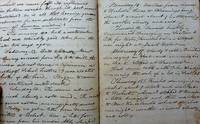
18490001664LOCKPORT NEW YORK NIAGARA COUNTY. Fair. 1849. On offer is a super original 1849 - 1855 historic manuscript relic of Western New York being a handwritten journal and diary of John Gould who was a member of the New York Legislature in 1856. Hand dated September 16 1849 to June 10 1855 hand numbered 455 pages makes for a very full very detailed treasure trove of history for the Lockport Niagara County area of New York State. Gould's family were deeply ensconced in the Lockport economy: farming wheat and barley lumbering horses and all manner of other trading throughout the area. Trade economics commerce genealogy religion politics and local events are all detailed by a copious recorder of family daily doings and history. Gould also came back to the book using the free endpapers to leave notes on the death of his father mother building a new house on property bought in 1862 his son's Charles Gould service volunteering two years 29 August 1862 during the Civil War with the 44 Elsworth Regiment New York. The approximately 6 3/4" x 8 1/4" once gorgeous book is absolutely full handwritten in ink and features marbled endpapers raised bands original full leather with ornate trim. The exterior leather is quite worn spine leather well chipped and separated at the back cover. The spine backing is cracked. Overall fair. ; Manuscript; 8vo - over 7¾" - 9¾" tall; KEYWORDS: HISTORY OF JOHN GOULD WESTERN NEW YORK LOCKPORT NIAGARA COUNTY ECONOMY COMMERCE TRADE GENEALOGY NEW YORK LEGISLATURE POLITICIANS PRE CIVIL WAR POLITICS AMERICANA HANDWRITTEN MANUSCRIPT DOCUMENT LETTER AUTOGRAPH KEEPSAKE WRITER HAND WRITTEN DOCUMENTS BIOGRAPHY SIGNED LETTERS MANUSCRIPTS HISTORICAL HOLOGRAPH WRITERS AUTOGRAPHS PERSONAL MEMOIR MEMORIAL PERSONAL HISTORY ARCHIVE DIARY DIARIES ANTIQUITÉ CONTRAT VÉLIN MANUSCRIT PAPIER ANTIKE BRIEF PERGAMENT DOKUMENT antiquité contrat vélin document manuscrit papier Antike Brief Pergament Dokument Manuskript Papier oggetto d'antiquariato atto velina documento manoscritto carta antigüedad hecho vitela documento manuscrito Papel . hardcover
18490001508Donaueschingen Germany Southhern Germany. Very Good. 1849. On offer is a very unique historically significant 1849 - 1859 manuscript relic of the Revolution of Baden. There are fifty three 53 pages in German handwriting containing the journal entries of an unidentified 'rebel' and citizen of Donaueschingen Germany who was arrested as part of the Rebellion. While the participant is unidentified local historians researchers or collectors of the era may have enough clues to ascertain the writer's full identity. The entries are dated 6th of July 1849 the day before his arrest until the 25th of June 1850 the day the sentence of the Royal Court was handed down. The accused describes graphically where and how his accommodations were by whom and when he was interrogated and for which accusations how he responded and gives such an informative picture of that time and those circumstances from the point of view of someone who at the end of the Revolution of Baden was arrested by the Prussians as a supporter of the revolution. Here are some snippets: 6th July 1849: "Friday night at about 11 pm marched the troops and the guards under the leadership of Siegel Werner Gögg and so on off toward Hüfingen." 7th July 1849: "On Saturday marched against them the Hessians the Prussians the Bavarians the Mecklenburgers the Frankfurters and the Nassauers about 6000 men towards Donaueschingen a small city in the Black Forest region where 3000 men mostly Bavarians were stationed. On this day I got 20 meters of accommodations " In the evening at 7 o'clock I was by the Brigadier and the Hessian Provost on orders by the Civil Commissioner Refanie supposedly because of favouring the revolt arrested. There follow descriptions about the type and place of his accommodation observations about the high number of men stationed in Donaueschingen speculation that he could only have been arrested because of a denunciation; on the 9th of July he was apprised of the accusations against him; there follow the days of the hearings with exact descriptions of the proceedings: "on the 2nd January 1850 I had my final interrogation " "Tuesday the 25th June 1850 they revealed the royal court's verdict upon which I on Monday appealed to the upper court registered." With this last sentence the entries end. The first 45 pages are in a 45-page stitched notebook at the approximate size of 15.5 x 10 cm. and a further 8 pages of the same size are loose. Historians collectors and researchers will recognize the the utter uniqueness and rarity of this manuscript. Overall VG. DEUTSCHER: Im Angebot ist ein einzigartiges und historisch bedeutsames Relikt des badischen Aufstandes 1849-1850 in deutscher Handschrift. 53 Seiten deutsche Handschrift auf Papier enthaltend die Tagebuchaufzeichnungen eines Bürgers aus Donaueschingen der am 6. Juli 1849 wegen "Begünstigung des Aufstandes" verhaftet worden war. Die Aufzeichnungen sind in der Zeit vom 6. Juli 1849 dem Tag vor seiner Verhaftung bis zum 25. Juni 1850 dem Tag der Urteilsverkündung durch das Hofgericht erfolgt. Der Beschuldigde schildert anschaulich wo und wie er untergebracht war von wem er wann zu welchen Vorwürfen verhört wurde was er darauf erwiderte und gibt so ein aufschlußreiches Bild der damaligen Zeit und Umstände aus der Sicht eines am Ende des badischen Aufstandes von den Preußen als Begünstiger der Revolution Verhafteten. Einige Textpassagen: 6.Juli 1849: "Freitags Nachts ungefähr 11 Uhr marschierten die Volkstruppen und Wachmänner unter Anführung Siegels Werners Gögg etc. nach Hüfingen ab" 7. Juli 1849: "Samstags zogen dagegen Hessen Preußen Baiern Mecklenburger Frankfurter & Naßauer etwa 6000 Mann nach Donauöschingen wo 3000 Mann meistens Baiern dort einquartiert wurden. an diesem Tag bekam ich 20 M. Einquartierung."".Abends 7 Uhr wurde ich durch den Brigadier und einen heßischen Provosen auf Befehl des Zivilkommissär Refanie angeblich wegen Begünstigung des Aufstandes verhaftet." es folgen Angaben über Art und Ort der Unterbringung Betrachtungen über die hohe Zahl von Einquartierungen in D.onauE.eschingen Spekulationen darüber daß er nur aufgrund einer Denunziation verhaftet worden sein könne und anderes mehr. am 9. Juli wurden ihm die Anschuldigungen eröffnet es folgen die Tage der Verhöre mit genauen Schilderungen des Ablaufs "am 2. Januar 1850. hatte ich Schlußverhör." "dienstags den 25. Juni 1850 eröffnete man mir das hofgerichtliche Urtheil worauf ich am Montag den Rekurs an das Oberhofgericht anmeldete." mit diesem letzten Satz enden die Aufzeichnungen. die ersten 45 Seiten sind in einer 45-seitigen fadengehefteten Kladde in der Größe von ca. 155 x 10 cm und die weiteren 8 Seiten in gleicher Größe lose vorhanden. eEine originale authentische Handschrift von hohem geschichtlichen Wert. VG.; German Language; 24mo - over 5" - 5¾" tall; KEYWORDS: HISTORY OF MECKLENBURGERS REVOLUTION OF BADEN BLACK FOREST DONAUESCHINGEN AUFZEICHNUNGEN PREUßEN ALS BEGÜNSTIGER ANFÜHRUNG SIEGELS WERNERS GÖGG HESSEN HANDSCHRIFT HANDGESCHRIEBEN MANUSKRIPT SÜTTERLIN VON HAND GESCHRIEBEN HANDSCHRIFTLICH UNIKAT EINZELSTÜCK DOKUMENT SCHRIFTSTÜCK KURRENT KURRENTSCHRIFT DEUTSCHE SCHREIBSCHRIFT OSTPREUßEN KALININGRAD NORDRHEIN-WESTPHALEN ADEL PREUßEN BAIERN MECKLENBURGER FRANKFURTER NAßAUER ZIVILKOMMISSÄR REFANIE REVOLUTIONARIES REVOLUTIONARY MOVEMENTS GERMAN HISTORY PRUSSIAN HISTORY 18TH CENTURY RELIKT DES BADISCHEN AUFSTANDES HANDWRITTEN MANUSCRIPT DOCUMENT LETTER AUTOGRAPH DIARY JOURNAL LOG KEEPSAKE WRITER HAND WRITTEN DOCUMENTS SIGNED LETTERS MANUSCRIPTS PHOTO ALBUM PHOTOGRAPHIC ALBUM HISTORICAL HOLOGRAPH WRITERS DIARIES JOURNALS LOGS AUTOGRAPHS PERSONAL MEMOIR MEMORIAL PERSONAL HISTORY antiquité contrat vélin document manuscrit papier Antike Brief Pergament Dokument Manuskript Papier oggetto d'antiquariato atto velina documento manoscritto carta antigüedad hecho vitela documento manuscrito Papel Handschriften . unknown
18490002575LEIDEN HOLLAND THE NETHERLANDS. Good. 1849. On offer is the fascinating original 1849 through 1850s journal and letter copy book of the renowned Dutch instrument maker Julius Theodoor Leopold Hoefftcke. Born on 12 March 1800 in Berlin he moved to Leiden at age 26 and within two years he was appointed as the instrument maker of Leiden University. He supplied the academic world with instruments until his death in 1875. After which his grandson took over the company and moved to England. The book is a superb source for researchers and historians as a rare insight into the world of Dutch instrument making which was a growth industry and for which the Dutch were ferociously proud. This book contains all the financial agreements of Mr. Hoefftcke around 1850s to 1860s. For every individual borrowing the instruments or goods he noted how much should have been paid when it had to be paid and once paid he confirmed it in his book. From his letters one could conclude that he did not only loan out his goods but also sold them. The book shows that the financial agreements do not only limit themselves to the University of Leiden and in fact his instruments were shipped long distances. We note a letter shows that instruments were sent to J. Pohl who was an instrument maker located in the Hague since 1820. Besides the financial agreements there are also some formal letters to the clients and suppliers. Based on the letters one could say that some or perhaps all of the letters were just a written copy of an original letters. Many letters point out the author was German born as narrative is peppered with 'mit' and 'und' but most of this material dates about 25 years after he moved to the Netherlands so his Dutch is excellent and definitely understandable. The book proper is somewhat shaken but otherwise G.; Manuscript; 8vo - over 7¾" - 9¾" tall; KEYWORDS: HISTORY OF JULIUS THEODOOR LEOPOLD HOEFFTCKE UNIVERSITY OF LEIDEN HOEFFTKE MUSEUM BOERHAAVE LEIDE SCIENTIFIC INSTRUMENTS MEDICAL INSTRUMENTS H.RIJFSNIJDER J. HOEFFTCKE EN ZN. CHIRUGALE INSTRUMENT MAKERS PRECISION MEDICAL INSTRUMENTS OF THE 19TH CENTURY J.POH HOLLAND NETHERLANDS DUTCH GERMAN BORN DUTCH INVENTORS SURGICAL INSTRUMENTS SURGICAL TOOLS MEDICAL MEDICINE INNOVATION HANDWRITTEN HANDWRITTEN MANUSCRIPT AUTOGRAPHED AUTHORS DOCUMENT LETTER AUTOGRAPH KEEPSAKE WRITER HAND WRITTEN DOCUMENTS SIGNED LETTERS MANUSCRIPTS HISTORICAL HOLOGRAPH WRITERS AUTOGRAPHS PERSONAL MEMOIR MEMORIAL PERSONAL HISTORY ARCHIVE DIARY DIARIES JOURNAL LOG PRIMARY SOURCE FIRST HAND ACCOUNT SOCIAL HISTORY PERSONAL STORIES LIVING HISTORY ANTIQUITÉ CONTRAT VÉLIN DOCUMENT MANUSCRIT PAPIER ANTIKE BRIEF PERGAMENT DOKUMENT MANUSKRIPT PAPIER OGGETTO D'ANTIQUARIATO ATTO VELINA DOCUMENTO MANOSCRITTO CARTA ANTIGÜEDAD HECHO VITELA DOCUMENTO MANUSCRITO PAPELBIOGRAPHY BIOGRAPHICAL AUTOBIOGRAPHICAL AUTOBIOGRAPHY PERSONAL NARRATIVES . unknown
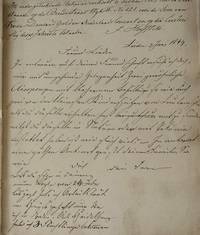
1849000872NEW HAVEN BOSTON NEW YORK CHARLESTON MA NY SC CT. Very Good. 1849. On offer is a super original leather-bound handwritten daily Diary/Account book of an unidentified freight handling company out of Boston who loaded ships many bound for California and the Gold Rush on the various wharves from Boston to Charlestown from Feb-April of 1849. It is handwritten in black ink and contains daily entries of goods & supplies from various Boston businesses to the myriad of ships taking on supplies on the huge array of wharves in Boston. The diary begins in early February in East Boston but by Feb. 15 the log details barrels of this and that going to as many as three ships a day each time logging in this book both the names of the Brig/Schooner/Steamer or Ship and the exact Wharf in Boston that they were moored. This book will be of particular to researchers of the California Gold Rush. Many of these Gold Rush ships were are detailed among Commercial Wharf Long Wharf Foster's Wharf Battery Wharf India Wharf Charlestown and at least 15 other wharves mentioned in this book. There are a many whalers who made port in this list too- like the Ship Coral which was taking on supplies here in March of 1849. Other ships of note include: Bark Emma Isadora Bark Nashua Brig California Brig Dudley Brig Brazilian Schooner G H Montague Brig Commerce Schooner Coral Ship Sarah Schooner Hope Brig Alvarado Brig Lady Adams Schooner S C Phillips Bark Helen Augusta Schooner Fanny Schooner New Jersey Schooner Argus Bark Nashua Ship Benjamin Adams Steamer General Warren Steamer Admiral Brig Commerce Schooner Baltimore Steamer Penobscot Steamer William J Pease Bark Oceana The 4 x 6 in. book is leather bound about 50 pp. of writing. VG.; Manuscript; 32mo - over 4" - 5" tall; HANDWRITTEN MANUSCRIPT DOCUMENT LETTER AUTOGRAPH KEEPSAKE WRITER HAND WRITTEN DOCUMENTS SIGNED LETTERS MANUSCRIPTS HISTORICAL HOLOGRAPH WRITERS AUTOGRAPHS PERSONAL MEMOIR MEMORIAL PERSONAL HISTORY AMERICANA ALS ARCHIVE DIARY DIARIES CIVIL WAR ERA WAR BETWEEN THE STATES ANTIQUITÉ CONTRAT VÉLIN MANUSCRIT PAPIER ANTIKE BRIEF PERGAMENT DOKUMENT BOSTON CONNECTICUT NEW YORK SOUTH CAROLINA SHIPPING GOLD RUSH CALIFORNIA FREIGHT . hardcover
18490012219Bloomington Monroe County Indiana New Hampshire. Good with no dust jacket. 1849. Hardcover. On offer is a fascinating 19th century journal with an academic slant kept by a young American student. The diary was kept by Thomas Elwood Clark 1834-1909. Clark was born in North Carolina to parents William Clark and Louisa Worth He married Nancy Goodrich 1835-1882 on October 5 1862. They lived in Indiana where they raised their four children Mary Louisa Love John Nellie and Miriam. Clark was a merchant who owned a shop. It seems Clark was enlisted and fought in the US Civil War but this is not confirmed. According to online records Clark was 15-years-old at the time of this books writing and according to census data his family was still living in New Hampshire. However there are notations in the journal that imply he is at Bloomington IA University which is Indiana University. On the first page of the journal Clark writes that the journal is Commenced on the 1st day of May 1849 in the town of Bloomington Monroe County I. A. There is no obvious explanation for this seeming discrepancy. One might guess that Clark was sent to Indiana for summer school or early university admission. He does settle in Indiana and build his life there as an adult. This book is filled with fascinating academic notes written in a stunning copperplate script. Clark both writes his original thoughts and copies pieces of content in this book. The book opens with a summary of the state of cholera in the USA goes on to list several questions for polemics followed by a question of polemics selected and answered by Clark himself he provides his opinion on the question are secret societies a benefit to mankind . He copies impressive poetry of the time and creates and writes his own poetry and prose. Clark makes careful notes about the fine arts languaging a section on alliteration and how Latin contributes to English for example. Clark makes notes about how to complete various mathematical calculations and so much more. Some excerpts from the book follow: Read this my friends when Im away/And calmly think a youth this day/Long sat oer look in moody dream/Wishing praying some music theme/Would be obedient to his call/And store the minds love vacant hall/So on this page a youthful name/Might stands a record free from shame Excerpt of a poem by T. Elwood Clark July 4 1849. .Are secret societies a benefit to mankind .As it has been their imperative duty to promote the cause of virtue alleviate suffering humanity and fortify the bullworks of secret institutions. I say all those thus engaged have nobly served their day and generation and although their effort was but a feeble one yet many a disconsolate being as helped the cause which brought the hoped relief . Excerpt of T. Elwood Clarks response to the polemic question n. D. . There are Three Thousand Six hundred and Sixty Four known languages now in use in the world. Of these Nine Hundred and Sixty Seven are Asiatic. Five Hundred and Eighty Seven European and Two Hundred African. And the rest American dialects copied by T. Elwood Clark. The cholera is very bad at present. Washington Davis Co. Is deserted. There were seventy five deaths there yesterday. Nine reported here this morning. Two are dead Aug 1 1849. For a historian or an education researcher this small journal gives a picture of the type of topics and questions that were considered worthy subjects as part of a young persons education. While many reflect the times and current knowledge it is interesting how some still hold relevance to debates today. Measuring 7.5x6 inches this journal contains 148 pages and is about 35% complete. For its age it is in quite good condition. There are wear marks on the hard cover especially the corners. The binding is secure but loosening and all pages are intact. The copperplate script is legible. ; Manuscripts; 16mo 6" - 7" tall; 148 pages; Signed by Author . hardcover
18500009062KINGSTON CAMBRIDGE MASSACHUSETTS MA HARVARD. Good. 1850. On offer is the diary of Joseph Holmes an 18 year old boy who leaves his home in Kingston Massachusetts in 1850 to be tutored for the college examination in Cambridge Mass. presumably for entrance into Harvard University. On the first page Holmes writes: The Intention of this Journal is as well and faithfully as I am able to carry out my purpose to contain a description of all my actions of my advancement in study of my pastimes of my expenditures and all such other matters as may be interesting for myself parents and other friends to whom it shall always be open in after time to review neatly written down each day at an appointed period set especially apart for the purpose. He begins his journal as follows: "This morning for the first time I left the place of my Nativity the Home of Eighteen years the Friends of my infancy and Youth the Companions of a happy Boyhood the scenes of a brief but gladsome experience and more than all the immediate presence and supervision of my Parents for a long absence but I trust not separation. He writes of his farewells to his family and takes the train to school with his father: "Having seated myself in the cars I was soon beyond Kingston and summoning all my courage I tried to appear cheerful. The Hon Daniel Webster occupied a seat directly in front of me. Upon leaving the cars I perceived Capt A Baker. After our arrival we proceeded directly to the Fitchburg Station and took the Harvard Branch for Cambridge about to be my dwelling place. Holmes finds a boarding house to live in Cambridge. He becomes homesick very soon and to add to his misery the weather is very poor with constant rain. He writes: "My room is dark disagreeable and cold. I am obliged to wrap a coverlet about me to keep comfortable. I never before have seen so dusty and muddy a place as this is it is difficult to decide which is the worst - one day you are covered with dust the next splattered with mud which resembles ashes and water." However he does take to his studies with his tutor very well: I went to my Tutor an hour earlier instead of my appointed one for other days. My lesson being well acquired and ____ I happily began to prepare myself for my first walk into Boston and later I spent most of the morning in study preparing my lesson. Mr. Lowe seems to be very well satisfied with my advancement - I told him this morning he must scold if I was not smart enough. In spite of the poor weather Holmes does walk quite often to Boston and around the area. He visits Mount Auburn and writes of the beautiful monuments and the simple beauty of the chapel. He also visits Harvard Hall: "we went over to Harvard Hall and viewed all the paintings and portraits. Some of them are splendid pictures. The principal room is the place where the students practice forensics. Shall I ever tremble on that stage myself thought I as I saw it and after that came this encouragement.Shall I ever make those before me in this Hall to tremble." Holmes is an excellent and mellifluous writer: Here we have another dull rainy homesick day. The clouds seemed to be overloaded with water and are pouring forth their liquid contents plentifully and continually. Holmess father must have done business in Boston as Holmes meets him quite often at the depot. His father keeps his son updated on the news from home as well as with letters and the diary contains mentions of deaths marriages and family news. There are no entries from May 27 until Oct 20 the last entry in the journal. In this last entry he summarizes what he had done since May. Most importantly to him he passed the "dreaded college examination". He writes I studied very steadily during the month of June and a fortnight of July preparing.July myself the pleasure of a few visits home. He also wrote of the Fourth of July Celebration in Boston and the great Quarter Celebration of the June 17th: "I spent the day with Mrs. Barker having just returned from Kingston. Mr. Everett delivered the Oration in one of the Ship Houses of the Navy Yard which was beautifully decorated and arranged for the occasion." Edward Everett was a US Representative a US Senator Governor of Massachusetts and Secretary of State. He was also President of Harvard from 1846 to 1849. In this same long entry the Holmes mentions another historical event that occurred in July 1850: "On the 10th of July I went home with my tutor Mr. Lowe to spend a day with Father and Mother before the examination. We carried with us the sad news of the death of President Z Taylor. He finishes the entry by stating: I returned to Cambridge and entered upon my Collegiate Course when I should have also returned to any Journal but for various reasons I have delayed this long. At the very end of the book There are two pages of the Account of Joseph A. Holmes in which Holmes writes down his various expenses for the month of May such as Carriage to convey Trunk - $.25 1/2 Lb. Confectionary - $.10 1 pr. Congress Gaiters - $3.00 1 Pr. Pants - $5.00 and a number of others. The final page of the book is titled Memoranda of Correspondence of J. A. H. and contains a column of Correspondents alongside columns of Letters written and Letters recd with the amount written next to each name. The diaries duration is from May 7-26 and an entry on October 20 1850. There are 28 handwritten pages in total in the book which is roughly 70 pages in length. It is bound in brown marbled paper with a piece of black cloth on the spine; Both covers are detached from the text block. Holmes writes in black ink and his script is very neat and legible fitting for a young man studying higher education in the 1850s.; Manuscript; 8vo - over 7¾" - 9¾" tall; KEYWORDS: HISTORY OF JOSEPH HOLMES HARVARD UNIVERSITY CAMBRIDGE KINGSTON MASSACHUSETTS HARVARD HALL MOUNT AUBURN 19TH CENTURY HIGHER EDUCATION ELITE EASTERN COLLEGES HIGHER EDUCATION IN NEW ENGLAND COLLEGE EXAMINATION TUTORING MATURATION OF A YOUNG MAN FLANEUR ELITE YOUNG MEN MID-19TH CENTURY MALE EDUCATION AMERICANA HANDWRITTEN MANUSCRIPT DOCUMENT LETTER AUTOGRAPH WRITER HAND WRITTEN DOCUMENTS SIGNED LETTERS MANUSCRIPTS HISTORICAL HOLOGRAPH WRITERS AUTOGRAPHS PERSONAL MEMOIR MEMORIAL ANTIQUITÉ CONTRAT VÉLIN DOCUMENT MANUSCRIT PAPIER ANTIKE BRIEF PERGAMENT DOKUMENT MANUSKRIPT PAPIER OGGETTO DANTIQUARIATO ATTO VELINA DOCUMENTO MANUSCRITTO CARTA ANTIGÜEDAD HECHO VITELA DOCUMENTO MANUSCRITO PAPEL . hardcover
18500002292MONTGOMERY ALABAMA AL. Good. 1850. On offer is a fascinating original 1850 manuscript letter handwritten by L. M. Waddel of the prominent Montgomery Presbyterian family who writes dear Cynthia Ann from Montgomery a long chatty letter full of local news and gossip touching upon many of the sad and happy times of the era including the death of a dear friend from 'consumption' tuberculosis marriages politics a humorous quote about Presbyterians having plenty of children and plenty poverty. The 8.25 x 10.75 letter has the original fold creases; some soiling and age wear but overall G.; Manuscript; 8vo - over 7¾" - 9¾" tall; KEYWORDS: HISTORY OF L. M. WADDEL MONTGOMERY ALABAMA TUBERCULOSIS DEEP SOUTH PRE CIVIL WAR ANTE BELLUM PRESBYTERIAN CONSUMPTION SOUTHERN COMMERCE SOUTHERN AMERICANA HANDWRITTEN MANUSCRIPT AUTOGRAPHED AUTHORS DOCUMENT LETTER AUTOGRAPH KEEPSAKE WRITER HAND WRITTEN DOCUMENTS SIGNED LETTERS MANUSCRIPTS HISTORICAL HOLOGRAPH WRITERS AUTOGRAPHS PERSONAL MEMOIR MEMORIAL PERSONAL HISTORY ARCHIVE DIARY DIARIES JOURNAL LOG PRIMARY SOURCE FIRST HAND ACCOUNT SOCIAL HISTORY PERSONAL STORIES LIVING HISTORY ANTIQUITÉ CONTRAT VÉLIN DOCUMENT MANUSCRIT PAPIER ANTIKE BRIEF PERGAMENT DOKUMENT MANUSKRIPT PAPIER OGGETTO D'ANTIQUARIATO ATTO VELINA DOCUMENTO MANOSCRITTO CARTA ANTIGÜEDAD HECHO VITELA DOCUMENTO MANUSCRITO PAPELBIOGRAPHY BIOGRAPHICAL AUTOBIOGRAPHICAL AUTOBIOGRAPHY PERSONAL NARRATIVES . unknown
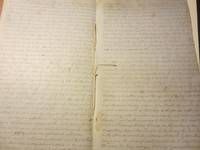
18520007008JUNIATA COUNTY SPRUCE HILL TOWNSHIP PENNSYLVANIA. Good. 1852. On offer is unique and quite rare diary/journal written by a young woman in pre-Civil War America. The book itself is a mixture of diary and journal created by Carrie C Browne a young woman attending the Tuscarora Female Seminary. It is important to note that the term 'seminary' in the 19th Century did not have any religious connotation. It signified an institution of higher learning. It was started by a wealthy farmer named Alexander Patterson in 1847 and it educated young women for almost twenty-five years before closing. Carrie Browne was likely about 15 or 16 years of age when she began this. It appears Tuscarora Seminary did not survive the Civil War as many students were young women from the aristocratic families south of the Mason-Dixon Line and if the school did not close immediately after the declaration of war it was abandoned soon after because of lack of patronage. The ruins of Tuscarora Female Seminary are still standing. Over time legends of hauntings and other mysterious goings-on have grown up and some consider it a major haunted site. Entries in Browne's journal are not necessarily contiguous - there are both small and large time gaps in her entries as well as a number of missing pages. Taken together though they span a period from 1852 to 1857. Most of the entries are from 1855. They offer a rare glimpse into life in mid-19th century rural America in the years immediately preceding the Civil War. Here are samples of entries that she made: 'Started for Mills to visit Bell Patterson Miss Hutchins Mattie and myself. Jamie Patterson took us up. Started a little after Seven O'clock and arrived there about a quarter of eleven o'clock. Has a pleasant ride up Rode through a great deal of woods saw squirrels and various kinds of birds when we when we arrived there Bell came out from the to meet us seemed glad to see her old schoolmates After dinner John Laughlin a young gentleman clerk in her father's store came over to see us he took us to the factory to show us how they leather etc. I got on the wheel and rode with him then we got weighted then we took a walk up what the call the "Lovers Path" called on Uncle Mr. Patterson they have a Piano there . June 8 1855 Arose before the bell rang arranged my room went to study hour. In school all day. After wrote a letter to 4 pages long had a thundershower in the evening met in the students parlour for our class in sacred vocal music Mattie got some tomatoes and vinegar up together with some bread and butter returned 9 o'clock July 24 1855 Matilda Gale John White and Charles Everett Pratt came from New York and stayed all night. Called on Craig Pratt played and sang divinely and was remarkably handsome Aug 19 1857 He obviously made an impression from this entry 6 days later: engaged myself to be married to "Charles Everett Pratt'. Had a very pleasant tete-a-tete in the front parlour on the "sofa" . August 25 The journal is chock full of side notes poems short notes from friends etc. It is full of names of those in her life. Patterson a prominent name in that area figures frequently. For a historical researcher focusing on life in rural southeastern Pennsylvania or life immediately prior to the Civil War this journal is a goldmine. Names local places daily activities and routines - Carrie's chatty forthright style gives a very clear impression of what that world would look like through the eyes of a school girl. In just 5 years her world would dissolve in war and the bloodiest Civil War campaign - Gettysburg - would reach to with 35 miles of her school. It measures 8 inches by 7 inches and contains approximately 144 pages. There is evidence of pages torn out some have been partially torn and others have had portions cut out. The cover is worn but intact. The pages are 100% complete.; Manuscript; 8vo - over 7¾" - 9¾" tall; KEYWORDS: HISTORY OF CARRIE C. BROWNE TUSCARORA FEMALE SEMINARY ACADEMIA PENNSYLVANIA PRE CIVIL WAR ALEXANDER PATTERSON JAMES PATTERSON BATTLE OF GETTYSBURG LIFE IN MID-19TH CENTURY RURAL AMERICA HISTORY OF PENNSYLVANIA EDUCATION IN ANTE BELLUM AMERICA JUNIATA COUNTY SPRUCE HILL TOWNSHIP AMERICANA HANDWRITTEN MANUSCRIPT DOCUMENT LETTER AUTOGRAPH WRITER HAND WRITTEN DOCUMENTS SIGNED LETTERS MANUSCRIPTS DIARY DIARIES JOURNALS PERSONAL HISTORY SOCIAL HISTORY HISTORICAL HOLOGRAPH WRITERS AUTOGRAPHS PERSONAL MEMOIR MEMORIAL ANTIQUITÉ CONTRAT VÉLIN DOCUMENT MANUSCRIT PAPIER ANTIKE BRIEF PERGAMENT DOKUMENT MANUSKRIPT PAPIER OGGETTO D'ANTIQUARIATO ATTO VELINA DOCUMENTO MANOSCRITTO CARTA ANTIGÜEDAD HECHO VITELA DOCUMENTO MANUSCRITO PAPEL . hardcover
18520001960CAMBRIDGE MASSACHUSETTS MASS MA. Very Good. 1852. On offer is a superb original historically significant 1852 manuscript diary handwritten by John Downes of Cambridge Massachusetts as evidenced by his two signatures. While we cannot confirm ownership we believe the author is Commodore John Downes a famed American naval officer with a storied career who lived from 1786 to 1854. The writer's preoccupation with the weather the wind direction and other comments give us no pause to suggest this ownership but a local historian or researcher should have little problem confirming. The diary was created on blank pages sandwiched among and in-between two 1852 Farmer's Almanacs which in turn are laid into a hard bound covers by bookseller Kidder & Cheever of Boston. Bound in between the two almanacs are a number of pages used by Downes to record almost on a daily basis his thoughts events weather politics ornithology etc. There are over 55 well filled pages handwritten in a tiny very legible manner using the pages to maximum ability. Historians and collectors of the pre Civil War period will be hard pressed to find a more erudite observer and commenter on the era's politics philosophy and current events. In fact Downes is very opinionated passionate man and right from the beginning of the writing he affirms his indignation of women's bloomer and a professor 'trying to tell Americans what is what'. 'All being most of the materials for an American Revolution'. Downes begins the 1852 year by writing "Janry 1852- New Years Day. Very warm for the season. Yesterday closed with a rainy evening and we had heavy showers through the night. The Year 1852 commences with a French Revolution on its hands. What else it may pick up on its way toward Doomsday remains mostly hidden; but we shall see quite fast enough. Already on hand we have Prof. Kossuth who is endeavoring to enlighten the benighted people of these Unites States on what is what and other interesting particulars. We have Free Soilers and Abolitionists and Bloomers and Woman's-Right-ers and some other small materials for an American Revolution if the talent were equal to the will but happily they are not world- compellers they move not mountains nor man but themselves. Thermometer at bedtime 33 deg. He continues on with various snippets throughout the year including in part "January A woodpecker I saw this morning is beyond my present learning. It was not the Red-headed for his head was not red but black as a newly caught fugitive slave our harbors are being blocked with frost our marine is being stripped of spars and rigging and brought ashore and harnessed to horses. Describes snow and the various adorned sleighs We saw one this afternoon in its semblance of a long black hull with "bright" varnished sides; and called the "Constitution" another fitted out as the "May Flower" both freighted down to the benches we saw another which was fashioned something after the manner of a swan. I should judge the Captain and crew of this craft might count up to about sixty individuals reminisces about what sleighing was like 40 years before then gives a creative discourse of tavern and drink vs. church Went to Boston to attend Dr. A. B. Gould's lecture before the Lowell Institute thermometer bulb broke because of cold this evening we go to the Opera where Madam Anna Thillon is turning the heads of all Boston saw Madam Thillon in the Black Domino. It is difficult to imagine the sad work a more beautiful woman would make amongst the youngsters -- oldsters too for that matter went sleighing past West Cambridge to Lexington and saw the monument erected on the spot where the first business were given when we fell out with John Bull nearly 80 years ago finest sleigh ride we had for the last 20 years Dined at Middlefield's and had a first rate old fashioned boiled Indian suet pudding; the first for many years saw several heavy avalanches of snow passing through Washington St. met an old friend Thomas Comer the musician. Shook hands and talked to him of old times his hair gray but otherwise he is not a day older than he was 20 years ago. Besides his profession as composer and musician he was an actor of much more than ordinary merit. I have never seen his equal in the character of the mock prince Dandini in Cinderella. Passed the evening at Mrs. Uphams where we had music and dancing but the dancing may I never set eyes on that abominable dog = polka again Went to Boston bought Dean's New England Farmer not with any intention of digging an existence from the bowels of the earth but that I love to read of matters of husbandry rain has prevented our attending a Bissextile dancing party at Groton this evening Spent weekend between Groton and Worcester with Dr. Green Not at all pleased with the Lawrence Academy Administration. This administration seems to have discovered a fearful clement of sin in the practice of dancing by young people at the juvenile gatherings called Balls the young folks are were admonished to remain at home on the evening of the party given by the ladies of Groton with Mrs. Governor Boutwell as lady patroness on pain of the administration and heaven's serious disapprobation and of everlasting expulsion from the Lawrence Academy and of ditto damnation Attended Prof. Pierce's lecture on mechanics at the college this afternoon. Went to Boston saw my friend Charles Bradlee Bradlee was a Boston music publisher who was the first to copyright in 1835 the "A-B-C" song that everyone today knows as the song to teach kids the alphabet the first time for twelve years April A furious northeast rain storm commenced last night. Wind blowing a hurricane. The storm has continued with unrelenting fury from yesterday until this morning. Last night we had lightening and thunder. The papers speak of many shipwrecks on the coast Most of the inhabitants of the city of Cambridge have gone in to Boston today to partake of the Lajos Kossuth foolery that is going on there. The Freesoilers have got him and are striving with their whole soul to make a political honest penny out of him May Had a call from my friend Obadiah Rich Boston Silversmith. It is 12 years since I have seen him. Found him nearly blind June 21 News comes from Baltimore that Genl. Scott has been nominated by the Whig party as its candidate for the Presidency of these United States. O Trumpery! O Moses Class day at the College dancing shouting and banners and instruments of music and noise. Uproarious cheering for President Sparks for the Professors each by name for tutors each by name for Daniel Webster louder yet and for everybody and everything loudest of all. Attended Mrs. Spark's levee quite a brilliant affair Beauties from all points of the compass Commencement Day at Harvard University. Did not attend the commencement exercises Mrs. President Sparks party in the evening on presenting ourselves she drew his wife's arm within her own walked to the tables and presented her with refreshments with her own hands and with her own easy irresistible manners. I have never seen my little wife more graceful and beautiful and I considered her fully entitled to the attentions she received Worked hard at occultations all day; from anxiety to get them done seasonably for the U.S. Nautical Almanac July 16 attended the meeting of our scientific club in the evening. Most of the talking performed by Prof. Agassiz who stoutly maintained that all the varieties of the human race white black red brown etc. cannot owe their origin to one common stock. Pity that some of our abolitionists could not have been present and have shown him his errors . throughout New England and from out West we have complaints of a very severe drought many factories stopped for want of water storm telegraph wires are down everywhere unless the thirsty earth drank up the rain as it fell we shall have no end to the account of mills and bridges destroyed Aug. 3 took a walk to Fresh Pond. Saw the two young grizzly bears there Aug 20 Spent the evening at Dr. Gould's with Capt. Davis Prof. William Chauvenet and Prof. Cornelius Felton Sept. 15 Streets all mud so that the sheep and cattle on their way to Brighton to be butchered have not the most delightful walking Oct 1 Bought of Drake a copy of the first English edition of Don Quixote. Date 1620 Oct 29 Daniel Webster was buried at Marshfield on the 20 October 1852. His funeral was attended by several thousands of people. He died on the morning of the 24th and was 70 years old Nov. 8 Lucy Chase called this morning with Mrs. Bigelow. She gave me a kiss on parting which I shall not forget soon Lucy was an abolitionist and Freedman's teacher This month December so far has given us an uninterrupted season of warm Indian summer weather our windows are open and our thermometers makes nothing of getting as high as 65 or 70 degrees Lilacs are coming into leaf again What man made global warming in 1852 too Our fellow subjects in the Southern and Western parts of our Union have not been so fortunate. Prof. Winlock from Kentucky tells me that they have had winter there these four weeks the folks in Siberia saw a total eclipse of the sun. It is feared several gongs were broken on the occasion The Quebec Gazette says the sleighs are out and the mail steamers have gone into winter quarters the skating club has commenced operations by erecting a skating saloon on the Queen's Wharf. But whenever it comes a lady's turn to sprawl herself and her petticoats all prone upon the ice with their heels gesticulating at the clouds; it is to be hoped that the gentlemen skaters have the good manners to look the other way. Unless indeed that Bloomerism has become an accepted revelation with the blue-nose sisterhood; in which case there will be no danger; and the gentlemen may look on and laugh gives a long and sarcastic rendition of a penance service he attended at church Went to Boston and procured $100 for Lottie. She calls it pin money. I can't for the life of me imagine what a lady can do with so many pins . "The second almanac gives a printed reference to a Pro. Miller's death on Dec. 29 1849. Downes concludes that this is Rev. William Miller who founded the Millerite movement present day Seventh Adventists and the reference rankles Downes. He pens on the same page "And who the deuce is Pro. Miller Or is it Prophet Miller the true Millerite Messiah that our learned editor considers worthy of mention. Where is the apostle of Peace Johnny = missionary and Col. Pluck We would like to see mention of them!" The covers of the book are G to VG the inside almanacs and pages in F to VF condition. ; Manuscript; 12mo - over 6¾" - 7¾" tall; KEYWORDS: HISTORY OF JOHN DOWNES CAMBRIDGE MASSACHUSETTS CHARLES BRADLEE FREE SOILERS ABOLITIONISTS WOMAN'S-RIGHT-ERS GENDER STUDIES PRE SUFFRAGE SUFFRAGE LAJOS KOSSUTH OCCULTATIONS ASTROLOGY ASTRONOMY OCCULT HARVARD UNIVERSITY PRE CIVIL WAR POLITICS CURRENT EVENTS ANTEBELLUM NEW ENGLAND AMERICANA HANDWRITTEN MANUSCRIPT AUTOGRAPHED AUTHORS MANUSCRIPT DOCUMENT LETTER AUTOGRAPH KEEPSAKE WRITER HAND WRITTEN DOCUMENTS SIGNED LETTERS MANUSCRIPTS HISTORICAL HOLOGRAPH WRITERS AUTOGRAPHS PERSONAL MEMOIR MEMORIAL PERSONAL HISTORY ARCHIVE DIARY DIARIES antiquité contrat vélin document manuscrit papier Antike Brief Pergament Dokument Manuskript Papier oggetto d'antiquariato atto velina documento manoscritto carta antigüedad hecho vitela documento manuscrito Papel . unknown
18520008148Massachusetts West Newton Boston. Good. 1852. On offer is an outstanding journal/manuscript written in the mid-19th century by a well-recognized educator. Measuring 8.5 inches by 7 inches the journal contains 235 pages. They are 100% complete with some editing alterations. The volume is in good condition and the handwriting is quite legible. Several pages have been cut out and several others have pieces cut out of them. This is not damage from an external source but rather part of his editing process as this is a draft for a final publication. Samuel Edward Warren was born in West Newton MA in 1831. His father was a physician as well as a farmer and it is little surprise that his son was well educated. Warren was educated at the Massachusetts State Normal School School of Education and Teacher Training and Renssaeler Polytechnic Institute. Established in 1824 Rennssaeler describes itself as the oldest technological university in the English speaking world and focuses on research and applied sciences. He graduated in 1851 and immediately began teaching 'descriptive geometry and drawing'. In 1854 he was promoted to professor of that chair and retained the position until 1872 when he resigned and took up a similar position at the Massachusetts Institute of Technology. He resigned in 1875 to concentrate exclusively on a series of text books that he was writing. Warren passed away in 1909 at the age of 78. The journal is titled Volume 5 and a notation on the inside cover reads: "Thorough revision complete Oct 22nd 1865". The last sentence of an entry in Jan 1852 confirms the author's identity: ". I have been pressed so much about it a piece of overdue writing that I must get off this week the other two on Orphan Asylum and a Temperance movement the later which will be signed S. Edw. Warren" Jan 31 1852. p 26. Entries however date back to 1852 and appear to span that year. There are editorial notes that do date from 1865 on various pages. "On this day of rejoicing it would be a sin to suffer one gloomy note to enter into the chorus of content ." Jan 1 1852. He notes seeking work or engagements and is not above a wry turn of phrase: "I went to Albany this morning and Mr. March the uncivil Resident engineer said there was no business for me. I found that the new division engineer had not come into power and I could not find Vernon the R or Richmond the D nor Prof Mitchell the eng. of the Cincin & St. Louis RR but I am not discouraged yet. I shall ask Mr. Bergher for letters of introduction . and Prof Green for a recommendation to Prof Mitchell ." Jan 31 1852 pp 26-7; Professor Mitchell whom he mentions is probably Ormsby M. Mitchel an astronomer educator and Union army leader during the Civil War who was working at the Cincinnati and St. Lewis railroad at that time and after whom town Mitchell in Illinois was later named. "I got leave to go home from Prof Green found he will engage new Repeaters and have heard from Plympton that Mr. Edely his former partner is so unsettled as to business that it would not be worthwhile to apply to him. On Monday I shall go to Albany to hand my petition to the canal Board and see Mr. McAlpine William Jarvis McAlpine was an American civil engineer and politician from New York he was New York State Engineer and Surveyor from 1852 to 1853 and also some of the city engineers and see if they want to engage an assistant. I have got a no letter from N. York and if I do not get one soon shall write again or advertise in the Tribune for a situation as a teacher of Mathematics and Drawing for to teach such subjects to advanced scholars would be the happiest situation I could have ." Feb 21 1852 p. 38. What is significant is that the above paragraph is starred in the margin with the following note at the bottom of the page: "Here my true calling appears. Oct 15 1865". He relates a visit with his father to Boston and shows him around a number of factories engaged in engineering & manufacturing: ". Mother and Father and I went to Boston Father and I went through the freight house and engine house. I showed him the pump valve. Then we went to Algers and saw the huge shaft of the Hoosac Drill. Then we went to Wilmarths Locomotive works where is one of the finest screws in the world part of an iron planning machine it is 65 ft long and about 5 1/2 inches diam. But was first cast about 6 1/4 in diameter. . Today I wrote a momentous letter to Prof Green about returning to Troy with an increase of duties and pay $125 for a session. . I am getting very fond of Tupper and found some grand hints about teaching children ." Mar 19 1852 pp 53-4. He makes an interesting notation on the number of steam ships plying various waters: "Ocean steamers early '51 from Maine to C Sable 46 in the Gulf 13 on Pacific 37 total 96. Whole number including small steamers 625. Inland steamers on the northern frontier 164 Ohio Basin 348 Mississippi Valley 255 Total 767 which alone exceed the whole steamer tonnage of Great Britain by 60000 tons" Apr 2nd 1852 pp. 63-4. He makes an interesting reference to the American Civil War when he notes the death of one of his former students: "Died of fever in the U.S. War of Civilization" Oct 15th 1865 p. 107. The journal contains a 5-page Index of all entries. In all this outstanding journal offers terrific insights into the early thinking of a man who go on to be a noted educator and author of at least 15 books. It gives an interesting view of the state of engineering in pre-civil war America and hints at the industrial strength of the northern states which would play a crucial role in the North's victory in the American Civil War.; Manuscript; 8vo - over 7¾" - 9¾" tall; KEYWORDS: HISTORY OF MID 19TH CENTURY 1850s; 1960s; UNITED STATES MASSACHUSETTS BOSTON; SAMUEL EDWARD WARREN; MASSACHUSETTS STATE NORMAL SCHOOL; RENSSAELER POLYTECHNIC INSTITUTE; ENGINEERING IN THE MID-19TH CENTURY; STEAM BOATS ON AMERICAN WATERS; AMERICAN CIVIL WAR; MASSACHUSETTS INSTITUTE OF TECHNOLOGY; CINCINCINNATI & ST. LOUIS RAILROAD; WILMARTHS LOCOMOTIVE WORKS; HOOSAC TUNNEL; TECHNOLOGICAL EDUCATION IN THE 19TH CENTURY AMERICA; INDISRIAL DEVELOPMENT IN THE MID 19TH CENTURY; ENGINEERING JOBS IN MASSACHUSETTS IN THE 19TH CENTURY; RAILWAYS AND EMPLOYMENT IN THE MID-19TH CENTURY AMERICA; HISTORY OF RAILROADS IN THE UNITED STATES INDUSTRIALIZATION IN THE NORTHERN STATES; AMERICAN EDUCATORS OF THE MID 19TH CENTURY; BOSTON INDUSTRIES IN 1850s; ORMSBY MCKNIGHT MITCHEL; WILLIAM JARVIS MCALPINE; CYRUS ALGER'S SOUTH BOSTON IRON WORKS; ENGINEERING IN PRE-CIVIL WAR AMERICA; RENNSSAELER ALUMNI AND PROFERSSORS; MASSACHUSETTS INSTITUTE OF TECHNOLOGY PROFESSORS IN THE 19TH CENTURY; AMERICANA HANDWRITTEN MANUSCRIPT DOCUMENT LETTER AUTOGRAPH WRITER HAND WRITTEN DOCUMENTS SIGNED LETTERS MANUSCRIPTS DIARY DIARIES JOURNALS PERSONAL HISTORY SOCIAL HISTORY HISTORICAL HOLOGRAPH WRITERS AUTOGRAPHS PERSONAL MEMOIR MEMORIAL ANTIQUITÉ CONTRAT VÉLIN DOCUMENT MANUSCRIT PAPIER ANTIKE BRIEF PERGAMENT DOKUMENT MANUSKRIPT PAPIER OGGETTO D'ANTIQUARIATO ATTO VELINA DOCUMENTO MANOSCRITTO CARTA ANTIGÜEDAD HECHO VITELA DOCUMENTO MANUSCRITO PAPEL . unknown
1903X15003xHamilton: Board Of Education 1903. First Edition. Hardcover. Very Good. In Very Good Condition. Printed In 1903 In Very Good Condition. 100 Pages No Index.- Specializing in academic collectible and historically significant providing the utmost quality and customer service satisfaction. For any questions feel free to email us. Board Of Education hardcover
1853000040NewBURYPORT MASSACHUSETTS MA. Good. 1853. Full-Leather. THIS PERSONAL HANDWRITTEN ANTIQUE DIARY OF WILLIAM LOVING DATED 1853. THIS LEATHER CASED PERSONAL DIARY IS A DAILY ACCOUNT FROM JANUARY TO DECEMBER 1853. SIGNED ON THE REAR COVER WILLIAM H. LOVING A NUMBER OF TIMES. THE DIARY REFLECTS THE GENTLEMANS EXPENSES EARNINGS AND DAILY ACTIVITIES. MONIES PAID FOR RECORDED HOURS OF WORKDAY BY DAY. ON SOME WEEKS I QUOTE: ''12-27-1853 6hrs MADE .66 12-28-1853 17hrs MADE 41.87 7-24-1853 6hrs MADE .60 SETT FRENCH TOOK IN $6.60''. PRICES OF STOCKS BOUGHT CURIOUS ENTRIES ABOUT SETT FRENCH WHO MADE A LOT OF CASH IN THE SAME AMOUNTS VISITS TO FRIENDS INCLUDING REV. GREGORY WHITFELT IN NEWBURYPORT MASSACHUSETTS. OTHER TOWNS SUCH AS GROVELAND AND NORTH ANDOVER ARE ENTERED. THE BIRTH OF A CHILD MARY ETTA. DIARY INCLUDES CHARTS FOR THE YEARS SUNRISES AND SUNSETS IMPORTANT DAILY HISTORY EVENTS AND HOLIDAYS AND MOON PHASES. A NEWSPAPER CLIPPING GLUED TO THE BACK OF THE FRONT COVER TITLED ''ANCESTRY OF THE BRITISH QUEEN''. MOST OF THE INSCRIPTIONS ARE WRITTEN WITH A QUILL PEN WITH THAT CLASSIC QUILL. ; Manuscript; 48mo - over 3" - 4" tall; HANDWRITTEN MANUSCRIPT DOCUMENT LETTER AUTOGRAPH DIARY JOURNAL LOG KEEPSAKE WRITER HAND WRITTEN DOCUMENTS SIGNED LETTERS MANUSCRIPTS HISTORICAL HOLOGRAPH WRITERS DIARIES JOURNALS LOGS AUTOGRAPHS PERSONAL MEMOIR MEMORIAL PERSONAL HISTORY AMERICANA Travel Trip VacationANTIQUITÉ CONTRAT VÉLIN MANUSCRIT PAPIER ANTIKE BRIEF PERGAMENT DOKUMENT . hardcover
18530002566NEWPORT RHODE ISLAND TO CINCINNATI OHIO OH. Fair. 1853. On offer is a super original manuscript travel diary handwritten by one of Mr. and Mrs. Coe as stated in the title/inscription though we bvelieve Mr. Coe did the writing. The Coe's in 1853 of a trip and visit to Cincinnati Ohio. Mr. Coe did an excellent job detailing the trip and the extended stay in the Ohio city on 11 and a half well filled folio pages. Here are some snippets: 'Left Newport October 13th at 8 o'clock in the Steamer Perry for Providence thence to Pawtucket in the cars dined and left for New York by the Stonington Route arrived at 5 on the morning of the 14th walked out to Clinton Avenue stopped with our friends for about ten days passed over the ferry at New York and entered the cars at New Jersey raining very hard for two hours then followed a heavy snow storm which lasted until we reached Elmira a distance of 273 miles which we reached at elven o'clock started again at 4 in the morning for Niagara after dinner visited the falls crossed the bridge to goat Island took a view from the different points there and returned to the house started for Buffalo arrived at 10 waited about 2 hours for the cars and left for Cleveland where we arrived at about 8 in the evening Noticed many interesting objects on the road among which was the various log houses that were scattered along the way some quite neat and comfortable others less so but we observed a great many neat and handsome houses even in the thinly settled parts of the country Arrived at Cincinnati Thursday evening 27th and reached home at about 8 o'clock raining hard but thankful that we have been preserved from every danger and through the goodness of God arrived in safety and good health Went by invitation to hear the Rev Mr Butler in the morning Received a number of friendly calls were all invited and went to take tea and pass the evening with Mr and Mrs Hazard In the afternoon attended the funeral of a Mr Smith a stranger who died suddenly and was buried from the house of Mr Goodman Went in the morning to hear Mr Hansell preached on the subject of the duties of American Citizens to the foreign population took up a collection at the close for the benefit of the colored orphan asylum Was introduced to many ladies among them Mrs Temple widow of one of our former missionary's in the evening quite a large number of gentlemen came in all together forming an large and social party Sunday attended the Vine Street Church which was opened after being repaired heard Rev Boynton read Solomon's Prayer at the dedication of the Temple Overlooking a vast extent of country with a prospect of the Ohio River before us returning passed a building where was a large quantity of bricks being baked here they are made and used in great abundance Went to Mr Boal's church heard from him a very solemn address on the commencement of the New Year he endeavored to show by the prophecies and the signs of the times that the Millennial day was beginning to dawn upon the world and that what was most needed in helping it forward was a higher standard of Christian conduct Went to attend prayer meeting of females conducted by Mrs Finney which was very interesting and in the evening went to the Tabernacle to hear Mr Finney subject the sinner selling his birthright Tuesday made a journey to Dayton a distance of 60 miles left Cincinnati at 8 in the morning in the cars rode through a very pleasant section of country stopped at 15 different places and arrived at the Philips House at 11 it has the Miami river on one side and the canal on the other the streets are very wide and clean crossing each other at right angles we noticed some handsome buildings particularly the courthouse which constructed of stone with the front resting on 6 large pillars Spent part to the day writing and in the evening went to hear Mr Finney preach in the same church where he is laboring for two weeks subject test of character founded on the vision of Ezekiel Sunday went in the morning to hear Mr Finney preached from the passage the sermon was very impressive there were 11 received into the church 5 by letter and 6 by profession of faith 7 miles and 4 females ' There is age toning and some chipping the covers are near useless but Overall G-.; Manuscript; Folio - over 12" - 15" tall; KEYWORDS: HISTORY OF CINCINNATI OHIO CHARLES FINNEY COLORED ORPHAN ASYLUM PREACHER TRAVEL RHODE ISLAND STEAMSHIP TRAVEL AMERICANA HANDWRITTEN HANDWRITTEN MANUSCRIPT AUTOGRAPHED AUTHORS DOCUMENT LETTER AUTOGRAPH KEEPSAKE WRITER HAND WRITTEN DOCUMENTS SIGNED LETTERS MANUSCRIPTS HISTORICAL HOLOGRAPH WRITERS AUTOGRAPHS PERSONAL MEMOIR MEMORIAL PERSONAL HISTORY ARCHIVE DIARY DIARIES JOURNAL LOG PRIMARY SOURCE FIRST HAND ACCOUNT SOCIAL HISTORY PERSONAL STORIES LIVING HISTORY ANTIQUITÉ CONTRAT VÉLIN DOCUMENT MANUSCRIT PAPIER ANTIKE BRIEF PERGAMENT DOKUMENT MANUSKRIPT PAPIER OGGETTO D'ANTIQUARIATO ATTO VELINA DOCUMENTO MANOSCRITTO CARTA ANTIGÜEDAD HECHO VITELA DOCUMENTO MANUSCRITO PAPELBIOGRAPHY BIOGRAPHICAL AUTOBIOGRAPHICAL AUTOBIOGRAPHY PERSONAL NARRATIVES . unknown
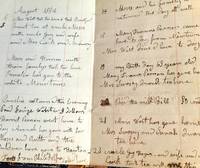
1853000737HOMER NEW YORK NY. Good. 1853. On offer is a handwritten diary/journal - "The American Diary for 1853 and Reference Book for Business and Professional Business Men Housekeepers Travelers and All Others" New York: Published by A. Morrell 1853". As evidenced on the fep the author states: "August 28 1854 - William Wakeley's book Homer Cortland Co. NY." The book was used by William primarily for financial purposes but is littered with notes of local historical events personal observations as late as 1874 and many many companies and addresses: "Homer December 28th 1871 William B. Coggshall Dr. to One Elias Howe Sewing Machine for Sixty Dollars."."Cost of fifteen Thurs N.Y. Central RR Nov. 5 1853 Sixteen hundred Eighty 86 Dollars.$111 per share". "Homer April 26 1888 George W. Brown Dr. to set five pairs of brass to fix doors and let down floor $1.50." August 2 1858 William Kingsbury.belt leather."Dane Stebbins.One hand drill." On each day there's historical information on an event such as "November 1853 Friday 25.New York evacuated 1783" March 2 1863 - Stone & Brothers by Wrought Iron to the amount of 49 1/2 lbs for cartage Homer Sept 1862 - Stone & Brothers Dn - Make Cider with Senew & Nut for $5.00 1864 - Loome Dye Brothers of Ayerchary Loomis of Homer to one Blacksmiths Drill for ten dollars Laid Loome's lives in Chitangua County N.Y." etc. etc. Mr. Wakeley must have been quite wealthy listing all his Railroad Bond purchases and he sold many 'drilling' machines throughout New York State. The cover is somewhat rough but the interiors are better than good.; Manuscript; 32mo - over 4" - 5" tall; HOMER NEW YORK PRE CIVIL WAR ECONOMY COMMERCE HANDWRITTEN MANUSCRIPT DOCUMENT LETTER AUTOGRAPH KEEPSAKE WRITER HAND WRITTEN DOCUMENTS SIGNED LETTERS MANUSCRIPTS HISTORICAL HOLOGRAPH WRITERS AUTOGRAPHS PERSONAL MEMOIR MEMORIAL PERSONAL HISTORY AMERICANA ARCHIVE NEW YORK DIARY DIARIES SEWING MACHINES DRILLING ECONOMICS NEW YORK HOMER SYRACUSE BINGHAMTON PRE CIVIL WAR ANTIQUITÉ CONTRAT VÉLIN MANUSCRIT PAPIER ANTIKE BRIEF PERGAMENT DOKUMENT . hardcover
1854000404New Hampshire. Good. 1854. Cloth. This is an amazing diary that has so many wonderful qualities. Dated 1854 the original owner's name is James Likely. There is also the name Mary Likely written on the back inside cover. This is not really a handwritten diary of our gentleman's daily routine but actually a journal full of his thoughts on the universe religion our bodies animal life and other miscellaneous subjects. There are almost 100 pages of script and a few wonderful drawings too. The first part of the diary is all about the celestial universe; Jupiter Saturn the Sun the different stars and our Earth. He's drawn a picture of Saturn and also one of the earth and the orbit of the sun. It's so interesting to see someone's view about the universe over 150 years ago. Research suggests Mr. Likely is from New Hampshire from references made about "Tollage for crossing Windsor Bridge during the year ending May 1859". Here are snippets: "This book is intended to be the repository of Biblical subjects with their proofs and conclusions and astronomical calculations and experiments that being written in the front of this diary.The discovery of Herschell was in the year 1811. The pressure of air upon earth is 12048468800000000000 pounds or 5000 billions of tons. The sun is a million of times larger than earth and sends forth light at the rate of 2000000 miles a minute. The earth flies round its aces axis at the rate of 1000 an hour. Flies through space at the rate of 60000 miles an hour .Captain Flinders in one of his voyages saw in a stream which passed before him for an hour and half all covered with ____ the stream was from 50 to 80 yards deep and 300 yards or more bread broad taking his reckoning for it. It would amount to 151 millions and a half and another travels in a different direction seen much more on that .The star Lyra for example is supposed by Sir W. Herschel to be 32275000 miles in diameter or 38 times the diameter of the sun and .The earth is a globe whose diameter is nearly 8000 miles and it's circumference about 25000 and consequently it's surface contains nearly two hundred millions of square miles and .The light of the sun is equal to 6500 candles at a foot distance while the moon would be as one candle at 1 ½ feet Venus at 421 feet and Jupiter at 1320 feet that this immense luminary appears so small to our eyes in owing to it's vast distance ." There is so much more not just about the universe but also about the other topics. His handwriting is very beautiful and easy to read. The diary measures about 4" x 6 ½" and the cover especially the outside spine is a bit rough and very worn. as far as condition but the inside pages look great.; Manuscript; 32mo - over 4" - 5" tall; Science Astronomy Celestial Space HANDWRITTEN MANUSCRIPT DOCUMENT LETTER AUTOGRAPH DIARY JOURNAL LOG KEEPSAKE WRITER HAND WRITTEN DOCUMENTS SIGNED LETTERS MANUSCRIPTS HISTORICAL HOLOGRAPH WRITERS DIARIES JOURNALS LOGS AUTOGRAPHS PERSONAL MEMOIR MEMORIAL PERSONAL HISTORY AMERICANA . hardcover
18540008166NEW ENGLAND - THE CARRIBEAN. Good. 1854. On offer is an interesting original manuscript journal detailing a sailor's voyage from New England to the Caribbean during the heyday of the sailing ships. Measuring 7.5 inches by 6 inches it contains 134 pages and is about 20% complete. The cover binding and pages are in good condition and the handwriting is legible. The first journal belongs to D.W. Farnsworth of Machias ME. Casual research has not turned up any additional biographical information other than the fact that he passed away in April 1855. Farnsworth is a sailor working on board coastal commercial sailing ships - what would be referred to today as bulk carriers. His hometown is one of the many New England seaports. His journal begins on Nov 24th 1854: "My first voyage at sea on board brig State of Maine Capt A. Cates." Nov 24. Her cargo is corn and lumber and she is bound for Barbados. His entries detail shipboard life including ship handling and descriptions of weather: Vivid description of people on the docks in Barbados add colour to his entries: "wind increased shorten sail 10 o'clock squally with gusts of rain gulf stream some heavy squalls" Nov 7; "Wind moderate from N.E. Steering S.E by E made Bermuda at 8 o'clock in A.M. run in within 6 or 7 miles of island ten run south west til clear of reef hauled the brig up the wind S.E by E. Wind increased . " Nov 10; ". made Barbados 11 P.M. ."Nov 21; ". the Capt and I stepped into a Darkey Boat alongside and were rowed ashore by 4 of the Blackest Negroes I ever saw. ." Nov 21. They were unable to get a satisfactory price for their corn so they left for Guadeloupe and St. Thomas. This was not an uncommon experience and it was not uncommon for a ship to have to call at another port to try and sell their cargos for a higher price. The journal ends abruptly on Jan 3rd while en route to Louisiana. In 4 months Farnsworth would be dead. This is an excellent example of the brief simple log-keeping that a sailor on the 2 masted merchant brigs would keep. It provides a concise yet clear record of the work in sailing such a ship. For a historian it is another description of life on board a working brig.; Manuscript; 12mo - over 6¾" - 7¾" tall; KEYWORDS: HISTORY OF; 19TH CENTURY 1850S; UNITED STATES; DW FARNSWORTH; SV STATE OF MAINE; MACHIAS ME; MAINE; BARBADOS; GUADELOUPE; ST. THOMAS; CARIBBEAN; NEW ENGLAND; SAILING SHIPS; SEAPORTS OF NEW ENGLAND; SAILORS; WORK ON SAILING SHIPS; CAPTAIN A. CATES; CARGO SHIPS IN THE MID-19TH CENTURY; MARITIME HISTORY; TRADE WITH THE CARIBBEAN IN THE MID-19TH CENTURY; MERCHANT BRIGS; MARITIME TRADE; AMERICAN SAILORS IN THE 19th CENTURY; SEAFARING; AMERICANA HANDWRITTEN MANUSCRIPT DOCUMENT LETTER AUTOGRAPH WRITER HAND WRITTEN DOCUMENTS SIGNED LETTERS MANUSCRIPTS DIARY DIARIES JOURNALS PERSONAL HISTORY SOCIAL HISTORY HISTORICAL HOLOGRAPH WRITERS AUTOGRAPHS PERSONAL MEMOIR MEMORIAL ANTIQUITÉ CONTRAT VÉLIN DOCUMENT MANUSCRIT PAPIER ANTIKE BRIEF PERGAMENT DOKUMENT MANUSKRIPT PAPIER OGGETTO D'ANTIQUARIATO ATTO VELINA DOCUMENTO MANOSCRITTO CARTA ANTIGÜEDAD HECHO VITELA DOCUMENTO MANUSCRITO PAPEL . unknown
18540002396EAST BOSTON CHARLESTOWN MASSACHUSETTS. Good. 1854. On offer is a super naïve original 1854 East Boston manuscript diary with simple entries handwritten by an unidentified 63 year old woman who maintains a record for financial genealogical local births deaths and events and many personal remembrances. 'Jan 24 Virginia G. Walker 2 years old. 28 Mr. Lancaster died this morning. 30 The coldest morning that has been for twenty years.' Then: 'January 6 1834 my Father if living would be one hundred and 12 years old today.' 'Feb 9 My husband is 66 years old this day. Mary Anne fell and broke her collarbone.' The 5 x 3½ inch book has about 30 pages of entries some loose pages but all complete. Over G.; Manuscript; 8vo - over 7¾" - 9¾" tall; KEYWORDS: HISTORY OF EAST BOSTON CHARLESTOWN MASSACHUSETTS BOSTON AMHERST NEW ENGLAND AMERICANAHANDWRITTEN HANDWRITTEN MANUSCRIPT AUTOGRAPHED AUTHORS DOCUMENT LETTER AUTOGRAPH KEEPSAKE WRITER HAND WRITTEN DOCUMENTS SIGNED LETTERS MANUSCRIPTS HISTORICAL HOLOGRAPH WRITERS AUTOGRAPHS PERSONAL MEMOIR MEMORIAL PERSONAL HISTORY ARCHIVE DIARY DIARIES JOURNAL LOG PRIMARY SOURCE FIRST HAND ACCOUNT SOCIAL HISTORY PERSONAL STORIES LIVING HISTORY ANTIQUITÉ CONTRAT VÉLIN DOCUMENT MANUSCRIT PAPIER ANTIKE BRIEF PERGAMENT DOKUMENT MANUSKRIPT PAPIER OGGETTO D'ANTIQUARIATO ATTO VELINA DOCUMENTO MANOSCRITTO CARTA ANTIGÜEDAD HECHO VITELA DOCUMENTO MANUSCRITO PAPELBIOGRAPHY BIOGRAPHICAL AUTOBIOGRAPHICAL AUTOBIOGRAPHY PERSONAL NARRATIVES . unknown
18540007005NEW YORK. Good. 1854. On offer is a superb original diary and journal of Rufus B. Cowing a famed Judge in New York City who presided over a number of notorious criminal cases in the years following the American Civil War. He was born in 1840 and received this journal from his uncle in 1854 at the age of 14. At that time he was enrolled in the 'Bash-Bish Institute' a private school in the area of Bash-bish Falls MA. The time period covered extends from 1854 to 1862 with sporadic entries for years in that time span. The first 20 pages detail his day-to-day activities as a student: I was successful in all my lessons. My principal studies are Arithmetic Geography English Grammar German and Latin Grammar. I think I get along with all my studies very well. Aug 11 1854 the day was very pleasant and passed very pleasantly. I rehearsed all of my lessons perfectly on the same day. I received a letter from Uncle James Aug 18 1854. Most of the entries until Nov 3rd of this nature - a young boy attempting to record his daily experiences. His last entry at the school is Nov 3rd: . I don't like the school as much as I did first term.The next 2 pages contain 8 entries from 1857. He is in New York and seeking work - without much success initially. However on May 23rd 1857 he notes beginning work at the Mechanics Bank. On July 21 he writes: I was promoted to Asst Credit Clerk and I must say that I find this work very much harder than I did when I first went there. But I like my situation very much July 21 1857 The next 6 pages contain a dozen or so entries. He frequently expresses of much he likes his work . the more that I am here the more I find that I like it more . Feb 1 1858 He had joined the Letalethean Society and was elected their Corresponding Secretary. He noted on Apr 21 I delivered an oration on the "Character of LaFayette" May 25 1859 1859 has just one entry: Today I handed in my resignation to the Letalethean Society which it was accepted and I was voted an honorary membership May 25 1859 The next 2 pages consist of summary of the year 1859-1860 since he left the bank. He went to work at a leather shop and spent time travelling as far west as Chicago. Considering the outstanding career he would create for himself the sole entry of 1862 marks an important turning point: . commenced to read law with the law firm of Niles and Bagley. This is an outstanding glimpse into the early life of a famed New York City judge who in his 28 years on the bench presided over some of the city's most sensational criminal and corruption cases. A historian would find this a fascinating read as it offers an insight into how the character of this man was shaped. The diary is leather bound and measures 7 in by 6 in. The cover and pages are in good condition.; Manuscript; 12mo - over 6¾" - 7¾" tall; KEYWORDS: HISTORY OF JUDGE RUFUS C COWING NEW YORK CITY LAWYER JUDGE HARVARD UNIVERSITY LAW SCHOOL LETALETHEAN SOCIETY JURIST LEGAL BASH-BISH FALLS PRACTICE OF LAW JURISPRUDENCE PRE CIVIL WAR ERA AMERICANA HANDWRITTEN MANUSCRIPT DOCUMENT LETTER AUTOGRAPH WRITER HAND WRITTEN DOCUMENTS SIGNED LETTERS MANUSCRIPTS DIARY DIARIES JOURNALS PERSONAL HISTORY SOCIAL HISTORY HISTORICAL HOLOGRAPH WRITERS AUTOGRAPHS PERSONAL MEMOIR MEMORIAL ANTIQUITÉ CONTRAT VÉLIN DOCUMENT MANUSCRIT PAPIER ANTIKE BRIEF PERGAMENT DOKUMENT MANUSKRIPT PAPIER OGGETTO D'ANTIQUARIATO ATTO VELINA DOCUMENTO MANOSCRITTO CARTA ANTIGÜEDAD HECHO VITELA DOCUMENTO MANUSCRITO PAPEL . hardcover