13 728 résultats
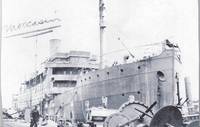
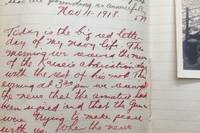
19170001391Camp MEADE USS AGAMEMNON EUROPEAN THEATER. Good. 1917. Hardcover. On offer is an original and simply sensational manuscript relic of World War I being the handwritten diary of Sgt. John Reed of the 316 Infantry Band. Over 120 pages fully written in neat dense hand Reed details his experiences 'To Whom It May Concern'. He begins July 5th retrospectively explaining his being drafted November 3rd 1917 and then spending an easy 8 months at Camp Meade for him it was an easy transition into the Army life as he had already served in the US Regulars. From July 5th on he writes with dedication to a very abrupt end June 8th 1918. Reed is a super diarist has a great personality and is a dedicated American. One cannot help admire this soldier. The very first writings on the free endpaper states: Advance into Germany Millions of trained fighters Eagerness to crush Prussianism Righteousness and readiness to serve Immense Resources Crushing blows delivered to Huns Army unconquerable Navy superb Safety for Democracy for World spelling out the word AMERICANS. Here is a snippet: 'Sept 29th Our infantry was still advancing and fighting like tigers it wasn't interesting for me to stay in the supply loo so I started all alone for the front my revolver and lots of ammunition was my only friend. I walked until I got to a town that we had just captured but 'Bosh' still bombarding it heavily while looking around for wounded friends I found out that by this time Charlie Miller was still ahead of me and well and fighting like an old regular. I also met my old friend Hal Anderson working day and night as a stretcher bearer he was tired out and hungry as I send a man back after food for him and seven others as I am writing this 'Bosh' are still bombarding with monster bullets bursting all around us.' 'Sept 30th I only crawled out of a hole twice all day and that was at mess time. This day the Germans bombarded our field hospital killing many of the hospital wounded lads. Hospital had been put to close too the front.' near Verdun. Of course there is the mundane - but it is never really mundane - dinner in the rough is described as a rabbit with its neck broken the French woman cutting out the eyes the house they waited in during a bombardment the rain the mud and the waiting. Being in the band there are many concerts but they seem secondary to the action and the observations. Oblong flipbook style in this 5.25"x 2.5" also includes an actual photograph not a copy of his 316 Infantry Band Unit. Also included: a First Edition copy of the U.S. official issued song book entitled "Songs of the Soldiers and Sailors. Issued by the Commissions on Training Camp Activities of the Army and Navy departments. First Printing 1917. Also included is a newspaper clipping that Sgt. Reed had tucked away in his journal. It includes information about his company's orders to go to France.; 48mo - over 3" - 4" tall; KEYWORDS: CAMP MEADE USS AGAMEMNON ARMY BAND EUROPEAN THEATER VIMY VERDUN BOSH WORLD WAR I WWI WORLD WAR ONE WORLD WAR 1 HANDWRITTEN MANUSCRIPT DOCUMENT LETTER AUTOGRAPH DIARY JOURNAL LOG KEEPSAKE WRITER HAND WRITTEN DOCUMENTS SIGNED LETTERS MANUSCRIPTS HISTORICAL HOLOGRAPH WRITERS DIARIES JOURNALS LOGS AUTOGRAPHS PERSONAL MEMOIR MEMORIAL PERSONAL HISTORY AMERICANAAls antiquité contrat vélin document manuscrit papier Antike Brief Pergament Dokument Manuskript Papier oggetto d'antiquariato atto velina documento manoscritto carta antigüedad hecho vitela documento manuscrito Papel . hardcover
19170001285SPEEDSVILLE NEW YORK. Good. 1917. On offer is an original manuscript diary handwritten by a 45 year old woman still living with her parents in or near Speedsville New York in Franklin County. The writer mentions some possible clues as to who she is: "December 25th 1923. The family Xmas dinner was enjoyed at Laura's. Those present were; Frank Laura and Bernice Lant Paul Alice and Laura Mayor and father Mother and Sister Lewis. We enjoyed a fine dinner and nicely remembered with gifts." Certainly this appears to be a daughter or sister 'in-law' to the Lewis family. Local collectors and historians will have many clues as she also states that on January 21st 1918 her mother turns 64 and on January 22nd same year her father turns 69. She also maintains a super genealogical section with many generations of specific details. Here are some snippets of this 96 page diary: 1917 "December 25th Christmas day once again. Father met Laura and family in Berkshire yesterday p.m. Brought them home to stay till this p.m. The weather mild and seasonable with good sleighing. We enjoyed a good but simple dinner. The following were at table. Father mother Flora Laura Frank Alice Bernice Aunt Emma and Mr. Baker. After enjoying the good things to eat the table was cleared and then our little gifts exchanged the money value not great but they were rich in love and all good wishes. Which are the most satisfactory of this life." "December 26th The men began ice cutting today by the covered bridge. Ice 10 inches. Mrs. Stinerd called this p.m. brought her xmas gifts to show me including knitting bag. Growing colder tonight." 1918 "January 18th Today is the first of five days shut down in all industries by order of government to relieve the fuel situation. We are having weather around the zero mark continuously." "February 2nd Wind and snow. 30 below tonight. Clear today. This month begins food regulations according to government orders. Mon. & Wed's wheatless days Tues meatless Friday porkless. One meal each day wheatless. Can buy only a certain amount of wheat flour and must buy at the same time as much of some other cereal product. All bakers must make war bread. The nation is also on short rations of fuel and sugar." "March 3rd Alice left us this morning at 9:15 to meet her people in Berkshire to return home. Seems lonesome without her. Wish we might have kept her longer. Services in St. John's today. Mr. Nanz kindly loaned me a book to read "Meditations for every day in the year". I have been reading it and like it very much ." "May 29th Miss Root came today to make us a visit. She and mother went to Red Cross meeting this p.m. Raining tonight. Mrs. Lipsett and Mr. Hobson returned to their home from spending winter in N.Y. City. F. Maynard sold his farm to Mr. Holtman." "June 5th All boys reaching the age of 21 years since June 5th 1917 must today register for miller orders. In Tompkins Co. Today is house cleaning day. Hired woman and two paper hangers. Ma went to Ber. tonight with Louis and Lydia." "August 8th Old Home Day in Speedsville Park. I spent the day with Mrs. Lipsett as in former years. The weather was perfect till after the gathering broke up. Than a hard thunder shower came up." September 5th This afternoon the funeral services for Mrs. Harry Boyer two o'clock at the house. Pa ma and F.B. attended. She was 45 years of age. Been ill quite some time. Left home only a week ago to Endicott Hospital. Aunt Jane came down here this forenoon. I have been ill in bed all day from sick headache. Raining tonight." "September 12th Raining. Today all men between 18-45 who are not already registered must register for military or government work as needed for to help win the war." "October 16th All day meeting of the Red Cross at Mrs. Leggs. Spanish influenza raging everywhere." "November 5th 7th 9th and 11th Election. A nice and sunny day. Pa been to Berkshire this the first election for the women to vote. Alfred Smith elected Governor of New York .The Lant family and party started for Florida today by auto. Born to Mr. and Mrs. Ephriam Jordan a son Gilbert Ephriam Jordan .Mr. Pierce and family have moved into Mr. Meeks red house. This their first night there. Mr. Thompkins and family have moved during the week in with their son Leonard. Mr. Nanz called this p.m. Germany surrendered. Great celebrations everywhere." 1919 "January 22nd Pa's 70th birthday. The last evening party was to celebrate for him also. Their 65-70 birthday's have been a nice and pleasant one for them. Mrs. Lipsett brought them a cake and beautiful white narcissus. Laura wrote them a letter enclosing views of Daytona Florida where they are now staying. Edith Hulsander sent them a card Mrs. Stinerd gave a set of soup plates and Louise G. brought them some of her birthday cake. This is quite a lot of January birthdays. Thurston the 17th Louise the 20th Ma's the 21st Pa's the 22nd and Maud J. the 25th." "February 10th & 12th The funeral of Joseph Phillips aged 57 tumor on brain cause of death. Burial at West Slaterville .The funeral of Miss Mary Osborn aged 78. Service at Universalist Church. Burial at Jinksville." "May 13th My birthday was nicely remembered again this year by loving friends having received a box of lovely violets a collection of shells 4 letters box candy glass of orange conserve and a book The Story of Waitstill Baxter." "August 24th Sunday. Laura Frank and the girls came over this morning and took us up to Caanan sic. We looked over the old homes ate our dinner on the porch of our old house. Called on friends. Came home in a thunder shower." "October 8th Hard freeze last night. Ma feeling better. Lena came down a little while this p.m. Today begins the great transcontinental contest. Airplanes have been flying over all day. Saw my first." Collectors and local historians will be appreciative as she mentions many names: Arthur Boyer Meeks Patch's Store Stinerd Coleman's Hall Blackman Chafee Mildred Freeland Legg Edna Maynard Goodrich Comstock Eighmy Frank Yaple Pangburn Lant Dr. Heaton Arch Deacon Hagerman Josephine Jordan Lipsett Hattie Yoeman Roy Franklin Harry Zimmer Ethel Nichols Doughty Foster Rena Mae Harris and more. The diary was kept in a 3 ¾" x 6" black tablet that is G.; Manuscript; 16mo - over 5¾" - 6¾" tall; WOMENS STUDIES PRE SUFFRAGE WESTERN NEW YORK CENTRAL NEW YORK GENDER STUDIES WORLD WAR I HANDWRITTEN MANUSCRIPT DOCUMENT LETTER AUTOGRAPH DIARY JOURNAL LOG KEEPSAKE WRITER HAND WRITTEN DOCUMENTS SIGNED LETTERS MANUSCRIPTS HISTORICAL HOLOGRAPH WRITERS DIARIES JOURNALS LOGS AUTOGRAPHS PERSONAL MEMOIR MEMORIAL PERSONAL HISTORY AMERICANA antiquité contrat vélin document manuscrit papier Antike Brief Pergament Dokument Manuskript Papier oggetto d'antiquariato atto velina documento manoscritto carta antigüedad hecho vitela documento manuscrito Papel . unknown
19170001369IMPERIAL RUSSIA PRE-SOVIET UNION. Good. 1917. On offer is an intriguing Russian language manuscript diary handwritten by a 14-15 year old orphan girl. Mere months before the Russian Revolution in October 1917 makes for an interesting relic of the times. Casual translation finds the girl describing her life at school her classes friends and a section we found charming titled "I AM". Collectors and historians will recognize the uniqueness of such an unusual piece of Russian history. The boards are a little shabby with wear to the extremities; the boards and joints are reasonably sound; some of the pages have been torn out there is a color pull-out map. 5.25" x 3.75" x .5". Overall G.; RUSSIAN LANGUAGE; 16mo - over 5¾" - 6¾" tall; KEYWORDS: TSARIST RUSSIA TZARIST RUSSIA IMPERIAL RUSSIA SOVIET UNION PRE REVOLUTION OCTOBER CRISIS OCTOBER REVOLUTION LENIN TROTSKY MARX STALIN ALEXANDER HANDWRITTEN MANUSCRIPT DOCUMENT LETTER AUTOGRAPH DIARY JOURNAL LOG KEEPSAKE WRITER HAND WRITTEN DOCUMENTS SIGNED LETTERS MANUSCRIPTS HISTORICAL HOLOGRAPH WRITERS DIARIES JOURNALS LOGS AUTOGRAPHS PERSONAL MEMOIR MEMORIAL PERSONAL HISTORY antiquité contrat vélin document manuscrit papier Antike Brief Pergament Dokument Manuskript Papier oggetto d'antiquariato atto velina documento manoscritto carta antigüedad hecho vitela documento manuscrito Papel . hardcover
19170008099ST. LAWRENCE RIVER. Fair. 1917. On offer is a small interesting record of a 1917 trip by steamer from Rochester NY to Chicoutimi Quebec. The journal measures 5.5 x 4.5. It is comprised of 30 loose-leaf pages pinned at corners. The pages have been removed from a printed diary and cover essentially July 4 to Aug 2 1917. Of the 30 pages about 1/3 are complete. The writer is unidentified but some contextual clues suggest she is an adult female. Her journey begins south of Buffalo NY and she continues by road to Rochester stopping to visit friends along the way. At Rochester she boarded a steamer bound for Prescott ON. She continued down the St. Lawrence making stops at Montreal and Quebec City. Her journal records her observations: "Reached Prescott about ten in the morning and transferred to steamer . there were no rooms assigned . the day was dark and cloudy with rain part of the time Cold and Windy. Went through the Rapids with little excitement In Rapids saw rocks close to steamer Also saw Indian village without a street in it Transferred at 7 PM to steamer Montreal a fairly large running from Montreal to Quebec 180 miles Dinner on board " July 10. In Quebec City she recounts several statistics and accepts them on face value: Mr. told us of lack of program at Quebec. Indifferent to war Influence of priests Only 4000 Protestants Big families Mayor has 28 children two wives . Awful man" July 11 "Had thought to go to Saguenay but decided to wait for better weather .Attended Band Concert on Dufferin Terrace in the evening. . Took a street car ride through Lower Town in PM. No free schools. Protestant school private all French teachers. No public libraries"July 13 "Day fair but cloudy part of the time. Stayed at Ha Ha Bay all night - reached Chicoutimi towards noon. Good size modern town". July 18 "Returning to Prescott July 31st she apparently took a train north to visit Ottawa: . arrived Parliament Hill . attended evening session of Parliament . saw Sir Wilfred Laurier." Aug 1 Her last entry is: "Left Ottawa at 7:10 AM Morning cloudy and comfortable Left Prescott at 11:00 Steamer Kingston" Aug 2. Although most of her comments are references either to people she travelled with or met or to places she visited she did make a reference July 31 to one of the most divisive issues in Canada's history - the Conscription Crisis of 1917. This is interesting little sketch of how a visitor saw life along the St. Lawrence River in Canada mid-WWI. A social historian would be interested in seeing the unconscious biases of the time so easily jotted down.; Manuscript; 24mo - over 5" - 5¾" tall; KEYWORDS: HISTORY OF CANADA U.S. EARLY 20TH CENTURY 1910s WW1 ST LAWRENCE RIVER ST. LAWRENCE SEAWAY CONSCRIPTION CRISIS QUEBEC IN WWI ROCHESTER QUEBEC CITY OTTAWA STEAMBOATS IN CANADA BUFFALO ROCHESTER CHICOUTIMI US TRAVELERS TO QUEBEC IN THE EARLY 20TH CENTURY PASSENGER STEAMERS STEAMBOAT TRIPS FROM U.S. TO CANADA TRAVELOGUES AMERICAN STEREOTYPES ABOUT CANADA IN THE EARLY 20TH CENTURY 4th OF JULY BOAT TRIP. 1000 ISLAND SERVICE CANADA STEAMSHIP LINES CO TRANSPORTATION IN EARLY 20TH CENTURY CANADIANA AMERICANA HANDWRITTEN MANUSCRIPT DOCUMENT LETTER AUTOGRAPH WRITER HAND WRITTEN DOCUMENTS SIGNED LETTERS MANUSCRIPTS DIARY DIARIES JOURNALS PERSONAL HISTORY SOCIAL HISTORY HISTORICAL HOLOGRAPH WRITERS AUTOGRAPHS PERSONAL MEMOIR MEMORIAL ANTIQUITÉ CONTRAT VÉLIN DOCUMENT MANUSCRIT PAPIER ANTIKE BRIEF PERGAMENT DOKUMENT MANUSKRIPT PAPIER OGGETTO D'ANTIQUARIATO ATTO VELINA DOCUMENTO MANOSCRITTO CARTA ANTIGÜEDAD HECHO VITELA DOCUMENTO MANUSCRITO PAPEL . unknown
19170002158MINERVA OHIO STARK COUNTY. Fair. 1917. On offer is an interesting original 1917 manuscript diary handwritten by 48 year old Hallie M. Stanley of Minerva Ohio in Stark County. Hallie is a very dedicated diarist leaving little to the imagination of life in World War I era Ohio as she fills the little 3 x 5 inch book daily. Here are some snippets: 1917 "January 15th John and Dode married 22 years tonight. May and I went out to Hallie's and stayed all day. First time I saw the baby and here is a darling 5 week old. We go home at 5:30. We all crocheted and worked this evening. Hester made fudge. She got a raise today of $20.00. Gets $60.00 a month now. Aunt Mille Ella John and Dode at teachers and officers banquet at church parlor tonight." "February 28th I baked cookies. Aunt Millie cleaned up some drawers from the clothes room. I pressed silk dress skirt. Annie Moorehead here to work out lining. Mary Beckman here awhile. Mrs. Haines better. I took her meat and cookies. I went up town. Mrs. Pearce called. Spencer Pease 13 years old today. At teachers meeting and church tonight. Methodist prayer meeting came to our church. Mrs. Ricky had a stroke when George went home from church. Mrs. and Mrs. Pease there all night. Letter from Cannons." "March 16th Aunt Sade 71 today. I went out on Murray Ave and it was so muddy I came home at noon and stayed home tired all P.M. and Ellen down all day at Sade's quilting. Aunt Sade's children had a big chicken dinner for her birthday this eve and all her children there. Helen Beckwith had a baby shower for her friend tonight and at 2 A.M. took very sick herself and feared she was all in." "March 31st Nice day. Warm and I worked all forenoon. Ironed some and finished cleaning the clothes room. This P.M. I went to Alexander's to Bertha's funeral. Her body arrived from Colorado this A.M. At 2:30 I went to Penrock's where Vern's baby was buried. Edna Davis was buried this forenoon. Dode and I up town this evening. Thunder shower at 4:30." "April 6th Alice here. Terrible stormy all day. Snow slush and wind. I went up to grocery at 8 A.M. Aunt Mille baked bread and cookies. Ellen brought mail this P.M. We knit and visited. United States declared war today with Germany." "May 9th Gas man here all P.M. fitting gas pipes. I sewed at black dress. Head hurt. Ellen did not go to Mr. Chain's funeral at Mt. V. as she intended. I went to teachers meeting and prayer meeting. Carrie Gressurd's husband sentenced to penitentiary today for 1 year or more." Helpful to historians and researchers are many local names mentioned including: Harris Richardson Mary Caldwell Hess Spitzer Helen Beckwith Haines Fletcher Pease Mary Beckman J. A. Wharton Hook Guerney Nellie Hart Albright Rev. Keller Pumphrey Dr. Temple Chaddock Dr. Patterson Glass Ethel Clark and more. The book proper is in poor shape having been nibbled at with hardly any loss as the text block is the better part of the book. Overall Fair.; Manuscript; 48mo - over 3" - 4" tall; KEYWORDS: HISTORY OF HALLIE M. STANLEY MINERVA OHIO STARK COUNTY WWI WORLD WAR I HOME FRONT THE WAR TO END ALL WARS CANTON WOMEN'S STUDIES GENDER STUDIES PRE SUFFRAGE EDWARDIAN ERA AMERICANA HANDWRITTEN MANUSCRIPT AUTOGRAPHED AUTHORS DOCUMENT LETTER AUTOGRAPH KEEPSAKE WRITER HAND WRITTEN DOCUMENTS SIGNED LETTERS MANUSCRIPTS HISTORICAL HOLOGRAPH WRITERS AUTOGRAPHS PERSONAL MEMOIR MEMORIAL PERSONAL HISTORY ARCHIVE DIARY DIARIES JOURNAL LOG PRIMARY SOURCE FIRST HAND ACCOUNT SOCIAL HISTORY PERSONAL STORIES LIVING HISTORY ANTIQUITÉ CONTRAT VÉLIN DOCUMENT MANUSCRIT PAPIER ANTIKE BRIEF PERGAMENT DOKUMENT MANUSKRIPT PAPIER OGGETTO D'ANTIQUARIATO ATTO VELINA DOCUMENTO MANOSCRITTO CARTA ANTIGÜEDAD HECHO VITELA DOCUMENTO MANUSCRITO PAPELBIOGRAPHY BIOGRAPHICAL AUTOBIOGRAPHICAL AUTOBIOGRAPHY PERSONAL NARRATIVES . hardcover
19170010040United States. Good with no dust jacket. 1917. Hardcover. On offer is a fascinating diary written by a woman with a full social life in the United States during and immediately after the First World War. The author's name does not appear in the diary. However context clues point to her being Mollie Cotton Smart. Smart was born in 1858 and passed away in 1936 at age 87. Although her diary contains many gaps it still provides a clear picture of a woman who is actively engaged in her church in the Daughters of the American Revolution DAR and in many other aspects of life around her. The entries do not necessarily follow a chronological order but each is properly dated. The diary begins in 1917. "Florence gave me this book Christmas. Today I dined with her and Miss Nellie the piece de resistance being Coon. The meat like dark turkey but richer. In evening we played Auction at Besss. Bertha making the fourth" January 1 1917. Over the next several years her entries recount her many engagements and activities with various community groups. "Most impressive service in Cong ch. When a flag was presented to Marietta College Ambulance Corps and one to Co B . Honor roll for all who have enlisted for the war was read and those who were already in the service" May 20 1917. "Pleasant D. A. R. Meeting at Mrs. Schomans. Mrs. Asa Ward had a fine paper on the 'Second French Empire'. The Society went on to record us protesting against Bolshevism as being manifested here" March 10 1919. "Founders Day yesterday. A lovely reception at Pres. Parsons the guest of honor being ex-Governor Lowden of Illinois who spoke in the evening at Cong church 'Is the Constitution of the U. S. Worn Out ' He . the gradual extension of federal government & lessening of state power" February 15 1923. This small 5-year diary measures 5.5 inches by 4.25 inches and contains 365 pages. It is about 15 to 20 percent complete. The front cover is detached and the back cover is only loosely attached. The binding is intact but the spine is damaged. The pages are intact and in good condition. The handwriting is legible. This diary offers a fine look into the life of an American woman during and after World War II and provides a wealth of detail regarding various social events of the time including DAR meetings and the names of individuals who attended. ; Manuscripts; 5.5" x 4.5"; 365 pages; Keywords: Mollie Cotton Smart; Marietta College; Daughters of the American Revolution; DAR; Frank Orren Lowden; AMERICANA; HANDWRITTEN; MANUSCRIPT; DOCUMENT; LETTER; AUTOGRAPH; WRITER; HAND WRITTEN; DOCUMENTS; SIGNED; LETTERS; MANUSCRIPTS; DIARY; DIARIES; JOURNALS; PERSONAL HISTORY; SOCIAL HISTORY; HISTORICAL; HOLOGRAPH; WRITERS; AUTOGRAPHS; PERSONAL; MEMOIR; MEMORIAL; ANTIQUITÉ CONTRAT; VÉLIN; DOCUMENT; MANUSCRIT; PAPIER ANTIKE; BRIEF; PERGAMENT; DOKUMENT; MANUSKRIPT; PAPIER OGGETTO D'ANTIQUARIATO; ATTO; VELINA; DOCUMENTO; MANOSCRITTO; CARTA ANTIGÜEDAD; HECHO; VITELA; DOCUMENTO; MANUSCRITO; PAPEL . hardcover
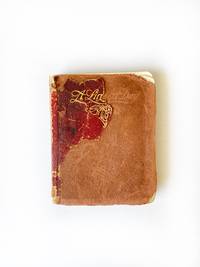
19180002150ABOARD THE USS MELVILLE LONDON ENGLAND. Good. 1918. On offer is an interesting 1918 - 1919 manuscript diary handwritten by Ensign Donald B King USNRF from Williamsport Pennsylvania aboard the USS Melville to London England. Dated December 20 1918 with the last entry July 4th 1919 writes a succinct 19 pages which includes 3-4 pages of addresses. The diary has a later May 23rd 1920 letter to his Father. Here are some snippets: "Left Charing Cross Station London at 11 AM had lunch on train with Captain Thomas Yale also James and Dole boarded channel steamer and left Folkstone at 2:15 Bologne France Walked about town and Dole and I gave rooms to 4 Red Cross Nurses. Reported at Headquarters 12 noon bag opened and empty then to Hotel Crillon Saw Carner Tew Streaker. Went to Union Cub met Miss Hughes ate dinner Louvre met Stucknewy and MCleod then walked about town with Dole Received Bread coupons went to Eiffel Tower back to Crillon and then to Continental Walked about town with Dole saw movie Went to movies met two girls came back to Hotel. Busy all morning with passports. Met Hutchinson American Trench Army Went to movies met two girls came back to hotel. Stopped for dinner at Modane France on border Left Modane 2 hours later arrived Turin Italy Saw Mediterranean Sea arrived Rome 11:30 AM Went aboard HMT Huntskill next day at 1:30 PM and sailed at 3 PM. Arrived at Salonika Greece this morning and put up a British Officers Club Passed thru Northern Greece and 200 miles of Southern Bulgaria arrived in Constantinople and stayed at the British Officers Club. Left Constantinople on Australia liner Katoomba and arrived at Varna Bulgaria Met Todd and Officers on A relief ship Westmount Capt Moor and Lieut Kchachdoonian arrived Batum American Red Cross Girl arrived April 3 tea at Consulate Sunday." Overall G.; Manuscript; 48mo - over 3" - 4" tall; KEYWORDS: HISTORY OF DONALD B KING USNRF US NAVY WWI WORLD WAR I SAILOR NAUTICAL MARINE MARINER SAILOR NAVAL WARFARE SEAFARING NAVY NAVAL BATTLESHIPS MARITIME SHIPS BOATS UNITED STATES NAVAL RESERVE FORCE USS MELVILLE AMERICANAHANDWRITTEN MANUSCRIPT AUTOGRAPHED AUTHORS DOCUMENT LETTER AUTOGRAPH KEEPSAKE WRITER HAND WRITTEN DOCUMENTS SIGNED LETTERS MANUSCRIPTS HISTORICAL HOLOGRAPH WRITERS AUTOGRAPHS PERSONAL MEMOIR MEMORIAL PERSONAL HISTORY ARCHIVE DIARY DIARIES JOURNAL LOG PRIMARY SOURCE FIRST HAND ACCOUNT SOCIAL HISTORY PERSONAL STORIES LIVING HISTORY ANTIQUITÉ CONTRAT VÉLIN DOCUMENT MANUSCRIT PAPIER ANTIKE BRIEF PERGAMENT DOKUMENT MANUSKRIPT PAPIER OGGETTO D'ANTIQUARIATO ATTO VELINA DOCUMENTO MANOSCRITTO CARTA ANTIGÜEDAD HECHO VITELA DOCUMENTO MANUSCRITO PAPEL . unknown
19240008100QUANTICO VIRGINIA FRANCE. Good. 1924. On offer is a unique bound ruled notebook often referred to as an FMP Field Message Pad. It is used by enlisted personnel as well as officers to take notes record information and serve as an aide memoire. Kept by U.S. Marine Corps Sergeant Francis X Martin the notebook has 56 blank ruled pages. It is a bit more than a third complete. The notebook measures 8 in by 4 in and is in good condition. It is dated 1918 but contains entries dated 1924. According to an article at Tampa Bay Times of July 1944 Frances X. Martin was the youngest gunnery sergeant at the American Expeditionary Force he enlisted in October 1914 and served in France during the WW1 after his discharge in 1932 he was a personal bodyguard of banker J. P. Morgan and in this capacity bodyguarded many famous people including Prince of Wales Lloyd George Lord Cavendish Giuseppe Volpe and Dwight Morrow. Eventually he settled in St. Petersburg in Florida where he participated in veteran organizations and was a vice president of American Legion Post 14 and in 1942 reenlisted and served at the Marine detachment of the Miami Naval Air Station. He notes his home location as Quantico VA Overseas Depot. The first 4 pages are a listing of duties of several ranks. This is followed by a Report of Activities in Active Service. The entries begin July 12 1924 and continue through Sept 16 1924. In succinct 1-line entries he details the principal activity of each day. For example: "July 12 Left for Wakefield Mass. July 15: Fired on range July 20: Camp Inspection & Liberty July 23: Shot for record & qualified Expert 303". He notes Aug 16: ". Birthday and on Aug 22 Field Day & drew $5.84 worth of chances on a diamond ring" no lady mentioned!. The remaining pages consist of several diagrams of Platoon and Section deployment formations as well as list of names and lists of infractions. A military historian would find this to be a clear and concise record of life with a Marine Corp Rifle Sergeant; Manuscript; 8vo - over 7¾" - 9¾" tall; KEYWORDS: HISTORY OF 1920s ROARING TWENTIES UNITED STATES VIRGINIA USMC; U.S. MARINE CORPS FRANCIS X. MARTIN; QUANTICO VA; OVERSEAS DEPOT FIELD MESSAGE PAD FMP MARINE CORPS TRAINING IN 1920S ARMY SERVICE IN 1920S MCB QUANTICO MARINE CORPS BASE QUANTICO FLORIDA WW1 VETERANS AMERICAN LEGION COMMANDERS GUNNERY SERGEANT AT THE AMERICAN EXPEDITIONARY FORCE AMERICAN LEGION POST 14 WW1 VETERANS FROM ST. PETERSBURG FL; YOUNGEST GUNNERY SERGEANT OF AEF J.P.MORGAN BODYGUARD AMERICANA HANDWRITTEN MANUSCRIPT DOCUMENT LETTER AUTOGRAPH WRITER HAND WRITTEN DOCUMENTS SIGNED LETTERS MANUSCRIPTS DIARY DIARIES JOURNALS PERSONAL HISTORY SOCIAL HISTORY HISTORICAL HOLOGRAPH WRITERS AUTOGRAPHS PERSONAL MEMOIR MEMORIAL ANTIQUITÉ CONTRAT VÉLIN DOCUMENT MANUSCRIT PAPIER ANTIKE BRIEF PERGAMENT DOKUMENT MANUSKRIPT PAPIER OGGETTO D'ANTIQUARIATO ATTO VELINA DOCUMENTO MANOSCRITTO CARTA ANTIGÜEDAD HECHO VITELA DOCUMENTO MANUSCRITO PAPEL . unknown
19180001191GEORGETOWN COLLEGE GEORGETOWN KENTUCKY KY. Good. 1918. Softcover. On offer is a charming 1918 Georgetown College girl's autograph book. Her name was. Thirty-one entries attest to the popularity of May Heberling by her student body friends. This is a fun humorous college remembrance book capturing the sayings songs actors of the time as well as the fact that World War I was still being fought. Each entry contains at least one full page with handwritten answers to such questions as: Favorite saying: aw shoot! Gee whiz! Well I'll declare! Dang it! By george! Ye gods and little fishes!!!!!! Happiest moment: When I met B.T! Driving a Buick! Enclosed find check! When i dreamed the Kaiser came to the U.S. Greatest ambition: to get off campus! To realize my ambitions! To be president of the world! To weigh as much as Martha M. Definition of study: depends on what I'm studying! H---on earth! Something I hadn't any use for! Something I'll have to do if I pass the finals! Where do you want to be in four years In a cottage built for two! On earth if I live! In the senoir class! At Vassar College! Any place but where I am! Out of the army! They also give their favorite songs actors what they like and hate most whether they want to marry where they'd like to visit. They give a description of themselves and some of the guys state their age as "draft age!" They clearly were worried about having to go to the army. Many of them give a summary of themselves on another page and some included photos of themselves. There are a total of 19 black & white photos of the students some showing the houses and cars of the times. Included ephemera: May's proof photos; a group photo taken in the 1940s or 1950s of May and 9 of her former classmates with names and "homecoming" thusly a reunion photo; a 1906 post card from May to her aunt in Danville Kentucky that identifies that May lived at the Kentucky Female Orphan School in Midway Kentucky; a class schedule and a composition she wrote for class. The book covers are worn but the pages and cover are still tightly bound. 9 x 7 1/2 x 1/2 inches. Overall G.; Manuscript; 8vo - over 7¾" - 9¾" tall; WORLD WAR I WWI WW I BAPTIST KENTUCKY GENDER STUDIES SOCIAL STUDIES WOMEN STUDIES SUFFRAGE ORPHANS GEORGETOWN COLLEGE AMERICANA HANDWRITTEN MANUSCRIPT DOCUMENT LETTER AUTOGRAPH KEEPSAKE WRITER HAND WRITTEN DOCUMENTS SIGNED LETTERS MANUSCRIPTS HISTORICAL HOLOGRAPH WRITERS AUTOGRAPHS PERSONAL MEMOIR MEMORIAL PERSONAL HISTORY ARCHIVE DIARY DIARIES antiquité contrat vélin document manuscrit papier Antike Brief Pergament Dokument Manuskript Papier oggetto d'antiquariato atto velina documento manoscritto carta antigüedad hecho vitela documento manuscrito . paperback
1918000509Worcester Massachusetts Northwood New Hampshire. Very Good. 1918. Full-Leather. Brimming with love and vitality this is the diary of Hazel Crandell of Worcester Massachusetts who married Joseph Nelson 27 years old on June 5th of Manchester NH in 1918. Her diary covers the full year minus a week in December including her daily routine her marriage to a U.S. serviceman stationed at Battle Creek Michigan when the war ended as recorded. The couple moved to Northwood New Hampshire upon his discharge. Hazel's family was from Worcester Mass. 45 Lake Avenue. Her father Clarence Crandell had a canoe rental business on the lake. Many families and names mentioned in the diary and some notes and memorabilia inserted including her list of wedding invitations. This diary shows a delightful head-over-heels young woman and the beginning of her journey into married life soon after the trials of World War I.; Manuscript; 16mo - over 5¾" - 6¾" tall; KEYWORDS: HISTORY OF WOMEN'S STUDIES GENDER STUDIES FEMINISM SUFFRAGE NEW HAMPSHIRE HANDWRITTEN MANUSCRIPT DOCUMENT LETTER AUTOGRAPH DIARY JOURNAL LOG KEEPSAKE WRITER HAND WRITTEN DOCUMENTS SIGNED LETTERS MANUSCRIPTS HISTORICAL HOLOGRAPH WRITERS DIARIES JOURNALS LOGS AUTOGRAPHS PERSONAL MEMOIR MEMORIAL PERSONAL HISTORY AMERICANA NEW HAMPSHIRE NEW ENGLAND MASSACHUSETTS WWI WORLD WAR I THE GREAT WAR SERVICEMEN EPHEMERA . hardcover
19180001017PETAWAWA ONTARIO OTTAWA AREA CANADA. Good. 1918. Full-Leather. On offer is an exceptional World War I Canadiana being the handwritten diary of a young Salisbury England man who spends his war service in Petawawa Ontario Canada near Ottawa. Beginning April 17th 1918 to April 18 1919 and then one June 13th 1922 entry from Quebec he begins stationed in Salisbury England he begins his journey to Canada on the 26th of April 1918. A casual reading suggests that he is a Sergeant in the Signals Corp and while not stated in the book an ephemera piece almost certainly identifies him being an appointment card for the Canadian Army Dental Corps having the name Middleton on it with his rank SM and his corps RMC . Sgt. Middleton is an excellent diarist being precise to the point but very dry mannered conveying all his emotions to his Cadet charges and comrades and those other he meets. While taking in the local color he marvels at the fine weather while the countryside is so much like the lowlands of his home. Yet in between making training materials for signalmen tending horses and the thousand other things he does in service to England and Canada he wishes he were in France showing what he is really capable of doing. Middleton makes this diary a fascinating piece of Canadiana coming from the perspective of this charming Englishman. This 8 x 5 inch notebook style diary is densely filled quite legible and our author never fails to share his observations and feelings and quite candidly too. Every page is quotable but a perfect example of this fellows charm is his tender goodbye to the one year old diary at the end as he discusses what they have both gone through and how he sends the book back to 'Old Blighty' for safety he closes saying 'Goodnight Old Man.' A few pages have trauma to the edges and some minor loss. The hinges are cracked but overall G.; 8 x 5 Inches; CANADIANA WWI WORLD WAR I SIGNAL CORPS PETAWAWA WRITER HOLOGRAPH SIGNED Personal Memoir Handwritten hand written autograph autographs signed letters document documents manuscript manuscripts writers writer author holograph Travel personal antiquité contrat vélin document manuscrit papier Antike Brief Pergament Dokument Manuskript Papier oggetto d'antiquariato atto velina documento manoscritto carta antigüedad hecho vitela documento manuscrito Papel . hardcover
19180001919BETTISFIELD PARK CAMP SHROPSHIRE ENGLAND. Very Good. 1918. On offer is an excellent well filled original 1918 World War I manuscript diary handwritten by British Army Officer C.H. McCallum while not specified directly in the book other related items in the original archive clearly identify the author who we learn from his service record in the diary spent the whole of 1918 in Britain where he was in command of the 568th HSE Home Service Employment Company part of the Labour Corps at Bettisfield Park Camp in Flintshire although the diarist himself records Bettisfield as being in Shropshire. We also learn that he was on active service in France and Belgium during 1916 and 1917 including a period with the Border Regiment on the Somme. McCallum writes of having been invalided back from France and as was often the case with injured men he was seconded to the HSE as a result of injuries sustained while on active service. We note a particularly interesting historic anomaly being that a number of the entries in the diary refer to German prisoners of war on camp and the diary does sometimes read as though it was the diarist's responsibility to manage these men. Thusly we believe the HSE Company was used to provide guards at Bettisfield. This would be an interesting fact given most research sources describe Bettisfield Park as a base for the No 2 Reserve Brigade of the Royal Field Artillery. We cannot find any historical record of prisoners of war at Bettisfield. McCallum does a super job as a diarist writing an entry for every day of the year many quite detailed and lengthy detailing day-to-day life in the camp and there are plenty of insights into the life of a home-based officer including references to comings and goings among his fellow officers courts martial logistical matters and so on all well mixed with the minutiae of his private life: particularly his wife Nancy and a new baby who live at Byfield in Northamptonshire. He follows military events closely in the press and frequently makes observations about the progress of the war. Of course this being 1918 the diary does include Armistice Day which he marks with a low key entry one that was perhaps characteristic of serving soldiers. He is pleased the war is over but seems quite low key perhaps fatigued with the War: 'A Great Day. Mons occupied by the British at dawn. Armistice signed 5 a.m. Fighting ceased at 11 a.m. The bells rang in the evening and people put out flags. Went into WIH's and drank a bottle of beer!' Overall VG.We note that we also have McCallum's 1929 India Service diary which he wrote as he assumed command of the 2nd Battalion Highland Light Infantry. Item #0001924.; Manuscript; 8vo - over 7¾" - 9¾" tall; KEYWORDS: HISTORY OF C.H. MCCALLUM WORLD WAR I WWI WW1 THE WAR TO END ALL WARS BETTISFIELD PARK CAMP 568TH HOME SERVICE EMPLOYMENT COMPANY LABOUR CORPS BORDER REGIMENT PRISONERS OF WAR POWS BRITISH HOME FRONT BRITANNICA ENGLAND HANDWRITTEN MANUSCRIPT AUTOGRAPHED AUTHORS MANUSCRIPT DOCUMENT LETTER AUTOGRAPH KEEPSAKE WRITER HAND WRITTEN DOCUMENTS SIGNED LETTERS MANUSCRIPTS HISTORICAL HOLOGRAPH WRITERS AUTOGRAPHS PERSONAL MEMOIR MEMORIAL PERSONAL HISTORY ARCHIVE DIARY DIARIES antiquité contrat vélin document manuscrit papier Antike Brief Pergament Dokument Manuskript Papier oggetto d'antiquariato atto velina documento manoscritto carta antigüedad hecho vitela documento manuscrito Papel . unknown
19180010031On offer is a fine description of life in rural Maine at the end of World War I. The author of this 1918 diary is 65-year-old Charles Green of Skowhegan Maine. Green was born in 1853 and spent his entire life in and around the village where he lived with his wife and three sons. He passed away in 1935 at the age of 82. When Green recorded the events of this diary he was a widower--his wife Emma having died a year earlier. He spends his days doing a variety of small tasks and enjoys meeting friends to socialize and play cards at a local hotel: "A.M. About home. P.M. Went to see income tax man and bank and then went to Butler's office and had papers made out. Evening at hotel a while and come home 8:30. Fine day" January 29. "A.M. Split wood. Changed clothes and went to town and played 63 at hotel and went over to garage. Evening played 63 a while and come and wrote letters. Mild and rained some" February 12. "Got up and come home and read till 4:50 P. M. Then went to town at 5 the Hotel Coburn took fire and burnt down. A cold night" March 3. In the back of the book is a family record listing family members and their birth dates. There are also several pages of contact information for friends and acquaintances. This small pocket diary measures 3.0 inches by 4.75 inches and contains 183 pages. It is one hundred percent complete. The cover shows wear and the back cover has been damaged. The binding is in good condition as are the pages. The handwriting is legible. For a local historian or genealogist this diary offers a fine picture of life in a small and fairly remote part of the United States at the close of World War I. Keywords: CHARLES GREEN; SKOWHEGAN MAINE; WORLD WAR I MAINE; AMERICANA; HANDWRITTEN; MANUSCRIPT; DOCUMENT; LETTER; AUTOGRAPH; WRITER; HAND WRITTEN; DOCUMENTS; SIGNED; LETTERS; MANUSCRIPTS; DIARY; DIARIES; JOURNALS; PERSONAL HISTORY; SOCIAL HISTORY; HISTORICAL; HOLOGRAPH; WRITERS; AUTOGRAPHS; PERSONAL; MEMOIR; MEMORIAL; ANTIQUITÉ CONTRAT; VÉLIN; DOCUMENT; MANUSCRIT; PAPIER ANTIKE; BRIEF; PERGAMENT; DOKUMENT; MANUSKRIPT; PAPIER OGGETTO D'ANTIQUARIATO; ATTO; VELINA; DOCUMENTO; MANOSCRITTO; CARTA ANTIGÜEDAD; HECHO; VITELA; DOCUMENTO; MANUSCRITO; PAPEL . hardcover
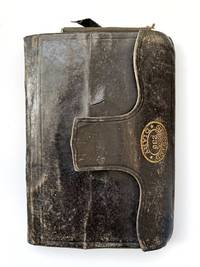
19180002124THAMES NEW ZEALAND SALT LAKE CITY UTAH. Good. 1918. On offer is the super original 1918 manuscript diary and travel journal handwritten by a young 25 year old Mormon missionary named James Milton Olsen b. January 20 1893 who after three years of Christian outreach and preaching the Gospel of Mormon in Thames New Zealand to the Maoris the indigenous people of New Zealand returns to America. The son of Utah rancher George Theodore Olsen and Catherine Maria Edwards Olsen. He married Hazel Acord on March 5th 1919. Beginning April 15 1918 James' is at the end of his 3 year mission and heading back to the United States. The 43 page narrative begins with Elder Olsen in New Zealand spending his last weeks attending meetings saying goodbyes and packing for his trip home. He spends much of the time with the President of the New Zealand Missions Elder James N. Lambert. BIO NOTES: President Lambert: "Elder James N. Lambert former president of the New Zealand mission returned July 3rd 1920 after nearly 51 months of missionary work in that far-off land. While there he published in the Maori language the second edition of the Book of Mormon 3000 copies." 1920 Improvement Era official magazine of The Church of Jesus Christ of Latter-day Saints. Goodbyes said Elder Olsen boards a train for Auckland spends a few days there and then boards the SS Niagara for the trip home. Here are some snippets: "On board ship were the Premiers of Australia The Rt. Hon. Mr. Massy of New Zealand and to this Mr. Massy I had a letter of introduction. Then there were other big men such as Sir Joseph Ward one Prime Minister of N.Z. the Sect of the Navy of Australia and several French Generals. So we had a Whakahihi crowd." Sir Walter Massy-Greene major politician and entrepreneur; Joseph Ward 17th Prime Minister of New Zealand; George L. Macandie Australia's Secretary of the Navy. "April 17th 1918 .At 12 o'clock we ate dinner with Billman's and at 1 o'clock I had my photo taken with Howard Johnson. At 2 o'clock we called in at Parne Thorn's pawn shop and had a good conversation then caught the train and rode 12 miles to Omahu. Arriving there we walked 2 or 3 miles and met all the natives and latter all the elders rode in from Kerikeri. In the evening they gave us a lovely dinner and at 7 o'clock began the meeting. Elder Russon and I were called on to speak to give our farewell talk. Elder Mow interpreted for me. After we had finished the Maoris talked to us telling their sincere love for the Elder's and biding us goodbye. We went to bed late." "April 18th 1918. It was raining all day so we remained at Omahu until 4 o'clock. We played the phonograph read the Improvement Era and jumped until we were very stiff and sore. In the afternoon train time I had to bid them all goodbye. I rubbed noses with nearly 15 natives and I bid good luck to Elders Mow and Moody. We were driven to the train in a two wheeled cart by a native .I cleaned up and wrote up my diary preparing to meet Elder Wright who is supposed to arrive today by the 1 o'clock boat. His is taking my place. At one o'clock we walked to the boat and waiting until 1:30 for it to arrive at the wharf. Elder Wright came. We all strolled back to Sister Johnston's home. I gave him possession of the bed which I had been sleeping in for two years also the wardrobe which I had been in possession of. In the afternoon we visited the chapel. He found it to be much smaller than the one in Auckland. In fact it used to be the mayor's barn." "April 20 1918. I slept with Howard Johnston didn't get up until 7:30. Washed and wrote diary. Elder Wright and I caught the 9:30 train and took two boys to Kerikeri where I baptized them. The water was very cold so early in the morning but managed and the boys fared all right. There were several elders so it was a nice service. After that I went around to all the natives and rubbed noses with them all biding them farewell. One old lady gave me a kit Clara Watene's mother. We bought several pictures of the last conference from Bro. Spencer of Auckland then caught the train and rode back to Thames .In the evening Pres. Lambert came from Auckland. We were all happy to see him. He always brings a happy spirit. We ate dinner at Sister Johnston's. At 7:30 we held a good open air service. I did not assist in singing as my throat was too bad. I stood on the corner however. Elder's Mow Wright and the president talked ." "April 23rd 1918. I ate breakfast at Payne's then came home and destroyed all my letters with the exception of a very few. I also tied strings around all my books and prepared them for packing. In the afternoon Elder's Wright Stalling and I visited the hospital where I bid goodbye to Mrs. Rutallia whom I had been visiting for 2 years. The poor soul had lain there for over 14 years. From the hospital we went to the police station. Elder Moody was with us. I bid him goodbye also. He had been a very good companion and helpmate ." "April 24 1918. I ate breakfast at Royal's then came to the house and began packing up. If ever I had to plan it was then to get all my belongings in my suit cases and trunk then I had to give away many things. But finally everything was packed. I had one trunk weighing 200 lbs. 2 suitcases one hand bag and a roll of blankets ." He attends a social and then for the final time he meets many of his good friends and bids them goodbye and many of them give him gifts which he lists. Then he says "After the social it was with difficulty that I bid most of them goodbye." "April 25th 1918. Went to Monteque's Lemmee's and others bidding them goodbye then went to the station where several of the saints and friends were there to see me off. It was hard to say farewell as one never can tell when friends will meet again especially those of a foreign country. It was hardest of all to say goodbye to Bro. Payne as he had been my heartiest supporter. Elder Russon and I left at 9:30 Sister Payne Johnston and Wasene rode with us as far as Parekura then we bid them farewell. We rode on to Auckland getting there at 5 o'clock P.M. We had a cater take our things to headquarters costing us 2 shillings each. In the evening after a lovely supper we went in company with President and the Auckland Elders and the President's daughter Phyllis to a cottage meeting at Mrs. Trae Farland's. Four of us were called on to speak." "April 26th 1918. Went with the president and a number of elders to the American council's officer and obtained my permit to leave New Zealand. My companions Elder Gallacher and Pearson could not get theirs until later. After this I bought three towels costing me 5 S. then the president Elder Patrick and I tried to find the home of Sister Johnston a saint who does not know where to stay with us or join the reorganized church. We were unable to find her. Coming back to headquarters I wrote two letters one to Mr. Johnston of Thames and Toki Watene of Kopu. Then wrote up in my diary. In the afternoon President Lambert gave me two letters one to my father and one to Mr. Hardy a life insurance man recommending me to that business. After taking with the president Jack Monteque came to the mission home and he and I went downtown. We had a shave in Frank Monteque's shop ." "April 30th 1918. I packed my trunk and visited. I went to Mrs. Elizabeth Johnston's and while there I met two Elders of the Josephite Elders. They had been given our mission a very bad name. They are very prejudice against us. Their main subjects are blood atonement polygamy true succession to the President. They argued with me 4 hours. I held my own. In the afternoon I received letters and telegrams from the following ." He then lists many names "May 2nd 1918. He is sailing on the steamship "Niagara" We took our trunk and suit cases to the boat as we expected it to leave any moment. The custom officer examined a few of our things then we were able to take them on board. At noon I ate dinner at headquarters then at half-past 12 Elder Patrick and I visited the Hanby's. They treated us very kindly. They gave me several photos. In the afternoon I received my release a diploma which I had worked for for nearly 3 years. I was happy to get it " He again bids everyone goodbye but the boat was running late so they bid more people goodbye including Miss Hanby who was at the gate. He says "She was the last girl I said goodbye to in New Zealand. She is certainly one of the best girls I ever met in my life." "We went back to the ship and finally went to bed. The next morning we were out in the mid ocean. The passengers were all lovely. On board ship were the Premiers of Australia The Rt. Hon. Mr. Massy of New Zealand and to this Mr. Massy I had a letter of introduction. Then there were other big men such as Sir Joseph Ward one Prime Minister of N.Z. the Sect of the Navy of Australia and several French Generals. So we had a Whakahihi crowd. Our cabin was no. 124 and 72' 2" square. In there was a fan electric lights 3 beds a dresser a wardrobe a wash basin and cloths racks." "May 4th 1918. Was not feeling too well so remained in bed a few hours. Missed two meals. I played a game of tennis with two ladies and wireless operator. He was a splendid friend taking us over the boat and informing us to every move and movement. Saturday evening we sang and held a dance. We were even asked to join several times but didn't have the nerve to try." Then to Sura and off for a little while and have lemonade in the hotel. "May 6th 1918. If you will remember 3 years ago I mentioned in my diary that we went to bed on Tuesday and got up on Thursday losing a day. Tonight it is making up that day. We go to bed Monday night and get up on Monday morning. Had hotcakes for breakfast also egg omelet. Began reading "The Light of Western Skies" by Zane Grey. We played deck quotes and other games. Met the Sec. to Mr. Ward one prime minister of New Zealand. We held a concert at night." "May 7th 1918. It was very warm. Several persons were curious over our being "Mormons." We conversed with several over religion. I had my laundry done up. We couldn't get fresh water as it had been mixed by mistake with the salt water .The boat games were very interesting. There were many of the women who smoked. Some thought it strange that we wouldn't gamble ." "May 12th 1918. Hawaii We were in American waters at 8 o'clock. It was a happy day for us to see American flags flying all over. Our boat flew an American flag. The doctor came on board and examined all of us. There our passports were ____. Then at 2 o'clock we went ashore. I was one of the first off. We rented a motor car for 3 hours and rode over the island. It was one of the most beautiful places I had ever seen. We went to what is known as the Ecquarium Aquarium where you see several kinds of fish. They are of every color known. All kinds' sizes and colors. We also rode to Diamond Point Mountain. We rode to Waikiki Beach where we saw surf riding. After riding we visited the "Mormon Church." We met the secretary his wife and three elders. They were not very sociable. We ate a big dinner down town .At 5 o'clock we went back on the ship. There were hundreds of people to see us off. Many of the natives were selling flowers .The boat pulled out of Honolulu at 5:30. We went to bed early. Two new Elders came on board returning home." BACKGROUND NOTES: One online source: "Most Maoris had been converted to Protestant and Roman Catholic Christianity by the 1850s; but because they believed they had been cheated in land deals by the whites whom they called pakehas the Maoris made war on the pakehas. These wars lasted from the late 1850s until the 1870s. When the wars ended the time seemed to be right to take the restored gospel to this outstanding part of the Polynesian race. When William Bromley was called as New Zealand mission president in 1881 President Joseph F. Smith told him that the time was right to take the gospel to the Maoris. The first successes among them came in 1883 but once the Maoris and the Mormons got together Maori converts flocked into the Church. By the end of 1884 the missionaries had firmly established the restored gospel among the Maori people. The next several years were very satisfying to most of the elders and sister missionaries several couples were sent to New Zealand beginning in 1885. In August 1885 there were 16 Maori and 4 pakeha branches of the Church and this number continued to grow steadily for the next 15 years. At the close of 1887 there were 2573 Latter-day Saints and by the turn of the century there were nearly four thousand members of the Church in New Zealand. Most of the Maori tribes including large numbers in the north around Whangarei and the Bay of Islands had been introduced to the gospel. In 1901 there were 79 branches. Clearly since the early years in Hawaii the Church had not enjoyed so much success with a Polynesian people." The 5¼" x 8½" diary is written in a unique once rich looking red leather gilt stamped flip top style book that has a worn and torn red leather cover detached but accounted for with his name stamped in gold lettering. The book is hand numbered beginning at 313 to 358. We note that like all LDS Church diaries each page has a carbon copy. What is unusual and unique is that most other Mormon missionary diaries had carbons with one copy given to the church. It appears Elder Olsen kept his copies. Overall G.; Manuscript; 8vo - over 7¾" - 9¾" tall; KEYWORDS: HISTORY OF ELDER JAMES MILTON OLSEN NEW ZEALAND MISSIONARY UTAH MORMON CHURCH CHRISTIAN OUTREACH CONVERSION OF NATIVE PEOPLES ABORIGINALS AND RELIGION RELIGIOUS CONVERSION CHRISTIAN OUTREACH THEOLOGICAL MISSIONARY MISSIONARIES CHRISTIAN CHRISTIANITY MAORIS WWI WW1 POST WORLD WAR I THE CHURCH OF JESUS CHRIST OF LATTER-DAY SAINTS LDS CHURCH NEW ZEALAND MISSIONS ELDER JAMES N. LAMBERT PAKEHAS KIWI ANZAC PROSELYTIZING JOSEPHITE ELDERS AMERICANA HANDWRITTEN MANUSCRIPT AUTOGRAPHED AUTHORS DOCUMENT LETTER AUTOGRAPH KEEPSAKE WRITER HAND WRITTEN DOCUMENTS SIGNED LETTERS MANUSCRIPTS HISTORICAL HOLOGRAPH WRITERS AUTOGRAPHS PERSONAL MEMOIR MEMORIAL PERSONAL HISTORY ARCHIVE DIARY DIARIES JOURNAL LOG PRIMARY SOURCE FIRST HAND ACCOUNT SOCIAL HISTORY PERSONAL STORIES LIVING HISTORY ANTIQUITÉ CONTRAT VÉLIN DOCUMENT MANUSCRIT PAPIER ANTIKE BRIEF PERGAMENT DOKUMENT MANUSKRIPT PAPIER OGGETTO D'ANTIQUARIATO ATTO VELINA DOCUMENTO MANOSCRITTO CARTA ANTIGÜEDAD HECHO VITELA DOCUMENTO MANUSCRITO PAPEL . hardcover
19180008216New England. Good. 1918. On offer is a notebook journal of a young man who would go on to become a note antiquarian and archaeologist. This journal is a small 2-ring flip-top style binder containing 134 pages. It measures 7.5 inches by 4.75 inches and is about 95% complete. It is in good condition and the handwriting is legible. Accompanying the journal is a lovely black and white photograph taken of the author when he was an infant. Eric Hyde Lord Sexton was born in 1902 in New York City in 1902. He came from a wealthy family. He studied at Princeton University initially and then earned an MA from Harvard. Travelling to England he studied at Oxford earning a BLitt. Returning to the United States he joined the faculty of Harvard and taught archaeology. He was also a noted antiquarian and was a Fellow of the British Society of Antiquarians. He wrote several books and when he passed away in 1980 he left an unfinished book on life in Saxon England. In WWII he served in the U.S. army as an Intelligence Officer having attained the rank of Major. This journal written when he was 16 appears to be both a daily journal and a class writing exercise. Some of the entries show definite signs of having been corrected or reviewed. It covers the period from Oct. 15th 1918 until Dec 13th 1918. His entries recount daily events and are written in a very stylized manner as if writing for an older audience perhaps his teacher. The following excepts will give a flavour of this journal: "Today I persued my regular course of studies. During my free time in the afternoon I secured detention for neglecting yesterday to tell the "prefect" that I had re-swept my room. Later in the afternoon I surveyed until it was time for my English class. I was very interested in hearing the excellent answer made by our President to the German note of peace proposals. I wish the war would come to a speedy and victorious finish so that my dear father could regain some of his former health and vigor. ." Oct 13; "This day I attended school chapel as usual and posted the list of library rewards. I went after the morning service to the room of H.E. Scheidt a professor at this place where I perused a good deal of the literature pertaining to Harvard University. I found this most interesting to me and remained there till about lunch time. In the afternoon I had a period at the piano with one Mr. Schenk a Jew from the violins of the New York Symphony orchestra. ." Oct 20. What is interesting is that whoever was marking his work stroked out the word Jew with a red marking pen. None-the-less it illustrates the ongoing problem of discrimination engrained in the fabric of the United States both then and extending forward over the next century. "When I awoke this morning I heard all of the church bells ringing in town and when I got up to the buildings I found that peace had been declared. This time it is no idle rumor. The whole school attended chapel. The headmaster said we could celebrate by following our usual course of study but that in the evening we would march in town in the regular battalion formation. We were excused from classes in the afternoon. ." Nov 11. For a social historian this journal offers an excellent look into the private school life of students from well-to-do families in New England. It addresses directly and indirectly the cultural norms and values of that segment of society which was the source of many of America's future leaders and social influential members of society. His entries are lively with wry observations of school life; Manuscript; 12mo - over 6¾" - 7¾" tall; KEYWORDS: HISTORY OF; 20TH CENTURY; 1910s; UNITED STATES; NEW ENGLAND; ERIC HYDE SEXTON; ARCHAEOLOGY; SOCIETY OF ANTIQUARIANS FELLOWS; HARVARD UNIVERSITY; AMERICAN ARCHEOLOGISTS; BRITISH SOCIETY OF ANTIQUARIANS; PRINCETON ALUMNI; ART HISTORIANS OF THE 20TH CENTURY; ANTIQUARIANS AND COLLECTORS IN 20TH CENTURY AMERICA; AMERICAN YOUTH IN THE EARLY 20TH CENTURY; BOARDING SCHOOL STUDENTS IN 1910S; EDUCATION IN EARLY 20TH CENTURY AMERICA; KENT SCHOOL IN CONNECTICUT; UPPER CLASS EDUCATION IN AMERICA; LIFE IN BOARDING SCHOOLS; FOUNDERS LEAGUE SCHOOLS; COLLEGE PREPARATORY SCHOOLS IN CONNECTICUT; AMERICANA HANDWRITTEN MANUSCRIPT DOCUMENT LETTER AUTOGRAPH WRITER HAND WRITTEN DOCUMENTS SIGNED LETTERS MANUSCRIPTS DIARY DIARIES JOURNALS PERSONAL HISTORY SOCIAL HISTORY HISTORICAL HOLOGRAPH WRITERS AUTOGRAPHS PERSONAL MEMOIR MEMORIAL ANTIQUITÉ CONTRAT VÉLIN DOCUMENT MANUSCRIT PAPIER ANTIKE BRIEF PERGAMENT DOKUMENT MANUSKRIPT PAPIER OGGETTO D'ANTIQUARIATO ATTO VELINA DOCUMENTO MANOSCRITTO CARTA ANTIGÜEDAD HECHO VITELA DOCUMENTO MANUSCRITO PAPEL . unknown
19180002202JOBSTOWN NEW JERSEY TO THE FRONT IN FRANCE. Good. 1918. "Ernest Cook is my name/America is my nation/Jobstown NJ is dwelling place/And God is my Salvation/When I am dead and in my grave/And all my bones have rotten/This little book will tell my name/When I am long forgotten." So begins the diary on offer; a fascinating manuscript diary handwritten by a sensitive young soldier named Ernest Cook March 3 1895 - March 1972 who bravely fought on the front lines for America near the end of World War I. This 5 year diary a Christmas gift from his lady friend Alice D. Shinn as per inscription Makes for an interesting comparison between his life in each year - a life that changes dramatically with the conclusion of the War I. Beginning January 1918 we learn that Ernest is a 22-year-old member of 303rd Field Signal Battalion Company B in the US Army. Not yet on active duty they are stationed near Cook's home in New Jersey and his writings reflect monotonous days of inspections drills evenings at the YMCA with friends and visits with family. Cook is often sent to work with the horses in the stables and is no stranger to hard labor yet he is a sensitive young man as indicated by multiple entries indicating his insecurity about how friends and superiors feel about him. On January 9 1918 he writes: "Inspection Room orderly worked hard. I got very discouraged. My only comfort at home was thinking I had a few friends". Again on Valentine's Day 1919 his sensitivity and youth shine through: "Valentines from home and Violet and May. Fatigue duty very muddy. Physical exercises. Disappointed to the core. Snyder disliked me on a pass. Had a date with Alice". While he struggles to succeed at work he maintains a healthy interest in the opposite sex evidenced by his description of watching "fellows loveing couple of girls in barracks next door" and his tales of juggling multiple women such as the day he received a 'funny little letter from Ms. Kirby Riverside date with Alice and Hilda'. Things change for Ernest's Company in late February 1918 with the draft of many new men. On February 23 he describes 150 newly drafted men coming in and observes some of these new rookies as they struggle to fit in. On March 3 1918 Ernest has his 23rd birthday and just a week later he writes that there have been "rumours of moving". These rumours do not materialize until late May 1918 when Ernest's company moves to Europe. On May 26 1918 Ernest's company is called to ship out and they are on deck in "our battleship" by the afternoon of May 27. Their journey to England is treacherous. Cook describes intense sea sickness and his ship narrowly avoiding a torpedo strike. He finally arrives in England on June 8 after "sailing the Irish Sea" and here begins the most fascinating part of this diary - not just Cook's riveting tales of war but also the contrast of Ernest Cook soldier and Ernest Cook 23-year-old young man. His entries swing dramatically from militaristic on June 21st: "Took office over from the British. Had many an argument with the Townies and don't like them" to youthful on June 25th when he went "To visit a French Madammoisella". Cook's summer of 1918 is a melting pot of air raids and parties. Fighting and fun. As summer winds down Cook experiences his first major loss with the death of company member Leland S. Clancy on August 19 1918. He writes "lost L. Clancy by drowning. Very sad". He doesn't have very much time to process this loss as his company is moved out of England to France at the end of August. His company slowly makes its way to the front lines. On September 13 the horror of war creeps into his entry: "Thousands of prisoners coming in. We hike all night to try and keep up to Infantry. Heavy firing. First real sight of death of war dead men and horses". Between September 19-October 2 1918 he is on the front lines of the war and does not write anything. We find out later that is company loses many men and he is given increasing responsibility. Finally on October 3rd they are moved out of the line of fire and his writing resumes. His entry on October 3rd is simple: "Back to company moved out of the lines. Hiked all night and Hopkins lost my pack. The horse died on the road". In early November there are a pair of entries that exemplify the spirit of Ernest Cook: Nov 3 "Austrians lay down their guns" Nov 4 "Howie tied my pajamas all up in knots". Cook is in Blois France when the war ends. On November 11 1918 he writes with enthusiasm that "the Armistice signed. Howie Mac and I out in big parade everybody going wild .walked until I couldn't stand". The enthusiasm is short-lived as Cook and his company are stuck in France cold in the barracks until January 14th when they are finally given a ship to return home. Once again Cook writes about debilitating sea sickness. Finally on January 22 1919 Cook "Saw the lights of dear old N.Y. about 6pm and oh boy the cheers. I clinked to a life where I could see the dear old country and not be bothered". Then the next day: "Mayor out to meet us. Pulled in docks at 12 noon unloaded 2pm. All organizations welcomed us with eats such was great. Teleg. Mother. Up on ferry then a train to Merritt". The rest of the diary which Cook maintains until April 15 1919 details a post-war life of job offers work in Lewiston and lots and lots of new women to date! While Cook ends his diary in the spring of 1919 there is I entry he has dated 1920 that gives us the sense that he is happy in his new post-war life. This diary is a tribute to the boys and men who fought in World War I for America. It is an in-depth look at the life of a soldier both on the battlefield and off. Historians and researchers of World War I personal accounts will delight in Ernest's frank practical account of experiencing the atrocities of war and the sharing of emotional expressions on how he is affected as he comes of age. Overall G.; Manuscript; 16mo - over 5¾" - 6¾" tall; KEYWORDS: HISTORY OF ERNEST COOK JOBSTOWN NEW JERSEY WORLD WAR I 303RD FIELD SIGNAL BATTALION COMPANY B US ARMY ALICE D. SHINN WWI WORLD WAR I WW1 WORLD WAR ONE THE GREAT WAR US SOLDIERS MEN'S STUDIES GENDER STUDIES THE WAR TO END ALL WARS AMERICANA HANDWRITTEN MANUSCRIPT AUTOGRAPHED AUTHORS DOCUMENT LETTER AUTOGRAPH KEEPSAKE WRITER HAND WRITTEN DOCUMENTS SIGNED LETTERS MANUSCRIPTS HISTORICAL HOLOGRAPH WRITERS AUTOGRAPHS PERSONAL MEMOIR MEMORIAL PERSONAL HISTORY ARCHIVE DIARY DIARIES JOURNAL LOG PRIMARY SOURCE FIRST HAND ACCOUNT SOCIAL HISTORY PERSONAL STORIES LIVING HISTORY ANTIQUITÉ CONTRAT VÉLIN DOCUMENT MANUSCRIT PAPIER ANTIKE BRIEF PERGAMENT DOKUMENT MANUSKRIPT PAPIER OGGETTO D'ANTIQUARIATO ATTO VELINA DOCUMENTO MANOSCRITTO CARTA ANTIGÜEDAD HECHO VITELA DOCUMENTO MANUSCRITO PAPELBIOGRAPHY BIOGRAPHICAL AUTOBIOGRAPHICAL AUTOBIOGRAPHY PERSONAL NARRATIVES . unknown
19180002178IOWA PHILADELPHIA NEW YORK. Fair. 1918. On offer is an interesting original World War I era diary handwritten by F.A. Anderson an American yeoman in the U.S. Navy and devout Christian who details his travels training and duties related to his service for America in 1918. The diary spans July 23 1918 - Feb 28 1919 and chronicles the author's time in Iowa The Great Lakes Philadelphia and New York City. Anderson's diary begins in the summer of 1918 with Anderson as a third class Yeoman who is being moved from company to company at the end of World War 1. When we meet Anderson he is visiting Co. 434 at Camp Boone in Iowa working under Commander Earl Osmon a sheet metal worker from Nettle Creek Grundy County Illinois. While there he was inoculated for typhoid and discusses a day in the life of a yeoman including the varied work he was assigned "chow time" at the base and preparations for the Camp's Inspection Day. While Anderson does not discuss very much about the war itself he is a keen traveler and as he moves from Camp Boone to Camp Perry at the Great Lakes finally settling in Philadelphia he uses descriptive language to catalogue his travels. From his observation of a church service in Farragut Ravine in the Great Lakes where he felt that "God was close" to his time traveling through Mount Union "the prettiest place he had ever seen" on his way to Philadelphia Anderson leaves no detail unrecorded. The real meat of the diary takes place from Sept 9 1918 onward where Anderson stays and works in Philadelphia under an officer he and his fellow yeomen call "Buffalo Bill" due to his resemblance to the original. While it is clear that Anderson works hard he also has ample time to tour Philadelphia and attend services in many local churches. On his first few trips through the state he didn't "think much of" Philadelphia but he warms to the state as time goes on. His travels take him all over the state and he comments on several local landmarks including: the Bethany Brotherhood House site of the Battle of Germantown Independence and Congress Halls Betty Ross' House Strawberry Mansion Fairmont Park Schuylkill River William Penn's House Quaker Meeting Hall Christ Church where he sat in George Washington's pew and Carpenter's Hall in Old Philadelphia. Anderson was actually out touring the state on October 6 1918 during the Philadelphia's Flu Epidemic. He notes that all "places of gathering" were closed and that they were re-opened by November 3rd. His entry on November 7 1918 is full of excitement: "Rumour that the armistice had been signed causes greatest excitement in the history of the nation. Navy yard workmen quit work. All whistles etc. on boats blow. Streets fill with people blowing horns and throwing confetti." By Christmas Day 1918 Anderson has passed his exam for Yeoman 1st and he concludes his diary with a trip to New York City having recently completed his health tests as a step to receiving his discharge papers from the army. This diary would be a fascinating read for anyone interested in Philadelphia in the 20th century or those who are interested in the life of a yeoman at the conclusion of World War 1. Also of note several days of the diary are written in code notably Halloween 1918 is chronicled in code. Overall condition is fair to good. Some pages have water damage but you can still make out the handwriting. Author writes in pen and pencil. Some damage to the interior spine of the book but it is in tact and all pages are in tact. Author has written his own dates in so some entries are quite long and others are short. Author has filled 28 pages or so approximately ¼ of the 4x6 book with narrative and if you flip to the back of the book you will note three of names and addresses and the author has tipped in pages of printed naval ranks.; Manuscript; 24mo - over 5" - 5¾" tall; KEYWORDS: HISTORY OF F.A. ANDERSON WORLD WAR 1 WWI WW1 THE GREAT WAR THE WAR TO END ALL WARS YEOMAN NAVAL US NAVY COMMANDER EARL OSMON NAUTICAL MARINE SAILORS THE WAR AT SEA TYPHOID FARRAGUT RAVINE IOWA CAMP BOONE CAMP PERRY GREAT LAKES PHILADELPHIA GOD BUFFALO BILL BETHANY BROTHERHOOD HOUSE BATTLE OF GERMANTOWN INDEPENDENCE AND CONGRESS HALLS BETTY ROSS HOUSE STRAWBERRY MANSION FAIRMONT PARK SCHUYLKILL RIVER WILLIAM PENN'S HOUSE QUAKER MEETING HALL CHRIST CHURCH CARPENTER'S HALL OLD PHILADELPHIA PHILADELPHIA FLU EPIDEMIC 1918 FLU EPIDEMIC ARMISTICE NOVEMBER 7 1918 NEW YORK CITY CENTRAL PARK AMERICANAHANDWRITTEN MANUSCRIPT AUTOGRAPHED AUTHORS DOCUMENT LETTER AUTOGRAPH KEEPSAKE WRITER HAND WRITTEN DOCUMENTS SIGNED LETTERS MANUSCRIPTS HISTORICAL HOLOGRAPH WRITERS AUTOGRAPHS PERSONAL MEMOIR MEMORIAL PERSONAL HISTORY ARCHIVE DIARY DIARIES JOURNAL LOG PRIMARY SOURCE FIRST HAND ACCOUNT SOCIAL HISTORY PERSONAL STORIES LIVING HISTORY ANTIQUITÉ CONTRAT VÉLIN DOCUMENT MANUSCRIT PAPIER ANTIKE BRIEF PERGAMENT DOKUMENT MANUSKRIPT PAPIER OGGETTO D'ANTIQUARIATO ATTO VELINA DOCUMENTO MANOSCRITTO CARTA ANTIGÜEDAD HECHO VITELA DOCUMENTO MANUSCRITO PAPELBIOGRAPHY BIOGRAPHICAL AUTOBIOGRAPHICAL AUTOBIOGRAPHY PERSONAL NARRATIVES . unknown
19180002343ASEA ABOARD THE USS MOCCASIN. Good. 1918. On offer is a super original ship board manuscript diary handwritten by as inscribed 'George W. Oliphant S. S. Moccasin for formerly the German passenger liner "Prinz Joachim." Father: Charles H. Oliphant 169 Danforth St. Portland Maine." George does a great job as a diarist if a little sporadic at times bringing the action aboard ship to startling reality in his descriptive entries. The page a day style diary has 100 or so entries most of those dated February 7th through April 26th with few other entries before and after starts upon enlistment but before he can join he is trying to get some kind of license and having to go through the courts to do so. Likely regarding his rating in the Navy. The diary goes a long way to show the danger and at times dire hours for the ships and men at sea who served in support of the fighting elements and the people suffering the War in Europe. To that end this ship was a refrigerated cargo ship delivering frozen food to Bordeaux France and the very first trip out there is trouble for the crew and ship which while makes for exciting reading the reality for these brave sailors near fatal. Here are some snippets: 1918 "January 18th Called on Inspectors who agreed to give me my license. My argument evidently worked." "January 30th Went to New York and enrolled as officer in Naval Reserve as Ensign. Ordered uniform and returned on night train." "February 7th Called on Mr. _____and with whom had lunch. Advised him that I could not consider Montpelier job without notifying firm. Decided to drop entire matter until my return from war Took three o'clock for NY. Arriving late. Staid at Saint George Brooklyn .Reported for duty at 4:30 P.M. at N. A. K. to Captain Beckwith. Moved to Hunt's for night and went to theatre with them where we saw Wm Gillette." "February 16th Called on Bowman and advised him that for T.'s sake an my families I would drop the matter about the license tho I felt that I should in justice to myself clear my name of any imputation of impropriety in case such an opinion had been given credence by the Bureau owing to Wilson's jealousy and circulation of false stories about my school. Went out with York of Coast Trans. Line with whom I hope to go across ." "February 17th Called on Capt. Thompson and among other things insisted either that he tell Cap. Beckwith of the status of my license or that I do so. He said I might be disenrolled. I told him that I would prefer to be disenrolled to holding a commission under my misunderstanding as to my qualifications. He finally agreed to tell B. himself tomorrow. I advised him that I intended to carry my appeal to Kedfried which he seemed glad to hear." "February 20th 9:00 A.M. Reported on board S. S. Moccasin Captain Powers commanding and then took 24 hours liberty. Went to Anderson and ordered coat. That night with Em. To Kenney's Vaudeville and home to Hunt's at 2 A.M." "February 25th & 26th Mr. Sullivan Executive officer Lieut reported and assigned to me duties of assistant to Executive .Stood 24 hour watch 12 P.M. S. S. Moccasin went into commission. John A. Meagler Ensign reported for duty from USS Jupiter Trenton N. J." "March 4th On duty all day rigging booms etc. etc. 4:10 P.M. Called Police Headquarters reg. theft of pitcher and having found finger prints on saloon rail. Detective appeared an hour later but could do nothing. 8 P.M. Lieut. Goodphile came aboard finger print expert from Police Headquarters and "fixed" prints which were to be photographed tomorrow. Stood watch of Meagler from 6-12 midnight sick. Rain snow warm." "March 11th 9:20 A.M. got under way 4 tugs assisting for trial trip to adjust compasses etc. Stood out 5 miles E. of Ambrose Channel L. S. I was on duty on bridge from 9:20 to 4:30 when we docked South side pier 6 Bush G Terminal. Hit telegraph on head first time after watching old man. Evening Murdock and I took in sights. Flying sign "S" and recognition signal." "March 23rd 1:30 P.M. We left Bush Docks about 9:30 and made way for Ambrose Ch. L. V. the pt. of departure for the convoy to consist of 39 vessels. Formation made at 4 o'clock beautiful day cool but clear. 39 vessels in 6 columns stretching for miles with cruiser De Monies in lead of No. 3. Col. and we 2nd in No. 2 Col. Frenchman leading F'chman dropped out leaving us in lead. Captain gave me 4 to 8 watch Murdock 1 -4 Hennesey and Ryan 8-12." "March 26th On duty at 4 A.M. All alone on the bridge of a 7000 ton ship and the Atlantic for so far as we could tell not a ship was near us. Weather cleared and at 5 I discerned two lights one forward one aft. Whether tramps or neutrals or part of convoy I could not tell. Called old man. Held course and at 5:30 the clouds lifted and scattered all over horizon 20 miles away. I picked up 12 ships. A welcome sight. I took my first sight for Longitude and came within 4 miles of old ____." In the morning 20 ships were with them but they also discovered a leak and had to work hard to repair it. Said it was 15 feet below water line and this is when all the excitement begins. "March 30th Water gaining. A seam is also spreading and you hear the water rushing in and falling in that below. An awful sound to one who realizes its seriousness. A storm might prove fatal to the safety of the ship. Captain suggested the Azores as a possibility." EDITOR'S NOTES: The Captain asked him to keep quiet about the seriousness of the leak but it was very distressing and the storm was getting worse. And he's still standing watch alone. They find out in the morning that they are now 3 miles off course and still in danger he writes: "Wind howling shrieking seas up to bridge 33 feet not a ship in sight. I went to supper when half way there we took a terrific roll 50 degrees and I was thrown clear of my chair for 15 feet hitting the dining table on my back in middle of room. As I passed made a grab for Exec's chair which came up by the roots. I landed on my shoulder beyond the table with another injury than a smashed thumb which the doc. fixed up. Just as I was returning to the bridge a boy came running up from engine room for doctor ." A 300 pound structure tore loose and flew across the engine room floor hurting several men and one was yelling that all the life boats were breaking loose. One man came near to going overboard. He says "We worked four hours griping in boats forty cowards shuddering and praying and 15 men doing the work." He goes on to say that the seas were enormous and towered above the bridge 15 feet. Says "It was the most awful experience of my life. I have seen storms and seas but none that compared with this." Finally on April 5th the wind dies down and they meet up with their convoy but not before they end up in the "Submarine Zone" with two messages received "War Warnings." "April 6th Nothing of note today tho the constant vigil and increasing strain is telling on everyone. The least bit of good news by wireless and there is good news only by comparison ." "April 7th The Des Moines still missing and in the heart of danger zone 300 miles from land. No lights for two nights no wireless no news." The next day he gets called to the bridge to send an SOS because the ship Cadillac was torpedoed and needs help. Thirty three ships now remained in the convoy. "April 14th The Cadillac ___to be one of our own convoy. Tanker whose position was first in sixth column. She was in sight of Northern ships in convoy when torpedoed and her guns were seen and heard working. 6 P.M. eight more destroyers joined us and by dark there were a total of ten circling around us shooting at their target suddenly stopping ready to blast off here or there whenever she might detect anything suspicious. They were like bloodhounds use to the wind poised ready to spring sniffing and listening for prey. Great stuff." The 4 x 6 inch diary is overall G. HISTORICAL NOTES: "USS Moccasin ID-1322 was a United States Navy refrigerated cargo ship in commission from 1918-1919. She was the third ship to carry her name. Moccasin was built as the German commercial passenger-cargo ship SS Prinz Joachim in 1903 at Flensburg Germany by Flensburger Schiffbau-Gesellschaft for the Hamburg America Line. When the United States entered World War I on the side of the Allied in April 1917 the United States Government seized her and placed her under the control of the United States Shipping Board for use during World War I. Renamed SS Moccasin she entered service as an American civilian cargo ship. Late in 1917 the United States Army chartered her. The U.S. Navy acquired Moccasin at New York City on 19 February 1918 for World War I use as a refrigerated cargo ship. She was assigned the naval registry Identification Number Id. No. 1322 and commissioned as USS Moccasin on 26 February 1918. SERVICE HISTORY: Assigned to the Naval Overseas Transportation Service Moccasin departed New York City on 14 March 1918 with a convoy for Europe arriving at Bordeaux France on 13 April to unload her cargo of frozen food. Moccasin continued to operate as a refrigerator ship making crossAtlantic runs to Europe from New York until she decommissioned on 2 June 1919. She was transferred to the United States Shipping Board the same day. She returned to commercial service as SS Moccasin later in her career being renamed SS Porto Rico."; Manuscript; 16mo - over 5¾" - 6¾" tall; KEYWORDS: HISTORY OF GEORGE W. OLIPHANT USS MOCCASIN WWI WW1 WORLD WAR ONE WORLD WAR 1 PRINZ JOACHIM PORTLAND MAINE NORTH ATLANTIC NAVY NAVAL MARINE MARINERS SUPPORT VESSELS IN THE WAR EFFORT CARGO SHIPS USN UNITED STATES NAVY AMERICANAHANDWRITTEN MANUSCRIPT AUTOGRAPHED AUTHORS DOCUMENT LETTER AUTOGRAPH KEEPSAKE WRITER HAND WRITTEN DOCUMENTS SIGNED LETTERS MANUSCRIPTS HISTORICAL HOLOGRAPH WRITERS AUTOGRAPHS PERSONAL MEMOIR MEMORIAL PERSONAL HISTORY ARCHIVE DIARY DIARIES JOURNAL LOG PRIMARY SOURCE FIRST HAND ACCOUNT SOCIAL HISTORY PERSONAL STORIES LIVING HISTORY ANTIQUITÉ CONTRAT VÉLIN DOCUMENT MANUSCRIT PAPIER ANTIKE BRIEF PERGAMENT DOKUMENT MANUSKRIPT PAPIER OGGETTO D'ANTIQUARIATO ATTO VELINA DOCUMENTO MANOSCRITTO CARTA ANTIGÜEDAD HECHO VITELA DOCUMENTO MANUSCRITO PAPELBIOGRAPHY BIOGRAPHICAL AUTOBIOGRAPHICAL AUTOBIOGRAPHY PERSONAL NARRATIVES . unknown
19180001899CAMP JACKSON SOUTH CAROLINA FORT JACKSON. Good. 1918. On offer is a very interesting original 95 page manuscript relic of World War I being the diary of Private Grover Perry Deerwester Battery D 6th Regiment F.A.R.D. Field Artillery Replacement Depot of Bucyrus Ohio handwritten in incredible intimate and graphic detail. It appears that Grover 1888 - 1938 was the son of Commodore Perry Deerwester. The private is at Camp Jackson South Carolina in the Base Hospital and then the Convalescent Hospital. Deerwester on the one hand proves to be somewhat typical of the times and of the sort flinging racial slurs and his thoughts about being in this "hell hole" but he is also a super diarist giving the a long very sad description of a young man that hung him self in the hospital ward a sand storm which he almost did not survive about the men with venereal diseases and much more. The 2 ½" x 5 ½" book begins with over 2 dozen pages of names some autographs and addresses of some of his friends with notes as to what happened to them later on in life for example: "Timothy Dempsey 240 West 67th St. New York City. Gone over seas in O.A.R.D. from 6th regt. F.A.R.D. Edward H. Germit Napoleon Ohio. RFD #8 Box 55. Transferred from 6th Regt. F.A.R.D. to 4th Regt. Cook in Supply until sent back to Camp Sherman." Another rather startling note is crossed out and by it he writes "Deserter". The balance of 60 pages begin in July of 1918 and provide lengthy daily entries about the hospital and his antics and adventures. Here are some snippets: "My Experience in a sand storm. October 18th which I was on guard in the 6th Reg. The moon was shining thru the pines in the Gun Park. It was so light by the moon and the sky was clear. It was a beautiful southern night and as I walked my post I forgot about the war. I forgot that I was in the land of horn toads sand fleas and sand storms. I suppose I even forgot my general and special orders as I walked along on my post. I was thinking of home of my old hometown and the people who lived there. I thought of dad and mother and though how I'd like to surprise them by going home on pass. I was also thinking of my little blue eyed blondie. I wondered if they would all look the same as they did when I last saw them I don't recall what relief was on that night anymore. I think it was the 3rd the watch from 10 to 12 P.M. I had Post No. 10 and was stationed the farthest away from the guard house and as I walked my rounds thinking over those cherished memories I noticed that a thick fog was gathering then a little breeze sprang up and I thought it was going to rain. I had charge of the gun park and we had to keep a strict watch on them. There were 56 pieces or guns in this park No. 10. Both French and American 75's and the guns and caissons were all covered with heavy tarpaulin covers. Ropes on the covers to tie them down with. It was only a few minutes till it was quite windy .the air was full of sand and dust so thick that a man could hardly see. Not saying anything about what it meant to breath .The storm covers a great territory and are much fiercer than our little whirl winds. I walked my post till I could hardly see and breathing seemed impossible and when the full blast struck I dispensed with general orders and everything else. I called "Corporal of the Guard No. 10 Relief" and repeated the call twice. I heard my calls repeated from other posts but no relief came. I didn't quit my post. I only stopped making the rounds. I took my 45 from its holster and put in a clip of 3 blanks and turned the blanks first for use. But I didn't use them for signal. I had no instructions to use them. So I held the pistol in my right hand gripped and ready to fire and took off my heavy overcoat and laid flat on the ground on left side and put my over coat over my head so I could breath and covered my pistol too. As I lay there in that fiendish storm I thought my wind pipes would burst. As I lay there I said my prayers and cursed that sunny southern land. From many a time I was caught in a storm but never one so fiendish as this one was. I thought to myself so long Ohio and so long my little Blondie .I'll never see any of you anymore. I guess the gig is up for me and when relief came at last the storm was over and the moon was shinning brightly again ." He also relates how he almost shot his relief because his eyes were nearly swollen shut. He also tells of how his face had patches of blood and sand; he was relieved from duty and taken to the Infirmary. It takes an hour for them to get the sand all out of him and they let him sleep in the Regimental Police Sergeants bunk. They had to help him out of bed the next day and gave him a cold shower bath and rubbed him down sprayed "some kind of dope" up his nose and sprayed his throat and dropped some "liquid fire" into his eyes. 1918 "July 17th This date finds me still in the hospital still in ward H-3 under the care of Capt. Latin. I will be released from the hospital tomorrow morning or tomorrow July 18th some time. My old comrades of the Smoky City leave for overseas tomorrow morning at 6 O'clock. I trained for the same purpose of going over with this same bunch of Devil May Care lads and now I'll be getting out of the hospital in time to be transferred into some rotten outfit. Any civilized man would call that "Sho Nuff". Some were to pass the artillery exam for overseas. Some had venereal disease and some were flat footed like a duck. My old pal Hudson from N.Y was too short in one end ." "July 18th Today I will be released from this temporary purgatory on earth. God how happy a man should be to get out of this place alive. It isn't a fit place for the dead. No mentioning the living. Last night another lad ended it all by taking his own life. Oh! I could never do that never. I'd let them chop me up in 1 inch squares before I'd do that. A lad by the name of McGown from Ward H-4 next ward to ours or the one I was in. He had some kind of growth in his throat some thing like a goiter and the surgeons were going to operate on it in a few days and he refused them. Last night the 17th of July he committed suicide by hanging himself with a bed sheet. I don't know how he tore the sheet without his pals hearing him but he took a sheet from his cot and tore it into strips and braided these strips together forming a rope. The head of the hospital cot is about two feet to the top from the mattress. McGown tied the rope like a cord about his neck in a slip knot and then tied the other end to the head of his cot at the top and threw the covers over his head and this morning the orderly found him dead at 4:30 A.M. and his bunk mates never heard him struggle or anything from him last night " "July 19th Oh! Yes. One important feature about this here Convalescent camp is that it doesn't matter as to your complexion. You may be red white black or blue and you are accepted here. The different races don't sleep in the same tent with the whites but the tents are side by side. One tent has white folks and the other black. You needn't worry if the cover of your nearest neighbors skin doesn't compare with yours of you don't like niggers you can find em from a "high yallow" to an octoroon. If you don't like that kind you can pick out a wop or guinea. The blacks fall in a line by themselves and start for the patient's mess hall which is a good half mile away from this camp and the whites fall in and march to the mess hall in charge of a N.C.O. Well when we reach the mess hall the walks are all screened in like a penitentiary and we must wait out side until these darn coons eat first. After the shines have had their mess the white birds go in and eat next. Every time we enter themes hall some one says "The American Eagle won't scream on skimmed milk." "July 21st The convalescent is the filthiest place I ever got into. Hope it won't be ling that I have to stay here. There are men here who have all kinds of diseases. Some are very contagious and some aren't. There are some here who are quarantined to their quarters who have that dread and very contagious disease called "Meningitis." Nearly every victim of this disease is a cripple after he gets over it if he ever does. I have seen many of the boys who have had it who are cripples for life. No operation can cure them. Many of them walk with a cane as their legs have been drawn crooked so that they can never walk straight again. Their days of soldiering are limited and they are handicapped for life. The men with this disease have their own quarters and bath rooms and they are not allowed to be out with any of the other men. There is one disease here that should be kept in a place by its self too that is the "venereal diseases". But they are not. They are allowed to be out with all the other men eat in the same mess hall bathe in the same bath house use the same toilets and all. In this way I think many a lad who is clean and tires hard to keep his body pure from these hellish diseases of a venereal nature are often a victim by contracting it from the others who have it. Where if these boys were kept in a separate place they wouldn't be exposing innocent lads to the dread of these awful diseases. These boys who have it are low down dirty damn slackers if they don't try to keep a clean lad from getting it." "July 23rd The bathroom is a little shack here about 8ft x 16ft. All classes bathe here. Once a week once a month or when ever they feel like it. Venereal's and all in the same latrine. I have never taken a bath here and thank God I don't have to. I take a bath every other night but not here. I go over to the hospital and get permission to take my bath there .Every lad has a dread for this place. It is so much more like a prison then a detachment of the hospital. It seems more like the mouth of the infernal regions than a place of rest and quiet. We have no freedom here. We can not go to the canteen without falling into line and a N.C.O. takes us over and back again ." "August 6th Oh Boy! After mess today noon I get looked over by Dear old Captain Latin himself and two majors of the medical staff and maybe I'll get to go back to my old 17th this afternoon yet. Oh! Gee Oh! Gee! Gosh "Wow" whoopee. I hear mess call now. I hope this is my last feed of poor old rotten cantaloupe and dried up tomatoes .I wish they would hurry up with that old buzz cart. Gee I'll bet the boys will wonder back at headquarters where I blew in from anyway. Wonder if there is any mail there for me. I haven't gotten but three letters all the time I was in the hospital and convalescent. Oh! Here it comes the Buzz car. We are off " It should be noted we found 2 pages excised from the book. Overall G.; Manuscript; 24mo - over 5" - 5¾" tall; KEYWORDS: HISTORY OF GROVER PERRY DEERWESTER BATTERY D 6TH REGIMENT F.A.R.D. FIELD ARTILLERY REPLACEMENT DEPOT BUCYRUS OHIO CAMP JACKSON SOUTH CAROLINA RACISM GENDER STUDIES MEN'S STUDIES UNITED STATES ARMY WORLD WAR I WWI WW1 THE WAR TO END ALL WARS AMERICANA HANDWRITTEN MANUSCRIPT AUTOGRAPHED AUTHORS MANUSCRIPT DOCUMENT LETTER AUTOGRAPH KEEPSAKE WRITER HAND WRITTEN DOCUMENTS SIGNED LETTERS MANUSCRIPTS HISTORICAL HOLOGRAPH WRITERS AUTOGRAPHS PERSONAL MEMOIR MEMORIAL PERSONAL HISTORY ARCHIVE DIARY DIARIES antiquité contrat vélin document manuscrit papier Antike Brief Pergament Dokument Manuskript Papier oggetto d'antiquariato atto velina documento manoscritto carta antigüedad hecho vitela documento manuscrito Papel . unknown
19180001694ARIZONA NEBRASKA USA. Fair. 1918. On offer is an original collection and historical relic of WWI aviation being a journal of technical notes diary entries sketches and un-mailed letters handwritten and compiled by to Pvt. Franklin T. Rhodes an aircraft mechanic in the US 86th Aero Squadron during WWI. Several pages are devoted to the A.E.G. Bomber G.105 including sketches performance statistics and dimensions. There is also a page mentioning the Curtis trainer J4 Jenny. Several of the pages have 1918 dates at the top and include diary entries expressing his views of the "Great War". He also gives accounts of sightseeing in France with his buddies and several pages of letters that were never mailed. The first several pages appear to have been a collection of pre-WWI family photos that he kept in his binder/ note book. The photos have all been removed prior to acquisition but the captions are still there. Twenty four 24 pages of writings in total. Overall Fair.; 4to - over 9¾" - 12" tall; KEYWORDS: HISTORY OF FRANKLIN T. RHODES WORLD WAR I WWI WW1 THE GREAT WAR AVIATION AVIONICS AVIATORS ENGINEERING AIRPLANES A.E.G. BOMBER US 86TH AERO SQUADRON HANDWRITTEN MANUSCRIPT DOCUMENT LETTER AUTOGRAPH DIARY JOURNAL LOG KEEPSAKE WRITER HAND WRITTEN DOCUMENTS SIGNED LETTERS MANUSCRIPTS PHOTO ALBUM PHOTOGRAPHIC ALBUM HISTORICAL HOLOGRAPH WRITERS HANDSCHRIFT HANDGESCHRIEBEN MANUSKRIPT SÜTTERLIN VON HAND GESCHRIEBEN HANDSCHRIFTLICH UNIKAT EINZELSTÜCK DOKUMENT SCHRIFTSTÜCK KURRENT KURRENTSCHRIFT DEUTSCHE SCHREIBSCHRIFT OSTPREUßEN KALININGRAD ADEL DIARIES JOURNALS LOGS AUTOGRAPHS PERSONAL MEMOIR MEMORIAL PERSONAL HISTORY antiquité contrat vélin document manuscrit papier Antike Brief Pergament Dokument Manuskript Papier oggetto d'antiquariato atto velina documento manoscritto carta antigüedad hecho vitela documento manuscrito Papel . unknown
19180002309Good. 1918. On offer is a super original 1918 World War I manuscript diary handwritten by United States Navy sailor Robert C. Savage N.N.V. National Naval Volunteer as inscribed on the cover of the USS South Dakota ACR-9. Robert does a super job as a diarist having added great depth to his memoir by tucking in 100 real photographs of ships ship life and the many Ports of Call plus adding further depth are a number of tipped in ephemeral pieces that go right to the heart of this sailor's soul. While this diary does an excellent job of giving a deck hand's perspective of life and service aboard the South Dakota Robert shows an enthusiasm for the ship and his service not always seen among the 'lower' decks; the journal begins we believe on the 437th day of his service in the Navy as he runs a dual number system on the pages of the lined book he has used. Along with the many many dozens of original photos he has tipped in; some of his family back home as a reminder but many more of his mates ship and other ships and more there are two official 1917 performance reports tipped in with his own comments on the distance covered; a super typed four paragraph sheet tipped in titled 'Why didn't you wait to be drafted' which addresses the question of volunteerism versus those conscripted and there is some obvious disdain for the draftees; handwritten lists of ships in convoys colliers submarine torpedo boats detailing the 6 trips the South Dakota makes from June 23 1918 leaving New York until November 18 1918 but there iss a heading for Nov 19 1918 Day 585 but the space is left blank and the rest of the book is photos or data. Likely Robert stopped telling the story of his service upon the news the war was over.Here is his final entry which reveals the man: 'Still out on the range tonight we had night firing with the searchlight playing on the target the shells fired had the tracers on them and it sure was a pretty sight to see them tearing their way thru the air light a ball of fire No news about when we will leave the old SD yet.' Overall G.; Manuscript; 12mo - over 6¾" - 7¾" tall; KEYWORDS: HISTORY OF ROBERT C SAVAGE USS SOUTH DAKOTA ACR-9 WWI US NAVY UNITED STATES NAVY WORLD WAR I WW1 WWI WORLD WAR ONE THE GREAT WAR THE WAR TO END ALL WARS ARMISTICE OF COMPIÈGNE NATIONAL NAVAL VOLUNTEER CONVOY DUTY NORTH ATLANTIC SUBMARINE CHASERS USN NAVAL MARINES MARINERS SAILORS DECK LIFE LOWER DECKS NAUTICAL WAR IN THE NORTH ATLANTIC AMERICANA HANDWRITTEN MANUSCRIPT AUTOGRAPHED AUTHORS DOCUMENT LETTER AUTOGRAPH KEEPSAKE WRITER HAND WRITTEN DOCUMENTS SIGNED LETTERS MANUSCRIPTS HISTORICAL HOLOGRAPH WRITERS AUTOGRAPHS PERSONAL MEMOIR MEMORIAL PERSONAL HISTORY ARCHIVE DIARY DIARIES JOURNAL LOG PRIMARY SOURCE FIRST HAND ACCOUNT SOCIAL HISTORY PERSONAL STORIES LIVING HISTORY ANTIQUITÉ CONTRAT VÉLIN DOCUMENT MANUSCRIT PAPIER ANTIKE BRIEF PERGAMENT DOKUMENT MANUSKRIPT PAPIER OGGETTO D'ANTIQUARIATO ATTO VELINA DOCUMENTO MANOSCRITTO CARTA ANTIGÜEDAD HECHO VITELA DOCUMENTO MANUSCRITO PAPELBIOGRAPHY BIOGRAPHICAL AUTOBIOGRAPHICAL AUTOBIOGRAPHY PERSONAL NARRATIVES . unknown
19180001492France. Good. 1918. On offer is an interesting exciting and intimately detailed manuscript relic into the personal life and war service of a WWI soldier for all of 1918. The diary was handwritten by Arthur J. Hantschel from 920 So.Div. St. Appleton Wisconsin a Sergeant in Truck Co. D. Of the 107th supply train regiment. Attached to div. Brigade Division 32nd Division U.S.N.G. US National Guard his remarks are "In memory of Texas" on the inside cover he wrote; "in case of loss or in case of my death return this diary to Miss Cordell Freiburger Cook St. New London Wisconsin U.S.A." and then "from Cordell to Art Jan. E 1918 Waco Texas. With luck and good wishes." The diary is written as one long letter by the alternating tough to sentimental and then back again Sergeant Hantschel who writes in a tiny precise script covering the entire surface available to him in the small book. Always pushing at the front lines Art shares everything with his 'fairy princess'. Jan. 1 starts off with shaking hands with his girlfriend and her mother and stating that he overstayed his pass by 2 hours with no side effects. Art talks about writing this diary for her and is faithful to write down every day for a year the events of 1918 while in France and overseas. Talks about his trip on the S.S. Tuscania and later about it being torpedoed by the Germans and sunk. Collectors of rare ephemera will be thrilled with his old ticket to the ship enclosed in the book along with other papers. Here are some snippets: "Another night of work for the troops of our Div. They are going to prove to the world what Wisconsin stands for. Was directly behind the first lines and this makes the third continuous work without sleep since the 26th. America is in the War now for sure. "Much artillery activity. Activities that mean more danger to us than to the infantry for our trucks must go through it regardless of its weight." "Received letters today. They are sweeter than ever and I take so much courage from them. Wrote one to my fairy princess today. Golly you look sweet in those snaps." A number of ephemera pieces add depth to Art's handwritten narrative including his S.S. Tuscania boarding pass no. 935 to his quarters in no. 5 upper deck; receipt for victory medal; release form from office of surgeon stating he is free of contagious disease venereal disease and lice; pass on April 3 1918 for wood detail and names under 3rd. Section sergeant Arthur J. Hantschel; newspaper clipping on Eddie Rickenbacker becoming an American ace and a small calendar of months with information on the backs one stating being torpedoed on Tuscania on feb. 5th 1918. Also photos of dead soldier American grave overseas with draped flag and cross and more. Overall G.; Manuscript; 32mo - over 4" - 5" tall; KEYWORDS: S.S. TUSCANIA CORDELL FREIBURGER APPLETON WISCONSIN ARTHUR J. HANTSCHEL U.S.N.G. US NATIONAL GUARD WWI WW I WORLD WAR I HANDWRITTEN MANUSCRIPT DOCUMENT LETTER AUTOGRAPH KEEPSAKE WRITER HAND WRITTEN DOCUMENTS SIGNED LETTERS MANUSCRIPTS HISTORICAL HOLOGRAPH WRITERS AUTOGRAPHS PERSONAL MEMOIR MEMORIAL PERSONAL HISTORY ARCHIVE DIARY DIARIES antiquité contrat vélin document manuscrit papier Antike Brief Pergament Dokument Manuskript Papier oggetto d'antiquariato atto velina documento manoscritto carta antigüedad hecho vitela documento manuscrito Papel . unknown
19180008140MCMINNVILLE OREGON. Good. 1918. On offer is a delightful diary dating to WWI. Coming from the American west this diary measures 5.75 inches by 4 inches and contains 365 pages. It is 90% complete. The cover and the pages are in good condition and all pages are intact. The back cover and the spine have separated from the binding but the front cover remains attached. The handwriting is legible. Also included with the diary are three black and white photographs. They depict 2 couples and a single picture of a woman. There is no annotation or identification with them. The diary is written by an unknown woman from the area around McMinnville Oregon. She is never identified. However she does live with another woman Anna who appears to be her sister. References crop up about someone named Peter and context would suggest that he is a boy although the relationship is never explained. This is a story of these two single women living in a small community in 1918 as WWI is coming to an end. Rationing is something they live with daily and their financial circumstances are tight. Anna in particular is continually looking for work. Jobs are hard to come by and often short-lived. But they manage. There are some entries that talk about selling personal items to raise some money. In April our author falls and suffers a serious leg fracture ending up in the hospital. Despite a long recovery she is remarkably cheerful and a warm quiet humour comes through in some of her entries. "The dickens of a day! I did a washing but did not hang out the clothes for it was stormy and cold. Anna went to work for Sealy; but don't know how long it will last. Bernard was in in the evening. The typewriter came up and I copied several recipes." Mar 4; ". had dinner upstairs to save wood . but . proved not good as it was burnt. Crisco for butter canned and a wonderful pudding made of coco flour and water. War menu! The conservation people can't teach us anything." Feb 15; ". We read and knit all day except long enough to get dinner and eat it. Things taste much alike though I don't know just why. Lack of milk meat butter and sugar I suppose. We truly are doing our share toward food conservation. In the evening Anna wrote to Ida and I made a valentine for Peter to give to Mrs. Ball." Feb 10; "Did about the usual things. Ruth was over in the evening to show us Nell's pictures. Finished Esther's little dress. The Ball children & their chums had a great deal of fun throwing ashes and mud and rocks on to our front porch and writing with soap on our front windows such remarks as "Wanted -a man". Helen is such a fool for a 17 yr. girl and Frances is growing to be a rowdy but as Mrs. Ward says "What can you expect when you consider their mother" Oct 31. You can almost hear the exuberance in her entry for Nov 11th: "Peace! Peace! Peace! The news came about midnight ."Nov 11. Notwithstanding a year filled with a bad accident financial worries and daily hard work her last entry for the year is really inspiring: ".This year has been good to us in many ways. We are all in usual health none of us missing our soldiers are well and safe and the world at peace and in spite of my accident I can walk." Dec 31. This is a delightful diary to read. It gives a very intimate look at the day to day struggles of two women in fairly difficult economic times. Notwithstanding their challenges they get on with their daily lives with determination and good humour. For a social historian it is an excellent look into the daily lives of very ordinary people struggling with the circumstances thrust on them by the demands of a wartime economy; Manuscript; 24mo - over 5" - 5¾" tall; KEYWORDS: HISTORY OF 20TH CENTURY 1910s MCMINNVILLE OR; YAMHILL COUNTY OREGON UNITED STATES WWI; RATIONING; FIRST WORLD WAR AMERICAN WEST EARLY 20TH CENTURY BLACK AND WHITE PHOTOS; AMERICAN WOMEN IN THE EARLY 20TH CENTURY ; WORKING WOMEN IN THE EARLY 20TH CENTURY; AMERICAN DIETARY PATTERNS AT THE BEGINNING OF THE 20TH CENTURY; "HOOVERIZING"; FOOD CONSERVATION EFFORTS DURING WW1; WARTIME MENU; LIFE IN AMERICA DURING THE WW1; WARTIME ECONOMY; AMERICANA HANDWRITTEN MANUSCRIPT DOCUMENT LETTER AUTOGRAPH WRITER HAND WRITTEN DOCUMENTS SIGNED LETTERS MANUSCRIPTS DIARY DIARIES JOURNALS PERSONAL HISTORY SOCIAL HISTORY HISTORICAL HOLOGRAPH WRITERS AUTOGRAPHS PERSONAL MEMOIR MEMORIAL ANTIQUITÉ CONTRAT VÉLIN DOCUMENT MANUSCRIT PAPIER ANTIKE BRIEF PERGAMENT DOKUMENT MANUSKRIPT PAPIER OGGETTO D'ANTIQUARIATO ATTO VELINA DOCUMENTO MANOSCRITTO CARTA ANTIGÜEDAD HECHO VITELA DOCUMENTO MANUSCRITO PAPEL . hardcover
19180001639BROOKLYN NEW YORK NY. Fair. 1918. On offer is an interesting 1918 relic of the American war effort and New York ship building and repairs being the original manuscript journal of a ship worker likely a foreman or superior chronicling repairs made to a number of ships under his care in Brooklyn. He records daily details of the large number of men working on the projects maintains checklists of work to be done and the fulfillment etc. The ships mentioned in the approximately 80-page diary which is completely filled in are the tug Schenck the Harvey D. Goulder S.S. Winterswyk and there is also mention of repairs performed on an S.S. Dora. The repairs on the S.S. Dora were completed on June 2 1918 and sadly the same S.S. Dora was torpedoed and sunk off the French coast in September of 1918 after leaving New York. The unidentified author wrote very neatly in pencil and wrote very comprehensive descriptions of the repairs done to the boats. On one page an "Ocean Engine & Boiler Works" is mentioned and they were located in Brooklyn in 1918 giving further credence to the Brooklyn locale. The Ledger was purchased in Brooklyn. Ledger measures 4-1/2" x 7". The text block has separated from the covers but otherwise complete and intact. Overall Fair.; Manuscript; 16mo - over 5¾" - 6¾" tall; KEYWORDS: HISTORY OF MARINE NAUTICAL SHIP BUILDING SHIPBUILDING SHIP REPAIRS WORLD WAR I WWI WW1 AMERICANA NAVAL NAVY BROOKLYN SHIP YARDS BROOKLYN DOCKS SCHENCK HARVEY D. GOULDER S.S. DORA S.S. WINTERSWYK TUG BOATS HANDWRITTEN MANUSCRIPT DOCUMENT LETTER AUTOGRAPH KEEPSAKE WRITER HAND WRITTEN DOCUMENTS SIGNED LETTERS MANUSCRIPTS HISTORICAL HOLOGRAPH WRITERS AUTOGRAPHS PERSONAL MEMOIR MEMORIAL PERSONAL HISTORY ARCHIVE DIARY DIARIES ANTIQUITÉ CONTRAT VÉLIN MANUSCRIT PAPIER ANTIKE BRIEF PERGAMENT DOKUMENT antiquité contrat vélin document manuscrit papier Antike Brief Pergament Dokument Manuskript Papier oggetto d'antiquariato atto velina documento manoscritto carta antigüedad hecho vitela documento manuscrito papel. . unknown
19180008181WESTERN FRANCE. Good. 1918. On offer is a simply outstanding first-hand account which differs with the official account of how a soldier won the second highest military decoration in the United States. This handwritten letter is 4 pages long and each of the two pages measures 9 inches by 6.75 inches. Although a bit frayed in some places along the edges the letter is completely intact. The handwriting is legible and easily read. Edward Rischmann was an American soldier who served with Company I 312th Infantry Regiment 78th Division A.E.F. near Grand Pre France. He was a private. The letter was written on Oct 22nd 1918. Rischmann was 23 at the time. On October 23rd he participated in the assault on the Citadel of the French town of Grandpre. This action was a small part of the overall Meuse-Argonne Offensive. It was the largest military operation in United States military history involving 1.2 million American soldiers. It was one of a series of Allied attacks known as the Hundred Days Offensive which brought the war to an end. The battle cost 28000 German lives 26277 American lives and an unknown number of French lives. It was the largest and bloodiest operation of World War I for the American Expeditionary Force AEF which was commanded by General John Pershing and it was the second-deadliest battle in American history. Rischmann's citation succinctly describes his actions. The citation however is incorrect: "CITATION: The President of the United States of America authorized by Act of Congress July 9 1918 takes pleasure in presenting the Distinguished Service Cross to Private Edward Rischmann ASN: 2412427 United States Army for extraordinary heroism in action while serving with Company I 312th Infantry Regiment 78th Division A.E.F. near Grand Pre France 23 October 1918. Private Rischmann was a member of an assaulting party which stormed and captured the Citadel at Grand-Pre. He scaled the wall and alone entered a dugout from which he captured 45 Germans guarding them until assistance arrived". His letter however breathes life into those dry words. Filled with courage humanity and at times despair his letter presents a haunting picture a man plunged into the hell of close combat: "In the middle of the roadway lay one of our dead soldier lads dead laying on his front part of his stomach. It was a pitiful sight to stare at. I can never get it out of my memory of this beloved young soldier lad who was shot down and killed while he was advancing toward the enemies. I will never forget as it is as though this boys position and his agonies he suffered dying there is imprinted into my mind". Although the Citation says he scaled the wall and alone entered a dugout from which he captured 45 Germans guarding them until assistance arrived. Rischmann's own words describe a grimmer reality. As he writes in his letter in the assault Rischmann was captured. He was led by his captors into that dugout. Because he was able to speak German he could communicate with his captors and began to help treat their wounded. "I was taken into a dugout that led into the earth. . What befell my youthful body and eyes I will never forget here were dying comrades of their army suffering in terrible pain. I quickly went to work and asked for bandages . I done everything human for these unfortunate men for I too felt sorry for them". A short while later he was questioned by a senior German officer and he offered to take their surrender and thus save their lives: ". I can save their lives and mine if they would surrender and give up to me. They held a brief talk together and suddenly the highest one who happened to have an iron cross pinned on his uniform said Alright Comrade We Give Up. So forty five Germans surrendered to me". Rischmann lived a full life after the war. He passed away in 1978 at the age of 83. This is an outstanding piece of primary documentation from World War 1.For a war historian it is precious. It provides the flavour and the context of an event that clearly warranted recognition. It conveys the immediacy of the action and hints at the horrors that he witnessed. It is a superb piece of battlefield history.; Manuscript; 8vo - over 7¾" - 9¾" tall; KEYWORDS: HISTORY OF; 20TH CENTURY; NEWARK; NEW JERSEY; 1910s; FIRST WORLD WAR; WW1; GREAT WAR; EDWARD RISCHMANN; WORLD WAR 1; AEF; AMERICAN EXPEDITIONARY FORCE; GENERAL JOHN PERSHING; 312TH REGIMENT; MEUSE-ARGONNE OFFENSIVE; GRANDPRE FRANCE; DISTINGUISHED SERVICE CROSS; DSC; WARTIME CORRESPONDENCE; WARTIME LETTERS; WAR HEROES; HUNDRED DAYS OFFENSIVE 78TH DIVISION OF AMERICAN EXPEDITIONARY FORCE; 312TH INFANTRY REGIMENT; MILITARY HISTORY; PERSONAL NARRATIVES OF WW1; AMERICAN HEROES OF WW1; AMERICANS AND GERMANS ENCOUNTERS IN THE GREAT WAR; NEWARK SOLDIERS IN WW1; GREAT WAR HEROES FROM NEW JERSEY ; FRANCE; WESTERN FRONT; INFANTRY DIVISIONS OF THE US ARMY; AMERICANA HANDWRITTEN MANUSCRIPT DOCUMENT LETTER AUTOGRAPH WRITER HAND WRITTEN DOCUMENTS SIGNED LETTERS MANUSCRIPTS DIARY DIARIES JOURNALS PERSONAL HISTORY SOCIAL HISTORY HISTORICAL HOLOGRAPH WRITERS AUTOGRAPHS PERSONAL MEMOIR MEMORIAL ANTIQUITÉ CONTRAT VÉLIN DOCUMENT MANUSCRIT PAPIER ANTIKE BRIEF PERGAMENT DOKUMENT MANUSKRIPT PAPIER OGGETTO D'ANTIQUARIATO ATTO VELINA DOCUMENTO MANOSCRITTO CARTA ANTIGÜEDAD HECHO VITELA DOCUMENTO MANUSCRITO PAPEL . unknown