13 728 résultats
19180008199MILLEDGEVILLE GEORGIA. Good. 1918. On offer is an interesting diary of a cadet attending a military academy during the First World War. Measuring 4.5 inches by 3 inches the diary contains 365 pages plus memoranda. It is approximately 50% complete. The cover is intact but the binding shows wear. There is 1 loose page but otherwise all are intact. The diary belongs to Thomas J. Craven. At the time of writing Craven is 16 years old. Craven was the son of David and Annette Craven. He has two siblings; D. Steward Jr. and Anne. Craven married Josephine Russell Wales in 1930 and it lists him as living in Delaware at the time of the marriage. His father was a glass manufacturer along with other members of the family. In fact they were one of the oldest glass manufacturers in the United States. The company opened in 1863 as Hall Pancoast and Craven. The Craven brothers purchased all of the shares in 1885 and the name changed to Craven Brother's. At some point they sold the firm and it was renamed Salem Glass Works. It subsequently changed hands and name again before being purchased in 2013 by Ardagh Glass one of the largest such firms in the world. In 2015 Ardagh closed the plant ending a glass making tradition in Salem NJ that went back to the 1700's. The Cravens were a prominent and wealthy family in New Jersey. A hint of that can be seen on the diary identification page where he notes the make of his automobile as a Cadillac - a car most 16 yearolds would not be driving. In 1918 Craven is a student at the Georgia Military College. Georgia Military College was established in 1879 as a military-focused middle and secondary school institution. It continues as such today. There is a swaggering air about him and he enjoys an active social life. This certainly comes through in his entries: "Went to Bab's to a dance last night and had an awfully dull time. None of the fellows would dance. Took Martha to the pictures in the afternoon and it was some Vaudeville that they had too. At night I went to Delworth's to supper and then took Martha and Betty to the dance at Dr. Hirse's. We also had a very dull time here. Edith Owens certainly gave me a lot of compliments" Jan 1; "Left in Mr. Carpenter's car and caught the 12:20 out of Phila. Caught the 7:30 S. A. L. out of Wash. Drove around Wash. and took a few pictures. There wasn't any good light. Have met up with a fellow from the V.G. Pretty bum too. There is a car in the rear filled with prisoners and guards for each" Jan 5; "Nothing but sit around today. There are 2 cars of corpses in the front of the train and 2 prisoners in the cars. Playing cards all day."Jan 6; "Stayed at the Terrace all night. Came out to this God forsaken place after breakfast. Saw Col. but mother don't like him very much his is so far away won't answer any questions directly. Took my girl to the criterion in the afternoon. It was fine. But I am getting tired of her. She was very affectionate as usual tho and I ought not to complain. Took supper at Louise's and left my dear mother at 8:30. She left for Sav. At 10 " Feb 4; "Inspection. Atlanta. Appointed Corporal and assigned to the 1st Squad Co. A. Sure got a lot of B. B.'s and paid for it but will stick to it" Mar 11; "That Roe isn't a bit appreciative. He sat up with that damned Glen tonight and ragged me for about an hour. These hell cats around here don't show any appreciation at all. Roe also ragged me at Stringfellow's Sunday about the fraternity that I wanted to join. I am rooming in another room now with Geothe. He is a hell of a shit. I wish to hell that I was home where I could eat." Mar 19; "Full dress parade and escort of the colors. Lieut. Clayton is in charge now shipped from West Point and G. M. A. too. He is getting "hard" is all of the time wanting us to salute him. The parade was in full dress coats and white duck pants and it was very nice looking. M. Wilson has an album of snap shots. I think I will start one. Fatty Henderson asked me to Miami this summer. Received a fine letter from Grandfather Cann" May 2; "I went to the Park for the mail without being authorized and tonight Col. informed me that I was under arrest until my orders were read out to reduce me to ranks. However I think that I shall see Col. Woodward and try to make him beat me or give me demerits or anything but "bust" me. I would certainly hate to take that news home to my parents. We had a game with Boy's High and won 10-0. We hired a goat and painted B. H. S. on it and had a parade at the park." May 10; "Owen's gave me a farewell dance at the club. ROTTEN TIME" June 15. His second last entry has him back home with his grandfather enjoying the family's business success: "Went out to look over the plant. It is not very large but empty. 1700 men and is well equipped. Granddad left for Washington and I basked around in the car. ." June 19. For a social historian this is a very good glimpse into the world of privileged American youth at the end of WWI. It not only paints a picture of their daily life but also gives an insight into the attitudes that shape them.; Manuscript; 32mo - over 4" - 5" tall; KEYWORDS: HISTORY OF; EARLY 20TH CENTURY; 1910s; WW1; SALEM NY; NEW YORK; WASHINGTON COUNTY; MILLEDGEVILLE; BALDWIN COUNTY; GEORGIA; UNITED STATES; THOMAS CRAVEN; CRAVEN BROTHER GLASS WORKS; ARDAGH GLASS; GEORGIA MILITARY COLLEGE; MILITARY ACADEMIES IN THE EARLY 20TH CENTURY; YOUTH SOCIAL LIFE; LIFESTYLE OF THE YOUTH IN THE 1910s; COL. WOODWARD; BOY'S EDUCATION IN THE LATE 1910s; AMERICANA HANDWRITTEN MANUSCRIPT DOCUMENT LETTER AUTOGRAPH WRITER HAND WRITTEN DOCUMENTS SIGNED LETTERS MANUSCRIPTS DIARY DIARIES JOURNALS PERSONAL HISTORY SOCIAL HISTORY HISTORICAL HOLOGRAPH WRITERS AUTOGRAPHS PERSONAL MEMOIR MEMORIAL ANTIQUITÉ CONTRAT VÉLIN DOCUMENT MANUSCRIT PAPIER ANTIKE BRIEF PERGAMENT DOKUMENT MANUSKRIPT PAPIER OGGETTO D'ANTIQUARIATO ATTO VELINA DOCUMENTO MANOSCRITTO CARTA ANTIGÜEDAD HECHO VITELA DOCUMENTO MANUSCRITO PAPEL . unknown
0012231Nebraska France. Good with no dust jacket. Softcover. On offer is a superb diary of a 27-year-old farmer from Nebraska serving in Europe during WWI as the war came to its end. The author of the diary is Walter John Smith 1891-1950 of Holdrege Nebraska. He worked his entire adult life at his own farm where he died at age 58. Smith married Judith Anderson in June of 1920. Together they had two children Marilyn and Martha. Smith was registered for the army draft in August of 1917 and called up in October 1917. During the First World War Corporal Walter John Smith was attached to the 314th Supply Train 89th Division. The 89th Infantry Division was formed in Aug 1917. After training at Camp Funston it was shipped overseas where the Division saw action at St. Mihiel and participated in the Meuse-Argonne Offensive. Following WWI it was reconstituted as a Reserve army unit until being reactivated in WWII. In WWII the Division nicknamed the Rolling W served in north west Europe taking part in the drive into Germany. The 89th liberated Ohrdruf a sub-camp of the notorious Buchenwald concentration camp. Following WWII the 89th was reactivated as a reserve unit a role it continues to fill today. Smiths diary covers the period June 1918 to June 1919. He begins writing on June 4 1918. He is leaving his training camp to head to Europe and he writes Camp Funston. Left at 11: 30 A. M. . On June 28th he shipped out writing Aboard the Lapland. Left port at 9: 30 17 ships left at same time. Everything gone lovely so far June 28 1918. Prior to being requisitioned as a troopship SS Lapland was a passenger liner. She was the ship that brought the surviving members of the Titanics crew back to England after the U. S. Investigations into the sinking were completed. Once in France his entries describe his daily work and movements: Got our cars ready in morning. Started out 1 oclock. Traveled 65 miles. Roads are real dusty. Landed at Navgon July 22 1918. Started from Navgon 6. Drove 200 miles. Landed at Ville France 7: 30. Stayed all nite July 23 1918. Started from Ville France 7: 30. Arrived Dijon 3: 30. Stationed at camp all nite July 24 1918. Fixed a place for our pup tents in the morning. Fixed my truck in afternoon. Ready to go out at 7 oclock. Brought Bat from 355 back ten miles from trenches Aug 23 1918. The big drive started at 1 A. M. . Reported to 355 Hospital Got a load of flour and oats and moved to the front. Drove all night Sept 12/13 1918. Note: This entry refers to the Battle of St. MiheilLeft for 7 A. M. Got a load of soldiers brought to Bouillonville Seen Oscar Swanson Back at railhead to Bouillonville with load of blankets Sept 23 1918. Didnt do anything all day. Had my truck fixed. Peace signed 11 oclock" Nov 11 1918. On May 21 1919 he shipped out for home. His last entry reads: Got my discharge one oclock. On the train leaving for home. Finish June 12 1919. Interestingly at the back of the diary there are an additional four pages of diary content two of which cover December 12 and 15 of 1918. Two are undated. These pages are very long entries that must have needed the extra space. There are also a few pages of names and addresses that he kept from his time overseas. For a historian this is an excellent first-hand account of day-to-day life in a unit supporting troops in the trenches. It is rich in detail mentioning other soldiers by name places where he was posted or stayed and work that he was doing. It paints a very clear picture of life behind the lines. The diary measures 5.5 inches by 3.25 inches and contains 95 pages. It is 95% complete. The cloth cover is in good condition. The spine is undamaged but the binding had cracked along the inside cover. The pages and binding are in good condition and the handwriting is legible. ; Manuscripts; 8vo 8" - 9" tall; 95 pages; Signed by Author . paperback
19190009029SAN DIEGO LOS ANGELES CALIFORNIA CA PANAMA CANAL. Good. 1919. On offer is a journal and diary of A. N. Nelson a crew member on the U.S.S. Birmingham the flagship of the Pacific Fleets Destroyer Squadron shortly after the end of World War 1. The diary is entitled above the first entry Cruise of U.S.S. Birmingham with Pacific Fleet on West Coast. This is an accurate description of what takes place in the book. From July 17 1919 to November 22 1920 Nelson recounts the passage of the Birmingham as it leaves the Boston Navy Yard goes through the Panama Canal and then anchors in San Diego to serve as Flagship of the Pacific Fleets Destroyer Squadron. The whole book is written in one long continuous paragraph. There are no stops or paragraph breaks. For the most part the book is a matter-of-fact retelling of dates positions and activities of the Birmingham. There are also small breaks where Nelson recounts what he sees on board the ship as well as his days of shore leave and pleasure. The book begins Left Boston Navy Yard Thursday July 17 after near six months repair work.First run started on our way for West Coast. The night before we pulled out we had a draft of 200 new recruits to replace the men paid off. I was on deck when we pulled out and felt kind of blue leaving after being near home for so long. The ship passes through the Panama Canal on route to the West Coast. We could see the part of the Canal the French Government started to build some old rusted dredges and dirt cans and old twisted nails. Well it took us about six hours to go through the canal there being six locks to pass. At the end of July the ship reaches Balboa Panama. Nelson takes shore leave and goes to watch a bullfight and cockfighting remarking that I dont think much of their sports over here. Leaving Balboa with a formation of 21 destroyers all at the Birminghams stern the squadron heads to San Diego where they are met with scores of spectators. After a quick shore leave to Los Angeles and then San Francisco the ship moves on to Portland Oregon going down the Columbia River. Nelson remarks often on the beautiful scenery and mountains of the Pacific Northwest. As Flagship of the Pacific Fleets Destroyer Squadron Nelson writes of the various patrols war games and training that the Birmingham participates up and down the West Coast. There are also passages devoted to shore leave in Los Angeles San Francisco and Portland as well as the occasional boat race against another destroyer. At the end of January 1920 the Birmingham receives an emergency call at 2 A.M. from the army transport ship Mt. Vernon which has sprung a leak 500 miles out of San Francisco. The Birmingham escorts her back to harbor. In April the Birmingham anchors in Pearl Harbor and the Nelson visits the Volcano Kilauea which is the only active volcano that you can look into. For the rest of the year the Birmingham goes up and down the West Coast being more a representative of the American Navy than anything else. In the summer of 1940 it even represents the Navy in the American Legion Convention. in Astoria Oregon. The diary ends at the end of November 1920 with the Birmingham heading for San Diego making 21 knots arriving in San Diego where the ship is refueled five hundred fifteen tons of coal. There are three loose newspaper clippings accompanying the writing all relating to WW1 or the Birmingham directly. The book has 14 pages of writing with each page except the last being full of writing. The book begins with about 10 pages of blank space and finishes with about 35 blank pages as well. Nelsons handwriting is clean and crisp very easy to read in a slightly faded black ink. It seems at a later date Nelson might have gone back over or expanded some sections as they are in a distinctly darker ink. The cover is cloth and shows a good deal of wear but is still fully attached and the name A. N. Nelson can be faintly read at the top. There are a few words underneath that look to be 301st section but they are considerably more faint. The whole book is in good condition. Background: USS Birmingham CS-2/CL-2 named for the city of Birmingham Alabama was a Chester-class scout cruiser reclassified a light cruiser in 1920. Entering service in 1908 the ship became known for the first airplane takeoff from a ship in history in 1910. During World War I Birmingham escorted convoys across the Atlantic. The cruiser was decommissioned in 1923 and sold for scrap in 1930. Following America's entrance into World War I Birmingham patrolled along the northeast U.S. coast until 14 June 1917 when she sailed from New York as part of the escort for the first US troop convoy to France. After returning to New York she was fitted for service in Europe and in August reported to Gibraltar as flagship for Rear Admiral A. P. Niblack Commander US Forces Gibraltar. She escorted convoys between Gibraltar the British Isles and France until the Armistice. After a short cruise in the eastern Mediterranean she returned to the United States in January 1919. From July 1919 to May 1922 she was based at San Diego California as flagship of Destroyer Squadrons Pacific Fleet and then moved to Balboa Canal Zone as flagship of the Special Service Squadron. After cruising along the Central American and northern South American coast she returned to Philadelphia and was decommissioned there on 1 December 1923 being sold for scrap on 13 May 1930. Commanders: Franck Taylor Evans: 28 April 1919 November 1919; George Bertram Landenberger: 1920 onwards.; Manuscript; 4to - over 9¾" - 12" tall; KEYWORDS: HISTORY OF A.N. NELSON U.S.S. BIRMINGHAM FLAGSHIP PACIFIC FLEET DESTROYER SQUADRON POST-WORLD WAR 1 AMERICA BOSTON TO CALIFORNIA BALBOA PANAMA CANAL SAN DIEGO HARBOR LOS ANGELES SAN FRANCISCO CALIFORNIA PORTLAND OREGON COLUMBIA RIVER PEARL HARBOR HAWAII KILAUEA VOLCANO CS-2 CL-2 MT. VERNON POST WORLD WAR 1 NAVY CHESTER-CLASS SCOUT CRUISER AMERICANA HANDWRITTEN MANUSCRIPT DOCUMENT LETTER AUTOGRAPH WRITER HAND WRITTEN DOCUMENTS SIGNED LETTERS MANUSCRIPTS HISTORICAL HOLOGRAPH WRITERS AUTOGRAPHS PERSONAL MEMOIR MEMORIAL AMERICANA ANTIQUITÉ CONTRAT VÉLIN DOCUMENT MANUSCRIT PAPIER ANTIKE BRIEF PERGAMENT DOKUMENT MANUSKRIPT PAPIER OGGETTO DANTIQUARIATO ATTO VELINA DOCUMENTO MANOSCRITTO CARTA ANTIGÜEDAD HECHO VITELA DOCUMENTO MANUSCRITO PAPEL . hardcover
19190001262SPRINGFIELD MASSACHUSETTS. Good. 1919. On offer is the fascinating original manuscript diary of Miss Avis Mathew Morison a noted resident and for 31 years 1914 - 1945 the branch librarian at Memorial Square Library in Springfield Massachusetts. Miss Morison was renowned for her collection of bookplates and beloved among the patrons of the Library. The five year diary has entries dating from 1919 through 1923 but has many later notations through to the 1950s. The first two years are full and the remaining three years to a much lesser extent. Avis was a woman of verve and charm as evidenced by her entries which besides her daily doings and goings include: extensive genealogy info including family tree with names dates births deaths etc. handwritten poems; mottos; drawings; heraldic symbol; house plan diagram; notes etc. plus clippings and scraps: leaf flower photos seating cards recipes remedies and personal correspondence. Collectors and historians of library arts Massachusetts genealogy and history will be hard pressed to find a more enjoyable look at the life and times of this special woman. Avis also took rare care to record her family's genealogical information and background info on the person which may include manner of death or some other intimate details. BIO NOTES: Miss Morison was the Great Niece of Mrs. Hannah Philbrook Adams b. 1858 d.1935 and who married in 1878 to Boston cotton Broker Phinehas Adams Jr. the 11th the son of the Honorable Phinehas Adams b. 1814 a very notable resident of Manchester NH. Avis M. Morison graduated from the city library training class in 1911 & was appointed first assistant to Miss Effelene King of the city library's art department. Miss Morison was promoted to memorial square branch librarian in 1914 and retired in 1945. She started collecting bookplates during the late 19th century & into the first half of the 20th century. In addition to her work as a librarian Miss Morison travelled extensively throughout the United States Europe & The Orient. The collection includes bookplates from notable & famous people. This premium Fine Line leather book is overall G.; Manuscript; 8vo - over 7¾" - 9¾" tall; HAMPDEN COUNTY SPRINGFIELD MASSACHUSETTS LIBRARY LIBRARIAN BIBLIOGRAPHIC ARTS BOOKPLATE BOOK PLATES MORISON MATHEW WOMENS STUDIES GENDER STUDIES SOCIAL STUDIES POST WORLD WAR I WORLD WAR ONE HANDWRITTEN MANUSCRIPT DOCUMENT LETTER AUTOGRAPH DIARY JOURNAL LOG KEEPSAKE WRITER HAND WRITTEN DOCUMENTS SIGNED LETTERS MANUSCRIPTS HISTORICAL HOLOGRAPH WRITERS DIARIES JOURNALS LOGS AUTOGRAPHS PERSONAL MEMOIR MEMORIAL PERSONAL HISTORY AMERICANA Als antiquité contrat vélin document manuscrit papier Antike Brief Pergament Dokument Manuskript Papier oggetto d'antiquariato atto velina documento manoscritto carta antigüedad hecho vitela documento manuscrito Papel . hardcover
19190001525USS MCDOUGAL USS CHANDLER. Good. 1919. On offer is the original post-World War I era manuscript 5-year diary of the much noted and decorated United States Navy Captain Francis Cogswell Commander of the USS McDOUGAL in the early part of the narrative and then on September 25 1919 he assumed command of the USS CHANDLER. He remained Commander of the USS Chandler until November 28 1922. Then in 1923 the last year of these diaries he and his wife bought a house in Dehlgreen VA. A detailed biography follows. It should also be noted that he was married to Foreign Service Agent and CIA operative Grace Phillips Cogswell whose diaries we list separately. In his entries he writes with incredible detail of his voyages and experiences while going around the American coast and docking in places like New York Boston Norwalk VA New Orleans LA Newport RI Key West FL etc. But most of his time was spent on voyages abroad to destinations such as Hong Kong Singapore Venice Italy Constantinople Egypt Cairo Bombay Paris England Saigon Scotland Manila and others. Further writings range from the mundane to shocking details of his life in command of hundreds of men. One reads of mechanical problems and incidents that occur damage to the ship places they anchor radio messages from other ships that he intercepts including a ship whose frame broke and was being flooded a report of a huge iceberg crew inspections having "full dressed ship" for the birthday of the crown prince of Italy locations where the crew gets liberty and the trouble they get into while on shore gambling fights robbing people forcing themselves into a women's bathing place shooting an English woman in her foot while at the beach etc what he does when he takes leave and goes ashore the gambling he does exploring an old Spanish fort going to see Roman ruins and the pyramids in Cairo seeing trenches and tanks in Paris important people he spends time with and those he dines with etc often going on board other ships to dine with other Captains and Admirals having tea at Mrs. Fletchers in Venice whom he notes was a "horrible artist" seeing sharks a large 60 foot whale that comes along side the ship that a crew member shoots at with a rifle which he writes did not seem to disturb the whale much the USS Green having a boiler accident that kills two men the crew having parties a French girl who tries to drown herself. Having "man overboard drills" firing "exercise torpedoes" and one circles and hits their ship diving to retrieve torpedoes crew members shooting each other "accidently" marrying a couple in Peking attending many parties a crew member getting killed by lightning a crew member trying to commit suicide and almost dying by cutting his wrist. Receiving "Legion of Honor" and attending other medal ceremonies attending a majors wedding flying ships flag half mast colors for two men killed in storeroom on USS Huron eleven crew members jumping ship Captain Curtis requesting that the men refrain from urinating on his naval base. Having seven Christmas trees decorated for the crew members and the gifts that he receives including a silver coffee set and a gold cigarette case his recollections of being shipwrecked in the pacific. He writes of taking on board 32 Russian refugees and his fear that the rough seas would cause a woman to have her child. He writes: "They are disinfecting Russians from Eastern Victor. Szecin & __ French stood in with 5000 Rushies. Typhus on first one. Conditions horrible. Much yap about quarantine. No food. - Red Cross arrived. Thank god!" "One case of small pox on S.S. Siam in __ with 460 including a 5 day old baby that hasn't been washed or had any milk yet only sugar and water." Francis Cogswell also spends a lot time with Captain Hellweg. In one entry he tells how Captain Hellweg while abroad was taking an auto ride with a woman and killed a small boy. And he writes of the death of crew member "Skinner" after falling into coma. An inquest was held after an autopsy could not determine the cause of his death. He was the son of Major Geo. C. Skinner of St. Louis MO. Then there's the surprising entries in which he tells of Lt. Harris catching Lt. Sullivan committing sodomy with Callard in the emergency cabin. They dock in New Orleans a couple of days later with them as "prisoners" but the Naval Station refuses to take prisoners. Two days later Sullivan "sawed off his irons" during the night and escaped! Collectors and researchers of naval and marine history and life will be hard pressed to find a more interesting World War I era diary. BIOGRAPHY: CAPTAIN FRANCIS COGSWELL U.S.N. was the son of Rear Admiral James Kelsey Cogswell U.S.N. a Spanish - American war hero. He was born at Portsmouth New Hampshire August 19 1887. Captain Cogswell was appointed to the United States Naval Academy in 1903 and graduated in 1908. His record is replete with distinguished service and honors. Cogswell was awarded the Navy Cross for service during World War I when he commanded the destroyers USS FANNING and USS MCDOUGAL. Cogswell's Navy Cross citation reads: "The Navy Cross is awarded to Lieutenant Commander Francis Cogswell U.S. Navy for distinguished service in the line of his profession as commanding officer of the U.S.S. Fanning and the U.S.S. McDougal engaged in the important exacting and hazardous duty of patrolling the waters infested with enemy submarines and mines in escorting and protecting vitally important convoys of troops and supplies through these waters and in offensive and defensive action vigorously and unremittingly prosecuted against all forms of enemy naval activity." Captain Cogswell also had received the following medals and decorations: Officer of the Order of Leopold II by King of Belgium Chevalier of the Legion of Honor by France for participating in the rescue of survivors of the French cruiser Duppetit-Thouars Mexican Service Medal USS Florida 1914 and Victory Medal destroyer class World War I. From 1919 to 1922 he commanded the USS CHANDLER a Clemson - class destroyer in the United States Navy. She was the only ship named for William Eaton Chandler who served as Secretary of the Navy from 1882 to 1886. In 1935 he commanded the USS OGLALA the flagship of a flotilla of minesweepers assisting the US Coast and Geodetic Survey in charting the Aleutian Islands. Cogswell was Naval attaché in Paris France in the late 1930s. In 1930 Francis Cogswell and Grace Cogswell were living at Indian Head Charles Co Maryland with nephew Robert Phillips age 16 born New York parents born New York a cook and a servant. Arriving June 20 1932 Grace P Cogswell sailed with Francis Cogswell on the Pennsylvania to New York NY. Her US address was 37 Catherine St Newport RI. Grace Cogswell worked for the US Foreign Service and later the CIA receiving a letter of congratulations from CIA Director Allen W. Dulles upon her retirement in 1954. From Feb 14 - 19 1955 Grace Cogswell sailed first class on the Queen of Bermuda from Bermuda via Nassau Bahamas to New York NY. He died on September 22 1939 in the Naval Hospital at Bremerton Washington of coronary thrombosis at the age of 52 years. His wife Mrs. Grace Philips Cogswell to whom he was married in New York on November 25 1916 was at his bedside. He was buried in SECTION 6 SITE 8709 at Arlington National Cemetery. A ship was named after Captain Francis Cogswell and his father James Kelsey Cogswell the USS COGSWELL DD-651. CONDITION: Captain Francis Cogswells diary has no loose or missing pages. The cover is chipped and worn and the spine has clear heavy tape over it. Inside of the diary are a few newspaper clippings that he attached to a page with a paper clip.; 12mo - over 6¾" - 7¾" tall; KEYWORDS: NAVAL NAVY MARINE NAUTICAL HISTORY OF FRANCIS COGSWELL USS MCDOUGAL USS CHANDLER NAVAL USN UNITED STATES NAVY WORLD WAR I WWI CIA OSS pOST WORLD WAR I WWI THE GREAT WAR WORLD WAR I HANDWRITTEN HAND WRITTEN AUTOGRAPH AUTOGRAPHS SIGNED LETTERS DOCUMENT DOCUMENTS MANUSCRIPT MANUSCRIPTS WRITERS WRITER AUTHOR HOLOGRAPH PERSONAL AMERICANA ANTIQUITÉ CONTRAT VÉLIN MANUSCRIT PAPIER ANTIKE BRIEF PERGAMENT DOKUMENT LETTER AUTOGRAPH DIARY JOURNAL LOG KEEPSAKE WRITER HAND WRITTEN DOCUMENTS SIGNED LETTERS MANUSCRIPTS HISTORICAL HOLOGRAPH WRITERS DIARIES JOURNALS LOGS AUTOGRAPHS PERSONAL MEMOIR MEMORIAL PERSONAL HISTORY . unknown
19190008101CORNWALL ENGLAND UNITED KINGDOM UK. Good. 1919. On offer is a diary that provides a fascinating look into the life of a 41 year old woman who works in service to an English family immediately following WWI The notebook is in very good condition and the entries are quite legible. It measures 8 in by 6 1/2 in and contains 141 pages. It is 100% complete. It covers the time period Jan 1st 1919 until Oct 24th 1921. Two to three entries are made each week. Church life plays a very important role and virtually every entry contains quotes from scripture or references to going to church services quite regularly. There is little reference to her daily tasks other than passing remarks about going shopping or having a difficult day with a child. Most geographical references are to locations in Cornwall UK. 'Wingfield' is frequently referenced as home and it was located on the edge of Plymouth. This is confirmed by numerous references to 'the Hoe' a large open space in Plymouth. She has a very active social life with a small group of friends and daily rounds of meeting for tea going bathing swimming together and long walks comprise much of her entries. There is little reference to events in the outside world. ". Went down and walked along the sands sat on high rock after and did some knitting. Peace Treaty was signed at Versailles this afternoon" June 28 1919."Went over to Penhenver in the morning to see submarine k14 pass" Sept 1st 1919. Most entries are similar to these: "Went to the Meeting church service in the morning & called to see Ethel D who is so ill. Went over to see A and H and had tea there. 12 altogether at tea and Mr. Gully was there - the blind brother. I enjoyed it very much. Went to the gospel and Mr. G preached Acts 7:55 ." Sept 28 1919. "Paid a visit at last to Mrs Bowen felt impressed to go since getting up. I had a very happy time with her one felt the warmth of Christian love coming out. After tea I called to see Ethel D. She is still very ill" Oct 8t 1919. "Mr. G went to Newquay today also Mr. T to see about electric lights for "Rockland" Mar 9 1920. "It is a lovely day today. We took our tea to Porth and had it on the rocks the waves dashing up. 11 years today on a Friday John passed away I thought about him" Apr 16 1920. And so the entries go - much focused on her immediate life and those in her small circle of friends. This diary gives a wonderful look inside what may appear to be an ordinary unremarkable life. But closer scrutiny can yield many nuggets of information for a social historian or someone involved in gender studies. It offers a great deal of local information about places in Cornwall UK.; Manuscript; 8vo - over 7¾" - 9¾" tall; KEYWORDS: HISTORY OF CORNWALL UK ENGLAND BRITAIN SOUTH WEST ENGLAND EMMA JANE SMITH PLYMOUTH UK THE HOE NEWQUAY WINGFIELD HALT PENHENVER GENDER STUDIES POST WW1 PERIOD IN BRITAIN 1920S 1910S EARLY 20TH CENTURY ROARING TWENTIES IN BRITAIN LIFESTYLE IN 1920'S BRITAIN WOMEN IN INTERWAR ENGLAND SMALL-TOWN LIFE IN INTERWAR ENGLAND CORNISH GENEALOGY CORNWALL LOCAL HISTORY LIFE IN CORNWALL BETWEEN THE WARS HANDWRITTEN MANUSCRIPT DOCUMENT LETTER AUTOGRAPH WRITER HAND WRITTEN DOCUMENTS SIGNED LETTERS MANUSCRIPTS DIARY DIARIES JOURNALS PERSONAL HISTORY SOCIAL HISTORY HISTORICAL HOLOGRAPH WRITERS AUTOGRAPHS PERSONAL MEMOIR MEMORIAL ANTIQUITÉ CONTRAT VÉLIN DOCUMENT MANUSCRIT PAPIER ANTIKE BRIEF PERGAMENT DOKUMENT MANUSKRIPT PAPIER OGGETTO D'ANTIQUARIATO ATTO VELINA DOCUMENTO MANOSCRITTO CARTA ANTIGÜEDAD HECHO VITELA DOCUMENTO MANUSCRITO PAPEL . unknown
19190002164HMS IRON DUKE EASTERN MEDITERRANEAN THE BLACK SEA. Fair. 1919. On offer is a fascinating significant original manuscript relic of post World War I politics strife and continuing aggression and wars being a 140 page diary handwritten by Frederick J. Chivers A.B of Coventry England who served on the famed HMS IRON DUKE during the period of 1919 to 1920 as inscribed in his own hand on the ffep. We note finding a 1914 Navy Gazette listing for a Frederick J. Chivers RMLI Royal Marines Light Infantry. If the same man we wonder at his diary notation of A.B or Able Seaman. Did he change duties after WWI We believe Chivers was also a DSM Distinguished Service Medal recipient. The storied formidable HMS IRON DUKE Flagship of the Fleet at the Battle of Jutland in World War I and during the period this diary covers the Iron Duke was still operating in historic times and in a leading role. Flagship of the Mediterranean Fleet the ship is bound for Gibraltar then Malta and eventually through the Aegean to the Black Sea through the Dardanelles in the thick of the Russian Civil War and the Greco Turkish War. Chivers writes page after page of significant reportage from a man on the deck and close to command observing Admirals and aware of the significance of orders and not merely a keen observer but also some analysis of the actions of which there are many. He records the IRON DUKE'S part in the Allied Intervention in the Russian Civil War skirmishes with the Bolsheviks the sinking of a Russian destroyer the destruction of Russian submarines interactions with various Admirals and other Royal Navy ships Russian volunteer armies etc and references to her role in the Greco-Turkish war which saw the ship take part in the evacuation of Smyrna. Chivers also details much of the Fleet actions and the Iron Duke's interactions meetings with other of His Majesty's Ship and ships of other nations. Also included is the photograph of the crew of HMS Iron Duke though it has seen better days. We can only speculate which of the crew was the author of this remarkable personal account of these significant events. The approximately 6.75" x 4.25" book has hinges that have rusted and split the spine from inside but all the pages are present a few have light pencil scribble but nothing that would affect reading. Overall Fair.; Manuscript; 12mo - over 6¾" - 7¾" tall; KEYWORDS: HISTORY OF FREDERICK J. CHIVERS HMS IRON DUKE RUSSIAN CIVIL WAR RUSSIAN REVOLUTION GRECO TURKISH WAR GREECE GREEK HISTORY OTTOMAN EMPIRE EARLY 20TH CENTURY POST WORLD WAR I WW1 WWI BOLSHEVIKS BOLSHEVISM THE LEVANT HELLENIC DARDANELLES CONSTANTINOPLE TURKEY WESTERN FRONT BATI CEPHESI TURKISH WAR OF INDEPENDENCE ASIA MINOR CAMPAIGN ASIA MINOR CATASTROPHE TURKISH NATIONAL MOVEMENT PARTITIONING OF THE OTTOMAN EMPIRE ANATOLIA SMYRNA MANISA BALIKESIR AYDIN KUTAHYA BURSA ESKISEHIR MEGALI GREAT IDEA GREEK NATIONALISM IRREDENTIST VISION RESTORATION OF A GREATER GREECE AEGEAN SEA EASTERN MEDITERRANEAN NAVAL BRITISH ROYAL NAVY RN ABLE BODIED SEAMEN MARINES RMLI ROYAL MARINES LIGHT INFANTRY GREAT BRITAIN HANDWRITTEN MANUSCRIPT AUTOGRAPHED AUTHORS DOCUMENT LETTER AUTOGRAPH KEEPSAKE WRITER HAND WRITTEN DOCUMENTS SIGNED LETTERS MANUSCRIPTS HISTORICAL HOLOGRAPH WRITERS AUTOGRAPHS PERSONAL MEMOIR MEMORIAL PERSONAL HISTORY ARCHIVE DIARY DIARIES JOURNAL LOG PRIMARY SOURCE FIRST HAND ACCOUNT SOCIAL HISTORY PERSONAL STORIES LIVING HISTORY ANTIQUITÉ CONTRAT VÉLIN DOCUMENT MANUSCRIT PAPIER ANTIKE BRIEF PERGAMENT DOKUMENT MANUSKRIPT PAPIER OGGETTO D'ANTIQUARIATO ATTO VELINA DOCUMENTO MANOSCRITTO CARTA ANTIGÜEDAD HECHO VITELA DOCUMENTO MANUSCRITO PAPELBIOGRAPHY BIOGRAPHICAL AUTOBIOGRAPHICAL AUTOBIOGRAPHY PERSONAL NARRATIVES . unknown
19190001926Brooklyn New York City New York NY. Fair. 1919. On offer is a fascinating original 1919 - 1921 manuscript diary handwritten we believe by Mrs. Maud Bush nee Howard but was the widow of Major Francis D. Beard who died in 1901 and was second wife of Irving T. Bush a noted and notorious businessman and the son of wealthy industrialist oil refinery owner and yachtsman Rufus T. Bush. Although she has not identified herself the book is full of clues that can leave little doubt of her writing the diary. Maud had an interesting background too: her father was Joe Howard Junior journalist war correspondent publicist and newspaperman. He was the editor of the Brooklyn Eagle and notorious for perpetrating the "Great Civil War Gold Hoax." They married in 1907 but in 1930 they had a nasty public divorce. Maud is very revealing about her struggles in the marriage and her relationship with Irving with many little hints and innuendo. They are constantly on the move in fact the book starts with them in Paris and it is very easy to find online references on their extensive travels on many of the top notch ocean liners of the day. There is quite an entourage with the couple five children and nine servants! Maud writes extensively in 1919 less so in 1920 and 1921. Overall there are just over 400 entries. We learn in one set of entries for example that in the summer of 1920 they stay at a ranch Sheridan Wyoming with mentions the city of Buffalo and also Piney Inn. Here are some snippets: 1919 JANUARY "1st With Irving in Paris. Just back from the front. A holiday. Lunched at ____. Rob West for dinner. At Maximums. Disgusting Vaudeville. Francis away with Capt. Rose with children. All well. All happy .2nd All day arranging passports. Lunch at Crillon. Delano and Whitenhouse. Col. West Major Ames Captain Stevens for Cocktails. Ames for dinner and theatre. Can now return to civil life. Am very happy 18th London at 11:55. Train late. Liverpool at 8. Aquitania about 9. 5500 Canadian boys. Regular troop ship. No chairs carpets bells comforts of any kind. Good room and bath .20th 457 up to noon. Boat filthy. Boys all over the place. Bad weather. Tea with Capt. Wolfe and doctor 25th Docked at 9. Up before 6. Tickets all morning boat for lunch. Train at 2 for Montreal. Powell and Seth Compartment. Bridge. Late all along the line snow. A tiresome unhappy day. Just 4 weeks .28th Home at 8. Rufus fine. Rose has been sick. Servants all gone damn! Begin the same old routine. House all day. Mail. Irving home sick and bed. Has no interest in anyone here .January Memoranda: Will there be eleven more like this or worse." FEBRUARY 17TH Kate and boys to dinner and play. She at Inez. Maud out to the parade and I try. Lilly and I office. Irving a beast. She furious." MARCH "4th Went up to see children. Rufie very sick. Decided to stay up and watch. Day nurses not to be trusted .5th Rufie complaining all day. Sent for Dr. Simonson. Left lung in question. Old fool." APRIL "6th House all day. Maud her beaux Sheff 8:30. Irving 9:30. Cross and unpleasant. Wish he could go back and stay!.19th A lonesome day. Everyone busy. Phoned about car. Club for dinner then Brooklyn to see Cromine's shops and ideas. Very interesting to see people etc. An impossible association for Irving .21st Irving away for dinner. God knows where ." MAY "6th Maud Dr. parade. Kate for lunch and Rose's after. 23 today. Baby lovely. Home at 10. Everything ready for tomorrow 7th Left at 10. Boat off at one. Fog. Soldiers for Maud. No boys for Rufus or me .12th Arrived Brighton at 5. A drive thru Myrtle B. and hotel for dinner. Stars moon palms sea gardens everything but our sweethearts but a happy eve together. Off at 10. Suite A .15th Ashore at 9. Hotel Washington. Motor to Gal___. Saw little. Train to Panama. Awful rain. Tivoli lunch. Motor for a tour. Streets shops Balboa. 5 train back. Ride lovely. Rainbow. Boat ashore till 10 .18th Couldn't leave boat. Port till noon. Terribly hot. Sea like glass. Arrived Porto Colombia at 5 o'clock. No one ashore. Children bought parrots. Nothing to see .24th Maud unwell. Deck very crowded. Awful children still very warm. Golf. Smooth as glass. Passed Cuba about 6. Week gone very quickly. All anxious now for home .28th Interesting day. Boats harbor etc. Pier 15 East River at 6. Club for dinner. Home about 10. Miss Reed Came with us. Looks lovely no servants." JUNE "7th Bear Mountain. Girls Rufus Ruth and I. Francis Boston 16th Hope to town. Dr. Grants'. Home at 6. Maud awful. Unhappy at being left. Cannot understand her .22nd Irving called. Sailing Mauritania. Hoyt home again .29th Francis off at 2:30. Ruth and friends William Phillips Yacht Club all for tea ." JULY "6th Cooler. Just listened all day. Took Rufie to swim at Club. Rain. It begins with the dogs then what. God Knows. I don't care. Afraid I wasn't dumb!.12th Irving here all day but Jones's in morning then tennis then on to meet Baily's and there late. Children at Sleepy Hollow. Rose home. Francis and boys ." AUGUST "5th Golf then room. He off along in car. Movies in eve. Then bed. My holiday! God knows I hate this place. Decided to lease Monday. Irving ugly all eve to me. Hope down late so he's cross to me. Same old thing 17th Sleepy Hollow for golf. Rufie with Gold Oak. Rain. Just the same general air of snipe. Girls rude. He then flatters. What is it I do or leave undone. God knows ." SEPTEMBER 9th Boston. Drive very well. Irving off at 12. Took cars. C. and Stratford to end of Island. Phone from Francis. Block Island .10th Children off all day. No sailing. Sick again. Rufus gold lesson. Telegraphed Irving ." 1920 JANUARY "1st With Irving aboard Mauritania. Most beautiful day. Children at home. Still happy .5th Same. Packed. Cherbourg about 9. Landed passengers and left 11:30. Bed early .13th Out all A.M. with awful face. Ordered Rolls Royce. Lunch at Frascotti's. Home. Rotten cold. Wrote. Irving Miller C. and Land's dinner up here. He asleep at 9. Still happy .25th Lovely day. Start for Eton. Lovely. Alice alone. Irving on edge. I nervous and tired but held out. Beautiful new home. Gandell's for dinner. All or nothing!!!!." FEBRUARY "7th Irving cross and ugly. Left for office. Went for him. Took Peck out to Hendon then lunch at Savoy then Peter Stetson. Walked home 13th Early lunch. Off at one. 4 hrs 62 miles. Customs police. Very tired. Antwerp at 6. Grand We__ Hotel. Irving out for while. I bed. No one starving so far Memoranda. Very happy month. Irving only cross once and sorry after. Hell ." MARCH "6TH Off at 7:15 train. Left 7:50. South Hampton about 10. Wonderful room bath etc. Late starting. Cherbourg at 6:30. Really off at 8. Ship clean and fresh. Expect happy trip. Optimistic hey what!." JUNE "9th Glorious day. Rose over early. Everything perfect. Maudie a most lovely bride. Wedding on lawn. After in hall. They left for town at 7 .Irving and I motored up to Newburgh. Sat in sun all day while he talked in the shade. Tiresome day but at least away from small worries .29th Arrived Sheridan on time but waited too long. Supper at Piney Inn half way out. Awful ride over in rain. Irving fell twice in mud pushing car. Ranch about 12 ." JULY "3rd Beams Baily's and we motored to Sheridan for round-up fair. Lunch at Piney. Supper Sheridan. Home about ten .11th Stupid day. No ride. Nothing .12th Irving and Rufus off on fishing trip. Hope and I and 10 others rode over to paradise Lodge 12 miles. Lovely. Lunch and home. Clear. Eve with Mrs. Beams. Irving's birthday 51 .17th All went over to Buffalo. Stupid ." AUGUST "25th Rufie Irving and I to town. He guides and we train for Boston. Francis met us and motored us out to Swampscott. Welcome. Full house. Proud of Francis. He very happy .28th Glorious day. Everything perfect. Irving at 10. Ruth Beautiful. Francis fine. Happy until 6 then as usual everything spoiled and I wish again I hadn't done it .29th Rufie and I permitted to live! Early start for Boston. Chance gave us seats and we left train at New London. Got launch on to Fisher's. Rooms good. Happy alone and together. My child. Quite welcome to his own ." SEPTEMBER "4th Waited and watched for daddy who neither came nor sent us any word .5th Irving arrived in Percy about 5. Had spent day in New London. No word of his coming. Had met both boats. One dance in eve and then bed .6th Spent all morning with cars. Boat full. No Irving. Waited until 6:30. Holiday crowd. Started off cross. Sorry but I cannot make him over. Club in eve with Watson ." The 5" x 7½" book is in rough shape having two pages missing June 30th and 31st and then July 31st and the cover has come off the binding which is loose. Overall Fair. BIO NOTES - IRVING BUSH: When Irving was just a teen his father sold his waterfront oil refinery to Standard Oil and retired. His father then built a yacht called the "Coronet" which greatly influenced Irving's life as he became an avid sailor and world traveler. Irving was vastly wealthy from his inheritance but continued in his father's footsteps founding the Bush Terminal Company. He built the massive terminal in Sunset Park Brooklyn New York which employed more than 25000 people within its boundaries and also commissioned the landmark Bush Tower skyscraper on 42nd Street next to Times Square. He also built the Bush House in London. By 1930 Irving had been married twice. He and his first wife Belle Barlowe had two daughters before they divorced. He married again this time to Maud Beard who gave him a son whom they named Rufus after his father. Their marriage was destined to fail as well. Irving Bush was probably not an easy man to live with. In the 1920's on a trip through the Bowery he met a woman who would change his life and he would change hers. Her name was Flora Marian Spore and she was a dentist an artist philanthropist and the love of Irving Bush's life. One online source provides: "BUSH LEAVES RENO DIVORCE COURT TO WED. Brooklyn Man Marries Third Time as Soon as Second Wife is Freed." Reno Nevada June 10 1930. Associated Press. Going directly to his prospective bride's apartment from the court room where his second wife Mrs. Maud H. Bush has been granted a divorce Irving T. Bush creator of the Brooklyn Terminal yesterday was married to Miss Marian Spore of New York. Bush in a secretly filed divorce suite charged that Mrs. Bush continually nagged him and that he was unable to please her. Mrs. Bush who was granted the divorce on a cross petition filed two weeks ago charged that her husband often took long trips without informing her where he was going. He refused to permit her to attend her son's graduation at Oxford the petition alleged and once had refused to accompany her home from Europe. Mr. Bush indicated today he would return with his bride to New York immediately on pressing business matters. Bush thrice has been married. In 1891 he married Miss Belle Barlow at Ridgeway Mich. His second wife to whom he was married at Lakewood N.J. in 1907 was the widow of Francis Beard. The third Mrs. Bush known as the "Angel of the Bowery" for her charitable work in that part of the city is the sister of Commander Jamie H. Spore of the Navy."; Manuscript; 8vo - over 7¾" - 9¾" tall; KEYWORDS: HISTORY OF MAUD BUSH IRVING T. BUSH MAJOR FRANCIS D. BEARD JOE HOWARD JR GREAT CIVIL WAR GOLD HOAX BROOKLYN EAGLE GENDER STUDIES WOMEN'S STUDIES DIVORCE WEALTHY INDUSTRIALISTS BUSH TERMINAL HISTORY OF NEW YORK BROOKLYN WORLD TRAVEL OCEAN TRAVEL SOCIAL HISTORY MARITAL HISTORY AMERICANAHANDWRITTEN MANUSCRIPT AUTOGRAPHED AUTHORS MANUSCRIPT DOCUMENT LETTER AUTOGRAPH KEEPSAKE WRITER HAND WRITTEN DOCUMENTS SIGNED LETTERS MANUSCRIPTS HISTORICAL HOLOGRAPH WRITERS AUTOGRAPHS PERSONAL MEMOIR MEMORIAL PERSONAL HISTORY ARCHIVE DIARY DIARIES antiquité contrat vélin document manuscrit papier Antike Brief Pergament Dokument Manuskript Papier oggetto d'antiquariato atto velina documento manoscritto carta antigüedad hecho vitela documento manuscrito Papel . unknown
19190002209TIENTSIN CHINA. Good. 1919. On offer is a super original manuscript relic of one young unidentified wealthy American girl's trip and times living in China for over a year during a hugely critical juncture in China's history in the early 20th Century. Mere months after as one online source provides: 'The May Fourth Movement Wusì Yùndòng was an anti-imperialist cultural and political movement growing out of student demonstrations in Beijing on May 4 1919 protesting the Chinese government's weak response to the Treaty of Versailles especially allowing Japan to receive territories in Shandong which had been surrendered by Germany after the Siege of Tsingtao. These demonstrations sparked national protests and marked the upsurge of Chinese nationalism a shift towards political mobilization and away from cultural activities and a move towards a populist base rather than intellectual elites. Many political and social leaders of the next decades emerged at this time. The term "May Fourth Movement" in a broader sense often refers to the period during 1915-1921 more often called the New Culture Movement'. Using a 5 year diary the author does not follow convention by beginning in July 1919 to the year's end doubles back and writes full pages or half pages later for 1920. While unknown she leaves many clues and is no doubt part of the extended American Diplomatic family in China at the time she leaves her home of New York August 28 1919 traveling through Chicago Wyoming Nevada and the Rocky Mountains before stopping in San Francisco California where she is hosted by friends our author discovers that there is "no place as beautiful as USA". Obviously from a well-connected and wealthy family the author experiences California and her first ride on an airplane before setting sail for Asia September 10 1919. She reaches Tokyo in late September travels through Shimonoseki and stops for a few days in Seoul and Antung Korea. Finally in October she reaches Munkden Mancurhia and then her final destination of Tientsin China. The author doesn't just gloss over the cities she explores: she writes in depth describing the culture and visuals she experiences in delightful detail. For example her Memoranda about Korea: "big straw hats mean mourning for parents white costumes and white straw hats mourning for emperor little black hats set high on head sign of caste. Women very neat - blue and pink dresses. Red flowers growing on roofs of houses. Clothes look like cross between kimono and Chinese dress. Antung on Yalu River - border between Korea and Manchuria. Mounds for graves." Once settled in with friends in Tientsin the girl quickly becomes involved in a very active social life with fellow Americans and Brits living near her. She lives her youth to the fullest. Every night is a party and every day a new friend a new man a new adventure. Many of these adventures take place after midnight at her crew's favourite spot the Astor House. Astor House was known at the time as "the prime venue for all diplomatic activity in Tianjin Tienstin" leading to the educated guess that our author had diplomatic connections in America. As great as her descriptive detail is about her travels and life in Asia in 1919-1920 her emotional entries about her young enthralling social life are just as captivating as she swings from devastation to elation in a sentence: "Disgusted with the single boys at Astor House - all with women - married women. Met Lieut Williams - wonderful dancer". She has the opportunity to meet exciting Americans as well as locals such as her encounter on October 13: Two China-men came to tea - one was Chef Eunich of Empress Dowager's harem". On October 22 she begins working in what she only describes as "the office". Her schedule at the office seems pretty relaxed as the majority of her entries focus on her leisure activities. She loves to visit the race track and bet on horses she is an avid horseback rider goes bowling takes tea with a variety of friends and young men swims and plays tennis all summer and of course she dances the night away in venues such as Empire Astor House the Grand Hotel de Pekin on a long weekend trip to Peking and the Anglo-American-Chinese Club. She has many suitors but connects with a man named Sokall who is present in her life until she departs China Sokall has competition as she spends a great deal of time with Soda dates Todd in the summer and writes passionately angry letters to Mac!. After a whirlwind year in China she sadly packs her bags and departs on October 1st 2020. About her departure she writes: "Train time. Sokall .all went down to see me off left at 12:15. Had a compartment alone Got to feeling blue. Wrote letters. Read "My China Days" Sokall gave me. He also gave me some gold buttons. The Davys were awfully nice to me. Arrived Mukden at 7:10. Kirk met me. Went to Yamato Hotel. Had dinner and a bath. Train left at 9". Things begin looking up when she meets her new suitor Colonel Arion on the ship on October 20.: "Met Col Arion. Played tournament with him. Sat out on deck talking and dancing with him until 1:30. He's a peach. Danced with him. Dances divinely". After a stopover together in Honolulu we discover that the Colonel will follow her back to New York: "the Colonel and I arranged about our transportation - he's going with me. Had lunch alone with him. Did an errand for him while he interviewed people." Together they travel through San Francisco Omaha and Chicago finally reaching New York on November 2 1920. Real life quickly resumes for our author whose writing clearly indicates that her heart is still in China. However she must now introduce the Colonel to her parents hunt for a job first casually then more seriously when she finds she has gone broke! and attend the theatre. The diary ends on New Year's Eve as our author prepares to ring in 1921. It ends with talk of China. "After dinner the Moore's Ethelyn's mother and CM came up and watched the old year out. Cocktails and champagne and talked of China code". Included tucked in is a small photo that may be the author and her mother but we can only speculate. Fascinating on so many levels: exotic extended travel to Asia meeting and making friends men and experiences a culture entirely foreign to her yet one that she is able to embrace and bring home with her to life in New York City the retelling of her travels make for super reading and a significant historical record of a significant time in China's history. Overall VG.; Manuscript; 24mo - over 5" - 5¾" tall; KEYWORDS: HISTORY OF TIENTSIN CHINA TRAVEL DIPLOMACY DIPLOMATIC MISSIONS DEBUTANTE GRAND TOURS ASIA THE ORIENT THE FAR EAST PRE COMMUNIST CHINA MAY FOURTH MOVEMENT NEW CULTURE MOVEMENT P WUSÌ YÙNDÒNG SHANDONGTHE SIEGE OF TSINGTAO AMERICANS ABROAD AMERICANS TRAVELLING IN CHINA EARLY 20TH CENTURY TIENTSIN THE MIDDLE KINGDOM AMERICANAHANDWRITTEN MANUSCRIPT AUTOGRAPHED AUTHORS DOCUMENT LETTER AUTOGRAPH KEEPSAKE WRITER HAND WRITTEN DOCUMENTS SIGNED LETTERS MANUSCRIPTS HISTORICAL HOLOGRAPH WRITERS AUTOGRAPHS PERSONAL MEMOIR MEMORIAL PERSONAL HISTORY ARCHIVE DIARY DIARIES JOURNAL LOG PRIMARY SOURCE FIRST HAND ACCOUNT SOCIAL HISTORY PERSONAL STORIES LIVING HISTORY ANTIQUITÉ CONTRAT VÉLIN DOCUMENT MANUSCRIT PAPIER ANTIKE BRIEF PERGAMENT DOKUMENT MANUSKRIPT PAPIER OGGETTO D'ANTIQUARIATO ATTO VELINA DOCUMENTO MANOSCRITTO CARTA ANTIGÜEDAD HECHO VITELA DOCUMENTO MANUSCRITO PAPELBIOGRAPHY BIOGRAPHICAL AUTOBIOGRAPHICAL AUTOBIOGRAPHY PERSONAL NARRATIVES . hardcover
19190002415ALASKA. Fair. 1919. On offer is a fascinating original 100 page or so manuscript diary dated September 3rd 1919 to May 18th 1922 handwritten by an unidentified trapper hunter fisherman in the Alaskan Peninsula. While the writer is unidentified we feel certain that there are enough clues that local researchers or historians of the place and time should be able to ascertain the author's identity. Rather than a solitary worker it appears the unknown author manages traplines and works with other trappers and fisherman. Found in an old cabin in Alaska the paper cover and first page or so has some issues related to damp and poor storage and some small loss of narrative; perhaps 10% of the first page bottom left far less of the second but the rest of the pages are quite good. Here are some snippets: "Arrived at Unagastick at 4 PM with stores discharged and cleaned the house Strong easterly wind clear and fine the natives held church today Quite a bit of ice in the creek glass about 25 Serge came from Illwick and hauled his boat up 3 Drakes arrived from Chignick also one boat from Northbound somewhere around Cape Sennewine the natives did not bring any mail One boat arrived from Illnick at 12 AM Gustia and Boy Gustia left for Illnick this morning I am repairing the wind break Noon blowing quite a breeze from Northwest the natives are going to Illnick to hunt Caraboo Fred Nielson left for his place this morning the natives came back to much wind took quite a few fish out of the net No natives showing up yet no more fish in Unagashack took my net in one bydarkie arrived from Illnick bound for Chignick trying to get the mail at the same time One boat arrived from Illnick with Serge Ocyntia and wife and the boys Fred Nilson left for his camp this morning 8 AM the mail arrived from Chignick at 6 PM Aleck Artinnie and father left for Illnick at 3 PM in a bydarkie .took a look over the trapping grounds shots few ducks Boys out goose hunting a gale from the Southeast no geese in the afternoon Justia and Falmilie arrived from Illnick also Marcie and Ignetty from Bear River Gustier and boys left for Illnick this morning to trapping grounds in bydarkie took out some of my traps and drove stakes Blowing from Northwest a real snowstorm cannot see anything glass down to zero Breeze from North and getting colder at 3:30 PM there teams 1 from Illnick and 2 from Bear River arrived Boys making ready to go to Port Heiden snow drifting .glass 10 above cannot go to Port Heiden today dug out some of my traps and reset them Sent 2 teams to Port Heiden for supplies left at 2 AM Blowing hard from Northeast at 4 PM one team with Gustia and three Natives arrived from Chiswick. One team left for Port moller at 8 AM in the morning 2 teams old and Scotty left at 9 AM for Chiswick and 2 teams for Bear River and Port Moller glass about 20 above team arrived from Bear River bound for Chignick boys arrived from Port Heiden at 9 AM also Mr Culver the teacher bound for Chignick Clear and cold took a walk to Fred Nielson Camp returned from Fred's camp at 9 AM Arrived at trapping ground Hot Spring River cleared a place for cabin and cut grass took a walk to King Salmon and worked at the House Wind finished the adding of the house did not go to Scotty Took out some of my traps water coming over the bank of the creek caught 2 foxes creek is overflowing the banks and I have to go to King Salmon to Chris in the morning at 7 AM during the night caught 1 fox 1 mink Scotty Nick and Gustia arrived last night at 8PM from Chignick Gustia left this morning for Unagastick Chris left at noon for Scotty's place in my skiff put out a few traps Scotty and Nick down to mouth of river caught 1 fox " Overall G.; Manuscript; 4to - over 9¾" - 12" tall; KEYWORDS: HISTORY OF ALASKA TRAPPER HUNTER FISHERMAN PENINSULA ESKIMOS NATIVES CHIGNICK INDIGENOUS PEOPLE ABORIGINALS FIRST NATION ALUTIIQ CIRNIQ KODIAK BERING STRAIT LIVING OFF THE LAND LIVING ROUGH HUNTING TRAPPING ALEUTIAN ISLANDS CAPE SENNEWINE ILLNICK UNAGASHACK PORT HEIDEN FRED NIELSON CAMP NEAR ARCTIC ALASKAN PENINSULA AMERICANA HANDWRITTEN HANDWRITTEN MANUSCRIPT AUTOGRAPHED AUTHORS DOCUMENT LETTER AUTOGRAPH KEEPSAKE WRITER HAND WRITTEN DOCUMENTS SIGNED LETTERS MANUSCRIPTS HISTORICAL HOLOGRAPH WRITERS AUTOGRAPHS PERSONAL MEMOIR MEMORIAL PERSONAL HISTORY ARCHIVE DIARY DIARIES JOURNAL LOG PRIMARY SOURCE FIRST HAND ACCOUNT SOCIAL HISTORY PERSONAL STORIES LIVING HISTORY ANTIQUITÉ CONTRAT VÉLIN DOCUMENT MANUSCRIT PAPIER ANTIKE BRIEF PERGAMENT DOKUMENT MANUSKRIPT PAPIER OGGETTO D'ANTIQUARIATO ATTO VELINA DOCUMENTO MANOSCRITTO CARTA ANTIGÜEDAD HECHO VITELA DOCUMENTO MANUSCRITO PAPELBIOGRAPHY BIOGRAPHICAL AUTOBIOGRAPHICAL AUTOBIOGRAPHY PERSONAL NARRATIVES . unknown
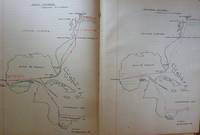
19190001417SPITZBERGEN GREEN HARBOUR NORWAY. Very Good. 1919. Manuscript. On offer is an exceptional archive of two 2 significant historical handwritten note book and diary of Herbert W. Leech Manager of the Marble Dept of The Northern Exploration Company NEC in 1919. It is very interesting reading of the troubles this operation had as the books entirely describe through letters notations and diary entries all the work and grief his operations suffered. Herbert Leech the Manager reports in the letter copies to his superior Mr. W. Holmboe in Tromso from the MINA I Spitzbergen Recherche Bay or Green and King's Harbors. It appears right from the start that Leech was in a sad way as he reports of the ship being unsatisfactory breakdowns continual delays everywhere and always problems with the staff or contractors carpenters especially it seems and he complained of near open mutiny with staff some calling in sick for no reason others barely maintaining a guise as it appears this summer venture was ill-advised or doomed for other reasons. He writes the details of his needs and progress during the expedition including the never ending problems with the ship and his men as well as requests for supplies and spare parts for the engine etc. There are letters telling of the men refusing to work after disagreements over contracts and the continued intoxication of the steward. There are some details of their geological discoveries and the conditions they had to endure. There is a list of expenses incurred on the journey to Tromso Norway and other expense lists including wages of the men etc. The daily diary kept for approximately 3 months of the expedition during July to September in 1919 include details of the mineral deposits they had found in each area with estimated mining output and estimates of the cost of plant and buildings required to open a mine. The area they are surveying is around Spitsbergen including Green Harbour and Kings Bay. There are also geographical geological and technical notes throughout too. The NEC the famous explorer Shackleton was a large shareowner and involved in operations was a British firm firmly established in Norway's Northern and Arctic mining and exploration activities. These books are placed in a very important time as WWI had just ended and the rise of Bolshevism are pertinent as part of the historical backdrop. This is an entirely unique grouping and intimate glimpse into early 20th century arctic exploration and a rare look into their lives as historic explorers. The script is mainly in pencil and reasonably clear to read. HISTORICAL CITINGS: A: Shackleton now became involved in an undercover enterprise. A company the Northern Exploration Company was preparing an expedition to Spitsbergen. Shackleton was asked to be the leader. Ostensibly the company was going to mine mineral claims owned since 1910 by the company. Since 1910 the Germans had a meteorological station at Ebeltofthaven in West Spitsbergen which was only withdrawn at the start of the war. Spitsbergen was a delicate issue as it was administered by Norway a neutral country. With the backing of the British Government the Northern Exploration Company could establish a British presence on the islands. To prove it's commitment the government provided the expedition with an armed merchant ship the ELLA. Frank Wild now commissioned as a temporary lieutenant in northern Russia was selected by Shackleton as his assistant. By the middle of August Shackleton was in northern Norway at Tromsø on his way to Spitsbergen; it was the first time he had crossed the Arctic Circle. It was in Tromsø that Shackleton suddenly became ill. He "changed colour very badly" as McIlroy put it. He suspected a heart attack. Shackleton refused to undress so McIlroy could listen to his heart. This was the first hint that Shackleton might be suffering from heart disease. Shackleton had to turn back arriving in London in early September. Meanwhile the leadership of the expedition was placed under Frank Wild. The northern Russia campaign said General Ironside "was a side show of the Great War". Soldiers could hardly be spared from the front lines so troops were scraped from the bottom of the barrel to be sent to Russia. At this point no one was going to worry about the condition of Shackleton's heart. Early in October Shackleton sailed for Murmansk. As Shackleton wrote it was a "job after my own heart.winter sledging with a fight at the end". As he crossed the Barents Sea he wrote to Janet Stancomb-Wills "All is sheer beauty and keen delight. The very first.snow-squalls bring home to us the memories of our old South Lands. There is a freshness in the air a briskness in the breeze that renews one's youth". "This day 3 years ago the 'Endurance' was crushed in the ice" Shackleton wrote to his younger son Edward on October 26 "and we all were.sleeping on rather moving about on the moving ice with no home to go to. I have been to many places since then now it is the other end of the world". Shackleton had just landed at Murmansk. A fortnight later on November 11 the Armistice was signed. The war with Germany was over. However war in northern Russia was not yet at an end; the Allied forces were now fighting the Bolsheviks instead. The north Russia force had attracted various polar explorers: Macklin Worsley and Hussey from the ENDURANCE EXPEDITION; Stenhouse from the AURORA branch of the Trans-Antarctic Expedition; Victor Campbell the leader of Scott's Northern Party; Dr. Edward Atkinson from the Scott camp and Dr. Eric Marshall from the NIMROD EXPEDITION. Shackleton's official job description was "Staff officer in charge of Arctic equipment". In all actuality he was a glorified storekeeper. He had done most of his work in London and the outfits he now provided were doubtful; his own expeditions had been struggles against poorly designed equipment and clothing. The American troops in the region discarded the Shackleton clothing and boots and reverted to their own. Shackleton was now kept at headquarters in Murmansk with little to do. Shackleton wrote to Emily "I have not been too fit lately. I am tired darling a bit and just want a little rest away from the world and you". The strain of a divided self was showing itself in Shackleton. "I am strictly on the water wagon now" he wrote to Emily at the end of January 1919. He got thoroughly drunk on Christmas Day and in his own words "after a thought I have cut it right out it does me no good and I can tell my imagination is vivid enough without alcohol it makes me extravagant in ideas and I lose balance.I did not upset my superiors everyone was awash only it seems to take different people different ways. If I had not some strength of will I would make a first class drunkard". Shackletons' affairs were in a poor state; money was in short supply. Emily was fending for herself while Cecily was at Roedean and Ray the eldest boy was at Harrow. Shackleton hoped to cover the school fees from selling shares of his stock in the Northern Exploration Company but the transaction never happened. By the end of March 1919 Shackleton was back in London and demobilized after five months in the field. He was regarded well enough by The Times that an interview was requested. In that interview Shackleton stated that nearly half a million people "threw in their lot with us.against the Bolshevist menace. It is thus not merely a question of saving our own troops but a moral obligation to civilization.No domestic or political consideration should be allowed to interfere with steps being taken immediately to prevent anything in the nature of a reverse to our arms in these regions.In Murmansk as elsewhere the peasant is not a Bolshevist.but without armed support he is helpless.do not let us be too late.the British people do not yet realize what Bolshevism means.it is.becoming far worse than German militarism". CITING B The Northern Exploration Company NEC which annexed large expanses of land in Svalbard is engraved into Svalbard history. NEC's land annexations were concentrated where the most profitable mineral deposits were thought to be found. The company was founded in 1910 and was most active in the years around World War I. The background for the activity was the numerous occupations carried out by Ernest Mansfield in Svalbard prior to 1910. NEC bought his land occupations in 1911 and started the construction of Ny-London and the promising marble quarry at Blomstrandhalvøya in Kongsfjorden. NEC owned and operated many mines and prospects in Svalbard most of which were to exploit coal. Other mineral deposits were also prospected such as zinc asbestos iron and marble. Optimism prevailed despite frequent loss of capital in prospects that never materialized. They were big landowners but produced close to nothing. This was the era of Neo-Industrialism and in Svalbard there was a Klondike-like atmosphere in which everyone was affected by the fervour for mineral deposits. Investment capital was readily accessible. The optimism and vitality of the NEC has left many cultural remains. The NEC annexation signs can be found in all the areas they were active with text in three languages to make sure everyone understood this was NEC's land. Transporting equipment to Svalbard was long trying and expensive and the work seasons were short and hectic. The value of the buildings and equipment itself was often less than the cost of disassembly and transport back to the mainland. Installations were therefore often left on site and can today be seen as a witness to dreams for quick profit in enterprises that were discontinued after only a few years of trial operations To summarize: An historic first hand primary account and telling of the 1919 Summer season for the Northern Exploration Company through the manager's diary and letters including: 1 a book of letter-copy letters to head office some suppliers with tucked in notes receipts 60 pages; then 2 a book of financial dealings 30 pages and lastly and most importantly his diary 65 pages. This is a 7 x 5 inch flip style notebook and has some scattered technical geographic technical notes. OVERALL VG.; 8vo - over 7¾" - 9¾" tall; KEYWORDS: HISTORY OF NORWAY NORWEIGAN ARCTIC EXPLORATION FAR NORTH MINING SHACKELTON HANDWRITTEN MANUSCRIPT DOCUMENT LETTER AUTOGRAPH DIARY JOURNAL LOG KEEPSAKE WRITER HAND WRITTEN DOCUMENTS SIGNED LETTERS MANUSCRIPTS HISTORICAL HOLOGRAPH WRITERS DIARIES JOURNALS LOGS AUTOGRAPHS PERSONAL MEMOIR MEMORIAL PERSONAL HISTORY AMERICANA HANDWRITTEN MANUSCRIPT AUTOGRAPHED AUTHORS DOCUMENT LETTER AUTOGRAPH KEEPSAKE WRITER HAND WRITTEN DOCUMENTS SIGNED LETTERS MANUSCRIPTS HISTORICAL HOLOGRAPH WRITERS AUTOGRAPHS PERSONAL MEMOIR MEMORIAL PERSONAL HISTORY ARCHIVE DIARY DIARIES JOURNAL LOG PRIMARY SOURCE FIRST HAND ACCOUNT SOCIAL HISTORY PERSONAL STORIES LIVING HISTORY ANTIQUITÉ CONTRAT VÉLIN DOCUMENT MANUSCRIT PAPIER ANTIKE BRIEF PERGAMENT DOKUMENT MANUSKRIPT PAPIER OGGETTO D'ANTIQUARIATO ATTO VELINA DOCUMENTO MANOSCRITTO CARTA ANTIGÜEDAD HECHO VITELA DOCUMENTO MANUSCRITO PAPEL HANDSKRIFT AUTOGRAFER EGENHÄNDIGT HANDSKRIVET HANDSKRIVEN MANUSKRIPT BREV SIGNERAD SIGNERAT SIGNATUR NAMNTECKNING AUTOGRAF HANDSKRIFTER Spitzbergen Recherche Bay or Green and King's Harbors Blomstrandhalvøya in Kongsfjorden Tromso Northern Exploration Company Holmboe Svalbard Blomstrandhalvya . unknown
19190002076La Fox Illinois Kane County. Good with no dust jacket. 1919. On offer is the incredible 1919 diary of Annie M. Barker Potter 1840-1933 kept when she was the 79-year-old widow of La Fox Blackberry Township Kane County Illinois visionary Lemuel Milk Potter 1830-1897. Originally of the Plymouth Massachusetts Barkers Annie married fellow Massachusetts native sea captain and widower Lemuel Milk Potter in 1863. That same year Annie and Lemuel alongside Annies brother Henry H. Barker 1848-1889 moved to La Fox Kane County Illinois. The entrepreneurial Lemuel became a key player in La Foxs early development. In collaboration with Henry Lemuel purchased an interest in Frederick Deans store and renamed it Potters General Store. He and Henry also constructed a grain elevator and a cheese factory which was converted to a creamery and later became a meeting place La Fox Hall in La Fox. Lemuel also had a large residence built for his own family in La Fox. SEE BIO NOTES FOLLOWING LISTING FOR MORE ON THE POTTERS. Annie and her adult children were actively involved in the thriving Potter family businesses at the time she kept this diary. A large number of her entries relate to her role within the business. Annie comments regularly on the Potters general store her investments financial transactions and business dealings as the inferred manager of the Potters other properties. It is impressive that Annie a female in her golden years was still respected as a key player in the business by the surviving Potter men. She was also very socially engaged involved in womens clubs and keenly aware of the comings and goings of members of the community. Some excerpts of her diary which cover the year of 1919 give the flavour of her entries and her relationships with the larger Potter family: Charlie Eatman and Blanche and Althea are here. I have been writing to Alden Feb 23. Recd of CA Potter to apply on principal of loan $100 and I paid that into the store this top up all the loans on the trust deed of $3500 except a little interest April 12. I went down town with Doc nickname for her son Charles and sent my $15.00 Liberty Loan off to be registered and I got the int on my $25.00 Liberty loan also on my $14.00 liberty loan The 60 Club met at Mrs. Caldwells. My int on loans was $50 50 on one and 30 30 on the other April 24. Had a telegram from Angie that Everett Chaffee died suddenly today. Frank Pudds wife also died today. Recd note $6.00 took this to store and got the money on it May 27. Ive been copying my statement and making out my yearly statement. A hard wind storm has just come up and we think it may take some of the strawberries. We are beginning to have them going to have quite a lot. Tayler paid me rent to Dec 15 1919 $48.00 June 11. Have just written to Lizzie about the change over w the store. Arlo and Bill have been to St. Charles Doc and Grace were up tonight to talk business Oct 16. Got word from Doc that he had heard from Herbert that it was all right to sell the property Oct 24. All the Finns were up for dinner tonight we went to Elburn on the O. E. R. To the entertainment got home about 1 oclock Nov 21. I was sick all night last night and all the forenoon. Got my check from Scott Washburn for rent. 6.00 for Dec 1919 Nov 30. As well as keeping her diary nearly every day for the year of 1919 Annie also kept good track of her finances in the Cash Account section at the back of the diary providing a clear picture of her transactions and financial habits. This diary provides an insightful peek into the business and personal dealings of the La Fox Illinois Potter family who were vital in the building up of the community and whose work in La Fox still stands today. Annie is a strong elderly woman who is more active than many women half her age. She is obviously extremely savvy in business and finance. This diary would be a valuable addition to the collection of any historian or anyone interested in the role of women in business in the early 20th century the experiences of widows of entrepreneurs in maintaining family legacies and those interested in the Potter family or pioneering residents of Illinois in general in particular Kane County. Diary measures approximately 5x3 inches. Cover is chipping slightly but the spine and pages are all intact. Diary is 90% complete and writing is legible. Overall Good. BIO NOTES: Lemuel Milk Potter of Massachusetts first married Elizabeth A. Davis 1835-1855 in May of 1854. Together they had one son Alden Howland Potter 1855-1933. Following Elizabeths death only two months after Aldens birth Lemuel married Annie M. Barker also of Massachusetts in 1863. Annie was born to William and Rebecca Potter Barker. Together Annie and Lemuel had five children: James 1866-1906 Arthur b. 1872 died in infancy Nellie Emma 1874-1899 Charles Doc Arthur Potter Sr. 1878-1966 and Elizabeth Potter Wing 1868-1955. Prior to becoming a force of nature almost single-handedly building up La Fox Illinois Lemuel worked as a whaling captain from May 1859 through June 1863. He left the ship he was captaining the Mary Ann in June of 1863 and married Annie that October. They moved to La Fox Illinois after they married. Lemuels first child Alden Howland Potter married Jane Carr Bliss 1861-1929. They were parents to Alden Archibald Potter 1884-1961 Zenas Lemuel Potter 1886-1958 Jessica Potter Broderick Johnson 1896-1991. The Potter family has remained very important in Kane County with Potters constructing or buying at least 12 buildings in La Fox. The Potter and Barker Grain Elevator which Lemuel and Henry built in 1868 was an important grain transfer point and was added to the United States National Register of Historic Places in 2016. This listing was re-researched re-written and re-listed in 2025.; Manuscript; 48mo - over 3" - 4" tall; KEYWORDS: HISTORY OF ALDEN A. POTTER BETHESDA MARYLAND ZENAS POTTER MARYLAND POLITICS INFLUENTIAL FAMILIES OF MARYLAND GENEALOGY AMERICANAHANDWRITTEN MANUSCRIPT AUTOGRAPHED AUTHORS AMERICANA MANUSCRIPT DOCUMENT LETTER AUTOGRAPH KEEPSAKE WRITER HAND WRITTEN DOCUMENTS SIGNED LETTERS MANUSCRIPTS HISTORICAL HOLOGRAPH WRITERS AUTOGRAPHS PERSONAL MEMOIR MEMORIAL PERSONAL HISTORY ARCHIVE DIARY DIARIES ANTIQUITÉ CONTRAT VÉLIN DOCUMENT MANUSCRIT PAPIER ANTIKE BRIEF PERGAMENT DOKUMENT MANUSKRIPT PAPIER OGGETTO D'ANTIQUARIATO ATTO VELINA DOCUMENTO MANOSCRITTO CARTA ANTIGÜEDAD HECHO VITELA DOCUMENTO MANUSCRITO PAPEL; Signed by Author . unknown
19190011016Coblenz Germany Benton Pa: Occupied Germany Coblenz Benton PA 56th Infantry. Good. 1919. Softcover. On offer is a superb pocket notebook kept by an American soldier in occupied Germany in the months immediately following World War One WW1. The author of this notebook is Ezra Skow. Little is known of Skow's early life. He was born in 1892 and enlisted in the U. S. Army in about September 1918 at the age of 25 or 26. Burial records in Benton PA indicate that he was attached to the 156th Infantry Regiment. However there was no 156th Infantry in the United States Order of Battle in WWI. In his notebook Skow records that he served in the 56th Infantry. This accords with the record of service of the 56th Infantry Regiment. The 56th Infantry Regiment was a regular infantry regiment in the United States Army. Its roots date back to the American Civil War where it served in the North's Army of the Potomac. It originated from personnel of the 17th Infantry Regiment in 1917 and fought in the region of Metz during World War I. In April 1919 a battalion of the 56th entered Metz as an honour guard for the Commanding General of the American Expeditionary Force John J. Pershing. Skow was married before joining the army. His wife Laura lived until 1987 passing away at the age of 93. Skow himself died in 1947 at the age of 57. His entries take the form of letters to his wife. They cover the period Jan 11 1919 through June 25 1919. In his diary Skow records several of the towns and cities in which his unit was stationed including Metz France Mulheim Metternich and other places in and around the city of Coblenz Germany. His entries speak about the day-to-day existence of a private soldier: "This is some place. Gee I wish I was home now. I would tell you a lot. The women are carrying their things on their back when they go to the store" Jan 13; ". I wrote you a letter tonight and send you the worlds clock too as I saw that today over at the city. And I was to see Charley Chaplin in the front line trenches and it was good. I would like to see you now. . I sit here at a Dutch table now writing notes and the Dutch man is reading the paper and his wife is talking out of the front window and you can see they are like but not quite as bad. Your Husband Ezra Skow xxxx" May 2; ". I was over to Coblenz today and wrote you a letter. And it is a fine day. I didn't do very much today. But believe me I would love to be home to loved you again. As I am getting tired of this life and will be able to tell you all about it when I get home . Your most lonely husband this side of the water. Ezra Skow" May 12. On June 4th he writes that he has learned his unit is going to be leaving the Coblenz area and hopefully heading home to the United States. In fact this is exactly what happened. By June 23rd he is in Fort Dix NJ and on the 25th he is out of the army. : ". I am out of the army now. Coming home to you dear." June 25. There are several other pages of note which include among other things the names and addresses of several other men - likely men he met and befriended. For a historian this is an outstanding piece of primary source material. It details the very ordinary day-to-day life of a soldier in WWI capturing his duties and his longing for home. For a regimental historian this fills in details of the history of their regiments. For a genealogist it offers some links to other Americans who served in that regiment. Measuring 5.25 inches by 3.5 inches this notebook contains 72 pages and is 85% complete. The book is in good condition. The binding and pages are intact. His handwriting is cramped but generally legible. ; Manuscripts; 24mo 5" - 6" tall; 72 pages; Keywords: handwritten manuscript document letter autograph writer hand written documents signed letters manuscripts historical holograph writers autographs personal memoir memorial antiquité contrat vélin document manuscrit papier antike brief pergament dokument manuskript papier oggetto d'antiquariato atto velina documento manoscritto carta antigüedad hecho vitela documento manuscrito papel 56th Infantry World War One US Army American soldier Occupied Germany . Occupied Germany, Coblenz, Benton, PA, 56th Infantry paperback
19190002557Good. 1919. On offer is a super fascinating 14 x 12 inch 300 page diary and manuscript relic of post-World War I adventures and nautical life handwritten by Arthur Gordon while he served as Third Mate on the S.S. Rheem dated Nov 4 1919 through to May 8 1920. Elevating this diary of life aboard a working ship en route to Central America is that this wonderful account is written by an aspiring author whose keen eye and gift for narrative are revealed early in the journal. Gordon would later write stories on naval sea and air themes the Merchant Marine and books on sea history such as "The Years of Peril" an account of the experiences of Mobil Co. ships during WW II. Here is a snippet: Thursday 13 1919 On SS W.S. Rheem Bayonne N.J. This morning I had a strong prediction that I would find work. I took along everything I would need in case I did and it was a fortunate thing for at nine thirty I was on my way to the New York offices of Walker and Daly. They wanted a Third Mate I was a Third Mate and wanted a job: nothing could be simpler. I signed the articles then and there without seeing the ship or knowing where it was bound. I went to the club packed my trunk and found my way to the ship. We are leaving for some Mexican Port at nine o'clock tomorrow morning. November 18 1919 SS W.S. Rheem Ran into a north-easter last night and we were forced to lay up to the wind and ride it out. it was a mean black watch that I stood. This morning's watch was as bad. High rough seas and blinding rain storms makes four hours seem like days. When I came below at twelve and has a chance to look at my hands I thought that my fingers resembled pale sweet pickles so puckered up they were with rain. November 20 1919 The actions of the officers with whom I am to become familiar lead me to believe the they will be fair square and congenial. The captain Harry Jensen by name of Danish and reminds me Kristens father. He is gruff and outspoken but has good sound judgment and is gifted with certain considerations which show him to be well aquatinted with and willing to deal easily with the fallibilities of the human race. Mr Gullickensen the Chief Mate a Norwegian is of mild and pleasing disposition he has very large feet and wears blue suspenders although I'm sure he doesn't know it like King Albert of Belgium . The engineers are separated from the Mates and i do not know any of them excepting the Chief and he appears to be quite friendly. The radio operator is English but hails from Lyann Mass and he and i at once joined forces to defend Massachusetts should anything disparaging be mentioned of her. The wireless man goes by the name of "Sparks "aboard ship in fact all radio operators are dubbed "Sparks" This fact leads those who are not familiar with it to make the amusing error that Mr Green a passenger of ours made when after a few days out at sea introduced himself and said "My name is Green Mr Sparks and I 'am glad to know you'. This caused much merriment and led Sparks to say it was a common occurrence." An old salt Gordon served in the Navy on the USS Washington and wanted to go back to sea. The SS W.S. Rheem travels to Mexico and Panama and others ports. This particular diary is incredibly detailed: his description of shipboard life on various ships the times he spent at the Panama Canal and the Gulf of Mexico ports like Tampico Mata Redona Mexico Colon Panama Key West Cape Hatteras but Gordon's description of Mexico and Panama are wonderfully intimate and detailed covering numerous pages. Adding further breadth to this journal are two loose pages from a scrapbook with photos depicting different ships five large photos of a crewman and one of Gordon. There five pages of hand drawn maps showing the routes of the ship an original play he wrote also some literary criticism comments on books authors very fond of Dickens ideas on writing and there is a section titled "Odd Jobs" thoughts and other ephemeral pieces such as a letter he received from Travel Magazine regarding a submission he sent them titled the "Mexican Church" using his pen name Arthur G. Shirt. Here are some more snippets: "There are a few ex-service men in the crew as evidenced by the remnants of the uniforms they used to wear. There is one lad who appears on deck with complete doughboy outfit with olive - drab shirt trousers and leggings. Dickens says in his preface to David Copperfield "But like many fond parents i have in my heart of hearts a favorite child. And his name is" David Copperfield "and David Copperfield has already become my favorite child of fiction. At present I am absolutely fascinated with the story and with the manner in which it is told. Characters were never so real as the characters surrounding David Copperfield: and i carry them In my mind and when i am on the bridge I reenact their doings and re-say their sayings. Thanksgiving Day 241919 SS W.S. Rheem We first saw the coast of Mexico in the early morning of last Sunday and shortly after seeing faint dim outline we were at anchor just inside the bar of Tampico awaiting a berth at the oil docks. Sparks and I went ashore after dinner Sunday noon. We hailed and were rowed ashore in a n extremely small boat propelled by a remarkably small boy and two immense oars. The combination was so ridiculous and was so unfair to the small boy that i was tempted to row myself but was dissuaded by the oil and grease about the working area of the craft. We waited at the station until two o'clock for the one - thirty train and set foot in Tampicos Mexico twenty miles later the stretch of county Penucos River between the ship at La Bana and the city is nothing but a mud flat and the this season of the year actively muddy the houses are built Malay style on stacks and the garden walk was a twelve inch plank also on stacks. The people we thought were as oily and as muddy as their city and river. They dress loosely with broad- rimmed Sombreros. Their shirts are tail - less and are not tucked in and their trousers rival a sailors in their ability to flap. If they have shoes they rarely wear them but instead a sandal affair bound about the foot in a careless manner. Our Bosun tells us of the visit of a Nicaraguan Admiral to an American Man -O - War. He wore broad cloth had gold stripes half way up his arms heavy gold epaulets: gold collar: bemedalled chest peaked cap and dangling sword a noble figure indeed - but from beneath the trim of his striped trousers there peeped ten ugly dirty toes- He was barefooted! There seems to be a preponderance of men in Tampico a great many urchins apparently uncared for - and what women there were were ugly- in my eyes at least. The young men I thought were attractive with their dark skin and hair and their flashing dark eyes. The policemen such as they were were disgraceful. We watched them line up at night and all though they were in military formation they were shelling peanuts and smoking cigarettes. I received one impression from exchanging glances with the Mexicans I passed and I left Tampico with that impression firmly in my mind: That these people are not to be trusted. The next night I was called upon to be the interpreter between the sailors and the Mexican customs official who came on board with the pilot and did not leave until we finally headed for sea. The bone of contention was that the sailors were bringing liquor aboard and the customs official did not approve of it. The sailors advanced several arguments and I realized than to the best of my ability to the Mexican he was obdurate and I had really given up the fight when he said drawing e aside "If you give me three dollars I will not see" The old Grafter after money eh I told the sailors what he wanted and let them to finish the deal which i learned later was arranged to the satisfaction of both parties. Feb.131919 SS WS Rheem At Tampico Mexico. Unusual excitement was occasioned this evening by the ugly disposition of the Mexican Customs Official He was dissatisfied with the bunk which the Steward had assigned to him and was in no way delicate about making his satisfaction known. The altercation came to climax when he official reinforced by three of his fiends form shore faced the Captain and demand better quarters. The Capt took the opportunity to inform the Customs Official that Harry Jensen was Captain of this ship. The manner in which Harry Jensen made this clear alarmed one of the friends and he pulled a gun." BIO NOTES: Arthur Gordon had a long career at sea. He would serve aboard the USS Oceanographer for four years on the US Coast Survey. Later after WW II he would write the book "The Years of Peril" the World War II story of Mobil men and ships by Arthur Gordon. Besides serving in WWI and WWII he traveled extensively as a Merchant Marine Officer and was employed in the tourist industry. After WWI Gordon made two trips around the world and into the Amazon. Gordon also attended Bard College and NYU finally earning a Master's degree. In 1949 he was teaching classes in writing fiction. He was listed as a Navy Commander in the reserves in 1949 as well. At that time his full time employment was as a Freelance Writer. He published short stories in Argosy and Maclean's Magazine sometimes using the pen name "Arthur Shirt". The spine is missing cover boards show heavy wear front cover board hinge is weak but holding rear is the same. Interior is in good. Overall G. NOTE: WE LIST HIS RECENTLY REDISCOVERED 1928 JOURNAL SEPERATELY. SELLER ID OOO9075.; Manuscript; Folio - over 12" - 15" tall; KEYWORDS: HISTORY OF ARTHUR GORDON STEAMSHIP MEXICO ARTHUR SHIRT PANAMA CENTRAL AMERICAN SOUTH AMERICA S.S. RHEEM PANAMA CANAL GULF OF MEXICO TAMPICO MATA REDONA MEXICO COLON PANAMA KEY WEST CAPE HATTERAS WWI WWII COASTAL SURVEY OCEANOGRAPHIC SOCIETY THE YEARS OF PERIL WORLD WAR II MOBIL MERCHANT MARINE BARD COLLEGE NYU SS W.S. RHEEM MARINE NAUTICAL NAVAL USN UNITED STATES NAVY NAVIGATION LIFE AT SEA LIFE ABOARD SHIP AMERICANA HANDWRITTEN MANUSCRIPT DOCUMENT LETTER AUTOGRAPH WRITER HAND WRITTEN DOCUMENTS SIGNED LETTERS MANUSCRIPTS HISTORICAL HOLOGRAPH WRITERS AUTOGRAPHS PERSONAL MEMOIR MEMORIAL AMERICANA ANTIQUITÉ CONTRAT VÉLIN DOCUMENT MANUSCRIT PAPIER ANTIKE BRIEF PERGAMENT DOKUMENT MANUSKRIPT PAPIER OGGETTO D'ANTIQUARIATO ATTO VELINA DOCUMENTO MANOSCRITTO CARTA ANTIGÜEDAD HECHO VITELA DOCUMENTO MANUSCRITO PAPEL . hardcover
19180009036NORD FRANCE FLANDERS YPRES LYS BELIGUM. Good. 1918. On offer is the exemplary and fascinating wartime diary of Lieutenant Charles Sanderson of the Machine Gun Corps of the British Army. The diary covers the entire year of 1918 the last of World War 1. Kept against orders it is very rare to find such a detailed diary outside the archives of the Imperial War Museum or regimental collections. Sanderson notes all the place names and identifies brigades so that it is possible to follow in detail the final stages of the war. In the beginning of the diary Sanderson is in Amiens France. "Wednesday January 1918. Went into Amiens by Lorry from D.H.Q. Arrived at 9.00am. Bought Christmas Dinner for Company. Stayed all night at the Hotel de L'Univers. Coy. relieved in line by 7th Coy." The diary entries are most often short and concise matter-of-fact jottings on what was done by his company that day and the movements of other companies and officers: "Received orders for Coy. to go into line tomorrow. Won 35 fr. at Bridge."; "Rode toward Bgde. 195 Coy. in morning to 200 Coy. A.S.C. in afternoon. Went to Benatre at night to fetch in broken down G.S. wagon belonging to Bgde. H.Q."; "Rest of Br. Transport turned up in late morning. Nothing doing all day."; "Marches from Bois de Courton at 4.00 am and arrive at Germaine about 9.0 am. Entrains at 5.30 pm and detrains at Fere en Champenois at 9.30 pm. Went in lorries to Bn. at Corroy." There are also numerous entries of the fighting around him and his company. "Heavy bombing again at night. Bombs all round us but nothing hit at all in our Brigade."; "Aeroplanes about again but no bombs dropped near us."; "Badly bombed at night. 199 Coy. A.S.C. lost all their horses." In March Sanderson has leave for two weeks. He travels back to London to be with his family. "March 1. Arrived Boulogne about 6.15am. Had breakfast at E.F.C. embarked 8.30 am. Rough passage. Arrived London 2.30 pm. Went to palladium at night with Uncle Laura."; "March 9. Played golf with Dad Upjohn and T. Roman. Went to Upjohn's afterwards to play cards"; "March 15. Crossed to france in afternoon and stayed the night at the Cafe de la Pork." He is back with his company by the 17th. His company then moves onto Bucquoy France then Bonneville then Armentieres in Flanders. Here they see combat. "April 8. Attack south of Armentieres began. Part of 74th Coy. went up at night. Rode over to Free's Cashier at Ravesburg in morning." This is the beginning of the "Battle of the Lys" also known as the Lys Offensive the Fourth Battle of Ypres the Fourth Battle of Flanders and Operation Georgette which would last from April 7 to the 29th. The month of April is filled with entries about this battle. "April 10. Still at Ravelsburg but expect to move at any time. Took ammunation up to Petite Monque Farm at night."; April 14. Moved from field near Berthen to Boechepe - Abelle Road. Mess in at Boechepe. Took rations up to Dranoutre but could ot find men."; "April 22. Walked over to R. E. Park and to 199 Coy. A.S.C. in afternoon. Played bridge in evening with Dr. and Aycock and won 5 fr."; April 26. Attacked in morning & retook Kemmel Hill. Had to come back on French did not move." April 30. Heavy bombardment during day but no infantry attacked." After the Battle Sanderson takes leave in Paris: "May 17. Still in Paris having a hell of a time. Bolam & Markielle returned in evening. Went to Casino de Paris but had to leave early as there was air raid warning." After Paris he returns to his company and the trials and tribulations of war return: "May 27. Bosche attack started at 10 am. Drove us back. Moved transport back to Bourancourt and then to Lonchery Roady & then to Grevy. Out all night. Looking for Br. H.Q. and rations." Boche is a French slang word for 'rascal' first applied to German soldiers during World War One "June 16. Italians came to reconnaitre line to relieve us tomorrow night night. Major Courtaullo came up to take Command of Coy." Much of the diary follows this pattern. There are long days of his company's movement going to where they are needed and there are days where attacks and battles are witnessed and fought. In between all the moving and fighting Sanderson has his leaves from the military. These passages are much more detailed and jubilant than all the others for obvious reason. Whether in line or on leave Sanderson is quite the gambler and many passages end with him playing poker and winning or losing money. As the war nears its end there are still occasional entries of battle. In the end of October and the early part of November the last weeks of the War Sanderson sees heavy fighting in Northern France and Beligum. "October 16. Did attack with 55th Div. not a big success and had lot of casualties. Stayed with S.A. Bgde. in tavern W. on Montay."; "October 17. Still in same place with guns gradually pushing forward."; October 23. Operated with 7th 75th Bgds. in attack east of Le Calean. Took L'Eveque Wood. Moved from Quenette Farm to Pommereuil in morning living with combined Bgde. H.Q."; "November 4. Started fresh attack from neighbourhood of Fontaine au Bois. All going well. Went up to take over 'C' Coy. after Lime was wounded. Move in evening from Le Fause.; "November 6. Advanced again with guns moving behind advanced guard. Moved up with 7th Bgde. in evening to Faisniere. Put 8 guns in outpost line in evening Rept. 8 in reserve in Dompiere." The war ends on November 11: "November 11. 'Cease Fire' went at 11.00 am. So nothing more done except 'Celebration.'' The rest of the diary is comprised of pretty short entries: of parades church salvage duty and other post-war activities. On December 31st he writes: "Very wet all day & nothing doing. Months leave approved by XIII Corps. Made money in the evening at bridge." After the diary entries there are a number of detailed pages of 'Cash Accounts" that show all the money Recieved from and Paid to throughout the year. The book is roughly 100 pages long with almost every single entry on every page written in. There is a green cloth cover and structurally the book is in very good shape. Sanderson writes in pen with no smudge marks and his handwriting is very easy to read. Included as well is thin blue "Army Book 439" which was issued to every combatant officer below the rank of Lieutannt-Colonel. It has much personal and military information of Sanderson including army courses taken service record promotions received 1st Lieutenant - June 1st 1917; Captain - May 29 1918 and an employment form for when discharged from the Machine Gun Corps. The book is also in very good condition and is 12 pages long.; Manuscript; 8vo - over 7¾" - 9¾" tall; KEYWORDS: HISTORY OF CAPTAIN CHARLES SANDERSON ACTING CAPTAIN LAST YEAR OF WW1 WORLD WAR ONE MACHINE GUN CORPS BRITISH M.G.C. BELGIUM NORD FRANCE BATTLE OF LYS FERE EN CHAMPENOIS ARMY BOOK 439 KEPT AGAINST ORDERS LYS OFFENSIVE FOURTH BATTLE OF YPRES FOURTH BATTLE OF FLANDERS OPERATION GEORGETTE END OF THE GREAT WAR NON COMMISSIONED OFFICER ARMISTICE DAY WRITTEN DEPICTIONS OF BATTLE BRITANNICA HANDWRITTEN MANUSCRIPT DOCUMENT LETTER AUTOGRAPH WRITER HAND WRITTEN DOCUMENTS SIGNED LETTERS MANUSCRIPTS HISTORICAL HOLOGRAPH WRITERS AUTOGRAPHS PERSONAL MEMOIR MEMORIAL ANTIQUITÉ CONTRAT VÉLIN DOCUMENT MANUSCRIT PAPIER ANTIKE BRIEF PERGAMENT DOKUMENT MANUSKRIPT PAPIER OGGETTO DANTIQUARIATO ATTO VELINA DOCUMENTO MANOSCRITTO CARTA ANTIGÜEDAD HECHO VITELA DOCUMENTO MANUSCRITO PAPEL . hardcover
19190009017Meadville Cleveland Youngstown Pennsylvania PA. Good. 1919. On offer is the 1919 diary of Esther A. Walling of Meadville Pennsylvania. She is a very proud and at that time female Railroad Clerk at the Erie Railroad Office. Her brother with whom she lives is Frank. He is also a railroad clerk and a person she loves very much. She goes to church on Sundays and is often on trips to Cleveland Youngstown and Jamestown for fun weekends of shopping and entertainment with her girlfriends or brother. There are just a few entries until late February in which Esther takes a trip to Cleveland with her girlfriends. "Saturday February 22 We went shopping today and purchased this book also the picture "On the River Tiber." We went to the play "The Girl Behind the Gun" this afternoon and in the evening went to the Hippodrome. Aunt Attie met us & we took her to supper in the old arcade. We stayed at the Hotel Winton." She seems to have some pretty strong union sympathies often going to "Brotherhood of Railway Clerks" later known as the Transportation Communications International Union and speaking enthusiastically of the meetings and the new members initiated during the year. The early 20th century was a high time for labor movements in America and it was not uncommon to find strong believers in unions at this time. In May she and Frank go to Chicago to meet their mother who is returning from vacation in California. They spend a few days in the city shopping seeing sights and meeting friends. The entries are fairly irregular in their frequency. They tend to be most regular when Esther is on a trip outside of Meadville. During these trips there are usually entries written everyday until she comes back home in which they resume the frequency of two or three entries every week. July and September are the most consistent with entries almost everyday. The summer is filled with work small weekend trips meetings of the "Brotherhood" and much small town entertainment such as parades fireworks concerts and leisurely drives in her brother's 1919 Ford. In mid-October Esther takes a nice vacation with her girlfriend Hazel They go to Washington D.C. first and take in the famous sights. "Took sightseeing car around Wash. visited Capitol museum etc. In afternoon we went to Arlington VA. saw the wireless station where the time is sent daily over the country and many historical places." They go from Arlington to Mt. Vernon and visit Washington's home then off to to Philadelphia where they see the Liberty Bell and other attractions. From Philadelphia they move on to New York getting in at Grand Central Station. They do not stay long in the city as they have a same day train to Boston. "Monday October 20. We went in Sightseeing car to Lexington & Concord. Most interesting trip we took. Saw Harvard College and went in John Hancock's old home; saw homes of many authors poets and noted people." A few days later they are back home in Meadville. The rest of the year is back to normal for Esther. Esther's handwriting is simple and easy to read done mostly in ink with the exception of a few entries near the end of the year. The front and back cover are slightly detached from the paper. Mild age-toning to pages and some discoloration caused by newspaper clippings pasted to a few pages throughout the year mostly about birth and wedding announcements. There is also a small piece of ephemera in the book a letter from the office of D.G. Snodgrass M.D. that reads "July 27th 1918. Rec'd Esther Welling one dollar for vaccination. D.G. Snodgrass MD." Why this letter is in the book is not noted. Examples of text: "Thursday March 6. A number of other Erie girls & I attended the annual Fried Turkey supper at the Baptist Church this evening. Fine supper. After the supper we went to on Centre St. where an assistant organizer attempted to organize a local lodge of Railroad clerks." ; "Tuesday April 22. Went to lodge "Brotherhood of Railway Clerks" tonight. Good attendance. Nineteen new members were taken in and several names proposed for initiation at next meeting."; "Saturday August 16. The first annual picnic of the Erie RR Shops & Offices was held at Celeron today. Special train of 19 coaches left at 8:15 A.M. returning on special train leaving Jamestown at 11:30 P.M. There was a terrible storm & cyclone at Celeron."; "Sunday September 7. Slept till 10:30. Willie came up to attend the clam bake at Oakwood Park for Bessemen employers. An aeroplane passed over the city this A.M." Background - As related in the August 1919 issue of Erie Railroad Magazine the USRA found that nationwide 101785 women were working at railroad occupations at the high point of female employment October 1 1918. The Erie accounted for 11 percent of that total employing 10274 women in various job categories. On the Erie the largest category employing women by far was clerical: 81 percent of the female workers worked as clerks stenographers draftswomen and assistants and ticket clerks.; Manuscript; 16mo - over 5¾" - 6¾" tall; KEYWORDS: HISTORY OF ESTHER WALLING FRANK WALLING MEADVILLE PENNSYLVANIA RAILROAD CLERK ERIE RAILROAD OFFICE BROTHERHOOD OF RAILWAY CLERKS TRANSPORTATION COMMUNICATIONS INTERNATIONAL UNION LABOR MOVEMENT IN AMERICA WOMEN IN UNIONS WOMEN IN THE LABOR MOVEMENT IN AMERICA RAILROAD WORKERS INTERWAR PERIOD IN THE UNITED STATES WOMEN POST WW1 WOMEN WORKING IN THE EARLY 20TH CENTURY SUFFRAGE SUFFRAGETTE PRE SUFFRAGE FEMINISM WOMEN'S STUDIES GENDER STUDIES PRE FEMINIST ERA POST WORLD WAR 1 AMERICANA HANDWRITTEN MANUSCRIPT DOCUMENT LETTER AUTOGRAPH WRITER HAND WRITTEN DOCUMENTS SIGNED LETTERS MANUSCRIPTS HISTORICAL HOLOGRAPH WRITERS AUTOGRAPHS PERSONAL MEMOIR MEMORIAL AMERICANA ANTIQUITÉ CONTRAT VÉLIN DOCUMENT MANUSCRIT PAPIER ANTIKE BRIEF PERGAMENT DOKUMENT MANUSKRIPT PAPIER OGGETTO D'ANTIQUARIATO ATTO VELINA DOCUMENTO MANOSCRITTO CARTA ANTIGÜEDAD HECHO VITELA DOCUMENTO MANUSCRITO PAPEL . unknown
19190008052PHILADELPHIIA U.S. - FRANCE. Good. 1919. On offer is a fine collection of WWI notes and documents regarding the service of a US Artillery officer who served in France. The collection consists of 2 small notebooks a large photograph letter of commendation and a typed 10-page description of a 1925 tour of French Battlefields. Each notebook has 68 pages and measures 5.5 inches by 4.5 inches. They are 20% and 100% complete respectively. The battlefield tour document measures 8.5 inches by 11 inches. There are 2 black and white photographs presumably of the author - one in uniform aboard a ship and the other dated 1967 and of him with a young boy. Fairman Rogers Dick was born in Philadelphia in 1885 and passed away in 1976 at the age of 90. From 1908 to 1915 he worked with a number of investment firms on Wall St. and then he organized his own firm Dick Gregory Inc. In 1917 he joined the Army and during World War I he rose to the rank of major with the field artillery in France. After the war he joined the firm of Roosevelt and Son with whom he remained until 1933 when he formed another company Dick and Merle-Smith. He retired in 1946 but stayed active with the firm as a consultant. He qualified as a pilot in 1916 and became a member of the Early Birds of Aviation a group of pre-World War I flyers. Dick was a recognized expert in railroad regulations During the 1930's he was an expert witness in many landmark cases involving federal regulations of railroads. Dick once served as chairman of the Research Committee of the Transportation Association of America. In 1956 he served on a transportation task force for President Dwight Eisenhower. He served with the 306th Field Artillery of the 77th Division U.S. Army. The first notebook has very few entries and appears to be a record book of mess dues and mess alcohol purchases. The second notebook contains many notes that would be expected of an officer in a field unit. For Example: "B.A. will draw all shell in A B C D; Will be dumped at 8:30 See Polock; . Horses will not be watered Sunday a.m.; guns will be hauled out Sat P.M. ."; "Special detail in a.m. Rode with major Fitz in p.m. Talked with Pete Bowditch at in p.m. Says we might be here a year" Jan 10; "Inspected 304 wagons in a.m. In p.m. went to Boudreville and took command of 3 rd Bn. I am not very comfortable over there. Walked an hour." Feb 2. The Battlefield Tour report is very interesting. It is clearly moving in placed for him: ". The Argonne was the least changed of any section I saw but in one respect even it is changed. The scattered graves of French Germans and Americans have all gone. They have been gathered into cemeteries. You see them here and there along the old front the battalions of the dead the crosses row on row and the flag flying over them." p 9 . There is frank assessment of the future as well: ". The road down through the ravine is well open but the concrete shelters were merely heaps of stones. They had been dynamited by the French. Apparently they were getting ready for the next war and they face the wrong way for the French and the right way for the Germans so they had to go " p 9. A military historian would find this an excellent collection to review. It can serve to cross-reference other data. The first-hand account of the battlefield some seven years following the end of the war provides both detailed information about the movements of the 306th Field Artillery and a unique assessment of what happened in the immediate years after the war.; Document Archive; 24mo - over 5" - 5¾" tall; KEYWORDS: HISTORY OF AEF EARLY 20TH CENTURY 1910S WW1 FIRST WORLD WAR GREAT WAR FAIRMAN R. DICK; 306TH FIELD ARTILLERY AMERICAN EXPEDITIONARY FORCES WESTERN FRONT AMERICA IN WORLD WAR 1; EARLY BIRDS OF AVIATION; PILOTS FRANCE FRENCH BATTLEFIELDS PRESIDENT DWIGHT EISENHOWER; EDWARD "PETE" BOWDITCH JR. TRANSPORTATION ASSOCIATION OF AMERICA MILITARY HISTORY WARTIME PHOTOS LETTER OF COMMENDATION AMERICANA HANDWRITTEN MANUSCRIPT DOCUMENT LETTER AUTOGRAPH WRITER HAND WRITTEN DOCUMENTS SIGNED LETTERS MANUSCRIPTS DIARY DIARIES JOURNALS PERSONAL HISTORY SOCIAL HISTORY HISTORICAL HOLOGRAPH WRITERS AUTOGRAPHS PERSONAL MEMOIR MEMORIAL ANTIQUITÉ CONTRAT VÉLIN DOCUMENT MANUSCRIT PAPIER ANTIKE BRIEF PERGAMENT DOKUMENT MANUSKRIPT PAPIER OGGETTO D'ANTIQUARIATO ATTO VELINA DOCUMENTO MANOSCRITTO CARTA ANTIGÜEDAD HECHO VITELA DOCUMENTO MANUSCRITO PAPEL . unknown
19190008162OMAHA NEBRASKA. Good. 1919. On offer is a diary that records a year in the life of a young Nebraska school teacher following WWI. The slim leather-bound volume measures 6 inches by 3 1/2 inches. It contains 110 pages and is 100% complete. The writing is quite legible. Millie McMillin is a young woman living at home in Omaha Nebraska USA and teaching in a local school. Her diary runs from Aug 6th 1919 to June 30th 1920. She writes in a relaxed casual manner recording daily events at school family interactions and her very busy social life. "The Tonners left after having taken Alleene Carl and me to the "Gayety'" Time! Such a show!. Carl went out to dinner with us. Then all 5 of us went to Krug Park. I danced with Uncle Will and we all rode the roller coaster" Aug 30. It's interesting to note that Krug Park would be the scene of the most deadly roller coaster accident in the United States up to 1930. "Cousin Clara Mother and I dolled up and went to S.S. in the rain only a few there but very nice little meeting. Glory!! 'Cheter' Orr is back . Discharged Sept 22 1919" Sept 28. Her diary notes are very local and personal. She makes no mention at all of the Omaha Race Riot which took place Sept 28th and 29th. These resulted in murders the attempted lynching of the mayor and the lynching of William Brown at the hands of a 4000 strong violent mob that wrecked havoc on the downtown of the city. Eventually nearly 2000 soldiers were brought in to enforce order. "Rainy and still had a little fever so I had Mamie Duer teach again. Agreed to pay her $1.50. Cut out and worked on my new blue waist." Oct 21. The pleasure in some time away from school at Christmas is evident here: "All my cares are over for a while. Am just enjoying life . " Dec 20. All-in-all this is a chatty record of a young woman going about her life. A social historian would find this an interesting resource as it offers one backdrop to the very tense and troubled times Omaha was experiencing after the war - troubles that ranged from serious racial tensions labour disruptions and the fear of socialism.; Manuscript; 16mo - over 5¾" - 6¾" tall; KEYWORDS: HISTORY OF; UNITED STATES; DOUGLAS COUNTY; NEBRASKA; MIDWESTERN UNITED STATES; 20TH CENTURY 1910s; WW1; GREAT WAR; FIRST WORLD WAR; MILLIE MCMILLIN OMAHA NE OMAHA RACE RIOTS KRUG PARK THE LYNCHING OF WILL BROWN; ENTERTAINMENT IN THE EARLY 20TH CENTURY; NEBRASKA TEACHERS IN 1910s; YOUNG WOMEN IN THE EARLY 20TH CENTURY; OMAHA IN 1910s; WOMEN'S STUDIES; SOCIAL LIFE IN EARLY 20TH CENTURY NEBRASKA; AMERICANA HANDWRITTEN MANUSCRIPT DOCUMENT LETTER AUTOGRAPH WRITER HAND WRITTEN DOCUMENTS SIGNED LETTERS MANUSCRIPTS DIARY DIARIES JOURNALS PERSONAL HISTORY SOCIAL HISTORY HISTORICAL HOLOGRAPH WRITERS AUTOGRAPHS PERSONAL MEMOIR MEMORIAL ANTIQUITÉ CONTRAT VÉLIN DOCUMENT MANUSCRIT PAPIER ANTIKE BRIEF PERGAMENT DOKUMENT MANUSKRIPT PAPIER OGGETTO D'ANTIQUARIATO ATTO VELINA DOCUMENTO MANOSCRITTO CARTA ANTIGÜEDAD HECHO VITELA DOCUMENTO MANUSCRITO PAPEL . hardcover
19190008223BOSTON MASSACHUSETTS MASS. Fair. 1919. On offer is a terrific little diary of a man who rose to become among other things in charge of a U.S. program arming allies throughout the world and supervised the disbursement of $6 billion in foreign economic and military aid for the United States. Organized on an academic year basis this diary measures 4.0 inches by 2.5 inches. It contains 122 pages and is about 70% complete. The cover is in fair condition. The spine has been broken but all but a few pages are secured. The handwriting is small and cramped but can be made out. Thomas Dudley Cabot was born in 1897 to a wealthy American family in Boston MA. His father had established Cabot Corporation in 1882 which today is a global mufti-billion dollar corporation. He took some courses at Boston Tech now known as Massachusetts Institute of Technology and Curtiss Flying School becoming a World War I flight instructor in the U.S. Army Signal Corps before graduating cum laude from Harvard University with a degree in Engineering in 1919. In 1919 after graduating he joined his fathers firm and three years later became CEO - a position he would hold for the next 38 years. In the 1950's he joined the State Department in Harry Truman's administration as Director of Office of International Security Affairs. As noted above under his direction some 6 billion dollars in foreign and military aid was disbursed. In 1960 he was President of a shell company owned by the CIA which established 'Radio Swan' on Swan Island that began broadcasting in May 1960 during preparation for and during the abortive Bay of Pigs Invasion of Cuba. The station was removed from the islands in the late 1960s and its main transmitter was transferred for use in the Vietnam War. He was also a longtime director of United Fruit Company and became its president in 1948. The United Fruit Company today Chiquita Brands International flourished in the early and mid-20th century and it came to control vast territories and transportation networks in Latin America and the West Indies. Its enormous power came to symbolize the worst of American neocolonialism. His brother was a U.S. Ambassador under the Eisenhower and Kennedy administrations and another relative was Henry Cabot Lodge II Lodge was a Republican United States Senator from Massachusetts and also a United States ambassador. Lodge also served with him on the Board of the United Fruit Company. This diary was written in his last year at Harvard. Many of its entries revolve around his studies and his very active social life in Boston: "Be at Billings at 7:45 with skates. Carnival on Jamaica Pond. Moonlight skate with Kitty." Jan 15 1919; "A.M. studied. Canoe trip with Jack Auburndale and return 1-7:45. EC Class 56 & 58" Apr 6 1919; "To Weston at 11:00. Then to Lexington to see horse. Then to Bradlers. Lunch at Bradlers at 1:00. Hill Horse Show. Weston for supper." May 30 1919; "Slight westerly breeze . EYC race to Marblehead with Ed Cabot in . Light S wind. EYC race. Came 4 th . studied in library all evening." Aug 5th 1919 What these entries show is that he was definitely a member of the wealthy upper class of early 20th century America and came from a privileged background. And he lived life accordingly. A social historian would find this first-hand background information not only fascinating but also revealing. Cabot was at the nexus of a great deal of American power and commerce and played an instrumental role in many of the decisions that impacted so many people.; Manuscript; 48mo - over 3" - 4" tall; KEYWORDS: HISTORY OF; 20TH CENTURY; 1910s; PROGRESSIVE ERA; THOMAS DUDLEY CABOT; CABOT CORPORATION; MASSACHUSETTS; MASSACHUSETTS INSTITUTE OF TECHNOLOGY; HARRY S. TRUMAN; RADIO SWAN; BAY OF PIGS; UNITED FRUIT COMPANY; CHIQUITA BRANDS INTERNATIONAL; HENRY CABOT LODGE II; HARVARD UNIVERSITY; HARVARD UNIVERSITY ALUMNI; EYC; EASTERN YACHT CLUB; AMERICAN UPPER CLASS IN EARLY 20TH CENTURY; STUDENT LIFE IN 1910S HARVARD; YOUNG PEOPLE IN EARLY 20TH CENTURY AMERICA; YOUNG AMERICANS IN THE EARLY 20TH CENTURY; PROMINENT BOSTONIANS; SOCIAL LIFE OF HARVARD STUDENTS; AMERICANA HANDWRITTEN MANUSCRIPT DOCUMENT LETTER AUTOGRAPH WRITER HAND WRITTEN DOCUMENTS SIGNED LETTERS MANUSCRIPTS DIARY DIARIES JOURNALS PERSONAL HISTORY SOCIAL HISTORY HISTORICAL HOLOGRAPH WRITERS AUTOGRAPHS PERSONAL MEMOIR MEMORIAL ANTIQUITÉ CONTRAT VÉLIN DOCUMENT MANUSCRIT PAPIER ANTIKE BRIEF PERGAMENT DOKUMENT MANUSKRIPT PAPIER OGGETTO D'ANTIQUARIATO ATTO VELINA DOCUMENTO MANOSCRITTO CARTA ANTIGÜEDAD HECHO VITELA DOCUMENTO MANUSCRITO PAPEL . unknown
19190012208Ithica New York. Good with no dust jacket. 1919. Softcover. On offer is the engaging diary of a post WWI student at Cornell University. The author of this diary is believed to be Frederick William Abendschein 1894-1975 though this cannot be confirmed. There are contextual clues that loosely identify our author as either Abendschein or someone close to him. The clues include references to his sister Edith by name and by date of her wedding and his brother-in-law Frank Elliott Wood as well as mentions of the familys last name. There are other pieces of complementary information within the journal such as a reference to a War Risk Insurance Policy dated 1917 #3081. Abendschein served in WWI from May 1918 through February 1919. The diary records our authors first year at Cornell University and in many ways reads as a love letter to the institution. Our author is so happy to be a student at Cornell despite the typical freshman challenges he faces. He recounts the usual types of experiences a new student might have including figuring out campus his classes and fraternity life. He begins his diary at the beginning of the school year and concludes it in the summer with only a few brief entries later in 1920. The following excerpts will give a flavour of the diary: After two years of waiting with apparent endless hard luck Im on the way at last. Its one grand and glorious feeling. Edith Mother Elliott and I had supper then on the way Sept 28 1919. The end of my first day at Cornell. Some day! After many trials and reverses registration was finally completed. Just one damn thing after another Sept 29 1919. Had quite a pleasant day on the hill well some with marked improvement in trig. Procured my text book after some little difficulty. Went to the Theta Xi house tonight and while it doesn't present the same appearance as Chi Psi the house and fellows are a great bunch. Enjoyed every minute of it. Met people who knew some in R. And lunch at Ithica Oct 13 1919. Spent the afternoon and reading. Went to library in the evening to get some dope for my Eng theme. Came home and studied Feb 19 1920. Very busy day. Came down the Hill at 5 and went to work on Chem. Worked until 10. Then bed Apr 12 1920. The Descript was a bear. Feel sure I buster higher than a bit. Went to Forge in the afternoon. Very tired Did some English and went to bed May 4 1920. All in today and didnt go up the Hill until the afternoon. Took Peggy for a walk and had a mighty nice time. Worked all evening. Received a wedding announcement from Louise Anchaus June 4 1920. For a social historian this small diary offers an excellent look into the life of a college student who was likely fresh out of the U. S. Army and immediately following WWI. It offers an interesting look into one aspect of the generation that would eventually be referred to as the Lost Generation. This diary is a 7-ring binder measuring 7.0x4.5 inches. The covers are a pebbled leatherette with the word Diary embossed on the front in gold. The diary is set up as a students diary with pages beginning in September. There are two days per page for a total of approximately 194 pages including some information pages. The covers and pages are in good condition and the handwriting is legible. It is approximately 65% complete. Overall Good. ; Manuscripts; 8vo 8" - 9" tall . paperback
19200001970AKRON OHIO PONDFIELD CROSSWAYS BRONXVILLE NY. Fair. 1920. On offer is a super original 1920 - 1926 manuscript multi trip travel journal and personal diary handwritten by Alice Cross Jones as stated in stamped gilt "Alice Cross Jones June 26th 1920." in a once premium book. Then inside is written "Alice Cross Jones 1215 Medina Road Akron Ohio USA. Pondfield Crossways Bronxville New York." Alice came from a very wealthy and notable family her father being the Chairman New York Tunnel Authority and a graduate of Princeton University class of 1896. The diary has 85 pages of densely written small legible cursive of narrative and super illustrations concerning different trips important events and social activities concerning her life from 1920-1926. She was at the esteemed Bryn Mawr College and details some exam and classes she took. While her diary narrative is an 'A' sadly her marks are not at best the odd 'B' but many 'C's. Most of those are trips to Europe with even some wonderful drawings inside. The diary starts off with her boarding S.S. Venezuela on her way to Hawaii and so many more incredible places. Her writings leave little doubt that she is on a world tour: at the outset of the diary she has a list of places visited; Chicago San Francisco Honolulu Yamaha Tokyo Kyoto Kobe Shanghai Manila Hong Kong Singapore Java Ceylon Egypt France and London. She sailed on 6 different ships and the last one being the famous White Star Line "Olympic". She tours many of the battlefields of France as the war had just ended. After her trip she's got several entries about being at home and attending school sometimes summarizing her adventures. One summer she writes about spending it at Camp Yokum Becket Massachusetts. Then in 1926 she boards another famous ship the TSS "California" and heads on a trip to the United Kingdom. The covers of the 6 ½" x 8" book are off but are accounted for very worn especially around the edges some loose pages but overall Fair. BIO NOTES FROM "Princeton Alumni Weekly Volume 66 September 21st 1965": "Alfred B. Jones born at Mt. Holly N.J. October 9th 1874. Graduate of Princeton University class of 1896. Married Helen Cross on December 27th 1900. Had one daughter Alice C. Jones who was born December 10th 1901. Worked a lineman with the Pennsylvania Railroad then Diamond Rubber Co. later consolidating with B. F. Goodrich which he finally became vice-president. Major in WWI and then in 1925 became associated with the late Jesse H. Jones of Houston Texas in organizing and conducting his real estate interests in New York City and planned financed built and operated many large office building apartments and the hotel May Fair House. Was president and director of numerous companies. In 1936 he was appointed chairman of N.Y. City Tunnel Authority building the under river tunnels notable Queen's Mid Town and Brooklyn Battery. Owing to long hospital confinement he developed a crippling arthritis that confined him to his home in Mt. Holly under the devoted care of his daughter until his death. His wife died some years ago."; Manuscript; 8vo - over 7¾" - 9¾" tall; KEYWORDS: HISTORY OF ALICE CROSS JONES AKRON OHIO PONDFIELD CROSSWAYS BRONXVILLE NEW YORK NEW YORK TUNNEL AUTHORITY ASIA EGYPT HAWAII CAMP YOKUM BECKET MASSACHUSETTS TRAVEL AMERICANA GRAND TOURS GLOBAL TRAVEL BRYN MAWR PENNSYLVANIA WOMEN'S STUDIES GENDER STUDIES HANDWRITTEN MANUSCRIPT AUTOGRAPHED AUTHORS MANUSCRIPT DOCUMENT LETTER AUTOGRAPH KEEPSAKE WRITER HAND WRITTEN DOCUMENTS SIGNED LETTERS MANUSCRIPTS HISTORICAL HOLOGRAPH WRITERS AUTOGRAPHS PERSONAL MEMOIR MEMORIAL PERSONAL HISTORY ARCHIVE DIARY DIARIES antiquité contrat vélin document manuscrit papier Antike Brief Pergament Dokument Manuskript Papier oggetto d'antiquariato atto velina documento manoscritto carta antigüedad hecho vitela documento manuscrito Papel . hardcover
19200002101WEST PHILADELPHIA PENNSYLVANIA. Good. 1920. On offer is a super group of eight 8 very full original manuscript diaries whose dates cover the post World War I 'Roaring Twenties' era of 1920 through 1927 handwritten by Christian Henry Aitken b. August 23rd 1884 to Archibald and Caroline Aitken a Scottish man married in 1914 to Eleanor W. Goettelman. From casual reading we learn they had a baby girl in 1921; they lived in West Philadelphia where Christian works as a bank clerk and then the U.S. Postal Service. He vacations in Atlantic City and other places along the Eastern Atlantic shore plays a lot of poker enough to detail the money made and spent and he loves making wine. Three wine recipes are in the back of the 1922 book. He calls some "Pool Vacations" likely what we today would call a 'stay-cation' at the local pool. They attend a lot of "A. of M." perhaps the "Academy of Music" Here are some snippets: "Put in a miserable night at the office down stairs the best part of the hour. Came home had the same trouble all day. One of the worst days I ever experienced .Atlantic City. Came home and about 10 A.M. we made up to go to the show where we put in the entire day. Came up on 11:30 P.M. train but we put in a good day at that M. D. and I went to Hog Island and saw the ships launched. Got on brig Indian and certainly had a great view. Got home 9 P.M. Tioga brunch out for our 6th anniversary .Came home and read some. In the P.M. I took a stroll around the old boating g'ds. Saw the old Katie Voigt working on the river. Grass growing in the river .Got up early and started for Cape May but just missed the train so instead we went to Trenton via boat. Then took trolley as far as Princeton all through the g'ds and then home again .Came home after a strenuous night in the room all by myself as no one else showed up for work. In the P.M. took Mike to the A. of M. and he ushered 1st time collected 8 B. up to date .Came home and did some scheme work. Keep in awhile then retired. 6 P.M. and off to the A. of M. Bal Masque main ward room with Reds and Mike. 10 bucks in tips. Broke up around 5 A.M. Home to bed .Came home and put in a big day a day of anxiety. Ella having a bad day but every thing came along O.K. 11:10 little girl was born .got the pictures of baby and T. D. and I went to the dock for some grapes. Then came home. Took baby and bought 5 gal keg. Then pulped my grapes " The 3 x 5 inch books are overall G.; Manuscript; 48mo - over 3" - 4" tall; KEYWORDS: HISTORY OF CHRISTIAN HENRY AITKEN WEST PHILADELPHIA ELEANOR W. GOETTELMAN MEN'S STUDIES GENDER STUDIES POKER SCOTSMEN PENNSYLVANIA AMERICANAHANDWRITTEN MANUSCRIPT AUTOGRAPHED AUTHORS AMERICANA MANUSCRIPT DOCUMENT LETTER AUTOGRAPH KEEPSAKE WRITER HAND WRITTEN DOCUMENTS SIGNED LETTERS MANUSCRIPTS HISTORICAL HOLOGRAPH WRITERS AUTOGRAPHS PERSONAL MEMOIR MEMORIAL PERSONAL HISTORY ARCHIVE DIARY DIARIES ANTIQUITÉ CONTRAT VÉLIN DOCUMENT MANUSCRIT PAPIER ANTIKE BRIEF PERGAMENT DOKUMENT MANUSKRIPT PAPIER OGGETTO D'ANTIQUARIATO ATTO VELINA DOCUMENTO MANOSCRITTO CARTA ANTIGÜEDAD HECHO VITELA DOCUMENTO MANUSCRITO PAPEL . unknown
19200001310ENID GARFIELD COUNTY OKLAHOMA OK. Very Good. 1920. On offer is an original manuscript 4 year diary handwritten by Ida Belveal an Oklahoma woman who lived in the town of Enid in Garfield County. Rarely missing a day through 1920 - 1923 readers are presented with a perplexing woman in many ways. Ida in four to six sentences selflessly tells us of her daily life as it was after World War I in the 'Roaring 20s'; she was a college student and had many friends and boyfriends; she writes of going to school her studies; dating Chuck breaking up with Chuck; dating and becoming engaged to Carisle then breaking up with Carisle; dating "Prof." Earl W. Oberg breaking it off with "Prof" then dating "O.B." and then back to dating the "Prof" and becoming engaged to him; she also writes of the spats and arguments that she has; playing her violin relining her furs her folks going to the oil fields; going to see a Charlie Chaplin show; taking long vacations/trips with "Prof"; driving to Boston and much more. But the there are the chilling reading at times when she casually writes August 1 1922 'Prof beat me up' and then just as casually her movements through Boston including a trip to the Aquarium and getting the dog fixed in the same entry. Earlier in March of 1922 she writes: 'Prof was mad about my ring. Sorry.' makes for an enigmatic comment amidst banal notations of her day. Did she lose it Did she give it back to him Sociologist and students of Women's or Gender Studies will have a field day profiling this woman's psyche in post World War I Oklahoma. Then there are the references to Klan meetings to make one nervous and quite interesting is that in her entries she makes a point of noting if someone is a "Negro" and she writes of going to see K.K.K. "hunting" a "Negro Meeting"; going to Akron Ohio & meeting the K.K.K. One darkly wonders what a closer read will bring. As a diarist Ida does a good job identifying those around her: Leo McKnights Oscar Seigel Mary DeBusk Arthur Taft Mary Thompson Bessie Smith Harry Byrd Clarence DeBush Bessie Miller Ray Atwood Kathleen Movourneen Burk Burnett Ethel Muir Mildred Cains Claralee Hainey Harry Byrd Ella Wales Nina White Geo Hoyt Chuck Golda Elsie Dunbar Mary Beards Joe Milam Lawrence Stewart Ida Wakefield Charley Norris Eva Nelson and many others. Some of the places she mentions are: Medford Billings Belton Chickasha Rialto Shawnee Duncan El Reno Oxford Deer Creek Drury Pond Creek Bartlesville Covington and others. BIO NOTES: Ida was born in April 1897 to Francis Marion "Frank" Beveal and Myrtle Goldena Mansfield-Beveal. She had six siblings Matilda Goldena Price Marion Martin and Sally. The diary measures 3 1/2" x 5 3/4" and it is VG. ; Manuscript; 16mo - over 5¾" - 6¾" tall; MISOGYNY ABUSE RACISM RACIAL HATRED OKLAHOMA OK ENID TULSA PERRY GARFIELD COUNTY THE KLAN KLANSMEN KU KLUX KLAN RACISM WHITE SUPREMACY KKK K.K.K. FEMINISM GENDER STUDIES WOMEN'S STUDIES HANDWRITTEN MANUSCRIPT DOCUMENT LETTER AUTOGRAPH DIARY JOURNAL LOG KEEPSAKE WRITER HAND WRITTEN DOCUMENTS SIGNED LETTERS MANUSCRIPTS HISTORICAL HOLOGRAPH WRITERS DIARIES JOURNALS LOGS AUTOGRAPHS PERSONAL MEMOIR MEMORIAL PERSONAL HISTORY CANADIANA TRAVEL GERMANY ANTIQUITÉ CONTRAT VÉLIN MANUSCRIT PAPIER ANTIKE BRIEF PERGAMENT DOKUMENT . unknown
19200009071CINCINNATI OHIO OH. Good. 1920. On offer are three 3 diaries of the wife of George C. King who with his brother Walter owned and operated a plumbing company in Cincinnati Ohio. The diaries present different parts of the wife of George Kings life. The first diary is for the year 1920 the next diary covers the year 1921 to 1925 and finally the third diary comes almost twenty years later and covers the era of 1940 to 1945. 1st diary: 1920. Cincinnati. The diary consists of a combination of simple day-to-day activities entertaining friends and guests at their home going into town seeing shows etc. and entries about her husband George and the goings on in his shop. Often these things are combined in single entries: March 17 1920. Mr. and Mrs. Cutler had me to dinner at the Metropole and to show at Kiths. Mrs. Cs birthday. George has been half sick ____ days - did not go to store until noon today. Tonight he had tea and toast and couldnt eat that.; May 9 1920. Am starting home tonight for two weeks to be with father while hes in with his eyes.; August 22 1920. Had dinner at Emilys - George and all of them went in bathing - I did not go.; December 26 1920. Woke up this morning with Laryngitis. Had Dr. Shepherd in afternoon. Dr. Stary out of town. Cant talk above whisper. At the end of the book the Daily Expenses pages have had their title crossed out and written in its place is Mrs. Kings handwriting that says We Entertained. The page then lists the date they entertained the people who came and the time they arrived. For example: Sat. Jan 15. Mr. and Mrs. Pearse. Turkey Dinner.; Thursday April 15 - Sunny Williamson - Arrived 11 a.m. Left 9 p.m. There are over 30 of these short little entries. The book itself is in good shape. Its cover states that it is THE H. & S. POGUE CO. DIARY. The year 1918 has been crossed out and 1920 has been written in its place. The cover is a pale green cloth which shows some tearing on the front back and especially the spine. The book is roughly 225 pages long of which at probably around 180-200 pages have writing in them. The next diary is a five year diary of the years 1921 to 1925. The book is similar to the previous one. The days are filled with observations of life family and the goings-on of her husbands store. There are small bits of ephemera that are stuck in between pages. They are usually newspaper clippings often of little poems or local interest news stories. Mrs. King spends the year of 1923 pregnant. The entries of December 28 and 29th have a newspaper clipping pasted over them the title of which is Knights Templar Initiate Largest Class in History of York rite in Cincinnati. There is an arrow pointing to George C. Kings name. Excerpts: May 27 1921. Our 18th anniversary - We had dinner at the Gibson and went to the Capitol afterwards - a fine time. Auntie Patchill stayed with Dorothy; August 5 1922. The first mail plane carrying mail from N.Y. and Cleveland came to Cinci today. Landed at Blue ash and carried 12 sailor's - Mail left NY. this a.m.; February 14 1923. George gave me a beautiful wrist watch for a valentine- Dorothy had about 30 valentines. - Awfully cold.; June 17 1923. George and I went to ball game Brooklyn - Cinci - from 9 to 0. It was awful. Reds couldnt even make a hit but once. Dorothys first Nat. League game.; July 23 1923. Dorothy is six today - Mr. Pearse had her cake made with her name and had 6 pink candles.; August 2 1923. Pres. Harding died very suddenly after a ___ illness in San Francisco hotel at 7:30 Pacific Time this evening.; August 3 1923. Calvin Coolidge took the oath of Pes. at 2:47 a.m. at his ____house in Plymouth.; August 2 1924. 10 years ago today Germany declared war on Russia. 2-days later on France. It doesnt seem possible it could be so long ago.; January 7 1925. Woke up at 4 a.m. awfully sick - George stayed home all-day with me - Head bursting.; September 14 1925. Put in 10 tons Pure hemp at 7.50 50¢ to put in house - City Ice co. - Dorothy starts to school - 3rd grade - today. The diary is roughly 370 pages long and almost every single page has at least one years entry written in it. Some years include all five but 2 or 3 years of entries on a single page are most common. The book is in good condition. The cover is red hard leather. The spine reads 1921-1925 in handwritten black ink. The final book is a five-year diary of the years 1940 to 1944. The entries in the diary are fairly few and far between and dates with more than one years entry are rare. The entries are almost entirely simple short statements about the weather or the authors weight. The book is filled with a good deal of ephemera. There are four photographs two of a cat & dog; two of the King family one while standing and posing and the other lounging around in a park about a half dozen or so newspaper clippings of various local stories and two of a column that mentions Walter King seemingly Georges brother. There are also a few small pieces of paper in which various salves for colds boils tick bites and such. The book is in good condition. The cover is brown leather that shows very minimal wear. Throughout all three books Mrs. Kings writing is very easy to read. All the diaries are roughly 4 x 7. Background: Mr. King came to Cincinnati from Carlisle Ky. his birthplace in 1905 and with his brother Walter set up a plumbing concern a few years later.; Manuscript; 16mo - over 5¾" - 6¾" tall; KEYWORDS: HISTORY OF GEORGE C. KING LOUISE KING WALTER KING CINCINNATI OHIO PLUMBING COMPANY FAMILY BUSINESS WIFE OF A BUSINESSMAN DOMESTIC DUTIES KNIGHTS TEMPLAR FRATERNAL SOCIETIES DOTING WIFE INTERWAR PERIOD IN AMERICA ROARING TWENTIES MIDWEST AMERICA POST WORLD WAR 1 ERA AMERICANA HANDWRITTEN MANUSCRIPT DOCUMENT LETTER AUTOGRAPH WRITER HAND WRITTEN DOCUMENTS SIGNED LETTERS MANUSCRIPTS HISTORICAL HOLOGRAPH WRITERS AUTOGRAPHS PERSONAL MEMOIR MEMORIAL ANTIQUITÉ CONTRAT VÉLIN DOCUMENT MANUSCRIT PAPIER ANTIKE BRIEF PERGAMENT DOKUMENT MANUSKRIPT PAPIER OGGETTO DANTIQUARIATO ATTO VELINA DOCUMENTO MANUSCRITTO CARTA ANTIGÜEDAD HECHO VITELA DOCUMENTO MANUSCRITO PAPEL . hardcover
1920000089TOLEDO OHIO OH. Good. 1920. Our unidentified diarist takes us on a whirlwind of social engagements visits trips and shoppings over a 10 year period from 1920 to 1929. Between her husband Oscar her folks and the myriad of friends in her social circle this gal is always on the go. While she jots notes quite frequently 60-70% of the time she is not perfect. Holidays and vacations she does an extra special job reporting back her movements and enjoyments; lots of movies and meals out and many many visits to friends. Nine of the ten diaries are tall slim 5 x 2 inches with one year is a short version. All in very good condition.; Manuscript; 32mo - over 4" - 5" tall; WOMEN'S STUDIES GENDER STUDIES TOLEDO OHIO ROARING TWENTIES FLAPPER ERA PRE DEPRESSION HANDWRITTEN MANUSCRIPT DOCUMENT LETTER AUTOGRAPH DIARY JOURNAL LOG KEEPSAKE WRITER HAND WRITTEN DOCUMENTS SIGNED LETTERS MANUSCRIPTS HISTORICAL HOLOGRAPH WRITERS DIARIES JOURNALS LOGS AUTOGRAPHS PERSONAL MEMOIR MEMORIAL PERSONAL HISTORY AMERICANA Genealogy Ohio Cleveland Toledo . unknown