FRIEDMAN, Thomas LBiblio.com
2 120 résultats
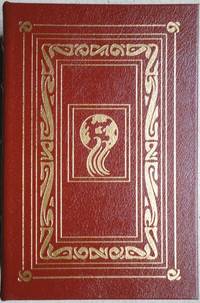
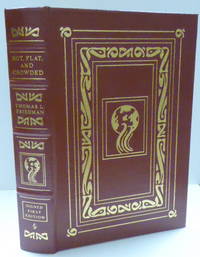
200837609Norwalk CT: Easton Press 2008. SIGNED AND NUMBERED LIMITED FIRST EDITION. Easton Press Certificate of Authenticity and author note card included. Bound in luxurious full genuine leather with elaborate gold embossed decorations and gilt page edges. Raised spine bands in the traditional method of fine bookbinding. With lustrous silk moire fabric endpapers and bound-in satin ribbon page marker. Printed on fine archival acid-free paper. Prior owner's Easton Press bookplate and embossed seal otherwise bright and fine. search our listings for more fine leather bound volumes from the Easton Press or Franklin Library . SIGNED. First Edition. Full-Leather. Fine. Easton Press Hardcover
2008006291Norwalk Connecticut: The Easton Press. Full leather binding with gilt decoration raised bands to the spine silk-covered endpapers and pastedowns all edges gilt ribbon marker. Number 207 of this limited first edition. Loosely inserted is a certificate of authenticity signed by the author a witness and the publisher. Also loosely inserted is a note about the book and author. The author has signed the preliminary specially printed to receive his signature. About as nice a copy of this book as you are likely to find. Weysprings Books is a Member of: the IOBA and PBFA and subscribes to the Associations' Codes of Ethics. . Fine. Hardcover. First Edition First Printing. 2008. The Easton Press hardcover
200814877Norwalk CT: Easton Press. As New. 2008. First Edition; First Printing. Full-Leather. A special Limited first edition preceding the trade edition SIGNED by the author Thomas Friedman. A wonderful scarce book in As New condition never taken out of its original shrink-wrap; After Thomas L. Friedmans initial bestseller "The World Is Flat" he explains how global warming growing populations and the expansion of the worlds middle class through globalization have produced a planet that is hot flat and crowded at the beginning of the 3rd millennium. Contains all of the classic Easton Press trimmings: premium leather silk moiré end leaves distinctive cover design raised bands accented in real 22KT gold satin ribbon page marker gilded page edges long-lasting high quality acid-neutral paper sewn pages for strength and durability; 8vo; Signed by Author . Easton Press hardcover
2262033420.Gpocket_book. Good. Access codes and supplements are not guaranteed with used items. May be an ex-library book. unknown
2374203H. Fair. unknown
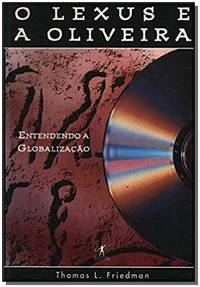
9788573022544OBJETIVA. new. Friedman apresenta ""O Lexus e a Oira"" livro instigante e original sobre o novo sistema que domina o cen�rio internacional: a globaliza��o. Al�m de dissecar o significado desse sistema que substituiu a Guerra Fria o autor nos mostra a tens�o existente entre a globaliza��o e as velhas for�as da cultura da geografia da tradi��o e da comunidade. Ele conclui que a globaliza��o n�o supera a geopol�tica. Apesar da incontest�vel integra��o do capital da tecnologia e da informa��o al�m das fronteiras nacionais dando origem a um mercado mundial �nico as pessoas ainda exaltam choram lutam e morrem pela p�tria. OBJETIVA unknown
2003Q-1400031257Anchor 2003-08-12. Paperback. New. New. In shrink wrap. Looks like an interesting title! Anchor paperback
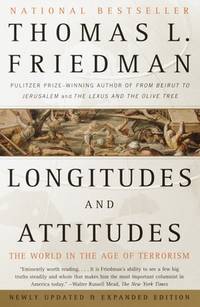
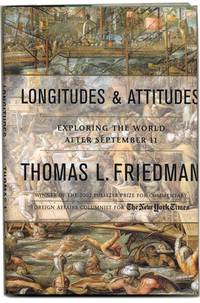
200253978New York: Farrar Straus Giroux. Fine in Fine dust jacket. 2002. Fourth Printing. 1/4 Cloth. 0374190666 . A Fine Later printing in an equally Fine dust-jacket; This book is about Friedman's experiences traveling around the world after the September 11th terrorist attacks. He discusses his observations and feelings about the different places he visits and how they have changed since 9/11. Friedman discusses his experiences with people of different cultures and how their attitudes have changed since the attacks. He also discusses his thoughts on the future of the world and how it may be affected by future terrorist attacks.; 8vo; 383 pages; MR . Farrar Straus Giroux hardcover
200314023Farmington Hills Michigan U.S.A.: Thorndike Pr. New. 2003. Hardcover. 0786249234 . FREE UPGRADE to Courier/Priority Shipping Upon Request - IN STOCK AND IMMEDIATELY AVAILABLE FOR SHIPMENT - Flawless -- with a bonus offer-- . Thorndike Pr hardcover
9,78973E+12ACTUAL EDITORA. new. Vivemos num Mundo Plano: o que isso significa para as empresas países comunidades cidadàos ACTUAL EDITORA unknown
9788573029475OBJETIVA. new. O novo livro do premiado jornalista Thomas L. Friedman desmistifica esse admir�vel novo mundo para os leitores permitindo-nos compreender o muitas vezes desnorteante cen�rio global que se descortina diante dos nossos olhos. Com sua inigual�vel habilidade para traduzir complexos problemas econ�micos e de pol�tica externa Friedman explica como se deu o achatamento do mundo na aurora do s�culo XXI OBJETIVA unknown
9788535923933CIA DAS LETRAS. new. Elogiado pela cr�tica e sucesso mundial de vendas O mundo � plano tornou-se j� refer�ncia na hist�ria das rela��es internacionais. Thomas Friedman um dos principais articulistas do New York Times e vencedor de tr�s pr�mios Pulitzer foi pioneiro em enxergar e definir a ""nova globaliza��o"" era em que os avan�os da tecnologia e da comunica��o permitiram que os indiv�duos se conectassem como nunca antes transformando as no��es conhecidas de dist�ncia tempo e trabalho. Momento este defende o autor que se mostrou positivo para os pa�ses emergentes seus neg�cios e meio ambiente ao contr�rio da era da ""velha"" globaliza��o que s� beneficiava quem j� detinha capital. Atrav�s da ideia de achatamento do mundo Friedman descreve como as pessoas passaram a colaborar umas com as outras e tamb�m competir em um mundo de for�as mais igualit�rias e procura assim explicar a ascens�o de novos players mundiais como ��ndia e China. A presente edi��o do livro traz dois cap�tulos em que o autor responde a perguntas frequentes de leitores mostra como ser um ativista pol�tico e um empres�rio com preocupa��o social e discute como � poss�vel manter a reputa��o e a privacidade num tempo em que a informa��o circula de forma fren�tica. ""Um neg�cio da China: come�ar o ano lendo O mundo � plano do jornalista Thomas Friedman do New York Times. � uma c�psula de 460 p�ginas para um voo por um caminho novo inteligente e empreendedor."" - Elio Gaspari Folha de S.Paulo ""Grandes livros s�o os que nos fazem ver o mundo de outra forma como O mundo � plano de Thomas Friedman."" - Joseph E. Stiglitz CIA DAS LETRAS unknown
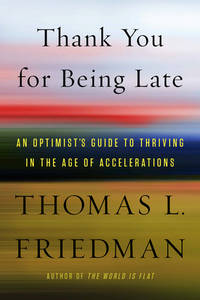
201685945New York: Farrar Straus and Giroux 2016. First Edition stated Second printing stated. Hardcover. Very good/Very good. 10 486 pages. Illustrations. Acknowledgments. Index. Inscribed by the author on the half-title page. Inscription reads To Izzy Happy Birthday. Thomas Friedman. Includes Part 1: Reflecting; Part 2: Accelerating; Part 3: Innovating; and Part 4: Anchoring. Also includes Acknowledgments and Index. Thomas Loren Friedman born July 20 1953 is an American political commentator and author. He is a three-time Pulitzer Prize winner who is a weekly columnist for The New York Times. He has written extensively on foreign affairs global trade the Middle East globalization and environmental issues. In this work Friedman begins by sharing a conversation with a fellow blogger who also happened to be working as a parking attendant. The unlikely pair ended up spending time together as Friedman helped the blogger refine his process. This led to his own deeper reflection on defining his conceptual framework that underpinned his writing. He took a year's sabbatical to research and produce this book encapsulating what he discovered. Reviews<br /> John Micklethwait CBE editor-in-chief of Bloomberg News who reviewed Thank you for Being Late for The New York Times wrote that this is Friedman's "most ambitious book — part personal odyssey part common-sense manifesto". Friedman is a "self-confessed 'explanatory journalist' — whose goal is to be a 'translator from English to English' and this book is "a master class in explaining." This book is a work of contemporary history that serves as a field manual for how to write and think about this era of accelerations. It is also an argument for "being late"--for pausing to appreciate this amazing historical epoch we are passing though and to reflect on its possibilities and dangers. To amplify this point Friedman revisits his Minnesota hometown in his moving concluding chapters; there he explores how communities can create a "topsoil of trust" to anchor their increasingly diverse and digital populations. With his trademark vitality wit and optimism Friedman shows that we can overcome the multiple stresses of an age of accelerations--if we slow down if we dare to be late and use the time to reimagine work politics and community. This is Friedman's most ambitious book--and an essential guide to the present and the future. Derived from a Kirkus review: The celebrated New York Times columnist diagnoses this unprecedented historical moment and suggests strategies for "resilience and propulsion" that will help us adapt. "Are things just getting too damned fast" Friedman cites 2007 as the year we reached a technological inflection point. Combined with increasingly fast-paced globalization and the subsequent speedy shocks to our planet's natural system we've entered an "age of accelerations" that promises to transform "almost every aspect of modern life." The Pulitzer winner puts his familiar methodology—extensive travel thorough reporting interviews with the high-placed movers and shakers conversations with the lowly moved and shaken—to especially good use here beginning with a wonderfully Friedman-esque encounter with a parking attendant during which he explains the philosophy and technique underlying his columns and books. The author closes with a return to his Minnesota hometown to reconnect with and explore some effective habits of democratic citizenship. In between he discusses topics as varied as how garbage cans got smart how the exponential growth in computational power has resulted in a "supernova" of creative energy how the computer Watson won Jeopardy and how without owning a single property Airbnb rents out more rooms than all the major hotel chains combined. To meet these and other dizzying accelerations Friedman advises developing a "dynamic stability" and he prescribes nothing less than a redesign of our workplaces politics geopolitics ethics and communities. Drawing lessons from Mother Nature about adaptability sustainability and interdependence he never underestimates the challenges ahead. However he's optimistic about our chances as he seeks out these strategies in action ranging from how AT&T trains its workers to how Tunisia survived the Arab Spring to how chickens can alleviate African poverty. Required reading for a generation that's "going to be asked to dance in a hurricane.". Farrar, Straus and Giroux hardcover
201688665New York: Farrar Straus and Giroux 2016. First Edition stated Third Printing stated. Hardcover. Good/Very good. Ralph Alswang Author photograph. 10 486 pages. The dust jacket has ome noticable scratches and minor dings. This copy has an author inscription on the half-title page that reads: "To Barbara & Steve 'Your wife asked a great question! Thomas Friedman". Acknowledgments and Index. Also includes Part 1: Reflecting; Part 2: Accelerating; Part 3: Innovating; and Part 4: Anchoring. Also includes Acknowledgments and Index. Thomas Loren Friedman born July 20 1953 is an American political commentator and author. He is a three-time Pulitzer Prize winner who is a weekly columnist for The New York Times. He has written extensively on foreign affairs global trade the Middle East globalization and environmental issues. In this work Friedman begins by sharing a conversation with a fellow commentator who also happened to be working as a parking attendant. The unlikely pair ended up spending time together as Friedman helped the commentator refine his process. This led to his own deeper reflection on defining his conceptual framework that underpinned his writing. He took a year's sabbatical to research and produce this book encapsulating what he discovered. John Micklethwait CBE editor-in-chief of Bloomberg News who reviewed Thank you for Being Late for The New York Times wrote that this is Friedman's "most ambitious book — part personal odyssey part common-sense manifesto". Friedman is a "self-confessed 'explanatory journalist' — whose goal is to be a 'translator from English to English' and this book is "a master class in explaining." A field guide to the twenty-first century written by one of its most celebrated observers. We all sense it-something big is going on. You feel it in your workplace. You feel it when you talk to your kids. You can't miss it when you read the newspapers or watch the news. Our lives are being transformed in so many realms all at once-and it is dizzying. In Thank You for Being Late a work unlike anything he has attempted before Thomas L. Friedman exposes the tectonic movements that are reshaping the world today and explains how to get the most out of them and cushion their worst impacts. You will never look at the world the same way again after you read this book: how you understand the news the work you do the education your kids need the investments your employer has to make and the moral and geopolitical choices our country has to navigate will all be refashioned by Friedman's original analysis. Friedman begins by taking us into his own way of looking at the world-how he writes a column. After a quick tutorial he proceeds to write what could only be called a giant column about the twenty-first century. His thesis: to understand the twenty-first century you need to understand that the planet's three largest forces--Moore's law technology the Market globalization and Mother Nature climate change and biodiversity loss-are accelerating all at once. These accelerations are transforming five key realms: the workplace politics geopolitics ethics and community. Why is this happening As Friedman shows the exponential increase in computing power defined by Moore's law has a lot to do with it. The year 2007 was a major inflection point: the release of the iPhone together with advances in silicon chips software storage sensors and networking created a new technology platform. Friedman calls this platform the supernova -for it is an extraordinary release of energy that is reshaping everything from how we hail a taxi to the fate of nations to our most intimate relationships. It is creating vast new opportunities for individuals and small groups to save the world-or to destroy it. Thank You for Being Late is a work of contemporary history that serves as a field manual for how to write and think about this era of accelerations. It's also an argument for being late -for pausing to appreciate this amazing historical epoch we're passing through and to reflect on its possibilities and dangers. To amplify this point Friedman revisits his Minnesota hometown in his moving concluding chapters; there he explores how communities can create a topsoil of trust to anchor their increasingly diverse and digital populations. With his trademark vitality wit and optimism Friedman shows that we can overcome the multiple stresses of an age of accelerations-if we slow down if we dare to be late and use the time to reimagine work politics and community. Thank You for Being Late is Friedman's most ambitious book-and an essential guide to the present and the future. Farrar, Straus and Giroux hardcover
201685726New York: Farrar Straus and Giroux 2016. First Edition Stated First Printing Stated. Hardcover. Very good/Very good. Ralph Alswang author photograph. 10 486 pages. Autographed sticker on front of DJ. Signed by the author on the half-title page. Illustrations. Acknowledgments. Index. Also includes Part 1: Reflecting; Part 2: Accelerating; Part 3: Innovating; and Part 4: Anchoring. Also includes Acknowledgments and Index. Thomas Loren Friedman born July 20 1953 is an American political commentator and author. He is a three-time Pulitzer Prize winner who is a weekly columnist for The New York Times. He has written extensively on foreign affairs global trade the Middle East globalization and environmental issues. In this work Friedman begins by sharing a conversation with a fellow blogger who also happened to be working as a parking attendant. The unlikely pair ended up spending time together as Friedman helped the blogger refine his process. This led to his own deeper reflection on defining his conceptual framework that underpinned his writing. He took a year's sabbatical to research and produce this book encapsulating what he discovered. Reviews<br /> John Micklethwait CBE editor-in-chief of Bloomberg News who reviewed Thank you for Being Late for The New York Times wrote that this is Friedman's "most ambitious book — part personal odyssey part common-sense manifesto". Friedman is a "self-confessed 'explanatory journalist' — whose goal is to be a 'translator from English to English' and this book is "a master class in explaining." This book is a work of contemporary history that serves as a field manual for how to write and think about this era of accelerations. It is also an argument for "being late"--for pausing to appreciate this amazing historical epoch we are passing though and to reflect on its possibilities and dangers. To amplify this point Friedman revisits his Minnesota hometown in his moving concluding chapters; there he explores how communities can create a "topsoil of trust" to anchor their increasingly diverse and digital populations. With his trademark vitality wit and optimism Friedman shows that we can overcome the multiple stresses of an age of accelerations--if we slow down if we dare to be late and use the time to reimagine work politics and community. This is Friedman's most ambitious book--and an essential guide to the present and the future. Derived from a Kirkus review: The celebrated New York Times columnist diagnoses this unprecedented historical moment and suggests strategies for "resilience and propulsion" that will help us adapt. "Are things just getting too damned fast" Friedman cites 2007 as the year we reached a technological inflection point. Combined with increasingly fast-paced globalization and the subsequent speedy shocks to our planet's natural system we've entered an "age of accelerations" that promises to transform "almost every aspect of modern life." The Pulitzer winner puts his familiar methodology—extensive travel thorough reporting interviews with the high-placed movers and shakers conversations with the lowly moved and shaken—to especially good use here beginning with a wonderfully Friedman-esque encounter with a parking attendant during which he explains the philosophy and technique underlying his columns and books. The author closes with a return to his Minnesota hometown to reconnect with and explore some effective habits of democratic citizenship. In between he discusses topics as varied as how garbage cans got smart how the exponential growth in computational power has resulted in a "supernova" of creative energy how the computer Watson won Jeopardy and how without owning a single property Airbnb rents out more rooms than all the major hotel chains combined. To meet these and other dizzying accelerations Friedman advises developing a "dynamic stability" and he prescribes nothing less than a redesign of our workplaces politics geopolitics ethics and communities. Drawing lessons from Mother Nature about adaptability sustainability and interdependence he never underestimates the challenges ahead. However he's optimistic about our chances as he seeks out these strategies in action ranging from how AT&T trains its workers to how Tunisia survived the Arab Spring to how chickens can alleviate African poverty. Required reading for a generation that's "going to be asked to dance in a hurricane.". Farrar, Straus and Giroux hardcover
2016001233New york: Farrar Straus and Giroux 2016. Stated First Edition 1st Printing. Hardcover. Fine/Fine. 8 1/2" X 5 3/4. Book " . . . serves as a field manual for how to write and think about this era of accelerations." flaps book divisions: Part I - Reflecting Part II - Accelerating Part III - innovating Part IV - Acchoring. 453 pp. plus: Acknowledgments Index. Book has slight spine end wear. Unclipped DJ light edge/shelf wear. Bookseller's Inventory # 231233. <br/> <br/> Farrar, Straus and Giroux hardcover
201681251New York N.Y.: Farrar Straus and Giroux 2016. First Edition Stated First Printing Stated. Hardcover. Good/Very good. Ralph Alswang author photograph. 10 486 pages. Illustrations. Some pencil notes to text observed. DJ is price clipped. Signed by the author on the half-title page. Includes Acknowledgments and Index. Also includes Part 1: Reflecting; Part 2: Accelerating; Part 3: Innovating; and Part 4: Anchoring. Also includes Acknowledgments and Index. Thomas Loren Friedman born July 20 1953 is an American political commentator and author. He is a three-time Pulitzer Prize winner who is a weekly columnist for The New York Times. He has written extensively on foreign affairs global trade the Middle East globalization and environmental issues. In this work Friedman begins by sharing a conversation with a fellow blogger who also happened to be working as a parking attendant. The unlikely pair ended up spending time together as Friedman helped the blogger refine his process. This led to his own deeper reflection on defining his conceptual framework that underpinned his writing. He took a year's sabbatical to research and produce this book encapsulating what he discovered. Reviews<br/>John Micklethwait CBE editor-in-chief of Bloomberg News who reviewed Thank you for Being Late for The New York Times wrote that this is Friedman's "most ambitious book - part personal odyssey part common-sense manifesto". Friedman is a "self-confessed 'explanatory journalist' - whose goal is to be a 'translator from English to English' and this book is "a master class in explaining." This book is a work of contemporary history that serves as a field manual for how to write and think about this era of accelerations. It is also an argument for "being late"--for pausing to appreciate this amazing historical epoch we are passing though and to reflect on its possibilities and dangers. To amplify this point Friedman revisits his Minnesota hometown in his moving concluding chapters; there he explores how communities can create a "topsoil of trust" to anchor their increasingly diverse and digital populations. With his trademark vitality wit and optimism Friedman shows that we can overcome the multiple stresses of an age of accelerations--if we slow down if we dare to be late and use the time to reimagine work politics and community. This is Friedman's most ambitious book--and an essential guide to the present and the future. Derived from a Kirkus review: The celebrated New York Times columnist diagnoses this unprecedented historical moment and suggests strategies for "resilience and propulsion" that will help us adapt. "Are things just getting too damned fast" Friedman cites 2007 as the year we reached a technological inflection point. Combined with increasingly fast-paced globalization and the subsequent speedy shocks to our planet's natural system we've entered an "age of accelerations" that promises to transform "almost every aspect of modern life." The Pulitzer winner puts his familiar methodology-extensive travel thorough reporting interviews with the high-placed movers and shakers conversations with the lowly moved and shaken-to especially good use here beginning with a wonderfully Friedman-esque encounter with a parking attendant during which he explains the philosophy and technique underlying his columns and books. The author closes with a return to his Minnesota hometown to reconnect with and explore some effective habits of democratic citizenship. In between he discusses topics as varied as how garbage cans got smart how the exponential growth in computational power has resulted in a "supernova" of creative energy how the computer Watson won Jeopardy and how without owning a single property Airbnb rents out more rooms than all the major hotel chains combined. To meet these and other dizzying accelerations Friedman advises developing a "dynamic stability" and he prescribes nothing less than a redesign of our workplaces politics geopolitics ethics and communities. Drawing lessons from Mother Nature about adaptability sustainability and interdependence he never underestimates the challenges ahead. However he's optimistic about our chances as he seeks out these strategies in action ranging from how AT&T trains its workers to how Tunisia survived the Arab Spring to how chickens can alleviate African poverty. Required reading for a generation that's "going to be asked to dance in a hurricane.". Farrar, Straus and Giroux hardcover
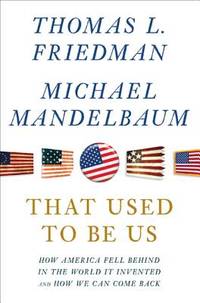
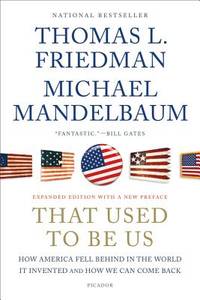
2011Q-0374288909Farrar Straus and Giroux 2011-09-05. Hardcover. New. New. In shrink wrap. Looks like an interesting title! Farrar, Straus and Giroux hardcover
2012Q-1250013720Picador 2012-08-21. Paperback. New. New. In shrink wrap. Looks like an interesting title! Picador paperback
2011Q-1427213712Macmillan Audio 2011-09-05. Audio CD. New. New. In shrink wrap. Looks like an interesting title! Macmillan Audio unknown
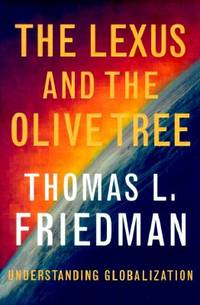
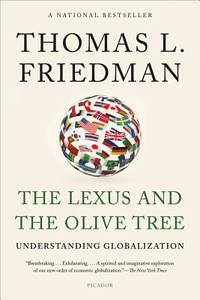
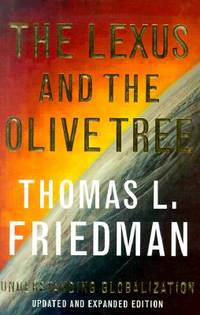
199990646New York: Farrar Straus Giroux 1999. First Edition stated Fourth printing stated. Hardcover. Very good/good. xix 1 394 pages. Index. Slight wear and small chip to DJ edges. Signed by the author on the half-title page. Thomas Loren Friedman born July 20 1953 is an American journalist author and three time Pulitzer Prize winner. Friedman currently writes a weekly column for The New York Times. He has written extensively on foreign affairs global trade the Middle East globalization and environmental issues. The author has won three Pulitzers and a National Book Award and is a longtime journalist on foreign affairs with vast experience and knowledge of global economics. Friedman first discussed his views on globalization in the book The Lexus and the Olive Tree 1999. In 2004 visits to Bangalore India and Dalian China led Friedman to write a follow-up analysis The World Is Flat 2005. The book was on the New York Times Best Seller list from its April 2005 publication until May 2007. Friedman believes that individual countries must sacrifice some degree of economic sovereignty to global institutions such as capital markets and multinational corporations a situation he has termed the "golden straitjacket". He has also expressed concern about the United States' lack of energy independence. He examines how globalization has changed the world economy and considers the benefits of free-market capitalism and the need to balance local forces religious national and cultural with international forces. Friedman's book is the result of his unique access to world leaders in business and government. A New York Times Notable Book for 1999. The Lexus and the Olive Tree is a 1999 book by Thomas L. Friedman that posits that the world is currently undergoing two struggles: the drive for prosperity and development symbolized by the Lexus and the desire to retain identity and traditions symbolized by the olive tree. He says he came to this realization while eating a sushi box lunch on a Japanese bullet train after visiting a Lexus factory and reading an article about conflict in the Middle East. Friedman explains "globalization" by recounting stories of his actual experiences in interfacing with many of the global movers and shakers. He proposes that "globalization is not simply a trend or fad but is rather an international system. It is the system that has replaced the old Cold War system and like that Cold War System globalization has its own rules and logic that today directly or indirectly influence the politics environment geopolitics and economics of virtually every country in the world." The "Big Idea" in The Lexus and the Olive Tree is found on page 232 where Friedman explains that: "if you can't see the world and you can't see the interactions that are shaping the world you surely cannot strategize about the world." He states that "you need a strategy for how to choose prosperity for your country or company." The book puts forward a capitalist peace theory called the Golden Arches Theory of Conflict Prevention: No two countries that both had McDonald's had fought a war against each other since each got its McDonald's. He supported that observation as a theory by stating that when a country has reached an economic development where it has a middle class strong enough to support a McDonald's network it would become a "McDonald's country" and will not be interested in fighting wars anymore. He explains how globalization can cause Brazilification—the loss of the middle class and increase in income gap—of countries impacted by the trend. Brazilification is a neologism included in Douglas Coupland's 1991 book Generation X: Tales for an Accelerated Culture. . In 2005 Friedman said that he framed this theory in terms of McDonald's Golden Arches "with tongue slightly in cheek". In his 2005 book The World is Flat he offered an updated theory he labeled the Dell Theory of Conflict Prevention. Farrar Straus Giroux hardcover
1999Q-0374192030Farrar Straus and Giroux 1999-04-21. Hardcover. New. New. In shrink wrap. Looks like an interesting title! Farrar, Straus and Giroux hardcover
2000Q-0385499345Anchor 2000-05-02. Paperback. New. New. In shrink wrap. Looks like an interesting title! Anchor paperback
2012Q-1250013747Picador 2012-08-21. Paperback. New. In shrink wrap. Looks like an interesting title! Picador paperback
2000Q-0374185522Farrar Straus and Giroux 2000-06-15. Hardcover. New. In shrink wrap. Looks like an interesting title! Farrar, Straus and Giroux hardcover