Zweig, Stefan,Biblio.com

2 452 résultats
48194633-nnew. unknown
mon0004012384Cambridge University Press 10/16/2025 12:00:01. hardcover. Like New. 0.9500 10.2800 8.2000. Cambridge University Press hardcover
0439952662.Gpaperback. Good. Access codes and supplements are not guaranteed with used items. May be an ex-library book. paperback
386347807X.Gpaperback. Good. Access codes and supplements are not guaranteed with used items. May be an ex-library book. paperback
3746009081.Gpaperback. Good. Access codes and supplements are not guaranteed with used items. May be an ex-library book. paperback
1552770192.Gpaperback. Good. Access codes and supplements are not guaranteed with used items. May be an ex-library book. paperback
20152-3065205904Cornelsen Verlag Gmbh 2015. Paperback. New. German language. 11.57x8.19x0.47 inches. Cornelsen Verlag Gmbh paperback
8419004138.Ghardcover. Good. Access codes and supplements are not guaranteed with used items. May be an ex-library book. hardcover
2016__3100025407Fischer S. 2016. Hardcover. New. 270 pages. German language. 9.92x6.85x0.71 inches. Fischer, S. hardcover
2246168147.Gpaperback. Good. Access codes and supplements are not guaranteed with used items. May be an ex-library book. paperback
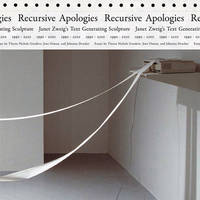
A9781941753934Hardback. New. A guide to Zweig's algorithmically generated sculptures that anticipated contemporary Large Language Models In the early 1990s when personal computing was young and artificial intelligence was not yet a part of the popular imagination American artist Janet Zweig born 1950 made extraordinary and prescient creations: sculptures that married early computers simple algorithms and dot-matrix printers with mechanical parts to auto-generate streams of poetic text that moved objects. Richly illustrated Recursive Apologies presents these sculptures alongside the sources that inspired them. Sporting a recursive design that mirrors the very concepts it explores the volume offers both a visual archive and a reflection on our ongoing relationship with thinking machines. It also features essays by artists and scholars Thyrza Nichols Goodeve Jena Osman and Johanna Drucker that evince how Zweig's witty contraptions were an early premonition of our current technological reality: an atmosphere of disinformation fake news and digital hallucinations. hardcover
0366818228.Gpaperback. Good. Access codes and supplements are not guaranteed with used items. May be an ex-library book. paperback
3337199712.Gpaperback. Good. Access codes and supplements are not guaranteed with used items. May be an ex-library book. paperback
026691411X.Ghardcover. Good. Access codes and supplements are not guaranteed with used items. May be an ex-library book. hardcover
0484088696.Ghardcover. Good. Access codes and supplements are not guaranteed with used items. May be an ex-library book. hardcover
384953281X.Gpaperback. Good. Access codes and supplements are not guaranteed with used items. May be an ex-library book. paperback
3849532747.Gpaperback. Good. Access codes and supplements are not guaranteed with used items. May be an ex-library book. paperback
3849532682.Gpaperback. Good. Access codes and supplements are not guaranteed with used items. May be an ex-library book. paperback
3849532836.Gpaperback. Good. Access codes and supplements are not guaranteed with used items. May be an ex-library book. paperback
3849532704.Gpaperback. Good. Access codes and supplements are not guaranteed with used items. May be an ex-library book. paperback
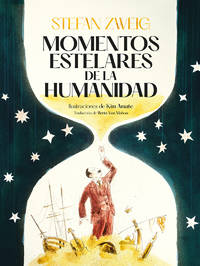
20042-8496136434El Acantilado 2004. Paperback. New. Spanish language. 8.19x5.28x0.79 inches. El Acantilado paperback
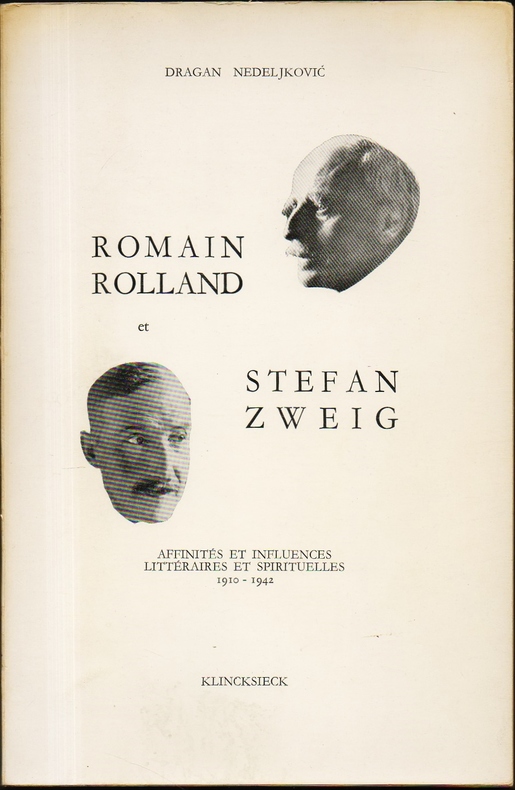
197015239Klincksieck 1970 Paris, éditions Klincksieck, Bibliothèque française et roman, série Études littéraires, 1970. Grand in-8 broché de 389 pp., bibliographie, index. Bon état, sans annotations.
85919Paris, Archives des Lettres Modernes (n°74), 1967, petit in 8° broché, 64 pages.
279377Köln: Böhlau 2023. 386 S., Lit.verz. Reg. Kart. *neuwertig* Stefan Zweig hat zahlreiche Reden und Vorträge über die 'geistige Einheit' der Menschheit gehalten. Diesen lag ein kulturgeschichtliches Phasenmodell zugrunde, in dem der Antike und deren Rezeption eine paradigmatische Funktion zukam. Marian Nebelin analysiert diese Veröffentlichungen, rekonstruiert ihre Einbindung in zeitgenössische Diskurse und verortet sie innerhalb des Werkes des Autors. Dadurch werden Wandlungen in Zweigs Auffassungen nachvollziehbar: Schrieb er zunächst der Technik eine Einigungswirkung zu, erkannte er schließlich deren politische Neutralität; setzte er anfänglich darauf, dass Europa die Welt einigen werde, hoffte er nach der Machtübernahme der Nationalsozialisten auf die Völker Südamerikas. Konstant blieb hingegen Zweigs Grundannahme, die Geschichte werde durch den Gegensatz zwischen einer einigenden internationalistischen Tendenz auf der einen und einer zerstörerischen nationalistischen Tendenz auf der anderen Seite bestimmt. Seine unzeitgemäße Hoffnung war, dass der Einheitsgedanke siegen werde.