1 481 résultats
94587aaf‘Printed in Germany’, Vers 1930, 39.5 x 27.5 cm / 29 x 68.5 cm. Faux-plis et une petite déchirure (4 cm).
138215aafFribourg : Acad. Press / Göttingen : Vandenhoeck & Ruprecht, 1996, gr. in-8vo, XX + 409 p. / X + 169 p. + XXI planches dépl., rosa Original-Pappband, / orig. hardcover. Neuwertig.
Very Good English Original bdg. with new spine. Roy. 8vo. (23 x 15 cm). In English. [xxviii], 507 p., 1 folded engraved color plate of Sebastopol from the sea, 12 numerous folded plans and maps. First Edition. Third volume. The invasion of the Crimea: Its origin, and an account of its progress down to the death of Lord Raglan. Vol. III. Kinglake was an English travel writer and historian. He was born near Taunton, Somerset, and educated at Eton College and Trinity College, Cambridge. He was called to the Bar in 1837, and built up a thriving legal practice, which, in 1856, he abandoned to devote himself to literature and public life. His first literary venture was Eothen; or Traces of travel brought home from the East (London: J. Ollivier, 1844), a very popular work of Eastern travel, apparently first published anonymously, in which he described a journey he made about ten years earlier in Syria, Palestine and Egypt, together with his Eton contemporary Lord Pollington. Elliot Warburton said it evoked "the East itself in vital actual reality" and it was instantly successful. However, his magnum opus was THE INVASION OF THE CRIMEA: Its Origin, and an Account of its Progress down to the Death of Lord Raglan, in 8 volumes, published from 1863 to 1887 by Blackwood, Edinburgh, one of the most effective works of its class. The History, which Geoff Bocca describes as a book "by which no intelligent man can fail immediately to be fascinated, no matter to what page he might open it" has been accused of being too favourable to Lord Raglan and unduly hostile to Napoleon III for whom the author had an extreme aversion. The town of Kinglake in Victoria, Australia, and the adjacent national park are named after him. A Whig, Kinglake was elected at the 1857 general election as one of the two Members of Parliament (MP) for Bridgwater, having unsuccessfully contested the seat in 1852. He was returned at next two general elections, but the result of the 1868 general election in Bridgwater was voided on petition on 26 February 1869. No by-election was held, and after a Royal Commission found that there had been extensive corruption, the town was disenfranchised in 1870.
Very Good English Original bdg. with new spine. Roy. 8vo. (23 x 15 cm). In English. [xviii], 482, [24] p., 1 folded sketch map frontispiece. First Edition. Sixth volume. The invasion of the Crimea: Its origin, and an account of its progress down to the death of Lord Raglan. Vol. VI. Kinglake was an English travel writer and historian. He was born near Taunton, Somerset, and educated at Eton College and Trinity College, Cambridge. He was called to the Bar in 1837, and built up a thriving legal practice, which, in 1856, he abandoned to devote himself to literature and public life. His first literary venture was Eothen; or Traces of travel brought home from the East (London: J. Ollivier, 1844), a very popular work of Eastern travel, apparently first published anonymously, in which he described a journey he made about ten years earlier in Syria, Palestine and Egypt, together with his Eton contemporary Lord Pollington. Elliot Warburton said it evoked "the East itself in vital actual reality" and it was instantly successful. However, his magnum opus was THE INVASION OF THE CRIMEA: Its Origin, and an Account of its Progress down to the Death of Lord Raglan, in 8 volumes, published from 1863 to 1887 by Blackwood, Edinburgh, one of the most effective works of its class. The History, which Geoff Bocca describes as a book "by which no intelligent man can fail immediately to be fascinated, no matter to what page he might open it" has been accused of being too favourable to Lord Raglan and unduly hostile to Napoleon III for whom the author had an extreme aversion. The town of Kinglake in Victoria, Australia, and the adjacent national park are named after him. A Whig, Kinglake was elected at the 1857 general election as one of the two Members of Parliament (MP) for Bridgwater, having unsuccessfully contested the seat in 1852. He was returned at next two general elections, but the result of the 1868 general election in Bridgwater was voided on petition on 26 February 1869. No by-election was held, and after a Royal Commission found that there had been extensive corruption, the town was disenfranchised in 1870.
Very Good Very Good English Original cloth bdg. Dusst wrapper. Folio. (32 x 24 cm). Edition in English. 251 p., b/w and color ills. An eyewitness of the Tulip Era: Jean-Baptiste Vanmour. Edited by Melis H. Seyhun, Arzu Karamani Pekin. An eyewitness of one the most interesting periods in Ottoman history is a Western artist: Jean-Baptiste Vanmour. Today, as part of the collection of Rijksmuseum Amsterdam, nearly sixty paintings of the artist depict the Ottoman world in a realistic style: Sultans, grand viziers, prominent imperial officials, daily life scenes from Istanbul, an ambassador´s audience with the Sultan and other significant events such as the Patrona Halil Rebellion. An eyewitness of Tulip Era: Jean Baptiste Vanmour, sheds light to the works of this unique painter and documents one of the most significant periods in Ottoman civilization and culture through the perspectives of four renowned art histroians.
1923AEGY0092Lpz., Hinrichs 1922 u. 1923. 62 S.; 64 S.; 42 S.; 72 S.; 119 S.; Rusch, Adolf: Die Entwicklung der Himmelsgöttin Nut zu einer Titengottheit; Fichtner-Jeremias, Christliebe: Der Schicksalsglaube bei den Babyloniern; Schneider, Hermann: Die jungsteinzeitliche Sonnenreligion im ältesten Babylonien und Egypten./Glaser, Eduard - Nachf. Otto Weber: Altjemenische Studien (Die neuen Pariser Inschriften; Die Vertragsinschrift 'Alhan Nahfan's.
CZC-8082illustré d'après les photographies de l'auteur, gravés par Petit & Cie "J’ai quitté la France dans le déluge de Saint-Médard. Je trouve un Alger glacial, sans soleil, avec une mer verte et houleuse, un vent si coupant, si sec, le long des quais, sous les arcades, que les terrasses de cafés sont désertes et les squares abandonnés. J’ai eu tout juste le temps de faire porter mes bagages à l’express de nuit qui marche sur Oran. Elle est divertissante à observer par une fenêtre de wagon, la vie de cette banlieue algérienne. " Vol relié demi cuir, in8, 180x120, leg. frottements, bel état intérieur, 308pp. Paris, Marpon & Flammarion, ss date, vers 1890 ref/212
cROU-991Paris,Jonquières,1925 ; in-8°,broché ,couverture rempliée vert pâle illustrée et imprimée en noir; 2ff.,131pp.;couverture un peu passée,sinon bon exemplaire.
In-8, demi-percaline chagrinée, 28 p., petite auréole claire en marge de quelques feuillets. Édition originale de ce rapport prononcé en séance le 15 mai 1843, résultat d'une enquête réalisée par une commission de l'Assemblée. A l'occasion d'une demande de crédits exceptionnels, le député de la Côte d'Or fait un historique de la conquête de l'Algérie depuis 1830, présente les doctrines en présence et évalue les progrès de la colonisation sur le terrain. (Manque à Tailliart et à Gay).
1897139982Paris, Garnier frères, impr. Imprimerie de J. Claye, à Paris 1897 In-8 23 x 14 cm. Reliure éditeur demi chagrin vert, dos à nerfs encadrés de fers dorés, tranches dorées, 560 pp. Edition illustrée d'un frontispice et de 6 gravures hors-texte sous serpentes gravées sur acier d'après des dessins originaux de G. Staal, etc. Très bon exemplaire.
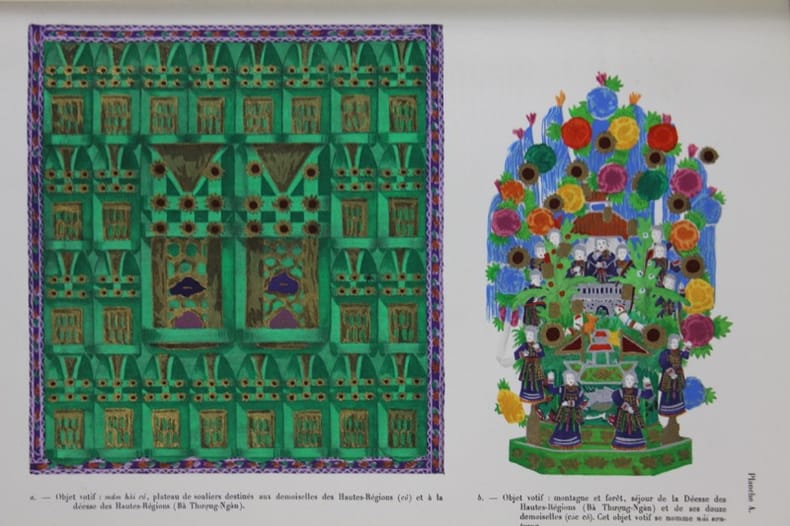
195931799École française d'Extrême-Orient 1959 In-4 broché, non coupé, 333 pp. 8 planches en couleurs et 75 planches en noir. Bibliographie. Très bon exemplaire.
1909ISLA0057Lpz., Haupt 1909. gr.-8°, X, 685 S., HLn. d. Zt., abgegriff., hint. Rückenkante oben etw. zerschlissen, flieg. Vors. m. Besitzerstemp., Innentit. m. Namenszug, marmor. Schnitt.
91390aafPhiladelphia, J.W. Moore, 1856, in-8vo, 1 l. + XX + 132 p. (preliminary discourse) + 670 p. + 2 folded tables of Arabic tribes, on the first and the last leaves notices hw., some stains, cloth binding, borders and corners used, covers blindpressed.
199426451Credit Communal, Snoeck-ducaju & Zoon 1994 In-4 pleine toile éditeur. Jaquette comme neuve. Bon état d’occasion. Poids sans emballage : 2750 grammes.
New English Paperback. Pbo. 4to. (30 x 23 cm). In English and Turkish. 149 p., color ills. Contents: Orientalism in the 19th century and Turkey; Günsel Renda.; The Ottoman Court and sultanic portraiture; Erol Makzume.; Orientalist painters in the 19th century Ottoman Empire; Gulsen Sevinç Kaya. The painting purchased from Goupil's Art Gallery for the Dolmabahce Palace; Catalogue. Orientalists at the Ottoman Palace. = Osmanli Sarayi'nda oryantalistler. [Exhibition catalogue]. Dolmabahçe Palace Art Gallery; July 7 - September 10, 2006.
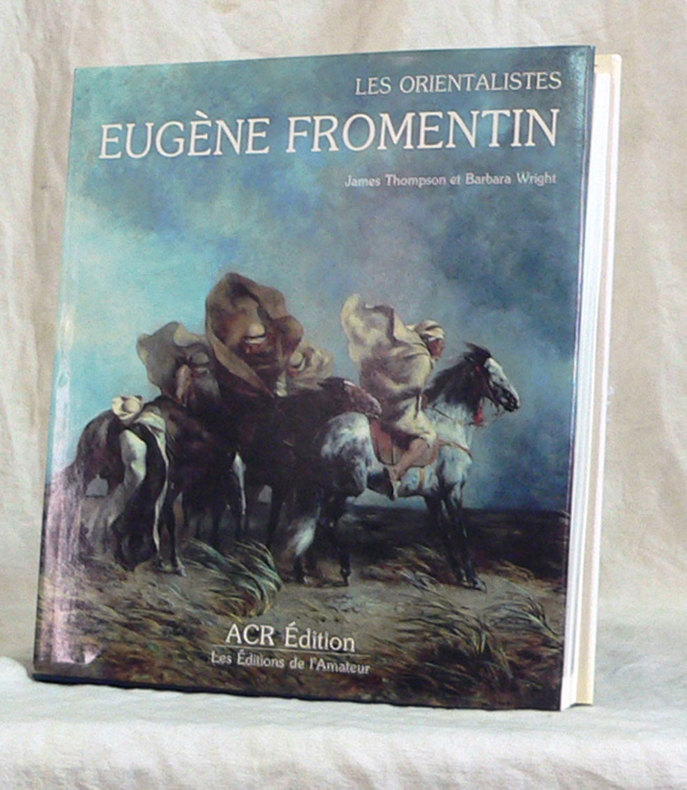
198928034ACR Édition Jaquette en très bon état Couverture rigide toile Paris 1989
199842102ACR Édition Jaquette en très bon état Couverture rigide toile Paris 1998
178796501787 Constantinople et Paris, Buisson, 1787; 2 tomes reliés en un volume in-12°, demi-basane brune, dos lisse orné en long de larges fers dorées, petites palettes et tête et pied, titre doré, tranches marbrées ; (iv), 236pp.; (ii),174, (1)pp.
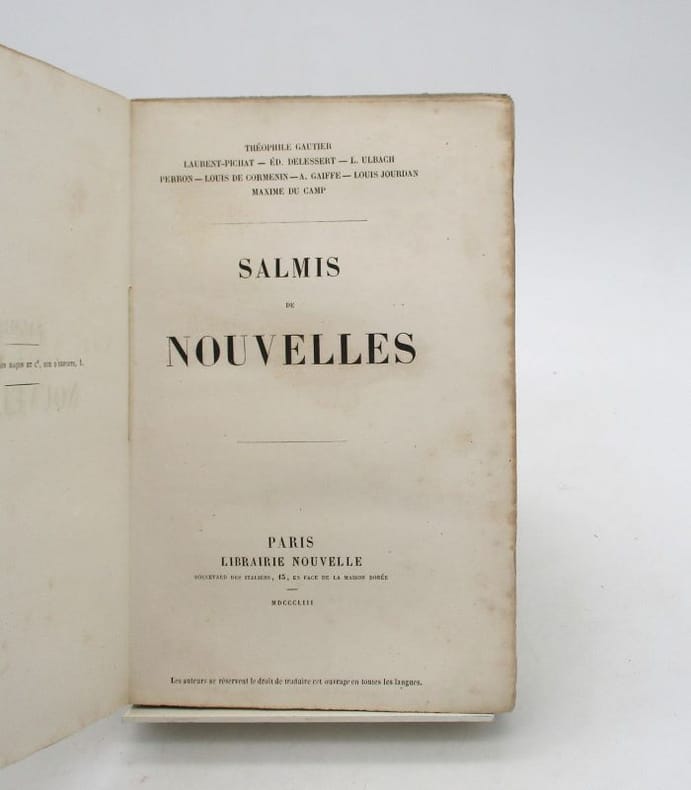
19266Paris, Librairie nouvelle, 1853. In-12, 354 pp., broché, couverture originale imprimée (rousseurs, une mouillure angulaire au 2nd plat).
1987LIQ-4004Paris, ACR, Editions de l'Amateur 1987. In-4° pleine toile sous jaquette illustrée en couleurs, 336 pp.
In-8, broché, couverture imprimée, 23 p. Édition originale. Précoce plaidoyer pour le renforcement de la colonisation que l'auteur tente d'envisager sous une forme "moderne". Il réfute les affirmations d'un rapport selon lequel les indigènes auraient été dépouillés de leurs biens et traite largement des conditions de collaboration avec ces populations. L'auteur Paul-Ambroise Volland, dit "Baron Volland" était intendant militaire de l'Algérie et délégué des colons d'Alger. (Tailliart, 2579). Bel exemplaire, à l'état de parution.
178416651784 Couverture rigide Paris, Debure, fils aîné, 1784. Un volume in-8 (20 x 13 cm), reliure plein veau raciné, dos à 5 nerfs orné, pièce de titre en maroquin bordeaux, filet à froid d'encadrement sur les plats, filet doré sur les coupes, coins légèrement émoussés, quelques épidermures. Portrait de l'abbé Blanchet en frontispice gravé par Saint-Aubin, faux-titre, titre, lvj, 285 (2) pages. Ex-libris manuscrit sur la page de titre de la Marquise de Flamarens. Biographie de l'Abbé Blanchet établie par Jean Dusaulx en tête d'ouvrage. L'ouvrage puise son charme dans sa capacité à transporter le lecteur dans un Orient imaginaire, exotique et idéalisé, mais il reflète également une vision européocentrée de l'Orient. Les récits sont parfois des adaptations de contes persans, arabes ou indiens, revisités pour convenir à une audience française. L'ouvrage contient également un recueil de maximes et proverbes ; "les chiens aboient à la lune, mais la lune n'en brille pas moins", "la plus mauvaise roue d'un chariot est celle qui fait le plus de bruit". Bon exemplaire de cette édition originale posthume.
(Orientalismo - Etnologia - Antropologia - Asia - Oriente) Due volumi in 8° grande (27x19,5), legatura coeva in mezza pelle color testa di moro con punte, dorso a 5 nervi con filetti e titoli dorati, carta marmorizzata ai piatti e alle guardie, tagli di testa in colore rosso, pp. (8),591,(9) ; (8),583,(9) con complessive 675 illustrazioni nel testo, molte a piena pagina e 14 (su 18) tavole in cromolitografia a doppia pagina fuori testo. Collana ''Popoli del mondo. Usi e costumi''. Indice delle materie, Vol. I : ''Caratteri generali della civiltà asiatica. I popoli della Siria, della Mesopotamia e dell'Arabia. Gli abitanti della Siria. Gli abitanti della Mesopotamia. Gli Arabi dell'Arabia. Leggende e superstizioni arabe, bibliche e cristiane. I Curdi. Gli Armeni. I Persiani. I Caucasici. I Turchi. I Turcomanni. I Kirghisi. Gli Indiani. I Parsi. I Singalesi.''. Vol. II : ''I Mongoli propriamente detti. I Tibetani. I Bhutanesi e Buthia ed i Lepcha (Lepcia). I Birmani. I Malesi delle Molucche e Giavanesi. I Giavanesi. Gli abitanti di Sumatra. Gli abitanti di Nias. Borneo. Gli abitanti delle Filippine. I popoli dell'Indocina: Siamesi. Gli Annamiti. I Tonchinesi. I popoli della Cina. Le cinque veglie dell'oppio. I Formosani. I Coreani. I Giapponesi. I Siberiani''. Alcune circoscritte tracce di ossidazione all'interno, peraltro volumi solidi e ben conservati.
Original boards. 8vo, 240 pages, 19cm. SUBJECTS: Chronology. Egyptian language -- Writing, Hieroglyphic.. Some wear to outer boards, otherwise Good Condition. (AC-2-8)