1 478 résultats
9804Annales de l'Extrême-Orient et de l'Afrique, n° 100. Paris, Challamel, octobre 1886. In-4, broché.
11918Journal asiatique. Recueil trimestriel de mémoires et de notices relatifs aux études orientales. Tome CCXLII, N°2, Paris, Librairie orientaliste P. Geuthner, 1954. In-8, broché.
11917Journal asiatique. Recueil trimestriel de mémoires et de notices relatifs aux études orientales. Tome CCXXVI, N°1, Paris, Librairie orientaliste P. Geuthner, janvier-mars 1935. In-8, broché.
11916Journal asiatique. Recueil trimestriel de mémoires et de notices relatifs aux études orientales. Tome CCXXVIII, N°2, Paris, Librairie orientaliste P. Geuthner, avril-juin 1936. In-8, broché.
11915Journal asiatique. Recueil trimestriel de mémoires et de notices relatifs aux études orientales. Tome CCXXX, N°1, Paris, Librairie orientaliste P. Geuthner, janvier-mars 1938. In-8, broché.
(Mille e una notte - Novelle orientali - Orientalismo - Oriente) Due volumi riuniti in unico tomo in 8°, legatura coeva in mezza pelle color testa di moro, dorso a 4 piccoli nervi con titolo e fregi ornati impressi in oro, carta decorata ai piatti, pp. 647,(1) ; 453,(1), con doppio frontespizio figurato ed a stampa in entrambi i volumi, numerose le illustrazioni nel testo. Esemplare solido e ben conservato.
Fine English Paperback. Roy. 8vo. (24 x 17 cm). In English and Japanese. 787, 144, 91 p. (Toyo Bunko) Bibliography Islamic and Middle Eastern studies in Japan, 1868-1988, 1992. [With] Index & Directory of Asian historical studies in Japan.
Fine English Paperback. Pbo. Roy. 8vo. (24 x 17 cm). In Arabic; Ottoman script, and Japanese. [xiv], 595, 196 p. (Toyo Bunko) Sarkiyat Kütüphanesi Türkçe ve Osmanlica kitaplar katalogu. Ilaveli ve düzeltilmis baski. (Toyo Bunko) Fihrist el-kitab al-arabiye el-mahfuza bedar el-kitab el-Sarkiyat fi Tokyo. Catalogue of books in Ottoman and modern Turkish in the Toyo Bunko Library.
Fine English Paperback. Pbo. Roy. 8vo. (24 x 17 cm). In Turkish; Ottoman script, and Japanese. [xiv], 595, 196 p. (Toyo Bunko) Sarkiyat Kütüphanesi Türkçe ve Osmanlica kitaplar katalogu. Ilaveli ve düzeltilmis baski. Catalogue of books in Ottoman and modern Turkish in the Toyo Bunko Library.
104987aafKobenhavn, Andr. Fred Host & Son, 1928, gr. in-8vo, brochures originales.
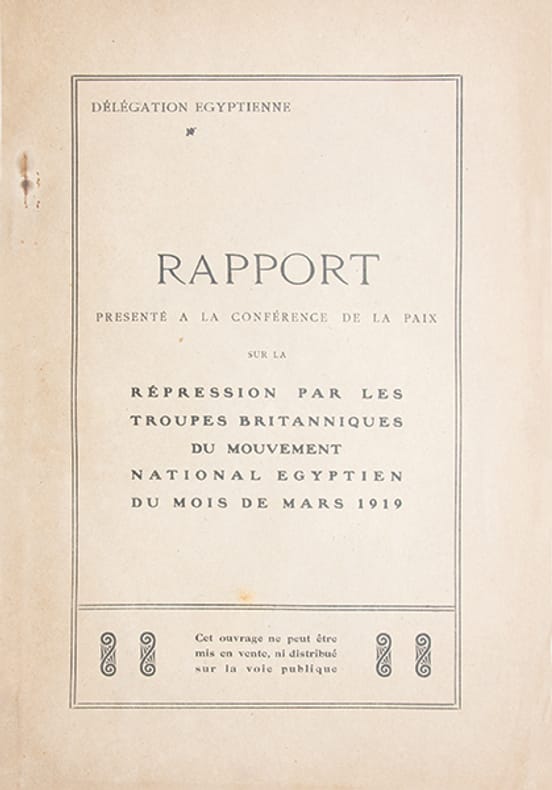
3 brochures in-8, couvertures imprimées. Recueil de trois pièces officielles : les réactions du jeune mouvement national égyptien à la suite de la décision prise lors de la "Conférence de la paix" de confirmer le protectorat de la Grande-Bretagne sur l’Égypte et des premiers mouvements insurrectionnels qui s'en suivirent. Présenté à la Conférence de la paix, le premier rapport concerne les événements de mars 1919 : après l'arrestation et l'exil de trois dirigeants du Wafd (parti nationaliste égyptien), de graves troubles secouèrent l'Égypte causant un millier de morts égyptiens et trente du côté anglais. Les 3 planches de photos représentent des sévices infligés par les Anglais à des citoyens égyptiens.
138136aafFribourg, Academic Press / Bibel + Orient Museum, 2010, in-4to, 224 S, reich illustriert, hs. Widmung auf Vorsatz, ill. Original-Pappband. / ill. Softcover.
New Turkish Paperback. 4to. (29 x 24 cm). Turkish Edition. 311 p., color and b/w ills. 17. yüzyil Avrupasinda Türk imaji. [Exhibition catalogue]. 12 Temmuz - 9 Ekim 2005, Sakip Sabanci Müzesi. 17. Yüzyil Avrupa'sinda Türk Imaji baslikli sergide, Sabanci Üniversitesi Sakip Sabanci Müzesi'nin daha önce gerçeklestirdigi Mediciler'den Savoylar'a Floransa Saraylarinda Osmanli Görkemi sergisinde oldugu gibi, Osmanli-Avrupa iliskileri, siyasi olaylarin sanata yansiyan izdüsümü irdelendi. Türk korkusunun büyük bir meraka dönüstügü, Türklere karsi savasan kesimlerin savas ertesi kendi yurtlarinda düsmanlarinin kiyafetine bürünerek yaptirdiklari portrelerin yayginligi, Osmanli topraklarina ait savas ganimeti, hediye veya ticaret yolu ile edinilmis malzemenin Avrupa sosyal yasaminda oynadigi önemli rol, tarihçi ve sosyal alandaki arastirmacilara öteden beri genis bir çalisma alani sunarken, müzecilere de belge degeri tasiyan büyük bir sanat eseri zenginligi getirmekteydi. Slovenya basta olmak üzere Orta Avrupa'daki çesitli Müze koleksiyonlari ile Ingiltere ve Türkiye'deki özel koleksiyonlardan derlenen 92 yagliboya portre, panorama ve gravürün yer aldigi sergi Credit Suisse'in katkilariyla düzenlendi.
New French Original bdg. HC. Folio. (38 x 26 cm). In French and Turkish. Text 24 pp. Folded panorama. 1928 panorama de Smyrne.= 1928 Izmir panoramasi. Text by Siren Bora. Reprint of panoramic photograph of Izmir city (Smyrna) in 1928 which was taken by Hamza Rüstem who is famous Turkish photographer from Izmir.
Fine English Paperback. Pbo. Roy. 8vo. (24 x 17 cm). In Turkish. [vi], 59 p., 2 b/w plts. 1951 de Istanblda toplanan Milletlerarasi XXII. Müstesrikler Kongresi. Mesaisi ve akisleri.
Very Good Turkish Original silver gelatin photographic print mounted on cardboard. 53x42 cm (Photo size: 38x30 cm). Signed by Yildiz Moran. Yildiz (Vahid) Moran Arun was born on 24 July 1932, in Istanbul. She is the youngest of three children born to Nemide Moran and Ahmet Vahid Moran. Her father, Ahmet Vahid Moran, was a military officer who served in important positions both at home and abroad. He was the writer of Turkey's very first English-Turkish dictionary printed in Latin script in 1924. In 1950, Yildiz Moran quit her high school education during her final year at Robert College and, following the guidance of her uncle, the art historian Mazhar Sevket Ipsiroglu, went to Great Britain to study photography. After completing her education at Bloomsbury Technical College (1950-52) and Ealing Broadway Technical College, she began to work for John Vickers, the acclaimed photographer of The Old Vic. Moran combined her technical and theoretical knowledge with the practical experience she gained at the studio and stage shoots. She had the opportunity to meet famous artists of the time. The exhibitions and works she saw during her time in Great Britain helped her develop her photographic vision. Following her internship period, she began to make a living taking portrait and lobby photographs. She opened her first exhibition in 1953 in Cambridge. In 1954, she held four more exhibitions in London. All these shows attracted much attention. In her first exhibition, her entire collection was sold. She went traveling in Europe. After making a photo book on Spain and Portugal, she returned to Turkey in 1954. Between 1955 and 1962, she held five solo exhibitions. In 1963, she married Özdemir Asaf (Halit Özdemir Arun) and gave birth to three children in four years. She dedicated the rest of her life to her children. She opened her last exhibition in 1970, in Istanbul. After that, she only took part in retrospective exhibitions. She quit her professional photography career and began to work as a translator and dictionary writer. Between 1981 and 1987, she prepared the complete works of Özdemir Asaf for publication and translated some of his poetry and prose into English. In 1982, the Istanbul State Academy of Fine Arts Photography Institute awarded her with honorary membership on account of her contributions to the art of photography. Lyrically conveying a universal language through her own perspective, Moran became a school in herself with her "timeless" photographs. Turkey's first academically-trained photographer, Yildiz Moran is renowned for the new vision and aesthetic she introduced into photography and considered to be one of the best photographers of all time. Masterfully combining the tradition of the East with the aesthetic of the West, she left behind a legacy of black and white photographs beautifully composed to capture the world of light and shadow reflecting on people and lands. Considering the conditions in the world of photography in the 1950s and 1960s, it is a great achievement that she defined at the age of 20 her passion for photography as the foundation of her life, became the first academically-trained woman photographer in her country, acquired in-depth knowledge of the discipline and combined this knowledge with her talent and hard work. "The camera must be like an extension of your being so that it doesn't create an obstruction between you and your subjects. Anything that has poetry in it is the subject of photography. My only intention has always been to photograph what was universal while staying true to the concept embodied by my subject." Besides her portraits, landscapes, and abstract details, she is also known for her photographs reflecting the lives of the Anatolian people. As a woman photographer traveling in Anatolia, she accessed otherwise inaccessible environments, moments, and perspectives; and, with profound respect, she conveyed the purity of the people she met there and allowed us... (Biography: Merih Akogul).
Very Good Turkish Original silver gelatin photographic print mounted on cardboard. 53x42 cm (Photo size: 38x30 cm). Signed by Yildiz Moran. Yildiz (Vahid) Moran Arun was born on 24 July 1932, in Istanbul. She is the youngest of three children born to Nemide Moran and Ahmet Vahid Moran. Her father, Ahmet Vahid Moran, was a military officer who served in important positions both at home and abroad. He was the writer of Turkey's very first English-Turkish dictionary printed in Latin script in 1924. In 1950, Yildiz Moran quit her high school education during her final year at Robert College and, following the guidance of her uncle, the art historian Mazhar Sevket Ipsiroglu, went to Great Britain to study photography. After completing her education at Bloomsbury Technical College (1950-52) and Ealing Broadway Technical College, she began to work for John Vickers, the acclaimed photographer of The Old Vic. Moran combined her technical and theoretical knowledge with the practical experience she gained at the studio and stage shoots. She had the opportunity to meet famous artists of the time. The exhibitions and works she saw during her time in Great Britain helped her develop her photographic vision. Following her internship period, she began to make a living taking portrait and lobby photographs. She opened her first exhibition in 1953 in Cambridge. In 1954, she held four more exhibitions in London. All these shows attracted much attention. In her first exhibition, her entire collection was sold. She went traveling in Europe. After making a photo book on Spain and Portugal, she returned to Turkey in 1954. Between 1955 and 1962, she held five solo exhibitions. In 1963, she married Özdemir Asaf (Halit Özdemir Arun) and gave birth to three children in four years. She dedicated the rest of her life to her children. She opened her last exhibition in 1970, in Istanbul. After that, she only took part in retrospective exhibitions. She quit her professional photography career and began to work as a translator and dictionary writer. Between 1981 and 1987, she prepared the complete works of Özdemir Asaf for publication and translated some of his poetry and prose into English. In 1982, the Istanbul State Academy of Fine Arts Photography Institute awarded her honorary membership on account of her contributions to the art of photography. Lyrically conveying a universal language through her own perspective, Moran became a school in herself with her "timeless" photographs. Turkey's first academically-trained photographer, Yildiz Moran is renowned for the new vision and aesthetic she introduced into photography and is considered to be one of the best photographers of all time. Masterfully combining the tradition of the East with the aesthetic of the West, she left behind a legacy of black and white photographs beautifully composed to capture the world of light and shadow reflecting on people and lands. Considering the conditions in the world of photography in the 1950s and 1960s, it is a great achievement that she defined the age of 20 her passion for photography as the foundation of her life, became the first academically-trained woman photographer in her country, acquired in-depth knowledge of the discipline and combined this knowledge with her talent and hard work. "The camera must be like an extension of your being so that it doesn't create an obstruction between you and your subjects. Anything that has poetry in it is the subject of photography. My only intention has always been to photograph what was universal while staying true to the concept embodied by my subject." Besides her portraits, landscapes, and abstract details, she is also known for her photographs reflecting the lives of the Anatolian people. As a woman photographer traveling in Anatolia, she accessed otherwise inaccessible environments, moments, and perspectives; and, with profound respect, she conveyed the purity of the people she met there and allowed us... (Biography: Merih Akogul).
Very Good Turkish Original fine photograph. 55x54 cm. Framed. Signed by Kortan Tümerdem and Emine Öztekin on verso, on a card.
Very Good English Original gold-tones albumen photograph from 'Holy Land pictures', London, 1870. Oblong folio. (30,5 x 38 cm); photographic image size: 15x20 cm. Descriptive text in English ( Baalbec, and the Lebanon range. This city may possibly have been built by King Solomon. "And Solomon built Balalath (Baalbek) and Tadmor in the wilderness (Palmyra)", I Kings ix, 18.). Frank Mason Good, born 1839 in Deal, Kent, began his photographic career as an assistant to photographer Francis Frith. Good is known to have been active during the 1860s and 1870s. He lived most of his life at Phoenix Green, Hartley Wintney, (and died there on 28th June 1928) but had studios in London and Brighton. In 1870 he married Margaretta Teape at St Mark, Goodman's Fields. Following Margaretta's death (on 29th December 1904) he married his second wife, Jessie Emily Waghorn, in 1906, at Hartley Wintney. He is best known for his stereographic photographs of the Near East, and it was Frith who sponsored Good's first trip there. Other geographic locations captured by Good include Spain, Greece, and the Isle of Wight. Frank Mason Good is best known for his series of views of the Middle East taken on four separate tours of the area in the 1860s and 1870s. He first traveled to Egypt as an assistant to Francis Frith in late 1857. He joined the Photographic Society in 1864, and in 1880 served as a judge of its annual exhibition. He lived at Hartley Wintney, Winchfield, Hampshire.
Very Good English Original gold-tones albumen photograph from 'Holy Land pictures', London, 1870. Oblong folio. (30,5 x 38 cm); photographic image size: 15x20 cm. Descriptive text in English. (Nazareth, from the East, with the Well of the Virgin. In this neighborhood, our Lord and Savior Jesus Christ spent nearly thirty years of his life: And over these "Sacred Acres" often roamed "Those blessed feet that once were nailed, for our advantage to the bitter cross.".). Frank Mason Good, born 1839 in Deal, Kent, began his photographic career as an assistant to photographer Francis Frith. Good is known to have been active during the 1860s and 1870s. He lived most of his life at Phoenix Green, Hartley Wintney, (and died there on 28th June 1928) but had studios in London and Brighton. In 1870 he married Margaretta Teape at St Mark, Goodman's Fields. Following Margaretta's death (on 29th December 1904) he married his second wife, Jessie Emily Waghorn, in 1906, at Hartley Wintney. He is best known for his stereographic photographs of the Near East, and it was Frith who sponsored Good's first trip there. Other geographic locations captured by Good include Spain, Greece, and the Isle of Wight. Frank Mason Good is best known for his series of views of the Middle East taken on four separate tours of the area in the 1860s and 1870s. He first traveled to Egypt as an assistant to Francis Frith in late 1857. He joined the Photographic Society in 1864, and in 1880 served as a judge of its annual exhibition. He lived at Hartley Wintney, Winchfield, Hampshire.
Very Good English Original gold-tones albumen photograph from 'Holy Land pictures', London, 1870. Oblong folio. (30,5 x 38 cm); photographic image size: 15x20 cm. Descriptive text in English. (Shechem (Nablus), between Ebal and Gerizim Shechem (Nablus), between Ebal and Cerizim: This was Abraham's first halting-place, Gen. xii. 6; Here Jacob settled and bought a piece of land, Gen, xxxiii, 19; Here Joshua assembled the people just before his death, Josh, xxiv; And here the ten tribes rebelled against Rehoboam, 1 Kings xii.). Frank Mason Good, born 1839 in Deal, Kent, began his photographic career as an assistant to photographer Francis Frith. Good is known to have been active during the 1860s and 1870s. He lived most of his life at Phoenix Green, Hartley Wintney, (and died there on 28th June 1928) but had studios in London and Brighton. In 1870 he married Margaretta Teape at St Mark, Goodman's Fields. Following Margaretta's death (on 29th December 1904) he married his second wife, Jessie Emily Waghorn, in 1906, at Hartley Wintney. He is best known for his stereographic photographs of the Near East, and it was Frith who sponsored Good's first trip there. Other geographic locations captured by Good include Spain, Greece, and the Isle of Wight. Frank Mason Good is best known for his series of views of the Middle East taken on four separate tours of the area in the 1860s and 1870s. He first traveled to Egypt as an assistant to Francis Frith in late 1857. He joined the Photographic Society in 1864, and in 1880 served as a judge of its annual exhibition. He lived at Hartley Wintney, Winchfield, Hampshire.
New English Paperback. Pbo. 4to. (29 x 24 cm). In English and Turkish. 64 p., color ills. [Painter's Istanbul].= Ressamlarin Istanbul'u. 18 Mart - 11 Nisan 2009. [Exhibition catalogue]. 1000 copies were printed.
New New Persian Original bdg. Dust wrapper. Roy. 8vo. (24 x 17 cm). Text in Persian wih bilingual title in German and Persian on the cover. 570 p., ills. and maps. [Partherreich und seine Zeugnisse].= Imparâtûri-yi Ashkânî va asnâd va manâbi'-i ân: Majû'ah-i maqâlât.