1 481 résultats
1997nc1338Ides et Calendes Broché 1997 In-4 (25 x 32 cm), broché, 177 pages, photographies en noir et blanc ; quelques petits chocs et marques d'usage sur les plats, traces aux tranche, coin inférieur un peu recourbé, par ailleurs assez bon état. Livraison a domicile (La Poste) ou en Mondial Relay sur simple demande.
New New Turkish Original bdg. Dust wrapper. Roy. 8vo. (24 x 17 cm). In Turkish. 350 p., color and b/w ills., and 1 CD. History of the English Schools in Istanbul.
New English Paperback. 4to. (29 x 24 cm). Edition in English. 335 p., color ills. Ten thousand years of Iranian civilization, two thousand years of common heritage. [Exhibition catalogue]. Topkapi Palace Museum, Imperial Stables, December 2, 2009 - February 5, 2010. "The exhibition featured nearly 300 artifacts from Topkapi Palace Museum and National Museum of Iran as well as collections from Istanbul Archeology Museum, Sadberk Hanim Museum and the Military Museum of Istanbul. Within the scope of this exhibition, Turkey-Iran relations were assessed with references to political, economic and cultural contexts. This exhibition revealed collections pertaining to Iranian civilization which were not exhibited in Turkey ever before.".
New English Paperback. Pbo. 4to. (28 x 24 cm). In English. 181 p., color and b/w ills. Since its earlier periods, The Ottoman Empire has established intense relations with European states. Urged by curiosity and a certain degree of fear at times, the West's efforts, on the other hand, to be acquainted with and understand this government of immense military power and source of political authority, emerged as a political exigency. Undoubtedly, the encounter of markedly different cultures bore the most enduring fruit within the realm of arts. Wars, the increase of trade as a means for mutual prosperity, and conflicts of status were the most significant factors behind the intense traffic of diplomacy. Sprawled across a vast geography, the Ottoman Empire welcomed more ambassadors than it sent to other countries, and particularly until the 19th century; these ambassadors were embraced, per Ottoman tradition. In turn, western ambassadors were prompted by the need to document the cities, particularly Istanbul, social structure, customs, administrative and military organization of the Ottoman Empire; apart from the reports they drafted upon their return, they also took advantage of the gifts and paintings they carried along. Often presumed to be true-to-life visual documents, such paintings thus became the most evident expressions of respectability and social status, and attained a special place and meaning, partly due to their potential to address the masses. The works that ambassadors commissioned to artists they added to their retinue en route to the East or to their local counterparts they encountered during service, evolved into books with engravings or collections decorating the walls of European chateaus, and served as source material for works by other artists, thus generating a large visual repertoire on the Ottoman world. Ottoman ambassadors sent to European countries were subjects of monumental portraits painted by leading European artists of the period, immortalizing these historic visits. This selection from the Suna and Inan Kiraç Foundation Orientalist Painting Collection, not only allows us to travel across the meandering paths of diplomatic history under the guidance of art, but it also introduces us to intriguing personalities. Ambassadors and painters continue to communicate with us through a silent yet equally rich and colourful language of expression, presented in their reports and letters, and share with us their respective periods, worldviews, travels and experiences, as well as the ceremonies they joined. Listening to their extraordinary tales, it is impossible not to be enraptured by the splendor and elegance of a lost age. Often used as one of the clearest indications of status and identity in western art since Antiquity, portraits also served a similar purpose for ambassadors. Furthermore, documenting the physiognomy of ambassadors through portraiture was also regarded as a precautionary measure against espionage. Portraits were painted of European ambassadors sent to the Ottoman Empire as high-level officials that have attained great respectability; artists to which these portraits were commissioned strived to reflect not only the physiognomy of the ambassadors, but the power and authority of the state and the ruler they represented. The Ottoman State's political, military, commercial, and cultural relations with European states gained momentum from the 18th century onwards. In turn, the visits Ottoman ambassadors paid to western countries accelerated the spread of the Turquerie fashion of the period. While portraits of Ottoman ambassadors painted by renowned artists of the countries to which they were assigned served to honor the Ottoman Sultan and his representative, they also nurtured the West's penchant for exoticism. There is no doubt that the ever-changing trends, fashions, as well as the purpose of diplomatic visits and political relations were reflected in the portraits. For example, while Kozbekçi M
New English Paperback. Pbo. 4to. (29 x 21 cm). In English and Turkish. 208 p., color ills. "An Orientalist painter who lived almost half a century in Istanbul up to his death, Leonardo de Mango is described by the art commentator Thalasso as, a painter through whom the East spoke. De Mango was born on 19 February 1843, the eldest child of a large family in the town of Bisceglie near Bari in Italy, where he honed his native talent for drawing up to the age of nineteen. In 1862, under the patronage of an aristocratic family of Bari, he entered the Academy of Fine Arts of Naples and studied there for eight years under Filippo Palizzi and of Domenico Morelli. Morelli was also a painter who treated exotic orientalist themes. During this period de Mango also worked with Saverio Altamura, Bernardo Celentano, Raffaele d'Auria, Federico Maldarelli, Raffaele Postiglione and Giuseppe Mancinelli. In 1883 De Mango settled in Istanbul during the reign of Sultan Abdul Hamid II, where he is known to have set up, and taught for some time at, the oil painting department of the School of Fine Arts. Forced to leave Istanbul briefly in 1911 during the Tripolitanian War, the artist returned to the city following the Treaty of Ouchy on 15 October 1912. De Mango was among the artists who, at the initiative of Alexander Vallaury, a teacher in the architecture department of the School of Fine Arts, and Regis Delbeuf, manager of the Istanbul daily Le Stamboul, organized the first painting and sculpture exhibition at Beyoglu in 1901, dubbed the 'Pera Exhibitions in the Passage Oriental', an arcade owned by the French merchant Bourdon. With 27 works, De Mango was the most well represented artist in the exhibition, as he was again in the 1920 exhibition when he was one of 36 artists, participating with 33 of his own paintings. De Mango also had 16 paintings in the last of the Pera exhibitions, which was held in 1903. He painted in the open air and in his workshop at Beyoglu, reflecting the daily life of the different districts of Istanbul until his death in 1930.". Contents: Erol Makzume "The 75th anniversary of the death of an orientalist painter from Pera, Leonardo de Mango"; Roberta Ferrazza "Leonardo de Mango and the Italian community in Istanbul"; Bianca Consiglio "Portrait Painter Leonardo de Mango"; Piero Consiglio - Giacinto La Notte "Leonardo de Mango stages in a life divided between East and West"; Catalogue.
New New English Original bdg. Dust wrapper. 4to. (30 x 24 cm). In Turkish. [xv], [4], 342, [1] p., color and b/w ills. Istanbul karsilasmalari: Osmanlilar, oryantalistler ve 19. yüzyil görsel kültürü. [= Istanbul exchanges: Ottomans, orientalists, and Ninteenth-century visual culture]. Translated by Zeynep Rona.
As New Turkish Paperback. Mint. Cr. 8vo. (20 x 14 cm). In Turkish. 126 p., facsimile plates of original manuscript. Harem-i Hümayun (Inceleme - metin - tipki basim). Signed and inscribed by Zal. Transcription, facsimile and translation into modern Turkish of Harem-i Humayun manuscript written in 17th century preserved in Carolina Rediviva Library of Uppsala University in Sweden. This is one of 12 manuscripts gifted in 1891 to King Oscar [Frederik] II of Sweden by Turkish / Ottoman sultan Abdülhamid II. "Harem-i Humayun" contains mankibahs (legendary tales) of Selim I (Yavuz Sultan Selim), (1465-1520) in 16th century.
188272215Partitions sur l'Afrique du nord Choudens 1882 approx.
32445P., Larousse, 1915, 2 volumes in 8° reliés pleine percaline bordeaux de l'éditeur, têtes dorées, 397 et 405 pages ; 35 portraits hors-texte, dont les 2 frontispices ; qq. rares rousseurs ; on trouve, à la fin de chque "chapitre", une bibliographie.
In 16°,mezza tela con angoli moderna, pp. (4), 357, (3), con illustrazioni f.t. b/n; buon esemplare, lievissime e sporadiche fioriture, conservato il piatto anteriore della brossura editoriale. (ZD6/A) (ZD6/A)
195719563Paris, Société d'Édition "Les Belles Lettres", 1957. XXXII, 282 (20) p., In-8°, simili-cuir éditeur bleue avec titre dorée.
193719553Paris, Leroux bzw. Geuthner, 1937. 177 p. avec beaucoup des illustrations. In-8°, demi-toile privée.
Fine Fine Turkish Original bdg. Dust wrapper. 4to. (31 x 23 cm). In Turkish. 319 p., color and b/w ills. Oryantalizmden çagdas Türk resmine. A comprehensive study on history of Turkish painting and its orientalist origin.
198269555Editions Laconti, Bruxelles 1982 In-4 relié sous jaquette, 142 pp. Texte français et anglais. Illustrations couleurs. Jaquette défraichie sinon bon exemplaire.
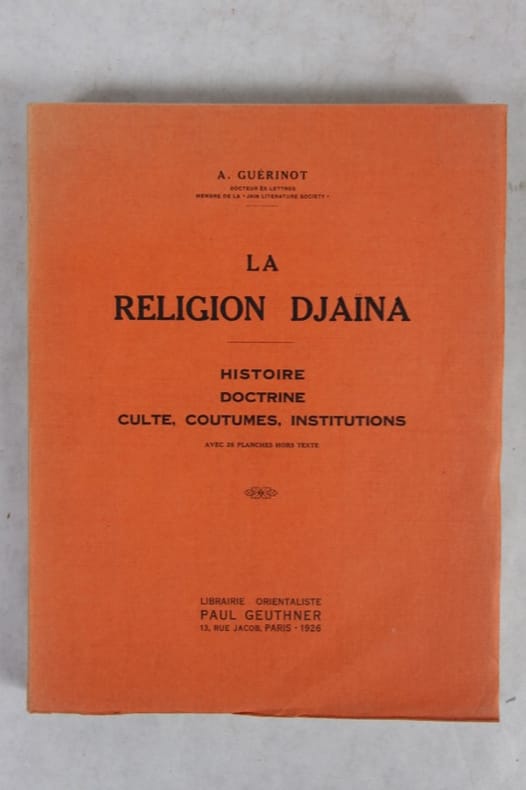
192621068Paul Geuthner 1926 Petit in-4 broché, non coupé, VIII + 353 pp. 25 planches hors-texte. Bon exemplaire
200358473Hazan 2003 In-4 relié 31,4 cm sur 23. 296 pages. Très bon état d’occasion.
New English Paperback. Pbo. Roy. 8vo. (24 x 17 cm). Sealed. In English. 319, [5] p., color and b/w ills. Four centuries of diplomatic and economic relations between Turkey & the Netherlands, (1612-2012). In memory of Cornelius Haga. [With a CD]. This book (as well as the attached Istanbul Memoirs of the First Dutch Ambassador Cornelius Haga and the Ottoman Empire¿s official records and his Register Book about his activites in Istanbul) is a very timely contribution to the field, which once again illustrates the importance of studying the Ottoman history as world history. Halil Inalcik, Bilkent University. This book provides a fresh interpretation of the historical relations between these two important powers and also Turkey-Europe relations. In the foreword, Halil INALCIK, a prominent global historian, underlines the joint Ottoman-Dutch role in shaping the European and the World history. In the following chapter, Levent KIRVAL focuses on the history of the economic and political relations between Turkey and the European powers, and he particularly focuses on the economic and cultural interactions between the Turks and the Europeans. Subsequently, Bülent ARI, first gives brief information about the phases of Dutch revolt which started in 1567 against the Spanish oppression and then evaluates the political atmosphere of the period and the conflicts between the European states. Next, Mustafa GÜLEC evaluates the interpretations of various scholars concerning the early Ottoman-Dutch relations and gives an overall atmosphere of the commercial relations of individual entrepreneurs before the grant of Dutch capitulations. Followingly, Mehmet BULUT focuses on the commercial activities in the Mediterranean in the 17th and 18th century. Consequently, Mehmet TÜTÜNCÜ has an interesting chapter under the title "Grand Dutch Admiral Michiel Adriaenszoon de Ruyter¿s Mediterranean Expedition and the Peace Treaties He Concluded in 1662 with Ottoman Algeria". With CD entitled "Memoir and Register Book of Cornelis Haga First Dutch Ambassador in Istanbul".
New English Paperback. Roy. 8vo. (24 x 17 cm). In English. 401 p., b/w ills. The Port-city in the Ottoman Middle East at the age of Imperialism. Acknowledgments Abbreviations Introduction SECTION I Economy: Trends & Developments 1. "ReImagining the World Economy: Market Connectivity and the Ottoman City in the Early Modern and Modern Era". Initially published as "Congruence of Economic Trends and Practices in the Creation of Izmir's Social Space: the City, the Market and the Individual during Mercantile Capitalism", in Alp Yücel Kaya, Ayse Sabuktay & Dilek Akyalçin Kaya, eds., Culture and Politics in the Mediterranean (Izmir Mediterranean Academy: Izmir, 2016), pp. 53-73. 2. "Market Networks and Ottoman-European Commerce, c. 1700-1825", in Ebru Boyar & Kate Fleet, eds., The Ottomans and Trade, special issue of Oriente Moderno, Vol. LXXXVI/1 (Rome, 2006), pp. 109-128. 3. "Commerce in the eastern Mediterranean from the Eighteenth to the Early Twentieth Centuries: the City-Port of Izmir and its Hinterland", International Journal of Maritime History, Vol. X, No. 2 (December 1998), pp. 125-154. 4. "Le développement d'un port méditerranéen d'importance interna-tionale: Smyrne (1700-1914)" Marie-Carmen Smyrnelis, ed., Smyrne, la ville oubliée? Mémoires d'un grand port ottoman (Éditions Autre-ment: Paris, 2006), pp. 21-49. 5. "The Port of Smyrna in the Nine-teenth Century," in Apostolos Vakalopoulos, Constantine Svolopoulos & Bela Kiraly, eds., War and Society in East Central Europe, Vol. XXIII (Institute for Balkan Studies: Thessaloniki, 1988), pp. 261 272. 6. "The Making of a Nineteenth-Century Ottoman Port: the Quay of Izmir", The Journal of Transport History, 3rd Series, Vol. 22/1 (March 2001), pp. 23-46. SECTION II Western Anatolia & The Aegean Islands 7. "The Western Anatolian Coast and the Aegean Islands in the Late Nineteenth and Early Twentieth Centuries: An Economic Survey," Proceedings of the First International Con-gress on the Hellenic Diaspora from Antiquity to Modern Times (Amsterdam, 1991), Vol. II, pp. 251-266. 8. "L'économie de l'Anatolie occidentale, 1908-1914", in Marcel Bazin, Salgur Kan-çal, Roland Perez & Jacques Thobie, eds., La Turquie entre trois mondes (Institut Français d'Études Anatoliennes: Istanbul & Paris, 1998), pp. 239-248. 9. "The Dynamics of Economic Development: Izmir and Western Anatolia, Late 19th/Early 20th Centuries", Kolokyum 19. Yüzyilda Mersin ve Akdeniz Dünaysi (T.C. Mersin Universitesi Yayinlari: Mersin, Turkey, 2002), pp. 65-72. SECTION III The Wider Region 10. "The Mediterranean Commercial World of the Eighteenth Century: Ottoman and Italian Ports", in Michela D'Angelo, Gelina Harlaftis & Carmel Vassalo, eds., Making Waves in the Mediterranean, (Instituto di Studi Storici: Messina, 2010), pp. 467-482. 11. "Greek Commercial practices and long-distance trade: Russia and the Ottoman Mediterranean in the 18th and early 19th cen-turies", in Olga Katsiardi-Hering, Athina Kolia-Demirtzaki & Kater-ina Gardica, eds., Russia and the Mediterranean (Herodotos Press: Athens, 2011), Vol. I, pp. 439-456. 12. "Patras", Review, Vol. XVI (Fall 1993), pp. 387-410. 13. "Monoculture in Nineteenth-Century Greece and the Port-City of Patras", Journal of the Hellenic Diaspora, Vol. 20/2 (1994), pp. 9-34. SECTION IV The Economic Actors 14. "The Greek Mercantile Community of Izmir in the First Half of the Nineteenth Century" in Daniel Panzac, ed., Les Villes dans l' Empire ottoman: Activités et Sociétés, Vol. I (CNRS: Paris, 1991), pp. 391-416. 15. "Ottoman-European Trade, Tax-Farming and the Implemen-tation of the 1838 Anglo-Turkish Convention". Initially published as "The Implementation of the 1838 Anglo-Turkish Convention on Iz-mir's Trade: European and Minority Merchants", New Perspectives on Turkey, Vol. 7 (Spring, 1992), pp. 91-112. 16. "Concurrence commer-ciale et financière entre les pays occidentaux à Izmir pendant le XIXe et début XXe siècles," in Jacques Thobie, Roland Perez & Salgur Kan-çal, eds., Enjeux et Ra
In-4 carré, 288p. Comprend 24 planches en couleurs et 376 illustrations en noir. Glossaire et bibliographie en fin de volume. Manque la jaquette. sinon à l'état de neuf.
Gr. In-4, non paginé. Edition numérotée 1/1000 exemplaires sur papier offset sans bois. Illustré de 30 planches imprimées en 6 couleurs rehaussées d'or d' Adela•de Verneuil de Marval. En excellente condition.
In-8, 1488p. Exemplaire en parfaite condition.
New English Paperback. 4to. (27 x 22 cm). In English. 120 p., ills. Youssouf Bey: The charged portraits of fin-de-siecle Pera. Ömer M. Koç Collection. Youssouf Bey: The Charged Portraits of Fin-de-Siécle Pera is a two-volume special publication (Vehbi Koc Foundation, Istanbul, 2016) that accompanied ANAMED's exhibition "The Characters of Yusuf Franko: An Ottoman Bureaucrat's Caricatures"(26 January - 01 June 2017). The edited book of articles from this special edition has been recently republished by ANAMED and, thus, is available to a larger audience. Yusuf Franko Kusa Bey (1856-1933), a high-ranking bureaucrat in fin-de-siècle Ottoman imperial administration, was also a talented caricaturist. Because of his duties in the Ottoman Foreign Ministry, and spending most of his life in Istanbul, he was both a member and an observer of high-society social circles in Pera [Beyoglu]. Ambassadors, ministers, diplomats, famous opera singers, painters, Pashas and Efendis, Madames and Monsieurs, were part of this social milieu, and most of them became eternally recorded through the 'types and charges' in Yusuf Franko's caricature album. Including images of himself, he charged his subject materials, the people in his social network, with their particular qualities and transformed their portraits into witty caricatures that reflected contemporary scenes of social life and political debates in Pera. While the articles in this book analyze the majority of Yusuf Bey's caricatures from diverse perspectives (his family history and biography, the history of contemporary European caricature art and politics, and the social and spatial context in which he drew his caricatures), the appendix gives brief information about each caricature plate in the original album. These extraordinary caricatures are published for the first time in their entirety since they were discovered in an antique rug dealer's shop in Istanbul in 1957.
192829651Salabert 1928
192027346Partitions sur l'Afrique Marchetti 1920