42 résultats
18362110502150903351Gundamdo Mohei Okada version 1836. Soft Cover. Fine. Volume: 1 (Gundamdo Mohei Okada version) paperback
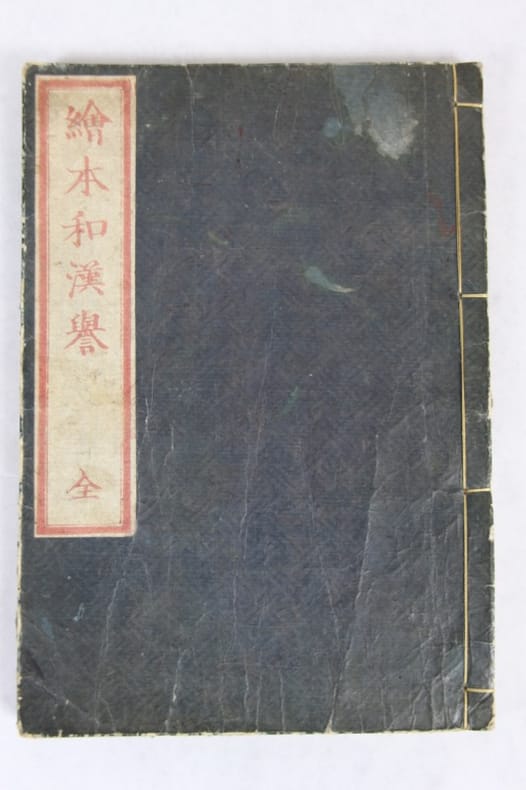
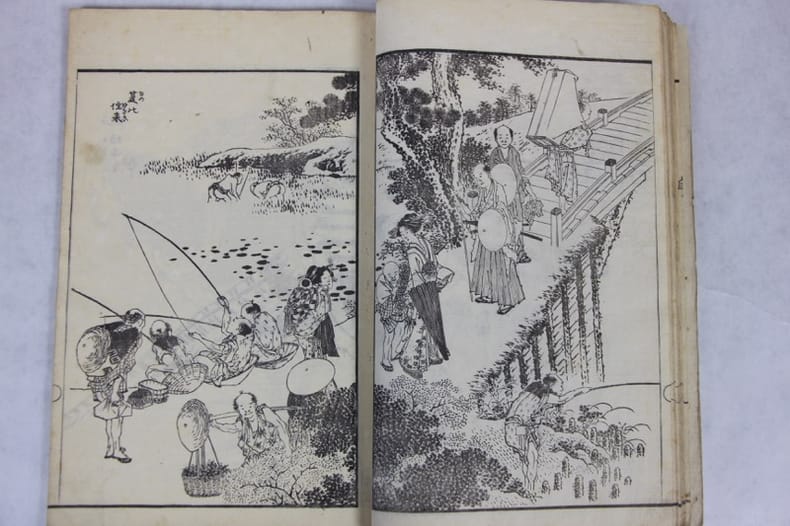
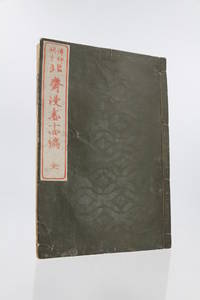
1836911941836. EHON Hokusai 北斎 artist. Wakan EHON SAKIGAKE Shohen 和漢絵本éåˆç·¨. Tempo 7 1836. Hanshihon 22.6 cm x 15.7 cm. Unusually tan covers with a deeply incised blind-stamped cloud pattern on front and rear covers. The paper label is present glued to the inside front cover. Could these be alternative original covers A complete copy with the title page pasted to the inner front cover Hokusai's own two page preface dated 1836 30 sheets of images and 1 sheet of colophon and ads. It has the "77 year old" Hokusai with his "Gakyou Rojin" moniker indicating the book itself was soon to appear followed by 3 sequels. only two were done. It also lists the block carvers. Egawa and Sugita. masters of the craft. Also see Hillier's ART OF THE JAPANESE BOOK for his appreciation of this work. The bookstore list often found at the end appears not to have been bound in or was lost. Very minor soiling throughout. Very good impressions. An early printing of this important and often reprinted work.<br /> The Wakan EHON SAKIGAKE was the first volume of Hokusai's so-called "warrior trilogy". It is a visual epitome of traditional Japanese and Chinese historical heroes from the legendary to the flesh and blood. It is a brilliant example of Hokusai's ability to create visual narrative by capturing the moment which evokes the character most perfectly to the viewer. In an older clasped chitsu case. unknown
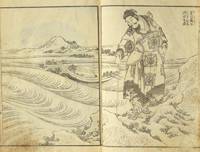
1875912491875. EHON Katsushika HOKUSAI. FUGAKU HYAKKEI. 100 Views of Fuji. Meiji 8 1875. Aichi Katano Toshiro. 3 vols. Yellow covers. 15.7 x 22.6 cm. Paper labels. This Meiji reprint of Hokusai's classic is in very good condition with original yellow covers and title labels. The impressions are fair to good and preserve the remarkable aesthetic sense of the master. The original blocks cut some 40 years earlier are here used by skilled printers to produce a fair example of the original work. unknown
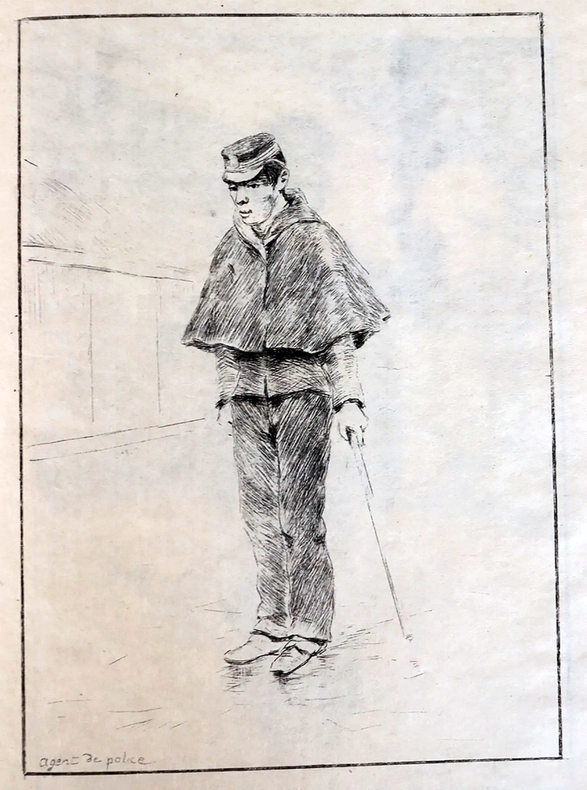
18861886Tokio, 1886. 1 volume in-folio ((46,3 x 31,5 cm), broché cousu à la japonaise le tout sur papier du Japon, couverture illustrée. Album de 31 PLANCHES DE DESSINS GRAVÉS SUR CUIVRE dont 2 gravés sur les plats de la couverture : L'étudiant, écoliers, officier, soldat, matelot, fonctionnaire, jeune garçon lisant, Bonzes, agent de Police, servante, facteur,d eux femmes jouant au volant, une femme coiffant une autre, une lavandière, marchand de remèdes, pêcheur à la ligne, marchand de Puéta, cuisinière, cheval de bât, etc. - NOTICE HISTORIQUE : Georges Bigot (1860-1927) est formé à Paris au moment de l’essor du « Japonisme » dans les arts graphiques. Suite à l’ouverture du Japon au commerce extérieur, les années 1870 voient en effet arriver en France de nombreux objets d’art japonais, en particulier les « Manga » (ou carnets de croquis) d’Hokusai (1760–1849). D’Hokusai, les artistes français copient les scènes de vie gravées sur le vif, très expressives, et le traitement de la faune et la flore à la façon des estampes japonaises. Bigot arrive au Japon en 1882 et s’installe à Tokyo, avec la volonté délibérée de ne pas vivre dans les enclaves étrangères mais au sein du petit peuple de la ville. En 1886, il tire de cette expérience une série intitulée « Croquis Japonais » mettant en scène des personnages aux traits individualisés dans la vie quotidienne de ce début de l’ère Meiji (1868-1912). Il observe cette société japonaise bouillonnante et en publie caricatures et périodiques satiriques. Cette ère nouvelle a transformé le Japon, jusque-là régi par un régime féodal, l'a ouvert aux étrangers et introduit de grands changements. Bigot refusant la vision idéalisée d'un Japon, en marche vers le modernisme, se heurte aux tracasseries d'un gouvernement japonais de plus en plus nationaliste, qui le contraindra à partir en 1899, quelques semaines avant la suppression des concessions étrangères. Ses publications sont finalement interdites à la vente dès 1900, tandis qu'en France il s'est tout simplement fait oublier. Les nombreux albums de caricatures et les différents périodiques qu'il laissera derrière lui vaudront bien des années plus tard d'être reconnu comme le « caricaturiste de l'ère Meiji ». Il est considéré par la jeune génération de dessinateur de Manga, comme un des pères de ce genre. - L'ALBUM : Bigot utilise ici une technique typiquement occidentale, l’eau-forte (façon de graver le métal en y faisant pénétrer de l’acide), qu’il imprime en noir et blanc, à l’opposé des estampes japonaises gravées sur bois et si colorées.
18922111902160200155Nihonbashi District Wakamatsucho Oseki Toyo 1892. Soft Cover. Fine. Number of pages: 12 maps Size: 17cmx11.5cm Prints: 17cmx22.5cm Number of books: 1 Nihonbashi District Wakamatsucho Oseki Toyo paperback
1850137006[Suzuki Chuzo, graveur Egawa Sentaro. Kaei (1848-1854)] 1850 23 x 16 cm. Reliure japonaise verte d’origine avec étiquette de titre imprimée en rouge, 30 ff., 58 pages d'illustrations gravées sur bois en noir. Fine impression.
1849137090Sn 1849 18 x 26.5. Couverture d’origine avec étiquette de titre imprimée en vert, 29 ff ; 58 pp. 56 d'illustrations gravées sur bois en noir , 2 de texte. Quelques attaques de vers.
184979449Eirakuya Toshiro | Edo [Tokyo] 1849 | 15.60 x 22.60 cm | cousu
181682935Edo [Tokyo] 1816 | 15.50 x 22.50 cm | cousu
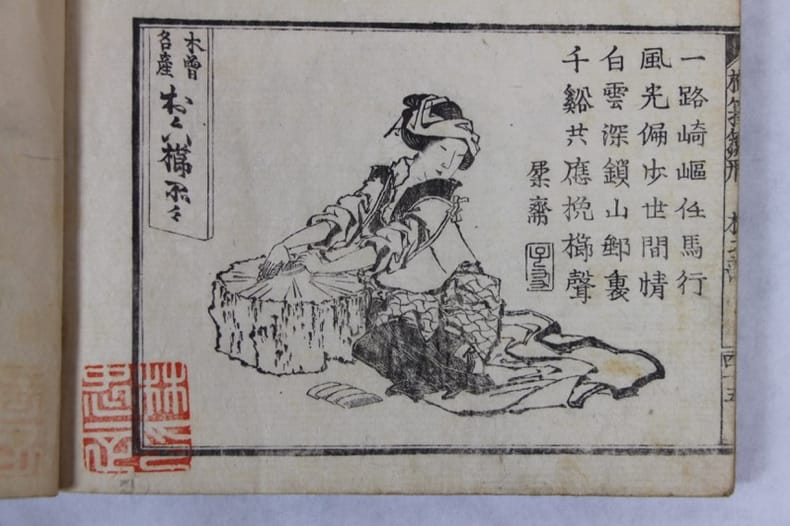
1823137092Tōto : Eijudō, Bunsei 6 (1823) 1823 3 volumes, 18 x 13 cm., reliure à la japonaise d’origine, 2 étiquette conservées la seconde défectueuse ; 1 : 2 pp. d'introduction et 48 pages 24 ff; illustrées de modèles de peignes ; 2 : 40 pages 20 ff. de modèles de peignes ; 62 pages 31 ff. de modèles de pipes et trois pages de colophon. Ensemble fané.
184560421Osaka, Kawachiya, 1845, fourth month (Kōka 2). 4to (255 x 180 mm). 6 volumes uniformly bound in orange contemporary stitched spineless Fukuro Toji bindings with white paper title label pasted on to front wrappers. Housed in a chitsu. Severly affected by wormholes. Heavily affected by wormholes throughout, otherwise clean. Chitsu-case with wear. 3539 39, 36, 30 28 pp.
18681410438Meiji Era 1868 - 1912. Saddle-stitched. Octavo Two Volumes bound together. In Fair condition. Fukurotoji binding with orange paper wraps. Wraps show significant wear with prominent creasing. Binding cord is snapped in four places. CONTENTS: Volume I marked "UE top": Significant gray smudging to front wrap; moderate smudging to back wrap. Creasing along edges and spine. Significant fading to title paper.Toning and light smudging to page block and throughout pages. Significant water marking to some pages. -- Volume II marked "SHITA bottom": Moderate gray smudging to front wrap; moderate smudging to back wrap. "HTS" written in pencil beside title paper. Dark spot to back wrap. Creasing along edges and spine. Significant fading to title paper.Toning and light smudging to page block and throughout <br /> Shelved Room E. Cluster of four characters above titles says "Gojyuusanji" literally "53rd in an unplanned sequence". I am not sure whether this refers to edition printing or something else. 1410438. Special Collections. unknown
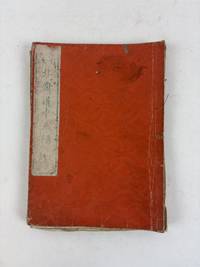
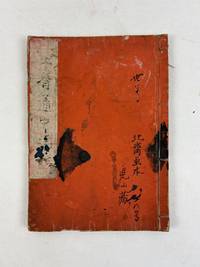
18681410439Meiji Era 1868 - 1912. Saddle-stitched. Octavo unpaginated. Volume I of two missing second volume. In Good minus condition. Fukurotoji binding with orange paper wraps. Wraps show significant wear with prominent creasing. Prominent ink stains to front and back covers. Written in black ink on front cover is "Hokusai Gahon Miyama Zou Hachigou Hokusai's Picture Book Collected by Miyama Volume Eight". On back is written "S. Tamura" in black ink. Significant water marking to both covers. Binding cord is intact. Significant gray smudging to front wrap; moderate smudging to back wrap. Creasing along edges and spine. Significant fading to title paper with loss of legibility.Toning and light smudging to page block and throughout pages. Significant water marking to some pages. Sticker to back endpaper is torn through with loss to endpaper.<br /> Shelved Room E. 1410439. Special Collections. unknown
1898220134London: Unicorn Press 1898. First. hardcover. fine. Illustrated. Thin 8vo printed boards. London: Unicorn Press 1898<br/><br/> Contains an essay on Hokusai by Charles Holmes and two plates. Also contains A Note on Piranesi by L.A.Corbeille with 3 plates and contributions by Laurence Housman & Laurence Binyon. Very fine copy.<br/><br/> Unicorn Press unknown books
187558436Tokyo: piblisher not identified 1875. Later reprinting fukurotoji binding 2 29 actually 28 one leaf numbered 1 and 2 leaves; likely original yellow paper wrappers; covers worn title label perished binding string snapped light soiling internally fair with a fair impression. The Hokusai manga was a series of books that published a collection of sketches and studies from Hokusai. They were immediately and immensely popular and ran for 15 volumes. This edition was printed posthumously and the original blocks appear to have been worn down somewhat. It contains images of dragons saints landscapes plants and animals both real and mystical. <br/><br/> [piblisher not identified] unknown books
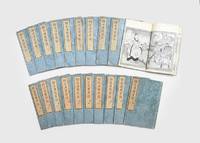
1845186060Edo: Yamashiroya Sahee and 4 others 1845. An ancient Chinese war for early modern Japanese readers First complete edition. This historical novel is a semi-fictional retelling of the Chu-Han Contention with depictions of peasant massacres put alongside fantastical scenarios of heroes fighting giant snakes and dragons. Hokusai illustrated this work in the final years of his life displaying the full range of the expressive skills he had honed for decades. After the fall of the Qin dynasty in 206 BC the empire split into 18 kingdoms the most powerful of which were the Western Chu led by Xiang Yu and the Han led by Liu Bang. The two rivals fought over four years culminating in a last stand at the Battle of Gaixia where the Chu leader committed suicide after a total Han victory. These legendary warriors and their battles were immortalized through literature including the Chinese work Xihan tongsu yanyi. This present work is Tamenaga Shunsui's 1790-1844 translation of that novel for the Japanese market with Hokusai's illustrations "providing an appealing vision of a foreign country unknown to readers" Marks p. 195. It is a blend of history and fiction where the real figures of Xiang Yu and Liu Bang perform semi-mythical acts of bravery and strength. One notably gory scene shows Xiang Yu's men killing 5000 peasants loyal to the Qin dynasty. The soldiers on the left behead two captives while their fellow soldiers shovel an overwhelming number of heads into baskets to be carried away. Part 1 the first ten volumes was initially released in 1843. It was then followed by Part 2 in a further ten volumes two years later. At this time the first part was also reissued as was likely the case with this set. It has a variant colophon with Yamashiroya listed as the most important publisher. Other copies instead rank Chojiya Heibee first. 2 parts in 20 vols octavo. Woodblock illustrations throughout; text in Japanese inner wrapper title pages of vols I and XI printed on yellow paper. Original grey-blue patterned paper wrappers renewed white thread fukuro-toji binding spine ends capped in grey silk printed paper labels on front wrappers. Housed in two 20th-century blue folding cases. Bindings weathered some small abrasions to wrappers paper label of vol. I lacking contents bright a few ink marks in vol. VII f. 15v.: a very good set folding cases repaired at joints one toggle detached. Hillier The Art of Hokusai in Book Illustration p. 256. Andreas Marks Japan's Manga Revolution: From Painted Scrolls to Comic Books 1680-1920 2025. unknown
18082110502150903230Soshichi Nishimura and other editions 1808. Soft Cover. Fine. Number of books: 5 Soshichi Nishimura and other editions paperback
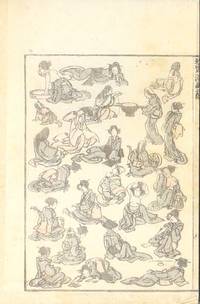
187883797Nagoya: Toshiro Katano 1878. Fine. Toshiro Katano Nagoya 1878 15.50 x 22.70 cm cousu Rare edition in second printing which can be translated under the title Hokusai Sketches volume 9. 15 volumes were indeed published covering Hokusai's work. The first was published in 1814 and the last posthumously in 1878. The final volume is considered apocryphal by some art historians. The volume contains approximately 40 subjects most on double pages in black grey and flesh tones. It is essential to add that one cannot determine with certainty whether this is the first printing or a later printing because on this subject there was no difference for the Japanese and the publisher reprinted volumes as needed the notion of first printing not being relevant with regard to Japanese books. We know however that the publisher made a second printing of this book between 1828 and 1878. The later printings do not have the same publisher's name and often possess a date which is not the case with the earlier printings. Accordion-fold volume bound by stitching. Grey diamond-patterned cover with title label and writing in red on white background. Very good copy quite fresh. The Hokusai manga treat varied subjects scenes from daily life but also warrior scenes also scenes of typically Japanese legends animals and flowers and landscapes animated or not notably Mount Fuji. It is generally considered that after a period of intense production Hokusai very carefully selected his sketches and even redrew a certain number of them arranging them according to the order we know today. However Michener maintains that the layout of the different sketches on a given plate was actually decided by the engravers and publishers and not by Hokusai himself. We should recall that the technique of Japanese printmaking is very close to the original drawing since the ink drawing was applied to a piece of wood that the engraver carved precisely following the lines of the drawing which was itself destroyed by this operation. This volume contains numerous animated landscapes warrior scenes Toshiro Katano unknown
184979449Edo Tokyo Tokyo: Eirakuya Toshiro 1849. Fine. Eirakuya Toshiro Edo Tokyo Tokyo 1849 15.60 x 22.60 cm cousu Rare first edition translated as ""Croquis de Hokusaï"" volume 14. 15 volumes were actually published covering Hokusaï's work. The first was published in 1815 and the last posthumously in 1878. The final volume is considered apocryphal by some art historians. The 30 double-leaf volume contains around 39 engravings 12 of which are double-page spreads including many animated landscapes real and mythological animals. There are 3 colors: beige gray and black. It is difficult to determine wether it is a first or a later print run as this detail made no difference in Japanese book collecting. The publisher reprinted volumes as needed. We do know however that the publisher produced several issues of this book between 1849 and 1878. Volume in acordeon bound by a seam. Bronze-green cover with title label. Rubbing to front cover. Interior very fresh and clean. Printed on mulberry paper. A brown stain on the first 2 leaves. A good copy. Hokusai manga deal with a variety of subjects from scenes of everyday life to war scenes as well as typical Japanese legends animals and flowers. ""It is generally considered that after a period of intense production Hokusai selected his sketches very carefully and even redrew a number of them arranging them in the order we know today. However Michener maintains that the layout of the various sketches on a given plate was actually decided by the engravers and editors not by Hokusai himself."" Japanese printmaking technique remains very close to the original drawing's aesthetic since the ink drawing was affixed to a piece of wood that the engraver carved out precisely following the lines of the drawing which was itself destroyed in the process. It was these volumes of drawings that made Hokusai's reputation in the Western world. Hokusai Katsushika was a prolific and well-known Edo period printmaker whose prints among others inspired the French avantgarde at the end of the 19th century. Eirakuya Toshiro unknown
181682935Edo Tokyo Tokyo 1816. Fine. Edo Tokyo Tokyo 1816 15.50 x 22.50 cm cousu Rare first edition fifth volume of Hokusai's Mangas or Sketch Books. 15 volumes were published between 1815 and 1878 the fifth volume contains approximately 30 subjects most on double pages in black grey and flesh tones. Accordion-fold volume bound with stitching black cover some creasing to board edges rubbing and small lacks. The red printed label is lacking to this copy. The first and last pages detached from boards. Creases small lacks and discolouration to boards. Minor soiling. Hokusai's mangas treat various subjects the artist depicts Japan of the period from everyday scenes to amusing moments combining a great variety of subjects: the present volume focuses on temple architecture their ceremonies contemplative scholars ladies from the Heian period 784-1192 nobles samurai lords as well as divinities and onis demons. One will also note a magnificent view of Mount Fuji and an impressive storm scene at sea. These different subjects were intended to serve as learning manuals for use by young artists they would also serve as model collections for artisans and would even become a sort of illustrated encyclopedia of life and daily living in Japan during the Edo period 1603-1868. We should recall that the technique of Japanese printmaking is very close to the original drawing since the ink drawing was applied to a piece of wood that the engraver hollowed out following precisely the lines of the drawing which was itself destroyed by this operation. hardcover
18112110502150908589Hanmoto fumei 1811. Soft Cover. Fine. Number of books: 1 Hanmoto fumei paperback
18112110502150908881Hanmoto fumei 1811. Soft Cover. Fine. Number of books: 1 Hanmoto fumei paperback
18112110502150908882Hanmoto fumei 1811. Soft Cover. Fine. Number of books: 1 Hanmoto fumei paperback
18112110502150908590Hanmoto fumei 1811. Soft Cover. Fine. Number of books: 1 Hanmoto fumei paperback
18102110502150908533Not Available 1810. Soft Cover. Fine. Number of books: 1 Not Available paperback