42 résultats
18542111902160200045Touto Bunnoyagura 1854. Soft Cover. Fine. Number of pages: 42 pages Size: 18.8cmx12.6cm 42p Number of books: 1 Touto Bunnoyagura paperback
18912091502133700533Kyoto Kambei Murakami 1891. Soft Cover. Fine. The book is in fine condition. Kyoto Kambei Murakami paperback
188391742Paris: A. Quantin 1883. Fine. The Bible of Japonism in its original silk binding A. Quantin Paris 1883 28.8 x 36.6 cm 2 volumes en reliures de l'éditeur First edition one of 1400 numbered copies only issue. Outstanding publishers cream silk Bradel binding signed by Engel at the foot of the spine flat spine decorated with Japanese characters; upper boards in excellent condition elaborately decorated with a reproduction of Shinmans starlings against a setting sun from the Henri Cernuschi collection also illustrated pl. 26 vol. 1; corners slightly rubbed; both volumes complete with their illustrated dust jackets showing tears and some losses. Illustrated with 64 tissue-guarded plates most in colour 13 etchings 21 heliogravures 2 typographic engravings in black and gold 10 chromolithographs and 18 watercolours the majority signed by Gillot and Guérard. Numerous illustrations in black throughout. An exceptional copy of the first history of Japanese art written outside of Asia housed in its magnificent publishers silk binding signed by Jean Engel in pristine condition throughout: with its one thousand and twenty-four illustrations in black and in colour is not a conventional ornamental repertoire. It marks a clear break with traditional perception and reception of Japanese art that had prevailed in France and the West since the 1860s François Gonse Une histoire de lart japonais en 1883. Lil de Louis Gonse Histoire de lart N°40-41 1998. The author Louis Gonse was an art historian exhibition curator and director of the Gazette des beaux-arts. The celebrated Asian art dealer Tadamasa Hayashi who had come to Paris as an interpreter for the Exposition Universelle of 1878 helped him in the preparation of LArt japonais. Translated into English in 1891 and into Japanese in 1893 this seminal work proved a landmark publication. Its illustrations include works by artists much admired among French Japonistes including Hokusai and Hiroshige whom Gonse hailed as the greatest paysagist of 19th-century Japan. His views of Yedo he wrote helped us better understand the country than all of previous travelers descriptions. The discovery of this new formal repertoire was to exert a considerable influence on artists of the fin-de-siècle among them Félix Régamey and Henri Guérard who engraved some of the illustrations in this volume. A. Quantin hardcover
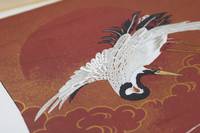
18382110502150903186Kawauchiya Mohei Board Naniwa Shobayashi Okada Gunnodo 1838. Soft Cover. Fine. Number of books: 90 Kawauchiya Mohei Board Naniwa Shobayashi Okada Gunnodo paperback
18122091202133201307Shuseikaku / Gungyokudo 1812. Soft Cover. Fine. Number of books: 2 books in total Shuseikaku / Gungyokudo paperback
1818907811818. Katsushika HOKUSAI 葛飾北斎. Denshin Kaishû HOKUSAI GAKYÔ. ä¼ç¥žé–‹æ‰‹ã€€åŒ—æ–Žç”»é¡ã€€å…¨ã€€Nagoya: Hishiya Kyuubei Edo: Maekawa Rokuzaemon Osaka: Kawachiya Tasuke Kyoto: Hishiya Jihei. The preface is date Bunka 15 1818. Almost certainly an original printing of this surprisingly scarce work. 26.1 x 17.3 cm. The covers and title label are original. Later Meiji era issues had a printed title page mounted on the front mikaeshi. This copy does not but it may well be that there was none in the first printings.Jack Hillier in his THE ART OF HOKUSAI IN BOOK ILLUSTRATION devotes a whole chapter to this book. It exists in at least 2 early editions. One printed in color but always missing three fascicles when found is titled SHUGA ICHIRAN. Our version at hand is printed in sumi only and usually considered the first appearance in 1818 but there has been controversy on that point for years. Our copy is complete save the possible absence of the title page pastedown as mentioned. But the covers are original with the blindstamped pattern of the earliest copies so it would be hard to believe the title page was steamed off the inside of the cover and there is an appropriate sheet of paper affixed there.<br /> <br /> In any event one of the most underappreciated of all Hokusai's books as it is usually found in worn and poorly printed late copies. unknown books
18452091202133206230Bunkeido 1845. Soft Cover. Fine. Number of books: 20 books in total Bunkeido paperback
18782111902160200037Edited by Toshiro Katano 1878. Soft Cover. Fine. Number of pages: 58 pages Size: 24.5cmx16.2cm 58p Number of books: 1 Edited by Toshiro Katano paperback
18202111902160200401Kakumaruya Jinsuke Eirakuya Toshiro Minoya 1820. Soft Cover. Fine. Number of pages: 58 pages Size: 26.8cmx18cm 58p Number of books: 1 Kakumaruya Jinsuke Eirakuya Toshiro Minoya paperback
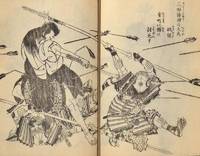
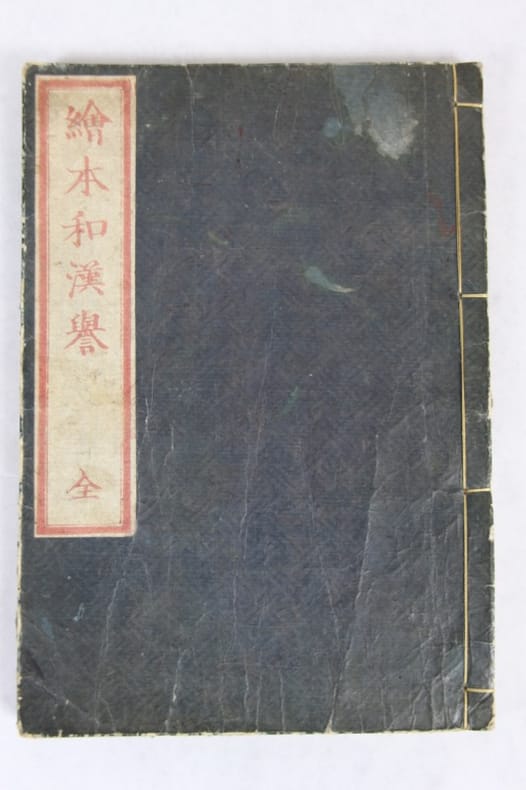
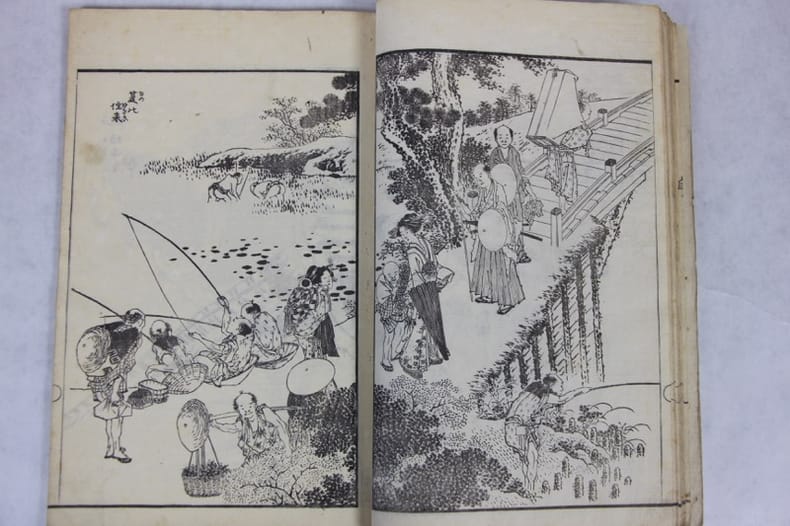
1870908441870. Katsushika HOKUSAI 葛飾北斎 「æ¦è€…絵本ã€MUSHA-EHON WARRIOR BOOKS〠EHON SAKIGAKE 絵本é; EHON MUSASHI ABUMI 絵本æ¦è”µé™; EHON WAKAN NO HOMARE 絵本和漢誉. Toukyou Suzuki Tadashi éˆ´æœ¨å¿ . n.d. c. early Meiji 1870s 23.5 X15.5 CM in three matching volumes bound in green string bound fukuro-toji with the original title labels. Suzuki Tadashi is described as the owner of the blocks. The blocks were originally cut and the first volumes issued in 1836. The third volume also appears to have been slated to appear as a trilogy at that time but its appearance was delayed until 1850. Much has been made of the fact that Egawa Tomekichi Hokusai's preferred craftsman cut the blocks for these books as well as the 100 VIEWS OF FUJI and the Hokusai contributions to the TOUSHISEN. and for good reason. His fine and detailed work is superb and still keeps much of its beauty even in these later issues from the blocks.<br /> <br /> The set is in very good condition restrung. A very worthwhile edition in original woodcut. The warrior books have become quite difficult to find in any edition - they did not receive the huge volume of reprintings that the MANGA did for example.<br /> <br /> As a set complete. unknown
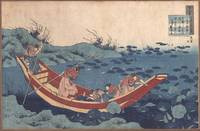
183674922<p>Poem by Bunya no Asayasu Fumiya no Asayasu</p><p>from the series One Hundred Poems Explained by the Nurse Hyakunin isshu uba ga etoki 「百人一首ã†ã¯ã‹æµã¨ã 文屋æœåº·ã€</p><p>Publisher: Iseya Sanjirô Eijudô Japanese</p><p>Original Japanese Woodblock</p><p>Edo period about 1835–36 Tenpô 6–7</p><p>Oban 26.2 x 36.7 cm 10 5/16 x 14 7/16 in.</p>
18022111902160200052Not Available 1802. Soft Cover. Fine. Number of pages: 78 pages Size: 15.8cmx11.5cm 78p Number of books: 1 Not Available paperback
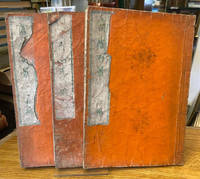
184560421Osaka, Kawachiya, 1845, fourth month (Kōka 2). 4to (255 x 180 mm). 6 volumes uniformly bound in orange contemporary stitched spineless Fukuro Toji bindings with white paper title label pasted on to front wrappers. Housed in a chitsu. Severly affected by wormholes. Heavily affected by wormholes throughout, otherwise clean. Chitsu-case with wear. 3539 39, 36, 30 28 pp.
1850137006[Suzuki Chuzo, graveur Egawa Sentaro. Kaei (1848-1854)] 1850 23 x 16 cm. Reliure japonaise verte d’origine avec étiquette de titre imprimée en rouge, 30 ff., 58 pages d'illustrations gravées sur bois en noir. Fine impression.
1849137090Sn 1849 18 x 26.5. Couverture d’origine avec étiquette de titre imprimée en vert, 29 ff ; 58 pp. 56 d'illustrations gravées sur bois en noir , 2 de texte. Quelques attaques de vers.
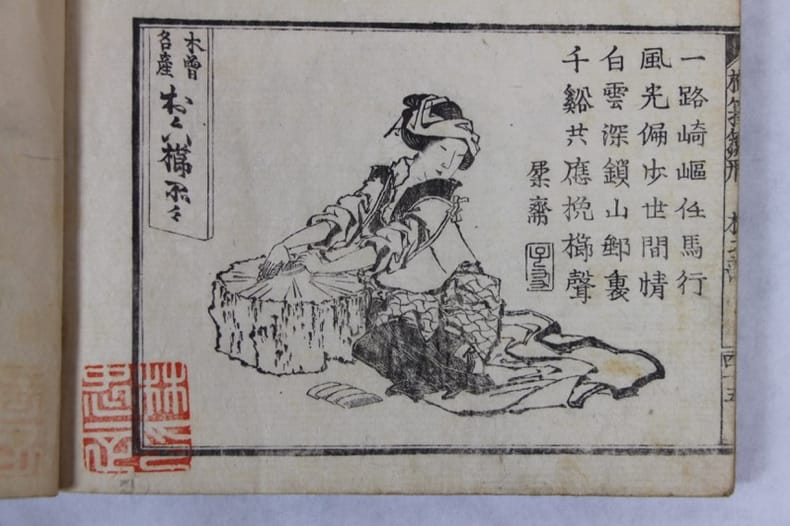
1823137092Tōto : Eijudō, Bunsei 6 (1823) 1823 3 volumes, 18 x 13 cm., reliure à la japonaise d’origine, 2 étiquette conservées la seconde défectueuse ; 1 : 2 pp. d'introduction et 48 pages 24 ff; illustrées de modèles de peignes ; 2 : 40 pages 20 ff. de modèles de peignes ; 62 pages 31 ff. de modèles de pipes et trois pages de colophon. Ensemble fané.
18681410441Nagoya: Eirukuya Toushirou Meiji Era 1868-1912. Saddle-stitched. Octavo unpaginated. In Fair condition. Fukurotoji style binding in cream wrap. Binding cord broken to two places. Significant creasing and wear to covers. Prominent brown and water staining to both covers. Missing title paper. Worming to bottom corner of covers and pages. Large closed tear to back endpaper. Water staining and toning throughout. Shelved Room E. 1410441. Special Collections. Eirukuya Toushirou unknown
187074672c. 1870. 8vo. Complete series 3 volumes in orange stitched wraps illustrated. Unpaginated. Covers marked and worn labels coming away crinkling fading and darkening especially vol. 2 which has a bump to its top corner. Light soiling to edges of vol. 2 leaves other volumes internally in VG condition throughout. Short ink inscriptions to top of inside front cover of vols. 1 and 3. As its name suggests these volumes contain over a hundred views of Mount Fuji with innovative compositions a wide variety of landscapes flora and fauna and working people going about everyday activities. Vol. 1 & 2 are b/w but a number of vol. 2 leaves are coloured. The series followed Hokusai's successful colour prints of thirty-six views of Mount Fuji which includes the iconic 'Under the Great Wave off Kanagawa'. The three volumes are considered the masterpiece of the woodblock artform and some of Japan's finest illustrated books e-hon. Alongside the Hokusai Manga this is one of the most influential Japanese works to the West. . Very Good. Japanese Binding. 1870. c. 1870 unknown
184560421Osaka Kawachiya 1845 fourth month KÅka 2. 4to 255 x 180 mm. 6 volumes uniformly bound in orange contemporary stitched spineless Fukuro Toji bindings with white paper title label pasted on to front wrappers. Housed in a chitsu. Severly affected by wormholes. Heavily affected by wormholes throughout otherwise clean. Chitsu-case with wear. 35; 39; 39 36 30; 28 pp. <br/><br/><em>Beautiful work written by Yamada Isai with illustrations by Katsushika Hokusai consisting 55 episodes in the life of Shaka Buddah. Hokusai has made 35 illustrations for 27 episodes and 23 of those are new iconographies in Shaka’s biography inspired by various pictorial resources while other 12 scenes originate in the former or traditional ones of these subjects. With thirty-two monochrome illustrations and covers various events starting from the court of King Suddhodana the Buddha's father before his birth in the Indian kingdom of Kapilavastu and ending with the distribution of the Buddha's relics after his death. Throughout Asia depictions of the Buddha's life have followed common narrative structures and artistic conventions for centuries. There is no single authoritative textual source for the Buddha's life story so visual narratives have relied on well-known episodes such as his birth as Prince Siddhartha his renunciation of worldly life his ascetic practice attainment of enlightenment and eventual death. These narratives have been adapted creatively to specific contexts sometimes incorporating new episodes or extending the story beyond the Buddha's death. The Illustrated Record of the Life of Sukyamuni by Yamada Isai and Katsushika Hokusai can be compared to historical fiction rather than a strict historical account. Hokusai's illustrations in particular prioritize creative additions to the story over adhering strictly to canonical episodes. For example the book does not depict the Buddha's death but focuses on other aspects such as familial conflicts supernatural encounters and scenes of hell. The included double-page illustration portrays a dramatic episode that concludes volume 1. The right-hand illustration shows the canonical episode of the Buddha's conception where his mother lady Maya receives a dream indicating her pregnancy. However the left-hand illustration deviates from the conventional depiction of Maya's sister Gotami as a benevolent aunt to the Buddha. Instead she is portrayed as a jealous character transformed into a giant snake due to her envy. This aspect of the narrative draws inspiration not from the Buddha's life stories but from the tale of Lady Xi 468-499 a would-be empress during the Chinese Liang dynasty. For more information see The Arthur Tress Collection of Japanese illustrated books Kislak Center University of Pennsylvania Libraries. </em> unknown
18112110502150908589Hanmoto fumei 1811. Soft Cover. Fine. Number of books: 1 Hanmoto fumei paperback
18112110502150908881Hanmoto fumei 1811. Soft Cover. Fine. Number of books: 1 Hanmoto fumei paperback
18112110502150908882Hanmoto fumei 1811. Soft Cover. Fine. Number of books: 1 Hanmoto fumei paperback
18112110502150908590Hanmoto fumei 1811. Soft Cover. Fine. Number of books: 1 Hanmoto fumei paperback
18102110502150908533Not Available 1810. Soft Cover. Fine. Number of books: 1 Not Available paperback
18062110502150908524Izumi-shi-ban 1806. Soft Cover. Fine. Number of books: 1 Izumi-shi-ban paperback