M D SpenserBiblio.com

1 803 résultats
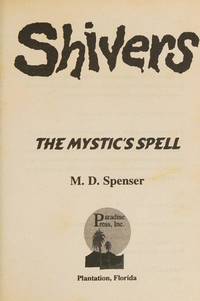
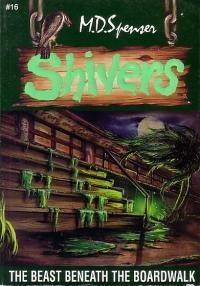
1996Q-1576571009Paradise Press 1996-09-13. Paperback. New. In shrink wrap. Looks like an interesting title! Paradise Press paperback
1996Q-1576570525Paradise Press Inc 1996-01-01. Paperback. New. In shrink wrap. Looks like an interesting title! Paradise Press, Inc paperback
1996Q-1576570975Paradise Press 1996-01-01. Paperback. New. In shrink wrap. Looks like an interesting title! Paradise Press paperback
192850787London: The Scholartis Press 1928. Edition limited to 1660 copies 8vo pp. 12 273 1; original blue cloth gilt title direct on spine blue top edge; fine in a fine dust jacket. A critical text edited with full commentary and textual and bibliographical notes edited by W. L. Renwick. <br/><br/> The Scholartis Press hardcover books
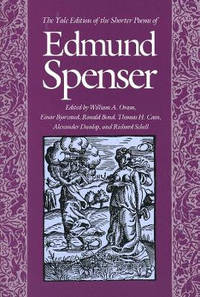
B9780300042450Paperback / softback. New. The first comprehensive collection of the shorter poems since the Variorum minor poems of the 40s. Cloth edition $55. not seen by R&R. Annotation copyright Book News Inc. Portland Or. paperback
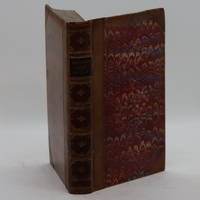
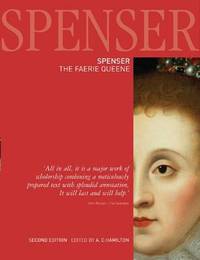
1868FB940 /str shlf<p>Tan calf binding with red and blue marbled boards. Black title plate with gilt lettering banding and decoration on the spine. From the Chandos Classics Library published circa 1868<strong>.</strong></p><p><strong><em>The Faery Queene</em></strong> is an English epic poem by Edmund Spenser. Books I–III were first published in 1590 then republished in 1596 together with books IV–VI. <em>The Faerie Queene</em> is notable for its form: at over 36000 lines and over 4000 stanzas it is one of the longest poems in the English language; it is also the work in which Spenser invented the verse form known as the Spenserian stanza. On a literal level the poem follows several knights as a means to examine different virtues and though the text is primarily an allegorical work it can be read on several levels of allegory including as praise or later criticism of Queen Elizabeth I. In Spenser's "Letter of the Authors" he states that the entire epic poem is "cloudily enwrapped in Allegorical devices" and that the aim of publishing <em>The Faerie Queene</em> was to "fashion a gentleman or noble person in virtuous and gentle discipline". Spenser presented the first three books of <em>The Faerie Queene</em> to Elizabeth I in 1589 probably sponsored by Sir Walter Raleigh. The poem was a clear effort to gain court favour and as a reward Elizabeth granted Spenser a pension for life amounting to £50 a year though there is no further evidence that Elizabeth I ever read any of the poem. This royal patronage elevated the poem to a level of success that made it Spenser's defining work.</p><p><strong>Edmund Spenser</strong> 1552/1553 – 13 January 1599 was an English poet best known for <em>The Faerie Queene</em> an epic poem and fantastical allegory celebrating the Tudor dynasty and Elizabeth I. He is recognized as one of the premier craftsmen of nascent Modern English verse and is often considered one of the greatest poets in the English language. Though Spenser was well-read in classical literature scholars have noted that his poetry does not rehash tradition but rather is distinctly his. This individuality may have resulted to some extent from a lack of comprehension of the classics. Spenser strove to emulate such ancient Roman poets as Virgil and Ovid whom he studied during his schooling but many of his best-known works are notably divergent from those of his predecessors. The language of his poetry is purposely archaic reminiscent of earlier works such as <em>The Canterbury Tales</em> of Geoffrey Chaucer and <em>Il Canzoniere</em> of Francesco Petrarca whom Spenser greatly admired. An Anglican and a devotee of the Protestant Queen Elizabeth Spenser was particularly offended by the anti-Elizabethan propaganda that some Catholics circulated. Like most Protestants near the time of the Reformation Spenser saw a Catholic church full of corruption and he determined that it was not only the wrong religion but the anti-religion. This sentiment is an important backdrop for the battles of <em>The Faerie Queene</em>. Spenser was called "the Poet's Poet" by Charles Lamb and was admired by John Milton William Blake William Wordsworth John Keats Lord Byron Alfred Tennyson and others. Among his contemporaries Walter Raleigh wrote a commendatory poem to <em>The Faerie Queene</em> in 1590 in which he claims to admire and value Spenser's work more so than any other in the English language. John Milton in his <em>Areopagitica</em> mentions "our sage and serious poet Spenser whom I dare be known to think a better teacher than Scotus or Aquinas". In the eighteenth century Alexander Pope compared Spenser to "a mistress whose faults we see but love her with them all."</p> Frederick Warne & Co. hardcover
Q-0672630346The Odyssey Press 1965-01-01. Paperback. New. New. In shrink wrap. Looks like an interesting title! The Odyssey Press paperback
2025SKU1731640Darrington Press 2025-06-03. hardcover. New. 9x2x11. New Book Ships with Tracking Darrington Press hardcover
2025SKU1732341Darrington Press 2025-06-03. hardcover. New. 9x2x11. New Textbook Ships with Tracking Darrington Press hardcover
2025SKU1739696Darrington Press 2025-06-03. hardcover. New. 9x2x11. New Book Ships with Tracking Darrington Press hardcover
194941134New York: Henry Holt and Company 1949. First Edition; Early Printing. Hardcover. Very Good in a Very Good dust jacket. Several small chips and tears to jacket focused at crown. ; 8vo 8" - 9" tall. Henry Holt and Company hardcover
19093320New York: G. P. Putnam's Sons 1909. good. 192 tables boards somewhat scuffed. G. P. Putnam's Sons hardcover
190014237Westminster: Archibald Constable & Co 1900. fair. 204 foxing to text discoloration inside boards & flyleaves boards & spine soiled & stained & some edge wear sticker on spine. Archibald Constable & Co hardcover
1104489171.Gpaperback. Good. Access codes and supplements are not guaranteed with used items. May be an ex-library book. paperback
697344082ABC-Clio Incorporated pp. 166 . Hardback. New. ABC-Clio, Incorporated hardcover
1870C219397Edinburgh: William P. Nimmo 1870. Hardcover Hardcover. Very Good. Large octavo. viii 624pp. Original dark green cloth with gilt spine titles. Covers with some wear and chipping re-cased with repairs to backstrip tears slight wrinkling to endpapers faint marks to frontis and illustrated title page slight creasing to title page otherwise very good. William P. Nimmo, hardcover
1161492631.Ghardcover. Good. Access codes and supplements are not guaranteed with used items. May be an ex-library book. hardcover
195360537Heritage Press January 1953. Hardcover. VG. Heritage Press hardcover
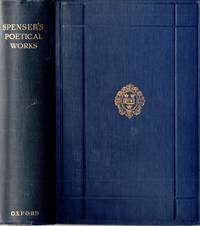
191211A-7-13-24-02<p>Oxford University Press 1912. hardcover. Very Good. 0x0x0. 1912 Hardcover Edition. No DJ if issued. Previous owners embossed name plate on last page of book. Light bump to board corners & spine ends. Pages clean & unmarked.</p> Oxford University Press hardcover
2006SKU0625726Longman 2006-08-21. paperback. New. 7x1x9. New Textbook Ships with Tracking Longman paperback
2025ANAIS-B0DWLWMRK1Darrington Press 2025-06-03. hardcover. Good. 6.9X5.8X1.3. Buy with confidence. Excellent Customer Service & Return policy. Darrington Press hardcover
1996Q-1576570924Paradise 1996-08-11. Paperback. New. New. In shrink wrap. Looks like an interesting title! Paradise paperback
1015869769.Ghardcover. Good. Access codes and supplements are not guaranteed with used items. May be an ex-library book. hardcover
1996Q-071051090XRiver 1996-01-01. Paperback. New. New. In shrink wrap. Looks like an interesting title! River paperback
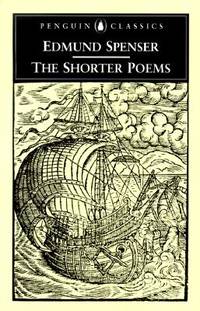
2000DADAX0140434453Spenser Edmund/ McCabe Richard A. EDT 2000-05-01. Revised. paperback. New. 5.25x1.50x7.75. Buy with confidence. Excellent Customer Service & Return policy. Spenser, Edmund/ McCabe, Richard A. (EDT) paperback