Castiglione, AlfioBiblio.com
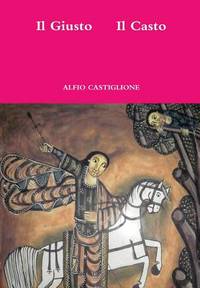
Il Giusto Il Casto Italian Edition
1471075303.Ghardcover. Good. Access codes and supplements are not guaranteed with used items. May be an ex-library book. hardcover
Bonita · États-Unis57,75 $US≈ 48,86 €
783 résultats
1990102595Sagep Editrice S. P. A. New. 1990. Hardcover. FREE UPGRADE to Courier/Priority Shipping Upon Request - IN STOCK AND IMMEDIATELY AVAILABLE FOR SHIPMENT - Flawless copy brand new pristine never opened -- Text in Italian. 270 pp. With 235 ills. 64 col. . 28 x 21 cm. -- with a bonus offer-- . Sagep Editrice S. P. A. hardcover
1471075303.Ghardcover. Good. Access codes and supplements are not guaranteed with used items. May be an ex-library book. hardcover
1990214372Genova Italy: Sagep Editrice 1990. Softcover. VG- wraps with minor creasing sunning and sticker on back cover all else excellent. Color illustrated wraps with white text. 267 pp. Bw and some color illustrations. Catalog of an exhibition at the Accademia ligustica di belle arti Genoa Jan. 27-Apr. 1 1990. Sagep Editrice paperback
0364285591.Gpaperback. Good. Access codes and supplements are not guaranteed with used items. May be an ex-library book. paperback
1168438349.Gpaperback. Good. Access codes and supplements are not guaranteed with used items. May be an ex-library book. paperback
1161294708.Ghardcover. Good. Access codes and supplements are not guaranteed with used items. May be an ex-library book. hardcover
1161204156.Gpaperback. Good. Access codes and supplements are not guaranteed with used items. May be an ex-library book. paperback
154532371Venetia Venice: nelle case de figlioli di Aldo I Manuzio 1545. Fourth Aldine printing. Small folio. 122 ff. Eighteenth century full pigskin gilt lettering to the spine all edges green a single leaf in book three lacking but the text supplied in consummate manuscript predating or contemporary with the binding. Faint dampstain cutting across the upper corner of the last 16 leaves at the gutter also evident on both pastedowns a few marks to the boards an attractive copy. Baldessare Castiglione 1478-1529 was very much a man of his day educated in a Humanist school in Milan in the 1490s where he also served at the court of Duke Ludovico Sforza. He returned to his native Mantua on the death of his father at the age of 21 whereupon he entered the service of the local marquis Francesco Gonzaga for the next five years. During this time he became acquainted with Guidobaldo da Montefeltro Duke of Urbino whose court he entered in 1504. Castiglione acted in various capacities for Guidobaldo and his successor principally diplomatic though he also played an active role in the flourishing cultural life of the court. His talents took him to Rome in ambassadorial roles for Urbino and subsequently Mantua leading to his involvement with the Vatican and his later ecclesiastical career towards the end of his life he was made Bishop of Avila. He is now best remembered for this work first published in 1528 by the Aldine Press. Written in the form of a dialogue between several protagonists Castiglione sought to define the courtly ideal. Going beyond a mere book of etiquette he described the essential characteristics and traits that a courtier should exhibit. These include refinement in the arts athletic prowess most obviously in bearing arms great oratory skills very much in the Ciceronian tradition and something which Castiglione termed "sprezzatura". Translated and defined by the Oxford English Dictionary as "studied carelessness" Castiglione suggested that a man about court should eschew flamboyance and grandiosity in favour of a genteel modest and nonchalant manner and temperament - essentially that all his efforts and undertakings should be worn lightly and completed with as little perceptible exertion as possible. Its contemporary importance is demonstrated by the fact that the Aldine Press had printed it another four times by 1547 the first four editions in folio as here the final as an 8vo. By 1616 over 100 further editions in Italian and in translation had been published. Unsurprisingly its cultural influence in the succeeding centuries became manifest across Europe with traces of the work found in the writings of Cervantes Corneille and amongst others in the English language Shakespeare Spenser and Shelley. Printing and the Mind of Man 59. "It is an epitome of the highest moral and social ideas of the Italian Renaissance. Venetia [Venice]: nelle case de figlioli di Aldo [I Manuzio] unknown
154719132Vinegia: Figlioli di Aldo Aldus 1547. Early Printing by Aldus. Elaborate Aldine device Impressed on the titlepage and at the end on the verso of the colophon leaf. Dedication to Michel de Selva vescovo di Viseo. 8vo bound in 17th century stiff vellum red morocco lettering label gilt. ff. 5 195 8. A fine example with the title label with a bit of chipping and with some light loss. RARE ALDINE EDITION OF THE CLASSIC LANDMARK IL CORTEGIANO. Castiglione’s great work is one of the most famous books of the Italian Renaissance and represents the highest level of commitment to the prince and the new political and social order. The Courtier is the prototype of the courtesy book written as conversation between members of the court. At the time of its composition Castiglione was at the court of Guidobaldo de Montefeltre and Elizabetta Gonzaga at Urbino together with Bembo Giuliano de' Medici Federico Fregoso and other Renaissance luminaries; members of that court feature as speakers in the conversation. <br> Castiglione after serving the Sforzas at Milan and the Gonzagas at Mantua came to the Court of Urbino in 1504 where de Montefeltre and his consort Elizabetta Gonzaga were the center of the most brilliant court in Italy which counted among its members Bembo Bibbiena G. de’Medici and many other eminent men. This brilliant book is based on Castiglione’s experience of life among these dazzling figures.<br> ‘The Courtier’ depicts the ideal aristocrat and it has remained the perfect definition of a gentleman ever since. It is an epitome of the highest moral and social ideas of the Italian Renaissance and is written in the form of a discussion between members of the court. The fundamental idea that a man should perfect himself by developing all his faculties goes back to Aristotle’s ETHICS and many of the Aristotelian virtues reappear---honesty magnanimity and good manners. The ideal man should also be proficient in arms and games be a scholar and connoisseur of art; he should develop graceful speech and cherish a sense of honour. Relations between the prince and the courtier forms of government and rules for the conduct of a lady are also discussed and the book ends with the celebrated pronouncement on platonic love by Bembo.<br> This Renaissance ideal of the free development of individual faculties and its rules of civilized behaviour formed a new conception of personal rights and obligations in Europe. The book was translated into most European languages and between 1528 and 1616 no less than one hundred and eight editions were published. It had great influence in Spain where traces of it can be found in DON QUIXOTE and in France in Corneille’s writings. But its most potent influence was probably in England. Its influence can be seen in Shakespeare Spenser Ben Jonson Sir Philip Sidney Robert Burton and Shelley. It had a great impact on the development of English drama and comedy.<br> The beautiful and highly important printings of the house of Aldus are exceptional and revered in their own right. This one of the most exceptional of Italian Renaissance works published by the great Renaissance printer of Italy. Figlioli di Aldo (Aldus) hardcover
154525180Vinegia: Figlioli di Aldo Aldus 1545. A very early and rare printing of Castiglione by Aldus in the original folio format mirroring the 1528 printing. Elaborate Aldine device impressed on the title and at the end on the verso of the colophon leaf. Dedication to Michel de Selva vescovo di Viseo. Folio handsomely bound in fine Italian vellum. 122 ff. pp. A beautifully preserved copy handsome and clean. RARE ALDINE EDITION OF THE CLASSIC LANDMARK IL CORTEGIANO. Castiglione’s great work is one of the most famous books of the Italian Renaissance and represents the highest level of committment to the prince and the new political and social order. The Courtier is the prototype of the courtesy book written as conversation between members of the court. At the time of its composition Castiglione was at the court of Guidobaldo de Montefeltre and Elizabetta Gonzaga at Urbino together with Bembo Giuliano de' Medici Federico Fregoso and other Renaissance luminaries; members of that court feature as speakers in the conversation. <br> Castiglione after serving the Sforzas at Milan and the Gonzagas at Mantua came to the Court of Urbino in 1504 where de Montefeltre and his consort Elizabetta Gonzaga were the center of the most brilliant court in Italy which counted among its members Bembo Bibbiena G. de’Medici and many other eminent men. This brilliant book is based on Castiglione’s experience of life among these dazzling figures.<br> ‘The Courtier’ depicts the ideal aristocrat and it has remained the perfect definition of a gentleman ever since. It is an epitome of the highest moral and social ideas of the Italian Renaissance and is written in the form of a discussion between members of the court. The fundamental idea that a man should perfect himself by developing all his faculties goes back to Aristotle’s ETHICS and many of the Aristotelian virtues reappear---honesty magnanimity and good manners. The ideal man should also be proficient in arms and games be a scholar and connoisseur of art; he should develop graceful speech and cherish a sense of honour. Relations between the prince and the courtier forms of government and rules for the conduct of a lady are also discussed and the book ends with the celebrated pronouncement on platonic love by Bembo.<br> This Renaissance ideal of the free development of individual faculties and its rules of civilized behaviour formed a new conception of personal rights and obligations in Europe. The book was translated into most European languages and between 1528 and 1616 no less than one hundred and eight editions were published. It had great influence in Spain where traces of it can be found in DON QUIXOTE and in France in Corneille’s writings. But its most potent influence was probably in England. Its influence can be seen in Shakepeare Spenser Ben Jonson Sir Philip Sidney Robert Burton and Shelley. It had a great impact on the development of English drama and comedy.<br> The beautiful and highly important printings of the house of Aldus are exceptional and revered in their own right. This one of the most exceptional of Italian Renaissance works published by the great Renaissance printer of Italy. Figlioli di Aldo (Aldus) hardcover
132615172X.Ghardcover. Good. Access codes and supplements are not guaranteed with used items. May be an ex-library book. hardcover
1471031969.Ghardcover. Good. Access codes and supplements are not guaranteed with used items. May be an ex-library book. hardcover
CBS 9781466597488USA Edition . New. Brand New! Fast Delivery US Edition and ship within 24-48 hours. Deliver by FedEx and Dhl & Aramex UPS & USPS and we do accept APO and PO BOX Addresses. Order can be delivered worldwide within 6-10 days and we do have flat rate for up to 2LB. Extra shipping charges will be requested if the Book weight is more than 5 LB. This Item May be shipped from India United states & United Kingdom. Depending on your location and availability. unknown
0367738384.Gpaperback. Good. Access codes and supplements are not guaranteed with used items. May be an ex-library book. paperback
DADAX1466597488CRC Press 2015-04-07. 1. hardcover. New. 6.75x0.75x9.50. Buy with confidence. Excellent Customer Service & Return policy. CRC Press hardcover
2025x-3032026016Springer-Nature New York Inc 2025. Paperback. New. 352 pages. 9.26x6.11x9.21 inches. Springer-Nature New York Inc paperback
1291657614.Ghardcover. Good. Access codes and supplements are not guaranteed with used items. May be an ex-library book. hardcover
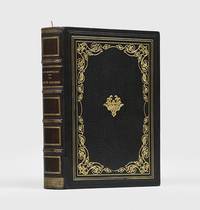
1913172668Paris: Goupil & Cie 1913. The most famous woman in Paris First edition of the Parisian aesthete's sumptuously illustrated biography. Castiglione 1837-1899 was a self-fashioned icon of high society whose extensive portfolio as a photographic model made her a major figure in the medium's early history. "La Castiglione was one of the first celebrated women to realize the iconic potential of the camera in this first period of photography. She was aware of the necessity for control a concern to use the camera rather than let the camera use her. Her chosen studio Mayer and Pierson made over seven hundred images of her an enterprise that in photography's earliest years represented a considerable investment in time and effort" Badger p. 51. She performed a wide variety of identities in her highly staged portraits including mythical historical seductive and grotesque. The fame resulting from her enigmatic images earned her significant political influence: her affair with Napoleon III likely contributed to Italian unification and Otto von Bismarck met with her to discuss the strategic importance of Paris following the Franco-Prussian war. Although he never met Castiglione Montesquiou 1855-1921 was enraptured by her reputation and collected hundreds of her photographs the majority of which are now held at the Metropolitan Museum of Art. A fellow photography enthusiast - he aspired to be the most photographed person in the world - he was also a Symbolist poet painter and dandy. Quarto 273 x 195 mm. Colour photogravure frontispiece 25 plates 5 colour captioned tissue guards floriated initials borders and head- and tailpieces by Louis Popineau chapter titles printed in red. Bound with original wrappers. Contemporary dark green morocco by Durvand of Paris spine lettered and ruled in gilt 4 raised bands covers framed in blind and gilt gilt crown centrepiece surrounded by scrollwork border gilt fillets on board edges and turn-ins purple moiré endpapers top edge gilt the rest uncut orange red and green silk bookmarker loosely inserted. Spine gently toned ends a little rubbed plates bright and clean: a fine copy. Gerry Badger The Pleasures of Good Photographs: Essays 2010. hardcover
3846571687.Gpaperback. Good. Access codes and supplements are not guaranteed with used items. May be an ex-library book. paperback
19689967210G. C. Sansoni 1968. This is an ex-library book and may have the usual library/used-book markings inside.This book has soft covers. In good all round condition. Please note the Image in this listing is a stock photo and may not match the covers of the actual item650grams ISBN: G. C. Sansoni paperback
3563789Contentum Ltd. Loose sheet. New. High-quality art print based on an original work from the Rijksmuseum. Created in the 17th century 1620. Professionally printed on premium fine-art paper Museum Etching museum quality in size A3. The artwork is printed with a white border museum-style presentation. Contentum Ltd. unknown
0244435278.Gpaperback. Good. Access codes and supplements are not guaranteed with used items. May be an ex-library book. paperback
2851841742.Gpaperback. Good. Access codes and supplements are not guaranteed with used items. May be an ex-library book. paperback
1120393213.Ghardcover. Good. Access codes and supplements are not guaranteed with used items. May be an ex-library book. hardcover
2009DADAX1104777258Kessinger Publishing 2009-07-17. paperback. New. 6.00x1.45x9.00. Buy with confidence. Excellent Customer Service & Return policy. Kessinger Publishing paperback