ELUARD, PaulLivre Rare Book

4 067 résultats
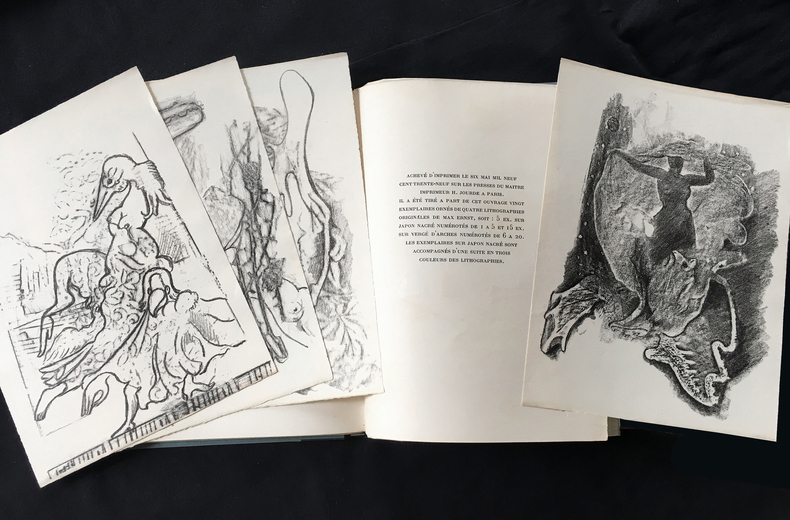
19391435Paris, NRF, Gallimard, 1939. in-4 (260 x 200 mm) broché, toutes marges, 70 pages, couverture imprimée rempliée. ÉDITION ORIGINALE TRÈS RARE de ce recueil contenant : "Trois chevaux aigus. Nous sommes. Nulle rupture. À l'ombre de ma porte. Poème perpétuel. L'or et l'eau froide. Trois poèmes inachevés. Les vainqueurs d'hier périront". Tirage : 5 Japon nacré + 15 vergé d'Arches. Celui-ci l' un des 15 ex. numérotés sur vergé d'Arches (n°12), SIGNÉ PAR PAUL ÉLUARD ET MAX ERNST, ACCOMPAGNÉ DE 4 SUPERBES LITHOGRAPHIES ORIGINALES À PLEINE PAGE TIRÉES EN NOIR SUR VERGÉ DE HOLLANDE DE MAX ERNST (seuls les 20 premiers exemplaires en grand papier contiennent ces lithographies). - Note bibliographique et historique : Max Ernst avait prévu une série de douze lithographies, mais seules quatre d’entre elles furent publiées dans l’édition de luxe à petit nombre. Un an plus tôt, en 1938, désapprouvant ses positions trotskystes, Éluard avait rompu avec Breton : À sa suite Max Ernst quitte le groupe surréaliste outré d’avoir à subir l’exigence de « saboter la poésie de Paul Éluard par tous les moyens » (in Centre Georges Pompidou, Paul Éluard et ses amis peintres, 1982, p.109).
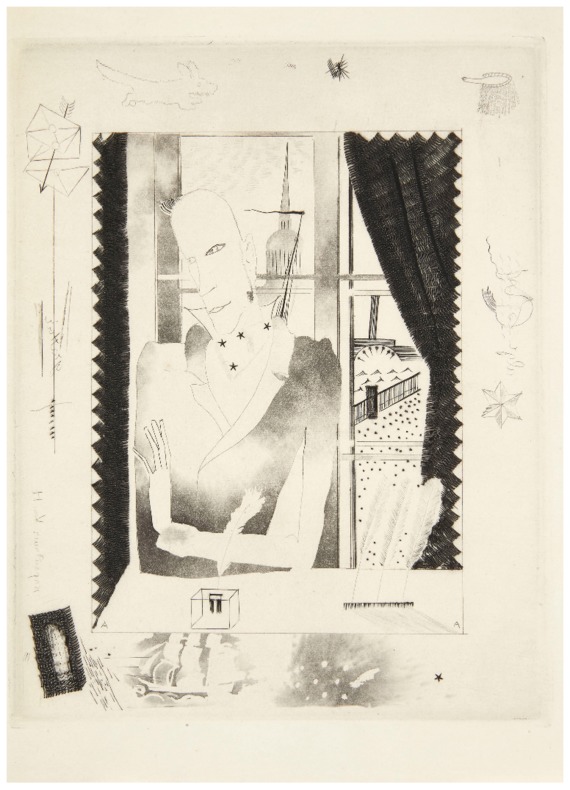
19271652Paris, Éditions de La Pléiade, 1927. Un volume grand in-8° (245 x 180 mm), relié. Plein maroquin havane janséniste, dos à quatre nerfs, tête dorée, couverture et dos conservés, étui bordé (J.Van West). 21 GRAVURES ORIGINALES À L'AQUATINTE ET À L'EAU-FORTE PAR ALEXANDRE ALEXEIEFF. Tirage : 266 ex. Celui-ci l'un des 15 exemplaires de tête sur japon impérial, numéroté et paraphé par l'éditeur (n°11), comprenant une suite complète des gravures en premier état avec remarques sur japon mince, une suite complète en état définitif sur vélin et 2 gravures inédites avec remarques. Les suites sont judicieusement reliées en fin de volume (Bendazzi, Alexeieff, itinéraire d’un maître, 2001, pp. 98-115).
19391435-2Paris, NRF, Gallimard, 1939. in-4 broché, 70 pages, couverture imprimée. ÉDITION ORIGINALE de ce recueil contenant : "Trois chevaux aigus. Nous sommes. Nulle rupture. À l'ombre de ma porte. Poème perpétuel. L'or et l'eau froide. Trois poèmes inachevés. Les vainqueurs d'hier périront". Tirage : 5 Japon nacré et 15 vergé d'Arches numérotés et signés + les exemplaires non numérotés sur vélin du Marais (tirage probable à 500 ex.). Le notre, sur vélin du Marais est accompagné DES 4 SUPERBES LITHOGRAPHIES ORIGINALES DE MAX ERNST TIRÉES EN NOIR À PLEINE PAGE SUR VERGÉ DE HOLLANDE (seuls les 20 premiers exemplaires en grand papier contiennent ces lithographies). - Note bibliographique et historique : Max Ernst avait prévu une série de douze lithographies, mais seules quatre d’entre elles furent publiées dans l’édition de luxe à petit nombre. Un an plus tôt, en 1938, désapprouvant ses positions trotskystes, Éluard avait rompu avec Breton : À sa suite Max Ernst quitte le groupe surréaliste outré d’avoir à subir l’exigence de « saboter la poésie de Paul Éluard par tous les moyens » (in Centre Georges Pompidou, Paul Éluard et ses amis peintres, 1982, p.109).
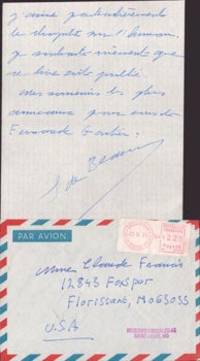
16-5588Paris: 1976-1979; 1985-1986. Audio archives: 2 audio cassettes and 9 CDs of interviews with Simone de Beauvoir for projected Gallimard publications. .Unpublished audio interviews to prepare the books: 2 audio cassettes and 2 CDs: interviews of Simone de Beauvoir with Claude Francis in 1976 June 9 and June 22. Plus 7 CDs of interviews with Simone de Beauvoir in 1985-1986. These recordings are accompanied by documents: the publishing contract with Gallimard photocopy; 2 L.S. by Robert Gallimard to the two authors January 6 1978 and May 30 1980; 2 autograph sheets signed by Simone de Beauvoir authorizing Claude Francis to make photocopies and copies of various documents; a contract with Einaudi.Set of preparatory documents for "Les Écrits de Simone de Beauvoir " by Claude Francis and Dr. Fernande Gontier a scholar who received her PhD in French from the University of Virginia in 1973. She has many iworks in collaboration with Claude Francis--on French literary figures including Colette and Simone de Beauvoir. A copy of the book "Les Écrits de Simone de Beauvoir" Paris Gallimard 1979 in-8 paperback with a mailing from Fernande Gontier February 1980. Following her refusal to print the Postscript to the Second Sex Beauvoir agreed to let her editors publish texts following her bibliography in preparation since 1975. These writings include many original texts published for the first time in book form including the first two chapters of the novel L'Invitée Brigitte Bardot et le syndrome Lolita the first French-language edition of this essay published in English in Esquire . Provenance: Aristophil Collection Paris. Paris: 1976-1979; 1985-1986 paperback
01079Paris: Le Rayon d'Or/Librairie Gallimard 1952. A Spectacular Copy in a Unique Artist's Binding<br /> Inscribed by Jules Romains with Inscriptions by Georges Duhamel and Gus Bofa <br /> With an Original Drawing Autograph Letter and Provenance Note<br /> A Singular Enriched Association Copy of Les Copains<br /> <br /> DUHAYON Henri binder. BOFA Gus illustrator. ROMAINS Jules. Les Copains. Avec douze aquarelles par Gus Bofa. N.p. Paris: Le Rayon d'Or 1952. <br /> <br /> First edition illustrated by Bofa limited to 3500 numbered copies sur vélin blanc des Papeteries de Lana this being copy 3152. <br /> <br /> Octavo 8 1/4 x 6 1/8 in; 208 x 153 mm. 200 1 1 blank 3 table 1 blank 1 colophon 1 blank pp. Twelve full-page aquarelle illustrations one of which has been inscribed by the artist to the owner.<br /> <br /> A striking abstract painted binding by Henri Duhayon of Nice signed in gilt on the inside front turn-in: "Relié H. Duhayon Nice." Full crushed cordovan morocco spine lettered in gilt with vividly hand-painted lacquered paper boards in a modernist all-over composition of black yellow orange blue and red brushstrokes and grid patterns reflecting the anarchic spirit of the text. Top edge gilt. Custom painted endpapers. A superb and very fine copy in a matching leather-edged slipcase.<br /> <br /> With the following additions:<br /> An original ink and watercolor drawing by Gus Bofa showing the riotous group of copains with their characteristic red cheeks - annotated and inscribed to the owner at foot: "Mr. Jean Francesche cordialement Gus Bofa."<br /> <br /> An autograph letter signed ALS by Bofa dated 24 November 1958 addressed to the owner Jean Francesche explaining the curious omission of a head in one of the illustrated characters: "Votre 'copain sans visage' n'a pas perdu la tête - il n'en a jamais eu. Jules Romains l'a voulu ainsi."<br /> <br /> A tipped-in typed letter signed TLS by the owner Jean Francesche explaining how he assembled this copy after reading Romains's Souvenirs et confidences d'un écrivain tracing the culinary reference to Duhamel contacting him for clarification and engaging Bofa in a whimsical debate over the incomplete drawing. Francesche's commentary includes typed quotes from Souvenirs and his note concludes: "Je pense que tout cela augmente l'intérêt de ce charmant volume." Francesche's signed ex-libris is blindstamped to the inside front cover turn-in.<br /> <br /> A remarkable object of literary friendship bibliophilic playfulness and aesthetic invention.<br /> <br /> First published in 1913 Les Copains is a comic and subversive novel about a group of friends - eccentric idealistic and absurd - who form a loosely anarchic brotherhood and perform theatrical stunts and pranks across provincial France. It stands as an early literary expression of unanimism a theory of collective consciousness developed by Romains in the 1900s. As the New Oxford Companion to French Literature notes: "Before the war in 1914 Romains published. two novels Mort de quelqu'un 1911 and the farcical Les Copains influenced by Unanimist theories of social groups and collective psychology." This edition published nearly 40 years later by Le Rayon d'Or Gallimard's deluxe illustrated imprint pairs Romains's youthful anti-establishment text with twelve brilliant plates by Gus Bofa one of France's most original illustrators and caricaturists. Bofa celebrated for his sardonic wit and visual improvisation was a regular contributor to Le Rire and Crapouillot and illustrated classic texts by Swift Cervantes and La Fontaine.<br /> <br /> Renowned artist Gus Bofa b. Gustave Blanchot 1883-1968 was an illustrator for Rire and Sourire a costume and set designer a celebrated poster artist and illustrator for the literary journal Crapouillot. He soon became one of the most in demand illustrators of editions of Swift La Fontaine Cervantes etc. ultimately with one hundred and seventeen volumes to his credit. <br /> <br /> French novelist poet dramatist and essayist Jules Romains pseud. of Louis Farigoule 1885-1972 was "early in his career.associated with a short-lived artistic community the Groupe de 'Abbaye which published his poems La Vie unanime in 1908. These poems and much of his later verse and prose were influenced by Unanimist theories of social groups and collective psychology. Before the war in 1914 he published more collections of poetry a verse play.and two novels Mort de quelqu'un 1911 and the farcial Les Copains The Pals" New Oxford Companion to Literature in French p. 707.<br /> <br /> Georges Duhamel's 1884-1966 experience as a surgeon during World War I produced Vie des martyrs 1917 tr. The New Book of Martyrs 1918 and Civilisation 1918 tr. 1919. These collections of sketches are noted for their compassionate accounts of human suffering. He was successful as a dramatist; his Dans l'ombre des statues was performed in 1912 tr. In the Shadow of Statues 1914 and L'oeuvre des athlètes in 1920. His fiction includes two cycles of novels-Cycle de Salavin 1920-32 tr. 1936 about a sensitive eccentric and Chronique des Pasquiers 1933-45 tr. 1937-46 about a bourgeois Parisian family. Essays in Scènes de la vie future 1930 tr. America: the Menace 1931 and other collections reflect Duhamel's aversion to overindustrialization" Columbia Enclyclopedia. He wrote passionately against war and its atrocities and against the rise of Naziism. He was elected to the Académie Français in 1935. Though now largely forgotten he is perhaps best remembered for his timeless epigram: "It is always brave to say what everyone thinks"<br /> <br /> Monod 9851. Paris: Le Rayon d'Or/Librairie Gallimard, 1952 unknown
196529249Paris, Gallimard, 1965-1967-1968. Trois volumes in-8, brochés, 476-376 et 297 pp. Le 3 volumes réunis dans un boitier commun.
Paris, Gallimard, 1965-1967 et 1968. Trois volumes in-8, brochés, 476 pp, 376 et 297 pp. Éditions originales de cette trilogie. Tome 1: non coupé, un des 85 exemplaires numérotés sur vélin pur fil Lafuma-Navarre, deuxième papier après 27 vergé de Hollande, en parfait état, N° 53. Tome 2 : un des 80 exemplaires numérotés sur vélin pur fil Lafuma-Navarre, deuxième papier après 27 vergé de Hollande, N° 43. Tome 3 n° 43. Beaux exemplaires tels que parus.
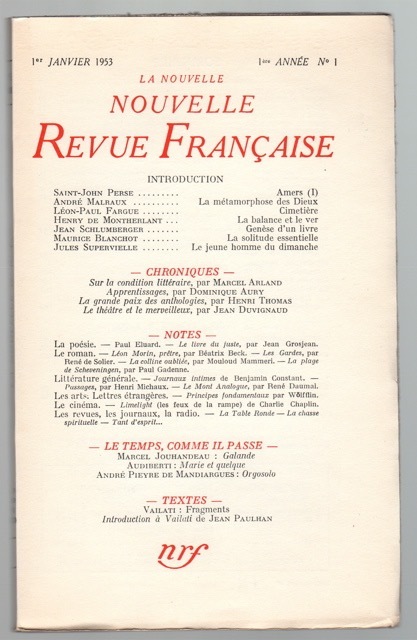
19536452Très importante collection de la célèbre revue, depuis sa date de reparution en janvier 1953 (sous le titre de La Nouvelle Nouvelle Revue Française), jusqu'à fin 1975. Soit 276 numéros.Exceptionnel tirage en grand papier numéroté : on ne sait pas exactement combiien il y eut de grands papiers,mais d'après la librairie Gallimard, ceux-ci ne dépassaient pas les 80 exemplaires. Magnifique collection à l'état de neuf. Il manque le numéro 176 d'août 1967. Brochés en très bon état, parfois non coupés, et le plus souvent avec le papier cristal d'origine. Très bon Paris NRF 1953-1975 276 volumes in-8°
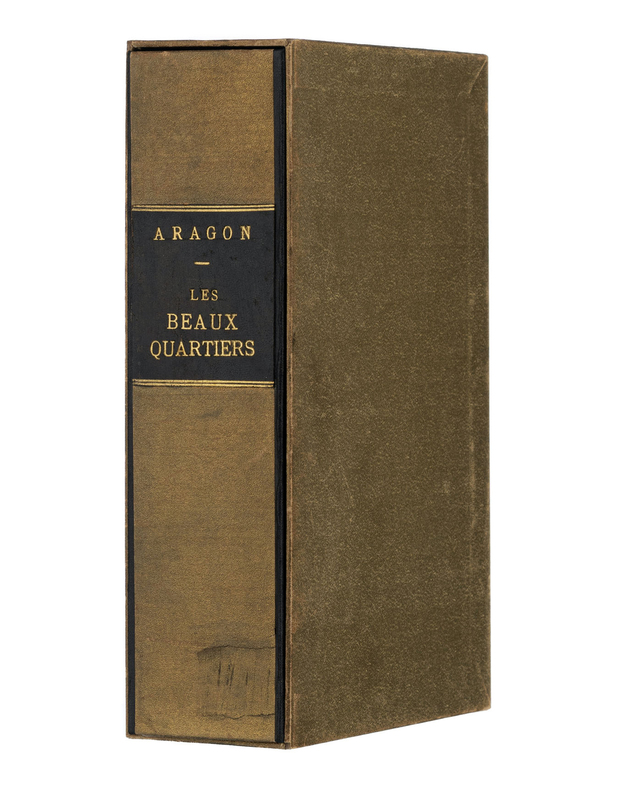
19361367Paris, Denoël et Steele, 1936. Fort vol. in-8° (25 x 15 cm) broché, 57 pages, couverture imprimée en noir et rouge,sous chemise et emboîtage doré. Édition originale tirée à 143 ex. numérotés. L'un des 25 ex. sur pur fil Lafuma, celui-ci le n°10 (tirage de tête avec 7 Chine). "Les Beaux Quartiers" est le deuxième roman du cycle "Le Monde réel" qui a débuté par "Les Cloches de Bâle". Aragon a écrit cette oeuvre à la veille de la deuxième guerre mondiale et y a dépeint des pans entiers de la société française de 1913. DESCRIPTION DE L'ŒUVRE : Le roman raconte l'histoire de deux frères, Edmond et Armand Barbentane, issus de la petite bourgeoisie provinciale du Sud de la France, qui montent à Paris dans les années qui précèdent le première guerre mondiale ; de multiples autres personnages, femmes ou hommes, gravitent autour d'eux. Avec eux, en un impressionnant tourbillon, nous découvrons la vie mondaine et demi-mondaine de la capitale, la bourgeoisie d’argent, la misère crasse des laissés pour compte, le monde des hôpitaux et de la rue, la prostitution, les maisons de jeux, le chantage, les ors, la boue, la police corrompue et celle qui ne l’est pas. Les grands débats y ont une place plus grande encore qu’en province, l’imminence de la guerre y est encore plus flagrante, plus oppressante, les mouvements de grève y sont matés avec davantage de ruse et de violence. La fresque sociale et politique n’y est pas développée au détriment des personnages qu’Aragon prend le temps de faire vivre, espérer, souffrir. L’étau qui les broie et souvent les brise ne cesse d’actionner ses mâchoires infernales : nécessités économiques, politiques, amoureuses et, pour les hommes, omniprésentes contraintes de l’amour-propre qui les taraude et les étouffe comme des vêtements trop étroits et des chaussures trop petites. Cette oeuvre, classique dans sa forme, alterne un style fort, truculent, à l’imprécision suggestive quand il le faut et une prose poétique au charme puissant, au balancement estropié et allusif cher à Aragon. Elle est le couronnement magistral du 19ème siècle réaliste par le 20ème siècle bouillonnant de créativité linguistique : il y a du ZOLA en lui lorsqu’il dépeint les Halles et du BALZAC lorsqu’il enserre ses personnages dans la noirceur des complots et du chantage. On pense à PROUST aussi dans son déploiement fantastique, mais on pense surtout à ARAGON, qu’on le découvre ou qu’on le relise.
1926005579Paris Editions René Kieffer 1926 In-4 Broché, couverture rempliée Edition originale
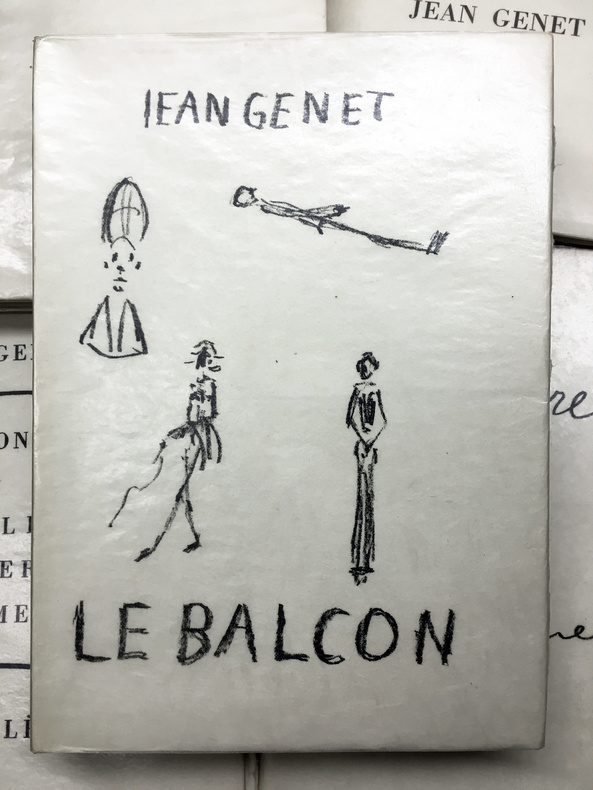
19561504L'Arbalète, Marc Barbezat, Décines 1956. 1 volume in-8 (205 x 152 mm), 195 pages, broché sous couverture rempliée illustrée d'une lithographie originale d'Alberto Giacometti, tirée par Mourlot (Lust 99). ÉDITION ORIGINALE de la pièce de Jean Genet. 1 DES 32 EXEMPLAIRES NUMÉROTÉS SUR PAPIER JAPON BLANC NACRÉ. Premier papier. Celui-ci n° VII à l'état de neuf, non coupé, habillé du papier cristal translucide de l'éditeur. Volume in-octavo. Original wrappers printed in black. First edition, first printing. This is 1 of just 32 printed on Japon nacré imperial (numbered VII), the magnificent top paper issue. An untouched and uncut copy. In mint condition, clothed with the Barbezat's glassine paper.
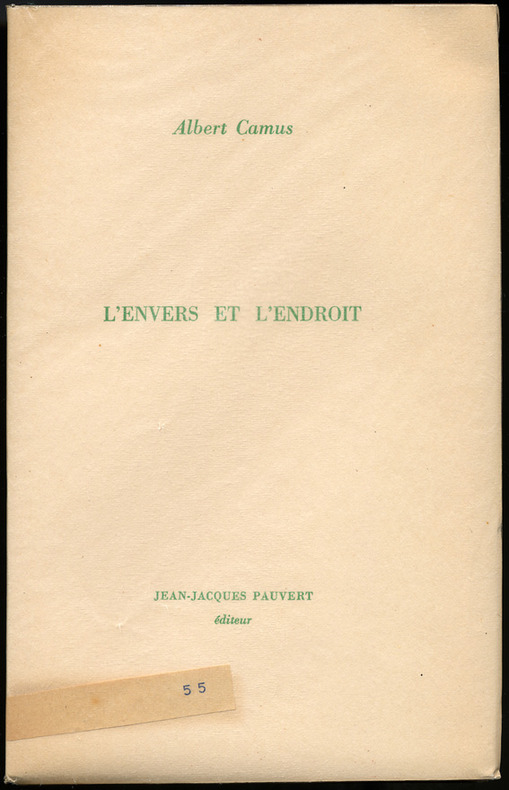
1956980Jean-Jacques Pauvert Éditeur, Paris 1956. 1 volume in-8 (225 X 142 mm) broché, 107 pp+fnch. sous couverture rempliée ivoire imprimée en vert, rhodoïd de l'éditeur. Seconde édition illustrée d'UNE POINTE-SÈCHE ORIGINALE DE HANS BELLMER, portrait de Camus. La préface de 23 pages a été spécialement écrite par l'auteur pour cette édition. Tirage : 100 exemplaires sur vélin de Rives ivoire numérotés en chiffres romains. Celui-ci, le n° LV, est entièrement non coupé et conservé à l'état de neuf.
Paris, Gallimard, 1990. In-8, 150 pp. Plein box brun, dos lisse, titre doré en long, tranches dorées sur témoins, couvertures et dos conservés, étui gainé et bordé de même (reliure signée de Jacqueline Liekens). Paris, Gallimard, 1990. In-8, 150 pp. Plein box brun, dos lisse, titre doré en long, tranches dorées sur témoins, couvertures et dos conservés, étui gainé et bordé de même (reliure signée de Jacqueline Liekens). Edition originale. Un des 80 exemplaires numérotés sur vélin de Rives, seul tirage en grand papier. Très bel exemplaire.
25182Paris, Gallimard, 1990. In-8, 150 pp. Plein box brun, dos lisse, titre doré en long, tranches dorées sur témoins, couvertures et dos conservés, étui gainé et bordé de même (reliure signée de Jacqueline Liekens). Paris, Gallimard, 1990. In-8, 150 pp. Plein box brun, dos lisse, titre doré en long, tranches dorées sur témoins, couvertures et dos conservés, étui gainé et bordé de même (reliure signée de Jacqueline Liekens).
015736Gallimard NFR 0 In-12 Broché
2016116486Editions Gallimard. New. 2016. Hardcover. 2072625785 .IN STOCK AND IMMEDIATELY AVAILABLE FOR SHIPMENT - IN STOCK AND IMMEDIATELY AVAILABLE FOR SHIPMENT - Flawless copy brand new pristine never opened - -- with a bonus offer; 8.4 X 1.29 X 10.41 inches; 232 pages . Editions Gallimard hardcover
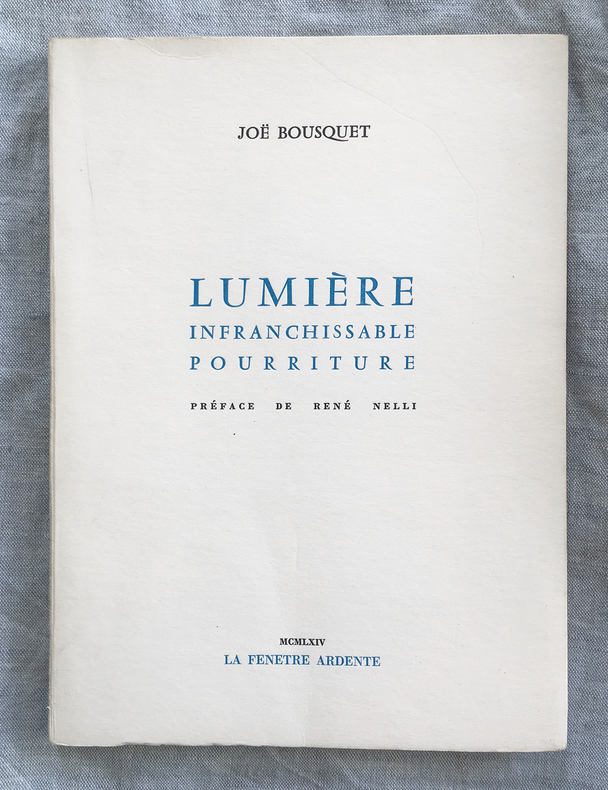
19641752Millau, La Fenêtre ardente, 1964. In-12 (190 x 140 mm), 53 pp., broché sous couverture à rabats imprimée en bleu et noir. Deuxième édition de ce texte publié en 1935 sous la forme d'un tiré à part des Cahiers du Sud (feuillets agrafées). Celui-ci l'un des 47 sur vélin Pur Fil justifiés au crayon (n° XXVIII) par l'éditeur Gaston Puel. Seuls ces exemplaires sont ornés d'UNE GRAVURE À L'EAU-FORTE EN COULEUR SIGNÉE PAR MAX ERNST . Le texte est une étude sur Pierre Jean Jouve.
23003Paris, Gallimard, 10 juin 1954. in-8, broché, non coupé, 375 pp.
28999Paris, Gallimard, 10 juin 1954. Un volume In-8, broché, non coupé, 375 pp.
Paris, Gallimard, 10 juin 1954. Un volume In-8, broché, non coupé, 375 pp. Edition originale tirée à 1235 ex. Un des 155 exemplaires numérotés sur vélin pur fil Lafuma-Navarre, 2ème papier après 45 sur Hollande. Bel exemplaire non coupé. (n° 181).
Paris, Gallimard, 10 juin 1954. in-8, broché, non coupé, 375 pp. Edition originale tirée à 1235 ex. Un des 155 exemplaires numérotés sur vélin pur fil Lafuma-Navarre, 2ème papier après 45 sur Hollande. Bel exemplaire non coupé. (n° 181).
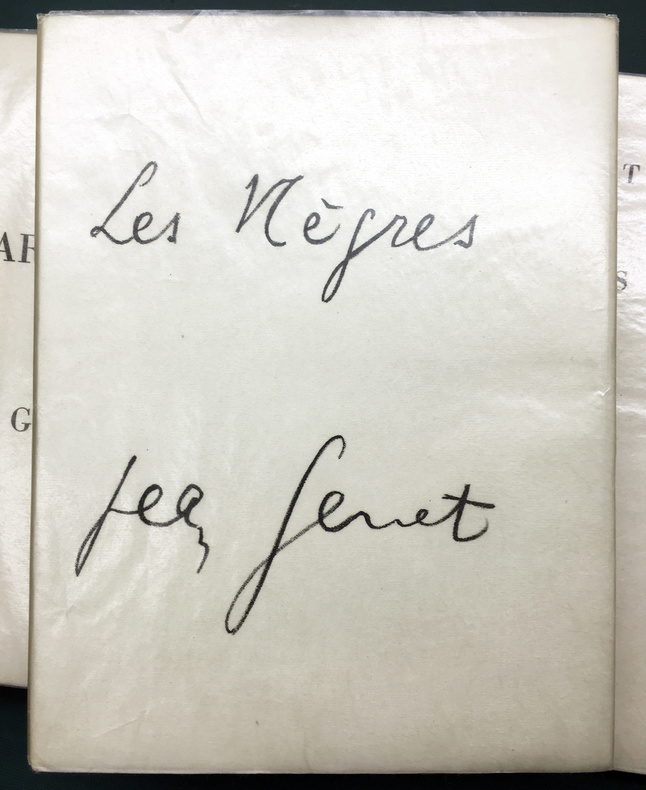
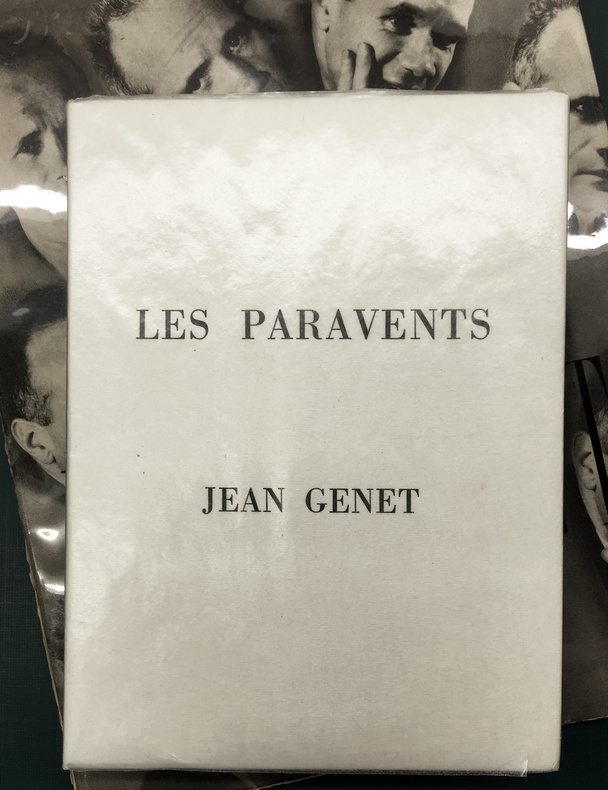
19581502L'Arbalète, Marc Barbezat, Décines 1958. 1 volume in-8 (205 x 155 mm), 154 pages, broché sous couverture à rabats titrée de la main de Jean Genet et lithographiée par Mourlot. ÉDITION ORIGINALE de la pièce de Jean Genet. 1 DES 35 EXEMPLAIRES NUMÉROTÉS SUR JAPON NACRÉ, premier papier. Celui-ci n° IV à l'état de neuf, entièrement non coupé, habillé du papier cristal translucide de l'éditeur. Volume in-octavo. Original wrappers lithographied in black after the original Jean Genet hand-writing. First edition, first printing. This is 1 of just 35 printed on Japon nacré (n° IV). An untouched and uncut copy. Pristine condition clothed with the Barbezat's usual glassine paper.
19611503L'Arbalète, Marc Barbezat, Décines 1961. 1 volume in-8 (205 x 155 mm), 259 pages, broché sous couverture imprimée rempliée. ÉDITION ORIGINALE de la pièce de Jean Genet. 1 DES 40 EXEMPLAIRES NUMÉROTÉS SUR PAPIER JAPON BLANC NACRÉ. Premier papier. Celui-ci n° XII à l'état de neuf, non coupé, habillé du papier cristal translucide de l'éditeur. Volume in-octavo, original wrappers printed in black. First edition, first printing. This is 1 of just 40 printed on Japon nacré imperial (numbered XII). The magnificent top paper issue. An untouched and uncut copy. In mint condition, clothed with the Barbezat's glassine paper. Very scarce.
Paris, Gallimard, 1993. fort et grand in-8, broché, non coupé, 324 pp. Edition originale. Un des 50 exemplaires numérotés sur vergé blanc de Hollande. Seul tirage en grand papier. Non coupé, neuf.
Paris, Gallimard, Le Chemin, 14 avril 1980. In-8, broché, non coupé, couverture à rabats, 410 pp-[4]. Edition originale. Tirage à 72 ex n°. Un des 41 exemplaires numérotés sur vélin d'Arches Arjomari-Prioux, n° 42. (après 31 ex sur Vergé blanc de Hollande). Exemplaire à l'état de neuf.