26 193 résultats
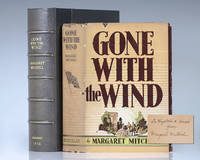
193869823New York:: The Macmillan Company 1938. Reprint of the 1936 first edition. original gray cloth stamped in blue in dust jacket. Ink stamp of Selznick International Pictures Inc. to verso of rear free endpaper; a little browning to the hinges from binder's adhesive; some shelfwear to the bottom edge; but a bright copy. The jacket is chipped at extremities of the backstrip and has a few other tiny chips; good to very good. The framed certificate of appreciation is somewhat rippled and there is some fading to some of the signatures. . 8vo and framed artwork measuring 25 x 21 inches overall. Denoted in pencil "Copy #1" this was Assistant Director Eric Stacey's copy signed by David Selznick Director Victor Fleming and 28 members of the motion picture cast including Vivien Leign Clark Gable and Olivia de Havilland. Eric Stacey has added his ownership signature in pencil on the half-title. Accompanying the book is a framed gift presented to Eric Stacey "In appreciation for his cooperation and unfailing interest during the darker days of "Gone With the Wind." Created by Atlanta artist Jack Conner the signatures of 82 members of the motion motion picture production staff are surrounded by a decorative cartouche in colors featuring Aeolus the Keeper of the Winds as a pair of cherubs amid scrolls the sun moon and stars. In the decorative title lettering "Gone" is windblown. The Macmillan Company, hardcover
193613198JNew York: Macmillan 1936. First Edition First Issue. Signed by Margaret Mitchell on the flyleaf. Laid into the book is what is considered the finest Clark Gable letter extant an amazing reflection all about Gone With the Wind. Dated January 25 1960 it is a Typed Letter Signed in blue ink by Clark Gable on his printed stationery with the original stamped envelope which is written to the News Editor of the Atlanta Constitution newspaper Mr. Actor Cordell Jr. who had asked for Gable’s remarks on Gone With the Wind twenty years after the release of the film classic and to which Clark Gable wrote this amazing response: "Dear Mr. Cordell: I have received your letter of December 29 and will answer your questions in the order which you ask them. - Yes it does seem like 20 years. - I feel about GONE WITH THE WIND as being one of the greatest pictures ever made not because I played a leading role in it but because of the great story the way the story was brought to the screen the production it received and because of its very fine cast. When I look at the picture now after 20 years I still feel it is one of the finest motion pictures ever made. - Yes I think Rhett Butler is my favorite role and I am associated more with GONE WITH THE WIND than with any of my other pictures. - As to suggestions for the casting of Rhett in the forthcoming stage musical this is a little out of my line. I am sure the producer and the director will be completely capable of finding a very fine Rhett Butler. - Of the late Margaret Mitchell I would like to say that in addition to writing a wonderful novel she was of great help to me before I started working in the picture advising me of the manner in which she thought I should attempt to portray Butler. I listened to her and followed her advice and fortunately for me everything she told me was right. Naturally she was the one to whom I went for advice because she was the one who had created the character. I am forever grateful to Margaret Mitchell. - Most sincerely Signed Clark Gable.†This letter was written shortly before Gable left to film his final motion picture the late masterwork The Misfits co-starring Marilyn Monroe and Montgomery Clift directed by John Huston using an original screenplay by Monroe’s husband Arthur Miller. Gable died in November a few days after shooting his last scene. This articulate and fascinating letter therefore remains his final observations about Gone With the Wind. The book itself is a near fine first edition in original cloth in a very good first issue dust jacket with some minor expert restoration by a paper conservationist. A truly historic piece enclosed in a very handsome custom morocco and cloth custom box. Macmillan hardcover
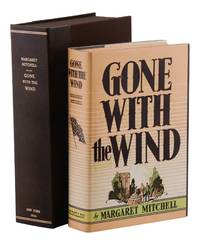
1936140948946New York: The Macmillan Company 1936. First Edition. Fine/Fine. First edition first printing with "Published May 1936" on the copyright page. vi 1037 pp. Bound in publisher's gray cloth stamped in blue. Fine in a Fine first issue dust jacket with Gone with the Wind placed in the second column of books listed on the rear panel; $3.00 price intact on bottom corner of front flap upper corner clipped. Housed in a custom clamshell case brown cloth over quarter brown morocco title in gilt with trivial fraying to cloth edges. An incredible copy the best we've ever seen. The Macmillan Company unknown
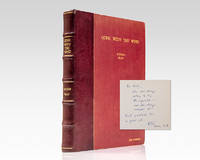
1939152173Hollywood: Selznick International 1939. Rare final shooting script of the most celebrated film in Hollywood history a remarkable presentation copy inscribed by producer David O. Selznick to his special effects chief Jack Cosgrove in the year of the film's release. Quarto bound for Selznick in contemporary custom red half morocco for presentation with Cosgrove's name stamped in gilt on the front board and the spine with five raised bands lettered in gilt original yellow wrappers bound in titled "Gone With the Wind from the novel by Margaret Mitchell. Screen Play by Sidney Howard. Produced by David O. Selznick. Directed by Victor Fleming. Final Shooting Script January 24 1939" with six black-and-white movie stills inserted throughout - among them the burning of Atlanta the sequence that crowned Cosgrove's achievement. Presentation copy inscribed by Selznick on the first blank "For Jack who was always willing to try the impossible-and who always achieved it! With gratitude for a great job. DOS Xmas 1939." The recipient Jack Cosgrove was the leading special effects artist of Hollywood's golden age nominated for five Academy Awards over the course of his career for Gone With the Wind Rebecca The Pride of the Yankees Since You Went Away and Spellbound. Working day and night through the summer of 1939 Cosgrove and the assistants he supervised at Selznick International produced hundreds of the matte paintings - rendered on large glass panels and known on the lot as "Cosgrove shots" - that were combined with the live footage to create most of the film's panoramas of the antebellum South. It was his brush that conjured the great house at Tara the sweep of Twelve Oaks and the burning of Atlanta supplying the visual grandeur on which the film's epic scale depends. From the collection of Tony Grammy and Emmy Award-winning composer Charles Strouse and his wife choreographer Barbara Siman. Over his 50-year career Charles Strouse wrote the music for such iconic musical theater hits as Bye Bye Birdie Applause and Annie as well as the theme song for the classic sitcom All in the Family "Those Were the Days". His partnership with Martin Charnin on Annie produced one of Broadway's most successful scores ever with "Tomorrow" and other songs from the production becoming enduring American musical standards admired by generations. His reach knew no genre or generation - from a number-one Billboard hit in 1958 to Jay-Z's Grammy-winning sampling of "It's the Hard-Knock Life" four decades later - and his honors include three Tony Awards and induction into both the Songwriters and Theater Halls of Fame. In near fine condition rebacked. An extraordinary association copy uniting the producer of Gone With the Wind with the artist who painted its most unforgettable images. David O. Selznick’s production of Gone With the Wind directed by Victor Fleming from Sidney Howard’s screenplay of Margaret Mitchell’s Pulitzer Prize–winning novel premiered in Atlanta in December 1939 and went on to win eight Academy Awards plus two honorary awards — including a posthumous Oscar for Howard’s screenplay the first ever awarded posthumously — and remains adjusted for inflation the highest-grossing film ever made. The final shooting script of January 24 1939 represents the text from which this monument of American cinema was filmed. Selznick had a small number of copies specially bound for presentation to key members of the cast and crew at Christmas 1939 each with the recipient’s name stamped in gilt and stills selected with the recipient in mind; they are today among the most coveted artifacts of Hollywood’s golden age. Selznick International hardcover
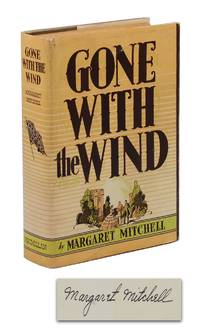
1936140946561New York: The Macmillan Company 1936. First Edition. Hardcover. First edition first printing with "Published May 1936" on the copyright page. Signed by Margaret Mitchell on the front free endpaper in black ink. vi 1037 pp. Bound in publisher's gray cloth with blue lettering. Near Fine with light edge rubbing pages toned with age;from the collection of noteworthy American book collector Robert R. Dearden with his bookplate on paste down. In first issue dust jacket with Gone with the Wind placed in the second column of books listed on the rear panel; $3.00 price intact on bottom corner of front flap. Jacket is Near Fine unsophisticated a good thing meaning it has had no repairs and unfaded light diagonal crease to front panel a little rubbed and toned small L shaped closed tear to back panel. Housed in a quarter calf custom folding case. <p>A lovely signed true first of the historical novel that inspired the classic 1939 film starring Vivien Leigh and Clark Gable. The novel itself was no slouch; it won the Pulitzer Prize for Fiction sold more than eight million copies and has been translated into at least 18 languages. Signed copies are uncommon as Mitchell swamped with requests refused to sign the novel six months after its publication. The Macmillan Company hardcover
95963The archive comprises nearly 440 pieces each approximately 320 × 510 mm or larger many from the later 1970s when Mitchell was at the height of his powers. A unique commentary on the personalities and events of the times: when Hawke Fraser and Dunstan were in power Nixon went to China the war in Vietnam ended and the first wave of 'boat people' began to arrive here many Indigenous Australians were in a parlous state cricket and cricketers still caused grief . Approximately 440 items. unknown
186064001London UK: William Tweedie 337 Strand 1860. Small 4to. 5.25 x 7.5 in. xv 1 3-172 xi 1 pp. Woodcut-engraved frontisp. of the author still preserving tissue guard. Publisher’s ribbed plum-coloured cloth dark maroon coloured title label & price of 1 shilling 6 pence mounted front cover very minor chipping head & foot of spine slight fraying title label stamping dimmed and minor bumping to a couple corners still a VG copy w/ London UK bookseller’s label partially removed at gutter margin front pastedown. First edition first printing of the first book wholly devoted to the Underground Railroad published only in England and by an African-American/Native-American author. Mitchell was a pivotal figure in the Underground Railroad who also aided the escaped slave “Eliza†whose escape over the Ohio River ice inspired the key dramatic moment in Harriet Beecher Stowe’s pivotal Uncle Tom’s Cabin. “Eliza†was sheltered originally in the network by noted abolitionist John Rankin passed on to Mitchell who then subsequently ensured her safe passage along the network overseen by Levi Coffin 1798-1877. Ironically the passage of the 1850 Fugitive Slave Act which criminalized those aiding in the Underground Railroad to free slaves with fines of $ 1000 and six months imprisonment fueled resistance and forced Mitchell to publish this seminal work in Great Britain rather than the U.S. As a freeborn orphan Black in North Carolina Mitchell was forced into apprenticeship with a North Carolina plantation owner where he witnessed the deprivations of slavery and became inspired to aid African-American slaves to escape to Canada. From 1842-1855 he helped over 1300 slaves reach Canada from his Washington Court House Fayette County Ohio way station. This memoir recounts many anecdotes of the formerly enslaved including: one enslaved woman who died from frostbite while protecting her three children and a former slave John Mason brought Mitchell in just 19 months of that 13 year span “265 human beings whom he had been instrumental in redeeming from slavery.†Mitchell further recounts Mason’s recapture in Kentucky and later escape from New Orleans to Canada. Mitchell estimates in his book that 60000 enslaved peoples escaped into Canada on the Underground Railroad modern estimates range from 40000 to 100000. At the end of the 1850’s he moved to Toronto and began serving as a minister to African-American Baptist Free Mission congregations largely composed of freed slaves and the final section details the lives of these Canadian Black immigrants. In the final appendix he urgently pleads for a boycott of Southern cotton by Great Britain attempting to overcome resistance to the economic impact and hardship it would have on British cotton mills and related industries. Mitchell c. 1826-c.1879 was encouraged to write this historic work by W.H. Bonner A British abolitionist and had toured Britain in 1860 with William Howard Day and British abolitionist George Thompson to oppose the condition of slavery before the outbreak of the Civil War. This work is quite scarce with only 2 copies at auction in the last 50 years and both those appear to have been the 2nd edition which removed the hyphen in “Under-Ground†extended the title and a couple other revisions. William Tweedie, 337, Strand, hardcover
145375Complete set of 12 photographs of the Apollo Moonwalkers. Set of 12 photographs all of which are official NASA lithographs with the exception of the Alan Shepard photo. Each is individually signed in ink or felt tip as follows "Neil Armstrong" "We Came in Peace Buzz Aldrin Apollo XI" "Charles Conrad Jr." "Alan L. Bean" "Alan Shepard" "Best wishes Edgar Mitchell Apollo 14" "Dave Scott" "Jim Irwin" "John Young" "Charlie Duke Apollo 16" "Jack Schmitt" and "Gene Cernan Apollo XVII." In overall near fine to fine condition with a PSA label affixed to the Shepard photo light bumping to the bottom left corner of the Bean and Scott photos and very light creasing to the top right corner of the Young photo. Each photograph measures 10 inches by 8 inches. A rare collection as most photographs were inscribed not just signed by the astronauts. The Apollo program also known as Project Apollo was the third United States human spaceflight program carried out by the National Aeronautics and Space Administration NASA which accomplished landing the first humans on the Moon from 1969 to 1972. First conceived during Dwight D. Eisenhower's administration as a three-man spacecraft to follow the one-man Project Mercury which put the first Americans in space Apollo was later dedicated to President John F. Kennedy's national goal of "landing a man on the Moon and returning him safely to the Earth" by the end of the 1960s which he proposed in an address to Congress on May 25 1961. A total of twelve astronauts had the opportunity to walk on the Moon between 1969 and 1972 becoming the first and only humans to set foot on another celestial body and marking a significant milestone in the advancement of our understanding of the universe. unknown
1932124744London: Jarrolds Publishers 1932-1934. First editions of each volume of Gibbon's classic trilogy describing the life of Chris Guthrie a woman from the north-east of Scotland during the early 20th century each volume inscribed by him to George Malcolm Thomson. Octavo original cloth 3 volumes. Sunset Song is inscribed on the title page "For G. Malcolm Thomson L. Grassic Gibbon." Cloud Howe is the dedication copy inscribed on the title page "For the 'dedicatee' with kind regards. L. Grassic Gibbon." Grey Granite is inscribed on the title page "For George Malcolm Thomson with good wishes L. Grassic Gibbon." Each are in very good condition. Rare and desirable signed and inscribed. A Scots Quair is revolutionary - innovative in its form deft and humorous in its use of language courageous in its characterization and politics. Central to the trilogy is Chris Guthrie one of the most remarkable female characters in modern literature. In Sunset Song Gibbon's finest achievement the reader follows Chris through her girlhood in a tight-knit Scottish farming community: the seasons the weddings the funerals the grind of work the gossip. As the Great War takes its toll machines replace the old way of life. Cloud Howe and Grey Granite take Chris from her rural homeland to life in an industrial Scotland and the desperate years of the Depression. Gibbon attracted attention from his earliest attempts at fiction notably from H. G. Wells but it was his trilogy entitled A Scots Quair and in particular its first book Sunset Song with which he made his mark. A Scots Quair with its combination of stream-of-consciousness lyrical use of dialect and social realism is considered to be among the defining works of the 20th century Scottish Renaissance. All three parts of the trilogy have been turned into serials by BBC Scotland written by Bill Craig with Vivien Heilbron as Chris. Additionally Sunset Song has been adapted into a film released in 2015. Jarrolds Publishers hardcover
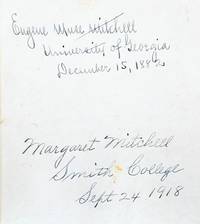
1882176004Boston: Ginn Heath & Co. 1882. A glimpse into Mitchell's family life and thwarted education A resonant literary artefact from a formative period of Mitchell's life: her family's copy of a dictionary used in her early days at Smith College and inscribed by her upon enrolment. A gift from her father a prominent Atlanta lawyer and historian it is inscribed by both generations on the front pastedown: "Margaret Mitchell Smith College Sept. 24 1918" and above her father's inscription from his own university days: "Eugene Muse Mitchell University of Georgia December 15 1882". Both father and daughter have practised their signatures elsewhere in the volume. It was Mitchell's suffragist mother May Belle Stephens Mitchell who encouraged her to attend Smith the prestigious female liberal arts school; she wanted her daughter to be educated as preparation for life's vagaries. May Belle loomed large as a figure of admiration and influence in Mitchell's early years but she did not live to witness the fruits of her daughter's schooling and the literary success of Gone with the Wind. In 1919 she died of influenza. This and the death of Mitchell's fiancé in action during the First World War prompted Mitchell to abandon her studies after her freshman year. She left Massachusetts and returned to the South to assume a role in her family's household supporting her father and stepping into her mother's role of a society hostess. 2 works in 1 octavo 188 x 140 mm presumably issued thus. Early 20th-century black textured coated cloth cloth labels lettered in manuscript. Housed in a custom green half morocco slipcase. Annotations to rear blank and throughout in an unidentified hand. Spines ends worn repair to covers inner hinges strengthened with linen spine labels toned and lifting slightly couple of small damp stains to edges loss to lower outer corner of first title page small tear to pp. 246-7 in second work contents toned. hardcover
1936211861New York: MacMillan 1936. First Edition; First Printing. Hardcover. Good in a Good dust jacket. Chipping at the crown of the spine. Minor repair to the front gutter with archival glue. Binding remains sound.; Signed by Margaret Mitchell on the front end page.; Signed by Author. MacMillan hardcover
1936136276New York: The Macmillan Company 1936. First edition of Margaret Mitchell's masterpiece which remains one of the fastest selling novels in the history of American publishing with 50000 copies sold in a single day. Octavo original cloth. First printing with “Published May 1936†on the copyright page and no mention of other printings. Association copy signed by eleven members of David O. Selznick's epic American 1939 film adaptation on the front pastedown and front free endpaper with nine adding the names of the characters they portrayed "Evelyn Keyes 'Suellen' O'Hara" "Mickey Kuhn 'Beau Wilkes age 7 years'" "Marcella Martin Cathleen Calvert" "Ann Rutherford 'Careen' O'Hara'" Rand Brooks Charles Hamilton" "William Bakewell 'A Mounted Officer'" "Greg Griese 'Baby Beau & Baby Bonnie'" "Fred Crane 'Brent Tarleton'" "Patrick Curtis 'Baby Beau'" "Frank Junior Coghlan The collapsing Southern soldier" and "Cammie King 'Bonnie Blue Butler'". The signatures were obtained by Mr. Tatnall Brown on the occasion of the film's March 10 1961 gala "Anniversary Premiere" at Loew's Grand Theatre in Atlanta commemorating the centennial of the start of the Civil War as well as marking the 25th anniversary of the publication of the book. The Loew's Grand was the venue famous for the original December 19 1939 world premiere. Very good in a very good completely unrestored first issue dust jacket with Gone with the Wind listed in second column of booklist on back panel and the $3.00 cost on front flap. Eicher 730. With Brown's bookplate to the pastedown. Laid in is a small stiff paper card with an image of Gone With the Wind; signed by Margaret Mitchell "Thank you for your letter. See 2 and 3 Margaret Mitchell Marsh." Additionally laid in is a post card with a portrait of Vivien Leigh from The Selznick Studio signed by her an original program from the film and a small booklet "Margaret Mitchell and Her Novel Gone With the Wind" New York: Macmillan 1936. Housed in a custom clamshell box. A unique example. “Mitchell’s sweeping rendition of a South torn apart by civil war… has become national mythology†New York Public Library’s Books of the Century 111. “This is beyond doubt one of the most remarkable first novels produced by an American writer. It is also one of the best… It has been a long while since the American public has been offered such a bounteous feast of excellent story-telling†New York Times Book Review 1936. Said to be the fastest selling novel in the history of American publishing 50000 copies in a single day Gone with the Wind won Mitchell the Pulitzer Prize. The Macmillan Company hardcover
177726040Paris: Le Rouge 1777. Engraved map hand-coloured in outline on 8 sheets individual sheets: 27 1/4 x 21 inches if joined would form a single large sheet 59 x 79 inches with large allegorical cartouche and inset map of Hudson's Bay and Labrador. Good condition small repaired tear. Housed in a red morocco backed box. A fine example of a French edition of Mitchell's monumental mapping of Colonial America a scarce issue published during the American Revolution.<br/> <br/> "John Mitchell was not a mapmaker by profession rather he was a medical doctor natural philosopher and botanist of considerable merit. Yet his sole cartographic endeavor.was perhaps the greatest produced in the history of America" Degrees of Latitude. Mitchell's Map of the British and French Dominions in North America is widely regarded as the most important map in American History. Prepared on the eve of the French & Indian War it was the second large format map of North America printed by the British and included the best up to date information on the region. Over the next century it would play a significant role in the resolution of every significant boundary dispute involving the northern border of the then British Colonies and later the United States. It was also the map-of-record at the birth of the United States and continued in this role through several decades in the early life of the country. John Mitchell a respected British physician botanist chemist biologist and surveyor lived for a time in Virginia but returned to England in 1746 where he remained. Mitchell initially conceived of his map of North America as the best method of presenting to the British public in a single large format image of all the colonies the extent of the French threat to the British claims in North America. Mitchell completed his first draft of the map in 1750. However because he was limited to publicly available sources of information this initial effort was rather crude even in Mitchell's own opinion. But word of Mitchell's work spread and the Board of Trade and Plantations retained Mitchell to make a new map using the official manuscript and printed maps and reports in the Board's possession including maps by Fry and Jefferson Christopher Gist George Washington John Barnwell and others. The Board also instructed all the colonial governors to send detailed maps and boundary information for Mitchell's use. Mitchell's map was first published by Andrew Millar in 1755 the year before war broke out with the French. The map is decidedly pro-English in its interpretation of the various boundaries and geographical information depicted on the map as would be expected for what amounted to thinly veiled pre-war propaganda. In addition to the geographical detail shown on the map Mitchell included many annotations describing the extent of British and French settlements. He also submitted a report to the Board in 1752 listing the French encroachments and his ideas of ways to encourage British settlement west of the Appalachian Mountains as a means of combating French influence in the region. Mitchell's map shows the British Colonial claims of Virginia both Carolinas and Georgia extending beyond the Mississippi to the Pacific Ocean. In the West Mitchell's treatment of the lower Missouri is a vast improvement over earlier maps. Regarding the source of the Missouri Mitchell noted that the Missouri river was reckoned to run westward to the Mountains of New Mexico as far as the Ohio does eastward reflecting his belief in symmetrical geography. Mitchell correctly shows the northern branch of the Missouri to be the main branch of the river although his estimate of the latitude of the river's source is inaccurate. Nonetheless the information Mitchell's map provided led Meriwether Lewis to explore the Marias River to determine the northern reaches of the Missouri River basin. The present French edition appeared in 1777 within Le Rouge's Atlas Ameriquain Septentrional. Le Rouge had first published an edition of the Mitchell map in 1756. The speed with which Le Rouge produced a full-size copy of Mitchell's original is an indication of how important the 1755 map was considered at the time. War in the region meant that consistent reliable cartographic intelligence was vital. Both the English and French versions went through a number of subsequent editions well into the 1770s. Mitchell's map went on to become the primary political treaty map in American history. Regarded by many authorities as the most important map in the history of American cartography twenty-one variant states and editions of the map appeared between 1755 and 1781.<br/> <br/> McCorkle 777.15; Ristow A La Carte p. 112; Tooley p 124; Moreland & Bannister p. 171-2.; Cf. E. and D.S. Berkeley Dr. John Mitchell the Man who made the Map Chapel Hill 1974 chapters 12 and 13; Richard W. Stephenson "Table for identifying variant editions and impressions of John Mitchell's map" p.110 in A la Carte Selected Papers on Maps and Atlases Washington 1972. Le Rouge unknown
19362601002MacMillan Company 1936. first. hardcover. very good/very good. INSCRIBED first edition with "Published May 1936" stated on copyright page and 1936 on title page. Book very good plus some rubbing to cover edges and along spine. Dust jacket very good some wear and chipping flap price $3.00 front flap clipped at top. Housed in custom-made slipcase. MacMillan Company unknown
1936139819New York: The Macmillan Company 1936. First edition of Margaret Mitchell's masterpiece which remains one of the fastest selling novels in the history of American publishing with 50000 copies sold in a single day. Octavo original cloth. First printing with “Published May 1936†on the copyright page and no mention of other printings. Presentation copy inscribed by the author on the front free endpaper "To Elizabeth S. Harsh from Margaret Mitchell." Near fine in a very good completely unrestored price-clipped first issue dust jacket with Gone with the Wind listed in second column of booklist on back panel and the $3.00 cost on front flap. Tape repairs to the verso of the dust jacket. Contemporary newspaper clipping adhered to the pastedown. Eicher 730. Housed in a custom half morocco clamshell box. A nice example. “Mitchell’s sweeping rendition of a South torn apart by civil war… has become national mythology†New York Public Library’s Books of the Century 111. “This is beyond doubt one of the most remarkable first novels produced by an American writer. It is also one of the best… It has been a long while since the American public has been offered such a bounteous feast of excellent story-telling†New York Times Book Review 1936. Said to be the fastest selling novel in the history of American publishing 50000 copies in a single day Gone with the Wind won Mitchell the Pulitzer Prize. The Macmillan Company hardcover
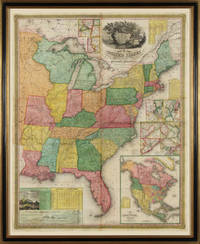
183122138Philadelphia 1831. No binding. Fine. Map of the United States. Entered according to Act of Congress in the Clerks Office of the Eastern District of Pennsylvania October 10th 1831. Philadelphia 1831. Folding map on four sheets joined. Folding into original covers 8vo binding size: 9 5/8 x 6 1/2 in. red half morocco over marbled paper boards upper cover with gilt-lettered title label corner and edges worn. The map and covers now apart and separately mounted for display. Historical BackgroundFirst edition and the first wall map issued by Mitchell. This edition does not have the counties delineated and numbered. Ristow mistakenly says all editions have the townships he means counties numbered but this one the first does not thereby eliminating the index of counties and thus showing more of the western territory. This map predates the Traveler's Guide by 1 year and thus is Mitchell's first ""original"" production as opposed to the Finley material he reissued as the American Atlas and Pocket Maps. Copyright date is October 10 1831. There is no other date on the map. Ristow thinks the map was issued in early 1832 but it is not in Phillips until 1834 edition which probably has the counties indicated by number and the 1831 copyright so Ristow may not have seen this edition but rather the 1834.ReferenceKarrow 1-1473; Ristow p309.ConditionOriginal full color the palette rich and bright. One 5-inch repaired tear at left into Arkansas some cracking and more minor tears at folds. Some overall browning of the sheet. In good condition.
1960140940127New York: Tiber Press 1960. First Edition. Fine. Complete in four folio volumes each measuring 17½" x14¼". Each volume with three full-page color silkscreen prints and additional prints at title page and upper cover original cloth-backed illustrated boards. First Edition. No. 47 of 200 copies. Each volume signed by the poet and artist on the limitation page. A Fine set bright and sharp in publisher's thick acetate jackets housed in cloth slipcase with light shelf wear.<br /> <br /> <p>A visionary collaboration between the leading lights of the New York School of poetry and four second generation abstract expressionist artists produced at the height of their creative collective powers. A heady encapsulation of the New York literary and visual avant garde at the dawning of the '60s. Tiber Press unknown
1960140946279New York: Tiber Press 1960. First Edition. Fine. First edition. Complete in four folio volumes each measuring 17½" x14¼". Each volume with three full-page color silkscreen prints and additional prints at title page and upper cover original cloth-backed illustrated boards. First Edition. No. 77 of 200 copies. Each volume signed by the poet and artist on the limitation page. A Fine set bright and sharp in publisher's thick acetate jackets housed in cloth slipcase with trivial shelf wear. <p>A visionary collaboration between the leading lights of the New York School of poetry and four second generation abstract expressionist artists produced at the height of their creative collective powers. A heady encapsulation of the New York literary and visual avant garde at the dawning of the '60s. Tiber Press unknown
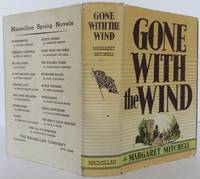
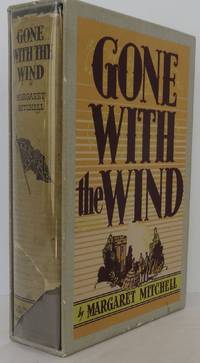
19362307131MacMillan 1936. first. hardcover. near fine/good. INSCRIBED first edition. Inscribed on the front free end paper by author. The first edition first printing numbered only 10000 copies and they bore an incorrect release date of May 1936. These inaccurate first printings and corrected second printing of 25000 copies were both actually released to the American public in June 1936. The true firsts with the May 1936 date also have the original publisher's price of $3.00.<br /> Book near fine corners and spine ends slightly rubbed little soiling on front paste-down and front free end paper and rear paste-down. Dust jacket good piece missing at bottom of spine and some smaller pieces missing tears to front and rear hinge of flaps and to spine wear top of front flap clipped but price is at bottom of flap. Housed in slipcase with front and back of dj printed on slipcase. MacMillan unknown
19881653591988. MITCHELL Joan. Smoke. Poems by Charles Hine. Illustrated with 16 sugarlift and spitbite aquatints by Joan Mitchell. Folio 351 x 230 mm. loose as issued laid-in to a cloth folding box. San Francisco: Limestone Press 1988. Comprised of 16 diptych etchings by Mitchell and accompanied by poems of Charles Hine this book is the result of a wonderful collaboration between the artist poet and publisher. Mitchell a celebrated American abstract expressionist created the etchings using sugarlift and spitbite aquatint technique. Signed on the colophon by Mitchell and Hine. One of 80 copies. hardcover
1960ABSTRACT013461Tiber Press New York. 1960. First editions. Folio. The Poems by John Ashbery illustrated by Joan Mitchell; Odes by Frank O'Hara illustrated by Michael Goldberg; Permanently by Kenneth Koch illustrated by Alfred Leslie; Salute by James Schuyler illustrated by Grace Hartigan. Each volume has four screenprints by the respective artist and is one of 200 copies numbered in the press and signed by both the author and the artist. Cloth-backed illustrated boards. All the poets and artists were based in New York and had known each other for several years. The publisher left the choice of partners to the individuals themselves.A fine set in the original acetate dustwrappers and cloth slipcase. Tiber Press, New York. hardcover
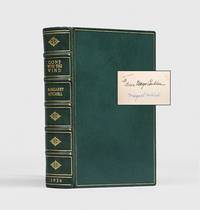
1936167754New York: Macmillan Company 1936. First edition first printing inscribed by author on the first blank. Mitchell's sole published novel met with immediate acclaim and record-breaking sales winning her the National Book Award and the Pulitzer Prize. The film adaptation starring Vivien Leigh and Clark Gable followed in 1939. Due to their enduring but not uncontroversial popularity both the novel and the film have become touchstones for subsequent representations and discussions of the Reconstruction era in American popular culture. The first printing is dated May rather than June on the copyright page. Octavo 210 x 139 mm. Finely bound by the Chelsea Bindery in dark green morocco spine lettered and decorated with centre tool raised bands single rule to boards gilt twin rule to turn-ins gilt floral endpapers gilt edges. A couple of leaves lightly spotted an excellent copy in a fine binding. hardcover
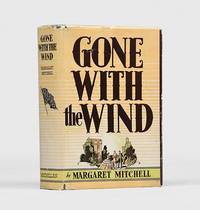
1936190222New York: Macmillan Company 1936. I've always had a weakness for lost causes once they're really lost First edition first printing in the first issue dust jacket. Mitchell's sole published novel saw immediate acclaim and record-breaking sales winning her the National Book Award and the Pulitzer Prize and transforming her life from one of obscurity to international stardom. The famous film adaptation followed in 1939. The first printing is dated May rather than June on the copyright page. Dust jackets in the first issue advertise this title on the rear panel in the second row of the second column. Octavo. Original grey cloth spine and front cover lettered and stamped with wind devices in dark blue top edge pale brown fore edge untrimmed. With dust jacket. Housed in custom green cloth slipcase enclosed in larger pale blue quarter morocco slipcase with green cloth sides. Bookplate with ownership inscription of one Nell D. Robedee on front free endpaper. Rubbing to edges; jacket bright splash mark on rear panel a few chips and punctures archival tape reinforcement on verso unclipped: a very good copy in like jacket. hardcover
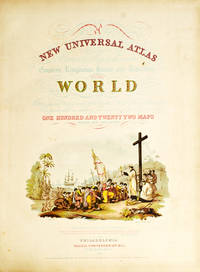
1852236680Philadelphia: Thomas Cowperthwait & Co 1852. Chromolithograph title hand-colored frontispiece 73 hand-colored lithographic maps. 1 vols. Folio. Half red morocco in period style original marbled boards with printed label on upper cover very clean. Chromolithograph title hand-colored frontispiece 73 hand-colored lithographic maps. 1 vols. Folio. Mitchell & Sons first published their NEW UNIVERSAL ATLAS in 1846 having acquired Tanner's NEW UNIVERSAL ATLAS in 1845 and printed it several times subsequently until 1850 when the firm sold the rights to Cowperthwait & Co. of Philadelphia who published it until 1856 continually adding to and editing the hand-colored maps. Despite the attribute "Universal" in the title the Atlas clearly concentrates on America with 43 maps of the continent and features a large double-page transcontinental map of the U.S; and this 1852 Cowperthwait edition is the first to show counties in California and New Mexico. Phillips 809; Ristow pp.311-13; Rumsey p.240 Thomas, Cowperthwait & Co unknown
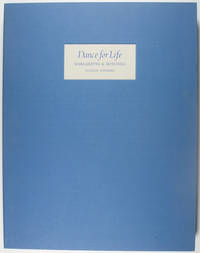
13884Oakland: Elysian Editions 1985. vg. Folio. 1/50. Photographic portfolio in blue linen box. 12 hand-pulled photogravures on Arches paper 15" x 19" signed by Margaretta Mitchell of women and children dancing in the style of Isadora Duncan at Berkeley's Temple of Wings. Duncan's influence is apparent in the flowing costume the classical open-air setting and the graceful expressive gestures. Dance teacher Sulgwynn Boynton Quitzow is the daughter of Duncan's childhood friend Florence Treadwell Boynton who shared Duncan's vision of life lived in harmony with nature and who dedicated the Temple of Wings in 1914 to the "democracy and freedom of women." Quitzow and her daughter have kept Duncan's legacy alive for two generations teaching dance at the Temple of Wings where Mitchell has been photographing for two decades. Letterpress text pages: title four pages of text including historical photographs and text on the friendship of Boyton and Duncan in Oakland plus a statement by Kevin Starr a poem by Stephen Mitchell and colophon. Images: Caryatid 1970 Sulgwynn Quitzow Spring Festival 1972 Weaving Garlands 1980 Come and Dance with Me 1970 Sisters 1977 Finale: Southern Roses 1981 Procession 1978 Victory 1978 Blessed Spirits 1978 Flinging the Veil 1978 Benediction 1977 Thanksgiving 1979. A timeless and lyrical set of b/w photographs. Fine condition. Mitchell is an author and curator in addition to being a photographer. Her work has been exhibited by museums throughout the United States and she has lectured both in the U.S. and Europe. The portfolio images were included in the 1985 Oakland Museum exhibit "Dance For Life: The Bay Area Legacy of Isadora Duncan. Elysian Editions unknown