ALLAIS Alphonse:Livre Rare Book
885 résultats
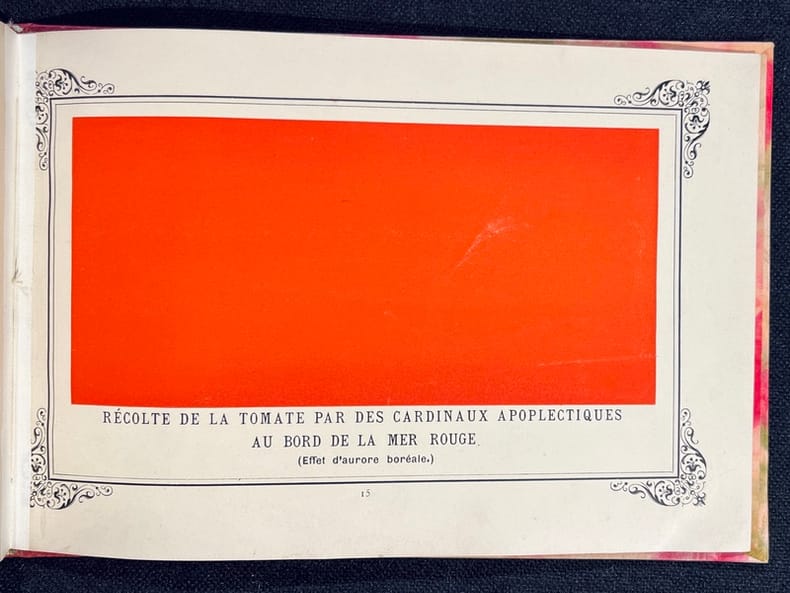
189721797Paris, Paul Ollendorff, sans date [avril 1897]. In-12 oblong de [28] pages incluant les couvertures. Demi-maroquin, dos muet, titre doré au premier plat.
194716078Paris: Imprimerie National 1947. First edition of Allais' groundbreaking work. Octavo 2 volumes original wrappers as issued. Inscribed by Maurice Allais on the title page of volume one. From the library of fellow Nobel Prize-winning economist Kenneth Arrow with his name in each volume. In near fine condition with light shelfwear minor mending to the first few pages of volume one. A nice association linking these two Nobel Prize winning-economists and giants of twentieth century economics. In Economie & Interet Maurice Allais introduced the first overlapping generations model later popularized by Paul Samuelson in 1958 introduced the golden rule of optimal growth later popularized by Edmund Phelps or described the transaction demand for money rule later found in William Baumol's work. In 1988 Maurice Allais became the first French citizen to receive the Nobel Prize in economics. He won it for his contribution to the understanding of market behavior and the efficient use of resources. Allais also showed that his insights could be applied to help set efficient prices for state-owned monopolies of which France had many. Allais's work paralleled and sometimes preceded similar work done by English-speaking economists Sir John Hicks and Paul Samuelson. He also proved a result in growth theory in 1947 that had been credited to Edmund Phelps. Allais did not get credit as early as his English counterparts because his work was in French. "Had Allais' earliest writings been in English" commented Paul Samuelson "a generation of economic theory would have taken a different course. Imprimerie National unknown books
194716078Paris: Imprimerie National 1947. First edition of Allais' groundbreaking work. Octavo 2 volumes original wrappers as issued. Inscribed by Maurice Allais on the title page of volume one. From the library of fellow Nobel Prize-winning economist Kenneth Arrow with his name in each volume. In near fine condition with light shelfwear minor mending to the first few pages of volume one. A nice association linking these two Nobel Prize winning-economists and giants of twentieth century economics. In Économie & Intérêt Maurice Allais introduced the first overlapping generations model later popularized by Paul Samuelson in 1958 introduced the golden rule of optimal growth later popularized by Edmund Phelps or described the transaction demand for money rule later found in William Baumol's work. In 1988 Maurice Allais became the first French citizen to receive the Nobel Prize in economics. He won it for his contribution to the understanding of market behavior and the efficient use of resources. Allais also showed that his insights could be applied to help set efficient prices for state-owned monopolies of which France had many. Allais’s work paralleled and sometimes preceded similar work done by English-speaking economists Sir John Hicks and Paul Samuelson. He also proved a result in growth theory in 1947 that had been credited to Edmund Phelps. Allais did not get credit as early as his English counterparts because his work was in French. “Had Allais’ earliest writings been in English†commented Paul Samuelson “a generation of economic theory would have taken a different course.†Imprimerie National unknown
1947126465Paris: Imprimerie Nationale 1947. On the "golden rule of accumulation"; in the original wrappers First edition. Economie et Intérêt is Allais's second major publication a massive work on capital and interest which has formed the basis for the so-called "golden rule of accumulation". This states that to maximise real income the optimum rate of interest should equal the growth rate of the economy. Allais did not publish in English until late in his career and as a result was slow to receive the international recognition that was his due. 2 vols octavo. Original printed paper wrappers. Shelf marks to lower spines and front covers hand written in ink. Spines creased with very minor loss to ends wrappers toned with the occasional chip. Vol. 1: wrapper partly separated along inner hinge at head of spine. Vol. 2: two ink marks to front pastedown and facing endpaper some creasing to lower corners of text block. Overall a very good set. unknown
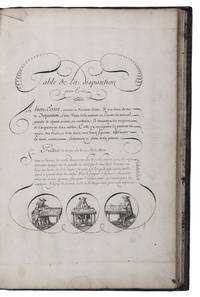
168016107Paris 1680. Folio. chez l'auteur Contemporary calf gold-tooled spine with title in second compartment marbled paste-downs. With large woodcut vignette of a flower basket on the letterpress title page a woodcut headpiece 2 woodcut decorative initials decorations built up from cast arabesque fleurons an engraved calligraphic title page and 22 of 23 engraved leaves with calligraphic writing samples and illustrations all engraved by Louis Senault. Lacking 1 engraved leaf without writing samples. 4 12 pp. plus 23 of 24 engr. ll. First edition of a very elaborate basic writing course and copy book minutely explaining the composition of the various calligraphic hands françoises bâtardes financieres as well as pen decorations and drawings. The engraved title-page reads "L'art d'écrire ou Le moyen d'exceler en cet art sans maistre" suggesting a break with the ancient tradition of learning by apprenticeship or under a school master. The writing examples include numerous exercises of single letters and many alphabets. It also includes illustrations of posture at the writing table the way to hold the pen and nibs with the angle of cutting and of the nib to the paper. Instructions are often added as well engraved in a small neat hand and attention is given to the lay-out of a manuscript. The course was designed by Jean Baptiste Allais dit le Beaulieu and engraved by Louis Senault who was a leading writing master in his own right and therefore ideally suited to engrave his colleague's writing book. At this date the pointed pen was replacing the broad-nibbed pen and one of the illustrations present here shows the nib of a pointed pen with the split tip spread open. Some copies were issued with only 4 letterpress leaves quire A and many copies are missing letterpress leaves or plates. With several calligraphic exercises by owners on the endpapers one with "Fait par moy René Brisson" another "fait par moy Bernard le Brot . a Paris" and a calligraphic title signed "Guerbois fils".Lacking the leaf on cutting the pen which included no writing samples but otherwise a good copy with one decorative flourish on the title-page shaved and some spots and stains. The binding is worn with some cut marks and scrapes and 3 small parts of the backstrip have been restored with gold-tooling. A rare attractive and detailed 17th-century French writing book in a contemporary binding.l Becker Practice of letters 91 without pi1-2 B1-2; Berlin Kat. 5117 lacking pi1-2 A1; Muller Cat. Calligr. 1 22 ll.; Marzoli 56; not in Ekström Coll. unknown
1806SAVLD129Paris: Detournelle & J. Charles 1806. Hardcover. Very Good. Elephant folio 500 x 340mm. Collation complete: 120 plates of French Architecture and plans including the Arc de Triomphe Place de la Concorde and other famous Academy projects. With woodcut vignette of cornucopia and muse on title-page table generale listing architectural designs and copper engraved title-page listing academy members. Three-quarter calf-backed over tree-design boards; scattered marginal foxing. Late 19th-century armorial bookplate of Hoffmann Josef Franz Maria Hoffmann on front pastedown. Hoffmann 1870-1956 was an influential Austrian architect who won the Rome Prize in 1895. Known for his contributions to the arts and crafts movement Hoffmann also designed rooms for the Paris Expositions Universelle in 1900. Second series of this magnificent collection of the 1806 Projets dArchitecture 120 fine French Academy competition plates by Allais Detournelle and Vaudoyer which followed a previous publication of Prieur c. 1787-1801 originally issued in 20 cahiers. As these Grands Prix engravings show Academy neoclassicists revived eclectic motifs from antiquity with their prominent use of obelisks pyramids and blank walls in their design. Egpytianizing forms were becoming part of the landscape of Parisian architecture and were used to achieve a solemn appearance; this style was fascinating to young Academics who still wanted to maintain regal tradition. Notably the Grands Prix drawings contain the Chapelle Sepulchrale by la Barre which demonstrated many of these Egyptian design elements including Pantheon-domes pyramids sphinxes and sarcophagi. This fine production of accomplished watercolors was primarily meant for the education of young Academics in this successful architectural style. Many plates include the scale given in French toises or metres. It continued the Collection des Prix 1787-1801 and was continued as the Grands Prix dArchitecture in 1818. <br/><br/>Second series of this magnificent collection of the 1806 Projets dArchitecture 120 fine French Academy competition plates by Allais Detournelle and Vaudoyer which followed a previous publication of Prieur c. 1787-1801 originally issued in 20 cahiers. As these Grands Prix engravings show Academy neoclassicists revived eclectic motifs from antiquity with their prominent use of obelisks pyramids and blank walls in their design. Egpytianizing forms were becoming part of the landscape of Parisian architecture and were used to achieve a solemn appearance; this style was fascinating to young Academics who still wanted to maintain regal tradition. Notably the Grands Prix drawings contain the Chapelle Sepulchrale by la Barre which demonstrated many of these Egyptian design elements including Pantheon-domes pyramids sphinxes and sarcophagi. This fine production of accomplished watercolors was primarily meant for the education of young Academics in this successful architectural style. Many plates include the scale given in French toises or metres. It continued the Collection des Prix 1787-1801 and was continued as the Grands Prix dArchitecture in 1818. Detournelle & J. Charles hardcover
1806SAVLD129Paris: Detournelle & J. Charles 1806. Hardcover. Very Good. Elephant folio 500 x 340mm. Collation complete: 120 plates of French Architecture and plans including the Arc de Triomphe Place de la Concorde and other famous Academy projects. With woodcut vignette of cornucopia and muse on title-page table generale listing architectural designs and copper engraved title-page listing academy members. Three-quarter calf-backed over tree-design boards; scattered marginal foxing. Late 19th-century armorial bookplate of Hoffmann Josef Franz Maria Hoffmann on front pastedown. Hoffmann 1870-1956 was an influential Austrian architect who won the Rome Prize in 1895. Known for his contributions to the arts and crafts movement Hoffmann also designed rooms for the Paris Expositions Universelle in 1900. Second series of this magnificent collection of the 1806 Projets dArchitecture 120 fine French Academy competition plates by Allais Detournelle and Vaudoyer which followed a previous publication of Prieur c. 1787-1801 originally issued in 20 cahiers. As these Grands Prix engravings show Academy neoclassicists revived eclectic motifs from antiquity with their prominent use of obelisks pyramids and blank walls in their design. Egpytianizing forms were becoming part of the landscape of Parisian architecture and were used to achieve a solemn appearance; this style was fascinating to young Academics who still wanted to maintain regal tradition. Notably the Grands Prix drawings contain the Chapelle Sepulchrale by la Barre which demonstrated many of these Egyptian design elements including Pantheon-domes pyramids sphinxes and sarcophagi. This fine production of accomplished watercolors was primarily meant for the education of young Academics in this successful architectural style. Many plates include the scale given in French toises or metres. It continued the Collection des Prix 1787-1801 and was continued as the Grands Prix dArchitecture in 1818. <br/><br/>Second series of this magnificent collection of the 1806 Projets dArchitecture 120 fine French Academy competition plates by Allais Detournelle and Vaudoyer which followed a previous publication of Prieur c. 1787-1801 originally issued in 20 cahiers. As these Grands Prix engravings show Academy neoclassicists revived eclectic motifs from antiquity with their prominent use of obelisks pyramids and blank walls in their design. Egpytianizing forms were becoming part of the landscape of Parisian architecture and were used to achieve a solemn appearance; this style was fascinating to young Academics who still wanted to maintain regal tradition. Notably the Grands Prix drawings contain the Chapelle Sepulchrale by la Barre which demonstrated many of these Egyptian design elements including Pantheon-domes pyramids sphinxes and sarcophagi. This fine production of accomplished watercolors was primarily meant for the education of young Academics in this successful architectural style. Many plates include the scale given in French toises or metres. It continued the Collection des Prix 1787-1801 and was continued as the Grands Prix dArchitecture in 1818. Detournelle & J. Charles hardcover books
2012102012HUP. New. 2012. Paperback. 1934510173 . FREE UPGRADE to Courier/Priority Shipping Upon Request - IN STOCK AND IMMEDIATELY AVAILABLE FOR SHIPMENT - Flawless copy brand new pristine never opened -- 120 pages; 181 illustrations most in color . -- with a bonus offer-- . HUP paperback
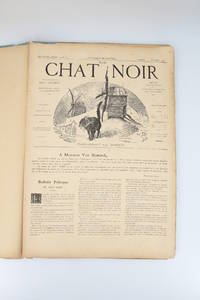
188381900Paris: Au cabaret Le Chat noir 1883. Fine. Au cabaret Le Chat noir Paris 1883 31 x 45 cm broché First edition of this complete 1883 year containing 50 issues in original wrappers under blue temporary covers. Spine split with angular lacks to the covers. Each issue consists of four pages. Texts by Emile Goudeau Alphonse Allais Jean Richepin and Paul Verlaine ""Le Chat noir"" ""Langueur"" ""La Princesse Bérénice"" ""Pantoum négligé"" ""Paysage"" ""Conseil falot"" ""L'Aube à l'envers"" ""Un pouacre"" ""Madrigal"" notably. Drawings by Willette Rodolphe Salis Henri de Sta Tiret-Bognet Henri Pille Caran d'Ache etc. Le Chat noir is a weekly magazine created by Rodolphe Salis and Emile Goudeau published from 1882 to 1897 with the aim of promoting the famous cabaret of the same name serving as its record. It published the texts recited during performances. It is moreover an important literary and artistic testimony of the end of the 19th century centered around bohemian life and the Parisian effervescence characteristic of it. Au cabaret Le Chat noir unknown
168088O9NF01U79OParis: chez l'auteur 1680. Disbound sewn on top. Folio. With large woodcut vignette of a flower basket on letterpress title-page a woodcut headpiece a woodcut decorative initials an engraved calligraphic title-page and 18 of 23 engraved leaves with calligraphic writing samples and illustrations all engraved by Louis Senault. First edition of a very elaborate basic writing course and copy book minutely explaining the composition of the various calligraphic hands franoises btardes financieres as well as pen decorations and drawings. The engraved title-page reads "L'art d'crire ou Le moyen d'exceler en cet art sans maistre" suggesting a break with the ancient tradition of learning by apprenticeship or under a school master and spells the author's name "Allais" while the letterpress title-page spells it "Alais". The course was designed by Jean Baptiste Allais dit le Beaulieu and engraved by Louis Senault who was a leading writing master in his own right and therefore ideally suited to engrave his colleague's writing book. Some copies were issued with 12 letterpress leaves and many copies are missing letterpress leaves or plates.Lacking five engraved leaves and browned along the edges.l Becker Practice of letters 91; Berlin Kat. 5117; Muller Cat. Calligr. 1; Marzoli 56. chez l'auteur, unknown
188381900Au cabaret Le Chat noir | Paris 1883 | 31 x 45 cm | broché
189342997Paris: Paul Ollendorff 1893. Fine. Paul Ollendorff Paris 1893 12 x 19 cm relié First edition for which there is no mention of large paper copies. Contemporary Bradel binding in half khaki cloth over marbled paper boards the spine with gilt floral motif a double gilt fillet at foot of spine red shagreen title label small marginal scratches one lower corner rubbed. A rare and precious autograph inscription from Alphonse Allais to his publisher Paul Ollendorff : "". le seul éditeur vraiment digne de ce nom hommage d'un auteur qui n'est pas non plus dans une potiche the only publisher really worthy of that name homage from an author who is also not on a sinecure"". Provenance : library of Paul Ollendorff. Paul Ollendorff hardcover
189263748Paris: Marpon & Flammarion 1892. Fine. Marpon & Flammarion Paris s. d. 1892 12 x 19 cm relié First edition for which there is no mention of leading copies. Binding in half saffron percaline with corners smooth back adorned with a gilded floret double gold thread tail piece of brown shagreen that includes scratches marbled paper plates preserved covers Contemporary binding signed by Pierson. Rare and precious autograph signed by Alphonse Allais to Léon Roger-Milès. Marpon & Flammarion unknown
26578Paris, non daté [1901-1902.]. Fort in-4, reliure éditeur demi-chagrin bordeaux, non paginé. (10 pages environ par revue du N° 1 à 29 et ensuite pour la Nouvelle série 20 pp)
Paris, non daté [1901-1902.]. Fort in-4, reliure éditeur demi-chagrin bordeaux, non paginé. (10 pages environ par revue du N° 1 à 29 et ensuite pour la Nouvelle série 20 pp) Cet album contient le N° 1 jusqu'au n° 29 (manque le n° 28) et ensuite les N° de La Nouvelle série du N° 30 au N° 40. Soit 39 numéros. Ecrivains ayant publié dans la revue : Alphonse Allais, (N°10 : Une bonne maison. N° Macédoine. N°17 : Une innovation à laquelle tout le monde applaudira. N° 21 : La malheureuse prononciation. N° 27 : La Science et la Religion - enfin - marchent main dans la main. Etc.)- Jean Lorrain, Tristan Bernard, Maurice Donnay, Jules Clarétie, Félix Galipaux, Charles Quinel, Marcel Prévost, Tené Maizeroy, Xanroff, G. Courteline, Yvette Guilbert, Henri Lavedan, Alfred Capus, etc, etc...La majorité des photographies n'est pas attribuée, mais pour les grandes compositions photographiques : E. Lagrange Notes : Revue paraissant à la suite de La Grande Vie en 1901. Image et texte monochrome, noir, brun, violet ou bleu. Gérant du n° 1: Henri Chevallier. Gérant des autres numéros : E. Le Barbier. Grandes compositions photographiques attribuées à A. [sic] Lagrange, fréquemment cité comme le photographe dans les romans parus chez Nilsson/Per Lamm (sous le nom « E. Lagrange »). A partir du N° 30 la couverture est illustrée en couleurs, ce numéro est consacré à La Vie au Cirque (18 pages). Très nombreuses publicités dans chaque revue, planches dans et hors-texte et certaines sur double-page en couleurs (Morin Au bois de Boulogne). Un seul numéro ne possède pas sa première de couverture, n° 31 (Les Boulevards Parisiens). Bel état intérieur mais fente sur un mors de la reliure.
50975Paris.1872-1877.21 vols (avec supplément) in-8 en demi-percaline rouge. (Saffroy III 34245).Bel ensemble.
23136S.l.,[1889]. In-8, 4 pp. (quelques taches, manque le dernier f.).
189342997Paul Ollendorff | Paris 1893 | 12 x 19 cm | relié
1971298052New York: Albondocani Press 1971. Softcover. Fine. First edition. Stapled wrappers. Fine. Prospectus for the edition laid in. Copy number 8 of 300 numbered copies Signed by Gorey. Albondocani Press unknown
244230Paris, Éditions politiques, économiques et sociales, Librairie de Médicis, 1946 in-12, 131 pp., un f. n. ch., typographie en petit corps, broché.
197965704London: D. Reidel Publishing Co 1979. Paperback Octavo. Paperback. Good. wraps 714 pp inscribed by Allais on front endpaper stains on wraps tear on cover's bottom corners <br /> <br /> Standard shipping no tracking / Priority with tracking / Custom quote for large or heavy orders. D. Reidel Publishing Co paperback
1947A114937Paris: Editions Fleche 1947. 1st edition. Near Fine. large octavo. chipped dust jacket 109pp. col. & b/w pls. text ills. Classic text. Very scarce especially in dust jacket Editions Fleche unknown
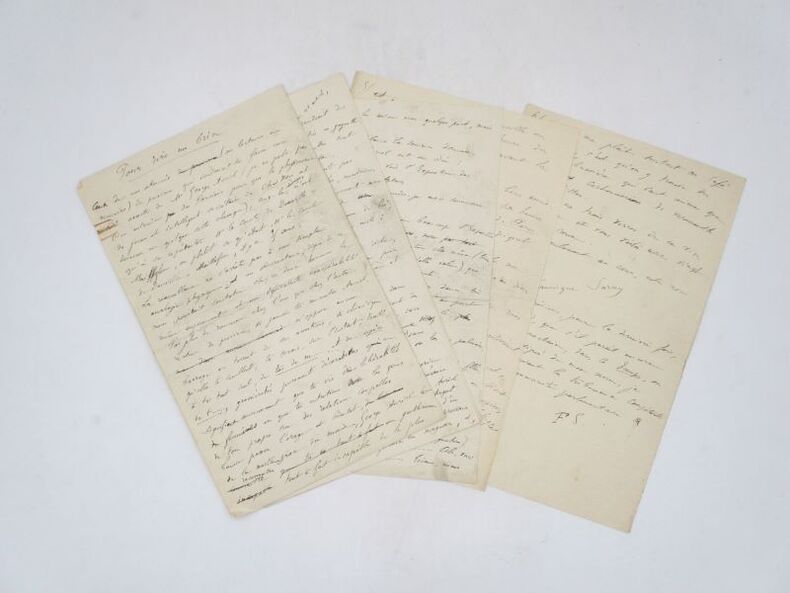
189588099Honfleur: s. n. 1895. Fine. s. n. Honfleur s.d. ca 1895 14 x 22 cm une page recto verso Autograph letter signed addressed to a journalist friend at Figaro illustré 28 lines in black ink. Fold mark inherent to envelope insertion a lack to upper corner of the letter without any damage to the text. Alphonse Allais must do a favor for his friend: ""Un peu de patience mon cher Abel un peu de patience. Sitôt rentré à Paris ma première démarche sera pour ton parapluie que je choisirai en soir gorge-pigeon et manche d'argent."" A little patience my dear Abel a little patience. As soon as I return to Paris my first errand will be for your umbrella which I will choose in pigeon-throat evening silk with a silver handle.; he therefore also allows himself to solicit the kindness of his correspondent: ""Et bien envoie-moi le n° du Figaro illustré d'il y a un mois ou deux où il y avait des choses de Toulouse-Lautrec."" Well then send me the issue of Figaro illustré from a month or two ago where there were things by Toulouse-Lautrec. He concludes his letter with a sententious: ""Donne-moi ta main loyale que je la serre. Ton Alphonse Allais. Bonjour aux amis."" Give me your loyal hand so I may shake it. Your Alphonse Allais. Greetings to friends. s. n. unknown
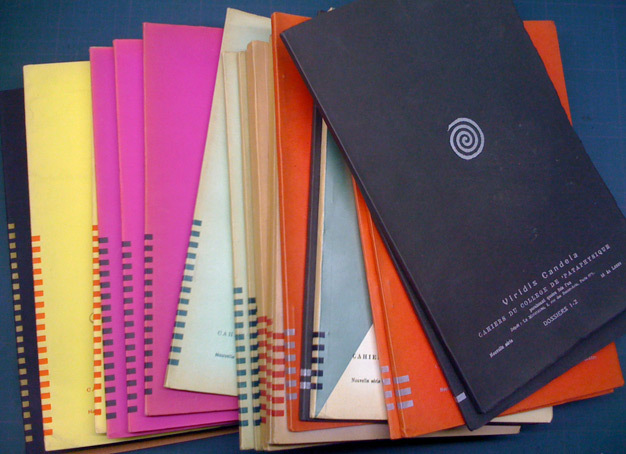
1957646Paris 1957-1965. 28 numéros en 23 volumes brochés ou agrafés (240 X 160 mm) sous couvertures de couleur décorées : 1-2 : Le tableau, guignolade de Ionesco. Défilé des enfants prodiges, organisé par Bouche, 3 : Le temps dans l'art et autres inédits de Jarry, 4 : Adam de Marvier, 5 : Olalla de Stevenson traduit par Jarry, 6 : Les bâtisseurs d'empire de Vian, 7 : Election de sa magnificence le baron Mollet, 8 : Etre et vivre de Jarry, 9: Traité des queues de Lichtenberg, 10-11 : Cosmorama de Dubuffet, 12 : Hommage à Vian (avec des inedits), 13 : Gyroscopie de la gidouille, dessins de Dumarcay, 14 : La trichonomase de de Luc, 15 : Albert Aurier et Irènée, 16 : Centenaire de la découverte du Pôle Nord par le capitaine Hatteras, 17 : Exercices de littérature potentielle, 18-19 : Les goûters des généraux de Vian, 20 : Sur les oeuvres de Queneau, 21 : Inédits de Torma, 22-24 : Belles lettres de Jarry et Torma, 25 : Institutum Pataphysicum Mediolanense, 26 : Album de l'antlium ou Pompe à merdre, inédits de Jarry, 27 : La dragonne, projet de roman de Jarry, 28 : Géographie et Histoire du Collège de Pataphysique. Chaque fascicule est illustré de documents et reproductions.
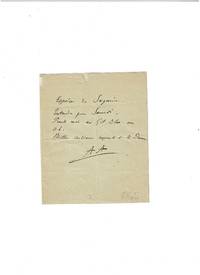
1880756851880. Fine. s. d. circa 1880 11.60 x 14.20 cm un billet Autograph letter signed by Alphonse Allais mounted on fine cardboard. Traces of transverse folds small lacks and marginal tears. ""Espèce de sagouin. / Entendu pour samedi. / Prends moi au Gil Blas vers 6h / Mille cordiaux respects à ta dame. A.A."" ""You rascal. / Agreed for Saturday. / Pick me up at Gil Blas around 6pm / A thousand cordial respects to your lady. A.A."" unknown