643 résultats
1968044907Ediciones ERA 1968. Slipcased. Near Fine. All contents COMPLETE fine with very good clam shell case in good to very good- slipcase. 1. "Marcel Duchamp o el Castello de la Pureza" - the first appearance of Octavio Paz's essay on the Large Glass 62pp cloth 8vo 4 b&w 8 tipped color plates 2. "Marcel Duchamp - Textos" 69pp paperback; 8vo illustrated in b&w 3. "El Gran Vidrio" - a color transparency of "The Bride Stripped Bare by Her Bachelors Even" with a printed cardboard enclosure 4. Color reproductions of each of the three versions of "Nude Descending a Staircase" - printed on heavy stock 5. Nine postcard sized reproductions of various readymades - again on heavy stock in printed envelope 6. "Album Fotografico / Texto Autografo / Nota Biografica" 10pp wrappers 8vo and one unnumbered item a white cardboard stand-up bust of Duchamp printed in blue ink. Ediciones ERA unknown
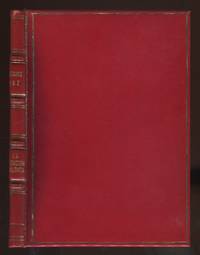
1958535424México D.F. Mexico City: Fondo de Cultura Economica 1958. Hardcover. Near Fine. First edition limited issue. 12mo. Bound with wrappers into red leather gilt with ribbon bookmark. Text in Spanish. Name seal "chop mark" measuring approximately 1" square on a front blank wrappers a trifle soiled and binding very lightly worn with a couple of light scuffs on the lower board near fine. One of 175 numbered copies Signed by Paz of 200 total. A small limitation of a book by the future Nobel laureate; the trade edition was published in 2000 copies. Fondo de Cultura Economica hardcover
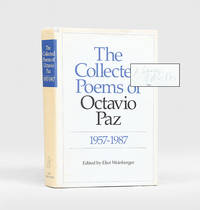
1987187822New York: New Directions 1987. First edition inscribed by the author on the half-title "A Sandy Octavio Paz." This book belonged to JD "Sandy" McClatchy an American poet translator adjunct professor at Yale university and editor of the Yale Review from 1991 until his death in 2018. McClatchy chose four poems by Octavio Paz to represent Mexico in the Vintage Book of Contemporary World Poetry which he edited in 1996. These were "I speak of the City" "Small Variation" "Along Galeana Street" and "The Key of Water" the latter two appearing with ticks next to the titles among other neat annotations throughout the book by McClatchy. Loosely inserted is a chapter on Paz reprinted from the Hudson Review autumn 1974 issue. Octavo. Original grey cloth spine lettered in gilt on blue ground. With dust jacket. Extremities lightly bumped; jacket unclipped toned a few chips and short closed tears to edges puncture to rear fold: a near-fine copy in a very good jacket. hardcover
19891640761989. GERZSO Gunther. The Besieged/El Sitiado. By Octavio Paz translated by Eliot Weinberger. With an etching by Gunther Gerzso. 4to. cloth covered board in cloth covered slipcase. San Francisco: Limestone Press 1989. Gunther Gerzso has created a stunning frontispiece color etching for Octavio Paz's poem. Printed in letterpress Paz's poem is presented in both English and Spanish. The English is printed in black while the Spanish is printed in scarlet red creating a very dramatic visual effect since the two languages are each printed on the same page. Signed on the colophon by Gerzo and Paz. One of an edition of 200. hardcover
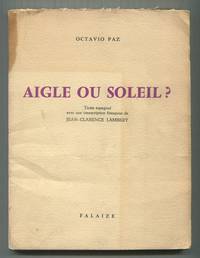
1957535916Paris: Falaize 1957. Softcover. Very Good. First edition. Translated by Jean-Clarence Lambert. Illustrated by Bona. Octavo. 97pp. Parallel Spanish and French text. Denise Levertov's embossed owner label inside front wrap. Wrappers modestly soiled and irregularly toned with a faint horizontal crease and a stain at the crown that only lightly affects the first and last leaves top corner a bit creased throughout just about very good. Inscribed to poet Denise Levertov on the half-title: "A Denise Levertov con la properda estimación poetica de Octavio Paz" "To Denise Levertov with the proper poetic appreciation of Octavio Paz". An unnumbered copy of a publication with a limitation of only 35 copies. A very nice association. Falaize unknown
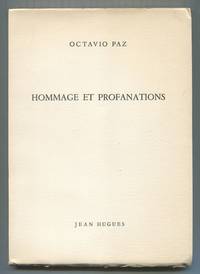
1963535909Paris: Jean Hugues 1963. Softcover. Fine/Very Good. First edition. Translated by Carmen Figueroa. Octavo. Parallel Spanish and French translations. Tiny inked note on front blank tiny bit of wear at the corners else fine in printed French-folded wrappers and very good somewhat edgeworn glassine dust jacket with a tiny cover stain and Levertov's embossed owner label on the upper flap. Inscribed to Levertov: "A Denise Levertov Cordialmente Octavio Paz. Delhi a 10 de octubre de 1963." Number 168 of 300 copies of 325 total. A nice association between two major poets. Jean Hugues unknown
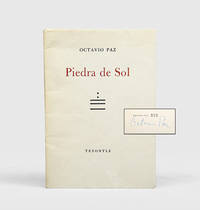
1957191420Mexico: Tezontle 1957. First appearance of the Mexican Nobel Prize winner's early masterpiece Signed limited edition number 205 of 300 copies signed by the author. Written as a single 584-line sentence the poem takes its structure from the 584-day cycle of Venus in Aztec calendrical systems. Its closing lines return to the opening creating a circular form centred on time and memory. Octavo. Head- and tailpiece. Original grey wrappers front cover lettered in red and black. Housed in custom folding paper chemise. Mexican bookseller's ticket to final blank. Minor wear to head of spine light rubbing. A very good copy. unknown
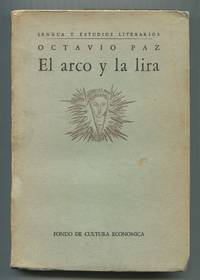
1956535450México D.F.: Fondo de Cultura Economica 1956. Softcover. Very Good. First edition. Tall octavo. 287pp. French-folded wrappers with moderate wear and soil and a toned spine upper gutter neatly strengthened very good. Interior is fine. Warmly Inscribed to noted Spanish philologist librarian and linguist Tomás Navarro on the half-title: "A Tomás Navarro cuyo libro sobre Métrica lamento no haber leído a tiempo con profunda estimación. Octavio Paz" "To Tomás Navarro whose book on Metrics I regret not having read in time with deep appreciation. Octavio Paz". A lovely association. Lengua y Estudios Literarios. With an errata slip laid in. Scarce Inscribed. Fondo de Cultura Economica unknown
1994017972New York: Limited Editions Club 1994. First Edition. Hardcover. Fine in a Very Good folding box with dampstaining. Balthus. Nearly square large folio 22" x 24" bound with a tan goatskin spine and linen boards. Illustrated with three large multicolor woodcuts by Balthus printed on handmade Japanese paper and tipped in. This poem presented in Spanish French and English is dedicated to the artist. Copy #5 of 300 numbered copies SIGNED by the artist and by the Nobel Laureate author. <br/><br/> Limited Editions Club hardcover
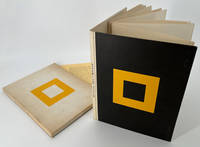
1967132640Mexico City: Joaquín Mortiz 1967. First and limited edition number 405 of 579 copies of one of Paz's major works experimental in both form and content which when unfolded "in a certain sense. produces text by transforming the space itself into a text" Sanchez. It was composed while Paz was serving in India as Mexican ambassador; his time there is important in relation to his entire concept of the piece: "The physical presentation of the poem reinforces the Oriental concept of fusion of fragments or opposites both philosophically and graphically in endless succession not impeded by punctuation as in the theory of reincarnation' Kushigian pp. 98-99. At the opening of the poem Paz includes a quote from the Buddhist Hevajra Tantra. "'Blanco' has been described as "an intensely erotic poem as the Tantric Buddhist epigraph together with one from Mallarmé suggests. In it the outside world is reduced to the figure of a poet in a room listening to music playing and the sounds of a woman close by him: the act of writing and the act of love-making become one and the same" Caistor. "'Blanco' is an intricately designed poem that embodies many postmodern traits with its typography emphasizing the poem's visual aspects. The poem begins with the words spread out in three columns across the page. The text then forms a column that proceeds down the page with the occasional staggering of lines. The single column then splits into a bold font on the left accompanied by an italicized font on the right. As the poem progresses this pattern repeats four times with the bold and italicized verses gradually drifting toward and ultimately pressing against one another" Waring p. 27. The 'aviso al lector' explains the conception of the book as a presentation of 'el movimiento de la realidad'. A second edition in this format was issued in 1972; of this first only two copies are cited by Library Hub among British and Irish and institutional libraries Cambridge Oxford; WorldCat adds around ninety copies worldwide a generous portion of the print run of 579 copies. In commerce "Blanco" is decidedly uncommon. Square octavo. Letterpress printed in red and black on a single sheet folded concertina-style unfolding to 5 metres. Original leporello binding white cloth spine lettered in black covers with yellow hollow square motif superimposed on a black background front and white background back perhaps representing the hollow square of the Tibetan Buddhist mandala. With the original slipcase. Small private stamp "VHL" to slipcase title and half-title. Peripheral toning to slipcase which has short splits to head spine of leporello lightly toned same to back cover light abrading to front cover. A very good copy with the original "aviso al lector" loosely inserted. Caistor Nick Octavio Paz Reaktion Books 2007; Kushigan Julia A. "Flowing Rivers and Contiguous Shores: The Poetics of Paz" in Harold Bloom ed. Modern Critical Views: Octavio Paz Chelsea House 2002; Sanchez Alberto Ruy An Introduction to Octavio Paz Mosaic Press 2015; Waring Taylor D. Broken Mirror: A Look into Octavio Paz's "Blanco" Oshkosh Scholar 2013. hardcover
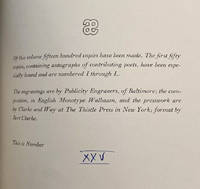
1959022019New York: Andre Emmerich Gallery 1959. First Edition. Hardcover. Minor wear to spine tips and corners. Near Fine. Bound in original green leather-backed marbled boards. A collection of poems paired with photographs of Pre-Columbian artifacts edited by Dore Ashton with photographs by Lee Boltin. Of a total of 1500 copies printed this is copy XXV of only 50 SIGNED by each of the 15 contributing poets on separate blank pages bound at the beginning of the book. The poets are Barbara Howes James Wright Louise Bogan Theodore Roethke John Malcolm Brinnin I. A. Richards William Carlos Williams W. S. Merwin Stanley Kunitz C. Day Lewis St.-John Perse William Jay Smith Richard Wilbur Jean Garrigue and Octavio Paz. A superb collection of autographs of some of the most important modern poets. Laid in is a small INSCRIBED card from the gallery owner and his wife stating "Fifteen poets join us in wishing you all the best of the season." <br/><br/> Andre Emmerich Gallery hardcover
1967579Mexico City: Joaquín Mortiz 1967. First Limited Edition. Very good. 8vo. 9 x 6 3/4 in. 229 x 173 mm; printed in black and red Bodoni type on Antique RLCH paper joined to create a continuous 'concertina' of 32 pages joined every 4 and printed on one side only. Leporello binding with printed boards and cream cloth spine title in black slipcase. The binding is faintly thumbed and slipcase has a closed tear to the base and some rubbing at corners but overall this delicate book is in wonderful condition. One of the 29 lettered and privately circulated copies as stated on the limitation page from a run of 529 500 copies numbered. <br /> EXTRAS: "Aviso al lector" sheet printed on yellow paper. A scarce example of one of the 29 privately circulated lettered copies. The entire run consisted of 529 copies 500 of these being the numbered ones available to purchase. <br /> <br /> Octavio Paz wrote this poem in New Delhi between July and September of 1966 while he was serving as Mexico's Ambassador to India. <br /> <br /> As outlined in the "Aviso al lector" separately printed and included in this copy of the work «Octavio Paz conceives the long poem as a different form and governed by its own logic not as an expansion or extension of the short poem.» He begins experimenting with "poetry of movement signs in rotation" culminating in Blanco. «Appearance disappearance and reappearance of certain themes presences words obsessions the shape of Blanco is that of the spiral. There are two main currents-word and eroticism-that come together separate and come together again. The text allows multiple readings: it is a cluster of meanings a poem that contains several poems. . The same poetic requirement governs the visual conception of the page and explains the particularities of this edition. Typesetting is one aspect of verbal composition. On the one hand it is a kind of punctuation not orthographic but rhythmic; on the other it is the space where the written sign is displayed analogous to the time of elocution.»<br /> <br /> Octavio Paz Lozano 1914 -1998 was a Mexican poet and diplomat. Politically Paz was a social democrat who became increasingly supportive of liberal ideas without ever renouncing his initial leftist and romantic views. Although he broke with the early Marxist/communist beliefs Paz continued to consider himself a man of the left the democratic "liberal" left not the dogmatic and illiberal one. He was also a promoter of incremental change not revolution. In 1968 he resigned from the diplomatic service in protest of the Mexican government's massacre of student demonstrators in Tlatelolco. While participating in the political and diplomatic life of his country Paz was also a prolific author and poet publishing scores of works during his lifetime many of which have been translated into other languages. For his body of work he was awarded the 1990 Nobel Prize for Literature as well as the 1977 Jerusalem Prize the 1981 Miguel de Cervantes Prize the 1982 Neustadt International Prize for Literature. Joaquín Mortiz unknown