6 956 résultats
18403228Paris Au Bureau du Journal 1840 Première édition. 24 planches de scènes de chasse, chacune avec légendes en français, suivies de six feuillets de fanfares (texte et musique imprimés sur un seul côté du feuillet). Un article rare, aucun à vendre et seulement occasionnellement aux enchères. Des rousseurs modérées partout. Pliage à l'avant de la page de garde libre. Dans une reliure en bougran de l'époque avec un léger frottement à la reliure.
18804698North Africa: N/P 1880. A group of young children sit upon steps on the edge of the communal clothes washing area. North Africa - probably Morrocco. An adult in a white robe watches the children in the foreground with a young child in similar robe facing them. Palm trees and dust road in the background. The children seem too young to be in school. An attractive albumen image. Slightly faded but overall in good condition. H265mm x 210mm. On green backing card 430 x 350 mm. A little darkened and bumped but still in good state. . Un groupe de jeunes enfants est assis sur des marches au bord de l'aire commune de lavage des vêtements. Afrique du Nord - probablement Maroc. Un adulte vêtu d'une robe blanche surveille les enfants au premier plan tandis qu'un jeune enfant vêtu d'une robe similaire leur fait face. Palmiers et route poussiéreuse à l'arrière-plan. Les enfants semblent trop jeunes pour être à l'école. Une belle image à l'albumine. Légèrement décolorée mais dans l'ensemble en bon état. H265mm x 210mm. Sur carte verte 430 x 350 mm. Un peu assombri et bosselé mais toujours en bon état. N/P hardcover
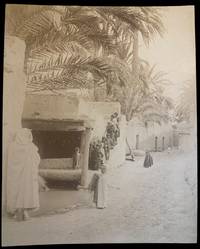
18804698North Africa N/P 1880 Un groupe de jeunes enfants est assis sur des marches au bord de l'aire commune de lavage des vêtements. Afrique du Nord - probablement Maroc. Un adulte vêtu d'une robe blanche surveille les enfants au premier plan, tandis qu'un jeune enfant vêtu d'une robe similaire leur fait face. Palmiers et route poussiéreuse à l'arrière-plan. Les enfants semblent trop jeunes pour être à l'école. Une belle image à l'albumine. Légèrement décolorée, mais dans l'ensemble en bon état. H265mm x 210mm. Sur carte verte 430 x 350 mm. Un peu assombri et bosselé mais toujours en bon état.
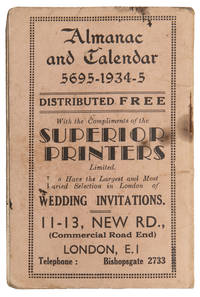
106336London Superior Printers 1934. . Pocket journal 113 x 77 mm 20 ll. original printed wrappers edges rubbed.<br /> Pocket journal for the Jewish calendar year of 5695 Gregorian 1934-5.<br />Includes a Hebrew/Yiddish calendar with all the Jewish holidays a Gregorian calendar with some place for notes and a single journal entry made in old blue ink and many ads in English and Yiddish.<br /> London, Superior Printers, 1934. unknown
18315448Paris: ve Demoraine et Boucquin 1831. First edition. A rare item. A miniature book to be kept with the owner at all times! As well as the meteorological information it also held information about the sun and moon the births and alliances of the princes and princesses of Europe and the final section was a selection of anecdotes and scandal from the previous years. Dark red paper covers. A little darkened but without significant marking or wear. The book is oblong to be read like a flip chart. Unpaginated but 60 pages. Internally in good clean condition with just a touch of darkening. Attractive letter press printing. 8.5cm x 5.5cm. Conforms to WorldCat / OCLC: 473081525. . Première édition. Un ouvrage rare. Un livre miniature à garder toujours sur soi ! Outre les informations météorologiques il contient également des informations sur le soleil et la lune les naissances et les alliances des princes et princesses d'Europe et la dernière partie était une sélection d'anecdotes et de scandales des années précédentes. Couverture en papier rouge foncé. Légèrement foncée mais sans marques ni usure significatives. Le livre est oblong à lire comme un tableau à feuilles mobiles. Non paginé mais 60 pages. Intérieur en bon état propre avec juste une légère coloration. Jolie impression typographique. 85 cm x 55 cm. Conforme à WorldCat / OCLC : 473081525. ve Demoraine et Boucquin unknown
18315448Paris ve Demoraine et Boucquin 1831 Première édition. Un ouvrage rare. Un livre miniature à garder toujours sur soi ! Outre les informations météorologiques, il contient également des informations sur le soleil et la lune, les naissances et les alliances des princes et princesses d'Europe, et la dernière partie était une sélection d'anecdotes et de scandales des années précédentes.. Couverture en papier rouge foncé. Légèrement foncée, mais sans marques ni usure significatives. Le livre est oblong, à lire comme un tableau à feuilles mobiles. Non paginé, mais 60 pages. Intérieur en bon état, propre, avec juste une légère coloration. Jolie impression typographique. 8,5 cm x 5,5 cm. Conforme à WorldCat / OCLC : 473081525.
18905521Paris: A. Capendu Editeur C 1890. Soft covers with eight pages. Colour lithographs to front and rear covers. Black and white to the inside covers. Inside are four full page colour lithographs and four black and white printed pages of alphabets and learning aids. Stapled. Overall in good clean condition. The top and bottom of the spine has been slightly split and now repaired with archival tape. Very slight offsetting of black type in parts. Overall in very good condition. printed by Emrik & Binger Haarlem. Although undated Capendu's activity in this juvenile line generally dated from the early 1880s into the 1890s. 22cm x 19cm. Not found in WorldCat / OCLC or the BnF. No copies online at the time of cataloguing. . Couverture souple de huit pages. Lithographies en couleur sur les couvertures avant et arrière. Noir et blanc à l'intérieur des couvertures. À l'intérieur quatre lithographies en couleur pleine page et quatre pages imprimées en noir et blanc contenant des alphabets et des aides à l'apprentissage. Agrafé. Dans l'ensemble en bon état. Le haut et le bas du dos ont été légèrement déchirés mais ont été réparés avec du ruban adhésif d'archivage. Très léger décalage des caractères noirs à certains endroits. Dans l'ensemble en très bon état. Imprimé par Emrik & Binger Haarlem. Bien que non daté l'activité de Capendu dans ce domaine destiné aux jeunes remonte généralement du début des années 1880 aux années 1890. 22 cm x 19 cm. Introuvable dans WorldCat / OCLC ou la BnF. Aucun exemplaire disponible en ligne au moment du catalogage. A. Capendu Editeur paperback
18905521Paris A. Capendu Editeur C 1890 Couverture souple de huit pages. Lithographies en couleur sur les couvertures avant et arrière. Noir et blanc à l'intérieur des couvertures. À l'intérieur, quatre lithographies en couleur pleine page et quatre pages imprimées en noir et blanc contenant des alphabets et des aides à l'apprentissage. Agrafé. Dans l'ensemble, en bon état. Le haut et le bas du dos ont été légèrement déchirés, mais ont été réparés avec du ruban adhésif d'archivage. Très léger décalage des caractères noirs à certains endroits. Dans l'ensemble, en très bon état. Imprimé par Emrik & Binger, Haarlem. Bien que non daté, l'activité de Capendu dans ce domaine destiné aux jeunes remonte généralement du début des années 1880 aux années 1890. 22 cm x 19 cm. Introuvable dans WorldCat / OCLC ou la BnF. Aucun exemplaire disponible en ligne au moment du catalogage.
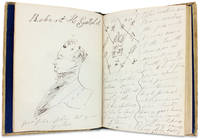
3728502<p>New York 1837. Small octavo. 1 engraved title 2 91 1 1 10pp. Album with manuscript additions and two hand-drawn star charts and 13 pen and ink outline portraits. Quarter green cloth with original pale yellow silk-patterned paper covered boards; dark blue endpapers; all edges gilt. Album with engraved title leaf with vignette illustration. Album re-backed with green cloth; new cloth reinforced hinges; rubbing to edges of boards; scattered foxing; very good.</p> <p>Unusual handwritten American astrological album dated 1837 containing detailed horoscope readings hand-drawn star charts predictive portrait drawings dream interpretations and lottery number advice. </p> <p>The manuscript records two full horoscope readings: an extensive analysis of Robert H. Gould not yet twenty-one and a separate “Lady’s Horoscope†for a woman apparently born in 1810. Each section is accompanied by a hand-drawn astrological chart mapping the celestial signs governing the subject’s birth with the individuals consistently described as “natives.â€</p> <p>Gould’s horoscope is notably elaborate forecasting marriage career prospects travel to the southern United States and Mexico “In 7 years you will be in the South you will be Rich in Mexico and in the Southern States†longevity and specific advice on favorable days of action. It also provides recommended lottery numbers and predictions concerning children prosperity and personal relationships. The album includes pen-and-ink portraits depicting Gould at age twenty-one figures said to influence his future and a child identified as one of his sons.</p> <p>The lady’s horoscope offers comparable predictions including marriage faithfulness personal fortune bodily injury and death and is illustrated with drawings of her future husband or sincere friend.</p> <p>Written with confident authority the compiler explicitly distinguishes his interpretations from contemporary printed dream books suggesting familiarity with popular astrological and oneiric literature of the period. An exceptionally rare survival documenting antebellum astrology and popular belief in the United States.</p> <p>Note. 1. Album New York: Published by Solomon King 1830 unrecorded in OCLC. zxc</p> unknown
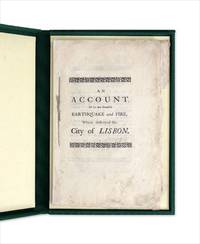
3731167<p>London: Printed. Boston; New-England Re-printed and sold by Green & Russell at their Printing-Office near the Custom-House and next to the Writing School in Queen-Street. MDCCLVI. 1756. half-title 23 1 pages. 8vo. “The Second Edition.†In fact the First American Edition preceded by printings in London and York both dated 1755. Expertly washed conserved and stitching renewed; scattered staining. A very good copy housed In a custom cloth clamshell box with a gilt-stamped leather spine label.</p> <p>Partly-untrimmed. First American edition of this eyewitness account of this terrible disaster on All Saints Day November 1 1755 that shook perspective views in the Old World and the New. The Lisbon Earthquake alarmed New England clergy and perplexed philosophers in France. For the former some ministers interpreted the event to show God expressing his angry will. For the latter some thinkers saw the disaster as evidence that no such will existed.</p> <p>The Lisbon Earthquake is estimated to have been 8.5–9.0 magnitude on the Richter scale and lt triggered a tsunami. The devastation was enormous:</p> <p>"“Not long after…a general Panic was raised from a Crowd of People’s running from the Waterside all crying out the Sea was pouring in and would certainly overwhelm the City. This new Alarm created such Horrors in the agitated Minds of the Populace that vast Numbers of them ran screaming into the ruinated City again where a fresh Shock of the Earthquake immediately following many of them were buried in the Ruins of falling Houses. This Alarm was however not entirely without Foundation. For the Water of the River rose at once above twenty Feet perpendicular and subsided again to its natural Pitch in less than a Minute’s time.â€"</p> <p>From the Rev. Thomas Prince to John Winthrop in to Voltaire to Rousseau —the intellectual luminaries of the world weighed in. Years later Goethe would write in his autobiography of his memory as a six-year old of the event: “Perhaps the Demon of Fear had never so speedily and powerfully diffused his terror over the earth.â€</p> <p>The earthquake was the “subject of anxious Church sermons across the Atlantic in New England. In fact an earthquake had also occurred in Massachusetts on the 18th of November 1755 centered east of Cape Ann. In Boston most of the damage occurred where buildings had been constructed over landfill near the wharves. John Adams who was at Braintree wrote in his diary: ‘The house seemed to rock and reel and crack as if it would fall in ruins…’†Kenneth Maxwell</p> <p>The Lisbon and Boston earthquakes became in tandem seismic cultural events as ministers philosophers and scientists contextualized one to the other. Some ministers compared the heavy damage of the Lisbon quake to the minimal damage from Boston’s and drew conclusions of moral American exceptionalism. Others used the Lisbon earthquake’s date of All Saint’s Day to suggest that God was punishing the Catholics. At Harvard professor and astronomer-scientist John Winthrop blamed volcanoes. </p> <p>By and large An Account of the Late Dreadful Earthquake and Fire… is written from neither a secular nor philosophical viewpoint. Rather it is a richly-detailed moment by moment account. It is a linear timeline written by an eyewitness who was literally on the shaky ground —when and where the dramatic event transpired.</p> <p>Charles Edwin Clark’s “Science Reason and an Angry God: The Literature of an Earthquake†in The New England Quarterly describes this narrow field of literature of the New England earthquake of 1755 —from the sermons to accounts such as the present example— as documenting a “science struggling to be born; a vigorous aggressive Protestantism on its way to becoming humanized and rationalized; a continuing consciousness of the uniqueness and special mission of America; and a scholarly approach in the best Puritan tradition to the problems of this world and the next.†Clark also provides an excellent and granular timeline of Boston’s printing and publication history concerning these two earthquakes.</p> <p>The verso of the half-title has an advertisement for the Boston edition of the Indian captivity of William and Elizabeth Fleming which is worth quoting at length: “A NARRATIVE of the Sufferings and surprizing Deliverances of William and Elizabeth Fleming Howes F-183 who were taken captive by Capt. Jakob Commander of the Indians who lately made the incursions on the frontiers of Pennsylvania as related by themselves. A NARRATIVE necessary to be read by all who are going in the Expedition The Kittanning Expedition a.k.a. the Armstrong Expedition as well as every British subject. Wherein it fully appears that the Barbarities of the Indians is owing to the French and chiefly their Priests. Price six Coppers.†After Braddock’s Defeat Capt. Jacob had terrorized the Pennsylvania population until a force armed Pennsylvanians killed Jacobs September 8 1756 in an retaliatory raid. The reader of this pamphlet would not have known of Jacob’s death because according to Clark it was published on April 1 1756.</p> <p>Evans 7602. ESTC W10073. Howes L-371 ref. ESTC records only 6 institutions all in America owning this. The “third American edition†i.e. the second is likewise rare. Ref. Maxwell Kenneth V — Lisbon 1755: The First ‘Modern’ Disaster but if modern how is it so accessed online.</p> unknown
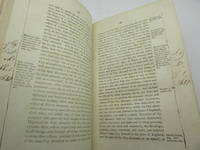
46943with various interesting particulars relating thereto carefully reprinted from ancient documents : together with a notice of the fortifications of the town at that period its forts outworks walls gates draw-bridges &c.; and an attempt to trace and point out the existing remains of those ancient fortified barriers. Plymouth : G. P. Hearder 1843. Duodecimo modern marbled papered boards with gilt-lettered Morocco title-piece to upper board; pastedown with ex libris of G. & N. Ingleton; original printed blue wrappers bound in title with ownership inscription of noted Plymouth Dissenter Robert Govett 1813-1901 pp. 58 folding colour map; occasional light foxing a very good copy with a newspaper article on the Siege of Plymouth cut from the Western Daily Mercury 11 December 1874 mounted on 3 leaves at rear. A scarcely recorded account of the Siege of Plymouth by the Royalists in the Civil War locally published in the bicentennial year of the bloodiest episode in the city's history. Although the source documents on which the narrative is based are not explicitly stated it seems likely that the diary of John Syms Puritan naval chaplain and librarian was one of them. Having refused to surrender to the Royalists the citizenry of Plymouth signed a solemn covenant to fight to the last man; although poorly armed the defenders managed to overcome a formidable attacking force commanded by Sir Richard Grenville. The town held out for the next four years until the Parliamentary army finally prevailed over the Royalists. With the death of Cromwell in 1658 and the restoration of the monarchy in 1660 however retribution was exacted by King Charles II against the leaders of the Plymouth resistance many of whom were imprisoned. Davidson Bibliotecha Devoniensis p.71 Rare. Not in OCLC; not in COPAC Provenance: Geoffrey Ingleton his bookplate to front pastedown Ingleton catalogue number 11835 stamped on final blank. Â hardcover
18092077London 1809. Recent rebind with half tan leather and gilt titles and marbled boards. 86 pp. with contemporary annotations from Rochester Museum. City of Rochester museum bookplate to inside front board. A very nice copy. 23.5cm x 16cm. Confroms to WorldCat / OCLC: 504414102. No publisher noted. hardcover
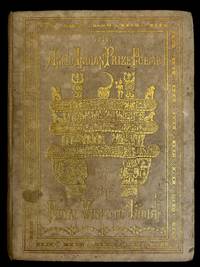
18764687London: Published for the Crown Perfumery Company by Hamilton Adams & Co. 1876. First Edition. Hardback in the publisher's original cream cloth binding which is grubby and stained. Crown Perfumery Company advertisements pasted to front endpaper plus more advertisements to the last few pages. Pages clean and fresh. All edges red. Poems in English Sanskrit and Hindustani. vi ii 117 3 pages. 160 x 115 mm 6¼ x 4½ inches. Published for the Crown Perfumery Company by Hamilton Adams & Co. hardcover
18764687London Published for the Crown Perfumery Company by Hamilton Adams & Co. 1876
456Browning D.M. ANNUAL REPORT OF THE COMMISSIONER OF INDIAN AFFAIRS 1896. Washington Government Printing Office 1896. Fold-out map at back. Faint library marks on spine. Head and heel of spine taped otherwise tight. <br/><br/> unknown
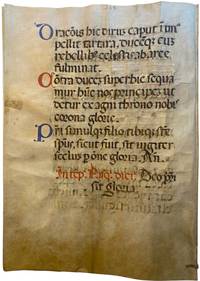
15805073C1580. 2 leaves 4 pages of antiphon on vellum from a large antiphon. Possibly the Kyrie. Musical notation with accompanying verbal score for a polyphonic chant. In Latin. There is some edgewear to the thick vellum with a little loss. One small are are to the middle of the page has a slight loss affecting both sides. Overall an attractive piece. A large size having come from a Gradual of Liber Usalis. Continental. 57cm x 41cm. hardcover
15805073C1580
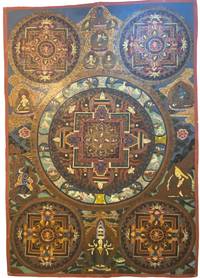
18905074Nepal C1890. An attractive hand painted original Thangka Mandala. Either Nepalese or Tibetan. This is an unusual copy as it includes a representation of the black buddha to the left edge. Painted onto cloth and in excellent condition. Thangka painting is a traditional form of Tibetan Buddhist art typically created on cotton or silk. These paintings often depict Buddhist deities scenes from the life of the Buddha mandalas or other religious icons. Thangkas are highly detailed vibrant and portable designed to be rolled up like scrolls for easy transport and display during religious ceremonies or private meditation. 88cm x 62cm. hardcover
18905074Nepal C1890
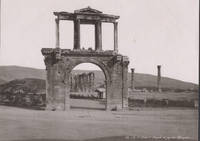
61628C.1890 . Albumen print. 28.5cm x 22cm. Window mounted. Numbered in the right-hand corner 42.<br /> <br /> C.1890 unknown
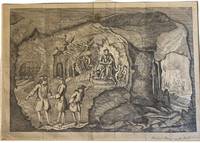
17545183Northern Netherlands: N/P 1754. First edition. A scarce engraving by an unknown engraver from 1754. It shows the arrival of Daniël Raap in Hell. A caricature on the death of the merchant and Orangist Daniël Raap on 15 January 1754 in Amsterdam. Raap with his ally Teepken in hell standing before the Devil on his throne. Details in the image numbered 1-5 but there is no legend. tipped onto a paper sheet and held under passe partout. We cannot find any other copies of this for sale and the only copy we can locate is in the Rijksmuseum RP-P-OB-84.474 also with no legend. engraved area is 21cm x 31cm. Sheet is 25cm x 34cm. Passe partout is 35cm x 50cm. The sheet is a little darkened and has a closed tear to one edge not affecting engraved area. The title is added in Dutch in manuscript to the bottom right and the number 114 to the bottom left. Small area of loss to the top edge of border hidden by passe partout. A scarce item. Daniel Raap 1703–1754 was a Dutch porcelain merchant from Amsterdam who played a significant role during the Orangist revolution in the Netherlands between 1747 and 1751. He was known for his agitation against the ruling Regent class advocating for greater public influence in government and supporting the restoration of the stadtholderate under William IV Prince of Orange. Raap along with other activists published pamphlets demanding democratic reforms and hereditary stadtholder rule. He organized petitions and called for the direct election of militia captains the restoration of guild privileges and auctioning of vacant public offices. His activities led to William IV intervening in Dutch politics but when the new city government remained dominated by the traditional regent families Raap found himself at odds with both more radical democrats and Orangists. By the time of his death Raap's former popularity had turned to hostility; riots occurred at his funeral and his coffin was even destroyed by a mob. Première édition. Rare gravure d'un graveur inconnu datant de 1754. Elle montre l'arrivée de Daniël Raap en enfer. Une caricature sur la mort du marchand et orangiste Daniël Raap le 15 janvier 1754 à Amsterdam. Raap et son allié Teepken en enfer devant le Diable sur son trône. Les détails de l'image sont numérotés de 1 à 5 mais il n'y a pas de légende. L'image a été collée sur une feuille de papier et conservée sous passe partout. Nous n'avons pas trouvé d'autres copies de ce tableau à vendre et la seule copie que nous avons pu localiser se trouve au Rijksmuseum RP-P-OB-84.474 également sans légende. La surface gravée est de 21cm x 31cm. La feuille mesure 25 cm x 34 cm. Passe partout mesure 35 cm x 50 cm. La feuille est un peu assombrie et présente une déchirure fermée sur un bord qui n'affecte pas la zone gravée. Le titre est ajouté en néerlandais dans le manuscrit en bas à droite et le numéro 114 en bas à gauche. Petite zone de perte au bord supérieur de la bordure cachée par un passe-partout. Une pièce rare. Daniel Raap 1703-1754 était un marchand de porcelaine néerlandais d'Amsterdam qui a joué un rôle important pendant la révolution orangiste aux Pays-Bas entre 1747 et 1751. Il était connu pour son agitation contre la classe régente au pouvoir prônant une plus grande influence du public dans le gouvernement et soutenant la restauration du stadtholderat sous Guillaume IV prince d'Orange. Avec d'autres activistes Raap a publié des pamphlets réclamant des réformes démocratiques et le règne héréditaire du stadtholder. Il organise des pétitions et demande l'élection directe des capitaines de milice le rétablissement des privilèges des guildes et la mise aux enchères des charges publiques vacantes. Ses activités ont incité Guillaume IV à intervenir dans la politique néerlandaise mais lorsque le nouveau gouvernement de la ville est resté dominé par les familles régentes traditionnelles Raap s'est retrouvé en désaccord avec les démocrates plus radicaux et les orangistes. Au moment de sa mort la popularité de Raap s'est transformée en hostilité ; des émeutes ont éclaté lors de ses funérailles et son cercueil a même été détruit par une foule. N/P unknown
17545183Northern Netherlands N/P 1754 Première édition. Rare gravure d'un graveur inconnu datant de 1754. Elle montre l'arrivée de Daniël Raap en enfer. Une caricature sur la mort du marchand et orangiste Daniël Raap le 15 janvier 1754 à Amsterdam. Raap et son allié Teepken en enfer devant le Diable sur son trône. Les détails de l'image sont numérotés de 1 à 5, mais il n'y a pas de légende. L'image a été collée sur une feuille de papier et conservée sous passe partout. Nous n'avons pas trouvé d'autres copies de ce tableau à vendre, et la seule copie que nous avons pu localiser se trouve au Rijksmuseum (RP-P-OB-84.474), également sans légende. La surface gravée est de 21cm x 31cm. La feuille mesure 25 cm x 34 cm. Passe partout mesure 35 cm x 50 cm. La feuille est un peu assombrie et présente une déchirure fermée sur un bord (qui n'affecte pas la zone gravée). Le titre est ajouté en néerlandais dans le manuscrit en bas à droite, et le numéro 114 en bas à gauche. Petite zone de perte au bord supérieur de la bordure, cachée par un passe-partout. Une pièce rare. Daniel Raap (1703-1754) était un marchand de porcelaine néerlandais d'Amsterdam qui a joué un rôle important pendant la révolution orangiste aux Pays-Bas entre 1747 et 1751. Il était connu pour son agitation contre la classe régente au pouvoir, prônant une plus grande influence du public dans le gouvernement et soutenant la restauration du stadtholderat sous Guillaume IV, prince d'Orange. Avec d'autres activistes, Raap a publié des pamphlets réclamant des réformes démocratiques et le règne héréditaire du stadtholder. Il organise des pétitions et demande l'élection directe des capitaines de milice, le rétablissement des privilèges des guildes et la mise aux enchères des charges publiques vacantes. Ses activités ont incité Guillaume IV à intervenir dans la politique néerlandaise, mais lorsque le nouveau gouvernement de la ville est resté dominé par les familles régentes traditionnelles, Raap s'est retrouvé en désaccord avec les démocrates plus radicaux et les orangistes. Au moment de sa mort, la popularité de Raap s'est transformée en hostilité ; des émeutes ont éclaté lors de ses funérailles et son cercueil a même été détruit par une foule.
18421336Paris: Lehuby 1842 cuir quart de bronzage avec des conseils bruns. titres et décorations dorés au dos. Maintenant recouvert d'un film d'archives amovible. Tous les bords dorés. Feuilles de garde jaunes. Inscription cadeau contemporaine sur le papier de fin. le demi-titre porte l'approbation du Cardinal Prince de Croy. Trois planches gravées (frontis et deux autres) et une page de titre gravée. Il y a un peu de frottement sur les planches, mais dans l'ensemble le dos et les planches sont en bon état brillant. le papier frontal a une entaille dans le coin supérieur. Le reste de ce livre est en bon état, légèrement noirci sur les bords des pages. La plaque frontale tient toujours bien, mais risque de se détacher (légèrement lâche jusqu'à la moitié supérieure). Dans l'ensemble une copie sonore. Le livre raconte l'histoire des missions de diffusion de la foi catholique. Il y a des chapitres sur les missions jésuites, les missions à Constantinople et en Hollande. Sections également sur la religion des Arméniens, des Éthiopiens et du monastère du mont Sinaï, la mission en Guyane etc. : La seconde moitié du livre est en deux sections. Le premier traitant de la Mission en Amérique pour convertir les Amérindiens - (Les « Sauvages » de l'Illinois et de la Louisiane). La seconde avec la Mission en Inde (1701, 1709 etc.), et au Tibet.
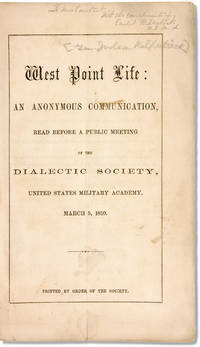
3733009<p>New York 1859. 16pp. 8vo. First edition and “Printed by Order of the Society.†Original printed wraps are darkened; general creases and soft fold lines from mailing and handling. bjcb 352231</p> <p>Entirely in verse West Point Life: An Anonymous Communication Read Before a Public Meeting of the Dialectic Society… “details the intense social life at West Point on the eve of the Civil War with amusing accounts of balls and dances and courtships as well as learning soldiering.†Jenkins Authorship has been attributed to Horace C. Porter Class of 1860.</p> <p>The copy at hand gives this penciled inscription on its title-page: “To Miss Constant. With the compliments of Cadet Kilpatrick U.S.M.A.†In a later hand beneath: “Gen. Judson Kilpatrick.â€</p> <p>Later nicknamed “Kill-Cavalry†the Irish-American Hugh Judson Kilpatrick 1836–1881 was a fellow member of the Dialectic Society who acted in numerous club performances. Martin p17 Kilpatrick graduated with the Class of 1861 as did Custer and it has been claimed that he was the first regular army officer to be wounded during the Civil War. </p> <p>Kilpatrick’s exploits during the War were numerous if not at times controversial or amusing. Surprised by Confederate forces while taking his bath purportedly sprang naked into his boots and onto his horse and then led a charge against the enemy. He served under Sherman as cavalry chief on the March to the Sea and as a “cavalry commander he was a brilliant leader having originated the saying that ‘cavalry can fight anywhere except at sea.’†DAB</p> <p>In 1874 Kilpatrick co-authored Allatoona: an historical and military drama in five acts and described by Benet’s as being “one of the earliest plays to deal with the Civil War . a tale in which two classmates at West Point fight on opposite sides in the great struggle.†The play was re-interpreted in 1930 by Christopher Morley and published as The Blue and the Gray: Or War is Hell.</p> <p>Kilpatrick’s inscription here as a twenty-three year old West Point cadet is one of the earliest examples one could hope to find for this colorful Union General.</p> <p>Ref. Farley West Point in the Early Sixties. With Incidents of the War. 1902. Martin Kill-Cavalry : The Life of Union General Hugh Judson Kilpatrick… 2000.</p> unknown