606 résultats
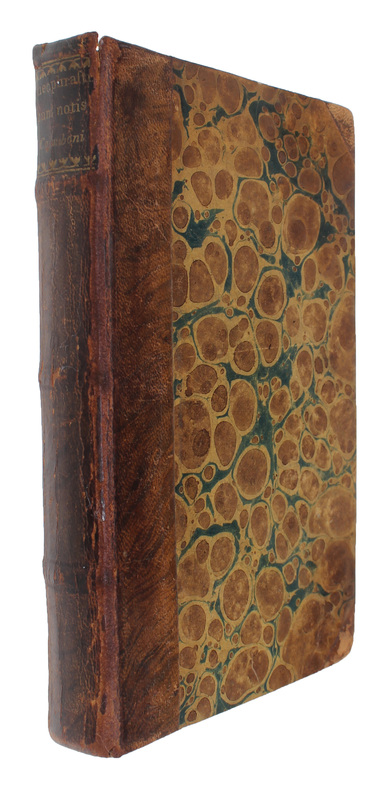
159250012Lyon, Franciscus le Preux, 1592. Small 8o. Early 19th century half calf with gilt title-label to spine. A bit of wear to hinges and corners, but fine and tight. Internally exceptionally nice and clean. P. Rubow's owner's signature to front free end-paper. Woodcut vignettes to title-pages and woodcut initials at beginning of both parts. (8), 88" 270 pp, 1 blank leaf, (16 ff. of indexes and errata at end).
1573622821573. Argentorati = Basel Petrus Perna 1573 Folio 10 223 1 28; 2 250 36 pp. alter Halbledereinband; Titelblatt aufgelegt etwas fleckig; mit alten Marginalien; feines Expl. mit ExLibris von Kenneth Harvey Abbott. Erste Ausgabe! PHILIPPI AVREOLI THEOPHRASTI PARACELSI BOMBAST EREMITAE SVMMI INter Germanos Medici & Philosophi. CHIRVRGIA MAGNA in duos tomos digesta. . Nunc recens à IOSQVINO DALHEMIO OSTOFRANCO Medico Latinitate donata. Tomus I : De vulneribus et fracturis libri III. De ulceribus libri III. De tumoribus et aperturis libri III. Tomus II : De Tumoribus Pustulis & Ulceribus / Morbi Gallici Lib. X. De Curatione & Imposturis Morbi / Gallici Lib. Octo. Dieser Band enthält die "Chirurgia magna" in zwei Tomi in lateinischer Übersetzung von Josquinus Dalhemius tätig 2. H. 16. Jh. humanistischer Übersetzer paracelsischer Schriften. - Gedruckt von dem aus Lucca stammenden seit den 1540er-Jahren in Basel tätigen Humanisten- und Reformationsverleger Petrus Perna ca. 1519-1582. Die Chirurgia magna ist das zentrale chirurgische Werk Paracelsus' und dokumentiert seine praktische Wundarznei ebenso wie seine Reinterpretation traditioneller Krankheitslehren. In ihr treten seine Abkehr von der bloßen Galen Exegese sein empirisches Vorgehen am Krankenbett und sein Einsatz chemischer Präparate deutlich hervor; sie ist für das Verständnis der paracelsischen "Reformation der Medizin" unverzichtbar. Paracelsus betont systematisch die Bedeutung gründlicher Wundreinigung Drainage und Verhinderung von Fäulnis; die "gute Eiterung" der traditionellen Chirurgie wird kritisch relativiert und der Fokus stärker auf rasche "spezifische" Heilung gerichtet. Er beschreibt Trauma Frakturen Ulzera und Tumoren in enger Verbindung mit Umwelt und Stoffeinflüssen; damit wird die spätere Toxikologie vorbereitet Stichwort "Die Dosis macht das Gift" und eine spezifische substanzgebundene Krankheitsauffassung gefördert. Von besonderem Interesse auch für die frühe Geschichte der Neurochirurgie: Paracelsus behandelt in der Chirurgia magna Kopf- und Schädelverletzungen inkl. Indikationen zur Trepanation im Rahmen einer empirisch orientierten Wundchirurgie und verknüpft traumabedingte Lähmungen und Krampfzustände mit lokalen Strukturverletzungen statt ausschließlich mit humoral-systemischen Ursachen. Die Perna-Ausgabe von 1573 ist die erste große lateinische Gesamtausgabe der paracelsischen Chirurgie: Sie überführt die ursprünglich deutschsprachigen Wundarznei-Schriften Große und Kleine Chirurgie in ein gelehrtes europaweit rezipierbares Format und ist damit ein Schlüsselstück der frühen Paracelsus-Rezeption. Chirurgiegeschichtlich markiert der Band den Übergang von handwerklich-zunftgebundener Wundbehandlung zu einer spezifischen substanzgebundenen Therapieauffassung Toxikologie organspezifische Wirkungen Kritik an der "guten Eiterung" und ist für die Geschichte der Chirurgie wie der Pharmakologie gleichermaßen bedeutend. First major Latin edition of Paracelsus' surgical works containing the two tomes of the "Chirurgia magna" in one folio volume. Translated into Latin by Josquinus Dalhemius and printed by the Basel humanist printer Petrus Perna in 1573. Covers wounds fractures ulcers tumours and related conditions combining practical wound surgery with Paracelsus' innovative chymical pathology. Key document in the spread of Paracelsian medicine from German vernacular surgery into the international learned medical world. VD16 P 469 Sudhoff "Bibliographia Paracelsica" Nr. 146-147 unknown
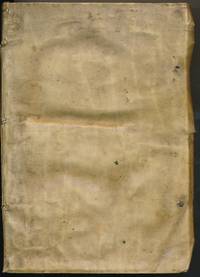
1529613371529. Vænit Parisiis apud Egidium Gourmoncium Wechel 1529 kl.-8° 16 14 2 343 22 3 pp.; 18 354 24 pp. alter Pergamenteinband; teilweise im oberen Rand zarter Wasserrand; trotz der Mängel ein feines Exemplar. Theophrasti de historia et causis plantarum libri quindecim. Theodoro Gaza interprete. Ejusdem Tabulas duas capita librorum complectentes : quarum unam libris de historia alteram de causis plantarum unàcum vocabulis quibusdam græcorum & latinorum nominum præfixas invenies lector. Theodoro Gaza interprete. & Second and last part: "Theophrasti de causis plantarum libri VI. Theodoro Gaza interprete. Luteciæ ex officina Christiani Wechel. 1529" Very Rare second single edition first published in Tarvisii 1483 and together with Aristotel. Hist. anim. Ventia 1504. "Copies of the complete 1529 edition seem to be quite rare as we have found only three others listed above." Hunt catalogue 1:34-35 entry 26. "This is the earliest work of scientific botany a subject not addressed in any of the writings of Aristotle." Theophrastus "system of botanical classification analogous to the zoological system in Aristotle's Historia animalium maintained its authority until the advent of the microscope in the mid 17th century." Garrison & Morton Theophrastus of Eresos c.370-287 bce "one of Aristotle's greatest students built upon Diodes' work and founded the field of biology known as botany. In his works 'On the Natural History of Plants' and 'On the Origins of Plants' Theophrastus identified and classified over 500 species of plants and explained their medicinal properties. He succeeded Aristotle at the Lyceum and taught there for nearly 35 years. He has often been called "the father of botany" and perhaps deserves the title "the father of pharmacognosy" as well. Remarkably Theophrastus pioneered the concept of drug tolerance observing that the power of a drug taken over a long period diminishes in people who become accustomed to taking them." Bob Zebroski A Brief History of Pharmacy: Humanity's Search for Wellness 2016 Uebersetzung des Theodorus Gaza c.1398-c.1475 "kritisch und wichtig" und hier zum ersten Mal "mit brauchbarem Index der griechischen und lateinischen Namen." Choulant pp.58-59 Garrison & Morton No.81.1 1783 1st. Ed.1483 unknown
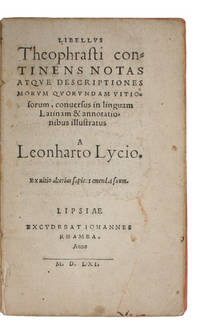
156128328Lipsiae, Excudebat Iohannes Rhamba, 1561. Small 8vo. Later blue boards (ab. 1800). Spine with minor loss and a few cracks. First few leaves with minor soiling, but otherwise a nice and clean copy. 19th century owner's inscription to inside of front cover: ""Colegii Thomani"". Lovely woodcut opening initial. Beautiful Greek script. 48 ff.
156128328Lipsiae Excudebat Iohannes Rhamba 1561. Small 8vo. Later blue boards ab. 1800. Spine with minor loss and a few cracks. First few leaves with minor soiling but otherwise a nice and clean copy. 19th century owner's inscription to inside of front cover: "Colegii Thomani". Lovely woodcut opening initial. Beautiful Greek script. 48 ff. <br/><br/><em>Extremely scarce first edition thus containing all of Theophrastus' 23 characters in Greek and Latin being the first edition of Auberius' excellent Latin translation and first edition with Lycio's interesting commentaries. "This very rare edition which presents us with the Greek text of H. Stephan Stephanus contains a new Latin version by Claudius Auberius who was scarcely twenty years of age when he composed it. The notes are critical and historical; sometimes bold but always erudite. This version and these notes were republished in Zuinger's edition of Aristotle's "Ethics" at Basil. fol. 1582." Dibdin II:500. This version of Theophrastus' milestone work the first recorded attempt at systematic character writing became hugely influential and is still referred to in modern editions of the text as Auberius' translation is regarded as one of the best and most important interpretations of the text. Claude Aubery or Claudius Auberius ca. 1540-1596 was a noted philosopher and medical doctor professor of Philosophy in Lausanne. He translated several Greek texts into Latin but is best remembered for his excellent version of Theophrastus' "Characters" which was highly influential throughout the Renaissance and which was incorporated into later Renaissance Aristotle-editions as the standard-version of Theophrastus' text. Theophrastus ca. 371- ca. 287 BC Aristotle's successor at the Lyceum and probably the most famous Aristotelian of all times successfully presided over the Peripatetic School for 36 years and here wrote a number of works. The most famous of them is arguably his great moral opus "The Characters" which continues to amaze readers to this day. It introduced the "character sketch" which became the core of the Character as a genre and as such it influenced the entire literay tradition of the Western world. The fabulous very witty astute harsh and insightful characteristics of type characters of the human race have been formative for our understanding of moral virtues and vices and how they come to be expressed in man for our understanding of human nature in general. It is no wonder that the work became so popular and widely read during the Renaissance the era of man as the centre of the universe. "Le texte est le celui de Henri Estienne insére dans l'édition d'Aristote de 1557 mais dans la version il suit pour la plupart ses propres conjectures" Graesse 7: 125. Dibdin II:500 Graesse VII:125. </em> hardcover
536Lugduni : viduam Ant. de Hardy, 1612. UNE SUPERBE « RELIURE D'AGONOTHÈTE » AU DÉCOR « À L'ÉVENTAIL »
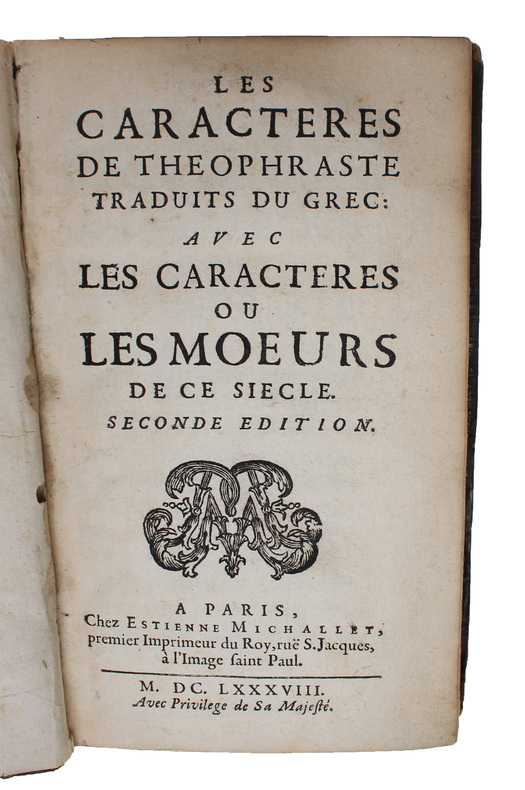
18139Paris, Estienne Michallet, 1688. In-12, [60]-308-[1] pp., maroquin lavallière postérieur, triple filet doré en encadrement sur les plats, dos à nerfs orné de caissons dorés, importante bordure de même maroquin ornée d'une dentelle dorée, tranches dorées (2 mors fendus, épidermures).
In-4°, cc(24), 117pp, (2), legatura in cartonato. Stemma mediceo al frontespizio, dedica al Granduca di Toscana Ferdinando II. Prima edizione di un libro molto raro sconosciuto alle principali biblioteche. Questo lavoro contiene una serie sistematica di correzioni e integrazioni all'Historia Plantarum e al De causis plantarum di Teofrasto. Buona copia. Pritzel 9203, Wellcome I, 6608, Vinciana 1813 In-4 °, cc (24), 117pp, (2), cardboard binding. Medici coat of arms on the title page, dedicated to the Grand Duke of Tuscany Ferdinand II. First edition of a very rare book unknown to major libraries. This work contains a systematic series of corrections and additions to the Historia Plantarum and De causis plantarum of Theofrastus. Good copy. Pritzel 9203, Wellcome I, 6608, Vinciana 1813
1688002823Paris, Estienne Michallet, 1688
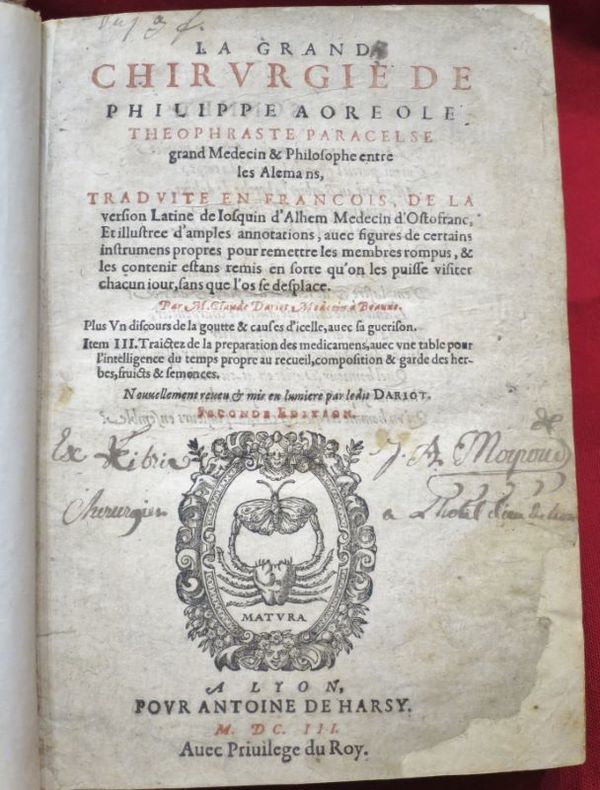
107846A Lyon, Pour Antoine de Harsy, 1603 (Paracelse), 1589 (Dariot), 3 textes reliés en 1 volume in-8 de 225x155x50 mm environ, 394 pages, 5ff. (Sonnet, indice des chapitres)-64 pages-256 pages, pleine basane brune, dos à nerfs portant titres dorés, orné de caissons à fleurons et motifs dorés, gardes marbrées, tranches rouges, avec un ex-libris gravé sur le premier contreplat. Textes complets des bois gravés, enrichis de bandeaux, magnifiques et délicates lettrines, et somptueux culs-de-lampe. Reliure et page de titre restaurées, gardes blanches remplacées et annotées, des rousseurs et pages brunies, petits trous de ver qui se transforment en galerie (troisième texte) sans atteinte au texte, notes manuscrites p. 217 et 221. La marque d'imprimeur Le Crabe et la Mite a été utilisée par les frères Frellon. A la mort de Jean Frellon, Antoine de Harsy prit la direction de la maison de son beau-frère et adopta cette marque.
178635101Parmae, Ex Regio Typographeo, 1786. 4to. Orig. blank boards. Spine missing. Bdg. and bookblock tight. Minor occasional soiling"" lacking a small part of corners of some leaves, far from affecting text. An overall good and solid copy. Engr. frontispiece-portrait, engr. title-vignette. Printed on good and thick paper. (10), 128, (6) pp + (1) leaf, errata.
178635101Parmae Ex Regio Typographeo 1786. 4to. Orig. blank boards. Spine missing. Bdg. and bookblock tight. Minor occasional soiling; lacking a small part of corners of some leaves far from affecting text. An overall good and solid copy. Engr. frontispiece-portrait engr. title-vignette. Printed on good and thick paper. 10 128 6 pp 1 leaf errata. <br/><br/><em>The rare editio princeps of Theophrastus' 29th and 30th characters. Greek and Latin text.The work is renowned not only for containing the very first printing of Theophrastus' two last "characteres" but also for the beautiful printing of it and Amadutius' excellent and instructive foreword and notes. "A very splendid edition exhibiting only two chapters cap. 29 and 30 of this work from a Vatican MS. of the eleventh century. It is mentioned in order that the student may consult the very learned prolegomena which it contains." Dibdin II:503. Brunet 5:798. </em> hardcover
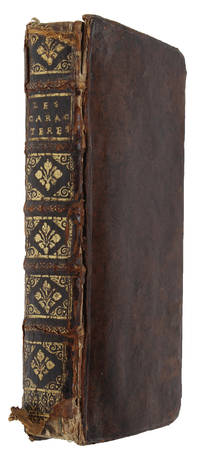
168827999Paris, Estienne Michallet, 1688. Cont. full calf. 5 raised bands on back, back richly gilt, all edges of boards gilt. Lacking leather at capitals, front-hinge cracked, so cords are showing.
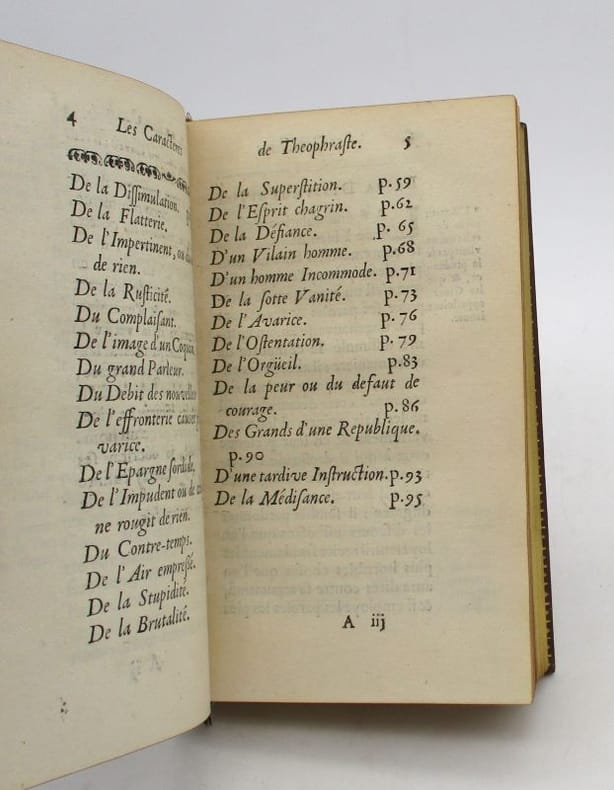
168827999Paris Estienne Michallet 1688. Cont. full calf. 5 raised bands on back back richly gilt all edges of boards gilt. Lacking leather at capitals front-hinge cracked so cords are showing. <br/><br/><em>Second or third printing of the original edition. The title-page states "seconde edition" but it is probably the third printed in the same year as the first and second being a page-by-page re-impression of the second except for the fact that corrections have been made and the errata-leaf is thus not printed in the third. Both the second and third original editions are from the same year and by the same printer as the first. "La seconde édition également impr. en 1688 n'offre que quelques légers changements. et la troisième sous la même date ne qu'une simple réimpression de la seconde." Brunet III:720. This work includes the first French translation of Theophrast's Characters and probably the first translation into any modern language. "Theophraste a eu le grand honneur comme on sait d'être ttraduit au XVIIe siècle par La Bruyère: et c'est pourquoi en France plus que dans tout autre pays en dehors même du cercle des érudits son nom et son opuscule sont populaires." navarre Budé-edition of "Caractères" Paris 1920.Jean de la Bruyère 1639/1644 - 1996 was a very famous French moralist and writer. "C'est au commencement de 1688 que parut la premiere édition des "Caractères de Théophraste traduits du grec ou les Mæurs de ce siècle." L'auteur mettait ses propres observations sur la société moderne sous le patronage d'un ancien." N.B.G. p. 427. The "Characters" gave La Bruyère quite a few enemies and created furor in the learned world. In Denmark Holberg calls him "trivial and simple" Epistle 404. "Mais si en effet la malignité contemporaine applaudissant aux traits satiriques de l'ouvrage a peu contribuer à sa vogue le jugement de la postérité l'a consacré comme un des meilleurs livres de notre langue." N.B.G. p. 427. This work is thus still considered to be one of the greatest French books. Voltaire writes in "Siecle de Louis XIV c. XXXII": "On peut compter parmi les productions d'un genre unique les "Caractères" de La Bruyère. Un style rigide concis nerveaux des expressions pittoresques un usage tout nouveau de la langue mais qui n'en bless pas les règles frappèrent le public". Bruyère's work with the translation really did cause astonishment and had an immense impact on late 17th century Europe and onwards; it created a new literary genre in Europe and the age of Enlightenment was delighted with the short precise characterizations of people and their customs. For an analysis of the contents and the impact on the time of La Bruyère see Nouvelle Biographie Generelle N.B.G. pp. 426-39. Brunet V:798 III:721 Graesse 4:61. </em> hardcover
1599ST16215hLugduni Lyon: Excudebat Guichard Julliéron apud Antoine de Harsy 1599. Editio Altera Second Edition; EDITIO PRINCEPS of books 24-28. 173 x 109 mm. 6 7/8 x 4 1/4". 12 p.l. 349 1 pp. 24 leaves.Edited by Isaac Casaubon. <br/> 18th century French polished calf smooth spine gilt in compartments with central floral sprig surrounded by leaf tools gilt lettering of owner's name Brunck at tail of spine red morocco label marbled endpapers older repairs to joints. Printer's device on title page. Text in Greek and Latin. Title page with ink ownership inscription of Bibliothèque Villelufpen and Richard Brunck; isolated ink marginalia in Hebrew Arabic Greek or Latin. Dibdin II 501; STC French 419; Graesse VII 125; USTC 158510. ◆A couple of short scratches and two small water stains to upper board shallow chip to head of spine leaves somewhat browned due to paper quality a couple of tiny rust spots but a very good copy clean and fresh internally in a sound binding.<br/> <br/> From the library of a notable--and perhaps notorious--classical scholar this is an important edition of the Greek philosopher's "Characters" with Isaac Casaubon's revisions to his translation and commentary of 1592 and the addition of five sections printed here for the first time that Casaubon had recently discovered at the Palatine Library. One of the earliest known works of psychology "Characters" contains pithy descriptions of the various types of human foibles noted by the Oxford Companion for their "remarkable vivacity and keenness of observation." A pupil of Aristotle and the master's successor as head of the school of Peripatetic philosophy Theophrastus ca. 371 - ca. 287 B.C. wrote widely on a number of subjects ranging from ethics to physics to botany he is considered the "father" of the last discipline. He would have considered these descriptions of such characters as "The Flattering Man" "The Stupid Man" and "The Oligarch" a minor work but it is one that has weathered the centuries. The present translation and commentary marked a milestone in the life of the great classical scholar Isaac Casaubon 1559-1614. Sandys says "It is not until we reach his commentary on the 'Characters' of Theophrastus 1592 that we find a work that is marked by his distinctive merit an interpretation of a text of the most varied interest founded on wide reading and consummate learning. It was a work that won the highest praise from Scaliger." Dibdin called the commentary "a rich mine of Grecian literature." Former owner Richard François Philippe Brunck 1729-1803 was a classical scholar of considerable note who devoted his leisure to the critical revision of the Greek poets. According to Britannica "He spent considerable sums of money in publishing editions of the Greek classics." Flaunting the established mode of editing and criticism he did not hesitate to make clarifying changes to difficult or inscrutable passages of text--whether these alterations were supported by manuscript authorities or not. Deprived of his royal pension by the French Revolution Brunck was forced to sell portions of his library in 1790 and again in 1801. Excudebat Guichard Julliéron apud Antoine de Harsy unknown
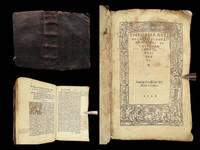
152924241<p><strong>1529 GREEK Theophrastus BOTANY Philosophy Metaphysics Causes of PLANTS Botanical</strong></p><p><em>"Time is the most valuable thing a man can spend." </em></p><p>― Theophrastus </p><p>Theophrastus was a 4th-century BC Greek philosopher known for his studies in metaphysics and logic of Aristotle and Plato. One of his remaining works was '<em>On the Causes of Plants'</em> an extensive botanical treatise. In fact this work is <strong>considered to be one of the most important works of botany from the middle ages.</strong> Theophrastus describes plant growth instruction on planting and harvesting soils and fertilizers farming tools and the medicinal properties of many plants.</p><p>This 1529 edition of Theophrastus' '<em>Plants'</em> was published in Lutetia or Paris by Christian Wechel.</p><p>Item number: #24241</p><p>Price: $1950</p><p>THEOPHRASTUS</p><p><strong><em>Theophrasti De Cavsis Plantarvm Libri VI. Theodoro Gaza Interprete</em></strong></p><p>Lutetiæ: ex officina Christiani Wechel 1529.</p><p><u>Details</u>: </p><p><!-- if !supportLists-->· <!--endif-->Collation: Complete with all pages</p><p><!-- if !supportLists-->o <!--endif-->19 2-354 24</p><p><!-- if !supportLists-->o <!--endif-->Dozens of illustrated initials throughout</p><p><!-- if !supportLists-->· <!--endif-->Language: Latin </p><p><!-- if !supportLists-->· <!--endif-->Binding: Leather; secure</p><p><!-- if !supportLists-->· <!--endif-->Size: ~6.25in X 4.25in 16cm x 10.5cm</p><p><!-- if !supportLists-->· <!--endif-->Exceedingly rare valuable and desirable with auction records and price comparisons at over $3000</p><p>Our Guarantee:</p><p>Very Fast. Very Safe. Free Shipping Worldwide.</p><p>Customer satisfaction is our priority! Notify us with 7 days of receiving and we will offer a full refund without reservation!</p><p>24241</p><p>Photos available upon request. </p> Christiani Wechel hardcover
168828099Paris, Estienne Michallet, Se vend à Bruxelles chez Jean Leonard, 1688. Later (ca. 1800) cardboardbdg. w. marbled peper. Library-labels on back. Hinges, capitals and corners w. traces of use. Occationally brownspotted. (56), 226, (1) pp.
168828099Paris Estienne Michallet Se vend à Bruxelles chez Jean Leonard 1688. Later ca. 1800 cardboardbdg. w. marbled peper. Library-labels on back. Hinges capitals and corners w. traces of use. Occationally brownspotted. 56 226 1 pp. <br/><br/><em>This is the reimpression of the original second edition with the words "Se vend à Bruxelles chez Jean Leonard" on title-page from the same year as the first original edition. "Cette réimpression assez belle a 28 ff. prélim. et 226 pp. de texte plus un f. pour le privilége; l'errata n'y est pas reproduit bien que les corrections qu'il indique n'aient pas été faites dans le texte." Brunet III p.720. This work includes the first French translation of Theophrast's Characters and probably the first translation into any modern language. "Theophraste a eu le grand honneur comme on sait d'être ttraduit au XVIIe siècle par La Bruyère: et c'est pourquoi en France plus que dans tout autre pays en dehors même du cercle des érudits son nom et son opuscule sont populaires." navarre Budé-edition of "Caractères" Paris 1920.Jean de la Bruyère 1639/1644 - 1996 was a very famous French moralist and writer. "C'est au commencement de 1688 que parut la premiere édition des "Caractères de Théophraste traduits du grec ou les Mæurs de ce siècle." L'auteur mettait ses propres observations sur la société moderne sous le patronage d'un ancien." N.B.G. p. 427. The "Characters" gave La Bruyère quite a few enemies and created furor in the learned world. In Denmark Holberg calls him "trivial and simple" Epistle 404. "Mais si en effet la malignité contemporaine applaudissant aux traits satiriques de l'ouvrage a peu contribuer à sa vogue le jugement de la postérité l'a consacré comme un des meilleurs livres de notre langue." N.B.G. p. 427. This work is thus still considered to be one of the greatest French books. Voltaire writes in "Siecle de Louis XIV c. XXXII": "On peut compter parmi les productions d'un genre unique les "Caractères" de La Bruyère. Un style rigide concis nerveaux des expressions pittoresques un usage tout nouveau de la langue mais qui n'en bless pas les règles frappèrent le public". Bruyère's work with the translation really did cause astonishment and had an immense impact on late 17th century Europe and onwards; it created a new litterary genre in Europe and the age of Enlightenment was delighted with the short precise characterisations of people and their customs. For an analysis of the contents and the impact on the time of La Bruyère see Nouvelle Biographie Generelle N.B.G. pp. 426-39. Brunet V:798 III:721 Graesse 4:61. </em> unknown
In-4 p. (mm. 314 x 226), mz. pergamena coeva, titolo ms. al dorso, 8 cc.nn., 49 pp., 1 c.b., 2 cc.nn., 57 pp., 1 c.nn. (di Indice). L’opera, dedicata dal tipografo a Ferdinando Marescalchi, è divisa in due parti: la prima contiene il testo in greco antico e la seconda il testo in latino. Edizione greco-latina del “celebre opuscolo "I Caratteri morali" del filosofo, naturalista ed erudito greco Teofrasto (IV sec. a.C.), discepolo di Aristotele e suo successore nella direzione del Liceo. I "Caratteri" costituiscono una specie di galleria di ritratti morali tutti schizzati molto rapidamente in uno stile elegante ma semplice, e rivelano una penetrazione assai sottile della natura umana. I tipi psicologici descritti sono trenta; tra i principali si notano: l’ipocrita, l’adulatore, il chiacchierone, il rustico, il compiacente, il cinico, il pitocco, etc., etc.. "I Caratteri" sono infusi di quello spirito comico e buffonesco donde sorse e si sviluppò la commedia ateniese, così l’antica come la nuova”. Così Diz. Opere Bompiani,II, p. 121. Cfr. Brooks,561: “Edizione bella quanto l’altra (in folio)”. Pregevole esemplare con barbe.
17654210Nouvelle édition avec des notes par M. Coste et un beau portrait de La Bruyère gravé par Cathelin.Notre exemplaire a appartenu à J. I. Commin, important consul de la ville d'Avignon, qui a laissé des Mémoires sur la Révolution à Avignon. Plein veau raciné, dos à nerfs orné, triple filet sur les plats, tranches rouges. Reliure de l'époque. Très bon Paris Hochereau et Panckoucke. 1765 1 volume grand in-4°;
2033Glasguæ: in ædibus academicis excudebat Robertus Foulis Academiae Typographus 1743. Hardcover. Good. Octavo. ii 53 52pp. 1 A4-G4 - G4 blank A4-F4 G2. Greek text followed by the Latin translation. Contemporary red morocco spine gilt. Bound with: 24 page Greek manuscript. This manuscript follows the divisional sections of the Greek text and acts as an explanatory or transilational adjunct to it. This is the first book in which Foulis described himself as University Printer to which office he was elected on 31 March 1743. <br/> <br/> Glasguæ: in ædibus academicis excudebat Robertus Foulis Academiae Typographus, 1743. hardcover
In folio; due opere in un volume: (8), 396, (28) pp. e 143, (9) pp. Bella legatura seicentesca in piena pergamena con titolo in oro al dorso che si presenta a sei nervi, qualche lieve segno del tempo ma nel complesso in buone condizioni di conservazione. Bella marca tipografica di Guillaume Rouillé (1545-1589) al frontespizio di ogni volume. Alcune pagine leggermente ed uniformemente brunite a causa alla qualità della carta, ininfluente. Un leggerissimo alone ininfluente al margine esterno bianco delle ultime 10 carte del secondo volume e nel complesso ambedue le opere si presentano in buone-ottime condizioni di conservazione. Testatine, iniziali e finalini xilografici. Bell’edizioni stampate da Rouillé di queste due celebri opere del grande scrittore, medico e filosofo originario di Riva del Garda, Giulio Cesare Scaligero, latinizzato in Julius Caesar Scaliger (1484-1558). Di origine italiana, trascorse in Francia parte della sua vita, e la parte più fruttuosa della sua carriera. A dispetto del suo atteggiamento arrogante e incline alla polemica, era alta la sua reputazione tra i contemporanei, che lo giudicavano così distinto nel suo sapere e talento, che, secondo Jacques Auguste de Thou, nessuno degli antichi poteva essere collocato sopra di lui, e che l’età in cui visse non presentò nessun sapiente paragonabile a lui. Nelle proprie note biografiche, Scaligero si spaccia per un discendente del casato dei Della Scala (che furono, per 150 anni, i signori di Verona) e si dice nato nell’anno 1484 a Rocca di Riva, sulle rive del Lago di Garda. Era forse figlio di Niccolò della Scala, a sua volta figlio di Guglielmo.Quando era dodicenne, il suo protettore, l’imperatore Massimiliano I d’Asburgo, lo nominò tra i suoi paggi. Rimase per diciassette anni al servizio dell’imperatore, distinguendosi prima come soldato e poi come capitano. Ma non dimenticava di coltivare né le lettere, nelle quali aveva avuto come precettori alcuni tra i più eminenti studiosi del tempo, né le arti, che aveva studiato con considerevole successo sotto la direzione di Albrecht Dürer. Nel 1512 prese parte alla battaglia di Ravenna. Ma poco in verità è provato della vita dello Scaligero fino al 1525 quando divenne medico personale del vescovo di Agen, in Francia. Definiva i suoi studi classici come un gradevole rilassamento da compiti più severi. Qualsiasi siano state le sue vere faccende nei suoi primi 40 anni di vita, sicuramente queste lo resero un osservatore accurato e ravvicinato, e lo avevano reso edotto di molti fenomeni curiosi e poco noti, che aveva pienamente registrato in una tra le più tenaci memorie della storia. E’ celebre anche per aver in un certo modo anticipato il metodo induttivo. I due trattati qui presentati sono considerati fra i suoi più originali. In essi metteva a frutto le proprie dirette esperienze nel campo della botanica ed erboristeria, esperienze sia maturate nella sperimentazione diretta sia nella ricerca erudita di descrizioni di piante in fonti letterarie e artistiche, tanto classiche che moderne in parte mutate da Teofrasto ed Aristotele. Importante opera di botanica, farmacia ed erboristeria. Due rare edizioni. Good copies, rare. Bibliografia: I opera Pretzel 8090, II opera 8088.
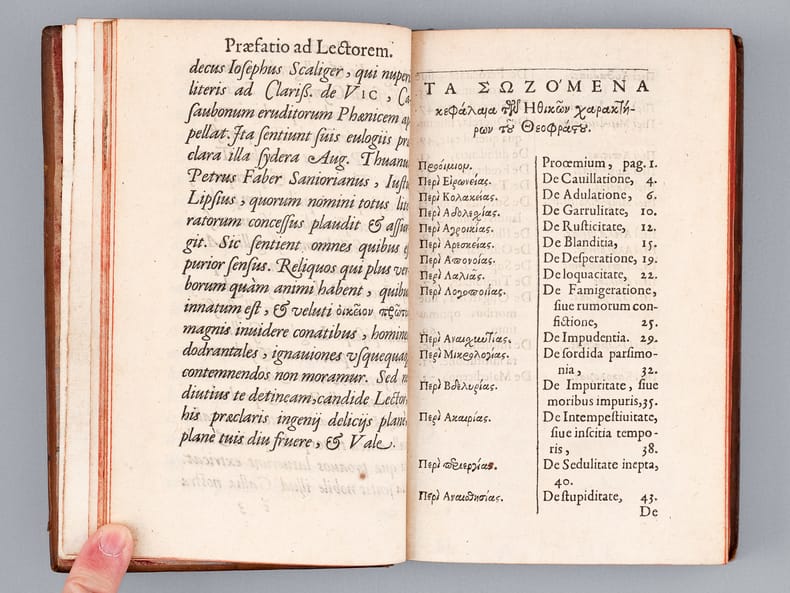
159966183Editio altera recognita, & aliquot capitibus aucta ex MSS, cum indice triplici, primo nominum propriorum : secundo Graeco ; tertio Latino ; utroque vocum & rerum, 1 vol. petit in-8 reliure XVIIe plein veau marbré, dos lisse orné à la grotesque, Apud Antonium de Harsy [ Antoine de Harsy ], Lugduni [ Lyon ], 1599, 12 ff., 351 pp., 22 ff. n. ch., 1f. blanc, 1 f. n. ch. ("Excudebat Guichardus Jullieron, Typographus Regius, Lugduni, 1599")
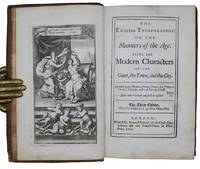
1708AQ28440London: Printed for Bernard Lintott 1708. 14 384pp. With an engraved frontispiece. Contemporary panelled calf calf lettering-piece. Extremities worn upper joint split lower joint starting loss to head-cap. Endpapers browned scattered spotting early inked ownership inscription of George Leslie to REP. Armorial bookplate to FEP of Scottish advocate and philosopher Henry Home Lord Kames 1696-1782. An extended edition of an early eighteenth-century work of moral philosophy sometimes attributed to lexicographer and journalist Abel Boyer 1667-1729. First printed in 1702 the book collects aphorisms and observations on contemporary character types and traits social institutions and behaviour drawn from the writings of La Bruyere La Rochefoucauld and others. ESTC T85463. Third edition. 8vo. Printed for Bernard Lintott unknown
1589934320031<p>English description below</p><p>Dritter Band der seltenen ersten deutschen Gesamtausgabe von Paracelsus Schriften maßgeblich für alle späteren Ausgaben. Herausgegeben von Johann Huser mit Unterstützung des Kurfürsten und Kölner Erzbischofs Ernst Prinz von Bayern.</p><p>Mit 2 ganzseitigen Porträt-Holzschnitten wdh. die Paracelsus 1540 nach einem Kupferstich von Augustin Hirschvogel zeigen 1 Wappenholzschnitt Das Paracelsus-Wappen und als Wappenspruch die Grabinschrift PAX VIVIS REQVIES AETERNA SEPVLTIS und 1 Holzschnitt-Druckermarke am Ende. Basel Conrad Waldkirch 1589. Schweinslederband d. Zt. 24 x 17 cm 5 Bl.; 420 S. 55 Bll. Register. Ecken etwas beschabt durchgehend gebräunt vgl. die Fotos. Insgesamt gutes Exemplar der geschätzten ersten Huser'schen Ausgabe.</p><p>Ein Digitalisat aus der Sammlung der Bayerischen Staatsbibliothek finde sich hier: www.digitale-sammlungen.de/de/view/bsb00022504</p><p><br /><br />Third volume of the rare first German complete edition of Paracelsus' writings whose text became authoritative for all later editions. It came about with the support of the Elector and Archbishop of Cologne Ernst Prince of Bavaria and was edited by Johann Huser.<br />With 2 full-page portrait woodcuts ditto showing Paracelsus 1540 after an engraving by Augustin Hirschvogel 1 armorial woodcut the Paracelsus coat of arms and as heraldic motto the epitaph PAX VIVIS REQVIES AETERNA SEPVLTIS and 1 woodcut printer's mark at the end. Basel Conrad Waldkirch 1589. Contemporary pigskin binding 24 x 17 cm 5 fol.; 420 pp. 55 ll. Index. Corners a bit scuffed browning throughout please see the images. Overall good copy of Huser's esteemed first edition.<br />A digital copy from the collection of Bayerische Staatsbibliothek can be found here: www.digitale-sammlungen.de/de/view/bsb00022504<br /><br /><br /><br /></p> Conrad Waldkirch hardcover