(Judaica)Biblio.com
982 résultats
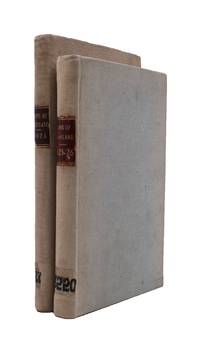
1825338079Annapolis: J. Hughes 1825. 167 1pp. The Jew Bill appearing on pages 154-155. With: Laws made and passed by the General Assembly of the State of Maryland at the Session begun and held at the City of Annapolis on Monday the Twenty-sixth Day of December 1825 which includes the enactment of the Jew Bill on page 21. 2 vols. 8vo. Later tan cloth. Association of the New York Bar inked stamps and blindstamps. 167 1pp. The Jew Bill appearing on pages 154-155. With: Laws made and passed by the General Assembly of the State of Maryland at the Session begun and held at the City of Annapolis on Monday the Twenty-sixth Day of December 1825 which includes the enactment of the Jew Bill on page 21. 2 vols. 8vo. Although Article VI of the Constitution of the United States declares that "no religious test shall ever be required as a qualification to any office or public trust under the United States" at the federal level many states continued to prevent Jews Catholics and Quakers from occupying public offices. Beginning as early as 1797 Jewish citizens of Maryland led by Jewish leaders Solomon Etting and Jacob Cohen had regularly but unsuccessfully petitioned the legislature for equal status. The "Jew Bill" as it came to be known was defeated in 1802 1804 1819 and 1823. In 1824 led by Irish Catholic Thomas Kennedy and with a Democrat majority in the legislature the Jew Bill was once again brought before the legislature passing at the beginning of 1826. <br /> <br /> The present volumes recording the laws passed by the General Assembly at those sessions include both the proposed law - that "every citizen of this state professing the Jewish religion . appointed to any office of public trust shall make and subscribe a declaration of his belief in a future state of rewards and punishments in the stead of the declaration now required." - and the final vote of passage on January 5 1826 ensuring to Jews the same rights and privileges as Christians in the state. <br /> <br /> An important record of a seminal moment in Jewish American history. J. Hughes unknown
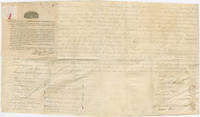
181825466<p>Elaborate receipt for Newport Rhode Island sale of land from estate of Benjamin Seixas 1747-1817 signed by numerous members of his family and members of the Spanish-Portuguese Jewish Congregation who were heirs to the property known now as the Buliod-Perry House at 29 Touro Street to Commodore Oliver Hazard Perry the great naval hero of the Battle of Lake Erie in 1813.</p> <b>EARLY AMERICAN JUDAICA. NAPHTALI PHILLIPS.</b>Manuscript Document Signed 1p folio 14½ x 21½ in. November 30 1818.<p><br /></p><p>This most important historic American Jewish document is signed by the following:</p><p><b>Jachebed Seixas</b> 1746-1828 wife of Moses Mendes Mendes.</p><p><b>Naphtali Phillips</b> 1773-1870. In 1796 Phillips took the first copy of George Washington's farewell address that came off the press of <i>the American Advertiser</i> a leading Philadelphia newspaper. In 1848 this document was placed in the cornerstone of the Washington Monument. On July 5 1797 Phillips married Rachel Hannah daughter of Moses Mendez Seixas a prominent Newport merchant and banker and a brother of Gershom Mendez Seixas known as "the patriotic Jewish minister of the American Revolution." Phillips was elected the first American born <i>parnass</i> of Mikveh Israel at the age of 25; he also helped to draft the new constitution of the synagogue. He soon returned to New York where he became <i>parnass</i>president of Shearith Israel the Spanish and Portuguese Synagogue by 1816 and served for 14 terms. He was prominent in the affairs of the Democratic Party in New York City.</p><p><b>Rachel Phillips</b> 1798-1861 daughter of Benjamin M. Seixas; wife of Naphtali Phillips.</p><p><b>Samuel Lopez</b> probably the son of David Lopez died 1822.</p><p><b>Judy Judith Lopez</b> wife of Samuel Lopez.</p><p><b>Abby Seixas</b> 1784-1860 the second child of Benjamin Seixas to be named Abigail the first died in 1782.</p><p><b>Grace Seixas</b> 1794-1866 daughter of Benjamin M. Seixas. Married Jacob I. Cohen.</p><p><b>Hetty Seixas</b> 1789-1854 daughter of Benjamin Seixas.</p><p><b>S.T. Northem</b> trustee for the Estate of Benjamin Seixas.</p><p><b>Bilhah Seixas</b> 1781-1860 daughter of Benjamin Seixas.</p><p>To the left bottom are signatures of witnesses to those of the Seixas family children and relatives who signed on the right bottom side.</p><p>Attached to the top of the Seixas document is a separate document with the seal of the New York mayor's office guaranteeing the handwriting and signature of a New York Commissioner William L. Morris who has recorded the instrument of property transfer.</p><p><b>Commodore Oliver Hazard Perry</b> 1785-1819 was an American naval commander the older brother of Commodore Matthew C. Perry. Perry served in the West Indies during the Quasi War of 1798-1800 against France in the Mediterranean during the Barbary Wars of 1801-1815 and in the Caribbean fighting piracy and the slave trade; but he is most remembered for his heroic role in the War of 1812 during the 1813 Battle of Lake Erie. Supervising the building of a fleet at Erie Pennsylvania against the British he earned the title "Hero of Lake Erie" for leading the American forces in a decisive victory at the Battle of Lake Erie for which he received a gold medal from Congress. His leadership materially aided the successful outcomes of all nine Lake Erie military campaign victories and the victory was the turning point in the battle for the West in the War. His famous words "Don't Give Up the Ship" were emblazoned on his battle flag and his message to General William Henry Harrison; "We have met the enemy and they are ours…" are two of the most famous military quotes in American history.</p><p>Perry bought the property at 29 Touro Street delineated in this document with the idea of eventually retiring there. Unfortunately in 1819 while commanding the frigate <i>John Adams</i> sailing for the Oronoco River in Venezuela in an attempt to once again discourage piracy in the Americas he contracted yellow fever and died on August 24th 1819 on his 34th birthday. His family continued to occupy the Newport property until 1865 when it became headquarters for a naval training ship aptly named <i>the Oliver Hazard Perry</i>. His body was brought back to Newport and he was buried in the Island Cemetery where his brother Matthew C. Perry is also interred.</p><p>A most important unique and historic Newport document linking one of America's greatest naval heroes and a major Jewish American family.</p><p>Ex-collection: Justin Turner; Dr. William Coleman; By descent to heirs of Dr. Coleman; Bruce Gimelson</p><b>Partial Transcript:</b><p>"<i>Know all men by these Presents that Jachebed Seixas of Newport in the County of Newport and State of Rhode Island and Providence Plantations Widow and Devisee of Moses Seixas late of said Newport deceased Naphtali Phillips of the City County and State of New York Gentleman and Rachel Phillips wife of said Naphtali Samuel Lopez of said New York Merchant and Judith Lopez wife of the said Samuel Bilhah Seixas Abigail Seixas Grace Seixas & Hetty Seixas all of said Newport single women and Stephen T. Northem of said Newport Merchant and Assignee of Benjamin Seixas of said Newport Gentleman in trust for the Creditors of the said Benjamin which said Rachel Judith Bilhah Abigail Grace Hetty and Benjamin are Children and Devisees of the said Moses Seixas; For and in Consideration of the sum of Four Thousand One hundred Dollars to us in hand well and truly paid before the unsealing and delivery hereof by OLIVER H. PERRY of said Newport Esquire the receipt whereof we do acknowledge have given granted bargained sold conveyed and confirmed and by these Presents do give grant bargain sell convey and confirm unto him the said OLIVER H. PERRY his Heirs and Assigns forever a certain Lot of Land situate in said Newport with the Dwellings house and other buildings thereon standing bounded North on Washington Square East on a gangway and on land of Asher Robbins: South on land late of Jonathan Marsh deceased and West on land late of Isaac Senter deceased being the same Estate on which the said Moses Seixas in his lifetime resided. To have and to hold the said granted Premises with the privileges and appertenances thereto belonging to him the said Oliver H. Perry his Heirs and Assigns forever.</i></p><p><i>And the said Naphtali Phillips and Rachel Phillips Samuel Lopez and Judith Lopez Bilhah Seixas Abigail Seixas Grace Seixas and Hetty Seixas for ourselves our Heirs Executors and Administrators do hereby Covenant to and with the said Oliver H. Perry his Heirs and Assigns that at and before the enscaling and delivery hereof the said Rachel Judith Bilhah Abigail Grace and Hetty are lawfully seized and possessed of six individual seventh parts of the said granted and described Premises in their own Right as of an Estate of Inheritance fee simple in remander that We have good right full power and lawful authority to sell and convey the same to the said Oliver H. Perry to hold as aforesaid that We our Heirs Executors and Administrators shall and will forever Warrant and Defend the said six seventh parts of the said granted and described Premises to him the said Oliver H. Perry his Heirs and Assigns against the lawful claims and demands of all Persons.</i></p><p><i> In Witness whereof the said Grantors have hereunto set our Hands and Seals this thirtieth day of November the Year One Thousand Eight Hundred and Eighteen</i>"</p> books
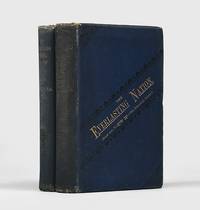
1889146767London: Abraham J. Lev & Co.; John Snow & Co. 1889-90. First and only editions of the first two years of Reverend Isaac's periodical for the Jewish people gathering issues from May 1889 to December 1890. This rare publication includes the complete story of "The Star of Peace" by "Ben Abram" in which the adventures of Isaac Da Costa in Jamaica and in England were those of Isaacs's own father. We were unable to trace any copy in commerce and only six in institutions; Library Hub locates three copies only Edinburgh UCL BL and WorldCat adds a further three Harvard Hebrew Union College National Library of Israel. The Everlasting Nation was published between 1889 and 1892 and comprised four volumes in total. "There is no periodical in existence which professes to start from the stand-point and to comprehend a like variety of topics as those which are enumerated in the Programme of 'The Everlasting Nation'. The magazines which are connected with existing missionary work are necessarily of a missionary character. But here our attitude is that of the Hebrew-Christian" introduction. Albert Augustus Isaacs 1826-1903 was a 19th-century historian and anthropologist specializing in the history of the Middle-Eastern Jewish and Arabic people. His travels familiarized him with Palestine and he wrote among others The Dead Sea 1857 and A Pictorial Tour in the Holy Land 1858 which is illustrated with the many photographs he took himself. Born and baptised into the Church of England in Jamaica Isaacs was of Jewish parentage and "throughout his long life he identified himself with every movement for the welfare of his brethren according to the flesh. In 1866 he was appointed by Lord Berners vicar of Christ Church Leicester in his old diocese of Peterborough where for more than 25 years he laboured in season and out of season carrying on his ministry on staunch Protestant and evangelical lines and being surrounded by a large band of fellow-workers who heartily appreciated his teaching and work. Mr. Isaacs was known as 'the Jew of Leicester' and continued his great interest in all efforts for the conversion of his brethren to Christianity" Bernstein. 2 vols octavo. 1 plate occasional in-text illustration decorative initials. Original dark blue cloth titles in gilt to spines and front boards decorations to boards blocked in black and blind dark brown coated endpapers. Housed together in a custom dark blue cloth slipcase. Slight wear to corners spines sunned rubbed the bindings otherwise sound hinges repaired front hinge of vol. 2 tender between title and index internally fresh; a very good set. Rev. A. Bernstein "Some Jewish Witnesses For Christ" 1909 pp. 281-8. hardcover
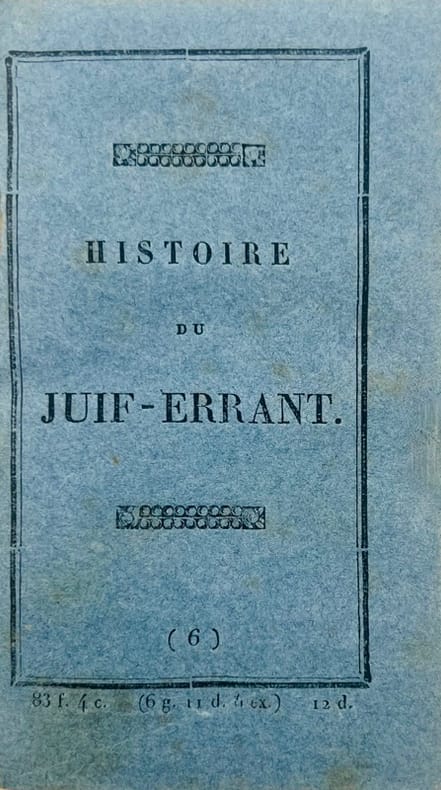
182744385Montbéliard, Imprimerie de Th.-Fréd. Deckherr, sans date, (1827). In-12 (100 x 144 mm) de 24 pp. sur papier bleu, entièrement interfolié, percaline Bradel moutarde, pièce de titre en long de maroquin rouge, couverture bleue imprimée conservée (reliure postérieure du XIXe siècle).
181042288Paris, Clament frères, 1810. In-8 de VI-166 pp., demi-basane marbrée, dos à nerfs orné à la grotesque, couverture muette conservée, non rogné (Creuzevault).
185686924ABParis, Michel Lévy frères, 1856. 58,8x43 cm. 20 S. Text, illustr. Titel, 12 Holzstich-Tafeln. Neuer schlichter Halbleinenband.
188442252Bruxelles, Edouard Maheu, 1884. In-8 de (16)-XXII-232 pp., demi-chagrin brun à coins, dos orné à nerfs, filet doré sur les plats, tête dorée, non rogné (reliure de l'époque).
1843022343Auf Kosten Des Verfassers / C. Reimarus, Berlin 1842/1843. Hartkarton Solide
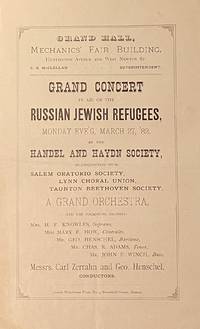
188232820516<p>5 x 8 1/2 in . 4pp. Very good.</p><p><b>This is the rare original announcement and program for a major early benefit concert supporting Jewish refugees from Russia. </b>The pogroms carried out in 1881-82 drove countless Russian Jews to the West. This era marks the beginning of the period of the greatest Jewish immigration to the United States.</p><p>The concert was held at Mechanics Hall in Boston in 1882. The featured conductors are Carl Zerrahn and George Henschel. Henschel had become the first conductor of the Boston Symphony Orchestra a year earlier. Here he leverages his position to support Jewish refugees.</p><p>"Beginning in the 1880s a much larger wave of Jewish immigrants arrived in Boston from the Pale of Settlement in Russia and Eastern Europe. During the nineteenth century the Russian czars had confined Jews to this region and subjected them to religious persecution expulsions and forced military conscription. Passage of the May Laws in the 1880s made matters worse by forbidding Jews from owning or renting land outside of towns or cities and limiting their access to education. From 1881-1883 and again in the early twentieth century Jews were also targeted in violent riots or "pogroms" that left thousand dead and caused many more to flee" Boston College 2018.</p><p>The concert program includes pieces by Jewish composers or with Jewish themes including selections from from Mendelssohn's <i>Elijah</i> Handel's <i>Samson</i> and Henschel's "There was an Ancient King" sung by Henschel himself the finest baritone of his day. The performance concludes with Handel's "Hallelujah" chorus performed by the Salem Oratorio Society and the Lynn Choral Union.</p><p>The conductor featured in this program Sir Isidor George Henschel 1850-1934 was a German-born Jewish baritone pianist conductor and composer. He became the first conductor of the Boston Symphony Orchestra in 1881. On his appointment he sent his ideas for an innovative seating chart to his close friend Johannes Brahms who replied in an approving letter of mid-November 1881.</p><p><b>Very rare. Not in WorldCat.</b> Robert Singerman <i>Judaica Americana</i>2d ed Penn Libraries website 2019 3064 notes that the sole located copy once ascribed to the AJHS was "not found in either the Boston or New York collection Jan. 2016."</p> Printed By Jewish Watchman Print[ers]
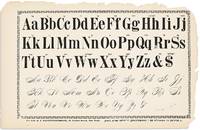
189139620New York: For Sale at J. Katzenelenbogen 35 Ludlow Street New York 1891. Oblong Broadside 9" x 14." The English alphabet is printed with each English letter in type and typescript upper and lower case. Edge-chipped old vertical center fold with splits not affecting text Each English letter in type is followed by its Hebrew counterpart. Mounted attractively in a dark modern frame. Good.<br /> <br /> This lower Manhattan firm printed many works in the Hebrew language. Goldman 471 records a 1918 publication printed by this firm when its office was at 266 Grand Street. For Sale at J. Katzenelenbogen, 35 Ludlow Street, New York unknown
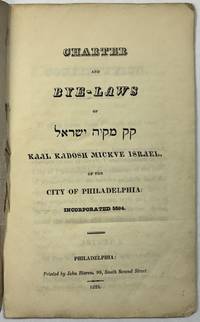
182440227Philadelphia: John Bioren 1824. 24pp. Stitched in original plain wrappers lightly dusted. Very Good.<br /> <br /> Kestenbaum calls this the "First printing of a Charter and official incorporation of a synagogue in America." The pamphlet prints the "Constitution" which is evidently considered the "Charter." Official certifications by the Commonwealth Attorney General Judges of the Supreme Court the Governor and the Secretary all printed here affirm the validity and recording of this "written instrument." <br /> The pamphlet begins with the Congregation's constitution and interspersed Hebrew text. This was a Sephardic congregation. "The fixed prayers shall always be read in the original Hebrew language according to the custom of the Portuguese Jews." The membership included prominent Philadelphia Jewish families: Gratz Phillips Levy Cohen De Cordova Pollok Seixas and others. Bye-Laws are printed at pages 14-24. <br /> Rosenbach 262. Singerman 0399. not in Goldman. AI 17613 2- NNAJHi PPDrop. OCLC records about twelve locations under several accession numbers as of July 2024. John Bioren unknown
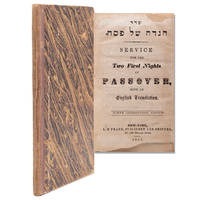
1867325457New York: L.H. Frank Publisher and Printer No. 432 Broome Street 1867. Ninth Stereotype edition. Hebrew and English on facing pages. 70 2pp. 12mo. Contemporary cloth-backed marbled boards. Small loss at bottom of title affecting a few words on verso. Bookplate of A.G. Levy. Ninth Stereotype edition. Hebrew and English on facing pages. 70 2pp. 12mo. The first Haggadah of Passover published in America appeared in 1837 published in New York by S. H. Jackson with an English translation by David Levi of London. Henry Frank first issued a Haggadah based on Jackson's printing though not attributing the translation to Levi in 1850. The present "ninth" stereotype edition by Frank's son is based on the 1860 edition. Goldman 134 L.H. Frank, Publisher and Printer No. 432 Broome Street unknown
188222915Paris A. Lévy A. Durlacher 1882-1897 -in-8 demi-basane 5 volumes, reliure demi-basane havane in-octavo (half binding sheepskin in-8 )(23,2 x 15 cm), dos long (spine without raised bands), décoré "or" (gilt decoration), titre, auteur et tomaison frappés or (gilt title and volume numbering) avec 1 filet "or" en encadrement, haut et bas du dos suite de fer à décor "rocaille" "or" en double colonne dans un encadrement d'un filet perlé "or" avec un filet "or" de part et d'autre, papier marbré rouge jaune et marron aux plats (cover with marbled paper), toutes tranches lisses (all smooth edges), sans illustration (no illustration) XVIII + 145 pages, 1882-1897 Paris : A. Lévy (A. Durlacher) Editeurs,
18591157SAN FRANCISCO. TOWNE & BACON, PUBLISHERS AND PRINTERS. 1859. IN-8 (11,5 X 19,5 X 2 CENTIMETRES ENVIRON) DE 187 PAGES, RELIURE DE L’EDITEUR A LA BRADEL PLEINE PERCALINE VERTE, PLATS ENCADRES DE FLEURONS A FROID, TITRE DORE SUR LE PLAT SUPERIEUR. EDITION ORIGINALE. ETIQUETTE EX-LIBRIS COLLEE SUR LE CONTREPLAT SUPERIEUR. TIMBRE HUMIDE EX-LIBRIS ET SIGNATURE AUTOGRAPHE SUR UN FEUILLET BLANC DE GARDE. PETITS DEFAUTS EXTERIEURS, DONT PETIT ACCROC SUR LE PLAT INFERIEUR, SINON BON EXEMPLAIRE.
1899165998Verlag des Autors, S.-Petersburg, 1899. XIV, 306 S., 1 Bl., Interimsbroschur, gr.8°. Die Günzburg gehörten zu den nobelsten jüdischen Geschlechtern. Softcover Einband gebrochen, vorderer und hinterer Umschlag mit Klebeband unschön befestigt, einige Seiten lose und einige der doppelblattgrossen Tafeln im Falz mit Klebeband befestigt. Teilweise eselsohrig.
18060701-13Lemberg, Grosman [1806?]. gr.-4°. 211 Bll. HLdr. d. Zt. Rü. u. Vors. erneuert. Alte hs. Annotationen am Tit. Vereinz. braunfleckig, einzelne Bll. randverstärkt.
185263216ABMeissen, F. W. Goedsche, 1833,1852. Thaal 1. Zon 4. Mal oufgeligt, verm. 2 Volumes. 1 + 2. Thahl. 8". XII, 107/142 S., , Ilustrations, s/w Lithographien., Halbleinen, marmor. Deckel. minim. berieb. , innen etwas gebräunt ,sonst sehr guter Zustand., Cover minim. rubbend ,slightly stained, nice copies in good condition! very rare!! 4
187222608BWien, A. Reichard & Co., 1872. 4° (22 x 17,5 x 7,3 cm), (2), 1384 Seiten, Der deutsche Text in Frakturschrift und in Kleindruck Schwarzer, reichlich blindgeprägter O.-Ganzlederband (Kanten beschabt) mit goldgeprägtem Rückentitel
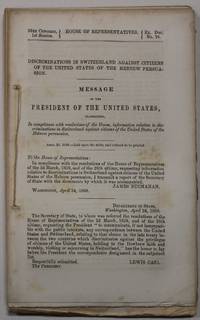
186039878Washington 1860. 101 3 blanks pp. 36th Cong. 1st Sess. HED 76. Uncut and untrimmed. Bit of foxing. Near Fine.<br /> <br /> Lewis Cass President Buchanan's Secretary of State transmits documentation of the anti-Semitism of Swiss authorities. One Gootmann an American citizen was ordered "to quit the country on the ground of his being an Israelite merchant." Much material on this deplorable incident as well as other similar incidents is printed here; with efforts by American authorities to change Swiss behavior. The Report also reviews the litany of Swiss laws which stamp Jews with second-class citizenship and a variety of prohibitions which do not burden other ethnic groups. <br /> Singerman 1691. unknown
189843737Paris, Tyographie de Plon, 1898-1899. 85 livraisons en 1 vol. in-folio, demi-basane brune (reliure de l'époque).
183835428Boston: Published by Parker & Ditson 1838. 4to 12-3/4" x 10".7 1 blank pp. Disbound some loosening minor wear Good.<br /> <br /> "Henry Russell 1812-1900 was an English pianist baritone singer and composer. Born into a distinguished Jewish family Russell was a great-nephew of Chief Rabbi Solomon Hirschell. The composer lived in the United States from 1835 to 1841 whereupon he returned to England and spent the remainder of his artistic career producing musical extravaganzas. The present song is one of many instances of collaboration between lyricist Charles Mackay and musical composer Henry Russell. Other songs of theirs are: "There's a Good Time Coming" "Cheer Boys Cheer" and "To the West." <br /> "Mordecai Manuel Noah 1785-1851 was one of the most important figures of his time. He was a person of many accomplishments: lawyer newspaper editor playwright diplomat politician judge and major activist for Jewish causes. Noah commanded the respect of four U. S. Presidents: Adams Madison Jefferson and Jackson. It has been said that to the Jews of his day he was the quintessential American and to Americans he was the representative Jew" Kestenbaum.<br /> Kestenbaum Auction May 2013. Not in Rosenbach or Singerman. Published by Parker & Ditson unknown
187937334New Orleans: Lilienthal's. 121 Canal Street Touro Building 1879. Cabinet Card oblong 4-1/4" x 6-1/2" depicting Hood's family with portraits of the late General and his wife. Copyright information in white script at bottom of the photo; "Lilienthal Artist" at lower blank margin. Very Good. Title explanatory text and Lilienthal's prominent logo on verso. <br/><br/> "In 1867 a German-born Jewish photographer Theodore Lilienthal 1829-1894 advertised the city's post-Civil War recovery through photographs presented at the Paris Exposition as well as to Napoleon III. Lilienthal also promoted New Orleans to northern investors in 1873 through a book of photographs. Lilienthal considered one of New Orleans's most successful photographers later involved himself in spreading the truth about anti-Semitism in the photography field by offering to distribute for free an article criticizing that practice" Pollack Visual Art and the Urban Evolution of the New South Chapter 3. "Part of the first generation of photographers in New Orleans Theodore Lilienthal was the city's most successful nineteenth-century photographic entrepreneur. At the height of his commercial success from 1875 to 1885 he operated one of the largest studios in the South and was recognized as a pioneer of new photographic processes. His work as a portraitist and view maker was unsurpassed in the Civil War and Reconstruction eras" web site of 64parishes article on Lilienthal. <br/> Confederate General John Bell Hood-- known for his wild bravery his several serious wounds and his disastrous defeats at Atlanta and Franklin-Nashville-- married Anna Marie Hennen after the War. After producing eleven children in ten years including three sets of twins the General his wife and their oldest daughter contracted yellow fever and died. <br/> New Orleans and particularly veterans of Hood's Texas Brigade created the "Hood Relief Committee." In the photograph the ten orphans pose near portraits of their mother and father with a seat at far left open for their deceased sister Lydia. Printed caption on verso notes "Every Picture Sold adds to the Permanent Fund for the Education and maintenance of these 'Wards of the South.' Lilienthal's. 121 Canal Street Touro Building unknown books
183835428Boston: Published by Parker & Ditson 1838. 4to 12-3/4" x 10".7 1 blank pp. Disbound some loosening minor wear Good.<br/><br/> "Henry Russell 1812-1900 was an English pianist baritone singer and composer. Born into a distinguished Jewish family Russell was a great-nephew of Chief Rabbi Solomon Hirschell. The composer lived in the United States from 1835 to 1841 whereupon he returned to England and spent the remainder of his artistic career producing musical extravaganzas. The present song is one of many instances of collaboration between lyricist Charles Mackay and musical composer Henry Russell. Other songs of theirs are: "There's a Good Time Coming" "Cheer Boys Cheer" and "To the West." <br/> "Mordecai Manuel Noah 1785-1851 was one of the most important figures of his time. He was a person of many accomplishments: lawyer newspaper editor playwright diplomat politician judge and major activist for Jewish causes. Noah commanded the respect of four U. S. Presidents: Adams Madison Jefferson and Jackson. It has been said that to the Jews of his day he was the quintessential American and to Americans he was the representative Jew" Kestenbaum.<br/>Kestenbaum Auction May 2013. Not in Rosenbach or Singerman. Evidently about twenty institutional holdings recorded on OCLC as of November 2018. Published by Parker & Ditson unknown books
1817155997Frankfurt, Wenner, 1817. 4 Bll.; 2 Bll., 134 S.; 2 Bll., 78 S. Schlichter broschierter Umschlag der Zeit.
18650167-21Wien,Zoeller [1865]. qu.4°. Lithograph. Titelbl. u. 25 lithograph. Taf. nach Originalphot. lose in Priv. Papierflügelmappe mit aufgezog. vord. Originalumschlag, dieser etw. berieben u. mit farbl. passend ergänztem Ausriß, die Taf. häufig (einige wenige etw. stärker) (stock)fleckig (zumeist aber nur im weißen Rand), insges. gut erh. Ohne das Widmungsblatt.