Michel FoucaultBiblio.com
1 331 résultats
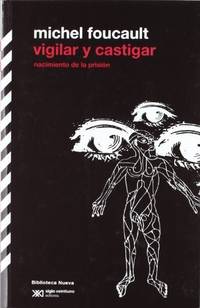
20129788415555018-2025Biblioteca Nueva 2012. Paperback. New. <p><strong>Author:</strong> Michel Foucault</p><p><strong>Publisher:</strong> Biblioteca Nueva</p><p><strong>Binding:</strong> Paperback</p><p><strong>ISBN:</strong> 9788415555018</p><p><strong>Release Date:</strong> 2012</p><p><strong>Number Of Pages:</strong> 384</p><p><strong>Details:</strong> Quizás hoy provoquen vergüenza nuestras prisiones. El siglo XIX se sentía orgulloso de las fortalezas que construía en los límites de las ciudades y a veces en el corazón de éstas. Se complacía en esa nueva benignidad que reemplazaba los patíbulos. Se maravillaba de no castigar ya los cuerpos y de saber corregir en adelante las almas. Aquellos muros aquellos cerrojos aquellas celdas fi guraban una verdadera empresa de ortopedia social. Quienes robaban eran encarcelados también aquellos que violaban o mataban. ¿De dónde proviene el curioso proyecto de encerrar para corregir disciplinar controlar que traen consigo los códigos penales de la época moderna ¿Es una herencia de las mazmorras medievales Más bien una tecnología novedosa: el desarrollo de un conjunto de procedimientos de coerción colectiva para dividir en zonas medir encauzar a los individuos y hacerlos a la vez dóciles y útiles. Vigilancia ejercicios maniobras puntajes rangos y lugares clasifi caciones exámenes registros: una manera de someter los cuerpos de dominar las multiplicidades humanas y de manipular sus fuerzas que fue desplegándose en los hospitales en el ejército las escuelas y los talleres: la disciplina. El siglo XIX inventó sin duda las libertades pero les dio un subsuelo profundo y sólido: la sociedad disciplinaria de la que aún dependemos.</p> Biblioteca Nueva paperback
20129788415555018-2025Biblioteca Nueva 2012. Paperback. New. <p><strong>Author:</strong> Michel Foucault</p><p><strong>Publisher:</strong> Biblioteca Nueva</p><p><strong>Binding:</strong> Paperback</p><p><strong>ISBN:</strong> 9788415555018</p><p><strong>Release Date:</strong> 2012</p><p><strong>Number Of Pages:</strong> 384</p><p><strong>Details:</strong> Quizás hoy provoquen vergüenza nuestras prisiones. El siglo XIX se sentía orgulloso de las fortalezas que construía en los límites de las ciudades y a veces en el corazón de éstas. Se complacía en esa nueva benignidad que reemplazaba los patíbulos. Se maravillaba de no castigar ya los cuerpos y de saber corregir en adelante las almas. Aquellos muros aquellos cerrojos aquellas celdas fi guraban una verdadera empresa de ortopedia social. Quienes robaban eran encarcelados también aquellos que violaban o mataban. ¿De dónde proviene el curioso proyecto de encerrar para corregir disciplinar controlar que traen consigo los códigos penales de la época moderna ¿Es una herencia de las mazmorras medievales Más bien una tecnología novedosa: el desarrollo de un conjunto de procedimientos de coerción colectiva para dividir en zonas medir encauzar a los individuos y hacerlos a la vez dóciles y útiles. Vigilancia ejercicios maniobras puntajes rangos y lugares clasifi caciones exámenes registros: una manera de someter los cuerpos de dominar las multiplicidades humanas y de manipular sus fuerzas que fue desplegándose en los hospitales en el ejército las escuelas y los talleres: la disciplina. El siglo XIX inventó sin duda las libertades pero les dio un subsuelo profundo y sólido: la sociedad disciplinaria de la que aún dependemos.</p> Biblioteca Nueva paperback
1992BN262448Siglo XXI 1992. 1992. Vigilar y Castigar - Nacimiento de La Prision <br/><br/>Vigilar y Castigar - Nacimiento de La Prision Michel Foucault Siglo XXI unknown
9682301173.Gpaperback. Good. Access codes and supplements are not guaranteed with used items. May be an ex-library book. paperback
7Z-SVMM-I2HZEditora Vozes. New. Editora Vozes unknown
20156574035Bielefeld: transcript Verlag 2015. 160 S. Broschiert, Taschenbuch
181018291Leipzig, A. Bauer, 1810. Zweyte Auflage vermehrt. Marmorierter Pappband der Zeit, schwarzer Rücken u. rotes Rückenschild 8°, XXXII, , 2 Bl, 608 S.;- Ecken u. Kapitale gering bestoßen, Rücken unten mit kleiner Fehlstelle, leicht gebräunt, Exlibris, Titel mit Stempel des Hamburger Gesundheitsrates, sonst sauberes Exemplar.
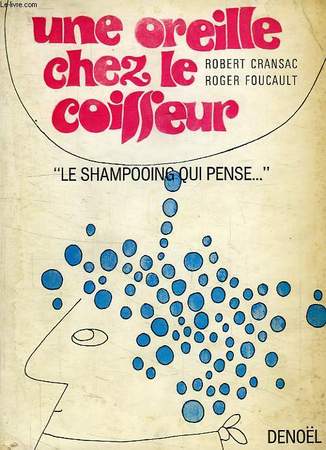
R150026033DENOËL .. 1966.. In-8. Broché. Bon état, Couv. légèrement passée, Dos satisfaisant, Intérieur acceptable. 214 pages. 1ère de couverture illustrée en couleurs.. . . . Classification Dewey : 840-Littératures des langues romanes. Littérature française
1968RO40131549Denoël. 1968. In-8. Broché. Etat d'usage, Couv. légèrement passée, Dos satisfaisant, Intérieur acceptable. 188 pages. Envoi manuscrit des auteurs en page de faux-titre. Ouvrage de Service de Presse (2e plat perforé).. . . . Classification Dewey : 97.2-Dédicace, envoi
1966R150204350DENOEL. 1966. In-8. Broché. Bon état, Couv. convenable, Dos satisfaisant, Intérieur frais. 219 pages. . . . Classification Dewey : 848-Ecrits divers, citations, journaux intimes, souvenirs, mémoires
39494VPPG
196882896Couverture souple. Broché. 188 pages.
9876290983.Gpaperback. Good. Access codes and supplements are not guaranteed with used items. May be an ex-library book. paperback
197243892Fata Morgana Couverture souple Montpellier 1972 Ed. numérotée
199385343Hamburg, Junius Verlag GmbH, 1993. 246 S. Kl.-8° Klein-Oktav, Broschiert
183518282Berlin, A. Hirschwald, 1835. Einzige Ausgabe. Marmorierter Pappband der Zeit, 8°, XIV, 130 S., rotes Rückenschild;- etwas berieben, Vorspann mit schwachem Wasserrand, Exlibris, Bibliotheks-Stempel auf Titel (gelöscht).
1996RO80156332ZANZIBAR - MILAN. Avril 1996. In-16. Broché. Bon état, Couv. légèrement passée, Dos satisfaisant, Intérieur frais. 116 pages. Nombreuses illustrations en noir et blanc, dans le texte et hors-texte par Bruno Bazile.. . . . Classification Dewey : 805.5-Poche
1996RO80217883Zanzibar. 1996. In-12. Broché. Etat d'usage, Couv. convenable, Dos satisfaisant, Quelques rousseurs. 116 pages augmentées de quelques illustrations en noir et blanc dans le texte. Traces d'encre sur certaines pages dans le texte.. . . . Classification Dewey : 805.5-Poche
20022092902140700337Chiku ma shobo 2002. Soft Cover. Fine. Size: B6 Number of books: 1 book Chiku ma shobo paperback
20022111902158501850Chiku ma shobo 2002. Soft Cover. Fine. Number of pages: 274p. Size: 20cm Chiku ma shobo paperback
1996RO30066406MILAN N°169. 1996. In-16. Broché. Bon état, Couv. convenable, Dos satisfaisant, Intérieur frais. 116 pages. Nombreux dessins en noir et blanc dans le texte et hors texte.. . . . Classification Dewey : 843.0877-Littérature fantastique
180918327Paris, J. A. Brosson, 1809. Seconde édition, entièrement refondue et très-augmentée. Marmorierter Pappband, schwarzer Rücken, rotes Rückenschild, 8°, 2 gefaltete Tabellen, 2 gestochenen Tafeln von Maleuvre, 2 Bl, XXXII, 496 S.;- leicht berieben, Rückenschild, leicht stockfleckig, gebräunt, 1 Blatt mit kleinem Einriß, Exlibris, Titel mit Stempel des Hamburger Gesundheitsrates, schönes Exemplar.
1986RO20216637Hommes et Terres du Nord. 1986. In-4. Broché. Bon état, Livré sans Couverture, Agraffes rouillées, Intérieur frais. Paginé de 116 à 121. Relié par deux agraffes. Texte sur deux colonnes.. . . . Classification Dewey : 908.4427-Régionalisme : Nord-Pas-de-Calais
2020985691.Gpaperback. Good. Access codes and supplements are not guaranteed with used items. May be an ex-library book. paperback
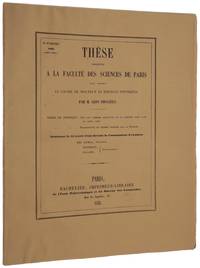
18534843Paris: Bachelier 1853. First edition. <p>First edition rare and an exceptionally fine copy of Foucault's doctoral thesis on the speed of light in which he provides a convincing proof for the wave theory of light. Foucault undertook a series of optical experiments using an apparatus of rotating mirrors to determine the velocity of light. In this thesis Foucault gives a detailed account of his experiment illustrating his apparatus and proves that light travels faster in air than in water a decisive argument in favour of the wave theory of light; it was not until 1862 that he was able to determine a numerical value for the speed of light of about 298000 kilometers per second a figure significantly smaller and more accurate than Fizeau's.</p>. Proving the wave theory of light. <p>First edition rare and an exceptionally fine copy of Foucault's doctoral thesis on the speed of light in which he provides a convincing proof for the wave theory of light. In the 1840s Foucault undertook a series of optical experiments using an apparatus of rotating mirrors to determine the velocity of light. Originally developed by Charles Wheatstone to measure the velocity of electricity the rotating mirror apparatus had been proposed as an instrument for the measurement of light in 1838 by Dominique-François Arago who failed in his own attempts to carry out the experiment. Foucault's initial work was carried out in conjunction with the physicist Armand Hippolyte Louis Fizeau 1819-1896; but a personal dispute broke up their partnership in 1847 and the two collaborators became rivals working separately on the same problem using the same technique. Both reached the same conclusion but while Fizeau was the first to obtain in 1849 a precision measurement of the velocity of light Foucault pre-empted him in announcing on 30 April 1850 that light travels faster in air than in water a decisive argument in favour of the wave theory of light which by the mid-nineteenth century had become generally accepted. In his thesis Foucault gives a detailed account of his experiment illustrating his apparatus; it was not until 1862 that he was able to determine a numerical value for the speed of light of about 298000 kilometers per second a figure significantly smaller and more accurate than Fizeau's. Foucault is today best known for the pendulum experiments demonstrating the rotation of the earth which he performed in 1851. Perhaps he considered these experiments to be unsuitable as a thesis topic as the result the rotation of the earth was well known to everyone whereas the results of his air-and-water experiments though expected by most scientists were new. ABPC/RBH list five copies in the last 40 years: Christie's 2008 $17395; Christie's Paris 2004 €9000; Christie's 2004 $8812; Christie's 1999 $10350; Christie's 1998 $7475.</p> <br /> <p>"The early-to-mid 1800s were a period of intense debate on the particle-versus-wave nature of light. Although the observation of the Arago spot in 1819 may seem to have settled the matter definitively in favor of Fresnel's wave theory of light various concerns continued to appear to be addressed more satisfactorily by Newton's corpuscular theory .</p> <br /> <p>"In 1834 Charles Wheatstone developed a method of using a rapidly rotating mirror to study transient phenomena and applied this method to measure the velocity of electricity in a wire and the duration of an electric spark 'An Account of Some Experiments to Measure the Velocity of Electricity and the Duration of Electric Light' Philosophical Transactions of the Royal Society of London vol. 124 pp. 583-591. He communicated to François Arago the idea that his method could be adapted to a study of the speed of light. Arago expanded upon Wheatstone's concept in an 1838 publication 'Sur un système d'expériences à l'aide duquel la théorie de l'émission et celle des ondes seront soumises à des épreuves décisives' Comptes rendus hebdomadaires des séances de l'Académie des sciences vol. 7 pp. 954-960 emphasizing the possibility that a test of the relative speed of light in air versus water could be used to distinguish between the particle and wave theories of light" Wikipedia.</p> <br /> <p>"A comparison of this velocity in air and in water would be a clear experimental test between the wave and particle theories of light since the former required light to travel faster in air; the latter in water" DSB.</p> <br /> <p>"In 1845 Arago suggested to Fizeau and Foucault that they attempt to measure the speed of light. Sometime in 1849 however it appears that the two had a falling out and they parted ways pursuing separate means of performing this experiment. In 1848-49 Fizeau used not a rotating mirror but a toothed wheel apparatus to perform an absolute measurement of the speed of light in air .</p> <br /> <p>"In 1850 and in 1862 Léon Foucault made improved determinations of the speed of light substituting a rotating mirror for Fizeau's toothed wheel. The apparatus involves light from a slit S reflecting off a rotating mirror R forming an image of the slit on the distant stationary mirror M which is then reflected back to reform an image of the original slit. If mirror R is stationary then the slit image will reform at S regardless of the mirror's tilt. The situation is different however if R is in rapid rotation. As the rotating mirror R will have moved slightly in the time it takes for the light to bounce from R to M and back the light will be deflected away from the original source by a small angle.</p> <br /> <p>"Guided by similar motivations as his former partner Foucault in 1850 was more interested in settling the particle-versus-wave debate than in determining an accurate absolute value for the speed of light. Foucault measured the differential speed of light through air versus water by inserting a tube filled with water between the rotating mirror and the distant mirror. His experimental results announced shortly before Fizeau announced his results on the same topic were viewed as 'driving the last nail in the coffin' of Newton's corpuscle theory of light when it showed that light travels more slowly through water than through air. Newton had explained refraction as a pull of the medium upon the light implying an increased speed of light in the medium. The corpuscular theory of light went into abeyance completely overshadowed by wave theory. This state of affairs lasted until 1905 when Einstein presented heuristic arguments that under various circumstances such as when considering the photoelectric effect light exhibits behaviors indicative of a particle nature.</p> <br /> <p>"In contrast to his 1850 measurement Foucault's 1862 measurement was aimed at obtaining an accurate absolute value for the speed of light since his concern was to deduce an improved value for the astronomical unit. At the time Foucault was working at the Paris Observatory under Urbain le Verrier. It was le Verrier's belief based on extensive celestial mechanics calculations that the consensus value for the speed of light was perhaps 4% too high. Technical limitations prevented Foucault from separating mirrors R and M by more than about 20 meters. Despite this limited path length Foucault was able to measure the displacement of the slit image less than 1 mm with considerable accuracy. In addition unlike the case with Fizeau's experiment which required gauging the rotation rate of an adjustable-speed toothed wheel he could spin the mirror at a constant chronometrically determined speed. Foucault's measurement confirmed le Verrier's estimate. His 1862 figure for the speed of light 298000 km/s was within 0.6% of the modern value" Wikipedia.</p> <br /> <p>Jean Bernard Léon Foucault 1819-68 "worked in a laboratory set up in his home until following the award of the Cross of the Legion of Honor in 1851 for his pendulum experiment and the docteur ès sciences physiques in 1853 for his thesis comparing the velocity of light in air and water he was given a place as physicist at the Paris observatory by Napoleon III. Further honors followed: the Copley Medal of the Royal Society in 1855 officer of the Legion of Honor and member of the Bureau des Longitudes in 1862 and foreign member of the Royal Society 1864 and the academies of Berlin and St. Petersburg. Finally after having failed to be elected in 1857 Foucault was chosen in 1865 following the death of Clapeyron a member of the Académie des Sciences" DSB.</p> <br /> <p>En français dans le texte 270; Norman 820.</p> <br/> <br/> 4to 282 x 230 mm pp. iv 35 1 with one large folding engraved plate. Original printed wrappers unopened. Marginal corrections to text on pages 3 and 5 in the author's hand. Very rare in such fine condition. Bachelier unknown