Stefano CatucciMareMagnum

1 330 résultats
La lotta per la visibilità è una delle principali ragioni di conflitto che le società occidentali hanno conosciuto in un periodo storico di lunga durata che arriva fino a oggi. Michel Foucault ne scrive in un piccolo saggio del 1977, "La vita degli uomini infami", ma in realtà tocca la questione durante tutto l’arco del suo percorso di ricerca. Pur non affrontandola mai in modo sistematico, ne lascia emergere lo spessore ogni volta che tratta problemi come l’esclusione e l’emarginazione sociale, la prigione, il crimine, le pratiche di costituzione del sé, ma anche esperienze estetiche come la letteratura e la produzione di immagini. Intorno alla lotta per la visibilità si gioca infatti una parte fondamentale dei rapporti fra gli individui e il potere. Non è un fenomeno a senso unico. Per un verso siamo catturati in un regime di visibilità sempre più esteso che mira ad afferrare ogni dettaglio delle nostre esistenze. Per un altro, conquistando nuove forme di visibilità, otteniamo dignità di parola nello spazio pubblico e rivendichiamo il nostro ruolo di soggetti politici. L’intreccio di potere, pratiche sociali ed estetica nella lotta per la visibilità è il nucleo intorno a cui ruotano gli studi di questo libro. Il loro obiettivo è portare l’attenzione su un tema finora trascurato e offrire le riflessioni di Foucault come spunto per ulteriori ricerche. Autori: Stefano Catucci.
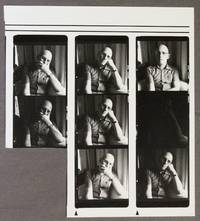
198162331s. l.: Par l'auteur 1981. Fine. Par l'auteur s. l. 1981 21.50 x 24 cm une feuille Set of 8 small-format portraits of Michel Foucault by Marc Trivier. Original unsigned silver print like most of Trivier's works. Precious original silver print by the celebrated Belgian photographer one of the most secretive contemporary artists who despite early international success preferred to limit his production to preserve the coherence of his work. Marc Trivier does not make new prints of his old portraits; the printing paper he used is no longer commercially available. The artist ""makes his own prints on Ilford baryta paper devoting several days of work to each one with particular concentration on rendering the whites in contrast with blacks of rare density. A Marc Trivier print resembles no other. When he agrees to exhibit them he hangs them in stainless steel frames of his own making allowing free rein to the life of the paper."" Xavier-Gilles ""Marc Trivier et la tragédie de la lumière"" in Le Monde Libertaire 2011. This ""life of the paper"" participates in the work just as much as the various alterations that photographs undergo when exposed: ""In boxes the prints buckle but what does it matter: the photographer is fond of this kind of accident."" Claire Guillot ""Les face à face sans échappatoire du photographe Marc Trivier"" Le Monde 2011. Marc Trivier has a particular sensitivity for the material aspect of his productions. While photography is essentially multiple by nature this intervention by the artist in the entire creative process confers an autographic aura to these prints. Photographs of artists madmen trees or slaughterhouses Marc Trivier approaches all these subjects with a gaze as precise as it is intense. ""In his cosmogony each thing each being plant animal or human deserves the same respect. For all are confronted with the same iron law: solitude."" Luc Desbenoit. The beauty that emanates from his photos comes from this nakedness. There are no retouches no reframing. We find in his work the same square format emphasized by the square of the negative that Trivier leaves on his prints. This frame traps our gaze in photographs where the makeup of color is rejected for an incisive black and white. All artificiality having disappeared we do not face the staging of a subject but a presence exacerbated by radiating and singular light witness to an instant of life and not of pose. It is this light linked to the photographic medium that unites Marc Trivier's series: ""Marc Trivier's photographs write a tragedy of light which welcomes beings - men trees or beasts - only by burning them before disappearance."" Xavier-Gilles in Le Monde Libertaire. It is also this light freed from all artifices that gives his works the aura that makes them so present. This ""burning"" of light brings us back to a real instant to Barthes' ""that-has-been"" La Chambre Claire 1980: ""From thirty-five years of photographic practice of obsessions perhaps this is what remains: a singular mode of recording the burning of light declined from one image to another in a succession of propositions that resemble each other and yet each is as singular as the fraction of time to which it refers."" Marc Trivier. ""Photography says only one thing: 'It was.' We only fix what has been. If there is a tragedy it is there."" Marc Trivier Warhol Foucault Beckett Dubuffet . the greatest writers and artists have posed for Trivier. Simultaneously the artist is also interested in the margins of society in what men do not want to see. He then photographs the insane and slaughterhouses that he places alongside celebrities. From the end of the 1980s his work is unanimously recognized and he receives the prestigious Young Photographer Award from The International Center of Photography in 1988 as well as the Prix Photographie Ouverte Charleroi. After the Palais de Tokyo in Paris the Musée de l'Elysée in Lausanne and the Casino in Luxem Par l'auteur unknown
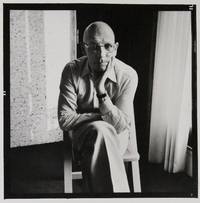
198362310s. l.: Par l'auteur 1983. Fine. Par l'auteur s. l. 1983 22 x 22 cm une feuille FOUCAULT Michel Portrait of Michel Foucault. Original artist's photograph. Large original photographic portrait in black and white by Marc Trivier. Original unsigned silver print like most of Trivier's works. Small tear to upper edge. A handsome original silver print proof by the famous Belgian photographer one of the most secretive contemporary artists who - despite early international success - preferred to limit his output to preserve the coherence of his oeuvre. Marc Trivier doesn't do after-prints of his old portraits and in any case the paper he used for printing is no longer sold. The artist ""prints his images himself on Ilford baryta paper devoting several days of work to each. He pays special attention to rendering the whites contrasted with unusually dense blacks. A Marc Trivier print is like none other. When he does agree to exhibit his images he suspends them in self-made stainless steel frames giving the paper the freedom to live its life"" Xavier-Gilles ""Marc Trivier et la tragédie de la lumière Marc Trivier and the Tragedy of Light"" in Le Monde Libertaire 2011. This ""life of the paper"" participates in the work in the same way as the various changes that the photographs undergo when they're exhibited: ""In the boxes the prints buckle but so what: it's the photographer who's giving rise to this sort of accident"" Claire Guillot ""Les face à face sans échappatoire du photographe Marc Trivier The inescapable encounters of the photographer Marc Trivier Le Monde 2011. Marc Trivier has a particular sensibility for the material aspect of his work. Though photography essentially relies on the multiple this intervention by the artist in the entire process of creation gives these prints an autobiographical air. Whether photographing artists mad people trees or abattoirs Marc Trivier approaches all his subjects with a gaze that is as precise as it is intense. ""In his cosmogony each thing each being whether plant animal or human deserves the same respect. Because all are confronted by the same cast-iron law: solitude"" Luc Desbenoit. The beauty that emanates from his photos comes from this nakedness. There is no retouching and no reframing. One finds throughout his oeuvre the same square format underlined by the squares of the negative that Trivier leaves on his images. This frame traps our gaze in the photographs where the artifice of color is rejected for a cutting black and white. All artificiality gone we are faced not with the arrangement of a subject but a presence exacerbated by the radiant and singular light testimony to a lived moment and not a pose. It is this light tied to the photographic medium that unites Marc Trivier's various series: ""Marc Trivier's photographs write a tragedy of light which does not welcome beings - humans trees or animals - but rather burns them before disappearance"" Xavier-Gilles in Le Monde Libertaire. It is also this tragedy of light freed of all artifice that gives his works the air that makes them so immediate. This ""burning"" of the light throws us back into a real moment to the ""that happened"" of Barthes Camera Lucida 1980: ""Of thirty-five years of photography of various obsessions perhaps this is what is left: a singular way of recording the burning of the light carried through one image after another in a succession of propositions that seem to resemble one another and yet each is just as singular as the fraction of the moment to which it refers"" Marc Trivier. ""Photography says only one thing: 'that happened.' You can only record what has been. If there is a tragedy to it it is in this"" Marc Trivier Warhol Foucault Beckett Dubuffet etc.: the most famous writers and artists posed for Trivier. At the same time the artist was just as interested in the margins of society to what people did not wish to see. He therefore photographed the mentally c Par l'auteur unknown
GF15201Dessin original à l'encre de chine sur calque signé - format 13,5 x 10,5 cm -
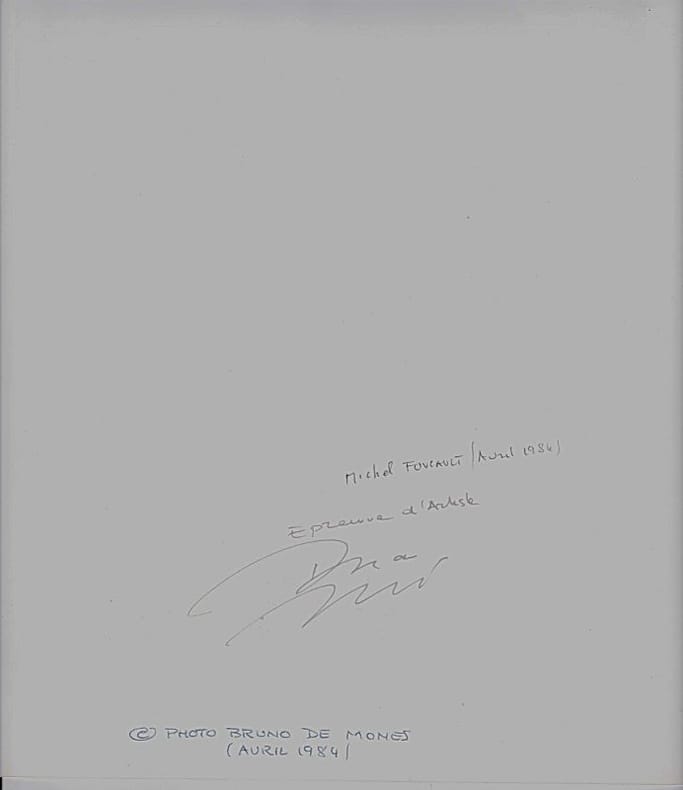
198459502[1984] Impression numérique avec le copyright et la signature du photographe Bruno de Monès au verso, avril 1984, 26 x 22 cm. Portrait du philosophe, réalisé chez lui deux mois avant sa mort.
198459502[1984] Impression numérique avec le copyright et la signature du photographe Bruno de Monès au verso, avril 1984, 26 x 22 cm. Portrait du philosophe, réalisé chez lui deux mois avant sa mort.
19721329761Paris: Societe D'Edition 1972. Softcover. 12mo; pp 87; G/paperback; dark yellow spine with black text; covers show modest wear to spine; small price sticker to rear; minor chips to spine corners; text block has mild tone to exterior edges; previous bookshop's sticker to ffep; previous owner's name to ffep; uncut pages; remainder mark to exterior tail edge; mild cracking to gutter at p 67; deckled edges; map at rear; text in French and Greek;. History of Polybius;. 1329761. FP New Rockville Stock. Societe D'Edition unknown books
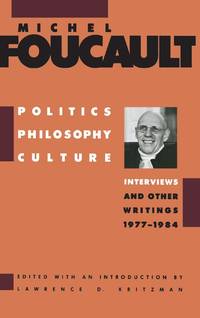
1990x-0415901499Routledge 1990. Paperback. New. 1st edition. 360 pages. 9.00x5.75x1.00 inches. Routledge paperback
2015x-1138138002Taylor & Francis 2015. Hardcover. New. 356 pages. 9.25x6.25x1.00 inches. Taylor & Francis hardcover
455884-nnew. unknown
455884like new. unknown
25462743-nnew. unknown
25462743like new. unknown
1990Q-0415901499Routledge 1990-02-22. Paperback. New. In shrink wrap. Looks like an interesting title! Routledge paperback
0415900824.Ghardcover. Good. Access codes and supplements are not guaranteed with used items. May be an ex-library book. hardcover
1990DADAX0415901499Routledge 1990-04-22. 1. paperback. New. 6.14x0.81x9.21. Buy with confidence. Excellent Customer Service & Return policy. Routledge paperback
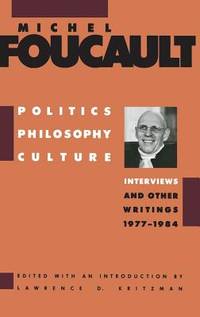
ria9780415901499_inpPaperback. New. New Book; Fast Shipping from UK; Not signed; Not First Edition; Politics Philosophy Culture contains a rich selection of interviews and other writings by the late Michel Foucault. Drawing upon his revolutionary concept of power as well as his critique of the institutions that organize social life paperback
ria9781138138001_inpHardcover. New. New Book; Fast Shipping from UK; Not signed; Not First Edition; Politics Philosophy Culture contains a rich selection of interviews and other writings by the late Michel Foucault. Drawing upon his revolutionary concept of power as well as his critique of the institutions that organize social life hardcover
B9780415901499Paperback / softback. New. This collection of interviews and writings focuses on the cultural vision that characterized Foucault's later work. He assesses truth history the social self from a philosophical and social science perspective and his essays develop into a dialogue with Kant Marx Nietzche Freud and Weber. paperback
1988001-511Used book in excellent and clean condition. <br /><br />The book comes with the original dust jacket which has some color fade on spine but otherwise is also in good and intact condition. Routledge hardcover
A9780415901499Paperback / softback. New. This collection of interviews and writings focuses on the cultural vision that characterized Foucault's later work. He assesses truth history the social self from a philosophical and social science perspective and his essays develop into a dialogue with Kant Marx Nietzche Freud and Weber. paperback
6335877Taylor & Francis Group pp. 360 . Papeback. New. Taylor & Francis Group unknown
1976015088Grasset / Figures broché Bristol Paris 1976 199 pages en format 13 - 20 cm
1-9876292374SIGLO XXI MEXICO ARGENTINA. Paperback. New. 56 pages. Spanish language. 8.27x5.51x0.79 inches. SIGLO XXI MEXICO ARGENTINA paperback
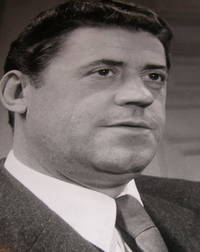
68-0940Paris France: Foucault ca. 1950. B&W Photograph. 18 x 24 cm. Very Good.Provenance:From the archives of the celebrated bookstore and literary salon Herckenrath on Veldstraat in Ghent Gand Belgium. Founded by the writer Adolf Herckenrath 1879-1958 in 1909; continued by his son Walter Herckenrath 1907- 1989 and by Walter’s children Guy and Helga Herckenrath until around 2000….Poète dramaturge libraire et éditeur. Adolf Herckenrath est entré dans l' histoire en tant qu'ami d'enfance pour lequel Karel van de Woestijne a écrit son Laethemsche Brieven sur Lente 1901… À partir de novembre 1909 Herckenrath résida dans la Veldstraat où il conserva la librairie Adolf Hoste et une fois l'université devenue bilingue principalement consacré à la littérature francophone. Entre les deux guerres mondiales Herckenrath était toujours actif en tant que professeur et membre du conseil d'administration de l'académie de théâtre de Gand pour laquelle un magazine De Tooneelschool 1937-1940 avait également été fondé. Il aida à fonder Pan le cercle de la littérature flamande orientale en 1938… En 1935 Herckenrath s'installa dans la villa 't Kersouwken sur l'Eikeldreef à Sint-Martens-Latem. Pendant la Seconde Guerre mondiale il y résidera officiellement pendant quelques mois de mai à novembre 1944. Il est ensuite retourné dans sa librairie de la Veldstraat où il vivrait au moins officiellement jusqu'à sa mort. Après la guerre sa librairie a été reconstruite par le célèbre architecte Geo Henderick. Grâce à la continuation de son fils Walter et de ses petits-enfants Guy et Helga le nom Herckenrath a également survécu jusqu'à la fermeture de l'entreprise à la mi-2000. Paris, France: Foucault, [ca. 1950?] unknown