587 résultats
46572Dressé sur les Relations les plus nouvelles de Mrs. de l'Académie Royale des Sciences par L. C. Desnos et J. B. Nolin Géographe. Se fait et se vends chez Desnos rue St. Jacque St. Severin Quartier de la Place Maubert. Paris 1760 avec privilége du Roy. Dedié au Roy par son trés humble trés obéissant et fidel sujet Desnos et monté par lui. Terrestrial globe 265 mm in diameter; engraved gores and two polar calottes with original hand-colouring over plaster base a few old sealed tears without loss; graduated equator tropics of Cancer and Capricorn ecliptic and Premiere Meridian fixe de l'isle de fer the prime meridian on the island of El Hierro which Louis XIII decreed in 1634; two cartouches - including the dedication to the King sometimes found removed during the French Revolution - decorative vignettes of exotic fauna indigenous peoples and maritime vessels numerous coloured tracks of historical and contemporary explorers including Ferdinand Magellan Jacob Le Maire and Willem Schouten Louis de l'Isle de la Croyere Nicolas de Frondat Aleksei Ilyich Chirikov Jean-Baptiste Charles Bouvet de Lozier and Admiral George Anson; papier-mâché meridian ring with printed declination and elevation engraved calendrical papier-mâché horizon ring with zodiac; edges painted red; supported on four papier-mâché quadrant arcs with the printed names of towns and their longitude and latitudes; turned wooden base and finial; total dimensions 600 x 390 mm; a few discreet signs of old restoration including at the North Pole; warm patina; a fine example of this rare terrestrial globe. A vividly illustrated French table globe from the mid-eighteenth century rich in geographical detail that includes the voyages and discoveries of French English Dutch and Russian explorers. Created during the reign of Louis XV by the partnership of Desnos and Nolin two great mapmakers of the period it is a tremendously evocative artefact from the Age of Enlightenment. The globe shows the discoveries made in the Pacific by the early European expeditions prior to those of Cook and the grands voyages of La Perouse Baudin Freycinet and Duperrey. It depicts the newly charted territory of Nouvelle Hollande as it was known from the most recent discoveries: the western coastline as well as the partial coastlines of Van Diemen's Land and New Zealand are based on the discoveries of the Dutch. Also marked are Dampier's Passage separating New Guinea from New Britain and Terre de S. Esprit Australia del Espíritu Santo the island in the New Hebrides originally mistaken by Quiros for the Australian continent. Louis-Charles Desnos 1725-1805 was one of the most prolific and influential map and globe makers of his age at a time when Paris was the major centre for map production in Europe. He married the widow of Nicolas Hardy the son of Jacques Hardy a globe maker active in the years 1738-1745. Desnos acquired Hardy's inventory and tools and expanded the company further through the acquisition of the inventories of the Jaillot family and of Nicolas de Fer. Desnos would be appointed Royal Globemaker to King Christian VII of Denmark and continued publishing throughout the late eighteenth century. Jean-Baptiste Nolin 1686-1762 continued the established business of his father the famous French cartographer engraver publisher and map dealer Jean-Baptiste Nolin 1657-1708. Collections: The only globe by Desnos recorded in Australian public collections is in the National Gallery of Victoria acquired from us in 2023. Another example of this globe is held in Libraries and Archives Canada. Provenance: Jean R. Perrette his bookplate pasted under the base of the globe. Jean R. Perrette's important collection of rare travel and exploration books was sold through Christie's New York in 2016 Sale 12259 Important Travel Exploration and Cartography April 5 2016. The globe is photographed in the catalogue in situ in Mr. Perrette's Library. Reference: van der Krogt Old globes in The Netherlands 1984 pp. 104-105 unknown
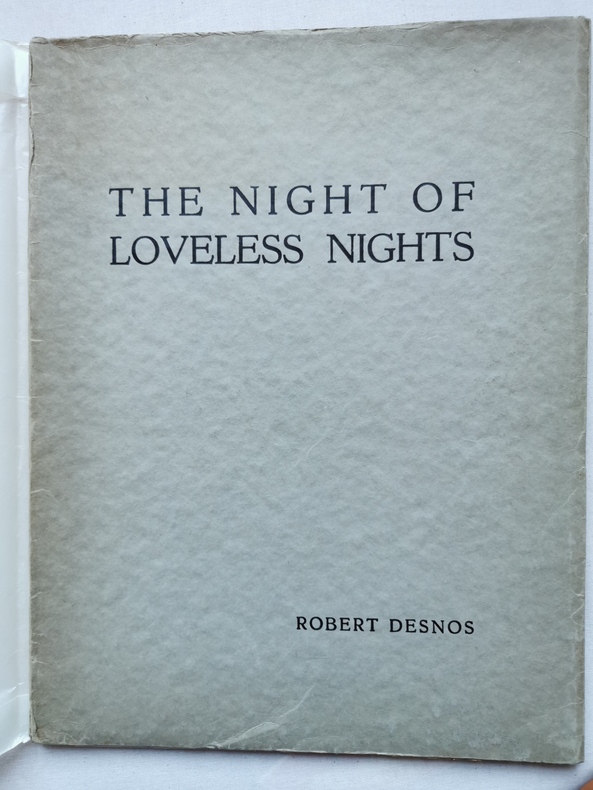
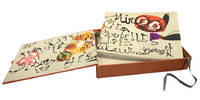
96271Paris Arte Adrien Maeght 1974. . Limited edition number 51 of 150 copies on Arches wove paper signed in red pencil by Miro from an edition of 200 with an additional 20 copies hors commerce; oblong folio 29 x 40 cm; title text and limitation on Arches wove paper 25 lithographs in total 20 colour 5 black and white including wrappers limitation page all bar three double-page; original paper wrappers with first lithograph printed on front spine and back; set of six lithographs in black by or after the same hand one with additions in red ball-point pen in beige paper folder entitled 'documents 1929' housed in publisher's orange cloth covered box with artist's and author's names on spine.<br /> A fine example of the limited edition signed by Miro in red pencil. <br /><br />Both the Spanish artist Joan Miro and the French poet Robert Desnos were prominent figures in the Surrealist movement in Paris where they met in 1925. Miro had long planned to illustrate a book by Desnos but the project was delayed by the outbreak of the Spanish Civil War and subsequently the Second World War in which Desnos was an active member of the French Resistance. He was arrested by the Gestapo in 1944 and sent to several concentration camps including Auschwitz and Buchenwald. Desnos survived the war only to die of typhoid a few weeks after the liberation of the camp where he was held. <br /><br />Nearly thirty years later Desnos' widow approached Miro with the idea of illustrating his works again. In the end they settled on Pénalités de l'enfer ou les nouvelles Hébrides The Penalties of Hell or The New Hebrides Desnos' first work in prose written in Morocco in 1922.<br /> Mourlot 959-90; Cramer 188. Paris, Arte Adrien Maeght, 1974. hardcover
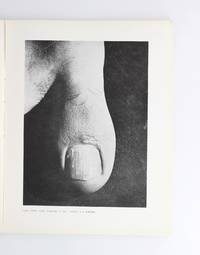
192988960Paris: Documents 1929. Fine. ""Documents . was made into a laboratory a genesis a crucible a rebellion a madness in short an avant-garde."" Jean Jamin Documents Paris 1929-1930 nº 1 à 7 avril 1929 - décembre 1929 ; nº 1 à 8 janvier 1930- octobre 1930 22 x 27.50 cm 15 volumes brochés sous coffret First edition 15 issues in 15 separate instalments abundantly illustrated with black and white photographs. Complete with the special issue Hommage à Picasso #3 1930 and the index for the year 1929 published as a separate 8-page stapled booklet. Some spines slightly faded not affecting the text occasional minor foxing along the margins of certain covers Presented in a custom slipcase with a flat spine in blue morocco title stamped in palladium and spine framed in palladium decorative blue paper boards sky-blue suede doublures; a handsome ensemble signed Boichot. Complete series of this legendary and non-conformist magazine founded by Georges Bataille which gave voice to fields of art and knowledge unrecognised by official culture or considered controversial: popular literature jazz cabaret advertising everyday life Annie Pirabot along with so-called primitive art and objects. Texts by Jean Babelon Jacques Baron Georges Bataille Alejo Carpentier Arnaud Dandieu Robert Desnos Carl Einstein Roger Gilbert-Lecomte Marcel Griaule Juan Gris Eugene Jolas Marcel Jouhandeau Michel Leiris Georges Limbour Marcel Mauss Léon Pierre-Quint Jacques Prévert Raymond Queneau Zdenko Reich Paul Rivet Georges Ribemont-Dessaignes Georges-Henri Rivière André Schaeffner Roger Vitrac among others. Numerous full-page artistic contributions by Hans Arp Constantin Brancusi Giorgio De Chirico Alberto Giacometti Juan Gris Henri Laurens Fernand Léger André Masson Joan Miró Pablo Picasso Joseph Sima etc. The journals pioneering and interdisciplinary approach established it as one of the most important publications of the century: a dissident voice against the doctrinaire surrealism of André Breton Documents was conceived as a war machine against received ideas in Batailles own words and gathered an eclectic array of contributorsacademics ex-Dadaist and Surrealist painters and poets philosophers. It remains renowned for its striking juxtapositions: Rather than assemble documents from separate fields rather than uphold the usual subordination of image to text the journal gives photography drawing and image the privilege of being the most primal substance or the most original trace of human expression Georges Sebbag. Ethnography Documents is remembered above all for Batailles radical ethnographic stance focused on the material and detached from aesthetic criteria and the usual fascination with exoticism. These groundbreaking views foreshadow the Collège de sociologie that Bataille would later found with Michel Leiris Roger Caillois and Jules Moncrot. They are also reflected in the journal through numerous photographs of masks stones and other non-Western artistic creations Siberian Chinese. set alongside modern artworks including drawings by Klee and paintings by Picasso. Bataille also collaborated with the notorious Hans Bellmer who would go on to illustrate the famous second edition of Histoire de lil to create a terrifying portrait of the Hindu goddess of destruction Kali. photography The journal places particular emphasis on photography. Among its most celebrated contributions are the close-up photographs of toes by Jacques-André Boiffard accompanying Batailles essay on the foot in issue no. 6: The point of this article lies in an insistence on directly and explicitly challenging what seduces without relying on poetic contrivances which ultimately amount to little more than diversion Bataille concludes. His fascination with the abnormal and the destructive is also evident in Boiffards fetishistic and sadomasochistic photograph of a woman wearing a Documents hardcover
192988960Documents | Paris 1929-1930 (nº 1 à 7, avril 1929 - décembre 1929 ; nº 1 à 8, [janvier] 1930- [octobre] 1930) | 22 x 27.50 cm | 15 volumes brochés sous coffret
19272199Paris, Éditions surréalistes, 1927. In-8 (22,8 x 16,8 cm), box crème, sur les plats décor de grandes lettres (DORMIR) en relief de même box, ponctué d'étoiles stylisées de différentes tailles en box vert, rouge et ivoire, titre à l'œser violine au premier plat, auteur et artiste au second, dos muet, tête rognée, doublures bord à bord de box crème, boîte de peau velours gris perle, couvertures et dos conservés, coffret avec le dos en box crème titré à l'œser (F. Brindeau - 2010). ÉDITION ORIGINALE illustrée de 14 dessins d'Yves Tanguy, dont la couverture reprise en page de titre et 3 hors-texte. - 14 DESSINS EN NOIR D'YVES TANGUY REPRODUITS, DONT LA COUVERTURE, LA PAGE DE TITRE ET LES 3 HORS TEXTE AQUARELLÉS PAR L'ARTISTE LUI-MÊME. Tirage à 210 exemplaires signés à l'encre par l'auteur et l'illustrateur Celui-ci un des 20 sur papier de Hollande (n° 26), second papier après 10 Japon, les seuls avec la couverture, la page de titre et les 3 hors-texte rehaussés à l'aquarelle par l'artiste (avec 5 Chine nominatifs). Élégante et virtuose reliure de François Brindeau. - Bibliographie : Monod, 8959. Peyré, Peinture et poésie, n° 28, p. 233. From Manet to Hockney 80. Castleman 179. Andel, Avant Garde Page Design 421. Superbe et très rare exemplaire. Photographies supplémentaires de l'ouvrage sur demande. ENGLISH DESCRIPTION :[TANGUY, Yves - PÉRET, Benjamin."Dormir dormir dans les pierres" (Sleeping sleeping in the stones). Paris, Éditions surréalistes, 1927. In-8 (22.8 x 16.8 cm), cream box, on the covers decorated with large embossed letters (DORMIR) from the same box, punctuated with stylized stars of different sizes in green, red and ivory box, title with a purple oeser on the first cover, author and artist on the second, blank spine, cropped head, edge to edge cream box linings, pearl gray velvet skin box, preserved covers and spine, box with cream box spine titled to the oeser (F. Brindeau - 2010). First edition illustrated with 14 drawings by Yves Tanguy, including the cover on the title page and 3 out of text. - 14 DRAWINGS IN BLACK BY YVES TANGUY, INCLUDING THE COVER, THE TITLE PAGE AND THE 3 IN-TEXT WATERCOLORED BY THE ARTIST HIMSELF. Edition of 210 copies signed in ink by the author and the illustrator. This one of 20 on Holland paper (n° 26), second paper after 10 Japan, the only ones with the cover, the title page and the 3 insets enhanced in watercolor by the artist (with 5 nominative China). First edition,first printing. Elegant and virtuoso binding by François Brindeau. Bibliography: Monod, 8959. Peyré, Painting and poetry, no. 28, p. 233. From Manet to Hockney 80. Castleman 179. Andel, Avant Garde Page Design 421. Superb and very rare copy. Additional photographs of the book on request.
19261689151926. MASSON André. C'est les bottes de 7 lieues Cette phrase "Je me vois". By Robert Desnos. 13 ff. Illustrated with 4 etchings by Masson. Folio bound in publisher's wrappers in a new cloth folding box. Paris: Galerie Simon Henri Kahnweiler 1926. A fine copy of the most beautiful of the books Kahnweiler published with Masson's illustrations and the first book by Robert Desnos with illustrations. One of 90 copies on Arches signed by Masson and Desnos from a total edition of 100. Cramer André Masson The Illustrated Books No. 3. hardcover books
19261689151926. MASSON André. C'est les bottes de 7 lieues Cette phrase "Je me vois". By Robert Desnos. 13 ff. illustrated with 4 etchings by Masson. Folio 423 x 328 mm. bound in publisher's wrappers in a new cloth folding box. Paris: Galerie Simon Daniel-Henry Kahnweiler 1926. A fine copy of the most beautiful of the books Kahnweiler published with Masson's illustrations and the first book by Robert Desnos with illustrations. One of 90 copies on Arches signed by Masson and Desnos from a total edition of 100. Saphire and Cramer ANDRE MASSON: The Illustrated Books. No. 3. hardcover
19571839Louis Broder, Paris 1957. Collection "Miroir du poète" n° VI. Un volume in-12 carré (167 x 136 mm), en feuilles, 42 pages, sous couverture de papier japon à rabats titrée en rouge sur le premier plat. Chemise et étui de l'éditeur noir et gris titré en rouge sur le dos. Édition originale de ce recueil de 7 poèmes de Robert Desnos inédits en volume. 4 GRAVURES ORIGINALES À L'EAU-FORTE ET AQUATINTE EN COULEURS (150 x 120 mm). La typographie est dûe à l'imprimerie Union et le tirage de la gravure à Robert Dutrou. Édition : 120 exemplaires numérotés sur vélin de Rives BFK. Celui-ci, l'exemplaire n°2 est signé par André Masson au colophon. Il comporte UNE SUITE COMPLÈTE DES GRAVURES ET DE LA DÉCOMPOSITION DES COULEURS : chaque épreuve de l'état final est justifiée 5/7 et signée au crayon par l'artiste, chaque épreuve de la décomposition des couleurs est justifiée 5/7 et monogrammée au crayon par l'artiste. 16 planches signées au total. Sixième volume de la collection "Miroir du poète" qui en comporte 7. Un huitième volume prévu n'a jamais vu le jour, mais la maquette existe. Le volume en parfait état, l'emboîtage de même (Saphire-Cramer 42). ENGLISH : André Masson - Robert Desnos, : Mines de Rien, Collection Miroir du Poète VI, Louis Broder, Paris, 1957. 4 aquatints printed in colours, 1957, on BFK Rives, title, text, list of contents, justification and the set of four, the justification signed in pencil by André Masson. copy numbered on vélin de Rives paper, from the total edition of 130. This one, copy no. 2, includes A COMPLETE SUITE OF THE ENGRAVINGS AND DECOMPOSITION OF COLORS: each proof of the final state is justified 5/7 and signed in pencil by the artist, each proof of the decomposition of colors is justified 5/7 and monogrammed in pencil by the artist. There is 16 signed plates in total. The set is in mint++ condition in its original slipcase, perfect. overall S. 177 x 153mm. (Cramer 42).
192618542Paris, Éditions de la Galerie Simon, 1926. Grand in-4 broche, couverture imprimee.
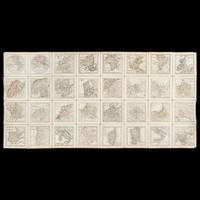
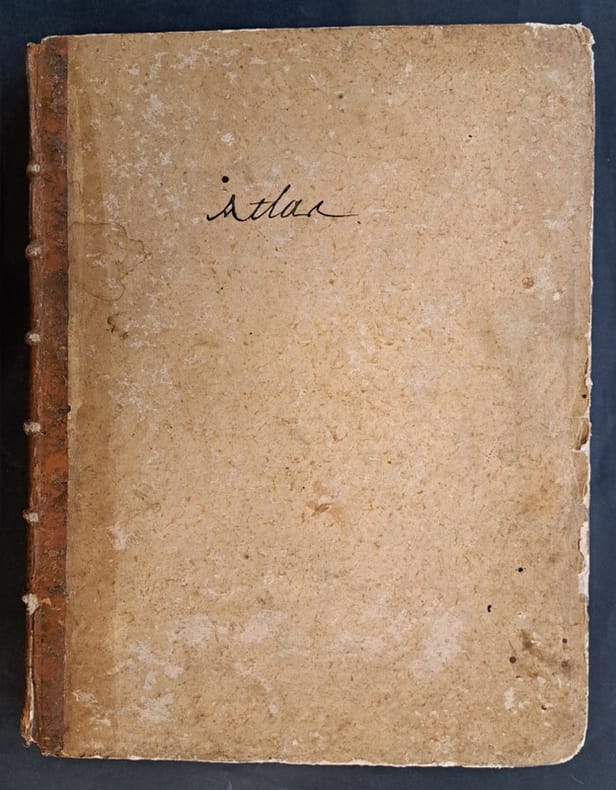
42554Paris : Desnos circa 1771. Thirty-two copperplate engraved maps each measuring 95 x 95 mm image and 115 x 115 mm sheet numbering in the upper right corner of each map; laid on linen overall measurements 470 x 940 mm; inscribed verso Presented by the Marquis St. Simon to A. Gordon with the initials M. G. another Gordon family member below and with another inscription crossed out; housed in a red morocco presentation case with gilt-tooled decoration and title ATLAS 125 x 125 mm lined with blue paper and silk. A rare configuration - possibly unique - of Desnos' Almanach géographique ou petit atlas élémentaire dissected and laid on linen in a fully contemporary presentation case. An inscription records that the cased atlas was presented - presumably to its second owner - by Claude Anne de Rouvroy Marquis de Saint-Simon-Montbléru 1743-1819 a highly significant figure in the American Revolutionary War. The Marquis de Saint-Simon sailed for the Caribbean in 1779 as a colonel in the Touraine regiment. In 1781 he arrived at Jamestown Virginia in command of 3500 French soldiers where he joined forces with a smaller American army under Lafayette. Between them Saint-Simon and Lafayette conducted the siege of Yorktown during which Saint-Simon's force succeeded in preventing Cornwallis and his troops from escaping northwards along the road to Williamsburg. Although he was badly wounded in the leg Saint-Simon refused to leave the lines until the British surrendered and insisted on mounting his horse in order to take part in the surrender ceremony. Saint-Simon was personally thanked by Washington for his contribution to the American cause in a letter written just before his return to the West Indies Library of Congress George Washington Papers Series 4 General Correspondence: George Washington to Saint-Simon October 24 1781. He was also made one of the original members of the Society of the Cincinnati the private patriotic organisation founded by Washington. In 2018 the American Revolution Institute of the Society of the Cincinnati in Washington D.C. announced its acquisition of a portrait of Saint-Simon painted between 1815 and 1818 by the Spanish artist Vicente Lopez. It is the only portrait in American institutional collections of this lesser-known yet important participant in the Revolutionary War. Louis-Charles Desnos was one of the most prolific and influential map and globemakers of his age at a time when Paris was the leading centre of map production in Europe. Desnos married the widow of Nicolas Hardy son of Jacques Hardy a globemaker active during the period 1738-1745. Desnos acquired Hardy's inventory and tools and expanded the company also acquiring the inventories of the Jaillot family and of Nicolas de Fer. Desnos would be appointed Royal Globemaker to King Christian VII of Denmark and continued publishing throughout the late eighteenth century. Desnos first published his miniature atlas in 1770; it would be reissued in two volumes later the same year and again in 1771 with the addition of plate numbers to the maps as in the present example. The maps are titled: Hemisphere Orientale; Hemisphere Occidentale; Europe; Asie; Afrique; Amerique Septentrionale; Amerique Meridionale; Royaume de France; La Suisse diviseÌe en ses xiii cantons et ses allies; L’Italie; DucheÌs de Savoye et Piemont; Le Royaume de Naple et de Sicile; Royaume de Sardaigne; Royaume de Corse; Espagne et Portugal; Royaume de Portugal; Les Isles Britanniques; Pays Bas septentrionaux; Pays Bas meridionaux; L’Empire d’Allemagne; Royaume de Boheme na. les 16 cercles portent le nom de leurs capitales; Royaume de Prusse; Le Royaume de Hongrie; Royaume de Pologne; Royaume de Danemarck; Suede et Norwege; Suede et Norwege septentrionales; Suede et Norwege meridionales; Russie d’Europe; Turquie d’Europe; Russie d’Asie partie occidentale; Russie d’Asie partie orientale. We can locate no other examples which have been laid on linen and specially housed in a morocco case. The present example originally owned by a significant figure in the Revolutionary War is possibly a uniquely prepared copy with a purpose-made sturdy leather case portable and eminently suited to being carried in the pocket of a military coat. hardcover
193048215Paris: Nrf 1930. Fine. Nrf Paris 1930 12 x 19 cm broché First edition an advance service de presse copy Handsome autograph inscription from Robert Desnos to Janine and Raymond Queneau : "". devant qui j'ai repassé le conseil de revision who were my council of review"" enriched with a drawing showing a little elephant holding up Robert Desnos' name in its trunk One joint very slightly cracked at foot. Nrf unknown
176580431765 1 A Paris: Chez Grangé; Guillyn; Despilly; Durand Neveu; Rozet; Delalin; Desnos, 1765. Un volume in-4. 220 x 290 mm. Edition originale de cet atlas publié par lingénieur du roi Louis Brion de La Tour (1743-1803), comprenant 1 f. bl, 1 frontispice gravé, 16 pp. [Division du royaume], 4 ff. non numérotés [Etat des cartes], 1 page de titre gravée [Tableau analytique de la France], 32 cartes, dont une dépliante, 1 page de titre gravé [Le Petit Neptune françois ou Carte des Côtes maritimes du Royaume], 4 cartes dont deux dépliantes, 1 page de titre gravée [L'Indicateur fidèle ou Guide des voyageurs], 1 dédicace gr., 19 cartes, 8 pp. [Prospectus du guide des voyageurs pour les routes royales & Particulieres de la France & autres] + 10 pp. [Catalogue alphaphétique du Supplément des 1380 villes et routes de France] + 16 pp. [Catalogue des ouvrages tant anciens que modernes du fonds du Sr Desnos]. Volume relié en plein veau raciné d'époque, dos à cinq nerfs, caissons dorés aux petits fers, pièce de titre en maroquin bordeaux, lettres dorées. Toutes tranches rouges. Gardes en papier marbré. Ex-libris: André Gutzwiller. Plusieurs noms de propriétaires sont inscrits à la plume au début de l'ouvrage. Importante somme géographique provenant en particulier des fonds cartographiques de Louis-Charles Desnos (1725-1805) et qui s'articule en fait autour de trois séries de cartes: le "Tableau analytique de la France dans lequel on donne une connoissance générale et détaillée du Royaume, considéré sous ses différentes formes de Gouvernement tant civil, qu'ecclésiastique et Militaire", "Le Petit Neptune françois ou Carte des Côtes maritimes du Royaume" et "L'indicateur fidèle ou Guide du voyageur français qui enseigne toutes les Routes Royales et Particulières de la France". Les cartes sont le fait de plusieurs ingénieurs-cartographes, dont Giovanni Antonio Bartolomeo Rizzi Zannoni (1736-1814). Elles sont gravées en taille-douce et pour la plupart magnifiquement retouchées en couleur à la main. L'ouvrage compte au total 55 plans qui ne sont pas classés dans le même ordre qu'annoncé dans le sommaire. Il manque un plan par rapport à l'exemplaire conservé à la Biblithèque nationale. Les tranches et les coins sont émoussés, les plats sont griffés, la coiffe supérieure est fissurée; enfin les cartes portent de féquentes traces d'humidité, ainsi que des salissures occasionnelles, notamment sur les marges. Le papier est parfois légèrement jauni. Pour le reste, l'ouvrage est en bon état et présente une collection unique de cartes du royaume de France, de ses côtes, ainsi que des routes qui le traversent.
193048215Nrf | Paris 1930 | 12 x 19 cm | broché
19445025<p>Contree. Robert Desnos.Robert Godet Paris 1944. Limited edition of 213 numbered copies of which this copy is one of 200 in Lafuma pur fil paper. With one etching in frontispiece loose as issued in mat with inverted signature and date Picasso 23.D.43. A collection of 25 poems by Robert Desnos illustrated with 23 reproductions of different part of the etching to unveiling to the reader page after page the different aspects of the frontispiece. <br /></p> Robert Godet books
19471758Collection le Quadrangle. K éditeur., Paris, 1947. 1 volume in-8 (247 x 195 mm) broché. 100 pp. + fnch sous couverture jaune façon parchemin imprimée du titre en rouge et chemise de papier gris, décorée au pochoir, avec découpe laissant apparaitre le titre sur le premier plat (Pierre Faucheux d'après un dessin d'Yves Tanguy), rhodoïd. ÉDITION ORIGINALE illustrée de 4 gouaches reproduites en phototypie en hors-texte. 1/30 ex. de tête sur vélin pur fil de Johannot, les seuls accompagnés d' UNE EAU-FORTE ORIGINALE D'YVES TANGUY, celle-ci justifiée XXV. La gravure est tirée en noir sur un feuillet volant (papier : 238 x 188 mm, cuivre : 175 x 135 mm). De même, l'exemplaire est numéroté XXV au colophon et paraphé à l'encre par l'éditeur. "Feu Central" regroupe les textes surréalistes "Immortelle Maladie" (1924), "Dormir, Dormir dans les Pierres" (1927), "Je Sublime" (1935), "Un Point C'est Tout" (1946) et "À Tatons", ce dernier publié ici pour la première fois. ENGLISH DESCRIPTION : Collection le Quadrangle. K éditeur., Paris, 1947. 4to. (247 x 195 mm). 100 pp. + fnch. First edition and first printing illustrated with 4 hors-texte phototypie plates reproducing gouaches by Tanguy, inserted loose (as issued) is Tanguy's original etching (leaf : 238 x 188 mm, plate : 175 x 135 mm). Original publisher's printed wrappers as issued : a grey jacket with illustration after Tanguy in white with excised section to front cover and beneath a yellow patterned wrapper with printed text in red. A mint copy of the 30 from the édition de tête on pur fil Johannot numbered XXV in Roman numerals and with Tanguy's original etching also numbered XXV by ink. Only these one have the etching. The original wrappers for the book were designed especially for the first 230 'exemplaires de luxe' of the book, were executed after the maquette by Pierre Faucheux after Tanguy's original drawing.
1770104001P., Desnos 1770 In-folio Reliure demi-basane fauve de l’époque, dos à nerfs, caissons ornés, 10 pp. catalogue et avant-propos historique. Titre allégorique à double page & 66 cartes à double page montées sur onglets et rehaussées en couleurs chacune avec des commentaires. Reliure défraîchie mais solide mors fendillés, coiffes rognées, coins et coupes usés. Quelques rousseurs au titre. Une table utilement manuscrite en contreplat. Bon état des planches.
17654358A Paris, chez Grangé, imprimeur-libraire, au Cabinet Littéraire, Pont Notre-Dame, près la Pompe ; chez Guillyn, Libraire, Quai des Augustins ; chez Despilly, Libraire, rue Saint-Jacques, à la Croix d'or ; chez Durand Neveu, Libraire, rue Saint Jacques, à la Sagesse ; chez Rozet, Libraire, au coin de la rue Zacharie : chez Delalin, Libraire, rue Saint-Jacques ; chez Desnos, Ingénieur-Géographe, rue Saint Jacques, à l'Enseigne du Globes & de la Spère, 1765-(1766-1767). 1765 1 vol. in-4° (298 x 217 mm.), 15 pp. (titre, av. Propos et division du Royaume), (2) ff. (état des cartes) puis 3 parties: - DESNOS. Tableau analytique de la France []. Paris, 1766. Un titre gravé, un « Plan trigonométrique de la France » replié, 29 cartes générales ou partielles de la France, coloriées ou rehaussées de couleurs, et 2 « Carte [s] odographique [s] » circulaires (datés 1763 et 1766), dont un « Tableau des distances des principales villes du Royaume ». - RIZZI-ZANNONI. Le Petit Neptune français, ou Carte des côtes maritimes du Royaume. Paris, 1767. Un titre gravé et colorié, une carte de la France gravée et repliée et trois cartes coloriées. - MICHEL & DESNOS. LIndicateur fidèle ou Guide des voyageurs qui enseigne toutes les routes royales et particulières de la France []. Paris, 1767. Un titre et une dédicace gravés et 19 cartes gravées et coloriées, dont 10 repliées. Relié in fine : le « Prospectus du Guide des voyageurs », suivi du « Catalogue alphabétique des routes royales et particulières, que contiennent toutes les feuilles de lIndicateur Fidèle. » (6 et 10 pp). (Quelques taches au verso de certaines cartes, occasionnés par les pigments). Demi-veau dépoque, dos à nerfs orné, titre de maroquin rouge, tranches rouges.
19663141PAB (ierre-André Benoit), Alès, 1966. LA SUITE COMPLÈTE DES 5 CARTALÉGRAPHIES DE PICASSO POUR ILLUSTRER LE POÈME DE RENÉ CHAR : Les 4 pour l'édition à 50 ex. + La planche supplémentaire réservée aux 10 exemplaires de tête. Les épreuves sont justifiées au crayon par Pierre André Benoit VI/X, VI/VII, la planche supplémentaire étant non numérotée. Ensemble rarissime, en excellent état de conservation. - Note : L'illustration de Picasso utilise la technique de la cartalégraphie, mise au point par Pierre-André Benoit en 1959 pour le livre Dans vos jardins, qui consiste à tirer un carton à la manière d'une gravure : "Le principe en est simple : un carton plat ou ondulé, souple ou plus rigide, est découpé, déchiré, incisé, ou gratté par l'artiste, puis fixé par l'imprimeur sur un support à la hauteur typographique, finalement encré puis imprimé." (Coron) Le 10 octobre 1966, Yvonne Zervos obtint de Picasso deux masques telluriques en cartalégraphie, auxquels se rajoutèrent deux masques supplémentaires confectionnés par l'artiste sous les yeux de l'éditeur en février 1967. Char dédie ses poèmes aux "Transparents ou vagabonds luni-solaires [qui] ont de nos jours à peu près complètement disparu des bourgs et des forêts où on avait coutume de les apercevoir." Goeppert-Cramer, Picasso, n° 138 ; Coron, Le Fruit donné, pp. 60-61 et 75-76 ; Les livres de Picasso réalisés par PAB, n° 454.
176522130Paris 1765. 4to. Grangé Guillyn Desnos et al. Contemporary gold- and blind-tooled marbled calf sewn on 5 supports with the corresponding raised bands on the spine a red morocco title label on the spine lettered in gold a blind-tooled triple fillet border on both boards gold-tooled board edges red edges marbled end papers. With a double-page frontispiece by Le Charpentier after De Sève with a view of the Place de la Concorde in Paris 2 large folding engraved maps of France by Rizzi Zannoni 40 double-page engraved maps and charts of France 10 folding road maps 2 "Cartes odographiques" with the distances between French cities and 3 double-page engraved part-titles all but the frontispiece and titles in a contemporary hand colouring. 2 works in 1 volume the first in 3 parts. 15 1 blank 3 1 blank 8 10; 16 pp. 56 plates First edition of a rare atlas of France mapping out the country from all possible useful points of view. The work includes "analytical" maps which divide France in many ways showing not only the various geographical and political divisions of the country but also the military ecclesiastical juridical genealogical commercial and financial divisions and even hunting territories. The atlas also includes a small sea-atlas with 3 charts showing the French coasts as well as a French road atlas mapping out all the travelling routes of France. The maps were all made under the direction of Louis Charles Desnos 1725-1805 but they were drawn by various mapmakers. Several of the analytical maps and all sea charts were drawn by Rizzi Zannoni and all the road maps by Michel Royal geographer and engineer of the Paris Observatoire. This important geographical compendium drawn primarily from the cartographic collections of Desnos is structured around three series of maps: the Tableau analytique de la France Le petit Neptune and L'indicateur fidèle. All maps 52 in total were newly made and dated 1763-5. In the present composition published by Louis Brion de la Tour ca. 1745-1823 the atlas is in first edition and exactly as issued with all maps including the part-titles dated 1765. Most maps are set within broad ornamental borders and are attractively hand-coloured. After the maps three additional texts follow: the Prospectus du guide des voyageurs pour des routes royales & particulières de la France & autres a Catalogue alphabetique des routes royales et particulières and a Catalogue alphabetique du supplement des 1380 villes de France. Of particular interest is the added catalogue of the stock of Mr. Desnos who was a Paris publisher bookseller and engineer geographer of globes and spheres at Paris. All parts of the present atlas are offered for sale in the catalogue separately as well. With remnants of 2 bookplates mounted on the front pastedown an ownership annotation "Mailly" on the title page. The boards are somewhat scratched with some loss of material. Two maps are browned. Otherwise in very good condition.l Cf. Phillips 2990-2993 all three parts separate with the "Neptune" and "L'Indicateur" dated 1766; Quérard I 515. hardcover
1762CLL-287Paris, à l'enseigne du Globe, 1762 In-4 de 122 pp., veau marbré, filet à froid en encadrement sur les plats, dos à nerfs orné de caissons de fleurons dorés, pièce de titre de maroquin citron, tranches rouges (reliure de l'époque).
19443117Paris, Robert-J. Godet, 1944. Un volume in-4 (280 x 190 mm), 62 pages, broché, couverture rempliée. Édition originale. Exemplaire n° 74 sur vélin pur fil de Lafuma. 1 feuillet volant (287 x 194 mm) avec l'eau-forte originale (245 x 131 mm) signée et datée inversement sur le cuivre : "Picasso 23.D.43". 1 des 200 épreuves sur vélin Lafuma. (Atelier Lacourière pour le tirage de la gravure). Picasso grave en décembre 1943 la planche pour le recueil "Contrée" dédié à Youki qui partageait la vie du poète depuis 1930. L'ouvrage, achevé d'imprimer le 31 Mai 1944, a paru après l'arrestation de Robert Desnos par la Gestapo survenue le 22 février. Desnos mourra en déportation le 8 juin 1945 au camp de Térézine en Tchécoslovaquie. Exceptionnelle gravure "surréaliste" de Picasso. L'artiste combine procédés cubistes (l'architecture est identique à la 3ème planche de Saint-Matorel - 1911) et surréalistes avec des réminiscences de gravures précédentes (voir le buste pour l'Anthologie de l'Humour Noir de Breton - 1938-1940)… Réferences : Baer-Geiser 689; Bloch 362; Cramer 39. - ENGLISH DESCRIPTION : - First edition, first printing. 1 loose leaf (287 x 194 mm) with the original etching "Femme assise" (245 x 131 mm) signed and dated on the copper: "Picasso 23.D.43". 1 of 200 proofs on Lafuma vellum (n° 74). (Atelier Lacourière for the printing of the engraving). Historical notice: Picasso engraved this plate in December 1943 for the collection "Contrée" dedicated to Youki who shared the life of the poet since 1930. The work, printed on May 31, 1944, was published after the arrest of Robert Desnos by the Gestapo occurred on February 22. Desnos died in deportation on June 8, 1945 at the Terezine camp in Czechoslovakia. Exceptional "surrealist" etching by Picasso. The artist combines here cubist (the architecture is identical to the 3rd plate of Saint-Matorel - 1911) and surrealist processes with reminiscences of previous engravings (see the bust for the Anthologie de l'Humour Noir de Breton - 1938-1940 )… - Edition: Paris, Robert-J. Godet, 1944. A 4° volume (280 x 190 mm), 62 pages, paperback, folded cover, (n°183 on pur fil Lafuma wove paper). References: Baer-Geiser 689; Block 362; Cramer 39. More pictures on request. Right mouse click for a full screen picture. In mint condition.
7755Paris, Savoye, Despilly, Duchesne... [& chez] L’Auteur, 1763. In 4 plein maroquin rouge, dos à nerfs orné, triple filets sur les plats, tranches dorées, dentelles intérieures, nom du propriétaire sur le premier plat (Lascoux), page de titre entièrement gravée, carte sur page double en couleur et 23 autres cartes semblables, 21 doubles. Paris, Environs et Faubourgs.
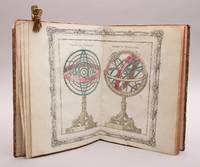
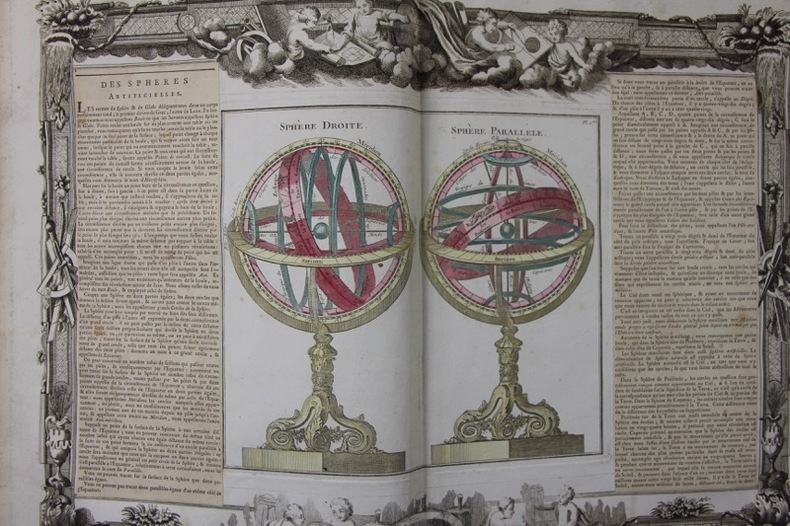
95730Paris Chez le Sr Desnos Ingénieur-Géographe pour les Glôbes et Sphéres et Libraire de sa Majesté Danois 1781. 4to. 23 x 30 cm. Engraved title-page 26 engraved double-paged and hand-coloured maps. Contemporary half calf gilt spine red leather label. Rubbed. . <br/><br/><em>1. Le systême de Ptolémée Thico-Brahé Copernic et Descartes. 2. Sphéres de Ptolémée et de Copernic. 3. Sphéres droite et paralléle. 4. Démonstration géométrique des spéres. 5. Glôbe terrestre et Céleste. 6. A. Position réspective des peuples de la terre. B. Suite de la planche précédente. 7. Hémisphère Occidental. 8. Hémisphère Occidental. 9. Mappe-Monde. 10. L`Europe. 11. La France. 12. La Suisse. 13. L`Italie. 14. L`Espagne. 15. Les Isles Britannique. 16. Les Pays-Bas. 17. L`Allemagne. 18. La Hongrie. 19. La Pologne. 20. La Dannemarc. 21. La Suède et Norvége. 22. La Russie Européene. 23. La Turquie Eoropéene. 24. L`Asie. 25. L`Afrique. 26. L`Amerique. </em> hardcover
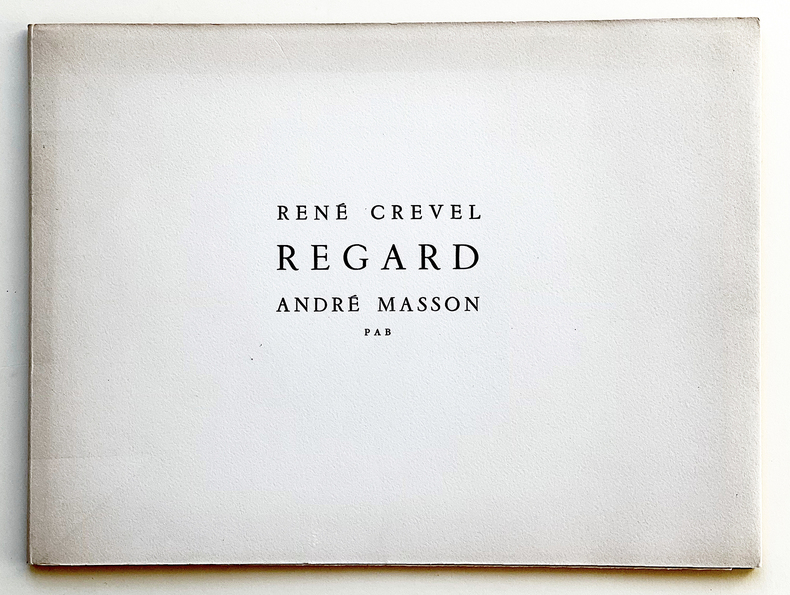
196418122René Crevel : REGARD. Ribaute-les-Tavernes, PAB, 1964. Un volume in-4 (20 x 26,5 cm) à l'italienne, en feuilles sous couverture rempliée imprimée. Édition originale de ce très beau poème d'amour de René Crevel. Illustrée en frontispice d’une GRAVURE ORIGINALE SIGNÉE D’ANDRÉ MASSON. Tirage unique à 19 exemplaires tous sur vélin d'Arches plus quelques exemplaires hors-commece réservés aux amis, comme celui-ci annoté "H.C." et signé au crayon par l'éditeur. L' EXEMPLAIRE EST ENRICHI DES DEUX GRAVURES SUPPLÉMENTAIRES RÉSERVÉES AUX 6 EX. DE TÊTE, SIGNÉES PAR MASSON. Deux amoureux nus et fièvreusement enlacés, un sujet de prédilection de l'artiste qui grave pour ce poème trois de ses plus belles pointes- sèches sur celluloïd. Il s'agit ici du plus grand format utilisé par PAB avec Masson et de son plus petit tirage. Le poème élégamment sensuel de René Crevel fut publié en premier lieu dans la revue Cap en 1924. "Ton regard couleur de fleuve / Est l'eau docile et qui change / Avec le jour qu'elle abreuve."
1770129672P., Desnos 1770 In-folio Reliure demi-basane fauve de l’époque, dos à nerfs, caissons ornés, 10 pp. catalogue et avant-propos historique. Titre allégorique à double page & 66 cartes à double page montées sur onglets et rehaussées en couleurs chacune avec des commentaires. Reliure défraîchie mais solide mors fendillés, accrocs de cuir, coiffes rognées, coins et coupes usés. Intérieur frais.