Women Nursing HistoryBiblio.com
7 962 résultats
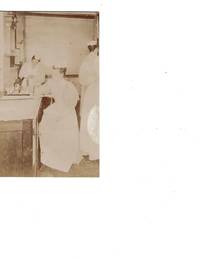
1900168731900. Women in Medicine Three Female Nurses at Work in the Hospital. c. 1900. Original silver gelatin print. 4 x 7 in. One nurse is filling a bottle with medicine while another is seated and logging a patient's progress or recording other information. The third nurse's back is turned to the camera which demonstrates the truly candid nature of this image. The nurses wear white caps and aprons over floor length striped dresses with leg-of-mutton sleeves. At the turn of the 20th century women faced harsh discrimination in applying to medical schools considered by many men to be unsuitable for women's "delicate" nature; thus women leveraged their perceived caregiver role to dominate the new field of nursing. These professionals had high levels training and their jobs required them to master a number of facts of patient care as shown in this photograph. Surface abrasion to lower left edge. Good condition. unknown
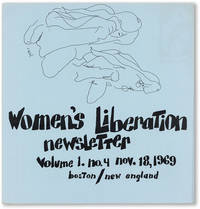
196946193Boston: New England Free Press 1969. First Edition. One-sheet newsletter offset printed on blue stock folded twice to create an eight-panel publication; measures 45.5cm x 43.25cm 17 15/16" x 17" when fully-opened. Hint of sunning to folds else very Near Fine. New England feminist publication printing lengthy statements from Lucia Montague and Diana Gerrity; the newsletter opens into an illustrated poster printing letters quotes poems women's lib news items and movement events. A list of suggested literature appears on rear wrapper. New England Free Press unknown books
16438Life and Light for Women. Vol. XXXIII. Vol. 8. August 1903. Boston: Woman's Board of Missions 1903. Black and white frontispiece photo of pupils at a missionary school in Zimbabwe. Original paper wraps. Staplebound. Starting in the mid-19th century there was a growing movement of international missionary trips for women who felt they had a special duty to Christianize other women who for cultural and societal reasons would not be able to hear the gospel from male missionaries. Most often female missionaries worked in educational capacities establishing schools abroad or worked in medical clinics as nurses and doctors. This report details various projects being done by women missionaries worldwide including medical work being done by Dr. Ruth Hume in India and updates on schools in Africa and Asia. Very good condition. unknown books
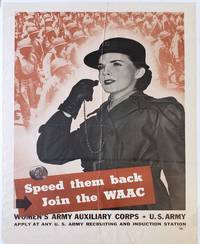
17155WWII military recruitment poster for the Women's Army Auxiliary Corps. 1943. A large poster that documents women who served uniformed auxiliaries roles in the U.S. armed forces. Printed by the Recruiting Publicity Bureau United States Army. 39 x 25.5 inches. "Speed them Back / Join the WAAC". Commanding photo-illustrated image of a woman in military dress who stands confidently and holds a whistle to her mouth. Dozens of marching infantry soldiers are printed behind her. "Women's Army Auxiliary Corps / U.S. Army / Apply at any U.S. Army recruiting and induction station." Spurred on by the attack on Pearl Harbor on Dec. 7 1941 Congress approved the creation of WAAC on May 14 1942 to enhance the US military force and staff non-combat roles with women workers to create a larger male fighting force; they realized that women could supply additional resources desperately needed in both military and industrial sectors. Members of the WAAC were the first women other than nurses to serve within the ranks of the United States Army and over 150000 American women served in the Women's Army Corps during World War II. Given the opportunity to make a major contribution to the national war effort women seized it. They drove trucks repaired airplanes worked as laboratory technicians rigged parachutes served as radio operators analyzed photographs and more. By the end of the war their contributions would be widely heralded and even General Eisenhower felt that he could not win the war without the aid of the women in uniform. "The contribution of the women of America whether on the farm or in the factory or in uniform to D-Day was a sine qua non of the invasion effort." Ambrose D-Day 489. Repaired vertical tear down center. 3 horizontal crease marks. 1 x ½" loss to bottom left corner. ½" closed tear in bottom right edge. In good condition. unknown books
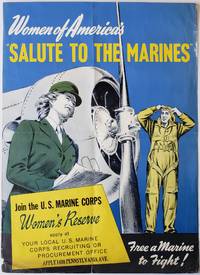
17135Women Military WWII U.S. Marine Corps Women's Reserve Poster. "Women of America's Salute to the Marines." Large color lithograph print poster 23 x 18 inches. No date c. 1942-1945. "Free A Marine to Fight!" "Women of America's Salute to the Marines. Join the U.S. Marine Corps Women's Reserve / apply at your local U.S. Marine Corps recruiting or procurement office / Apply 1400 Pennsylvania Ave." Blue and yellow image of a woman Marine holding a clipboard and working in front of an airplane while a fighter pilot suits up. The US Marine Corps Women's Reserve was the WWII women's branch of the Marines. It was authorized by Congress in 1942 and immediately started recruiting women marines. The purpose of the US Marine Corps Women's Reserve was to release officers and men for combat and to replace them with women in U.S. shore stations for the duration of the war plus six months. The peak strength of the Reserve was about 19000. The qualifications for women who wished to become members of the Reserve were stringent. The eligibility requirements for officer candidates and enlisted women were similar: United States citizenship; not married to a marine; either single or married but with no children under 18; height not less than 60 in 150 cm; weight not less than 95 lb 43 kg; good vision and good teeth. For enlisted members the age limits were from 20 to 35. printed in bottom right corner "Litho U.S.A.". one horizontal and one vertical center crease from original fold lines. Light wear along edges; 2 closed tears 1/4" and 1"; and small ½" corner loss at bottom left. Still inn very good condition with vibrant colors. unknown books
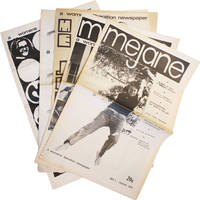
197148781Sydney NSW: Mejane 1971. First Edition. Five tabloid issues 43cm; photo-illustrated newsprint wrappers; ca.16pp per issue; illus. Light wear to extremities horizontal folds for mailing as issued with mild toning to newsprint; Very Good to Near Fine overall. Uncommon radical feminist underground newspaper covering the Australian perspective. Mejane produced by a collective of women all members of Sydney Women's Liberation was the first women's liberation newspaper published in Sydney. It ran to a total of 12 issues ending publication in 1974. Uncommon with no other issues in commerce April 2020 and a scant six US institutions holding any issues Northwestern Harvard Smith Coll. U.Michigan Alverno Coll. U.Wisc.Milwaukee. Mejane unknown books
16872Women History Medicine Early woman surgeon and hospital staff perform an operation. 6 doctors and nurses operate on a patient; notably five of the staff members are women. c. 1920. Original silver gelatin print. 6.5 x 8.5 in. mounted on 8 x 10" board. Two surgeons were masks and appear to be mid-operation on a patient's abdomen; various tools such as forceps clamps and medical scissors can be seen on the operating bed and supply cart. Other medical staff work to prepare equipment for the procedure sterilize tools and monitor the anesthetized patient. Of all medical specialties the most embattled for women is surgery; early on they faced a challenge obtaining education training and facilities as this field of medicine was considered least suitable for women's delicate nature. These young woman then defied the odds of their time to become doctors and work in surgery. Light abrasions to surface top left quadrant affecting leftmost figure's head center top and center left edge. Wear to corners of board. Good to very good condition. unknown books
16010CIVIL WAR. Western Sanitary Commission. YEATMAN JAMES E. letter to Miss Mary E. Howe in Cambridge Massachusetts. Bureau of Western Sanitary<br/>Commissions. St. Louis Missouri. April 2 1862. 8.25 x 8.5 inches folded in half. 4 pp. Postal cover 3c Washington postage stamp cancelled Saint Louis .<br/><br/>Detailed and interesting letter from James Yeatman of the Western Sanitary Commission who thanks Miss Howe for sending her box of clothes and reports that "we are progressing fairly with our work and each day something new is developed that requires renewed efforts--we really fear that the public and our good friends will tire of our repeated appeals . so far they have responded in a most liberal manner . " He discusses the case of the one hospital steamer they have; he notes it has three surgeons twelve male and five female nurses. Yeatman speaks of the generous contributions of the "ladies of New England especially Massachusetts" and the hopes he has for a second floating hospital. He notes that a major battle is imminent in the Tennessee area and speaks of sending supplies. He thanks her for directing the attendance of Mr. Bernard to his commission and finally asks for more clothes including vests and pants.<br/><br/>"Miss Howe" the recipient of the letter was Mary Eleanor Howe who was born June 27 1817 in Worthington Massachusetts. Her father was Judge Samuel Estes Howe 1785-1828 a noted abolitiionist. Her mother was Sarah Lydia Robbins. Mary Eleanor never married but lived witH her mother and school teacher sister and servants in Cambridge until her death on August 13 1897. She is buried in Forest Hills Cemetery in Boston. http://www.cambridgehistory.org/content/dr-estes-howe-citizencambridge The Sanitary Commission was a private relief agency created by federal legislation on June 18 1861 to support sick and wounded soldiers of the United States Army during the Civil War. It enlisted thousands of volunteers many of whom were women.<br/>The Western Sanitary Commission of which Yeatman was president was a private agency based in St. Louis and operated in the west to help the Army deal with sick and wounded soldiers. Led by abolitionists it focused more. on the needs of Freedmen. It was founded in St. Louis August 1861 under the protection of General John C. Fremont and under the leadership of Reverend William Greenleaf Eliot 1811-1887 as well as James E. Yeatman 1818--1901 . Born in Tennessee Yeatman moved to St. Louis in 1842 and established a branch of a Nashville iron manufacturing facility. In 1850 he opened a commission house and became one of the founders of the Merchants' Bank. Though once a slave holder Yeatman was a strong supporter of the Union cause. A major activity of the Western Sanitary Commission was acquiring adequate stocks of medicines and medical supplies for the hospitals run by the U.S. Army. Working with Dorothea Dix he also took charge of finding women to be civilian nurses and nurses' aides in Army facilities. unknown books
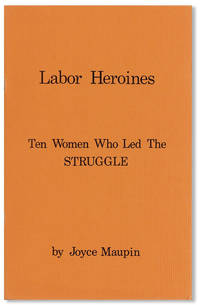
197542279Berkeley: Union WAGE Educational Committee 1975. Slim octavo 21.5cm; printed wrappers stapled; 312pp; illus. A Fine copy. Collection of brief biographical sketches of ten female labor leaders: Sarah Bagley Augusta Lewis Kate Mullaney Leonora Barry Hanna O'Day Clara Lemlich Rose Schneiderman Mother Jones Agnes Nestor and Elizabeth Gurley Flynn. With illustrations by Anne Garson. Union WAGE Educational Committee unknown books
1940List329Haverhill 1940. First Edition. Seven journals each approximately 70 pages with pages measuring 4 ½ x 2 ½ inches. Near Fine. These journals by an unnamed member of the Dean family of Haverhill were assembled around 1940 from collected family and historical photographs. Taken as a whole they provide a richly detailed social history of the region from the perspective of a well-to-do military family with many ties to the local business community. They bridge the gap from the post-Civil War era with reference to G.A.R. reunions and the like to the late 1920s. The author's perspective - conservative sometimes horribly bigoted with a penchant for underlining key passages of her own writing - is on full display throughout. We have not identified the author though she is shown in several photographs. <br /> <br /> Much of the journals recount the details of civic-minded local life often with surprising detail. On an evening in city hall she writes "the walls hung with banners - flags and scrolls of all descriptions front of boxes were elaborately draped the stage represented a campground. " Two entries for 1886 log a fire in Music Hall followed by an account of the "First Hebrew Jew Wedding" about which she writes "too bad it wasn't the last no doubt the people of Haverhill would have been just as well off and I believe better." Some entries show the way in which information from the outside world was filtered by various family members who left Haverhill. An account of a family member's adventures in the Alaskan gold fields " It was very interesting to hear them tell of their experience.the picnic parties and good fishing for salmon and trout in the summer when the weather is warm and nice. Also the Ways of the eskimo. the gold nuggets nice to look at too;" <br /> <br /> Interspersed with the diary entries are many cut photographs and postcards some of family and some of the region and the author weaves her entries onto the versos of the photographs from the diary paper. The photographs are meticulously trimmed in a uniform rounded edge with an impressive aesthetic result. The diaries were likely assembled in the late 1930s or early 1940s as one mentions the hurricane of 1938. Overall they show an uncommonly detailed and lengthy account of a family's life in Massachusetts with much information about the civic history of the Haverhill region. Well preserved in near fine condition with minimal normal wear. unknown books
1930List328Boston 1930. Oblong quarto 49 pp. With appx. 1400 photos most measuring less than an inch square with roughly 175 in larger formats up to 3 ½ by 5 inches. Very Good. A wonderful labor of photographic love created by an unidentified young woman with ties to the Cabot family of Beacon Hill. The album composed largely of tiny contact prints glued in neat grids. Off-kilter compositions - a portion of a steeple against the sky the tail of a dog etc. - are mixed in with more traditional landscapes leading one to question whether the photographer had modernist aspirations or just took a lot of pictures.<br /> <br /> The photographer is unknown but our best guess is that it was someone who was a friend of Ellen Cabot of Beacon Hill perhaps while both were students or just after. Ellen Cabot the most frequent subject of the album is shown in a variety of settings often accompanied by her dog Prowler. Aerial photography the New England coastline camping life in Cambridge and equestrian competition are all on display. Other highlights include a dog named Benito Mussolini and artful shots of a monk's torso. A portion of the photos perhaps five or ten percent are not present though the album is otherwise in excellent condition. Handwritten label on the front reads "Newport Races to Topsfield autumn 1930". Overall the album is a testament to the energy and spontaneity of youth and the possibilities of the photographic form as well as an intimate look into Boston's storied upper class. unknown books
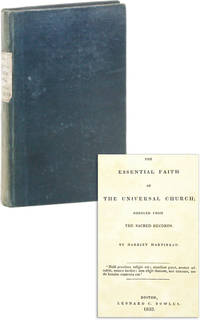
183346011Boston: Leonard C. Bowles 1833. First American Edition. 12mo 15cm.; publisher's blue cloth printed paper spine label; 170pp. Spine cloth a shade faded endpapers toned due to inferior stock light foxing throughout else a Very Good and fresh copy. One of three lengthy essays authored for the Committee of the British and Foreign Unitarian Association as an introduction and promotion of Christian Unitarianism this specifically addressed to members of the Catholic Church. Martineau raised in a Unitarian household began her career writing articles for the Unitarian journal "The Monthly Repository" though she later left the Church for more information see Ruth Watts "Harriet Martineau and the Unitarian Tradition of Education" in "Oxford Review of Education" Vol. 37 no. 5 October 2011 pp. 637-351. Leonard C. Bowles unknown books
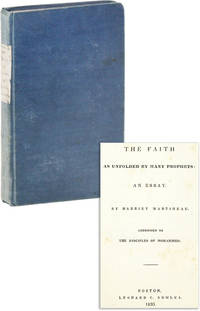
183346010Boston: Leonard C. Bowles 1833. First American Edition. 12mo 15.5cm.; publisher's blue cloth printed paper spine label; 2177pp. Light wear to extremities spine cloth a bit faded corners bumped light foxing throughout else a Very Good quite fresh copy. One of three lengthy essays authored for the Committee of the British and Foreign Unitarian Association as an introduction and promotion of Christian Unitarianism this specifically addressed to "Mohammedans" and written in the form of a dialogue between friends Havilah a Muslim and Eber a Christian. Martineau raised in a Unitarian household began her career writing articles for the Unitarian journal "The Monthly Repository" though she later left the Church for more information see Ruth Watts "Harriet Martineau and the Unitarian Tradition of Education" in "Oxford Review of Education" Vol. 37 no. 5 October 2011 pp. 637-351. Leonard C. Bowles unknown books
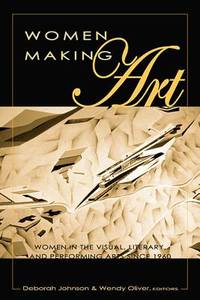
2001b1167<p> Peter Lang 2001. 267 pages. New Soft cover sealed. 9.0"x6.0". be31.</p> Peter Lang Inc., International Academic Publishers paperback
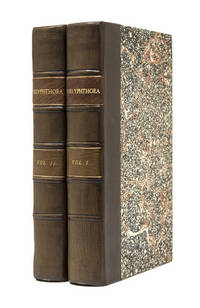
178155463London: J. Dodsley 1781. The second edition enlarged. 2 vols. 8vo. Recent quarter brown morocco and marbled boards. Inoffensive traces of dampstains else fine. The second edition enlarged. 2 vols. 8vo. Marriage Whoredom and Fornication Adultery Polygamy Divorce. Controversial argument in favor of polygamy as compatible with Mosaic law and Christianity and an alternative to the evils of prostitution. J. Dodsley unknown books
199465100Grabels France: Women Living Under Muslim Laws 1994. Presumed first edition/first printing. Wraps. Good. No dust jacket as issued. Cover has some wear and soiling. Eratta slip pasted inside front cover. Text in English French. 23 p.; 30 cm. Women & Islam in Africa series; no 1. Introduction by Ayesha M. Imam. This was compiled largely by Harsh Kapoor. This is a scare work from a feminist/gender studies perspective. Women Living Under Muslim Laws paperback
8186706690.Gpaperback. Good. Access codes and supplements are not guaranteed with used items. May be an ex-library book. paperback
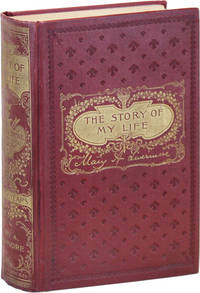
189847551Hartford: A.D. Worthington & Co. Publishers 1898. Early printing. Octavo 23cm; burgundy cloth with titling and decorations stamped in gilt and fleur-de-lis design and decorative border embossed to front cover; floral-patterned endpapers; xxxiv35-7304pp ads; with portrait frontispiece and 121 illustrations throughout the text. Spine gilt just starting to dull tiny bruise to rear cover with thin partial crack to gutter at copyright page and title page nearly separated; Very Good to Very Good. Handsome copy of the American journalist abolitionist and women's rights advocate's memoir including annecdotes regarding her experiences during the Civil War where she became involved with the United States Sanitary Commission. KRICHMAR 4843. A.D. Worthington & Co., Publishers unknown books
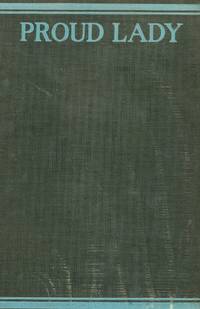
1923List327New York: Alfred A. Knopf 1923. First Edition. With an autograph letter signed with the envelope affixed to the front pastedown. With the bookplate of John and Rebecca Lowrie on front free endpaper. Lowrie reviewed the work for the New York Post and her review of the book affixed to the half-title. Very Good. Neith Boyce was an author and theater artist who worked across genres publishing a range of works and co-founding the Provincetown Players. Boyce and her husband Hutchins Hapgood were at the social center of a large circle of writers and artists including Gertrude Stein Georgia O'Keefe and Djuna Barnes. Their papers held at Yale provide rich insight into their artistic and literary era. <br /> <br /> Proud Lady was the second-to-last novel Boyce wrote and it was apparently her favorite. The novel is the story of Mary Carlin a woman who seeks spiritual perfection in others and who because of her pride cannot make herself leave her unfaithful husband. Rebecca Lowrie in her review written for the New York Post and included here states "all the vividness of the setting the touches which make the people so sure a part of their surroundings are secondary to the tragic figure of the proud lady and the victims of her pride."<br /> <br /> Boyce's letter to Lowrie effusively thanks her for her review of the book which from her tone appears to have been misunderstood by other critics. She writes "I have just seen your review of my novel Proud Lady. It is the most intelligent and best-written review that I have seen so far and I would like to convey to you my appreciation and the pleasure your attitude toward the book has given me." <br /> <br /> Overall a very nice association and a very good copy of an uncommon book. Some light wear and rubbing a few faint scuffs to cloth on the front board slightest bowing to spine but very good. Letter near fine with minimal wear. <br /> <br /> $450. Alfred A. Knopf unknown books
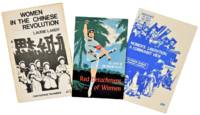
1974184491974. Chinese Women's Communist Revolution Archive of 2 item . "Women hold up half the sky" is the famous quote by Mao Zedong proclaiming the importance of women's role in upholding Chinese society. One of the primary goals of the People's Republic of China was to create a stronger nation which brought into light women's liberation as Chinese women were bound to patriarchal rule for centuries prior. While the PRK progressed women's status during the revolutionary era women were still seen as second class citizens. Women's equality is still a topic that amasses a wide variety of critique and theory. This archive includes 2 paperback pamphlets on women's liberation from a communist lens during the 1970's. The items are:<br /> <br /> -"Women in the Chinese Revolution". Laurie Landy. New York: International Socialists. 1974. Softcover 49 pages. Measures 8.5" x 5.5". Laurie Landy discusses the origins of women under imperialism through Communist China and adds her own criticisms. Minor soiling to edge of cover. Overall very good condition.<br /> <br /> -Women's Liberation: A Communist View. Chicago: October League Marxist-Leninist 1976. Softcover 16 pages. Measures 8.5" x 5.5". One photo depicts anti-imperialist International Women's Day march in New York City 1975. "In solidarity with the Third World struggles for independence demonstrators targeted imperialism as the enemy of women with the theme: IMPERIALISM-NOT-OVER-POPULATION--CAUSES HUNGER UNEMPLOYMENT WAR & INEQUALITY." Illustrated with black and white photos of Women's Day marches in China. Both items overall in very good condition. unknown
197146195New York: Women's Rights Law Reporter Inc 1971-72. First Edition. Two quarto issues 27.5-28cm; stapled wrappers; 71; 55pp; illus. Some trivial dust-soil to wrapper extremities else very Near Fine. First two issues of this periodical dealing with legal issues facing women and women's rights. Includes poetry essays on childcare birth control mental health women in prison education unionizing legal workers etc. Women's Rights Law Reporter, Inc unknown books
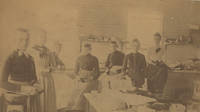
1880LIST124Lawrence 1880. Albumen photograph on card stock 7 ¾ x 4 ½ inches. Good. Working conditions were notoriously bad in Lawrence one of the industrial hubs of the textile industry in the late nineteenth century after the harnessing of the Merrimack River's water power in 1845. The city was a hub of immigration - mostly Irish - and many immigrants who were familiar with mill work flocked to the city in the 1850s. In 1860 an accident at the Pemberton Mill killed 145 workers. The Bread and Roses strike of 1912 also known as the Lawrence Textile Strike was the culmination of decades of poor working conditions. This uncommon occupational photograph of female mill workers gives scant clues as to the background of the workers or specifics of the factory. We find no record of the photographer a J.J. Greene based in Lawrence. The seven women pictured are mostly looking off-camera suggesting that the photographer had a companion. The date is unknown but the albumen cabinet card format and general feel suggest a date of 1880s-1890s. <br /> <br /> An uncommon occupational photograph of women in Lawrence's mills. Good condition overall fading to image and some light foxing verso with tears from tape removal. unknown books
1920173071920. Women and Young Persons Employment in Lead Processes. London: House of Commons 1920. First Edition. 12.75" x 8" inches. This bill bars the employment of women and children from working in certain processes of lead manufacturing. It was presented by Sir John Baird and its provisions were outlined by the International Labour Organization of the recently established League of Nations. The effect of lead on fertility and the developing bodies of young people has been recognized as toxic since classical antiquity but it took until 1920 for it to be codified in the UK. This is undoubtedly because lead was a hugely popular ingredient in many industrial processes because of its malleability and use in constructing various metal alloys. Very good condition. unknown
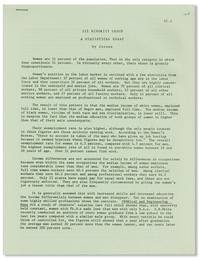
197029440Pittsburgh: Know Inc 1970. First Edition. Quarto 27.75cm.; green and white self-wrappers staplebound at top left-hand corner; 6pp.; printed from typescript. Fine. One of the author's most important pieces published at the height of the second wave feminist movement arguably second only to her classic "Bitch Manifesto" 1969. OCLC locates 11 copies. Know, Inc unknown books
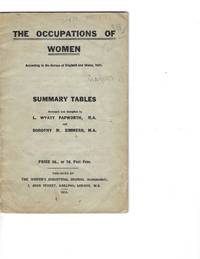
1914162641914. Women Employment "The Occupations of Women According to the Census of England and Wales 1911." Arranged and compiled by L. Wyatt Papworth and Dorothy M. Zimmern. London: The Women's Industrial Council 1914. Statistics drawn from the census of England and Wales to determine the industries currently most open and profitable for women and to be used in increasing opportunities for women's employment. Handling creases and soiling to wrappers. Front wrapper has creased corners. Small loss to lower right corner of back wrapper and few pages. Item originating from the Women's Services Library at the Millicent Fawcett House. Fawcett was a renowned activist and leader in the fight for women's suffrage and educational opportunities. The census information is organized into tables analyzing occupations of men and women marriage status of women workers and numbers of retired women workers among other things. An interesting document that shows women's growing significance in the labor force and the interest in expanding future opportunities. unknown